

The verdict
A capable mid-size sedan, strong on efficiency and held back by performance.
The redesigned, hybrid-only 2025 Camry is one of the smartest mainstream sedans on sale. You get 47 MPG combined on regular gas, an IIHS Top Safety Pick+ with a 5-star NHTSA rating, and Toyota's resale strength, starting at $29,495 with destination. The trade-offs are real but narrow: modest power and a loud engine when you push it, the industry-minimum 3-year/36,000-mile warranty, smaller screens and fewer camera features on the volume LE and SE trims, and two notable first-year recalls.
Jump to scoresStrengths
- Hybrid fuel economy is standard on every trim
- Top-tier crash ratings and standard safety tech
- A lot of car for the money, and it holds its value
What holds it back
- Modest power and only one powertrain
- Industry-minimum warranty
- Loud and unrefined when pushed
Top alternatives
Cars shoppers cross-shop with the Toyota Camry 2.89B-
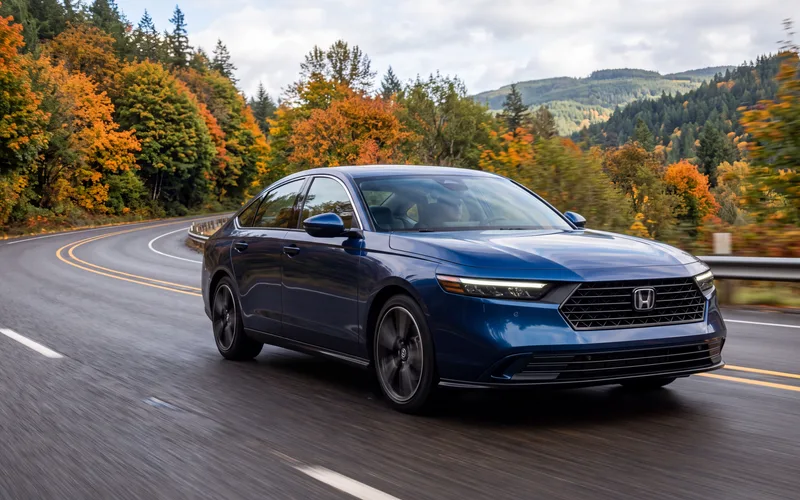 Honda AccordMid-Size SedanBetter at: Space and handling
It is the better-driving, more spacious mid-size sedan with 40.8 inches of rear legroom and a 16.7 cu ft trunk, if you can live without all-wheel drive and pay a few thousand more for the hybrid.
Compare 2.56C+
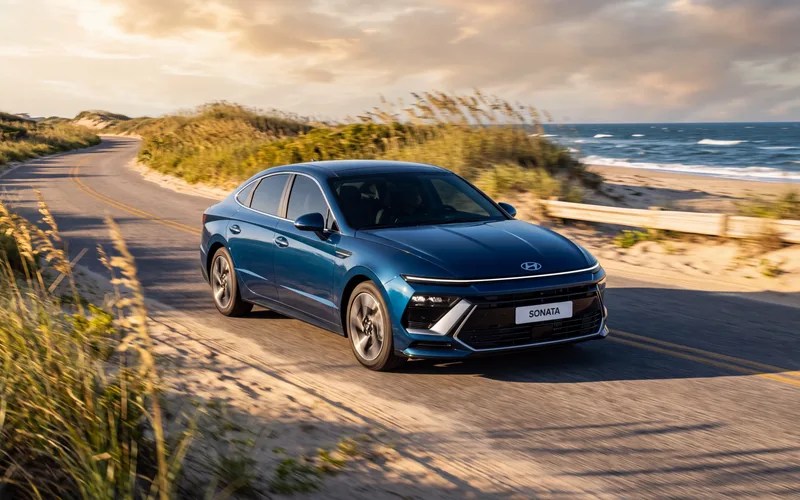 Hyundai SonataMid-Size SedanBetter at: Warranty and room
Roomier up front at 46.1 inches of legroom, a standard 12.3-inch screen and a 10-year/100,000-mile powertrain warranty for buyers who value coverage over resale.
Compare 2.44C+
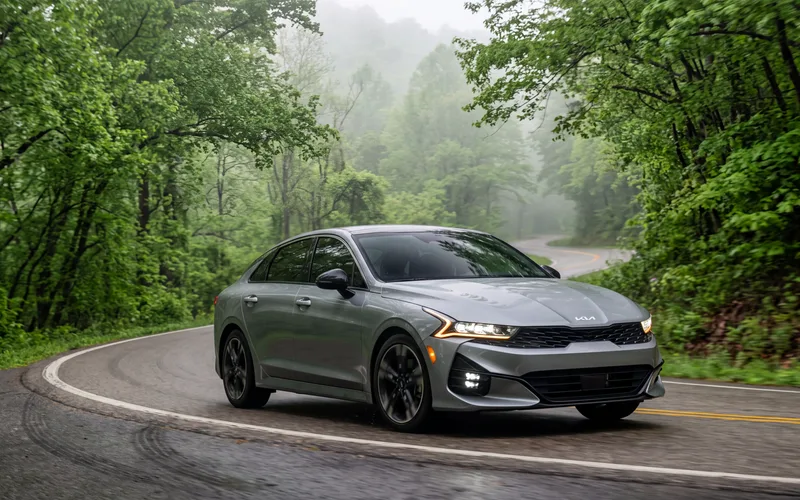 Kia K5Mid-Size SedanBetter at: Style and value
Sharper styling, a bigger 16.0 cu ft trunk and the same long Kia warranty for shoppers who do not need a hybrid's fuel economy.
CompareHow it's evolved
10 scored model years · 2017–2026
Subject scores by year
Hover or tap a score to see what moved it versus the year before. A corner mark flags a big swing.
| Year | Performance | Efficiency | Safety | Space | Cost | Reliability | Tech | Use-case | Driving | Value |
|---|---|---|---|---|---|---|---|---|---|---|
| 2026 | 42 | 93 | 83 | 69 | 67 | 81 | 67 | 60 | 68 | 83 |
| 2025 | 42 | 97 | 83 | 71 | 69 | 77 | 64 | 61 | 67 | 84 |
| 2024 | 43 | 63 | 74 | 69 | 71 | 86 | 47 | 57 | 68 | 71 |
| 2023 | 42 | 63 | 74 | 69 | 72 | 86 | 48 | 56 | 67 | 73 |
| 2022 | 44 | 97 | 74 | 68 | 70 | 87 | 48 | 59 | 66 | 72 |
| 2021 | 42 | 97 | 74 | 69 | 77 | 86 | 49 | 59 | 65 | 74 |
| 2020 | 44 | 97 | 70 | 68 | 70 | 83 | 46 | 59 | 64 | 76 |
| 2019 | 39 | 92 | 69 | 69 | 69 | 83 | 46 | 57 | 65 | 78 |
| 2018 | 39 | 97 | 69 | 69 | 69 | 83 | 38 | 57 | 63 | 78 |
| 2017 | 35 | 89 | 50 | 65 | 66 | 85 | 27 | 54 | 61 | 69 |
Compare two years
Best fit & conditions
Higher scores mean a better fit for that use case. Learn more about use-case fit →
Subject profile
Trims & configurations
4 trimsScores above reflect the volume trim. Per-trim specs and scores are rolling out — the full lineup:
Academic Probation · NHTSA safety recalls
Aug 6, 2026Electrical system: instrument cluster/panel · Exterior lighting: hazard flashing warning lights: switch · Exterior lighting: lighting control module: software · Seat belts: front: warning light/devicesThe instrument cluster display may fail during vehicle startup, deactivating the hazard lights, turn signals, seat belt warning system, and smart key reminder. As such, these vehicles fail to comply with the requirements of Federal Motor Vehicle Safety Standard (FMVSS) numbers 101, "Control and Displays," 108, "Lamps, Reflective Devices and Associated Equipment," 114, "Theft Protection and Rollaway Prevention," and 208, "Occupant Crash Protection."
Defect
Toyota Motor Engineering & Manufacturing (Toyota) is recalling certain 2025-2026 Camry Hybrid vehicles. The instrument cluster display may fail during vehicle startup, deactivating the hazard lights, turn signals, seat belt warning system, and smart key reminder. As such, these vehicles fail to comply with the requirements of Federal Motor Vehicle Safety Standard (FMVSS) numbers 101, "Control and Displays," 108, "Lamps, Reflective Devices and Associated Equipment," 114, "Theft Protection and Rollaway Prevention," and 208, "Occupant Crash Protection."
Risk
An instrument cluster that fails to display critical safety information increases the risk of a crash or injury.
Remedy
Dealers will update the display software, free of charge. Owner notification letters were mailed September 28, 2026. Owners may contact Toyota's customer service at 1-800-331-4331. Toyota's numbers for this recall are 26TB16 and 26TA16.
NHTSA campaign 26V511000 ↗Manufacturer no. 26TB16 / 26TA16508,354 vehicles potentially affected (all models in the campaign)Owners notified Sep 28, 2026Filed by Toyota Motor Engineering & ManufacturingFiled as CAMRY HYBRIDDec 16, 2025Hybrid propulsion system: inverterA bolt inside the inverter may not have been tightened properly, causing incomplete contact at the inverter terminal.
Defect
Toyota Motor Engineering & Manufacturing (Toyota) is recalling certain 2025-2026 Camry Hybrid and 2026 Corolla Cross Hybrid vehicles. A bolt inside the inverter may not have been tightened properly, causing incomplete contact at the inverter terminal.
Risk
Incomplete contact can cause a loss of motive power, increasing the risk of a crash. In addition, a loose bolt can cause an electrical short while the vehicle is powered on, increasing the risk of a fire.
Remedy
Dealers will replace the inverter assembly, free of charge. Owner letters were mailed July 23, 2026. Owners may contact Toyota customer service at 1-800-331-4331. Toyota's number for this recall is 25TB15/25TA15.
NHTSA campaign 25V869000 ↗Manufacturer no. 25TB15 / 25TA1555,405 vehicles potentially affected (all models in the campaign)Owners notified Jul 16, 2026Filed by Toyota Motor Engineering & ManufacturingFiled as CAMRY HYBRIDOct 30, 2025Back over prevention: display functionPlease see the recall report for a complete list of models. A software error may cause the rearview camera to freeze or display a blank screen when the vehicle is in reverse. As such, these vehicles fail to comply with the requirements of Federal Motor Vehicle Safety Standard (FMVSS) number 111, "Rear Visibility."
Defect
Toyota Motor Engineering & Manufacturing (Toyota) is recalling certain 2022-2026 Toyota, Lexus, and Subaru Solterra vehicles equipped with a Panoramic View Monitor (PVM) system. Please see the recall report for a complete list of models. A software error may cause the rearview camera to freeze or display a blank screen when the vehicle is in reverse. As such, these vehicles fail to comply with the requirements of Federal Motor Vehicle Safety Standard (FMVSS) number 111, "Rear Visibility."
Risk
A rearview camera that fails to display an image can reduce the driver's view behind the vehicle, increasing the risk of a crash.
Remedy
Dealers will update the parking assist software, free of charge. Owner letters were mailed January 2, 2026. Owners may contact Toyota's customer service at 1-800-331-4331. Toyota's numbers for this recall are 25TB13 and 25LB06. Subaru's number for this recall is WRE25.
NHTSA campaign 25V744000 ↗Manufacturer no. 25TB13/25LB06/WRE251,024,407 vehicles potentially affected (all models in the campaign)Owners notified Dec 5, 2025Filed by Toyota Motor Engineering & ManufacturingFiled as CAMRY HYBRIDSep 11, 2025Electrical system: instrument cluster/panelDue to an error in the instrument panel software at vehicle startup, the instrument panel may fail to display vehicle speed, brake system, and tire pressure warning lights.
Defect
Toyota Motor Engineering & Manufacturing (Toyota) is recalling certain 2023-2024 Toyota Venza, 2023-2025 RAV4 Prime, RAV4, Highlander, GR Corolla, Crown, 2024-2025 Lexus TX, LS, Toyota Tacoma, Grand Highlander, and 2025 Lexus RX, Toyota Crown Signia, Camry, RAV 4 Plug-in Hybrid (PHEV), and 4 Runner vehicles. Due to an error in the instrument panel software at vehicle startup, the instrument panel may fail to display vehicle speed, brake system, and tire pressure warning lights.
Risk
An instrument panel display that does not show critical information can increase the risk of a crash or injury.
Remedy
Dealers will update the instrument panel software over-the-air (OTA) for non-PHEV vehicles, free of charge. For PHEV vehicles, dealers will inspect the instrument panel assembly, and either replace it, or update the software, free of charge. Owner letters were mailed December 5, 2025. Additional letters will be sent, anticipated in May 2026. This is a phased recall. Owners may contact Toyota's customer service at 1-800-331-4331. Toyota's numbers for this recall are 25TB08 and 25TA08. Lexus' numbers for this recall are 25LB05 and 25LA05.
NHTSA campaign 25V595000 ↗Manufacturer no. See Part 573 Report591,377 vehicles potentially affected (all models in the campaign)Owners notified Dec 5, 2025Filed by Toyota Motor Engineering & ManufacturingFiled as CAMRY HYBRID, REDUNDANT CAMRYFeb 6, 2025Seat belts: rear/other: webbingThe second-row center seat belt webbing may be damaged. As such, these vehicles fail to comply with the requirements of Federal Motor Vehicle Safety Standard (FMVSS) number 209, "Seat Belt Assemblies."
Defect
Toyota Motor Engineering & Manufacturing (Toyota) is recalling certain 2025 Toyota Camry Hybrid, Lexus NX250, NX350, NX350 Hybrid, 2024-2025 Lexus RX350, RX350 Hybrid, and RX500 Hybrid vehicles. The second-row center seat belt webbing may be damaged. As such, these vehicles fail to comply with the requirements of Federal Motor Vehicle Safety Standard (FMVSS) number 209, "Seat Belt Assemblies."
Risk
A damaged seat belt may not adequately restrain an occupant, increasing the risk of injury during a crash.
Remedy
Dealers will inspect the seat belt webbing and replace the seat belt assembly if necessary, free of charge. Owner notification letters were mailed March 20, 2025. Owners may contact Toyota's customer service at 1-800-331-4331. Toyota's numbers for this recall are 25TA03 and 25LA03.
NHTSA campaign 25V059000 ↗Manufacturer no. 25TA03 / 25LA0340,922 vehicles potentially affected (all models in the campaign)Owners notified Mar 20, 2025Filed by Toyota Motor Engineering & ManufacturingFiled as CAMRY HYBRIDJul 23, 2024Equipment: other: labelsThe load carrying capacity modification label may display inaccurate added weight values. As such, these vehicles fail to comply with the requirements of Federal Motor Vehicle Safety Standard number 110, "Tire Selection and Rims."
Defect
Gulf States Toyota, Inc. (GST) is recalling certain Toyota 2023 GR Supra, 2024 4 Runner, Corolla, Grand Highlander, Grand Highlander Hybrid, Land Cruiser Hybrid, Tacoma, Tacoma Hybrid, 2023-2024 BZ4X, Corolla Cross Hybrid, GR Corolla, GR86, Highlander, Highlander Hybrid, Prius, Prius Prime, Sequoia Hybrid, Tundra, Tundra Hybrid, Venza Hybrid, 2023-2025 Crown, and 2025 Camry Hybrid vehicles equipped with GST accessories. The load carrying capacity modification label may display inaccurate added weight values. As such, these vehicles fail to comply with the requirements of Federal Motor Vehicle Safety Standard number 110, "Tire Selection and Rims."
Risk
A vehicle with an incorrect maximum capacity weight value may be overloaded, which can increase the risk of a crash.
Remedy
GST will mail new labels to owners, free of charge. Owner notification letters were mailed September 16, 2024. Owners may contact GST customer service at 1-800-444-1074. GST's number for this recall is 24R2.
NHTSA campaign 24V548000 ↗Manufacturer no. 24R233,848 vehicles potentially affected (all models in the campaign)Owners notified Sep 16, 2024Filed by Gulf States Toyota, Inc.Filed as CAMRY HYBRID
17 recalls on other model years of the Camry (2017–2024)
Jan 22, 2025Fuel system, gasoline: delivery: fuel pumpThe low-pressure fuel pump inside the fuel tank may fail.
Defect
Toyota Motor Engineering & Manufacturing (Toyota) is recalling certain 2018 Camry, 2019 Lexus NX300, and 2019 RX350L vehicles. The low-pressure fuel pump inside the fuel tank may fail.
Risk
Fuel pump failure can cause an engine stall, increasing the risk of a crash.
Remedy
Dealers will replace the fuel pump assembly, free of charge. Owner notification letters were mailed March 12, 2025. Owners may contact Toyota's customer service at 1-800-331-4331. Toyota's numbers for this recall are 25TA01 and 25LA01.
NHTSA campaign 25V028000 ↗Manufacturer no. 25TA01 / 25LA01858 vehicles potentially affected (all models in the campaign)Owners notified Mar 12, 2025Filed by Toyota Motor Engineering & ManufacturingFiled as CAMRYFeb 21, 2024SeatsThe second-row center and right-side seats may have insufficiently welded head restraint brackets. As such, these vehicles fail to comply with the requirements of Federal Motor Vehicle Safety Standard number 202, "Head Restraints."
Defect
Toyota Motor Engineering & Manufacturing (Toyota) is recalling certain 2023-2024 Camry and Camry Hybrid vehicles. The second-row center and right-side seats may have insufficiently welded head restraint brackets. As such, these vehicles fail to comply with the requirements of Federal Motor Vehicle Safety Standard number 202, "Head Restraints."
Risk
A head restraint bracket that is insufficiently welded may not properly restrain an occupant during a crash, increasing the risk of injury.
Remedy
Dealers will replace the 60% rear seat-back frame sub-assembly, free of charge. Owner notification letters were mailed April 19, 2024. Owners may contact Toyota customer service at 1-800-331-4331. Toyota's numbers for this recall are 24TB04 and 24TA04.
NHTSA campaign 24V128000 ↗Manufacturer no. 24TB04 / 24TA044,212 vehicles potentially affected (all models in the campaign)Owners notified Apr 19, 2024Filed by Toyota Motor Engineering & ManufacturingFiled as CAMRY, CAMRY HYBRIDDec 20, 2023Air bags: sensor: occupant classificationA short circuit may develop in the Occupant Classification System (OCS) sensor, preventing the front passenger air bag from deploying.
Defect
Toyota Motor Engineering & Manufacturing (Toyota) is recalling certain 2020-2021 Avalon, Avalon Hybrid, Corolla, Highlander, Highlander Hybrid, RAV4, RAV4 Hybrid, Lexus ES350, Lexus RX350, Lexus RX450H, 2021 Sienna Hybrid, Lexus ES250, 2020-2022 Camry, Camry Hybrid, and ES300H vehicles. A short circuit may develop in the Occupant Classification System (OCS) sensor, preventing the front passenger air bag from deploying.
Risk
An air bag that does not deploy during a crash increases the risk of injury.
Remedy
Dealers will inspect and replace the sensor as necessary, free of charge. Interim letters notifying owners of the safety risk were mailed in February 2024. Some final remedy owner letters were mailed October 31, 2024. Letters will continue to be mailed in phases through January 2026. Owners may contact Toyota customer service at 1-800-331-4331. Toyota's number for this recall is 23TB15/23TA15 Lexus 23LB03/23LA03.
NHTSA campaign 23V865000 ↗Manufacturer no. 23TA15, 23LA03999,901 vehicles potentially affected (all models in the campaign)Owners notified Oct 31, 2024Filed by Toyota Motor Engineering & ManufacturingFiled as CAMRY, CAMRY HYBRIDJun 15, 2023Wheels: lugs/nuts/bolts/studsThe lug nuts that attach the wheels to the vehicle may be loose, which can result in wheel detachment.
Defect
Toyota Motor Engineering & Manufacturing (Toyota) is recalling certain 2023 Camry and Camry Hybrid vehicles. The lug nuts that attach the wheels to the vehicle may be loose, which can result in wheel detachment.
Risk
A wheel that detaches from a moving vehicle can cause a loss of vehicle control, increasing the risk of a crash.
Remedy
Owners are advised not to drive their vehicles until the repair has been performed. Dealers will inspect and tighten the lug nuts, and replace any damaged components, free of charge. Owner notification letters are expected to be mailed on or before August 14, 2023. Owners may contact Toyota's customer service at 1-800-331-4331. Toyota's number for this recall is 23TA05.
NHTSA campaign 23V432000 ↗Manufacturer no. 23TA05298 vehicles potentially affected (all models in the campaign)Owners notified Jul 14, 2023Filed by Toyota Motor Engineering & ManufacturingFiled as CAMRY, CAMRY HYBRIDNov 17, 2021Service brakes, hydraulic: power assist: vacuumThe vane cap inside the vacuum pump may break, causing the pump to fail, which could result in a sudden loss of braking assist.
Defect
Toyota Motor Engineering & Manufacturing (Toyota) is recalling certain 2018-2019 Camry vehicles. The vane cap inside the vacuum pump may break, causing the pump to fail, which could result in a sudden loss of braking assist.
Risk
A sudden loss of braking assist can increase the risk of a crash.
Remedy
Dealers will repair or replace the vacuum pump, as necessary, free of charge. Owner notification letters were mailed May 16, 2022. Owners may contact Toyota customer service at 1-800-331-4331.
NHTSA campaign 21V890000 ↗Manufacturer no. 21TB09 / 21TA09227,490 vehicles potentially affected (all models in the campaign)Owners notified May 16, 2022Filed by Toyota Motor Engineering & ManufacturingFiled as CAMRYNov 4, 2020Fuel system, gasoline: delivery: fuel pumpThe low-pressure fuel pump inside the fuel tank may fail.
Defect
Toyota Motor Engineering & Manufacturing (Toyota) is recalling certain 2018-2019 4Runner, 2019-2020 Avalon, 2019 Corolla Hatchback, 2017-2019 Highlander, 2018-2020 Camry, 2020 Corolla, 2018-2019 Land Cruiser, 2017-2020 Tacoma, 2019-2020 RAV4, 2019-2020 Sequoia, 2017-2020 Sienna, 2019-2020 Tundra, 2018-2020 Lexus ES350, 2017 Lexus GS200t, 2017-2019 Lexus GS350, 2019 Lexus GS300, 2018-2020 Lexus LC500h, 2019-2020 Lexus LS500, 2018-2019 Lexus GX460, 2017 Lexus IS200t, 2019 Lexus IS300, 2019 Lexus IS350, 2018-2020 Lexus LC500, 2018 Lexus LS500, 2019 Lexus LS500h, 2018-2019 Lexus LX570, 2017 Lexus RC200t, 2019 Lexus RC300, RC350, 2017 and 2019-2020 Lexus RX350, 2018-2020 RX350L, 2019 Lexus UX200, 2018-2019 Lexus NX300 vehicles. The low-pressure fuel pump inside the fuel tank may fail.
Risk
If the fuel pump fails, the engine can stall while driving, increasing the risk of a crash.
Remedy
Toyota will notify owners, and dealers will replace the fuel pump assembly with an improved one, free of charge. Owners of specific models were notified that remedy parts were available starting January 21, 2021. Owners of other models will be notified as remedy parts become available. Remedy parts should be available for all affected vehicles by late March 2021. Owners may contact Toyota customer service at 1-888-270-9371 or Lexus customer service at 1-800-255-3987. Note: This recall is an expansion of recall 20V-012. Toyota's number for this recall is 20TA02. Lexus' number for this recall is 20LA01.
NHTSA campaign 20V682000 ↗Manufacturer no. 20TA02, 20LA011,525,742 vehicles potentially affected (all models in the campaign)Owners notified Jan 21, 2021Filed by Toyota Motor Engineering & ManufacturingFiled as CAMRYFeb 6, 2020Engine and engine coolingPorosity in the engine castings may result in cracks than can allow coolant to leak internally and/or externally.
Defect
Toyota Motor Engineering & Manufacturing (Toyota) is recalling certain 2020 Toyota Avalon Hybrid, Camry, Camry Hybrid and Lexus ES300h and 2019-2020 RAV4 and RAV4 Hybrid vehicles equipped with 2.5L 4-Cylinder engines. Porosity in the engine castings may result in cracks than can allow coolant to leak internally and/or externally.
Risk
A coolant leak can cause the engine to overheat and cause a vehicle stall in conventional gasoline vehicles, increasing the risk of a crash. Additionally, for all involved vehicles, the engine may get damaged mechanically, possibly resulting in an engine oil leak, increasing the risk of a fire.
Remedy
Toyota will notify owners, and dealers will inspect and replace the engine including the engine block, as necessary, free of charge. The recall began April 3, 2020. Owners may contact Toyota customer service at 1-888-270-9371 or Lexus at 1-800-255-3987. Toyota's number for this recall is 20TA04. Lexus' number for this recall is 20LA02.
NHTSA campaign 20V064000 ↗Manufacturer no. See report44,191 vehicles potentially affected (all models in the campaign)Owners notified Apr 3, 2020Filed by Toyota Motor Engineering & ManufacturingFiled as CAMRY, CAMRY HYBRIDJan 13, 2020Fuel system, gasoline: delivery: fuel pumpToyota Motor Engineering & Manufacturing (Toyota) recalled certain 2018-2019 4Runner, Highlander, Camry, Land Cruiser, Sequoia, Sienna, Tacoma and Tundra, and Lexus RC 300, RC 350, GS 350, GX 460, IS 300, LC 500, LS 500, LX 570, RX 350L, and 2019 Toyota Avalon and Corolla, and certain Lexus NX 300, and ES 350 vehicles on January 13, 2020. On March 4, 2020, Toyota expanded the recall to include certain 2014-2015 Toyota 4Runner and Land Cruiser, 2018 Avalon, Corolla, 2014 FJ Cruiser, 2017 Sienna and Lexus 2018 ES 350, 2018-2019 GS 300, 2013-2014 GS350, 2014-2015 GX 460, IS 350 and LX 570, 2014 IS F, 2018-2019 IS 350, LC 500H and LS 500H, 2013-2015 LS 460, 2015 NX 200T and RC350, 2017 RC 200T and RX 350. Toyota also removed the 2018-2019 Toyota 4Runner and Land Cruiser and 2018-2019 Lexus GX 460 and LX 570 and 2019 NX300 from inclusion in this recall. On March 19, 2020, Toyota expanded the recall to include 2015 Lexus GS350 vehicles. The low-pressure fuel pump inside the fuel tank may fail.
Defect
Toyota Motor Engineering & Manufacturing (Toyota) recalled certain 2018-2019 4Runner, Highlander, Camry, Land Cruiser, Sequoia, Sienna, Tacoma and Tundra, and Lexus RC 300, RC 350, GS 350, GX 460, IS 300, LC 500, LS 500, LX 570, RX 350L, and 2019 Toyota Avalon and Corolla, and certain Lexus NX 300, and ES 350 vehicles on January 13, 2020. On March 4, 2020, Toyota expanded the recall to include certain 2014-2015 Toyota 4Runner and Land Cruiser, 2018 Avalon, Corolla, 2014 FJ Cruiser, 2017 Sienna and Lexus 2018 ES 350, 2018-2019 GS 300, 2013-2014 GS350, 2014-2015 GX 460, IS 350 and LX 570, 2014 IS F, 2018-2019 IS 350, LC 500H and LS 500H, 2013-2015 LS 460, 2015 NX 200T and RC350, 2017 RC 200T and RX 350. Toyota also removed the 2018-2019 Toyota 4Runner and Land Cruiser and 2018-2019 Lexus GX 460 and LX 570 and 2019 NX300 from inclusion in this recall. On March 19, 2020, Toyota expanded the recall to include 2015 Lexus GS350 vehicles. The low-pressure fuel pump inside the fuel tank may fail.
Risk
If the fuel pump fails, the engine can stall while driving, increasing the risk of a crash.
Remedy
Toyota will notify owners, and dealers will replace the fuel pump, free of charge. The recall began May 4, 2020. Owners may contact Toyota customer service at 1-888-270-9371 or Lexus customer service at 1-800-255-3987. Toyota's numbers for this recall are 20TB02 and 20TA02 for Toyota vehicles and 20LB01 and 20LA01 for Lexus vehicles.
NHTSA campaign 20V012000 ↗Manufacturer no. 20TB02/20TA02/20LB011,830,752 vehicles potentially affected (all models in the campaign)Owners notified May 1, 2020Filed by Toyota Motor Engineering & ManufacturingFiled as CAMRYAug 1, 2019Air bags: sensor: occupant classificationThe Occupant Classification System (OCS) may have been improperly calibrated, which may prevent the proper deployment of the front passenger air bag and knee air bag, in the event of a crash. As such, these vehicles fail to comply with the requirements of Federal Motor Vehicle Safety Standard (FMVSS) number 208, "Occupant Crash Protection."
Defect
Toyota Motor Engineering & Manufacturing (Toyota) is recalling certain 2019 Camry vehicles. The Occupant Classification System (OCS) may have been improperly calibrated, which may prevent the proper deployment of the front passenger air bag and knee air bag, in the event of a crash. As such, these vehicles fail to comply with the requirements of Federal Motor Vehicle Safety Standard (FMVSS) number 208, "Occupant Crash Protection."
Risk
In the event of a crash, if the air bags do not deploy as designed, the front seat passenger has an increased risk of an injury.
Remedy
Toyota will notify owners, and dealers will recalibrate the OCS, free of charge. The recall began August 27, 2019. Owners may contact Toyota customer service at 1-888-270-9371. Toyota's number for this recall is K0M.
NHTSA campaign 19V567000 ↗Manufacturer no. K0M680 vehicles potentially affected (all models in the campaign)Owners notified Aug 27, 2019Filed by Toyota Motor Engineering & ManufacturingFiled as CAMRYJun 28, 2019Equipment: other: labelsThe load carrying capacity modification label may be incorrect. As such, these vehicles fail to comply with the requirements of Federal Motor Vehicle Safety Standard (FMVSS) number 110, "Tire Selection and Rims."
Defect
Southeast Toyota Distributors, LLC (SET) is recalling certain 2017-2019 Toyota Camry, Corolla, Rav4, Sienna, and Yaris iA vehicles equipped with factory-installed floor mats. The load carrying capacity modification label may be incorrect. As such, these vehicles fail to comply with the requirements of Federal Motor Vehicle Safety Standard (FMVSS) number 110, "Tire Selection and Rims."
Risk
An incorrect label may lead to unintentionally overloading the vehicle, increasing the risk of a crash.
Remedy
SET will notify owners and provide a corrected label for placement over the inaccurate label, free of charge. The recall began August 23, 2019. Owners may contact Toyota customer service at 1-888-270-9371. SET's number for this recall is SET19A.
NHTSA campaign 19V503000 ↗Manufacturer no. SET19A1,325 vehicles potentially affected (all models in the campaign)Owners notified Aug 23, 2019Filed by Southeast Toyota Distributors, LLCFiled as CAMRYMar 27, 2019Equipment: other: labelsThe text on the load capacity label may become illegible. As such, these vehicles fail to comply with the requirements of Federal Motor Vehicle Safety Standard (FMVSS) number 110, "Tire Selection and Rims."
Defect
Gulf States Toyota (GST) is recalling certain 2019 C-HR, 4Runner, Avalon, Avalon Hybrid, Camry, Camry Hybrid, Highlander, Land Cruiser, Prius, RAV4, Sequoia, Tacoma, Sienna, Tundra and Yaris vehicles. The text on the load capacity label may become illegible. As such, these vehicles fail to comply with the requirements of Federal Motor Vehicle Safety Standard (FMVSS) number 110, "Tire Selection and Rims."
Risk
If the driver cannot read the label, they may unknowingly overload the vehicle, increasing the risk of a crash.
Remedy
GST will notify owners, and dealers will provide corrected load carrying capacity modification labels, free of charge. The recall began May 24, 2019. Owners may contact GST customer service at 1-800-444-1074. GST's number for this recall is 19R1.
NHTSA campaign 19V244000 ↗Manufacturer no. 19R13,634 vehicles potentially affected (all models in the campaign)Owners notified May 24, 2019Filed by Gulf States Toyota, Inc.Filed as CAMRY, CAMRY HYBRIDFeb 14, 2019Fuel system, gasoline: storage: tank assembly: filler pipe and capThe fuel filler pipe may not have been properly reconnected to the fuel tank during an inspection after vehicle assembly. As such, these vehicles fail to comply with the requirements of Federal Motor Vehicle Safety Standard (FMVSS) number 301, "Fuel System Integrity."
Defect
Toyota Motor Engineering & Manufacturing (Toyota) is recalling certain 2019 Camry Hybrid and Avalon Hybrid vehicles. The fuel filler pipe may not have been properly reconnected to the fuel tank during an inspection after vehicle assembly. As such, these vehicles fail to comply with the requirements of Federal Motor Vehicle Safety Standard (FMVSS) number 301, "Fuel System Integrity."
Risk
The improperly connected filler pipe may leak fuel, which, in the presence of an ignition source can increase the risk of a fire.
Remedy
Toyota will notify owners, and dealers will inspect the fuel filler pipe, replacing it if necessary, free of charge. The recall began March 19, 2019. Owners may contact Toyota customer service at 1-888-270-9371. Toyota's number for this recall is K0I.
NHTSA campaign 19V097000 ↗Manufacturer no. K0I205 vehicles potentially affected (all models in the campaign)Owners notified Mar 19, 2019Filed by Toyota Motor Engineering & ManufacturingFiled as CAMRY HYBRIDApr 3, 2018Service brakes, hydraulic: power assist: vacuumDuring the manufacturing process, the oil galley in the rotor for the brake booster vacuum pump assembly may have been improperly machined possibly resulting in a sudden loss of brake assist.
Defect
Toyota Motor Engineering & Manufacturing (Toyota) is recalling certain 2018 Toyota Camry and Highlander vehicles, 2017 Toyota Sienna and Tacoma vehicles and 2017 Lexus RX350 vehicles. During the manufacturing process, the oil galley in the rotor for the brake booster vacuum pump assembly may have been improperly machined possibly resulting in a sudden loss of brake assist.
Risk
A sudden loss of braking assist can increase the risk of a crash.
Remedy
Toyota will notify owners, and dealers will replace the brake booster vacuum pump, free of charge. The recall began on May 9, 2018. Owners may contact Toyota customer service at 1-888-270-9371, or Lexus customer service at 1-800-255-3987. Toyota's numbers for this recall are J0K/JLD.
NHTSA campaign 18V211000 ↗Manufacturer no. J0K/JLD6,046 vehicles potentially affected (all models in the campaign)Owners notified May 9, 2018Filed by Toyota Motor Engineering & ManufacturingFiled as CAMRYMar 28, 2018Engine and engine cooling: engineThe pistons on these vehicles may be larger than specified, possibly causing the engine to stall.
Defect
Toyota Motor Engineering & Manufacturing (Toyota) is recalling certain 2018 Toyota Camry vehicles equipped with a 2.5L, four-cylinder engine. The pistons on these vehicles may be larger than specified, possibly causing the engine to stall.
Risk
An engine stall can increase the risk of a crash.
Remedy
Toyota will notify owners, and dealers will inspect the production date codes of the pistons and, if an engine contains a piston from the affected production period, the engine assembly will be replaced, free of charge. The recall is expected to begin May 25, 2018. Owners may contact Toyota customer service at 1-888-270-9371. Toyota's number for this recall is J1M/J0M.
NHTSA campaign 18V200000 ↗Manufacturer no. J1M/J0M1,730 vehicles potentially affected (all models in the campaign)Owners notified May 25, 2018Filed by Toyota Motor Engineering & ManufacturingFiled as CAMRYFeb 14, 2018Fuel system, gasoline: delivery: hoses, lines/piping, and fittingsThese vehicles have fuel delivery pipes that may not be properly connected to the fuel hoses in the engine compartment.
Defect
Toyota Motor Engineering & Manufacturing (Toyota) is recalling certain 2018 Toyota Camry vehicles equipped with V6 engines. These vehicles have fuel delivery pipes that may not be properly connected to the fuel hoses in the engine compartment.
Risk
The improperly connected hoses may leak fuel, which, in the presence of an ignition source, can increase the risk of a fire.
Remedy
Toyota will notify owners, and dealers will inspect the fuel pipes for the correct installation, correcting them as necessary, free of charge. The recall is expected to begin March 30, 2018. Owners may contact Toyota customer service at 1-888-270-9371. Toyota's number for this recall is J0G.
NHTSA campaign 18V108000 ↗Manufacturer no. J0G11,807 vehicles potentially affected (all models in the campaign)Owners notified Mar 9, 2018Filed by Toyota Motor Engineering & ManufacturingFiled as CAMRYMay 2, 2017Tires: temporary/emergency spare tireThe spare tire air pressure was not adjusted to the proper pressure as stated on the Tire Pressure Label.
Defect
Gulf States Toyota, Inc. (Gulf States) is recalling certain 2017 4Runner , 86, Avalon, Camry, Camry Hybrid, Corolla, Corolla iM, Highlander, Highlander Hybrid, Prius, Prius C, RAV4, RAV4 Hybrid, Sienna and Yaris vehicles. The spare tire air pressure was not adjusted to the proper pressure as stated on the Tire Pressure Label.
Risk
A spare tire that is not inflated to the proper value may not perform as intended, increasing the risk of a crash.
Remedy
Gulf States will notify owners, and dealers will inspect the spare tires, adjusting their pressure as necessary, free of charge. The recall began June 15, 2017. Owners may contact Gulf States customer service at 1-800-444-1074. Toyota's number for this recall is 17R2.
NHTSA campaign 17V295000 ↗Manufacturer no. 17R2409 vehicles potentially affected (all models in the campaign)Owners notified Jun 15, 2017Filed by Gulf States Toyota, Inc.Filed as CAMRY, CAMRY HYBRIDDec 16, 2016Air bags: knee bolsterThe front passenger knee air bag module may have been attached to the lower instrument panel with incorrect fasteners.
Defect
Toyota Motor Engineering & Manufacturing (Toyota) is recalling certain model year 2016 Avalon, and 2017 Camry vehicles manufactured August 3, 2016, to September 12, 2016. The front passenger knee air bag module may have been attached to the lower instrument panel with incorrect fasteners.
Risk
If the air bag was installed with incorrect fasteners, the fasteners may become loose over time, affecting the air bag deployment and increasing the risk of injury.
Remedy
Toyota will notify owners, and dealers will inspect the fasteners, and if necessary, replace the instrument panel brace and body bracket and reattach the air bag assembly, free of charge. The recall began on February 8, 2017. Owners may contact Toyota customer service at 1-800-331-4331. Toyota's number for this recall is G05.
NHTSA campaign 16V906000 ↗Manufacturer no. G0512 vehicles potentially affected (all models in the campaign)Owners notified Feb 8, 2017Filed by Toyota Motor Engineering & ManufacturingFiled as CAMRY
Source: NHTSA Office of Defects Investigation recall database, model years 2017–2026. Recalls are listed by model year as the manufacturer filed them; whether a specific car is affected depends on its VIN — check a VIN at nhtsa.gov ↗. NHTSA model names matched to this page: CAMRY, CAMRY HYBRID, REDUNDANT CAMRY.
Detailed scoring by subject
1Performance & PowertrainThe Camry's lowest-graded category.0.80F
2025 is the first year of the ninth-generation (XV80) Camry, which went hybrid-only: every trim uses the fifth-generation Toyota Hybrid System (2.5L A25A-FXS Atkinson-cycle I4 plus two motor-generators) rated at 225 hp net combined in FWD form, rising to 232 hp when the rear drive motor of the Electronic On-Demand AWD system is fitted.
The A25A-FXS 2.5L Atkinson-cycle four peaks at 163 lb-ft, quoted identically for FWD and AWD 2025 Camrys. Toyota publishes no combined system torque figure for THS 5, though the traction motors supply instant low-speed shove that the engine number understates.
Toyota publishes no 0–60 claim for the 2025 Camry. Instrumented testing of the launch-year XV80 returned 7.0 s for an FWD SE — the volume-trim configuration scored here — and 6.8 s for the quickest XSE AWD, so the FWD result is used as the representative value.
THS 5 is responsive off the line, blends electric and engine power imperceptibly and cruises quietly, but reviewers of the launch-year car consistently flag the 2.5L four turning loud, high-revving and slightly buzzy under sustained hard acceleration — good but clearly mid-band delivery.
The planetary eCVT never hunts and doles out torque smoothly in ordinary around-town driving, but unlike rivals' step-shift-simulating CVTs it performs no simulated upshifts at full throttle, letting revs flare and hold — the classic hybrid drone a well-calibrated geared automatic avoids.
Electronic On-Demand AWD is optional on all four 2025 trims (LE, SE, XLE, XSE) — unusually broad availability for a mainstream mid-size sedan — but the system is a basic slip-triggered rear electric motor with no low range, locking differentials or terrain modes, which keeps it out of the top band.
The 2025 redesign made the Camry hybrid-only: a single 2.5L HEV drivetrain with FWD or AWD as the only variation. The previous generation's gas-only 2.5L four and 3.5L V6 were both dropped, and no turbo, PHEV or EV alternative exists, so the powertrain choice is take-it-or-leave-it.
2Efficiency & RangeThe Camry's best-graded category.4.00A+
2025 is the launch year of the hybrid-only ninth-generation (XV80) Camry, so every trim is rated as a hybrid. The volume SE FWD — the configuration used throughout this scorecard — is EPA-rated 47 MPG combined; the lighter, smaller-wheeled LE FWD is the lineup's high-water mark at 51.
City is where the fifth-generation Toyota Hybrid System is strongest — the SE FWD's 48 MPG city exceeds its own highway figure, the classic full-hybrid signature, and the LE FWD reaches 53 MPG city.
At steady highway speed the hybrid system's advantage narrows but the Atkinson-cycle 2.5L still returns 47 MPG on the volume SE FWD, roughly 50% better than a conventional mid-size sedan's highway rating.
All 2025 Camrys share a 13.0-gallon tank, so range tracks the trim's MPG directly: 13.0 × 47 = 611 miles combined for the SE FWD, near the top of the sedan band and enough to make most cross-state trips single-stop.
At EPA's standard 15,000 mi/yr and $2.92/gal regular assumption, the SE FWD's 47 MPG combined works out to about 319 gallons and ~$930, which EPA publishes rounded to ~$950 — well under half the running cost of a typical non-hybrid mid-size sedan.
The 2.5L Atkinson hybrid asks only for 87-octane regular unleaded — no premium requirement, no plug, no charging infrastructure to arrange — so the low per-mile cost comes with zero added complication or refueling constraint.
3SafetyOne of the Camry's strongest categories.3.65A-
NHTSA awarded the redesigned 2025 Camry its top 5-star overall rating, with five stars in each of the frontal, side and rollover evaluations — nothing in the sub-tests pulls the composite down.
The 2025 Camry — the launch year of the ninth-generation XV80 — is an IIHS Top Safety Pick+, earning Good in every crashworthiness test including the tougher updated moderate overlap front and updated side evaluations. Only the Acceptable headlight rating keeps it from the very top of the band.
Toyota Safety Sense 3.0 is standard on every 2025 Camry trim — pre-collision with pedestrian detection, full-speed-range adaptive cruise, lane departure alert with steering assist, lane tracing assist, Proactive Driving Assist, road sign assist and automatic high beams. 2025 is also the first Camry model year in which Blind Spot Monitor with Rear Cross-Traffic Alert is standard on the base LE rather than a trim-walk or package upgrade, which puts the standard suite ahead of most mainstream mid-size rivals.
IIHS rates the 2025 Camry's front crash prevention Good for both vehicle-to-vehicle and pedestrian detection, including the night-time pedestrian runs — the crash-avoidance result that qualified it for Top Safety Pick+. Short of a perfect score only because the newer higher-speed vehicle-to-vehicle scenarios still show measurable speed carryover.
Blind Spot Monitor, Rear Cross-Traffic Alert and Safe Exit Alert are standard on every trim — broader standard coverage than most mid-size rivals — but the systems are alert-only, with no active braking or steering intervention. Front Cross-Traffic Alert, Lane Change Assist and Parking Assist with automatic braking are locked behind the XLE/XSE Premium Plus package.
Lane Departure Alert with Steering Assist and Lane Tracing Assist are standard on every trim, and reviewers of the new XV80 generally rate the centering as competent — it holds a lane with cruise engaged and even nudges away from vehicles in adjacent lanes — but reports are mixed, with some noting wander between the markings and steering that resists inputs during a lane change. Functional rather than confidence-inspiring.
Full-Speed Range Dynamic Radar Cruise Control is standard on every trim and handles stop-and-go traffic down to a halt, managing following distance smoothly; combined with standard Lane Tracing Assist it forms a competent highway assist. The package is held back by the soft lane-centering rather than by the cruise control itself.
Traffic Jam Assist is genuine hands-free operation, but only below roughly 25 mph in stop-and-go traffic on divided limited-access highways, only as part of the XLE/XSE Premium Plus package, and only with an active Drive Connect subscription. That is far narrower in speed range, road coverage and availability than Ford BlueCruise or GM Super Cruise, which work hands-free at full highway speed across mapped networks.
IIHS rates the headlights Acceptable rather than Good, and that rating holds across the whole LE-through-XSE range — no trim buys better lighting, but no trim is stuck with a Marginal or Poor setup either. All four grades showed inadequate low-beam visibility on left curves. Automatic High Beams are standard as part of TSS 3.0.
Forward and side sightlines are acceptable for a mid-size sedan, but the XV80's lower, fastback-influenced roofline and shallow rear glass restrict the over-the-shoulder and rearward view. Camera compensation is thin on the volume trims: a backup camera is standard, while the four-camera Panoramic View Monitor is confined to the XLE/XSE Premium Plus package, so an LE or SE leans on standard blind-spot alerts to cover its blind zones.
IIHS rates LATCH ease of use Good: two rear positions with complete hardware, lower anchors under removable covers that are easy to reach, plus three top tethers on the rear shelf under flip-up covers that are easy to find. The limits are packaging rather than hardware — three seats will not fit across, and a rear-facing seat eats into front-passenger legroom.
4Space & ComfortGrades above the middle of the scale.2.81B-
The all-new ninth-generation (XV80) 2025 Camry is a conventional five-seat mid-size sedan across LE, SE, XLE and XSE, with a three-place rear bench standard.
Front headroom is 38.3 in without the moonroof; the available panoramic/tilt-slide moonroof on XLE and XSE costs 0.8 in, dropping it to 37.5 in.
Front legroom measures 42.1 in, unchanged from the outgoing XV70 and typical for the class — the redesign spent its packaging gains on width and hip room rather than front stretch-out room.
Rear headroom of 38.0 in is strong for a low-roof sedan and one of the Camry's better packaging numbers; the moonroof takes only 0.4 in out back.
Second-row legroom is 38.0 in — adequate for adults but a clear step behind the Honda Accord (40.8 in) and Hyundai Sonata, and the Camry's weakest passenger-space dimension.
15.1 cu ft is a genuine win for the XV80: because the hybrid battery moved under the rear seat, the now hybrid-only Camry keeps the full trunk that the old Camry Hybrid gave up, though it still trails the Accord's 16.7 cu ft.
The redesigned console adds a usable open shelf beneath the floating center stack, standard Qi wireless charging on every trim, deep door bins and folding rear seatbacks released from inside the trunk — competitive everyday storage, but nothing segment-leading.
Toyota re-engineered the front buckets for 2025 with dual-density foam — lower-density where you sink in, higher-density for support — and reviewers report good long-trip back support, with the common criticism being that the cushions read firm at first and rear thigh support is only fair.
The XV80's retuned TNGA-K chassis is repeatedly singled out as the redesign's high point — compliant over broken pavement without the float of older Camrys, and composed even on the XSE's larger wheels.
An acoustic windshield is standard on every trim and XLE/XSE add sound-insulating front door glass, giving hushed wind and tire noise at highway speed; the limiter is the 2.5-liter hybrid's coarse, droning engine note under hard acceleration.
Dual-zone automatic climate control with rear vents is standard and heated front seats plus a heated steering wheel are standard on XLE/XSE (Cold Weather Package on LE/SE), but ventilated seats are locked behind the top-trim Premium Package and there is no separate rear climate zone.
5Cost of OwnershipMid-pack among this car's ten categories.2.64C+
The all-new XV80 Camry went hybrid-only for 2025, and the LE opens at $29,495 with destination — remarkably, less than the 2024 Camry Hybrid LE it replaces, so the standard hybrid powertrain arrived without a price premium. It lands above the Accord LX but with a far more efficient standard drivetrain.
The SE is the Camry's traditional volume seller and sits at $31,795 with destination — the configuration most buyers land on once they add the sport styling and cloth-sport seating that dominate mid-size sedan sales. With XLE/XSE historically running only about a third of Camry volume, the LE/SE pair carries the mix, and even the loaded XSE tops out at $35,695, keeping the whole ladder well under the segment band midpoint.
The Camry is one of the cheapest mid-size sedans to keep running, and the hybrid-only powertrain helps rather than hurts — the e-CVT has no conventional torque converter or belt-driven accessories and regenerative braking stretches pad and rotor life. Sources disagree sharply on methodology, so this is a blended figure near the low-middle of the range, above the Corolla but comfortably below the Accord.
Resale is a Camry cornerstone — Toyota has been KBB's Best Resale Value Brand for years running, and the nameplate retains value far above the ~45% a typical new vehicle keeps at five years. Estimates split by methodology, with transaction-based trackers in the low-to-mid 60s and KBB's trim-level residuals in the low 50s, so this blend sits deliberately below the optimistic end.
Toyota's 36-month/36,000-mile basic coverage is the industry floor, unchanged for 2025 — level with Honda and the domestics but two full years short of Hyundai, Kia and Genesis.
The headline powertrain term is Toyota's standard 5 years/60,000 miles, again the segment floor against Hyundai/Kia's 10-year coverage. Because every 2025 Camry is a hybrid, the traction battery's 10-year/150,000-mile warranty applies to the whole lineup — meaningful protection on the one component buyers worry about most, and longer than Honda's 8-year/100,000-mile hybrid battery term.
ToyotaCare covers every factory-scheduled service for 2 years/25,000 miles plus 2 years of unlimited-mileage roadside assistance with 25-mile towing — real included maintenance where Honda's Service Pass is comparable and many rivals offer none. The 2025 Camry also carries unusually long connected-services trials, with Safety Connect and Service Connect running up to 10 years across LE through XSE. It falls short of top marks because the maintenance window trails Hyundai/Kia's 3-year/36,000-mile plans, Remote Connect's trial is only 1 year and limited to upper trims, and there are no fuel or charging credits.
$31,795 volume-trim price minus its estimated resale value after 5 years (60% retained, or about $19,077) leaves about $12,718 in depreciation. Add the projected $4,500 in 5-year maintenance and repairs, and owning this vehicle for 5 years costs about $17,218 in total.
6Reliability & QualityGrades above the middle of the scale.3.20B+
Sources genuinely split on this one. J.D. Power rates the 2025 Camry 86/100 for Quality & Reliability — its "Great" band — and the Camry nameplate took a segment award in the 2025 VDS. But Consumer Reports dropped the Camry's reliability rating to average for 2025 specifically because the XV80 is an all-new, hybrid-only redesign, and CR flags heavily re-engineered first-year cars as elevated risk. Strong nameplate history, tempered by a redesign year that has already produced real owner complaints.
Toyota is about as close to a lock as this item gets. It finished third of all brands in the 2025 J.D. Power Vehicle Dependability Study at 162 PP100 — behind only Lexus (140) and Mazda (161) — and Toyota Motor Corporation collected the most model-level dependability awards of any automaker. Consumer Reports likewise has Toyota at or near the top of its brand reliability rankings.
This is the weak spot of an otherwise strong scorecard. The XV80 has drawn two genuine safety recalls in its first two model years: an inverter bolt that can work loose and cause loss of motive power or fire (~55,400 units), and a much larger campaign for a 7-inch combination meter that can go blank at startup, disabling turn signals, hazards and seat-belt/key reminders (~508,000 MY2025-26 vehicles). Neither is a systemic powertrain failure and both have remedies, but a fire-risk recall plus a half-million-unit instrument cluster recall is well above typical first-year activity for a Toyota sedan.
The 2.5L A25A-FXS Atkinson-cycle four has been in Camry Hybrids since 2018 and routinely runs past 250,000 miles, and Toyota's planetary-gear hybrid transaxle has the best long-term record of any electrified drivetrain sold in the US — no belts, no clutch packs, no conventional automatic to fail. Points come off because the fifth-generation hybrid system and the rear eAxle used for AWD are new for 2025, and a handful of owners have reported low-speed groaning/squeaking traced to the transaxle.
The XV80 cabin is the clearest upgrade in the redesign: the fake wood and metal-effect plastic of the old car are gone, replaced by soft-touch dash and door-panel surfaces that reviewers found convincing even on lower trims. It still reads mainstream rather than premium — hard plastics survive in low-touch zones, and the Mazda3 remains the material benchmark among non-luxury sedans — but it is competitive with the Accord at the price.
Press cars come across as tightly screwed together — reviewers call out consistent panel fit and a solid door thunk — and Toyota's Georgetown, Kentucky line is a mature, high-volume operation. Against that sit first-year owner reports of squeaks and rattles and electrical gremlins (freezing screens, intermittent power windows and locks), which is what keeps this in the upper half of the middle band rather than the 80s.
Toyota runs roughly 1,250 US dealerships — the densest non-domestic network in the country — so parts, warranty work and hybrid-qualified technicians are within reach almost anywhere, including rural markets where import coverage thins out. Service satisfaction is good rather than best-in-class: Subaru, not Toyota, tops the J.D. Power mass-market Customer Service Index, and the industry-wide complaint about long appointment waits applies to Toyota's high-volume stores as much as anyone's.
The Camry is the highest-volume sedan in America over four decades, which makes parts cheap, universally stocked and heavily supported by the aftermarket, and independent shops handle Toyota hybrids as routine work. RepairPal puts average annual repair cost at $388 against $526 for mid-size cars. The one caveat that keeps it out of the 90s is that going hybrid-only means an out-of-warranty inverter or battery replacement is now the tail risk on every Camry, not just a subset.
7Technology & InfotainmentOne of the Camry's weakest categories.2.33C+
The 2025 Camry launches the XV80 generation with Toyota Audio Multimedia on an 8-inch touchscreen on the volume LE and SE grades; the 12.3-inch display is reserved for XLE and XSE, so a mid-size sedan buyer at the heart of the range gets one of the smaller screens in the class.
Toyota Audio Multimedia is quick and logically organized and the redesigned dash keeps real climate buttons and a volume knob, but the volume grades get a small 8-inch panel and reviewers of the 2025 car flagged weak daytime contrast and the lack of a multi-panel home screen.
Wireless Apple CarPlay and Android Auto are standard on all four 2025 Camry grades including the base LE — no package, no trim walk, and it works on both the 8-inch and 12.3-inch head units.
Cloud Navigation and the "Hey Toyota" Intelligent Assistant are capable natural-language tools, but on MY25 they ride on Drive Connect with only a 1-year trial on the grades that include it and no trial at all on LE/SE, so most Camry owners navigate with phone projection instead.
The volume grades run a plain six-speaker system and the only upgrade is a nine-speaker JBL setup bundled inside the four-thousand-dollar Premium package on XLE/XSE — fewer speakers and worse access than the 12-speaker Bose systems in the Accord and K5.
LE and SE get a 7-inch partial-digital cluster in an analog surround while the fully digital 12.3-inch configurable display is standard only on XLE/XSE — and the 7-inch meter fitted to those volume grades was later recalled for going blank at startup, which undercuts its quality on this model year.
Over-the-air updates reach the Toyota Audio Multimedia head unit and cloud map data over Wi-Fi or the embedded modem, but there is no whole-vehicle, feature-adding OTA program — the MY25 combination-meter software fix requires a trip to the dealer.
The Toyota app covers remote start/climate, lock/unlock, vehicle locate and guest-driver limits, but on MY25 Remote Connect carries only a 1-year trial on the grades that include it — LE/SE get no trial at all — and Digital Key is buried in the XLE/XSE Premium package with no Apple Wallet key support.
A Qi wireless charging pad is standard across the lineup, which is generous at this price, and there are five USB ports split front and rear — but the mix still includes USB-A, rear passengers get a single USB-C, and no household AC outlet is offered.
Smart Key proximity entry and push-button start are standard on every grade, but remote engine start on the 2025 Camry runs through Remote Connect — a 1-year trial on equipped grades and nothing on LE/SE — and phone-as-key exists only as app-based Digital Key inside the XLE/XSE Premium package.
A rear camera is standard and front/rear parking sensors with automatic braking are offered, but the 360-degree Panoramic View Monitor is locked inside the Premium Plus package on the two priciest grades and the Camry does not offer Toyota's Advanced Park self-parking system.
A large 10-inch head-up display is offered — more than the Accord or Corolla, which offer none — but only inside a roughly $4,000 package on XLE and XSE, so no volume-trim buyer can order it.
8Use-Case FitOne of the Camry's weakest categories.2.12C
The child-seat hardware is genuinely good — IIHS rates LATCH ease of use Good, with two complete lower-anchor positions under easy-to-reach removable covers and three top tethers under clearly marked flip-up covers — but the packaging is ordinary sedan. Three car seats will not fit across the 2025 Camry's rear bench, a rear-facing seat eats into front-passenger legroom, and everything stroller-sized has to go through a conventional trunk lid into 15.1 cu ft, the smallest hold among mainstream mid-size rivals.
Top safety credentials on exactly the trims families buy: NHTSA 5 stars overall and an IIHS Top Safety Pick+, with Toyota Safety Sense 3.0, full-speed radar cruise, Blind Spot Monitor with Rear Cross-Traffic Alert, Safe Exit Alert and a rear-seat reminder all standard on the $29,495 base LE. 2025 is the first Camry model year in which BSM with RCTA is standard rather than a trim-walk or package item. Held out of the 90s by the Acceptable IIHS headlight rating, which no trim can upgrade, and by lane centering reviewers describe as wandering.
Comfortable for four on a medium haul but thin on rear amenities. The 38.0 in of rear legroom is adult-usable (though behind the Accord's 40.8 in), rear headroom of 38.0 in is strong for a low-roof sedan, and dual-zone automatic climate with rear vents plus rear USB ports are standard — but there is no separate rear climate zone, no rear shades or screens, and the 15.1 cu ft trunk is a real constraint once four or five people pack for a week. The XLE/XSE moonroof shaves rear headroom.
Commuting is what the hybrid-only XV80 was engineered around. THS 5 pulls away on electric torque and hands off to the engine seamlessly, Full-Speed Range Dynamic Radar Cruise Control with stop-and-go is standard on every 2025 trim, Proactive Driving Assist smooths the gaps in traffic, the retuned TNGA-K chassis is the redesign's most-praised trait, and Toyota kept physical climate buttons and a volume knob. Docked for the 2.5L four turning coarse and loud on hard merges and hills, and for the SE/XSE sport tune letting sharper impacts through.
One of the cheapest ways in America to cover commuting miles without a plug. Every 2025 Camry is a hybrid: 47 MPG combined and 48 MPG city on the volume SE FWD, 51/53 on the LE, on 87-octane regular, for an EPA-estimated ~$950/yr at 15,000 miles. Consumables are cheap too — RepairPal puts average annual repair at $388, ToyotaCare covers scheduled service for 2 years/25,000 miles, and regenerative braking stretches pad and rotor life. Short of the ceiling only because it still buys gasoline and insurance is merely mid-pack.
Manageable with care rather than easy. At 193.5 in long and 72.4 in wide the Camry carries a full mid-size footprint, and the XV80's lower fastback-influenced roofline and shallow rear glass restrict the over-the-shoulder and rearward view. Camera help is thin on the trims most people buy: only a single backup camera is standard, while the four-camera Panoramic View Monitor and front/rear parking sensors with automatic braking are locked in the XLE/XSE Premium Plus package, and no self-parking system is offered. Standard blind-spot monitoring across the range is the saving grace.
Not meaningfully work-capable. Toyota publishes no US towing capacity for the 2025 Camry and does not recommend towing with it; there is no bed, no payload headroom beyond five occupants and their luggage, and the only cargo hold is a 15.1 cu ft trunk reached through a sedan lid. The 225 hp hybrid drivetrain is calibrated for economy, and its eCVT lets revs flare under sustained load rather than holding torque.
Genuinely proven for high-mileage service duty — the A25A-FXS 2.5L and Toyota's planetary hybrid transaxle carry no belt, torque converter or step-gear wear items, are shared with RAV4 and Highlander hybrids since 2018, and are routinely documented past 250,000 miles, which is why the Camry is the default rideshare and fleet sedan. The LE's cloth trim wears well and RepairPal ranks it near the top of the class. But "work duty" here means abuse tolerance, and a 5.4-in-clearance unibody sedan with carpeted surfaces, no heavy-duty option and no skid protection simply has none.
Essentially no work-oriented provisions. There is no household AC outlet or inverter anywhere in the 2025 range, no bed or bed-access hardware, no factory tow hitch and no factory roof rails or crossbars, no washable flooring, and the carpeted trunk offers only basic anchor points. Toyota's accessory catalog for the Camry is cosmetic and protective — mats, sill plates, trunk trays — not upfit equipment; anything rack-related has to come from the aftermarket.
A strong mile-eater. The 13.0-gallon tank and 47 MPG combined give the volume SE FWD about 611 miles between fills, and an LE roughly 663 — enough to make most cross-state runs single-stop. An acoustic windshield is standard on every 2025 trim, front seats were re-engineered with dual-density foam and are specifically praised for long-drive back support, and standard full-speed radar cruise plus Lane Tracing Assist cut highway fatigue. Kept below the top band by lane centering that reviewers say lets the car drift between the lines, the four's coarseness on long climbs, 42.1 in of front legroom, and sound-insulating door glass reserved for XLE/XSE.
Gravel roads and a hitch-mounted bike rack are within reach, and that is the whole story. Electronic On-Demand AWD is a $1,525 option on all four 2025 trims — unusually broad availability for a mainstream mid-size sedan and a real advantage over the FWD-only Accord — but it is a slip-triggered rear electric motor with no low range, locking modes or terrain settings. Ground clearance is 5.4 in, there is no published tow or roof-load rating to hang toys from, no factory rails, no AC outlet for camp power, and the rear seat folds 60/40 rather than flat.
Normal luggage fits; bulky gear is a squeeze. The 15.1 cu ft trunk is a real win for the XV80 — moving the hybrid battery under the rear seat means the now hybrid-only Camry keeps the full trunk the old Camry Hybrid gave up — and the 60/40 split-fold seatback, released from inside the trunk, opens it up for longer items. But it is still the smallest hold in the mainstream mid-size class, everything passes through a sedan lid rather than a hatch, that same battery packaging leaves no underfloor storage, and there is no factory rack or hitch to move overflow outside the car.
9Driving ExperienceMid-pack among this car's ten categories.2.53C+
2025 launches the ninth-generation XV80 Camry on a retuned TNGA-K chassis, and the payoff is real body control — reviewers consistently describe it as surefooted, tied-down and predictable, with the SE/XSE sport tune keeping lean in check. Instrumented grip of 0.84 g is competitive for a mid-size hybrid sedan, but the car is composed rather than engaging, so it lands at the top of the secure-but-unremarkable band and just below the Accord.
Effort is well judged and the rack is accurate enough to place the car confidently, with AWD models free of torque steer, but 2025 reviewers are unusually blunt about the lack of feedback — numb even by family-sedan standards. Precise without being communicative puts it in the lower half of the mid band.
182 ft from 70 mph is adequate rather than strong for the class, and the regen-to-friction handoff is transparent most of the time, but the pedal itself draws repeated criticism — heavy, numb and slightly spongy, with a soft initial bite during the blending transition. Mid-band: it stops the car securely without inspiring confidence through the pedal.
The fifth-generation hybrid system (225 hp FWD / 232 hp AWD) is well sorted: no conventional stop/start shudder, imperceptible EV-to-engine handoffs and instant motor torque off the line. What caps it is calibration under load, where the eCVT performs no simulated upshifts and lets revs flare and hold in a rubberbanding sensation.
Near-silent in EV mode and quiet at a steady cruise, but merging or climbing pins the 2.5L four at a loud, coarse hold with audible drone and minor vibration through the steering wheel. This is the weakest link in the Camry's otherwise solid refinement and clearly behind the Accord hybrid.
The volume FWD LE measures 37.4 ft curb-to-curb; larger-wheeled SE, XLE and XSE grades widen to 38.0 ft and every AWD variant adds roughly 1.3 ft. Mid-pack for a mid-size sedan and marginally tighter than the Accord's 38.1 ft.
A genuine strength of the XV80 redesign: an 8-way power driver's seat is standard across the line, and Toyota kept physical climate buttons, a volume knob and a conventional gear lever alongside a high-mounted, easy-to-scan touchscreen. Sightlines and cabin width are good and nothing requires a reach or a menu dive; it sits just below the 2026 car, which revised the seat cushions and headrests.
Quicker and more capable than any previous Camry, and the SE/XSE tune makes it genuinely satisfying to hustle, but there is no sound worth hearing, no throttle drama and no reason to take the long way home. Reviewers are explicit that the hybrid-only ninth generation is not chasing sport-sedan credentials — pleasant but forgettable, below the Accord and Mazda3.
10Value & Market PositionOne of the Camry's strongest categories.3.71A
Every 2025 Camry — starting with the $28,400 LE — includes Toyota Safety Sense 3.0 (Proactive Driving Assist, pre-collision with pedestrian detection, full-speed dynamic radar cruise, lane departure with steering assist, road sign assist) plus Blind Spot Monitor with Rear Cross-Traffic Alert, an 8-inch Toyota Audio Multimedia screen with wireless CarPlay/Android Auto, Qi wireless charging, dual-zone automatic climate and an 8-way power driver's seat. Two gaps hold it below the top band: heated front seats are extra-cost on LE and SE, and the 12.3-inch touchscreen and digital gauge cluster are reserved for upper trims while the Sonata standardizes a 12.3-inch display.
The 2025 Camry's core value case is unusually strong: 225 hp and an EPA 53/50/51 mpg hybrid powertrain are standard at $28,400, undercutting the cheapest 2025 Accord Hybrid (Sport, $33,655) by roughly $5,000 while beating it by 21 hp and several mpg, and AWD is a $1,525 option Honda does not offer on the Accord at any price. Best-in-class resale — about 66% of value retained at five years versus 61.5% for the hybrid midsize category — compounds the up-front advantage, and Kelley Blue Book's Best New Model citation rested largely on this content-for-price argument.
Four well-spaced grades — LE $28,400, SE $30,700, XLE $33,400, XSE $34,600 — each offered in front- or all-wheel drive give eight configurations in roughly $2,000 steps, with distinct comfort (XLE) and sport-tuned (SE/XSE) paths. What caps the score is powertrain monoculture: the hybrid-only ninth generation offers one 2.5L THS 5 drivetrain, no gas-only, PHEV or performance variant, no Nightshade appearance grade yet (that arrives for 2026), and a range that tops out below $37,000 loaded.
The Camry is not merely the mid-size leader but the best-selling car of any kind in America, and the hybrid-only redesign did nothing to slow it: 309,875 US sales in calendar 2024 (up 6.6% year over year) was nearly double the Accord's 162,723, and volume rose again to 317,185 in 2025. It has held the top-selling-sedan title continuously since 1997 apart from a single year, which is about as decisive as market acceptance gets in a segment that is otherwise shrinking.
Toyota is among the most trusted mainstream badges in the US, with a repeat-buyer base and a resale reputation strong enough to directly protect owners' money — the Camry's retained value leads the mid-size class and the badge carries a durability halo that shows up in cross-shopping. It stops short of the top band because the nameplate still carries a sensible-appliance connotation; the ninth generation's hammerhead front end and lower roofline soften that perception rather than erase it.
As a brand-new, high-demand redesign, the 2025 Camry was the wrong car to look for a bargain on: at the spring-2024 launch dealers had only a handful of units, most pre-sold in transit, and discounting off MSRP was essentially unavailable with markups reported in some markets. Nationally advertised support stayed modest through the model year — up to $1,000 lease loyalty and $500 purchase loyalty, $600 dealer cash on remaining stock, and financing no better than about 4.75% APR for 72 months, with no 0% offer at any point.
2025 is year one of the all-new ninth-generation (XV80) Camry — new sheetmetal, a redesigned interior with Toyota Audio Multimedia, TSS 3.0, and a hybrid-only drivetrain built on the fifth-generation Toyota Hybrid System — so a buyer faces essentially zero redesign risk for several years. It is a full generational change rather than a refresh, which is exactly the top of this band; only the carryover TNGA-K platform underneath keeps it a point or two shy of perfect.
The redesign was very well received across the outlets buyers actually consult: a 2025 North American Car of the Year finalist (one of three, behind the Civic Hybrid), an Edmunds Top Rated Car winner, an IIHS Top Safety Pick+, a Consumer Reports pick among the best mid-size sedans at 47 mpg observed, and a Kelley Blue Book double — Best New Model plus Best Midsize Car, unseating an Accord that had taken that award nine of the previous ten years. It falls just short of the top band because Edmunds still ranked the Kia K5 ahead of it and it was not a Car and Driver 10Best selection.