

The verdict
A capable mid-size sedan, strong on efficiency and held back by performance.
The 2026 Camry is the safest, most dependable, lowest-hassle way to spend roughly $30,000 on a mid-size sedan — every trim is a 225-hp hybrid good for 46-51 MPG combined, wears a 5-star NHTSA rating and an IIHS Top Safety Pick+, and holds its value better than almost anything in the class. What you give up is excitement and equipment: 0-60 takes about 7.0 seconds with the four-cylinder droning through it, the volume LE and SE trims still get an 8-inch screen when rivals standardize 12.3 inches, and the 15.1 cu ft trunk is the smallest among mainstream mid-size sedans. Toyota's 3-year/36,000-mile basic warranty is the industry floor, though the hybrid battery is covered 10 years/150,000 miles. Buy it as a commuter and family appliance you will never think about, not as a car you take the long way home in.
Jump to scoresStrengths
- Top-tier safety, standard on the cheapest trim
- Reliability and cheap, easy service anywhere
- Content per dollar and resale that protects your money
What holds it back
- Modest power, and only one way to get it
- Warranty is the industry floor
- No work or adventure capability at all
Top alternatives
Cars shoppers cross-shop with the Toyota Camry 2.89B-
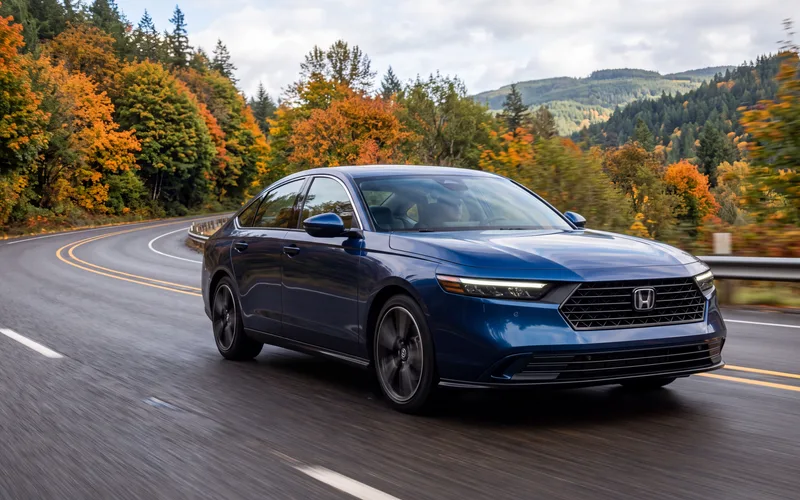 Honda AccordMid-Size SedanBetter at: Space and handling
It is the better-driving, more spacious mid-size sedan with 40.8 inches of rear legroom and a 16.7 cu ft trunk, if you can live without all-wheel drive and pay a few thousand more for the hybrid.
Compare 2.56C+
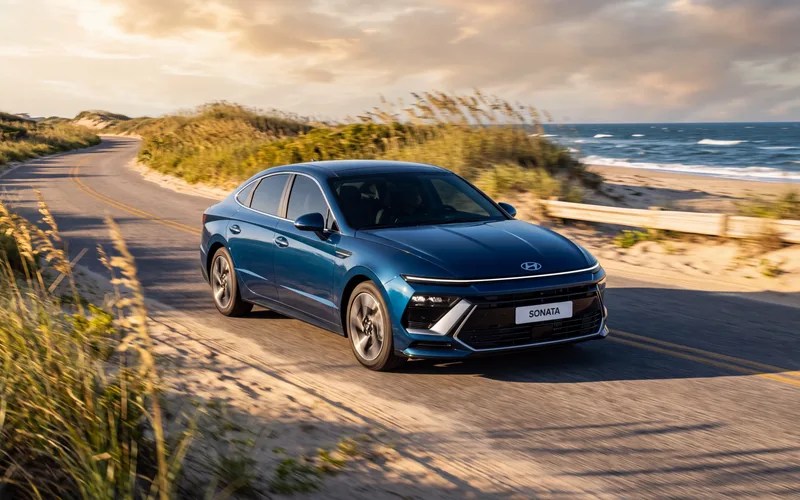 Hyundai SonataMid-Size SedanBetter at: Warranty and room
Roomier up front at 46.1 inches of legroom, a standard 12.3-inch screen and a 10-year/100,000-mile powertrain warranty for buyers who value coverage over resale.
Compare 2.44C+
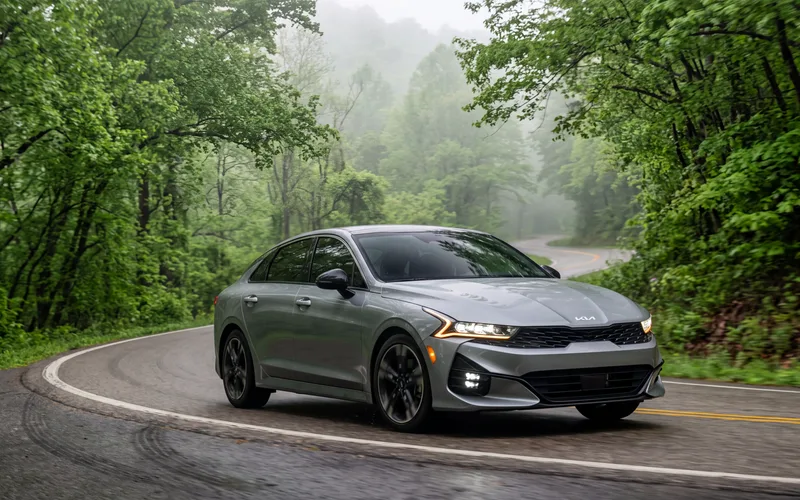 Kia K5Mid-Size SedanBetter at: Style and value
Sharper styling, a bigger 16.0 cu ft trunk and the same long Kia warranty for shoppers who do not need a hybrid's fuel economy.
CompareHow it's evolved
10 scored model years · 2017–2026
Subject scores by year
Hover or tap a score to see what moved it versus the year before. A corner mark flags a big swing.
| Year | Performance | Efficiency | Safety | Space | Cost | Reliability | Tech | Use-case | Driving | Value |
|---|---|---|---|---|---|---|---|---|---|---|
| 2026 | 42 | 93 | 83 | 69 | 67 | 81 | 67 | 60 | 68 | 83 |
| 2025 | 42 | 97 | 83 | 71 | 69 | 77 | 64 | 61 | 67 | 84 |
| 2024 | 43 | 63 | 74 | 69 | 71 | 86 | 47 | 57 | 68 | 71 |
| 2023 | 42 | 63 | 74 | 69 | 72 | 86 | 48 | 56 | 67 | 73 |
| 2022 | 44 | 97 | 74 | 68 | 70 | 87 | 48 | 59 | 66 | 72 |
| 2021 | 42 | 97 | 74 | 69 | 77 | 86 | 49 | 59 | 65 | 74 |
| 2020 | 44 | 97 | 70 | 68 | 70 | 83 | 46 | 59 | 64 | 76 |
| 2019 | 39 | 92 | 69 | 69 | 69 | 83 | 46 | 57 | 65 | 78 |
| 2018 | 39 | 97 | 69 | 69 | 69 | 83 | 38 | 57 | 63 | 78 |
| 2017 | 35 | 89 | 50 | 65 | 66 | 85 | 27 | 54 | 61 | 69 |
Compare two years
Best fit & conditions
Higher scores mean a better fit for that use case. Learn more about use-case fit →
Subject profile
Trims & configurations
4 trimsScores above reflect the volume trim. Per-trim specs and scores are rolling out — the full lineup:
Academic Probation · NHTSA safety recalls
Aug 6, 2026Electrical system: instrument cluster/panel · Exterior lighting: hazard flashing warning lights: switch · Exterior lighting: lighting control module: software · Seat belts: front: warning light/devicesThe instrument cluster display may fail during vehicle startup, deactivating the hazard lights, turn signals, seat belt warning system, and smart key reminder. As such, these vehicles fail to comply with the requirements of Federal Motor Vehicle Safety Standard (FMVSS) numbers 101, "Control and Displays," 108, "Lamps, Reflective Devices and Associated Equipment," 114, "Theft Protection and Rollaway Prevention," and 208, "Occupant Crash Protection."
Defect
Toyota Motor Engineering & Manufacturing (Toyota) is recalling certain 2025-2026 Camry Hybrid vehicles. The instrument cluster display may fail during vehicle startup, deactivating the hazard lights, turn signals, seat belt warning system, and smart key reminder. As such, these vehicles fail to comply with the requirements of Federal Motor Vehicle Safety Standard (FMVSS) numbers 101, "Control and Displays," 108, "Lamps, Reflective Devices and Associated Equipment," 114, "Theft Protection and Rollaway Prevention," and 208, "Occupant Crash Protection."
Risk
An instrument cluster that fails to display critical safety information increases the risk of a crash or injury.
Remedy
Dealers will update the display software, free of charge. Owner notification letters were mailed September 28, 2026. Owners may contact Toyota's customer service at 1-800-331-4331. Toyota's numbers for this recall are 26TB16 and 26TA16.
NHTSA campaign 26V511000 ↗Manufacturer no. 26TB16 / 26TA16508,354 vehicles potentially affected (all models in the campaign)Owners notified Sep 28, 2026Filed by Toyota Motor Engineering & ManufacturingFiled as CAMRY HYBRIDDec 16, 2025Hybrid propulsion system: inverterA bolt inside the inverter may not have been tightened properly, causing incomplete contact at the inverter terminal.
Defect
Toyota Motor Engineering & Manufacturing (Toyota) is recalling certain 2025-2026 Camry Hybrid and 2026 Corolla Cross Hybrid vehicles. A bolt inside the inverter may not have been tightened properly, causing incomplete contact at the inverter terminal.
Risk
Incomplete contact can cause a loss of motive power, increasing the risk of a crash. In addition, a loose bolt can cause an electrical short while the vehicle is powered on, increasing the risk of a fire.
Remedy
Dealers will replace the inverter assembly, free of charge. Owner letters were mailed July 23, 2026. Owners may contact Toyota customer service at 1-800-331-4331. Toyota's number for this recall is 25TB15/25TA15.
NHTSA campaign 25V869000 ↗Manufacturer no. 25TB15 / 25TA1555,405 vehicles potentially affected (all models in the campaign)Owners notified Jul 16, 2026Filed by Toyota Motor Engineering & ManufacturingFiled as CAMRY HYBRIDOct 30, 2025Back over prevention: display functionPlease see the recall report for a complete list of models. A software error may cause the rearview camera to freeze or display a blank screen when the vehicle is in reverse. As such, these vehicles fail to comply with the requirements of Federal Motor Vehicle Safety Standard (FMVSS) number 111, "Rear Visibility."
Defect
Toyota Motor Engineering & Manufacturing (Toyota) is recalling certain 2022-2026 Toyota, Lexus, and Subaru Solterra vehicles equipped with a Panoramic View Monitor (PVM) system. Please see the recall report for a complete list of models. A software error may cause the rearview camera to freeze or display a blank screen when the vehicle is in reverse. As such, these vehicles fail to comply with the requirements of Federal Motor Vehicle Safety Standard (FMVSS) number 111, "Rear Visibility."
Risk
A rearview camera that fails to display an image can reduce the driver's view behind the vehicle, increasing the risk of a crash.
Remedy
Dealers will update the parking assist software, free of charge. Owner letters were mailed January 2, 2026. Owners may contact Toyota's customer service at 1-800-331-4331. Toyota's numbers for this recall are 25TB13 and 25LB06. Subaru's number for this recall is WRE25.
NHTSA campaign 25V744000 ↗Manufacturer no. 25TB13/25LB06/WRE251,024,407 vehicles potentially affected (all models in the campaign)Owners notified Dec 5, 2025Filed by Toyota Motor Engineering & ManufacturingFiled as CAMRY HYBRID
20 recalls on other model years of the Camry (2017–2025)
Sep 11, 2025Electrical system: instrument cluster/panelDue to an error in the instrument panel software at vehicle startup, the instrument panel may fail to display vehicle speed, brake system, and tire pressure warning lights.
Defect
Toyota Motor Engineering & Manufacturing (Toyota) is recalling certain 2023-2024 Toyota Venza, 2023-2025 RAV4 Prime, RAV4, Highlander, GR Corolla, Crown, 2024-2025 Lexus TX, LS, Toyota Tacoma, Grand Highlander, and 2025 Lexus RX, Toyota Crown Signia, Camry, RAV 4 Plug-in Hybrid (PHEV), and 4 Runner vehicles. Due to an error in the instrument panel software at vehicle startup, the instrument panel may fail to display vehicle speed, brake system, and tire pressure warning lights.
Risk
An instrument panel display that does not show critical information can increase the risk of a crash or injury.
Remedy
Dealers will update the instrument panel software over-the-air (OTA) for non-PHEV vehicles, free of charge. For PHEV vehicles, dealers will inspect the instrument panel assembly, and either replace it, or update the software, free of charge. Owner letters were mailed December 5, 2025. Additional letters will be sent, anticipated in May 2026. This is a phased recall. Owners may contact Toyota's customer service at 1-800-331-4331. Toyota's numbers for this recall are 25TB08 and 25TA08. Lexus' numbers for this recall are 25LB05 and 25LA05.
NHTSA campaign 25V595000 ↗Manufacturer no. See Part 573 Report591,377 vehicles potentially affected (all models in the campaign)Owners notified Dec 5, 2025Filed by Toyota Motor Engineering & ManufacturingFiled as CAMRY HYBRID, REDUNDANT CAMRYFeb 6, 2025Seat belts: rear/other: webbingThe second-row center seat belt webbing may be damaged. As such, these vehicles fail to comply with the requirements of Federal Motor Vehicle Safety Standard (FMVSS) number 209, "Seat Belt Assemblies."
Defect
Toyota Motor Engineering & Manufacturing (Toyota) is recalling certain 2025 Toyota Camry Hybrid, Lexus NX250, NX350, NX350 Hybrid, 2024-2025 Lexus RX350, RX350 Hybrid, and RX500 Hybrid vehicles. The second-row center seat belt webbing may be damaged. As such, these vehicles fail to comply with the requirements of Federal Motor Vehicle Safety Standard (FMVSS) number 209, "Seat Belt Assemblies."
Risk
A damaged seat belt may not adequately restrain an occupant, increasing the risk of injury during a crash.
Remedy
Dealers will inspect the seat belt webbing and replace the seat belt assembly if necessary, free of charge. Owner notification letters were mailed March 20, 2025. Owners may contact Toyota's customer service at 1-800-331-4331. Toyota's numbers for this recall are 25TA03 and 25LA03.
NHTSA campaign 25V059000 ↗Manufacturer no. 25TA03 / 25LA0340,922 vehicles potentially affected (all models in the campaign)Owners notified Mar 20, 2025Filed by Toyota Motor Engineering & ManufacturingFiled as CAMRY HYBRIDJan 22, 2025Fuel system, gasoline: delivery: fuel pumpThe low-pressure fuel pump inside the fuel tank may fail.
Defect
Toyota Motor Engineering & Manufacturing (Toyota) is recalling certain 2018 Camry, 2019 Lexus NX300, and 2019 RX350L vehicles. The low-pressure fuel pump inside the fuel tank may fail.
Risk
Fuel pump failure can cause an engine stall, increasing the risk of a crash.
Remedy
Dealers will replace the fuel pump assembly, free of charge. Owner notification letters were mailed March 12, 2025. Owners may contact Toyota's customer service at 1-800-331-4331. Toyota's numbers for this recall are 25TA01 and 25LA01.
NHTSA campaign 25V028000 ↗Manufacturer no. 25TA01 / 25LA01858 vehicles potentially affected (all models in the campaign)Owners notified Mar 12, 2025Filed by Toyota Motor Engineering & ManufacturingFiled as CAMRYJul 23, 2024Equipment: other: labelsThe load carrying capacity modification label may display inaccurate added weight values. As such, these vehicles fail to comply with the requirements of Federal Motor Vehicle Safety Standard number 110, "Tire Selection and Rims."
Defect
Gulf States Toyota, Inc. (GST) is recalling certain Toyota 2023 GR Supra, 2024 4 Runner, Corolla, Grand Highlander, Grand Highlander Hybrid, Land Cruiser Hybrid, Tacoma, Tacoma Hybrid, 2023-2024 BZ4X, Corolla Cross Hybrid, GR Corolla, GR86, Highlander, Highlander Hybrid, Prius, Prius Prime, Sequoia Hybrid, Tundra, Tundra Hybrid, Venza Hybrid, 2023-2025 Crown, and 2025 Camry Hybrid vehicles equipped with GST accessories. The load carrying capacity modification label may display inaccurate added weight values. As such, these vehicles fail to comply with the requirements of Federal Motor Vehicle Safety Standard number 110, "Tire Selection and Rims."
Risk
A vehicle with an incorrect maximum capacity weight value may be overloaded, which can increase the risk of a crash.
Remedy
GST will mail new labels to owners, free of charge. Owner notification letters were mailed September 16, 2024. Owners may contact GST customer service at 1-800-444-1074. GST's number for this recall is 24R2.
NHTSA campaign 24V548000 ↗Manufacturer no. 24R233,848 vehicles potentially affected (all models in the campaign)Owners notified Sep 16, 2024Filed by Gulf States Toyota, Inc.Filed as CAMRY HYBRIDFeb 21, 2024SeatsThe second-row center and right-side seats may have insufficiently welded head restraint brackets. As such, these vehicles fail to comply with the requirements of Federal Motor Vehicle Safety Standard number 202, "Head Restraints."
Defect
Toyota Motor Engineering & Manufacturing (Toyota) is recalling certain 2023-2024 Camry and Camry Hybrid vehicles. The second-row center and right-side seats may have insufficiently welded head restraint brackets. As such, these vehicles fail to comply with the requirements of Federal Motor Vehicle Safety Standard number 202, "Head Restraints."
Risk
A head restraint bracket that is insufficiently welded may not properly restrain an occupant during a crash, increasing the risk of injury.
Remedy
Dealers will replace the 60% rear seat-back frame sub-assembly, free of charge. Owner notification letters were mailed April 19, 2024. Owners may contact Toyota customer service at 1-800-331-4331. Toyota's numbers for this recall are 24TB04 and 24TA04.
NHTSA campaign 24V128000 ↗Manufacturer no. 24TB04 / 24TA044,212 vehicles potentially affected (all models in the campaign)Owners notified Apr 19, 2024Filed by Toyota Motor Engineering & ManufacturingFiled as CAMRY, CAMRY HYBRIDDec 20, 2023Air bags: sensor: occupant classificationA short circuit may develop in the Occupant Classification System (OCS) sensor, preventing the front passenger air bag from deploying.
Defect
Toyota Motor Engineering & Manufacturing (Toyota) is recalling certain 2020-2021 Avalon, Avalon Hybrid, Corolla, Highlander, Highlander Hybrid, RAV4, RAV4 Hybrid, Lexus ES350, Lexus RX350, Lexus RX450H, 2021 Sienna Hybrid, Lexus ES250, 2020-2022 Camry, Camry Hybrid, and ES300H vehicles. A short circuit may develop in the Occupant Classification System (OCS) sensor, preventing the front passenger air bag from deploying.
Risk
An air bag that does not deploy during a crash increases the risk of injury.
Remedy
Dealers will inspect and replace the sensor as necessary, free of charge. Interim letters notifying owners of the safety risk were mailed in February 2024. Some final remedy owner letters were mailed October 31, 2024. Letters will continue to be mailed in phases through January 2026. Owners may contact Toyota customer service at 1-800-331-4331. Toyota's number for this recall is 23TB15/23TA15 Lexus 23LB03/23LA03.
NHTSA campaign 23V865000 ↗Manufacturer no. 23TA15, 23LA03999,901 vehicles potentially affected (all models in the campaign)Owners notified Oct 31, 2024Filed by Toyota Motor Engineering & ManufacturingFiled as CAMRY, CAMRY HYBRIDJun 15, 2023Wheels: lugs/nuts/bolts/studsThe lug nuts that attach the wheels to the vehicle may be loose, which can result in wheel detachment.
Defect
Toyota Motor Engineering & Manufacturing (Toyota) is recalling certain 2023 Camry and Camry Hybrid vehicles. The lug nuts that attach the wheels to the vehicle may be loose, which can result in wheel detachment.
Risk
A wheel that detaches from a moving vehicle can cause a loss of vehicle control, increasing the risk of a crash.
Remedy
Owners are advised not to drive their vehicles until the repair has been performed. Dealers will inspect and tighten the lug nuts, and replace any damaged components, free of charge. Owner notification letters are expected to be mailed on or before August 14, 2023. Owners may contact Toyota's customer service at 1-800-331-4331. Toyota's number for this recall is 23TA05.
NHTSA campaign 23V432000 ↗Manufacturer no. 23TA05298 vehicles potentially affected (all models in the campaign)Owners notified Jul 14, 2023Filed by Toyota Motor Engineering & ManufacturingFiled as CAMRY, CAMRY HYBRIDNov 17, 2021Service brakes, hydraulic: power assist: vacuumThe vane cap inside the vacuum pump may break, causing the pump to fail, which could result in a sudden loss of braking assist.
Defect
Toyota Motor Engineering & Manufacturing (Toyota) is recalling certain 2018-2019 Camry vehicles. The vane cap inside the vacuum pump may break, causing the pump to fail, which could result in a sudden loss of braking assist.
Risk
A sudden loss of braking assist can increase the risk of a crash.
Remedy
Dealers will repair or replace the vacuum pump, as necessary, free of charge. Owner notification letters were mailed May 16, 2022. Owners may contact Toyota customer service at 1-800-331-4331.
NHTSA campaign 21V890000 ↗Manufacturer no. 21TB09 / 21TA09227,490 vehicles potentially affected (all models in the campaign)Owners notified May 16, 2022Filed by Toyota Motor Engineering & ManufacturingFiled as CAMRYNov 4, 2020Fuel system, gasoline: delivery: fuel pumpThe low-pressure fuel pump inside the fuel tank may fail.
Defect
Toyota Motor Engineering & Manufacturing (Toyota) is recalling certain 2018-2019 4Runner, 2019-2020 Avalon, 2019 Corolla Hatchback, 2017-2019 Highlander, 2018-2020 Camry, 2020 Corolla, 2018-2019 Land Cruiser, 2017-2020 Tacoma, 2019-2020 RAV4, 2019-2020 Sequoia, 2017-2020 Sienna, 2019-2020 Tundra, 2018-2020 Lexus ES350, 2017 Lexus GS200t, 2017-2019 Lexus GS350, 2019 Lexus GS300, 2018-2020 Lexus LC500h, 2019-2020 Lexus LS500, 2018-2019 Lexus GX460, 2017 Lexus IS200t, 2019 Lexus IS300, 2019 Lexus IS350, 2018-2020 Lexus LC500, 2018 Lexus LS500, 2019 Lexus LS500h, 2018-2019 Lexus LX570, 2017 Lexus RC200t, 2019 Lexus RC300, RC350, 2017 and 2019-2020 Lexus RX350, 2018-2020 RX350L, 2019 Lexus UX200, 2018-2019 Lexus NX300 vehicles. The low-pressure fuel pump inside the fuel tank may fail.
Risk
If the fuel pump fails, the engine can stall while driving, increasing the risk of a crash.
Remedy
Toyota will notify owners, and dealers will replace the fuel pump assembly with an improved one, free of charge. Owners of specific models were notified that remedy parts were available starting January 21, 2021. Owners of other models will be notified as remedy parts become available. Remedy parts should be available for all affected vehicles by late March 2021. Owners may contact Toyota customer service at 1-888-270-9371 or Lexus customer service at 1-800-255-3987. Note: This recall is an expansion of recall 20V-012. Toyota's number for this recall is 20TA02. Lexus' number for this recall is 20LA01.
NHTSA campaign 20V682000 ↗Manufacturer no. 20TA02, 20LA011,525,742 vehicles potentially affected (all models in the campaign)Owners notified Jan 21, 2021Filed by Toyota Motor Engineering & ManufacturingFiled as CAMRYFeb 6, 2020Engine and engine coolingPorosity in the engine castings may result in cracks than can allow coolant to leak internally and/or externally.
Defect
Toyota Motor Engineering & Manufacturing (Toyota) is recalling certain 2020 Toyota Avalon Hybrid, Camry, Camry Hybrid and Lexus ES300h and 2019-2020 RAV4 and RAV4 Hybrid vehicles equipped with 2.5L 4-Cylinder engines. Porosity in the engine castings may result in cracks than can allow coolant to leak internally and/or externally.
Risk
A coolant leak can cause the engine to overheat and cause a vehicle stall in conventional gasoline vehicles, increasing the risk of a crash. Additionally, for all involved vehicles, the engine may get damaged mechanically, possibly resulting in an engine oil leak, increasing the risk of a fire.
Remedy
Toyota will notify owners, and dealers will inspect and replace the engine including the engine block, as necessary, free of charge. The recall began April 3, 2020. Owners may contact Toyota customer service at 1-888-270-9371 or Lexus at 1-800-255-3987. Toyota's number for this recall is 20TA04. Lexus' number for this recall is 20LA02.
NHTSA campaign 20V064000 ↗Manufacturer no. See report44,191 vehicles potentially affected (all models in the campaign)Owners notified Apr 3, 2020Filed by Toyota Motor Engineering & ManufacturingFiled as CAMRY, CAMRY HYBRIDJan 13, 2020Fuel system, gasoline: delivery: fuel pumpToyota Motor Engineering & Manufacturing (Toyota) recalled certain 2018-2019 4Runner, Highlander, Camry, Land Cruiser, Sequoia, Sienna, Tacoma and Tundra, and Lexus RC 300, RC 350, GS 350, GX 460, IS 300, LC 500, LS 500, LX 570, RX 350L, and 2019 Toyota Avalon and Corolla, and certain Lexus NX 300, and ES 350 vehicles on January 13, 2020. On March 4, 2020, Toyota expanded the recall to include certain 2014-2015 Toyota 4Runner and Land Cruiser, 2018 Avalon, Corolla, 2014 FJ Cruiser, 2017 Sienna and Lexus 2018 ES 350, 2018-2019 GS 300, 2013-2014 GS350, 2014-2015 GX 460, IS 350 and LX 570, 2014 IS F, 2018-2019 IS 350, LC 500H and LS 500H, 2013-2015 LS 460, 2015 NX 200T and RC350, 2017 RC 200T and RX 350. Toyota also removed the 2018-2019 Toyota 4Runner and Land Cruiser and 2018-2019 Lexus GX 460 and LX 570 and 2019 NX300 from inclusion in this recall. On March 19, 2020, Toyota expanded the recall to include 2015 Lexus GS350 vehicles. The low-pressure fuel pump inside the fuel tank may fail.
Defect
Toyota Motor Engineering & Manufacturing (Toyota) recalled certain 2018-2019 4Runner, Highlander, Camry, Land Cruiser, Sequoia, Sienna, Tacoma and Tundra, and Lexus RC 300, RC 350, GS 350, GX 460, IS 300, LC 500, LS 500, LX 570, RX 350L, and 2019 Toyota Avalon and Corolla, and certain Lexus NX 300, and ES 350 vehicles on January 13, 2020. On March 4, 2020, Toyota expanded the recall to include certain 2014-2015 Toyota 4Runner and Land Cruiser, 2018 Avalon, Corolla, 2014 FJ Cruiser, 2017 Sienna and Lexus 2018 ES 350, 2018-2019 GS 300, 2013-2014 GS350, 2014-2015 GX 460, IS 350 and LX 570, 2014 IS F, 2018-2019 IS 350, LC 500H and LS 500H, 2013-2015 LS 460, 2015 NX 200T and RC350, 2017 RC 200T and RX 350. Toyota also removed the 2018-2019 Toyota 4Runner and Land Cruiser and 2018-2019 Lexus GX 460 and LX 570 and 2019 NX300 from inclusion in this recall. On March 19, 2020, Toyota expanded the recall to include 2015 Lexus GS350 vehicles. The low-pressure fuel pump inside the fuel tank may fail.
Risk
If the fuel pump fails, the engine can stall while driving, increasing the risk of a crash.
Remedy
Toyota will notify owners, and dealers will replace the fuel pump, free of charge. The recall began May 4, 2020. Owners may contact Toyota customer service at 1-888-270-9371 or Lexus customer service at 1-800-255-3987. Toyota's numbers for this recall are 20TB02 and 20TA02 for Toyota vehicles and 20LB01 and 20LA01 for Lexus vehicles.
NHTSA campaign 20V012000 ↗Manufacturer no. 20TB02/20TA02/20LB011,830,752 vehicles potentially affected (all models in the campaign)Owners notified May 1, 2020Filed by Toyota Motor Engineering & ManufacturingFiled as CAMRYAug 1, 2019Air bags: sensor: occupant classificationThe Occupant Classification System (OCS) may have been improperly calibrated, which may prevent the proper deployment of the front passenger air bag and knee air bag, in the event of a crash. As such, these vehicles fail to comply with the requirements of Federal Motor Vehicle Safety Standard (FMVSS) number 208, "Occupant Crash Protection."
Defect
Toyota Motor Engineering & Manufacturing (Toyota) is recalling certain 2019 Camry vehicles. The Occupant Classification System (OCS) may have been improperly calibrated, which may prevent the proper deployment of the front passenger air bag and knee air bag, in the event of a crash. As such, these vehicles fail to comply with the requirements of Federal Motor Vehicle Safety Standard (FMVSS) number 208, "Occupant Crash Protection."
Risk
In the event of a crash, if the air bags do not deploy as designed, the front seat passenger has an increased risk of an injury.
Remedy
Toyota will notify owners, and dealers will recalibrate the OCS, free of charge. The recall began August 27, 2019. Owners may contact Toyota customer service at 1-888-270-9371. Toyota's number for this recall is K0M.
NHTSA campaign 19V567000 ↗Manufacturer no. K0M680 vehicles potentially affected (all models in the campaign)Owners notified Aug 27, 2019Filed by Toyota Motor Engineering & ManufacturingFiled as CAMRYJun 28, 2019Equipment: other: labelsThe load carrying capacity modification label may be incorrect. As such, these vehicles fail to comply with the requirements of Federal Motor Vehicle Safety Standard (FMVSS) number 110, "Tire Selection and Rims."
Defect
Southeast Toyota Distributors, LLC (SET) is recalling certain 2017-2019 Toyota Camry, Corolla, Rav4, Sienna, and Yaris iA vehicles equipped with factory-installed floor mats. The load carrying capacity modification label may be incorrect. As such, these vehicles fail to comply with the requirements of Federal Motor Vehicle Safety Standard (FMVSS) number 110, "Tire Selection and Rims."
Risk
An incorrect label may lead to unintentionally overloading the vehicle, increasing the risk of a crash.
Remedy
SET will notify owners and provide a corrected label for placement over the inaccurate label, free of charge. The recall began August 23, 2019. Owners may contact Toyota customer service at 1-888-270-9371. SET's number for this recall is SET19A.
NHTSA campaign 19V503000 ↗Manufacturer no. SET19A1,325 vehicles potentially affected (all models in the campaign)Owners notified Aug 23, 2019Filed by Southeast Toyota Distributors, LLCFiled as CAMRYMar 27, 2019Equipment: other: labelsThe text on the load capacity label may become illegible. As such, these vehicles fail to comply with the requirements of Federal Motor Vehicle Safety Standard (FMVSS) number 110, "Tire Selection and Rims."
Defect
Gulf States Toyota (GST) is recalling certain 2019 C-HR, 4Runner, Avalon, Avalon Hybrid, Camry, Camry Hybrid, Highlander, Land Cruiser, Prius, RAV4, Sequoia, Tacoma, Sienna, Tundra and Yaris vehicles. The text on the load capacity label may become illegible. As such, these vehicles fail to comply with the requirements of Federal Motor Vehicle Safety Standard (FMVSS) number 110, "Tire Selection and Rims."
Risk
If the driver cannot read the label, they may unknowingly overload the vehicle, increasing the risk of a crash.
Remedy
GST will notify owners, and dealers will provide corrected load carrying capacity modification labels, free of charge. The recall began May 24, 2019. Owners may contact GST customer service at 1-800-444-1074. GST's number for this recall is 19R1.
NHTSA campaign 19V244000 ↗Manufacturer no. 19R13,634 vehicles potentially affected (all models in the campaign)Owners notified May 24, 2019Filed by Gulf States Toyota, Inc.Filed as CAMRY, CAMRY HYBRIDFeb 14, 2019Fuel system, gasoline: storage: tank assembly: filler pipe and capThe fuel filler pipe may not have been properly reconnected to the fuel tank during an inspection after vehicle assembly. As such, these vehicles fail to comply with the requirements of Federal Motor Vehicle Safety Standard (FMVSS) number 301, "Fuel System Integrity."
Defect
Toyota Motor Engineering & Manufacturing (Toyota) is recalling certain 2019 Camry Hybrid and Avalon Hybrid vehicles. The fuel filler pipe may not have been properly reconnected to the fuel tank during an inspection after vehicle assembly. As such, these vehicles fail to comply with the requirements of Federal Motor Vehicle Safety Standard (FMVSS) number 301, "Fuel System Integrity."
Risk
The improperly connected filler pipe may leak fuel, which, in the presence of an ignition source can increase the risk of a fire.
Remedy
Toyota will notify owners, and dealers will inspect the fuel filler pipe, replacing it if necessary, free of charge. The recall began March 19, 2019. Owners may contact Toyota customer service at 1-888-270-9371. Toyota's number for this recall is K0I.
NHTSA campaign 19V097000 ↗Manufacturer no. K0I205 vehicles potentially affected (all models in the campaign)Owners notified Mar 19, 2019Filed by Toyota Motor Engineering & ManufacturingFiled as CAMRY HYBRIDApr 3, 2018Service brakes, hydraulic: power assist: vacuumDuring the manufacturing process, the oil galley in the rotor for the brake booster vacuum pump assembly may have been improperly machined possibly resulting in a sudden loss of brake assist.
Defect
Toyota Motor Engineering & Manufacturing (Toyota) is recalling certain 2018 Toyota Camry and Highlander vehicles, 2017 Toyota Sienna and Tacoma vehicles and 2017 Lexus RX350 vehicles. During the manufacturing process, the oil galley in the rotor for the brake booster vacuum pump assembly may have been improperly machined possibly resulting in a sudden loss of brake assist.
Risk
A sudden loss of braking assist can increase the risk of a crash.
Remedy
Toyota will notify owners, and dealers will replace the brake booster vacuum pump, free of charge. The recall began on May 9, 2018. Owners may contact Toyota customer service at 1-888-270-9371, or Lexus customer service at 1-800-255-3987. Toyota's numbers for this recall are J0K/JLD.
NHTSA campaign 18V211000 ↗Manufacturer no. J0K/JLD6,046 vehicles potentially affected (all models in the campaign)Owners notified May 9, 2018Filed by Toyota Motor Engineering & ManufacturingFiled as CAMRYMar 28, 2018Engine and engine cooling: engineThe pistons on these vehicles may be larger than specified, possibly causing the engine to stall.
Defect
Toyota Motor Engineering & Manufacturing (Toyota) is recalling certain 2018 Toyota Camry vehicles equipped with a 2.5L, four-cylinder engine. The pistons on these vehicles may be larger than specified, possibly causing the engine to stall.
Risk
An engine stall can increase the risk of a crash.
Remedy
Toyota will notify owners, and dealers will inspect the production date codes of the pistons and, if an engine contains a piston from the affected production period, the engine assembly will be replaced, free of charge. The recall is expected to begin May 25, 2018. Owners may contact Toyota customer service at 1-888-270-9371. Toyota's number for this recall is J1M/J0M.
NHTSA campaign 18V200000 ↗Manufacturer no. J1M/J0M1,730 vehicles potentially affected (all models in the campaign)Owners notified May 25, 2018Filed by Toyota Motor Engineering & ManufacturingFiled as CAMRYFeb 14, 2018Fuel system, gasoline: delivery: hoses, lines/piping, and fittingsThese vehicles have fuel delivery pipes that may not be properly connected to the fuel hoses in the engine compartment.
Defect
Toyota Motor Engineering & Manufacturing (Toyota) is recalling certain 2018 Toyota Camry vehicles equipped with V6 engines. These vehicles have fuel delivery pipes that may not be properly connected to the fuel hoses in the engine compartment.
Risk
The improperly connected hoses may leak fuel, which, in the presence of an ignition source, can increase the risk of a fire.
Remedy
Toyota will notify owners, and dealers will inspect the fuel pipes for the correct installation, correcting them as necessary, free of charge. The recall is expected to begin March 30, 2018. Owners may contact Toyota customer service at 1-888-270-9371. Toyota's number for this recall is J0G.
NHTSA campaign 18V108000 ↗Manufacturer no. J0G11,807 vehicles potentially affected (all models in the campaign)Owners notified Mar 9, 2018Filed by Toyota Motor Engineering & ManufacturingFiled as CAMRYMay 2, 2017Tires: temporary/emergency spare tireThe spare tire air pressure was not adjusted to the proper pressure as stated on the Tire Pressure Label.
Defect
Gulf States Toyota, Inc. (Gulf States) is recalling certain 2017 4Runner , 86, Avalon, Camry, Camry Hybrid, Corolla, Corolla iM, Highlander, Highlander Hybrid, Prius, Prius C, RAV4, RAV4 Hybrid, Sienna and Yaris vehicles. The spare tire air pressure was not adjusted to the proper pressure as stated on the Tire Pressure Label.
Risk
A spare tire that is not inflated to the proper value may not perform as intended, increasing the risk of a crash.
Remedy
Gulf States will notify owners, and dealers will inspect the spare tires, adjusting their pressure as necessary, free of charge. The recall began June 15, 2017. Owners may contact Gulf States customer service at 1-800-444-1074. Toyota's number for this recall is 17R2.
NHTSA campaign 17V295000 ↗Manufacturer no. 17R2409 vehicles potentially affected (all models in the campaign)Owners notified Jun 15, 2017Filed by Gulf States Toyota, Inc.Filed as CAMRY, CAMRY HYBRIDDec 16, 2016Air bags: knee bolsterThe front passenger knee air bag module may have been attached to the lower instrument panel with incorrect fasteners.
Defect
Toyota Motor Engineering & Manufacturing (Toyota) is recalling certain model year 2016 Avalon, and 2017 Camry vehicles manufactured August 3, 2016, to September 12, 2016. The front passenger knee air bag module may have been attached to the lower instrument panel with incorrect fasteners.
Risk
If the air bag was installed with incorrect fasteners, the fasteners may become loose over time, affecting the air bag deployment and increasing the risk of injury.
Remedy
Toyota will notify owners, and dealers will inspect the fasteners, and if necessary, replace the instrument panel brace and body bracket and reattach the air bag assembly, free of charge. The recall began on February 8, 2017. Owners may contact Toyota customer service at 1-800-331-4331. Toyota's number for this recall is G05.
NHTSA campaign 16V906000 ↗Manufacturer no. G0512 vehicles potentially affected (all models in the campaign)Owners notified Feb 8, 2017Filed by Toyota Motor Engineering & ManufacturingFiled as CAMRY
Source: NHTSA Office of Defects Investigation recall database, model years 2017–2026. Recalls are listed by model year as the manufacturer filed them; whether a specific car is affected depends on its VIN — check a VIN at nhtsa.gov ↗. NHTSA model names matched to this page: CAMRY, CAMRY HYBRID, REDUNDANT CAMRY.
Detailed scoring by subject
1Performance & PowertrainThe Camry's lowest-graded category.0.80F
Every 2026 Camry uses the fifth-generation Toyota Hybrid System (2.5L A25A-FXS Atkinson-cycle I4 plus electric motors) rated at 225 hp net combined in FWD form; the AWD rear motor lifts the combined figure to 232 hp. Unchanged from 2025 — the 2026 model year is a mechanical carryover.
The A25A-FXS 2.5L Atkinson-cycle four peaks at 163 lb-ft, quoted for both FWD and AWD Camrys; Toyota publishes no combined system torque figure, though the traction motors add instant low-end shove off the line. Confidence raised to HIGH after confirming the figure against Toyota's 2026 spec sheet.
Toyota publishes no 0–60 claim. Car and Driver's instrumented 2026 tests returned 7.0 s for the FWD SE Nightshade and 6.8 s for the XSE AWD, so the value is tightened from the prior 6.9 s estimate to the measured FWD result.
THS 5 is responsive from a stop, transitions between electric and engine power imperceptibly, and cruises quietly, but reviewers uniformly flag the 2.5L four turning coarse and loud under sustained hard acceleration — solidly mid-band behavior.
The planetary eCVT is seamless in normal driving and never hunts, using simulated shifts to hold engine noise down, but under full throttle it lets revs flare and hold, producing the familiar hybrid drone that a well-calibrated geared automatic avoids.
Electronic On-Demand AWD is optional on all five 2026 trims — LE, SE, the new Nightshade Edition, XLE and XSE — unusually broad availability for a mainstream mid-size sedan, but the system is a basic slip-triggered rear electric motor with no low range, locking modes, or terrain settings.
The 2026 Camry is hybrid-only: one 2.5L HEV drivetrain, with FWD or AWD as the sole variation. No gas-only, turbo, PHEV, or EV alternative exists anywhere in the range, so the buyer's powertrain decision is take-it-or-leave-it.
2Efficiency & RangeThe Camry's best-graded category.4.00A+
The 2026 Camry is hybrid-only, and the volume SE FWD is EPA-rated 46 mpg combined. The base LE FWD is the lineup champion at 51 mpg combined; the heaviest XSE AWD is the floor at 43 mpg.
City is where the fifth-generation Toyota Hybrid System does its best work — the volume FWD trims rate 47 mpg city, two better than their highway figure, and the LE FWD reaches 52 mpg.
At 45 mpg highway the volume SE FWD trails its own city rating, the usual hybrid pattern, but still clears most non-hybrid mid-size sedans by a wide margin. The prior placeholder overstated this at 49.7 mpg.
Every 2026 Camry carries a 13.2-gallon tank, so the volume SE FWD's 46 mpg combined yields roughly 607 miles between fills — an LE FWD stretches that to about 673. EPA publishes no range figure for gasoline hybrids, so this is the standard tank × combined-MPG calculation.
EPA puts the volume SE FWD at $1,350 per year on regular at 15,000 miles, with a five-year saving of $4,250 versus the average new vehicle. The LE FWD drops to $1,200/yr.
The Atkinson-cycle 2.5L runs on 87-octane regular with no premium recommendation anywhere in the range, and as a conventional hybrid it never needs a plug, a charger install, or a public-charging account. Nothing about fueling this car costs extra or requires planning.
3SafetyOne of the Camry's strongest categories.3.64A-
The 2026 Camry carries NHTSA's top 5-star overall rating, with five stars in each of the frontal, side and rollover evaluations — no sub-test drags the composite down.
The 2026 Camry is an IIHS Top Safety Pick+ — the top award — with Good ratings in every crashworthiness test including the tougher updated moderate overlap front and updated side evaluations. Only the Acceptable headlight rating keeps it off the very top of the band.
Toyota Safety Sense 3.0 is standard on every 2026 Camry trim — pre-collision with pedestrian detection, full-speed-range adaptive cruise, lane departure alert with steering assist, lane tracing assist and automatic high beams — and unlike several mainstream rivals, Blind Spot Monitor with Rear Cross-Traffic Alert and Safe Exit Alert is also standard on the base LE rather than a trim-walk upgrade.
IIHS rates the Camry's front crash prevention Good for pedestrian detection — including the night-time runs — and Good in the updated higher-speed vehicle-to-vehicle test, which is what qualified it for the 2026 TSP+ under the institute's raised crash-avoidance bar. Some listings show pedestrian as Acceptable, but Good is required for the TSP+ the car holds.
Blind Spot Monitor, Rear Cross-Traffic Alert and Safe Exit Alert are standard on all trims — broader standard coverage than most mid-size rivals — but the systems are alert-only, with no active braking or steering intervention. Front Cross-Traffic Alert, Lane Change Assist and Parking Support Brake are reserved for XLE AWD/XSE AWD and the Premium Plus package.
Lane Departure Alert with Steering Assist and Lane Tracing Assist are standard, so the hardware is there on every car, but reviewers of this XV80 generation report the centering wanders and lets the car bounce between the lane markings rather than holding a confident middle line.
Full-Speed Range Dynamic Radar Cruise Control is standard and handles stop-and-go smoothly, managing following distance well on the highway; paired with Lane Tracing Assist it forms a competent highway assist, though the combined package is held back by the soft lane-centering rather than by the cruise control itself.
Traffic Jam Assist gives genuine hands-free operation but only below roughly 25 mph in stop-and-go traffic on divided limited-access highways, and only on XLE AWD/XSE AWD with a driver monitor camera and an active connected-services subscription. That is far narrower than BlueCruise or Super Cruise, which work hands-free at highway speed across mapped road networks.
IIHS rates the headlights Acceptable rather than Good, and that rating is uniform across the LE through XSE range — so no trim buys you better lighting, but no trim is stuck with a Marginal or Poor setup either. Automatic High Beams are standard as part of TSS 3.0.
Forward and side sightlines are reasonable for a mid-size sedan, but the XV80's low, fastback-influenced roofline and shallow rear glass leave a restricted over-the-shoulder and rearward view. Camera compensation is partial: a rear camera is standard, while the four-camera Panoramic View Monitor is limited to XLE and XSE, so the volume LE/SE relies on standard BSM alerts to cover its blind zones.
IIHS rates LATCH ease of use Good: two sets of lower anchors under removable covers that are easy to reach, plus three top tethers on the rear shelf under flip-up covers that are easy to find. The limits are packaging rather than hardware — three car seats will not fit across, and a rear-facing seat eats into front-passenger legroom.
4Space & ComfortMid-pack among this car's ten categories.2.68C+
The ninth-generation (XV80) Camry seats five in every trim and both drivetrains; the rear bench is a 60/40 split-folding three-place seat. Replaces a placeholder value of 4.5 seats.
38.3 in without a moonroof on LE/SE; the XLE's standard power panoramic roof trims it to roughly 37.6 in. Mid-pack for a mid-size sedan.
42.1 in of front legroom is slightly behind the Accord (42.3 in) and well behind the Sonata (46.1 in); MotorTrend explicitly flags the front row as not matching rivals, and some testers call the cockpit "a little too cozy."
37.6 in of second-row headroom is strong for the segment, though reviewers note the optional panoramic roof measurably eats into it for taller rear passengers.
38.0 in sits between the Sonata (34.8 in) and the class-leading Accord (40.8 in) — genuinely adult-usable, but no longer a segment strength. Corrects the placeholder 38.4 in.
15.1 cu ft is a weak point: it trails the Accord (16.7), Sonata (15.6) and K5 (16.0), and unlike the old model there is no non-hybrid version with a bigger hold. A 60/40 split-folding rear seat extends it for long items.
Competent but unremarkable: a configurable center console, Qi wireless charging pad and up to five USB ports, four cupholders and four bottle holders — but the retained mechanical shift lever eats console volume, door pockets only take small bottles, and there is no standout innovation. The placeholder score of 86 was implausibly high.
Front seats are consistently praised as large and supportive without being firm or confining, and good for long stints; the rear bench is supportive, with adjustable headrests on XLE/XSE. Held just short of the Accord because front legroom limits long-legged drivers and the base LE offers limited adjustment.
Comfort-tuned LE/XLE ride smoothly and absorbently; the sport-tuned SE, Nightshade and XSE are firm, with sharp impacts punching through on broken pavement. Composed and well controlled overall — a genuine strength — but not the plush segment leader.
Quiet cruising with a seamless hybrid powertrain, but two real demerits: the four-cylinder turns coarse under sustained load or uphill, and acoustic-laminated front side glass is reserved for XLE/XSE. MotorTrend also reported squeaks and rattles in its test cars.
Dual-zone automatic climate control with rear ventilation ducts is standard on every trim, and remote pre-conditioning comes via the Toyota app; heated front seats, heated steering wheel and multi-stage ventilated fronts require XLE/XSE (heated seats optional on LE/SE). No dedicated rear climate zone.
5Cost of OwnershipMid-pack among this car's ten categories.2.51C+
The 2026 Camry LE opens at $29,000 plus $1,195 destination — mid-pack for a mid-size sedan, and notably the entry price now buys a hybrid, since the ninth-generation (XV80) car dropped the gas-only four-cylinder entirely. That makes the Camry pricier to get into than a Corolla or Civic but roughly level with a base Accord while including electrification as standard.
The SE at $32,495 delivered is the natural volume configuration — LE remains the single largest trim share but SE is the retail sweet spot, and it sits between the cheap LE and the XLE that reviewers pick as the smart buy. Every trim is hybrid and AWD is a flat $1,525 anywhere in the lineup, so a well-equipped Camry stays under $37,000, comfortably inside the mid-size band.
Edmunds' True Cost to Own splits out $3,567 maintenance and $773 repairs over five years, and that combined $4,340 is the most methodologically complete figure available for the 2026 car — cheap by class standards but a step above a Corolla, reflecting the larger platform, 18–19-inch tires on upper trims and hybrid-specific service. Estimates disagree enormously depending on whether tires and unscheduled work are counted, so this is a blended figure near the middle of a very wide spread.
Resale is a Camry strength — Toyota took KBB's Best Resale Value brand award for 2026, its tenth — but the hybrid-only ninth generation retains slightly less than the Corolla and marginally less than an Accord, and forward-looking residuals for a $30k-plus hybrid sedan are softer than the nameplate's historical used-market record. The 57% figure splits the difference between backward-looking retention data in the 60s and KBB's forward projection near 52%.
Toyota's 36-month/36,000-mile basic coverage is the industry floor and unchanged for 2026 — level with Honda but two years short of Hyundai, Kia and Genesis.
The headline powertrain term is Toyota's standard 5 years/60,000 miles, again the segment floor against Hyundai/Kia's 10-year coverage. Because every 2026 Camry is a hybrid, the long electrified-hardware coverage now applies to the whole lineup — the traction battery is covered 10 years/150,000 miles, which materially offsets the short basic term for the parts buyers worry about most.
ToyotaCare covers all factory-scheduled service for 2 years/25,000 miles plus 2 years of unlimited-mileage roadside assistance — real included maintenance where Honda's Accord offers none — and MY26 vehicles carry unusually long connected-services trials. It falls short of top marks because the maintenance window is shorter than Hyundai/Kia's 3-year/36,000-mile plan and there are no fuel or charging credits.
$32,495 volume-trim price minus its estimated resale value after 5 years (57% retained, or about $18,522) leaves about $13,973 in depreciation. Add the projected $4,340 in 5-year maintenance and repairs, and owning this vehicle for 5 years costs about $18,313 in total.
6Reliability & QualityGrades near the top of the scale.3.54A-
Both major sources put the Camry at the top of the mid-size field: Consumer Reports gives it a 5/5 predicted-reliability rating (score 74, tied with the Accord for second-best mid-size car) and J.D. Power named it the most dependable mid-size car for 2026. Held just under the 90s because the ninth-generation (XV80) hybrid-only platform is only in its second model year and carries an unresolved inverter recall.
Toyota is the #1 brand in Consumer Reports' 2026 reliability survey with a predicted-reliability score of 66, ahead of Subaru (63) and Lexus (60). The one caveat is J.D. Power's 2026 VDS, where Toyota slipped from 4th to 8th at 185 PP100 — still better than the industry average, and Toyota Motor Corp. took the most model-level awards (8) of any automaker.
The 2026 Camry Hybrid is caught in NHTSA campaign 25V869 (Toyota 25TB15/25TA15), covering 55,405 vehicles — 51,644 of them Camry Hybrids — for an improperly torqued inverter bolt that can cause loss of motive power at speed or an underhood fire; no remedy existed at the interim notification stage. A second recall covers 2022–2026 Camry with the panoramic view monitor. Two recalls in two model years is not unusual volume, but the fire/power-loss severity and remedy-pending status pull this well below Toyota's usual clean record.
The 2.5L A25A-FXS Atkinson four paired with Toyota's planetary-gear hybrid transaxle is one of the most proven high-mileage powertrain families on sale, routinely documented past 250,000 miles with no belt, torque converter or step-gear wear items. The 2026 car uses the fifth-generation hybrid system, an evolution rather than a clean-sheet design; the inverter recall is an assembly-torque defect on a specific build window, not a design weakness.
The XV80 cabin is a clear step up from the outgoing car — soft-touch surfaces in the high-contact zones, real physical climate controls, and leather or Dinamica microfiber on XLE/XSE — but hard plastics still dominate the lower door cards and console on the volume LE/SE trims. Competitive for a mainstream mid-size sedan rather than class-leading; the Accord and Sonata cabins read richer.
Assembly is generally solid and the Camry's J.D. Power dependability award implies few problems over three years, but owner reviews of the current generation include a recurring thread of interior rattles, a squeaking driver's door and at least one report of an underbody splash shield working loose — scattered complaints rather than a systemic defect.
Toyota runs one of the two densest mainstream service networks in the US — roughly 1,245 franchised dealers spread across all 50 states — so hybrid-qualified service is within reach almost anywhere, including rural markets where EV and import-luxury owners struggle. Service satisfaction is good rather than exceptional, keeping this out of the mid-90s.
The Camry is the highest-volume nameplate in the segment's history, so OEM and aftermarket parts are abundant and cheap and every independent shop knows the car. RepairPal puts average annual repair and maintenance at $388 against a $526 mid-size-car average, with unscheduled shop visits at the segment norm.
7Technology & InfotainmentOne of the Camry's weakest categories.2.50C+
The volume LE/SE grades (and the new SE-based Nightshade Edition) carry the 8-inch Toyota Audio Multimedia touchscreen; the 12.3-inch display is reserved for the XLE and XSE. Unchanged from 2025.
Toyota Audio Multimedia is quick and logically laid out with genuine hard buttons for climate and a volume knob, but the volume trims get a small 8-inch panel in a wide bezel and the system lacks the depth of Google built-in rivals.
Wireless Apple CarPlay and Android Auto are standard on every 2026 Camry grade including the base LE — no trim walk and no package required.
The "Hey Toyota" Intelligent Assistant and Cloud Navigation are competent natural-language tools but both live behind the Drive Connect subscription (1-year trial on select grades only), so most Camry owners fall back to phone projection for maps.
Volume trims make do with a plain six-speaker system, and the only upgrade is a modest nine-speaker JBL setup bundled into a $3,810 package on XLE/XSE — fewer speakers and worse access than the Bose 12-speaker systems in the Accord and K5.
LE, SE and Nightshade get a 7-inch partial-digital cluster in an analog surround; the crisp fully digital 12.3-inch cluster with selectable gauge layouts is standard only on XLE and XSE.
Over-the-air updates cover the Toyota Audio Multimedia head unit and cloud map data over Wi-Fi or the embedded modem, but there is no whole-vehicle, feature-adding OTA program of the sort Tesla or Rivian run.
The Toyota app handles remote start/climate, lock/unlock, vehicle locate and guest-driver settings, and Remote Connect carries an unusually generous 5-year trial on the Camry versus Honda's single year — but Digital Key is bundled only into the XLE/XSE Premium Package and the Camry is excluded from Toyota's new Apple Wallet Car Key rollout.
A Qi wireless charging pad is standard from the LE up, which is rare at this price, and there are five ports split front and rear — but the mix still leans on USB-A, rear passengers get only one USB-C, and there is no household AC outlet.
Smart Key proximity entry and push-button start are standard on every grade, remote start works from both the fob and the app under the long Remote Connect trial, and phone-as-key exists — but only as app-based Digital Key inside the XLE/XSE Premium Package, with no Apple Wallet support.
Rear camera is standard and Front and Rear Parking Assist with Automatic Braking is available, but the Panoramic View Monitor sits in the Premium Plus Package stacked on top of the $3,810 Premium Package on XLE/XSE only, and the Camry does not offer Toyota's Advanced Park self-parking system.
A large 10-inch head-up display is offered — better than the Accord or Corolla, which offer none — but it is locked inside the $3,810 Premium Package on the two most expensive grades, so no volume-trim buyer can get it.
8Use-Case FitOne of the Camry's weakest categories.2.07C
The hardware is good — IIHS rates LATCH ease of use Good, with two complete lower-anchor positions under easy-to-reach removable covers and three clearly marked top tethers — but the packaging is ordinary sedan: three car seats will not fit across, a rear-facing seat crowds tall front passengers, and a 15.1 cu ft trunk with a sedan aperture is the smallest hold among mainstream mid-size rivals for stroller-plus-groceries duty.
Top credentials on the trims families actually buy: NHTSA 5 stars overall and an IIHS Top Safety Pick+, with Toyota Safety Sense 3.0, Blind Spot Monitor with Rear Cross-Traffic Alert, Safe Exit Alert, a rear-seat reminder and eight airbags all standard on the $30k base LE rather than sitting behind a trim walk. Kept out of the 90s by the Acceptable IIHS headlight rating and lane centering that reviewers find wandering.
Fine for four on a medium haul — 38.0 in of adult-usable rear legroom, a supportive rear bench, dual-zone climate with rear vents and both a USB-A and USB-C outlet in back, all standard — but rear amenities stop there: no dedicated rear climate zone, no rear shades or entertainment, and the 15.1 cu ft trunk is genuinely tight for four or five people's luggage. The XLE's panoramic roof measurably eats rear headroom.
Commuting is what this car is built for: THS 5 pulls away on electric torque and hands off to the engine imperceptibly, full-speed-range radar cruise with stop-and-go is standard on every trim, Proactive Driving Assist smooths the gaps in traffic, and Toyota kept physical climate knobs. Docked for the four-cylinder turning coarse and loud on hard merges and hills, and for the SE/Nightshade/XSE sport tune letting sharp impacts through.
Among the cheapest ways to cover commuting miles without a plug: 46 mpg combined on the volume SE FWD and 51 on the LE, 47–52 mpg in the city where commuters live, on 87-octane regular, for an EPA-estimated $1,350/yr. Consumables are cheap too — ToyotaCare covers scheduled service for 2 years/25,000 miles and regenerative braking spares the friction brakes. Short of the top only because it still buys gasoline, and insurance is merely mid-pack.
Manageable with care rather than easy: at 193.5 in long and 72.4 in wide the Camry is a full mid-size footprint, and the XV80's low fastback roofline and shallow rear glass leave a restricted over-the-shoulder and rearward view. Camera help is thin on the trims most people buy — only a single rear camera is standard, with the four-camera Panoramic View Monitor and parking sensors buried in XLE/XSE packages, and there is no self-parking system. Standard blind-spot monitoring is the saving grace.
Not meaningfully work-capable. Toyota publishes no US tow rating for the Camry and does not recommend towing with it, there is no bed, no meaningful payload headroom beyond five people and luggage, and the only cargo hold is a 15.1 cu ft trunk reached through a sedan lid. The 225 hp hybrid drivetrain is tuned for economy, not for hauling under load.
Genuinely proven for high-mileage service work — the A25A-FXS 2.5L and Toyota's planetary hybrid transaxle have no belt, torque converter or step-gear wear items and are routinely documented past 250,000 miles, which is why the Camry is a rideshare and fleet-sedan default, and the LE's cloth trim wears well. But "work duty" here means abuse tolerance, and a 5.4-inch-clearance unibody sedan with carpeted surfaces and no heavy-duty option has none; the open inverter-bolt recall also has to count against it.
Essentially no work-oriented provisions. There is no household AC outlet or inverter anywhere in the range, no bed or bed-access hardware, no factory tow hitch or roof rails, no washable flooring, and the carpeted trunk offers only basic anchor points. Toyota's accessory catalog for the Camry is cosmetic and protective — mats, sill plates — not upfit equipment; anything rack-related comes from the aftermarket.
A strong tourer: roughly 607 miles between fills on the volume SE FWD and about 673 on an LE, a quiet cabin at cruising speed, front seats reviewers specifically call good for long drives rather than just commutes, and standard full-speed radar cruise with lane tracing to cut fatigue. Held below the top band by soft lane centering that lets the car drift between the lines, the engine's coarseness on long climbs, 42.1 in of front legroom that limits tall drivers, and acoustic glass reserved for XLE/XSE.
Gravel roads and a hitch-mounted bike rack are within reach — Electronic On-Demand AWD is a $1,525 option on all five trims, unusually broad for a mainstream sedan and a real advantage over the FWD-only Accord — but that is where it ends. Ground clearance is 5.4 in, there is no tow or roof-load rating to hang toys on, no factory rails, no AC outlet for camp power, and the rear seat folds 60/40 rather than flat.
Normal luggage fits and bulky gear is a squeeze. The 15.1 cu ft trunk swallows seven carry-ons and the 60/40 split-fold rear seat opens it to roughly 19 with the seats down, but it is the smallest hold in the mainstream mid-size class, everything has to pass through a sedan lid rather than a hatch, there is no underfloor storage, and no factory rails or hitch exist to move overflow outside the car.
9Driving ExperienceMid-pack among this car's ten categories.2.63C+
The XV80 platform gives the 2026 Camry noticeably better body control than the outgoing car — reviewers call it stable, tied-down and composed, with the SE/Nightshade sport tune keeping lean in check — but it stays a secure, predictable mid-size sedan rather than a genuinely engaging one, landing at the top of the secure-but-unremarkable band and just below the Accord.
Steering is accurate and firm enough for confident placement, and AWD models are free of torque steer, but Car and Driver specifically flags a shortage of feedback — precise without being communicative, the classic numb-but-competent mid-band result.
Stopping power is adequate rather than strong (roughly 182 ft from 70 mph on 12.0-in front / 11.1-in rear discs) and the regen-to-friction handoff is usually transparent, but multiple 2026 owners report a soft, delayed initial bite during that transition — enough to keep it mid-band.
THS 5 is a well-sorted hybrid: no conventional stop/start shudder, imperceptible EV-to-engine handoffs, and instant motor torque off the line. What holds it back is calibration under load, where the eCVT lets revs flare and hold instead of simulating upshifts — consistent with the 68 awarded for powertrain refinement in cat 1.
Near-silent in EV mode and quiet at a steady cruise, but merging or climbing sends the 2.5L four to a loud, coarse hold with audible CVT drone and minor vibration through the steering wheel — the weakest link in the Camry's refinement and clearly behind the Accord hybrid's smoother four.
Volume FWD LE measures 37.4 ft curb-to-curb; the larger-wheeled SE, Nightshade, XLE and XSE grades widen to 38.0 ft and every AWD variant adds roughly 1.3 ft. Mid-pack for a mid-size sedan and marginally tighter than the Accord's 38.1 ft.
A standout: an 8-way power driver's seat with power lumbar is standard on every trim, 2026 brings reshaped and lengthened cushions plus revised headrests, and Toyota kept physical climate buttons, a volume knob and a conventional gear lever alongside a high-mounted, easily-scanned touchscreen. Sightlines and cabin width are good; nothing here requires a reach or a menu dive.
Competent and pleasant, and the SE tune makes it more satisfying than any prior Camry, but there is no sound worth hearing, no throttle drama and no reason to take the long way home — reviewers are explicit that it is not chasing sport-sedan credentials. Pleasant but forgettable, below the Accord and Civic.
10Value & Market PositionOne of the Camry's strongest categories.3.68A-
Every 2026 Camry — including the ~$29,000 LE — includes Toyota Safety Sense 3.0 plus Blind Spot Monitor with Rear Cross-Traffic Alert, an 8-way power driver's seat with power lumbar, dual-zone automatic climate with rear vents, a wireless Qi charging pad, five USB ports and wireless CarPlay/Android Auto. Two gaps keep it out of the top band: the base screen is only 8 inches when the Accord and Sonata both standardize 12.3-inch displays, and heated front seats are an extra-cost option on LE and SE rather than standard.
This is the Camry's strongest argument: 225 hp and an EPA 53/50/51 mpg hybrid powertrain are standard at roughly $29,000, undercutting the cheapest Accord Hybrid by more than $4,000 while beating it by 21 hp and 7 mpg combined, and AWD is a $1,525 option no Accord offers at any price. Layer on best-in-class resale and the content-per-dollar case is a genuine segment standout rather than merely competitive.
Five well-spaced grades — LE $29,000, SE $31,300, the new-for-2026 Nightshade $32,300, XLE $34,000, XSE $35,200 — each available in FWD or AWD, giving ten configurations in roughly $2,000 steps with both comfort (XLE) and sport-tuned (SE/Nightshade/XSE) paths. What caps it is powertrain monoculture: one 2.5L hybrid, no gas-only, PHEV or performance variant, and a range that tops out under $37,000.
Not merely the segment leader — the Camry took roughly half of all US mid-size sedan sales in 2025, outsold the second-place Accord by better than two to one, and matched its three highest-selling rivals combined. Ranking as the No. 8 best-selling vehicle in the country, behind only full-size pickups, two compact crossovers and the Model Y, is about as dominant as market acceptance gets.
Toyota is among the most trusted mainstream badges in the US, with a loyal repeat-buyer base and a resale reputation strong enough that Toyota models swept the top four places in KBB's 2026 resale-value ranking — an image that directly protects Camry owners' money. It falls short of the top band only because the nameplate still carries a sensible-appliance connotation that the hammerhead XV80 styling has softened rather than erased.
Subvented financing is real and broadly advertised — 2.99% for 48 months or 3.99% for 60–72, with 1.99%/36 in some regions — and stackable loyalty and conquest cash of $500–$1,000 is available, with leases advertised from about $289–$319 a month. But this is a high-demand best-seller: 0% financing is gone and unlikely to return, cash rebates are small, and dealer discounting off MSRP is limited, which puts it in the occasional-modest-incentives band rather than the top one.
The ninth-generation XV80 launched for 2025, so 2026 is only year two of a current platform running Toyota's fifth-generation hybrid system — no redesign risk for a buyer for several years. The 2026 model year itself contributes nothing mechanical or structural, adding only the Nightshade Edition and a Dark Cosmos paint option, which is why it sits near the top of the band rather than at it.
The 2026 Camry is a repeat winner where it counts for buyers: Edmunds Top Rated Sedan for a second consecutive year at 8.4/10, KBB Midsize Car Best Buy for a second straight year, U.S. News Best Midsize Hybrid Car for the Money, and an IIHS Top Safety Pick+ with top grades in all three crash-test categories. It is short of the very top only because enthusiast outlets still hand the dynamic nod to the Accord and it is not a Car and Driver 10Best pick.