

The verdict
A struggling subcompact suv, strong on safety and held back by performance.
The 2023 Corolla Cross is a cheap crossover that stays cheap to own. It starts at $24,395 delivered, gets 32 MPG combined on regular gas, and keeps about 70% of its value after five years, which makes its five-year cost one of the lowest in the class. You give up speed (about 9.2 seconds to 60 mph from 169 hp), quiet, and back-seat space: rear legroom is just 32 inches. 2023 is also the first year of the hybrid, which delivers 196 hp, standard AWD and 42 MPG for $29,305 and is the one to buy if the budget stretches that far.
Jump to scoresStrengths
- Very low cost to own over five years
- Thrifty on regular gas, and much thriftier as a hybrid
- Proven Toyota hardware that is cheap to fix
What holds it back
- The gas engine is slow
- Cramped back seat and a modest cargo area
- Loud at highway speed and under hard acceleration
Top alternatives
Cars shoppers cross-shop with the Toyota Corolla Cross 1.54D
1.54D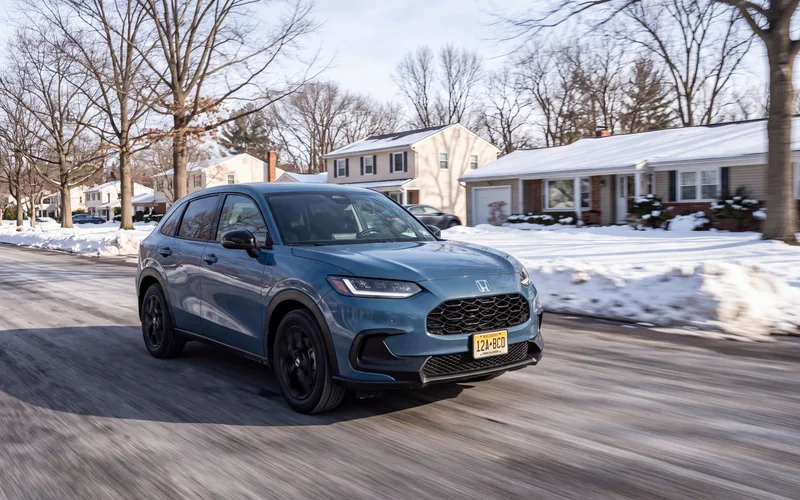 Honda HR-VSubcompact SUVBetter at: Rear-seat space
If your back seat gets used, the HR-V's 37.7 inches of rear legroom and larger cargo hold solve the Corolla Cross's defining weakness for a modest price premium.
Compare 2.05C
2.05C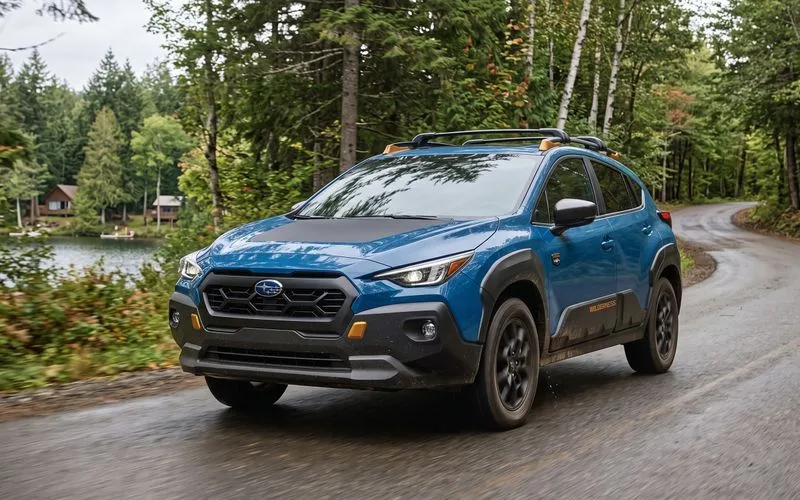 Subaru CrosstrekSubcompact SUVBetter at: All-weather capability
Standard all-wheel drive, more ground clearance and a genuine all-weather reputation make it the better buy for snow-belt and gravel-road drivers.
Compare 2.26C
2.26C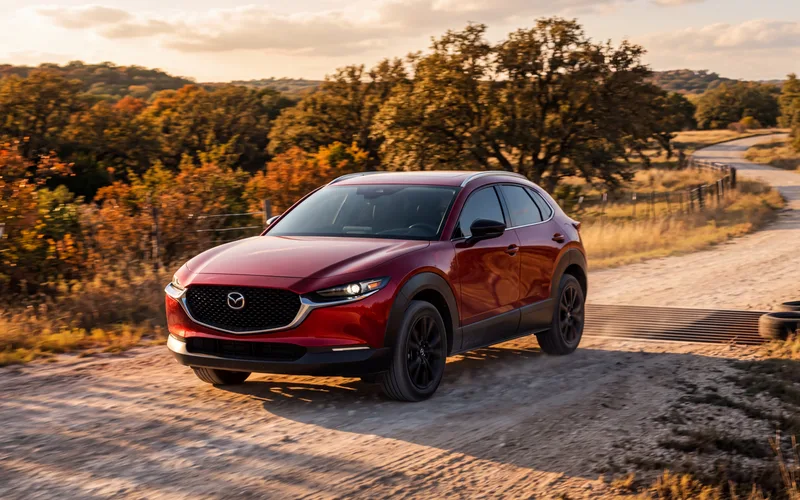 Mazda CX-30Subcompact SUVBetter at: Driving feel
A far nicer interior, real steering feel and an available turbo make it worth the fuel-economy penalty if you don't want your commute to feel like a chore.
CompareSubject scores by year
Hover or tap a score to see what moved it versus the year before. A corner mark flags a big swing.
| Year | Performance | Efficiency | Safety | Space | Cost | Reliability | Tech | Use-case | Driving | Value |
|---|---|---|---|---|---|---|---|---|---|---|
| 2026 | 27 | 75 | 68 | 38 | 71 | 80 | 62 | 59 | 58 | 70 |
| 2025 | 25 | 74 | 77 | 39 | 74 | 76 | 60 | 58 | 56 | 69 |
| 2024 | 25 | 74 | 76 | 38 | 74 | 79 | 59 | 57 | 55 | 71 |
| 2023 | 25 | 74 | 76 | 38 | 75 | 74 | 59 | 57 | 55 | 70 |
| 2022 | 22 | 72 | 77 | 37 | 76 | 78 | 46 | 55 | 55 | 67 |
Compare two years
Best fit & conditions
Higher scores mean a better fit for that use case. Learn more about use-case fit →
Subject profile
Trims & configurations
5 trimsScores above reflect the volume trim. Per-trim specs and scores are rolling out — the full lineup:
Academic Probation · NHTSA safety recalls
Mar 31, 2026Back over prevention: warnings: external/pedestrian alertThe vehicles may fail to make sufficient pedestrian warning sounds when in reverse. As such, these vehicles fail to comply with the requirements of Federal Motor Vehicle Safety Standard (FMVSS) number 141, "Minimum Sound Requirements for Hybrid and Electric Vehicles."
Defect
Toyota Motor Engineering & Manufacturing (Toyota) is recalling certain 2023-2025 Corolla Cross Hybrid vehicles. The vehicles may fail to make sufficient pedestrian warning sounds when in reverse. As such, these vehicles fail to comply with the requirements of Federal Motor Vehicle Safety Standard (FMVSS) number 141, "Minimum Sound Requirements for Hybrid and Electric Vehicles."
Risk
Insufficient pedestrian warning sounds may fail to alert pedestrians of a reversing vehicle, increasing the risk of injury.
Remedy
Dealers will update the software for the pedestrian warning sounds, free of charge. Owner letters were mailed September 1, 2026. Owners may contact Toyota's customer service at 1-800-331-4331. Toyota's numbers for this recall are 26TB08 and 26TA08.
NHTSA campaign 26V203000 ↗Manufacturer no. 26TB08 / 26TA0873,528 vehicles potentially affected (all models in the campaign)Owners notified Aug 27, 2026Filed by Toyota Motor Engineering & ManufacturingFiled as COROLLA CROSS HYBRIDJan 29, 2025Air bags: frontal: driver clockspring/spiral cassette · Steering: columnAn electrical connection inside the steering column's spiral cable assembly may be insufficiently welded, causing the connection to separate and deactivate the driver's air bag. As such, these vehicles fail to comply with the requirements of Federal Motor Vehicle Safety Standard number 208, "Occupant Crash Protection."
Defect
Toyota Motor Engineering & Manufacturing (Toyota) is recalling certain 2023 Toyota Corolla, Corolla Cross, Corolla Cross Hybrid, Highlander, Highlander Hybrid, Tacoma, Lexus RX350, 2023-2024 NX250, and NX350 vehicles that may have been incorrectly repaired under previous NHTSA recall number 23V-480. An electrical connection inside the steering column's spiral cable assembly may be insufficiently welded, causing the connection to separate and deactivate the driver's air bag. As such, these vehicles fail to comply with the requirements of Federal Motor Vehicle Safety Standard number 208, "Occupant Crash Protection."
Risk
A deactivated driver's air bag will not deploy as intended, increasing the risk of injury during a crash.
Remedy
Dealers will inspect and replace the spiral cable assembly as necessary, free of charge. Owner notification letters were mailed March 17, 2025. Owners may contact Toyota's customer service at 1-800-331-4331. Toyota's number for this recall is 25TA02. Lexus' number for this recall is 25LA02.
NHTSA campaign 25V040000 ↗Manufacturer no. 25TA02/25LA021,716 vehicles potentially affected (all models in the campaign)Owners notified Mar 17, 2025Filed by Toyota Motor Engineering & ManufacturingFiled as COROLLA CROSS, COROLLA CROSS HYBRIDSep 20, 2024Service brakes, electric: software/programming · Service brakes, hydraulic: power assist: electric: solenoid/actuatorA software error in the skid control electronic control unit (ECU) may result in a loss of power brake assist when turning a corner.
Defect
Toyota Motor Engineering & Manufacturing (Toyota) is recalling certain 2023-2024 Corolla Cross Hybrid and 2023-2025 Corolla Hybrid vehicles. A software error in the skid control electronic control unit (ECU) may result in a loss of power brake assist when turning a corner.
Risk
A loss of power brake assist can extend the distance required to stop, increasing the risk of a crash.
Remedy
Dealers will update the skid control ECU software, free of charge. Owner notification letters were mailed November 19, 2024. Additionally, notifications to owners of the Corolla Hybrid vehicles were mailed January 17, 2025. Owners may contact Toyota customer service at 1-800-331-4331. Toyota's number for this recall is 24TA11.
NHTSA campaign 24V708000 ↗Manufacturer no. 24TA11145,383 vehicles potentially affected (all models in the campaign)Owners notified Nov 19, 2024Filed by Toyota Motor Engineering & ManufacturingFiled as COROLLA CROSS HYBRIDJul 23, 2024Equipment: other: labelsThe load carrying capacity modification label may display inaccurate added weight values. As such, these vehicles fail to comply with the requirements of Federal Motor Vehicle Safety Standard number 110, "Tire Selection and Rims."
Defect
Gulf States Toyota, Inc. (GST) is recalling certain Toyota 2023 GR Supra, 2024 4 Runner, Corolla, Grand Highlander, Grand Highlander Hybrid, Land Cruiser Hybrid, Tacoma, Tacoma Hybrid, 2023-2024 BZ4X, Corolla Cross Hybrid, GR Corolla, GR86, Highlander, Highlander Hybrid, Prius, Prius Prime, Sequoia Hybrid, Tundra, Tundra Hybrid, Venza Hybrid, 2023-2025 Crown, and 2025 Camry Hybrid vehicles equipped with GST accessories. The load carrying capacity modification label may display inaccurate added weight values. As such, these vehicles fail to comply with the requirements of Federal Motor Vehicle Safety Standard number 110, "Tire Selection and Rims."
Risk
A vehicle with an incorrect maximum capacity weight value may be overloaded, which can increase the risk of a crash.
Remedy
GST will mail new labels to owners, free of charge. Owner notification letters were mailed September 16, 2024. Owners may contact GST customer service at 1-800-444-1074. GST's number for this recall is 24R2.
NHTSA campaign 24V548000 ↗Manufacturer no. 24R233,848 vehicles potentially affected (all models in the campaign)Owners notified Sep 16, 2024Filed by Gulf States Toyota, Inc.Filed as COROLLA CROSS HYBRIDDec 20, 2023Air bags: frontal · Electrical system: instrument cluster/panelThe instrument panel may have been produced without the required perforation, which could result in the front-passenger air bag not deploying properly. As such, these vehicles fail to comply with the requirements of Federal Motor Vehicle Safety Standard number 208, "Occupant Crash Protection."
Defect
Toyota Motor Engineering & Manufacturing (Toyota) is recalling certain 2022-2023 Corolla Cross vehicles that were previously inspected at a dealership under recall 23V-384. The instrument panel may have been produced without the required perforation, which could result in the front-passenger air bag not deploying properly. As such, these vehicles fail to comply with the requirements of Federal Motor Vehicle Safety Standard number 208, "Occupant Crash Protection."
Risk
An air bag that does not deploy as intended increases the risk of injury during a crash.
Remedy
Dealers will inspect and replace the instrument panel as necessary, free of charge. Owner notification letters were mailed January 26, 2024. Owners may contact Toyota's customer service at 1-800-331-4331. Toyota's number for this recall is 23TA16. Vehicles previously inspected under 23V-384 will need to return to the dealership for additional inspection.
NHTSA campaign 23V864000 ↗Manufacturer no. 23TA1612,575 vehicles potentially affected (all models in the campaign)Owners notified Jan 26, 2024Filed by Toyota Motor Engineering & ManufacturingFiled as COROLLA CROSSJul 12, 2023Air bags: frontal: driver clockspring/spiral cassette · Steering: columnAn electrical connection inside the steering column's spiral cable assembly may be insufficiently welded, causing the connection to separate and deactivate the driver's air bag. As such, these vehicles fail to comply with the requirements of Federal Motor Vehicle Safety Standard number 208, "Occupant Crash Protection."
Defect
Toyota Motor Engineering & Manufacturing (Toyota) is recalling certain 2023 Corolla, Corolla Cross, Corolla Cross Hybrid, Highlander, Highlander Hybrid, Tacoma, 2023 Lexus RX350, RX350 Hybrid, RX500 Hybrid, 2023-2024 Lexus NX250, NX350, and NX350 Hybrid vehicles. An electrical connection inside the steering column's spiral cable assembly may be insufficiently welded, causing the connection to separate and deactivate the driver's air bag. As such, these vehicles fail to comply with the requirements of Federal Motor Vehicle Safety Standard number 208, "Occupant Crash Protection."
Risk
A deactivated driver's air bag that does not deploy as intended increases the risk of injury during a crash.
Remedy
Dealers will inspect and replace the spiral cable assembly, if necessary, free of charge. Owner notification letters were mailed September 8, 2023. Owners may contact Toyota's customer service at 1-800-331-4331. Toyota's number for this recall is 23TA08. Lexus' number for this recall is 23LA02.
NHTSA campaign 23V480000 ↗Manufacturer no. 23TA08/ 23LA02152,927 vehicles potentially affected (all models in the campaign)Owners notified Sep 8, 2023Filed by Toyota Motor Engineering & ManufacturingFiled as COROLLA CROSS, COROLLA CROSS HYBRIDMay 30, 2023Air bags: frontal · Electrical system: instrument cluster/panelThe instrument panel may have been produced without the required perforation, which could result in the front-passenger air bag not deploying properly. As such, these vehicles fail to comply with the requirements of Federal Motor Vehicle Safey Standard number 208, "Occupant Crash Protection."
Defect
Toyota Motor Engineering & Manufacturing (Toyota) is recalling certain 2022-2023 Corolla Cross vehicles. The instrument panel may have been produced without the required perforation, which could result in the front-passenger air bag not deploying properly. As such, these vehicles fail to comply with the requirements of Federal Motor Vehicle Safey Standard number 208, "Occupant Crash Protection."
Risk
An air bag that does not deploy as intended increases the risk of injury during a crash.
Remedy
Dealers will inspect and replace the instrument panel, if necessary, free of charge. Owner notification letters are expected to be mailed July 10, 2023. Owners may contact Toyota's customer service at 1-800-331-4331. Toyota's number for this recall is 23TB04/23TA04.
NHTSA campaign 23V384000 ↗Manufacturer no. 23TB04/23TA0496,007 vehicles potentially affected (all models in the campaign)Owners notified Jul 25, 2023Filed by Toyota Motor Engineering & ManufacturingFiled as COROLLA CROSS
1 recall on other model years of the Corolla Cross (2026)
Dec 16, 2025Hybrid propulsion system: inverterA bolt inside the inverter may not have been tightened properly, causing incomplete contact at the inverter terminal.
Defect
Toyota Motor Engineering & Manufacturing (Toyota) is recalling certain 2025-2026 Camry Hybrid and 2026 Corolla Cross Hybrid vehicles. A bolt inside the inverter may not have been tightened properly, causing incomplete contact at the inverter terminal.
Risk
Incomplete contact can cause a loss of motive power, increasing the risk of a crash. In addition, a loose bolt can cause an electrical short while the vehicle is powered on, increasing the risk of a fire.
Remedy
Dealers will replace the inverter assembly, free of charge. Owner letters were mailed July 23, 2026. Owners may contact Toyota customer service at 1-800-331-4331. Toyota's number for this recall is 25TB15/25TA15.
NHTSA campaign 25V869000 ↗Manufacturer no. 25TB15 / 25TA1555,405 vehicles potentially affected (all models in the campaign)Owners notified Jul 16, 2026Filed by Toyota Motor Engineering & ManufacturingFiled as COROLLA CROSS HYBRID
Source: NHTSA Office of Defects Investigation recall database, model years 2022–2026. Recalls are listed by model year as the manufacturer filed them; whether a specific car is affected depends on its VIN — check a VIN at nhtsa.gov ↗. NHTSA model names matched to this page: COROLLA CROSS, COROLLA CROSS HYBRID.
Detailed scoring by subject
1Performance & PowertrainThe Corolla Cross's lowest-graded category.0.00F
The volume gas trim runs Toyota's naturally aspirated 2.0-liter M20A-FKS four rated at 169 hp, unchanged from the 2022 US launch year. 2023 is the first model year the Corolla Cross Hybrid is offered, lifting the top of the lineup to 196 hp combined, but both figures sit near the floor of the SUV horsepower band.
The gas 2.0L peaks at 150–151 lb-ft high in the rev range, so the Corolla Cross has to be worked to feel willing in traffic. The Hybrid's Atkinson-cycle engine makes less crank torque but adds instant electric assist off the line, which is why it feels stronger despite the paper deficit.
Published figures put the 2023 gas Corolla Cross around 9.2 seconds to 60 mph, and Edmunds measured 9.6 s in an AWD example — near the back of the subcompact-crossover field. The new Hybrid is a genuinely different car in this respect: Car and Driver recorded 7.3 s in an XSE and Edmunds 7.9 s, roughly two seconds quicker.
The 2.0-liter is untroubled at part throttle but turns coarse and loud the moment real acceleration is asked of it, and because it is short on torque that happens often — merging and grades mean sustained high revs. The new Hybrid smooths low-speed response with electric assist and is the better-mannered choice, yet reviewers still call out droning from both the engine and the hybrid system under load.
Both 2023 powertrains are CVT-only — a Direct Shift-CVT with a physical launch gear on the gas car and an eCVT in the Hybrid — and both draw the same complaint: revs hang at one pitch under throttle and drone at cruise. There are no harsh shifts because there are no shifts, but the rubber-band response and noise are a constant rather than an occasional annoyance.
Toyota rates the 2023 Corolla Cross at 1,500 lbs properly equipped, which covers a small utility trailer or a pair of jet skis and nothing more. That beats the zero rating some subcompact rivals carry but sits just above the floor of the SUV towing band.
AWD is optional on all three 2023 gas grades — L AWD, LE AWD and XLE AWD are all catalogued — and standard on every Hybrid grade, so no buyer has to climb the trim ladder to get it, which is unusually good access for the segment. The hardware itself is basic: Dynamic Torque Control AWD on gas models and an electric rear-motor E-Four setup on Hybrids, with no low range and no locking differential.
Roughly 8.1–8.2 inches of ground clearance plus available AWD makes the Corolla Cross fine on a snowy driveway or a graded forest road, and AWD gas models add selectable drive modes. There is no off-road grade, no skid plating, no locker and no low-range transfer case, and street tires with modest approach angles keep it a pavement-and-light-dirt vehicle.
2023 is the year the lineup gains real breadth: alongside the 169 hp gas 2.0L in FWD or AWD, the first-ever Corolla Cross Hybrid arrives with 196 hp and standard AWD, giving buyers two meaningfully different cars — one roughly two seconds quicker to 60 and far thriftier than the other. It stops short of top marks because there is no turbo engine, no PHEV and no EV variant under the nameplate.
2Efficiency & RangeGrades above the middle of the scale.2.99B-
Scored on the volume gas LE FWD with the 2.0L M20A-FKS four and Direct Shift CVT, the configuration most 2023 Corolla Crosses left the Huntsville plant as — mid-pack for a subcompact crossover. The hybrid, brand new for 2023, is a 31% step up at 42 MPG combined but only reached dealers in summer 2023, late in the model year.
The naturally aspirated 2.0L with a CVT is only middling around town for the class, and city driving is where the gas car gives up the most — the new-for-2023 hybrid rates 45 MPG city, a 14 MPG advantage and the fastest-paying part of the electrified upgrade.
Highway economy is the gas Corolla Cross's stronger side and closes most of the gap to the hybrid (33 vs 38 MPG), since the hybrid system contributes least at steady cruising speed. Note the 2023 gas AWD rates 32 MPG highway — a mile per gallon better than the same drivetrain rates for 2024.
EPA puts the gas FWD at 397 miles on a 12.4-gallon tank — below average for the segment, because a small tank cancels out respectable economy. The hybrid's efficiency is similarly blunted by a 10.6-gallon tank, netting 445 miles rather than the 500+ its 42 MPG would otherwise deliver.
EPA pegs the gas FWD at $1,900 a year at 15,000 miles — roughly average for a value-priced SUV, so the gas Corolla Cross saves little versus the class. The hybrid's $1,450 estimate cuts $450 a year, recovering its roughly $3,500 premium over about eight years of average driving.
Every 2023 Corolla Cross — gas and hybrid, FWD and AWD — runs on regular 87-octane unleaded. No premium requirement, no diesel or E85 complication, and no charging hardware or home electrical work, since the hybrid is self-charging rather than a plug-in.
3SafetyThe Corolla Cross's best-graded category.3.15B
NHTSA crash-tested the 2023 Corolla Cross and published 4 stars frontal and 5 stars side (5 barrier, 5 pole), but never ran the rollover test for MY2023, so no overall star rating was assigned that year. The same pre-facelift XG10 structure with identical frontal and side results earned a published 5-star overall once rollover was finally tested for MY2025, which is the generation figure used here.
A 2023 TOP SAFETY PICK, but 2023 is the model year in which the two toughened IIHS tests first landed on this nameplate and both came back Acceptable, keeping it clear of TSP+. The updated moderate overlap front rated rear passenger restraints and kinematics Marginal, and in the updated side test the driver's pelvis measured Poor at 6.9 kN combined force. Everything older is Good — small overlap front on both sides, the original moderate overlap test, roof strength and head restraints.
2023 is the year the Corolla Cross stepped up from Toyota Safety Sense 2.0 to TSS 3.0, standard on every trim, gas and the new hybrid alike — Pre-Collision System with Pedestrian Detection, Full-Speed Range Dynamic Radar Cruise Control, Lane Departure Alert with Steering Assist, Lane Tracing Assist, Road Sign Assist, Automatic High Beams and the new Proactive Driving Assist. The single gap is blind-spot monitoring with rear cross-traffic alert, which starts at LE rather than on the base L; since LE is the volume trim, the typical buyer does get the full suite.
IIHS rates pedestrian front crash prevention Superior both day and night, and the Corolla Cross avoided a collision outright in every single scenario — crossing child and crossing adult at 12 and 25 mph in daylight, crossing adult at night on both high and low beams, and parallel adult at night all the way to the demanding 37 mph run on low beams. Nighttime low-beam performance is where most subcompact rivals give points back; this system gave none.
Blind Spot Monitor with Rear Cross-Traffic Alert is fitted from LE upward rather than on the base L, so IIHS classifies it as optional on this nameplate — but where it is fitted it comes paired with Safe Exit Assist, which warns of approaching traffic before an occupant opens a door and is a genuinely useful addition most subcompact rivals skip. Coverage is otherwise alert-only, with no steering or braking intervention in the blind spot, and rear automatic braking is bundled into the XLE's parking-assist system rather than into the cross-traffic function.
Lane Departure Alert with Steering Assist and Lane Tracing Assist are standard across the 2023 range, and the move to TSS 3.0 brought improved lane recognition plus Proactive Driving Assist for gentle steering and braking support through curves. In practice Toyota's LTA is dependable on well-marked highway but comparatively fidgety — it nudges rather than confidently centers, hands back early on faded lines, and only provides centering while the radar cruise is engaged. IIHS still catalogued the 2023 car as lane departure warning only, without crediting prevention.
Full-Speed Range Dynamic Radar Cruise Control is standard on every 2023 trim and works down to a stop and back up again, pairing with Lane Tracing Assist for a competent highway-assist package at this price. Calibration is smooth and predictable, but the gas volume trim's 169-hp 2.0-liter and CVT make resumes and uphill catch-ups leisurely; the new-for-2023 hybrid's 196 hp meaningfully sharpens that.
Toyota offered no hands-free highway driving system on the 2023 Corolla Cross at any trim or price — Teammate/Advanced Drive was confined to top-end Lexus and Mirai models. Lane Tracing Assist requires hands on the wheel and steering torque input, and warns then disengages without it.
The LED projectors fitted to L, LE and the standard XLE rate only Acceptable — low beams were inadequate on the gradual left curve and the high beams inadequate on the left of the straightaway and on both sharp curves, salvaged partly by high-beam-assist credit. Good-rated headlights exist but require the XLE with the Adaptive Front-Lighting System package, so the volume LE buyer gets the weaker set.
The upright, boxy pre-facelift Corolla Cross greenhouse is one of the better ones in the subcompact class — tall side glass, a low beltline and modest pillar thickness give clear forward and quarter sightlines, helped by a high seating position and an easy-to-place body. What holds the score back is the complete absence of camera compensation in 2023: no 360-degree Panoramic View Monitor was offered on any grade, so the rear three-quarter blind zone rests on mirrors and the standard backup camera, with front and rear parking sensors reserved for the XLE.
IIHS rates LATCH ease of use Good+, the top tier, awarded for extra usable positions. Both outboard positions have complete, easily reached hardware — anchors visible, zero force needed to attach, 89-degree clearance — and the center position adds a tether anchor plus borrowable lower anchors, so three seats can be attached. The only real reservation is the physical width of a subcompact rear bench for genuine three-across use.
4Space & ComfortOne of the Corolla Cross's weakest categories.0.50F
The 2023 Corolla Cross is a two-row, five-passenger subcompact SUV across every gas grade (L, LE, XLE) and across the all-new 2023 Hybrid grades (S, SE, XSE); no six- or seven-seat configuration exists.
The volume LE grade without the available moonroof measures 38.6 in of front headroom — mid-pack against the 37–42 in SUV band. Published sources list 38.6 in and 39.5 in as the two roof configurations but disagree on which belongs to the moonroof car, so the conservative figure is used.
42.9 in of front legroom is genuinely generous for a subcompact SUV and is identical across all 2023 gas and Hybrid grades — the front row is the part of this cabin that is not compromised.
The tall, boxy roofline gives the second row roughly 39 in of headroom — near the top of the 36–40 in SUV band and the strongest single dimension in this cabin, which partly offsets the very tight rear legroom.
At 32.0 in the second row is among the tightest in the subcompact SUV class — well short of the Honda HR-V and Hyundai Kona — and reviewers single it out as the packaging flaw that defines the car.
No third row is offered on any 2023 Corolla Cross grade — it is strictly a two-row, five-seat subcompact SUV, so this item scores in the low band by definition rather than by a judgment about seat quality.
24.0 cu ft behind the second row on the volume FWD gas grade is roughly par for a subcompact SUV but sits under the 25 cu ft floor of the all-SUV normalization band, which spans compact through full-size SUVs; AWD hardware and the new hybrid battery cut it to 21.5 cu ft.
46.9 cu ft with the 60/40 bench folded is respectable within the subcompact class but well below the 55 cu ft floor of the SUV normalization band, which is calibrated across the whole SUV field; the seats also do not fold flat, so usable volume is worse than the number suggests.
Everyday storage is competent rather than clever — decent cupholders, bottle-capable door bins, a usefully deep center console and a standard overhead console — with wireless charging from the LE up, but there is no underfloor cargo solution and no standout packaging trick.
Front seats have decent cushioning and a comfortably reclined rear backrest, but Edmunds faults thin thigh support for taller drivers and limited adjustment on lower grades — and the 32-in second row caps adult comfort on longer trips regardless of how the cushions are shaped.
The comfort-oriented tune absorbs most bumps without fuss and is the strongest part of the cabin experience, but it can feel soft and floaty over consistent undulations, and rivals feel more buttoned down. The new-for-2023 Hybrid S and SE carry a sport-tuned suspension that trades some compliance for body control.
Highway refinement is a documented weakness: noticeable road noise at speed, a climate fan Edmunds calls very noisy on full blast, and on the first-year Hybrid the 2.0-liter drones under acceleration through the CVT-style eCVT.
Comfort equipment is thin at the volume end and only adequate at the top: the L makes do with manual air conditioning, the LE adds automatic climate control, and dual-zone automatic climate with rear-seat vents plus heated power front seats do not arrive until the XLE (or Hybrid XSE). No heated steering wheel, no ventilated seats and no remote pre-conditioning at any 2023 price.
5Cost of OwnershipOne of the Corolla Cross's strongest categories.3.10B
The gas L FWD opens the 2023 range at $23,060 before Toyota's $1,335 delivery charge, landing under $24,500 delivered — below the bottom of the SUV normalization band, so this item maxes out. Prices rose roughly $865 over the 2022 launch year but the car stayed one of the cheapest crossovers on sale.
LE is the volume gas grade, and AWD — the main reason to step up from a Corolla sedan — adds $1,300, putting the representative car just over $28,000 delivered. Even the new-for-2023 hybrid XSE tops out near $33,000, keeping the whole lineup in the cheapest quarter of the SUV band.
An entirely conventional Toyota service ledger — the 2.0L four and CVT need ordinary oil, filter and fluid intervals — so scheduled maintenance dominates and the repair line stays small. The spread between sources is a scope difference: CarEdge counts only the factory schedule, while Edmunds-style figures add tires, brakes, battery and alignment, and the honest all-in number sits between them.
This is the Corolla Cross's strongest ownership line and the reason its all-in cost undercuts cheaper-to-buy rivals: Toyota badge, US assembly and steady demand for affordable small crossovers hold residuals at the top of the SUV band, roughly ten points better than the compact-SUV average.
Standard Toyota coverage and the industry floor — the Hyundai Kona and Kia Seltos, the Corolla Cross's closest price rivals, both give 5 yr / 60,000 mi.
The gas volume trim gets the segment-minimum 5 yr / 60,000 mi, trailing the Hyundai/Kia 10 yr / 100,000 mi benchmark. Buyers of the new-for-2023 hybrid pick up materially longer coverage on the electrified hardware, which does not apply to the representative gas LE scored here.
ToyotaCare covers factory-scheduled service for 2 yr / 25,000 mi with 2 years of unlimited-mileage roadside assistance — real money off the first few visits, but a short window with no charging credits, no extended connected-service package and nothing beyond the standard Toyota bundle. Mid-band: better than nothing, short of the multi-year programs that earn 80+.
$28,025 volume-trim price minus its estimated resale value after 5 years (70% retained, or about $19,618) leaves about $8,408 in depreciation. Add the projected $5,100 in 5-year maintenance and repairs, and owning this vehicle for 5 years costs about $13,508 in total.
6Reliability & QualityOne of the Corolla Cross's strongest categories.3.04B
Consumer Reports predicts above-average reliability and owner satisfaction surveys are strong, but 2023 is measurably the weakest year of this nameplate: J.D. Power's model-year-specific quality & reliability score fell to the low 70s on steering and electrical problems, and NHTSA logged 174 complaints — far more than a Toyota crossover normally attracts. Above the segment midpoint on brand and CR strength, held back from the 80s by the 2023-specific problem volume.
Toyota is one of the two or three most dependable badges sold in the US and has been for a decade — top-two on Consumer Reports' brand rankings in the 2023 timeframe and first as of the latest survey. The only reason this isn't in the 90s is that J.D. Power's long-term data puts Toyota eighth rather than top-five, behind Buick, Subaru and several GM brands.
Four NHTSA recalls on the 2023 gas car and five on the hybrid, and every one touches a safety system — and, worse, two of them exist only because the first remedy was performed incorrectly at dealers. Both underlying defects disable an airbag. The complaint file compounds it: the dominant owner report is the stop/start system failing to relight the engine with a "Engine Stopped / Steering Power Low" warning, and a CVT-shudder software TSB is also in circulation. Repeated safety-system recalls put this in the below-average band regardless of the badge.
The 2.0L M20A-FKS Dynamic Force four and the K120 Direct Shift CVT are high-volume Toyota hardware shared with the Corolla and RAV4 families, with a documented 200,000-mile track record and no pattern of oil consumption, head-gasket or timing-chain failure. The new-for-2023 hybrid runs the M20A-FXS on Toyota's fifth-generation THS II, the most proven hybrid system on the market. Short of the top band because early Dynamic Force engines have a known EGR-cooler corrosion/leak weakness and the CVT draws hesitation complaints.
The near-universal reviewer criticism of this car: hard, hollow-feeling plastic across the dash, doors and console with almost no soft-touch relief, and switchgear straight out of the cheapest Corolla. It is defensible at a $23,060 base price and it is not worse than a Trax or Kicks, but the Mazda CX-30 and Honda HR-V are in a different league for the same money, so this sits below the segment midpoint.
Reviewers consistently describe the underlying assembly as solid — tight panel gaps, no rattle complaints, the structure feeling more expensive than the plastics bolted to it. The mark against it is a genuine assembly-line escape: instrument panels left the plant without the required airbag-deployment perforation, and the dealer network then mis-executed the inspection badly enough to require a second campaign. Solid, not exemplary.
Roughly 1,200 US Toyota dealers make this one of the densest service networks in the country — an owner is rarely far from a franchised shop, and independent Toyota specialists are everywhere too. Service satisfaction scores are at or above the mass-market average rather than class-leading, which is what keeps it out of the top few points.
About the best case in the industry: the Corolla Cross shares its engine, CVT, TNGA-C platform hardware and most consumables with the Corolla and RAV4, the two highest-volume nameplates Toyota sells, so parts are cheap, stocked everywhere and duplicated across a huge aftermarket. Routine service is correspondingly inexpensive — well under $200 for a typical visit.
7Technology & InfotainmentMid-pack among this car's ten categories.2.00C
For 2023 Toyota replaced the Corolla Cross's carryover head unit with Toyota Audio Multimedia and standardized a single 8.0-inch touchscreen across the whole range — the volume LE and the top Hybrid XSE share the same display, and the 10.5-inch unit did not reach this nameplate until later model years.
The new-for-2023 Toyota Audio Multimedia looks modern and keeps physical knobs for audio and climate, but this first year drew reviewer complaints about lag in navigation and slow voice responses, and the 8-inch panel is small with no upgrade path on any grade.
Wireless Apple CarPlay and wireless Android Auto are standard on all six 2023 grades including the stripped base L — best-case availability for a subcompact SUV and the single strongest tech attribute on the car.
There is no embedded offline navigation — Cloud Navigation with Google POI data, Destination Assist and the 'Hey Toyota' Intelligent Assistant all ride on Drive Connect — but 2023 at least bundles a 1-year Drive Connect trial on LE and above, so owners get to try it before it lapses to a paid subscription.
Six speakers are standard and merely adequate, but the nine-speaker JBL system with subwoofer and integrated amplifier is a roughly $800 option available on upper grades — broader premium-audio access than most subcompact SUVs allow.
The volume LE keeps analog dials with a small 4.2-inch multi-information display; the 7-inch fully digital gauge cluster is reserved for the top XLE and Hybrid XSE grades and is not optional lower down, leaving most of the lineup partial-digital at best.
The new Toyota Audio Multimedia head unit brought genuine over-the-air update capability to the Corolla Cross for 2023 — a real gain over the 2022 system — but scope is limited to multimedia software and map data, with no evidence of feature-adding whole-vehicle OTA on this platform.
The Toyota app with Remote Connect covers remote start/stop, lock/unlock, vehicle locate, status and guest-driver alerts with a long trial on Smart Key grades, and Safety Connect carries an up-to-10-year trial — but the base L goes without, everything eventually lapses to paid, and Digital Key phone-as-key is not offered on the 2023 Corolla Cross.
The volume LE and every grade above it get four USB-C outlets — two front, two rear — plus a Qi wireless charging pad as standard, a solid count for a subcompact SUV; only the base L drops to two front ports with no wireless pad, and no household AC outlet is offered anywhere.
Smart Key proximity entry with push-button start is standard from the LE upward and remote start arrives through the Toyota app, but the base L goes without, there is no phone-as-key for 2023, and a power liftgate is buried in an option package on the top grades with no hands-free kick sensor at any price.
A backup camera is standard on every grade and Front and Rear Parking Assist with Automatic Braking arrives on the top XLE and Hybrid XSE, but no surround-view Panoramic View Monitor is offered on any US 2023 Corolla Cross and there is no automated parking — leaving the volume LE with a plain reversing camera and no proximity sensors.
No head-up display is offered on any 2023 Corolla Cross grade, gas or hybrid, standard or optional — the 7-inch fully digital gauge cluster on XLE and Hybrid XSE is the only driver-facing display upgrade in the range.
8Use-Case FitMid-pack among this car's ten categories.1.84C-
The attachment hardware is class-leading — IIHS rates LATCH ease of use Good+ for extra positions, with lower anchors needing zero pull force, 89 degrees of clearance and a borrowable center position — and the tall doors and wide liftgate suit daily kid loading. The space is not: at 32.0 in the second row is among the tightest in the subcompact class, Cars.com's 2023 Car Seat Check could not fit three seats, and a rear-facing infant seat forced the front passenger seat so far forward that a 5-ft-6-in adult sat with her knees on the glove box.
2023 is the year Toyota Safety Sense 3.0 became standard across the whole line — gas L through XLE and all three new hybrid grades — so a $24.4k base car carries full-speed adaptive cruise, pedestrian-detecting AEB, lane tracing and Proactive Driving Assist, and Rear-Seat Reminder is standard on all six grades. It earned a 2023 IIHS TOP SAFETY PICK. It sits below the top band because both of the toughened IIHS tests came back only Acceptable in their first year on this nameplate (rear-passenger restraints Marginal in the updated moderate overlap; driver pelvis Poor at 6.9 kN in the updated side test), NHTSA published no overall star rating for MY2023, headlights on L/LE/standard XLE rate only Acceptable, and blind-spot monitoring is absent from the base L.
The essentials are there — rear-seat vents, two USB-C ports and a 60/40 bench — but a multi-hour trip with four aboard is a genuine compromise: the class-tightest 32.0 in of rear legroom, documented highway road roar, a driver's seat Consumer Reports says loses support on longer drives, and only 21.5 cu ft of cargo behind the seats on the hybrid. There is no rear-seat entertainment, no rear sunshades and no rear climate zone at any 2023 price.
Easy to live with day to day: physical climate and volume controls, wireless CarPlay and Android Auto standard on every 2023 grade, light steering, an upright greenhouse with airy visibility, a compliant suspension and full-speed adaptive cruise with lane tracing standard line-wide. It stops short of effortless because the volume gas car's 169 hp through a CVT sounds strained under real load at roughly 9.2–9.6 s to 60 mph, road noise intrudes at speed, and the driver's seat has limited adjustment on the trims most buyers choose.
Among the cheapest ways to commute short of plugging in: EPA rates the volume gas FWD at 32 MPG combined for about $1,900 a year, and the new-for-2023 Hybrid at 42 MPG combined for roughly $1,450 — with Consumer Reports measuring 41 mpg overall in its own testing — all on regular 87-octane with no charging hardware. Toyota's parts-and-labor economics, a strong defect record and two years of included scheduled maintenance keep the rest of the per-mile ledger low. Short of the top band only because the gas car's 32 MPG is merely average for a subcompact crossover.
A genuinely easy city car: 175.6 in long and 71.9 in wide on a 103.9-in wheelbase with a 35.4-ft turning diameter, plus an upright greenhouse, low beltline and elevated seating position that make the body simple to place. Held out of the top band because 2023 offered no camera compensation at all — no Panoramic View Monitor on any grade that year — with parking sensors reserved for the XLE and no automated parking at any price.
The gas car's 1,500 lb rating with 150 lb tongue weight and roughly 940 lb of payload covers a small utility trailer or a pair of jet skis and nothing more, and the 169-hp engine reviewers already call strained unloaded leaves no headroom under load. Toyota does not publish a US tow rating for the 2023 Hybrid at all, so the higher-output powertrain buys no extra capability here. With no bed, no work grade and 21.5–24.0 cu ft of cargo, this is not meaningfully a work vehicle — it merely beats the several subcompact rivals rated at zero tow.
The M20A Dynamic Force engine and TNGA-C platform are proven across the Corolla and RAV4 families and Toyota's dependability record is the best in the industry, so a Corolla Cross will survive hard use better than most small crossovers. But 2023 is only the nameplate's second US model year and the first for the hybrid system in this body, there is no fleet-work track record, no wear-oriented interior grade, no heavy-duty package and minimal capacity — mid-band by definition rather than by defect.
Factory roof side rails from the LE grade up with genuine Toyota and Thule crossbar fitments, cargo-area tie-downs, a 60/40 folding bench, available all-weather liners and a 1,500 lb hitch on the gas car are the whole story. There is no 120V AC inverter or household outlet on any 2023 grade, no bed-access hardware, no washable work-grade interior and no commercial upfit ecosystem — and the base L lacks the reinforced roof mounting points entirely.
Standard full-speed adaptive cruise with lane tracing on every 2023 grade genuinely cuts highway fatigue, and the hybrid's ~445-mile range is respectable. Everything else works against it: the volume gas FWD carries only a 12.4-gallon tank for about 397 miles, road roar is a documented weakness at cruising speed, the driver's seat loses support on long drives with lumbar adjustment locked to the Hybrid XSE, and 32.0 in of rear legroom rules out four adults for a long haul.
A competent trailhead and gravel-road vehicle: about 8 inches of ground clearance, Dynamic Torque Control AWD optional on every gas grade with Multi-Terrain Select and electronic E-Four AWD standard on all three new Hybrid grades, underbody cladding, roof rails from LE up and a 1,500 lb gas-car rating for a small trailer. It falls well short of a genuine adventure enabler — no off-road grade, no skid plating, no locker or low range, no 120V camp power and street tires throughout.
A wide liftgate opening, a 60/40 split-folding bench standard from the base L and roof rails from LE up cover ordinary luggage and a bike rack without complaint, but the Hybrid most efficiency buyers choose carries just 21.5 cu ft behind the seats, the folded seats do not sit level with the load floor, there is no underfloor storage solution, and a power liftgate in 2023 requires an option package on XLE or the Hybrid XSE.
9Driving ExperienceOne of the Corolla Cross's weakest categories.1.71C-
Secure and predictable but explicitly comfort-tuned: reviewers of the volume gas car call the chassis clumsy and uninspiring with noticeable lean, while crediting composure in emergency maneuvers. 2023 is the debut year of the Hybrid, which adds a (mildly) sport-tuned suspension on the stiff TNGA-C platform and posts a respectable 0.82 g on the skidpad, lifting the model average a touch above a plain gas-only year — but it still trails the CX-30 (62.6) and Crosstrek (63.9) benchmarks.
The electric rack is light, accurate and easy to place, which combined with the tight turning circle makes the car effortless in town — but every 2023 review calls it numb, with steering listed among the systems Toyota deliberately tuned for comfort rather than feedback. Bottom half of the 'precise enough but numb' band.
Stopping power is adequate with no fade complaints and Consumer Reports measured the new Hybrid stopping shorter than the gas car from 60 mph on both dry and wet pavement, so regen blending costs nothing in distance. Two things hold it below the 2024 read: the pedal is soft and long-travel by design (braking is one of the systems tuned for comfort), and the 2023 Hybrid is subject to NHTSA recall 24TA11 for a skid-control ECU software fault that can command inadequate brake-fluid pressure when braking mid-corner — a lengthened stop and a hard pedal until the dealer reflash is done.
The volume gas 2.0L/CVT combination is the weak link — short on torque, elastic on tip-in and roughly 9.2–9.6 seconds to 60 mph, so it has to be worked hard in ordinary traffic. The new-for-2023 Hybrid is a materially better-calibrated car: 196 combined hp, instant electric assist off the line and 7.3 s to 60 in Car and Driver's test, with seamless engine-on transitions, which pulls the blended score to the middle of the band.
Powertrain noise is the most consistently criticized aspect of the 2023 car in both forms: the gas 2.0L drones at one flat pitch under CVT load and turns coarse whenever real acceleration is asked of it, which is often given the torque deficit, and the Hybrid's engine is similarly vocal when the battery hands off. This is a pre-facelift US car without the acoustic front side glass and added firewall insulation Toyota fitted later in the run, which is why it sits below the segment midpoint.
At 35.4 ft curb-to-curb the Corolla Cross sits near the tight end of the SUV band — a real everyday advantage in parking structures and U-turns, courtesy of the short 103.9-in wheelbase, and unchanged across gas and the new Hybrid for 2023.
Sightlines and access are the strong half: an elevated hip point, tall glass and slim pillars give genuinely excellent all-round visibility, and the crossover ride height makes ingress and egress easy. Adjustability and small-item ergonomics are the weak half — power lumbar reserved for the top grade, seat support that fades on long drives, thinly padded armrests and a center console that crowds the driver's right knee. Physical volume and climate dials survive alongside the touchscreen.
The volume gas car is competent, forgettable transport — a 9.2–9.6-second 0–60, numb comfort-biased steering, soft body control and constant CVT drone add up to no enthusiast appeal at all. The new Hybrid is the more satisfying half of the 2023 lineup and reviewers grant it 'mildly fun' status thanks to real thrust and a rigid platform, but even its advocates say the 'sport' label is a stretch and point buyers to a CX-30 for the drive itself.
10Value & Market PositionGrades above the middle of the scale.2.71B-
2023 is the year the safety and tech floor jumped: Toyota Safety Sense 3.0 became standard on every grade including the $23,060 base L, and Toyota swapped in its latest infotainment with an 8-inch touchscreen, wireless Apple CarPlay/Android Auto and improved voice control across the line — strong content for a sub-$25k subcompact SUV. The L itself is still plain (17-inch steel wheels, cloth, manual climate, no blind-spot monitor), so volume buyers step up to the LE for blind-spot monitoring with rear cross-traffic alert, proximity key and dual-zone auto climate.
A $23,060 base sticker undercut most of the 2023 subcompact SUV field while still carrying the full TSS 3.0 suite, and the new hybrid is the standout buy of the range — 196 combined hp with standard electronic on-demand AWD and an EPA 42 mpg combined for $29,305 delivered, a combination rivals either could not match or charged far more for. Toyota's class-leading residuals protect the outlay further; the coarse 169-hp gas four and its droning CVT are what you give up.
Six grades across two powertrains for 2023 — gas L, LE and XLE each in FWD or AWD, plus the new Hybrid S, SE and XSE with standard AWD — span roughly $23k to $33k with sensible steps and a genuine budget entry point. It is a notch narrower than the following year (the Nightshade appearance grade arrives for 2024), and there is no manual, no off-road variant and no way to get the hybrid in a stripped-down trim.
US volume rose to 64,090 units in calendar 2023 from 56,666 in 2022 — a roughly 13% gain and a best-ever year at that point, with the mid-year hybrid launch adding momentum in the back half. Solid and rising, but well short of the segment's leaders and short of the 45% surge the nameplate posted the following year, so this is a healthy mid-pack seller rather than a class leader.
Toyota carries the strongest reliability halo and one of the most loyal followings in the mainstream US market, and the Corolla nameplate is itself a trust asset for the first-time and budget buyers who shop this class. That equity converts into transaction confidence and strong residuals rather than aspirational cachet.
2023 was still a seller's market for cheap Toyota crossovers: inventory was thin, transaction prices sat at or above sticker, and dealer market adjustments of up to several thousand dollars were reported on Corolla-family cars. The new hybrid was supply-constrained from its June on-sale date and routinely commanded full MSRP or more. Toyota's support was limited to $500 military and college rebates plus subvented APR and lease programs — buyer benefit was genuinely poor this year.
Only the second model year of the first US-market generation, and the most substantive one of the run before the MY2026 restyle: 2023 added the all-new hybrid powertrain with standard AWD, made Toyota Safety Sense 3.0 standard across the board and replaced the infotainment system with Toyota's latest software and an 8-inch screen on every grade. A current TNGA-C platform with a year-old chassis and brand-new electronics meant no replacement risk for a 2023 buyer.
Reviewers rated it sensible and safe but distinctly mid-pack: praised for standard safety content, hybrid efficiency, passenger space and expected reliability, criticized for hard interior plastics, engine drone, below-average cargo volume and an underpowered gas four. U.S. News ranked it 13th among 2023 affordable subcompact SUVs at 7.3/10 and Edmunds said it comes up short against the Trailblazer, Kona, CX-30 and Crosstrek. It took an IIHS Top Safety Pick — not the Pick+ its Prius stablemates earned — and no NACTOY or 10Best recognition.