

The verdict
A struggling subcompact suv, strong on safety and held back by performance.
The 2025 Corolla Cross is one of the cheapest small SUVs to own. It starts at $25,485, gets 32 MPG on gas or 42 MPG as a hybrid, keeps about 70% of its value after five years, and has a 5-star NHTSA rating plus an IIHS Top Safety Pick. In exchange you get a slow, noisy gas engine (about 9.2 seconds to 60 mph), one of the tightest back seats in the class at 32 inches of legroom, and a cabin full of hard plastic. It is also the last year before the 2026 refresh. If you can stretch to the hybrid, it fixes most of the driving complaints.
Jump to scoresStrengths
- Very low cost to own
- Cheap to fuel, especially as a hybrid
- Strong crash ratings and standard safety tech
What holds it back
- Slow, strained gas engine
- Cramped back seat and modest cargo space
- Short warranty
Top alternatives
Cars shoppers cross-shop with the Toyota Corolla Cross 1.54D
1.54D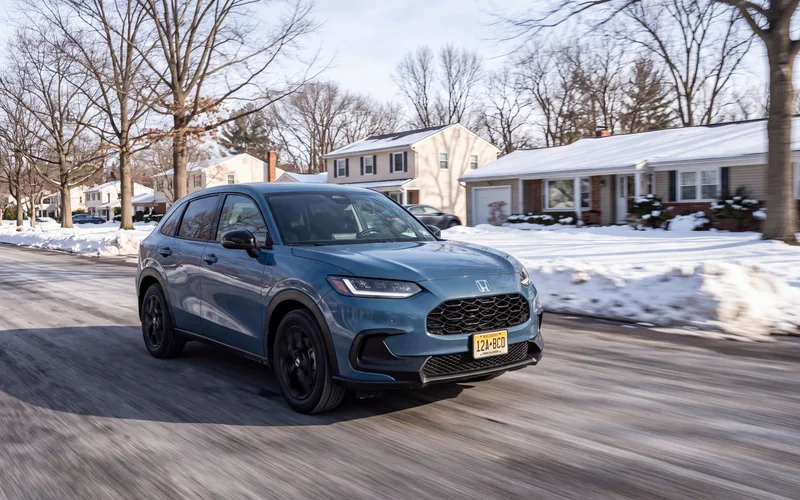 Honda HR-VSubcompact SUVBetter at: Rear-seat space
If your back seat gets used, the HR-V's 37.7 inches of rear legroom and larger cargo hold solve the Corolla Cross's defining weakness for a modest price premium.
Compare 2.05C
2.05C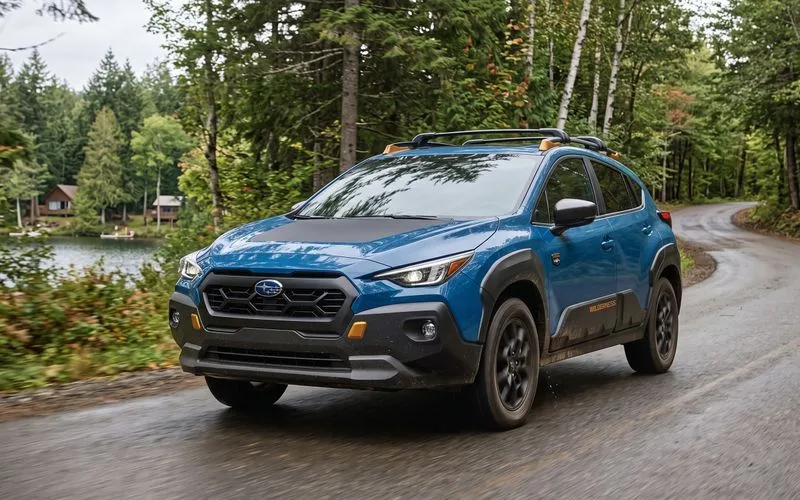 Subaru CrosstrekSubcompact SUVBetter at: All-weather capability
Standard all-wheel drive, more ground clearance and a genuine all-weather reputation make it the better buy for snow-belt and gravel-road drivers.
Compare 2.26C
2.26C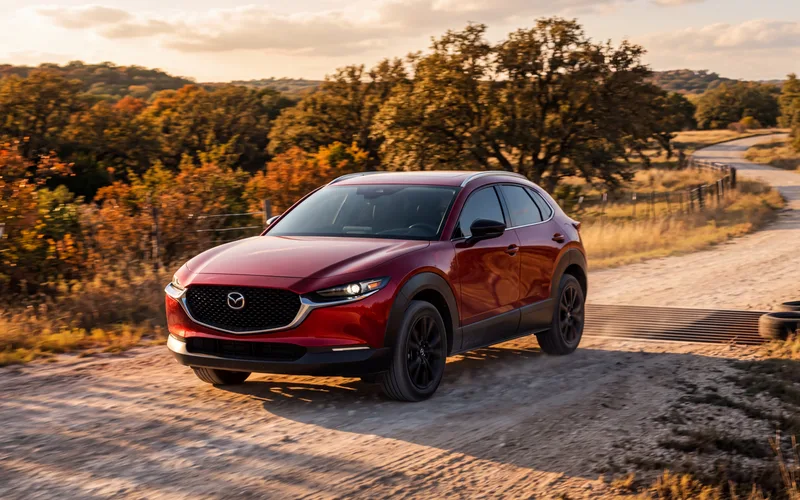 Mazda CX-30Subcompact SUVBetter at: Driving feel
A far nicer interior, real steering feel and an available turbo make it worth the fuel-economy penalty if you don't want your commute to feel like a chore.
CompareSubject scores by year
Hover or tap a score to see what moved it versus the year before. A corner mark flags a big swing.
| Year | Performance | Efficiency | Safety | Space | Cost | Reliability | Tech | Use-case | Driving | Value |
|---|---|---|---|---|---|---|---|---|---|---|
| 2026 | 27 | 75 | 68 | 38 | 71 | 80 | 62 | 59 | 58 | 70 |
| 2025 | 25 | 74 | 77 | 39 | 74 | 76 | 60 | 58 | 56 | 69 |
| 2024 | 25 | 74 | 76 | 38 | 74 | 79 | 59 | 57 | 55 | 71 |
| 2023 | 25 | 74 | 76 | 38 | 75 | 74 | 59 | 57 | 55 | 70 |
| 2022 | 22 | 72 | 77 | 37 | 76 | 78 | 46 | 55 | 55 | 67 |
Compare two years
Best fit & conditions
Higher scores mean a better fit for that use case. Learn more about use-case fit →
Subject profile
Trims & configurations
5 trimsScores above reflect the volume trim. Per-trim specs and scores are rolling out — the full lineup:
Academic Probation · NHTSA safety recalls
Mar 31, 2026Back over prevention: warnings: external/pedestrian alertThe vehicles may fail to make sufficient pedestrian warning sounds when in reverse. As such, these vehicles fail to comply with the requirements of Federal Motor Vehicle Safety Standard (FMVSS) number 141, "Minimum Sound Requirements for Hybrid and Electric Vehicles."
Defect
Toyota Motor Engineering & Manufacturing (Toyota) is recalling certain 2023-2025 Corolla Cross Hybrid vehicles. The vehicles may fail to make sufficient pedestrian warning sounds when in reverse. As such, these vehicles fail to comply with the requirements of Federal Motor Vehicle Safety Standard (FMVSS) number 141, "Minimum Sound Requirements for Hybrid and Electric Vehicles."
Risk
Insufficient pedestrian warning sounds may fail to alert pedestrians of a reversing vehicle, increasing the risk of injury.
Remedy
Dealers will update the software for the pedestrian warning sounds, free of charge. Owner letters were mailed September 1, 2026. Owners may contact Toyota's customer service at 1-800-331-4331. Toyota's numbers for this recall are 26TB08 and 26TA08.
NHTSA campaign 26V203000 ↗Manufacturer no. 26TB08 / 26TA0873,528 vehicles potentially affected (all models in the campaign)Owners notified Aug 27, 2026Filed by Toyota Motor Engineering & ManufacturingFiled as COROLLA CROSS HYBRID
7 recalls on other model years of the Corolla Cross (2022–2024, 2026)
Dec 16, 2025Hybrid propulsion system: inverterA bolt inside the inverter may not have been tightened properly, causing incomplete contact at the inverter terminal.
Defect
Toyota Motor Engineering & Manufacturing (Toyota) is recalling certain 2025-2026 Camry Hybrid and 2026 Corolla Cross Hybrid vehicles. A bolt inside the inverter may not have been tightened properly, causing incomplete contact at the inverter terminal.
Risk
Incomplete contact can cause a loss of motive power, increasing the risk of a crash. In addition, a loose bolt can cause an electrical short while the vehicle is powered on, increasing the risk of a fire.
Remedy
Dealers will replace the inverter assembly, free of charge. Owner letters were mailed July 23, 2026. Owners may contact Toyota customer service at 1-800-331-4331. Toyota's number for this recall is 25TB15/25TA15.
NHTSA campaign 25V869000 ↗Manufacturer no. 25TB15 / 25TA1555,405 vehicles potentially affected (all models in the campaign)Owners notified Jul 16, 2026Filed by Toyota Motor Engineering & ManufacturingFiled as COROLLA CROSS HYBRIDJan 29, 2025Air bags: frontal: driver clockspring/spiral cassette · Steering: columnAn electrical connection inside the steering column's spiral cable assembly may be insufficiently welded, causing the connection to separate and deactivate the driver's air bag. As such, these vehicles fail to comply with the requirements of Federal Motor Vehicle Safety Standard number 208, "Occupant Crash Protection."
Defect
Toyota Motor Engineering & Manufacturing (Toyota) is recalling certain 2023 Toyota Corolla, Corolla Cross, Corolla Cross Hybrid, Highlander, Highlander Hybrid, Tacoma, Lexus RX350, 2023-2024 NX250, and NX350 vehicles that may have been incorrectly repaired under previous NHTSA recall number 23V-480. An electrical connection inside the steering column's spiral cable assembly may be insufficiently welded, causing the connection to separate and deactivate the driver's air bag. As such, these vehicles fail to comply with the requirements of Federal Motor Vehicle Safety Standard number 208, "Occupant Crash Protection."
Risk
A deactivated driver's air bag will not deploy as intended, increasing the risk of injury during a crash.
Remedy
Dealers will inspect and replace the spiral cable assembly as necessary, free of charge. Owner notification letters were mailed March 17, 2025. Owners may contact Toyota's customer service at 1-800-331-4331. Toyota's number for this recall is 25TA02. Lexus' number for this recall is 25LA02.
NHTSA campaign 25V040000 ↗Manufacturer no. 25TA02/25LA021,716 vehicles potentially affected (all models in the campaign)Owners notified Mar 17, 2025Filed by Toyota Motor Engineering & ManufacturingFiled as COROLLA CROSS, COROLLA CROSS HYBRIDSep 20, 2024Service brakes, electric: software/programming · Service brakes, hydraulic: power assist: electric: solenoid/actuatorA software error in the skid control electronic control unit (ECU) may result in a loss of power brake assist when turning a corner.
Defect
Toyota Motor Engineering & Manufacturing (Toyota) is recalling certain 2023-2024 Corolla Cross Hybrid and 2023-2025 Corolla Hybrid vehicles. A software error in the skid control electronic control unit (ECU) may result in a loss of power brake assist when turning a corner.
Risk
A loss of power brake assist can extend the distance required to stop, increasing the risk of a crash.
Remedy
Dealers will update the skid control ECU software, free of charge. Owner notification letters were mailed November 19, 2024. Additionally, notifications to owners of the Corolla Hybrid vehicles were mailed January 17, 2025. Owners may contact Toyota customer service at 1-800-331-4331. Toyota's number for this recall is 24TA11.
NHTSA campaign 24V708000 ↗Manufacturer no. 24TA11145,383 vehicles potentially affected (all models in the campaign)Owners notified Nov 19, 2024Filed by Toyota Motor Engineering & ManufacturingFiled as COROLLA CROSS HYBRIDJul 23, 2024Equipment: other: labelsThe load carrying capacity modification label may display inaccurate added weight values. As such, these vehicles fail to comply with the requirements of Federal Motor Vehicle Safety Standard number 110, "Tire Selection and Rims."
Defect
Gulf States Toyota, Inc. (GST) is recalling certain Toyota 2023 GR Supra, 2024 4 Runner, Corolla, Grand Highlander, Grand Highlander Hybrid, Land Cruiser Hybrid, Tacoma, Tacoma Hybrid, 2023-2024 BZ4X, Corolla Cross Hybrid, GR Corolla, GR86, Highlander, Highlander Hybrid, Prius, Prius Prime, Sequoia Hybrid, Tundra, Tundra Hybrid, Venza Hybrid, 2023-2025 Crown, and 2025 Camry Hybrid vehicles equipped with GST accessories. The load carrying capacity modification label may display inaccurate added weight values. As such, these vehicles fail to comply with the requirements of Federal Motor Vehicle Safety Standard number 110, "Tire Selection and Rims."
Risk
A vehicle with an incorrect maximum capacity weight value may be overloaded, which can increase the risk of a crash.
Remedy
GST will mail new labels to owners, free of charge. Owner notification letters were mailed September 16, 2024. Owners may contact GST customer service at 1-800-444-1074. GST's number for this recall is 24R2.
NHTSA campaign 24V548000 ↗Manufacturer no. 24R233,848 vehicles potentially affected (all models in the campaign)Owners notified Sep 16, 2024Filed by Gulf States Toyota, Inc.Filed as COROLLA CROSS HYBRIDDec 20, 2023Air bags: frontal · Electrical system: instrument cluster/panelThe instrument panel may have been produced without the required perforation, which could result in the front-passenger air bag not deploying properly. As such, these vehicles fail to comply with the requirements of Federal Motor Vehicle Safety Standard number 208, "Occupant Crash Protection."
Defect
Toyota Motor Engineering & Manufacturing (Toyota) is recalling certain 2022-2023 Corolla Cross vehicles that were previously inspected at a dealership under recall 23V-384. The instrument panel may have been produced without the required perforation, which could result in the front-passenger air bag not deploying properly. As such, these vehicles fail to comply with the requirements of Federal Motor Vehicle Safety Standard number 208, "Occupant Crash Protection."
Risk
An air bag that does not deploy as intended increases the risk of injury during a crash.
Remedy
Dealers will inspect and replace the instrument panel as necessary, free of charge. Owner notification letters were mailed January 26, 2024. Owners may contact Toyota's customer service at 1-800-331-4331. Toyota's number for this recall is 23TA16. Vehicles previously inspected under 23V-384 will need to return to the dealership for additional inspection.
NHTSA campaign 23V864000 ↗Manufacturer no. 23TA1612,575 vehicles potentially affected (all models in the campaign)Owners notified Jan 26, 2024Filed by Toyota Motor Engineering & ManufacturingFiled as COROLLA CROSSJul 12, 2023Air bags: frontal: driver clockspring/spiral cassette · Steering: columnAn electrical connection inside the steering column's spiral cable assembly may be insufficiently welded, causing the connection to separate and deactivate the driver's air bag. As such, these vehicles fail to comply with the requirements of Federal Motor Vehicle Safety Standard number 208, "Occupant Crash Protection."
Defect
Toyota Motor Engineering & Manufacturing (Toyota) is recalling certain 2023 Corolla, Corolla Cross, Corolla Cross Hybrid, Highlander, Highlander Hybrid, Tacoma, 2023 Lexus RX350, RX350 Hybrid, RX500 Hybrid, 2023-2024 Lexus NX250, NX350, and NX350 Hybrid vehicles. An electrical connection inside the steering column's spiral cable assembly may be insufficiently welded, causing the connection to separate and deactivate the driver's air bag. As such, these vehicles fail to comply with the requirements of Federal Motor Vehicle Safety Standard number 208, "Occupant Crash Protection."
Risk
A deactivated driver's air bag that does not deploy as intended increases the risk of injury during a crash.
Remedy
Dealers will inspect and replace the spiral cable assembly, if necessary, free of charge. Owner notification letters were mailed September 8, 2023. Owners may contact Toyota's customer service at 1-800-331-4331. Toyota's number for this recall is 23TA08. Lexus' number for this recall is 23LA02.
NHTSA campaign 23V480000 ↗Manufacturer no. 23TA08/ 23LA02152,927 vehicles potentially affected (all models in the campaign)Owners notified Sep 8, 2023Filed by Toyota Motor Engineering & ManufacturingFiled as COROLLA CROSS, COROLLA CROSS HYBRIDMay 30, 2023Air bags: frontal · Electrical system: instrument cluster/panelThe instrument panel may have been produced without the required perforation, which could result in the front-passenger air bag not deploying properly. As such, these vehicles fail to comply with the requirements of Federal Motor Vehicle Safey Standard number 208, "Occupant Crash Protection."
Defect
Toyota Motor Engineering & Manufacturing (Toyota) is recalling certain 2022-2023 Corolla Cross vehicles. The instrument panel may have been produced without the required perforation, which could result in the front-passenger air bag not deploying properly. As such, these vehicles fail to comply with the requirements of Federal Motor Vehicle Safey Standard number 208, "Occupant Crash Protection."
Risk
An air bag that does not deploy as intended increases the risk of injury during a crash.
Remedy
Dealers will inspect and replace the instrument panel, if necessary, free of charge. Owner notification letters are expected to be mailed July 10, 2023. Owners may contact Toyota's customer service at 1-800-331-4331. Toyota's number for this recall is 23TB04/23TA04.
NHTSA campaign 23V384000 ↗Manufacturer no. 23TB04/23TA0496,007 vehicles potentially affected (all models in the campaign)Owners notified Jul 25, 2023Filed by Toyota Motor Engineering & ManufacturingFiled as COROLLA CROSS
Source: NHTSA Office of Defects Investigation recall database, model years 2022–2026. Recalls are listed by model year as the manufacturer filed them; whether a specific car is affected depends on its VIN — check a VIN at nhtsa.gov ↗. NHTSA model names matched to this page: COROLLA CROSS, COROLLA CROSS HYBRID.
Detailed scoring by subject
1Performance & PowertrainThe Corolla Cross's lowest-graded category.0.00F
The volume gas LE runs Toyota's 2.0-liter M20A-FKS four making 169 hp, unchanged for 2025; the optional Hybrid system lifts combined output to 196 hp. Both figures sit at the bottom of the SUV horsepower band, though 169 hp is normal for the subcompact class.
The gas 2.0L peaks at 150 lb-ft (some outlets round it to 151) high in the rev range, so the Corolla Cross has to be worked hard to feel responsive. The Hybrid's Atkinson-cycle engine makes less engine torque at 139 lb-ft but adds instant electric assist off the line.
The gas volume trim needs roughly 9.2 seconds to 60 mph, and U.S. News clocked an AWD example at 9.6 s — genuinely slow even for a subcompact crossover. The Hybrid is a different car in this respect, with Car and Driver recording 7.3 s.
The naturally aspirated 2.0L is adequate and predictable at town speeds but grows coarse and loud whenever it is asked for real effort, and merging or hill climbing means holding high revs. The Hybrid is the better-mannered of the two — electric assist smooths the low-speed response — but reviewers still call out engine noise under moderate acceleration in both versions.
Both powertrains use a CVT and both are criticized for it: the gas car's Direct Shift-CVT drones loudly at highway speed and can feel finicky and rubber-banded at low speed under heavy throttle. It never shifts harshly because there are no real shifts, but the noise and elastic response are a persistent complaint rather than an occasional one.
Toyota rates both the gas and Hybrid Corolla Cross at 1,500 lbs, which covers a small utility trailer, a pair of jet skis or a light popup and nothing more. It is better than the zero rating of some subcompact rivals but near the floor of the SUV towing band.
AWD is optional on every gas trim (L, LE, XLE) and standard on all four Hybrid trims, so no buyer is locked out by price point — a genuine strength in this segment. The hardware is basic though: Dynamic Torque Control AWD on gas models and the rear-motor E-Four setup on Hybrids, with Multi-Terrain Select on AWD gas cars but no low range or locking differential.
8.1 inches of ground clearance and available AWD make the Corolla Cross fine on a snowy driveway or a gravel forest road, and gas AWD models add Multi-Terrain Select modes. There is no off-road trim, no skid plating, no locker and no low range, and the modest approach angles and street tires make this a pavement-and-light-dirt vehicle only.
Two genuinely distinct powertrains are offered — the 169 hp gas 2.0L in FWD or AWD, and a 196 hp AWD-standard hybrid that is both quicker and far more efficient — which is more choice than most subcompact crossovers give. It stops short of top marks because there is no turbo option, no PHEV and no EV variant under this nameplate.
2Efficiency & RangeGrades above the middle of the scale.2.99B-
Scored on the volume gas LE FWD with the 2.0L 169-hp four and CVT — average for a subcompact crossover in 2025 and the configuration most Corolla Crosses left the lot as. The optional hybrid is a large step up at 42 MPG combined.
The naturally aspirated 2.0L with a CVT is only middling around town for the class — the hybrid's 45 MPG city is 14 MPG better and is where the electrified version pays back fastest.
Highway economy is the gas Corolla Cross's stronger side and closes most of the gap to the hybrid (33 vs 38 MPG), since the hybrid system contributes least at steady cruising speed.
EPA puts the gas FWD at 397 miles on a 12.4-gallon tank — below average for the segment, since the volume FWD trim carries a smaller tank than the 13.2-gallon AWD and lands at effectively the same range despite better MPG. The hybrid's efficiency is partly cancelled by a 10.6-gallon tank, netting 445 miles rather than the 500+ its economy would suggest.
EPA pegs the gas FWD at $1,900 a year, roughly the average for a value-priced SUV — the gas car saves little versus the class. The hybrid's $1,450 estimate recovers most of its price premium over about eight years of average driving.
Every 2025 Corolla Cross — gas and hybrid, FWD and AWD — runs on regular 87-octane unleaded. No premium requirement, no diesel or E85 complication, and no charging hardware or home electrical work, since the hybrid is self-charging rather than a plug-in.
3SafetyThe Corolla Cross's best-graded category.3.25B+
NHTSA rated the 2025 Corolla Cross 5 stars overall in all three tested configurations, with a 4-star frontal, a clean 5-star side (5 barrier, 5 pole) and a 4-star rollover result.
A 2025 TOP SAFETY PICK — Good in small overlap front (both driver and passenger sides) and Good in the updated side test, but only Acceptable in the updated moderate overlap front test, where the rear-passenger restraints and dummy kinematics were rated Marginal. That single Acceptable is precisely what keeps it out of TSP+.
Toyota Safety Sense 3.0 is standard on every 2025 trim — Pre-Collision System with pedestrian/cyclist detection and left-turn intersection support, Full-Speed Range Dynamic Radar Cruise Control, Lane Departure Alert with Steering Assist, Lane Tracing Assist, Road Sign Assist, Automatic High Beams and Proactive Driving Assist. The one gap is blind-spot monitoring with rear cross-traffic alert, which starts at LE rather than on the base L; since LE is the volume trim, a typical buyer gets the full suite.
Best-case IIHS pedestrian front crash prevention result: Good overall, with the vehicle avoiding a collision in every single scenario — crossing child at 12 and 25 mph in daylight, and crossing and parallel adult at night on both high AND low beams, including the demanding 37 mph parallel-adult run. Nighttime low-beam performance is where most rivals lose points, and this system gave none back.
Blind Spot Monitor with Rear Cross-Traffic Alert is standard from LE upward and on every hybrid trim, but is not fitted to the base L — IIHS classifies the system as optional on this nameplate. Coverage is alert-only, with no steering or braking intervention in the blind spot; rear automatic braking is a separate option rather than part of the cross-traffic function.
Lane Departure Alert with Steering Assist plus Lane Tracing Assist are standard, and TSS 3.0 layers on Proactive Driving Assist for gentle steering and braking support in curves. Reviewers consistently describe Toyota's LTA as dependable on well-marked highways but comparatively fidgety — it nudges rather than confidently centers, and hands back on faded lines.
Full-Speed Range Dynamic Radar Cruise Control is standard on every trim and works down to a stop and back, pairing with Lane Tracing Assist for a competent highway-assist package at this price point. Reviewers rate the calibration smooth and predictable, though the CVT-and-2.0L drivetrain makes resumes and uphill catch-ups leisurely.
Toyota offers no hands-free highway driving system on the Corolla Cross at any trim or price — Teammate/Advanced Drive is confined to top-end Lexus and Mirai models. Lane Tracing Assist requires hands on the wheel and torque input.
The LED projectors fitted to L, LE and the standard XLE rate only Acceptable — high beams were inadequate on the left straightaway and on both sharp curves, saved partly by high-beam assist credit. Good-rated headlights exist but require the XLE with the Adaptive Front Lighting System package, so the volume LE buyer gets the weaker set.
The upright, boxy Corolla Cross greenhouse is one of the better ones in the subcompact class — tall side glass, a low beltline and modest pillar thickness give clear forward and quarter sightlines, and the high seating position helps. The rear three-quarter view is the weak spot, and the Panoramic View Monitor that would compensate is reserved for the XLE rather than standard.
IIHS rates LATCH ease of use Good+ — the highest tier, awarded for extra usable positions. Both outboard positions have fully visible lower anchors needing zero pounds of pull force and near-90-degree clearance, and the center position adds a tether anchor plus borrowable lower anchors, so three seats can be attached. The only reservation is the physical width of a subcompact rear bench for genuine three-across use.
4Space & ComfortOne of the Corolla Cross's weakest categories.0.56F
The 2025 Corolla Cross is a two-row, five-passenger subcompact SUV across every gas (L/LE/XLE) and Hybrid (S/SE/Nightshade/XSE) grade; no seven-seat configuration is offered.
Volume LE grade without the available moonroof measures 38.6 in of front headroom — mid-pack for a subcompact SUV against the 37–42 in SUV band. Sources publish 38.6 in and 39.5 in as the two configurations but disagree on which belongs to the moonroof car, so the conservative published figure is used.
42.9 in of front legroom is genuinely generous for the class and is consistent across all 2025 gas and Hybrid grades — front occupants are the part of this cabin that is not compromised.
The tall, boxy roofline gives the second row 39.0 in of headroom — near the top of the 36–40 in SUV band and the strongest single dimension in this cabin.
At 32.0 in the second row is among the tightest in the subcompact SUV class — below the Kicks and well below the HR-V — and reviewers single it out as the car's defining packaging flaw.
No third row is offered on any 2025 Corolla Cross grade — it is a strictly two-row, five-seat subcompact SUV, so this item scores in the low band by definition.
24.0 cu ft behind the second row on the volume FWD gas grade is about average for a subcompact SUV but sits under the 25 cu ft floor of the all-SUV normalization band; AWD and Hybrid drop to 21.5 cu ft because of the rear-drive hardware and battery.
46.9 cu ft with the 60/40 bench folded is respectable for the subcompact class but well below the 55 cu ft floor of the SUV band, which is calibrated across compact and full-size SUVs.
Everyday storage is competent rather than clever — decently sized front cupholders, bottle-capable door bins and a usefully deep center console — with four USB-C ports split between rows and available wireless charging on upper grades, but no standout packaging trick and no underfloor cargo solution.
Front seats are supportive and draw consistent praise for daily and commuting duty, but the driving position is a common complaint (pedals far, wheel close, high beltline) even with the 10-way power seat, and the 32-in second row limits adult comfort on longer trips.
The clear high point of the cabin experience: comfort-tuned suspension that absorbs small bumps unusually well for a small SUV and stays planted on the highway, held back by noticeable body motion in corners and large potholes that still register sharply. AWD grades with the multi-link rear ride slightly firmer than the FWD twist-beam cars.
Highway noise is a documented weakness — road roar is noticeable at speed, the gas engine gets coarse under acceleration, and reviewers even flag the climate fan as loud on full blast. The Hybrid adds engine drone when the system calls for full power.
The essentials are covered — rear-seat vents are standard across the line and dual-zone automatic climate control plus heated front seats arrive on XLE and upper Hybrid grades — but heated front seats and a heated steering wheel remain trim-gated for 2025 (the cold-weather package only became standard on XLE AWD and Hybrid XSE for 2026), and there are no ventilated seats or remote pre-conditioning at any price.
5Cost of OwnershipOne of the Corolla Cross's strongest categories.3.05B
The gas L FWD opens the 2025 range at $24,135 before Toyota's $1,350 delivery charge, putting the Corolla Cross at the very bottom of the SUV pricing band — only a handful of subcompacts start under $26k delivered.
LE is the volume gas grade, and AWD — the feature that justifies stepping up from a Corolla sedan — adds roughly $1,300, landing the representative car near $29,000 delivered. Even the top hybrid XSE stays under $33,000, so the whole lineup sits in the cheapest quarter of the SUV band.
A conventional Toyota service ledger — the 2.0L four and CVT need ordinary oil, filter and fluid intervals — so maintenance dominates while the repair line stays unusually small on the strength of Toyota's defect record. Comfortably below the midpoint of the SUV band without being class-leading.
This is the Corolla Cross's strongest ownership-cost line and the reason its total cost undercuts cheaper-to-buy rivals: Toyota badge, hybrid availability and steady demand for affordable small crossovers keep residuals at the top of the SUV band, roughly ten points above the compact-SUV average.
Standard Toyota coverage and the industry floor — Hyundai's Kona and Kia's Seltos, the Corolla Cross's closest price rivals, both give 5 yr / 60,000 mi.
The gas volume trim gets the segment-minimum 5 yr / 60,000 mi, again trailing the Hyundai/Kia 10 yr / 100,000 mi benchmark. Buyers who step up to the hybrid pick up materially longer coverage on the electrified hardware, which does not apply to the representative gas LE scored here.
ToyotaCare covers factory-scheduled service for 2 yr / 25,000 mi with 2 years of unlimited-mileage roadside assistance — real money saved on the first few services, but a short window with no charging credits, no extended connected-service package and nothing beyond the standard Toyota bundle. Sits mid-band: better than nothing, short of the multi-year programs that earn 80+.
$29,015 volume-trim price minus its estimated resale value after 5 years (70% retained, or about $20,311) leaves about $8,705 in depreciation. Add the projected $5,021 in 5-year maintenance and repairs, and owning this vehicle for 5 years costs about $13,726 in total.
6Reliability & QualityOne of the Corolla Cross's strongest categories.3.18B
The two major predictors disagree on the 2025 car, and they disagree along the powertrain split: Consumer Reports rates the gas Corolla Cross — the volume configuration — as less reliable than the average 2025 vehicle on infotainment, transmission and noise complaints, while rating the hybrid above average. J.D. Power lands the model at 79/100, the top of its 'average' band. Mixed signals on the volume trim put this squarely mid-band rather than in the top tier the Toyota badge would imply.
Both major studies put Toyota in the top tier over this period and, unusually, they agree: the brand finished third in the 2025 J.D. Power VDS at 162 PP100 against a 202 industry average — behind only its own Lexus arm and Mazda — and tops Consumer Reports' most recent brand reliability ranking. Toyota also took the most model-level VDS awards of any group.
The 2025 build itself has a notably clean sheet — no recalls touch the gas car and NHTSA has logged only 18 complaints for the model year — and the one campaign that reaches it, an AVAS pedestrian-alert software fix on the hybrid, is a low-severity compliance item resolved by an OBD-II update. Held to the middle of the band because the generation as a whole has accumulated roughly six campaigns including two airbag-deployment defects and a hybrid brake-ECU fault, so the record being judged is a good year within a mixed generation rather than a clean generation.
The 2025 car carries the thoroughly proven M20A Dynamic Force four — shared with the Corolla and Corolla Hatchback and routinely reported past 200,000 miles — paired with either the Direct Shift-CVT, whose physical launch gear takes takeoff torque off the belt, or THS II, the most validated hybrid architecture on the market. Short of the 90s only because of the known direct-injection-only intake-valve carbon buildup and scattered EGR cooler and CVT overheating reports.
This is the pre-refresh cabin, before the 2026 model year swapped most piano black for matte and added soft-touch at the elbow points, and reviewers consistently read it as cost-cut: hard plastics essentially throughout, synthetic-feeling textiles, and — the sharper criticism — missing padding in the places occupants actually rest on, namely both door and center armrests. Below mid-band because the hard surfaces are in high-touch zones, not just the low-touch areas the band tolerates.
Assembly is fundamentally sound — owners repeatedly describe sturdy, long-lasting plastics and a solid feel, and 70% of surveyed hybrid owners recommend the car — but this generation has a specific, repeatable rattle pattern rather than scattered one-offs, centered on the center console and armrest lid, plus reports of dashboard rattles and water pooling inside the doors. That is the 'generally solid with scattered complaints' band, not the top of it.
Toyota operates one of the densest mass-market service networks in the country at roughly 1,250 US rooftops, so warranty and routine work are reachable almost anywhere and ToyotaCare covers scheduled maintenance out of the box. Kept just below the very top because service satisfaction, as opposed to coverage, is good rather than leading — Toyota did not place in the top three mass-market SUV brands in the 2025 J.D. Power Customer Service Index.
The Corolla Cross shares its engine, transmission and hybrid hardware with the Corolla and RAV4, two of the highest-volume nameplates in the US, so parts are commodity-priced, stocked broadly, and supported by a deep independent and aftermarket repair base. Toyota's measured ownership costs run well under the industry average; only hybrid-specific components keep this out of the very top band.
7Technology & InfotainmentMid-pack among this car's ten categories.2.05C
2025 is the final pre-facelift model year, so the 8.0-inch Toyota Audio Multimedia screen is standard across the entire lineup including the gas XLE; the 10.5-inch unit is only reachable through the hybrid SE Premium Package or the XSE. The volume LE (gas) / SE (hybrid) grades therefore carry 8.0 in.
Toyota's Audio Multimedia software is logically laid out and keeps a real volume knob and physical climate controls on the 8-inch head unit, but reviewers flag occasional lag and note the standard screen is small for the tasks it carries — and in 2025 there is no way to upgrade it on a gas car at all.
Wireless Apple CarPlay and Android Auto are standard on all 2025 Corolla Cross grades including the base L — best-case availability for a subcompact SUV and the single strongest tech attribute on the car.
The 'Hey Toyota' Intelligent Assistant and Cloud Navigation are competent but arrive only through a Drive Connect subscription after a short trial, and there is no embedded offline navigation — most owners revert to wireless phone projection once the trial lapses.
A six-speaker system is standard across the lineup and is merely adequate; the nine-speaker JBL Premium upgrade with subwoofer and amplifier is a genuine improvement but is confined to the top XSE grade, so no gas Corolla Cross buyer can get it in 2025.
2025 still pairs analog dials with a small 4.2-inch multi-information display as standard, with a 7-inch digital gauge cluster reserved for upper grades — partial digital at best on the volume trim, and well short of rivals offering full digital clusters lower in the range.
Toyota Audio Multimedia accepts over-the-air updates for infotainment software and map data over the embedded cellular connection or home Wi-Fi, but there is no evidence of feature-adding whole-vehicle OTA on this model.
The Toyota app with Remote Connect covers remote start/climate, lock/unlock, vehicle locate and Digital Key phone-as-key, and the app itself is reliable — but every one of those functions lapses to a paid subscription once the trial expires.
Two front USB-C ports are standard and every grade above the base L adds two rear USB-C ports plus Qi wireless charging — a good count for a subcompact SUV, though there is no household AC outlet.
Smart Key proximity entry with push-button start is standard from the volume LE grade upward and Digital Key adds phone-as-key through Remote Connect, but the base L still goes without and there is no hands-free power liftgate on the volume trims.
A rear camera is standard and the Panoramic View Monitor plus Front and Rear Parking Assist with Automatic Braking are offered, but surround view and parking sensors are reserved for the upper grades and no automated parking is available at any price.
No head-up display is offered on any 2025 Corolla Cross grade, gas or hybrid, including the top XLE and XSE — the optional 7-inch gauge cluster is the only driver-facing display upgrade.
8Use-Case FitMid-pack among this car's ten categories.1.91C-
The hardware is excellent — IIHS rates LATCH ease of use Good+ with visible lower anchors needing zero pull force and a borrowable third position — and the tall doors and wide liftgate make loading easy. The space is not: at 32.0 in the second row is among the tightest in the subcompact class, Cars.com could not fit three car seats, and a rear-facing infant seat pushed the front passenger seat so far forward that a 5-ft-6-in adult sat with her knees on the glove box.
Strong credentials precisely on the trims families buy: a 5-star NHTSA overall rating in every tested configuration, 2025 IIHS Top Safety Pick, Toyota Safety Sense 3.0 standard on the $25.5k base car, and Blind Spot Monitor with Rear Cross-Traffic Alert plus Safe Exit Alert and the rear-seat reminder standard from the volume LE up. Held below the top band by the Acceptable moderate-overlap result — driven by Marginal rear-passenger restraints — and by headlights that only rate Acceptable on L/LE/standard XLE.
The basics are covered — rear-seat vents standard across the line, two rear USB-C ports on every grade above the base L — but the class-tightest 32.0 in of rear legroom, documented highway road roar, and only 21.5 cu ft of cargo behind the seats on the AWD and Hybrid versions families actually buy make a multi-hour trip with four aboard a real compromise. There is no rear-seat entertainment, no rear sunshades and no rear climate zone at any price.
An easy car to live with day to day: physical climate knobs and a volume knob, wireless CarPlay and Android Auto standard on every grade, light steering, an upright greenhouse, a comfort-tuned suspension that dusts off broken pavement, and full-speed adaptive cruise with lane tracing standard on all trims. It falls short of effortless because 169 hp through a CVT sounds strained whenever asked for real effort, road noise is intrusive at speed, and reviewers struggle with the driving position — pedals too far, wheel too close — even with the power seat.
Among the cheapest ways to commute short of an EV: EPA rates the volume gas FWD at 32 MPG combined for about $1,900 a year and the hybrid AWD at 42 MPG for about $1,450, all on regular 87-octane with no charging hardware. Toyota's parts-and-labor economics, an exceptional defect record and two years of included scheduled maintenance keep the rest of the per-mile ledger low. Short of the top band only because the gas car's 32 MPG is merely average for a subcompact crossover — the hybrid is where the real saving lives.
One of the easier SUVs in the class to thread through a city: 175.6 in long and 71.9 in wide on a 103.9-in wheelbase with a 35.4-ft turning circle, plus an upright greenhouse, low beltline and high seating position that make the body easy to place. It is not top-band because the standard backup camera is low-resolution on this pre-facelift year, the Panoramic View Monitor and parking sensors are locked to XLE, and no automated parking is offered at any price.
A 1,500 lb tow rating with 150 lb tongue weight and roughly 940 lb of payload covers a small utility trailer, a pair of jet skis or a light popup and nothing beyond that, and the 169 hp engine and CVT that reviewers already call strained unloaded leave no headroom under load. It beats the subcompact rivals rated at zero tow, but with no bed, no work grade and 21.5–24.0 cu ft of cargo, this is not meaningfully a work vehicle.
The M20A Dynamic Force engine and TNGA-C platform are thoroughly proven and Toyota's dependability record is the best in the industry, so a Corolla Cross will survive hard use better than most small crossovers. But it is a passenger vehicle with no fleet-work reputation, no wear-oriented interior grade, no heavy-duty package and minimal capacity — mid-band by definition rather than by defect.
Roof side rails on LE and above with genuine Toyota and aftermarket crossbar fitments, cargo-area tie-downs, a 60/40 folding rear seat, available all-weather liners and a 1,500 lb hitch are the whole story. There is no 120V AC inverter or household outlet on any grade, no bed-access hardware, no washable work-grade interior, and no commercial upfit ecosystem — and the base L lacks the roof-rail mounting points entirely.
Standard full-speed adaptive cruise with lane tracing on every grade genuinely cuts highway fatigue, and the hybrid's ~445-mile range is respectable. Everything else works against it: the volume gas FWD carries only a 12.4-gallon tank for about 397 miles, road roar and CVT drone are documented weaknesses at cruising speed, the driving position resists adjustment, and the 32-in rear bench rules out four adults for a long haul.
A competent trailhead and gravel-road vehicle: 8.1 in of ground clearance, AWD optional on every gas grade and standard on all four Hybrid grades, Multi-Terrain Select on gas AWD cars, underbody cladding, roof rails from LE up and a 1,500 lb rating for a small trailer or toy hauler. It stops well short of a genuine adventure enabler — no off-road grade, no skid plating, no locker or low range, no 120V power for camp, and street tires throughout.
The wide liftgate opening, a 60/40 split-folding bench and roof rails from LE up handle ordinary luggage and a bike rack without complaint, but the AWD and Hybrid versions most buyers choose carry just 21.5 cu ft behind the seats and 44.0 cu ft folded — behind most of the class — the folded seats do not sit level with the load floor, there is no underfloor storage solution, and a power liftgate is confined to a top-grade package.
9Driving ExperienceOne of the Corolla Cross's weakest categories.1.79C-
The 2025 Corolla Cross is secure and predictable but explicitly tuned for comfort over agility — reviewers describe soft, floaty body control over undulating pavement and no real cornering appetite. The Hybrid's firmer suspension tune is the better-controlled of the two, which keeps this mid-band rather than lower, but it trails subcompact handling benchmarks like the CX-30 and Crosstrek.
The electric rack is accurate and light enough to make the car easy in town, but it is comfort-calibrated with little feedback — precise enough but numb, at the low end of that band. Hybrid grades get a slightly more substantial tune that reviewers found gave adequate weight and directness.
Stopping power is adequate with no fade complaints and the pre-facelift Hybrid blends regen to friction transparently, but the pedal itself is the weak point — soft and long-travel, with little sense of reserve. No published instrumented 60-0 figure exists for the 2025 car, so this sits mid-band on review consensus rather than a measured distance.
Consistent with cat1's 2025 findings (powertrain refinement 48, transmission behavior 45): the volume gas 2.0L needs high revs to do anything and the CVT rubber-bands under throttle and is finicky at low speed, giving lazy, elastic response. The 196 hp Hybrid is a genuinely smoother and quicker car with seamless engine/motor handoffs, which pulls the average up to the middle of the band.
Engine noise is the single most repeated complaint about this car: the 2.0L is coarse and drones loudly at highway speed through the CVT, and even the Hybrid draws noise-and-vibration criticism under acceleration. 2025 is the pre-facelift US car, so it lacks the double-layer acoustic glass and added firewall insulation Toyota fitted for 2026 — this scores below the 2026 equivalent for that reason.
At 35.4 ft curb-to-curb the Corolla Cross sits near the tight end of the SUV band, a real everyday advantage in parking structures and U-turns thanks to the 103.9-in wheelbase and quick 13.7:1 rack.
The raised hip point, large glass and retained physical climate knobs give good forward and side sightlines and an intuitive layout, but adjustability is thin — power lumbar only on XLE, short thigh support for taller drivers, a high beltline, and a reverse camera image reviewers called dated. Comfortable for most with real caveats, and a notch below the 2026 car, which improved camera resolution and the console.
A 9.6-second 0-60 in the volume gas model, numb comfort-biased steering, CVT drone and a soft chassis add up to competent, forgettable transport with no enthusiast appeal. The quicker Hybrid is more satisfying but is still not a car anyone recommends for the drive.
10Value & Market PositionGrades above the middle of the scale.2.70B-
Toyota Safety Sense 3.0 is standard on every 2025 trim including the $24,035 base L, along with an 8-inch touchscreen and wireless Apple CarPlay/Android Auto — a strong safety-content floor for the segment. The L is otherwise sparse (no blind-spot monitor, no wireless charging, no rear USB), so volume buyers step up to the LE for parity with rivals that include BSM at base.
A $25,485 starting sticker undercuts most of the subcompact SUV field, and the hybrid is the real bargain — 196 combined hp with standard electronic on-demand AWD and 42 mpg combined from $29,845, a combination rivals either can't match or charge well above for. Toyota's class-leading resale further protects the outlay; the coarse 169-hp gas four is the main thing you give up.
Seven trims across two powertrains — gas L, LE and XLE each offered FWD or AWD, plus Hybrid S, SE, Nightshade and XSE all with standard AWD — span roughly $24k to $32k base MSRP with sensible steps. Gaps are minor: no manual, no off-road-oriented variant, and the Nightshade is an appearance package rather than a distinct capability tier.
Calendar-2025 US volume of 99,798 units was a best-ever year and a 7.3% gain over 2024, continuing uninterrupted growth from 56,666 units in its 2022 debut year. That is a solidly rising top-five subcompact seller, though still behind the Crosstrek and HR-V rather than leading the class.
Toyota carries the strongest reliability halo and one of the most loyal followings in the mainstream US market, and the Corolla nameplate itself is a trust asset for first-time and budget buyers. That equity shows up directly in transaction confidence and residuals rather than in aspirational cachet.
Demand keeps discounting restrained: typical transaction prices land roughly $1,700–$2,000 under sticker, with $500 military and $500 college rebates and periodic low-APR programs rather than meaningful cash on the hood. Buyers can negotiate, but this is not a model with desperation pricing behind it.
2025 is the fourth model year of the first US generation, on sale here since 2022, and it received essentially cosmetic updates only — a new Soul Red Crystal paint, revised mirror caps and antenna finishes, relocated AWD badging and an HEV liftgate badge. Toyota then debuted a comprehensively restyled Corolla Cross inside and out for 2026, so 2025 is the last of the pre-refresh car and carries clear replacement risk for buyers.
Reviewers consistently call it competent and sensibly priced but short on appeal — praised for standard safety content, hybrid efficiency and expected reliability, criticized for a coarse gas four-cylinder, a bland cabin and unremarkable dynamics. It places respectably on buyer's-guide lists but is rarely the winner of a comparison test and collected no major 2025 award.