

The verdict
A mixed-report compact suv, strong on safety and held back by performance.
The 2026 Tiguan is the German-flavored pick in a segment full of appliances: a nicer-feeling cabin, a smooth 2.0T with a real 8-speed automatic instead of a CVT, and a sliding, reclining, 40/20/40 rear bench that makes it one of the most genuinely flexible compact SUVs you can buy. Volkswagen also gives you the whole IQ.DRIVE safety suite, a 12.9-inch screen and a digital gauge cluster on the ~$31,400 base S, which is more standard content than a CR-V or RAV4 hands over at the same money. The catch is what happens after you sign: there is no hybrid at any price, so 26 MPG combined costs you roughly $550-700 a year more in fuel than a hybrid rival, and about 46% five-year resale plus VW parts pricing quietly erase the sticker advantage. Buy it because you like driving it and living in it; don't buy it expecting Toyota-style running costs.
Jump to scoresStrengths
- The cheapest Tiguan gets the safety and screen tech
- A back seat and cargo bay that actually adapt
- A turbo and a real automatic — no CVT drone
What holds it back
- No hybrid at any price, and the fuel bill shows it
- Depreciation and repair bills eat the price advantage
- Modest power and almost no towing
Top alternatives
Cars shoppers cross-shop with the Volkswagen Tiguan 2.13C
2.13C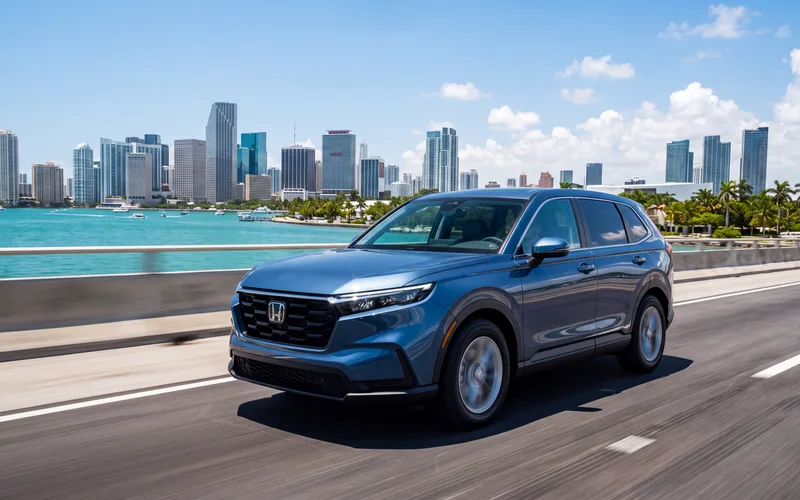 Honda CR-VCompact SUVBetter at: Resale value
It's the default cross-shop for exactly this buyer — more front-seat room, a hybrid option, and it gives back thousands less in depreciation over five years.
Compare 2.56C+
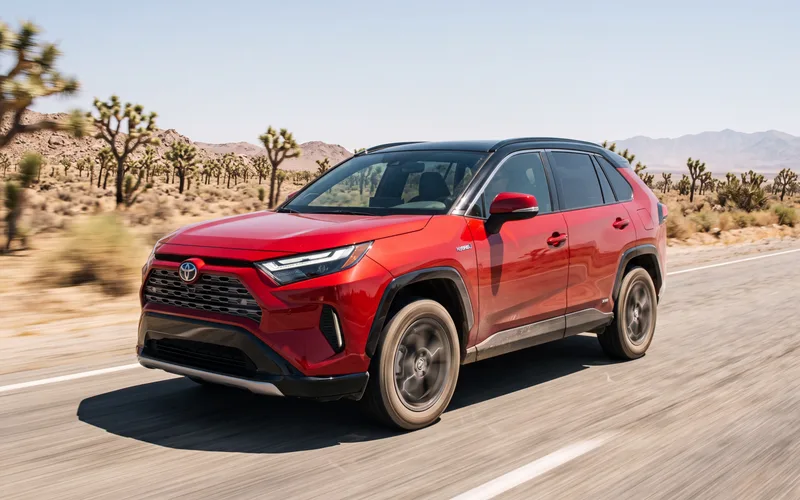 Toyota RAV4Compact SUVBetter at: Efficiency
Standard hybrid power delivers 41 MPG combined and 3,500 pounds of towing, turning the Tiguan's two biggest weaknesses into strengths.
Compare 2.44C+
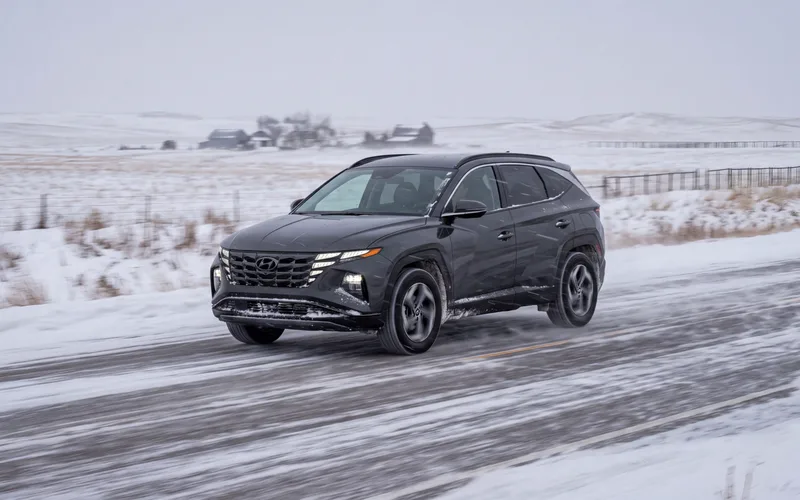 Hyundai TucsonCompact SUVBetter at: Warranty coverage
Similar size and price with hybrid and plug-in choices the Tiguan lacks, plus a 10-year/100,000-mile powertrain warranty against VW's 4-year/50,000-mile coverage.
CompareHow it's evolved
10 scored model years · 2017–2026
Subject scores by year
Hover or tap a score to see what moved it versus the year before. A corner mark flags a big swing.
| Year | Performance | Efficiency | Safety | Space | Cost | Reliability | Tech | Use-case | Driving | Value |
|---|---|---|---|---|---|---|---|---|---|---|
| 2026 | 33 | 55 | 78 | 53 | 57 | 57 | 73 | 65 | 72 | 71 |
| 2025 | 29 | 49 | 74 | 49 | 63 | 53 | 69 | 54 | 63 | 69 |
| 2024 | 28 | 49 | 62 | 49 | 62 | 62 | 51 | 55 | 62 | 61 |
| 2023 | 28 | 49 | 65 | 49 | 62 | 59 | 52 | 55 | 63 | 59 |
| 2022 | 28 | 49 | 66 | 49 | 69 | 56 | 52 | 55 | 63 | 57 |
| 2021 | 27 | 44 | 70 | 50 | 68 | 57 | 49 | 57 | 62 | 62 |
| 2020 | 28 | 48 | 68 | 50 | 67 | 60 | 46 | 56 | 62 | 63 |
| 2019 | 26 | 48 | 65 | 49 | 71 | 59 | 46 | 55 | 62 | 64 |
| 2018 | 27 | 43 | 62 | 49 | 69 | 53 | 44 | 54 | 62 | 62 |
| 2017 | 31 | 27 | 28 | 39 | 56 | 59 | 34 | 46 | 64 | 49 |
Compare two years
Best fit & conditions
Higher scores mean a better fit for that use case. Learn more about use-case fit →
Subject profile
Trims & configurations
3 trimsScores above reflect the volume trim. Per-trim specs and scores are rolling out — the full lineup:
Academic Probation · NHTSA safety recalls
No NHTSA safety recall is on record for the 2026 Volkswagen Tiguan. Other model years of the Tiguan have 31 — listed below.
31 recalls on other model years of the Tiguan (2017–2025)
Sep 11, 2026SteeringOne of the bolts that attaches the steering rack to the subframe may corrode and break. If this happens, the steering rack housing can break.
Defect
Volkswagen Group of America, Inc. (Volkswagen) is recalling certain 2018 Tiguan, 2018-2019 Atlas, and 2019-2021 Audi Q3 vehicles. One of the bolts that attaches the steering rack to the subframe may corrode and break. If this happens, the steering rack housing can break.
Risk
A broken steering rack housing can result in a loss of steering control, increasing the risk of a crash.
Remedy
Dealers will replace the right-side steering rack mounting bolt, free of charge. Owner notification letters are expected to be mailed November 10, 2026. Owners may contact Volkswagen customer service at 1-800-893-5298. Volkswagen's numbers for this recall are 48LG and 48VT. Vehicle Identification Numbers (VINs) involved in this recall became searchable on NHTSA.gov on September 16, 2026.
NHTSA campaign 26V590000 ↗Manufacturer no. 48LG, 48VT208,724 vehicles potentially affected (all models in the campaign)Filed by Volkswagen Group of America, Inc.Filed as TIGUANSep 10, 2026Electrical system: body control module: softwareA software error may cause the body control module (BCM) system to reset. This may result in the ignition switching off, resulting in an engine stall. It can also lead to a loss of certain controls, warning lights, exterior lighting, or failure of the rearview camera system. As such, these vehicles fail to comply with the requirements of Federal Motor Vehicle Safety Standard (FMVSS) numbers 101, "Controls and Displays," and 102, "Transmission shift lever sequence, starter interlock, and transmission braking effect," as well as FMVSS numbers 111 and 108.
Defect
Volkswagen Group of America, Inc. (Volkswagen) is recalling certain 2025 Tiguan vehicles. A software error may cause the body control module (BCM) system to reset. This may result in the ignition switching off, resulting in an engine stall. It can also lead to a loss of certain controls, warning lights, exterior lighting, or failure of the rearview camera system. As such, these vehicles fail to comply with the requirements of Federal Motor Vehicle Safety Standard (FMVSS) numbers 101, "Controls and Displays," and 102, "Transmission shift lever sequence, starter interlock, and transmission braking effect," as well as FMVSS numbers 111 and 108.
Risk
An unexpected engine stall, loss of exterior lighting or warning lights, or failure of the rearview camera system can increase the risk of a crash.
Remedy
Dealers will update the body control module (BCM) software, free of charge. Owner notification letters were mailed October 6, 2026. Owners may contact Volkswagen customer service at 1-800-893-5298. Volkswagen's number for this recall is 57KL. Vehicle Identification Numbers (VINs) involved in this recall became searchable on NHTSA.gov on September 17, 2026.
NHTSA campaign 26V587000 ↗Manufacturer no. 57KL49,958 vehicles potentially affected (all models in the campaign)Owners notified Oct 6, 2026Filed by Volkswagen Group of America, Inc.Filed as TIGUANMay 20, 2026Back over prevention: softwareAn error may occur in the camera control unit at vehicle startup, resulting in the rearview camera image not displaying as intended. As such, these vehicles fail to comply with the requirements of Federal Motor Vehicle Safety Standard number 111, "Rear Visibility."
Defect
Volkswagen Group of America, Inc. (Volkswagen) is recalling certain 2024 Tiguan vehicles previously repaired under recall 25V082. An error may occur in the camera control unit at vehicle startup, resulting in the rearview camera image not displaying as intended. As such, these vehicles fail to comply with the requirements of Federal Motor Vehicle Safety Standard number 111, "Rear Visibility."
Risk
A rearview camera that does not display an image can reduce the driver's rear view, increasing the risk of a crash.
Remedy
Dealers will update the camera control unit software, free of charge. Owner notification letters were mailed June 4, 2026. Owners may contact Volkswagen customer service at 1-800-893-5298. Volkswagen's number for this recall is 91NF. Vehicle Identification Numbers (VINs) involved in this recall became searchable on NHTSA.gov beginning May 27, 2026.
NHTSA campaign 26V321000 ↗Manufacturer no. 91NF8 vehicles potentially affected (all models in the campaign)Owners notified Jun 4, 2026Filed by Volkswagen Group of America, Inc.Filed as TIGUANDec 10, 2025Air bags: sensor: occupant classification: front passengerThe passenger occupant detection system (PODS) may experience a fault in the wiring and deactivate the front passenger air bag when the seat is occupied.
Defect
Volkswagen Group of America, Inc. (Volkswagen) is recalling certain 2025 Tiguan vehicles. The passenger occupant detection system (PODS) may experience a fault in the wiring and deactivate the front passenger air bag when the seat is occupied.
Risk
A deactivated passenger air bag increases the risk of injury during a crash.
Remedy
Owners are advised not to allow occupants to sit in the front passenger seat until the remedy is complete. Dealers will repair the affected wiring harness in the front passenger seat, free of charge. Owner notification letters were mailed April 15, 2026. Owners may contact Volkswagen's customer service at 1-800-893-5298. Volkswagen's number for this recall is 74HE. Vehicle Identification Numbers (VINs) involved in this recall became searchable on NHTSA.gov on December 12, 2025.
NHTSA campaign 25V854000 ↗Manufacturer no. 74HE3,138 vehicles potentially affected (all models in the campaign)Owners notified Apr 15, 2026Filed by Volkswagen Group of America, Inc.Filed as TIGUANAug 13, 2025Steering: linkages: tie rod assemblyA tie rod bolt on the rear axle assembly may be loose, which can lead to a loss of vehicle control.
Defect
Volkswagen Group of America, Inc. (Volkswagen) is recalling certain 2025 Tiguan vehicles. A tie rod bolt on the rear axle assembly may be loose, which can lead to a loss of vehicle control.
Risk
A loss of vehicle control increases the risk of a crash.
Remedy
Dealers will replace the affected tie rod bolt, free of charge. Owner notification letters were mailed September 5, 2025. Owners may contact Volkswagen customer service at 800-893-5298. Volkswagen's number for this recall is 42E7.
NHTSA campaign 25V526000 ↗Manufacturer no. 42E715 vehicles potentially affected (all models in the campaign)Owners notified Sep 5, 2025Filed by Volkswagen Group of America, Inc.Filed as TIGUANFeb 12, 2025Back over prevention: softwareAn error may occur in the camera control unit at vehicle startup, resulting in the rearview camera image not displaying as intended. As such, these vehicles fail to comply with the requirements of Federal Motor Vehicle Safety Standard number 111, "Rear Visibility."
Defect
Volkswagen Group of America, Inc. (Volkswagen) is recalling certain 2022-2024 Tiguan, 2023 Arteon, and 2024-2025 Audi Q3 vehicles. An error may occur in the camera control unit at vehicle startup, resulting in the rearview camera image not displaying as intended. As such, these vehicles fail to comply with the requirements of Federal Motor Vehicle Safety Standard number 111, "Rear Visibility."
Risk
A rearview camera that does not display an image can reduce the driver's rear view, increasing the risk of a crash.
Remedy
Dealers will update the camera control unit software, free of charge. Owner notification letters were mailed to Audi owners April 3, 2024, and Volkswagen owners November 18, 2025.Volkswagen owners will receive a second notice once remedy parts become available. Owners may contact Volkswagen customer service at 1-800-893-5298 or Audi customer service at 1-800-253-2834. Volkswagen's numbers for this recall are (Volkswagen) 91NY and (Audi) 90AV.
NHTSA campaign 25V082000 ↗Manufacturer no. VW: 91NY, Audi: 90AV29,569 vehicles potentially affected (all models in the campaign)Owners notified Apr 3, 2025Filed by Volkswagen Group of America, Inc.Filed as TIGUANOct 31, 2022Tires: pressure monitoring and regulating systemsThe tire pressure monitoring system may not detect an air pressure loss in adequate time when deflating occurs among all four tires simultaneously. As such, these vehicles fail to comply with the requirements of Federal Motor Vehicle Safety Standard number 138, "Tire Pressure Monitoring Systems."
Defect
Volkswagen Group of America, Inc. (Volkswagen) is recalling certain 2019 Volkswagen Tiguan LWB, Golf Sportswagen A7, Golf Alltrack, Golf R GP, Audi Q3, Audi A3 Cabriolet, 2019-2020 Jetta NF, Jetta GLI, Golf GTI, Atlas, Golf A7, Audi A3, 2020-2021 Atlas Cross Sport, and 2021 Atlas FL vehicles. The tire pressure monitoring system may not detect an air pressure loss in adequate time when deflating occurs among all four tires simultaneously. As such, these vehicles fail to comply with the requirements of Federal Motor Vehicle Safety Standard number 138, "Tire Pressure Monitoring Systems."
Risk
An undetected sudden loss of pressure in all four tires increases the risk of a crash.
Remedy
Dealers will update the TPMS software, free of charge. Owner notification letters were mailed November 18, 2022. Owners may contact Volkswagen's customer service at 1-800-893-5298 or AudiÂs customer service at 1-800-253-2834. Volkswagen's numbers for this recall are (Audi) 45J7, and (VW) 45J6 and 45J8.
NHTSA campaign 22V815000 ↗Manufacturer no. AU:45J7,VW:45J6,45J8296,044 vehicles potentially affected (all models in the campaign)Owners notified Nov 18, 2022Filed by Volkswagen Group of America, Inc.Filed as TIGUANJul 20, 2022Back over prevention: sensing system: camera · Equipment: electrical: infotainment: softwareThe manufacturing process of the eMMC memory module in the infotainment system may cause the rearview camera image not to display. As such, these vehicles fail to comply with the requirements of Federal Motor Vehicle Safety Standard number 111, "Rear Visibility."
Defect
Volkswagen Group of America, Inc. (Volkswagen) is recalling certain 2021 Golf GTI, Jetta GLI, Jetta NF, Arteon FL, Tiguan LWB, 2022 Taos, Jetta PA, Tiguan PA, 2021-2022 Atlas Cross Sport, and Atlas FL vehicles. The manufacturing process of the eMMC memory module in the infotainment system may cause the rearview camera image not to display. As such, these vehicles fail to comply with the requirements of Federal Motor Vehicle Safety Standard number 111, "Rear Visibility."
Risk
A rearview camera that does not display an image reduces the driver's rear view, increasing the risk of a crash.
Remedy
Dealers will update the infotainment software, free of charge. Owner notification letters are expected to be mailed September 16, 2022. Owners may contact Volkswagen's customer service at 1-800-893-5298. Volkswagen's number for this recall is 91DV.
NHTSA campaign 22V514000 ↗Manufacturer no. 91DV43,091 vehicles potentially affected (all models in the campaign)Owners notified Aug 2, 2022Filed by Volkswagen Group of America, Inc.Filed as TIGUANApr 6, 2022Structure: bodyDue to incorrect installation instructions, the accessory rear hatch spoiler may be insufficiently attached to the vehicle.
Defect
Volkswagen Group of America, Inc. (Volkswagen) is recalling certain 2022 Tiguan and 2018-2021 Tiguan long wheel base (LWB) vehicles. Due to incorrect installation instructions, the accessory rear hatch spoiler may be insufficiently attached to the vehicle.
Risk
An insufficiently attached spoiler may separate from the vehicle, becoming a road hazard and increasing the risk of a crash.
Remedy
Dealers will replace the spoiler, free of charge. Owner notification letters were mailed June 3, 2022. Owners may contact Volkswagen customer service at 1-800-893-5298. Volkswagen's number for this recall is 66N5.
NHTSA campaign 22V226000 ↗Manufacturer no. 66N56,553 vehicles potentially affected (all models in the campaign)Owners notified Jun 3, 2022Filed by Volkswagen Group of America, Inc.Filed as TIGUANMar 23, 2022SuspensionA second notice will be sent once remedy parts become available. The left or right rear suspension knuckles may corrode, crack, and break.
Defect
Volkswagen Group of America, Inc. (Volkswagen) is recalling certain 2022 Tiguan, Taos, and 2021 Tiguan long wheel base (LWB) vehicles. A second notice will be sent once remedy parts become available. The left or right rear suspension knuckles may corrode, crack, and break.
Risk
A broken rear suspension knuckle can cause a loss of stability, increasing the risk of a crash.
Remedy
Dealers will inspect and, if necessary, replace one or both rear suspension knuckles, free of charge. Owner notification letters were mailed June 13, 2022. Owners may contact Volkswagen customer service at 1-800-893-5298. Volkswagen's number for this recall is 42L8.
NHTSA campaign 22V176000 ↗Manufacturer no. 42L810,119 vehicles potentially affected (all models in the campaign)Owners notified Jun 13, 2022Filed by Volkswagen Group of America, Inc.Filed as TIGUANNov 3, 2021Service brakes, hydraulic: critical fasteners · Service brakes, hydraulic: foundation components: hoses, lines/piping, and fittingsThe nut that secures the brake pipe near the right-front wheel well may be loose.
Defect
Volkswagen Group of America, Inc. (Volkswagen) is recalling certain 2022 Tiguan vehicles. The nut that secures the brake pipe near the right-front wheel well may be loose.
Risk
A loose brake pipe nut may allow brake fluid to leak, extending the distance required to stop and increasing the risk of a crash.
Remedy
Dealers will inspect and tighten the brake pipe nut, as necessary, free of charge. Owner notification letters were mailed November 23, 2021. Owners may contact Volkswagen customer service at 1-800-893-5298. Volkswagen's number for this recall is 19Q4.
NHTSA campaign 21V853000 ↗Manufacturer no. 19Q41,285 vehicles potentially affected (all models in the campaign)Owners notified Nov 23, 2021Filed by Volkswagen Group of America, Inc.Filed as TIGUANSep 23, 2021Structure: body: roof and pillarsDuring the repair of roof damage, an incorrect roof reinforcement assembly may have been installed.
Defect
Volkswagen Group of America, Inc. (Volkswagen) is recalling certain 2018 Tiguan vehicles. During the repair of roof damage, an incorrect roof reinforcement assembly may have been installed.
Risk
The incorrect roof reinforcement may decrease the roof's structural integrity or impact deployment of the side curtain air bags, increasing the risk of injury in the event of a crash.
Remedy
Dealers will be replace the roof reinforcement, free of charge. Owner notification letters were mailed November 19, 2021. Owners may contact Volkswagen customer service at 1-800-893-5298. Volkswagen's number for this recall is 51H5.
NHTSA campaign 21V732000 ↗Manufacturer no. 51H52 vehicles potentially affected (all models in the campaign)Owners notified Nov 19, 2021Filed by Volkswagen Group of America, Inc.Filed as TIGUANMay 5, 2021Unknown or otherThese internal-use vehicles were sold without confirmation that they were built to all applicable regulatory requirements and may have been modified prior to sale. As such, these vehicles may fail to comply with the requirements of various Federal Motor Vehicle Safety Standards.
Defect
Volkswagen Group of America, Inc. (Volkswagen) is recalling certain 2017 Touareg GP, Tiguan, Golf A6, E-Golf GP, CCF, 2016-2017 Passat GP, 2018-2019 Golf R GP, and 2018 Atlas vehicles. These internal-use vehicles were sold without confirmation that they were built to all applicable regulatory requirements and may have been modified prior to sale. As such, these vehicles may fail to comply with the requirements of various Federal Motor Vehicle Safety Standards.
Risk
Vehicles that do not meet all regulatory requirements may have an increased risk of injury, crash, or fire.
Remedy
Volkswagen will repurchase the vehicles. Owner notification letters were mailed May 20, 2021. Owners may contact Volkswagen customer service at 1-800-893-5298. Volkswagen's number for this recall is 01F1.
NHTSA campaign 21V321000 ↗Manufacturer no. 01F146 vehicles potentially affected (all models in the campaign)Owners notified May 20, 2021Filed by Volkswagen Group of America, Inc.Filed as TIGUANFeb 1, 2021Seats · Seats: critical fastenersBolts may be missing from the front seat tracks.
Defect
Volkswagen Group of America, Inc. (Volkswagen) is recalling certain 2021 Volkswagen Tiguan Long Wheelbase and Jetta vehicles. Bolts may be missing from the front seat tracks.
Risk
The seat can move front and back without restriction if bolts are missing, increasing the risk of injury during a crash.
Remedy
Volkswagen will notify owners, and dealers will inspect the front seat tracks and, as necessary, install the bolts, free of charge. The recall began February 18, 2021. Owners may contact Volkswagen customer service at 1-800-893-5298. Volkswagen's number for this recall is 72L6.
NHTSA campaign 21V038000 ↗Manufacturer no. 72L657 vehicles potentially affected (all models in the campaign)Owners notified Feb 18, 2021Filed by Volkswagen Group of America, Inc.Filed as TIGUANNov 20, 2020Seat belts: front: webbingIn the event of a crash, one or both of the front seat belt's webbing may tear.
Defect
Volkswagen Group of America, Inc. (Volkswagen) is recalling certain 2018 Tiguan LWB vehicles. In the event of a crash, one or both of the front seat belt's webbing may tear.
Risk
A torn seat belt may not adequately restrain the seat occupant during a crash, increasing their risk of injury.
Remedy
Volkswagen will notify owners, and dealers will inspect the front seat belts and replace them as necessary, free of charge. The recall began April 13, 2021. Owners may contact Volkswagen customer service at 1-800-893-5298. Volkswagen's number for this recall is 69BH.
NHTSA campaign 20V724000 ↗Manufacturer no. 69BH10,835 vehicles potentially affected (all models in the campaign)Owners notified Apr 13, 2021Filed by Volkswagen Group of America, Inc.Filed as TIGUANNov 18, 2020Back over prevention: sensing system: cameraThe rear view camera could malfunction during an ignition cycle, leading to a black screen or infotainment system freeze. As such, these vehicles fail to comply with the requirements of Federal Motor Vehicle Safety Standard number 111, "Rear Visibility."
Defect
Volkswagen Group of America, Inc. (Volkswagen) is recalling certain 2021 Atlas Cross Sport, Tiguan LWB, Jetta NF, Jetta GLI, Golf GTI, Atlas FL and Arteon vehicles. The rear view camera could malfunction during an ignition cycle, leading to a black screen or infotainment system freeze. As such, these vehicles fail to comply with the requirements of Federal Motor Vehicle Safety Standard number 111, "Rear Visibility."
Risk
A black or frozen rear view image reduces the driver's visibility when reversing, increasing the risk of a crash.
Remedy
Volkswagen will notify owners, and dealers will update the infotainment system software, free of charge. The recall began December 11, 2020. Owners may contact Volkswagen customer service at 1-800-893-5298. Volkswagen's number for this recall is 91BB/91BC.
NHTSA campaign 20V716000 ↗Manufacturer no. 91BB / 91BC32,048 vehicles potentially affected (all models in the campaign)Owners notified Dec 11, 2020Filed by Volkswagen Group of America, Inc.Filed as TIGUANSep 23, 2020Seat belts · Seat belts: rear/otherThe third row seat belt anchor bolts may not have been properly torqued.
Defect
Volkswagen Group of America, Inc. (Volkswagen) is recalling certain 2020 Tiguan LWB vehicles. The third row seat belt anchor bolts may not have been properly torqued.
Risk
Improperly torqued bolts may prevent the third row seat belt from performing as designed in a crash, increasing the risk of injury to the occupant.
Remedy
Volkswagen will notify owners and will repurchase the vehicles. Owners are advised: No one should occupy the third row seat due to the safety risk. The recall began October 7, 2020. Owners may contact Volkswagen customer service at 1-800-893-5298. Volkswagen number for this recall is 69BA.
NHTSA campaign 20V579000 ↗Manufacturer no. 69BA6 vehicles potentially affected (all models in the campaign)Owners notified Oct 7, 2020Filed by Volkswagen Group of America, Inc.Filed as TIGUANAug 26, 2020SeatsParts of the front seat frame and backrest adjuster may not have been welded properly.
Defect
Volkswagen Group of America, Inc. (Volkswagen ) is recalling certain 2020 Volkswagen Atlas Cross Sport, Jetta, Jetta GLI and Tiguan and Audi Q5 and SQ5 and 2021 Volkswagen Atlas vehicles. Parts of the front seat frame and backrest adjuster may not have been welded properly.
Risk
In the event of a rear-end crash, the backrest adjustment could break, possibly reducing the amount of occupant restraint, thus increasing risk of injury.
Remedy
Volkswagen will notify owners, and dealers will inspect the front seats, and, as necessary, replace the seatback frames, free of charge. The recall began September 11, 2020. Volkswagen owners may contact their customer service at 1-888-241-2289. Audi owners may contact their customer service at 1-800-893-5298. Volkswagen's numbers for this recall are 72L1, 72K8, and 72K9.
NHTSA campaign 20V505000 ↗Manufacturer no. 72L1, 72K8, 72K95,376 vehicles potentially affected (all models in the campaign)Owners notified Sep 11, 2020Filed by Volkswagen Group of America, Inc.Filed as TIGUANSep 25, 2019Unknown or otherModifications made while the vehicles were in an internal evaluation period may cause the affected vehicles to not comply with all of the applicable regulatory requirements.
Defect
Volkswagen Group of America, Inc. (Volkswagen) is recalling certain 2017 Volkswagen Passat, 2018 Tiguan LWB, 2007-2009 Jetta Sedan, 2011-2013, 2015 and 2019 Jetta, 2013 Jetta Hybrid, 2008-2009 Jetta Sportwagen, 2015 Golf Sportwagen, 2013 Golf, 2008-2010 and 2012-2013 Beetle and Beetle Convertible, 2008-2010 Beetle, and Beetle Convertible vehicles. Modifications made while the vehicles were in an internal evaluation period may cause the affected vehicles to not comply with all of the applicable regulatory requirements.
Risk
If the vehicles do not meet all regulatory requirements, there could be an increased risk of a crash, fire, or injury.
Remedy
Volkswagen will notify owners and repurchase the affected vehicles. The recall began November 6, 2019. Owners may contact Volkswagen customer service at 1-800-893-5298. Volkswagen's number for this recall is 01D7. Note: This recall is an expansion of NHTSA recall number 18V-329.
NHTSA campaign 19V679000 ↗Manufacturer no. 01D7113 vehicles potentially affected (all models in the campaign)Owners notified Nov 6, 2019Filed by Volkswagen Group of America, Inc.Filed as TIGUANMar 27, 2019Equipment: other: labelsThe tire information label contains inaccurate tire dimension and inflation pressure specifications. As such, these vehicles fail to comply with the requirements of Federal Motor Vehicle Safety Standard (FMVSS) number 110, "Tire Selection and Rims."
Defect
Volkswagen Group of America, Inc. (Volkswagen) is recalling certain 2019 Tiguan LWB vehicles. The tire information label contains inaccurate tire dimension and inflation pressure specifications. As such, these vehicles fail to comply with the requirements of Federal Motor Vehicle Safety Standard (FMVSS) number 110, "Tire Selection and Rims."
Risk
The incorrect specifications can result in improper tire inflations or to installing a tire of the wrong size on the vehicle. Either of these situations can increase the risk of a vehicle crash.
Remedy
Volkswagen has notified owners, and dealers will install a corrected tire information label, free of charge. The recall began April 16, 2019. Owners may contact Volkswagen customer service at 1-800-893-5298. Volkswagen's number for this recall is 01D2.
NHTSA campaign 19V241000 ↗Manufacturer no. 01D28 vehicles potentially affected (all models in the campaign)Owners notified Apr 16, 2019Filed by Volkswagen Group of America, Inc.Filed as TIGUANMar 6, 2019Suspension: rear: springs: coil springsThe rear coil springs may prematurely fracture.
Defect
Volkswagen Group of America, Inc. (Volkswagen) is recalling certain 2017-2019 Golf Sportwagen, 2019 Jetta, 2015-2019 Golf, and 2018-2019 Tiguan vehicles. The rear coil springs may prematurely fracture.
Risk
If a coil spring fractures while driving, it may damage a rear tire causing a loss of vehicle control, increasing the risk of a crash.
Remedy
Volkswagen will notify owners, and dealers will replace the rear axle coil springs, free of charge. The recall began April 12, 2019. Owners may contact Volkswagen customer service at 1-800-893-5298. Volkswagen's number for this recall is 42J5.
NHTSA campaign 19V188000 ↗Manufacturer no. 42J556,173 vehicles potentially affected (all models in the campaign)Owners notified Apr 12, 2019Filed by Volkswagen Group of America, Inc.Filed as TIGUANNov 26, 2018Electrical system: instrument cluster/panelThe instrument cluster may not provide an audible warning to let the driver know that the key is still in the ignition when the door is open. As such, these vehicles fail to comply with the requirements of Federal Motor Vehicle Safety Standard (FMVSS) number 114, "Theft Protection."
Defect
Volkswagen Group of America, Inc. (Volkswagen) is recalling certain 2018-2019 Volkswagen Atlas and Tiguan and 2019 Volkswagen Jetta vehicles that do not have keyless entry. The instrument cluster may not provide an audible warning to let the driver know that the key is still in the ignition when the door is open. As such, these vehicles fail to comply with the requirements of Federal Motor Vehicle Safety Standard (FMVSS) number 114, "Theft Protection."
Risk
If the driver is not notified by an audible noise that the key is left in the ignition, it can increase the risk of vehicle theft or crash.
Remedy
Volkswagen will notify owners, and dealers will reprogram the instrument cluster, free of charge. The recall began December 13, 2018. Owners may contact Volkswagen customer service at 1-800-893-5298. Volkswagen's numbers for this recall are 90L3 and 90L4.
NHTSA campaign 18V824000 ↗Manufacturer no. 90L3 / 90L473,549 vehicles potentially affected (all models in the campaign)Owners notified Dec 13, 2018Filed by Volkswagen Group of America, Inc.Filed as TIGUANJul 13, 2018Visibility: sun/moon roof assemblyThe LED module for the panoramic sunroof ambient light bar may short circuit.
Defect
Volkswagen Group of America, Inc. (Volkswagen) is recalling certain 2018 Volkswagen Tiguan vehicles. The LED module for the panoramic sunroof ambient light bar may short circuit.
Risk
A short-circuit can increase the risk of a fire.
Remedy
Volkswagen will notify owners, and dealers will disconnect the power supply for the panoramic sunroof LED module, free of charge, until a future service action can safely reactivate the feature. The recall began July 24, 2018. Owners may contact Volkswagen customer service at 1-800-893-5298. Volkswagen's number for this recall 60D1.
NHTSA campaign 18V467000 ↗Manufacturer no. 60D145,457 vehicles potentially affected (all models in the campaign)Owners notified Aug 7, 2018Filed by Volkswagen Group of America, Inc.Filed as TIGUANJun 6, 2018Air bags: frontal: passenger side: inflator moduleIn the event of a crash, the passenger frontal air bag may tear or not properly unfold during deployment.
Defect
Volkswagen Group of America, Inc. (Volkswagen) is recalling certain 2018 Volkswagen Atlas and Tiguan vehicles. In the event of a crash, the passenger frontal air bag may tear or not properly unfold during deployment.
Risk
If the air bag were to tear or unfold incorrectly during deployment, it can increase the risk of injury.
Remedy
Volkswagen will notify owners, and dealers will replace the passenger frontal air bag, free of charge. The recall began July 19, 2018. Owners may contact Volkswagen customer service at 1-800-893-5298. Volkswagen's numbers for this recall are 69W8, and 69W9.
NHTSA campaign 18V375000 ↗Manufacturer no. 69W8 69W9821 vehicles potentially affected (all models in the campaign)Owners notified Jul 19, 2018Filed by Volkswagen Group of America, Inc.Filed as TIGUANMay 16, 2018Unknown or otherModifications made while the vehicles were in an internal evaluation period may cause the affected vehicles to not comply with all of the applicable regulatory requirements.
Defect
Volkswagen Group of America, Inc. (Volkswagen) is recalling certain 2012-2016 Eos, 2012 Passat, 2012-2016 CC, 2015-2016 e-Golf, 2011-2015 Touareg, 2012-2015 and 2017 Tiguan, and 2011-2016 Golf and 2011-2013 GTI vehicles. Modifications made while the vehicles were in an internal evaluation period may cause the affected vehicles to not comply with all of the applicable regulatory requirements.
Risk
If the vehicles do not meet all regulatory requirements, there could be an increased risk of a crash, fire, or injury.
Remedy
Volkswagen will notify owners, and dealers will repair the vehicles to make them fully compliant or Volkswagen will repurchase them if necessary, free of charge. The recall began November 29, 2018. Owners may contact Volkswagen customer service at 1-800-893-5298.
NHTSA campaign 18V329000 ↗Manufacturer no. 01C5/01C6252 vehicles potentially affected (all models in the campaign)Owners notified Nov 29, 2018Filed by Volkswagen Group of America, Inc.Filed as TIGUANMay 16, 2018Suspension: front: control arm: lower ball jointThe nut that holds the lower ball joint of the front wheel on each side of the vehicle may be loose or improperly tightened.
Defect
Volkswagen Group of America, Inc. (Volkswagen) is recalling certain 2018 Volkswagen Tiguan and Tiguan long wheel base (LWB) vehicles. The nut that holds the lower ball joint of the front wheel on each side of the vehicle may be loose or improperly tightened.
Risk
A loose or improperly tightened ball joint nut can result in the separation of the lower ball joint causing steering, traction or other stability issues, increasing the risk of a crash.
Remedy
Volkswagen has notified owners, and dealers will replace the nut on the lower ball joint and, as necessary, clean the thread in the ball joint, free of charge. The recall began May 30, 2018. Owners may contact Volkswagen customer service at 1-800-893-5298. Volkswagen's number for this recall is 40N4. Note: owners are advised not to drive their vehicle until the recall repair has been performed.
NHTSA campaign 18V324000 ↗Manufacturer no. 40N4/40N52,473 vehicles potentially affected (all models in the campaign)Owners notified May 30, 2018Filed by Volkswagen Group of America, Inc.Filed as TIGUANApr 25, 2018Suspension: rear: shock absorberA lower loop of a rear shock absorber may separate from its base due to an incorrect welding process
Defect
Volkswagen Group of America, Inc. (Volkswagen) is recalling certain 2018 Volkswagen Tiguan long wheelbase (LWB) vehicles. A lower loop of a rear shock absorber may separate from its base due to an incorrect welding process
Risk
If the lower loop of the rear shock absorber detaches, there may be a loss of vehicle control, increasing the risk of a crash.
Remedy
Volkswagen will notify owners, and dealers will inspect the rear shock absorbers, replacing them as necessary, free of charge. The recall began May 30, 2018. Owners may contact Volkswagen customer service at 1-800-893-5298. Volkswagen's number for this recall is 42i7.
NHTSA campaign 18V262000 ↗Manufacturer no. 42i77,430 vehicles potentially affected (all models in the campaign)Owners notified May 30, 2018Filed by Volkswagen Group of America, Inc.Filed as TIGUANMar 8, 2018EngineThe engine support bolts on these vehicles may not have been properly tightened.
Defect
Volkswagen Group of America, Inc. (Volkswagen) is recalling certain 2018 Tiguan long wheel base (LWB) vehicles. The engine support bolts on these vehicles may not have been properly tightened.
Risk
If the engine support bolts were not properly tightened, an unexpected engine breakdown or loss of engine power may occur, increasing the risk of a crash.
Remedy
Volkswagen will notify owners, and dealers will replace engine support bolts, free of charge. The recall began March 26, 2018. Owners may contact Volkswagen customer service at 1-800-893-5298. Volkswagen's number for this recall is 10F7.
NHTSA campaign 18V159000 ↗Manufacturer no. 10F74 vehicles potentially affected (all models in the campaign)Owners notified Mar 26, 2018Filed by Volkswagen Group of America, Inc.Filed as TIGUANFeb 9, 2018Air bags: frontalThe front driver air bag installed on these vehicles may not be intended for use in vehicles sold in the United States. As such, these vehicles fail to comply with the requirements of Federal Motor Vehicle Safety Standard (FMVSS) number 208, "Occupant Crash Protection."
Defect
Volkswagen Group of America, Inc. (Volkswagen) is recalling certain 2017-2018 Tiguan Limited vehicles. The front driver air bag installed on these vehicles may not be intended for use in vehicles sold in the United States. As such, these vehicles fail to comply with the requirements of Federal Motor Vehicle Safety Standard (FMVSS) number 208, "Occupant Crash Protection."
Risk
In the event of a crash, the incorrect air bags may not protect the driver as intended, increasing the risk of injury.
Remedy
Volkswagen will notify owners, and dealers will replace the steering wheel and front driver air bag module, free of charge. The recall began May 30, 2018. Owners may contact Volkswagen customer service at 1-800-893-5298. Volkswagen's number for this recall is 69V2.
NHTSA campaign 18V102000 ↗Manufacturer no. 69V23,768 vehicles potentially affected (all models in the campaign)Owners notified May 30, 2018Filed by Volkswagen Group of America, Inc.Filed as TIGUANOct 18, 2017Exterior lighting: tail lightsThe back-up lights in the taillight assemblies may not be bright enough. As such, these vehicles fail to comply with the requirements of Federal Motor Vehicle Safety Standard (FMVSS) number 108, "Lamps, Reflective Devices, and Associated Equipment."
Defect
Volkswagen Group of America, Inc. (Volkswagen) is recalling certain 2018 Volkswagen Tiguan long wheel base (LWB) vehicles. The back-up lights in the taillight assemblies may not be bright enough. As such, these vehicles fail to comply with the requirements of Federal Motor Vehicle Safety Standard (FMVSS) number 108, "Lamps, Reflective Devices, and Associated Equipment."
Risk
If the back-up lights are not bright enough, other drivers may not see the vehicle reversing, or the driver may back into an obstacle, increasing the risk of a crash.
Remedy
Volkswagen will notify owners, and dealers will replace the affected inner taillight assemblies, free of charge. The recall began December 15, 2017. Owners may contact Volkswagen customer service at 1-800-893-5298. Volkswagen's number for this recall is 94J9.
NHTSA campaign 17V662000 ↗Manufacturer no. 94J95,509 vehicles potentially affected (all models in the campaign)Owners notified Dec 15, 2017Filed by Volkswagen Group of America, Inc.Filed as TIGUANDec 29, 2016Air bags: frontal: driver side: inflator module · Air bags: frontal: passenger side: inflator module · Air bags: side/window · Seat belts: pretensionerAdditionally, certain 2017 Audi Q7, A4 Sedan, A4 Allroad, and 2018 Audi Q5 vehicles are being recalled because the seat belt pretensioners may not activate properly.
Defect
Volkswagen Group of America, Inc. (Volkswagen) is recalling certain model year 2017 Audi A7, A4, A6, Volkswagen Golf and Tiguan vehicles and 2016 Volkswagen e-Golf vehicles for driver frontal air bags, passenger frontal air bags or head air bags that may not deploy properly. Additionally, certain 2017 Audi Q7, A4 Sedan, A4 Allroad, and 2018 Audi Q5 vehicles are being recalled because the seat belt pretensioners may not activate properly.
Risk
In the event of a crash, if the air bags and/or the seat belt pretensioners do not inflate or function properly, the vehicle occupants have an increased risk of injury.
Remedy
Volkswagen and Audi will notify owners, and dealers will replace the affected air bags and seat belt pretensioners, free of charge. The recall began April 2017. Owners may contact Volkswagen customer service at 1-800-893-5298 or Audi customer service at 1-800-253-2834.
NHTSA campaign 16V955000 ↗Manufacturer no. VW: 69P4; Audi 69P25,947 vehicles potentially affected (all models in the campaign)Owners notified Feb 28, 2017Filed by Volkswagen Group of America, Inc.Filed as TIGUAN
Source: NHTSA Office of Defects Investigation recall database, model years 2017–2026. Recalls are listed by model year as the manufacturer filed them; whether a specific car is affected depends on its VIN — check a VIN at nhtsa.gov ↗. NHTSA model names matched to this page: TIGUAN.
Detailed scoring by subject
1Performance & PowertrainThe Tiguan's lowest-graded category.0.13F
The third-generation US Tiguan's volume trims use the EA888 2.0L turbo four rated at 201 hp; the top SEL R-Line Turbo runs a higher-output tune of the same engine at 268 hp. The volume-trim figure sits near the bottom of the SUV normalization band (150–550 hp).
Base 2.0T peak torque is 207 lb-ft, available low in the rev range, which is what makes the Tiguan feel adequate around town despite modest peak power. The R-Line Turbo tune adds roughly 50 lb-ft.
The 201-hp Tiguan is mid-pack for a compact SUV — quicker than a CR-V 1.5T or Rogue, slower than a RAV4 hybrid. The 268-hp SEL R-Line Turbo is a genuinely quick outlier at roughly six seconds flat, but it is not the volume configuration.
The EA888 2.0T is a smooth, quiet, well-isolated engine by compact-SUV standards, with strong low-end response and no CVT drone; reviewers consistently rate VW's turbo four above the naturally aspirated and small-displacement turbo engines from Honda, Nissan and Chevrolet. Points come off for mild off-the-line turbo lag and a coarse note when pushed hard.
The Tiguan uses a conventional 8-speed torque-converter automatic rather than a CVT, a real advantage in this segment — shifts are smooth and decisive and it does not hunt or drone the way rivals' CVTs do. It is not as crisp as a dual-clutch and can be slightly slow to kick down in Eco mode.
VW rates the Tiguan at 1,500 lbs, enough for a small utility trailer or a pair of jet skis but well short of the 3,500 lbs offered by a RAV4 or Sportage. This sits at the bottom of the 1,000–8,000 lb SUV normalization band.
4Motion all-wheel drive is optional across effectively the whole range and standard on the top trim, with selectable driving modes including a snow setting. It is an on-demand, front-biased Haldex-type system with no low range or locking differentials, so it earns a solid but unexceptional mid-band score.
The Tiguan is a pavement-first crossover: roughly 8 inches of ground clearance, no skid plates, no locking differentials or crawl control, no off-road-oriented trim, and road-biased tires on every trim. It will handle a snowy driveway or a gravel forest road and nothing beyond that.
The US Tiguan offers a single engine family in two states of tune (201 hp and 268 hp) with no hybrid, plug-in hybrid or EV option — a notable gap against the RAV4, CR-V, Tucson and Sportage, all of which sell hybrids in volume. VW steers electrified compact-SUV buyers to the separate ID.4 instead, and Europe's Tiguan eHybrid PHEV is not offered here.
2Efficiency & RangeOne of the Tiguan's weakest categories.1.68D
Third-generation Tiguan carries a single 2.0L TSI gas four with an 8-speed automatic and no hybrid assist, so combined economy lands mid-pack — level with the Hyundai Tucson 2.5 AWD and Mazda CX-5 AWD (both 26) and well behind the hybrid-standard RAV4 (41) and CR-V hybrid (37).
No hybrid assist and no engine-off creep capability means city economy is the Tiguan's weakest measure, roughly 14–19 MPG behind the hybrid compact-SUV leaders in stop-and-go use.
Highway is the Tiguan's relatively stronger figure — the turbocharged engine's tall 8-speed top gears and low-rpm cruising close much of the gap to hybrid rivals, whose advantage is concentrated in city driving.
A reasonably large tank offsets middling economy, giving usable ~400-mile legs — better than the 14.3-gal Tucson (372 mi) and Sportage (358 mi), but far short of hybrid rivals that clear 500 miles.
At 26 MPG combined the Tiguan costs about $550/yr more to fuel than a hybrid CR-V and roughly $700/yr more than a RAV4 — the recurring penalty for a gas-only lineup in a segment that has largely electrified.
The volume 201-hp trims run on regular 87 octane, so a typical buyer pays no fuel-grade premium; the lineup falls short of the uniform-regular rivals (CR-V, Tucson, Sportage all 90) because the 268-hp SEL R-Line Turbo asks for premium and VW's own literature has long noted premium for optimal output on the 2.0T.
3SafetyThe Tiguan's best-graded category.3.31B+
NHTSA has not published an NCAP overall rating for the third-generation Tiguan that the 2026 US car is built on; the prior-generation Tiguan held 5 stars overall and the same structure earned five stars in Euro NCAP testing of the new generation. Carried forward as 5 stars with low confidence rather than left blank.
The third-generation Tiguan has no confirmed IIHS Top Safety Pick award under the tougher 2024-onward criteria, so it is scored on the strength of its structure rather than on an award it has not been shown to hold. Euro NCAP's five-star result for this generation supports solid crashworthiness, but the updated moderate-overlap rear-passenger and side tests that decide US awards are unverified.
Volkswagen's IQ.DRIVE package is standard on every 2026 Tiguan trim including the base S, so the full core suite — AEB, adaptive cruise, lane centering, blind-spot and rear cross-traffic — is present at the volume price point with nothing important paywalled to upper trims. That is the top band of this item and matches the Atlas.
Front Assist with pedestrian monitoring is standard on all trims and the third-generation sensor set is an upgrade over the outgoing car, but there is no published IIHS front crash prevention result for this generation — particularly the nighttime pedestrian scenarios that separate the top band. Scored at the segment midpoint alongside the Atlas and CX-5.
Blind Spot Monitor and Rear Traffic Alert are standard on every trim rather than optional, and the third-generation car adds an exit-warning function that alerts occupants to approaching traffic before they open a door. Coverage is alert-and-warn rather than actively steering, which keeps it just below the top band.
Lane Assist is standard and Travel Assist adds lane centering on all trims, with the capacitive steering wheel of the third-generation car reducing the hand-detection nagging that dogged earlier VW implementations. Reviewer commentary on VW centering still describes occasional wander on curves and on poorly marked lanes, which keeps it out of the top band.
Travel Assist bundles full-speed-range adaptive cruise with stop-and-go and lane centering as one standard highway-assist function on every trim, and the third-generation car layers in predictive speed adjustment from navigation and sign-recognition data on upper trims. Well integrated and standard, short of the very best only on refinement.
Volkswagen sells no hands-free highway driving system in the US. Travel Assist is explicitly a hands-on system with capacitive steering-wheel detection that warns and disengages when the driver lets go, so there is no equivalent to BlueCruise or Super Cruise on any Tiguan trim.
LED projector headlights with automatic high beams are standard across the 2026 range and the SEL R-Line Turbo steps up to IQ.LIGHT LED matrix units with adaptive beam patterning — good hardware at both ends of the lineup. No IIHS headlight rating is published for this generation, so the score reflects equipment rather than a measured result.
The Tiguan keeps a relatively upright glasshouse and a tall, square rear window for the class, giving honest forward and over-the-shoulder sightlines. The third-generation car's more raked roofline and thicker rear pillars add a rear-quarter blind zone, and the 360-degree Area View camera that would compensate is restricted to upper trims.
Five-seat-only for 2026, the Tiguan has wide rear door openings and a sliding, reclining second row that makes installation and rear-facing clearance easier than the class average, with two sets of lower anchors and three tether anchors. No published car-seat check exists for this generation, and three-across remains tight on a compact SUV bench.
4Space & ComfortOne of the Tiguan's weakest categories.1.58D
The third-generation US Tiguan is a two-row, five-seat SUV across all trims; the optional third row offered on the outgoing long-wheelbase US Tiguan was dropped for this generation, leaving the Atlas to cover three-row duty. Replaces a placeholder value of 5.6 seats, which was not a possible configuration.
Front headroom is mid-pack for a compact SUV; the panoramic roof fitted to upper trims costs roughly half an inch. Carried from the closely related prior US configuration, whose roofline and seating height the third generation largely retains.
Front legroom is a long-standing weak spot for the Tiguan relative to compact-SUV leaders like the CR-V and RAV4, which clear 41 in; the third generation does not appear to have materially changed front-row packaging. Sits near the bottom of the segment normalization band.
Second-row headroom is strong for the class thanks to the Tiguan's upright roofline and flat rear roof section; the panoramic roof on upper trims trims a fraction of an inch.
Rear legroom is the Tiguan's standout packaging strength — the sliding and reclining second-row bench lets it trade legroom against cargo space, and at its rearmost setting it is among the roomier compact SUVs. Figure quoted at the bench's maximum-legroom position.
No third row is offered on the US third-generation Tiguan at any trim, so there is no third-row usability to assess. Scored in the low band per the item's guidance rather than omitted. The prior placeholder score of 57 implied a functional kid-friendly third row that does not exist on this vehicle.
Cargo behind the second row is competitive but not class-leading; the sliding rear bench means the usable figure moves several cubic feet depending on how far forward the bench is set. Well below the placeholder's 61.7 cu ft, which was closer to a mid-size SUV's seats-folded number than a compact SUV's behind-seat volume.
With the 60/40 second row folded the Tiguan opens up to a large, squared-off, near-flat load bay — generous for a compact SUV, though short of mid-size alternatives. Score is unchanged from the placeholder despite the corrected value.
Competitive everyday storage: a deep center console with wireless charging pad, usable door bins, underfloor cargo storage, and the genuinely useful sliding/reclining rear bench that lets owners rebalance passenger and cargo space. No standout innovation on the order of a giga console or onboard power export.
VW front seats are consistently well regarded for long-haul support, with broad adjustment ranges and available ergonomic/massaging front seats on the top trim; the rear bench slides and reclines, which helps on long trips. Just short of the segment's very best.
Composed, well-damped European-flavored ride with good body control; available adaptive dampers on R-Line trims widen the comfort range, but the large wheels on upper trims introduce some firmness over broken pavement.
Above-average isolation for a mainstream compact SUV — the third generation added sound-deadening measures and the four-cylinder stays subdued at cruise, though some road noise reaches the cabin on coarse surfaces.
Strong comfort content for the class: heated front seats and remote start available from low in the range, heated steering wheel, multi-zone climate control with rear vents, and ventilated plus massaging front seats on the top trim. Points held back by VW's touch-and-haptic climate controls, which are less usable than physical knobs.
5Cost of OwnershipMid-pack among this car's ten categories.1.87C-
Third-generation Tiguan carried into 2026 with the base S FWD holding a starting point just above $31,000 including destination — competitive for a compact SUV and closer to the Equinox/Rogue end of the segment than the RAV4/CR-V end.
SE is the volume trim — it adds the content most buyers actually want (heated seats, larger display, power liftgate) over the sparse S, and 4Motion is a common add in snow-belt markets. Undercuts the volume CR-V and RAV4 grades.
German-brand parts and labor rates put the Tiguan above every mainstream compact-SUV rival in the dataset; the EA888 2.0T's ancillary items (water pump, thermostat housing, PCV) are the usual out-of-warranty expenses. The 2-year included maintenance offsets only the earliest services.
Depreciation is the Tiguan's single worst ownership metric — VW mainstream SUVs give back materially more value than Toyota/Honda compacts, and heavy incentive activity on the outgoing generation set a weak used-market floor. The well-received new generation earns a small premium over the Atlas but stays in the segment's bottom quartile.
VW's 4-year/50,000-mile New Vehicle Limited Warranty beats the 3-year/36,000-mile mainstream norm on both years and miles — one of the few places the Tiguan is ahead of CR-V, RAV4 and Rogue on cost of ownership.
VW publishes no standalone powertrain warranty: engine and transmission are covered by the same 4-year/50,000-mile term as the rest of the car. That is the shortest powertrain coverage in the compact-SUV set — well under half of Hyundai/Kia's 10-year/100,000-mile term and a year and 10,000 miles short of the 5/60 mainstream standard.
VW's Carefree Coverage bundles two years of scheduled maintenance, three years of roadside assistance and a connected-services trial — genuinely multi-year, but the 20,000-mile cap covers only the first two services and lands short of Hyundai's 3-year/36,000-mile program or ToyotaCare's breadth.
$35,600 volume-trim price minus its estimated resale value after 5 years (46% retained, or about $16,376) leaves about $19,224 in depreciation. Add the projected $6,800 in 5-year maintenance and repairs, and owning this vehicle for 5 years costs about $26,024 in total.
6Reliability & QualityMid-pack among this car's ten categories.1.82C-
The 2026 Tiguan is the second model year of the third-generation (Mk3) US Tiguan launched for 2025, so predicted-reliability estimates rest on a thin data record plus Volkswagen's below-average brand history rather than accumulated owner surveys. The prior-generation Tiguan drew repeated average-to-below-average predicted reliability, and a freshly redesigned VW typically carries a conservative forecast.
Volkswagen has sat in the bottom third of Consumer Reports brand reliability rankings for several consecutive years and below the industry average in J.D. Power's Vehicle Dependability Study, driven largely by electronics and infotainment complaints rather than catastrophic failures.
The Mk3 Tiguan's US recall record is short by definition — one prior model year — with no evidence of a systemic powertrain, fire, or safety-system campaign, which places it in the typical band rather than the clean one. New-generation VWs historically accumulate early software and electronics service bulletins.
The 2.0T EA888 (evo4) four-cylinder paired with an eight-speed torque-converter automatic comes from a very high-volume, long-running engine family — a plus for service familiarity — but earlier EA888 evolutions built a reputation for water pump, timing-chain tensioner, and oil-consumption issues, and evo4 is too new to have a proven high-mileage US record.
Cabin materials are the Tiguan's clearest quality strength: broad soft-touch coverage on upper surfaces, solid switchgear, and a large center display give it a richer feel than most mainstream compact SUVs at the same price. The redesign also restored physical steering-wheel buttons after criticism of VW's capacitive controls.
Assembly quality is generally solid and structurally quiet, consistent with VW's usual standard, but 2026 is only the second build year of a new generation and VW's initial-quality scores are dragged down by infotainment and software complaints rather than panel-gap or trim defects.
Volkswagen's roughly 600-plus US dealers give solid metro coverage but noticeably thinner rural reach than Toyota, Honda, Chevrolet, or Ford, and VW service satisfaction has been mid-pack at best. Two years/20,000 miles of complimentary scheduled maintenance offsets some of that during early ownership.
Routine parts are widely available given the EA888 engine's volume and a large VW enthusiast aftermarket, but German-brand component pricing and higher labor times push typical repair and maintenance costs above the mainstream compact SUV average.
7Technology & InfotainmentOne of the Tiguan's strongest categories.2.92B-
The third-generation Tiguan that arrived for MY2025 moved to the MIB4 architecture with a 12.9-inch freestanding touchscreen on the S and volume SE trims and a 15-inch unit at the top of the range; 2026 is a carryover year for the infotainment hardware. Scored on the volume SE's 12.9 inches, which is well above the outgoing 8.0-inch base unit and above the Atlas's 12.0.
MIB4 is a real step forward for VW: faster hardware than the Atlas's MIB3, backlit climate/volume slider bars, and a new console rotary controller with an integrated display for volume, drive modes and ambient lighting — the most-praised interior change on the Mk3. Climate control still lives largely on the touchscreen and its sliders, which keeps it out of the top band and behind knob-equipped rivals like Tucson (77.9 category) and CX-5.
Wireless App-Connect — covering both wireless Apple CarPlay and wireless Android Auto — is standard on every US Tiguan trim from the base S upward, with no wired-only base configuration and no package gate. That is squarely the top band and matches the Atlas (90).
The Mk3 carries VW's IDA natural-language assistant with ChatGPT-backed responses, a clear improvement on the fixed-phrase MIB3 voice control in the Atlas (58), and native navigation ships with the standard 12.9-inch head unit rather than being reserved for upper trims. Held to the middle band because, as in most mainstream vehicles, owners still default to phone projection for routing.
The standard multi-speaker system is competent but unremarkable, and the 480-watt Harman Kardon premium upgrade is genuinely good — but it is gated to the top SEL R-Line, so the volume SE buyer does not get it. Adequate-with-a-modest-reach-upgrade puts it mid-band, between the Golf GTI (68) and the Atlas (72).
The 10.25-inch Digital Cockpit Pro fully digital, reconfigurable gauge display is standard on every trim with no analog base version, which satisfies the top band's core requirement. It sits at 82 rather than higher only because the panel is physically smaller than the 12.3-inch clusters in Tucson and Sportage.
MIB4 is a more OTA-capable architecture than the MIB3 in the Atlas and does take over-the-air infotainment and map updates without a dealer visit, but VW does not run the kind of regular whole-vehicle OTA campaigns that add powertrain or driver-assist features on its combustion models. Infotainment-and-maps-only is the middle band; the small lift over Atlas and Golf GTI (both 58) reflects MIB4's newer update stack.
The myVW app with Car-Net Remote Access covers the core set — remote start, remote lock/unlock, vehicle locate and status — but functions fall behind a paid subscription once the included term lapses, there is no phone-as-key digital key on the Tiguan, and the app draws more owner reliability complaints than the Hyundai and Kia equivalents. Solidly middle band, between the Golf GTI (62) and Atlas (66).
USB-C charge/data ports are fitted in both rows with higher-wattage front ports on upper trims, and wireless phone charging is standard from the volume SE upward. Good provision for a two-row compact SUV, but it lands below the three-row Atlas (78) on sheer port count and there is no household AC outlet.
KESSY proximity entry with push-button start is standard from the volume SE up, remote start is included, and the hands-free Easy Open/Close power liftgate is available on the upper trims — a complete conventional keyless package that reaches further down the range than the Atlas's (76). It stops short of the top band because VW offers no phone-as-key on the Tiguan and the base S goes without proximity entry.
Rear camera is standard, front/rear Park Distance Control sensors are widely fitted, and unlike the Golf (which has no surround view at any price) the Tiguan offers the Area View 360-degree camera plus semi-automated Park Assist Plus on the upper trims. Upper-trim-gated surround view is the classic middle band, a touch better spread than the Atlas (70) but still behind Tucson and Sportage.
A head-up display is offered on the Tiguan, restricted to the range-topping SEL R-Line — the top-trim-only band. That is a meaningful advantage over the Atlas (15), which has no HUD at any price, but well short of a HUD the volume SE buyer can reach.
8Use-Case FitMid-pack among this car's ten categories.2.40C+
The third-generation Tiguan keeps the segment's most flexible second row — a 40/20/40 bench that both slides fore/aft and reclines — so a rear-facing seat can be given legroom without stranding the front passenger, and the ~37 cu ft behind it swallows a stroller alongside groceries. Wide-opening rear doors and a low-ish load lip help daily loading; the offsetting limits are five seats only (the outgoing long-wheelbase US Tiguan's optional third row is gone this generation) and LATCH anchors that are usable but recessed rather than exposed.
IQ.DRIVE is standard on every 2026 Tiguan trim including the base S, so the families who buy the cheap end of the range get AEB with pedestrian monitoring, adaptive cruise, Travel Assist lane centering, blind-spot monitoring and rear cross-traffic alert with nothing important paywalled — that is the top-band condition for this item. What holds it out of the 80s is credentials rather than content: no IIHS Top Safety Pick is confirmed for this generation under the tougher 2024-onward criteria, and NHTSA has not published an overall rating for the third-gen US car.
The Tiguan's specific road-trip strength is the criterion most compact SUVs fail — luggage space with the seats actually occupied — where ~37 cu ft behind an upright second row is near the top of the class, and the reclining bench lets back-seat passengers settle in for multi-hour legs. Rear vents, available three-zone climate and heated rear seats on upper trims round it out; it stops short of the 80s because rear amenities on the volume SE are thin, there is no rear-seat entertainment provision, and it seats five rather than seven.
Mechanically this is an easy car to commute in: the 2.0T's 207 lb-ft arrives low enough that the eight-speed automatic rarely hunts in traffic, and the powertrain is quiet and well isolated at part throttle. The drag is ergonomic rather than dynamic — the touch-heavy interface still routes too many everyday functions through the screen, which is the most consistent complaint levelled at this generation, and it keeps the Tiguan off the 80-point pace the CR-V and RAV4 set for effortlessness.
This is the Tiguan's weakest commuting argument: 26 MPG combined with 4Motion is roughly a third behind the hybrid-standard RAV4 and the CR-V hybrid on exactly the stop-and-go duty cycle commuting consists of, and unlike the Tucson and Sportage there is no hybrid variant to step up to at all. Consumables compound it — VW scheduled maintenance and parts run above the mainstream compact-SUV average, so the per-mile penalty is not confined to the fuel bill.
Still a compact-SUV footprint that fits ordinary garages and street spaces, with a rear camera standard and Park Assist available higher up the range, but the third generation grew and the turning circle is a touch wider than the class benchmarks — it takes the extra shuffle in a tight lot that a CR-V or Forester does not. Visibility is decent rather than commanding; the thick rear pillars mean the camera earns its keep.
A 1,500-lb tow rating puts the Tiguan at the floor of the compact-SUV range alongside the CR-V — enough for a small utility trailer or a pair of jet skis, not enough for a skid steer, a car hauler or most camping trailers, and there is no bed or meaningful payload headroom. The large flat load bay and a torquey turbo make it genuinely useful for hauling materials inside the vehicle, which is the only work case it really serves.
Volkswagen's predicted-reliability and brand track-record scores are among the weaker readings in this dataset, and the Tiguan has no US fleet or commercial-duty reputation to draw on — the EA888 2.0T is a long-serving engine but carries a history of carbon-buildup, water-pump and timing-chain complaints in earlier iterations. The cabin is finished in genuinely good soft-touch materials rather than the wipe-clean hard-wearing surfaces that survive work abuse, which cuts against it in exactly this use case.
The provisions are the ordinary crossover set: roof rails on most trims, cargo tie-down points, an adjustable load floor and USB-C power, with a hitch and a washable cargo tray available as accessories. What is missing is anything work-specific — no onboard 120V AC outlet, no bed access hardware, and essentially no commercial upfit ecosystem behind it, so it lands in the basic-provisions band rather than the low one.
Touring is where the Tiguan's German-highway engineering pays off: roughly 400 miles between fills, a settled high-speed ride, supportive front seats (massaging on the top trim) and adaptive cruise with Travel Assist lane centering standard on every trim, which is the fatigue-reducing hardware this item rewards. It falls short of the very top band only because there is no hands-free system and cabin quietness is good rather than class-leading.
4Motion with a snow/off-road drive mode handles gravel forest roads, ski-hill access and a bike rack without complaint, and the folding rear bench opens up a flat load bay usable for car camping. But AWD is an option rather than standard equipment as it is on the Forester and Crosstrek, ground clearance is ordinary, the 1,500-lb tow rating rules out most toy trailers, and there is no household outlet for camp power — it is a gravel-road crossover, not an adventure enabler.
This is the Tiguan's standout use-case strength and the best reason to buy one. The 40/20/40 split bench slides and reclines and drops nearly flat, the centre pass-through takes skis or lumber while two passengers keep the outboard seats, and the adjustable cargo floor plus roof rails and an available hitch cover the bulky-gear cases that defeat rivals with plain 60/40 benches. Around 37 cu ft seats-up expanding to roughly 73 cu ft is at or near the top of the compact class.
9Driving ExperienceOne of the Tiguan's strongest categories.2.85B-
The third-generation (MQB Evo) Tiguan keeps VW's traditional compact-SUV advantage: body motions are tied down, the chassis stays composed over broken pavement, and it tracks straight and stable at highway speed. It is tuned noticeably more toward comfort than the outgoing car, so it lacks the eagerness of a Mazda CX-5, and the DCC adaptive dampers that sharpen it are limited to the upper trims rather than the volume S/SE.
VW's electric rack is accurate and consistently weighted with a well-judged off-center response, so the Tiguan is easy to place precisely in a lane or a parking structure. Feedback is the weak point — it filters out most surface texture, so there is little sense of front-axle grip.
Pedal feel is firm and progressive in the German idiom, with predictable initial bite and no numb travel at the top — the aspect of VW brake tuning reviewers most consistently praise. The score is held back because no instrumented 70–0 mph stopping distance for the 2026 US-spec car could be confirmed in this run.
The 201-hp EA888 2.0T paired to a conventional 8-speed torque-converter automatic is a genuinely smooth combination and a real advantage over the CVTs used by CR-V, Rogue and Forester — no drone, no rubber-band response, and torque arrives low enough that part-throttle driving is effortless. Points come off for mild turbo lag from a standstill and a stop/start restart that can be felt through the structure.
At a cruise the 2.0T is well isolated and largely inaudible, which is what lifts it clear of the small-displacement and CVT-equipped rivals in this class. Worked hard toward the top of the rev range it turns coarse and thrashy rather than sonorous, and there is faint idle vibration through the wheel at stoplights.
The third-gen Tiguan carries essentially the same 109.9-in wheelbase as the long-wheelbase second-gen US car, which VW rated at 37.6 ft curb-to-curb, and VW's European third-gen figure of 11.5 m converts to about 37.7 ft. That is mid-pack for a compact SUV — tighter than a Tucson (38.1 ft) or Taos (38.2 ft), wider than a CR-V (37.3 ft).
A tall, commanding seating position with a wide seat and wheel adjustment range, low door sills for easy ingress, and good forward sightlines thanks to the upright glasshouse. The third generation also restores a proper physical rotary controller on the console and illuminates the climate sliders — a direct fix for the most-criticized ergonomic flaw of the previous car — though secondary functions still live inside touchscreen menus.
The volume 201-hp Tiguan is satisfying in a quietly competent way — stable, well-damped, easy to drive quickly — but with a roughly 7.8-second 0–60 mph time and muted steering feedback it is not a car enthusiasts seek out. The 268-hp SEL R-Line Turbo is a genuinely quick outlier at around six seconds flat, but it is not the configuration being scored.
10Value & Market PositionGrades above the middle of the scale.2.81B-
The base 2026 Tiguan S already carries the full IQ.DRIVE driver-assist suite, a 12.9-inch MIB4 touchscreen, the 10.25-inch Digital Cockpit Pro all-digital cluster, wireless App-Connect and LED headlights — content that rivals routinely gate behind a mid-trim or a package. It lands just inside the top band rather than above it because proximity entry, heated seats, wireless charging and the power liftgate all wait for the volume SE.
The Tiguan opens below the volume CR-V and RAV4 grades and hands over more standard safety and screen tech than either at the entry point, but the money buys a modest 201-hp 2.0T with no hybrid option in the US, and the ownership side — bottom-quartile resale, German-brand parts pricing and a powertrain warranty that expires with the basic warranty at 4 yr/50,000 mi — claws back much of the sticker advantage. Fair value, not a bang-for-buck standout like Sportage or Tucson.
Four trims and an FWD/4Motion choice cover the price span competently, but the configuration menu is thin for the class: one engine family in two states of tune with the 268-hp version locked to the ~$43K range-topper, no hybrid or plug-in path, and — unlike the outgoing US long-wheelbase car — no third-row option at any price. Buyers who want more capability or more seats have to leave the model line.
The Tiguan is Volkswagen's best-selling US nameplate and a durable six-figure-a-year seller, which is genuine market acceptance — but in the country's highest-volume segment it sits well outside the leading group, moving roughly a quarter of RAV4 or CR-V volume. Steady mid-pack rather than a riser.
Volkswagen reads as neutral in the US: a real German-engineering association and a solid enthusiast following, offset by lingering diesel-scandal reputational damage, below-average reliability perception and weak resale that limit how much the badge helps. Held level with the other VWs in this dataset for consistency.
Volkswagen is a consistent discounter in the US — subvented lease programs and low-APR offers are a standing feature on the Tiguan, and transaction prices routinely land under sticker, a real buyer benefit in a segment whose leaders hold firm. Scored a notch below the Atlas because the Tiguan's newer generation and steadier demand keep the giveaway less aggressive.
2026 is the second model year of the third-generation (Mk3) Tiguan that arrived in the US for 2025 on MQB Evo with the MIB4 electronics architecture — a genuinely current car with essentially no redesign risk for a buyer this year. It sits below the just-launched RAV4 and CX-5 only because it is a carryover year rather than the debut.
Reviews of the new Tiguan have been solidly positive on what VW targeted — cabin materials, ride comfort and quietness, the larger MIB4 screen and the return of physical steering-wheel buttons — while consistently flagging the flat 201-hp powertrain, touch-and-slider climate controls, the absent hybrid option and the lost third row. That profile puts it respectably mid-pack in comparison tests without a headline win.