

The verdict
A mixed-report compact luxury sedan, strong on value and held back by technology.
The 2017 Giulia, the first year of Alfa Romeo's US comeback sedan, is one of the most rewarding compact luxury sedans to drive. Its steering, balance and eight-speed automatic drew rave reviews, and at $40,990 for the Ti it came with a lot of equipment for the money. The trade-offs are real, though: a below-average reliability record, seven recalls, only 38% of its value kept after five years, and infotainment with no Apple CarPlay or Android Auto. Buy it for how it drives, and budget for what comes with owning one.
Jump to scoresStrengths
- Class-leading steering and handling
- Strong equipment for the price
- Excellent crash protection, if optioned right
What holds it back
- Dated, frustrating infotainment
- Shaky launch-year reliability
- Steep depreciation, short warranty
Top alternatives
Cars shoppers cross-shop with the Alfa Romeo Giulia 3.07B
3.07B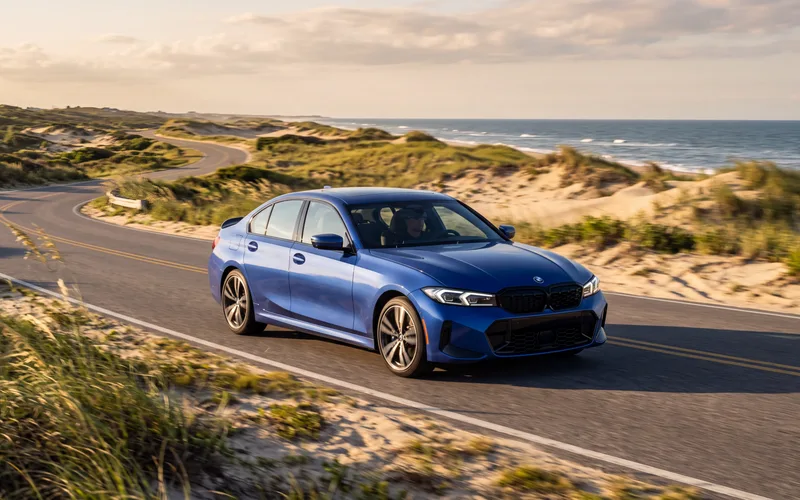 BMW 3 SeriesCompact Luxury Sedan
The 3 Series is the segment default with a broader powertrain lineup (330i, M340i, plug-in hybrid abroad), a much larger 14.9-inch curved display, a bigger ~17 cu ft trunk, and vastly better resale — but the Giulia is the more emotional, better-steering car and looks more distinctive at the curb.
Compare 2.86B-
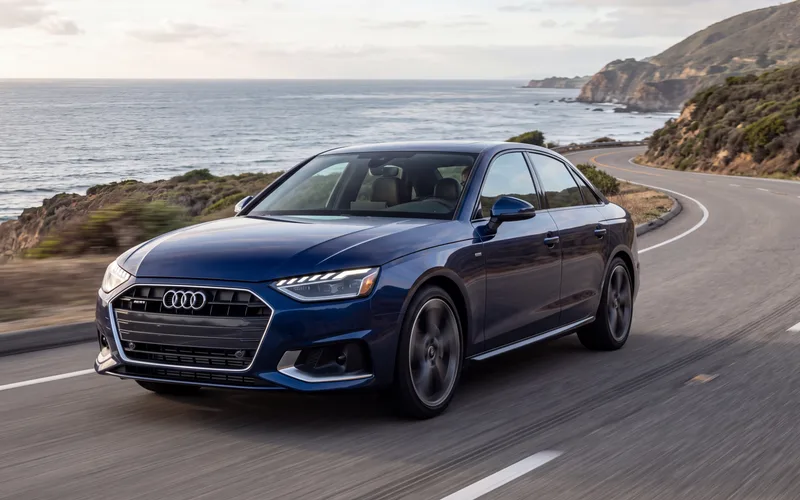 Audi A4Compact Luxury Sedan
The A4 quattro matches the Giulia's 27 MPG combined but adds tri-zone climate, roomier back seat comfort features, and Audi's more solid fit-and-finish reputation.
Compare 2.79B-
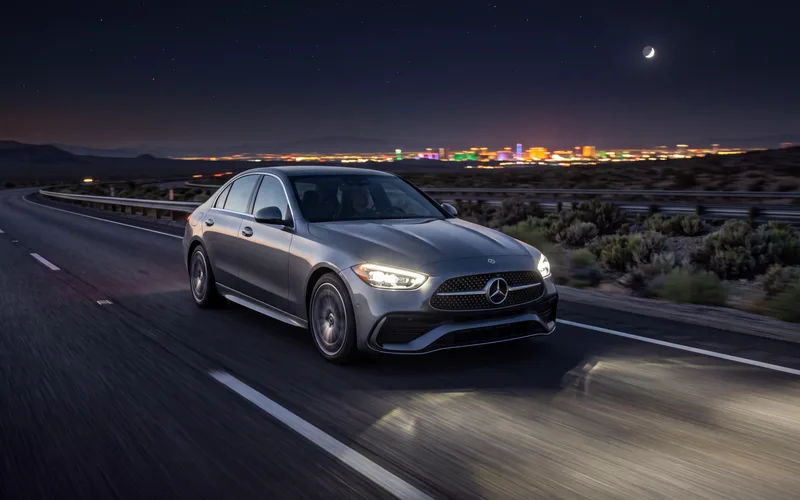 Mercedes-Benz C-ClassCompact Luxury Sedan
The C-Class walks over the Giulia inside with an 11.9-inch portrait screen, MBUX voice control, softer ride, and quieter cabin — it feels a full generation newer.
CompareHow it's evolved
10 scored model years · 2017–2026
Subject scores by year
Hover or tap a score to see what moved it versus the year before. A corner mark flags a big swing.
| Year | Performance | Efficiency | Safety | Space | Cost | Reliability | Tech | Use-case | Driving | Value |
|---|---|---|---|---|---|---|---|---|---|---|
| 2026 | 59 | 32 | 66 | 57 | 25 | 49 | 58 | 44 | 78 | 66 |
| 2025 | 57 | 28 | 60 | 63 | 30 | 66 | 56 | 50 | 81 | 67 |
| 2024 | 58 | 35 | 62 | 62 | 27 | 60 | 56 | 52 | 83 | 72 |
| 2023 | 57 | 37 | 65 | 61 | 13 | 63 | 52 | 51 | 82 | 71 |
| 2022 | 58 | 38 | 67 | 62 | 30 | 60 | 56 | 53 | 81 | 71 |
| 2021 | 57 | 32 | 61 | 61 | 31 | 57 | 52 | 50 | 81 | 76 |
| 2020 | 56 | 34 | 57 | 62 | 48 | 57 | 53 | 48 | 84 | 74 |
| 2019 | 57 | 32 | 61 | 62 | 52 | 57 | 43 | 51 | 84 | 78 |
| 2018 | 56 | 38 | 57 | 62 | 43 | 48 | 40 | 51 | 83 | 79 |
| 2017 | 58 | 37 | 57 | 66 | 51 | 47 | 34 | 53 | 81 | 84 |
Compare two years
Best fit & conditions
Higher scores mean a better fit for that use case. Learn more about use-case fit →
Subject profile
Academic Probation · NHTSA safety recalls
Sep 9, 2025Fuel system, gasoline: delivery: fuel pumpThe fuel pump may fail, which can result in a loss of fuel flow and loss of drive power.
Defect
Chrysler (FCA US, LLC) is recalling certain 2017-2019 Alfa Romeo Giulia and 2018-2019 Alfa Romeo Stelvio vehicles. The fuel pump may fail, which can result in a loss of fuel flow and loss of drive power.
Risk
A loss of drive power increases the risk of a crash.
Remedy
Dealers will replace the fuel delivery module, free of charge. Interim notification letters, notifying owners of the safety risk, were mailed October 7, 2025. Additional letters will be sent once the final remedy is available, anticipated July 2026. Owners may contact FCA customer service at 1-800-853-1403. FCA's number for this recall is 93C. Vehicle Identification Numbers (VINs) involved in this recall will be searchable on NHTSA.gov beginning September 16, 2025. The information in your report suggests that Chrysler (FCA US, LLC) may have been aware of this issue more than five business days before filing a report with NHTSA. Please be reminded that under Federal law, this agency is to be notified of all safety defect and/or noncompliance decisions within five business days. 49 CFR 573.6 Significant civil penalties can be assessed for this violation.
NHTSA campaign 25V586000 ↗Manufacturer no. 93C53,849 vehicles potentially affected (all models in the campaign)Owners notified Jul 30, 2026Filed by Chrysler (FCA US, LLC)Filed as GIULIAJul 3, 2024Equipment: other: labelsThe tire pressure and size information on the tire placard and manufacturer labels are incorrect. As such, these vehicles fail to comply with the requirements of Federal Motor Vehicle Safety Standard number 110, "Tire Selection and Rims."
Defect
Chrysler (FCA US, LLC) is recalling certain 2017-2024 Alfa Romeo Giulia and 2021-2024 Alfa Romeo Stelvio vehicles. The tire pressure and size information on the tire placard and manufacturer labels are incorrect. As such, these vehicles fail to comply with the requirements of Federal Motor Vehicle Safety Standard number 110, "Tire Selection and Rims."
Risk
Incorrect tire information can result in under-inflated tires or installing the incorrect-size tires, increasing the risk of a crash.
Remedy
FCA will mail corrected tire placards and manufacturer overlay labels. Owners may bring the labels into a dealer for free installation. Some interim notification letters, notifying owners of the safety risk, were mailed August 27, 2024. Owner notification letters were mailed August 5, 2024 through November 1, 2024. Owners may contact FCA US, LLC customer service at 1-800-853-1403. FCA US, LLC's number for this recall is 81B.
NHTSA campaign 24V512000 ↗Manufacturer no. 81B9,037 vehicles potentially affected (all models in the campaign)Owners notified Aug 5, 2024Filed by Chrysler (FCA US, LLC)Filed as GIULIAJul 3, 2024Air bags: frontal · Seat belts: frontA seat belt buckle switch sensor may be improperly connected, preventing the front seat air bag from deploying as intended.
Defect
Chrysler (FCA US, LLC) is recalling certain 2017-2024 Alfa Romeo Giulia, 2018-2025 Alfa Romeo Stelvio, 2019-2023 Fiat 500X, Jeep Renegade, and 2024 Fiat 500E vehicles. A seat belt buckle switch sensor may be improperly connected, preventing the front seat air bag from deploying as intended.
Risk
A front seat air bag that does not deploy as intended can increase the risk of injury in a crash.
Remedy
Dealers will repair the connection, free of charge. Owner notification letters were mailed beginning August 27, 2024. Owners may contact FCA US, LLC customer service at 1-800-853-1403. FCA US, LLC's number for this recall is 82B.
NHTSA campaign 24V510000 ↗Manufacturer no. 82B337,128 vehicles potentially affected (all models in the campaign)Owners notified Aug 27, 2024Filed by Chrysler (FCA US, LLC)Filed as GIULIAMay 30, 2023Service brakes, hydraulicDuring certain driving maneuvers, the brake system may exert an excessive clamp force that may fracture the rotor, decreasing the brake performance.
Defect
Chrysler (FCA US, LLC) is recalling certain 2017-2020 Alfa Romeo Giulia and 2018-2020 Alfa Romeo Stelvio vehicles equipped with carbon ceramic matrix brakes. During certain driving maneuvers, the brake system may exert an excessive clamp force that may fracture the rotor, decreasing the brake performance.
Risk
An unexpected decrease in brake performance increases the risk of a crash.
Remedy
Dealers will update the brake system module (BSM) software, free of charge. Owner notification letters were mailed July 20, 2023. Owners may contact FCA US, LLC customer service at 1-800-853-1403. FCA US, LLC's number for this recall is 68A.
NHTSA campaign 23V382000 ↗Manufacturer no. 68A719 vehicles potentially affected (all models in the campaign)Owners notified Jul 20, 2023Filed by Chrysler (FCA US, LLC)Filed as GIULIAMar 1, 2019Forward collision avoidance: adaptive cruise control · Service brakes, hydraulic: antilock/traction control/electronic limited slip: control unit/moduleThe Brake System Module (BSM) software may prevent the driver from disabling the Adaptive Cruise Control (ACC) after the traction control system detects a specific wheel slip.
Defect
FCA US LLC (Alfa Romeo) is recalling certain 2018-2019 Alfa Romeo Stelvio and 2017-2019 Giulia vehicles. The Brake System Module (BSM) software may prevent the driver from disabling the Adaptive Cruise Control (ACC) after the traction control system detects a specific wheel slip.
Risk
The driver's inability to deactivate the ACC can increase the risk of crash.
Remedy
Alfa Romeo has notified owners, and dealers will update the BSM software, free of charge. The recall began March 25, 2019. Owners may contact Alfa Romeo customer service 1-800-853-1403. The Alfa Romeo number for this recall is V27.
NHTSA campaign 19V148000 ↗Manufacturer no. V2719,114 vehicles potentially affected (all models in the campaign)Owners notified Mar 25, 2019Filed by Chrysler (FCA US LLC)Filed as GIULIANov 26, 2018Engine and engine cooling: exhaust system · Service brakes, hydraulic: power assist: hydraulic: hoses, lines/piping, and fittingsThe brake fluid line may contact a coolant hose clamp, possibly causing brake fluid to leak onto the exhaust.
Defect
Chrysler (FCA US LLC) is recalling certain 2017-2018 Alfa Romeo Giulia vehicles equipped with GME 280HP engines and All Wheel Drive ("AWD"). The brake fluid line may contact a coolant hose clamp, possibly causing brake fluid to leak onto the exhaust.
Risk
Brake fluid leaking onto the exhaust can increase the risk of a fire.
Remedy
Chrysler will notify owners, and dealers will install a bracket on the brake fluid line to prevent contact with the coolant hose clamp. If damage is found on the brake line, it will be replaced, free of charge. The recall began January 10, 2019. Owners may contact Chrysler customer service at 1-800-853-1403. Chrysler's number for this recall is UB9.
NHTSA campaign 18V828000 ↗Manufacturer no. UB96,136 vehicles potentially affected (all models in the campaign)Owners notified Jan 10, 2019Filed by Chrysler (FCA US LLC)Filed as GIULIASep 14, 2018Electrical system: wiring · Engine and engine cooling: engineThese engines may misfire causing the catalytic converter to overheat, possibly resulting in damage to the nearby wiring and engine components.
Defect
Chrysler (FCA US LLC) is recalling certain 2017-2018 Alfa Romeo Giulia and 2018 Alfa Romeo Stelvio vehicles, equipped with 2.0L engines. These engines may misfire causing the catalytic converter to overheat, possibly resulting in damage to the nearby wiring and engine components.
Risk
Heat damage to the engine compartment wiring or components can increase the risk of a fire or it can cause an engine stall, increasing the risk of a crash.
Remedy
Chrysler will notify owners, and dealers will inspect the vehicles for diagnostic codes, and update the engine control module software, free of charge. The recall began October 10, 2018. Owners may contact Chrysler customer service at 1-844-253-2872. Chrysler's number for this recall is UA4.
NHTSA campaign 18V636000 ↗Manufacturer no. UA434,357 vehicles potentially affected (all models in the campaign)Owners notified Oct 10, 2018Filed by Chrysler (FCA US LLC)Filed as GIULIA
10 recalls on other model years of the Giulia (2018–2025)
Dec 9, 2025Exterior lighting: headlightsThe wiring harness may have been misrouted, which can cause the headlights to fail. As such, these vehicles fail to comply with the requirements of Federal Motor Vehicle Safety Standard number 108, "Lamps, Reflective Devices, and Associated Equipment."
Defect
Chrysler (FCA US, LLC) is recalling certain 2024 Alfa Romeo Giulia vehicles. The wiring harness may have been misrouted, which can cause the headlights to fail. As such, these vehicles fail to comply with the requirements of Federal Motor Vehicle Safety Standard number 108, "Lamps, Reflective Devices, and Associated Equipment."
Risk
Headlights that fail can reduce visibility, increasing the risk of a crash.
Remedy
Dealers will inspect and replace the wheel arch liner and repair the wiring harness, as necessary, free of charge. Owner notification letters were mailed January 28, 2026. Owners may contact Chrysler customer service at 800-853-1403. Chrysler's number for this recall is D4C. Vehicle Identification Numbers (VINs) involved in this recall will be searchable on NHTSA.gov beginning December 16, 2025.
NHTSA campaign 25V845000 ↗Manufacturer no. D4C313 vehicles potentially affected (all models in the campaign)Owners notified Jan 28, 2026Filed by Chrysler (FCA US, LLC)Filed as GIULIAOct 7, 2025Back over prevention: display functionThe printed circuit board and software for the rearview camera may contain defects that cause the rearview camera image not to display properly. As such, these vehicles fail to comply with the requirements of Federal Motor Vehicle Safety Standard (FMVSS) number 111, "Rear Visibility."
Defect
Chrysler (FCA US, LLC) is recalling certain 2020-2025 Alfa Romeo Giulia and Alfa Romeo Stelvio vehicles. The printed circuit board and software for the rearview camera may contain defects that cause the rearview camera image not to display properly. As such, these vehicles fail to comply with the requirements of Federal Motor Vehicle Safety Standard (FMVSS) number 111, "Rear Visibility."
Risk
A rearview image that does not display properly reduces the driver's view behind the vehicle, increasing the risk of a crash.
Remedy
Dealers will inspect and replace the radio, as necessary. In addition, dealers will update the rearview camera software, as necessary. All repairs will be performed free of charge. Owner notification letters were mailed November 25, 2025. Owners may contact Chrysler customer service at 800-853-1403. Chrysler's number for this recall is A2C. Vehicle Identification Numbers (VINs) involved in this recall will be searchable on NHTSA.gov on October 14, 2025.
NHTSA campaign 25V667000 ↗Manufacturer no. A2C62,910 vehicles potentially affected (all models in the campaign)Owners notified Nov 25, 2025Filed by Chrysler (FCA US, LLC)Filed as GIULIADec 19, 2024Service brakes, hydraulic: pedals and linkagesThe fastener that connects the brake pedal and the brake booster may have been improperly assembled during manufacturing, which can cause the brake pedal to detach from the brake booster.
Defect
Chrysler (FCA US, LLC) is recalling certain 2019-2020 Alfa Romeo Giulia and Alfa Romeo Stelvio vehicles. The fastener that connects the brake pedal and the brake booster may have been improperly assembled during manufacturing, which can cause the brake pedal to detach from the brake booster.
Risk
Brake pedal detachment can cause a loss of brake function and increase the risk of a crash.
Remedy
Dealers will inspect and repair, the brake booster connection, as necessary, free of charge. Owner notification letters were mailed March 18, 2025. Owners may contact FCA customer service at 1-800-853-1403. FCA's number for this recall is E0B.
NHTSA campaign 24V943000 ↗Manufacturer no. E0B2,021 vehicles potentially affected (all models in the campaign)Owners notified Mar 18, 2025Filed by Chrysler (FCA US, LLC)Filed as GIULIAApr 30, 2024Fuel system, gasoline: delivery: hoses, lines/piping, and fittings · Fuel system, gasoline: delivery: pressure sensorThe fuel line sensor housing may crack and leak fuel.
Defect
Chrysler (FCA US, LLC) (Stellantis) is recalling certain 2021 Alfa Romero Giulia vehicles. The fuel line sensor housing may crack and leak fuel.
Risk
A fuel leak may cause an engine stall, increasing the risk of a crash. A fuel leak in the presence of an ignition source can increase the risk of a fire.
Remedy
Dealers will replace the fuel line sensor housing, free of charge. Owner notification letters were mailed June 6, 2024. Owners may contact FCA US, LLC customer service at 1-800-853-1403. FCA US, LLC's number for this recall is 54B. This recall is an expansion of recall number 21V-878.
NHTSA campaign 24V306000 ↗Manufacturer no. 54B261 vehicles potentially affected (all models in the campaign)Owners notified Jun 6, 2024Filed by Chrysler (FCA US, LLC)Filed as GIULIANov 12, 2021Fuel system, gasoline: delivery: hoses, lines/piping, and fittings · Fuel system, gasoline: delivery: pressure sensorThe fuel line sensor housing may crack and leak fuel.
Defect
Chrysler (FCA US, LLC) is recalling certain 2020-2021 Alfa Romeo Stelvio, and Alfa Romeo Giulia vehicles. The fuel line sensor housing may crack and leak fuel.
Risk
A fuel leak may cause an engine stall, increasing the risk of a crash. A fuel leak also increases the risk of fire in the presence of an ignition source.
Remedy
Dealers will inspect and replace the fuel line sensor housing, as necessary, free of charge. Owner notification letters were mailed on January 11, 2022. Owners may contact FCA US, LLC customer service at 1-800-853-1403. FCA US, LLC's number for this recall is Y91.
NHTSA campaign 21V878000 ↗Manufacturer no. Y9111,419 vehicles potentially affected (all models in the campaign)Owners notified Jan 11, 2022Filed by Chrysler (FCA US, LLC)Filed as GIULIANov 2, 2021Tires · Tires: markingsThese vehicles may be equipped with tires that have a lesser load rating than intended for the vehicle. As such, these vehicles fail to comply with the requirements of Federal Motor Vehicle Safety Standard number 110, "Tire Selection and Rims."
Defect
Chrysler (FCA US, LLC) is recalling certain 2020 Alfa Romeo Giulia vehicles. These vehicles may be equipped with tires that have a lesser load rating than intended for the vehicle. As such, these vehicles fail to comply with the requirements of Federal Motor Vehicle Safety Standard number 110, "Tire Selection and Rims."
Risk
The incorrect tires can result in the operator overloading the vehicle, increasing the risk of a crash.
Remedy
Dealers will replace the tires, and update the owner's manual with the correct load rating, free of charge. Owner notification letters were mailed December 21, 2021. Owners may contact FCA US LLC customer service at 1-800-853-1403. FCA US LLC's number for this recall is Y83.
NHTSA campaign 21V848000 ↗Manufacturer no. Y83185 vehicles potentially affected (all models in the campaign)Owners notified Dec 21, 2021Filed by Chrysler (FCA US, LLC)Filed as GIULIAMay 4, 2021Service brakes, hydraulicHard braking may cause the Anti-Lock Brake System (ABS) Hydraulic Control Unit (HCU) rotor shaft to separate, a reduction of braking assist, and a loss of ABS.
Defect
Chrysler (FCA US, LLC) is recalling certain 2019-2021 Alfa Romeo Stelvio and 2020-2021 Alfa Romeo Giulia vehicles. Hard braking may cause the Anti-Lock Brake System (ABS) Hydraulic Control Unit (HCU) rotor shaft to separate, a reduction of braking assist, and a loss of ABS.
Risk
The loss of braking assistance and ABS functionality can reduce overall braking performance, increasing the risk of a crash.
Remedy
Dealers will replace the ABS HCU, free of charge. Owner notification letters were mailed on June 29, 2021. Owners may contact FCA US LLC customer service at 1-800-853-1403.
NHTSA campaign 21V309000 ↗Manufacturer no. Y249 vehicles potentially affected (all models in the campaign)Owners notified Jun 29, 2021Filed by Chrysler (FCA US, LLC)Filed as GIULIANov 18, 2020Service brakes, hydraulic: foundation components: discThe rear brake discs may fracture during vehicle operation.
Defect
Chrysler (FCA US LLC) is recalling certain 2020 Alfa Romeo Giulia vehicles. The rear brake discs may fracture during vehicle operation.
Risk
A rear brake disc fracture may result in a reduction of braking performance, increasing the risk of a crash.
Remedy
FCA US LLC will notify owners, and dealers will replace the rear brake discs and pads, free of charge. The recall began December 17, 2020. Owners may contact FCA US LLC customer service at 1-800-853-1403. FCA US LLC's number for this recall is W86.
NHTSA campaign 20V714000 ↗Manufacturer no. W868 vehicles potentially affected (all models in the campaign)Owners notified Dec 17, 2020Filed by Chrysler (FCA US LLC)Filed as GIULIAJul 25, 2019Electrical system: instrument cluster/panelThe Body Control Module (BCM) may indicate an inaccurate fuel level that displays higher than the actual amount.
Defect
Alfa Romeo (FCA US LLC) is recalling certain 2018-2019 Giulia and Stelvio vehicles. The Body Control Module (BCM) may indicate an inaccurate fuel level that displays higher than the actual amount.
Risk
The vehicle may be operated without enough fuel in the tank causing a stall, increasing the risk of a crash.
Remedy
Alfa Romeo will notify owners, and dealers will update the BCM software, free of charge. The recall began August 12, 2019. Owners may contact Alfa Romeo customer service at 1-800-853-1403. Alfa Romeo's number for this recall is V84.
NHTSA campaign 19V551000 ↗Manufacturer no. V8421,914 vehicles potentially affected (all models in the campaign)Owners notified Aug 12, 2019Filed by Chrysler (FCA US LLC)Filed as GIULIADec 20, 2017Service brakes, hydraulicThe braking system on these vehicles may have been filled with contaminated brake fluid, possibly damaging the system and affecting its performance.
Defect
Chrysler (FCA US LLC) is recalling certain 2018 Alfa Romeo Giulia and Stelvio vehicles. The braking system on these vehicles may have been filled with contaminated brake fluid, possibly damaging the system and affecting its performance.
Risk
A reduction in braking performance can increase the risk of a crash.
Remedy
Alfa Romeo will notify owners, and dealers will inspect the braking system, replacing it as necessary, free of charge. The recall began February 1, 2018. Owners may contact Alfa Romeo customer service at 1-844-253-2872. Chrysler's number for this recall is T84.
NHTSA campaign 17V823000 ↗Manufacturer no. T84216 vehicles potentially affected (all models in the campaign)Owners notified Feb 1, 2018Filed by Chrysler (FCA US LLC)Filed as GIULIA
Source: NHTSA Office of Defects Investigation recall database, model years 2017–2026. Recalls are listed by model year as the manufacturer filed them; whether a specific car is affected depends on its VIN — check a VIN at nhtsa.gov ↗. NHTSA model names matched to this page: GIULIA.
Detailed scoring by subject
1Performance & PowertrainMid-pack among this car's ten categories.1.93C-
The volume 2017 Giulia and Giulia Ti used the new generation's turbocharged 2.0-liter four; the substantially costlier Quadrifoglio supplied the range maximum.
The 2.0-liter's strong, early torque peak gives the volume Giulia unusually muscular midrange response for a contemporary four-cylinder compact luxury sedan.
The representative RWD 2.0T is scored using an instrumented result rather than Alfa's quicker claim; another contemporary MotorTrend test achieved 5.1 seconds.
There is abundant midrange thrust and good response in Dynamic mode, but the four-cylinder is less smooth and less eager to rev than the segment's best engines. Normal mode also softens initial response.
The ZF eight-speed is a standout: it selects gears intelligently, executes quick redline shifts, and supplies responsive manual downshifts with rev matching. Its fixed, oversized paddles are an ergonomic issue rather than a shift-quality flaw.
Q4 AWD was optional on both mainstream trims rather than reserved for an expensive top trim. It is a rear-biased on-demand system able to send up to half of engine torque forward, but lacks user-selectable terrain modes.
The launch-year U.S. range covered mainstream and extreme-performance needs with a 280-hp turbo four and a 505-hp twin-turbo V6, plus RWD or AWD on the four-cylinder. There was no hybrid, plug-in, EV, diesel, or U.S.-market manual.
2Efficiency & RangeOne of the Giulia's weakest categories.0.46F
The rear-drive 2.0T is the representative volume configuration; Q4 AWD gives up one combined MPG.
This is the EPA city rating for the representative rear-wheel-drive turbo-four model.
This is the EPA highway rating for the representative rear-wheel-drive turbo-four model.
A full 15.3-gallon tank at the EPA combined rating yields about 413 miles; the figure is distinct from the longer highway-only range.
EPA's standard 15,000-mile estimate reflects the cost basis for the recommended premium fuel and is less favorable than the raw 27-MPG figure alone suggests.
Regular unleaded is permitted, avoiding a strict premium requirement, but Alfa recommends 91 octane or higher for optimum performance and economy. That mixed message places it in the middle band.
3SafetyMid-pack among this car's ten categories.1.83C-
NHTSA did not publish an overall NCAP rating for the 2017 Giulia, so the required numeric value is a conservative four-star estimate rather than a claimed test result.
Giulias built after May 2017 earned Top Safety Pick+ when equipped with optional front crash prevention and qualifying headlights, with Good results in every crashworthiness test then conducted. Early-build cars do not inherit the later reinforced front structure, and the award was equipment-dependent.
The volume Giulia did not include the modern five-feature suite as standard: the stronger forward-collision/AEB system, adaptive cruise, lane-departure warning, blind-spot monitoring, and rear cross-path detection were package equipment. Lane keeping was not offered.
The optional Forward Collision Warning Plus system performed extremely well in IIHS vehicle-to-vehicle testing, but it was not standard and there are no IIHS day/night pedestrian results for this model year.
Blind Spot Monitoring and Rear Cross Path Detection were available together, but only as optional alert systems. There was no active blind-zone steering intervention, rear cross-traffic braking, or safe-exit warning.
The optional system only warned when the car departed its lane. The 2017 Giulia offered neither lane-keeping steering intervention nor continuous lane centering.
Optional Adaptive Cruise Control could bring the Giulia to a full stop and resume, a strong longitudinal feature for 2017. It was not standard and had no lane-centering highway-assist partner.
No hands-free highway-driving system was offered on any 2017 Giulia configuration.
The base and unoptioned Ti—the relevant volume configurations—received a Poor IIHS headlight rating because curve illumination was inadequate and low beams produced excessive glare. Optional curve-adaptive 35-watt bi-xenons rated Good, but were required for the safety award.
Forward visibility is unusually open and the large rear side windows mitigate the thick rear pillars, though the mirrors and pillars still create ordinary blind zones. A rear camera helps at low speed, but no surround-view camera was offered.
Two complete outboard LATCH positions and three accessible tethers make two-seat installation workable, and the anchors have helpful flip covers. IIHS nevertheless rates usability Marginal because some lower anchors are recessed and hard to maneuver around, while the tight rear area prevents an easy three-across fit.
4Space & ComfortOne of the Giulia's strongest categories.2.49C+
The Giulia is a conventional five-seat compact luxury sedan.
Published base RWD dimensions provide adequate front headroom for the class.
Front legroom is generous for a compact sport sedan.
The domed roof preserves useful second-row headroom despite the sporty roofline.
Rear legroom is measurably tight and reviews consistently flag the back seat as cramped.
The manufacturer-published luggage volume is large on paper, though the opening and cabin storage reduce practical utility.
The tiny console and sparse small-item spaces are a notable everyday weakness; the 40/20/40 rear seat adds useful flexibility.
Front seats are supportive and comfortable, but the base cushion has limited tilt and rear occupants face restricted leg and foot room.
The Giulia combines excellent body control with a mostly pleasant ride, though sharp impacts and a firm bias remain.
Acoustic windshield and front-door glass suppress wind noise well, with average road noise on coarse surfaces.
Dual-zone climate is standard; heated front seats and wheel are optional on base and standard on Ti, but ventilation and rear climate controls are absent.
5Cost of OwnershipGrades below the middle of the scale.1.41D
The entry 2017 Giulia RWD listed at $37,995 before the mandatory $995 destination charge.
The midlevel Ti is the representative volume trim; it adds the larger 8.8-inch display, heated seats and steering wheel, 18-inch wheels, SiriusXM, and wood trim without moving to the low-volume Quadrifoglio.
CarEdge's Giulia model estimate combines scheduled maintenance, wear items, and expected repairs while excluding warranty work; it is the best available five-year model-level projection rather than a trim-specific 2017 retrospective.
Giulia depreciation is unusually steep for the class; the model-level projection retains 38% of new value after five years.
The 2017 U.S. warranty booklet gives the Giulia a four-year basic term capped at 50,000 miles.
FCA did not provide the 2017 Giulia a longer separate powertrain warranty; factory-installed powertrain components fall under the comprehensive four-year/50,000-mile Basic Limited Warranty.
One year/10,000 miles of scheduled service is a useful but short maintenance benefit, supplemented by four years of roadside assistance with no mileage limit.
$40,990 volume-trim price minus its estimated resale value after 5 years (38% retained, or about $15,576) leaves about $25,414 in depreciation. Add the projected $2,362 in 5-year maintenance and repairs, and owning this vehicle for 5 years costs about $27,776 in total.
6Reliability & QualityOne of the Giulia's weakest categories.1.11D
The inaugural U.S.-market Giulia has a below-average used-car reliability record, with recurring electrical/software, cooling-system, and accessory faults. Consumer Reports' survey-based history and contemporary testing both support a score below the compact-luxury norm, though the volume 2.0T is less troublesome than the Quadrifoglio.
Alfa Romeo re-entered the U.S. as a very low-volume brand and brought a historically weak quality reputation rather than a demonstrated multi-year dependability record. The new Giulia therefore had neither top-tier brand data nor an established U.S. service history to offset that risk.
Seven campaigns are heavy for a low-volume launch-year sedan, and several concern consequential hazards rather than labels or minor software alone. The record includes possible brake-fluid leakage onto the catalyst with fire risk and a fuel-pump failure that can cause loss of drive power.
The volume trim's 280-hp 2.0L GME turbo four and eight-speed automatic were new in this application, limiting the launch-year durability record. The ZF-derived automatic is well established, but early cars developed thermostat/cooling, relay, and electronic-control complaints, keeping the combination only slightly above the known-problem band.
Soft-touch dashboard surfaces, leather, and real wood or metallic trim make the volume Giulia convincingly upscale for its price. Cheap plastics around the shifter and portions of the doors keep it behind the best Audi and Mercedes cabins.
Launch-year assembly and component consistency fell below luxury-class expectations. Contemporary test cars exhibited a failed sunroof, intermittent connectivity, inconsistent trim execution, and sharp edges, even though some individual cars appeared well assembled.
Alfa Romeo's newly rebuilt U.S. dealer network offered acceptable support in major metros but was sparse compared with BMW, Mercedes-Benz, Lexus, or the FCA mainstream brands. Limited Alfa-trained service capacity is particularly consequential for an electronically complex first-year model.
The low-volume Italian luxury sedan has a shallower aftermarket and fewer qualified independent shops than established rivals, while proprietary electronic, cooling, and trim components can make repairs costly or slow. Some FCA-family and ZF-related component sharing helps, but not enough to reach average parts support.
7Technology & InfotainmentThe Giulia's lowest-graded category.0.25F
The volume base trim uses a controller-operated 6.5-inch display; neither 2017 screen is touch-sensitive.
The rotary-controller menus are straightforward and reasonably responsive, but the small base screen and occasional Bluetooth trouble hold it back.
Neither wired nor wireless Apple CarPlay or Android Auto was offered for 2017.
Voice recognition is standard, while 3-D native navigation requires the optional 8.8-inch package; capability is basic by modern standards.
The standard eight-speaker system is adequate, with useful 10-speaker/400-watt and Harman Kardon upgrades available.
Analog gauges flank a useful 7-inch TFT information display, but there is no full-digital configurable cluster.
The launch-year system has no documented meaningful over-the-air map, infotainment, or whole-vehicle update capability.
The 2017 Giulia offered no digital key or rich vehicle-control companion app comparable with current luxury cars.
Three USB-A ports were generous for 2017, but there is no USB-C, wireless charging, or household outlet.
Remote keyless entry and steering-wheel push-button start are standard, but there is no phone key or broad remote-app functionality.
A rear camera is standard and front/rear parking assistance is available, but no surround-view camera or automated parking is offered.
No head-up display was offered on the 2017 Giulia.
8Use-Case FitGrades below the middle of the scale.1.54D
Easy-access LATCH anchors and a 40/20/40 rear seat help, but tight rear legroom and a sloping entry complicate loading children.
Crashworthiness is excellent, but TSP+ eligibility and advanced driver aids depend on build date, headlights, and optional packages.
A quiet, composed cabin and useful trunk suit four-person trips, but the cramped rear seat and thin rear amenities limit long-haul family comfort.
The responsive 2.0T/eight-speed, compact footprint, good visibility, and comfortable ride work well daily; brake-by-wire feel can make smooth stops difficult.
EPA combined economy of roughly 26-27 mpg is competitive for a 280-hp luxury sedan, though premium fuel and luxury-car consumables prevent low running costs.
A 35.5-foot turning circle and compact dimensions make it agile in town, with a rear camera and available front sensors offsetting rear-pillar blind spots.
This low-slung luxury sedan has no published U.S. tow rating, payload-oriented body, or cargo bay suitable for meaningful work duty.
The luxury-oriented interior and launch-year build/electronic foibles are ill-suited to repeated jobsite abuse.
There are no bed tie-downs, onboard power, washable surfaces, racks, or meaningful commercial upfit ecosystem.
Supportive seats, acoustic glass, a mostly pleasant ride, and strong highway manners make it a good front-seat tourer; rear space and option-gated adaptive cruise reduce the score.
Available Q4 AWD helps on poor weather and gravel, but low clearance, no tow rating, and sedan packaging keep it pavement-focused.
A large published trunk and 40/20/40 folding seatbacks handle normal luggage and long items, though small cabin storage and the sedan opening constrain bulky gear.
9Driving ExperienceOne of the Giulia's strongest categories.3.51A-
Near-even weight distribution, 0.88-g tested grip, superb balance, and controlled ride place the volume 2.0T near the top of its class.
Exceptionally quick, precise steering retains meaningful on-center communication and feedback without becoming nervous.
Stopping power is competitive, but wooden and inconsistent brake-by-wire pedal feel makes smooth modulation difficult.
The 280-hp turbo four and responsive eight-speed deliver quick, well-timed shifts and strong throttle response, with only minor calibration rough edges.
The turbo four is well isolated and unobtrusive at speed, though its muted character is less evocative than the chassis.
The tight turning diameter supports excellent urban maneuverability for a sedan.
Core controls, visibility, and steering-wheel ergonomics are excellent, but the base seat cushion lacks tilt/support adjustment and some cabin details feel cheap.
Even the volume four-cylinder Giulia combines lively controls, character, speed, and chassis balance in a way enthusiast reviewers repeatedly recommend.
10Value & Market PositionThe Giulia's best-graded category.3.72A
Even the base car included leather, 10-way power front seats, bi-xenon lamps, rear camera and parking sensors, proximity entry, remote start, Brembo four-piston front brakes, and a 7-inch driver display. The Ti added heated seats and steering wheel plus the 8.8-inch infotainment screen for only $2,000.
At $40,990 delivered, the Ti paired strong luxury content with a class-leading 280-hp engine, eight-speed automatic, rear-drive platform, and 5.1-second claimed 0-60 mph performance. That was standout performance and equipment for compact-luxury-sedan money.
The launch range covered base, luxury-oriented Ti, and 505-hp Quadrifoglio, with rear- or all-wheel drive on four-cylinder cars and Sport, Lusso, and Performance packages. It offered meaningful variety, though only one transmission and a large price jump to the halo model.
The new entrant achieved a credible 8,904 U.S. sales in its first full launch year and rose to 11,519 in 2018, but remained a small player beside established German and Japanese rivals. This was positive launch momentum rather than segment-leading acceptance.
Alfa Romeo brought authentic Italian design and motorsport heritage plus a charismatic enthusiast image, amplified by the Quadrifoglio. Limited U.S. awareness and reliability uncertainty kept its prestige from matching the established German luxury brands.
Alfa supported the launch with an aggressive $299-per-month lease on the base RWD car, giving buyers meaningful access below the nominal luxury MSRP. The offer was substantial, though time-limited and required $3,299 at signing.
The 2017 U.S. Giulia was the inaugural model year of the new 952 generation, on the all-new rear-drive Giorgio architecture, with no redesign risk. It represented a clean-sheet relaunch rather than a carry-over or facelift.
The launch Giulia was exceptionally well received for steering, chassis balance, speed, and character, earning multiple international and U.S. honors. Reliability and a few early-production quirks were the main reservations, not the driving verdict.