

The verdict
A mixed-report compact luxury sedan, strong on driving and held back by efficiency.
Overall 2.17 (C) across 10 graded subjects. Its strongest is driving experience at 3.71 (A), its weakest efficiency & range at 0.08 (F). 6 of 10 subjects grade at C− or better.
Jump to scoresStrengths
- Driving Experience
- Value & Market Position
- Space & Comfort
What holds it back
- Efficiency & Range
- Technology & Infotainment
- Use-Case Fit
Top alternatives
Cars shoppers cross-shop with the Alfa Romeo Giulia 3.07B
3.07B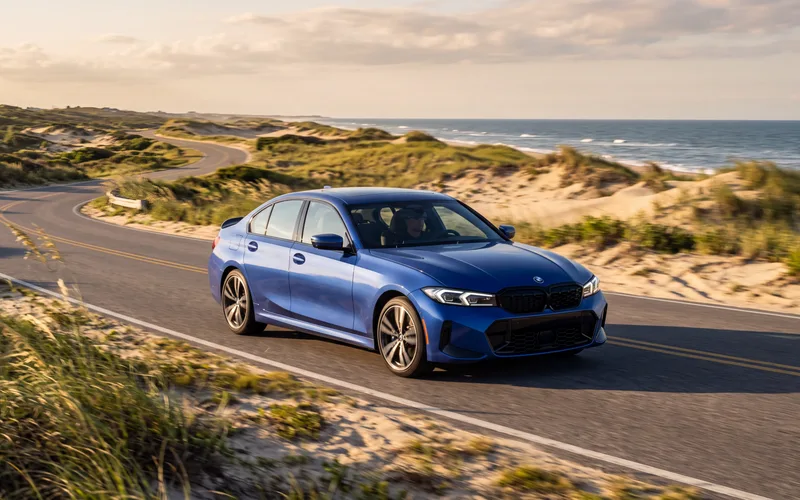 BMW 3 SeriesCompact Luxury Sedan
The 3 Series is the segment default with a broader powertrain lineup (330i, M340i, plug-in hybrid abroad), a much larger 14.9-inch curved display, a bigger ~17 cu ft trunk, and vastly better resale — but the Giulia is the more emotional, better-steering car and looks more distinctive at the curb.
Compare 2.86B-
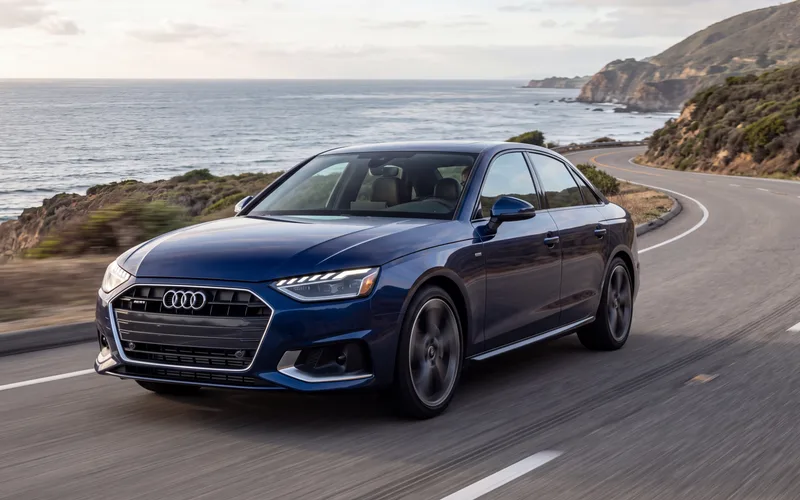 Audi A4Compact Luxury Sedan
The A4 quattro matches the Giulia's 27 MPG combined but adds tri-zone climate, roomier back seat comfort features, and Audi's more solid fit-and-finish reputation.
Compare 2.79B-
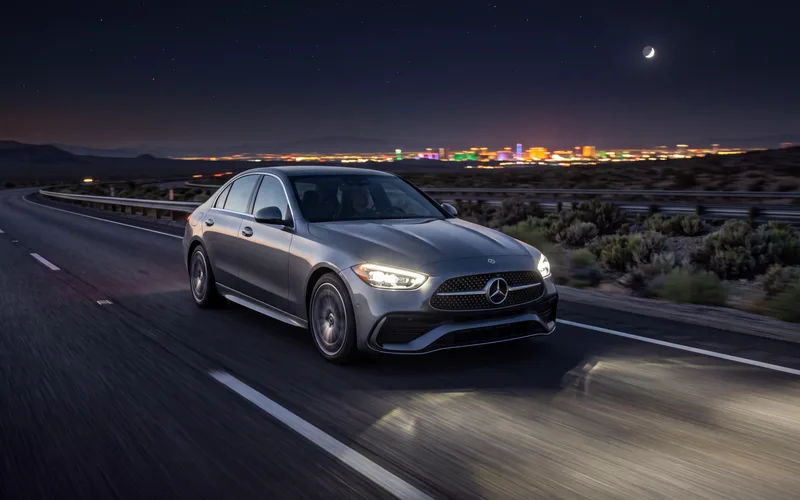 Mercedes-Benz C-ClassCompact Luxury Sedan
The C-Class walks over the Giulia inside with an 11.9-inch portrait screen, MBUX voice control, softer ride, and quieter cabin — it feels a full generation newer.
CompareHow it's evolved
10 scored model years · 2017–2026
Subject scores by year
Hover or tap a score to see what moved it versus the year before. A corner mark flags a big swing.
| Year | Performance | Efficiency | Safety | Space | Cost | Reliability | Tech | Use-case | Driving | Value |
|---|---|---|---|---|---|---|---|---|---|---|
| 2026 | 59 | 32 | 66 | 57 | 25 | 49 | 58 | 44 | 78 | 66 |
| 2025 | 57 | 28 | 60 | 63 | 30 | 66 | 56 | 50 | 81 | 67 |
| 2024 | 58 | 35 | 62 | 62 | 27 | 60 | 56 | 52 | 83 | 72 |
| 2023 | 57 | 37 | 65 | 61 | 13 | 63 | 52 | 51 | 82 | 71 |
| 2022 | 58 | 38 | 67 | 62 | 30 | 60 | 56 | 53 | 81 | 71 |
| 2021 | 57 | 32 | 61 | 61 | 31 | 57 | 52 | 50 | 81 | 76 |
| 2020 | 56 | 34 | 57 | 62 | 48 | 57 | 53 | 48 | 84 | 74 |
| 2019 | 57 | 32 | 61 | 62 | 52 | 57 | 43 | 51 | 84 | 78 |
| 2018 | 56 | 38 | 57 | 62 | 43 | 48 | 40 | 51 | 83 | 79 |
| 2017 | 58 | 37 | 57 | 66 | 51 | 47 | 34 | 53 | 81 | 84 |
Compare two years
Best fit & conditions
Higher scores mean a better fit for that use case. Learn more about use-case fit →
Subject profile
Detailed scoring by subject
1Performance & PowertrainMid-pack among this car's ten categories.1.82C-
The volume Giulia and Giulia Ti use the 280-hp turbo four; the separate Quadrifoglio performance model raises the range maximum to 505 hp.
The volume 2.0-liter turbo delivers a strong 306 lb-ft across a broad 2,000-4,800 rpm plateau.
The rear-drive volume configuration reached 60 mph in 5.7 seconds in instrumented testing, with the additional traction of Q4 AWD trimming two tenths.
The turbo four is responsive, muscular, and characterful with abundant midrange torque, but it is less smooth and less eager to rev than the best German turbo fours.
The ZF-derived eight-speed generally shifts quickly and suits the engine well, though reviewers identify rough shifts in Dynamic mode and imperfect low-speed polish.
Q4 AWD was broadly optional on the four-cylinder Giulia and Ti family, while RWD remained standard and the Quadrifoglio was RWD-only. It improves all-weather traction but lacks terrain modes or the Quadrifoglio's torque-vectoring rear differential.
Two meaningfully distinct engines span a strong mainstream turbo four and an extreme twin-turbo V6, but there was no hybrid, plug-in, EV, or manual-transmission alternative in the 2019 US lineup.
2Efficiency & RangeThe Giulia's lowest-graded category.0.08F
The rear-drive volume configuration earns 27 MPG combined; choosing Q4 AWD reduces that by 1 MPG.
The volume rear-drive 2.0T is EPA-rated at 24 MPG city, aided by standard engine stop-start.
The tall eight-speed automatic helps the rear-drive volume car reach a competitive 33 MPG highway.
EPA's gasoline record does not publish a total-range field, so the representative range is transparently calculated from the official tank capacity and EPA combined rating: 15.3 times 27 equals 413.1 miles.
The EPA's current standard-assumption estimate is relatively costly because the Giulia combines 27 MPG with mandatory premium gasoline.
Alfa specifies 91-octane premium unleaded for both 2019 engines, with no regular-fuel or electrified alternative to reduce energy cost.
3SafetyMid-pack among this car's ten categories.2.11C
NHTSA did not select the 2019 Giulia for NCAP testing, so no official overall star rating exists. The required numeric value is a proxy based on its five-star Euro NCAP result and Good ratings in every published IIHS crashworthiness test, not an NHTSA result.
The Giulia earned Good results in all five published crashworthiness categories, but it was absent from IIHS's 2019 Top Safety Pick lists and lacked a published passenger-side small-overlap result on the official 2019 rating page. Its structure belongs to the post-May-2017 improved build covered by these results.
The volume 2.0-liter Giulia did not include the core modern suite as standard: AEB/forward-collision warning, adaptive cruise, and lane-departure warning required the Driver Assist Dynamic Plus package, while blind-spot and rear cross-path detection required a separate Static package. It offered no lane-keep assist.
The optional system delivered excellent vehicle-to-vehicle performance for its era, avoiding the 12-mph collision and cutting 24 mph from the 25-mph test. IIHS did not publish pedestrian day/night testing for this model, keeping it below today's top band.
Blind-spot monitoring and rear cross-path detection were available together on the volume trim, but only through an extra-cost package. The system supplied warnings rather than active steering or rear braking and had no safe-exit function.
The 2019 system only warned the driver with a rumble-strip-style alert and could neither steer the car back nor center it. The warning was optional and Consumer Reports found it startling.
Optional Adaptive Cruise Control Plus could follow traffic to a full stop and was judged well sorted, a useful capability for 2019. Because there was no lane centering, it could not form a true combined highway-assist system.
No hands-free driving system was available in 2019. The car lacked even lane centering, and all steering remained the driver's responsibility.
The base and volume Ti trims' regular bi-xenon projectors rated Poor, with excessive low-beam glare and weak curve illumination. A costly adaptive bi-xenon configuration rated Good, but it was not standard on the volume trim.
Forward visibility is excellent thanks to the upright driving position, close windshield, and relatively narrow front pillars. Side pillars create notable over-the-shoulder blind zones, and no surround-view camera was offered to compensate.
There are two complete outboard LATCH positions and the anchors can be reached without much force, but IIHS rates overall usability Marginal because some anchors are recessed or lack open access. Tight rear legroom and small door openings make larger rear-facing seats awkward.
4Space & ComfortOne of the Giulia's strongest categories.2.21C
The volume Giulia RWD has two rows and seating for five.
Front headroom is competitive for a compact luxury sedan.
The front compartment provides generous legroom.
Rear headroom is adequate despite the sloping roofline.
Rear legroom is notably tighter than the front and trails roomier rivals.
The trunk is modest but the split-folding rear seat improves usefulness.
Cabin storage is sparse and there are no standout storage innovations.
Supportive, well-bolstered front seats suit long drives, though rear space limits comfort for taller passengers.
The ride is controlled and absorbs bumps well, but retains a firm sporting edge.
Noise isolation is suitable for the class but not repeatedly identified as a segment-leading strength.
Dual-zone climate is standard, while heated front seats/wheel require Ti or the Cold Weather Package and heated rears were newly optional for 2019.
5Cost of OwnershipGrades below the middle of the scale.1.46D
The entry 2019 Giulia used the 280-hp 2.0-liter turbo and eight-speed automatic; this is the delivered base price rather than the destination-excluded sticker.
The Ti is the representative volume trim, adding the larger infotainment display, heated front seats and steering wheel, front parking sensors, and 18-inch wheels while retaining the standard 280-hp four-cylinder.
The available Giulia five-year ownership estimate is low partly because most defects in the early years fall under Alfa's comprehensive 4-year/50,000-mile warranty; it should not be read as a prediction for an already-aged 2019 example's next five years.
Giulia depreciation is substantially steeper than the sedan average, reflecting limited market acceptance and reliability concerns, so retention is placed near the bottom of the compact-luxury class.
Coverage matched the four-year luxury-brand norm and exceeded mainstream 3-year/36,000-mile warranties.
FCA did not provide the Giulia a longer separate powertrain warranty, leaving engine and transmission coverage shorter than the usual 5- or 6-year powertrain term.
One scheduled service at 1 year/10,000 miles is useful but brief; four years of unlimited-mile roadside assistance and a 12-month SiriusXM trial add meaningful basic perks.
$42,040 volume-trim price minus its estimated resale value after 5 years (42% retained, or about $17,657) leaves about $24,383 in depreciation. Add the projected $2,362 in 5-year maintenance and repairs, and owning this vehicle for 5 years costs about $26,745 in total.
6Reliability & QualityMid-pack among this car's ten categories.1.80C-
The evidence is incomplete rather than reassuring: Consumer Reports has no detailed reliability rating for the 2019 Giulia, and J.D. Power leaves Quality & Reliability unrated. Its 77/100 overall owner score is respectable, but period reviewers explicitly questioned the first-generation car's long-term reliability.
Alfa Romeo lacks the consistent multi-year U.S. survey record expected of a mid-pack luxury brand and has often been omitted from rankings for insufficient sample size. Its historically mixed quality reputation and low U.S. volume warrant the bottom edge of the average band, not an inferred top-tier result.
Seven NHTSA campaigns are a heavy record for this model year, and several are safety-significant rather than cosmetic. The affected systems include fuel delivery/drive-power loss, brake-pedal detachment or rotor fracture, adaptive-cruise unintended acceleration, incorrect fuel-level indication, and front-airbag deployment.
The volume Giulia's 280-hp 2.0-liter turbo four and ZF-based eight-speed automatic have avoided the especially poor service history associated with early Quadrifoglio test cars, and the transmission is broadly proven. Still, the engine family was relatively new in 2019, while the later fuel-pump recall and scattered electronic/limp-mode reports prevent an above-average durability score.
The cabin is attractively designed and uses soft-touch plastics, leather, and real wood or metallic trim, appropriate for a compact luxury sedan. Cheap plastic around the shifter and less-convincing leather and switchgear keep it behind the best German and Japanese rivals.
Assembly quality is visibly and audibly inconsistent. Period testing found prevalent squeaks and creaks, including at the pillars, while MotorTrend directly criticized inconsistent fit and finish; that is below class expectations even though other reviewers called the car decently assembled.
Alfa Romeo's U.S. dealer network is sparse compared with mainstream brands and established luxury competitors, making qualified service inconvenient outside major metros. Shared Stellantis ownership does not mean every Chrysler-Dodge-Jeep-Ram store can perform Alfa warranty or specialized work.
Routine upkeep is priced like a European luxury car, while the small installed base and specialist-service needs constrain aftermarket choice and can delay uncommon parts. Some shared suppliers and the widely used transmission help, but ownership costs and access are materially worse than mainstream sedans.
7Technology & InfotainmentOne of the Giulia's weakest categories.0.88F
The volume trim uses the small 6.5-inch controller-operated display; the 8.8-inch unit was optional.
The rotary interface is reasonably responsive and simple, but small graphics and the lack of touch date it.
Both projection systems are standard but require a cable; wireless projection was not offered.
Basic voice control is standard and factory navigation is optional, but phone projection is the better mapping experience.
An adequate eight-speaker base system can be upgraded to branded Harman Kardon audio.
A useful 7-inch TFT sits between traditional analog gauges, but this is not a full digital cluster.
The 2019 architecture has no documented meaningful over-the-air feature or whole-vehicle update capability.
The 2019 model predates Alfa Connect remote app services, so remote start is key-fob based.
Four USB-A outlets and a 12-volt socket are useful, but there is no USB-C, wireless pad, or AC outlet.
Passive entry, push-button start, remote start and remote trunk release are standard, though phone-as-key is absent.
A backup camera and rear sensors are standard and front sensors optional, but no surround-view or automated parking system is offered.
No head-up display was offered on the 2019 Giulia.
8Use-Case FitOne of the Giulia's weakest categories.1.43D
Two complete LATCH positions and folding seats help, but tight rear room and difficult-to-reach lower anchors complicate family duty.
Crashworthiness is strong, but automatic braking, adaptive cruise, blind-spot monitoring and lane warning reside in optional packages.
Supportive front seats and a good ride help, but the tight rear bench, modest trunk and limited rear amenities constrain four-person trips.
Compact dimensions, supportive seats, a strong automatic transmission and composed ride make daily use easy, despite imperfect stop/start and mode calibration.
Fuel economy is competitive for a 280-hp luxury sedan, though premium fuel, run-flat tires and luxury-car upkeep prevent low running costs.
A compact footprint, excellent 35.5-foot turning circle, standard rear sensors and backup camera suit urban use.
This luxury sport sedan has no published US tow rating, bed, or useful payload-oriented configuration.
Luxury materials, low-profile run-flat tires and a poor historic reliability reputation are ill-suited to sustained work abuse.
There are no jobsite-focused tie-downs, onboard power systems, washable surfaces, or upfit ecosystem.
Supportive seats, good highway economy and controlled ride make it a capable tourer, but rear space and optional-only adaptive cruise limit it.
Available Q4 AWD can handle poor weather and maintained gravel, but low clearance and no US tow rating keep it pavement-oriented.
The 40/20/40 flat-folding rear seat and pass-through add flexibility, but the 13.4-cubic-foot trunk and narrow sedan opening limit bulky gear.
9Driving ExperienceThe Giulia's best-graded category.3.71A
The Giulia is a class-leading driver's sedan with quick response, minimal roll and predictable balance.
Exceptionally quick, precise and communicative steering is the car's defining dynamic strength.
Large standard Brembo four-piston front brakes deliver strong stopping hardware, though the brake-by-wire system can feel less natural than the best conventional setups.
The 280-hp turbo four is eager and the eight-speed works smoothly in Natural mode, but Dynamic-mode shifts can be harsh and Efficiency mode hesitant.
The engine is audible but has an engaging character rather than coarse or droning behavior.
The tight turning diameter benefits city maneuvering.
Extensive seat and wheel adjustment, excellent primary-control placement and large fixed paddles create a driver-focused cockpit; small sun visors are a blemish.
Few volume compact luxury sedans combine this much steering communication, chassis agility, character and everyday usability.
10Value & Market PositionOne of the Giulia's strongest categories.3.27B+
The base car included leather 10-way power front seats, bi-xenon lamps, a 7-inch cluster display, rear camera, parking sensors, and phone integration, while Ti added heated amenities and the 8.8-inch display. Key active-safety features such as full-speed forward-collision warning and blind-spot monitoring still required packages on volume trims.
A $42,040 Ti delivered 280 hp, an eight-speed automatic, genuine wood, leather, and unusually sophisticated chassis hardware, with available AWD for $2,000. Cabin finish and the need to option driver assists keep it short of a class-leading bargain.
The lineup ranged from Giulia through Ti, Ti Sport, Ti Lusso and Ti Sport Carbon to the 505-hp Quadrifoglio, with RWD or Q4 AWD on every four-cylinder flavor and numerous appearance, luxury, performance and assistance packages. The range was broad even though it offered no alternate volume engine or electrified option.
US demand fell roughly 24% from the model's 2018 peak and remained only a fraction of the German compact-luxury leaders. The Giulia had enthusiast recognition but was a slow, weakening mainstream luxury-market seller.
Alfa Romeo's Italian design, racing history and scarce-on-the-road character gave the Giulia unusually strong enthusiast cachet. Reliability doubts and a thin US dealer footprint constrained the brand's broader luxury appeal and resale strength.
Large discounts and lease support were readily available, making the car exceptionally negotiable for buyers, though the depth of discount also reflected weak demand and poor residuals.
The 2019 car was only the third US model year of the rear-drive 952 generation and remained platform-fresh. It was a minor-change year adding Nero Edizione and carbon-themed configurations rather than the substantial interior, touchscreen and Level 2 driver-assistance facelift that followed for 2020.
The Giulia was one of the era's most acclaimed driver's sedans: a 2018 Car and Driver 10Best winner, 2018 MotorTrend Car of the Year, and a 2019 Car and Driver Editors' Choice. Reviewers consistently treated its steering and chassis as class benchmarks despite reliability and cabin-quality criticism.