

The verdict
A mixed-report compact luxury sedan, strong on driving and held back by efficiency.
Overall 2.14 (C) across 10 graded subjects. Its strongest is driving experience at 3.69 (A-), its weakest efficiency & range at 0.20 (F). 6 of 10 subjects grade at C− or better.
Jump to scoresStrengths
- Driving Experience
- Value & Market Position
- Space & Comfort
What holds it back
- Efficiency & Range
- Cost of Ownership
- Use-Case Fit
Top alternatives
Cars shoppers cross-shop with the Alfa Romeo Giulia 3.07B
3.07B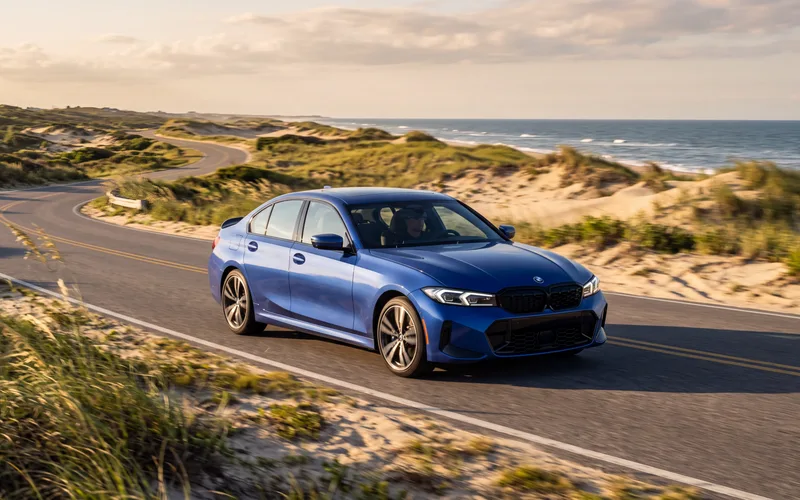 BMW 3 SeriesCompact Luxury Sedan
The 3 Series is the segment default with a broader powertrain lineup (330i, M340i, plug-in hybrid abroad), a much larger 14.9-inch curved display, a bigger ~17 cu ft trunk, and vastly better resale — but the Giulia is the more emotional, better-steering car and looks more distinctive at the curb.
Compare 2.86B-
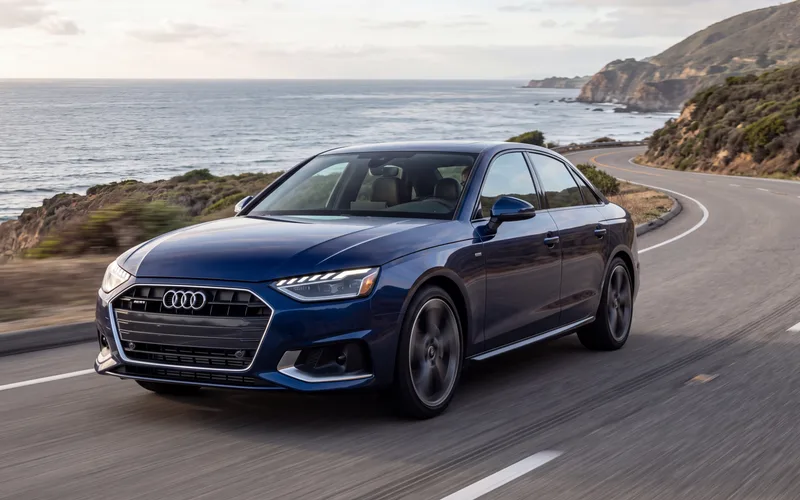 Audi A4Compact Luxury Sedan
The A4 quattro matches the Giulia's 27 MPG combined but adds tri-zone climate, roomier back seat comfort features, and Audi's more solid fit-and-finish reputation.
Compare 2.79B-
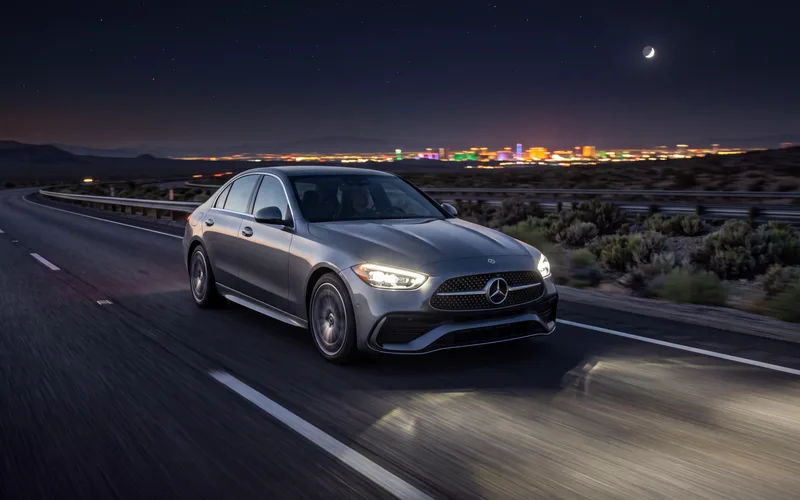 Mercedes-Benz C-ClassCompact Luxury Sedan
The C-Class walks over the Giulia inside with an 11.9-inch portrait screen, MBUX voice control, softer ride, and quieter cabin — it feels a full generation newer.
CompareHow it's evolved
10 scored model years · 2017–2026
Subject scores by year
Hover or tap a score to see what moved it versus the year before. A corner mark flags a big swing.
| Year | Performance | Efficiency | Safety | Space | Cost | Reliability | Tech | Use-case | Driving | Value |
|---|---|---|---|---|---|---|---|---|---|---|
| 2026 | 59 | 32 | 66 | 57 | 25 | 49 | 58 | 44 | 78 | 66 |
| 2025 | 57 | 28 | 60 | 63 | 30 | 66 | 56 | 50 | 81 | 67 |
| 2024 | 58 | 35 | 62 | 62 | 27 | 60 | 56 | 52 | 83 | 72 |
| 2023 | 57 | 37 | 65 | 61 | 13 | 63 | 52 | 51 | 82 | 71 |
| 2022 | 58 | 38 | 67 | 62 | 30 | 60 | 56 | 53 | 81 | 71 |
| 2021 | 57 | 32 | 61 | 61 | 31 | 57 | 52 | 50 | 81 | 76 |
| 2020 | 56 | 34 | 57 | 62 | 48 | 57 | 53 | 48 | 84 | 74 |
| 2019 | 57 | 32 | 61 | 62 | 52 | 57 | 43 | 51 | 84 | 78 |
| 2018 | 56 | 38 | 57 | 62 | 43 | 48 | 40 | 51 | 83 | 79 |
| 2017 | 58 | 37 | 57 | 66 | 51 | 47 | 34 | 53 | 81 | 84 |
Compare two years
Best fit & conditions
Higher scores mean a better fit for that use case. Learn more about use-case fit →
Subject profile
Detailed scoring by subject
1Performance & PowertrainMid-pack among this car's ten categories.1.77C-
The volume Giulia and Giulia Ti use the 280-hp 2.0-liter turbo four; the specialist Quadrifoglio raises the range maximum to 505 hp.
The volume 2.0T supplies a strong 306 lb-ft across a broad 2,000-4,800-rpm plateau.
The instrumented RWD result represents the volume powertrain and drivetrain; AWD is slightly quicker in the same test program.
The 2.0T is muscular and responsive once on boost, but noticeable low-rpm lag and a reluctance to rev keep it below the smoothest German turbo fours.
The ZF eight-speed is generally quick and slick-shifting, particularly in enthusiastic driving, but some reviewers found its smoothness and response short of fully polished.
Q4 AWD was broadly optional on the mainstream Giulia and Ti range, providing useful all-weather traction, though it was not standard and the rear-drive Quadrifoglio did not offer it.
Two meaningfully distinct engines cover mainstream and extreme-performance buyers, but there is no hybrid, plug-in hybrid, EV, diesel, or manual option in the 2020 US range.
2Efficiency & RangeThe Giulia's lowest-graded category.0.20F
The volume 2.0T RWD configuration is EPA-rated at 27 mpg combined; choosing Q4 AWD costs 1 mpg.
The volume 2.0T RWD configuration earns an EPA city rating of 24 mpg.
The RWD volume configuration's 33-mpg highway rating is competitive for a 280-hp gas luxury sport sedan.
The 15.3-gallon tank and 27-mpg EPA combined rating yield approximately 413 miles on a full tank.
Good highway efficiency is offset by the mandatory premium fuel grade, producing a relatively high annual fuel bill despite 27 mpg combined.
Alfa specifies 91-octane premium unleaded for both engines, with no regular-fuel or electrified alternative to reduce energy expense.
3SafetyMid-pack among this car's ten categories.1.82C-
NHTSA did not publish an overall NCAP rating for the 2020 Giulia. The required numeric value is therefore a conservative estimate informed by the generation's strong IIHS results, not a claimed government rating.
Every published IIHS crashworthiness result applicable to 2020 is Good, including small overlap, moderate overlap, side, roof strength, and head restraints. It did not earn a 2020 award, and passenger-side small overlap was not evaluated, keeping it below the top band.
Full-speed forward-collision warning/AEB is standard on every 2020 Giulia, but ACC, lane keeping, blind-spot monitoring, and rear cross-path detection require option packages on the representative Ti. Thus only one of the five core systems is standard.
The standard system earned IIHS Superior vehicle-to-vehicle performance, avoiding the 12-mph collision and nearly eliminating speed in the 25-mph test. No IIHS pedestrian day or night result was published, preventing a higher score.
Blind-spot monitoring and rear cross-path alerts are available on the Ti, while the new Active Blind Spot function can add steering-wheel resistance. They are optional, and no rear cross-traffic braking or safe-exit alert is documented.
For 2020, the optional Active Driver Assist package adds active lane keeping plus hands-on Traffic Jam and Highway Assist centering. It is a useful Level 2 system, but it is not standard on the volume Ti and requires continuous driver supervision.
Available ACC can bring the Giulia to a full stop, and the new optional Traffic Jam/Highway Assist integrates longitudinal and lateral control. Capability is solid for 2020, but both are option-dependent on the representative trim and the system is hands-on.
No hands-free highway system was offered. Highway Assist is explicitly a hands-on Level 2 aid.
IIHS rated the standard non-adaptive HID projectors on the Ti Poor because of excessive low-beam glare. Optional curve-adaptive bi-xenons rate Good, but the volume trim does not receive them as standard.
The low sport-sedan seating position and rear pillars create ordinary rear-quarter blind zones. A standard backup camera and rear sensors help, but the 2020 brochure lists no surround-view camera to fully compensate.
IIHS rates LATCH usability Marginal: both outboard positions have complete hardware, but their lower anchors are deep and difficult to maneuver around. The center seat supplies only a tether anchor, and compact rear quarters limit flexibility.
4Space & ComfortOne of the Giulia's strongest categories.2.15C
The volume Giulia and Giulia Ti are five-passenger sedans.
Front headroom is competitive for a low-slung compact luxury sedan.
The driver and front passenger receive ample legroom.
The measured figure is adequate, though the roofline and access make the rear feel tighter.
Rear legroom is toward the low end for sedans and is a recurring reviewer complaint.
The trunk is modest but the split rear seat folds flat for longer items.
The redesigned console added storage and optional wireless charging, but cubbies remain limited and there are no standout storage solutions.
Well-shaped, supportive and highly adjustable front seats suit long drives, though firm thigh bolsters and tight rear accommodations limit the score.
The Giulia achieves unusually good compliance for its agility, but cracked pavement and some wheel/tire combinations produce firm impacts.
Laminated side glass and more sound damping made 2020 quieter, although tire noise remains conspicuous.
Dual-zone automatic climate and leather are standard, with heated seats and steering wheel available, but ventilation and rich rear-seat amenities are lacking.
5Cost of OwnershipOne of the Giulia's weakest categories.1.20D
The entry 2020 Giulia RWD listed at $39,400 before the $1,295 destination charge. This is the original 2020 model-year price, not current used pricing.
The Ti RWD is used as the representative volume trim: it was the mainstream step-up model, below the appearance-focused Ti Lusso/Ti Sport and specialty Quadrifoglio. Its price was $41,400 before destination.
CarEdge's current model-level projection combines maintenance and repair spending and is the most explicit retrievable five-year estimate. It is not a 2020-trim-specific forecast, so confidence is medium.
The Giulia's projected 62.5% five-year depreciation is steep even for a compact luxury sedan and materially raises ownership cost. This is a model-level residual projection rather than a 2020 Ti-specific residual.
Alfa's four-year coverage beats the common mainstream 3/36 term and matches the standard term offered by most premium competitors.
Alfa did not provide a longer separate powertrain term; powertrain components remained within the 4-year/50,000-mile new-vehicle warranty. That is shorter than the five-year minimum in this item's normalization band.
The 2020 Giulia included the first scheduled service for one year/10,000 miles, four years of unlimited-mile roadside assistance, and a 12-month SiriusXM Guardian connected-services trial. That is useful short-term coverage, but not a multi-year maintenance program.
$42,695 volume-trim price minus its estimated resale value after 5 years (37.5% retained, or about $16,011) leaves about $26,684 in depreciation. Add the projected $2,362 in 5-year maintenance and repairs, and owning this vehicle for 5 years costs about $29,046 in total.
6Reliability & QualityMid-pack among this car's ten categories.1.81C-
The 2020 Giulia was a materially improved fourth US model year, but major survey evidence is too thin to establish average-or-better dependability. Owner and long-term reports are mixed, and the model's extensive recall record keeps it below the compact-luxury norm despite fewer horror stories than the earliest cars.
Alfa Romeo sat near the bottom of Consumer Reports' 2020 overall brand ranking, although its predicted-reliability result was average rather than disastrous. That single-year improvement does not outweigh the brand's weak multi-year US reputation or its frequent absence from dependability studies because of small samples.
Nine campaigns are unusually numerous for one model year, and several concern core safety systems rather than labels or convenience features. Some affected very small populations or Quadrifoglio-only hardware, but fuel leakage/fire risk, brake-disc fracture, loss of ABS/brake assist, and a potentially detached brake pedal make the record materially worse than typical.
The volume Giulia's 280-hp 2.0-liter GME turbo four and ZF eight-speed had accumulated several years of use by 2020, and the conventional automatic is a relative strength. Reports more often implicate batteries, electronics, coolant or oil leaks, and sensors than catastrophic engine or transmission failure, but the engine family still lacks the high-mileage reassurance of the segment's best.
The 2020 refresh directly corrected the Giulia's most criticized cabin surfaces, giving the volume trim a richer center console, better controls, and an attractive mix of leather, soft-touch plastic, metal, or wood. It became properly competitive for the price, though secondary plastics and switchgear still trail the most polished German rivals.
The refreshed controls and console feel substantially sturdier than the early-generation pieces, and contemporary tests did not identify a systemic assembly defect. Nevertheless, lingering refinement criticism, tire noise, software/electrical concerns, and Alfa's limited initial-quality evidence keep assembly confidence merely competitive.
Alfa's specialist network is thin by national luxury-brand standards, limiting dealer choice and making warranty work inconvenient outside major markets. The network expanded after the Giulia's launch but still offers much less geographic redundancy than BMW, Mercedes-Benz, Lexus, or Cadillac.
Giulia/Stelvio mechanical sharing and several years of production provide some independent-shop and aftermarket support, but Alfa-specific parts are less commonly stocked and dealer labor is costly. Repair access and pricing are therefore notably worse than mainstream cars and weaker than higher-volume compact-luxury rivals.
7Technology & InfotainmentGrades below the middle of the scale.1.52D
The 2020 update made one 8.8-inch touchscreen standard across the range.
The customizable tile interface and retained rotary controller are intuitive, but small targets and occasionally late navigation prevent a higher score.
Both projection platforms are standard, but connection is wired rather than wireless.
Available native navigation supplies connected traffic and destination sending, but slow/late guidance makes phone projection preferable.
The base system is serviceable and a 14-speaker Harman Kardon premium system was available, a competitive but not class-leading setup.
A standard 7-inch color information screen improved the gauges, but it sits between analog dials rather than replacing them with a full digital cluster.
Connected services were introduced, but there is no evidence of feature-adding whole-vehicle OTA updates.
Connected services provide vehicle status, remote operations, location and destination sending, though subscription dependence and no digital key keep it mid-pack.
Three standard USB ports are adequate and wireless charging is optional, but this 2020 system lacks abundant USB-C and household power.
Push-button start and available passive entry/remote start cover expected conveniences, but there is no phone-as-key.
A rear camera is standard and parking sensors were available, but no surround-view camera or meaningful automated parking system was offered.
No head-up display was offered for the 2020 Giulia.
8Use-Case FitOne of the Giulia's weakest categories.1.23D
Accessible LATCH anchors help, but small door apertures, tight rear space and a modest trunk make routine child-seat and stroller use awkward.
Automatic emergency braking became standard and IIHS crashworthiness was strong, but poor standard headlights and optional lane/adaptive-cruise tech limit the family proposition.
Supportive seats and a controlled ride work well for four, but tight rear quarters, road noise, weak rear amenities and 13-cu-ft luggage space constrain long trips.
Compact dimensions, good visibility and a responsive automatic make commuting easy, though firm impacts, control quirks and imperfect low-speed transmission calibration add fatigue.
Its 27-mpg RWD combined rating is efficient for a 280-hp luxury sedan, but premium fuel, luxury-car service and consumables prevent low running costs.
The Giulia is a compact 182.8 inches long with a tight 35.4-foot turning circle and good forward visibility, though rear visibility and lack of surround view require care.
This luxury sport sedan has no US tow rating, bed or substantial payload/cargo advantage and is unsuitable as a work tool.
Leather-lined sport-sedan packaging is not wear-focused, and the nameplate lacked a fleet-proven hard-use reputation.
There are no jobsite outlets, tie-down systems, washable work surfaces or meaningful upfit ecosystem.
A controlled ride, supportive driving position and roughly 500-mile EPA highway potential make it a good tourer; noise, rear space and optional highway assist hold it back.
Optional Q4 AWD handles weather and maintained gravel, but low sedan clearance, no US tow rating and limited accessory utility keep it pavement-oriented.
The 13-cu-ft trunk handles ordinary luggage and the split rear seat folds flat, but bulky outdoor gear quickly overwhelms the narrow sedan package.
9Driving ExperienceThe Giulia's best-graded category.3.69A-
Exceptional body control, balance and immediate response place the standard Giulia among the compact luxury segment's dynamic leaders.
Very quick, accurate and genuinely communicative steering is the Giulia's defining advantage.
Large standard Brembo four-piston front brakes deliver strong, confidence-inspiring response, although the brake-by-wire pedal can feel unusual.
The 280-hp turbo four is muscular and responsive and the ZF eight-speed is quick when pressed, but low-rpm character and shift polish are not class-leading.
The engine and exhaust sound engaging under load, but the four-cylinder can sound hollow at low rpm and is not especially isolated.
The turning diameter is compact-sedan friendly despite one review's subjective complaint about width.
A low, driver-centered cockpit, broad seat/wheel adjustment and ideal control relationship are excellent, with B-pillar access and a few odd controls as drawbacks.
Even the base 2.0-liter car combines eager acceleration, rear-drive balance, vivid steering and character in a way enthusiasts repeatedly recommend.
10Value & Market PositionOne of the Giulia's strongest categories.3.02B
The base car included leather, dual-zone climate control, Apple CarPlay/Android Auto, an 8.8-inch touchscreen, a 7-inch cluster display, Brembo brakes, and newly standard forward-collision warning/AEB. Most advanced assists remained optional, preventing a top-band score.
At $40,695 delivered, the Giulia paired 280 hp, an eight-speed automatic, rear-wheel drive, leather and strong standard technology with a price below the equivalent BMW and Mercedes entry points. Genesis offered more equipment for less, and desirable driver assists raised the Alfa's transaction price.
Seven named trims/packages spanned base, Sport, Ti, Ti Lusso, Ti Sport, Ti Sport Carbon and Quadrifoglio, with RWD or AWD broadly available and a genuinely distinct 505-hp flagship. The range lacked hybrid and wagon alternatives but offered unusually broad personalization for one sedan body.
U.S. volume remained niche: 8,203 Giulias sold in 2020, down from 8,704 in 2019 and far below segment leaders. The trajectory shows limited acceptance rather than collapse, but it was plainly a slow seller.
Alfa Romeo's Italian design, racing history and Giulia Quadrifoglio halo gave the sedan unusually strong enthusiast appeal and exclusivity. A small U.S. footprint and lingering quality concerns kept that desirability from matching the broad prestige and resale strength of the German leaders.
Factory-supported zero-percent financing was available on the 2020 Giulia in October 2020, a substantial buyer benefit on a luxury sedan. Strong negotiability accompanied the model's low sales, though the support also reflected market weakness.
The 2020 car was in year four of the generation introduced for 2017, but a substantial cabin and technology update made it feel current: new standard touchscreens, revised console/materials, connectivity and expanded safety tech. Contemporary reporting explicitly said it was not a full mid-cycle facelift.
Reviewers consistently praised the Giulia as an exceptional driver's sedan, and the 2020 updates directly addressed its weakest cabin and technology points. It was still ranked sixth rather than first in Car and Driver's class order, so its acclaim was stronger for dynamics than for all-around execution.