

The verdict
A mixed-report compact luxury sedan, strong on driving and held back by ownership.
Overall 2.33 (C+) across 10 graded subjects. Its strongest is driving experience at 3.50 (A-), its weakest cost of ownership at 0.00 (F). 7 of 10 subjects grade at C− or better.
Jump to scoresStrengths
- Driving Experience
- Value & Market Position
- Safety
What holds it back
- Cost of Ownership
- Efficiency & Range
- Use-Case Fit
Top alternatives
Cars shoppers cross-shop with the Alfa Romeo Giulia 3.07B
3.07B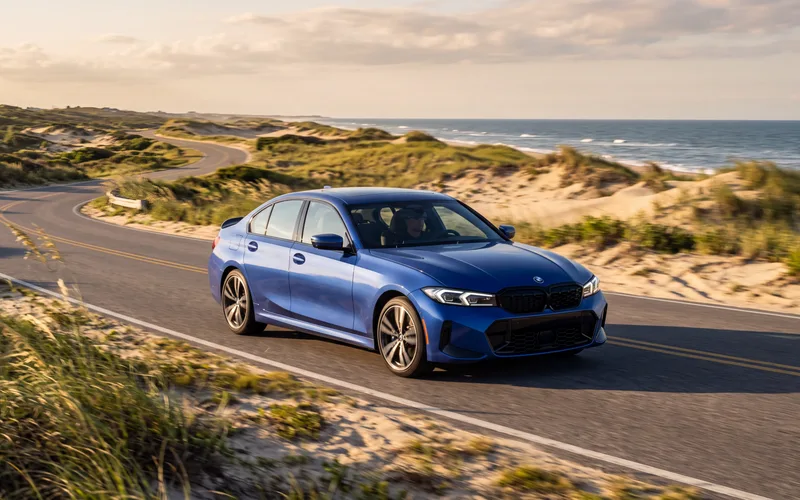 BMW 3 SeriesCompact Luxury Sedan
The 3 Series is the segment default with a broader powertrain lineup (330i, M340i, plug-in hybrid abroad), a much larger 14.9-inch curved display, a bigger ~17 cu ft trunk, and vastly better resale — but the Giulia is the more emotional, better-steering car and looks more distinctive at the curb.
Compare 2.86B-
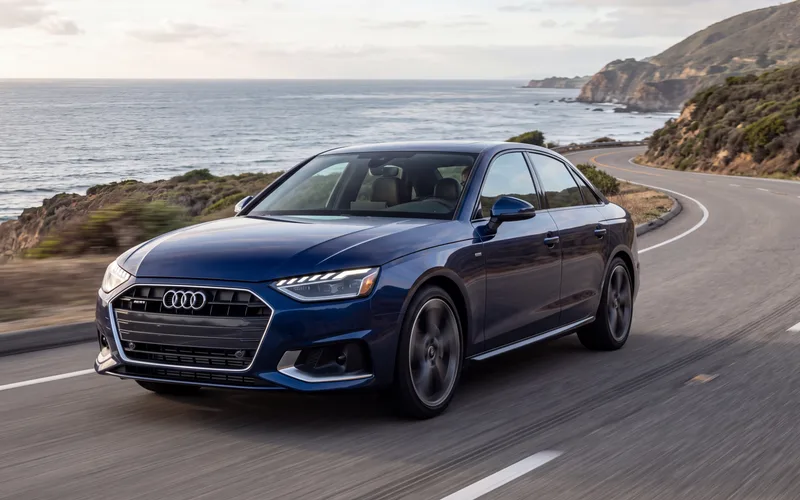 Audi A4Compact Luxury Sedan
The A4 quattro matches the Giulia's 27 MPG combined but adds tri-zone climate, roomier back seat comfort features, and Audi's more solid fit-and-finish reputation.
Compare 2.79B-
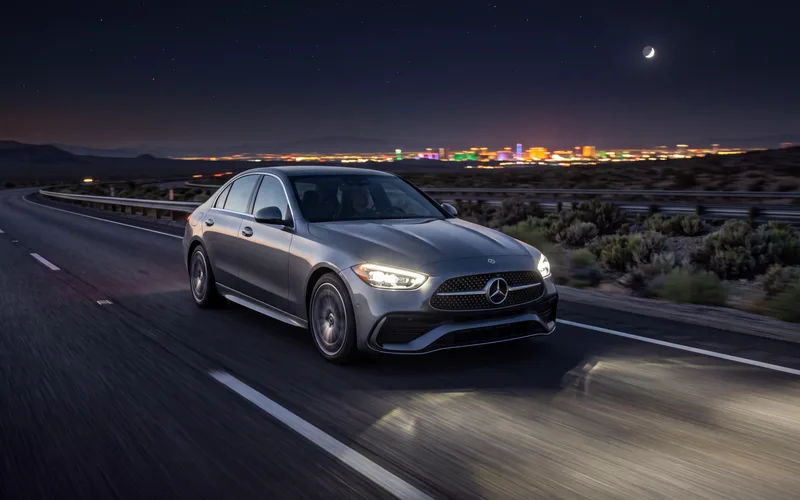 Mercedes-Benz C-ClassCompact Luxury Sedan
The C-Class walks over the Giulia inside with an 11.9-inch portrait screen, MBUX voice control, softer ride, and quieter cabin — it feels a full generation newer.
CompareHow it's evolved
10 scored model years · 2017–2026
Subject scores by year
Hover or tap a score to see what moved it versus the year before. A corner mark flags a big swing.
| Year | Performance | Efficiency | Safety | Space | Cost | Reliability | Tech | Use-case | Driving | Value |
|---|---|---|---|---|---|---|---|---|---|---|
| 2026 | 59 | 32 | 66 | 57 | 25 | 49 | 58 | 44 | 78 | 66 |
| 2025 | 57 | 28 | 60 | 63 | 30 | 66 | 56 | 50 | 81 | 67 |
| 2024 | 58 | 35 | 62 | 62 | 27 | 60 | 56 | 52 | 83 | 72 |
| 2023 | 57 | 37 | 65 | 61 | 13 | 63 | 52 | 51 | 82 | 71 |
| 2022 | 58 | 38 | 67 | 62 | 30 | 60 | 56 | 53 | 81 | 71 |
| 2021 | 57 | 32 | 61 | 61 | 31 | 57 | 52 | 50 | 81 | 76 |
| 2020 | 56 | 34 | 57 | 62 | 48 | 57 | 53 | 48 | 84 | 74 |
| 2019 | 57 | 32 | 61 | 62 | 52 | 57 | 43 | 51 | 84 | 78 |
| 2018 | 56 | 38 | 57 | 62 | 43 | 48 | 40 | 51 | 83 | 79 |
| 2017 | 58 | 37 | 57 | 66 | 51 | 47 | 34 | 53 | 81 | 84 |
Compare two years
Best fit & conditions
Higher scores mean a better fit for that use case. Learn more about use-case fit →
Subject profile
Detailed scoring by subject
1Performance & PowertrainMid-pack among this car's ten categories.1.89C-
The volume Ti uses the standard 280-hp turbo four, unusually strong output for a compact luxury sedan's mainstream engine. The Quadrifoglio raises the model-range maximum to 505 hp.
The volume 2.0T's 306 lb-ft arrives at 2,000 rpm, giving it strong, accessible midrange thrust. This is well above many base four-cylinder luxury-sedan engines of the period.
Edmunds measured the standard-engine Giulia at 5.4 seconds, quick for a base-powertrain compact luxury sedan. Car and Driver recorded 5.7 seconds RWD and 5.5 seconds AWD, supporting the same general performance level.
The turbo four delivers substantial punch once on boost and reviewers praise its lively character, but response is not completely seamless and its low-rpm note can sound hollow. It is engaging rather than class-leading in polish.
The eight-speed automatic is generally smooth and works well with the drive modes, but it can be reluctant to downshift promptly when the driver asks for acceleration. Available large paddles improve manual control but do not erase the automatic-mode hesitation.
Q4 AWD is broadly optional on each mainstream 2.0T trim, while rear-wheel drive remains standard; only the Quadrifoglio is RWD-only. The system adds useful traction but lacks terrain modes or the range-wide torque-vectoring sophistication needed for a top score.
Two genuinely distinct engines cover mainstream and extreme-performance buyers: a 280-hp 2.0T and a 505-hp twin-turbo V6. There is no intermediate engine or hybrid, PHEV, or EV alternative.
2Efficiency & RangeOne of the Giulia's weakest categories.0.48F
The volume Ti RWD earns 27 mpg combined, competitive but not exceptional among gas compact luxury sedans. Optional AWD reduces the rating by 1 mpg.
The representative rear-drive 2.0T is EPA-rated at 24 mpg city. That is solid for a 280-hp gas sedan without hybrid assistance.
The eight-speed automatic helps the RWD 2.0T reach a respectable 33 mpg on the highway. AWD costs 2 mpg highway.
The representative RWD car's 15.3-gallon tank and 27-mpg EPA combined rating yield about 413 miles of mixed-driving range. Published EPA city/highway range figures are 367.2 and 504.9 miles.
Despite good gas mileage for its performance, the EPA-style annual estimate is elevated by premium-gas pricing. The figure reflects the current published standard assumptions rather than the lower gasoline price printed in the original 2022 guide.
The U.S. owner's manual permits 87-octane regular gasoline but recommends 91 or higher for optimal performance, avoiding a strict premium requirement while still making premium the preferred choice. This fits the rubric's middle band.
3SafetyOne of the Giulia's strongest categories.2.50C+
NHTSA did not publish an NCAP overall star rating for the 2022 Giulia, so the neutral 4-star placeholder is used rather than treating an untested vehicle as either a failure or a 5-star model.
The 2022 Giulia earned Good ratings in every crashworthiness evaluation IIHS published, but it did not receive a Top Safety Pick award and lacks passenger-side small-overlap and newer updated-side results.
The volume Ti includes AEB, full-stop adaptive cruise, blind-spot monitoring, and lane-departure warning as standard. Lane keep assist and rear cross-path detection require the Active Assist Plus package, keeping the standard suite short of comprehensive.
The standard system achieved IIHS Superior vehicle-to-vehicle performance, avoiding the target at 12 mph and nearly eliminating impact speed at 25 mph. No IIHS pedestrian day/night result is published, preventing full credit.
Blind-spot monitoring is standard on every trim, but rear cross-path detection is packaged on the Ti and active blind-spot steering intervention requires Active Assist Plus. No safe-exit feature is listed.
Lane-departure warning is standard, while lane keep assist plus traffic-jam and highway centering are available through Active Assist Plus on the Ti. The system is capable hands-on Level 2 assistance, but it is not standard and lacks evidence of class-leading refinement.
Adaptive Cruise Control Plus with full stop is standard on every trim, a strong feature for 2022, and the volume Ti can add integrated highway and traffic-jam assist. Optional rather than standard highway integration keeps it below the top band.
No hands-free highway-driving system was offered for the 2022 Giulia. Its available highway and traffic-jam assists are supervised, hands-on Level 2 functions.
IIHS rated the single headlight system Good across all trims; it combines curve-adaptive bi-xenon projectors with standard automatic high beams and remained below glare limits.
Overall visibility is good for a low sport sedan, though the forward-set B-pillar compromises over-the-shoulder sightlines. Standard BSM and a backup camera help, but no surround-view camera is listed.
IIHS rates LATCH ease of use Marginal: both outboard positions have complete hardware, but the lower anchors are too deep and difficult to maneuver around. The center position provides only a tether anchor.
4Space & ComfortMid-pack among this car's ten categories.2.21C
The 2022 Giulia is a five-passenger compact luxury sedan with two front and three rear seating positions.
Front headroom is competitive for a low-slung sport sedan and the official specification applies across the mainstream trims.
The Giulia provides generous fore-aft room for front occupants.
Rear headroom is respectable for the segment despite the Giulia's sloping roofline.
The official figure confirms a snug rear seat compared with roomier compact-luxury rivals.
Capacity is useful for the class, but the low opening and long reach to the seatbacks reduce practical usability.
There are enough cubbies and pockets for daily items, but most are small and Car and Driver specifically criticizes the skimpy storage bins. No unusual storage innovation is offered.
Ten-way power leather front seats with four-way lumbar, memory, and heat are unusually generous on the Sprint, but firm intrusive thigh bolsters divide reviewers and the rear bench is tight.
The Giulia achieves excellent body control without becoming harsh on the volume trim's 17-inch wheels. It remains firmer-edged and less plush than an Audi A4.
Laminated glass and an NVH package are standard, yet tire noise remains conspicuous and the four-cylinder sounds hollow at low rpm. Isolation is acceptable rather than luxury-leading.
For 2022 even the Sprint gained heated front and rear seats, a heated wheel, dual-zone climate, air-quality system, and remote start. Ventilated seats and rear-zone climate are not offered.
5Cost of OwnershipThe Giulia's lowest-graded category.0.00F
The Sprint RWD was the entry 2022 U.S. Giulia. Alfa Romeo's North American model-year order guide lists a $42,550 MSRP before the mandatory destination charge.
Sprint was the volume trim and RWD its largest single configuration. The factory product plan assigned Sprint 36% of Giulia mix, versus 30% Ti and 31% Veloce.
Edmunds projects unusually high maintenance and repair expense for the four-cylinder Giulia, well beyond the sedan normalization ceiling. The estimate reflects 15,000 miles per year and includes repairs outside warranty.
The model-specific statistical estimate indicates the Giulia loses just over half its MSRP in five years. That is weak in absolute terms, though less severe than some brand-level Alfa Romeo projections.
The term matches the standard coverage offered by most compact-luxury rivals.
Alfa Romeo provides no longer separate powertrain term, putting it behind competitors with six- or ten-year powertrain coverage.
One year/10,000 miles of scheduled maintenance is useful but brief; 24/7 roadside assistance and a one-year connected-services trial add modest luxury-ownership value.
$44,145 volume-trim price minus its estimated resale value after 5 years (48.6% retained, or about $21,454) leaves about $22,691 in depreciation. Add the projected $15,284 in 5-year maintenance and repairs, and owning this vehicle for 5 years costs about $37,975 in total.
6Reliability & QualityMid-pack among this car's ten categories.2.06C
There is not enough survey evidence for an average-or-better prediction: Consumer Reports lists no detailed reliability data for the 2022 Giulia, while J.D. Power does not publish a Quality & Reliability score for it and substitutes prior-year data in the overall rating. The mature, post-2020 version deserves more credit than the troublesome earliest cars, but the evidence remains below the class norm.
Alfa Romeo was firmly in the bottom tier of the contemporaneous U.S. dependability study, and period reviews continued to flag the brand's poor reliability reputation. This is meaningfully weaker than the typical luxury-brand record even though later Giulias improved over the launch cars.
Three safety campaigns through August 2026 is moderate rather than alarming, and only three NHTSA owner complaints have accumulated. However, the campaigns include restraint/airbag and rear-camera issues, while 105 manufacturer communications prevent this from qualifying as a particularly clean record.
The volume Sprint's 280-hp 2.0L turbo four and conventional eight-speed automatic had been in service since the 2017 launch, so the 2022 carryover was no longer unproven. The transmission has a solid reputation and no systemic 2022 powertrain recall is evident, but the engine's smaller fleet and the Giulia's continuing electrical/battery and cooling-system reputation keep it below proven class leaders.
The 2020 cabin update corrected much of the early model's cheapness, and the 2022 car uses soft-touch plastics, leather, and metallic or genuine-wood trim. It is attractive and appropriately upscale for the price, though reviewers still place its overall luxury execution short of the best German rivals.
Fit and finish improved with the 2020 update, and owner feedback credits reassuring door closure and a generally solid cabin. It remains a step below the segment's assembly benchmarks because period testing still found quality and refinement shortfalls and Alfa's initial-quality standing was weak.
The U.S. Alfa network covers major markets but is sparse compared with BMW, Mercedes-Benz, Lexus, or Cadillac, making specialist service inconvenient outside metro areas. Actual owner-rated dealership experience was average rather than disastrous, which keeps this just inside the middle band.
Routine service parts for the volume 2.0T are obtainable and the long-running generation supports some independent-shop expertise, but Alfa-specific components, limited dealer competition, and luxury-car labor rates make repairs costly and can lengthen waits. Ownership-cost estimates are high enough to place the Giulia below the normal-pricing band.
7Technology & InfotainmentMid-pack among this car's ten categories.1.75C-
The integrated 8.8-inch touchscreen was standard throughout the 2022 lineup, with no larger display offered.
Touch, rotary-controller, and physical-control redundancy are welcome, but reviewers find the software laggy and behind German rivals. Bluetooth connection behavior is another recurring annoyance.
Apple CarPlay and Android Auto are standard, but the 2022 system requires a wired USB connection rather than supporting wireless projection.
Navigation became standard for 2022, but voice recognition and destination entry are cumbersome enough that owners will generally prefer phone projection.
The standard system is adequate and an optional 14-speaker Harman Kardon system is a meaningful, crisp-sounding upgrade, though not standard on volume trims.
A 7-inch TFT information screen sits between conventional analog gauges; the full-digital 12.3-inch cluster did not arrive in North America until the 2024 facelift.
The connected infotainment platform supports over-the-air infotainment updates, but there is no evidence of broad whole-vehicle feature updates comparable with leading systems.
Alfa Connect supplies useful core functions such as remote start, locks, vehicle status and location, but activation and subscription terms limit the value and there is no phone-as-key.
Three USB ports and a wireless charging pad are standard, a strong showing for a 2022 compact sedan. It lacks a household outlet and the port mix is less modern than today's USB-C-heavy cabins.
Passive entry, keyless start, remote start and a universal garage-door opener are standard even on Sprint. It lacks phone-as-key and a sedan has no hands-free liftgate benefit.
A rear camera plus front and rear parking sensors are standard, unusually complete at the base price. No surround-view camera or automated parking system was offered.
A head-up display was not offered on the 2022 Giulia at any trim level.
8Use-Case FitOne of the Giulia's weakest categories.1.57D
Accessible outboard anchors and a 13.4-cu-ft trunk make one-child duty workable, but small rear door openings and 35.1 inches of legroom complicate rear-facing seats and loading.
For 2022, automatic emergency braking, adaptive cruise, blind-spot detection, lane-departure warning and parking sensors are standard. IIHS crashworthiness is strong, though lane-departure prevention remained optional and the rating derives partly from an earlier tested vehicle.
Heated rear seats, rear vents and a useful trunk help four-person trips, but tight rear legroom, a narrow opening, firm seat bolsters and noticeable tire noise reduce multi-hour comfort.
Compact dimensions, a tight turning circle, excellent steering accuracy, remote start and standard adaptive cruise make commuting easy. Brake-by-wire feel, occasional transmission lag and limited over-shoulder visibility keep it below effortless leaders.
The RWD Sprint's 27-mpg combined rating is respectable for a 280-hp luxury sport sedan, but premium fuel, run-flat tires and luxury-brand maintenance prevent inexpensive commuting.
At 182.6 inches long with a 35.5-foot turning diameter, the Giulia is nimble in urban spaces, and standard front/rear sensors plus a backup camera compensate for rear blind spots.
This low-slung luxury sedan has no U.S. tow rating, bed, or payload-oriented configuration. Its trunk can handle ordinary business gear but not meaningful work duty.
Leather, carpet and low-profile luxury-car hardware are poorly suited to repeated abuse, and the Giulia has no fleet-proven work reputation. The mainstream ZF automatic and Brembo front brakes are robust components, but that does not make it a work vehicle.
There is no onboard AC power, washable interior, rack system, tie-down package or meaningful upfit ecosystem. Optional trunk hooks and a cargo net are the extent of work-adjacent equipment.
The 15.3-gallon tank and 27-mpg combined rating imply about 413 miles of mixed range, while supportive seats and standard adaptive cruise reduce fatigue. Firmness, tire noise and a snug rear seat make it better for two than four adults.
Optional Q4 AWD helps in poor weather, but the volume RWD Sprint is low, pavement-focused and lacks a U.S. tow rating, roof rails or camping features.
A 13.4-cu-ft trunk and folding rear seatbacks handle ordinary suitcases, but the low trunk opening, deep reach and sedan aperture frustrate bulky gear. There is no factory roof-rail or hitch solution in the U.S. guide.
9Driving ExperienceThe Giulia's best-graded category.3.50A-
The Giulia's balanced, lightweight-feeling chassis, immediate front-end response and superb body control remain class benchmarks even with the base engine. It is the defining strength of the car.
Exceptionally quick, accurate steering communicates front-tire response better than most modern luxury sedans. Some reviewers find feedback lighter than the precision suggests, but consensus places it near the class top.
Large Brembo front hardware delivers strong stopping capability, but the integrated brake-by-wire system's pedal modulation is a recurring weakness. The base car is adequate and powerful, not confidence-leading in feel.
The 280-hp turbo four and ZF eight-speed provide strong, smooth thrust and crisp response in Dynamic mode. Occasional low-speed lag and imperfect shift polish keep the calibration just outside the top band.
The turbo four has an engaging note when extended and is acceptably isolated in normal use, but it sounds hollow at low rpm and lacks the polish of the best luxury four-cylinders.
The compact turning diameter is better than average for a sedan and supports the Giulia's agile urban feel.
The driver-centric cockpit, broad seat/wheel adjustment, well-placed armrests, physical controls and column-mounted paddles are excellent. A thick B-pillar, divisive seat bolsters and some limited base-seat adjustment prevent universal fit.
Few base-engine compact luxury sedans combine this much chassis balance, steering immediacy, styling character and turbo response. The Giulia is an enthusiast recommendation even without Quadrifoglio power.
10Value & Market PositionOne of the Giulia's strongest categories.2.84B-
The volume Sprint includes leather, heated power front seats and steering wheel, navigation, wireless charging, adaptive cruise, blind-spot monitoring, lane-departure warning, front/rear parking sensors, Brembo front brakes, and paddle shifters. Lane centering and other Level 2 functions remain unavailable on Sprint, but its core equipment is unusually complete.
A 280-hp engine, excellent rear-drive chassis, rich standard equipment, and a roughly $44,000 delivered entry price make the Sprint a strong performance value. High projected service costs, steep depreciation, and less polished cabin technology prevent standout overall value.
Four clearly differentiated trims—Sprint, Ti, Veloce, and Quadrifoglio—span entry luxury through 505-hp super-sedan, while every four-cylinder trim offers RWD or AWD. The gas-only lineup lacks hybrid choices and has a large performance and price gap below Quadrifoglio.
The Giulia remained a low-volume U.S. niche sedan and 2022 deliveries fell materially from 2021, far behind the German compact-luxury leaders. Its enthusiast visibility did not translate into broad market acceptance.
Italian styling, motorsport heritage, and the Quadrifoglio halo give Alfa Romeo strong enthusiast cachet. A small U.S. dealer footprint, weak resale, and reliability concerns limit its appeal relative to BMW, Mercedes-Benz, and Lexus.
Giulias were commonly negotiable below sticker and factory/dealer support improved buyer value during 2022. The discounts were meaningful, though they also reflected soft demand and contributed to resale risk.
The 2022 car remained in the generation launched for U.S. model year 2017, so its platform was mature rather than fresh. A substantial standard-equipment update kept it competitive, but the facelift announced in late 2022 would arrive in North America for model year 2024.
Reviewers consistently praised the Giulia's steering, chassis, styling, and energetic four-cylinder, but its regular model ranked below class leaders because of cabin packaging, firm ride, technology execution, and ownership concerns. The Quadrifoglio retained meaningful recognition with a fifth consecutive Car and Driver Editors' Choice honor.