

The verdict
A mixed-report compact luxury sedan, strong on driving and held back by ownership.
The 2026 Alfa Romeo Giulia is a driver's car with an Italian accent — sharp steering, a class-leading ZF 8-speed transmission, and a 5.1-second 0-60 from the standard 280-hp turbo four give it more character than any German rival at the price. But it's now a carryover model in its final years, with the 505-hp Quadrifoglio gone from US showrooms, no hybrid or EV option, a cramped 11.8 cu ft trunk, and Alfa Romeo's bottom-of-the-barrel reliability and depreciation record dragging down the ownership math. Best bought on a lease by an enthusiast who values style and steering feel over rear-seat space, tech screens, or long-term dollars.
Jump to scoresStrengths
- Genuinely rewarding to drive
- Standard wireless smartphone integration and a proper digital cluster
- Strong standard safety suite
What holds it back
- Brand-worst reliability and depreciation math
- Thirsty for premium fuel with no electrified option
- Cramped rear seat and small trunk
Top alternatives
Cars shoppers cross-shop with the Alfa Romeo Giulia 3.07B
3.07B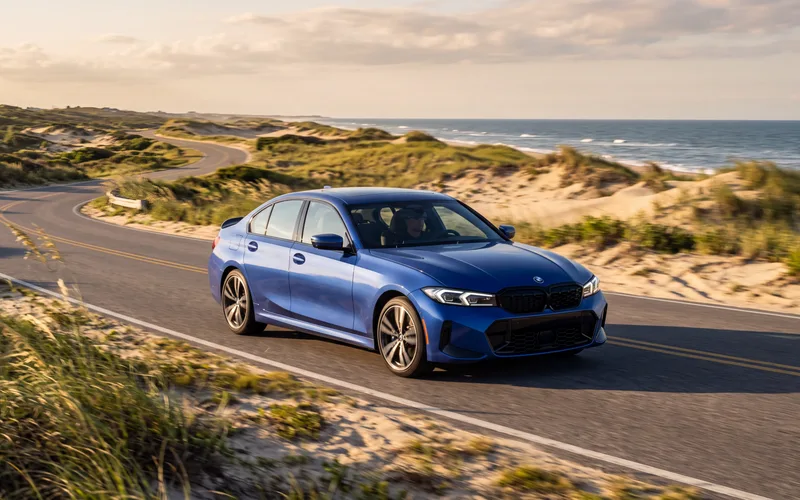 BMW 3 SeriesCompact Luxury Sedan
The 3 Series is the segment default with a broader powertrain lineup (330i, M340i, plug-in hybrid abroad), a much larger 14.9-inch curved display, a bigger ~17 cu ft trunk, and vastly better resale — but the Giulia is the more emotional, better-steering car and looks more distinctive at the curb.
Compare 2.86B-
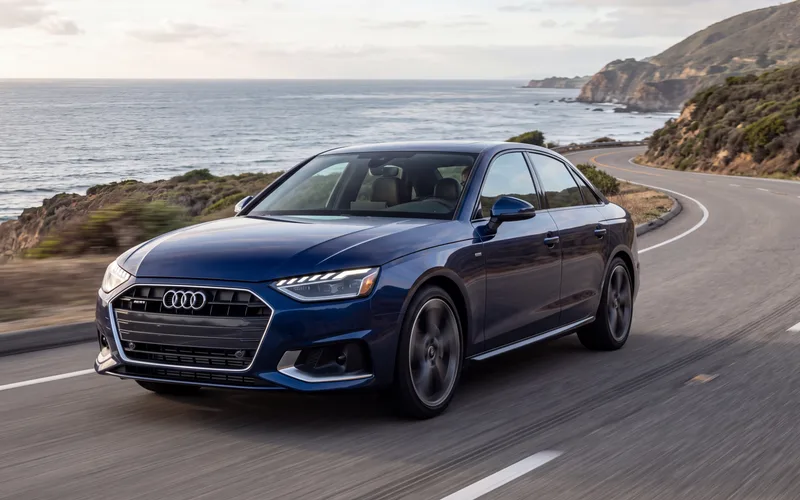 Audi A4Compact Luxury Sedan
The A4 quattro matches the Giulia's 27 MPG combined but adds tri-zone climate, roomier back seat comfort features, and Audi's more solid fit-and-finish reputation.
Compare 2.79B-
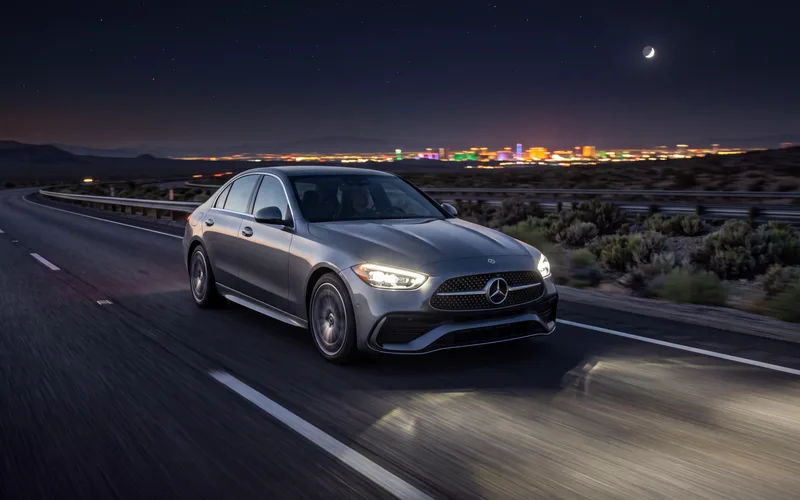 Mercedes-Benz C-ClassCompact Luxury Sedan
The C-Class walks over the Giulia inside with an 11.9-inch portrait screen, MBUX voice control, softer ride, and quieter cabin — it feels a full generation newer.
CompareHow it's evolved
10 scored model years · 2017–2026
Subject scores by year
Hover or tap a score to see what moved it versus the year before. A corner mark flags a big swing.
| Year | Performance | Efficiency | Safety | Space | Cost | Reliability | Tech | Use-case | Driving | Value |
|---|---|---|---|---|---|---|---|---|---|---|
| 2026 | 59 | 32 | 66 | 57 | 25 | 49 | 58 | 44 | 78 | 66 |
| 2025 | 57 | 28 | 60 | 63 | 30 | 66 | 56 | 50 | 81 | 67 |
| 2024 | 58 | 35 | 62 | 62 | 27 | 60 | 56 | 52 | 83 | 72 |
| 2023 | 57 | 37 | 65 | 61 | 13 | 63 | 52 | 51 | 82 | 71 |
| 2022 | 58 | 38 | 67 | 62 | 30 | 60 | 56 | 53 | 81 | 71 |
| 2021 | 57 | 32 | 61 | 61 | 31 | 57 | 52 | 50 | 81 | 76 |
| 2020 | 56 | 34 | 57 | 62 | 48 | 57 | 53 | 48 | 84 | 74 |
| 2019 | 57 | 32 | 61 | 62 | 52 | 57 | 43 | 51 | 84 | 78 |
| 2018 | 56 | 38 | 57 | 62 | 43 | 48 | 40 | 51 | 83 | 79 |
| 2017 | 58 | 37 | 57 | 66 | 51 | 47 | 34 | 53 | 81 | 84 |
Compare two years
Best fit & conditions
Higher scores mean a better fit for that use case. Learn more about use-case fit →
Subject profile
Academic Probation · NHTSA safety recalls
No NHTSA safety recall is on record for the 2026 Alfa Romeo Giulia. Other model years of the Giulia have 17 — listed below.
17 recalls on other model years of the Giulia (2017–2025)
Dec 9, 2025Exterior lighting: headlightsThe wiring harness may have been misrouted, which can cause the headlights to fail. As such, these vehicles fail to comply with the requirements of Federal Motor Vehicle Safety Standard number 108, "Lamps, Reflective Devices, and Associated Equipment."
Defect
Chrysler (FCA US, LLC) is recalling certain 2024 Alfa Romeo Giulia vehicles. The wiring harness may have been misrouted, which can cause the headlights to fail. As such, these vehicles fail to comply with the requirements of Federal Motor Vehicle Safety Standard number 108, "Lamps, Reflective Devices, and Associated Equipment."
Risk
Headlights that fail can reduce visibility, increasing the risk of a crash.
Remedy
Dealers will inspect and replace the wheel arch liner and repair the wiring harness, as necessary, free of charge. Owner notification letters were mailed January 28, 2026. Owners may contact Chrysler customer service at 800-853-1403. Chrysler's number for this recall is D4C. Vehicle Identification Numbers (VINs) involved in this recall will be searchable on NHTSA.gov beginning December 16, 2025.
NHTSA campaign 25V845000 ↗Manufacturer no. D4C313 vehicles potentially affected (all models in the campaign)Owners notified Jan 28, 2026Filed by Chrysler (FCA US, LLC)Filed as GIULIAOct 7, 2025Back over prevention: display functionThe printed circuit board and software for the rearview camera may contain defects that cause the rearview camera image not to display properly. As such, these vehicles fail to comply with the requirements of Federal Motor Vehicle Safety Standard (FMVSS) number 111, "Rear Visibility."
Defect
Chrysler (FCA US, LLC) is recalling certain 2020-2025 Alfa Romeo Giulia and Alfa Romeo Stelvio vehicles. The printed circuit board and software for the rearview camera may contain defects that cause the rearview camera image not to display properly. As such, these vehicles fail to comply with the requirements of Federal Motor Vehicle Safety Standard (FMVSS) number 111, "Rear Visibility."
Risk
A rearview image that does not display properly reduces the driver's view behind the vehicle, increasing the risk of a crash.
Remedy
Dealers will inspect and replace the radio, as necessary. In addition, dealers will update the rearview camera software, as necessary. All repairs will be performed free of charge. Owner notification letters were mailed November 25, 2025. Owners may contact Chrysler customer service at 800-853-1403. Chrysler's number for this recall is A2C. Vehicle Identification Numbers (VINs) involved in this recall will be searchable on NHTSA.gov on October 14, 2025.
NHTSA campaign 25V667000 ↗Manufacturer no. A2C62,910 vehicles potentially affected (all models in the campaign)Owners notified Nov 25, 2025Filed by Chrysler (FCA US, LLC)Filed as GIULIASep 9, 2025Fuel system, gasoline: delivery: fuel pumpThe fuel pump may fail, which can result in a loss of fuel flow and loss of drive power.
Defect
Chrysler (FCA US, LLC) is recalling certain 2017-2019 Alfa Romeo Giulia and 2018-2019 Alfa Romeo Stelvio vehicles. The fuel pump may fail, which can result in a loss of fuel flow and loss of drive power.
Risk
A loss of drive power increases the risk of a crash.
Remedy
Dealers will replace the fuel delivery module, free of charge. Interim notification letters, notifying owners of the safety risk, were mailed October 7, 2025. Additional letters will be sent once the final remedy is available, anticipated July 2026. Owners may contact FCA customer service at 1-800-853-1403. FCA's number for this recall is 93C. Vehicle Identification Numbers (VINs) involved in this recall will be searchable on NHTSA.gov beginning September 16, 2025. The information in your report suggests that Chrysler (FCA US, LLC) may have been aware of this issue more than five business days before filing a report with NHTSA. Please be reminded that under Federal law, this agency is to be notified of all safety defect and/or noncompliance decisions within five business days. 49 CFR 573.6 Significant civil penalties can be assessed for this violation.
NHTSA campaign 25V586000 ↗Manufacturer no. 93C53,849 vehicles potentially affected (all models in the campaign)Owners notified Jul 30, 2026Filed by Chrysler (FCA US, LLC)Filed as GIULIADec 19, 2024Service brakes, hydraulic: pedals and linkagesThe fastener that connects the brake pedal and the brake booster may have been improperly assembled during manufacturing, which can cause the brake pedal to detach from the brake booster.
Defect
Chrysler (FCA US, LLC) is recalling certain 2019-2020 Alfa Romeo Giulia and Alfa Romeo Stelvio vehicles. The fastener that connects the brake pedal and the brake booster may have been improperly assembled during manufacturing, which can cause the brake pedal to detach from the brake booster.
Risk
Brake pedal detachment can cause a loss of brake function and increase the risk of a crash.
Remedy
Dealers will inspect and repair, the brake booster connection, as necessary, free of charge. Owner notification letters were mailed March 18, 2025. Owners may contact FCA customer service at 1-800-853-1403. FCA's number for this recall is E0B.
NHTSA campaign 24V943000 ↗Manufacturer no. E0B2,021 vehicles potentially affected (all models in the campaign)Owners notified Mar 18, 2025Filed by Chrysler (FCA US, LLC)Filed as GIULIAJul 3, 2024Equipment: other: labelsThe tire pressure and size information on the tire placard and manufacturer labels are incorrect. As such, these vehicles fail to comply with the requirements of Federal Motor Vehicle Safety Standard number 110, "Tire Selection and Rims."
Defect
Chrysler (FCA US, LLC) is recalling certain 2017-2024 Alfa Romeo Giulia and 2021-2024 Alfa Romeo Stelvio vehicles. The tire pressure and size information on the tire placard and manufacturer labels are incorrect. As such, these vehicles fail to comply with the requirements of Federal Motor Vehicle Safety Standard number 110, "Tire Selection and Rims."
Risk
Incorrect tire information can result in under-inflated tires or installing the incorrect-size tires, increasing the risk of a crash.
Remedy
FCA will mail corrected tire placards and manufacturer overlay labels. Owners may bring the labels into a dealer for free installation. Some interim notification letters, notifying owners of the safety risk, were mailed August 27, 2024. Owner notification letters were mailed August 5, 2024 through November 1, 2024. Owners may contact FCA US, LLC customer service at 1-800-853-1403. FCA US, LLC's number for this recall is 81B.
NHTSA campaign 24V512000 ↗Manufacturer no. 81B9,037 vehicles potentially affected (all models in the campaign)Owners notified Aug 5, 2024Filed by Chrysler (FCA US, LLC)Filed as GIULIAJul 3, 2024Air bags: frontal · Seat belts: frontA seat belt buckle switch sensor may be improperly connected, preventing the front seat air bag from deploying as intended.
Defect
Chrysler (FCA US, LLC) is recalling certain 2017-2024 Alfa Romeo Giulia, 2018-2025 Alfa Romeo Stelvio, 2019-2023 Fiat 500X, Jeep Renegade, and 2024 Fiat 500E vehicles. A seat belt buckle switch sensor may be improperly connected, preventing the front seat air bag from deploying as intended.
Risk
A front seat air bag that does not deploy as intended can increase the risk of injury in a crash.
Remedy
Dealers will repair the connection, free of charge. Owner notification letters were mailed beginning August 27, 2024. Owners may contact FCA US, LLC customer service at 1-800-853-1403. FCA US, LLC's number for this recall is 82B.
NHTSA campaign 24V510000 ↗Manufacturer no. 82B337,128 vehicles potentially affected (all models in the campaign)Owners notified Aug 27, 2024Filed by Chrysler (FCA US, LLC)Filed as GIULIAApr 30, 2024Fuel system, gasoline: delivery: hoses, lines/piping, and fittings · Fuel system, gasoline: delivery: pressure sensorThe fuel line sensor housing may crack and leak fuel.
Defect
Chrysler (FCA US, LLC) (Stellantis) is recalling certain 2021 Alfa Romero Giulia vehicles. The fuel line sensor housing may crack and leak fuel.
Risk
A fuel leak may cause an engine stall, increasing the risk of a crash. A fuel leak in the presence of an ignition source can increase the risk of a fire.
Remedy
Dealers will replace the fuel line sensor housing, free of charge. Owner notification letters were mailed June 6, 2024. Owners may contact FCA US, LLC customer service at 1-800-853-1403. FCA US, LLC's number for this recall is 54B. This recall is an expansion of recall number 21V-878.
NHTSA campaign 24V306000 ↗Manufacturer no. 54B261 vehicles potentially affected (all models in the campaign)Owners notified Jun 6, 2024Filed by Chrysler (FCA US, LLC)Filed as GIULIAMay 30, 2023Service brakes, hydraulicDuring certain driving maneuvers, the brake system may exert an excessive clamp force that may fracture the rotor, decreasing the brake performance.
Defect
Chrysler (FCA US, LLC) is recalling certain 2017-2020 Alfa Romeo Giulia and 2018-2020 Alfa Romeo Stelvio vehicles equipped with carbon ceramic matrix brakes. During certain driving maneuvers, the brake system may exert an excessive clamp force that may fracture the rotor, decreasing the brake performance.
Risk
An unexpected decrease in brake performance increases the risk of a crash.
Remedy
Dealers will update the brake system module (BSM) software, free of charge. Owner notification letters were mailed July 20, 2023. Owners may contact FCA US, LLC customer service at 1-800-853-1403. FCA US, LLC's number for this recall is 68A.
NHTSA campaign 23V382000 ↗Manufacturer no. 68A719 vehicles potentially affected (all models in the campaign)Owners notified Jul 20, 2023Filed by Chrysler (FCA US, LLC)Filed as GIULIANov 12, 2021Fuel system, gasoline: delivery: hoses, lines/piping, and fittings · Fuel system, gasoline: delivery: pressure sensorThe fuel line sensor housing may crack and leak fuel.
Defect
Chrysler (FCA US, LLC) is recalling certain 2020-2021 Alfa Romeo Stelvio, and Alfa Romeo Giulia vehicles. The fuel line sensor housing may crack and leak fuel.
Risk
A fuel leak may cause an engine stall, increasing the risk of a crash. A fuel leak also increases the risk of fire in the presence of an ignition source.
Remedy
Dealers will inspect and replace the fuel line sensor housing, as necessary, free of charge. Owner notification letters were mailed on January 11, 2022. Owners may contact FCA US, LLC customer service at 1-800-853-1403. FCA US, LLC's number for this recall is Y91.
NHTSA campaign 21V878000 ↗Manufacturer no. Y9111,419 vehicles potentially affected (all models in the campaign)Owners notified Jan 11, 2022Filed by Chrysler (FCA US, LLC)Filed as GIULIANov 2, 2021Tires · Tires: markingsThese vehicles may be equipped with tires that have a lesser load rating than intended for the vehicle. As such, these vehicles fail to comply with the requirements of Federal Motor Vehicle Safety Standard number 110, "Tire Selection and Rims."
Defect
Chrysler (FCA US, LLC) is recalling certain 2020 Alfa Romeo Giulia vehicles. These vehicles may be equipped with tires that have a lesser load rating than intended for the vehicle. As such, these vehicles fail to comply with the requirements of Federal Motor Vehicle Safety Standard number 110, "Tire Selection and Rims."
Risk
The incorrect tires can result in the operator overloading the vehicle, increasing the risk of a crash.
Remedy
Dealers will replace the tires, and update the owner's manual with the correct load rating, free of charge. Owner notification letters were mailed December 21, 2021. Owners may contact FCA US LLC customer service at 1-800-853-1403. FCA US LLC's number for this recall is Y83.
NHTSA campaign 21V848000 ↗Manufacturer no. Y83185 vehicles potentially affected (all models in the campaign)Owners notified Dec 21, 2021Filed by Chrysler (FCA US, LLC)Filed as GIULIAMay 4, 2021Service brakes, hydraulicHard braking may cause the Anti-Lock Brake System (ABS) Hydraulic Control Unit (HCU) rotor shaft to separate, a reduction of braking assist, and a loss of ABS.
Defect
Chrysler (FCA US, LLC) is recalling certain 2019-2021 Alfa Romeo Stelvio and 2020-2021 Alfa Romeo Giulia vehicles. Hard braking may cause the Anti-Lock Brake System (ABS) Hydraulic Control Unit (HCU) rotor shaft to separate, a reduction of braking assist, and a loss of ABS.
Risk
The loss of braking assistance and ABS functionality can reduce overall braking performance, increasing the risk of a crash.
Remedy
Dealers will replace the ABS HCU, free of charge. Owner notification letters were mailed on June 29, 2021. Owners may contact FCA US LLC customer service at 1-800-853-1403.
NHTSA campaign 21V309000 ↗Manufacturer no. Y249 vehicles potentially affected (all models in the campaign)Owners notified Jun 29, 2021Filed by Chrysler (FCA US, LLC)Filed as GIULIANov 18, 2020Service brakes, hydraulic: foundation components: discThe rear brake discs may fracture during vehicle operation.
Defect
Chrysler (FCA US LLC) is recalling certain 2020 Alfa Romeo Giulia vehicles. The rear brake discs may fracture during vehicle operation.
Risk
A rear brake disc fracture may result in a reduction of braking performance, increasing the risk of a crash.
Remedy
FCA US LLC will notify owners, and dealers will replace the rear brake discs and pads, free of charge. The recall began December 17, 2020. Owners may contact FCA US LLC customer service at 1-800-853-1403. FCA US LLC's number for this recall is W86.
NHTSA campaign 20V714000 ↗Manufacturer no. W868 vehicles potentially affected (all models in the campaign)Owners notified Dec 17, 2020Filed by Chrysler (FCA US LLC)Filed as GIULIAJul 25, 2019Electrical system: instrument cluster/panelThe Body Control Module (BCM) may indicate an inaccurate fuel level that displays higher than the actual amount.
Defect
Alfa Romeo (FCA US LLC) is recalling certain 2018-2019 Giulia and Stelvio vehicles. The Body Control Module (BCM) may indicate an inaccurate fuel level that displays higher than the actual amount.
Risk
The vehicle may be operated without enough fuel in the tank causing a stall, increasing the risk of a crash.
Remedy
Alfa Romeo will notify owners, and dealers will update the BCM software, free of charge. The recall began August 12, 2019. Owners may contact Alfa Romeo customer service at 1-800-853-1403. Alfa Romeo's number for this recall is V84.
NHTSA campaign 19V551000 ↗Manufacturer no. V8421,914 vehicles potentially affected (all models in the campaign)Owners notified Aug 12, 2019Filed by Chrysler (FCA US LLC)Filed as GIULIAMar 1, 2019Forward collision avoidance: adaptive cruise control · Service brakes, hydraulic: antilock/traction control/electronic limited slip: control unit/moduleThe Brake System Module (BSM) software may prevent the driver from disabling the Adaptive Cruise Control (ACC) after the traction control system detects a specific wheel slip.
Defect
FCA US LLC (Alfa Romeo) is recalling certain 2018-2019 Alfa Romeo Stelvio and 2017-2019 Giulia vehicles. The Brake System Module (BSM) software may prevent the driver from disabling the Adaptive Cruise Control (ACC) after the traction control system detects a specific wheel slip.
Risk
The driver's inability to deactivate the ACC can increase the risk of crash.
Remedy
Alfa Romeo has notified owners, and dealers will update the BSM software, free of charge. The recall began March 25, 2019. Owners may contact Alfa Romeo customer service 1-800-853-1403. The Alfa Romeo number for this recall is V27.
NHTSA campaign 19V148000 ↗Manufacturer no. V2719,114 vehicles potentially affected (all models in the campaign)Owners notified Mar 25, 2019Filed by Chrysler (FCA US LLC)Filed as GIULIANov 26, 2018Engine and engine cooling: exhaust system · Service brakes, hydraulic: power assist: hydraulic: hoses, lines/piping, and fittingsThe brake fluid line may contact a coolant hose clamp, possibly causing brake fluid to leak onto the exhaust.
Defect
Chrysler (FCA US LLC) is recalling certain 2017-2018 Alfa Romeo Giulia vehicles equipped with GME 280HP engines and All Wheel Drive ("AWD"). The brake fluid line may contact a coolant hose clamp, possibly causing brake fluid to leak onto the exhaust.
Risk
Brake fluid leaking onto the exhaust can increase the risk of a fire.
Remedy
Chrysler will notify owners, and dealers will install a bracket on the brake fluid line to prevent contact with the coolant hose clamp. If damage is found on the brake line, it will be replaced, free of charge. The recall began January 10, 2019. Owners may contact Chrysler customer service at 1-800-853-1403. Chrysler's number for this recall is UB9.
NHTSA campaign 18V828000 ↗Manufacturer no. UB96,136 vehicles potentially affected (all models in the campaign)Owners notified Jan 10, 2019Filed by Chrysler (FCA US LLC)Filed as GIULIASep 14, 2018Electrical system: wiring · Engine and engine cooling: engineThese engines may misfire causing the catalytic converter to overheat, possibly resulting in damage to the nearby wiring and engine components.
Defect
Chrysler (FCA US LLC) is recalling certain 2017-2018 Alfa Romeo Giulia and 2018 Alfa Romeo Stelvio vehicles, equipped with 2.0L engines. These engines may misfire causing the catalytic converter to overheat, possibly resulting in damage to the nearby wiring and engine components.
Risk
Heat damage to the engine compartment wiring or components can increase the risk of a fire or it can cause an engine stall, increasing the risk of a crash.
Remedy
Chrysler will notify owners, and dealers will inspect the vehicles for diagnostic codes, and update the engine control module software, free of charge. The recall began October 10, 2018. Owners may contact Chrysler customer service at 1-844-253-2872. Chrysler's number for this recall is UA4.
NHTSA campaign 18V636000 ↗Manufacturer no. UA434,357 vehicles potentially affected (all models in the campaign)Owners notified Oct 10, 2018Filed by Chrysler (FCA US LLC)Filed as GIULIADec 20, 2017Service brakes, hydraulicThe braking system on these vehicles may have been filled with contaminated brake fluid, possibly damaging the system and affecting its performance.
Defect
Chrysler (FCA US LLC) is recalling certain 2018 Alfa Romeo Giulia and Stelvio vehicles. The braking system on these vehicles may have been filled with contaminated brake fluid, possibly damaging the system and affecting its performance.
Risk
A reduction in braking performance can increase the risk of a crash.
Remedy
Alfa Romeo will notify owners, and dealers will inspect the braking system, replacing it as necessary, free of charge. The recall began February 1, 2018. Owners may contact Alfa Romeo customer service at 1-844-253-2872. Chrysler's number for this recall is T84.
NHTSA campaign 17V823000 ↗Manufacturer no. T84216 vehicles potentially affected (all models in the campaign)Owners notified Feb 1, 2018Filed by Chrysler (FCA US LLC)Filed as GIULIA
Source: NHTSA Office of Defects Investigation recall database, model years 2017–2026. Recalls are listed by model year as the manufacturer filed them; whether a specific car is affected depends on its VIN — check a VIN at nhtsa.gov ↗. NHTSA model names matched to this page: GIULIA.
Detailed scoring by subject
1Performance & PowertrainMid-pack among this car's ten categories.1.97C-
The 2026 Giulia carries over the 2.0L turbocharged four across every trim (Sprint, Ti, Veloce, Estrema), rated at 280 hp. The 505-hp twin-turbo V6 Quadrifoglio was retired from the US lineup after the 2024 model year.
306 lb-ft peak torque from the standard 2.0T, unchanged for 2026 as a full carryover.
Claimed 5.1-second 0–60 for the 2.0T is quick for a sub-Quadrifoglio compact luxury sedan and beats most turbo-four rivals (BMW 330i, Audi A4 45, C 300).
The 2.0T is willing, throttle response is sharpened by a carbon-fiber driveshaft, and reviewers describe delivery as calm and confident. Trails German rivals for outright NVH and low-rev smoothness, so it lands above segment average without matching class-leading BMW/Mercedes turbo fours.
The ZF 8HP eight-speed is widely regarded as one of the best autos in the class — crisp shifts, quick kickdown, and large column-mounted aluminum paddles. Autocar flags only mild awkwardness on stop-start pull-aways.
Rear-wheel drive is standard; the Q4 all-wheel-drive system is offered across the Sprint, Ti, Veloce, and Estrema trims. Q4 is a rear-biased, on-demand system tuned for handling rather than off-road use, without low range or terrain modes.
One powertrain choice only for 2026: the 280-hp 2.0L turbo I4. No hybrid, PHEV, or EV option, and the 505-hp Quadrifoglio V6 was dropped after 2024. Narrower than nearly every compact-luxury peer (BMW 3 offers 330i/M340i; Volvo S60 has PHEV; Genesis G70 has 2.0T/3.3T).
2Efficiency & RangeOne of the Giulia's weakest categories.0.06F
EPA-rated 27 MPG combined for the volume 2.0L turbo RWD trim; AWD drops to 26 MPG combined.
EPA-rated 24 MPG city for the 2.0T RWD volume trim; 23 MPG city for AWD.
EPA-rated 33 MPG highway for the 2.0T RWD volume trim; 31 MPG highway for AWD.
Calculated from EPA combined MPG and Alfa's published 15.3-gallon fuel tank; AWD trims are ~398 mi.
EPA annual fuel cost of $2,850 for the RWD volume trim (15k mi/yr, premium at $5.14/gal); AWD is $2,950. Above the sedan-segment upper band because premium is required.
Premium unleaded is required across the Giulia lineup, adding roughly $0.80–$1.00/gal versus regular and inflating the annual energy bill. No flex-fuel, diesel, or plug-in option to soften the cost.
3SafetyOne of the Giulia's strongest categories.2.49C+
NHTSA awarded the Giulia 5 stars overall in its 2017 evaluation (RWD Ti), the launch of the current Type 952 generation. NHTSA has not retested subsequent model years, and the platform is mechanically unchanged for 2026.
The current-generation Giulia earned Good ratings in older IIHS moderate-overlap and side tests and briefly qualified as a Top Safety Pick with optional headlights, but IIHS has not fully retested it against the updated small-overlap passenger, updated side, and updated moderate-overlap (rear passenger) protocols. It carries no current TSP/TSP+ award, and Stellantis has deprioritized updates ahead of the EV replacement.
Standard equipment across the 2024+ Giulia lineup includes forward-collision warning with AEB, lane-departure warning with lane-keep assist, blind-spot monitoring, and rear cross-path detection — a comprehensive suite by mainstream-luxury standards. Full-speed adaptive cruise with traffic-jam assist remains bundled in the Active Driver Assist Package on the base Sprint, so 'Active Driving Assist' isn't quite universal.
The Giulia's forward-collision system earned Superior in an older IIHS vehicle-to-vehicle front crash prevention evaluation, but it has not been assessed under IIHS's updated 2022+ front crash prevention protocol that emphasizes higher speeds, nighttime pedestrian scenarios, and cyclist detection. Real-world reviews describe the AEB as competent for a stationary/decelerating vehicle but conservative in complex environments.
Blind-spot monitoring and rear cross-path detection are standard across the 2026 Giulia lineup, providing alert-only coverage without active steering intervention. No safe-exit alert, no trailer-aware extension, and no rear AEB with cross-traffic braking — features that peers like the Volvo S60 and Genesis G70 offer.
Lane-keep assist is standard; lane centering is bundled in the Active Driver Assist Package. Reviewers consistently describe the centering as functional but coarse — noticeable ping-ponging within the lane and abrupt intervention near lane markings compared with polished BMW, Mercedes, and Genesis systems.
Active Driver Assist bundles full-speed-range adaptive cruise with traffic-jam assist and highway assist (ACC + lane centering). It works to spec but reviewers describe brake application as late and resumes from a stop as hesitant compared with class benchmarks. Highway assist requires hands on the wheel and lacks the smoothness of Drive Pilot or BlueCruise.
The Giulia offers no hands-free highway driving system. Stellantis has not brought its Level 3 STLA AutoDrive to this platform, and no BlueCruise/Super Cruise equivalent is available.
Full-LED headlamps with automatic high beam are standard. Adaptive Bi-Xenon/Full-LED matrix headlights are standard on Ti and Veloce trims. IIHS historically rated the optional adaptive headlights as Good and the standard lights as Acceptable on this generation.
Low cowl and relatively upright greenhouse yield good forward and side sightlines for a sport sedan, but thick C-pillars and a small rear window compromise the over-shoulder view. A rearview camera is standard; a 360-degree camera is optional only on upper trims, offering limited compensation.
The Giulia is a strict five-seater with two LATCH positions in the outboard rear seats. Rear door apertures are narrow and the rear bench is tight, making rear-facing seats an awkward fit and three-across nearly impossible. IIHS historically rated LATCH ease-of-use as Marginal on this generation, citing anchors buried in the seat bight.
4Space & ComfortMid-pack among this car's ten categories.1.84C-
Standard 2+3 seating across all Giulia trims (Sprint, Ti, Veloce, Quadrifoglio).
Competitive front headroom for the compact luxury sedan class; sunroof-equipped Ti/Veloce lose roughly an inch.
Mid-pack front legroom for a compact luxury sedan; comfortable for taller drivers.
Adequate rear headroom for the class despite the sloping roofline.
Tight rear legroom — among the smallest back seats in the compact luxury sedan class; adults find it cramped on longer trips.
Small trunk for the class — well below the BMW 3 Series (~17 cu ft) and hurt by intrusive gooseneck hinges that pinch usable volume.
Sparse in-cabin storage — small door pockets, shallow center console bin, narrow tray under the shifter, no clever features. Regularly criticized in Edmunds and Car and Driver ownership impressions.
Well-bolstered sport front seats with good side support and 8-way power on Ti/Veloce; rear seat is comfortable for its size but tight for adults on long stints. Quadrifoglio's optional Sparco carbon-shell buckets trade all-day comfort for track support.
Sport-tuned ride is composed and communicative but firmer than luxury-sedan rivals; adaptive dampers (Ti Sport Package, Veloce, Quadrifoglio) improve compliance in soft mode, but 19–20 in wheels transmit sharp impacts.
More road and wind noise than segment leaders (Genesis G70, Mercedes C-Class); some tire slap and turbo-four thrum enter the cabin at highway speed. Not disqualifying, but noticeably behind German rivals.
Dual-zone auto climate and heated front seats standard; heated wheel and heated rear seats available on Ti/Veloce; no ventilated seats, no rear climate zone, no massage function. Thin comfort menu vs. 5 Series/S-Class-tier rivals but competitive with same-size C-Class/A4.
5Cost of OwnershipThe Giulia's lowest-graded category.0.00F
Base Giulia Sprint carries over at roughly $47.5K including destination — mid-pack for a compact luxury sedan, above the BMW 3 Series and Audi A4 base but below the Mercedes C-Class.
The Veloce is the volume trim buyers gravitate to for the Brembo brakes, adaptive suspension, and Q4 AWD hardware. Typically equipped it lands near $53.5K — the pricey end of the compact luxury sedan band.
Alfa Romeo runs at the upper end of the compact luxury sedan class for 5-year maintenance and repair costs — premium-only fuel, above-average repair frequency per Consumer Reports/RepairPal, and specialty parts push it above the German rivals.
Depreciation is the Giulia's biggest ownership weakness. Alfa Romeo consistently ranks among the worst US brands for resale — iSeeCars pegs 5-year depreciation at ~60%, well behind the BMW 3 Series (~48–50% retention) and Lexus IS (mid-50s%).
Alfa Romeo's 4-year/50,000-mile basic limited warranty is average for a luxury sedan — same as BMW, Audi, and Mercedes.
Powertrain coverage matches the basic warranty at 4 yr/50k — one of the shortest in the segment. Cadillac (6/70), Genesis (10/100), Lexus (6/70), and even Volvo (4/50) provide the comparison; Alfa is at the bottom of that range.
Alfa Romeo Ownership Care includes 3 years/36,000 miles of complimentary scheduled maintenance and 4 years/unlimited-mile roadside assistance — solid coverage that matches BMW's 3-year Ultimate Care and beats Audi/Mercedes on the maintenance side. No standout charging or connected-service bonuses beyond typical Uconnect trials.
$53,500 volume-trim price minus its estimated resale value after 5 years (40% retained, or about $21,400) leaves about $32,100 in depreciation. Add the projected $9,200 in 5-year maintenance and repairs, and owning this vehicle for 5 years costs about $41,300 in total.
6Reliability & QualityGrades below the middle of the scale.1.29D
Recent Consumer Reports predicted reliability for Giulia has sat around 1–2 out of 5 with occasional average years, and J.D. Power Vehicle Dependability places it well below the compact luxury sedan average. Below-average both sources = 30–49 band.
Alfa Romeo has finished at or near the bottom of Consumer Reports brand reliability rankings for the last several years (often 2nd- or 3rd-worst of all brands scored), and J.D. Power Vehicle Dependability Study consistently ranks it in the bottom quartile of premium brands.
Type 952 Giulia had a rocky launch with multiple early recalls (fuel pump wiring, cruise control, brake booster, electronic steering) and a heavy TSB list for infotainment and electrical gremlins. Recent model years have been cleaner but still trend above the compact-luxury segment average.
The 2.0L GME-T4 turbo I4 and ZF 8HP 8-speed automatic have settled into a fair track record — the ZF box is proven across the industry, and the GME-T4 has few systemic failures after early running-in years. Some owner reports of oil consumption, timing chain guides, and MultiAir actuator concerns keep it below proven Japanese/German powertrains.
Reviewers praise the leather, Alcantara headliner options, and metal shift paddles as class-appropriate for luxury, but call out hard plastics on lower door panels/console and switchgear that feels a step below Audi A4 and Mercedes C-Class at similar price. Competitive but not class-leading.
Long-term reviews and owner reports consistently note rattles, trim misalignment, and inconsistent panel gaps versus the German compact-luxury benchmark. J.D. Power Initial Quality Study ranks Alfa Romeo well below segment average.
Alfa Romeo has roughly 150–180 US dealers (many co-located with Maserati or FIAT), leaving large swaths of the country an hour or more from an authorized service center. J.D. Power Customer Service Index also ranks the brand below premium average.
Many wear and body parts are dealer-only or must be sourced from Stellantis Europe, with longer wait times and higher prices than mainstream German rivals. Aftermarket support is thin, and independent shops willing to work on the Giulia are scarce outside major metros. RepairPal and owner cost surveys peg annual maintenance well above segment average.
7Technology & InfotainmentMid-pack among this car's ten categories.1.92C-
Giulia carries an 8.8-inch center touchscreen across all trims — one of the smallest in the compact luxury sedan class, well behind the BMW 3 Series (14.9"), Audi A4 (~10"), and Mercedes C-Class (11.9").
Post-2024-refresh Alfa Connect system is quicker, and reviewers appreciate the balance of touchscreen with physical rotary controller and HVAC knobs, but the layout looks dated and the small screen limits information density versus German rivals.
Wireless Apple CarPlay and wireless Android Auto have been standard across all Giulia trims since MY2022 and carry through 2026.
Native TomTom-based navigation with basic command-based voice control works but is not conversational; most owners default to CarPlay/Android Auto maps.
Standard 8-speaker system is adequate; optional 14-speaker, 900-watt Harman Kardon Premium Audio (standard on Veloce and Quadrifoglio) is very good but not class-leading versus Burmester (Mercedes) or Bang & Olufsen (Audi).
A 12.3-inch fully digital, configurable instrument cluster with three graphic themes (Evolved, Relax, Heritage) is standard on all trims since the 2024 refresh — a genuine strength of the current Giulia.
Alfa Connect supports OTA map and infotainment app updates but not the broader whole-vehicle OTA (powertrain calibrations, ADAS, new features) that Tesla, Rivian, BMW, and Mercedes now offer.
Alfa Connect Services app offers remote start, lock/unlock, vehicle locator, and vehicle health — functional but subscription-gated after the trial and lacks a digital key.
2024 refresh added USB-C ports front and rear plus a wireless charging pad, but the pad is standard only on Veloce/Quadrifoglio and there is no household AC outlet.
Passive-entry proximity keyless entry and push-button start are standard across all trims; remote start via key fob and app. No phone-as-key digital key.
Rear-view camera and front + rear parking sensors are standard, but Giulia does not offer a 360-degree surround-view camera on any trim — a common feature in this price class.
The Giulia has never offered a head-up display in its current generation, including the 2024 refresh — a notable omission versus every German rival and the Genesis G70.
8Use-Case FitOne of the Giulia's weakest categories.0.93F
Strict five-seater with 35.1 in of rear legroom (equal to the Infiniti Q50, half an inch behind the A4) and an IIHS Marginal LATCH ease-of-use rating due to anchors buried in the seat bight. The 11.8 cu ft trunk is the smallest in the compact luxury sedan class and pinches stroller-plus-groceries loads. Recalibrated upward from 42 to align with same-segment peers (Q50 65, A4 55) — usable for family duty with real compromises rather than 'regularly frustrating'.
AEB, lane-keep assist, blind-spot monitoring, and rear cross-path detection are standard across every 2026 trim — a genuine advantage over the Q50 (which requires ProASSIST packaging) — and NHTSA awarded 5 stars overall on the 2017 test. Adaptive cruise with traffic-jam assist is bundled in a package on the Sprint, there is no hands-free system, no rear AEB with cross-traffic braking, and no current IIHS Top Safety Pick award — leaving key family-oriented safety upgrades behind Genesis, Volvo, and Mercedes rivals.
Tight 35.1 in rear legroom, no rear climate zone or rear vents (A4 has tri-zone, Q50 has rear vents), and no rear entertainment prep. The 11.8 cu ft trunk with intrusive gooseneck hinges and a firm sport-tuned ride further limit long-drive suitability. Recalibrated upward from 42 vs A4 (60) / Q50 (66): Giulia's cabin isolation and rear amenities trail both, but front-seat comfort and range are competitive.
The 280-hp 2.0T paired with the ZF 8-speed responds crisply, and the smallest footprint in the compact luxury class (184.6 in long, 37.1 ft turning circle) makes urban routes light work. Reviewers ding it for occasional low-speed shift abruptness from a stop, a firm ride on 19–20 in wheels, and dated Uconnect ergonomics that add friction on daily errands.
Premium unleaded is required and EPA rates the volume 2.0T RWD at 27 MPG combined (26 MPG AWD) — identical to the A4 quattro but with worse projected reliability driving higher unscheduled-repair spend. EPA annual fuel cost of $2,850–$2,950 sits near the segment ceiling. Recalibrated upward from 22: same 27 MPG combined as A4 (which scored 40) puts Giulia in the mid-30s after a reliability penalty, not the low 20s.
At 184.6 in long the Giulia is the smallest sedan in the compact luxury class (A4 ~186 in, Q50 ~194 in) with an urban-friendly 37.1 ft turning circle. Thick C-pillars and a small rear window compromise the over-shoulder view; a rearview camera is standard while the 360-degree surround-view camera is optional on Veloce/Estrema only.
Alfa Romeo does not publish a US towing rating for the Giulia and the 11.8 cu ft trunk with narrow gooseneck-intruded opening is minimal for jobsite loads. It's a compact luxury sport sedan, not remotely a work tool.
Alfa Romeo ranks near the bottom of Consumer Reports and J.D. Power reliability studies, and the Giulia's electronics-heavy sport-luxury architecture is not aimed at abuse. Leather-forward interior, low ground clearance, and premium-fuel-only powertrain make it a poor candidate for daily work duty.
No onboard 110V power, no bed tie-downs, no factory hitch, no roof-rail system, and effectively zero aftermarket upfit ecosystem — the Giulia is a leather-and-suede sedan with no work provisions at all.
About 413 miles of range from a 15.3 gal tank at 27 MPG is competitive for long stints and the well-bolstered sport seats work for hours behind the wheel. But higher-than-segment cabin noise, a firm ride on 19–20 in wheels, tight rear quarters, and lane-centering/ACC that reviewers describe as coarser than German or Genesis systems keep it below the A4/Q50 74 tier. Recalibrated upward from 55 to reflect competitive range and front-seat endurance.
Q4 AWD is rear-biased and tuned for handling rather than off-pavement work — no low range, no terrain modes, and roughly 5.5 in of ground clearance rule out anything beyond a graded gravel road. Still, Q4 delivers real snow and light-gravel confidence comparable to the Q50's Intelligent AWD. No factory roof rails, no factory hitch for bike/kayak carriers, and no camping-friendly power outlets keep it pavement-oriented. Recalibrated upward from 22 to match same-segment optional-AWD peers.
11.8 cu ft trunk with gooseneck hinges is the smallest in the compact luxury sedan class (A4 13, 3 Series 17) and swallows luggage less easily. A 40/20/40 folding rear seat with ski pass-through matches the A4's fold flexibility and beats the Q50's 60/40 arrangement, but no roof rails, no hitch, and no underfloor storage cap outright bulky-gear capacity. Recalibrated upward from 30 to credit the split-fold flexibility.
9Driving ExperienceThe Giulia's best-graded category.3.32B+
The Giulia's rear-drive chassis with near-50/50 weight distribution, aluminum front/rear subframes, and double-wishbone front suspension is a repeat benchmark for the compact luxury segment. Even without the discontinued Quadrifoglio, the 2.0T Ti/Veloce with Q4 AWD is consistently placed at or above the BMW 3 Series for balance, turn-in, and body control by enthusiast press.
Very quick ~11.8:1 steering ratio delivers immediate, telepathic response that reviewers describe as among the sharpest in class. Weighting is light around center — a common Alfa criticism — but load-up and precision at speed are excellent, giving more feel than most electric racks in this segment.
Base Giulias use conventional hydraulic Brembo-sourced brakes (the by-wire system was Quadrifoglio-only). Firm, progressive pedal and short stops — typical 70-0 mph figures around 160 ft — plus strong fade resistance from the aluminum-intensive chassis's low unsprung mass.
The ZF 8HP eight-speed is excellent — quick, decisive shifts — and the 2.0T's throttle response is sharpened by a carbon-fiber driveshaft. Downsides are inconsistent tip-in calibration in Natural mode and abrupt stop-start restarts, as the Giulia lacks the 48V mild-hybrid smoothing German rivals now use.
The Giulia's 2.0T is widely regarded as one of the coarser four-cylinders in the class, with an audible thrash under load and a background drone at cruise that the aging cabin insulation doesn't fully mask. No enhanced-audio piping to disguise it, unlike BMW/Mercedes rivals.
Curb-to-curb turning diameter of ~37.4 ft is typical for a rear-drive compact luxury sedan and effectively identical to the BMW 3 Series and Audi A4. Not tight for parking-lot maneuvers but unremarkable within the segment.
Low-slung sport-sedan seating with a good wheel-to-pedal relationship and the standout feature of large fixed column-mounted aluminum paddles. Undermined by aging cabin ergonomics: steering-wheel-mounted engine start button, buried infotainment controls, tight rear entry, and some plasticky secondary switchgear that lags German and Genesis rivals.
The Giulia's raison d'être: enthusiast press near-universally rates it one of the most joyful sedans on sale, with genuine Italian character, quick-witted responses, and 'take the long way home' appeal even in base 2.0T form. Character premium remains high in its sunset year before the EV successor arrives.
10Value & Market PositionOne of the Giulia's strongest categories.2.47C+
Competitive but not standout: leather-trimmed sport seats, dual-zone climate, adaptive cruise, and (post-2024 refresh) a 12.3-inch digital gauge cluster are standard, but the 8.8-inch center touchscreen looks small next to BMW's curved 14.9-inch iDrive display and Mercedes' MBUX. Base Sprint content is fair for a $45K-ish luxury sport sedan without being generous.
Base/Ti/Veloce give competitive dynamics and Italian character for German-rival money, but content-per-dollar trails a comparably priced BMW 330i or Genesis G70 on tech and cabin materials. The Quadrifoglio is the bang-for-buck standout — 505 hp for well under an M3 Competition — which lifts the range's overall value.
Four well-spaced trims — Sprint, Ti, Veloce, Quadrifoglio — with RWD or Q4 AWD on the 2.0T trims and RWD-only on the Quadrifoglio give a reasonable ladder from entry luxury sport sedan to bona-fide super-sedan. Option packages are limited compared to German rivals' à la carte builders.
The Giulia is a marginal seller in the US: Alfa Romeo total brand sales run in the single-digit thousands per year, with Giulia volume typically 2,000–4,000 units annually — a fraction of the BMW 3 Series (~50K) or even the Genesis G70. It has never achieved broad market acceptance in the compact luxury sedan class.
Alfa Romeo carries strong emotional cachet with enthusiasts — Italian heritage, motorsport history, and the Quadrifoglio badge give the brand aspirational pull well above its sales volume. Reliability reputation and a thin dealer network temper mainstream desirability, but the image halo remains a genuine buying reason.
Slow-moving inventory and small dealer network mean Alfa Romeo commonly offers meaningful cash incentives, subvented lease/finance rates, and generous dealer discounts off MSRP — a strong buyer benefit even though it signals weak demand. Buyers rarely pay sticker on a Giulia.
The Tipo 952 Giulia platform launched for MY2017 and received a mid-cycle refresh for MY2024 (new adaptive matrix headlights, 12.3-inch digital cluster, minor trim updates) but the architecture, powertrains, and infotainment are approaching a decade old. Stellantis has publicly signaled a next-generation Giulia on a new multi-energy platform, so replacement risk is high and buyers should expect a fresher successor within 1–2 model years.
The Giulia has an unusually strong critical record for its sales — Motor Trend Car of the Year 2018, multiple Car and Driver 10Best appearances (2018, 2019), and continued praise as the driver's-choice pick against the BMW 3 Series in comparison tests. It rarely wins overall today because of aging tech and reliability concerns, but reviewers still single it out for chassis balance, steering, and Quadrifoglio thrills.