
The verdict
A struggling full-size suv, strong on space and held back by ownership.
Overall 1.52 (D) across 10 graded subjects. Its strongest is space & comfort at 2.84 (B-), its weakest cost of ownership at 0.00 (F). 4 of 10 subjects grade at C− or better.
Jump to scoresStrengths
- Space & Comfort
- Performance & Powertrain
- Reliability & Quality
What holds it back
- Cost of Ownership
- Safety
- Efficiency & Range
Top alternatives
Cars shoppers cross-shop with the Ford Expedition 2.79B-
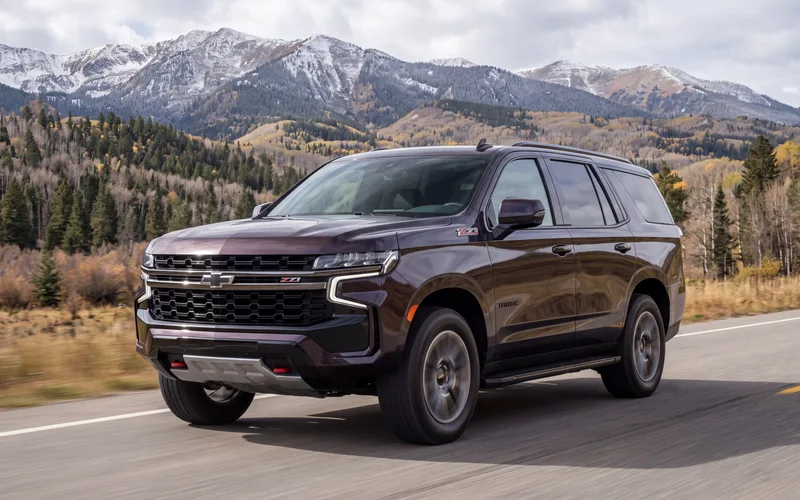 Chevrolet TahoeFull-Size SUVBetter at: Resale value
The most direct rival, with better projected resale and a diesel engine option that cuts the fuel bill the Expedition can't escape.
Compare 2.63C+
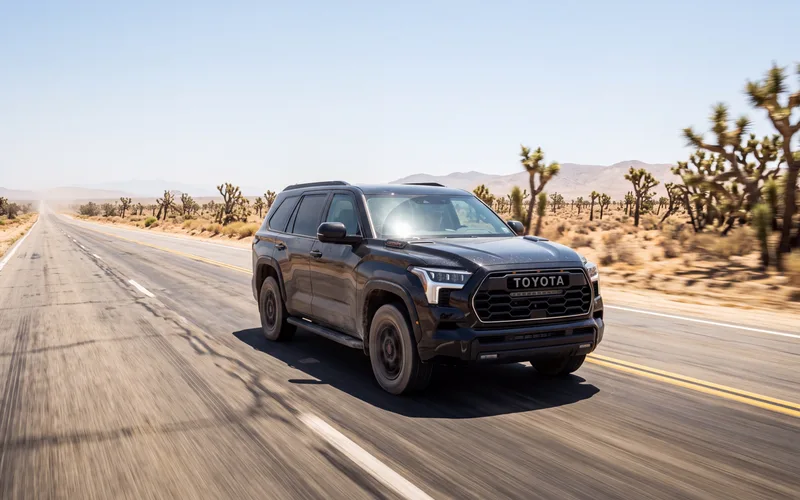 Toyota SequoiaFull-Size SUVBetter at: Fuel & reliability
A standard hybrid powertrain and Toyota's dependability record answer the Expedition's two biggest weaknesses, if you can live with a tighter third row and cargo hold.
Compare 2.72B-
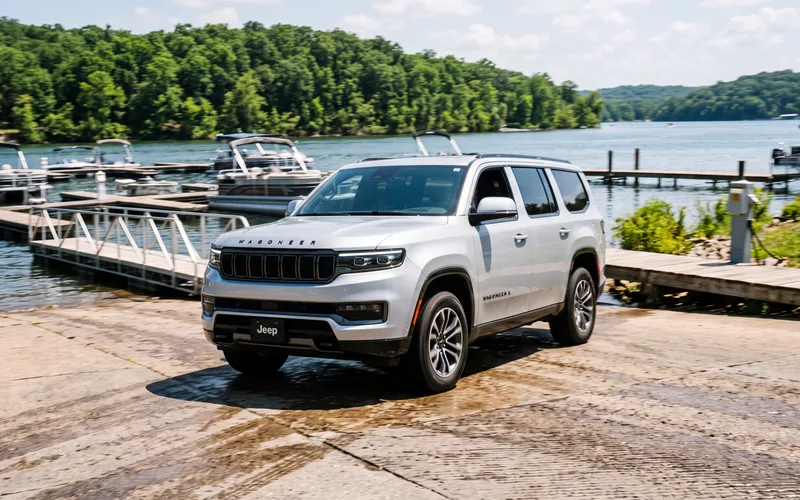 Jeep WagoneerFull-Size SUVBetter at: Interior quality
Richer interior materials and stronger IIHS crash results for a family buyer who cares more about cabin and safety ratings than maximum tow rating.
CompareHow it's evolved
10 scored model years · 2017–2026
Subject scores by year
Hover or tap a score to see what moved it versus the year before. A corner mark flags a big swing.
| Year | Performance | Efficiency | Safety | Space | Cost | Reliability | Tech | Use-case | Driving | Value |
|---|---|---|---|---|---|---|---|---|---|---|
| 2026 | 73 | 38 | 75 | 88 | 22 | 56 | 85 | 73 | 58 | 79 |
| 2025 | 74 | 37 | 73 | 87 | 9 | 54 | 80 | 71 | 63 | 72 |
| 2024 | 72 | 32 | 65 | 85 | 27 | 59 | 77 | 68 | 62 | 64 |
| 2023 | 72 | 35 | 62 | 85 | 28 | 55 | 75 | 66 | 62 | 63 |
| 2022 | 72 | 27 | 62 | 85 | 26 | 54 | 68 | 65 | 61 | 63 |
| 2021 | 67 | 33 | 58 | 85 | 21 | 51 | 47 | 62 | 57 | 55 |
| 2020 | 67 | 36 | 56 | 84 | 29 | 51 | 45 | 64 | 64 | 59 |
| 2019 | 69 | 38 | 47 | 84 | 26 | 46 | 47 | 58 | 57 | 66 |
| 2018 | 68 | 40 | 45 | 83 | 30 | 55 | 45 | 60 | 60 | 64 |
| 2017 | 62 | 35 | 34 | 71 | 29 | 57 | 38 | 54 | 56 | 50 |
Compare two years
Best fit & conditions
Higher scores mean a better fit for that use case. Learn more about use-case fit →
Subject profile
Academic Probation · NHTSA safety recalls
Sep 3, 2025Back over prevention: sensing system: cameraThe rearview camera may display a distorted, inverted, or blank image when the vehicle is in reverse.
Defect
Ford Motor Company (Ford) is recalling certain 2015-2019 Lincoln MKC, Mustang, F-350 SD, F-250 SD, F-450 SD, 2015-2017 Lincoln Navigator, Expedition, 2015-2018 Edge, Transit Connect, 2016-2019 F-550 SD, Transit, 2017-2019 Econoline, and 2019 Ranger vehicles. The rearview camera may display a distorted, inverted, or blank image when the vehicle is in reverse.
Risk
A rearview camera that displays an inverted, distorted, or blank image can reduce the driverâs view behind the vehicle, increasing the risk of a crash.
Remedy
Dealers will inspect and replace the rearview camera as necessary, free of charge. Owner notification letters were mailed January 13, 2026. Ford owners will receive letters in phases, beginning January 2026 and June 2026. Owners may contact Ford customer service at 1-866-436-7332. Ford's number for this recall is 25S89. This recall expands previous NHTSA recall number 25V270. Vehicle Identification Numbers (VINs) involved in this recall will be searchable on NHTSA.gov beginning September 8, 2025.
NHTSA campaign 25V572000 ↗Manufacturer no. 25S891,456,417 vehicles potentially affected (all models in the campaign)Owners notified Jan 13, 2026Filed by Ford Motor CompanyFiled as EXPEDITIONApr 11, 2025Service brakes, hydraulic: foundation components: master cylinder · Service brakes, hydraulic: power assistThe brake master cylinder may allow brake fluid to leak from the front wheel circuit into the brake booster.
Defect
Ford Motor Company (Ford) is recalling certain 2017-2018 F-150, Expedition, and Lincoln Navigator vehicles. The brake master cylinder may allow brake fluid to leak from the front wheel circuit into the brake booster.
Risk
A brake fluid leak can cause reduced brake function and extend the distance required to stop, increasing the risk of a crash.
Remedy
Dealers will replace the brake master cylinder. If the master cylinder is leaking, the brake booster will also be replaced. Repairs will be performed free of charge. Owner notification letters were mailed September 25, 2025. Owners may contact Ford customer service at 1-866-436-7332. Ford's number for this recall is 25S37. This recall is an expansion of NHTSA recall number 22V-150.
NHTSA campaign 25V236000 ↗Manufacturer no. 25S37123,611 vehicles potentially affected (all models in the campaign)Owners notified Sep 25, 2025Filed by Ford Motor CompanyFiled as EXPEDITIONAug 26, 2022Electrical system: wiring: interior/under dash · Visibility: defroster/defogger/hvac system: fan/motorThe front blower motor located behind the glove box may fail.
Defect
Ford Motor Company (Ford) is recalling certain 2015-2017 Ford Expedition and Lincoln Navigator vehicles. The front blower motor located behind the glove box may fail.
Risk
Front blower motor failure can increase the risk of a vehicle interior fire.
Remedy
Dealers will replace the front blower motor assembly, free of charge. Owner notification letters were mailed August 4, 2023. Remedy parts are expected to become available in the second quarter of 2023. Owners may contact Ford customer service at 1-866-436-7332. Ford's number for this recall is 22S56.
NHTSA campaign 22V648000 ↗Manufacturer no. 22S56198,482 vehicles potentially affected (all models in the campaign)Owners notified Aug 4, 2023Filed by Ford Motor CompanyFiled as EXPEDITIONMar 11, 2022Service brakes, hydraulic: foundation components: master cylinder · Service brakes, hydraulic: power assistThe brake master cylinder may allow brake fluid to leak from the front wheel circuit into the brake booster.
Defect
Ford Motor Company (Ford) is recalling certain 2016-2017 Ford Expedition, Lincoln Navigator, and 2016-2018 F-150 vehicles equipped with 3.5L Ecoboost engines. The brake master cylinder may allow brake fluid to leak from the front wheel circuit into the brake booster.
Risk
A loss of brake fluid may result in a change in brake pedal travel, increased pedal effort and reduced front brake function, requiring greater effort and distance to stop the vehicle. These conditions can increase the risk of a crash.
Remedy
Dealers will replace the brake master cylinder. If the master cylinder is leaking, the brake booster will also be replaced. Repairs will be performed free of charge. An interim owner notification letter notifying customers of the safety defect were mailed on April 29, 2022. Owner notification letters were mailed April 29, 2022. This recall is an expansion of NHTSA recall number 20V-332. Owners may contact Ford customer service at 1-866-436-7332. Ford's number for this recall is 22S11.
NHTSA campaign 22V150000 ↗Manufacturer no. 22S11195,864 vehicles potentially affected (all models in the campaign)Owners notified Apr 29, 2022Filed by Ford Motor CompanyFiled as EXPEDITION
45 recalls on other model years of the Expedition (2018–2026)
Sep 22, 2026Exterior lighting: headlightsThe headlight assemblies may contain a contaminated LED chip, which can result in a loss of daytime running lights, parking lights, high beams or low beams. As such, these vehicles fail to comply with the requirements of Federal Motor Vehicle Safety Standard (FMVSS) number 108, "Lamps, Reflective Devices, and Associated Equipment."
Defect
Ford Motor Company (Ford) is recalling certain 2025-2027 Expedition, 2026 F-250 SD, F-350 SD, F-450 SD, and F-550 SD vehicles. The headlight assemblies may contain a contaminated LED chip, which can result in a loss of daytime running lights, parking lights, high beams or low beams. As such, these vehicles fail to comply with the requirements of Federal Motor Vehicle Safety Standard (FMVSS) number 108, "Lamps, Reflective Devices, and Associated Equipment."
Risk
A loss of exterior lighting can reduce visibility, increasing the risk of a crash.
Remedy
Dealers will inspect and replace the headlight assemblies, as necessary, free of charge. Owner notification letters are expected to be mailed October 26, 2026. Owners may contact Ford customer service at 1-866-436-7332. Ford's number for this recall is 26C43. Vehicle Identification Numbers (VINs) involved in this recall will be searchable on NHTSA.gov beginning October 26, 2026.
NHTSA campaign 26V606000 ↗Manufacturer no. 26C4341,748 vehicles potentially affected (all models in the campaign)Filed by Ford Motor CompanyFiled as EXPEDITIONJun 24, 2026Power train: automatic transmissionThe transmission park pawl may engage while the vehicle is in motion, resulting in park system damage.
Defect
Ford Motor Company (Ford) is recalling certain 2018-2021 Navigator, Expedition, 2020-2021 Explorer, Lincoln Aviator, and 2021 F-150 vehicles. The transmission park pawl may engage while the vehicle is in motion, resulting in park system damage.
Risk
Park system damage may result in a vehicle rollaway, increasing the risk of a crash.
Remedy
Dealers will update the powertrain control module software, and inspect and replace any damaged transmission components as necessary, free of charge. Interim letters, notifying owners of the safety risk, were mailed July 10, 2026. Additional letters will be sent once the remedy is available, anticipated in April 2027. Owners may contact Ford customer service at 1-866-436-7332. Ford's number for this recall is 26S48. Vehicle Identification Numbers (VINs) involved in this recall became searchable on NHTSA.gov on June 26, 2026.
NHTSA campaign 26V402000 ↗Manufacturer no. 26S48741,195 vehicles potentially affected (all models in the campaign)Filed by Ford Motor CompanyFiled as EXPEDITIONJun 9, 2026Structure: interior panels: center consoleThe chrome plating on the center console may bubble and peel, resulting in sharp edges.
Defect
Ford Motor Company (Ford) is recalling certain 2018-2024 Expedition vehicles. The chrome plating on the center console may bubble and peel, resulting in sharp edges.
Risk
Vehicle occupants may contact the center console's sharp edges, increasing the risk of injury.
Remedy
Dealers will inspect and replace the center consoles as necessary, free of charge. Interim letters, notifying owners of the safety risk, were mailed June 16, 2026. Additional letters will be sent once the remedy is available, anticipated in January 2027. Owners may contact Ford customer service at 1-866-436-7332. Ford's number for this recall is 26S38. Vehicle Identification Numbers (VINs) involved in this recall became searchable on NHTSA.gov on June 10, 2026.
NHTSA campaign 26V368000 ↗Manufacturer no. 26S38548,463 vehicles potentially affected (all models in the campaign)Filed by Ford Motor CompanyFiled as EXPEDITIONMay 27, 2026Seat belts: pretensionerThe seat belt pretensioner in the driver and/or front passenger seat may inadvertently lock the seat belt, which will not allow the belt to retract or extend.
Defect
Ford Motor Company (Ford) is recalling certain 2018-2022 Expedition and Lincoln Navigator vehicles. The seat belt pretensioner in the driver and/or front passenger seat may inadvertently lock the seat belt, which will not allow the belt to retract or extend.
Risk
Seat belts that do not retract or extend can fail to restrain an occupant as intended, increasing the risk of injury in a crash.
Remedy
Dealers will inspect and replace the seat belt retractors as necessary, free of charge. Interim letters, notifying owners of the safety risk, were mailed June 8, 2026. Additional letters will be sent once the remedy is available, anticipated in August 2026. Owners may contact Ford customer service at 1-866-436-7332. Ford's number for this recall is 26S34. This recall replaces and expands previous NHTSA recalls 24V099 and 25V197. Vehicles previously inspected or repaired under the prior recalls will need the new repair completed.
NHTSA campaign 26V344000 ↗Manufacturer no. 26S34419,967 vehicles potentially affected (all models in the campaign)Filed by Ford Motor CompanyFiled as EXPEDITIONMar 31, 2026Visibility: windshield wiper/washer: linkagesThe windshield wiper arms may break, causing the wipers to fail.
Defect
Ford Motor Company (Ford) is recalling certain 2021-2023 Lincoln Navigator, Expedition, and 2022-2023 F-250 SD, F-350 SD, F-450 SD, F-550 SD, and F-600 SD vehicles. The windshield wiper arms may break, causing the wipers to fail.
Risk
Windshield wiper failure can reduce visibility, increasing the risk of a crash.
Remedy
Dealers will inspect and replace the wiper arms, as necessary, free of charge. Owner notification letters were mailed August 5, 2026. Owners may contact Ford customer service at 1-866-436-7332. Ford's number for this recall is 26S24.Vehicle Identification Numbers (VINs) involved in this recall became searchable on NHTSA.gov on April 1, 2026.
NHTSA campaign 26V204000 ↗Manufacturer no. 26S24422,613 vehicles potentially affected (all models in the campaign)Owners notified Aug 5, 2026Filed by Ford Motor CompanyFiled as EXPEDITIONFeb 20, 2026Electrical system: integrated trailer brake control · Exterior lighting: tail lightsWhen towing a trailer, the integrated trailer module (ITRM) may lose communication with the vehicle, possibly causing a loss of brake and turn signal lights, or a loss of brake function. As such, these vehicles fail to comply with the requirements of Federal Motor Vehicle Safety Standard number 108, " Lamps, Reflective Devices, and Associated Equipment."
Defect
Ford Motor Company (Ford) is recalling certain 2021-2026 F-150, 2022-2026 F-250 SD, F-350 SD, F-450 SD, F-550 SD, Maverick, 2024-2026 Ranger, 2023-2026 F-600 SD, 2022-2027 Lincoln Navigator, Expedition, and 2026 E-Transit vehicles. When towing a trailer, the integrated trailer module (ITRM) may lose communication with the vehicle, possibly causing a loss of brake and turn signal lights, or a loss of brake function. As such, these vehicles fail to comply with the requirements of Federal Motor Vehicle Safety Standard number 108, " Lamps, Reflective Devices, and Associated Equipment."
Risk
Trailer lights or brakes that do not function can reduce the driverâs ability to control the trailer and decrease the trailers visibility to other road users, increasing the risk of a crash.
Remedy
The integrated trailer module software will be updated by a dealer, or through an over-the-air (OTA) update, free of charge. Owner notification letters were mailed March 25, 2026. Owners may contact Ford customer service at 1-866-436-7332. Ford's number for this recall is 26C10. Vehicle Identification Numbers (VINs) involved in this recall will be searchable on NHTSA.gov beginning March 17, 2026.
NHTSA campaign 26V104000 ↗Manufacturer no. 26C104,381,878 vehicles potentially affected (all models in the campaign)Owners notified Mar 25, 2026Filed by Ford Motor CompanyFiled as EXPEDITIONDec 18, 2025Electrical system: instrument cluster/panelThe "Transmission Not In Park" warning message and associated chime duration are shorter than intended.
Defect
Ford Motor Company (Ford) is recalling certain 2019 Expedition vehicles previously repaired incorrectly under recall number 20V263. The "Transmission Not In Park" warning message and associated chime duration are shorter than intended.
Risk
If the driver exits the vehicle without the transmission being shifted into park, unintended vehicle movement may result, increasing the risk of injury or crash.
Remedy
Dealers will update the instrument cluster panel software, free of charge. Owner notification letters were mailed January 30, 2026. Owners may contact Ford customer service at 1-866-436-7332. Ford's number for this recall is 25C71. Vehicle Identification Numbers (VINs) involved in this recall will be searchable on NHTSA.gov beginning January 15, 2026.
NHTSA campaign 25V886000 ↗Manufacturer no. 25SE8890 vehicles potentially affected (all models in the campaign)Owners notified Jan 30, 2026Filed by Ford Motor CompanyFiled as EXPEDITIONDec 1, 2025Service brakes, hydraulic: power assist: electric: control moduleThe Electronic Brake Booster (EBB) module may malfunction while driving or when the driver is utilizing an Advanced Driver Assistance System (ADAS) feature, resulting in a loss of power brake assist.
Defect
Ford Motor Company (Ford) is recalling certain 2025 Lincoln Navigator, F-150, Expedition, Bronco, and Ranger vehicles. The Electronic Brake Booster (EBB) module may malfunction while driving or when the driver is utilizing an Advanced Driver Assistance System (ADAS) feature, resulting in a loss of power brake assist.
Risk
An unexpected loss of power brake assist while driving can extend stopping distance and increase the risk of a crash. Additionally, a loss of power brake assist while ADAS features are engaged can result in the vehicle not braking as expected, increasing the risk of a crash.
Remedy
Dealers will replace the electronic brake booster, free of charge. Owner notification letters were mailed February 26, 2026. Owners may contact Ford customer service at 1-866-436-7332. Ford's number for this recall is 25SD4. Vehicle Identification Numbers (VINs) involved in this recall became searchable on NHTSA.gov on December 3, 2025.
NHTSA campaign 25V823000 ↗Manufacturer no. 25SD4679 vehicles potentially affected (all models in the campaign)Owners notified Feb 26, 2026Filed by Ford Motor CompanyFiled as EXPEDITIONOct 24, 2025Visibility: sun/moon roof assemblyThe moonroof wind deflector clips may be inadequately attached to the moonroof frame, which can result in the wind deflector detaching from the vehicle.
Defect
Ford Motor Company (Ford) is recalling certain 2021-2022 Expedition, Lincoln Navigator, 2021-2023 F-150, 2022 F-250 SD, F-350 SD, and F-450 SD vehicles. The moonroof wind deflector clips may be inadequately attached to the moonroof frame, which can result in the wind deflector detaching from the vehicle.
Risk
A detached wind deflector can become a road hazard and increase the risk of a crash.
Remedy
Dealers will inspect and repair the moonroof wind deflector as necessary, free of charge. Owner notification letters were mailed November 10, 2025. Owners may contact Ford customer service at 1-866-436-7332. Ford's number for this recall is 25SB7. Vehicle Identification Numbers (VINs) involved in this recall will be searchable on NHTSA.gov beginning October 30, 2025.
NHTSA campaign 25V729000 ↗Manufacturer no. 25SB7174,853 vehicles potentially affected (all models in the campaign)Owners notified Nov 10, 2025Filed by Ford Motor CompanyFiled as EXPEDITIONSep 19, 2025EngineA short circuit within the battery junction box can cause an engine fire while driving or parked.
Defect
Ford Motor Company (Ford) is recalling certain 2020 Expedition and Lincoln Navigator vehicles. A short circuit within the battery junction box can cause an engine fire while driving or parked.
Risk
A vehicle fire increases the risk of injury.
Remedy
Owners are advised to park their vehicles outside and away from structures and other vehicles, until the remedy is performed. Dealers will inspect and replace the battery junction box, as necessary, and remove a ground wire. On models equipped with standard-duty radiator fan motors, dealers will also install an auxiliary electrical box with a wire jumper. Repairs will be performed free of charge. Owner notification letters were mailed October 3, 2025. Owners may contact Ford customer service at 1-866-436-7332. Ford's numbers for this recall are 22S36 and 22S48. Vehicle Identification Numbers (VINs) involved in this recall became searchable on NHTSA.gov on September 23, 2025.
NHTSA campaign 25V628000 ↗Manufacturer no. 22S36/22S484,632 vehicles potentially affected (all models in the campaign)Owners notified Oct 3, 2025Filed by Ford Motor CompanyFiled as EXPEDITIONJul 25, 2025Service brakes, hydraulic: power assist: electric: control module: softwareThe Electronic Brake Booster (EBB) module may malfunction while driving or when the driver is utilizing an Advanced Driver Assistance System (ADAS) feature, resulting in a loss of power brake assist.
Defect
Ford Motor Company (Ford) is recalling certain 2025 Lincoln Navigator, F-150, Expedition, Bronco, and Ranger vehicles. The Electronic Brake Booster (EBB) module may malfunction while driving or when the driver is utilizing an Advanced Driver Assistance System (ADAS) feature, resulting in a loss of power brake assist.
Risk
An unexpected loss of power brake assist while driving can extend stopping distance and increase the risk of a crash. Additionally, a loss of power brake assist while ADAS features are engaged can result in the vehicle not braking as expected, increasing the risk of a crash.
Remedy
The EBB module software will be updated over-the-air (OTA) or by a dealer, free of charge. Owner notification letters were mailed on August 22, 2025. Owners may contact Ford customer service at 1-866-436-7332. Ford's number for this recall is 25S77.
NHTSA campaign 25V488000 ↗Manufacturer no. 25S77312,120 vehicles potentially affected (all models in the campaign)Owners notified Aug 22, 2025Filed by Ford Motor CompanyFiled as EXPEDITIONJul 7, 2025Fuel system, gasoline: delivery: fuel pumpThe low-pressure fuel pump may fail, which can result in an engine stall while driving.
Defect
Ford Motor Company (Ford) is recalling certain 2021-2023 Bronco, Explorer, Lincoln Aviator, F-250 SD, F-350 SD, F-450 SD, F-550 SD, 2021-2022 Lincoln Navigator, Mustang, F-150, and 2022 Expedition vehicles. The low-pressure fuel pump may fail, which can result in an engine stall while driving.
Risk
An engine stall increases the risk of a crash.
Remedy
Dealers will replace the low pressure fuel pump on super duty vehicles and update the powertrain control module (PCM) software on all other affected vehicles, free of charge. Owner notification letters were mailed July 27, 2026. Owners may contact Ford customer service at 1-866-436-7332. Ford's number for this recall is 25S75.
NHTSA campaign 25V455000 ↗Manufacturer no. 25S75850,318 vehicles potentially affected (all models in the campaign)Owners notified Jul 27, 2026Filed by Ford Motor CompanyFiled as EXPEDITIONJun 27, 2025Back over prevention: softwareA software error may cause the rearview camera to display a blank image, or the image may remain on the display after the backing event has ended.
Defect
Ford Motor Company (Ford) is recalling certain 2018-2022 Transit Connect, 2019-2020 MKZ, MKX, Edge, Continental, F-150, Nautilus, Fusion, 2019-2023 Ranger, Mustang, 2020-2021 EcoSport, Expedition, Navigator, 2020-2022 Escape, F-250 SD, Corsair, 2020-2023 Aviator, Transit, 2020-2024 Explorer, 2021-2024 Bronco Sport, and 2022-2024 Maverick vehicles. A software error may cause the rearview camera to display a blank image, or the image may remain on the display after the backing event has ended.
Risk
A rearview camera that displays a blank image can reduce the driver's view behind the vehicle. A rearview image that continues to be displayed after the vehicle is shifted out of reverse may distract the driver. Both of these situations can increase the risk of a crash.
Remedy
Dealers will update the rearview camera software, free of charge. Owner notification letters were mailed September 4, 2025. Owners may contact Ford customer service at 1-866-436-7332. Ford's number for this recall is 25S72.
NHTSA campaign 25V442000 ↗Manufacturer no. 25S72200,237 vehicles potentially affected (all models in the campaign)Owners notified Sep 4, 2025Filed by Ford Motor CompanyFiled as EXPEDITIONJun 27, 2025Air bags: frontalThe passenger side air bag may have been manufactured incorrectly, which can cause the air bag to deploy with excessive force during a crash.
Defect
Ford Motor Company (Ford) is recalling certain 2025 Navigator and Expedition vehicles. The passenger side air bag may have been manufactured incorrectly, which can cause the air bag to deploy with excessive force during a crash.
Risk
An air bag that deploys with excessive force can increase the risk of injury during a crash.
Remedy
Dealers will replace the passenger side air bags, free of charge. Owner notification letters were mailed August 8, 2025. Owners may contact Ford Customer Service at 1-866-436-7332. Ford's number for this recall is 25S51.
NHTSA campaign 25V439000 ↗Manufacturer no. 25S51171 vehicles potentially affected (all models in the campaign)Owners notified Aug 8, 2025Filed by Ford Motor CompanyFiled as EXPEDITIONMay 23, 2025Electrical system: body control module: softwareThe Pre-Collision Assist features, such as forward collision warning and automatic emergency braking, are not functional due to a software error.
Defect
Ford Motor Company (Ford) is recalling certain 2020 Expedition and Navigator vehicles that were repaired incorrectly under recall 20V262. The Pre-Collision Assist features, such as forward collision warning and automatic emergency braking, are not functional due to a software error.
Risk
Inoperative pre-collision assist features that fail to perform as expected can increase the risk of a crash or injury.
Remedy
Dealers will update the body control module software, free of charge. Owner notification letters were mailed June 25, 2025. Owners may contact Ford customer service at 1-866-436-7332. Ford's number for this recall is 25S56.
NHTSA campaign 25V346000 ↗Manufacturer no. 25S56556 vehicles potentially affected (all models in the campaign)Owners notified Jun 25, 2025Filed by Ford Motor CompanyFiled as EXPEDITIONMay 23, 2025Seat belts: pretensionerThe seat belt pretensioner in the driver and/or front passenger seat may inadvertently lock the seat belt, which will not allow the belt to retract or extend.
Defect
Ford Motor Company (Ford) is recalling certain 2018-2020 Expedition and Lincoln Navigator vehicles. The seat belt pretensioner in the driver and/or front passenger seat may inadvertently lock the seat belt, which will not allow the belt to retract or extend.
Risk
Seat belts that do not retract or extend can fail to restrain an occupant as intended, increasing the risk of injury in a crash.
Remedy
Dealers will replace the seat belt retractors as necessary, free of charge. Owner notification letters were mailed October 22, 2025. Owners may contact Ford customer service at 1-866-436-7332. Ford's number for this recall is 25S31. Some vehicles in this recall that were previously inspected under recall 24V-099 and did not have parts replaced will need to have this new recall remedy completed.
NHTSA campaign 25V197000 ↗Manufacturer no. 25S31112,951 vehicles potentially affected (all models in the campaign)Owners notified Oct 22, 2025Filed by Ford Motor CompanyFiled as EXPEDITIONMay 9, 2025Back over prevention: softwareA software error may cause the rearview camera image to delay, freeze, or not display when the vehicle is in reverse.
Defect
Ford Motor Company (Ford) is recalling certain 2021-2024 Bronco, F-150, 2021-2024 Edge, 2022-2025 Escape, F-250, F-350, F-450, F-550, F-600, 2022-2024 Expedition, 2022-2025 Transit, 2021-2023 Mach-E, 2024 Ranger, Mustang, 2021-2023 Lincoln Nautilus, 2022-2024 Navigator, and 2023-2024 Corsair vehicles. A software error may cause the rearview camera image to delay, freeze, or not display when the vehicle is in reverse.
Risk
A frozen or missing rearview camera image can reduce the driver's view behind the vehicle, increasing the risk of a crash.
Remedy
The accessory protocol interface module (APIM) software will be updated by a dealer or through an over-the-air update, free of charge. This will be a phased campaign, with the remedy becoming available in different phases based on model and model years. Interim letters notifying owners of the safety risk were mailed on June 26, 2025. Additional letters will be mailed once the final remedy is available on each phase. Owner notification letters were sent on October 8, 2025. Owners may contact Ford customer service at 1-866-436-7332. Ford's number for this recall is 25S49.
NHTSA campaign 25V315000 ↗Manufacturer no. 25S491,076,138 vehicles potentially affected (all models in the campaign)Owners notified Oct 8, 2025Filed by Ford Motor CompanyFiled as EXPEDITIONMay 9, 2025Service brakes, hydraulic: foundation components: hoses, lines/piping, and fittingsThe front brake lines may contact the engine air cleaner outlet pipe and become damaged, possibly resulting in a brake fluid leak and reduced brake function.
Defect
Ford Motor Company (Ford) is recalling certain 2022-2024 Navigator and Expedition vehicles. The front brake lines may contact the engine air cleaner outlet pipe and become damaged, possibly resulting in a brake fluid leak and reduced brake function.
Risk
A loss of brake function increases the risk of a crash.
Remedy
Dealers will inspect the front brake line and replace the brake line or air cleaner outlet pipe, as necessary, free of charge. Owner notification letters were mailed May 29, 2025. Owners may contact Ford customer service at 1-866-436-7332. Ford's number for this recall is 25S47.
NHTSA campaign 25V314000 ↗Manufacturer no. 25S47273,789 vehicles potentially affected (all models in the campaign)Owners notified May 30, 2025Filed by Ford Motor CompanyFiled as EXPEDITIONMar 28, 2025Engine and engine cooling: engine: oil/lubricationThe engine may have a misaligned engine cup plug, which can result in a rapid oil leak.
Defect
Ford Motor Company (Ford) is recalling certain 2024-2025 F-150, Expedition, and 2024 Lincoln Navigator vehicles equipped with 3.5L GTDI engines. The engine may have a misaligned engine cup plug, which can result in a rapid oil leak.
Risk
A rapid oil leak can result in an engine stall, increasing the risk of a crash. In addition, an oil leak in the presence of an ignition source such as hot engine or exhaust components, can increase the risk of a fire.
Remedy
Dealers will inspect the engine cup plug alignment, and replace the plug if necessary, free of charge. Owner notification letters were mailed May 22, 2025. Owners may contact Ford customer service at 1-866-436-7332. Ford's number for this recall is 25S30.
NHTSA campaign 25V198000 ↗Manufacturer no. 25S304,356 vehicles potentially affected (all models in the campaign)Owners notified May 23, 2025Filed by Ford Motor CompanyFiled as EXPEDITIONFeb 28, 2025Electrical system: integrated trailer brake controlDue to a software error, a towed trailer equipped with an electric or electric-over hydraulic brake system may not brake.
Defect
Ford Motor Company (Ford) is recalling certain 2021-2022 F-150, 2022 Maverick, Expedition, Lincoln Navigator, F-250, F-350, F-450, and F-550 vehicles previously repaired incorrectly under recall number 22V-193. Due to a software error, a towed trailer equipped with an electric or electric-over hydraulic brake system may not brake.
Risk
Loss of trailer brake functionality can extend the distance required to stop, increasing the risk of a crash.
Remedy
Dealers will update the integrated trailer brake control module software, free of charge. Owner notification letters were mailed April 11, 2025. Owners may contact Ford customer service at 1-866-436-7332. Ford's number for this recall is 25S18.
NHTSA campaign 25V132000 ↗Manufacturer no. 25S1510,952 vehicles potentially affected (all models in the campaign)Owners notified Apr 11, 2025Filed by Ford Motor CompanyFiled as EXPEDITIONJan 31, 2025Back over prevention: sensing system: cameraThe rearview camera may display a blank or distorted image.
Defect
Ford Motor Company (Ford) is recalling certain 2021 Expedition, 2021-2022 Super Duty F-250, F-350, F-450, F-550, F-600, and 2020-2022 Lincoln Corsair vehicles. The rearview camera may display a blank or distorted image.
Risk
Rearview camera failure can reduce the driver's view of what is behind the vehicle, increasing the risk of a crash.
Remedy
Dealers will replace the rearview camera as necessary, free of charge. Owner notification letters were mailed September 18, 2025. Owners may contact Ford customer service at 1-866-436-7332. Ford's number for this recall is 25S05.
NHTSA campaign 25V048000 ↗Manufacturer no. 25S0591,580 vehicles potentially affected (all models in the campaign)Owners notified Sep 18, 2025Filed by Ford Motor CompanyFiled as EXPEDITIONDec 20, 2024Engine and engine cooling: engine: oil/lubricationThe engines may have a misaligned engine cup plug, which can result in a rapid oil leak.
Defect
Ford Motor Company (Ford) is recalling certain 2024-2025 F-150, 2024 Expedition and 2024 Lincoln Navigator vehicles equipped with a 3.5L GTDI engine. The engines may have a misaligned engine cup plug, which can result in a rapid oil leak.
Risk
A rapid oil leak can result in an engine stall, increasing the risk of a crash. In addition, an oil leak in the presence of an ignition source such as hot engine or exhaust components, can increase the risk of a fire.
Remedy
Dealers will inspect the engine cup plug alignment, and replace the plug if necessary, free of charge. Owner notification letters were mailed on May 23, 2024. Owners may contact Ford customer service at 1-866-436-7332. Ford's number for this recall is 24S70.
NHTSA campaign 24V851000 ↗Manufacturer no. 24S702,490 vehicles potentially affected (all models in the campaign)Owners notified May 23, 2025Filed by Ford Motor CompanyFiled as EXPEDITIONNov 8, 2024Equipment: other: labelsThe air bag warning label may be missing from the dashboard. As such, these vehicles fail to comply with the requirement Federal Motor Vehicle Safety Standard number 208, "Occupant Crash Protection."
Defect
Ford Motor Company (Ford) is recalling certain 2020-2025 Explorer, Lincoln Aviator, 2020-2024 Escape, Lincoln Corsair, 2018-2024 F-150, Expedition and Lincoln Navigator vehicles. The air bag warning label may be missing from the dashboard. As such, these vehicles fail to comply with the requirement Federal Motor Vehicle Safety Standard number 208, "Occupant Crash Protection."
Risk
Without a label that shows the proper restraint usage guidelines, the occupants may have an increased risk of injury in the event of a crash.
Remedy
Ford will mail owners the warning labels, free of charge. Owner notification letters were mailed December 19, 2024. Owners may call Ford customer service at 1-866-436-7332. Ford's number for this recall is 24C39.
NHTSA campaign 24V852000 ↗Manufacturer no. 24C3927,678 vehicles potentially affected (all models in the campaign)Owners notified Dec 19, 2024Filed by Ford Motor CompanyFiled as EXPEDITIONFeb 9, 2024Seat belts: pretensionerThe seat belt pretensioner in the driver and/or front passenger seat may inadvertently deploy and lock the seat belt, which will not allow the belt to retract or extend.
Defect
Ford Motor Company (Ford) is recalling certain 2018-2020 Expedition and Lincoln Navigator vehicles. The seat belt pretensioner in the driver and/or front passenger seat may inadvertently deploy and lock the seat belt, which will not allow the belt to retract or extend.
Risk
Seat belts that do not retract or extend may fail to restrain an occupant as intended, increasing the risk of injury in a crash.
Remedy
Dealers will replace the seat belt retractors, as necessary. Additionally, dealers will install an HVAC drain tube elbow if it is missing. Repairs will be performed free of charge. Owner notification letters were mailed on July 8, 2024. Owners may contact Ford customer service at 1-866-436-7332. Ford's number for this recall is 24S06.
NHTSA campaign 24V099000 ↗Manufacturer no. 24S0677,574 vehicles potentially affected (all models in the campaign)Owners notified Jul 8, 2024Filed by Ford Motor CompanyFiled as EXPEDITIONJun 9, 2023Equipment: other: owners/service/other manualThe owner's manual does not include instructions for adjusting or removing certain head restraints. As such, these vehicles fail to comply with the requirements of Federal Motor Vehicle Safety Standard number 202, "Head Restraints."
Defect
Ford Motor Company (Ford) is recalling certain 2018-2023 Expedition and Lincoln Navigator vehicles equipped with third-row seating; and 2019-2023 F-Super Duty F-250, F-350, F-450, and F-550 SuperCab vehicles. The owner's manual does not include instructions for adjusting or removing certain head restraints. As such, these vehicles fail to comply with the requirements of Federal Motor Vehicle Safety Standard number 202, "Head Restraints."
Risk
Without instructions, the head restraints may be improperly adjusted, increasing the risk of injury in the event of a crash.
Remedy
Ford will mail the Owner's Manual addendums that describe how to adjust and remove the head restraints for the center seating positions, free of charge. Owner notification letters were mailed July 21, 2023. Owners may contact Ford customer service at 1-866-436-7332. Ford's number for this recall is 23C20.
NHTSA campaign 23V420000 ↗Manufacturer no. 23C20691,133 vehicles potentially affected (all models in the campaign)Owners notified Jul 21, 2023Filed by Ford Motor CompanyFiled as EXPEDITIONFeb 24, 2023Power train: axle assemblyThe front axle pinion may not have been heat-treated, which can cause it to fracture.
Defect
Ford Motor Company (Ford) is recalling certain 2023 F-150, Expedition, and Lincoln Navigator vehicles. The front axle pinion may not have been heat-treated, which can cause it to fracture.
Risk
A fractured pinion can result in a loss of 4-wheel drive and may cause the front wheels to lock up, increasng the risk of a crash.
Remedy
Dealers will replace the front axle pinion gear set. If there is a broken front axle pinion, the entire axle assembly will be replaced. Repairs will be performed free of charge. Owner notification letters were mailed April 21, 2023. Owners may contact Ford customer service at 1-866-436-7332. Ford's number for this recall is 23S07.
NHTSA campaign 23V128000 ↗Manufacturer no. 23S07240 vehicles potentially affected (all models in the campaign)Owners notified Apr 21, 2023Filed by Ford Motor CompanyFiled as EXPEDITIONMay 17, 2022EngineAn engine compartment fire may occur while driving or parked, even with the ignition in the "Off" position.
Defect
Ford Motor Company (Ford) is recalling certain 2021 Expedition and Lincoln Navigator vehicles. An engine compartment fire may occur while driving or parked, even with the ignition in the "Off" position.
Risk
A vehicle fire increases the risk of injury.
Remedy
Owners are advised to park their vehicles outside and away from structures and other vehicles, until the remedy is performed. Dealers will inspect and replace the battery junction box, as necessary, and remove a ground wire. On models equipped with standard-duty radiator fan motors, dealers will also install an auxiliary electrical box with a wire jumper. Repairs will be performed free of charge. Interim owner notification letters informing owners of the safety risk were mailed May 25, 2022. Owners will receive a second letter once the remedy is available. Currently the remedy is available for vehicles equipped with heavy-duty radiator fan motors, and those letters were mailed July 21, 2022. Owners may contact Ford customer service at 1-866-436-7332. Ford's number for this recall is 22S36.
NHTSA campaign 22V346000 ↗Manufacturer no. 22S3666,221 vehicles potentially affected (all models in the campaign)Owners notified Jul 21, 2022Filed by Ford Motor CompanyFiled as EXPEDITIONApr 14, 2022Visibility: windshield wiper/washer: linkagesThe windshield wiper arms may break, causing the windshield wipers to fail.
Defect
Ford Motor Company (Ford) is recalling certain 2020-2021 F-150, Expedition, 2020-2022 Super Duty F-250, F-350, F-450, F-550, and 2020-2021 Lincoln Navigator vehicles. The windshield wiper arms may break, causing the windshield wipers to fail.
Risk
Inoperative windshield wipers can reduce visibility in certain driving conditions, increasing the risk of a crash.
Remedy
Dealers will replace both front windshield wiper arms, free of charge. Interim owner notification letters, informing owners of the safety risk, were mailed on May 24, 2022. Remedy parts are expected to be available 3rd Quarter 2022. Owner notification letters were mailed on October 21, 2022. Owners may contact Ford customer service at 1-866-436-7332. Ford's number for this recall is 22S26.
NHTSA campaign 22V250000 ↗Manufacturer no. 22S26652,996 vehicles potentially affected (all models in the campaign)Owners notified Oct 21, 2022Filed by Ford Motor CompanyFiled as EXPEDITIONMar 25, 2022Electrical system: integrated trailer brake controlDue to a software error, a towed trailer equipped with an electric or electric-over hydraulic brake system may not brake.
Defect
Ford Motor Company (Ford) is recalling certain 2021-2022 F-150, 2022 Maverick, Expedition, Lincoln Navigator, F-250, F-350, F-450, and F-550 vehicles. Due to a software error, a towed trailer equipped with an electric or electric-over hydraulic brake system may not brake.
Risk
Loss of trailer brake functionality could result in extended stopping distance, increasing the risk of a crash.
Remedy
Dealers will update the integrated trailer brake control module software, free of charge. Owner notification letters were mailed April 22, 2022. Owners may contact Ford customer service at 1-866-436-7332. Ford's number for this recall is 22S17.
NHTSA campaign 22V193000 ↗Manufacturer no. 22S17391,836 vehicles potentially affected (all models in the campaign)Owners notified Apr 22, 2022Filed by Ford Motor CompanyFiled as EXPEDITIONOct 15, 2021Air bags: sensor: side impact · Air bags: side/windowThe front-door side impact pressure sensor modules may have been damaged during supplier assembly, which can cause the side impact air bags to not deploy properly in a crash. As such, these vehicles fail to comply with the requirements of Federal Motor Vehicle Safety Standard number 214, "Side Impact Protection."
Defect
Ford Motor Company (Ford) is recalling certain 2022 Super Duty F-250, F-350, 2021 F-150, Expedition, and Lincoln Navigator vehicles. The front-door side impact pressure sensor modules may have been damaged during supplier assembly, which can cause the side impact air bags to not deploy properly in a crash. As such, these vehicles fail to comply with the requirements of Federal Motor Vehicle Safety Standard number 214, "Side Impact Protection."
Risk
An air bag that does not deploy properly during a crash increases the risk of injury.
Remedy
Dealers will replace the driver and passenger front door side impact sensors, free of charge. Owner notification letters were mailed November 3, 2021. Owners may contact Ford customer service at 1-866-436-7332. Ford's number for this recall is 21C26.
NHTSA campaign 21V805000 ↗Manufacturer no. 21C26777 vehicles potentially affected (all models in the campaign)Owners notified Nov 3, 2021Filed by Ford Motor CompanyFiled as EXPEDITIONSep 23, 2020Back over prevention: sensing system: cameraDue to a poor electrical connection, the rearview camera may intermittently display a blank or distorted image. As such, these vehicles fail to comply with the requirements of Federal Motor Vehicle Safety Standard (FMVSS) number 111, "Rear Visibility."
Defect
Ford Motor Company (Ford) is recalling certain 2020 Ford F-150, F-250, F-350, F-450, F-550, Explorer, Mustang, Transit, Expedition, Escape, Ranger and Edge, and Lincoln Nautilus and Corsair vehicles. Due to a poor electrical connection, the rearview camera may intermittently display a blank or distorted image. As such, these vehicles fail to comply with the requirements of Federal Motor Vehicle Safety Standard (FMVSS) number 111, "Rear Visibility."
Risk
Reduced rearward visibility can increase the risk of a crash.
Remedy
Ford will notify owners, and dealers will replace the rearview camera, free of charge. The recall began November 17, 2020. Remedy became available on February 1, 2021. Owner notification letters were mailed on February 1, 2021. Owners may contact Ford customer service at 1-866-436-7332. Ford's number for this recall is 20C19.
NHTSA campaign 20V575000 ↗Manufacturer no. 20C19620,246 vehicles potentially affected (all models in the campaign)Owners notified Feb 1, 2021Filed by Ford Motor CompanyFiled as EXPEDITIONSep 23, 2020Seat beltsThe seat belt tension sensor may incorrectly classify a child occupant as an adult.
Defect
Ford Motor Company (Ford) is recalling certain 2020 Expedition vehicles. The seat belt tension sensor may incorrectly classify a child occupant as an adult.
Risk
In the event of a crash, the incorrect classification would enable the passenger air bag to deploy instead of disabling it, increasing the risk of injury to the seat occupant.
Remedy
Ford will notify owners, and dealers will replace the seat belt buckle, free of charge. The recall began October 16, 2020. Owners may contact Ford customer service at 1-866-436-7332. Ford's number for this recall is 20S54.
NHTSA campaign 20V574000 ↗Manufacturer no. 20S54123 vehicles potentially affected (all models in the campaign)Owners notified Oct 16, 2020Filed by Ford Motor CompanyFiled as EXPEDITIONJun 23, 2020Seats: mid/rear assemblyThe attachment bracket for the driver's side second-row seat headrest may not have been sufficiently welded to the seat frame. As such, these vehicles fail to comply with Federal Motor Vehicle Safety Standard number 202, "Head Restraints."
Defect
Ford Motor Company (Ford) is recalling certain 2020 Ford Expedition and Lincoln Navigator vehicles. The attachment bracket for the driver's side second-row seat headrest may not have been sufficiently welded to the seat frame. As such, these vehicles fail to comply with Federal Motor Vehicle Safety Standard number 202, "Head Restraints."
Risk
An improperly welded headrest bracket may have reduced strength and may not adequately restrain an occupant in a crash, increasing the risk of injury.
Remedy
Ford will notify owners, and dealers will inspect the seat structure and replace it as needed, free of charge. This recall began July 8, 2020. Owners may contact Ford customer service at 1-866-436-7332. Ford's number for this recall is 20C12.
NHTSA campaign 20V366000 ↗Manufacturer no. 20C122,620 vehicles potentially affected (all models in the campaign)Owners notified Jul 8, 2020Filed by Ford Motor CompanyFiled as EXPEDITIONMay 8, 2020Electrical system: instrument cluster/panel · Power train: automatic transmission: gear position indication (prndl)The "Transmission Not In Park" warning message and associated chime duration are shorter than intended.
Defect
Ford Motor Company (Ford) is recalling certain 2019 Expedition and 2019-2020 Mustang vehicles. The "Transmission Not In Park" warning message and associated chime duration are shorter than intended.
Risk
If the driver exits the vehicle without the transmission being shifted into park, unintended vehicle movement may result, increasing the risk of injury or crash.
Remedy
Ford will notify owners, and dealers will reprogram the instrument cluster, free of charge. The recall began May 26, 2020. Owners may contact Ford customer service at 1-866-436-7332. Ford's number for this recall is 20S21.
NHTSA campaign 20V263000 ↗Manufacturer no. 20S2110,460 vehicles potentially affected (all models in the campaign)Owners notified May 26, 2020Filed by Ford Motor CompanyFiled as EXPEDITIONMay 8, 2020Electrical system: instrument cluster/panel · Forward collision avoidance · Forward collision avoidance: automatic emergency brakingVehicles built with the optional radar-plus-camera Pre-Collision Assist system are not affected. Due to incorrect coding of interfacing modules, the Pre-Collision Assist feature is not enabled, and the driver cannot access the menu functions necessary to enable the Pre-Collision Assist feature.
Defect
Ford Motor Company (Ford) is recalling certain 2020 Ford Expedition and Lincoln Navigator vehicles equipped with camera-only Pre-Collision Assist feature. Vehicles built with the optional radar-plus-camera Pre-Collision Assist system are not affected. Due to incorrect coding of interfacing modules, the Pre-Collision Assist feature is not enabled, and the driver cannot access the menu functions necessary to enable the Pre-Collision Assist feature.
Risk
If the driver is unaware that the Pre-Collision Assist feature is not enabled, they may rely on a system that is not functional, increasing the risk of a crash or injury.
Remedy
Ford will notify owners, and dealers will reprogram software for the Body Control Module, Antilock Braking System, Instrument Panel Cluster and Headlamp Control Modules, and reset the Tire Pressure Monitor System, free of charge. The recall began May 26, 2020. Owners may contact Ford customer service at 1-866-436-7332. Ford's number for this recall is 20S20.
NHTSA campaign 20V262000 ↗Manufacturer no. 20S2025,081 vehicles potentially affected (all models in the campaign)Owners notified May 26, 2020Filed by Ford Motor CompanyFiled as EXPEDITIONApr 16, 2020Seat beltsThe front passenger seatbelt buckle's Belt Tension Sensor (BTS) may malfunction and may result in the seat occupant being misclassified.
Defect
Ford Motor Company (Ford) is recalling certain 2020 Expedition vehicles. The front passenger seatbelt buckle's Belt Tension Sensor (BTS) may malfunction and may result in the seat occupant being misclassified.
Risk
In the event of a crash, the restraint system may not provide the intended level of protection, increasing the risk of injury.
Remedy
Ford will notify owners, and dealers will replace the front passenger seatbelt buckle, free of charge. The recall began May 11, 2020. Owners may contact Ford customer service at 1-866-436-7332. Ford's number for this recall is 20S17.
NHTSA campaign 20V217000 ↗Manufacturer no. 20S171,355 vehicles potentially affected (all models in the campaign)Owners notified May 11, 2020Filed by Ford Motor CompanyFiled as EXPEDITIONApr 3, 2020Power train: automatic transmission: gear position indication (prndl)The transmission shift cable lock clip may not be fully seated, allowing the transmission to actually be in a different gear than the gear shift position selected by the driver.
Defect
Ford Motor Company (Ford) is recalling certain 2020 Ranger and F-150 vehicles equipped with 10-speed automatic transmissions and certain 2020 Expedition vehicles equipped with a "police" package. The transmission shift cable lock clip may not be fully seated, allowing the transmission to actually be in a different gear than the gear shift position selected by the driver.
Risk
If the transmission selection does not match the indicated gear selection, and the parking brake is not applied, unintended vehicle movement can occur, increasing the risk of injury or crash.
Remedy
Ford will notify owners, and dealers will inspect and correct the shift cable locking clip installation, as necessary, free of charge. The recall began April 27, 2020. Owners may contact Ford customer service at 1-866-436-7332. Ford's number for this recall is 20S18.
NHTSA campaign 20V197000 ↗Manufacturer no. 20S1855,158 vehicles potentially affected (all models in the campaign)Owners notified Apr 27, 2020Filed by Ford Motor CompanyFiled as EXPEDITIONOct 28, 2019Suspension: rearThe rear suspension toe link fasteners may not have been properly tightened to the frame, possibly allowing separation from the frame.
Defect
Ford Motor Company (Ford) is recalling certain 2019 Expedition and Lincoln Navigator vehicles. The rear suspension toe link fasteners may not have been properly tightened to the frame, possibly allowing separation from the frame.
Risk
A disconnected toe link can cause a sudden change to vehicle handling, increasing the risk of a crash.
Remedy
Ford has notified owners, and dealers will inspect and tighten the rear toe link fasteners, check and adjust the rear toe alignment, and inspect the rear tires for abnormal tire wear, replacing them if necessary. Repairs will be performed free of charge. The recall began November 14, 2019. Owners may contact Ford customer service at 1-866-436-7332. Ford's number for this recall is 19S36.
NHTSA campaign 19V773000 ↗Manufacturer no. 19S3618 vehicles potentially affected (all models in the campaign)Owners notified Nov 14, 2019Filed by Ford Motor CompanyFiled as EXPEDITIONAug 28, 2019Seats: front assembly: recliner · Seats: mid/rear assemblyAlso included are certain 2020 Ford Explorer and Lincoln Aviator vehicles equipped with rear outboard seats and manual seat back recliner mechanisms. The recliner mechanisms may be missing the third pawl required for seat back strength, resulting in a loose seat back. As such, these vehicles fail to comply with the requirements of Federal Motor Vehicle Safety Standard (FMVSS) numbers 202, "Head Restraints" and 207, "Seating Systems."
Defect
Ford Motor Company (Ford) is recalling certain 2018-2020 F-150 and 2019-2020 F-250, F-350, F-450, and F-550 Super Duty pickup trucks, and 2018-2019 Ford Explorer, 2019-2020 Expedition, and 2020 Escape vehicles equipped with driver and/or passenger's manual front seat back recliner mechanisms. Also included are certain 2020 Ford Explorer and Lincoln Aviator vehicles equipped with rear outboard seats and manual seat back recliner mechanisms. The recliner mechanisms may be missing the third pawl required for seat back strength, resulting in a loose seat back. As such, these vehicles fail to comply with the requirements of Federal Motor Vehicle Safety Standard (FMVSS) numbers 202, "Head Restraints" and 207, "Seating Systems."
Risk
A seat back with an improperly assembled recliner mechanism may have reduced strength and may not adequately restrain an occupant in a crash, increasing the risk of injury.
Remedy
Ford will notify owners, and Ford and Lincoln dealers will inspect the seat structure and replace them, as necessary, free of charge. The recall began October 21, 2019. Owners may contact Ford customer service at 1-866-436-7332. Ford's number for this recall is 19C07.
NHTSA campaign 19V633000 ↗Manufacturer no. 19C07639,137 vehicles potentially affected (all models in the campaign)Owners notified Oct 21, 2019Filed by Ford Motor CompanyFiled as EXPEDITIONNov 14, 2018Seats: mid/rear assemblyThe second row center seat track assemblies may be missing one or both of the J-Channel reinforcement brackets, possibly allowing the seat to move in the event of a crash.
Defect
Ford Motor Company (Ford) is recalling certain 2018 Lincoln Navigator, and Ford Expedition vehicles. The second row center seat track assemblies may be missing one or both of the J-Channel reinforcement brackets, possibly allowing the seat to move in the event of a crash.
Risk
In the event of a crash, a seat that moves may not properly restrain the seat occupant, increasing their risk of injury.
Remedy
Ford will notify owners, and dealers will inspect the second row center seat for any missing J-channel reinforcement brackets, replacing the center seat frame assembly as necessary, free of charge. An interim owner notification was sent on December 21, 2018. A second letter will be mailed once the remedy is available. Owners may contact Ford customer service at 1-866-436-7332. Ford's number for this recall is 18S37
NHTSA campaign 18V805000 ↗Manufacturer no. 18S3734,946 vehicles potentially affected (all models in the campaign)Owners notified Feb 15, 2019Filed by Ford Motor CompanyFiled as EXPEDITIONJun 12, 2018Fuel system, gasoline: delivery: fuel pumpThese vehicles have high pressure fuel pump assemblies with welds that can fracture, which may cause an oil or fuel leak.
Defect
Ford Motor Company (Ford) is recalling certain 2018 Ford Expedition, F-150, and Lincoln Navigator vehicles equipped with 3.5L GTDI V6 engines. These vehicles have high pressure fuel pump assemblies with welds that can fracture, which may cause an oil or fuel leak.
Risk
A fuel leak in the presence of an ignition source may increase the risk of a fire.
Remedy
Ford will notify owners, and dealers will replace the high pressure fuel pump and associated components, free of charge. The recall began July 17, 2018. Owners may contact Ford customer service at 1-866-436-7332. Ford's number for this recall is 18S17.
NHTSA campaign 18V392000 ↗Manufacturer no. 18S175,645 vehicles potentially affected (all models in the campaign)Owners notified Jul 17, 2018Filed by Ford Motor CompanyFiled as EXPEDITIONApr 4, 2018Power train: automatic transmission · Power train: automatic transmission: gear position indication (prndl)The gear shift cable clip may not be properly seated, allowing the transmission to be in a different gear than indicated by the gear shift lever position.
Defect
Ford Motor Company (Ford) is recalling certain 2018 F-650 and F-750 vehicles equipped with 6-speed automatic transmissions and 2018 Ford F-150 and Expedition vehicles equipped with 10-speed automatic transmissions (excluding Expedition vehicles with a Rotary Gear Shift Dial on the console). The gear shift cable clip may not be properly seated, allowing the transmission to be in a different gear than indicated by the gear shift lever position.
Risk
If the gear shift cable clip becomes unseated or dislodged, the gear shift lever position may indicate that the transmission is in 'Park' when it may be in a different gear. Additionally, despite selecting 'Park', if the parking brake is not applied before the vehicle is exited, the vehicle may roll. Either scenario increases the risk of a crash.
Remedy
Ford will notify owners, and dealers will inspect the shift cable locking clip and properly seat it, if necessary, free of charge. The recall began on April 13, 2018. Owners may contact Ford customer service at 1-866-436-7332. Ford's number for the recall is 18S10.
NHTSA campaign 18V214000 ↗Manufacturer no. 18S10292,909 vehicles potentially affected (all models in the campaign)Owners notified Apr 13, 2018Filed by Ford Motor CompanyFiled as EXPEDITIONApr 4, 2018Power train: automatic transmissionA roll pin may not have been installed in the transmission, potentially causing a loss of the "Park" function.
Defect
Ford Motor Company (Ford) is recalling certain 2017-2018 Ford F-150 and 2018 Ford Expedition and Mustang and Lincoln Navigator vehicles equipped with 10-speed automatic transmissions. A roll pin may not have been installed in the transmission, potentially causing a loss of the "Park" function.
Risk
Despite the transmission shift lever being placed in 'Park' and the instrument panel display indicating 'Park,' the vehicle may roll away after it has been exited if the parking brake has not been applied, increasing the risk of injury or a crash.
Remedy
Ford will notify owners, and dealers will inspect the transmission to make sure it has the roll pin, installing one if it is missing, free of charge. The recall began on April 13, 2018. Owners may contact Ford customer service at 1-866-436-7332. Ford's number for this recall is 18S09.
NHTSA campaign 18V213000 ↗Manufacturer no. 18S09142 vehicles potentially affected (all models in the campaign)Owners notified Apr 13, 2018Filed by Ford Motor CompanyFiled as EXPEDITIONJan 16, 2018Visibility: power window devices and controlsThe second row window control modules may intermittently stop the movement of the power window. If something, such as a finger, is pinched by the window glass, the stopped window control module may prevent the window from automatically reversing. As such, these vehicles fail to comply with the requirements of Federal Motor Vehicle Safety Standard (FMVSS) number 118, "Power-Operated Window Systems."
Defect
Ford Motor Company (Ford) is recalling certain 2018 Ford Expedition and Lincoln Navigator vehicles. The second row window control modules may intermittently stop the movement of the power window. If something, such as a finger, is pinched by the window glass, the stopped window control module may prevent the window from automatically reversing. As such, these vehicles fail to comply with the requirements of Federal Motor Vehicle Safety Standard (FMVSS) number 118, "Power-Operated Window Systems."
Risk
If the window does not automatically reverse when an obstruction is found, it can increase the risk of injury.
Remedy
Ford will notify owners, and dealers will inspect the second row window electronic control modules, and replace them as necessary based on their build date codes, free of charge. The recall began on February 16, 2018. Owners may contact Ford customer service at 1-866-436-7332. Ford's number for this recall is 18C01.
NHTSA campaign 18V058000 ↗Manufacturer no. 18C01361 vehicles potentially affected (all models in the campaign)Owners notified Feb 16, 2018Filed by Ford Motor CompanyFiled as EXPEDITIONDec 1, 2017Seats: mid/rear assemblyThe second row outboard seats may have excessive forward adjustment capability and/or may have an improperly installed bolt that secures the seat back to the seat base. As such, these vehicles fail to comply with the requirements of Federal Motor Vehicle Safety Standard (FMVSS) number 202a, "Head Restraints", number 207, "Seating Systems", and number 210, "Seat Belt Anchorage System."
Defect
Ford Motor Company (Ford) is recalling certain 2018 Expedition vehicles. The second row outboard seats may have excessive forward adjustment capability and/or may have an improperly installed bolt that secures the seat back to the seat base. As such, these vehicles fail to comply with the requirements of Federal Motor Vehicle Safety Standard (FMVSS) number 202a, "Head Restraints", number 207, "Seating Systems", and number 210, "Seat Belt Anchorage System."
Risk
If the seat back is not adequately secured, and/or the seat occupant is improperly positioned, there can be an increased risk of injury in a crash.
Remedy
Ford will notify owners, and dealers will inspect the second row outboard seats for proper seat adjustment travel, replacing the seat frame assembly if necessary. Dealers will also inspect the bolts attaching the seat back to the seat base for the proper installation, correcting it as necessary. These repairs will be made free of charge. The recall began on January 10, 2018. Owners may contact Ford customer service at 1-866-436-7332. Ford's number for this recall is 17C20.
NHTSA campaign 17V775000 ↗Manufacturer no. 17C20462 vehicles potentially affected (all models in the campaign)Owners notified Jan 10, 2018Filed by Ford Motor CompanyFiled as EXPEDITION
Source: NHTSA Office of Defects Investigation recall database, model years 2017–2026. Recalls are listed by model year as the manufacturer filed them; whether a specific car is affected depends on its VIN — check a VIN at nhtsa.gov ↗. NHTSA model names matched to this page: EXPEDITION.
Detailed scoring by subject
1Performance & PowertrainOne of the Expedition's strongest categories.2.21C
The 2017 Expedition's sole engine, the 3.5L twin-turbo EcoBoost V6, was rated 365 hp across every trim (XLT through Platinum, standard and EL) — the trim-specific 400 hp bump for Platinum arrived with the 2018 redesign, not this generation.
Strong low-rpm torque from the twin-turbo V6, uniform across the 2017 trim lineup.
Instrumented tests of the closely related 2015-2017 EcoBoost Expedition ran from 6.3 sec (Platinum 4x4, Car and Driver) to about 6.9 sec depending on trim/drivetrain weight; used the midpoint as representative of the volume 4x4 configuration.
The twin-turbo EcoBoost V6 delivers strong, mostly seamless power with minimal perceptible lag thanks to abundant low-end torque, though period reviews noted it lacks the smooth, effortless character of a V8 and some coarseness under hard throttle.
The 6-speed SelectShift automatic (6R80) shifts smoothly in normal driving but was already a generation behind rivals' 8-10-speed units by 2017, with occasional hunting under partial throttle and less crisp response than newer competitors.
With the Max Trailer Tow package, the 2017 Expedition 4x2 topped out at 9,200 lbs, among the highest in the full-size SUV class at the time; 4x4 models rated slightly lower.
Four-wheel drive with a two-speed transfer case (low range) was optional across every 2017 trim level (XLT through Platinum, standard and EL) via an electronic shift-on-the-fly system, but it lacked the terrain-select modes or torque-vectoring sophistication of newer rivals.
An optional FX4 Off-Road package (heavy-duty suspension, skid plates, hill descent control, all-terrain tires) was available on 4x4 XLT and Limited trims, giving light-duty capability, but stock ground clearance (~9.3 in) and the body-on-frame chassis fall well short of a dedicated off-road SUV.
A single engine (3.5L twin-turbo EcoBoost V6) paired with one 6-speed automatic was the only powertrain offered across the entire 2017 lineup — no hybrid, diesel, or alternate engine choice.
2Efficiency & RangeOne of the Expedition's weakest categories.0.27F
The outgoing 3rd-generation Expedition's 3.5L twin-turbo EcoBoost V6/6-speed automatic rates 17 MPG combined for the volume 4x4, at the bottom of the full-size SUV band and a full 2 MPG behind the redesigned 2018 model that arrived with a 10-speed transmission.
City MPG sits at the floor of the full-size SUV city band, reflecting the heavy body-on-frame platform and only a 6-speed automatic to manage the twin-turbo V6's power delivery in stop-and-go driving.
Highway MPG lands at the very bottom of the full-size SUV highway band for the volume 4x4 — a full generation behind the 2018 redesign's 22 MPG figure for the same drivetrain type.
The standard-wheelbase 4x4's 28-gallon tank at 17 MPG combined yields roughly 476 miles of range, comfortably above mid-pack for the full-size SUV segment and a byproduct of the model's large fuel tank rather than efficiency.
At 17 MPG combined and EPA's standard 15,000 mi/yr assumption using regular-gas pricing prevailing at MY2017 certification, annual fuel cost lands around $2,550 — below mid-pack for the full-size SUV band due to the lower MPG versus the following generation.
The Expedition runs on regular 87-octane fuel for standard driving; Ford recommends premium only for heavy towing or hot-weather conditions, not as a hard requirement.
3SafetyOne of the Expedition's weakest categories.0.20F
NHTSA rates the 2017 Expedition (final year of the 2007-2017 second generation) 5 stars overall, with 5 stars in both frontal and side crash tests; rollover resistance scores 3 stars for 2WD models and 4 stars for 4WD models.
IIHS did not crash test the 2007-2017 Expedition generation in any model year of its run (its first published Expedition ratings are for the redesigned 2023-2024 model), so there is no award and no individual crashworthiness result for 2017. Treated as untested with no offsetting data, since IIHS full-size body-on-frame SUV testing of that era (contemporaneous Tahoe/Suburban/Sequoia) skewed toward Marginal small-overlap results.
The 2017 Expedition predates Ford's Co-Pilot360 suite (introduced starting 2018-2019). No forward collision warning, AEB, adaptive cruise control, or rear cross-traffic alert is offered on any trim; BLIS blind-spot monitoring is standard only on the top King Ranch and Platinum trims and optional elsewhere, leaving the volume XLT/Limited trims with essentially no active driver-assistance safety tech.
The 2017 Expedition has no automatic emergency braking system at any trim or option level — AEB was not added to the Expedition lineup until the 2022 model year, five years after this vehicle.
BLIS blind-spot monitoring with cross-traffic alert is standard only on the range-topping King Ranch and Platinum trims, and optional on lower trims including the volume XLT; it is alert-only with no active steering or braking intervention.
No lane departure warning or lane-keeping assist is offered on the 2007-2017 Expedition generation at any trim or package; the system did not appear on the nameplate until the redesigned 2018+ generation.
No adaptive cruise control is documented as standard or optional on the 2017 Expedition; the vehicle offers conventional cruise control only, with no highway-assist or lane-centering functionality of any kind.
Ford BlueCruise did not debut on the Expedition until the 2022 model year, so the 2017 Expedition has no hands-free highway driving option at any trim.
All 2017 Expedition trims use halogen headlights (H9/9005-type bulbs, projector-style housings on some trims), with no factory LED or adaptive high-beam option, and IIHS never rated headlights for this generation, so there is no test data to offset the dated halogen hardware.
The upright, boxy greenhouse of the outgoing second-generation Expedition gives reasonably good sightlines for a full-size SUV compared to more raked modern redesigns, and a rearview camera is standard, but the tall hood and thick D-pillars still create meaningful blind zones when parking or merging, with no 360-degree camera option offered this generation.
Second-row LATCH anchors are accessible at both outboard positions, but the third row provides lower anchors only at the two outer positions (with a single top-tether point per side) and no center lower anchors; accessing third-row anchors becomes difficult once car seats occupy the second row, limiting the Expedition to one LATCH-installed seat per outboard row rather than easy multi-seat fitment.
4Space & ComfortThe Expedition's best-graded category.2.84B-
The volume 2017 Expedition trim ships with a 2nd-row bench for 8-passenger seating across a standard three-row layout; 2nd-row captain's chairs are available as an option that drops capacity to 7.
Manufacturer-published front-row headroom for the 2017 Expedition, the final model year of the 2007-2017 body (2015 mid-cycle refresh) before the all-new 2018 redesign.
Manufacturer-published front-row legroom for the 2017 Expedition; noticeably tighter up front than the 2018+ redesign that followed, a byproduct of the 2003-vintage platform this generation was based on.
Manufacturer-published 2nd-row headroom for the 2017 Expedition.
Manufacturer-published 2nd-row legroom for the 2017 Expedition; the sliding, reclining 40/20/40 2nd-row bench keeps this competitive within the full-size SUV class despite the tighter front row.
Third-row legroom of 37.7 in and headroom of 38.3 in are genuinely usable by adults on longer trips, and reviewers rated the third row as comfortable as the second; access is reasonable via the sliding/folding 2nd row though not as effortless as the power-fold setups on later generations.
Manufacturer-published cargo volume behind the 2nd row with the 3rd row folded for the standard-wheelbase 2017 Expedition; noticeably less than the following 2018+ generation's cargo hold.
Manufacturer-published maximum cargo volume behind the front row with both rear rows folded for the standard-wheelbase 2017 Expedition.
A sizable center console with sound-damping material, cupholders across all three rows, and a 40/20/40 2nd-row bench whose center section slides forward for kid access are competitive for the era, but the 2017 model predates wireless charging pads and household-style AC outlets that arrived on the redesigned 2018 Expedition.
Front seats drew strong praise for long-haul comfort, the 2nd-row bench slides and reclines for added comfort, and reviewers rated the 3rd row as comfortable as the 2nd row — strong front-to-back comfort despite the tighter front-legroom packaging.
The body-on-frame Expedition rides with surprising comfort and stability, especially with the optional adaptive suspension, though reviewers characterized the ride as civilized rather than a class-leading standout; owner feedback is more consistently positive, describing it as smooth.
The 2015 mid-cycle refresh added an acoustic-laminated windshield and extra sound-damping in the pillars, console, headliner and carpet, and reviewers found it does a good job blocking road and engine noise at highway speed, though some owners reported wind noise and an HVAC whistle at speed in recirculate mode.
Heated and ventilated front seats are available via an option package on XLT and standard on higher trims, while heated 2nd-row seats and rear climate control are added starting with the Limited trim — solid but not universally standard across the four-trim lineup (XLT, Limited, King Ranch, Platinum).
5Cost of OwnershipThe Expedition's lowest-graded category.0.00F
Entry-trim pricing for the final model year of the 2007-2017 Expedition generation, sitting mid-pack against the 25000-65000 full-size-SUV band.
Limited was the Expedition's best-selling trim for the era, adding leather, power running boards, and driver-assist tech over XLT; pricier than most non-luxury full-size SUV volume trims.
RepairPal's per-year maintenance and repair figures for the Expedition, extrapolated to a 5-year total, land mid-pack for the full-size SUV class — the 3.5L EcoBoost twin-turbo V6 and 6-speed automatic add some repair complexity versus simpler NA V8 rivals.
iSeeCars data shows the Expedition depreciating 56.9% over 5 years, worse than the large-SUV class average (56.3%) and near the bottom of the segment's resale band — the outgoing pre-2018-redesign generation held value particularly poorly as its replacement approached.
Ford's standard bumper-to-bumper coverage for the era — the segment floor, with no extension offered on the mainstream Expedition.
Standard Ford powertrain coverage, matching the segment floor rather than the longer terms some domestic and Korean rivals offered.
Ford bundled 5-year/60,000-mile roadside assistance with every 2017 Expedition, but unlike Lincoln's Navigator sibling there was no complimentary scheduled maintenance plan — basic roadside coverage only.
$56,045 volume-trim price minus its estimated resale value after 5 years (43.1% retained, or about $24,155) leaves about $31,890 in depreciation. Add the projected $6,620 in 5-year maintenance and repairs, and owning this vehicle for 5 years costs about $38,510 in total.
6Reliability & QualityOne of the Expedition's strongest categories.1.84C-
J.D. Power gave the 2017 Expedition a decent forward-looking predicted-reliability score (~75/100 at launch), but real-world ownership data collected since has been mixed, with recurring 6R80 transmission shift-quality complaints pulling the picture down to average-or-below.
Ford sat in the bottom half of Consumer Reports' brand reliability rankings through the mid-2010s despite a 21 PP100 year-over-year improvement in the 2017 J.D. Power Vehicle Dependability Study, placing it as a mid-to-below-pack mainstream brand for this era.
The 2017 Expedition was subject to several recalls affecting this generation, including a brake master-cylinder fluid leak (2017-2018 Expedition/Navigator/F-150), a rearview camera image defect (2015-2017), and a front blower motor failure (2015-2017) -- typical volume for the era but including one safety-critical brake system campaign.
The 3.5L twin-turbo EcoBoost V6 was a mature, established engine family by 2017 with a generally positive high-mileage track record in truck-based applications, but the paired 6R80 6-speed automatic has a documented weak point in its valve-body leadframe/OSS-TSS-TFT sensor circuit that causes shift-quality faults and occasional sudden downshifts.
Reviewers noted meaningfully more soft-touch trim and sound deadening versus the prior generation, with Limited/King Ranch/Platinum trims looking genuinely upscale, though base and mid trims still carry noticeable hard, glossy black plastic on the dash and doors.
Owner and reviewer consensus was that assembly quality improved notably over the previous-generation Expedition, with generally tight panel fit and quieter cabins, though this is a mainstream full-size body-on-frame SUV rather than a class-leading example of initial quality.
Ford operates one of the largest and most geographically dense dealer networks in the United States, giving Expedition owners broad access to service regardless of location.
Routine parts are widely available and reasonably priced given Ford's scale and a large truck/SUV aftermarket, but major repairs on this generation -- particularly 6R80 transmission rebuilds tied to the known leadframe fault -- have been reported in the several-thousand-dollar range.
7Technology & InfotainmentGrades near the bottom of the scale.0.48F
This is the outgoing (2007-2017) generation's final model year; the 2015 mid-cycle refresh added SYNC 3 with an 8-inch touchscreen as an XLT option and standard equipment on Limited/Platinum, while base XLT retains a smaller 4.2-inch display.
SYNC 3, carried over from the 2015 refresh, is quick and logically laid out with tile-based menus and retained physical climate knobs — a big improvement over the old MyFord Touch — though it's only available on higher trims or via package on XLT.
Apple CarPlay and Android Auto arrived on SYNC 3-equipped Expeditions for the 2017 model year, but strictly over a wired USB connection and only on trims/packages with SYNC 3 — base XLT with the standard 4.2-inch SYNC display doesn't get phone projection at all.
SYNC 3's voice commands handle destination entry, media, and phone tasks reasonably well, and native navigation is bundled with the optional Nav package on SYNC 3-equipped trims, but most owners default to CarPlay/Android Auto maps once available.
A 12-speaker Sony premium audio system is available on Limited/Platinum trims and provides solid sound quality for the segment, while the standard 6-speaker system on lower trims is competent but unremarkable.
The 2017 Expedition retains analog gauges across the entire lineup with only a small monochrome/color driver information display between them — no configurable full-digital instrument cluster is offered on any trim, including Platinum.
SYNC 3 supports map and infotainment software updates via Wi-Fi or USB, but this covers only the infotainment module, not the vehicle as a whole — Ford's embedded-modem, whole-vehicle OTA capability (FordPass Connect) didn't arrive until the 2018 redesign.
The 2017 Expedition lacks an embedded telematics modem, so there is no FordPass-style remote start/lock/locate app — SYNC AppLink lets a paired phone mirror select apps, but that's the extent of connected functionality this model year.
The 2017 Expedition offers a couple of USB ports plus 12V outlets across rows on higher trims, but there is no wireless charging pad — that feature debuted with the 2018 redesign — and no USB-C.
Keyless entry (including Ford's signature SecuriCode keypad) is standard across trims, and proximity Intelligent Access with push-button start plus remote engine start are available on higher trims/packages, but there's no phone-as-key and push-button start isn't standard lineup-wide.
A rearview camera and rear parking sensors are standard on XLT and above, giving solid baseline coverage, but this generation never offered a 360-degree surround camera — that arrived with the 2018 redesign.
Ford never offered a head-up display on this generation of Expedition, including the range-topping 2017 Platinum trim.
8Use-Case FitGrades below the middle of the scale.1.59D
The 40/20/40 2nd-row bench slides forward for easier 3rd-row/car-seat access and 8-passenger seating gives real flexibility, but conventional (non-sliding) doors, a tall step-in height with only optional running boards, and LATCH anchors usable at just one outboard position per row (per cat3 3.3.3) keep daily loading from being effortless.
NHTSA's 5-star overall rating is a genuine positive, but the 2017 Expedition predates Ford's Co-Pilot360 suite entirely: no forward collision warning, no AEB, no lane-keeping, and blind-spot monitoring is standard only on the range-topping King Ranch/Platinum trims (optional below) — the volume XLT/Limited trims families actually buy have essentially no active driver-assistance safety net.
Front and 2nd-row seats drew praise for long-haul comfort and the 3rd row was rated as comfortable as the 2nd, with 55 cu ft behind the 3rd row for gear, but rear entertainment isn't offered and heated 2nd-row seats/rear climate control only arrive at the Limited trim and up, leaving lower trims thinner on rear amenities for multi-hour trips.
The twin-turbo EcoBoost V6's low-end torque makes light work of stop-and-go traffic and the ride is composed for a body-on-frame SUV, but the dated 6-speed automatic can hunt under partial throttle and the sheer full-size footprint (up to 221 in on EL) adds fatigue that newer, more refined rivals with 8-10-speed transmissions avoid.
At 17 MPG combined (15 city/20 highway for the volume 4x4) and roughly $2,550/yr in fuel at typical commuting mileage, the 2017 Expedition sits at the bottom of the full-size SUV segment and is expensive to commute in relative to virtually any smaller-segment alternative, though it does run on regular 87-octane fuel.
A 206.5 in body (221.3 in on Expedition MAX/EL) and roughly 12.4 m turning circle make this one of the larger, harder-to-place vehicles on the road; a standard backup camera helps but there is no 360-degree camera option this generation and the tall, boxy body creates real blind zones in tight urban parking.
With the Max Trailer Tow package the 2017 Expedition 4x2 tows up to 9,200 lbs, among the best in the full-size SUV class at the time, backed by a standard-capable frame-mounted Class IV hitch receiver and strong low-end torque from the twin-turbo V6 under load — genuinely serious towing capability, even though as an enclosed SUV (not a pickup) it lacks open-bed payload/cargo versatility.
The EcoBoost V6 itself has shown a generally positive long-term durability trend, but the paired 6R80 6-speed automatic carries a well-documented leadframe/sensor fault causing shift-quality problems and occasional sudden downshifts, with rebuilds reported up to roughly $6,000 — a real liability for owners planning to put high mileage on the vehicle under load.
As an enclosed 3-row SUV rather than a pickup, the Expedition offers a standard-capable hitch receiver and factory roof rails/cross-bar mounting points for ladder racks or cargo boxes, but there's no bed, no washable rubberized cargo floor, no available upfit trim packages, and limited onboard power beyond standard 12V outlets — thin provisions for real jobsite duty.
The acoustic-laminated windshield and added sound-damping from the 2015 refresh make the cabin genuinely quiet at highway speed, seats were praised for comfort front-to-back, and a roughly 476-528 mile range between fill-ups (depending on tank/config) is a strong mile-eating asset, but the complete absence of adaptive cruise control or any highway driver-assist leaves long stretches more fatiguing than modern rivals.
Optional 4x4 with a two-speed low-range transfer case was available on every 2017 trim, and the FX4 Off-Road package (skid plates, hill descent control, all-terrain tires, heavy-duty dampers) adds genuine light-duty capability, but stock ~9.3 in ground clearance and a lack of locking differentials or terrain-select modes keep it well short of a dedicated off-roader.
108.3 cu ft of maximum cargo volume with the 2nd and 3rd rows folded flat (more on the Expedition EL/MAX) is excellent for bulky gear, and standard roof side rails plus a capable factory hitch receiver add real flexibility for roof boxes, bike racks, or trailers — one of the Expedition's clearer strengths.
9Driving ExperienceMid-pack among this car's ten categories.1.75C-
2017 is the final year of the third-generation Expedition, still riding on a solid rear axle rather than the independent rear suspension introduced with the 2018 redesign, so body control and composure lag behind later model years and IRS-equipped rivals of the era.
Steering effort is reasonably well judged and precise enough to place the big SUV confidently, but feedback is largely absent — described as uncommunicative in period reviews.
Instrumented panic-stop distance is squarely mid-pack for the segment; adequate, consistent stopping power without a standout pedal feel.
The 3.5L twin-turbo EcoBoost V6 is well suited to hauling this heavy SUV with strong low-end pull even loaded or towing, but the 6-speed automatic (a generation behind the 2018 redesign's 10-speed) is occasionally jumpy on grades.
The twin-turbo V6 is unobtrusive in normal driving with no significant complaints of coarseness or droning in period reviews, though it lacks the extra refinement of the following generation's revised engine and 10-speed pairing.
Full-size body-on-frame SUV with a long wheelbase yields a wide turning circle, near the bottom of the segment band.
A commanding view of the road and good visibility to the front and rear corners aid confidence, but thick rear-side pillars block over-the-shoulder views and the front seat bottoms are noted as short and unsupportive on long trips.
Strong EcoBoost V6 pull makes it satisfying in a straight line, but the solid-rear-axle chassis, uncommunicative steering, and sheer size keep it firmly in appliance territory rather than genuinely engaging.
10Value & Market PositionGrades below the middle of the scale.1.32D
The base XL still ships with cloth seats, a smaller center display, and fewer standard driver-assist features than the Tahoe/Suburban twins offer at comparable money; the newly added King Ranch trim brings more standard leather and chrome content up the range, but overall base-trim generosity trails segment norms for a decade-old platform.
Strong 9,000+ lb towing and roomy cargo capacity (71 cu ft per Consumer Reports, beating the Suburban) give real capability for the money, but 14 mpg observed fuel economy trails the GM twins and pricing from $42,600 (XL 4x2) to $67,250 (Platinum 4x4) buys a chassis and infotainment suite that are visibly a generation behind for 2017.
Five trims for 2017 — XL, XLT, Limited, the newly added King Ranch, and Platinum — each offered in standard or extended-length EL wheelbase and RWD or 4WD, span a wide range from fleet-oriented base to loaded luxury, adding a genuine mid-luxury choice (King Ranch) versus prior model years.
US Expedition deliveries fell sharply in 2017 as Ford wound down production of the aging third generation ahead of the all-new 2018 model's launch, a steep year-over-year decline rather than steady demand for the outgoing platform.
Ford's mainstream truck/SUV halo (F-150-adjacent reputation) gives the Expedition solid, trusted brand pull without the aspirational cachet of a luxury nameplate — a neutral-to-positive perception typical of the brand, unaffected by the aging platform.
As a run-out model in the final year before an all-new redesign, dealers had strong incentive to clear 2017 inventory — period buyer reports describe substantial negotiated discounts (thousands off MSRP) and Ford X-Plan/rebate stacking, giving buyers real leverage.
2017 is the final year of the third generation (2007–2017, mid-cycle refreshed in 2015), riding on chassis engineering roughly a decade old; Ford had already revealed the all-new, aluminum-bodied 2018 Expedition at the Chicago Auto Show in February 2017, making the outgoing model a clear lame-duck by the time of sale.
Consumer Reports found the 2017 Expedition's ride "civilized enough but not a standout" and handling clumsy, with fuel economy behind the GM twins, though owners praised comfort and towing capacity; it collected no major comparison-test wins or awards in its final model year as attention shifted to the incoming redesign.