
The verdict
A capable full-size suv, strong on space and held back by ownership.
Overall 2.81 (B-) across 10 graded subjects. Its strongest is space & comfort at 3.94 (A+), its weakest cost of ownership at 0.00 (F). 7 of 10 subjects grade at C− or better.
Jump to scoresStrengths
- Space & Comfort
- Technology & Infotainment
- Performance & Powertrain
What holds it back
- Cost of Ownership
- Efficiency & Range
- Reliability & Quality
Top alternatives
Cars shoppers cross-shop with the Ford Expedition 2.79B-
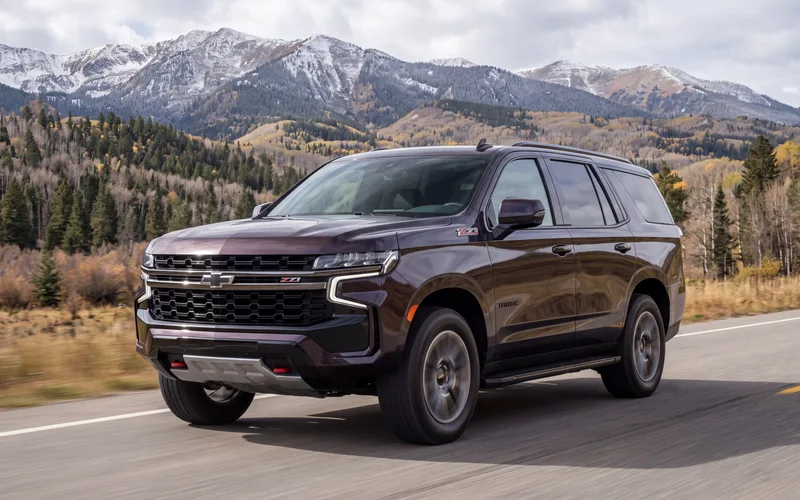 Chevrolet TahoeFull-Size SUVBetter at: Resale value
The most direct rival, with better projected resale and a diesel engine option that cuts the fuel bill the Expedition can't escape.
Compare 2.63C+
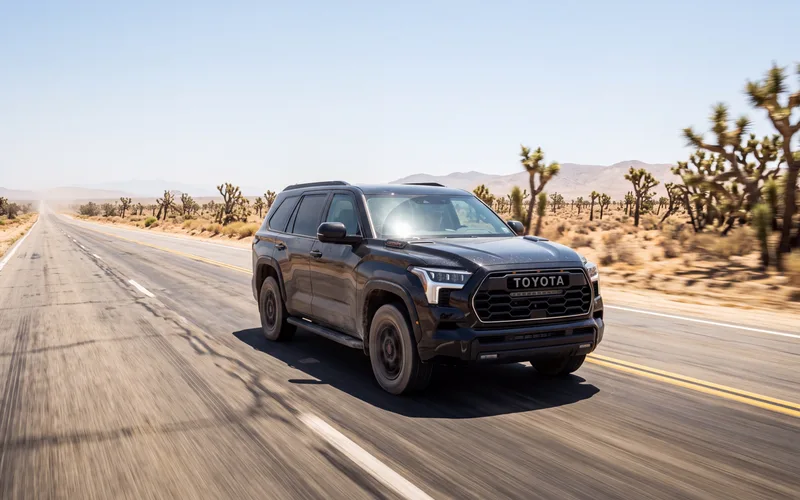 Toyota SequoiaFull-Size SUVBetter at: Fuel & reliability
A standard hybrid powertrain and Toyota's dependability record answer the Expedition's two biggest weaknesses, if you can live with a tighter third row and cargo hold.
Compare 2.72B-
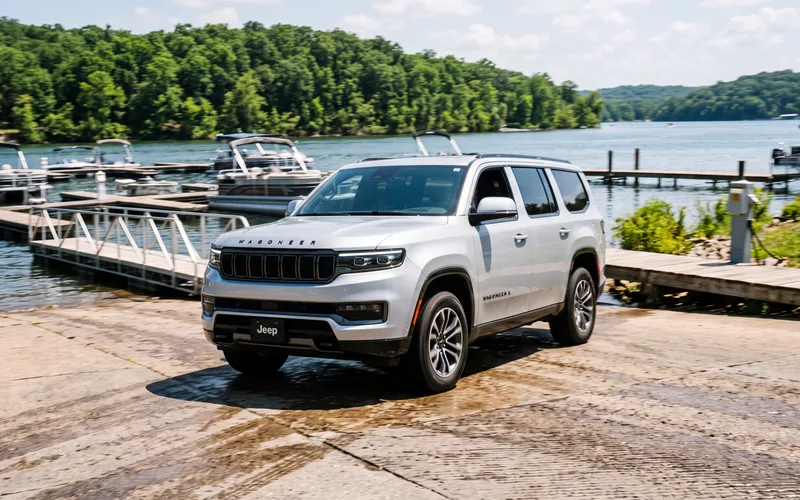 Jeep WagoneerFull-Size SUVBetter at: Interior quality
Richer interior materials and stronger IIHS crash results for a family buyer who cares more about cabin and safety ratings than maximum tow rating.
CompareHow it's evolved
10 scored model years · 2017–2026
Subject scores by year
Hover or tap a score to see what moved it versus the year before. A corner mark flags a big swing.
| Year | Performance | Efficiency | Safety | Space | Cost | Reliability | Tech | Use-case | Driving | Value |
|---|---|---|---|---|---|---|---|---|---|---|
| 2026 | 73 | 38 | 75 | 88 | 22 | 56 | 85 | 73 | 58 | 79 |
| 2025 | 74 | 37 | 73 | 87 | 9 | 54 | 80 | 71 | 63 | 72 |
| 2024 | 72 | 32 | 65 | 85 | 27 | 59 | 77 | 68 | 62 | 64 |
| 2023 | 72 | 35 | 62 | 85 | 28 | 55 | 75 | 66 | 62 | 63 |
| 2022 | 72 | 27 | 62 | 85 | 26 | 54 | 68 | 65 | 61 | 63 |
| 2021 | 67 | 33 | 58 | 85 | 21 | 51 | 47 | 62 | 57 | 55 |
| 2020 | 67 | 36 | 56 | 84 | 29 | 51 | 45 | 64 | 64 | 59 |
| 2019 | 69 | 38 | 47 | 84 | 26 | 46 | 47 | 58 | 57 | 66 |
| 2018 | 68 | 40 | 45 | 83 | 30 | 55 | 45 | 60 | 60 | 64 |
| 2017 | 62 | 35 | 34 | 71 | 29 | 57 | 38 | 54 | 56 | 50 |
Compare two years
Best fit & conditions
Higher scores mean a better fit for that use case. Learn more about use-case fit →
Subject profile
Detailed scoring by subject
1Performance & PowertrainOne of the Expedition's strongest categories.3.00B
The redesigned 2025 Expedition's standard 3.5L twin-turbo EcoBoost V6 makes 400 hp on the volume Active trim; a 440-hp High-Output tune is available on Tremor and the Platinum Stealth Performance Pack.
480 lb-ft from the standard V6 is near the top of the full-size SUV segment, with 510 lb-ft available via the High-Output engine.
Consumer Reports' instrumented test of the standard 400-hp Expedition recorded 6.0 s to 60 mph; the 440-hp High-Output Stealth Performance Pack is meaningfully quicker.
Reviewers consistently praise the redesigned Expedition's twin-turbo V6 for effortless, near-seamless power delivery with minimal perceptible turbo lag, even towing.
The 10-speed automatic shifts smoothly and decisively across city, highway, and off-road driving with no notable hunting, per reviewer consensus.
9,600 lbs properly equipped is at the top of the full-size SUV segment, exceeding the normalization band ceiling.
RWD is standard on the base Active trim with Intelligent 4WD and an 8-mode Terrain Management System optional there and standard on Platinum, Tremor, and King Ranch.
The new-for-2025 Tremor trim brings genuine off-road hardware — 10.6 in ground clearance, an F-150 Raptor-derived skid plate, 33 in all-terrain tires, an electronic locking rear differential, low-range, and Rock Crawl mode — well above segment norms though short of dedicated off-road SUVs.
The lineup offers only one engine family — a 3.5L twin-turbo EcoBoost V6 in two states of tune (400 hp / 440 hp) — with no hybrid, PHEV, or EV option.
2Efficiency & RangeOne of the Expedition's weakest categories.0.43F
The redesigned 2025 Expedition's standard 400-hp 3.5L twin-turbo EcoBoost V6/10-speed pairing is EPA-rated at 19 MPG combined for the volume 4x4 configuration, near the bottom of the full-size SUV band due to the truck's size and body-on-frame construction.
EPA city rating is consistent at 17 MPG regardless of drivetrain for the standard 400-hp EcoBoost engine in its debut 2025 model year.
Highway MPG varies slightly by drivetrain — 2WD Active reaches 23 MPG hwy while 4x4 trims (the higher-volume configuration in this class) rate 22 MPG hwy.
The standard-wheelbase Expedition carries a 23.2-gal tank; at 19 MPG combined that yields roughly 441 mi of range. The longer-wheelbase MAX's 27.8-gal tank pushes range closer to 530 mi.
At 19 MPG combined and EPA's standard 15,000 mi/yr assumption, annual fuel cost lands around $2,600 for the volume 4x4 configuration.
The Expedition runs on regular 87-octane fuel for standard driving; Ford recommends premium only for heavy towing or hot-weather conditions, not as a hard requirement.
3SafetyGrades above the middle of the scale.2.96B-
NHTSA gave the redesigned 2025 Expedition a 5-star overall rating, with 5 stars each in frontal and side crash tests and the typical 3-star rollover result for a tall body-on-frame full-size SUV.
The 2025 Expedition is not an IIHS Top Safety Pick. It earned Good in the side-impact test but only Marginal in the original small overlap front test — the A-pillar separated from the rocker panel on both driver and passenger sides, and the steering column partially detached from the instrument panel in the driver-side test — and Marginal again in the newer moderate overlap front test that adds a rear-seat dummy, reflecting elevated rear-occupant injury risk.
Ford Co-Pilot360 Assist 2.0 is standard on every 2025 Expedition trim starting with the new base Active trim (which replaced XLT), bundling Pre-Collision Assist with AEB, BLIS with rear cross-traffic alert, a Lane-Keeping System, auto high beams, adaptive cruise control, front/rear parking sensors, and a 360-degree camera — a comprehensive suite with no trim gating on core items.
IIHS rated the Expedition's pedestrian front crash prevention Good, avoiding the pedestrian dummy in most day and night scenarios, but under IIHS's newer, higher-speed (31/37/43 mph) vehicle-to-vehicle test — which adds motorcycle and semitrailer targets — the system rated only Marginal, failing to issue timely warnings in several runs even though it avoided a collision in every case.
BLIS with rear cross-traffic alert is standard fleet-wide from the Active base trim up, and Ford's system includes trailer-tow coverage that extends detection along an attached trailer's length — strong, unlocked coverage for a vehicle this size that's frequently used for towing.
A Lane-Keeping System is standard across all trims as part of Co-Pilot360 Assist 2.0, giving every buyer continuous lane-keeping assistance rather than warning-only intervention, though reviewers describe it as competent rather than class-leading in smoothness.
Adaptive cruise control is standard across the entire redesigned lineup starting at the Active base trim rather than gated to upper trims, giving every buyer a capable highway-driving baseline that pairs with the newly available BlueCruise hands-free upgrade.
2025 marks the first model year BlueCruise has been offered on the Expedition; version 1.4 hardware comes on every trim including the base Active, with a 90-day trial and a choice of a $495 one-year plan, $49.99/month plan, or $2,495 one-time purchase — broad availability across roughly 90% of the lineup for a mature, well-reviewed hands-free system.
IIHS rated the redesigned Expedition's headlights Marginal: the low beams struggle to illuminate the road adequately on curves and produce too much glare for oncoming drivers, with no trim earning a Good rating.
Reviewers note better-than-expected outward visibility for a first-time full-size-SUV buyer, aided by a flattened steering-wheel rim, and a standard 360-degree camera with trailer reverse guidance plus a Lane Change Preview view on the panoramic display meaningfully offsets the vehicle's large footprint.
Cars.com's Car Seat Check gave the redesigned Expedition A and B grades: top tether anchors are clearly marked and easy to use in every row, and lower anchors work well with rigid infant-seat connectors, though they sit tight against the upholstery, making thinner convertible-seat connectors harder to attach.
4Space & ComfortThe Expedition's best-graded category.3.94A+
The redesigned 5th-generation 2025 Expedition offers 8-passenger seating standard via the 2nd-row bench, dropping to 7 with the captain's-chairs option.
Front headroom is near the top of the full-size SUV band, unchanged for the redesigned 2025 model.
Generous front legroom near the top of the segment normalization band.
Second-row headroom sits at the top of the full-size SUV band, reflecting the Expedition's tall, boxy cabin.
Second-row legroom is near the top of the segment band even at the standard position, with more available by sliding the seat rearward.
Reviewers consistently describe the redesigned third row as genuinely adult-usable, with easy access via fold-and-slide 2nd-row seats, reclining backrests, and its own cupholders/USB ports — a step above the segment's typical penalty-box third rows.
Mid-pack cargo volume behind the second row for the standard-wheelbase Expedition; the longer-wheelbase MAX trades up into the segment's larger end.
Max cargo volume with all rear seats folded is among the largest in the full-size SUV class.
The redesigned Expedition introduces standout storage innovation: an available Flex Powered Console that slides ~8 in rearward to reveal a locking front cubby, plus an all-new Split Gate tailgate (500-lb rated) with a fold-out Cargo Tailgate Manager that doubles as a shelf/table/backrest and integrated power outlets.
Front and second-row seats draw consistent praise for plush, supportive cushioning over long stints; the third row is also called comfortable rather than penalty-box, an unusual trait in the segment.
The body-on-frame SUV rides comfortably most of the time and suits long road trips, but road irregularities and expansion joints on the available 22-in wheels can shudder the body and steering wheel.
New door seals, thicker acoustic glass, and added sound deadening for the redesign make the cabin exceptionally quiet at highway speed, with minimal wind/road/engine noise.
Standard tri-zone automatic climate control across the lineup, with heated/ventilated front seats, heated 2nd-row seats, and a heated leather steering wheel widely available and standard on King Ranch/Platinum.
5Cost of OwnershipThe Expedition's lowest-graded category.0.00F
Ford eliminated the XL, XLT, Limited and Timberline trims for 2025, leaving Active as the sole entry point; its sticker MSRP jumped over $7,000 versus the old base trim it replaced.
With Active/Tremor/King Ranch bracketing it, Platinum is the volume family-buyer pick — reviewers call it 'the way to go' for its BlueCruise, moonroof and running-board content; base MSRP is $74,750, with common options pushing typically-equipped pricing toward $77,000.
Blending CarEdge's maintenance-only estimate with RepairPal's repair-cost average over a 5-year span lands full-size body-on-frame ownership costs in the upper-middle of the segment.
CarEdge projects the Expedition retains only 41% of MSRP after 5 years, ranking 164th among popular vehicles studied — well below body-on-frame rivals like the Tahoe/Suburban/Sequoia and near the bottom of the full-size SUV field.
Standard mainstream-brand bumper-to-bumper coverage, at the low end of the segment band.
Standard Ford powertrain coverage on the twin-turbo EcoBoost V6 and 10-speed transmission, at the low end of the segment band versus Hyundai/Kia's longer terms.
FordPass Rewards grants a welcome-bonus point balance covering a portion of scheduled maintenance visits, plus roadside assistance bundled through the powertrain warranty term and a FordPass Connect trial — solid but shorter than rivals offering true multi-year prepaid maintenance plans.
$77,000 volume-trim price minus its estimated resale value after 5 years (41% retained, or about $31,570) leaves about $45,430 in depreciation. Add the projected $7,655 in 5-year maintenance and repairs, and owning this vehicle for 5 years costs about $53,085 in total.
6Reliability & QualityOne of the Expedition's weakest categories.1.62D
Consumer Reports forecasts the 2025 Expedition — the first model year of an all-new, fully redesigned fifth generation — will be less reliable than the average new vehicle, since CR's prediction for a redesigned model leans on the prior generation's history and the Ford brand score rather than fresh data of its own.
Ford climbed 10 spots to 13th place among ranked brands in J.D. Power's 2025 U.S. Vehicle Dependability Study (based on 2022 model-year vehicles), a notable improvement that puts the brand in the upper-middle of the pack rather than the bottom tier, though still short of the segment's dependability leaders.
The debut 2025 Expedition has drawn multiple safety recalls, including an Electronic Brake Booster module fault (NHTSA 25V488/25SD4/25S77) that can cause a loss of power brake assist, and an engine cup-plug oil-leak fire-risk recall (25S30) shared with F-150/Navigator — both more serious defect categories than typical software or trim issues, and part of a record recall year brand-wide (153 recalls, ~12.9M vehicles in 2025).
The 3.5L twin-turbo EcoBoost V6 and 10R80 10-speed automatic carry forward a mixed reputation — the engine has a solid high-mileage record with routine upkeep, and Ford revised the 10R80's CDF drum bushing (retaining lip) starting in late-2023/2024-built units, which should carry into 2025 production — but the transmission family's earlier clutch-drum failures and turbo/DI carbon buildup remain a known long-term concern with no multi-year track record yet for this exact application.
The redesigned cabin debuting on the 2025 Expedition brings a new dashboard, 24-inch digital gauge display, 13.2-inch center touchscreen, and reviewer-noted upgrades in material feel — a genuine step up for the price versus the outgoing generation, short of German-luxury-level finishes.
As the launch year of an all-new generation, the Expedition did not win a segment award in J.D. Power's 2025 Initial Quality Study (the Chevrolet Tahoe topped Large SUV), and Ford's mass-market IQS standing trailed Nissan, Hyundai, and Chevrolet — combined with early safety recalls tied to build defects (brake booster, engine cup plug), this points to typical first-year redesign assembly risk rather than best-in-class initial quality.
Ford operates one of the largest, densest dealer networks in the US, but J.D. Power's 2025 Customer Service Index put Ford at 861 points — just below the 862 mass-market average and 11th among mass-market brands — indicating broad coverage with only average, not standout, service satisfaction (long appointment waits and communication gaps cited as drags).
Parts move through Ford's large dealer and aftermarket network without scarcity concerns, but full-size, turbocharged-V6 SUV repairs (turbo components, 10-speed transmission, available air suspension) run above mainstream-segment repair-cost norms.
7Technology & InfotainmentOne of the Expedition's strongest categories.3.41B+
The redesigned fifth-generation 2025 Expedition debuts the Ford Digital Experience, pairing a 13.2-inch center touchscreen with a 24-inch panoramic instrument display standard from base Active through King Ranch.
The all-new Ford Digital Experience debuting for 2025 supports pinch-to-zoom and parked-mode video/web browsing and was praised by Edmunds and Car and Driver as a major leap over the outgoing SYNC 4 12-inch unit, though as a first-year system it lacks the extra polish of later updates.
Wireless Apple CarPlay and Android Auto are standard on every 2025 Expedition trim through the new 13.2-inch touchscreen.
SYNC 4A with enhanced voice recognition and Alexa Built-in handles voice commands well, and cloud-based Connected Navigation adds live traffic/parking/weather, but it is not yet the natively-integrated Google Maps/Assistant experience Ford added in later Expedition model years, so many owners still default to phone projection.
A 10-speaker Bang & Olufsen system with subwoofer is standard on Tremor and Platinum, and the range-topping 22-speaker B&O Unleashed system is standard on King Ranch and optional on Platinum via the Driver's Package — a strong spread, though Unleashed isn't standard as low as Tremor.
The new 24-inch panoramic display functions as a fully configurable digital cluster showing speed, navigation, and driver-assist info, standard on every 2025 trim including base Active — a best-in-class debut with no analog fallback.
Ford delivers automatic over-the-air updates that improve BlueCruise and other vehicle software over time without a dealer visit, consistent with Ford's broader whole-vehicle OTA push on its newest platforms.
The FordPass app enables remote start/lock, vehicle locate, and window/tailgate control, with Phone As A Key available on the vehicle, but full phone-as-key convenience is concentrated on premium trims rather than standard lineup-wide.
A wireless charging pad in the center-stack Media Hub is included on Active Touring and standard on Tremor, Platinum, and King Ranch, backed by multiple USB ports throughout the cabin — a generous spread that Ford would drop for the following model year.
Proximity keyless entry, push-button start, and remote start are expected across the lineup, with FordPass Phone As A Key adding phone-as-key convenience — full keyless convenience but concentrated on premium trims rather than uniformly standard bottom-to-top.
A 360-degree camera with front and rear cameras is offered, and Ford made the 360-degree system standard lineup-wide the following model year — implying it was still trim-gated for the 2025 launch year, with a standard rear camera and parking sensors on lower trims.
The 2025 Expedition does not offer a traditional windshield-projected head-up display; Edmunds' first-drive review notes the 24-inch panoramic display sits in the driver's line of sight at the windshield base, making a conventional HUD unnecessary and unoffered.
8Use-Case FitGrades above the middle of the scale.2.83B-
Standard running boards ease loading kids into the tall body-on-frame cabin, 8-passenger seating (7 with captain's chairs) covers large families, and PowerFold 3rd-row seats simplify stroller/gear access, though Cars.com's Car Seat Check found lower anchors sit tight against the upholstery, making thinner convertible-seat connectors harder to attach.
NHTSA gave the redesigned 2025 Expedition a 5-star overall rating and Ford Co-Pilot360 Assist 2.0 — AEB, BLIS with rear cross-traffic alert, lane-keeping, adaptive cruise, and rear occupant alert — is standard from the new base Active trim up, but IIHS rated it only Marginal in both the small-overlap and moderate-overlap front tests, capping the overall family safety proposition.
An unusually adult-usable third row, plush seat cushioning across all rows, standard tri-zone climate control, and a quiet highway cabin make multi-hour family trips comfortable, and 22.9 cu ft remains behind the third row for luggage even with all seats occupied.
The redesigned twin-turbo EcoBoost V6 and 10-speed automatic deliver smooth, effortless power around town, but a roughly 210-inch body-on-frame full-size SUV remains inherently more work to place and maneuver in daily traffic than crossover rivals.
EPA-rated 17/22/19 mpg city/highway/combined (4x4; 17/23/19 on 2WD Active) is near the bottom of the full-size SUV band, and at 15,000 mi/yr that pencils out to roughly $2,600 in annual fuel costs — well above what commuter-oriented crossovers cost to run.
At roughly 210 inches long, the Expedition is a handful to park and squeeze through tight urban spaces, but a standard 360-degree camera with trailer reverse guidance and a Lane Change Preview view meaningfully offset the vehicle's large footprint.
A 9,600 lb max tow rating (4x4, properly equipped with weight-distributing hitch) sits at the top of the full-size SUV class, backed by 480 lb-ft of torque from the standard EcoBoost V6, giving the Expedition real capacity for trailers, boats, and toy haulers.
As the debut model year of an all-new fifth generation, Consumer Reports forecasts below-average reliability and the Expedition has already drawn multiple safety recalls including an electronic brake booster module fault; the carryover 3.5L EcoBoost V6/10R80 driveline has a mixed high-mileage reputation, so the platform isn't yet proven under sustained hard-use duty.
The new-for-2025 Tremor trim adds dual 120V power outlets and a tie-down-friendly cargo area, plus standard roof rails and a 500-lb-rated Split Gate tailgate with a fold-out Cargo Tailgate Manager, but the lineup lacks the deep rack/upfit ecosystem, bed access, and washable work-grade surfaces of a pickup.
A quiet, well-insulated cabin, standard adaptive cruise control, and 2025's debut of BlueCruise hands-free driving (1.4 hardware standard from the base Active trim) make the Expedition a strong mile-eater, tempered only by a modest ~440-530 mile range depending on tank size and wheelbase.
The all-new-for-2025 Tremor trim brings genuine off-road hardware — 10.6 in ground clearance, an F-150 Raptor-derived skid plate, 33 in all-terrain tires, an electronic locking rear differential, low-range gearing, and a Rock Crawl drive mode — well beyond typical pavement-bound full-size SUVs, and the 9,600 lb tow rating covers hauling toys to the trailhead.
PowerFold 3rd-row seats, up to 108.5 cu ft of max cargo volume (123.1 cu ft on the Expedition MAX), and an all-new Split Gate tailgate with a fold-out Cargo Tailgate Manager shelf/table make the Expedition exceptionally flexible for bulky gear, while the standard hitch and roof rails add towing and roof-rack capacity.
9Driving ExperienceMid-pack among this car's ten categories.2.28C
The redesigned 2025 Expedition rides on a stiffer, more sorted chassis than its predecessor and reviewers describe cornering composure as 'quite good' given its nearly 6,000-lb curb weight, though it remains secure rather than engaging next to lighter-feeling rivals like the Grand Cherokee or Sequoia.
Steering is light and easy at low speed, which reviewers credit for making the big SUV less intimidating to place, but it is short on genuine feedback and some testers call it vague on-center; the flat-top 'squircle' wheel itself is also polarizing.
Edmunds' instrumented test recorded a 129-ft stop from 60 mph, a solid result for a full-size body-on-frame SUV of this mass, and reviewers note the adjustable brake/accelerator pedal feature aids pedal feel for different driver sizes without flagging fade concerns.
The 3.5L twin-turbo EcoBoost V6 and 10-speed automatic are consistently praised for smooth, effortless power delivery with quick throttle response and no perceptible turbo lag, even under load.
The EcoBoost V6 is unobtrusive at cruise and under moderate acceleration, with added sound insulation for 2025 contributing to a quieter cabin than the outgoing model, though it lacks the pleasant note of a V8.
At 41.0 ft curb-to-curb, the standard-wheelbase Expedition sits near the wide end of the full-size SUV norm, reflecting its long body-on-frame footprint.
Seating position, sightlines, and seat comfort (including power/heated/cooled/Active Motion seats on Platinum) draw praise, but the redesigned steering wheel's unlabeled touch-sensitive controls for media, cruise, and wheel/pedal adjustment were widely criticized as distracting and unintuitive.
Strong V6 power and improved ride/handling make the Expedition pleasant and confidence-inspiring to drive, but it remains a family-hauler appliance rather than something enthusiasts seek out, similar to segment peers.
10Value & Market PositionGrades above the middle of the scale.2.86B-
The base retail Active trim ($62,400 MSRP) is unusually loaded for a full-size SUV's entry point: standard twin-turbo 3.5L EcoBoost V6 (400 hp/480 lb-ft), power Split Gate liftgate, Class IV hitch, tri-zone climate, power-folding third row, 24-inch digital instrument panel, 13.2-inch touchscreen, and a full ADAS suite (adaptive cruise, BLIS w/ cross-traffic alert, lane-centering, auto high beams, 360-degree camera). Rivals like the base Tahoe LS and Sequoia SR5 charge extra or omit several of these driver-assist and tech items at their starting price.
The redesigned lineup moved upmarket versus the outgoing generation — base pricing rose several thousand dollars with the elimination of cheaper XL/XLT-equivalent retail trims — but buyers get a standard 400-hp twin-turbo V6 that outguns the base V8 in the Tahoe/Sequoia, plus segment-leading tech. Fair value overall, but the price jump and steep climb to loaded trims ($74,850 Platinum, $84,000 King Ranch) keep it short of standout bargain territory.
Four retail trims (Active, Tremor, Platinum, King Ranch, plus fleet-only XL) span budget-conscious to off-road to luxury, with the Expedition Max extended-length body available on every trim but Tremor. Coverage is reasonable but there's a wide $12k+ gap between Active and Platinum with no mid-tier retail trim (the old XLT/Limited step was collapsed away), leaving a configuration gap for mid-budget buyers.
The redesigned Expedition posted a major sales resurgence in 2025 — outselling the Chevy Tahoe outright in Q2 2025 for the first time in over five years, its best Q3 in two decades (+47.4%), and 85,921 units for the year, gaining share against GM's full-size trio. It settled as the clear #2 in the non-luxury full-size SUV segment behind the Tahoe.
Ford is a mainstream volume brand with solid, unpretentious credibility in trucks and SUVs but no luxury halo; it sits below the GM/Toyota full-size stalwarts in aspirational pull despite the Expedition's fresh redesign generating buzz.
The all-new Expedition launched with essentially no incentives due to strong initial demand, and through most of 2025 sold close to MSRP. Only as the model year closes out (mid-2026) have Model Year Closeout Bonus Cash, UAW member offers, and above-market APR/lease programs appeared — a late, run-out-driven benefit rather than sustained buyer-friendly pricing.
2025 is the first model year of an all-new fifth generation — full exterior/interior redesign, new Tremor off-road trim, revised trim structure, and updated powertrain outputs. As fresh as a full-size SUV gets, with no redesign risk for years to come.
Well-reviewed but not the outright winner of the marquee comparison test: Car and Driver's six-SUV full-size comparison (Tahoe, Expedition, Yukon, Wagoneer, Armada, Sequoia) went to the Tahoe, though the Expedition was singled out as "the clear driver's choice." It backed that up with real hardware — Wards 10 Best Interior & UX Award and Kelley Blue Book's Full-Size SUV Best Buy Award for an eighth consecutive year.