

The verdict
A mixed-report compact hatchback, strong on reliability and held back by performance.
The 2026 Civic Hatchback is the practical, grown-up version of the Civic: 24.5 cu ft of cargo behind the back seat (vs. 14.8 in the sedan), 46.2 cu ft with the seats folded, and a hybrid that returns 48 MPG combined for $30,595. It backs that up with the segment's best ownership math — IIHS Top Safety Pick+, 5-star NHTSA, about $4,000 in maintenance and repairs over five years, and roughly 61% of its value still on the hood at the five-year mark. Where it slips is equipment: the volume trims get a small 7-inch screen, wired-only CarPlay, no heated seats on the base Sport, and there's no AWD or head-up display at any price. Buy it for the utility, the fuel bills, and the resale — not for a long features list.
Jump to scoresStrengths
- Hatchback cargo space the sedan can't touch
- Cheap to own, and it holds its value
- Reliability you can plan around
What holds it back
- The base engine is slow, and there's no fast trim to escape to
- Front-wheel drive only — no AWD at any price
- Screens and infotainment feel a generation behind
Top alternatives
Cars shoppers cross-shop with the Honda Civic Hatchback 2.25C
2.25C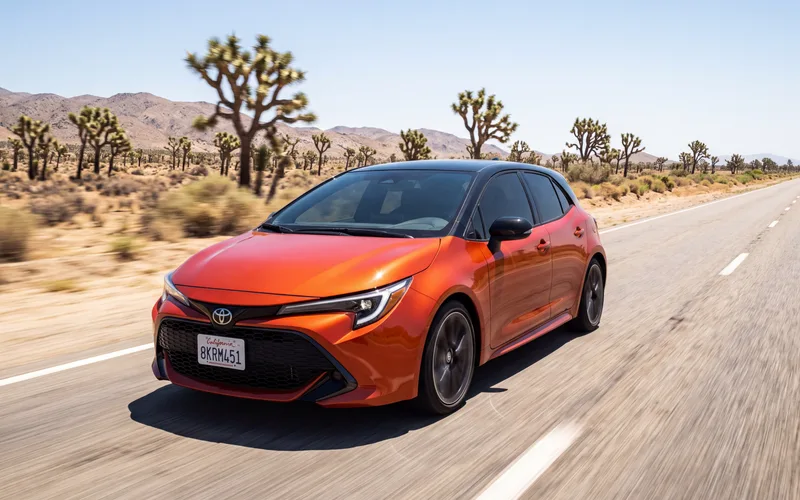 Toyota Corolla HatchbackCompact HatchbackBetter at: Value
Costs less, discounts more freely, and gives you wireless CarPlay on mid trims — worth a look if budget and tech convenience outrank cargo space.
Compare 2.57C+
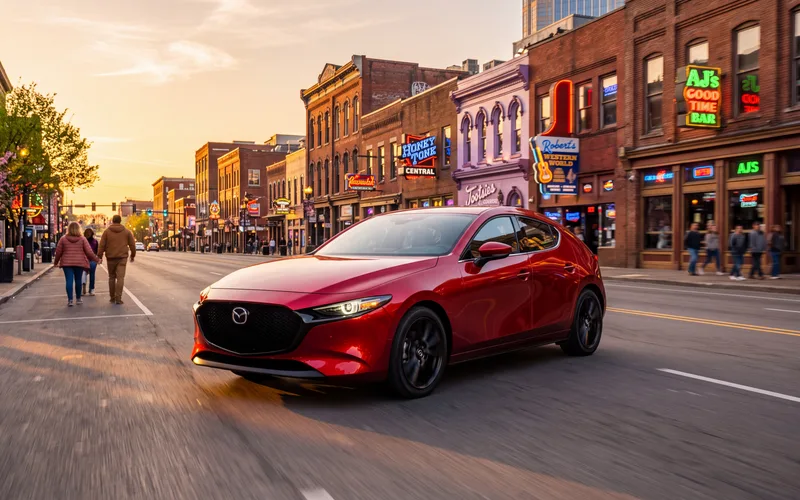 Mazda Mazda3 HatchbackCompact HatchbackBetter at: Interior quality
Offers AWD and a genuinely premium-feeling interior with a head-up display, for buyers who'd trade cargo volume for polish and all-weather traction.
Compare 2.14C
2.14C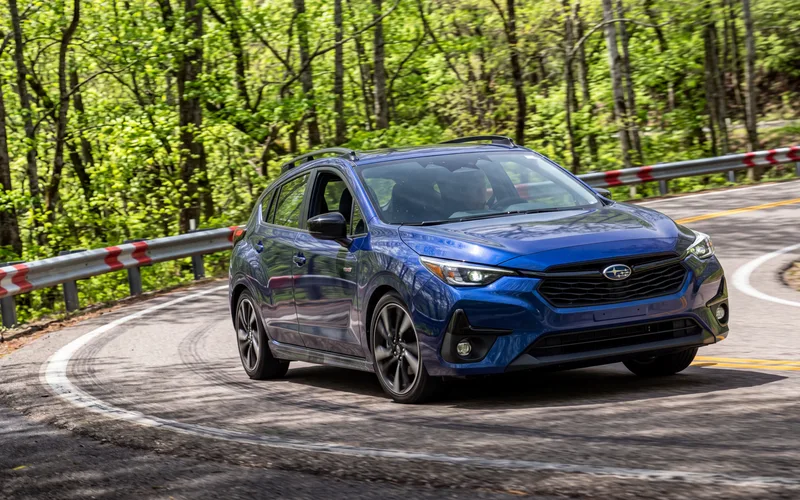 Subaru ImprezaCompact HatchbackBetter at: All-weather traction
Standard all-wheel drive at a lower price makes it the default choice for snow-belt buyers the FWD-only Civic can't serve.
CompareHow it's evolved
10 scored model years · 2017–2026
Subject scores by year
Hover or tap a score to see what moved it versus the year before. A corner mark flags a big swing.
| Year | Performance | Efficiency | Safety | Space | Cost | Reliability | Tech | Use-case | Driving | Value |
|---|---|---|---|---|---|---|---|---|---|---|
| 2026 | 30 | 59 | 76 | 69 | 68 | 80 | 51 | 65 | 72 | 75 |
| 2025 | 25 | 59 | 78 | 65 | 68 | 80 | 48 | 60 | 66 | 72 |
| 2024 | 27 | 54 | 73 | 68 | 69 | 77 | 45 | 55 | 70 | 73 |
| 2023 | 25 | 53 | 77 | 69 | 77 | 79 | 43 | 56 | 68 | 79 |
| 2022 | 25 | 54 | 81 | 69 | 78 | 78 | 43 | 56 | 68 | 80 |
| 2021 | 34 | 46 | 68 | 66 | 72 | 77 | 40 | 53 | 69 | 67 |
| 2020 | 35 | 45 | 69 | 66 | 75 | 74 | 39 | 53 | 70 | 77 |
| 2019 | 34 | 46 | 67 | 65 | 76 | 71 | 30 | 51 | 69 | 75 |
| 2018 | 32 | 60 | 58 | 74 | 76 | 65 | 34 | 58 | 77 | 75 |
| 2017 | 31 | 60 | 63 | 69 | 78 | 64 | 36 | 52 | 69 | 80 |
Compare two years
Best fit & conditions
Higher scores mean a better fit for that use case. Learn more about use-case fit →
Subject profile
Academic Probation · NHTSA safety recalls
Oct 3, 2024SteeringThe steering gearbox assembly may have been manufactured incorrectly, which can cause excessive internal friction and lead to difficulty steering the vehicle.
Defect
Honda (American Honda Motor Co.) is recalling certain 2023-2025 Acura Integra, Civic Type R, CR-V Hybrid, CR-V, HR-V, 2022-2025 Civic, Civic Hatchback, 2024-2025 Acura Integra Type S, 2025 CR-V Fuel Cell EV, Civic Hybrid, and Civic Hatchback Hybrid vehicles. The steering gearbox assembly may have been manufactured incorrectly, which can cause excessive internal friction and lead to difficulty steering the vehicle.
Risk
Difficulty steering can increase the risk of a crash.
Remedy
Dealers will replace the worm gear spring and redistribute or add grease as necessary, free of charge. Owner notification letters were mailed November 18, 2024. Owners may contact Honda Customer Service at 1-888-234-2138. Honda's numbers for this recall are SJS, MJU, QJT and VJV.
NHTSA campaign 24V744000 ↗Manufacturer no. SJS, MJU, QJT, VJV1,693,199 vehicles potentially affected (all models in the campaign)Owners notified Nov 18, 2024Filed by Honda (American Honda Motor Co.)Filed as CIVIC, CIVIC HATCHBACK, CIVIC HATCHBACK HYBRID, CIVIC HYBRID
15 recalls on other model years of the Civic Hatchback (2017–2025)
May 21, 2026Air bags: sensor: occupant classification: front passengerThe front passenger seat weight sensor may crack and short circuit, which can cause the air bags to deploy unintentionally during a crash.
Defect
Honda (American Honda Motor Co.) is recalling certain 2018-2021, 2023 Acura TLX, 2019-2024 RDX, 2017-2020, 2022-2026 MDX, 2017-2021, 2023, 2025 Honda Ridgeline, 2017-2022 Pilot, 2019-2021 Passport, 2018-2026 Odyssey, 2019-2022 Insight, 2019-2021 HR-V, 2018-2020 Fit, 2020-2022 CR-V Hybrid, 2017-2022 CR-V, 2017-2018, 2021 Civic Type R, 2017-2021 Civic hatchback, 2016-2020 Civic coupe, 2016-2022 Civic, 2017-2022 Accord Hybrid, and 2016-2022 Accord vehicles. The front passenger seat weight sensor may crack and short circuit, which can cause the air bags to deploy unintentionally during a crash.
Risk
Air bags that deploy unintentionally during a crash increase the risk of injury.
Remedy
Dealers will replace the seat weight sensors, free of charge. Owner notification letters were mailed July 7, 2026. Owners may contact Honda's customer service at 1-888-234-2138. Honda's numbers for this recall are BOL, WO9, OOA, WOM, XOH, NOC, POD, BOE, UOF, POB, EOG, AOI, QO8, TOJ, DO7, and SOK. This recall expands previous NHTSA recall number 24V064. Vehicle Identification Numbers (VINs) involved in this recall will be searchable on NHTSA.gov beginning May 29, 2026.
NHTSA campaign 26V332000 ↗Manufacturer no. Refer to Comments98,892 vehicles potentially affected (all models in the campaign)Owners notified Jul 6, 2026Filed by Honda (American Honda Motor Co.)Filed as CIVIC, CIVIC HATCHBACKNov 14, 2024Seats: critical fastenersThe driver's seat cushion frame may not have been tightened properly, which can result in an unsecured seat. As such, these vehicles fail to comply with the requirements of Federal Motor Vehicle Safety Standard number 207, "Seating Systems."
Defect
Honda (American Honda Motor Co.) is recalling certain 2023-2024 Honda Accord, Accord Hybrid, Civic Sedan, Civic Hatchback, Pilot, and 2024 HR-V, Acura Integra and Acura Integra Type S vehicles. The driver's seat cushion frame may not have been tightened properly, which can result in an unsecured seat. As such, these vehicles fail to comply with the requirements of Federal Motor Vehicle Safety Standard number 207, "Seating Systems."
Risk
An unsecured driver's seat may not adequately restrain the driver during a crash, increasing the risk of injury.
Remedy
Dealers will replace the driver's seat cushion frame, free of charge. Owner notification letters were mailed January 6, 2025. Owners may contact Honda customer service at 1-888-234-2138.
NHTSA campaign 24V859000 ↗121 vehicles potentially affected (all models in the campaign)Owners notified Jan 6, 2025Filed by Honda (American Honda Motor Co.)Filed as CIVIC, CIVIC HATCHBACKOct 14, 2024Fuel system, gasoline: delivery: fuel pumpThe high-pressure fuel pump may crack and leak fuel.
Defect
Honda (American Honda Motor Co.) is recalling certain 2023-2024 Honda Accord, Accord Hybrid, 2023-2025 Honda CR-V Hybrid, and 2025 Honda Civic and Civic Hybrid vehicles. The high-pressure fuel pump may crack and leak fuel.
Risk
A fuel leak in the presence of an ignition source can increase the risk of a fire.
Remedy
Dealers will inspect and replace the high-pressure fuel pump as necessary, free of charge. Owner letters were mailed February 20, 2025. Owners may contact Honda customer service at 1-888-234-2138. Honda's number for this recall is PJW.
NHTSA campaign 24V763000 ↗Manufacturer no. PJW720,810 vehicles potentially affected (all models in the campaign)Owners notified Feb 20, 2025Filed by Honda (American Honda Motor Co.)Filed as CIVIC, CIVIC HYBRIDFeb 1, 2024Air bags: sensor: occupant classification: front passengerThe front passenger seat weight sensor may crack and short circuit, failing to suppress the air bag as intended.
Defect
Honda (American Honda Motor Co.) is recalling certain 2020-2022 Pilot, Accord, Civic sedan, HR-V, Odyssey, 2020 Civic coupe, Fit, 2021-2022 Civic hatchback, 2021 Civic Type R, Insight, 2020-2021 CR-V, CR-V Hybrid, Passport, Ridgeline, Accord Hybrid, 2020 Acura MDX, 2022 Acura MDX, 2020-2022 Acura RDX, and 2020-2021 Acura TLX vehicles. The front passenger seat weight sensor may crack and short circuit, failing to suppress the air bag as intended.
Risk
An air bag that deploys unintentionally during a crash can increase the risk of injury.
Remedy
Dealers will replace the seat weight sensors, free of charge. Owner notification letters were mailed March 28, 2024. This is a phased recall. Owners may contact Honda customer service at 1-888-234-2138. Honda's numbers for these recalls are XHP and VHQ.
NHTSA campaign 24V064000 ↗Manufacturer no. XHP, VHQ750,114 vehicles potentially affected (all models in the campaign)Owners notified Mar 28, 2024Filed by Honda (American Honda Motor Co.)Filed as CIVICDec 18, 2023Fuel system, gasoline: delivery: fuel pumpThe fuel pump inside the fuel tank may fail.
Defect
Honda (American Honda Motor Co.) is recalling certain 2013-2023 Honda Accord, Civic Coupe, Civic Sedan, Civic Hatchback, Civic Type R, CR-V, HR-V, Ridgeline, Odyssey, Acura ILX, MDX, MDX Hybrid, RDX, RLX, TLX, 2019-2022 Honda Insight, Passport, 2020 Honda CR-V Hybrid, 2018-2019 Honda Clarity PHEV, Fit, and 2015-2020 Honda Accord Hybrid, Pilot, Acura NSX vehicles. The fuel pump inside the fuel tank may fail.
Risk
Fuel pump failure can cause an engine stall while driving, increasing the risk of a crash.
Remedy
Dealers will replace the fuel pump module, free of charge. Owner letters were mailed September 6, 2024. Owners may contact Honda customer service at 1-888-234-2138. Honda's numbers for this recall are KGC and KGD. This recall is an expansion of NHTSA recall numbers 21V-215 and 20V-314.
NHTSA campaign 23V858000 ↗Manufacturer no. KGC, KGD2,490,460 vehicles potentially affected (all models in the campaign)Owners notified Mar 29, 2024Filed by Honda (American Honda Motor Co.)Filed as CIVICOct 19, 2023Steering: rack and pinionThe steering rack may have been incorrectly assembled, which can allow the tire to chafe against the lower suspension or tie rod end, possibly resulting in tire damage.
Defect
Honda (American Honda Motor Co.) is recalling certain 2022-2024 Civic 4-door and Civic 5-door vehicles that received a replacement power steering rack as part of a service repair. The steering rack may have been incorrectly assembled, which can allow the tire to chafe against the lower suspension or tie rod end, possibly resulting in tire damage.
Risk
A damaged tire can fail and increase the risk of a crash or injury.
Remedy
Dealers will inspect and replace the electric power steering rack, as necessary, free of charge. Owner letters were mailed January 16, 2024. Owners may contact Honda customer service at 1-888-234-2138. Honda's number for this recall is YFW.
NHTSA campaign 23V704000 ↗Manufacturer no. YFW264,567 vehicles potentially affected (all models in the campaign)Owners notified Dec 4, 2023Filed by Honda (American Honda Motor Co.)Filed as CIVICJun 29, 2023Service brakes, hydraulic: foundation components: master cylinderThe tie rod fastener that connects the brake booster and the brake master cylinder may have been improperly assembled during manufacturing, which can cause the brake master cylinder to separate from the booster assembly.
Defect
Honda (American Honda Motor Co.) is recalling certain 2020-2021 Civic, 2020-2023 Ridgeline, 2021-2023 Passport, 2021-2022 Pilot, and 2020 Acura MDX vehicles. The tie rod fastener that connects the brake booster and the brake master cylinder may have been improperly assembled during manufacturing, which can cause the brake master cylinder to separate from the booster assembly.
Risk
Brake master cylinder separation can cause a loss of brake function and increase the risk of a crash.
Remedy
Dealers will inspect and repair the brake booster assembly as necessary, free of charge. Owner notification letters were mailed August 7, 2023. Owners may contact Honda customer service at 1-888-234-2138. Honda's numbers for this recall are VEU, AEV, and ZET.
NHTSA campaign 23V458000 ↗Manufacturer no. VEU, AEV, ZET124,077 vehicles potentially affected (all models in the campaign)Owners notified Aug 7, 2023Filed by Honda (American Honda Motor Co.)Filed as CIVICJun 15, 2023Service brakes, hydraulic: antilock/traction control/electronic limited slip: control unit/moduleA ball valve in the vehicle stability assist (VSA) modulator may leak brake fluid, which can result in unintended vehicle movement when the brake hold feature is engaged or an unexpected increase in brake pedal travel.
Defect
Honda (America Honda Motor Co.) is recalling certain 2023 Civic, Acura RDX, Acura Integra, and 2022 Honda Accord vehicles. A ball valve in the vehicle stability assist (VSA) modulator may leak brake fluid, which can result in unintended vehicle movement when the brake hold feature is engaged or an unexpected increase in brake pedal travel.
Risk
Unintended vehicle movement or an unexpected increase in brake pedal travel can increase the risk of a crash or injury.
Remedy
Dealers will replace the VSA modulator, free of charge. Owner notification letters were mailed July 24, 2023. Owners may contact Honda customer service at 1-888-234-2138. Honda's numbers for this recall are OEJ, XEK, AEY, XEX and OEW.
NHTSA campaign 23V430000 ↗Manufacturer no. OEJ,XEK,AEY,XEX,OEW386 vehicles potentially affected (all models in the campaign)Owners notified Jul 24, 2023Filed by Honda (American Honda Motor Co.)Filed as CIVICMar 25, 2021Fuel system, gasoline: delivery: fuel pumpThe low-pressure fuel pump inside the fuel tank may fail.
Defect
Honda (American Honda Motor Co.) is recalling certain 2019-2020 Acura MDX, MDX Sport Hybrid, RDX, TLX, Honda Accord, Civic Hatchback, Insight, 2019 Acura ILX, Honda Accord Hybrid, Civic Coupe, Civic Coupe Si, Civic Sedan, Civic Sedan Si, Civic Type R, Fit, HR-V, Odyssey, Passport, Pilot and Ridgeline, and 2018-2019 CR-V vehicles. The low-pressure fuel pump inside the fuel tank may fail.
Risk
Fuel pump failure can cause an engine stall while driving, increasing the risk of a crash.
Remedy
Honda will notify owners, and dealers will replace the fuel pump assembly, free of charge. Owner letters were mailed May 18, 2021. Owners may contact Honda customer service at 1-888-234-2138. Note: This recall is an expansion of recall 20V-314.
NHTSA campaign 21V215000 ↗Manufacturer no. Multiple Codes624,552 vehicles potentially affected (all models in the campaign)Owners notified May 18, 2021Filed by Honda (American Honda Motor Co.)Filed as CIVICMay 28, 2020Fuel system, gasoline: delivery: fuel pumpThe low-pressure fuel pump inside the fuel tank may fail.
Defect
Honda (American Honda Motor Co.) is recalling certain 2018-2019 Acura NSX, 2019 Acura RDX, RLX and RLX Sport Hybrid, 2018-2019 Honda Accord, Civic Hatchback, Civic Type R and HR-V, 2019-2020 Insight and 2019 Fit vehicles. The low-pressure fuel pump inside the fuel tank may fail.
Risk
If the fuel pump fails, the engine can stall while driving, increasing the risk of a crash.
Remedy
Honda will notify owners and dealers will replace the fuel pump assembly, free of charge. The recall began July 22, 2020. Owners may contact Honda customer service at 1-888-234-2138.
NHTSA campaign 20V314000 ↗135,995 vehicles potentially affected (all models in the campaign)Owners notified Jul 22, 2020Filed by Honda (American Honda Motor Co.)Filed as CIVICNov 16, 2018Equipment: other: owners/service/other manualThe owners guide in these vehicles may not have been included or if included, the owner's guide may not have been properly provided required information. As such, these vehicles fail to comply with the requirements of Federal Motor Vehicle Safety Standard (FMVSS) number 225, "Child Restraint Anchorage Systems."
Defect
Honda (American Honda Motor Co.) is recalling certain 2017-2018 Honda Civic Hatchback and Civic Type R vehicles. The owners guide in these vehicles may not have been included or if included, the owner's guide may not have been properly provided required information. As such, these vehicles fail to comply with the requirements of Federal Motor Vehicle Safety Standard (FMVSS) number 225, "Child Restraint Anchorage Systems."
Risk
If the information is missing or improper, it can increase the risk of injury or a crash.
Remedy
Honda will notify owners, and dealers will replace the owners information kit, free of charge. The recall began January 9, 2019. Owners may contact Honda customer service at 1-888-234-2138. Honda's number for this recall is O3A.
NHTSA campaign 18V817000 ↗Manufacturer no. O3A7,016 vehicles potentially affected (all models in the campaign)Owners notified Jan 9, 2019Filed by Honda (American Honda Motor Co.)Filed as CIVICSep 27, 2018Steering: electric power assist systemThe magnet that controls the torque sensor output signal for the electronic power steering system may not be properly secured, allowing the magnet to become dislodged. During a full lock turn, the dislodged magnet may cause steering assist to be applied in the opposite direction.
Defect
Honda (American Honda Motor Co.) is recalling certain 2017-2018 Honda Civic and CR-V vehicles. The magnet that controls the torque sensor output signal for the electronic power steering system may not be properly secured, allowing the magnet to become dislodged. During a full lock turn, the dislodged magnet may cause steering assist to be applied in the opposite direction.
Risk
The unintended steering input reduces vehicle maneuverability and increases the risk of a crash.
Remedy
Honda will notify owners, and dealers will replace the steering gearbox assembly, free of charge. The recall began November 9, 2018. Owners may contact Honda customer service at 1-888-234-2138. Honda's numbers for this recall are C2N, P2O.
NHTSA campaign 18V663000 ↗Manufacturer no. C2N, P2O54 vehicles potentially affected (all models in the campaign)Owners notified Nov 9, 2018Filed by Honda (American Honda Motor Co.)Filed as CIVICJun 20, 2018Equipment: other: labelsThe manufacturing date area of the certification labels may have random characters which can affect the owner's ability to determine if a safety recall includes their vehicle.
Defect
Honda (American Honda Motor Co.) is recalling certain 2018 Honda Civic vehicles. The manufacturing date area of the certification labels may have random characters which can affect the owner's ability to determine if a safety recall includes their vehicle.
Risk
If the owner is not able to verify if their vehicle is involved in safety recall, it can increase the risk of injury or crash.
Remedy
Honda will notify owners, and dealers will replace the certification label, free of charge. The recall began August 7, 2018. Owners may contact Honda customer service at 1-888-234-2138. Honda's number for this recall is U23.
NHTSA campaign 18V421000 ↗Manufacturer no. U2313 vehicles potentially affected (all models in the campaign)Owners notified Aug 7, 2018Filed by Honda (American Honda Motor Co.)Filed as CIVICApr 26, 2018Air bags · SeatsDriver and front passenger seatback pads sold as replacement service parts were made without slit openings for the seat-mounted side air bags. In the event of a crash necessitating air bag deployment, the seatback pad would interfere and adversely affect air bag performance. As such, these vehicles fail to comply with the requirements of Federal Motor Vehicle Safety Standard (FMVSS) number 214, "Side Impact Protection."
Defect
Honda (American Honda Motor Co.) is recalling certain 2017 Honda Civic Hatchback and Civic Type R vehicles. Driver and front passenger seatback pads sold as replacement service parts were made without slit openings for the seat-mounted side air bags. In the event of a crash necessitating air bag deployment, the seatback pad would interfere and adversely affect air bag performance. As such, these vehicles fail to comply with the requirements of Federal Motor Vehicle Safety Standard (FMVSS) number 214, "Side Impact Protection."
Risk
If the seat-mounted air bags cannot not deploy correctly in the event of a crash, there would be an increased risk of injury.
Remedy
Honda will notify owners, and dealers will replace the front seatback pads, free of charge. The recall began June 15, 2018. Owners may contact Honda customer service at 1-888-234-2138. Honda's number for this recall is E1D, U1B, and X1C.
NHTSA campaign 18V266000 ↗Manufacturer no. E1D, U1B, X1C69 vehicles potentially affected (all models in the campaign)Owners notified Jun 15, 2018Filed by Honda (American Honda Motor Co.)Filed as CIVICNov 9, 2017Power train: driveline: driveshaftThe right halfshaft may have been improperly heat treated, reducing its strength.
Defect
Honda (American Honda Motor Co.) is recalling certain 2017 Honda Civic Sedan and Coupe vehicles. The right halfshaft may have been improperly heat treated, reducing its strength.
Risk
The improper heat treatment can result in the halfshaft breaking, preventing the engine from moving the vehicle, and can allow a possible roll away situation if the parking brake is not engaged. This can increase the risk of a crash.
Remedy
Honda will notify owners, and dealers will inspect the halfshaft's serial number, replacing it as necessary and aligning the front wheels, free of charge. The recall began December 8, 2017. Owners may contact Honda customer service at 1-888-234-2138. Honda's number for this recall is K0E.
NHTSA campaign 17V706000 ↗Manufacturer no. K0E5,404 vehicles potentially affected (all models in the campaign)Owners notified Dec 8, 2017Filed by Honda (American Honda Motor Co.)Filed as CIVIC
Source: NHTSA Office of Defects Investigation recall database, model years 2017–2026. Recalls are listed by model year as the manufacturer filed them; whether a specific car is affected depends on its VIN — check a VIN at nhtsa.gov ↗. NHTSA model names matched to this page: CIVIC, CIVIC HATCHBACK, CIVIC HATCHBACK HYBRID, CIVIC HYBRID.
Detailed scoring by subject
1Performance & PowertrainThe Civic Hatchback's lowest-graded category.0.00F
Volume Sport hatchback runs the 2.0L naturally aspirated I-4 at 150 hp, unchanged from the sedan; both hybrid trims deliver 200 hp combined via Honda's two-motor system. The Civic Hatchback for 2026 does not offer the sedan's Si trim, so 200 hp combined (hybrid) is the ceiling on the lineup.
The Sport gas 2.0L delivers 133 lb-ft; the two-motor hybrid's traction motor puts down a much stronger 232 lb-ft available from rest, which is the figure that defines how the hybrid actually feels off the line.
Instrumented tests place the Sport gas hatchback around 8.3 s to 60 mph — slightly slower than the sedan's ~8.2 s because the hatch carries a modest weight penalty. The hybrid drops to roughly 6.4 s thanks to strong low-end motor torque. Without the sedan-only Si, ~6.4 s is the quickest configuration in the hatchback lineup.
The 2.0L Sport is civil but coarse and buzzy near redline; the two-motor hybrid, in contrast, is widely praised for near-EV smoothness and immediate throttle response, and it lifts the lineup average now that hybrid trims are ~30% of Civic volume. Same powertrains as the sedan, same refinement verdict.
Honda's CVT in the Sport gas is class-leading among CVTs — well-timed simulated steps under throttle and minimal drone in normal driving — and the hybrid's direct-drive e-CVT is effectively single-speed EV-like. The hatchback lineup lacks the sedan's Si 6-speed manual, which is why this sits a few points below the sedan's 75.
The Civic Hatchback is FWD-only across every trim and powertrain — Honda has never offered AWD on this platform, a clear disadvantage versus AWD-optional rivals like the Mazda3 Hatchback and Subaru Impreza (AWD standard).
The Civic Hatchback offers two genuinely distinct powertrains — 2.0L naturally aspirated gas with CVT, and the two-motor hybrid with e-CVT — covering economy and electrification. Unlike the sedan there is no Si turbo/6MT option, and no PHEV or EV, which caps this in the middle of the 50–79 'two or three mainstream choices' band.
2Efficiency & RangeOne of the Civic Hatchback's weakest categories.1.96C-
EPA-rated 34 MPG combined for the volume gas Sport trim (2.0L i-VTEC + CVT). The available Sport Hybrid jumps to 48 MPG combined thanks to Honda's two-motor hybrid system.
Gas Sport rated 30 MPG city per EPA; the hybrid variants nearly double that to 50 MPG city where regenerative braking pays off most.
Sport gas returns 38 MPG on the EPA highway cycle; hybrid variants add 45 MPG highway. Both figures are competitive, though not class-leading vs. dedicated hybrids like the Prius.
Volume gas Sport combines a 12.4-gal tank with 34 MPG combined for roughly 421 miles of range; the identically sized tank on hybrids stretches that to about 595 miles.
EPA-style estimate at 15k mi/yr on regular gasoline for the volume Sport gas trim at 34 MPG combined; the hybrid drops that to roughly $1,250/yr.
All Civic Hatchback trims - gas and hybrid - run on regular 87-octane unleaded. No premium requirement, no diesel/E85 complications, no charging infrastructure needed.
3SafetyOne of the Civic Hatchback's strongest categories.3.19B
NHTSA carries forward its 5-star overall vehicle score for the 2026 Civic Hatchback (11th generation, unchanged crash structure since 2022).
The 2026 Civic 4-door Hatchback is a 2026 IIHS TOP SAFETY PICK+ carried over from 2025, with Good ratings in the updated moderate overlap front, updated side, small overlap, and roof strength tests. Same body-in-white as the sedan with an added rear liftgate structure.
Honda Sensing is standard on every 2026 Civic Hatchback trim — CMBS (AEB with pedestrian detection), FCW, LDW, LKAS, Road Departure Mitigation, ACC with Low-Speed Follow, Traffic Sign Recognition, and Auto High-Beam. Blind Spot Information and Cross Traffic Monitor, however, are not standard on the base LX and only appear from Sport and above.
CMBS with Pedestrian Detection contributed to the hatchback's TSP+ award, which under 2026 IIHS criteria requires at least Acceptable on the updated vehicle-to-vehicle and pedestrian front crash prevention evaluations. Real-world night-pedestrian performance trails class-leading systems but daytime capability is solid.
Blind Spot Information and Cross Traffic Monitor are alert-only and not standard on the volume LX trim — they arrive on Sport and above. That trim gating pulls the score below competitors that make BSM standard fleet-wide.
Reviewers report LKAS on the current-generation Civic centers confidently, with one review comparing tracking quality to GM's Super Cruise and Ford BlueCruise (minus hands-off). Occasional intervention on tight bends but rarely ping-pongs.
ACC with Low-Speed Follow (full stop-and-go) is standard and paired with LKAS for a competent traffic-jam assist. Reviewers find it refined for the class though not as seamless as premium-brand systems and slightly abrupt on cut-ins.
The 2026 Civic Hatchback offers no hands-free highway driving system — Honda Sensing requires hands on the wheel at all times, unlike BlueCruise, Super Cruise, or FSD-supervised.
IIHS rated the 2026 Civic Hatchback's LED headlights Good across the range — a prerequisite for its TSP+ award. Auto High-Beam is standard as part of Honda Sensing.
The hatchback shares the sedan's low cowl, narrow front pillars, and door-mounted mirrors for a clear forward view, and improves on the sedan's rearward vision with a more upright, larger rear hatch window and shorter deck. Multi-angle rearview camera is standard; no 360-degree camera offered.
Two full LATCH sets in the outboard rear seats plus a tether anchor for the middle seat, matching the sedan; anchors are accessible without deep digging. Compact-car rear width limits 3-across seat fitment and rear-door opening is narrow versus midsize peers.
4Space & ComfortMid-pack among this car's ten categories.2.65C+
Standard 5-passenger seating across all hatchback trims — top of the hatchback normalization band.
39.3 in on non-moonroof trims sits near the top of the hatchback headroom band; drops modestly on moonroof-equipped trims.
42.3 in front legroom is mid-pack for the compact hatchback segment.
37.1 in rear headroom sits in the middle of the hatchback band; adequate for average-height passengers despite the sloping hatch roofline.
37.4 in of rear legroom is competitive for a compact hatchback; the back seat can be as comfortable as the front for taller occupants.
24.5 cu ft behind the rear seats sits well above the hatchback normalization band and dwarfs the sedan's 14.8 cu ft trunk; hybrid trims gain slightly to 25.4 cu ft, and folding the 60/40 rear seat expands to 46.2 cu ft.
Same competitive-but-conventional cabin storage as the sedan (usable center console, door bins, wireless charging on higher trims), but the hatchback body adds real everyday versatility: 60/40 split-folding rear seat, wide low-lift cargo opening, and a large hatch load area — meaningfully better than the sedan for gear-hauling flexibility.
Shares seats and mixed comfort verdicts with the sedan — Edmunds and J.D. Power cite limited thigh support and short seat-track travel for taller drivers, and Edmunds owner reviews call out an 'unsatisfying driver's seat' on longer drives, though sculpting is decent and rear cushions are longer and more supportive than typical for the class.
Same platform and suspension tune as the sedan: compliant primary motion, well-controlled body over broken pavement, with sporty handling preserved as the trade-off. Edmunds says the Civic 'really feels like a cut above other small cars' in on-road refinement.
Wind noise is well suppressed thanks to the aerodynamic body, but road noise is noticeable at highway speeds and the open hatch cargo area lets more rear tire and drivetrain noise into the cabin than on the sedan; some owner reviews call road noise 'deafening' on coarse pavement.
Base Sport gas trim lacks heated seats and dual-zone climate; heated front seats and dual-zone auto climate become standard only from Sport Hybrid up. No heated steering wheel or ventilated seats offered at any trim, trailing key rivals (Mazda3 Hatchback, Golf GTI, Corolla Hatchback).
5Cost of OwnershipMid-pack among this car's ten categories.2.59C+
Hatchback body starts at the Sport gas trim — the LX offered on the sedan is not available, so entry pricing runs ~$2,100 above the sedan. Still comfortably under the hatchback mid-band.
Sport Hybrid is the volume seller for the hatchback given strong hybrid demand and the modest ~$2,700 step over the gas Sport for a 200-hp e:HEV powertrain. Sport Touring Hybrid tops the mainstream lineup at $33,595.
Sits well below the compact-hatchback average thanks to Honda's low parts costs, the e:HEV powertrain's minimal brake wear, and long service intervals. Nearly identical to the Civic sedan.
Best-in-class residuals for a compact hatchback — trails only the Civic sedan across the segment. Fresh 11th-gen styling and hybrid demand keep depreciation shallow.
Standard Honda bumper-to-bumper — trails Hyundai/Kia (5/60k) and Genesis (5/60k), sits at the hatchback segment floor.
Standard Honda 5/60k powertrain — matches Toyota/Mazda/VW but well behind Hyundai/Kia 10/100k. Federal emissions coverage extends hybrid battery to 8/100k on e:HEV trims.
Honda Service Pass covers factory-scheduled maintenance (oil, tire rotations, multi-point inspections) for 2 yr / 24,000 mi — roughly on par with ToyotaCare (2/25k) but shorter than Hyundai (3/36k) and well behind BMW/Volvo multi-year plans. Standard 3-yr/36k HondaCare roadside is bundled with the warranty; HondaLink connected trial is short.
$30,595 volume-trim price minus its estimated resale value after 5 years (61% retained, or about $18,663) leaves about $11,932 in depreciation. Add the projected $4,000 in 5-year maintenance and repairs, and owning this vehicle for 5 years costs about $15,932 in total.
6Reliability & QualityThe Civic Hatchback's best-graded category.3.46B+
Consumer Reports has given the 11th-gen Civic (which shares the Hatchback body) above-average predicted reliability and Recommended status; J.D. Power Quality & Reliability scores land in the high-70s to low-80s. Solidly above the compact-hatchback average, though not quite at Corolla Hatchback / Prius top-tier levels.
Honda sits in the upper tier of mainstream brands for long-term dependability — consistently top-6 to top-8 in Consumer Reports brand rankings and better than industry average in J.D. Power VDS, trailing only Toyota/Lexus among volume brands.
The 11th-gen Civic (2022+) has seen a handful of recalls — backup-camera software, Denso fuel-pump replacement, and a driveshaft campaign on early hybrid units — but nothing systemic in engine or transmission. TSB volume is normal for a current-generation model.
The 1.5L L15 turbo has resolved the earlier oil-dilution complaints from several model years ago, and the 2.0L Atkinson + two-motor i-MMD hybrid system (shared with CR-V and Accord Hybrid) has proven exceptionally durable in fleet use. The CVT is a mature Honda design with a strong service history.
The Hatchback shares its dash, doors, and switchgear with the sedan — reviewers consistently praise the 11th-gen Civic interior as class-leading for a mainstream compact, with soft-touch upper dash, distinctive honeycomb mesh vent trim, and near-Acura feel in Sport Touring trim. Base LX has more hard plastics but is still competitive.
US-market Civic Hatchback production is at Honda's Greensburg, Indiana plant (with additional Civic output from Alliston, Ontario); assembly is consistently tight with strong panel-gap and switch-alignment reports. Initial-quality scores are above segment average with few widespread rattle or squeak complaints.
Honda operates one of the densest dealer networks in the US (~1,050 dealers), providing broad urban and rural coverage. Service satisfaction runs above mainstream average in J.D. Power CSI, though behind Toyota/Lexus and luxury leaders.
The Civic Hatchback shares nearly all mechanical and body-in-white parts with the higher-volume Civic sedan, giving it excellent OEM parts availability and an enormous aftermarket ecosystem. Honda consistently ranks near the top of the industry for lowest average annual repair cost.
7Technology & InfotainmentOne of the Civic Hatchback's weakest categories.1.40D
The Civic Hatchback shares the sedan's dual-screen strategy: a 7-inch color touchscreen on LX, Sport, and Sport Hybrid, with only the top Sport Touring Hybrid stepping up to a 9-inch display. The 7-inch volume-trim baseline sits at the bottom of the hatchback normalization band.
Honda's system is logical and keeps a real volume knob and dedicated climate controls, but the base 7-inch screen looks and feels dated versus Corolla Hatchback and Mazda3. The Google Built-In experience on Sport Touring Hybrid lifts the ceiling but not the volume-trim baseline.
Wireless Apple CarPlay and Android Auto are limited to the top Sport Touring Hybrid; LX, Sport, and Sport Hybrid still require a USB cable. This is a meaningful gap vs Corolla Hatchback and Mazda3, which offer wireless projection on mid trims.
Google Built-In (Assistant, Google Maps, Play) is excellent but reserved for the Sport Touring Hybrid; the volume Sport Hybrid trim relies on phone projection for real voice/nav quality. Honda has also announced Gemini AI upgrades for Google Built-In vehicles.
Base LX runs a weak 4-speaker system; Sport and Sport Hybrid step up to 8 speakers; the top Sport Touring Hybrid gets a well-regarded 12-speaker Bose Premium Sound System with Centerpoint. Ceiling is strong, floor is thin.
A full 10.2-inch digital instrument cluster is limited to the Sport Touring Hybrid; lower trims retain a partial-digital cluster with an analog speedometer. The top-trim display is crisp and configurable, but the volume Sport Hybrid trim is behind Elantra and K4.
Honda's OTA scope is limited to map and infotainment updates on Google Built-In (top trim only) plus incremental HondaLink service improvements — no true whole-vehicle software updates that add features. Below OTA-forward rivals like Hyundai/Kia and Tesla.
HondaLink offers remote start, lock/unlock, geofence and speed alerts, and vehicle locator, but most features are subscription-gated (Remote Package) after the trial, and there is no digital key or phone-as-key on Civic. Functional, not class-leading.
Two front USB-C ports and a 12V outlet are standard; wireless phone charging is available on the Sport Touring Hybrid. No AC outlet and no rear USB on the volume trim, so it's adequate rather than generous.
Smart Entry with push-button start and Walk Away Auto Lock is standard on Sport and above, so the volume Sport Hybrid gets it; LX still uses a traditional key. No phone-as-key or digital key offered on Civic.
Multi-angle rearview camera with dynamic guidelines is standard, and Honda Sensing adds front/rear parking sensors on upper trims, but there is no 360-degree surround-view camera or automated parking anywhere in the Civic Hatchback lineup — a clear gap vs Mazda3 and Corolla top trims.
The 2026 Civic Hatchback does not offer a head-up display on any trim; Honda's HUD in this lineup is reserved for the Accord. A clear miss vs Mazda3 Hatchback, which offers a HUD on upper trims.
8Use-Case FitMid-pack among this car's ten categories.2.36C+
Same 37.4-in rear legroom, LATCH, and rear door geometry as the sedan, but the hatchback body is meaningfully more kid-friendly for daily use: 60/40 split-folding rear seat is standard from Sport (no one-piece LX), and the wide, low-lift hatch swallows strollers, diaper bags, and Costco runs the sedan's 14.8 cu ft trunk cannot. Rear door aperture is unchanged, so loading the seat itself is no easier than the sedan.
Honda Sensing (AEB w/ pedestrian detection, ACC w/ Low-Speed Follow, LKAS, LDW, RDM, TSR, Auto High-Beam) is standard on every hatchback trim, and the 2026 Civic 4-Door Hatchback is a 2026 IIHS TOP SAFETY PICK+ with NHTSA 5-star overall — a step above the sedan's TSP-only rating. Offsetting: no LX entry trim on the hatchback pushes the family price of entry from ~$25k (sedan) to ~$28k (hatch Sport).
The hatchback's 24.5-25.4 cu ft cargo hold (with seats up) is the biggest single family-trip upgrade over the sedan — four people's worth of soft luggage and a stroller fit without seat-folding. Same rear amenities as the sedan (rear USB-C from Sport Hybrid up, no rear vents), compliant ride, and firm-but-supportive seats keep it comfortable; hatchback cabin is slightly noisier than the sedan on coarse highway surfaces.
Named Edmunds Top Rated Car of 2026 in Civic Hybrid form — reviewers consistently praise the light steering, clean forward sightlines (aided by the more upright rear hatch window vs the sedan's fastback), refined two-motor hybrid low-speed behavior with linear brake feel, and standard Honda Sensing ACC/LKAS. Firm-but-refined ride keeps it relaxed in traffic.
Sport Hybrid returns ~48 MPG combined (a hair below the sedan's 49) — still top-tier for a non-plug-in compact — and the gas Sport is mid-30s combined. Regular unleaded, cheap parts, minimal brake wear on e:HEV, and strong reliability keep total cost-per-mile among the lowest in the class; slight ~$2k entry premium vs the sedan (no LX) is offset by fuel savings over ownership.
The hatchback is ~5 inches shorter overall than the Civic sedan (~179 in vs 184.8 in), same width and low nose, and the more upright rear glass gives better over-the-shoulder vision. Standard multi-angle rearview camera; no 360-degree camera offered. A little easier to slot into tight urban spots than the sedan.
No factory tow rating and no bed — the Civic Hatchback is not meaningfully work-capable in the truck/van sense. Cargo box (24.5-46.2 cu ft) is genuinely useful to a mobile technician, courier, or trades apprentice carrying small tools and parts, which is why it edges out the sedan; still fundamentally an economy-car chassis with an economy-tuned powertrain.
Honda drivetrain reliability is well-suited to high-mileage rideshare/livery duty, but the Civic Hatchback's soft-touch cabin, low ground clearance, and passenger-car chassis are not built for jobsite abuse — no washable flooring, no work-oriented interior packages. Fleet reputation is service/livery, not construction.
No 120V AC outlet, no washable interior surfaces, no factory hitch or bed. There are a few trunk-area tie-downs and the flat-folding 60/40 rear seat with a low, wide hatch opening gives a modestly useful load bay for tools/parts, plus a healthy aftermarket rack ecosystem for hatchback bodies. Still light on true work-focused features.
Hybrid delivers ~500+ mi of range on the 10.6-gal tank at 48 MPG combined, and Honda Sensing ACC with Low-Speed Follow + LKAS is standard for fatigue reduction on long stretches. Seats are supportive though thigh support is thin for the tallest drivers, and hatchback body admits slightly more road noise than the sedan on coarse highway surfaces — mild step back vs the sedan on refinement, offset by improved cargo for long-trip luggage.
Front-wheel drive only across the lineup, low ground clearance, and no factory roof rails keep the Civic Hatchback firmly pavement-bound for off-pavement work. However, the hatch body is materially more adventure-friendly than the sedan for gear-hauling — aftermarket roof racks/bike racks/hitch-mount setups are widely available and the wide cargo opening swallows camp gear, giving the hatchback a real edge for cyclist/skier/paddler use even without AWD.
This is the hatchback's headline use-case advantage over the sedan: 24.5 cu ft cargo behind the rear seats (25.4 on hybrid trims), expanding to 46.2 cu ft with the 60/40 rear seat folded, plus a wide, low-lift hatch opening that swallows bikes, coolers, and IKEA boxes the sedan trunk cannot. Still no factory hitch or roof rails, which caps this below AWD-equipped adventure hatches, but exceptional flexibility for the segment.
9Driving ExperienceGrades above the middle of the scale.2.91B-
Shares the sedan's revised chassis and suspension tuning — composed, nimble, and among the best-driving mainstream compacts. The hatch's marginally higher rear weight from cargo area is imperceptible in normal driving; reviewers still praise strong body control and grip without harshness.
Identical steering rack to the sedan — precise and well-weighted with above-average feedback for a mainstream compact. Not as communicative as Mazda3's rack but sharper and more natural than Corolla or Impreza.
Same brake hardware as the sedan — instrumented tests show short, consistent stops with a firm, easily modulated pedal. Regen blending on the hybrid is smooth with four driver-selectable paddle levels.
Same powertrains as the sedan — hybrid eCVT delivers smooth, seamless acceleration with instant electric-motor response; 2.0L gas + CVT is softer on tip-in. Hatch adds a 6-speed manual on Sport gas trim that removes CVT rubber-banding entirely for shift-it-yourself directness.
Honda added sound deadening on the hybrid and the cabin is notably quieter than prior generations at highway cruise, but the CVT/eCVT still lets the four-cylinder drone under hard acceleration. Manual gas trim mitigates the drone by giving the driver control of engine speed, but scored on the volume Sport Hybrid.
Volume Sport gas trim rings the curb at 37.4 ft; hybrid trims range 36.1–38.1 ft depending on wheel size. Mid-pack for a compact hatchback — same wheelbase and steering geometry as sedan.
Wide seat/wheel adjustment range, low cowl with thin A-pillars, and Honda's clean control layout with physical HVAC and volume knobs. Hatchback body adds a slight edge over the sedan in rearward visibility and cargo-loading ergonomics via the large liftback opening. A standout in the compact class.
Precise chassis, satisfying steering, and (on the hybrid) quick acceleration make it the enthusiast pick outside luxury — plus the hatch is the only volume Civic still offered with a 6-speed manual (Sport gas). Practical hatch body and manual availability nudge fun-to-drive above the sedan and clear of GTI (69.9).
10Value & Market PositionOne of the Civic Hatchback's strongest categories.3.08B
Hatchback opens at Sport rather than LX, so every car includes the full Honda Sensing suite, sport wheels, chassis tuning, dual-zone climate and remote start; hybrid trims add a 9-inch touchscreen with wireless CarPlay/Android Auto and wireless charging. Gas Sport still uses the 7-inch head unit and cloth seats — heated seats and sunroof wait for Sport Touring Hybrid.
Sport Hybrid pairs ~200 hp combined and ~48 MPG with hatchback practicality in the low-$30K range — one of the strongest efficiency-plus-utility packages in the segment. Gas Sport is fairly priced but starts about $1K above the sedan Sport and has no cheap LX/EX equivalent, blunting the entry-level value story.
Only three trims (Sport, Sport Hybrid, Sport Touring Hybrid) and no Si variant — Type R is a separate model line, not a trim step. A 6-speed manual on the gas Sport is a rare and welcome option in the segment, but there is no AWD and no low-price LX equivalent to compete with Impreza and Corolla Hatchback SE.
Civic overall is a top-two US compact seller, but the hatchback body accounts for the minority share of Civic volume — roughly a fifth to a quarter of the mix. Within the shrinking US compact-hatch pool it is nevertheless a segment leader alongside Corolla Hatchback.
Honda's mainstream brand equity anchored in reliability and resale, boosted here by direct Type R lineage — the hatchback body carries enthusiast credibility the sedan doesn't fully share, especially with the manual gearbox still on the menu.
High demand — especially for the Hybrid variants — means most Civic Hatchbacks transact at or very close to MSRP with thin manufacturer incentives. Slightly better discount headroom than the sedan on gas Sport in slow markets, but still meaningfully tighter than Corolla Hatchback or Impreza.
11th-gen platform launched for 2022 and received a substantial 2025 refresh (styling, tech, reintroduced two-motor hybrid across the hatch lineup); 2026 is year two of that update, so the design is current and no redesign is imminent.
Car and Driver 10Best across multiple consecutive years including 2025 (covering the Civic nameplate in both body styles), IIHS Top Safety Pick+, and near-universal praise from Edmunds, MotorTrend, and KBB — many reviewers pick the hatchback as the preferred body for its cargo utility and available manual.