

The verdict
A struggling compact suv, strong on technology and held back by performance.
The 2026 Jeep Compass sells one clear idea: a Jeep badge with four-wheel drive standard on every trim, starting around $29,550 — in a class where most rivals still charge $1,500 extra for AWD. Everything around that idea has aged. It rides on a platform that launched for 2017, the only engine is a 200-hp turbo four that reviewers call coarse and laggy, cargo space (27.2 cu ft behind the rear seat) is the smallest in the compact-SUV class, and the IIHS rates it Poor in the updated moderate-overlap crash test. Discounts are heavy and the entry price is genuinely low, but a Hyundai Tucson or Toyota RAV4 at similar money gives you more room, better crash scores, a hybrid option, and a far longer warranty. Buy a Compass because you want a Trailhawk and a bargain, not because it's the best compact SUV for the money.
Jump to scoresStrengths
- Four-wheel drive is standard on every trim
- Real light off-road ability in the Trailhawk
- Low entry price and some of the best deals in the segment
What holds it back
- The smallest cargo hold in the class, by a wide margin
- The engine is slow, coarse and loud
- Crash-test results trail the segment
Top alternatives
Cars shoppers cross-shop with the Jeep Compass 2.44C+
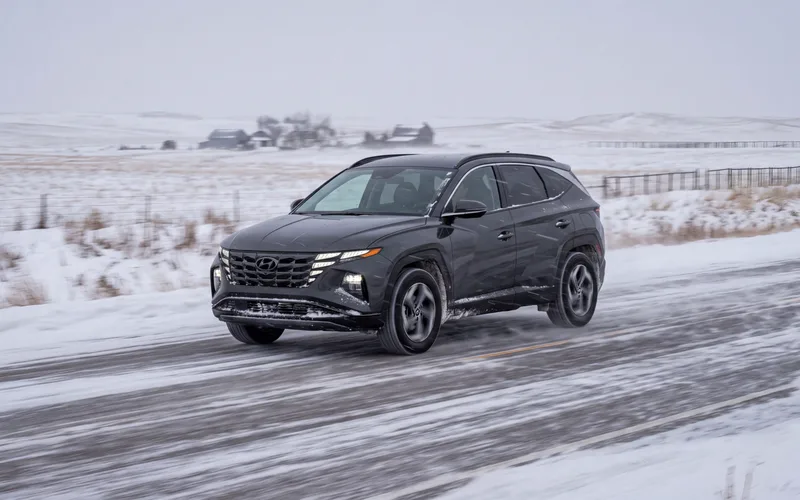 Hyundai TucsonCompact SUVBetter at: Value
Similar money buys far more cargo room, a hybrid option, better crash scores and a 10-year/100,000-mile powertrain warranty against Jeep's 5/60.
Compare 1.71C-
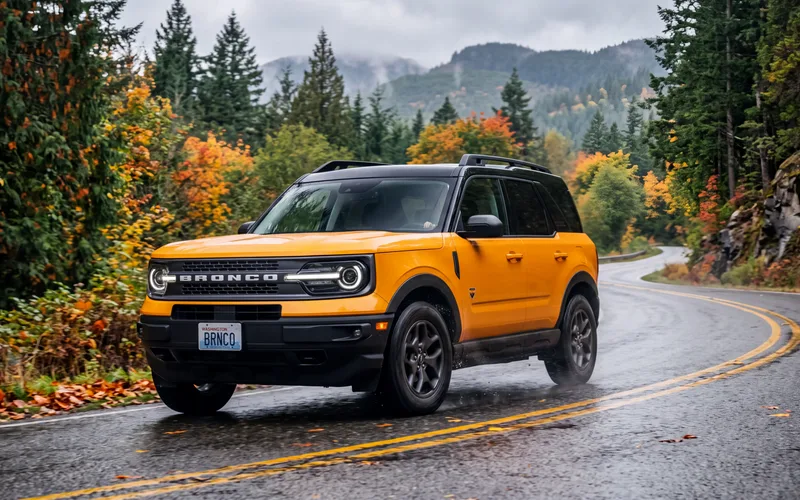 Ford Bronco SportSubcompact SUVBetter at: Off-road value
The direct rival for the buyer who actually wants the Trailhawk — comparable off-road hardware with more cargo space and a stronger available engine.
Compare 2.56C+
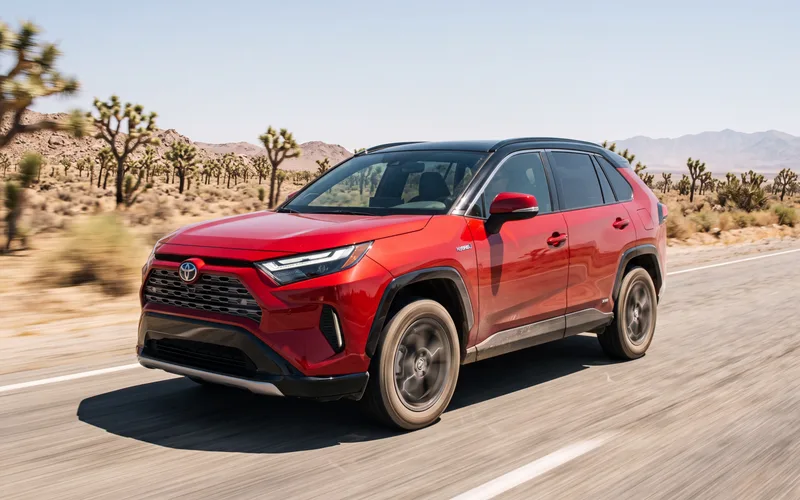 Toyota RAV4Compact SUVBetter at: Long-term ownership
Costs more up front but returns 35+ MPG as a hybrid, tows 3,500 lbs, holds its value, and carries a reliability record the Compass can't approach.
CompareHow it's evolved
10 scored model years · 2017–2026
Subject scores by year
Hover or tap a score to see what moved it versus the year before. A corner mark flags a big swing.
| Year | Performance | Efficiency | Safety | Space | Cost | Reliability | Tech | Use-case | Driving | Value |
|---|---|---|---|---|---|---|---|---|---|---|
| 2026 | 35 | 51 | 51 | 39 | 59 | 51 | 61 | 49 | 54 | 53 |
| 2025 | 34 | 55 | 51 | 38 | 63 | 59 | 63 | 49 | 52 | 57 |
| 2024 | 34 | 55 | 51 | 38 | 63 | 59 | 62 | 49 | 51 | 58 |
| 2023 | 34 | 55 | 55 | 38 | 60 | 58 | 61 | 50 | 51 | 58 |
| 2022 | 25 | 47 | 55 | 38 | 63 | 50 | 56 | 48 | 48 | 56 |
| 2021 | 26 | 47 | 40 | 37 | 63 | 52 | 42 | 46 | 47 | 50 |
| 2020 | 26 | 47 | 38 | 41 | 60 | 52 | 40 | 47 | 47 | 51 |
| 2019 | 26 | 47 | 40 | 43 | 62 | 46 | 43 | 47 | 47 | 52 |
| 2018 | 26 | 47 | 39 | 43 | 62 | 40 | 38 | 45 | 45 | 57 |
| 2017 | 26 | 47 | 39 | 40 | 62 | 47 | 44 | 45 | 44 | 55 |
Compare two years
Best fit & conditions
Higher scores mean a better fit for that use case. Learn more about use-case fit →
Subject profile
Academic Probation · NHTSA safety recalls
Aug 13, 2026Back over prevention: sensing system: cameraThe rearview camera image may fail to display when the vehicle is placed in reverse. As such, these vehicles fail to comply with the requirements of Federal Motor Vehicle Safety Standard (FMVSS) number 111, "Rear Visibility."
Defect
Chrysler (FCA US, LLC) is recalling certain 2026 Jeep Wrangler, Jeep Gladiator, Jeep Compass, Jeep Cherokee, Jeep Grand Cherokee, Jeep Grand Cherokee L, Jeep Grand Wagoneer, Jeep Grand Wagoneer L, Ram Promaster, Ram Promaster EV, Ram 1500, Ram 2500, Chrysler Pacifica Plug-In Hybrid, Chrysler Voyager, and 2026-2027 Chrysler Pacifica and Dodge Charger vehicles. The rearview camera image may fail to display when the vehicle is placed in reverse. As such, these vehicles fail to comply with the requirements of Federal Motor Vehicle Safety Standard (FMVSS) number 111, "Rear Visibility."
Risk
A rearview camera image that fails to display reduces the driver's view behind the vehicle, increasing the risk of a crash.
Remedy
Radio software will be updated by a dealer or through an over-the-air (OTA) update, free of charge. Owner notification letters were mailed beginning September 2, 2026. Owners may contact Chrysler customer service at 800-853-1403. Chrysler's number for this recall is 78D. Vehicle Identification Numbers (VINs) involved in this recall will be searchable on NHTSA.gov on August 20, 2026.
NHTSA campaign 26V531000 ↗Manufacturer no. 78D844,027 vehicles potentially affected (all models in the campaign)Owners notified Sep 2, 2026Filed by Chrysler (FCA US, LLC)Filed as COMPASS
14 recalls on other model years of the Compass (2017–2020, 2022–2023)
Jun 13, 2024Back over prevention: sensing system: cameraThe radio software may prevent the rearview image from displaying. As such, these vehicles fail to comply with the requirements of Federal Motor Vehicle Safety Standard number 111, "Rear Visibility."
Defect
Chrysler (FCA US, LLC) is recalling certain 2021-2022 Dodge Durango, 2021-2023 Chrysler Pacifica, Jeep Grand Cherokee L, 2022 Ram 1500, 2500, 3500, Chrysler Voyager, 2022-2023 Jeep Compass, Grand Cherokee, Wagoneer, Grand Wagoneer, and Ram Promaster vehicles. The radio software may prevent the rearview image from displaying. As such, these vehicles fail to comply with the requirements of Federal Motor Vehicle Safety Standard number 111, "Rear Visibility."
Risk
A rearview camera image that does not display decreases the driver's visibility, increasing the risk of a crash.
Remedy
Dealers will update the radio software or the software will be OTA, "Over-The-Air," free of charge. Owner notification letters were mailed beginning July 9, 2024. Owners may contact FCA US, LLC customer service at 1-800-853-1403. FCA US, LLC's numbers for this recall are 66B and 79B.
NHTSA campaign 24V436000 ↗Manufacturer no. 66B, 79B1,033,433 vehicles potentially affected (all models in the campaign)Owners notified Jul 9, 2024Filed by Chrysler (FCA US, LLC)Filed as COMPASSAug 14, 2023Electrical system: instrument cluster/panelThe brightness level of the instrument panel cluster (IPC) may not be adjustable due to incorrect software in the body control module (BCM). As such, these vehicles fail to comply with the requirements of Federal Motor Vehicle Safety Standard number 101, "Control and Displays."
Defect
Chrysler (FCA US, LLC) is recalling certain 2022-2023 Jeep Compass vehicles. The brightness level of the instrument panel cluster (IPC) may not be adjustable due to incorrect software in the body control module (BCM). As such, these vehicles fail to comply with the requirements of Federal Motor Vehicle Safety Standard number 101, "Control and Displays."
Risk
An IPC display that is not bright enough may not clearly show critical safety information, such as the speedometer or warning lights, increasing the risk of a crash.
Remedy
Dealers will update the body control module (BCM) software, free of charge. Owner notification letters were mailed August 29, 2023. Owners may contact FCA US, LLC customer service at 1-800-853-1403. FCA US, LLC's number for this recall is 88A.
NHTSA campaign 23V576000 ↗Manufacturer no. 88A181,999 vehicles potentially affected (all models in the campaign)Owners notified Aug 29, 2023Filed by Chrysler (FCA US, LLC)Filed as COMPASSFeb 9, 2023Electrical system: instrument cluster/panelThe instrument panel center cluster display may be insufficiently illuminated and may not appear visible during daytime driving conditions. As such, these vehicles fail to comply with the requirements of Federal Motor Vehicle Safety Standard number 101, "Control and Displays."
Defect
Chrysler (FCA US, LLC) is recalling certain 2022 Jeep Compass vehicles. The instrument panel center cluster display may be insufficiently illuminated and may not appear visible during daytime driving conditions. As such, these vehicles fail to comply with the requirements of Federal Motor Vehicle Safety Standard number 101, "Control and Displays."
Risk
An instrument panel display that is not visible to the driver may result in the inability to see safety-critical information, such as the fuel gauge and warning lights, increasing the risk of a crash.
Remedy
Dealers will replace the windshield and headlamp switch, add a light sensor module, and add a wiring jumper harness to allow the instrument panel center cluster display backlighting to function correctly, free of charge. Owner notification letters were mailed March 30, 2023. Owners may contact FCA US, LLC customer service at 1-800-853-1403. FCA US, LLC's number for this recall is 15A.
NHTSA campaign 23V058000 ↗Manufacturer no. 15A90 vehicles potentially affected (all models in the campaign)Owners notified Mar 30, 2023Filed by Chrysler (FCA US, LLC)Filed as COMPASSApr 14, 2022Seats: front assembly: head restraintThe front seat head restraints were not welded properly. As such, these vehicles fail to comply with the requirements of Federal Motor Vehicle Safety Standard number 202, "Head Restraints."
Defect
Chrysler (FCA US, LLC) is recalling certain 2022 Jeep Compass vehicles. The front seat head restraints were not welded properly. As such, these vehicles fail to comply with the requirements of Federal Motor Vehicle Safety Standard number 202, "Head Restraints."
Risk
Improperly welded head restraints can result in an increased risk of injury to seat occupants during a crash.
Remedy
Dealers will replace both front seat head restraints, free of charge. Owner notification letters were mailed June 3, 2022. Owners may contact FCA US LLC customer service at 1-800-853-1403. FCA US, LLC's number for this recall is Z36.
NHTSA campaign 22V248000 ↗Manufacturer no. Z36114 vehicles potentially affected (all models in the campaign)Owners notified Jun 3, 2022Filed by Chrysler (FCA US, LLC)Filed as COMPASSApr 9, 2020Visibility: windshield wiper/washer: linkagesThe windshield wiper arm or arms may loosen, possibly causing the wipers to not operate properly and reduce the driver's visibility in certain weather conditions.
Defect
Chrysler (FCA US LLC) is recalling certain 2019-2020 Ram 1500, 1500 Classic and Jeep Compass vehicles. The windshield wiper arm or arms may loosen, possibly causing the wipers to not operate properly and reduce the driver's visibility in certain weather conditions.
Risk
Reduced visibility increases the risk of a crash.
Remedy
Chrysler will notify owners, and dealers will tighten the wiper nuts, free of charge. The recall began April 27, 2020. Owners may contact Chrysler customer service at 1-800-853-1403. Chrysler's number for this recall is W25.
NHTSA campaign 20V208000 ↗Manufacturer no. W25425,599 vehicles potentially affected (all models in the campaign)Owners notified Apr 27, 2020Filed by Chrysler (FCA US LLC)Filed as COMPASSAug 9, 2018Electrical system: wiring: front underhoodThe powertrain control module may be equipped with a voltage regulator chip in the circuit board that may fail, causing a stall or a no start condition.
Defect
Chrysler (FCA US LLC) is recalling certain 2018 Jeep Renegade, Compass and Grand Cherokee, RAM 1500 and Promaster, Fiat 500x, Dodge Journey, Challenger, Charger and Durango and Chrysler 300x vehicles, 2017-2018 Jeep Wrangler, Dodge Grand Caravan and Chrysler Town and Country vehicles and 2018-2019 Jeep Cherokee and 2018 Chrysler Pacifica and Pacifica Hybrid vehicles. The powertrain control module may be equipped with a voltage regulator chip in the circuit board that may fail, causing a stall or a no start condition.
Risk
A vehicle stall can increase the risk of a crash.
Remedy
Chrysler will notify owners, and dealers will replace the powertrain control module, free of charge. The recall began October 2, 2018. Owners may contact Chrysler customer service at 1-800-853-1403. Chrysler's number for this recall is U87.
NHTSA campaign 18V524000 ↗Manufacturer no. U8712,779 vehicles potentially affected (all models in the campaign)Owners notified Oct 2, 2018Filed by Chrysler (FCA US LLC)Filed as COMPASSAug 9, 2018Service brakes, hydraulic: foundation components: disc: caliperThe rear brake caliper pistons on these vehicles may have an insufficient coating causing gas pockets to form, potentially reducing rear brake performance.
Defect
Chrysler (FCA US LLC) is recalling certain 2018-2019 Dodge Grand Caravan and Jeep Compass, 2018 Dodge Journey, and 2019 Jeep Cherokee vehicles. The rear brake caliper pistons on these vehicles may have an insufficient coating causing gas pockets to form, potentially reducing rear brake performance.
Risk
A reduction of braking performance can increase the risk of a crash.
Remedy
Chrysler will notify owners, and dealers will bleed the vehicle's brake system, free of charge. The recall began September 29, 2018. Owners may contact Chrysler customer service at 1-800-853-1403. Chrysler's number for this recall is U86.
NHTSA campaign 18V523000 ↗Manufacturer no. U86154,335 vehicles potentially affected (all models in the campaign)Owners notified Aug 29, 2018Filed by Chrysler (FCA US LLC)Filed as COMPASSMay 1, 2018Suspension: front: control arm: lower armThe front lower control arms may be incorrectly welded, potentially resulting in a control arm separation.
Defect
Chrysler (FCA US LLC) is recalling certain 2018 Jeep Compass vehicles. The front lower control arms may be incorrectly welded, potentially resulting in a control arm separation.
Risk
If the lower control arm separates, it can cause a loss of vehicle control, increasing the risk of a crash.
Remedy
Chrysler will notify owners, and dealers will inspect and, if necessary, replace the front lower control arms, free of charge. The recall began May 31, 2018. Owners may contact Chrysler customer service at 1-800-853-1403. Chrysler's number for this recall is U42.
NHTSA campaign 18V279000 ↗Manufacturer no. U422,761 vehicles potentially affected (all models in the campaign)Owners notified May 31, 2018Filed by Chrysler (FCA US LLC)Filed as COMPASSDec 21, 2017EquipmentChrysler (FCA US LLC) is recalling various Dodge, Chrysler, and RAM vehicles equipped with Kidde Plastic-Handle or Push Button 'Pindicator' Fire Extinguishers. A list of the affected trailer models is available at: https://static.nhtsa.gov/odi/rcl/2017/RMISC-17V824-0103.pdf. These extinguishers may become clogged, preventing the extinguisher from discharging as expected or requiring excessive force to activate the extinguisher. Additionally, in certain models, the nozzle may detach from the valve assembly with enough force that it could cause injury and also render the product inoperable. For a full list of the affected fire extinguisher models visit: https://static.nhtsa.gov/odi/rcl/2017/RMISC-17E062-5427.pdf
Defect
Chrysler (FCA US LLC) is recalling various Dodge, Chrysler, and RAM vehicles equipped with Kidde Plastic-Handle or Push Button 'Pindicator' Fire Extinguishers. A list of the affected trailer models is available at: https://static.nhtsa.gov/odi/rcl/2017/RMISC-17V824-0103.pdf. These extinguishers may become clogged, preventing the extinguisher from discharging as expected or requiring excessive force to activate the extinguisher. Additionally, in certain models, the nozzle may detach from the valve assembly with enough force that it could cause injury and also render the product inoperable. For a full list of the affected fire extinguisher models visit: https://static.nhtsa.gov/odi/rcl/2017/RMISC-17E062-5427.pdf
Risk
If the fire extinguisher does not function properly, it can increase the risk of injury in the event of a fire.
Remedy
Chrysler will notify owners instructing them to contact Kidde for a replacement fire extinguisher, free of charge. The recall began February 14, 2018. Owners may contact Chrysler customer service at 1-800-853-1403 or Kidde customer service service toll-free at 1-855-262-3540, or online at www.kidde.com and click on "Product Safety Recall" for more information. Chrysler's number for this recall is T82.
NHTSA campaign 17V824000 ↗Manufacturer no. T8261,791 vehicles potentially affected (all models in the campaign)Owners notified Feb 14, 2018Filed by Chrysler (FCA US LLC)Filed as COMPASSNov 21, 2017Electrical system: instrument cluster/panelThe brightness of the backlighting for the Instrument Panel Cluster (IPC) cannot be adjusted. As such, these vehicles fail to comply with the requirements of Federal Motor Vehicle Safety Standard (FMVSS) number 101, "Controls and Displays."
Defect
Chrysler (FCA US LLC) is recalling certain model year 2017-2018 Jeep Compass vehicles. The brightness of the backlighting for the Instrument Panel Cluster (IPC) cannot be adjusted. As such, these vehicles fail to comply with the requirements of Federal Motor Vehicle Safety Standard (FMVSS) number 101, "Controls and Displays."
Risk
An instrument cluster that is too bright, and cannot be dimmed, can reduce the driver's ability to see at night, increasing the risk of a crash.
Remedy
Chrysler will notify owners, and dealers will update IPC software, as necessary, free of charge. The recall began December 8, 2018. Owners may contact Chrysler customer service at 1-800-853-1403. Chrysler's number for this recall is T70.
NHTSA campaign 17V740000 ↗Manufacturer no. T7025,823 vehicles potentially affected (all models in the campaign)Owners notified Dec 8, 2017Filed by Chrysler (FCA US LLC)Filed as COMPASSNov 21, 2017Air bags: frontal: passenger side: inflator moduleThe passenger side air bag assembly may have inflator mounting nuts loose within the module assembly.
Defect
Chrysler (FCA US LLC) is recalling certain 2018 Jeep Compass vehicles. The passenger side air bag assembly may have inflator mounting nuts loose within the module assembly.
Risk
In the event of a crash necessitating air bag deployment, unsecured inflator mounting nuts outside of the cushion assembly are potential projectiles that may strike the driver or other occupants resulting in serious injury or death.
Remedy
Chrysler will notify owners, and dealers will replace the passenger air bag module assembly, free of charge. The recall began December 28, 2017. Owners may contact Chrysler customer service at 1-800-853-1403. Chrysler's number for this recall is T73.
NHTSA campaign 17V732000 ↗Manufacturer no. T7327,210 vehicles potentially affected (all models in the campaign)Owners notified Dec 28, 2017Filed by Chrysler (FCA US LLC)Filed as COMPASSOct 24, 2017Engine and engine cooling: engineThe engines may have a cracked oil pump housing that can result in oil pump failure.
Defect
Chrysler (FCA US LLC) is recalling certain 2018 Jeep Cherokee and Compass vehicles equipped with 2.4L engines. The engines may have a cracked oil pump housing that can result in oil pump failure.
Risk
If the oil pump fails, the engine will stall, increasing the risk of a crash.
Remedy
Chrysler will notify owners, and dealers will inspect the oil pump, replacing it as necessary, free of charge. The recall began December 5, 2017. Owners may contact Chrysler customer service at 1-800-853-1403. Chrysler's number for this recall is T65.
NHTSA campaign 17V670000 ↗Manufacturer no. T65357 vehicles potentially affected (all models in the campaign)Owners notified Dec 5, 2017Filed by Chrysler (FCA US LLC)Filed as COMPASSJul 7, 2017Equipment: other: owners/service/other manualThe affected vehicles have User's Guides that contain incorrect information regarding the jump start procedure, specifically, the polarity of the battery terminals are reversed in the battery terminal graphic.
Defect
Chrysler (FCA US LLC) is recalling certain 2017 Jeep Compass vehicles. The affected vehicles have User's Guides that contain incorrect information regarding the jump start procedure, specifically, the polarity of the battery terminals are reversed in the battery terminal graphic.
Risk
If a customer follows the User's Guide, they may hook up the battery jumper cables incorrectly, increasing their risk of injury.
Remedy
Chrysler will notify owners and will replace the User's Guides with a corrected version, free of charge. The recall began August 22, 2017. Owners may contact Chrysler customer service at 1-800-853-1403. Chrysler's number for this recall is T46.
NHTSA campaign 17V433000 ↗Manufacturer no. T4612,989 vehicles potentially affected (all models in the campaign)Owners notified Aug 22, 2017Filed by Chrysler (FCA US LLC)Filed as COMPASSMay 9, 2017Power train: axle assembly: axle shaftThe left front halfshaft may not be properly seated, and, as a result, it may disengage from the transmission and/or break.
Defect
Chrysler (FCA US LLC) is recalling certain 2017 Jeep Compass vehicles equipped with a 6-speed transmission. The left front halfshaft may not be properly seated, and, as a result, it may disengage from the transmission and/or break.
Risk
If the left front halfshaft disengages or breaks, the vehicle will have a loss of drive. Additionally, if the vehicle is parked without using the parking brake, the vehicle may roll, despite being in 'Park.' Either condition may increase the risk of a crash.
Remedy
Chrysler will notify owners, dealers will inspect the left front halfshaft for engagement and replace any that are not properly engaged in the transmission, free of charge. The recall began on June 12, 2017. Owners may contact Chrysler customer service at 1-800-853-1403. Chrysler's number for this recall is T26.
NHTSA campaign 17V301000 ↗Manufacturer no. T264,705 vehicles potentially affected (all models in the campaign)Owners notified Jun 12, 2017Filed by Chrysler (FCA US LLC)Filed as COMPASS
Source: NHTSA Office of Defects Investigation recall database, model years 2017–2026. Recalls are listed by model year as the manufacturer filed them; whether a specific car is affected depends on its VIN — check a VIN at nhtsa.gov ↗. NHTSA model names matched to this page: COMPASS.
Detailed scoring by subject
1Performance & PowertrainThe Compass's lowest-graded category.0.27F
Every 2026 Compass trim (Latitude, Limited, Trailhawk) uses the same 2.0L Hurricane GME-T4 turbocharged I4 rated at 200 hp — the US market carries the second-generation powertrain forward until the STLA-Medium third-gen arrives.
Peak torque of the sole available 2.0L turbo I4 across every 2026 Compass trim.
Instrumented estimates for the 200 hp/221 lb-ft 2.0L turbo AWD Compass hover around 7.5 seconds — mid-pack for a compact SUV.
The aging 2.0L Hurricane turbo is competent but not smooth — reviewers regularly flag perceptible turbo lag off the line, coarse thrash at higher revs, and a general lack of low-end urgency versus the Rogue's VC-Turbo or any modern hybrid four.
The 8-speed automatic paired with the 2.0L turbo shifts more decisively than the older 9-speed the Compass carried previously, but reviewers still call out occasional lazy kickdowns and a tendency to hold higher gears too long.
Jeep rates the 2026 Compass at up to 2,000 lbs when properly equipped — light-duty only (small utility trailer, pair of jet skis), well below compact-SUV segment leaders.
AWD is standard on every 2026 Compass trim — no FWD variant is offered in the US. Selec-Terrain traction management adds Auto/Snow/Sand/Mud modes across the lineup, and the Trailhawk adds a Rock mode with 20:1 crawl ratio and 4WD Low simulation.
The dedicated Trailhawk earns Jeep's Trail Rated badge with 8.6 in ground clearance, 30.4°/24.4°/33.6° approach/breakover/departure, hill-descent control, skid plates, red tow hooks, and all-terrain tires — genuine light-duty off-road credibility, though well short of Wrangler/Bronco class. Non-Trailhawk trims are pavement-oriented (8.1 in clearance, 16.1° approach).
US 2026 Compass is single-powertrain: 2.0L turbo I4 with 8AT and AWD across every trim. No hybrid, PHEV, or EV option in the US — the 4xe PHEV and e-Hybrid remain Europe-only until the STLA-Medium third-gen arrives.
2Efficiency & RangeGrades below the middle of the scale.1.42D
EPA combined figure for the 2026 Compass, gas-only 2.0L turbo I4 with standard AWD across all four US trims (Sport, Latitude, Limited, Trailhawk). No hybrid variant in the US market — Stellantis paused the redesigned Compass for North America, so the current-generation carryover continues for 2026.
EPA city figure for all 2026 US trims (all AWD-only, 2.0L turbo, 8-spd auto). Below the compact-SUV segment average because the Compass has no hybrid or e-CVT option.
EPA highway figure for all 2026 US trims. Respectable for a turbocharged AWD compact SUV, though hybrid rivals (RAV4 Hybrid, CR-V Hybrid, Tucson Hybrid) top 35 mpg highway.
13.5-gallon fuel tank × 26 mpg EPA combined yields ~351 miles of combined range; ~418 mi at 31 hwy MPG. Modest for the compact-SUV class since there is no PHEV/EV variant to lift electric miles.
EPA estimated annual fuel cost of $2,300 — roughly $400 more than the value-SUV average because the AWD-standard Compass has no hybrid option to lift combined MPG.
The 2.0L turbocharged four runs on regular unleaded (87 octane) — Jeep does not require or recommend premium. No diesel or E85 complications, and the 13.5-gal tank keeps a fill-up under ~$50 at typical prices.
3SafetyGrades below the middle of the scale.1.43D
NHTSA rates the 2026 Compass SUV AWD at 4 stars overall, dragged down by a 3-star rollover rating that is typical for a taller compact SUV but weaker than most crossover peers.
The 2026 Compass is not a Top Safety Pick. It carries Good in the small-overlap front test but earns a Poor rating in the updated moderate-overlap front test and Marginal in the updated side test — meaningful gaps against segment leaders like the RAV4 and CR-V.
Every 2026 Compass trim (Latitude on up) gets forward collision warning with active braking, pedestrian/cyclist detection, blind-spot monitoring, rear cross-path detection, and lane-keep assist standard. Adaptive cruise with stop-and-go and traffic-sign recognition remain optional, keeping the base suite a step behind segment leaders that bundle ACC standard.
Standard FCW+AEB includes pedestrian and cyclist detection across all trims, but the system pre-dates the newest Stellantis camera/radar hardware and has not earned an IIHS Superior or Advanced vehicle-to-pedestrian designation in current testing. Adequate daytime performance with weaker nighttime pedestrian results is a reasonable read.
Blind-spot monitoring with rear cross-path detection is standard across the 2026 lineup, but coverage is alert-only — no active steering intervention or safe-exit assist, both of which segment rivals now offer.
LaneSense lane-departure warning with lane-keep assist is standard, but there is no full lane-centering function; reviewers describe corrective inputs as reactive rather than the smooth centering offered by Toyota's Safety Sense 3.0 or Hyundai's Highway Driving Assist.
Adaptive cruise with stop-and-go is optional rather than standard on the volume Latitude/Latitude Altitude trims, and there is no integrated highway assist. Buyers must option or step up trims to get true full-speed-range ACC, and it does not combine with lane centering.
The 2026 Compass offers no hands-free driving system — there is no Stellantis equivalent to BlueCruise, Super Cruise, or Highway Assist on this platform. The Compass is a hands-on-wheel vehicle at every trim.
IIHS rates the standard LED reflector headlights Acceptable — better than Marginal but noting inadequate visibility in several curve scenarios. High-beam assist is standard; no adaptive-curve headlights are offered.
Upright greenhouse, tall seating position, and relatively slim A-pillars give the Compass good forward and side sightlines for a compact SUV, though the thicker rear pillars create a modest over-the-shoulder blind spot. A rear-view camera is standard; 360-degree camera is optional and confined to upper trims.
LATCH lower anchors are recessed in the seat bight — workable but require some digging — and the rear bench comfortably accommodates two child seats but is tight for three-across. Rear-door openings are typical for a compact SUV.
4Space & ComfortOne of the Compass's weakest categories.0.59F
Two-row compact SUV with dual front buckets and a 60/40 split-folding rear bench.
Volume Latitude/Latitude Altitude trim, without sunroof spec noted separately.
Generous front legroom for the compact-SUV segment.
Upright roofline yields above-average second-row headroom for the class.
Solid rear legroom for a subcompact-adjacent compact SUV.
Two-row SUV — no third row is offered on any Compass trim.
Well below compact-SUV segment median (CR-V ~39, RAV4 ~38, Tucson ~39); the Compass has always been on the small end.
Max cargo trails class leaders (CR-V ~76, Tucson ~75, RAV4 ~70) by a wide margin.
Reasonably shaped console, glovebox, and door bins with a small under-armrest cubby; nothing standout, and reviewers criticize cheap plastics and sharp unfinished edges.
Reviewers describe the front seats as adequate but flat with limited lateral support; upper Limited trim adds leatherette but does not fix cushioning complaints.
Comfortable on smooth roads but reviewers report a rough, unsettled ride over broken pavement, especially on Trailhawk and larger-wheel trims.
Notable engine, wind, and road noise at highway speed; the 2.0T sounds rough at startup and unrefined under load; climate fan can also be intrusive.
Dual-zone auto climate, remote start, heated front seats, and heated steering wheel are available or standard on Latitude Altitude and Limited; no ventilated seats or rear climate zone; Limited adds hands-free power liftgate and leatherette.
5Cost of OwnershipOne of the Compass's strongest categories.2.00C
For 2026 the Sport was dropped and Latitude is now the entry trim, with 4x4 standard across the lineup — competitive entry price for a compact SUV that includes AWD.
The mid-range Latitude Altitude ($31,350) and Limited ($33,250) are the popular volume trims; using ~$33,000 as typically equipped with destination and a modest option package.
Compass has above-average maintenance costs for the compact-SUV class; RepairPal shows ~$526/yr and CarEdge projects 10-year maintenance around $10,823, putting 5-year costs meaningfully above segment leaders.
Compass retention lands below the compact-SUV category norm; the outgoing-generation status heading into a redesign puts additional downward pressure on residuals.
Standard Jeep 3-year/36,000-mile basic warranty — the industry floor and shorter than Hyundai/Kia (5/60) and Mitsubishi (5/60).
Standard Jeep 5-year/60,000-mile powertrain coverage — well short of Hyundai/Kia (10/100k) and Mitsubishi (10/100k).
Jeep Wave for 2026 buyers includes the first three oil changes and tire rotations within 36 months, 24/7 roadside assistance, and trip-interruption benefits — solid but short of Toyota's 2-yr/25k ToyotaCare or BMW's 3-yr complimentary maintenance.
$33,000 volume-trim price minus its estimated resale value after 5 years (54% retained, or about $17,820) leaves about $15,180 in depreciation. Add the projected $6,500 in 5-year maintenance and repairs, and owning this vehicle for 5 years costs about $21,680 in total.
6Reliability & QualityGrades below the middle of the scale.1.38D
Compass has historically posted below-average predicted reliability in Consumer Reports and mid-to-low J.D. Power quality scores; for 2026, the situation is compounded by uncertainty around the STLA Medium redesign (all-new platform means no track record) or, if carryover, a model that has trailed compact-SUV peers for years.
Jeep consistently ranks in the bottom tier of both Consumer Reports brand reliability rankings and J.D. Power Vehicle Dependability Study, typically finishing in the bottom five of ~30 mainstream brands across multiple recent years.
The current-generation Compass has accumulated multiple recalls across its life covering airbag inflators, powertrain software, electrical/backup-camera issues, and fuel-system components; TSB volume has been elevated versus Japanese and Korean peers.
The 2.0L Hurricane turbo-four paired with the ZF 9-speed automatic has a mixed long-term reputation — the 9-speed in particular drew years of shift-quality and durability complaints across Stellantis products, and if 2026 introduces the new STLA Medium powertrain the unit is unproven in service.
The 2022 mid-cycle refresh materially improved the Compass cabin — soft-touch dash top, better switchgear, and Uconnect 5 upgraded the perceived quality to competitive-for-the-price on mid trims; still uses hard plastics in low-touch zones and does not reach the class benchmark set by Mazda CX-5 or VW Tiguan.
Assembly quality on the Compass has been rated adequate but scattered rattles, trim-alignment complaints, and interior-squeak reports appear in owner surveys; J.D. Power initial-quality data for Jeep sits below the industry average.
Jeep has broad nationwide coverage (~2,400 US dealers via the FCA/Stellantis network), so access is easy in most markets, but service satisfaction rankings for Jeep in the J.D. Power Customer Service Index have historically trailed Asian brands and even Ford/Chevy.
Compass shares many parts across the Stellantis/FCA parts bin and enjoys a strong aftermarket thanks to the Jeep enthusiast base; typical repair costs (per RepairPal and Kelley Blue Book estimates) run near the mainstream compact-SUV average, with wear items widely stocked.
7Technology & InfotainmentThe Compass's best-graded category.2.14C
Redesigned third-gen 2026 Compass uses Uconnect 5 with an 8.4-inch base display and a 10.1-inch upgrade; the 10.1 is standard on Limited/Trailhawk and the popular Latitude package, so it represents the volume configuration.
Uconnect 5 is widely praised as one of the best mainstream infotainment systems for speed, clean menu structure, and retention of physical climate controls; new Compass carries the same well-regarded platform used across the Stellantis lineup.
Wireless Apple CarPlay and Android Auto come with the 10.1-inch Uconnect 5 head unit (Limited, Trailhawk, and Latitude with the upgrade); base 8.4-inch Sport/Latitude uses wired projection, so wireless is not standard across all trims.
Uconnect 5 supports natural-language voice via built-in assistant and Alexa integration; native TomTom-based navigation with live traffic is available in the upper trims but most owners default to CarPlay/Android Auto maps.
Standard six-speaker system is average for the segment; optional Alpine nine-speaker premium audio is a solid step up but not on par with class-leading Bose/Harman Kardon systems seen in some rivals.
10.25-inch full-color TFT digital cluster is standard on Limited and Trailhawk and available on Latitude via the Sun/Sound/NAV Group; base trims get a partial digital display, so full digital is on most volume configurations.
Uconnect 5 supports over-the-air updates for infotainment software, maps, and connected services; Stellantis has expanded OTA coverage but the platform is not a full whole-vehicle OTA system on the scale of Tesla or Rivian.
Jeep app (via Uconnect Access/Connected Services) supports remote start, lock/unlock, vehicle locate, and vehicle health after a trial; features are subscription-gated after the initial period and the app has improved but lacks a phone-as-key.
Multiple USB-A/USB-C ports front and rear are standard; wireless charging pad is available on upper trims; no household AC outlets or unusually high-power USB.
Passive entry with push-button start is standard on Latitude and above; remote start is standard on Trailhawk and available across the lineup via key fob and Jeep app; no phone-as-key.
Rear-view camera with dynamic guidelines and rear parking sensors are standard; 360-degree surround-view camera is available on higher trims; no automated parking.
No head-up display is offered on any 2026 Compass trim, consistent with prior Compass generations and most mainstream compact SUVs in this price band.
8Use-Case FitOne of the Compass's weakest categories.1.26D
Two-row 5-seat layout with 38.3 in rear legroom is workable, but LATCH anchors are recessed in the seat bight (IIHS 'Acceptable') and the rear bench is genuinely tight for three-across child seats. Cargo behind the second row (27.2 cu ft) is well below CR-V/RAV4/Tucson (~38–39), meaning strollers plus grocery runs get crowded fast — a middle-of-the-road compact-SUV family logistics package.
Standard FCW+AEB with pedestrian/cyclist detection, blind-spot monitoring, rear cross-path, and LaneSense on family-friendly Latitude trim is respectable — but IIHS scores the 2026 Compass Poor on the updated moderate-overlap front test and Marginal on the updated side test, and it is not a Top Safety Pick. NHTSA overall is 4 stars (3-star rollover). Adaptive cruise is optional. Safety gaps at the price point that families actually pay.
Rear head/legroom (38.5/38.3 in) is fine for kids over a few hours, but cargo behind row 2 (27.2 cu ft) is the smallest in the class and struggles with luggage for a family of four. Consumer Reports specifically flags near-constant engine noise plus highway wind and road noise; no rear climate zone, no rear entertainment, flat front seats with limited lateral support. Not a comfortable multi-hour road-trip pod.
The 2.0L Hurricane turbo shows perceptible off-the-line lag and coarse thrash under load, the 8-speed occasionally hesitates on kickdown, and Consumer Reports/Edmunds flag persistent engine, wind, and road noise plus a rough ride over broken pavement. Uconnect 5 responsiveness and standard AWD grip help, but the daily-driving experience is fatiguing relative to smoother hybrid rivals.
26 MPG combined (23/31) with a $2,300 EPA annual fuel bill is materially worse than the RAV4/CR-V/Tucson hybrids (35–40+ MPG) that dominate the segment — the Compass has no hybrid or PHEV option in the US. Runs on regular unleaded and insurance is average, but RepairPal/CarEdge peg maintenance meaningfully above the compact-SUV mean. Net: mediocre cost-per-mile for the class.
The Compass is on the small end of the compact-SUV footprint (~173 in long), and Edmunds calls out good outward visibility from the upright greenhouse and easy-to-place hood. Rear-view camera and rear parking sensors are standard; a 360-degree surround-view camera is available on Limited/Trailhawk. No automated parking, and thicker rear pillars create a modest over-the-shoulder blind spot.
Max tow of 2,000 lbs is light-duty only — enough for a small utility trailer or a pair of jet skis but well short of Escape/Rogue (3,500 lb) or hybrid RAV4 (3,500 lb). No pickup bed, 27.2/59.8 cu ft cargo is the smallest in class, and the 200 hp turbo works hard under real load. Not a meaningful work tool.
Trailhawk carries the Trail Rated badge with skid plates, tow hooks, and all-terrain tires — Jeep's off-road pedigree implies some abuse tolerance. But Consumer Reports gives the Compass below-average predicted reliability, RepairPal shows above-average annual repair costs, and reviewers repeatedly flag cheap interior plastics and sharp unfinished edges — not a fleet-proven work platform.
No pickup bed, no available 110V household outlet, and cargo tie-downs are basic four-corner hooks rather than a real work-rail system. Roof cross-bars are available on higher trims and there is a modest aftermarket ecosystem behind the Jeep name, but upfit choices are pale next to a Bronco Sport or a body-on-frame truck. USB power is plentiful, washable rubber floor liners are available.
Combined range ~351 mi (~418 mi at highway MPG) from a 13.5-gal tank is modest for a mile-eater. Cabin quietness is a real weakness — Consumer Reports flags 'near-constant engine noise' plus wind and road noise — and the seats draw comfort criticism on longer stints. No lane centering, no hands-free driver assist; adaptive cruise is optional rather than standard. A mediocre tourer at best.
The Compass' strongest use case. AWD is standard on every 2026 trim (a segment rarity), Selec-Terrain adds Auto/Snow/Sand/Mud modes, and the Trail Rated Trailhawk brings 8.6 in ground clearance, 30.4°/24.4°/33.6° approach/breakover/departure angles, skid plates, red tow hooks, and all-terrain tires — genuine light off-road credibility that even non-Trailhawk trims (8.1 in clearance) partly share. Ceiling is capped by the modest 2,000-lb tow rating for toys.
27.2 cu ft behind the second row and 59.8 cu ft with the 60/40 seat folded are both well below segment leaders (CR-V ~76, Tucson ~75, RAV4 ~70 max). Roof cross-bars and a 2,000-lb hitch are available for external gear, and the load floor is flat with a small underfloor cubby, but the total cargo box is genuinely small for a mainstream compact SUV.
9Driving ExperienceOne of the Compass's strongest categories.1.63D
The volume Latitude/Limited drives like a lifted small SUV — soft suspension tuning with visible body roll in transitions and moderate grip. It's secure at legal speeds but reviewers consistently rank its cornering composure below the CR-V, Sportage/Tucson, and well behind the Mazda CX-5 in the compact SUV class; Trailhawk's off-road-biased setup dulls on-road handling further.
Light, over-assisted EPS with accurate but numb responses on-center. It tracks straight and turns predictably, but there is no meaningful feedback about grip or road texture — a typical mainstream-Jeep tune biased toward low-speed ease over enthusiast feel.
Adequate stopping power with a reasonably firm pedal in normal driving; instrumented 70-0 mph stops for the current Compass sit around 180 ft — mid-pack for the segment. Pedal travel is slightly long and reviewers note some fade after repeated hard stops, holding this below segment leaders.
The 2.0L Hurricane turbo I4 shows noticeable off-boost lag at tip-in and gets coarse above 4,000 rpm, while the ZF 8-speed's stop/start can restart with a shudder. Calibration lags modern hybrid fours (RAV4/CR-V hybrids) and turbocharged rivals (VW EA211, Hyundai smartstream) in smoothness.
The 2.0L turbo four sounds coarse and drones under moderate-to-heavy throttle, with audible vibration through the steering column at highway acceleration. Cabin isolation at cruise is acceptable but the powertrain character is a persistent complaint versus quieter hybrid or VC-Turbo rivals.
Jeep publishes a 37.1 ft curb-to-curb turning diameter across 2026 Compass trims — mid-pack for compact SUVs on the 103.8 in wheelbase platform.
Upright SUV seating gives good forward and side sightlines, and Jeep retains real physical climate controls plus a straightforward Uconnect 5 stack — a genuine strength versus touchscreen-only rivals. Volume Latitude gets a 6-way manual driver's seat (power on Limited/Trailhawk) and reach/rake steering; taller drivers occasionally note the seat bottom feels short on thigh support.
The on-road Compass is an appliance — the aging 2nd-gen platform, numb steering, and unrefined turbo four leave little character behind the wheel. The Trailhawk is genuinely enjoyable off-road with Active Drive Low and a 20:1 crawl ratio, but volume buyers are unlikely to seek it out.
10Value & Market PositionGrades below the middle of the scale.1.57D
For 2026 the Sport is discontinued and Latitude ($29,550 w/dest.) is the new entry, which now includes standard 4x4, a 10.1" Uconnect 5 touchscreen with wireless Apple CarPlay/Android Auto, LED headlights, remote start, keyless entry, automatic emergency braking, blind-spot monitoring, and adaptive cruise — a genuinely strong base bundle since most compact-SUV rivals still charge extra for AWD.
Standard AWD and a well-equipped touchscreen at the ~$29.5k entry price is real value, but the Compass gives up meaningful bang-for-buck against class rivals that offer efficient hybrids (RAV4 Hybrid, CR-V Hybrid, Tucson Hybrid, Escape Hybrid, Sportage Hybrid) in the same price band — buyers pay similar money for a thirstier, less-refined 2.0L turbo on an aging platform.
Five 2026 US variants (Latitude, Latitude Altitude, Limited, Limited Altitude, Trailhawk) span ~$29.5k-$37k with a dedicated off-road Trailhawk giving buyers a real hardware choice — but there is only one powertrain (2.0T/8AT/AWD) and no hybrid, PHEV, or FWD option, so the range is broader on trim than under the hood.
US Compass sales have fallen sharply from ~130k (2022) to ~89k (2024) and further into 2025 as buyers gravitate to hybrid-capable rivals; volume is well below segment leaders RAV4 (~475k), CR-V (~400k), and Tucson (~180k), and Stellantis has been running elevated Compass inventory levels for months.
Jeep as a marque still carries a strong off-road halo anchored by Wrangler and Grand Cherokee, but the Compass sits at the softer end of that image — reviewers and shoppers routinely call it the least-Jeep Jeep, and Stellantis' broader brand-perception slide (customer-satisfaction and quality declines) has trimmed the halo it once traded on.
Slow sales and heavy inventory have made the Compass one of the easier compact SUVs to deal on — Stellantis has been layering aggressive cash bonuses, competitive lease specials, and subvented low-APR financing on 2025-2026 Compasses through most of the year, and transaction prices frequently sit well below MSRP. Score reflects buyer benefit, not brand health.
The current MP/552 second generation launched for 2017 and received a mid-cycle refresh in 2022 — the 2026 US car is a late-cycle carryover of a nearly decade-old platform. The all-new STLA Medium third-gen was shown for Europe but its US launch has slipped past 2026, so buyers face imminent-replacement risk on top of an already-old model.
The Compass has no recent NACTOY, Car and Driver 10Best, MotorTrend SUV of the Year, or IIHS Top Safety Pick+ recognition, and comparison tests routinely rank it in the bottom third of the compact-SUV pack — reviewers cite the aging platform, coarse powertrain, lack of a hybrid option, and below-average reliability outlook.