

The verdict
A struggling compact suv, strong on ownership and held back by performance.
The 2025 Compass is the cheapest way into a four-wheel-drive compact SUV — $27,495 with 4x4 standard on every trim, after Jeep cut prices by up to $2,000 across the lineup — and a Trail Rated Trailhawk gives it dirt-road credibility no RAV4 or CR-V can match. But this is the ninth model year of a 2017 design and it shows: 200 hp and an 8.2-second 0–60, a noisy cabin, only 27.2 cu ft of cargo space behind the rear seat, no hybrid option at all, and IIHS results of Poor in the updated moderate-overlap front test and Marginal in the side test. Buy it for the standard 4x4, the badge and the discount, and negotiate hard. If crash ratings, refinement or fuel economy matter, nearly every direct rival does more with the same money.
Jump to scoresStrengths
- Four-wheel drive is standard on every trim, at the lowest price in the class
- Real off-road capability, not just a badge
- Cheap to buy, cheap to fuel, cheap to fix
What holds it back
- Crash-test results are the worst thing about this car
- One slow powertrain, no hybrid, no alternatives
- Cargo space is small even by compact-SUV standards
Top alternatives
Cars shoppers cross-shop with the Jeep Compass 2.44C+
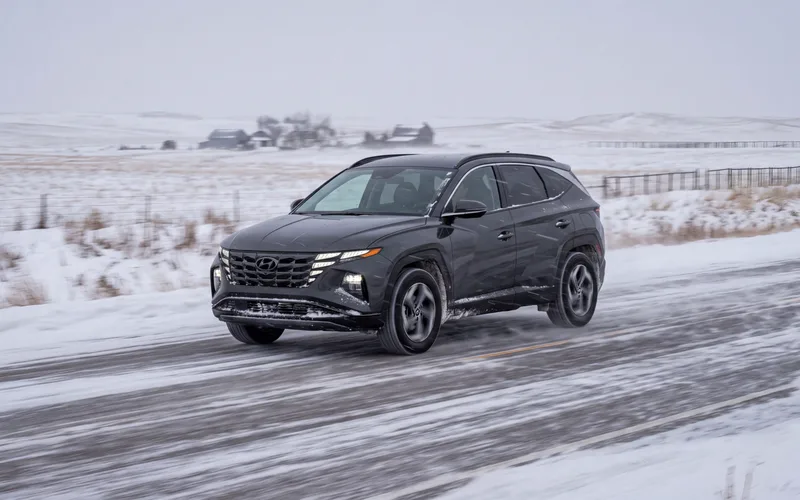 Hyundai TucsonCompact SUVBetter at: Value
Similar money buys far more cargo room, a hybrid option, better crash scores and a 10-year/100,000-mile powertrain warranty against Jeep's 5/60.
Compare 1.71C-
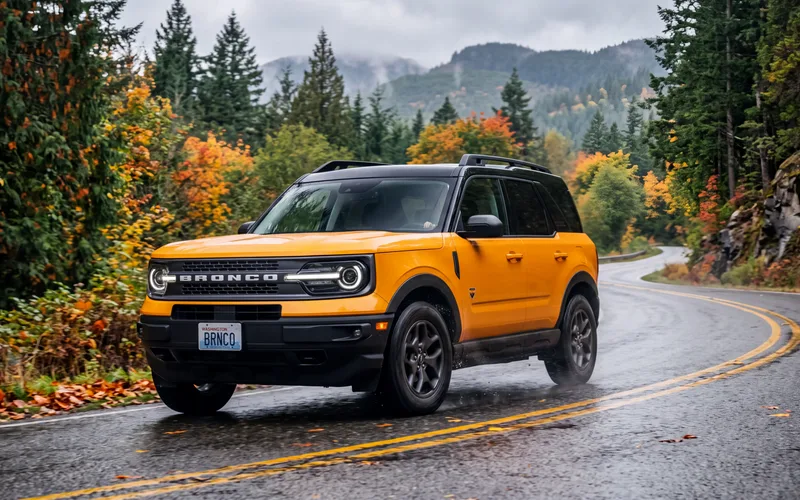 Ford Bronco SportSubcompact SUVBetter at: Off-road value
The direct rival for the buyer who actually wants the Trailhawk — comparable off-road hardware with more cargo space and a stronger available engine.
Compare 2.56C+
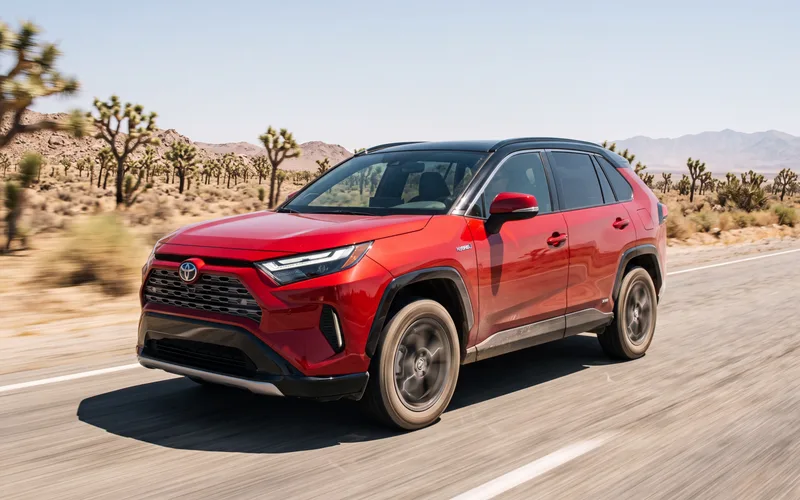 Toyota RAV4Compact SUVBetter at: Long-term ownership
Costs more up front but returns 35+ MPG as a hybrid, tows 3,500 lbs, holds its value, and carries a reliability record the Compass can't approach.
CompareHow it's evolved
10 scored model years · 2017–2026
Subject scores by year
Hover or tap a score to see what moved it versus the year before. A corner mark flags a big swing.
| Year | Performance | Efficiency | Safety | Space | Cost | Reliability | Tech | Use-case | Driving | Value |
|---|---|---|---|---|---|---|---|---|---|---|
| 2026 | 35 | 51 | 51 | 39 | 59 | 51 | 61 | 49 | 54 | 53 |
| 2025 | 34 | 55 | 51 | 38 | 63 | 59 | 63 | 49 | 52 | 57 |
| 2024 | 34 | 55 | 51 | 38 | 63 | 59 | 62 | 49 | 51 | 58 |
| 2023 | 34 | 55 | 55 | 38 | 60 | 58 | 61 | 50 | 51 | 58 |
| 2022 | 25 | 47 | 55 | 38 | 63 | 50 | 56 | 48 | 48 | 56 |
| 2021 | 26 | 47 | 40 | 37 | 63 | 52 | 42 | 46 | 47 | 50 |
| 2020 | 26 | 47 | 38 | 41 | 60 | 52 | 40 | 47 | 47 | 51 |
| 2019 | 26 | 47 | 40 | 43 | 62 | 46 | 43 | 47 | 47 | 52 |
| 2018 | 26 | 47 | 39 | 43 | 62 | 40 | 38 | 45 | 45 | 57 |
| 2017 | 26 | 47 | 39 | 40 | 62 | 47 | 44 | 45 | 44 | 55 |
Compare two years
Best fit & conditions
Higher scores mean a better fit for that use case. Learn more about use-case fit →
Subject profile
Academic Probation · NHTSA safety recalls
No NHTSA safety recall is on record for the 2025 Jeep Compass. Other model years of the Compass have 15 — listed below.
15 recalls on other model years of the Compass (2017–2020, 2022–2023, 2026)
Aug 13, 2026Back over prevention: sensing system: cameraThe rearview camera image may fail to display when the vehicle is placed in reverse. As such, these vehicles fail to comply with the requirements of Federal Motor Vehicle Safety Standard (FMVSS) number 111, "Rear Visibility."
Defect
Chrysler (FCA US, LLC) is recalling certain 2026 Jeep Wrangler, Jeep Gladiator, Jeep Compass, Jeep Cherokee, Jeep Grand Cherokee, Jeep Grand Cherokee L, Jeep Grand Wagoneer, Jeep Grand Wagoneer L, Ram Promaster, Ram Promaster EV, Ram 1500, Ram 2500, Chrysler Pacifica Plug-In Hybrid, Chrysler Voyager, and 2026-2027 Chrysler Pacifica and Dodge Charger vehicles. The rearview camera image may fail to display when the vehicle is placed in reverse. As such, these vehicles fail to comply with the requirements of Federal Motor Vehicle Safety Standard (FMVSS) number 111, "Rear Visibility."
Risk
A rearview camera image that fails to display reduces the driver's view behind the vehicle, increasing the risk of a crash.
Remedy
Radio software will be updated by a dealer or through an over-the-air (OTA) update, free of charge. Owner notification letters were mailed beginning September 2, 2026. Owners may contact Chrysler customer service at 800-853-1403. Chrysler's number for this recall is 78D. Vehicle Identification Numbers (VINs) involved in this recall will be searchable on NHTSA.gov on August 20, 2026.
NHTSA campaign 26V531000 ↗Manufacturer no. 78D844,027 vehicles potentially affected (all models in the campaign)Owners notified Sep 2, 2026Filed by Chrysler (FCA US, LLC)Filed as COMPASSJun 13, 2024Back over prevention: sensing system: cameraThe radio software may prevent the rearview image from displaying. As such, these vehicles fail to comply with the requirements of Federal Motor Vehicle Safety Standard number 111, "Rear Visibility."
Defect
Chrysler (FCA US, LLC) is recalling certain 2021-2022 Dodge Durango, 2021-2023 Chrysler Pacifica, Jeep Grand Cherokee L, 2022 Ram 1500, 2500, 3500, Chrysler Voyager, 2022-2023 Jeep Compass, Grand Cherokee, Wagoneer, Grand Wagoneer, and Ram Promaster vehicles. The radio software may prevent the rearview image from displaying. As such, these vehicles fail to comply with the requirements of Federal Motor Vehicle Safety Standard number 111, "Rear Visibility."
Risk
A rearview camera image that does not display decreases the driver's visibility, increasing the risk of a crash.
Remedy
Dealers will update the radio software or the software will be OTA, "Over-The-Air," free of charge. Owner notification letters were mailed beginning July 9, 2024. Owners may contact FCA US, LLC customer service at 1-800-853-1403. FCA US, LLC's numbers for this recall are 66B and 79B.
NHTSA campaign 24V436000 ↗Manufacturer no. 66B, 79B1,033,433 vehicles potentially affected (all models in the campaign)Owners notified Jul 9, 2024Filed by Chrysler (FCA US, LLC)Filed as COMPASSAug 14, 2023Electrical system: instrument cluster/panelThe brightness level of the instrument panel cluster (IPC) may not be adjustable due to incorrect software in the body control module (BCM). As such, these vehicles fail to comply with the requirements of Federal Motor Vehicle Safety Standard number 101, "Control and Displays."
Defect
Chrysler (FCA US, LLC) is recalling certain 2022-2023 Jeep Compass vehicles. The brightness level of the instrument panel cluster (IPC) may not be adjustable due to incorrect software in the body control module (BCM). As such, these vehicles fail to comply with the requirements of Federal Motor Vehicle Safety Standard number 101, "Control and Displays."
Risk
An IPC display that is not bright enough may not clearly show critical safety information, such as the speedometer or warning lights, increasing the risk of a crash.
Remedy
Dealers will update the body control module (BCM) software, free of charge. Owner notification letters were mailed August 29, 2023. Owners may contact FCA US, LLC customer service at 1-800-853-1403. FCA US, LLC's number for this recall is 88A.
NHTSA campaign 23V576000 ↗Manufacturer no. 88A181,999 vehicles potentially affected (all models in the campaign)Owners notified Aug 29, 2023Filed by Chrysler (FCA US, LLC)Filed as COMPASSFeb 9, 2023Electrical system: instrument cluster/panelThe instrument panel center cluster display may be insufficiently illuminated and may not appear visible during daytime driving conditions. As such, these vehicles fail to comply with the requirements of Federal Motor Vehicle Safety Standard number 101, "Control and Displays."
Defect
Chrysler (FCA US, LLC) is recalling certain 2022 Jeep Compass vehicles. The instrument panel center cluster display may be insufficiently illuminated and may not appear visible during daytime driving conditions. As such, these vehicles fail to comply with the requirements of Federal Motor Vehicle Safety Standard number 101, "Control and Displays."
Risk
An instrument panel display that is not visible to the driver may result in the inability to see safety-critical information, such as the fuel gauge and warning lights, increasing the risk of a crash.
Remedy
Dealers will replace the windshield and headlamp switch, add a light sensor module, and add a wiring jumper harness to allow the instrument panel center cluster display backlighting to function correctly, free of charge. Owner notification letters were mailed March 30, 2023. Owners may contact FCA US, LLC customer service at 1-800-853-1403. FCA US, LLC's number for this recall is 15A.
NHTSA campaign 23V058000 ↗Manufacturer no. 15A90 vehicles potentially affected (all models in the campaign)Owners notified Mar 30, 2023Filed by Chrysler (FCA US, LLC)Filed as COMPASSApr 14, 2022Seats: front assembly: head restraintThe front seat head restraints were not welded properly. As such, these vehicles fail to comply with the requirements of Federal Motor Vehicle Safety Standard number 202, "Head Restraints."
Defect
Chrysler (FCA US, LLC) is recalling certain 2022 Jeep Compass vehicles. The front seat head restraints were not welded properly. As such, these vehicles fail to comply with the requirements of Federal Motor Vehicle Safety Standard number 202, "Head Restraints."
Risk
Improperly welded head restraints can result in an increased risk of injury to seat occupants during a crash.
Remedy
Dealers will replace both front seat head restraints, free of charge. Owner notification letters were mailed June 3, 2022. Owners may contact FCA US LLC customer service at 1-800-853-1403. FCA US, LLC's number for this recall is Z36.
NHTSA campaign 22V248000 ↗Manufacturer no. Z36114 vehicles potentially affected (all models in the campaign)Owners notified Jun 3, 2022Filed by Chrysler (FCA US, LLC)Filed as COMPASSApr 9, 2020Visibility: windshield wiper/washer: linkagesThe windshield wiper arm or arms may loosen, possibly causing the wipers to not operate properly and reduce the driver's visibility in certain weather conditions.
Defect
Chrysler (FCA US LLC) is recalling certain 2019-2020 Ram 1500, 1500 Classic and Jeep Compass vehicles. The windshield wiper arm or arms may loosen, possibly causing the wipers to not operate properly and reduce the driver's visibility in certain weather conditions.
Risk
Reduced visibility increases the risk of a crash.
Remedy
Chrysler will notify owners, and dealers will tighten the wiper nuts, free of charge. The recall began April 27, 2020. Owners may contact Chrysler customer service at 1-800-853-1403. Chrysler's number for this recall is W25.
NHTSA campaign 20V208000 ↗Manufacturer no. W25425,599 vehicles potentially affected (all models in the campaign)Owners notified Apr 27, 2020Filed by Chrysler (FCA US LLC)Filed as COMPASSAug 9, 2018Electrical system: wiring: front underhoodThe powertrain control module may be equipped with a voltage regulator chip in the circuit board that may fail, causing a stall or a no start condition.
Defect
Chrysler (FCA US LLC) is recalling certain 2018 Jeep Renegade, Compass and Grand Cherokee, RAM 1500 and Promaster, Fiat 500x, Dodge Journey, Challenger, Charger and Durango and Chrysler 300x vehicles, 2017-2018 Jeep Wrangler, Dodge Grand Caravan and Chrysler Town and Country vehicles and 2018-2019 Jeep Cherokee and 2018 Chrysler Pacifica and Pacifica Hybrid vehicles. The powertrain control module may be equipped with a voltage regulator chip in the circuit board that may fail, causing a stall or a no start condition.
Risk
A vehicle stall can increase the risk of a crash.
Remedy
Chrysler will notify owners, and dealers will replace the powertrain control module, free of charge. The recall began October 2, 2018. Owners may contact Chrysler customer service at 1-800-853-1403. Chrysler's number for this recall is U87.
NHTSA campaign 18V524000 ↗Manufacturer no. U8712,779 vehicles potentially affected (all models in the campaign)Owners notified Oct 2, 2018Filed by Chrysler (FCA US LLC)Filed as COMPASSAug 9, 2018Service brakes, hydraulic: foundation components: disc: caliperThe rear brake caliper pistons on these vehicles may have an insufficient coating causing gas pockets to form, potentially reducing rear brake performance.
Defect
Chrysler (FCA US LLC) is recalling certain 2018-2019 Dodge Grand Caravan and Jeep Compass, 2018 Dodge Journey, and 2019 Jeep Cherokee vehicles. The rear brake caliper pistons on these vehicles may have an insufficient coating causing gas pockets to form, potentially reducing rear brake performance.
Risk
A reduction of braking performance can increase the risk of a crash.
Remedy
Chrysler will notify owners, and dealers will bleed the vehicle's brake system, free of charge. The recall began September 29, 2018. Owners may contact Chrysler customer service at 1-800-853-1403. Chrysler's number for this recall is U86.
NHTSA campaign 18V523000 ↗Manufacturer no. U86154,335 vehicles potentially affected (all models in the campaign)Owners notified Aug 29, 2018Filed by Chrysler (FCA US LLC)Filed as COMPASSMay 1, 2018Suspension: front: control arm: lower armThe front lower control arms may be incorrectly welded, potentially resulting in a control arm separation.
Defect
Chrysler (FCA US LLC) is recalling certain 2018 Jeep Compass vehicles. The front lower control arms may be incorrectly welded, potentially resulting in a control arm separation.
Risk
If the lower control arm separates, it can cause a loss of vehicle control, increasing the risk of a crash.
Remedy
Chrysler will notify owners, and dealers will inspect and, if necessary, replace the front lower control arms, free of charge. The recall began May 31, 2018. Owners may contact Chrysler customer service at 1-800-853-1403. Chrysler's number for this recall is U42.
NHTSA campaign 18V279000 ↗Manufacturer no. U422,761 vehicles potentially affected (all models in the campaign)Owners notified May 31, 2018Filed by Chrysler (FCA US LLC)Filed as COMPASSDec 21, 2017EquipmentChrysler (FCA US LLC) is recalling various Dodge, Chrysler, and RAM vehicles equipped with Kidde Plastic-Handle or Push Button 'Pindicator' Fire Extinguishers. A list of the affected trailer models is available at: https://static.nhtsa.gov/odi/rcl/2017/RMISC-17V824-0103.pdf. These extinguishers may become clogged, preventing the extinguisher from discharging as expected or requiring excessive force to activate the extinguisher. Additionally, in certain models, the nozzle may detach from the valve assembly with enough force that it could cause injury and also render the product inoperable. For a full list of the affected fire extinguisher models visit: https://static.nhtsa.gov/odi/rcl/2017/RMISC-17E062-5427.pdf
Defect
Chrysler (FCA US LLC) is recalling various Dodge, Chrysler, and RAM vehicles equipped with Kidde Plastic-Handle or Push Button 'Pindicator' Fire Extinguishers. A list of the affected trailer models is available at: https://static.nhtsa.gov/odi/rcl/2017/RMISC-17V824-0103.pdf. These extinguishers may become clogged, preventing the extinguisher from discharging as expected or requiring excessive force to activate the extinguisher. Additionally, in certain models, the nozzle may detach from the valve assembly with enough force that it could cause injury and also render the product inoperable. For a full list of the affected fire extinguisher models visit: https://static.nhtsa.gov/odi/rcl/2017/RMISC-17E062-5427.pdf
Risk
If the fire extinguisher does not function properly, it can increase the risk of injury in the event of a fire.
Remedy
Chrysler will notify owners instructing them to contact Kidde for a replacement fire extinguisher, free of charge. The recall began February 14, 2018. Owners may contact Chrysler customer service at 1-800-853-1403 or Kidde customer service service toll-free at 1-855-262-3540, or online at www.kidde.com and click on "Product Safety Recall" for more information. Chrysler's number for this recall is T82.
NHTSA campaign 17V824000 ↗Manufacturer no. T8261,791 vehicles potentially affected (all models in the campaign)Owners notified Feb 14, 2018Filed by Chrysler (FCA US LLC)Filed as COMPASSNov 21, 2017Electrical system: instrument cluster/panelThe brightness of the backlighting for the Instrument Panel Cluster (IPC) cannot be adjusted. As such, these vehicles fail to comply with the requirements of Federal Motor Vehicle Safety Standard (FMVSS) number 101, "Controls and Displays."
Defect
Chrysler (FCA US LLC) is recalling certain model year 2017-2018 Jeep Compass vehicles. The brightness of the backlighting for the Instrument Panel Cluster (IPC) cannot be adjusted. As such, these vehicles fail to comply with the requirements of Federal Motor Vehicle Safety Standard (FMVSS) number 101, "Controls and Displays."
Risk
An instrument cluster that is too bright, and cannot be dimmed, can reduce the driver's ability to see at night, increasing the risk of a crash.
Remedy
Chrysler will notify owners, and dealers will update IPC software, as necessary, free of charge. The recall began December 8, 2018. Owners may contact Chrysler customer service at 1-800-853-1403. Chrysler's number for this recall is T70.
NHTSA campaign 17V740000 ↗Manufacturer no. T7025,823 vehicles potentially affected (all models in the campaign)Owners notified Dec 8, 2017Filed by Chrysler (FCA US LLC)Filed as COMPASSNov 21, 2017Air bags: frontal: passenger side: inflator moduleThe passenger side air bag assembly may have inflator mounting nuts loose within the module assembly.
Defect
Chrysler (FCA US LLC) is recalling certain 2018 Jeep Compass vehicles. The passenger side air bag assembly may have inflator mounting nuts loose within the module assembly.
Risk
In the event of a crash necessitating air bag deployment, unsecured inflator mounting nuts outside of the cushion assembly are potential projectiles that may strike the driver or other occupants resulting in serious injury or death.
Remedy
Chrysler will notify owners, and dealers will replace the passenger air bag module assembly, free of charge. The recall began December 28, 2017. Owners may contact Chrysler customer service at 1-800-853-1403. Chrysler's number for this recall is T73.
NHTSA campaign 17V732000 ↗Manufacturer no. T7327,210 vehicles potentially affected (all models in the campaign)Owners notified Dec 28, 2017Filed by Chrysler (FCA US LLC)Filed as COMPASSOct 24, 2017Engine and engine cooling: engineThe engines may have a cracked oil pump housing that can result in oil pump failure.
Defect
Chrysler (FCA US LLC) is recalling certain 2018 Jeep Cherokee and Compass vehicles equipped with 2.4L engines. The engines may have a cracked oil pump housing that can result in oil pump failure.
Risk
If the oil pump fails, the engine will stall, increasing the risk of a crash.
Remedy
Chrysler will notify owners, and dealers will inspect the oil pump, replacing it as necessary, free of charge. The recall began December 5, 2017. Owners may contact Chrysler customer service at 1-800-853-1403. Chrysler's number for this recall is T65.
NHTSA campaign 17V670000 ↗Manufacturer no. T65357 vehicles potentially affected (all models in the campaign)Owners notified Dec 5, 2017Filed by Chrysler (FCA US LLC)Filed as COMPASSJul 7, 2017Equipment: other: owners/service/other manualThe affected vehicles have User's Guides that contain incorrect information regarding the jump start procedure, specifically, the polarity of the battery terminals are reversed in the battery terminal graphic.
Defect
Chrysler (FCA US LLC) is recalling certain 2017 Jeep Compass vehicles. The affected vehicles have User's Guides that contain incorrect information regarding the jump start procedure, specifically, the polarity of the battery terminals are reversed in the battery terminal graphic.
Risk
If a customer follows the User's Guide, they may hook up the battery jumper cables incorrectly, increasing their risk of injury.
Remedy
Chrysler will notify owners and will replace the User's Guides with a corrected version, free of charge. The recall began August 22, 2017. Owners may contact Chrysler customer service at 1-800-853-1403. Chrysler's number for this recall is T46.
NHTSA campaign 17V433000 ↗Manufacturer no. T4612,989 vehicles potentially affected (all models in the campaign)Owners notified Aug 22, 2017Filed by Chrysler (FCA US LLC)Filed as COMPASSMay 9, 2017Power train: axle assembly: axle shaftThe left front halfshaft may not be properly seated, and, as a result, it may disengage from the transmission and/or break.
Defect
Chrysler (FCA US LLC) is recalling certain 2017 Jeep Compass vehicles equipped with a 6-speed transmission. The left front halfshaft may not be properly seated, and, as a result, it may disengage from the transmission and/or break.
Risk
If the left front halfshaft disengages or breaks, the vehicle will have a loss of drive. Additionally, if the vehicle is parked without using the parking brake, the vehicle may roll, despite being in 'Park.' Either condition may increase the risk of a crash.
Remedy
Chrysler will notify owners, dealers will inspect the left front halfshaft for engagement and replace any that are not properly engaged in the transmission, free of charge. The recall began on June 12, 2017. Owners may contact Chrysler customer service at 1-800-853-1403. Chrysler's number for this recall is T26.
NHTSA campaign 17V301000 ↗Manufacturer no. T264,705 vehicles potentially affected (all models in the campaign)Owners notified Jun 12, 2017Filed by Chrysler (FCA US LLC)Filed as COMPASS
Source: NHTSA Office of Defects Investigation recall database, model years 2017–2026. Recalls are listed by model year as the manufacturer filed them; whether a specific car is affected depends on its VIN — check a VIN at nhtsa.gov ↗. NHTSA model names matched to this page: COMPASS.
Detailed scoring by subject
1Performance & PowertrainThe Compass's lowest-graded category.0.26F
The 2025 Compass offers a single engine across the entire US lineup; 200 hp is mid-pack for a compact SUV and well short of segment leaders.
Turbocharging gives the Compass a healthy low-end torque figure for a compact crossover, better relative to segment than its horsepower.
Two independent instrumented tests bracket 8.1–8.3 sec; adequate for the class but nowhere near the quick end of the compact-SUV field.
The 2.0L turbo replaced the old 2.4L in 2023 and is a real improvement in flexibility, but reviewers consistently describe it as noisy under acceleration with turbo lag off the line and an intrusive stop-start restart. Mid-band performance for the segment.
The 8-speed torque-converter automatic is a large step up from the outgoing 9-speed and 6-speed units and shifts smoothly, but its economy-biased calibration blunts response and requires deliberate throttle to kick down.
A 2,000-lb rating is typical for a unibody compact crossover but sits near the bottom of the SUV normalization band, which spans up to 8,000 lbs.
Four-wheel drive is standard on every 2025 US Compass — not an option on any trim — and comes with selectable terrain modes plus a low-range-effect Active Drive Low system on Trailhawk. Only the absence of a genuine two-speed transfer case keeps it out of the top band.
The Trailhawk is the most genuinely capable vehicle in the compact-crossover class — Trail Rated badge, extra clearance, underbody protection and a low crawl ratio — but it remains a unibody crossover with no locking differential or two-speed transfer case, so it sits in the upper half of the capable-light-duty band rather than with true off-road trims.
One engine, one transmission, one drivetrain — no hybrid, PHEV or EV option and no upgrade engine anywhere in the US range. That is the definition of the take-it-or-leave-it low band.
2Efficiency & RangeMid-pack among this car's ten categories.1.73C-
27 MPG combined is a strong figure for a standard-4WD compact SUV and is the same rating across all four trims, since every 2025 US Compass shares one powertrain.
Turbocharging plus standard engine stop-start keeps city economy respectable for an all-wheel-drive crossover, though non-hybrid rivals with FWD options beat it.
Highway economy is the Compass's best efficiency number — the eight-speed's tall top gears and the turbo four's low-rpm torque work well at cruise.
Good fuel economy is undercut by a small 13.5-gallon tank, so total range lands near the bottom of the SUV band despite the Compass being efficient — it needs filling more often than larger, thirstier rivals.
Running costs sit modestly better than the middle of the SUV band, helped by 27 MPG combined and by requiring only regular-grade fuel.
Regular 87 octane on a turbocharged engine, with no premium requirement or recommendation and no charging infrastructure to arrange — the cheapest and simplest fuel situation available.
3SafetyGrades below the middle of the scale.1.40D
NHTSA rated the 2025 Compass SUV AWD 4 stars overall — 4 stars frontal (driver and passenger), 5 stars side (barrier and pole), and 3 stars rollover with a 20.4% rollover probability.
No IIHS award for 2025: the Compass rates Poor in the updated moderate overlap front test (rear-passenger protection) and Marginal in the updated side test, offsetting Good results in both small overlap front tests. Poor/Marginal in two of the three core crashworthiness tests is bottom-band territory.
Every 2025 trim from the base Sport up includes Forward Collision Warning with Active Braking and pedestrian detection, Active Lane Management (lane departure warning with assist), Blind Spot Monitoring with Rear Cross Path detection, drowsy-driver detection and a rear camera — a broader standard set than most compact SUVs at this price. Adaptive cruise is the one gap: it is not standard, arriving only on Latitude and above or via package.
IIHS rates the Compass only Marginal in the updated vehicle-to-vehicle front crash prevention test — one step above the bottom — and it has not been evaluated for nighttime pedestrian detection. The Advanced daytime pedestrian result is the lone bright spot and is not enough to lift a Marginal vehicle-to-vehicle score.
Blind Spot Monitoring with Rear Cross Path detection is standard on every trim, which is better coverage than several compact-SUV rivals that gate it behind a package. It is alert-only, though — no steering or braking intervention and no safe-exit warning — and the 360-degree camera that would supplement it is optional.
Active Lane Management (lane departure warning with corrective steering) is standard, and true lane centering arrives only as part of the Highway Assist bundle on ACC-equipped trims. Reviewers describe the corrections as functional but nudge-like rather than confident centering, so the volume trim gets warning-and-nudge rather than sustained centering.
Full-speed-range Adaptive Cruise Control with Stop & Go exists and pairs with Highway Assist for combined lane centering, but neither is standard — the base Sport has conventional cruise only and ACC starts at Latitude or via package. Capable hardware behind a paywall on the cheapest trims lands this mid-band.
No hands-free highway driving system is offered on the 2025 Compass at any trim. Stellantis had not deployed a hands-free system on this platform for this model year; Highway Assist is hands-on lane centering only.
IIHS rates the volume trims' standard LED reflector headlamps Acceptable, with Good reserved for the premium LED projector variant bundled into upper packages, and the base Sport's lamps rate Marginal. Good is available but not on the trim most buyers take.
The Compass's small backlight and thick rear roof pillars create real over-the-shoulder blind zones that reviewers repeatedly flag, and the standard blind-spot monitor is explicitly the compensation for them. Forward sightlines are fine and a 360-degree camera helps at parking speeds, but it is optional rather than standard.
IIHS rates the Compass's LATCH hardware Marginal for ease of use — the lower anchors sit too deep in the seat bight and are awkward to work around. Two full LATCH sets plus three clearly marked top tethers cover the basics, but the rear row is tight for a rear-facing seat behind a tall front occupant and will not take three seats across.
4Space & ComfortOne of the Compass's weakest categories.0.50F
Two-row, five-passenger only across Sport, Latitude, Limited and Trailhawk — no seven-seat configuration is offered in the US.
Generous front headroom for a compact SUV thanks to the upright roofline; the dual-pane panoramic sunroof costs 0.6 in.
Front legroom is mid-pack-to-short for the compact SUV class; the manufacturer figure of 41.2 in is below the 41.5–42.5 in most rivals publish.
Second-row headroom measures well on paper, though reviewers note the sloping roof and high seat base make it feel tighter than the number suggests.
Rear legroom is a genuine strength — competitive with larger compact SUVs and repeatedly called out by reviewers.
The Compass is a two-row, five-seat SUV with no third row available on any 2025 trim.
27.2 cu ft is respectable against direct compact-SUV rivals but sits near the bottom of the SUV normalization band, which spans two-row compacts through three-row full-size SUVs.
Maximum cargo volume of 59.8 cu ft with the 60/40 bench folded trails most compact SUV rivals, several of which clear 65–75 cu ft.
Small-item storage is a recurring criticism: a small center console and narrow door pockets that will only take small bottles, with no underfloor cargo trick, household outlet or fold-flat front passenger seat.
Front cushions are soft but under-supportive and the head restraints tilt too far forward; a power driver's seat only arrives at Limited, and no trim offers ventilated seats.
Reviews split between 'tuned for comfort' and outright bouncy — Consumer Reports calls the ride overly firm with the body bounding over bumps, and the 19-inch High Altitude wheels make it worse.
One of the Compass's clearest weaknesses: constant engine noise plus significant wind and road noise at highway speed, and a climate fan reviewers call very loud.
2025 pushed heated front seats, a heated steering wheel and remote start down to Latitude as standard, which covers the volume trim well; dual-zone automatic climate waits for Limited, and no trim offers ventilated seats or rear climate controls.
5Cost of OwnershipThe Compass's best-graded category.2.28C
For 2025 Jeep repositioned the whole Compass lineup downward — Latitude fell $1,970, Limited and Trailhawk $1,500 each — leaving the Sport at $27,495 with four-wheel drive standard, one of the cheapest ways into an AWD compact SUV.
The Sport is the best-selling 2025 trim at roughly 35% of sales with the Latitude next at about 27%, so the volume configuration is a Sport with a popular equipment group, landing just under the $29,765 Latitude.
CarEdge projects about $670/yr in scheduled maintenance over the first five years (~$3,350) and RepairPal adds roughly $526/yr in unscheduled repair, which together put the Compass meaningfully above the compact-SUV norm rather than at it.
Two independent residual estimates bracket the Compass at 54–56% retention, below the compact-SUV category average, and the 2025 car's late-second-generation status adds downward pressure once the redesigned Compass eventually reaches the US.
Jeep's standard 3-year/36,000-mile basic coverage is the industry floor and sits two years behind the 5/60,000 that Hyundai, Kia and Mitsubishi offer in the same segment.
Five years/60,000 miles of powertrain coverage is the bottom of the SUV normalization band and half the 10-year/100,000-mile coverage Hyundai, Kia and Mitsubishi provide — a real gap for a model with a below-average reliability record.
Every 2025 Compass is automatically enrolled in Jeep Wave, which covers two oil changes and two tire rotations in the first 24 months plus 24/7 roadside assistance for the 5-yr/60,000-mile powertrain term, $1,000-per-incident trip interruption and a $40/day service loaner — meaningful perks, but a thinner maintenance allowance than ToyotaCare's full 2-yr/25,000-mile schedule or Hyundai's 3-yr/36,000-mile complimentary maintenance. 2025 is the last model year that qualifies: from MY2026 Jeep replaced Wave with the paid FlexCare protection program.
$29,000 volume-trim price minus its estimated resale value after 5 years (54% retained, or about $15,660) leaves about $13,340 in depreciation. Add the projected $6,500 in 5-year maintenance and repairs, and owning this vehicle for 5 years costs about $19,840 in total.
6Reliability & QualityOne of the Compass's strongest categories.1.94C-
Model-specific predictions for the 2025 Compass land at or slightly above average across three independent sources, a real improvement over the nameplate's historically poor showing — but none rate it top-tier, and the brand's dependability record keeps a lid on the outlook.
Jeep sits in the bottom tier of both major brand dependability studies and has done so for several consecutive years, finishing well adrift of the industry average rather than merely below it.
The 2025 model year itself has a clean sheet — zero NHTSA recall campaigns and a low complaint count — and the late second-generation years have been markedly quieter than the generation's early and mid-life years. Held short of the top band because the generation as a whole accumulated substantial recall activity and Stellantis TSB volume runs above Japanese and Korean rivals.
The 2.0L GME-T4 turbo four (detuned to 200 hp for the Compass) has been in Stellantis service since 2018 with a mixed record — cracked plastic coolant fittings, premature oil-seal leaks and carbon-fouled wastegate actuators are recurring themes, though well-maintained examples reach high mileage. The Hyundai-sourced 8F30 eight-speed adopted for 2023 is newer to this application but replaced the widely criticized ZF 948TE nine-speed, which is a durability improvement rather than a risk.
The 2022 refresh brought soft-touch surfaces to most primary touchpoints and decent switchgear weighting, but reviewers consistently flag thin-feeling plastics, flexing trim panels and unfinished edges in secondary areas — competitive for the price without approaching the class benchmarks.
Assembly on 2025 examples is generally solid — multiple reviewers logged extended test time without rattles or squeaks — but flexing trim and Jeep's below-average brand-level initial-quality standing keep it out of the top band.
Coverage is a genuine strength — Jeep runs one of the densest franchise networks in the US, so parts and warranty work are reachable almost anywhere. Service satisfaction is the weak half: Jeep does not appear near the top of J.D. Power's mass-market service rankings, and Stellantis dealer service experience draws mixed owner reviews.
A high-volume nameplate on a widely shared Stellantis small-wide platform means abundant Mopar and aftermarket parts, and measured repair costs come in below the compact-SUV norm with fewer unscheduled shop visits than average.
7Technology & InfotainmentOne of the Compass's strongest categories.2.25C
The volume Latitude trim carries the 10.1-inch Uconnect 5 screen as standard for 2025; only the base Sport gets the 8.4-inch unit.
Uconnect 5 remains one of the better mainstream systems — quick, logically laid out, with up to five user profiles — but reviewers criticize where Jeep put the surrounding hardware controls.
Wireless Apple CarPlay and Android Auto are standard on every 2025 trim including the base Sport's 8.4-inch screen — a genuine class-competitive position.
Uconnect 5 voice recognition handles media, climate and destination commands competently but is not a natural-language assistant, and native navigation is package- or trim-gated rather than standard.
A six-speaker system is standard and adequate; the optional Alpine premium setup is a real step up but is bundled into upper packages rather than being widely available.
A 7-inch part-digital cluster is the standard fitment; the crisp 10.25-inch frameless full-digital TFT display is available rather than standard on the volume trim.
Uconnect 5 supports over-the-air software and map updates through connected services, but these are infotainment-scope updates rather than whole-vehicle OTA that adds features.
The Jeep/Uconnect app covers remote start, lock/unlock, vehicle locate and vehicle health, but the useful tiers are subscription-gated after the trial and there is no phone-as-key.
Both rows get USB-A and USB-C standard — better than several rivals that leave the second row bare — but wireless charging is an option pack and there is no household AC outlet.
Keyless entry with push-button start is broadly fitted and 2025 made remote start standard from Latitude up; a power liftgate is optional and there is no phone-as-key or hands-free gate on the volume trim.
A rear camera is standard, rear park sensors arrive at Limited, and Jeep offers both a 360-degree surround-view camera and automated parallel/perpendicular park assist — strong availability, though only on upper trims and packages.
No head-up display is offered on any 2025 Compass trim or package.
8Use-Case FitOne of the Compass's weakest categories.1.24D
Good rear legroom and a usefully square 27.2 cu ft hold make daily kid duty workable, but IIHS rates the LATCH hardware only Marginal and the low, squat door openings make loading a child seat awkward.
Standard ADAS content is broad on the trims families buy, but the underlying crash results are the problem: IIHS rates the updated moderate-overlap front test Poor and the updated side test Marginal, and NHTSA gives four stars overall.
Second-row space is fine and cargo holds a family's bags, but a noisy cabin, a firm-to-bouncy ride and no rear climate controls or entertainment provisions blunt long-haul comfort for a full car.
Compact size and light controls help in traffic, but the 2.0T/8-speed calibration is the weak link — abrupt tip-in from a stop, a delay when getting back on the throttle at rolling speeds, and grabby low-speed brakes.
27 MPG combined on regular fuel is acceptable but unremarkable now that most compact-SUV rivals offer a 38–40 MPG hybrid; there is no electrified 2025 Compass in the US and running costs run above segment average.
A 173.4-inch footprint and a tight 36.3-ft turning circle suit city use, and a rear camera is standard, but thick rear pillars and a small rear window leave drivers leaning on the cameras.
A 2,000-lb maximum tow rating, 200 hp and 59.8 cu ft of maximum cargo make the Compass a light-duty hauler at best — fine for a small utility trailer, not a work tool.
Below-average predicted reliability and a cabin built to a price undercut hard-use durability; there is no fleet-oriented Compass variant or wear-friendly interior option.
Standard roof rails from Latitude up and USB power are the extent of the work provisions — no household AC outlet, no bed or upfit ecosystem, and cargo tie-downs are basic.
A 13.5-gallon tank yields only about 364 miles of combined range, and the noisy cabin plus under-supportive front seats work against seat endurance; adaptive cruise with stop-and-go and Highway Assist help but are trim-gated.
This is the Compass's strongest use case: 4x4 and Selec-Terrain are standard on every 2025 trim, and the Trailhawk adds Active Drive Low with a 20:1 crawl ratio, 8.6 in of clearance, skid plates and 19 in of fording depth.
A 60/40 folding bench, standard roof rails and an available hitch cover normal gear, but 59.8 cu ft maximum and a small console limit bulky loads relative to compact-SUV rivals.
9Driving ExperienceGrades below the middle of the scale.1.46D
Secure and predictable in a straight line, but a comfort-biased strut suspension gives up plenty of body roll and the Compass rarely feels settled through corners.
The electric rack is accurate enough and reviewers credit it with some feel, but it is light and short on genuine feedback — adequate rather than engaging.
Solid rear discs and a firm-enough setup, but the pedal is grabby at low speed and the measured 60-0 stop was longer than expected for an all-season-tired compact SUV.
The 2.0T/8F30 pairing is the weakest part of driving the Compass: abrupt tip-in from rest, a hesitation when picking the throttle back up at rolling speeds, and a stop-start system that restarts roughly.
The turbo four is raspy and always audible; noise rather than vibration is what marks the Compass down, and it is present at both light and heavy throttle.
A tight turning diameter for the class — the Trailhawk's shorter-geared steering is tighter still at 35.3 ft.
An upright, commanding seating position with generous front headroom and retained physical climate knobs, undercut by scattered control placement, forward-tilting head restraints and awkward door openings.
Capability off pavement is the Compass's character; on road it is a soft, noisy, slightly clumsy appliance that no reviewer recommends for driving pleasure.
10Value & Market PositionMid-pack among this car's ten categories.1.82C-
At $27,495 the Sport includes four-wheel drive — which nearly every compact-SUV rival charges $1,400–$1,600 extra for — plus a 200-hp turbo, Uconnect 5 with wireless Apple CarPlay/Android Auto, LED lighting and a full standard driver-assist suite (pedestrian AEB, active lane management, blind-spot monitoring with rear cross-path, drowsy-driver detection); for 2025 the Latitude also gained heated front seats, a heated steering wheel and remote start as standard. Adaptive cruise with stop-and-go remains an option, which keeps it out of the top band.
The across-the-board 2025 price cuts of up to $2,000 genuinely improved the pitch — standard 4x4 and 200 hp for $27,495 is hard to match — but the Compass returns only 27 MPG combined from a single 2.0L turbo with no hybrid option, on a platform reviewers call outdated, while rivals in the same money deliver 35–40 MPG and better refinement. Fair value on paper, undercut by what the money buys elsewhere.
Four trims from $27,495 to $33,990 plus the Altitude and High Altitude appearance packages give roughly $10k of spread, and the Trail Rated Trailhawk is a real hardware choice rather than a badge — but there is exactly one engine, one transmission and one drivetrain, with no FWD, hybrid or PHEV option anywhere in the US range, so the breadth is all in trim rather than mechanical configuration. The Latitude Lux trim was also dropped for 2025.
The Compass posted 101,089 US sales in calendar 2025, down about 9.5% from a generational-high 111,694 in 2024 that capped three straight years of double-digit growth — a steady six-figure mid-pack seller roughly tenth in a very crowded segment, well short of RAV4 (~475k) and CR-V (~400k) but comfortably outselling several rivals and, notably, most of the rest of the Jeep range.
Jeep still carries one of the strongest off-road halos in the industry, and standard 4x4 plus a Trail Rated Trailhawk let the Compass trade on it more credibly than most compact crossovers — but the Compass sits at the soft end of the badge, and Stellantis' broader slide in quality and customer-satisfaction rankings has thinned the premium the name once commanded.
The 2025 Compass is one of the easiest compact SUVs to buy below sticker: Jeep cut MSRPs across the lineup by up to $2,000 before the year even started, then layered subvented financing and stackable cash on top, and slow-turning inventory left dealers with room to move. Scored for buyer benefit, which is high, even though the underlying cause is a late-cycle model needing help.
2025 is the ninth model year of the MP/552 second generation that launched for 2017 — a mid-cycle interior and Uconnect 5 update in 2022 and the switch to the 2.0L turbo in 2023 are the last substantive changes. The all-new STLA Medium third-generation Compass was revealed for Europe in 2025, but US production slipped to Belvidere for roughly MY2028, so American buyers get an eight-year-old architecture with no near-term replacement.
Professional reviewers put the 2025 Compass in the bottom third of the compact-SUV field — Edmunds' expert rating is 5.7/10 and Consumer Reports calls it outright outdated, faulting the firm bouncy ride, grabby brakes and cramped driving position — and it holds no NACTOY, 10Best, MotorTrend SUV of the Year or IIHS Top Safety Pick recognition. Owner sentiment is genuinely positive, which lifts aggregate scores like U.S. News' 7.7/10, but the item measures reviewer verdicts and awards.