

The verdict
A struggling compact suv, strong on ownership and held back by performance.
The 2021 Compass is the last year of the old pre-refresh Jeep, and it shows: one 180-hp 2.4-liter engine that needs about 10 seconds to reach 60 mph, 27.2 cubic feet of cargo space (a CR-V has 39.2), and automatic emergency braking that costs extra on the trims most people actually buy. What you're really paying for is the Jeep badge and genuine 4x4 hardware — the Trail Rated Trailhawk's 20:1 crawl ratio and 30.3-degree approach angle are things no CR-V or RAV4 can match. As a used buy it's cheap to get into and cheap to repair, but Consumer Reports scored it 39/100 and named it the lowest-rated compact SUV in the class. Buy the Trailhawk if you want the capability; skip the rest.
Jump to scoresStrengths
- Real off-road hardware in a class that mostly fakes it
- Cheap to buy and cheap to keep on the road
- Easy to park and easy to live with in town
What holds it back
- Slow, loud and unpleasant to drive
- The smallest cargo hold in the class
- Safety gear costs extra on the trim you'd actually buy
Top alternatives
Cars shoppers cross-shop with the Jeep Compass 2.44C+
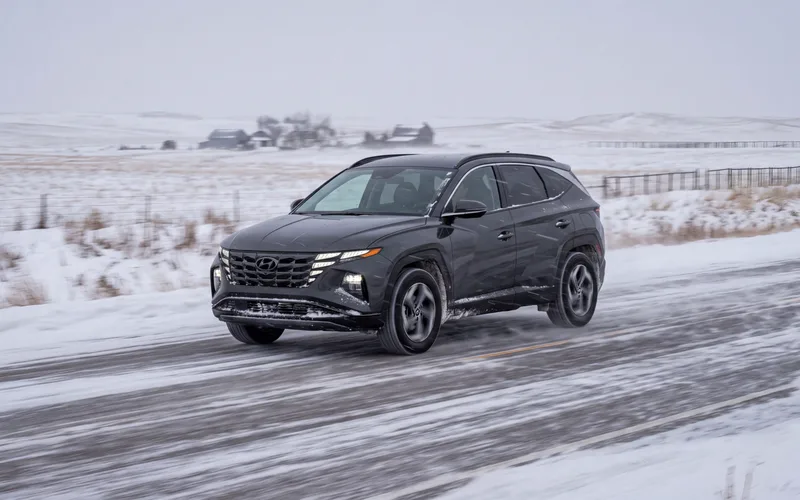 Hyundai TucsonCompact SUVBetter at: Value
Similar money buys far more cargo room, a hybrid option, better crash scores and a 10-year/100,000-mile powertrain warranty against Jeep's 5/60.
Compare 1.71C-
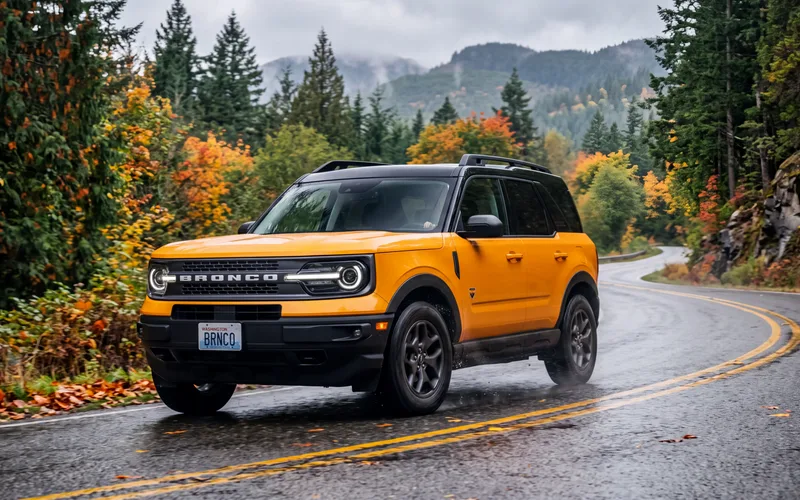 Ford Bronco SportSubcompact SUVBetter at: Off-road value
The direct rival for the buyer who actually wants the Trailhawk — comparable off-road hardware with more cargo space and a stronger available engine.
Compare 2.56C+
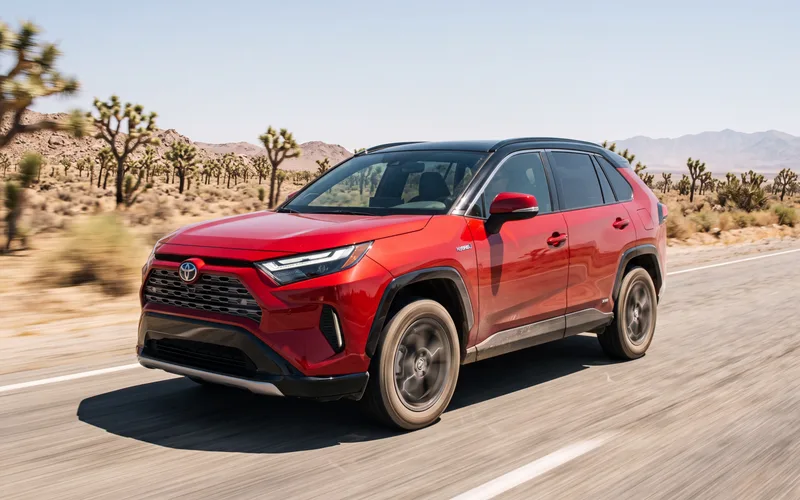 Toyota RAV4Compact SUVBetter at: Long-term ownership
Costs more up front but returns 35+ MPG as a hybrid, tows 3,500 lbs, holds its value, and carries a reliability record the Compass can't approach.
CompareHow it's evolved
10 scored model years · 2017–2026
Subject scores by year
Hover or tap a score to see what moved it versus the year before. A corner mark flags a big swing.
| Year | Performance | Efficiency | Safety | Space | Cost | Reliability | Tech | Use-case | Driving | Value |
|---|---|---|---|---|---|---|---|---|---|---|
| 2026 | 35 | 51 | 51 | 39 | 59 | 51 | 61 | 49 | 54 | 53 |
| 2025 | 34 | 55 | 51 | 38 | 63 | 59 | 63 | 49 | 52 | 57 |
| 2024 | 34 | 55 | 51 | 38 | 63 | 59 | 62 | 49 | 51 | 58 |
| 2023 | 34 | 55 | 55 | 38 | 60 | 58 | 61 | 50 | 51 | 58 |
| 2022 | 25 | 47 | 55 | 38 | 63 | 50 | 56 | 48 | 48 | 56 |
| 2021 | 26 | 47 | 40 | 37 | 63 | 52 | 42 | 46 | 47 | 50 |
| 2020 | 26 | 47 | 38 | 41 | 60 | 52 | 40 | 47 | 47 | 51 |
| 2019 | 26 | 47 | 40 | 43 | 62 | 46 | 43 | 47 | 47 | 52 |
| 2018 | 26 | 47 | 39 | 43 | 62 | 40 | 38 | 45 | 45 | 57 |
| 2017 | 26 | 47 | 39 | 40 | 62 | 47 | 44 | 45 | 44 | 55 |
Compare two years
Best fit & conditions
Higher scores mean a better fit for that use case. Learn more about use-case fit →
Subject profile
Academic Probation · NHTSA safety recalls
No NHTSA safety recall is on record for the 2021 Jeep Compass. Other model years of the Compass have 15 — listed below.
15 recalls on other model years of the Compass (2017–2020, 2022–2023, 2026)
Aug 13, 2026Back over prevention: sensing system: cameraThe rearview camera image may fail to display when the vehicle is placed in reverse. As such, these vehicles fail to comply with the requirements of Federal Motor Vehicle Safety Standard (FMVSS) number 111, "Rear Visibility."
Defect
Chrysler (FCA US, LLC) is recalling certain 2026 Jeep Wrangler, Jeep Gladiator, Jeep Compass, Jeep Cherokee, Jeep Grand Cherokee, Jeep Grand Cherokee L, Jeep Grand Wagoneer, Jeep Grand Wagoneer L, Ram Promaster, Ram Promaster EV, Ram 1500, Ram 2500, Chrysler Pacifica Plug-In Hybrid, Chrysler Voyager, and 2026-2027 Chrysler Pacifica and Dodge Charger vehicles. The rearview camera image may fail to display when the vehicle is placed in reverse. As such, these vehicles fail to comply with the requirements of Federal Motor Vehicle Safety Standard (FMVSS) number 111, "Rear Visibility."
Risk
A rearview camera image that fails to display reduces the driver's view behind the vehicle, increasing the risk of a crash.
Remedy
Radio software will be updated by a dealer or through an over-the-air (OTA) update, free of charge. Owner notification letters were mailed beginning September 2, 2026. Owners may contact Chrysler customer service at 800-853-1403. Chrysler's number for this recall is 78D. Vehicle Identification Numbers (VINs) involved in this recall will be searchable on NHTSA.gov on August 20, 2026.
NHTSA campaign 26V531000 ↗Manufacturer no. 78D844,027 vehicles potentially affected (all models in the campaign)Owners notified Sep 2, 2026Filed by Chrysler (FCA US, LLC)Filed as COMPASSJun 13, 2024Back over prevention: sensing system: cameraThe radio software may prevent the rearview image from displaying. As such, these vehicles fail to comply with the requirements of Federal Motor Vehicle Safety Standard number 111, "Rear Visibility."
Defect
Chrysler (FCA US, LLC) is recalling certain 2021-2022 Dodge Durango, 2021-2023 Chrysler Pacifica, Jeep Grand Cherokee L, 2022 Ram 1500, 2500, 3500, Chrysler Voyager, 2022-2023 Jeep Compass, Grand Cherokee, Wagoneer, Grand Wagoneer, and Ram Promaster vehicles. The radio software may prevent the rearview image from displaying. As such, these vehicles fail to comply with the requirements of Federal Motor Vehicle Safety Standard number 111, "Rear Visibility."
Risk
A rearview camera image that does not display decreases the driver's visibility, increasing the risk of a crash.
Remedy
Dealers will update the radio software or the software will be OTA, "Over-The-Air," free of charge. Owner notification letters were mailed beginning July 9, 2024. Owners may contact FCA US, LLC customer service at 1-800-853-1403. FCA US, LLC's numbers for this recall are 66B and 79B.
NHTSA campaign 24V436000 ↗Manufacturer no. 66B, 79B1,033,433 vehicles potentially affected (all models in the campaign)Owners notified Jul 9, 2024Filed by Chrysler (FCA US, LLC)Filed as COMPASSAug 14, 2023Electrical system: instrument cluster/panelThe brightness level of the instrument panel cluster (IPC) may not be adjustable due to incorrect software in the body control module (BCM). As such, these vehicles fail to comply with the requirements of Federal Motor Vehicle Safety Standard number 101, "Control and Displays."
Defect
Chrysler (FCA US, LLC) is recalling certain 2022-2023 Jeep Compass vehicles. The brightness level of the instrument panel cluster (IPC) may not be adjustable due to incorrect software in the body control module (BCM). As such, these vehicles fail to comply with the requirements of Federal Motor Vehicle Safety Standard number 101, "Control and Displays."
Risk
An IPC display that is not bright enough may not clearly show critical safety information, such as the speedometer or warning lights, increasing the risk of a crash.
Remedy
Dealers will update the body control module (BCM) software, free of charge. Owner notification letters were mailed August 29, 2023. Owners may contact FCA US, LLC customer service at 1-800-853-1403. FCA US, LLC's number for this recall is 88A.
NHTSA campaign 23V576000 ↗Manufacturer no. 88A181,999 vehicles potentially affected (all models in the campaign)Owners notified Aug 29, 2023Filed by Chrysler (FCA US, LLC)Filed as COMPASSFeb 9, 2023Electrical system: instrument cluster/panelThe instrument panel center cluster display may be insufficiently illuminated and may not appear visible during daytime driving conditions. As such, these vehicles fail to comply with the requirements of Federal Motor Vehicle Safety Standard number 101, "Control and Displays."
Defect
Chrysler (FCA US, LLC) is recalling certain 2022 Jeep Compass vehicles. The instrument panel center cluster display may be insufficiently illuminated and may not appear visible during daytime driving conditions. As such, these vehicles fail to comply with the requirements of Federal Motor Vehicle Safety Standard number 101, "Control and Displays."
Risk
An instrument panel display that is not visible to the driver may result in the inability to see safety-critical information, such as the fuel gauge and warning lights, increasing the risk of a crash.
Remedy
Dealers will replace the windshield and headlamp switch, add a light sensor module, and add a wiring jumper harness to allow the instrument panel center cluster display backlighting to function correctly, free of charge. Owner notification letters were mailed March 30, 2023. Owners may contact FCA US, LLC customer service at 1-800-853-1403. FCA US, LLC's number for this recall is 15A.
NHTSA campaign 23V058000 ↗Manufacturer no. 15A90 vehicles potentially affected (all models in the campaign)Owners notified Mar 30, 2023Filed by Chrysler (FCA US, LLC)Filed as COMPASSApr 14, 2022Seats: front assembly: head restraintThe front seat head restraints were not welded properly. As such, these vehicles fail to comply with the requirements of Federal Motor Vehicle Safety Standard number 202, "Head Restraints."
Defect
Chrysler (FCA US, LLC) is recalling certain 2022 Jeep Compass vehicles. The front seat head restraints were not welded properly. As such, these vehicles fail to comply with the requirements of Federal Motor Vehicle Safety Standard number 202, "Head Restraints."
Risk
Improperly welded head restraints can result in an increased risk of injury to seat occupants during a crash.
Remedy
Dealers will replace both front seat head restraints, free of charge. Owner notification letters were mailed June 3, 2022. Owners may contact FCA US LLC customer service at 1-800-853-1403. FCA US, LLC's number for this recall is Z36.
NHTSA campaign 22V248000 ↗Manufacturer no. Z36114 vehicles potentially affected (all models in the campaign)Owners notified Jun 3, 2022Filed by Chrysler (FCA US, LLC)Filed as COMPASSApr 9, 2020Visibility: windshield wiper/washer: linkagesThe windshield wiper arm or arms may loosen, possibly causing the wipers to not operate properly and reduce the driver's visibility in certain weather conditions.
Defect
Chrysler (FCA US LLC) is recalling certain 2019-2020 Ram 1500, 1500 Classic and Jeep Compass vehicles. The windshield wiper arm or arms may loosen, possibly causing the wipers to not operate properly and reduce the driver's visibility in certain weather conditions.
Risk
Reduced visibility increases the risk of a crash.
Remedy
Chrysler will notify owners, and dealers will tighten the wiper nuts, free of charge. The recall began April 27, 2020. Owners may contact Chrysler customer service at 1-800-853-1403. Chrysler's number for this recall is W25.
NHTSA campaign 20V208000 ↗Manufacturer no. W25425,599 vehicles potentially affected (all models in the campaign)Owners notified Apr 27, 2020Filed by Chrysler (FCA US LLC)Filed as COMPASSAug 9, 2018Electrical system: wiring: front underhoodThe powertrain control module may be equipped with a voltage regulator chip in the circuit board that may fail, causing a stall or a no start condition.
Defect
Chrysler (FCA US LLC) is recalling certain 2018 Jeep Renegade, Compass and Grand Cherokee, RAM 1500 and Promaster, Fiat 500x, Dodge Journey, Challenger, Charger and Durango and Chrysler 300x vehicles, 2017-2018 Jeep Wrangler, Dodge Grand Caravan and Chrysler Town and Country vehicles and 2018-2019 Jeep Cherokee and 2018 Chrysler Pacifica and Pacifica Hybrid vehicles. The powertrain control module may be equipped with a voltage regulator chip in the circuit board that may fail, causing a stall or a no start condition.
Risk
A vehicle stall can increase the risk of a crash.
Remedy
Chrysler will notify owners, and dealers will replace the powertrain control module, free of charge. The recall began October 2, 2018. Owners may contact Chrysler customer service at 1-800-853-1403. Chrysler's number for this recall is U87.
NHTSA campaign 18V524000 ↗Manufacturer no. U8712,779 vehicles potentially affected (all models in the campaign)Owners notified Oct 2, 2018Filed by Chrysler (FCA US LLC)Filed as COMPASSAug 9, 2018Service brakes, hydraulic: foundation components: disc: caliperThe rear brake caliper pistons on these vehicles may have an insufficient coating causing gas pockets to form, potentially reducing rear brake performance.
Defect
Chrysler (FCA US LLC) is recalling certain 2018-2019 Dodge Grand Caravan and Jeep Compass, 2018 Dodge Journey, and 2019 Jeep Cherokee vehicles. The rear brake caliper pistons on these vehicles may have an insufficient coating causing gas pockets to form, potentially reducing rear brake performance.
Risk
A reduction of braking performance can increase the risk of a crash.
Remedy
Chrysler will notify owners, and dealers will bleed the vehicle's brake system, free of charge. The recall began September 29, 2018. Owners may contact Chrysler customer service at 1-800-853-1403. Chrysler's number for this recall is U86.
NHTSA campaign 18V523000 ↗Manufacturer no. U86154,335 vehicles potentially affected (all models in the campaign)Owners notified Aug 29, 2018Filed by Chrysler (FCA US LLC)Filed as COMPASSMay 1, 2018Suspension: front: control arm: lower armThe front lower control arms may be incorrectly welded, potentially resulting in a control arm separation.
Defect
Chrysler (FCA US LLC) is recalling certain 2018 Jeep Compass vehicles. The front lower control arms may be incorrectly welded, potentially resulting in a control arm separation.
Risk
If the lower control arm separates, it can cause a loss of vehicle control, increasing the risk of a crash.
Remedy
Chrysler will notify owners, and dealers will inspect and, if necessary, replace the front lower control arms, free of charge. The recall began May 31, 2018. Owners may contact Chrysler customer service at 1-800-853-1403. Chrysler's number for this recall is U42.
NHTSA campaign 18V279000 ↗Manufacturer no. U422,761 vehicles potentially affected (all models in the campaign)Owners notified May 31, 2018Filed by Chrysler (FCA US LLC)Filed as COMPASSDec 21, 2017EquipmentChrysler (FCA US LLC) is recalling various Dodge, Chrysler, and RAM vehicles equipped with Kidde Plastic-Handle or Push Button 'Pindicator' Fire Extinguishers. A list of the affected trailer models is available at: https://static.nhtsa.gov/odi/rcl/2017/RMISC-17V824-0103.pdf. These extinguishers may become clogged, preventing the extinguisher from discharging as expected or requiring excessive force to activate the extinguisher. Additionally, in certain models, the nozzle may detach from the valve assembly with enough force that it could cause injury and also render the product inoperable. For a full list of the affected fire extinguisher models visit: https://static.nhtsa.gov/odi/rcl/2017/RMISC-17E062-5427.pdf
Defect
Chrysler (FCA US LLC) is recalling various Dodge, Chrysler, and RAM vehicles equipped with Kidde Plastic-Handle or Push Button 'Pindicator' Fire Extinguishers. A list of the affected trailer models is available at: https://static.nhtsa.gov/odi/rcl/2017/RMISC-17V824-0103.pdf. These extinguishers may become clogged, preventing the extinguisher from discharging as expected or requiring excessive force to activate the extinguisher. Additionally, in certain models, the nozzle may detach from the valve assembly with enough force that it could cause injury and also render the product inoperable. For a full list of the affected fire extinguisher models visit: https://static.nhtsa.gov/odi/rcl/2017/RMISC-17E062-5427.pdf
Risk
If the fire extinguisher does not function properly, it can increase the risk of injury in the event of a fire.
Remedy
Chrysler will notify owners instructing them to contact Kidde for a replacement fire extinguisher, free of charge. The recall began February 14, 2018. Owners may contact Chrysler customer service at 1-800-853-1403 or Kidde customer service service toll-free at 1-855-262-3540, or online at www.kidde.com and click on "Product Safety Recall" for more information. Chrysler's number for this recall is T82.
NHTSA campaign 17V824000 ↗Manufacturer no. T8261,791 vehicles potentially affected (all models in the campaign)Owners notified Feb 14, 2018Filed by Chrysler (FCA US LLC)Filed as COMPASSNov 21, 2017Electrical system: instrument cluster/panelThe brightness of the backlighting for the Instrument Panel Cluster (IPC) cannot be adjusted. As such, these vehicles fail to comply with the requirements of Federal Motor Vehicle Safety Standard (FMVSS) number 101, "Controls and Displays."
Defect
Chrysler (FCA US LLC) is recalling certain model year 2017-2018 Jeep Compass vehicles. The brightness of the backlighting for the Instrument Panel Cluster (IPC) cannot be adjusted. As such, these vehicles fail to comply with the requirements of Federal Motor Vehicle Safety Standard (FMVSS) number 101, "Controls and Displays."
Risk
An instrument cluster that is too bright, and cannot be dimmed, can reduce the driver's ability to see at night, increasing the risk of a crash.
Remedy
Chrysler will notify owners, and dealers will update IPC software, as necessary, free of charge. The recall began December 8, 2018. Owners may contact Chrysler customer service at 1-800-853-1403. Chrysler's number for this recall is T70.
NHTSA campaign 17V740000 ↗Manufacturer no. T7025,823 vehicles potentially affected (all models in the campaign)Owners notified Dec 8, 2017Filed by Chrysler (FCA US LLC)Filed as COMPASSNov 21, 2017Air bags: frontal: passenger side: inflator moduleThe passenger side air bag assembly may have inflator mounting nuts loose within the module assembly.
Defect
Chrysler (FCA US LLC) is recalling certain 2018 Jeep Compass vehicles. The passenger side air bag assembly may have inflator mounting nuts loose within the module assembly.
Risk
In the event of a crash necessitating air bag deployment, unsecured inflator mounting nuts outside of the cushion assembly are potential projectiles that may strike the driver or other occupants resulting in serious injury or death.
Remedy
Chrysler will notify owners, and dealers will replace the passenger air bag module assembly, free of charge. The recall began December 28, 2017. Owners may contact Chrysler customer service at 1-800-853-1403. Chrysler's number for this recall is T73.
NHTSA campaign 17V732000 ↗Manufacturer no. T7327,210 vehicles potentially affected (all models in the campaign)Owners notified Dec 28, 2017Filed by Chrysler (FCA US LLC)Filed as COMPASSOct 24, 2017Engine and engine cooling: engineThe engines may have a cracked oil pump housing that can result in oil pump failure.
Defect
Chrysler (FCA US LLC) is recalling certain 2018 Jeep Cherokee and Compass vehicles equipped with 2.4L engines. The engines may have a cracked oil pump housing that can result in oil pump failure.
Risk
If the oil pump fails, the engine will stall, increasing the risk of a crash.
Remedy
Chrysler will notify owners, and dealers will inspect the oil pump, replacing it as necessary, free of charge. The recall began December 5, 2017. Owners may contact Chrysler customer service at 1-800-853-1403. Chrysler's number for this recall is T65.
NHTSA campaign 17V670000 ↗Manufacturer no. T65357 vehicles potentially affected (all models in the campaign)Owners notified Dec 5, 2017Filed by Chrysler (FCA US LLC)Filed as COMPASSJul 7, 2017Equipment: other: owners/service/other manualThe affected vehicles have User's Guides that contain incorrect information regarding the jump start procedure, specifically, the polarity of the battery terminals are reversed in the battery terminal graphic.
Defect
Chrysler (FCA US LLC) is recalling certain 2017 Jeep Compass vehicles. The affected vehicles have User's Guides that contain incorrect information regarding the jump start procedure, specifically, the polarity of the battery terminals are reversed in the battery terminal graphic.
Risk
If a customer follows the User's Guide, they may hook up the battery jumper cables incorrectly, increasing their risk of injury.
Remedy
Chrysler will notify owners and will replace the User's Guides with a corrected version, free of charge. The recall began August 22, 2017. Owners may contact Chrysler customer service at 1-800-853-1403. Chrysler's number for this recall is T46.
NHTSA campaign 17V433000 ↗Manufacturer no. T4612,989 vehicles potentially affected (all models in the campaign)Owners notified Aug 22, 2017Filed by Chrysler (FCA US LLC)Filed as COMPASSMay 9, 2017Power train: axle assembly: axle shaftThe left front halfshaft may not be properly seated, and, as a result, it may disengage from the transmission and/or break.
Defect
Chrysler (FCA US LLC) is recalling certain 2017 Jeep Compass vehicles equipped with a 6-speed transmission. The left front halfshaft may not be properly seated, and, as a result, it may disengage from the transmission and/or break.
Risk
If the left front halfshaft disengages or breaks, the vehicle will have a loss of drive. Additionally, if the vehicle is parked without using the parking brake, the vehicle may roll, despite being in 'Park.' Either condition may increase the risk of a crash.
Remedy
Chrysler will notify owners, dealers will inspect the left front halfshaft for engagement and replace any that are not properly engaged in the transmission, free of charge. The recall began on June 12, 2017. Owners may contact Chrysler customer service at 1-800-853-1403. Chrysler's number for this recall is T26.
NHTSA campaign 17V301000 ↗Manufacturer no. T264,705 vehicles potentially affected (all models in the campaign)Owners notified Jun 12, 2017Filed by Chrysler (FCA US LLC)Filed as COMPASS
Source: NHTSA Office of Defects Investigation recall database, model years 2017–2026. Recalls are listed by model year as the manufacturer filed them; whether a specific car is affected depends on its VIN — check a VIN at nhtsa.gov ↗. NHTSA model names matched to this page: COMPASS.
Detailed scoring by subject
1Performance & PowertrainThe Compass's lowest-graded category.0.00F
A single naturally aspirated 2.4L covers the whole 2021 US range — Sport through Trailhawk — and 180 hp sits essentially at the floor of the 150–550 hp SUV band. The figure is re-rated down to 177 hp for 2022 on the identical engine, so this is the same hardware carrying a nominally higher number.
Peak torque is both low and high in the rev range at 3,900 rpm — a naturally aspirated curve with nothing underneath it, which is what makes the 3,327-lb 4x4 feel flat pulling away in traffic. Turbocharged rivals in the segment deliver more torque from around 1,750 rpm.
Both instrumented 2021 runs are of the heaviest Trailhawk; the lighter volume 4x4 lands just under 10 seconds. Either way it falls outside the bottom of the 3.5–9.5 sec SUV band — the weakest number in this category, and the one every review of the car led with.
The Tigershark is unresponsive rather than laggy — there is no turbo to wait on, just an engine that must be revved toward its 6,400-rpm power peak and turns coarse and loud doing so. Standard stop-start adds a further roughness complaint. Clearly in the lower half of the band.
The 948TE nine-speed is the most-criticized component of this generation — economy-biased calibration that upshifts early, resists kickdown and shifts without much polish, compounding an engine already short of torque. The 4x2's Aisin six-speed is smoother but narrower in spread, and the manual that gave enthusiasts an alternative is gone for 2021.
Standard unibody compact-crossover capability and unchanged across the generation, but 2,000 lbs sits near the bottom of an SUV band running to 8,000 lbs — and the front-drive versions, which make up much of the volume, are not rated to tow at all.
Four-wheel drive is available on every 2021 trim with terrain modes and a genuine 20:1 crawl ratio on Trailhawk — sophisticated for a compact crossover — but it remains a cost option rather than standard equipment, with front-drive Sport, Latitude and Limited versions sold alongside. Standard 4x4 does not arrive until the 2023 model year.
The Trail Rated Trailhawk is still the most genuinely capable thing in the compact-crossover class — a 30.3° approach angle, 8.5 in of clearance and a low-range crawl ratio are real hardware rather than a badge — but it is a unibody crossover with no locking differential, no two-speed transfer case and a highway-terrain tire from the factory. Upper half of the capable-light-duty band; non-Trailhawk 4x4 trims, at 16.8° approach, are far more modest.
One engine for the entire range with no turbo upgrade, hybrid, PHEV or EV anywhere in the US lineup, and 2021 actually narrows the choice further by dropping the manual. The 4x2/4x4 split and two automatics give some configuration variety, but on what this item measures — distinct powertrains, electrified options — it is take-it-or-leave-it.
2Efficiency & RangeGrades below the middle of the scale.1.10D
25 MPG combined for both drivetrains — mid-pack among gas compact SUVs and unchanged from the rest of the pre-facelift generation. Two points shy of the 27 MPG the 2023 turbo/eight-speed car manages, so the less powerful Compass is also the less efficient one.
Standard stop-start and a disconnecting 4x4 system hold city economy at the class average, but a naturally aspirated 2.4L hauling 3,327 lbs has no efficiency trick in reserve — the hybrid compact SUVs sold alongside it beat this outright.
The 948TE nine-speed's tall overdrive gearing (0.48:1 ninth, 9.81 ratio spread) makes steady-state cruising the Compass's efficiency high point, and it is the one economy figure here that holds up against the segment.
A small 13.5-gallon tank paired with only average economy puts total range near the bottom of the 280–600 mi SUV band. Frequent fuel stops are the practical consequence, and it is the weakest figure in this category.
Running costs land near the middle of the SUV band — no premium-fuel penalty, but 25 MPG combined on a regular-gas four-cylinder gives the Compass no cost advantage over larger, more powerful rivals that match its economy.
87-octane regular on a naturally aspirated multiport-injected engine, with no premium recommendation, no additive requirement and nothing to plug in — the cheapest and simplest fueling situation available.
3SafetyOne of the Compass's weakest categories.0.64F
NHTSA rated both drivetrains of the 2021 Compass 4 stars overall — 4 stars frontal (driver and passenger), 5 stars side (barrier and pole), and 3 stars rollover, with rollover probability around 20%.
The 2021 Compass earned no Top Safety Pick award. It is Good across every original-protocol crash test, but IIHS rates it Poor in the updated moderate overlap front test (rear-passenger protection) and Marginal in the updated side test — and IIHS explicitly applies both of those ratings to the 2021 model year. Poor and Marginal in the two updated core tests put it near the bottom of the segment even with clean legacy results.
The volume Latitude trim (and the base Sport below it) leave the 2021 Compass with essentially no active driver assistance as standard equipment — no AEB, no blind-spot monitoring, no adaptive cruise, no lane keeping. All of it is bundled into the optional $1,395 Driver Assistance Group and is standard only on Limited and Trailhawk. By 2021 most compact-SUV rivals made AEB and lane keeping standard fleet-wide, so this is a bottom-band result.
When equipped, the full-speed Forward Collision Warning with Active Braking earns a Superior rating from IIHS in the vehicle-to-vehicle front crash prevention test, which is the top result on that protocol. The offsets are that IIHS never evaluated the 2021 Compass for pedestrian detection at all (day or night), and the system is optional rather than standard on the volume trim.
Blind Spot Monitoring with Rear Cross Path detection exists and works as a conventional mirror-light alert, but on the volume Latitude it costs $1,395 as part of the Driver Assistance Group and is standard only from Limited up. There is no active steering or braking intervention, no safe-exit alert, and no surround-view camera offered on this model year to compensate.
LaneSense Lane Departure Warning with Lane Keep Assist is a warn-and-nudge system with no sustained lane centering, and it is absent from the volume trim unless the Driver Assistance Group is ordered — NHTSA records lane departure warning as not available on the as-rated 2021 Compass. Reviewers describe the correction as a brief torque nudge on detected drift rather than a system that holds the car in its lane.
Adaptive Cruise Control with Stop and Go is a genuine full-speed-range system that will bring the Compass to a halt and resume in traffic, which is more than several rivals offered in 2021. But it is optional on the volume trim, there is no highway-assist layer pairing it with steering, and the nine-speed automatic's slow kickdown makes speed recovery lazy.
No hands-free highway driving system was offered on the 2021 Compass at any trim. Stellantis had no equivalent to BlueCruise or Super Cruise in the Jeep lineup for this model year.
IIHS rates the headlights Poor on the trims most people buy — Sport, Latitude, Altitude and 80th Anniversary — and only Marginal on the best-equipped Limited and Trailhawk configurations. Not one 2021 Compass variant reaches even Acceptable, which is the single biggest reason the car missed a Top Safety Pick despite Good original crash results.
The upright seating position and tall glasshouse give a good view forward, but the thick rear roof pillars and shallow rear window create real over-the-shoulder blind zones, and the 2021 Compass offers no surround-view camera to compensate — only a standard rear camera, with rear parking sensors themselves optional on the volume trim.
The Compass has the expected two full sets of lower anchors for the rear outboard seats plus three top tethers, and rear legroom of 38.3 inches is above average for the class. The anchors themselves are the problem — they sit buried deep in the seat cushion bight and are awkward to find and attach — and the narrow body makes three seats across a struggle.
4Space & ComfortOne of the Compass's weakest categories.0.43F
Five seats across the entire 2021 US range with no third-row or captain's-chair configuration on any trim, which sits at the bottom of an SUV band running to eight.
Mid-pack front headroom for a compact SUV — the upright Jeep greenhouse buys a little more than the 64.6-in overall height suggests, but the optional panoramic roof costs six-tenths of an inch.
41.8 in is adequate rather than generous — the 103.8-in wheelbase is short and a good share of it is given to the second row, so tall drivers use most of the 8.7 in of seat travel.
One of the better interior-space numbers the Compass posts — the boxy roofline leaves real headroom for adults in the second row, though U.S. News still ranks it slightly behind the class leaders.
38.3 in is genuinely competitive for the compact class and comfortably above the midpoint of the 30–42 in SUV band — passenger space, not cargo space, is where the Compass spends its footprint.
The Compass is a strictly two-row, five-seat compact SUV — no third row is offered on any 2021 trim in any configuration.
The structural weakness of the car: 27.2 cu ft is near the floor of the 25–80 cu ft SUV band and far behind class-standard rivals — Cars.com puts a CR-V at 39.2 cu ft in the same measurement.
Folding the bench only reaches 59.8 cu ft, barely off the bottom of the 55–100 cu ft band — 173 in of overall length and a rakish tailgate leave little to recover.
Small-item storage is genuinely decent — a usable armrest bin, a decent glovebox and cupholders that hold bottles firmly — but this is the pre-refresh 2021 console, without the reworked centre stack, wireless charging shelf or soft-touch surfaces the 2022 redesign brought, and there is no underfloor cargo storage, fold-flat front seat or onboard AC power anywhere in the range.
The two most-cited reviews disagree on the front chairs and neither is enthusiastic — Edmunds found the cushions firm with adequate lateral support, while Consumer Reports judged the driver's seat short on support and the rear bench to force an awkward seating posture. A power driver's seat is not standard on the volume Latitude.
The softly sprung MacPherson/Chapman-strut chassis absorbs big impacts better than most small SUVs, but reviewers of the 2021 car split on the small stuff — Cars.com calls the ride compliant and bump-absorbent while Edmunds found the tested Trailhawk jittery and not entirely well controlled over undulations.
The weakest comfort attribute: the naturally aspirated 2.4L has to be revved toward its 6,400-rpm power peak to make progress so engine noise is coarse and near-constant, and wind and road noise are both flagged at highway speed. This is the pre-refresh body, without the added acoustic work of the 2022 update.
The volume Latitude has manual air conditioning and pays for heated front seats, a heated wheel and remote start as a bundle in the ~$995–1,195 Cold Weather/Convenience Group; dual-zone automatic climate and leather are a Limited walk, heated rear seats are not offered on any 2021 trim (they arrive with the 2022 refresh), and no trim anywhere offers ventilated seats.
5Cost of OwnershipThe Compass's best-graded category.2.22C
The 2021 Compass opens at $24,495 plus a $1,495 destination charge for the front-drive Sport, or $27,490 with the 9-speed 4x4 powertrain — a low entry point even by compact-SUV standards, though the Sport is a thinly equipped car at that money.
The Latitude was the volume 2021 Compass trim, and Jeep buyers skew heavily toward four-wheel drive, so the representative car is a Latitude 4x4 at $29,420 including destination with a popular equipment or cold-weather group taking it to roughly $29,500–$30,900.
CarEdge projects about $3,350 of scheduled maintenance and wear items in the first five years, and RepairPal adds roughly $526 a year of unscheduled repair — above the $429 it estimates for a RAV4 and $407 for a CR-V — so the 2.4L Tigershark/9-speed Compass lands meaningfully above the segment norm rather than at it.
The 2021 cars have now actually reached the five-year mark, and the market puts a Latitude 4x4 that stickered at $29,420 in the low-to-mid $15,000s — about 52% retained, below the compact-SUV average and in line with iSeeCars' modelled 46.1% five-year depreciation for the nameplate.
Jeep's 3-year/36,000-mile basic coverage is the industry floor and two years short of the 5-year/60,000-mile basic warranties Hyundai, Kia and Mitsubishi offered on directly competing 2021 compact SUVs.
Five years/60,000 miles sits at the bottom of the SUV normalization band and is half the 10-year/100,000-mile powertrain coverage Hyundai and Kia gave 2021 buyers — a real exposure on a model with a below-average reliability record.
2021 is the first model year Jeep enrolled every new vehicle in Jeep Wave automatically, and at the program's most generous terms: three oil changes and three tire rotations within the first 36 months, 24/7 roadside assistance for the full 5-year/60,000-mile powertrain period, up to $1,000 per occurrence of trip-interruption cover and a no-charge same-day loaner during routine service. That is better than the two-changes-in-24-months Jeep cut the program back to for 2024-and-newer cars, but still a thinner maintenance allowance than ToyotaCare's complete 2-year/25,000-mile schedule or Hyundai's 3-year/36,000-mile complimentary maintenance.
$29,500 volume-trim price minus its estimated resale value after 5 years (52% retained, or about $15,340) leaves about $14,160 in depreciation. Add the projected $6,200 in 5-year maintenance and repairs, and owning this vehicle for 5 years costs about $20,360 in total.
6Reliability & QualityOne of the Compass's strongest categories.1.47D
The two major predictors point in opposite directions and Consumer Reports is the harsher and, for this nameplate, the better-corroborated one: 2/5 predicted reliability plus a 1/5 predicted owner satisfaction and no recommendation, against J.D. Power's 81/100 "Great" quality-and-reliability score. When signals conflict this sharply the honest placement is just under average, and the owner-satisfaction floor is the tiebreaker — a score that low is not a methodology artifact.
Jeep is a bottom-third brand across multiple years — Consumer Reports' 2021 survey placed it in the bottom three of 28 — but the single study that measures this exact model year after three years of ownership is kinder than the brand's reputation: Jeep hit 190 PP100 in the 2024 VDS, exactly the industry average and level with BMW. That datapoint lifts 2021 a few points above where the neighbouring Compass years sit without changing the bottom-third verdict.
The federal recall sheet for 2021 is genuinely empty — zero NHTSA campaigns, against one for 2020 and four for 2022 — which is the cleanest year of this generation's second half. What holds it out of the 80s is the service side rather than the recall side: roughly 70 owner complaints concentrated in electrical (26) and powertrain (8), plus a live customer-satisfaction program and class-action litigation over 2.4L Tigershark oil consumption that is a TSB-and-goodwill matter rather than a recall.
2021 is the last year of the drivetrain Stellantis replaced outright for 2023, and both halves carry documented history: the 2.4L Tigershark MultiAir2 is the subject of an August 2020 class action over oil consumption severe enough to stall the engine before the low-oil lamp illuminates, and the 948TE nine-speed is the most-criticized component of this generation. Neither is a catastrophic-failure powertrain, but a proven-durable one is not what this is.
2021 is the final year of the pre-refresh cabin and reviewers were explicit that it was the model's weak point — hard plastic nearly everywhere, with Consumer Reports going as far as sharp, unfinished edges. Jeep's own answer was to redesign the interior wholesale for 2022, which is the clearest possible verdict on the 2021 piece; it sits well below the refreshed years that follow it.
Physical assembly is not the complaint — panel fit and structural solidity draw few objections, and reviewers describe the cabin as sturdy even while criticising what it is made of. The drag on this item is electronic rather than mechanical: module and Uconnect faults are the single largest complaint category for the model year, and initial quality that reaches an owner as a blank screen counts against finish the same way a rattle does.
Coverage is the strong half and it is not year-dependent — Jeep runs one of the densest franchise networks in the country (~2,400 US rooftops through Stellantis), so warranty and parts access is easy almost anywhere, including rural markets where import brands thin out. Service satisfaction is the ordinary half: Jeep sits mid-pack among mass-market brands in J.D. Power's dealer-service measurement rather than near the top.
A high-volume nameplate on the widely shared Stellantis small-wide platform means abundant Mopar and aftermarket supply, and the independent-shop network handles it without dealer-only tooling. Measured repair cost backs that up — RepairPal puts annual spend below the compact-SUV average with fewer unscheduled shop visits per year — which is one of the few places the Compass genuinely outperforms its reliability reputation.
7Technology & InfotainmentGrades near the bottom of the scale.0.82F
The volume Latitude ships with the 7.0-in Uconnect 4 panel, which sits exactly on the floor of the 7–15.5 in SUV band; 2021 is the last Compass year before Uconnect 5 brings 8.4-in and 10.1-in screens for 2022.
Uconnect 4 is dated in graphics and screen size by 2021 but is consistently the best-received part of the car — quick, logically laid out, and paired with real physical volume, tuning and climate knobs below the display.
Apple CarPlay and Android Auto are standard on every 2021 trim, which is ahead of several rivals, but Uconnect 4 supports them only over a wired USB connection — wireless projection does not reach the Compass until Uconnect 5 arrives with the 2022 refresh, and a Uconnect 4/4C head unit cannot be updated to it.
Uconnect 4's voice recognition is a competent command-and-control system rather than a natural-language assistant, and native navigation requires stepping up to the Uconnect 4C NAV head unit with the 8.4-in screen — not available on the base radio the volume trim carries.
The standard six-speaker system is unremarkable and the upgrade is a nine-speaker Alpine with subwoofer bundled into an option group rather than sold on its own — a competent premium tier, not a benchmark branded system.
There is no full-digital cluster anywhere in the 2021 range: the volume trims carry analogue dials around a small monochrome/basic driver information display, and the 7.0-in full-colour TFT is a step up to Limited, High Altitude or the 80th Anniversary Edition. The 10.25-in frameless digital cluster is a 2022-refresh item.
Uconnect 4 has no meaningful over-the-air update path — software and map updates for this generation are downloaded to a USB stick and installed at the vehicle, or done at a dealer. Genuine OTA updating reaches the Compass only when Uconnect 5 replaces it for 2022.
SiriusXM Guardian / the Uconnect app covers the core set — remote start, remote lock/unlock, vehicle locate, roadside assistance — but only on Uconnect 4C-equipped cars, only after a trial that lapses into a paid subscription, and remote start itself needs the optional Keyless Enter-n-Go passive-entry hardware on the volume trim. There is no digital key.
Front USB-A and USB-C plus a 12V outlet are fitted and rear-seat charging ports are available on most trims, but wireless phone charging is not part of the 2021 US Compass equipment list — it arrives with the redesigned console for 2022 — and there is no household AC outlet or inverter anywhere in the range.
Remote keyless entry is standard fleet-wide, but Keyless Enter-n-Go passive entry with push-button start and remote start are option-group content on the volume Latitude and only become standard from Limited up; a power liftgate is optional and there is no phone-as-key on any trim.
A ParkView rear back-up camera is standard as federally required and ParkSense four-sensor rear park assist is available, but both front sensors and any surround-view system are out of reach on the volume trim — a 360-degree camera is not documented in 2021 US Compass equipment and appears in Compass materials with the 2022 refresh and its larger screen.
No head-up display is offered on any 2021 Compass trim or in any option package — Sport, Latitude, Altitude, 80th Anniversary, Limited, High Altitude and Trailhawk all go without.
8Use-Case FitGrades below the middle of the scale.1.09D
The good part is the second row: 38.3 in of legroom and accessible lower LATCH anchors make two car seats a genuinely easy install. The cargo hold undoes much of it — 27.2 cu ft is the smallest in the mainstream compact class, so a stroller plus a week's gear is a real squeeze.
This is the year the safety proposition is weakest: on the trims families actually buy, automatic emergency braking and lane departure warning are a $945 option package and blind-spot monitoring with rear cross-path is another $945, so a typical Latitude leaves the lot without either. NHTSA gives 4 stars overall and IIHS headlight performance is poor.
Four adults fit, but nothing supports them for long: no rear climate zone or rear entertainment on any trim, thin rear amenities, a coarse and constantly audible engine, and only 27.2 cu ft for four people's luggage before the seats have to come down.
Light steering, a high seating position and a tight 36.3-ft circle make the Compass easy to place in traffic, but the two things a commuter meets every day are the two worst-reviewed parts of the car: a 948TE nine-speed that shifts unpredictably and an engine stop-start system reviewers describe as shuddering roughly back to life at every light.
25 MPG combined on regular 87-octane is cheap to run in absolute terms but below par for a 2021 compact SUV, where the volume hybrid rivals were already posting the high 30s; consumables are ordinary and the 13.5-gal tank means more stops than the class norm.
One of the Compass's genuinely strong everyday numbers — 173 in long on a 103.8-in wheelbase with a 36.3-ft curb-to-curb circle (35.3 ft on the Trailhawk), a tall upright greenhouse for forward sightlines and a standard back-up camera. Rear parking sensors are optional rather than standard, which costs it the top band.
2,000 lbs of towing on 4x4 models only — and Jeep explicitly does not recommend towing with the front-drive versions that make up much of the volume — combined with the smallest cargo hold in the class and 180 hp with peak torque at 3,900 rpm. It handles a small utility trailer and nothing more.
The Trail Rated hardware and Jeep's brand image suggest toughness, but this is a unibody crossover with a reliability record that argues against hard-use duty, and it has no fleet or commercial following of the kind that proves durability.
Roof rails, cargo tie-downs, a low 31.1-in liftover and a Mopar accessory catalogue of racks, hitches and all-weather mats cover light gear-hauling, but there is no onboard AC power or inverter, no washable work-grade interior option, and no upfit ecosystem to speak of.
A poor mile-eater: roughly 338 miles between fills from a 13.5-gal tank, a cabin with constant engine drone plus wind and road noise at highway speed, seats Consumer Reports found short on support, and adaptive cruise that is optional rather than standard on the trims most people buy.
The clear high point of the car and the reason it exists: Jeep Active Drive 4x4 is available on every trim, and the Trail Rated Trailhawk brings Active Drive Low with a 20:1 crawl ratio, 8.5 in of clearance, a 30.3° approach angle, Selec-Terrain and skid plates — hardware no other compact crossover matched in 2021. It is still unibody with no locker or two-speed transfer case, and the non-Trailhawk 4x4 at a 16.8° approach angle is far more modest.
A 60/40 folding bench, roof rails on most trims, a wide 42.1-in liftgate opening and an available hitch cover the basics, but the absolute numbers are the constraint — 59.8 cu ft with everything folded is near the bottom of the SUV band, so bulky gear goes on the roof rather than inside.
9Driving ExperienceGrades below the middle of the scale.1.12D
Secure and unremarkable: the strut-front, Chapman-strut-rear chassis is tidy enough through a corner for a tall crossover, but the soft tuning that helps big impacts lets body motions build early, and Edmunds found the tested car neither very absorbent nor entirely well controlled over undulations.
The electric rack is accurate enough on centre and light enough to make parking easy, but it is geared slowly at 15.7:1 and reviewers uniformly describe it as numb — there is no useful feedback about what the front tyres are doing.
Conventional compact-SUV hardware — 12-in vented front rotors, solid rears, vacuum assist — that stops a 3,327-lb 4x4 adequately without distinction. Consumer Reports rated braking 3 of 5 and no reviewer flags the pedal either way, which puts it squarely at class average.
The most-criticised part of the 2021 car. 180 hp with peak torque not arriving until 3,900 rpm leaves nothing underneath, the 948TE nine-speed shifts unpredictably and hunts, and the standard engine stop-start restarts with what Cars.com calls rough and obtrusive shuddering.
Because the naturally aspirated 2.4L has to be wound toward its 6,400-rpm power peak to make progress, it is audible almost all the time and turns coarse when worked — the complaint that recurs in every review of this generation, and the one the 2023 turbo finally answered.
A tight 36.3-ft circle on a 103.8-in wheelbase is one of the Compass's genuinely strong everyday numbers, comfortably better than the middle of the 34–42 ft SUV band, and the Trailhawk does better still.
The high, upright Jeep seating position gives good forward sightlines and Uconnect 4 keeps physical volume, tuning and climate controls where they belong, but the pre-refresh cabin is the one reviewers criticised for cheap plastics and sharp unfinished edges, a power driver's seat is not standard on the volume trim, and Consumer Reports judged the driver's seat short on support.
Nothing about the on-road experience rewards driving it: roughly 9.8–10.4 sec to 60 mph, an engine that gets coarse as it is revved, numb steering and a gearbox that hunts. The Trailhawk's Trail Rated hardware supplies real character, but only once the pavement ends.
10Value & Market PositionOne of the Compass's strongest categories.1.33D
The $25,990 Sport does include a 7-inch Uconnect 4 touchscreen with wired Apple CarPlay and Android Auto, Bluetooth, a six-speaker system and dual-zone climate control, which is a fair haul for the money — but active safety is the weak point: for 2021 Jeep made the blind-spot/rear-cross-path, forward-collision-mitigation and LaneSense suite standard only on Limited and Trailhawk, leaving Sport and Latitude buyers to option a Driver Assistance Group at a time when Toyota, Honda, Nissan and Subaru fitted their full driver-assist packages to every trim as standard.
What the money buys mechanically is the weakest part of the 2021 Compass: a single 180-hp 2.4L Tigershark four with a 6-speed automatic on FWD cars or a 9-speed on 4x4s, good for a 10.1-second 0–60 mph and 25 MPG combined, in a car reviewers rated the bottom of its class. Rivals at the same $26,000–$31,000 delivered more power, better economy and hybrid options, and the Compass's genuine off-road hardware on the Trailhawk is the only part of the package that is unusually good value.
2021 is the broadest the second-generation Compass lineup ever got in the US — seven trims from Sport to Trailhawk spanning roughly $26,000 to $32,900, both front- and four-wheel drive with two different transmissions, an off-road-hardware Trailhawk that is genuinely Trail Rated rather than an appearance grade, plus Freedom, Altitude and 80th Anniversary special editions. The one gap is powertrain: there is a single engine, with no hybrid or PHEV in the US range.
Calendar-2021 was the Compass's weakest year of the generation — 75,642 US deliveries, down about 30% from 107,968 in 2020 and roughly half the 143,933 of 2019. Most of that is the industry-wide microchip shortage throttling production rather than buyers walking away (volumes recovered to 86,175 in 2022 and kept climbing), but on the year itself it is a sharply declining mid-pack seller far behind the RAV4 and CR-V.
Jeep's off-road halo was still near its high-water mark in 2021 — the brand's 80th anniversary year, with the Wrangler and Gladiator carrying the badge — and the Compass trades on it with available 4x4 and a Trail Rated Trailhawk that no CR-V or RAV4 can answer. But the Compass sits at the soft end of the badge, and Jeep's quality and satisfaction rankings were already sliding under the newly formed Stellantis.
The 2021 model year straddles the collapse of new-car discounting. Cars ordered in late 2020 could still be had with FCA's customary heavy cash and subvented-financing offers, but by mid-2021 the chip shortage had pushed average discounts to a record-low 4.8% of MSRP and dealers had little reason to negotiate. The Compass remained more discountable than the segment's supply-starved leaders, but a 2021 buyer got materially less help than one shopping a 2024 or 2025 car.
2021 is the fifth and final year of the pre-facelift second-generation (MP/552) Compass launched for 2017, and it was visibly superseded mid-model-year: the restyled 2022 car, with new front and rear treatments and an all-new Uconnect 5 interior, debuted at the Chicago Auto Show in July 2021 while 2021 units were still on lots. Buyers were getting a five-year-old design with a known replacement already public.
The 2021 Compass is the low point of the generation for reviewer verdicts: Consumer Reports scored it 39/100 and named it the lowest-rated model in the compact-SUV class, declining to recommend it, and instrumented tests backed up the complaints about the sluggish 2.4L and long braking distances. It won no NACTOY, 10Best or MotorTrend award, and unlike the refreshed 2022 car it did not earn an IIHS Top Safety Pick. Owner sentiment is far warmer than the professional verdicts, but this item measures the latter.