

The verdict
A struggling compact suv, strong on ownership and held back by performance.
The 2020 Jeep Compass sells one thing convincingly: a real Jeep badge on a small crossover, with an available 4x4 system and a Trail Rated Trailhawk whose 20:1 crawl ratio, 8.5 inches of clearance and 30.3-degree approach angle genuinely out-climb every CR-V and RAV4 on the lot. Almost everything else is a compromise. A single 180-hp 2.4-liter engine takes about 10 seconds to reach 60 mph, the nine-speed automatic fights you for downshifts, 27.2 cubic feet of cargo is roughly ten short of the class norm, and for 2020 no trim — not even the $30,000 Limited — came with automatic emergency braking as standard. Buy one used if you want trail capability in a small footprint and can accept the rest; if you just want a compact SUV, the segment's mainstream choices are better in nearly every measurable way.
Jump to scoresStrengths
- Real off-road hardware, not a badge
- Cheap to buy and easy to negotiate
- Rear seat and city footprint punch above the size
What holds it back
- Genuinely slow, and it never lets you forget it
- No standard crash-avoidance tech on any trim
- The cargo hold is the smallest thing about it
Top alternatives
Cars shoppers cross-shop with the Jeep Compass 2.44C+
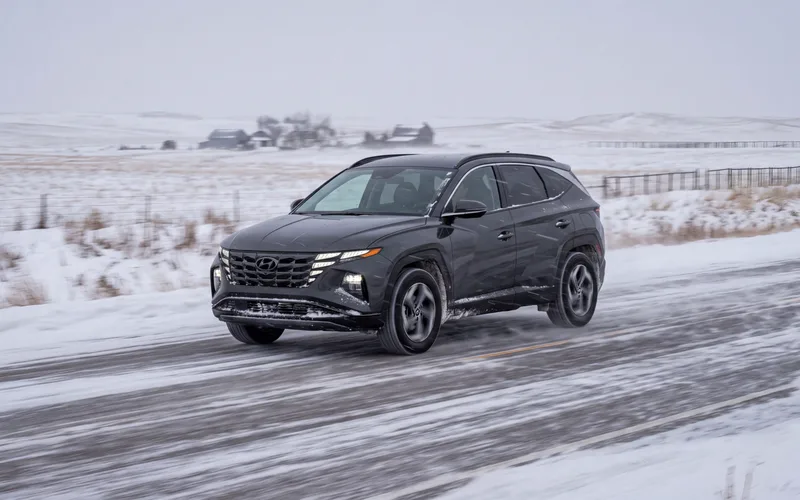 Hyundai TucsonCompact SUVBetter at: Value
Similar money buys far more cargo room, a hybrid option, better crash scores and a 10-year/100,000-mile powertrain warranty against Jeep's 5/60.
Compare 1.71C-
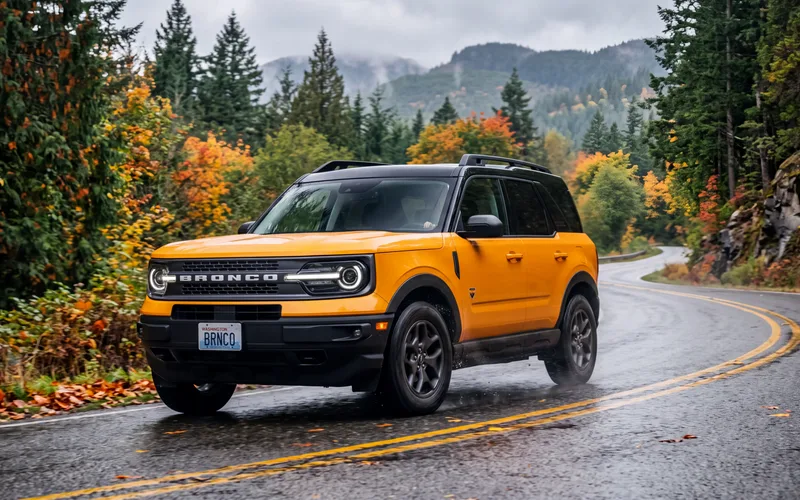 Ford Bronco SportSubcompact SUVBetter at: Off-road value
The direct rival for the buyer who actually wants the Trailhawk — comparable off-road hardware with more cargo space and a stronger available engine.
Compare 2.56C+
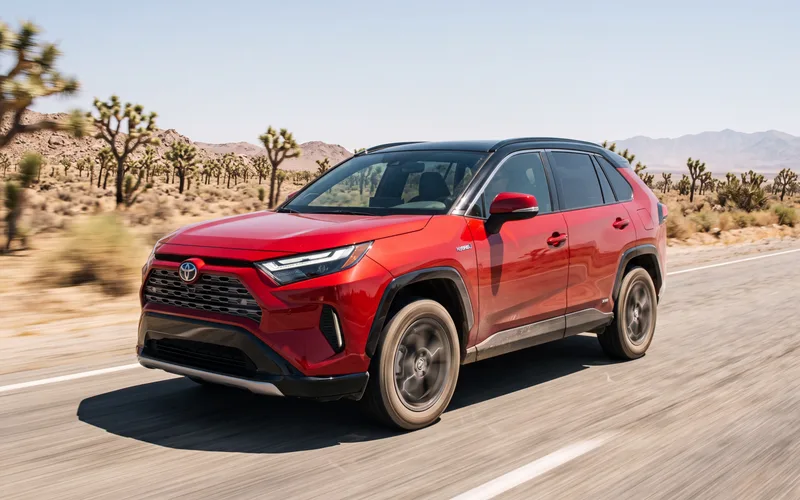 Toyota RAV4Compact SUVBetter at: Long-term ownership
Costs more up front but returns 35+ MPG as a hybrid, tows 3,500 lbs, holds its value, and carries a reliability record the Compass can't approach.
CompareHow it's evolved
10 scored model years · 2017–2026
Subject scores by year
Hover or tap a score to see what moved it versus the year before. A corner mark flags a big swing.
| Year | Performance | Efficiency | Safety | Space | Cost | Reliability | Tech | Use-case | Driving | Value |
|---|---|---|---|---|---|---|---|---|---|---|
| 2026 | 35 | 51 | 51 | 39 | 59 | 51 | 61 | 49 | 54 | 53 |
| 2025 | 34 | 55 | 51 | 38 | 63 | 59 | 63 | 49 | 52 | 57 |
| 2024 | 34 | 55 | 51 | 38 | 63 | 59 | 62 | 49 | 51 | 58 |
| 2023 | 34 | 55 | 55 | 38 | 60 | 58 | 61 | 50 | 51 | 58 |
| 2022 | 25 | 47 | 55 | 38 | 63 | 50 | 56 | 48 | 48 | 56 |
| 2021 | 26 | 47 | 40 | 37 | 63 | 52 | 42 | 46 | 47 | 50 |
| 2020 | 26 | 47 | 38 | 41 | 60 | 52 | 40 | 47 | 47 | 51 |
| 2019 | 26 | 47 | 40 | 43 | 62 | 46 | 43 | 47 | 47 | 52 |
| 2018 | 26 | 47 | 39 | 43 | 62 | 40 | 38 | 45 | 45 | 57 |
| 2017 | 26 | 47 | 39 | 40 | 62 | 47 | 44 | 45 | 44 | 55 |
Compare two years
Best fit & conditions
Higher scores mean a better fit for that use case. Learn more about use-case fit →
Subject profile
Academic Probation · NHTSA safety recalls
Apr 9, 2020Visibility: windshield wiper/washer: linkagesThe windshield wiper arm or arms may loosen, possibly causing the wipers to not operate properly and reduce the driver's visibility in certain weather conditions.
Defect
Chrysler (FCA US LLC) is recalling certain 2019-2020 Ram 1500, 1500 Classic and Jeep Compass vehicles. The windshield wiper arm or arms may loosen, possibly causing the wipers to not operate properly and reduce the driver's visibility in certain weather conditions.
Risk
Reduced visibility increases the risk of a crash.
Remedy
Chrysler will notify owners, and dealers will tighten the wiper nuts, free of charge. The recall began April 27, 2020. Owners may contact Chrysler customer service at 1-800-853-1403. Chrysler's number for this recall is W25.
NHTSA campaign 20V208000 ↗Manufacturer no. W25425,599 vehicles potentially affected (all models in the campaign)Owners notified Apr 27, 2020Filed by Chrysler (FCA US LLC)Filed as COMPASS
14 recalls on other model years of the Compass (2017–2019, 2022–2023, 2026)
Aug 13, 2026Back over prevention: sensing system: cameraThe rearview camera image may fail to display when the vehicle is placed in reverse. As such, these vehicles fail to comply with the requirements of Federal Motor Vehicle Safety Standard (FMVSS) number 111, "Rear Visibility."
Defect
Chrysler (FCA US, LLC) is recalling certain 2026 Jeep Wrangler, Jeep Gladiator, Jeep Compass, Jeep Cherokee, Jeep Grand Cherokee, Jeep Grand Cherokee L, Jeep Grand Wagoneer, Jeep Grand Wagoneer L, Ram Promaster, Ram Promaster EV, Ram 1500, Ram 2500, Chrysler Pacifica Plug-In Hybrid, Chrysler Voyager, and 2026-2027 Chrysler Pacifica and Dodge Charger vehicles. The rearview camera image may fail to display when the vehicle is placed in reverse. As such, these vehicles fail to comply with the requirements of Federal Motor Vehicle Safety Standard (FMVSS) number 111, "Rear Visibility."
Risk
A rearview camera image that fails to display reduces the driver's view behind the vehicle, increasing the risk of a crash.
Remedy
Radio software will be updated by a dealer or through an over-the-air (OTA) update, free of charge. Owner notification letters were mailed beginning September 2, 2026. Owners may contact Chrysler customer service at 800-853-1403. Chrysler's number for this recall is 78D. Vehicle Identification Numbers (VINs) involved in this recall will be searchable on NHTSA.gov on August 20, 2026.
NHTSA campaign 26V531000 ↗Manufacturer no. 78D844,027 vehicles potentially affected (all models in the campaign)Owners notified Sep 2, 2026Filed by Chrysler (FCA US, LLC)Filed as COMPASSJun 13, 2024Back over prevention: sensing system: cameraThe radio software may prevent the rearview image from displaying. As such, these vehicles fail to comply with the requirements of Federal Motor Vehicle Safety Standard number 111, "Rear Visibility."
Defect
Chrysler (FCA US, LLC) is recalling certain 2021-2022 Dodge Durango, 2021-2023 Chrysler Pacifica, Jeep Grand Cherokee L, 2022 Ram 1500, 2500, 3500, Chrysler Voyager, 2022-2023 Jeep Compass, Grand Cherokee, Wagoneer, Grand Wagoneer, and Ram Promaster vehicles. The radio software may prevent the rearview image from displaying. As such, these vehicles fail to comply with the requirements of Federal Motor Vehicle Safety Standard number 111, "Rear Visibility."
Risk
A rearview camera image that does not display decreases the driver's visibility, increasing the risk of a crash.
Remedy
Dealers will update the radio software or the software will be OTA, "Over-The-Air," free of charge. Owner notification letters were mailed beginning July 9, 2024. Owners may contact FCA US, LLC customer service at 1-800-853-1403. FCA US, LLC's numbers for this recall are 66B and 79B.
NHTSA campaign 24V436000 ↗Manufacturer no. 66B, 79B1,033,433 vehicles potentially affected (all models in the campaign)Owners notified Jul 9, 2024Filed by Chrysler (FCA US, LLC)Filed as COMPASSAug 14, 2023Electrical system: instrument cluster/panelThe brightness level of the instrument panel cluster (IPC) may not be adjustable due to incorrect software in the body control module (BCM). As such, these vehicles fail to comply with the requirements of Federal Motor Vehicle Safety Standard number 101, "Control and Displays."
Defect
Chrysler (FCA US, LLC) is recalling certain 2022-2023 Jeep Compass vehicles. The brightness level of the instrument panel cluster (IPC) may not be adjustable due to incorrect software in the body control module (BCM). As such, these vehicles fail to comply with the requirements of Federal Motor Vehicle Safety Standard number 101, "Control and Displays."
Risk
An IPC display that is not bright enough may not clearly show critical safety information, such as the speedometer or warning lights, increasing the risk of a crash.
Remedy
Dealers will update the body control module (BCM) software, free of charge. Owner notification letters were mailed August 29, 2023. Owners may contact FCA US, LLC customer service at 1-800-853-1403. FCA US, LLC's number for this recall is 88A.
NHTSA campaign 23V576000 ↗Manufacturer no. 88A181,999 vehicles potentially affected (all models in the campaign)Owners notified Aug 29, 2023Filed by Chrysler (FCA US, LLC)Filed as COMPASSFeb 9, 2023Electrical system: instrument cluster/panelThe instrument panel center cluster display may be insufficiently illuminated and may not appear visible during daytime driving conditions. As such, these vehicles fail to comply with the requirements of Federal Motor Vehicle Safety Standard number 101, "Control and Displays."
Defect
Chrysler (FCA US, LLC) is recalling certain 2022 Jeep Compass vehicles. The instrument panel center cluster display may be insufficiently illuminated and may not appear visible during daytime driving conditions. As such, these vehicles fail to comply with the requirements of Federal Motor Vehicle Safety Standard number 101, "Control and Displays."
Risk
An instrument panel display that is not visible to the driver may result in the inability to see safety-critical information, such as the fuel gauge and warning lights, increasing the risk of a crash.
Remedy
Dealers will replace the windshield and headlamp switch, add a light sensor module, and add a wiring jumper harness to allow the instrument panel center cluster display backlighting to function correctly, free of charge. Owner notification letters were mailed March 30, 2023. Owners may contact FCA US, LLC customer service at 1-800-853-1403. FCA US, LLC's number for this recall is 15A.
NHTSA campaign 23V058000 ↗Manufacturer no. 15A90 vehicles potentially affected (all models in the campaign)Owners notified Mar 30, 2023Filed by Chrysler (FCA US, LLC)Filed as COMPASSApr 14, 2022Seats: front assembly: head restraintThe front seat head restraints were not welded properly. As such, these vehicles fail to comply with the requirements of Federal Motor Vehicle Safety Standard number 202, "Head Restraints."
Defect
Chrysler (FCA US, LLC) is recalling certain 2022 Jeep Compass vehicles. The front seat head restraints were not welded properly. As such, these vehicles fail to comply with the requirements of Federal Motor Vehicle Safety Standard number 202, "Head Restraints."
Risk
Improperly welded head restraints can result in an increased risk of injury to seat occupants during a crash.
Remedy
Dealers will replace both front seat head restraints, free of charge. Owner notification letters were mailed June 3, 2022. Owners may contact FCA US LLC customer service at 1-800-853-1403. FCA US, LLC's number for this recall is Z36.
NHTSA campaign 22V248000 ↗Manufacturer no. Z36114 vehicles potentially affected (all models in the campaign)Owners notified Jun 3, 2022Filed by Chrysler (FCA US, LLC)Filed as COMPASSAug 9, 2018Electrical system: wiring: front underhoodThe powertrain control module may be equipped with a voltage regulator chip in the circuit board that may fail, causing a stall or a no start condition.
Defect
Chrysler (FCA US LLC) is recalling certain 2018 Jeep Renegade, Compass and Grand Cherokee, RAM 1500 and Promaster, Fiat 500x, Dodge Journey, Challenger, Charger and Durango and Chrysler 300x vehicles, 2017-2018 Jeep Wrangler, Dodge Grand Caravan and Chrysler Town and Country vehicles and 2018-2019 Jeep Cherokee and 2018 Chrysler Pacifica and Pacifica Hybrid vehicles. The powertrain control module may be equipped with a voltage regulator chip in the circuit board that may fail, causing a stall or a no start condition.
Risk
A vehicle stall can increase the risk of a crash.
Remedy
Chrysler will notify owners, and dealers will replace the powertrain control module, free of charge. The recall began October 2, 2018. Owners may contact Chrysler customer service at 1-800-853-1403. Chrysler's number for this recall is U87.
NHTSA campaign 18V524000 ↗Manufacturer no. U8712,779 vehicles potentially affected (all models in the campaign)Owners notified Oct 2, 2018Filed by Chrysler (FCA US LLC)Filed as COMPASSAug 9, 2018Service brakes, hydraulic: foundation components: disc: caliperThe rear brake caliper pistons on these vehicles may have an insufficient coating causing gas pockets to form, potentially reducing rear brake performance.
Defect
Chrysler (FCA US LLC) is recalling certain 2018-2019 Dodge Grand Caravan and Jeep Compass, 2018 Dodge Journey, and 2019 Jeep Cherokee vehicles. The rear brake caliper pistons on these vehicles may have an insufficient coating causing gas pockets to form, potentially reducing rear brake performance.
Risk
A reduction of braking performance can increase the risk of a crash.
Remedy
Chrysler will notify owners, and dealers will bleed the vehicle's brake system, free of charge. The recall began September 29, 2018. Owners may contact Chrysler customer service at 1-800-853-1403. Chrysler's number for this recall is U86.
NHTSA campaign 18V523000 ↗Manufacturer no. U86154,335 vehicles potentially affected (all models in the campaign)Owners notified Aug 29, 2018Filed by Chrysler (FCA US LLC)Filed as COMPASSMay 1, 2018Suspension: front: control arm: lower armThe front lower control arms may be incorrectly welded, potentially resulting in a control arm separation.
Defect
Chrysler (FCA US LLC) is recalling certain 2018 Jeep Compass vehicles. The front lower control arms may be incorrectly welded, potentially resulting in a control arm separation.
Risk
If the lower control arm separates, it can cause a loss of vehicle control, increasing the risk of a crash.
Remedy
Chrysler will notify owners, and dealers will inspect and, if necessary, replace the front lower control arms, free of charge. The recall began May 31, 2018. Owners may contact Chrysler customer service at 1-800-853-1403. Chrysler's number for this recall is U42.
NHTSA campaign 18V279000 ↗Manufacturer no. U422,761 vehicles potentially affected (all models in the campaign)Owners notified May 31, 2018Filed by Chrysler (FCA US LLC)Filed as COMPASSDec 21, 2017EquipmentChrysler (FCA US LLC) is recalling various Dodge, Chrysler, and RAM vehicles equipped with Kidde Plastic-Handle or Push Button 'Pindicator' Fire Extinguishers. A list of the affected trailer models is available at: https://static.nhtsa.gov/odi/rcl/2017/RMISC-17V824-0103.pdf. These extinguishers may become clogged, preventing the extinguisher from discharging as expected or requiring excessive force to activate the extinguisher. Additionally, in certain models, the nozzle may detach from the valve assembly with enough force that it could cause injury and also render the product inoperable. For a full list of the affected fire extinguisher models visit: https://static.nhtsa.gov/odi/rcl/2017/RMISC-17E062-5427.pdf
Defect
Chrysler (FCA US LLC) is recalling various Dodge, Chrysler, and RAM vehicles equipped with Kidde Plastic-Handle or Push Button 'Pindicator' Fire Extinguishers. A list of the affected trailer models is available at: https://static.nhtsa.gov/odi/rcl/2017/RMISC-17V824-0103.pdf. These extinguishers may become clogged, preventing the extinguisher from discharging as expected or requiring excessive force to activate the extinguisher. Additionally, in certain models, the nozzle may detach from the valve assembly with enough force that it could cause injury and also render the product inoperable. For a full list of the affected fire extinguisher models visit: https://static.nhtsa.gov/odi/rcl/2017/RMISC-17E062-5427.pdf
Risk
If the fire extinguisher does not function properly, it can increase the risk of injury in the event of a fire.
Remedy
Chrysler will notify owners instructing them to contact Kidde for a replacement fire extinguisher, free of charge. The recall began February 14, 2018. Owners may contact Chrysler customer service at 1-800-853-1403 or Kidde customer service service toll-free at 1-855-262-3540, or online at www.kidde.com and click on "Product Safety Recall" for more information. Chrysler's number for this recall is T82.
NHTSA campaign 17V824000 ↗Manufacturer no. T8261,791 vehicles potentially affected (all models in the campaign)Owners notified Feb 14, 2018Filed by Chrysler (FCA US LLC)Filed as COMPASSNov 21, 2017Electrical system: instrument cluster/panelThe brightness of the backlighting for the Instrument Panel Cluster (IPC) cannot be adjusted. As such, these vehicles fail to comply with the requirements of Federal Motor Vehicle Safety Standard (FMVSS) number 101, "Controls and Displays."
Defect
Chrysler (FCA US LLC) is recalling certain model year 2017-2018 Jeep Compass vehicles. The brightness of the backlighting for the Instrument Panel Cluster (IPC) cannot be adjusted. As such, these vehicles fail to comply with the requirements of Federal Motor Vehicle Safety Standard (FMVSS) number 101, "Controls and Displays."
Risk
An instrument cluster that is too bright, and cannot be dimmed, can reduce the driver's ability to see at night, increasing the risk of a crash.
Remedy
Chrysler will notify owners, and dealers will update IPC software, as necessary, free of charge. The recall began December 8, 2018. Owners may contact Chrysler customer service at 1-800-853-1403. Chrysler's number for this recall is T70.
NHTSA campaign 17V740000 ↗Manufacturer no. T7025,823 vehicles potentially affected (all models in the campaign)Owners notified Dec 8, 2017Filed by Chrysler (FCA US LLC)Filed as COMPASSNov 21, 2017Air bags: frontal: passenger side: inflator moduleThe passenger side air bag assembly may have inflator mounting nuts loose within the module assembly.
Defect
Chrysler (FCA US LLC) is recalling certain 2018 Jeep Compass vehicles. The passenger side air bag assembly may have inflator mounting nuts loose within the module assembly.
Risk
In the event of a crash necessitating air bag deployment, unsecured inflator mounting nuts outside of the cushion assembly are potential projectiles that may strike the driver or other occupants resulting in serious injury or death.
Remedy
Chrysler will notify owners, and dealers will replace the passenger air bag module assembly, free of charge. The recall began December 28, 2017. Owners may contact Chrysler customer service at 1-800-853-1403. Chrysler's number for this recall is T73.
NHTSA campaign 17V732000 ↗Manufacturer no. T7327,210 vehicles potentially affected (all models in the campaign)Owners notified Dec 28, 2017Filed by Chrysler (FCA US LLC)Filed as COMPASSOct 24, 2017Engine and engine cooling: engineThe engines may have a cracked oil pump housing that can result in oil pump failure.
Defect
Chrysler (FCA US LLC) is recalling certain 2018 Jeep Cherokee and Compass vehicles equipped with 2.4L engines. The engines may have a cracked oil pump housing that can result in oil pump failure.
Risk
If the oil pump fails, the engine will stall, increasing the risk of a crash.
Remedy
Chrysler will notify owners, and dealers will inspect the oil pump, replacing it as necessary, free of charge. The recall began December 5, 2017. Owners may contact Chrysler customer service at 1-800-853-1403. Chrysler's number for this recall is T65.
NHTSA campaign 17V670000 ↗Manufacturer no. T65357 vehicles potentially affected (all models in the campaign)Owners notified Dec 5, 2017Filed by Chrysler (FCA US LLC)Filed as COMPASSJul 7, 2017Equipment: other: owners/service/other manualThe affected vehicles have User's Guides that contain incorrect information regarding the jump start procedure, specifically, the polarity of the battery terminals are reversed in the battery terminal graphic.
Defect
Chrysler (FCA US LLC) is recalling certain 2017 Jeep Compass vehicles. The affected vehicles have User's Guides that contain incorrect information regarding the jump start procedure, specifically, the polarity of the battery terminals are reversed in the battery terminal graphic.
Risk
If a customer follows the User's Guide, they may hook up the battery jumper cables incorrectly, increasing their risk of injury.
Remedy
Chrysler will notify owners and will replace the User's Guides with a corrected version, free of charge. The recall began August 22, 2017. Owners may contact Chrysler customer service at 1-800-853-1403. Chrysler's number for this recall is T46.
NHTSA campaign 17V433000 ↗Manufacturer no. T4612,989 vehicles potentially affected (all models in the campaign)Owners notified Aug 22, 2017Filed by Chrysler (FCA US LLC)Filed as COMPASSMay 9, 2017Power train: axle assembly: axle shaftThe left front halfshaft may not be properly seated, and, as a result, it may disengage from the transmission and/or break.
Defect
Chrysler (FCA US LLC) is recalling certain 2017 Jeep Compass vehicles equipped with a 6-speed transmission. The left front halfshaft may not be properly seated, and, as a result, it may disengage from the transmission and/or break.
Risk
If the left front halfshaft disengages or breaks, the vehicle will have a loss of drive. Additionally, if the vehicle is parked without using the parking brake, the vehicle may roll, despite being in 'Park.' Either condition may increase the risk of a crash.
Remedy
Chrysler will notify owners, dealers will inspect the left front halfshaft for engagement and replace any that are not properly engaged in the transmission, free of charge. The recall began on June 12, 2017. Owners may contact Chrysler customer service at 1-800-853-1403. Chrysler's number for this recall is T26.
NHTSA campaign 17V301000 ↗Manufacturer no. T264,705 vehicles potentially affected (all models in the campaign)Owners notified Jun 12, 2017Filed by Chrysler (FCA US LLC)Filed as COMPASS
Source: NHTSA Office of Defects Investigation recall database, model years 2017–2026. Recalls are listed by model year as the manufacturer filed them; whether a specific car is affected depends on its VIN — check a VIN at nhtsa.gov ↗. NHTSA model names matched to this page: COMPASS.
Detailed scoring by subject
1Performance & PowertrainThe Compass's lowest-graded category.0.00F
One naturally aspirated 2.4L covers the entire 2020 US range — Sport through Trailhawk and High Altitude — and 180 hp sits essentially at the floor of the 150–550 hp SUV band. Identical hardware to 2021; the same engine is re-rated down to 177 hp for 2022.
Peak torque arrives high at 3,900 rpm on a naturally aspirated curve with nothing underneath it, which is what makes the 3,327-lb 4x4 feel flat pulling away. Turbocharged compact-SUV rivals of 2020 deliver more torque from roughly 1,750 rpm.
Both instrumented 2020 runs are of the heaviest Trailhawk; the ~300-lb-lighter volume 4x4 lands just under 10 seconds. Either way it falls outside the bottom of the 3.5–9.5 sec SUV band — the weakest figure in this category and the complaint every 2020 review led with.
The Tigershark is unresponsive rather than laggy — no turbo to wait on, just an engine that must be wrung out toward its 6,400-rpm power peak and grows coarse and loud doing it. Standard stop-start adds a further roughness complaint. Clearly in the lower half of the band.
The 948TE nine-speed is the most-criticized component of this generation — it upshifts early, resists kickdown and shifts without much polish, compounding an engine already short of torque. The 4x2's Aisin six-speed is smoother but narrower in spread, and the C635 manual — still offered for 2020, dropped for 2021 — is the one gearbox that lets a driver keep the engine on the boil.
Standard unibody compact-crossover capability, unchanged across this generation, but 2,000 lbs sits near the bottom of an SUV band running to 8,000 lbs — and the front-drive versions that make up much of the volume are not rated to tow at all.
Four-wheel drive is available on every 2020 trim with terrain modes and a genuine 20:1 crawl ratio on Trailhawk — sophisticated for a compact crossover — but it remains a cost option rather than standard equipment, with front-drive Sport, Latitude, Altitude and Limited versions sold alongside. Standard 4x4 does not arrive until the 2023 model year.
The Trail Rated Trailhawk remains the most genuinely capable thing in the compact-crossover class — a 30.3° approach angle, 8.5 in of clearance and a low-range crawl ratio are real hardware rather than a badge — but it is a unibody crossover with no locking differential and no two-speed transfer case. Upper half of the capable-light-duty band; non-Trailhawk 4x4 trims, at 16.8° approach and 8.2 in, are far more modest.
One engine for the entire range with no turbo upgrade, hybrid, PHEV or EV anywhere in the US lineup — take-it-or-leave-it on what this item actually measures. The four certified drivetrain combinations, including a manual that disappears for 2021, give 2020 marginally more configuration choice than the years either side of it, but not a second powertrain.
2Efficiency & RangeGrades below the middle of the scale.1.10D
25 MPG combined for the volume 4x4 automatic — mid-pack among 2020 gas compact SUVs and unchanged across the pre-facelift generation. Two points shy of the 27 MPG the later turbocharged eight-speed Compass manages, so the less powerful car is also the less efficient one.
Standard stop-start and a disconnecting 4x4 system hold city economy at the class average, but a naturally aspirated 2.4L hauling 3,327 lbs has no efficiency trick in reserve — the hybrid compact SUVs already on sale in 2020 beat this outright.
The 948TE nine-speed's tall overdrive gearing (0.48:1 ninth, 9.81 ratio spread) makes steady-state cruising the Compass's efficiency high point, and it is the one economy figure here that holds up against the segment.
A small 13.5-gallon tank paired with only average economy puts total range near the bottom of the 280–600 mi SUV band. Frequent fuel stops are the practical consequence, and it is the weakest figure in this category.
Running costs land near the middle of the SUV band — no premium-fuel penalty, but 25 MPG combined on a regular-gas four-cylinder gives the Compass no cost advantage over larger, more powerful rivals that match its economy.
87-octane regular on a naturally aspirated multiport-injected engine, with no premium recommendation, no additive requirement and nothing to plug in — the cheapest and simplest fueling situation available.
3SafetyOne of the Compass's weakest categories.0.54F
NHTSA rated both drivetrains of the 2020 Compass 4 stars overall — 4 stars frontal (driver and passenger), 5 stars side barrier and pole, and only 3 stars rollover with roughly a 20% rollover probability, which is what holds the overall result below 5.
The 2020 Compass is Good in every original-protocol IIHS crash test — both small overlap fronts, moderate overlap front, side, roof strength and head restraints — but earned no Top Safety Pick award, and IIHS rates it Marginal in the updated side test that covers 2017-21 builds. Clean legacy results with a Marginal in a core updated test and no award lands it at the bottom of the mid band. (It escapes the Poor updated moderate-overlap result that IIHS applies to the 2021 and later Compass.)
For 2020 the Compass has no active driver assistance standard on ANY trim — not the volume Latitude and not even Limited or Trailhawk. AEB, adaptive cruise, lane departure warning and auto high beams all live in the optional Advanced Safety Group, and blind-spot monitoring in the separate optional Safety and Security Group. Jeep's only 2020 safety change was making those two packages orderable on the base Sport as well. By 2020 most compact-SUV rivals had AEB standard fleet-wide, so this is a bottom-band result and a step behind the 2021 car, which at least made the suite standard on Limited and Trailhawk.
Where the optional Advanced Safety Group is fitted, the full-speed Forward Collision Warning-Plus with Advanced Brake Assist earns IIHS's top Superior rating in the vehicle-to-vehicle front crash prevention test. Two offsets keep it mid-band: IIHS never evaluated the 2020 Compass for pedestrian detection at all, day or night, and the hardware is optional on every trim rather than standard on any.
Blind-spot Monitoring with Rear Cross Path detection is a conventional mirror-light alert with no steering or braking intervention, no safe-exit alert, and no surround-view camera offered anywhere in the 2020 range to compensate. It is optional on every trim as part of the Safety and Security Group — the 2020 change was only that the package became orderable on Sport too.
LaneSense Lane Departure Warning-Plus is a warn-and-nudge system that applies a brief steering torque on detected drift; there is no sustained lane centering and no highway-assist layer on the 2020 Compass at any trim. It is also absent unless the optional Advanced Safety Group is ordered, and NHTSA records lane departure warning as simply not available on the as-rated car.
Adaptive Cruise Control with Stop and Go is a genuine full-speed-range system that will halt and resume the Compass in traffic, which was better than several 2020 rivals offered. But it is optional on all five trims, there is no highway assist pairing it with steering, and the nine-speed automatic's reluctant kickdown makes speed recovery lazy.
No hands-free highway driving system was offered on the 2020 Compass at any trim. FCA had no equivalent to Super Cruise or BlueCruise anywhere in the Jeep lineup for this model year.
No 2020 Compass configuration reaches even Acceptable. IIHS rates every variant Marginal at best and Poor without high-beam assist — and because auto high beams sit inside the optional Advanced Safety Group, the volume Latitude as most buyers order it is a Poor-rated car. This is the single biggest reason the Compass missed a Top Safety Pick despite Good results in every original crash test.
The upright seating position and tall glasshouse give a good view forward, but thick rear roof pillars and a shallow rear window create real over-the-shoulder blind zones. The 2020 Compass offers no surround-view camera at any price, and even the ParkSense rear sensors are optional — leaving the federally mandated backup camera as the only standard compensation.
The hardware count is normal — two full sets of lower anchors for the rear outboard seats plus three top tethers — and 38.3 inches of rear legroom is competitive for the class. The execution is not: IIHS graded the near-identical Compass LATCH installation Poor for ease of use, with lower anchors buried deep in the seat bight and hard to reach, and the narrow body makes three seats across a struggle.
4Space & ComfortGrades near the bottom of the scale.0.74F
Five seats is the fixed compact-crossover answer — no third-row option, no six- or seven-seat variant anywhere in the 2020 range — and it sits near the floor of an SUV band that runs to eight.
The upright Jeep glasshouse pays off — 39.2 inches is comfortably mid-band for an SUV and reviewers consistently note plenty of head space up front. The optional panoramic roof costs six-tenths of an inch, which is a smaller penalty than most rivals charge.
41.8 inches is ordinary for the class and lands just under halfway up the 40–44.5-inch SUV band — enough for tall drivers, but the Compass gives away an inch or more to the roomiest compact crossovers of the year.
The box-shaped roofline is the Compass's best interior-packaging trait — 38.5 inches in the back is above the midpoint of the SUV band and the strongest of its five passenger-space specs.
38.3 inches of rear legroom is genuinely competitive — better than two-thirds of the SUV band — and is what keeps the Compass usable for four adults despite its small footprint. Space, not seats or cargo, is where this cabin earns its points.
The Compass is a strict two-row compact crossover with no third row offered at any price, which the framework scores in the bottom band. Buyers needing a third row had to move up to a Grand Cherokee L or out of the Jeep range entirely in 2020.
27.2 cubic feet is barely above the 25 cu ft floor of the SUV band and roughly ten cubic feet short of a 2020 CR-V or RAV4 — the single weakest measurement in this category and the one reviewers named most often. A 31.1-inch liftover is at least low enough to load easily.
Folding the rear bench yields 59.8 cubic feet, only just inside the 55 cu ft floor of the SUV band and 15–20 cu ft down on the class leaders. The standard fold-forward front passenger seat helps with long items, but the total volume simply is not there.
The cargo bay is the well-thought-out half — an under-floor tray, tie-downs and a reversible mat come standard — but the front cabin is the part owners live with, and it has no phone shelf, a tiny console bin and knee nets that cannot be reached while driving. Below the class norm rather than disastrous.
No reviewer calls these seats bad, and the combination of firm cushions, wide doors and 38.3 in of rear legroom works for most body types over a normal drive. What holds it mid-band is the volume trim's manual-only adjustment with no lumbar support at all, which turns firm cushions into a long-haul liability.
Ride compliance is the clearest thing this cabin does well — long-travel struts and an isolated rear cradle on 4x4 cars soak up broken pavement better than most compact crossovers of the year, and it is the trait both Edmunds and Consumer Guide single out. It is comfortable rather than segment-leading, so upper-middle band.
A boxy shape, no acoustic glass anywhere in the range and an engine that must be revved hard to make progress add up to a cabin noisier than the compact-SUV average at highway speed. Road-tired trims improve on the Trailhawk but do not fix the wind noise or the powertrain drone.
Dual-zone automatic climate control with a humidity sensor standard on the base Sport is genuinely above the 2020 compact-SUV norm, where single-zone manual air was still common at that price, and rear vents on the volume Latitude back it up. Heat and ventilation are all available but all cost extra on the trims most buyers order, which keeps this out of the top band.
5Cost of OwnershipThe Compass's best-graded category.2.03C
The 2020 Compass opens at $22,280 plus a $1,495 destination charge for a front-drive Sport — a genuinely low entry point for a compact SUV, but that headline number buys a manual-transmission car with a four-speaker stereo and no active safety equipment.
The Latitude is the volume 2020 Compass and Jeep buyers skew heavily toward four-wheel drive, so the representative car is a Latitude 4x4 at $28,620 including destination, which in practice left the lot with the $945 safety package or the $1,695 Sun & Safety group fitted — roughly $29,500–$30,300.
CarEdge projects roughly $3,350 of scheduled maintenance and wear items across the first five years, and RepairPal adds about $526 a year of unscheduled repair — well above the $429 it estimates for a RAV4 and $407 for a CR-V — so the 2.4L Tigershark/9-speed Compass lands meaningfully above the segment average rather than at it.
The 2020 cars passed the five-year mark in 2025, and the market then put a Latitude 4x4 that stickered at $28,620 in the mid-$14,000s — about 51% retained, below the compact-SUV average even with the inflated used market of that period propping the number up.
Jeep's 3-year/36,000-mile basic coverage is the industry floor and two years short of the 5-year/60,000-mile basic warranties Hyundai, Kia and Mitsubishi gave buyers of directly competing 2020 compact SUVs.
Five years/60,000 miles sits at the bottom of the SUV normalization band and is half the 10-year/100,000-mile powertrain coverage Hyundai and Kia offered 2020 buyers — a real exposure on a model with a below-average reliability record and a nine-speed automatic reviewers criticized.
A 2020 Compass came with no complimentary scheduled maintenance at all — Jeep Wave was still restricted to higher trims of the Wrangler, Gladiator and Grand Cherokee in 2020, and only became automatic across the whole Jeep range with the 2021 model year, so a Compass buyer paid for the first oil change. What is included is 24/7 roadside assistance for the full 5-year/60,000-mile powertrain period plus the usual SiriusXM and Uconnect trials, which is respectable roadside cover but nothing beside ToyotaCare's complete 2-year/25,000-mile schedule or Hyundai's 3-year/36,000-mile complimentary maintenance on the rivals this car was cross-shopped against.
$29,500 volume-trim price minus its estimated resale value after 5 years (51% retained, or about $15,045) leaves about $14,455 in depreciation. Add the projected $6,300 in 5-year maintenance and repairs, and owning this vehicle for 5 years costs about $20,755 in total.
6Reliability & QualityOne of the Compass's strongest categories.1.48D
2020 is the kinder of this generation's late years in the predictor data: Consumer Reports calls it about average against the model-year field rather than the 2/5-and-not-recommended verdict it hands the 2021 car, and J.D. Power rates it 82/100 "Great." What keeps it from clearing average outright is the federal complaint file, which is roughly double 2021's and clusters on the engine and electrical systems rather than on trim and accessories.
Jeep is a below-average dependability brand on both of the studies that touch this model year, but 2020 catches it at a relative high-water mark rather than at the bottom: Consumer Reports' 2020 brand report card had it 19th of 26 after a seven-place climb, and the 2023 VDS — the one that surveys 2020-model-year owners at three years — puts Jeep below the 186 PP100 industry average alongside Ram and Chrysler. Bottom-third stands, dead-last does not.
The recall side is close to clean — a single federal campaign for loose windshield-wiper arm nuts, remedied by tightening them, which is about as minor as a safety recall gets. The service side is what holds this in the middle of the band: 138 NHTSA complaints for one model year, led by engine and electrical-system pairings, with stalling (19), oil consumption (16), infotainment (18) and battery-drain (17) reports recurring as patterns rather than one-offs.
Both halves of the 2020 drivetrain carry documented history: the 2.4L Tigershark MultiAir2 is the engine at the centre of the FCA oil-consumption litigation, and the 948TE nine-speed on 4x4 models is the most-criticized component of this generation. 2020 sits outside the certified settlement class, which covers 2017–2018 Compasses — but 16 oil and 19 stalling complaints in the federal file for this exact year show the pattern did not stop at the class cutoff, and Stellantis replaced the whole drivetrain for 2023.
This is the pre-refresh cabin and reviewers were unanimous about it — hard plastic across the dash top, door uppers and the surround of the centre screen, flimsy switchgear and faux chrome, with Consumer Reports going as far as sharp, unfinished edges. Jeep's own response was to redesign the interior wholesale for 2022, which is the plainest verdict available on the 2020 piece.
Physical assembly draws few objections — panel fit and structural solidity are not what reviewers complain about, and J.D. Power's 82/100 reflects an initial-quality record that is unremarkable rather than poor. The deduction is electronic: Uconnect and module faults are the largest single complaint theme for the model year, and a screen that goes dark or a battery that drains overnight reaches an owner as a finish defect the same way a rattle would.
Coverage is the strong half and it is not year-dependent — Jeep runs one of the densest franchise networks in the US at roughly 2,400 rooftops, so warranty and parts access is straightforward almost anywhere, including rural markets where import brands thin out. Service satisfaction is the ordinary half: Jeep sits mid-pack among mass-market brands in J.D. Power's customer-service measurement rather than near the top.
A high-volume nameplate on the widely shared Stellantis small-wide platform means abundant Mopar and aftermarket supply, and independent shops service it without dealer-only tooling. Measured repair spend backs that up — RepairPal puts annual cost below the compact-SUV average with fewer unscheduled shop visits per year — which is one of the few places the Compass outperforms its reliability reputation.
7Technology & InfotainmentOne of the Compass's weakest categories.0.64F
The volume Latitude gets the 7.0-inch screen, which sits exactly on the floor of the 7–15.5-inch SUV band. Making the 7-inch standard across the range was itself the 2020 upgrade — the 5.0-inch Uconnect 3 that had been the Sport's base radio was dropped — but by the standards of the band it scores at zero.
Judged as an interface, Uconnect 4 is the best thing in this cabin — fast, uncluttered and mercifully still equipped with knobs, in a year when rivals were burying climate controls in menus. What pulls it back to the middle of the band is that owners of this specific car report it freezing and rebooting more than the press fleet ever did.
Phone projection standard on every trim — including a $23,775 base Sport with a manual gearbox — was ahead of several 2020 rivals that still charged for it or withheld Android Auto. It is wired only, with no wireless option at any price, which is exactly the middle band the framework describes.
Voice control is the old command-tree kind that reads a list of phrases back at you, and native maps are locked behind an option package that the volume Latitude only reaches through a second package. Most owners of this car navigated with CarPlay or Android Auto, which is precisely the behaviour the lower-middle band describes.
A six-speaker base system is unremarkable, but the newly re-speakered Alpine upgrade — 506 watts, nine channels and a real subwoofer — is a legitimate premium option and available two trims down from the top. Solidly competitive rather than a selling point.
The volume Latitude leaves the factory with a 3.5-inch monochrome strip between two analogue needles, which is a 2013-grade instrument panel; the 7-inch colour display is real and configurable but is an option package away. No configurable full-digital cluster exists at any price, so this lands below the middle of the band.
No whole-vehicle OTA, no infotainment OTA, not even OTA map updates — every software change on this car requires a USB stick or a service visit. That is the bottom band, and it is the single largest technology gap between this Compass and the 2022-and-later cars.
The app itself does the core jobs — start, lock, locate, assistance — but it is gated behind the 8.4-inch navigation head unit, which on the volume Latitude requires a second option package on top, so a typically equipped 2020 Compass has no connected services at all. Subscription-gated and absent from most cars sold puts this below the middle band; there is no digital key.
Two USB-A ports for five occupants, no USB-C anywhere, no wireless charging at any price, and Cars.com noting there is nowhere on the centre stack to even set a phone down. The standard rear 12-volt and the optional 115-volt household outlet are the only things keeping this off the floor.
Proximity entry with push-button start standard from the Latitude up is the class norm met, and remote start is available on every trim through the inexpensive Cold Weather Group. The power liftgate is optional and button-operated rather than hands-free, and there is no phone-as-key of any kind, so this is a competent middle-band result.
The federally mandated rear camera is standard and has active grid lines, but even the rear sonar sensors cost extra on every trim, and there is no surround view, no front sensors and no park assist anywhere in the range. Combined with the thick rear pillars, that is below what the middle band describes.
No head-up display was offered on the 2020 Compass at any trim or in any package — bottom band by definition. It was not unusual for a mainstream compact SUV of this year, but several rivals did offer one.
8Use-Case FitGrades below the middle of the scale.1.12D
The everyday geometry works — wide-opening rear doors, a low 31-inch liftover, competitive rear legroom and standard rear vents make loading kids straightforward. Two things drag it to the middle: LATCH anchors IIHS calls hard to reach, and only 27.2 cu ft behind the seats, which a full-size stroller plus a week's groceries fills.
Crash structure is fine, but for 2020 the Compass had no active driver assistance standard on any trim — not even the top Limited — so the car a family actually finds on the lot has no automatic emergency braking, no blind-spot alert and headlights IIHS calls Poor without the optional high-beam assist. That is a safety gap at exactly the price point the item asks about.
Four people are genuinely comfortable in this cabin and the ride supports long stints, but the luggage will not fit and the fuel stops come every five hours. Competent for a medium trip, compromised for a real one — the middle band.
Everything the driver touches is easy — good visibility, real knobs, standard dual-zone climate — but the drivetrain never stops reminding you it is there, hunting gears at part throttle and shuddering at every stop-start restart. Fine daily manners undermined by one persistent annoyance, which is what the middle band describes.
Regular fuel and no premium requirement keep the per-mile number ordinary, but 25 MPG combined is five short of the CR-V, RAV4 and Escape the same buyer cross-shopped — all of which also offered hybrids the Compass could not answer — and the repair bill runs above class. Below-average commuting economics rather than expensive.
A 173-inch, 36.3-foot-circle crossover with light steering and an upright driving position is easy to thread through a city and slot into a street space — this is where the Compass's small footprint pays. The rear three-quarter blind spots and optional-only parking sensors keep it out of the top band.
A 2,000-lb tow rating that front-drive versions are not rated for at all, under 60 cu ft of enclosed cargo, and a naturally aspirated engine already working hard with nobody in the car — this is not a work tool in any sense the item measures. Bottom band.
There is no fleet or commercial track record for the Compass to lean on, and the two components a hard-worked example leans on hardest — the Tigershark's oil consumption and the nine-speed's calibration — are the two with documented histories. Dense dealer coverage and cheap parts soften the landing but do not make this a durable work vehicle.
The basics are all there and mostly standard — tie-downs, a lit and trayed cargo floor, a wipe-clean reversible mat, a rear 12-volt and an available household outlet, plus a factory Class III hitch and roof rails. What is absent is anything beyond the basics: no bed, no upfit ecosystem, no onboard power worth the name and no work-oriented interior package. Squarely the 'basic tie-downs and some work options' band.
Ride comfort is real, but every other mile-eating quality is missing: sub-340-mile range means a stop every four to five hours, the cabin is noisier than class average at 75 mph, the engine has nothing left for a highway pass, and the fatigue-reducing driver assists are optional and half-formed. A poor-to-mediocre tourer.
This is the Compass's strongest use case and the reason to buy one. A genuine low-range crawl ratio, 8.5 inches of clearance and a 30-degree approach angle put the Trail Rated Trailhawk beyond anything a CR-V or RAV4 offered in 2020, and even ordinary 4x4 trims get a disconnecting all-wheel-drive system with terrain modes, roof rails and a hitch option. Only the 2,000-lb tow limit and 27.2 cu ft of cargo keep it out of the top band.
The flexibility is better than the volume: a 60/40 rear bench, a fold-forward front passenger seat for long items, an under-floor tray, roof rails and a hitch option cover most gear-hauling shapes. But 38.1 inches between the wheel arches and a 59.8 cu ft maximum mean bulky loads are a squeeze — normal luggage fits, a bike or a full camping kit does not without the roof.
9Driving ExperienceGrades below the middle of the scale.1.13D
Suspension travel tuned for ride comfort and mild off-road use gives the Compass noticeable body roll and early understeer, and neither tire fitment is chosen for grip. It is stable and predictable rather than nervous — but 'underwhelming' is the consensus word, which puts it below the middle of the band.
A 15.7:1 rack at 2.68 turns lock-to-lock is quick enough on paper and makes the Compass easy to place in traffic, but the assist is calibrated for lightness and returns essentially no feedback, with a vague zone around straight-ahead. Precise enough, numb — the lower half of the middle band.
140 feet is a poor number, but it belongs to the heaviest trim on knobby tires and is not what a Latitude on all-seasons does. The hardware underneath is ordinary compact-crossover fare with solid rear discs and single-piston calipers, and no reviewer praises the pedal — adequate stopping power without confidence-inspiring feel, which is the middle band.
Both halves of the drivetrain are the problem. Peak torque at 3,900 rpm means tip-in produces noise before motion, and the nine-speed's economy calibration then refuses the downshift that would fix it, with shift quality that is not smooth when it does act. Add a stop-start system that restarts audibly and this sits low in the band.
A high-revving naturally aspirated four in a 3,300-lb SUV spends most of its life above 3,000 rpm, and this one is neither quiet nor tuneful up there — it drones on a highway grade and buzzes at full throttle. Not the worst four-cylinder in the class, but audibly coarse and unassisted by any sound-deadening measures.
36.3 feet on a 103.8-inch wheelbase is a genuinely tight circle — comfortably in the better half of the 34–42 ft SUV band and the best number this category produces. It is the mechanical basis for the Compass's easy city manners.
The upright Jeep driving position, tilt/telescoping column standard on the base car, wide doors and a dashboard that still uses knobs make this an easy cabin to get comfortable in and operate without looking. Rear three-quarter visibility and the absence of lumbar adjustment on the volume trim are the two things keeping it out of the top band.
On the road there is nothing here an enthusiast would seek out — a slow, coarse engine, an unwilling transmission, numb steering and body roll, in a car the press ranked at or near the bottom of its class. The Trailhawk's genuine trail ability is a real character trait, but it is not the 'take the long way home' quality this item measures.
10Value & Market PositionOne of the Compass's strongest categories.1.45D
The infotainment side is fair for the money — a 7-inch Uconnect 4 touchscreen with wired Apple CarPlay and Android Auto, Bluetooth, 17-inch alloys, fog lights, roof rails and 60/40 split-folding rear seats on the Sport — but active safety is where the 2020 car falls down hardest. Automatic emergency braking and lane-departure warning were a $945 option, blind-spot monitoring another $945, on every trim, in a model year where Toyota, Honda, Nissan and Subaru fitted their full driver-assist suites as standard equipment to every compact SUV they sold. The base Sport also still had a four-speaker stereo and a tilt-only steering column.
The mechanical package is the weakest part of the deal: a single 180-hp 2.4L Tigershark four with a 6-speed automatic on front-drive cars or a nine-speed on 4x4s, returning just 22/31/25 MPG against 30 MPG combined for a CR-V, RAV4 or Escape — all of which also offered hybrids the Compass could not answer. The low $23,775 headline evaporates once you want an automatic, since the practical automatic car starts at $27,120, which matches rather than undercuts rivals. Trailhawk off-road hardware is the one genuinely good-value part of the range.
Configuration choice is a genuine strength: Sport, Latitude, Altitude, High Altitude, Limited and Trailhawk plus a limited-run North Edition, spanning roughly $23,800 to $32,100 delivered, with front- or four-wheel drive, a six-speed manual on the base car, and a Trailhawk that is genuinely Trail Rated rather than an appearance grade. New-for-2020 additions included Alpine premium audio and a Luxury Seat Group for Limited, High Altitude and Trailhawk. The one real gap is powertrain — a single engine, no hybrid or PHEV in the US range.
107,969 US deliveries in calendar 2020 is a solidly mid-pack result in absolute terms but a 25% fall from 143,934 in 2019 and well down on the 171,167 peak of 2018 — a trajectory that was already downward before COVID shuttered plants and dealerships. It remained far behind the RAV4 and CR-V, and the slide continued to 75,642 in 2021.
Jeep's off-road halo was strong in 2020 — Wrangler and the new Gladiator carried the badge, and the Compass trades on it with available 4x4 and a Trail Rated Trailhawk no CR-V or RAV4 can answer. But the Compass sits at the soft end of that badge, and FCA's quality and appeal rankings were middling to poor over this period, so the brand lifts the car without carrying it.
2020 was as good a year to negotiate as the last decade produced, and FCA was among the most aggressive discounters in it. The April 2020 'Drive Forward' program put 0% APR for 84 months with no payments for 90 days on 2019 and 2020 stock, Jeep pairing 0% for 72 months or 0.9% for 84 with 120-day payment deferral, on top of the customary cash on a slow-selling Compass. Industry-wide incentive spend peaked near $4,953 per vehicle that month, an all-time high.
2020 is the fourth year of the second-generation (MP/552) Compass launched for 2017 — mid-cycle rather than aging, with the changes for the year limited to audio and option-package additions. Unlike the 2021 car, whose replacement was unveiled at the Chicago Auto Show partway through its own model year, a 2020 buyer had no public successor in view, though the underlying design and its single non-hybridized engine were already behind freshly redesigned rivals.
Professional verdicts on the 2020 Compass are close to the bottom of the class: Consumer Reports made it the lowest-rated model in the small-SUV segment in its road test, U.S. News ranked it 14th among affordable compact SUVs at 7.4/10, and Cars.com's review was titled 'A Compact SUV That Lost Its Way'. It won no NACTOY, Car and Driver 10Best or MotorTrend award, and although it earned Good ratings in all six IIHS crash tests, Poor-to-Marginal headlights kept it off the Top Safety Pick list — an award the refreshed 2022 car did go on to win.