

The verdict
A struggling compact suv, strong on ownership and held back by performance.
The 2017 Compass is the first year of Jeep's all-new second-generation compact SUV, and it looks the part — mini-Grand-Cherokee styling, and in Trailhawk form genuine off-road hardware with 8.5 inches of clearance and a 20:1 crawl ratio that no CR-V or RAV4 of the era could touch. On pavement, though, it was the worst-reviewed small SUV of its year: a 180-hp 2.4-liter that needs 9-plus seconds to reach 60 mph, a nine-speed automatic tuned so hard for economy it refuses to downshift, and only 27.2 cubic feet of cargo space when a 2017 CR-V gave you 39. As a used buy it is cheap and Jeep's dealer network makes it easy to service, but it is a launch-year build sitting inside FCA's 2.4L Tigershark oil-consumption settlement, with Consumer Reports calling it less reliable than other 2017s. Buy it for the Trail Rated badge and the price, not because you expect it to feel like a Honda.
Jump to scoresStrengths
- Real off-road capability, not just a badge
- Cheap to buy, and cheap now
- Crash structure tested well, and it took a Top Safety Pick
What holds it back
- Slow, and the transmission makes it feel slower
- Cargo space well short of the class
- Driver-assist tech is optional at best, missing at worst
Top alternatives
Cars shoppers cross-shop with the Jeep Compass 2.44C+
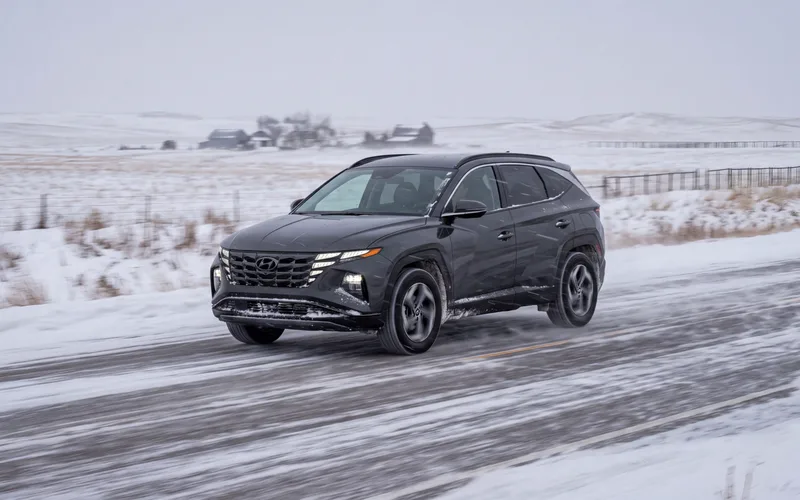 Hyundai TucsonCompact SUVBetter at: Value
Similar money buys far more cargo room, a hybrid option, better crash scores and a 10-year/100,000-mile powertrain warranty against Jeep's 5/60.
Compare 1.71C-
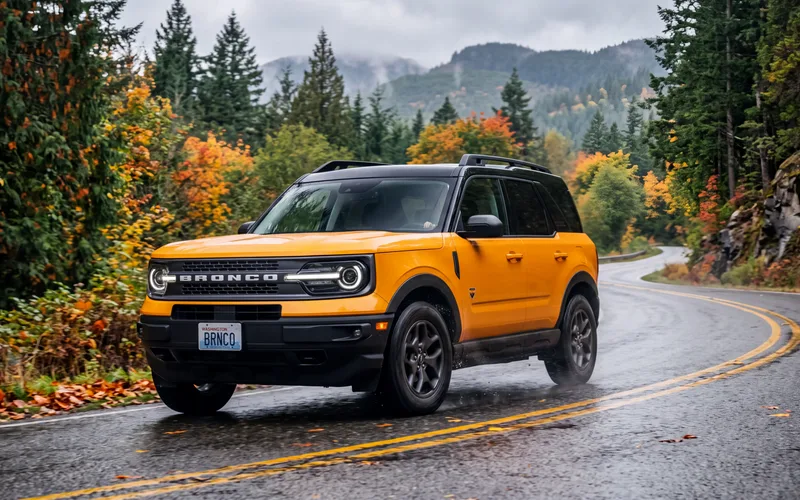 Ford Bronco SportSubcompact SUVBetter at: Off-road value
The direct rival for the buyer who actually wants the Trailhawk — comparable off-road hardware with more cargo space and a stronger available engine.
Compare 2.56C+
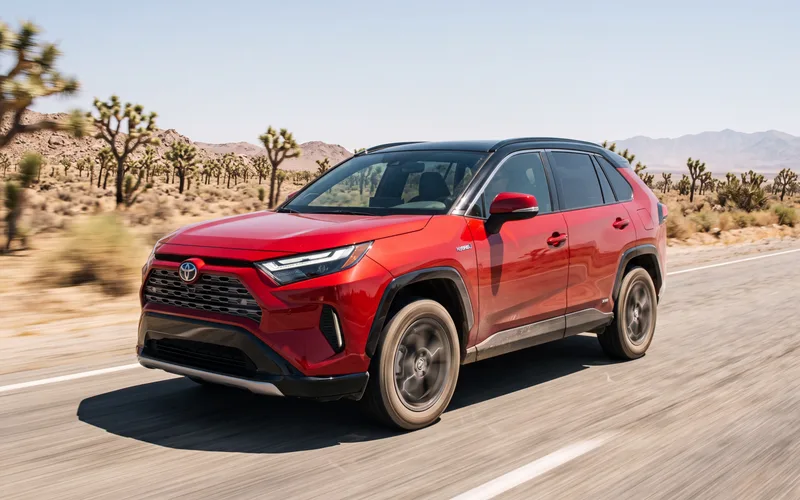 Toyota RAV4Compact SUVBetter at: Long-term ownership
Costs more up front but returns 35+ MPG as a hybrid, tows 3,500 lbs, holds its value, and carries a reliability record the Compass can't approach.
CompareHow it's evolved
10 scored model years · 2017–2026
Subject scores by year
Hover or tap a score to see what moved it versus the year before. A corner mark flags a big swing.
| Year | Performance | Efficiency | Safety | Space | Cost | Reliability | Tech | Use-case | Driving | Value |
|---|---|---|---|---|---|---|---|---|---|---|
| 2026 | 35 | 51 | 51 | 39 | 59 | 51 | 61 | 49 | 54 | 53 |
| 2025 | 34 | 55 | 51 | 38 | 63 | 59 | 63 | 49 | 52 | 57 |
| 2024 | 34 | 55 | 51 | 38 | 63 | 59 | 62 | 49 | 51 | 58 |
| 2023 | 34 | 55 | 55 | 38 | 60 | 58 | 61 | 50 | 51 | 58 |
| 2022 | 25 | 47 | 55 | 38 | 63 | 50 | 56 | 48 | 48 | 56 |
| 2021 | 26 | 47 | 40 | 37 | 63 | 52 | 42 | 46 | 47 | 50 |
| 2020 | 26 | 47 | 38 | 41 | 60 | 52 | 40 | 47 | 47 | 51 |
| 2019 | 26 | 47 | 40 | 43 | 62 | 46 | 43 | 47 | 47 | 52 |
| 2018 | 26 | 47 | 39 | 43 | 62 | 40 | 38 | 45 | 45 | 57 |
| 2017 | 26 | 47 | 39 | 40 | 62 | 47 | 44 | 45 | 44 | 55 |
Compare two years
Best fit & conditions
Higher scores mean a better fit for that use case. Learn more about use-case fit →
Subject profile
Academic Probation · NHTSA safety recalls
Dec 21, 2017EquipmentChrysler (FCA US LLC) is recalling various Dodge, Chrysler, and RAM vehicles equipped with Kidde Plastic-Handle or Push Button 'Pindicator' Fire Extinguishers. A list of the affected trailer models is available at: https://static.nhtsa.gov/odi/rcl/2017/RMISC-17V824-0103.pdf. These extinguishers may become clogged, preventing the extinguisher from discharging as expected or requiring excessive force to activate the extinguisher. Additionally, in certain models, the nozzle may detach from the valve assembly with enough force that it could cause injury and also render the product inoperable. For a full list of the affected fire extinguisher models visit: https://static.nhtsa.gov/odi/rcl/2017/RMISC-17E062-5427.pdf
Defect
Chrysler (FCA US LLC) is recalling various Dodge, Chrysler, and RAM vehicles equipped with Kidde Plastic-Handle or Push Button 'Pindicator' Fire Extinguishers. A list of the affected trailer models is available at: https://static.nhtsa.gov/odi/rcl/2017/RMISC-17V824-0103.pdf. These extinguishers may become clogged, preventing the extinguisher from discharging as expected or requiring excessive force to activate the extinguisher. Additionally, in certain models, the nozzle may detach from the valve assembly with enough force that it could cause injury and also render the product inoperable. For a full list of the affected fire extinguisher models visit: https://static.nhtsa.gov/odi/rcl/2017/RMISC-17E062-5427.pdf
Risk
If the fire extinguisher does not function properly, it can increase the risk of injury in the event of a fire.
Remedy
Chrysler will notify owners instructing them to contact Kidde for a replacement fire extinguisher, free of charge. The recall began February 14, 2018. Owners may contact Chrysler customer service at 1-800-853-1403 or Kidde customer service service toll-free at 1-855-262-3540, or online at www.kidde.com and click on "Product Safety Recall" for more information. Chrysler's number for this recall is T82.
NHTSA campaign 17V824000 ↗Manufacturer no. T8261,791 vehicles potentially affected (all models in the campaign)Owners notified Feb 14, 2018Filed by Chrysler (FCA US LLC)Filed as COMPASSNov 21, 2017Electrical system: instrument cluster/panelThe brightness of the backlighting for the Instrument Panel Cluster (IPC) cannot be adjusted. As such, these vehicles fail to comply with the requirements of Federal Motor Vehicle Safety Standard (FMVSS) number 101, "Controls and Displays."
Defect
Chrysler (FCA US LLC) is recalling certain model year 2017-2018 Jeep Compass vehicles. The brightness of the backlighting for the Instrument Panel Cluster (IPC) cannot be adjusted. As such, these vehicles fail to comply with the requirements of Federal Motor Vehicle Safety Standard (FMVSS) number 101, "Controls and Displays."
Risk
An instrument cluster that is too bright, and cannot be dimmed, can reduce the driver's ability to see at night, increasing the risk of a crash.
Remedy
Chrysler will notify owners, and dealers will update IPC software, as necessary, free of charge. The recall began December 8, 2018. Owners may contact Chrysler customer service at 1-800-853-1403. Chrysler's number for this recall is T70.
NHTSA campaign 17V740000 ↗Manufacturer no. T7025,823 vehicles potentially affected (all models in the campaign)Owners notified Dec 8, 2017Filed by Chrysler (FCA US LLC)Filed as COMPASSJul 7, 2017Equipment: other: owners/service/other manualThe affected vehicles have User's Guides that contain incorrect information regarding the jump start procedure, specifically, the polarity of the battery terminals are reversed in the battery terminal graphic.
Defect
Chrysler (FCA US LLC) is recalling certain 2017 Jeep Compass vehicles. The affected vehicles have User's Guides that contain incorrect information regarding the jump start procedure, specifically, the polarity of the battery terminals are reversed in the battery terminal graphic.
Risk
If a customer follows the User's Guide, they may hook up the battery jumper cables incorrectly, increasing their risk of injury.
Remedy
Chrysler will notify owners and will replace the User's Guides with a corrected version, free of charge. The recall began August 22, 2017. Owners may contact Chrysler customer service at 1-800-853-1403. Chrysler's number for this recall is T46.
NHTSA campaign 17V433000 ↗Manufacturer no. T4612,989 vehicles potentially affected (all models in the campaign)Owners notified Aug 22, 2017Filed by Chrysler (FCA US LLC)Filed as COMPASSMay 9, 2017Power train: axle assembly: axle shaftThe left front halfshaft may not be properly seated, and, as a result, it may disengage from the transmission and/or break.
Defect
Chrysler (FCA US LLC) is recalling certain 2017 Jeep Compass vehicles equipped with a 6-speed transmission. The left front halfshaft may not be properly seated, and, as a result, it may disengage from the transmission and/or break.
Risk
If the left front halfshaft disengages or breaks, the vehicle will have a loss of drive. Additionally, if the vehicle is parked without using the parking brake, the vehicle may roll, despite being in 'Park.' Either condition may increase the risk of a crash.
Remedy
Chrysler will notify owners, dealers will inspect the left front halfshaft for engagement and replace any that are not properly engaged in the transmission, free of charge. The recall began on June 12, 2017. Owners may contact Chrysler customer service at 1-800-853-1403. Chrysler's number for this recall is T26.
NHTSA campaign 17V301000 ↗Manufacturer no. T264,705 vehicles potentially affected (all models in the campaign)Owners notified Jun 12, 2017Filed by Chrysler (FCA US LLC)Filed as COMPASS
11 recalls on other model years of the Compass (2018–2020, 2022–2023, 2026)
Aug 13, 2026Back over prevention: sensing system: cameraThe rearview camera image may fail to display when the vehicle is placed in reverse. As such, these vehicles fail to comply with the requirements of Federal Motor Vehicle Safety Standard (FMVSS) number 111, "Rear Visibility."
Defect
Chrysler (FCA US, LLC) is recalling certain 2026 Jeep Wrangler, Jeep Gladiator, Jeep Compass, Jeep Cherokee, Jeep Grand Cherokee, Jeep Grand Cherokee L, Jeep Grand Wagoneer, Jeep Grand Wagoneer L, Ram Promaster, Ram Promaster EV, Ram 1500, Ram 2500, Chrysler Pacifica Plug-In Hybrid, Chrysler Voyager, and 2026-2027 Chrysler Pacifica and Dodge Charger vehicles. The rearview camera image may fail to display when the vehicle is placed in reverse. As such, these vehicles fail to comply with the requirements of Federal Motor Vehicle Safety Standard (FMVSS) number 111, "Rear Visibility."
Risk
A rearview camera image that fails to display reduces the driver's view behind the vehicle, increasing the risk of a crash.
Remedy
Radio software will be updated by a dealer or through an over-the-air (OTA) update, free of charge. Owner notification letters were mailed beginning September 2, 2026. Owners may contact Chrysler customer service at 800-853-1403. Chrysler's number for this recall is 78D. Vehicle Identification Numbers (VINs) involved in this recall will be searchable on NHTSA.gov on August 20, 2026.
NHTSA campaign 26V531000 ↗Manufacturer no. 78D844,027 vehicles potentially affected (all models in the campaign)Owners notified Sep 2, 2026Filed by Chrysler (FCA US, LLC)Filed as COMPASSJun 13, 2024Back over prevention: sensing system: cameraThe radio software may prevent the rearview image from displaying. As such, these vehicles fail to comply with the requirements of Federal Motor Vehicle Safety Standard number 111, "Rear Visibility."
Defect
Chrysler (FCA US, LLC) is recalling certain 2021-2022 Dodge Durango, 2021-2023 Chrysler Pacifica, Jeep Grand Cherokee L, 2022 Ram 1500, 2500, 3500, Chrysler Voyager, 2022-2023 Jeep Compass, Grand Cherokee, Wagoneer, Grand Wagoneer, and Ram Promaster vehicles. The radio software may prevent the rearview image from displaying. As such, these vehicles fail to comply with the requirements of Federal Motor Vehicle Safety Standard number 111, "Rear Visibility."
Risk
A rearview camera image that does not display decreases the driver's visibility, increasing the risk of a crash.
Remedy
Dealers will update the radio software or the software will be OTA, "Over-The-Air," free of charge. Owner notification letters were mailed beginning July 9, 2024. Owners may contact FCA US, LLC customer service at 1-800-853-1403. FCA US, LLC's numbers for this recall are 66B and 79B.
NHTSA campaign 24V436000 ↗Manufacturer no. 66B, 79B1,033,433 vehicles potentially affected (all models in the campaign)Owners notified Jul 9, 2024Filed by Chrysler (FCA US, LLC)Filed as COMPASSAug 14, 2023Electrical system: instrument cluster/panelThe brightness level of the instrument panel cluster (IPC) may not be adjustable due to incorrect software in the body control module (BCM). As such, these vehicles fail to comply with the requirements of Federal Motor Vehicle Safety Standard number 101, "Control and Displays."
Defect
Chrysler (FCA US, LLC) is recalling certain 2022-2023 Jeep Compass vehicles. The brightness level of the instrument panel cluster (IPC) may not be adjustable due to incorrect software in the body control module (BCM). As such, these vehicles fail to comply with the requirements of Federal Motor Vehicle Safety Standard number 101, "Control and Displays."
Risk
An IPC display that is not bright enough may not clearly show critical safety information, such as the speedometer or warning lights, increasing the risk of a crash.
Remedy
Dealers will update the body control module (BCM) software, free of charge. Owner notification letters were mailed August 29, 2023. Owners may contact FCA US, LLC customer service at 1-800-853-1403. FCA US, LLC's number for this recall is 88A.
NHTSA campaign 23V576000 ↗Manufacturer no. 88A181,999 vehicles potentially affected (all models in the campaign)Owners notified Aug 29, 2023Filed by Chrysler (FCA US, LLC)Filed as COMPASSFeb 9, 2023Electrical system: instrument cluster/panelThe instrument panel center cluster display may be insufficiently illuminated and may not appear visible during daytime driving conditions. As such, these vehicles fail to comply with the requirements of Federal Motor Vehicle Safety Standard number 101, "Control and Displays."
Defect
Chrysler (FCA US, LLC) is recalling certain 2022 Jeep Compass vehicles. The instrument panel center cluster display may be insufficiently illuminated and may not appear visible during daytime driving conditions. As such, these vehicles fail to comply with the requirements of Federal Motor Vehicle Safety Standard number 101, "Control and Displays."
Risk
An instrument panel display that is not visible to the driver may result in the inability to see safety-critical information, such as the fuel gauge and warning lights, increasing the risk of a crash.
Remedy
Dealers will replace the windshield and headlamp switch, add a light sensor module, and add a wiring jumper harness to allow the instrument panel center cluster display backlighting to function correctly, free of charge. Owner notification letters were mailed March 30, 2023. Owners may contact FCA US, LLC customer service at 1-800-853-1403. FCA US, LLC's number for this recall is 15A.
NHTSA campaign 23V058000 ↗Manufacturer no. 15A90 vehicles potentially affected (all models in the campaign)Owners notified Mar 30, 2023Filed by Chrysler (FCA US, LLC)Filed as COMPASSApr 14, 2022Seats: front assembly: head restraintThe front seat head restraints were not welded properly. As such, these vehicles fail to comply with the requirements of Federal Motor Vehicle Safety Standard number 202, "Head Restraints."
Defect
Chrysler (FCA US, LLC) is recalling certain 2022 Jeep Compass vehicles. The front seat head restraints were not welded properly. As such, these vehicles fail to comply with the requirements of Federal Motor Vehicle Safety Standard number 202, "Head Restraints."
Risk
Improperly welded head restraints can result in an increased risk of injury to seat occupants during a crash.
Remedy
Dealers will replace both front seat head restraints, free of charge. Owner notification letters were mailed June 3, 2022. Owners may contact FCA US LLC customer service at 1-800-853-1403. FCA US, LLC's number for this recall is Z36.
NHTSA campaign 22V248000 ↗Manufacturer no. Z36114 vehicles potentially affected (all models in the campaign)Owners notified Jun 3, 2022Filed by Chrysler (FCA US, LLC)Filed as COMPASSApr 9, 2020Visibility: windshield wiper/washer: linkagesThe windshield wiper arm or arms may loosen, possibly causing the wipers to not operate properly and reduce the driver's visibility in certain weather conditions.
Defect
Chrysler (FCA US LLC) is recalling certain 2019-2020 Ram 1500, 1500 Classic and Jeep Compass vehicles. The windshield wiper arm or arms may loosen, possibly causing the wipers to not operate properly and reduce the driver's visibility in certain weather conditions.
Risk
Reduced visibility increases the risk of a crash.
Remedy
Chrysler will notify owners, and dealers will tighten the wiper nuts, free of charge. The recall began April 27, 2020. Owners may contact Chrysler customer service at 1-800-853-1403. Chrysler's number for this recall is W25.
NHTSA campaign 20V208000 ↗Manufacturer no. W25425,599 vehicles potentially affected (all models in the campaign)Owners notified Apr 27, 2020Filed by Chrysler (FCA US LLC)Filed as COMPASSAug 9, 2018Electrical system: wiring: front underhoodThe powertrain control module may be equipped with a voltage regulator chip in the circuit board that may fail, causing a stall or a no start condition.
Defect
Chrysler (FCA US LLC) is recalling certain 2018 Jeep Renegade, Compass and Grand Cherokee, RAM 1500 and Promaster, Fiat 500x, Dodge Journey, Challenger, Charger and Durango and Chrysler 300x vehicles, 2017-2018 Jeep Wrangler, Dodge Grand Caravan and Chrysler Town and Country vehicles and 2018-2019 Jeep Cherokee and 2018 Chrysler Pacifica and Pacifica Hybrid vehicles. The powertrain control module may be equipped with a voltage regulator chip in the circuit board that may fail, causing a stall or a no start condition.
Risk
A vehicle stall can increase the risk of a crash.
Remedy
Chrysler will notify owners, and dealers will replace the powertrain control module, free of charge. The recall began October 2, 2018. Owners may contact Chrysler customer service at 1-800-853-1403. Chrysler's number for this recall is U87.
NHTSA campaign 18V524000 ↗Manufacturer no. U8712,779 vehicles potentially affected (all models in the campaign)Owners notified Oct 2, 2018Filed by Chrysler (FCA US LLC)Filed as COMPASSAug 9, 2018Service brakes, hydraulic: foundation components: disc: caliperThe rear brake caliper pistons on these vehicles may have an insufficient coating causing gas pockets to form, potentially reducing rear brake performance.
Defect
Chrysler (FCA US LLC) is recalling certain 2018-2019 Dodge Grand Caravan and Jeep Compass, 2018 Dodge Journey, and 2019 Jeep Cherokee vehicles. The rear brake caliper pistons on these vehicles may have an insufficient coating causing gas pockets to form, potentially reducing rear brake performance.
Risk
A reduction of braking performance can increase the risk of a crash.
Remedy
Chrysler will notify owners, and dealers will bleed the vehicle's brake system, free of charge. The recall began September 29, 2018. Owners may contact Chrysler customer service at 1-800-853-1403. Chrysler's number for this recall is U86.
NHTSA campaign 18V523000 ↗Manufacturer no. U86154,335 vehicles potentially affected (all models in the campaign)Owners notified Aug 29, 2018Filed by Chrysler (FCA US LLC)Filed as COMPASSMay 1, 2018Suspension: front: control arm: lower armThe front lower control arms may be incorrectly welded, potentially resulting in a control arm separation.
Defect
Chrysler (FCA US LLC) is recalling certain 2018 Jeep Compass vehicles. The front lower control arms may be incorrectly welded, potentially resulting in a control arm separation.
Risk
If the lower control arm separates, it can cause a loss of vehicle control, increasing the risk of a crash.
Remedy
Chrysler will notify owners, and dealers will inspect and, if necessary, replace the front lower control arms, free of charge. The recall began May 31, 2018. Owners may contact Chrysler customer service at 1-800-853-1403. Chrysler's number for this recall is U42.
NHTSA campaign 18V279000 ↗Manufacturer no. U422,761 vehicles potentially affected (all models in the campaign)Owners notified May 31, 2018Filed by Chrysler (FCA US LLC)Filed as COMPASSNov 21, 2017Air bags: frontal: passenger side: inflator moduleThe passenger side air bag assembly may have inflator mounting nuts loose within the module assembly.
Defect
Chrysler (FCA US LLC) is recalling certain 2018 Jeep Compass vehicles. The passenger side air bag assembly may have inflator mounting nuts loose within the module assembly.
Risk
In the event of a crash necessitating air bag deployment, unsecured inflator mounting nuts outside of the cushion assembly are potential projectiles that may strike the driver or other occupants resulting in serious injury or death.
Remedy
Chrysler will notify owners, and dealers will replace the passenger air bag module assembly, free of charge. The recall began December 28, 2017. Owners may contact Chrysler customer service at 1-800-853-1403. Chrysler's number for this recall is T73.
NHTSA campaign 17V732000 ↗Manufacturer no. T7327,210 vehicles potentially affected (all models in the campaign)Owners notified Dec 28, 2017Filed by Chrysler (FCA US LLC)Filed as COMPASSOct 24, 2017Engine and engine cooling: engineThe engines may have a cracked oil pump housing that can result in oil pump failure.
Defect
Chrysler (FCA US LLC) is recalling certain 2018 Jeep Cherokee and Compass vehicles equipped with 2.4L engines. The engines may have a cracked oil pump housing that can result in oil pump failure.
Risk
If the oil pump fails, the engine will stall, increasing the risk of a crash.
Remedy
Chrysler will notify owners, and dealers will inspect the oil pump, replacing it as necessary, free of charge. The recall began December 5, 2017. Owners may contact Chrysler customer service at 1-800-853-1403. Chrysler's number for this recall is T65.
NHTSA campaign 17V670000 ↗Manufacturer no. T65357 vehicles potentially affected (all models in the campaign)Owners notified Dec 5, 2017Filed by Chrysler (FCA US LLC)Filed as COMPASS
Source: NHTSA Office of Defects Investigation recall database, model years 2017–2026. Recalls are listed by model year as the manufacturer filed them; whether a specific car is affected depends on its VIN — check a VIN at nhtsa.gov ↗. NHTSA model names matched to this page: COMPASS.
Detailed scoring by subject
1Performance & PowertrainThe Compass's lowest-graded category.0.00F
This scorecard describes the all-new second-generation (MP) Compass that launched for 2017, not the carry-over first-generation MK sold alongside it — fueleconomy.gov certifies the two as separate 2017 vehicles ('New Compass' and 'Compass'). A single naturally aspirated 2.4L covers the entire range from Sport to Trailhawk, and 180 hp sits essentially at the floor of the 150–550 hp SUV band; this output carries unchanged through 2021.
Peak torque arrives high at 3,900 rpm on a naturally aspirated curve with little underneath it, which is why the 3,327-lb 4x4 feels flat pulling away from rest. The turbocharged compact-SUV rivals the 2017 Compass launched against deliver comparable or greater torque from roughly 1,750 rpm.
Published 2017 tests scatter widely — over two seconds between the lightest Sport 4x4 and MotorTrend's Limited — so the volume Latitude 4x4 is placed at ≈9.4 sec, the middle of that band and the figure the mechanically identical 2018 and 2019 cars are scored at. Confidence is MEDIUM rather than HIGH because no instrumented test of a Latitude 4x4 itself was located. Either way it sits at the bottom edge of the 3.5–9.5 sec SUV band.
The Tigershark is unresponsive rather than laggy — no turbo to wait on, just an engine that has to be wrung out toward its 6,400-rpm power peak and turns coarse and loud doing it. Clearly in the lower half of the band and the complaint that dominated this generation's launch coverage.
The nine-speed is the most-criticized component of this generation — tuned for economy, it upshifts early and resists kickdown, compounding an engine already short of low-end torque. The 4x2's Aisin six-speed is smoother but narrower in spread, and the C635 manual is the one gearbox that lets a driver keep the engine on the boil. Scored level with the mechanically identical 2018 car.
Standard unibody compact-crossover capability, unchanged across this generation, but 2,000 lbs sits near the bottom of an SUV band running to 8,000 lbs — and the front-drive versions that make up much of the volume are not rated to tow at all.
Four-wheel drive is available on every 2017 trim with Selec-Terrain modes and a genuine 20:1 crawl ratio on Trailhawk — sophisticated for a compact crossover — but it remains a cost option rather than standard equipment. Standard 4x4 does not arrive on the Compass until the 2023 model year.
The Trail Rated Trailhawk is the most genuinely capable thing in the 2017 compact-crossover class — a 30.3° approach angle, 8.5 in of clearance and a low-range crawl ratio are real hardware rather than a badge — but it is a unibody crossover with no locking differential and no two-speed transfer case. Upper half of the capable-light-duty band; non-Trailhawk 4x4 trims, at 16.8° approach and 8.2 in, are far more modest.
One engine for the entire range with no turbo upgrade, hybrid, PHEV or EV anywhere in the US lineup — take-it-or-leave-it on what this item actually measures. The four certified drivetrain combinations, including a manual available with 4x4, give some configuration choice but not a second powertrain.
2Efficiency & RangeGrades below the middle of the scale.1.10D
The all-new second-generation Compass is scored here, not the carry-over first-generation MK that fueleconomy.gov certifies separately as the 2017 'Compass' (2.0L/2.4L with five-speed manual). At 25 MPG combined the volume 4x4 automatic is mid-pack for a 2017 gas compact SUV — respectable against body-on-frame SUVs but behind the CVT-equipped car-based rivals it competed with directly.
22 MPG city reflects a 3,327-lb 4x4 with a naturally aspirated 2.4L that has to be worked in stop-and-start driving. Stop-start was conditional rather than universal equipment on 2017 Compasses, so many volume examples lack even that help.
Highway is this powertrain's best showing — the nine-speed's 0.48:1 top gear and 9.81 ratio spread (2017 spec sheet) drop cruising revs and lift the 4x4 to 30 MPG, with the lighter front-drive manual reaching 32.
A small 13.5-gallon tank is what holds range down — the Compass is thrifty enough per gallon but simply carries little fuel, so 338 miles lands near the bottom of the 280–600 mi SUV band. This is the weakest figure in the category and a real touring limitation.
Mid-band running cost for a gas compact SUV, helped by the fact that the engine takes 87 octane. The gap to the class-leading hybrids and CVT crossovers of 2017 is a few hundred dollars a year rather than a rounding error.
Regular 87 octane across the entire range with no premium recommendation on any trim, including Trailhawk — the cheapest and most widely available fuel, with nothing to plug in or plan around. Scored high; short of the ceiling only because there is no hybrid assistance or fuel-type flexibility to reduce consumption itself.
3SafetyOne of the Compass's weakest categories.0.57F
NHTSA rated the all-new 2017 Compass 4 stars overall in both drivetrains. A 3-star frontal result is the weak link — the side and side-pole tests both returned 5 stars and the rollover test 4 stars with 'No Tip' — and it leaves the Compass a star short of the compact-SUV benchmark.
The redesigned 2017 Compass earned Good in every crashworthiness test IIHS ran at the time — small overlap front driver and passenger, moderate overlap, original side, roof strength, head restraints — and took a 2017 Top Safety Pick. Two caveats hold it out of the top band: the award applied only to cars ordered with the optional front crash prevention system and built after December 2016, and the structure later returned Marginal on the updated (2021-protocol) side test.
Beyond seven airbags, stability control and a rearview camera, no active driver-assistance feature is standard on any 2017 Compass. Full-Speed Forward Collision Warning-Plus with active braking, LaneSense Lane Departure Warning-Plus, blind-spot monitoring and rear cross-path detection are all extra-cost bundles, the base Sport cannot be optioned with them at all, and adaptive cruise is not sold in the US. Rivals were already moving core ADAS to standard equipment.
The optional Full-Speed Forward Collision Warning-Plus is genuinely capable hardware — IIHS rated it Superior for vehicle-to-vehicle front crash prevention — but it is an extra-cost option that the volume buyer often skipped, is unavailable on the base trim, and offers no pedestrian detection in either daylight or darkness.
Radar-based Blind Spot Monitoring with Rear Cross Path detection is offered on every trim above the base Sport, which is reasonable coverage for 2017, but it is alert-only — no steering or braking intervention, no safe-exit warning, and no surround-view camera to supplement it.
LaneSense Lane Departure Warning-Plus is optional and purely reactive: it warns when the car drifts across a marked line and adds a corrective torque nudge. There is no continuous lane centering, and NHTSA records lane departure warning as absent from standard equipment for 2017.
Adaptive cruise control was not sold on the US-market 2017 Compass at any trim or option level — buyers got fixed-speed cruise only, at a moment when the CR-V and RAV4 were making full-speed-range ACC standard. There is no highway-assist mode of any kind. The FCA press kit's 'Adaptive Cruise Control-Plus with full stop' describes the global Compass; it did not reach US order guides.
No hands-free highway driving system was offered on the 2017 Compass, and FCA fielded nothing comparable to Super Cruise anywhere in its lineup that model year. With no adaptive cruise on the US option sheet the Compass lacks even the prerequisite hardware.
Both 2017 headlight configurations rate below Acceptable: the standard halogen reflectors are Poor, and the best available setup — HID units with high-beam assist in the Advanced Safety and Lighting Group — reaches only Marginal. This is the single failing that cost the redesigned Compass a Top Safety Pick+.
The second-generation Compass's upright, blocky styling costs it sightlines — thick A-pillars that hide crossing pedestrians and a heavy rear C-pillar that limits the over-shoulder view — and a high beltline makes the cabin feel closed in. Only a rearview camera and optional rear park sensors compensate; no surround-view camera is offered.
IIHS rates the 2017–19 Compass's LATCH hardware Poor: the two rear outboard positions have complete anchor sets and the center gets a tether, but the lower anchors sit too deep in the seat bight and take too much force to attach. The compact rear bench also rules out three-across.
4Space & ComfortOne of the Compass's weakest categories.0.63F
The second-generation (MP) Compass is a strictly two-row, five-seat compact SUV with no seven-seat variant offered in the US for 2017.
Mid-pack front headroom for a compact SUV; the optional dual-pane panoramic sunroof costs just over half an inch.
Adequate rather than generous front legroom, backed by a reasonable 8.7-inch seat-travel range that reviewers found accommodating for tall drivers.
Second-row headroom is respectable on paper, though the fast roofline and optional sunroof erode it in practice.
Rear legroom is the strongest interior dimension the Compass reports and was singled out by reviewers as better than the compact exterior suggests.
The 2017 Compass is a two-row, five-seat SUV — no third row was offered on any US trim, so buyers needing six or seven seats must look at the Cherokee or larger.
27.2 cu ft trails the compact-SUV mainstream badly — a 2017 CR-V offers roughly 39 cu ft and an Escape about 34 — placing the Compass near the bottom of the class for everyday cargo.
Maximum cargo volume is well short of compact-SUV leaders that clear 70–75 cu ft, reflecting the Compass's small footprint and fast roofline.
Jeep engineered some genuinely useful touches — a mesh passenger-footwell pocket and a reversible multi-level cargo floor — but reviewers repeatedly flagged a shortage of usable front-of-cabin cubbies, and there is no onboard household power.
Verdicts split, but the most rigorous testers were negative: Consumer Reports faulted both rows outright, while other outlets found the front chairs merely acceptable. A power driver's seat was reserved for the Limited.
Soft springing gives decent absorption on 16- and 17-inch wheels, but Consumer Reports recorded a persistently jittery secondary ride and the optional 19s make it worse; body control in corners is loose.
Wind and road noise are broadly competitive, but the 2.4-liter Tigershark is coarse and — because the nine-speed holds high revs to make progress — it is heard often, which reviewers called out as the cabin's main noise problem.
The key cold-weather kit — heated front seats, heated steering wheel, remote start, windshield-wiper de-icer — is available across the range via the Cold Weather Group and standard on Limited, but there are no ventilated seats, no rear climate zone, and dual-zone automatic climate control is a Limited feature.
5Cost of OwnershipThe Compass's best-graded category.2.19C
The all-new second-generation (MP) Compass opened at $20,995 for the Sport FWD plus a $1,095 destination charge, so the cheapest way into the 2017 car was $22,090 delivered — below the floor of the compact-SUV pricing band, though that entry car is a front-drive manual on 16-inch steel wheels with a 5.0-inch Uconnect and no driver aids.
Latitude was the volume trim of the 2017 lineup and Jeep buyers skew heavily to four-wheel drive, so the representative configuration is a Latitude 4x4 at $26,890 delivered, which brings the nine-speed automatic as standard. Option packages are freely available above that — Consumer Guide's Latitude tester reached $31,210 as tested with the navigation package and driver aids.
CarEdge projects about $3,351 of scheduled maintenance across a Compass's first five years, and RepairPal puts the 2017 car's unscheduled repair at $526/yr — noticeably above the $392/yr it records for the 2018 model, which is the signature of a launch-year build — for roughly $2,630 more over the same span.
iSeeCars measures 46.1% five-year depreciation on the Compass — about 53.9% retained — against roughly 42% depreciation for the small-SUV category, so it gives up value faster than its class despite a Jeep badge that normally props residuals up.
FCA's standard 3-year/36,000-mile basic coverage is the industry floor and sat two years behind the 5-year/60,000-mile bumper-to-bumper that Hyundai, Kia and Mitsubishi already offered on 2017 compact SUVs.
Five years/60,000 miles sits at the very bottom of the SUV normalization band and is half the 10-year/100,000-mile powertrain coverage Hyundai and Kia offered in 2017 — a real exposure on a car whose most-criticized component is the nine-speed automatic.
A 2017 Compass came with no complimentary scheduled maintenance at all — the buyer paid for the first oil change — leaving 24-hour roadside assistance tied to the 5-year/60,000-mile powertrain term and a short Uconnect Access trial on screen-equipped trims as the only included perks. Jeep Wave was a Grand Cherokee/Wrangler-tier paid or premium-model program in 2017 and did not become automatic across the brand until MY2021, so the Compass had nothing to answer ToyotaCare's 2-yr/25,000-mile schedule on a 2017 RAV4 or Hyundai's 3-yr/36,000-mile complimentary maintenance on a 2017 Tucson.
$26,890 volume-trim price minus its estimated resale value after 5 years (53% retained, or about $14,252) leaves about $12,638 in depreciation. Add the projected $6,000 in 5-year maintenance and repairs, and owning this vehicle for 5 years costs about $18,638 in total.
6Reliability & QualityOne of the Compass's strongest categories.1.15D
Both raters mark the 2017 Compass down — Consumer Reports says outright that it is less reliable than other cars from the same model year, and J.D. Power's predicted reliability is 2 of 5, the lowest rating on that scale. Two things keep it above 2018's floor rather than at it. The federal complaint file is far lighter: 228 filings for MY2017 against 936 for MY2018, and sales do not close the gap — 83,253 US Compasses in calendar 2017 versus 171,167 in 2018, so the per-vehicle complaint rate is roughly half. Working the other way, 2017 is the launch year of the MP generation and the risk of first-year build and calibration faults is real and unpriced by either rater at the time.
Jeep was in the bottom third of the brand table contemporaneous with this model year, but 2017 is the better end of the brand's run — it climbed three places to 20th in Consumer Reports' 2017 survey on the strength of revised Cherokee transmission calibration, ahead of both the 22nd of 2018 and the 26th of 2019. The dependability study that follows these exact cars to three years old agrees on direction: J.D. Power's 2020 VDS measures MY2017 vehicles and names Jeep among the brands below the 134 PP100 industry average. Below average across both, but not the bottom-of-the-table year.
Four federal campaigns, and unlike 2018 the severity is mostly light. Two are not vehicle defects in any meaningful sense — a User's Guide printing the battery terminal polarity backwards in the jump-start graphic, and a supplier-wide Kidde fire-extinguisher campaign that swept across many FCA nameplates. Of the two real ones, the instrument-cluster backlighting that cannot be dimmed is an FMVSS 101 non-compliance fixed by a software update, which leaves a single hardware defect: an improperly seated left front halfshaft that can disengage or break, causing loss of drive and a rollaway risk if the parking brake is not set. That is a serious defect and a launch-quality one, but it is one item against 2018's six campaigns spanning control-arm welds, airbag inflator nuts, a cracked oil pump housing and rear brake calipers. Typical recall activity for the segment rather than systemic.
The 2017 Compass carries the 2.4L Tigershark MultiAir2 and sits inside the certified class of the FCA oil-consumption settlement — the Compass class runs 2017–2018, so this is a model year a court-supervised remedy attaches to. The alleged mechanism, oil consumed fast enough to drop pressure and shut the engine down, shows up in the complaint file at 62 stall/loss-of-power filings and 35 oil-related ones out of 228, with Engine among the largest component groupings. On top of that the 4x4 pairs this engine with the ZF-derived 9HP48 nine-speed, a transmission family with a troubled record at FCA in the Cherokee, 200 and Renegade, and 2017 is its first year in this application. What lifts it above 2018's mark is volume: the same defect at roughly half the per-vehicle complaint rate, and no engine-stalling recall on this year. Stellantis replaced the whole drivetrain for 2023.
This is the cabin the 2018–2021 cars carry unchanged, and 2017 is the launch year the warmer press was written about — soft-touch dash and front door panels on every trim, good surface quality, and a clear step up from the first-generation car's widely criticised interior. The offsetting read is Consumer Reports on the same generation, faulting cheap plastics and sharp, unfinished edges, and a common complaint that the colours are dull next to other Jeeps. Mid-pack for a mainstream compact SUV rather than the class leader; Jeep overhauling the interior wholesale for 2022 is the plainest verdict on it.
The assembled car reviewed as solid, but 2017 is a first-year build of a new generation and factory assembly failed in a way that reached a federal recall: left front halfshafts not properly seated at the factory, able to disengage or break. That is a build defect on drivetrain hardware, not a wear item. Electronic finish is the other soft spot — Electrical System is the largest named component grouping in the model-year complaint file at 25 filings, plus 10 more paired with Engine, and 15 filings name Uconnect. It lands above 2018, which added incorrectly welded control arms and loose airbag inflator nuts to the same list, and below where a settled build would sit.
Coverage is the strong half and it is a brand property rather than a model-year one — Jeep runs one of the densest franchise networks in the US at roughly 2,400 rooftops, so warranty and parts access is straightforward almost anywhere, including rural markets where import brands thin out. Service satisfaction is the ordinary half: Jeep sits mid-pack among mass-market brands in J.D. Power's customer-service measurement rather than near the top, which matters for a launch-year car that leans on the network for recall and warranty work.
The second-generation Compass shares the small-wide platform and the 2.4L Tigershark with the Renegade, Cherokee and Fiat 500X, so Mopar and aftermarket supply is broad and independent shops service it without dealer-only tooling. Measured repair spend backs it up: RepairPal puts annual cost essentially at the compact-SUV average, with fewer unscheduled visits per year than the segment and no elevated probability of a severe repair. Marked a couple of points below 2018 only because CY2017 volume was roughly half that year's record, thinning the used-parts pool for launch-year-specific pieces. The tension worth naming: RepairPal measures cost per visit and visit frequency, not the catastrophic engine failures the complaint file is full of.
7Technology & InfotainmentGrades near the bottom of the scale.0.91F
The volume Latitude carries the same 5.0-inch Uconnect 3 screen as the base Sport — the 7.0- and 8.4-inch systems that bring CarPlay and Android Auto are extra-cost options.
Fourth-generation Uconnect was among the better mainstream systems of its era — quick, legible, with real climate and volume knobs retained — but the volume trim's 5.0-inch screen is small and feature-poor next to rivals' standard displays.
Phone projection is wired-only and, critically, absent from the standard 5.0-inch system the volume trim ships with — a buyer must option up to the 7.0- or 8.4-inch screen to get CarPlay or Android Auto at all.
Uconnect's command-word voice system is functional rather than conversational, and built-in navigation is confined to the top 8.4 NAV system — most Compass buyers navigate with their phone.
An available BeatsAudio system with a dedicated subwoofer and amplifier is a credible premium option for the class, though the base six-speaker setup on volume trims is unremarkable.
The standard cluster is a small 3.5-inch reconfigurable display flanked by analog gauges; the genuinely good 7-inch full-color display — which FCA claimed was the segment's largest — is an upper-trim item, so the volume trim gets the partial version.
No over-the-air vehicle software updating existed on FCA products for 2017 — Uconnect software and map updates were delivered by USB stick or a dealer visit, and the embedded modem served only connected services.
SiriusXM Guardian covers the core remote functions — start, lock/unlock, locate, send-destination — plus SOS and roadside call buttons, but it is subscription-gated after the trial and there is no digital key.
USB-A and AUX in the console cubby cover the basics for the front row, but there is no USB-C anywhere, no wireless phone charging and no household AC outlet on any 2017 trim — and Cars.com noted there is barely anywhere secure to put a phone.
Keyless Enter-N-Go proximity entry with push-button start is standard from the Latitude up and a power liftgate is available, but the base Sport still uses a conventional key and there is no phone-as-key.
ParkView rear camera with dynamic gridlines plus ParkSense sensors and semi-automated Parallel and Perpendicular Park Assist cover the class norms, but no surround-view camera was offered and image resolution is of its era.
No head-up display was offered on the 2017 Compass at any trim or option level — the 7-inch driver information display was the only reconfigurable driver-facing screen.
8Use-Case FitGrades below the middle of the scale.1.01D
IIHS rated the Compass's LATCH hardware Poor — the lower anchors are buried too deep and take too much force — and at 27.2 cu ft the cargo hold is tight for a stroller plus a week's gear, which together undercut otherwise decent rear legroom.
Crashworthiness is largely Good at IIHS but the federal overall rating is only 4 stars on a 3-star frontal result, headlights rate Poor to Marginal, and — decisively for families shopping affordable trims — forward-collision warning and automatic braking are optional extras with no adaptive cruise offered at all.
The second row genuinely seats adults for a compact SUV and the dual-pane sunroof brightens it, but there are no rear climate controls or rear-seat entertainment, seat support drew criticism, and luggage room with four aboard is meagre.
The nine-speed automatic's calibration is the Compass's defining daily flaw — oddly timed shifts, delayed kickdown and a sluggish stop/start restart — compounded by steering that is light off-center then abruptly heavy.
25 MPG combined on regular unleaded is unremarkable but not punishing for a 4x4 compact SUV, and real-world testers landed at or below the EPA figure rather than above it.
A genuinely tight 36.3-ft turning circle and compact footprint make the Compass easy to thread and park, and a rear camera plus available park assist help — but thick rear pillars leave a real over-the-shoulder blind spot.
A 2,000-lb tow rating available only on 4x4 models — with towing explicitly not recommended on front-drive Compasses — plus 27.2 cu ft of cargo makes this a light-duty errand runner, not a work vehicle.
The Jeep Active Drive hardware and Trailhawk skid plates are properly engineered, but a first-year build with a halfshaft-separation recall and below-average predicted reliability is not a platform to lean on under hard use.
Roof rails, cargo tie-downs, a reversible carpet/vinyl cargo mat and a multi-level load floor cover casual hauling, but there is no onboard AC power, no bed, and only a thin accessory ecosystem for work use.
A small 13.5-gallon tank caps highway range near 400 miles, the secondary ride is jittery over long stretches, the engine drones when asked for passing power, and no adaptive cruise control was offered to take the edge off.
This is the Compass's genuine strength and its reason to exist: the Trail Rated Trailhawk brings Active Drive Low with a 20:1 crawl ratio, Selec-Terrain including Rock mode, hill-descent control, skid plates and 8.5 in of clearance — real off-pavement hardware no CR-V or RAV4 of the era could match.
60/40 folding seats, a reversible multi-level cargo floor, roof rails and the available My Sky removable roof panels give useful flexibility, but 59.8 cu ft maximum is small and the tapering roofline limits what fits.
9Driving ExperienceGrades near the bottom of the scale.0.91F
Grip is unexceptional but not disastrous at 0.80 g; the problem is body control — soft springing produces pronounced roll and heavy understeer, and the figure-eight result is among the slowest in the class.
The electric rack is inconsistently weighted — vague and over-light off center, then abruptly heavy — and slow at 2.68 turns lock-to-lock, drawing some of the sharpest criticism in the reviews.
193 ft from 70 mph is a long stop for a compact SUV of this era, and the pedal calibration was criticized as touchy enough to make smooth stops difficult.
The 2.4-liter Tigershark paired to the nine-speed automatic is the single most criticized aspect of the 2017 Compass — economy-biased shift logic, long delays before kickdown, and a stop/start system slow to refire.
The Tigershark four is coarse and, because progress demands high revs, it is heard often — reviewers singled out engine noise as the main refinement failing rather than wind or road roar.
A tight turning circle for the segment and one of the Compass's clearest everyday strengths, with the Trailhawk tighter still.
An upright, commanding seating position with 8.7 in of seat travel and physical climate and volume knobs works well for most builds, but thick rear pillars hurt over-the-shoulder sightlines and a power driver's seat is a Limited-only item.
On pavement the Compass is an appliance and a slow one — the character that does exist is off-road, in the Trailhawk's crawl-ratio hardware, not in how it drives to work.
10Value & Market PositionOne of the Compass's strongest categories.1.66D
The 2017 Sport is a genuinely sparse base car — 16-inch steel wheels, air conditioning, a 5.0-inch Uconnect with no Apple CarPlay or Android Auto, six speakers, a six-speed manual and front-wheel drive — and the Latitude that most buyers actually take adds convenience items (rearview camera, push-button start, keyless entry, leather-wrapped wheel, 17-inch alloys) rather than driver aids. Blind-spot monitoring with rear cross-traffic alert, rear park assist, forward collision warning and lane-departure warning are all extra-cost package content in 2017, which reads thin against a 2017 RAV4 that made Toyota Safety Sense-P standard across the line.
Content-for-price is where reviewers were hardest on the relaunched Compass: a Latitude 4x4 lands at $26,890 delivered and an optioned one clears $31,000, which is CR-V and RAV4 money for a smaller, slower, less refined vehicle with a modest cargo bay and a nine-speed automatic that drew near-universal criticism. Trail Rated capability on the Trailhawk is real and genuinely unmatched at the price, but it is content the great majority of buyers pay for and never use.
Four trims — Sport, Latitude, Trailhawk and Limited — spanning roughly $21,000 to $29,000 before destination, with front- or four-wheel drive on all but the 4x4-only Trailhawk and a genuine six-speed manual still orderable, gives reasonable spread from stripped commuter to Trail Rated off-roader. Two gaps hold it back: the Altitude appearance edition that widens the 2018 ladder does not exist yet, and every configuration uses the same 180-hp 2.4-liter Tigershark, so there is no way to buy more power at any price.
Calendar 2017 was a transition year rather than a strong one: the nameplate moved 83,253 units, down from 91,532 in 2016, because the second-generation car only reached dealers in March 2017 and spent much of the year sharing showroom space with the run-out first-generation MK. The acceptance was real once supply caught up — 2018 more than doubled to a record 171,167 — but judged on 2017 itself this is a mid-pack seller in a declining year, far behind the RAV4/CR-V/Rogue leaders.
Jeep carries one of the strongest off-road halos in the industry, and the second-generation Compass's mini-Grand-Cherokee styling and available Trail Rated badge finally let it trade on that credibly where the first-generation car could not. Two things weigh against it in 2017 specifically: Jeep brand volume fell 11% that year to 828,522 units, and FCA's quality and dealer-satisfaction reputation was weak — with the Compass the nameplate most exposed to the charge of selling the badge rather than the substance.
FCA ran among the industry's heaviest incentive programs in this period and the Compass was negotiable, but 2017 is the weakest year of the generation for a buyer chasing a discount: the car reached dealers only in March, sold through its first months on launch demand, and did not yet attract the stacked cash-back and subvented lease programs that made 2018 and 2019 Compasses conspicuously cheap. Meaningful money off sticker was available, particularly on the run-out first-generation cars sold alongside it, but not the desperation pricing of later years.
This is the first model year of the MP/552 second generation — an all-new car on a modified Renegade-derived small-wide platform, unveiled in Brazil in September 2016 and at the LA Auto Show that November, sharing only its name with the first-generation MK it replaced. A 2017 buyer gets a brand-new body, interior and Uconnect generation with essentially zero redesign risk; the only caveat is the launch-year build quality that shows up in the recall and repair record.
Professional reception of the relaunch was poor and unusually consistent about why: Consumer Reports made the redesigned Compass the lowest-rated model in the small SUV class, and reviewers across outlets converged on a slow, coarse 2.4-liter paired to a nine-speed automatic that will not downshift, slow light steering, and a cargo bay smaller than the class norm. It won no significant award, was not a comparison-test pick, and was not a NACTOY Utility of the Year finalist; owner sentiment is much warmer than the press, but this item measures reviewer verdicts.