

The verdict
A mixed-report compact luxury suv, strong on reliability and held back by performance.
The 2018 Lexus NX 300h is a small luxury crossover that trades speed, space and screens for the things that show up on a bank statement: 31 MPG combined on regular gas, a Lexus reliability record that ranked the brand first in dependability, and the best resale value in the compact luxury class. In exchange you accept 8.8 seconds to 60 mph, 16.8 cu ft of cargo behind the back seat — less than many mainstream compacts — and an infotainment touchpad that reviewers called the worst interface in the industry, with no Apple CarPlay available at any price. As a used buy today it is the sensible, low-drama choice in a segment full of expensive-to-own German alternatives. Shoppers who want pace, cargo room or modern tech should look elsewhere; shoppers who want a quiet, dependable, cheap-to-feed luxury commuter have found it.
Jump to scoresStrengths
- Reliability that actually holds up eight years on
- Five-star safety with no options required
- Best-in-class value retention
What holds it back
- Infotainment that was already outdated when new
- Not enough power for the price
- Barely tows, and won't do work duty
Top alternatives
Cars shoppers cross-shop with the Lexus NX 2.46C+
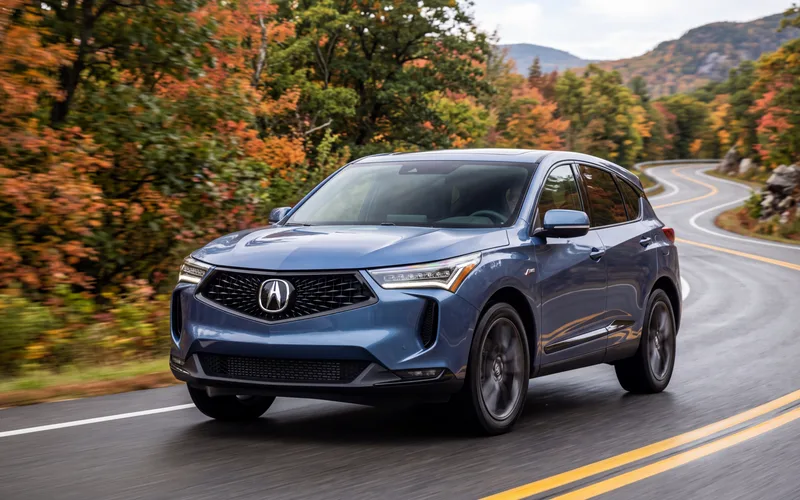 Acura RDXCompact Luxury SUVBetter at: Cargo space
Nearly 7 cu ft more cargo room behind the rear seats, more rear legroom and a quicker turbo powertrain for similar money, if you can live with roughly 22 MPG instead of 39.
Compare 2.69C+
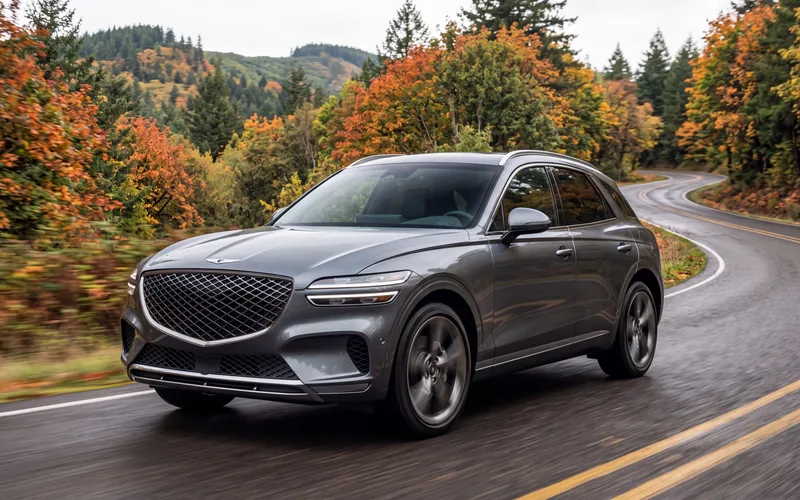 Genesis GV70Compact Luxury SUVBetter at: Warranty & features
More standard equipment, bigger screens and a 10-year/100,000-mile powertrain warranty against the Lexus's 6/70,000, for only a few thousand more.
Compare 2.79B-
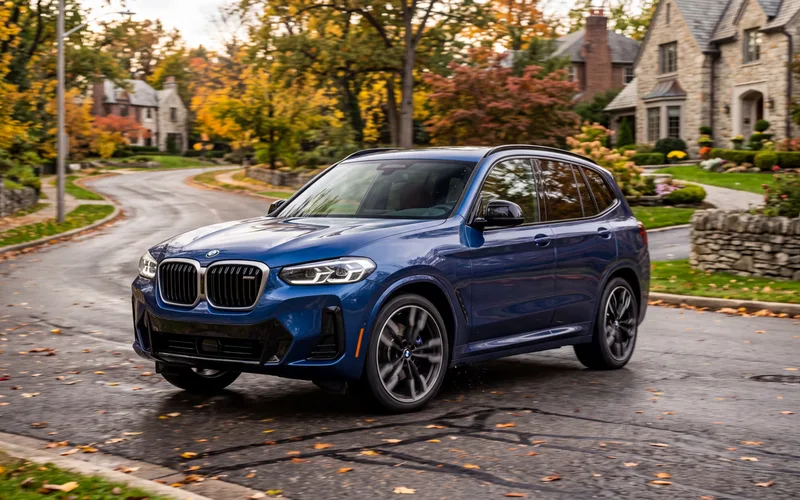 BMW X3Compact Luxury SUVBetter at: Driving dynamics
The one to drive if the NX's 7.2-second 0-60 and comfort-first chassis leave you cold — plus 4,400 lbs of towing and about 8 cu ft more cargo room.
CompareHow it's evolved
10 scored model years · 2017–2026
Subject scores by year
Hover or tap a score to see what moved it versus the year before. A corner mark flags a big swing.
| Year | Performance | Efficiency | Safety | Space | Cost | Reliability | Tech | Use-case | Driving | Value |
|---|---|---|---|---|---|---|---|---|---|---|
| 2026 | 41 | 93 | 83 | 45 | 57 | 86 | 72 | 61 | 68 | 77 |
| 2025 | 42 | 88 | 80 | 45 | 58 | 84 | 71 | 61 | 67 | 77 |
| 2024 | 41 | 88 | 82 | 44 | 59 | 85 | 70 | 61 | 67 | 79 |
| 2023 | 42 | 87 | 82 | 45 | 62 | 85 | 72 | 61 | 65 | 79 |
| 2022 | 41 | 87 | 80 | 45 | 66 | 81 | 72 | 60 | 65 | 74 |
| 2021 | 30 | 75 | 81 | 45 | 66 | 89 | 40 | 59 | 60 | 65 |
| 2020 | 29 | 75 | 76 | 45 | 70 | 88 | 47 | 56 | 60 | 66 |
| 2019 | 30 | 75 | 72 | 44 | 69 | 86 | 41 | 55 | 60 | 66 |
| 2018 | 30 | 75 | 72 | 45 | 71 | 87 | 34 | 56 | 63 | 68 |
| 2017 | 30 | 75 | 57 | 44 | 65 | 87 | 31 | 51 | 58 | 64 |
Compare two years
Best fit & conditions
Higher scores mean a better fit for that use case. Learn more about use-case fit →
Subject profile
Academic Probation · NHTSA safety recalls
Nov 4, 2020Fuel system, gasoline: delivery: fuel pumpThe low-pressure fuel pump inside the fuel tank may fail.
Defect
Toyota Motor Engineering & Manufacturing (Toyota) is recalling certain 2018-2019 4Runner, 2019-2020 Avalon, 2019 Corolla Hatchback, 2017-2019 Highlander, 2018-2020 Camry, 2020 Corolla, 2018-2019 Land Cruiser, 2017-2020 Tacoma, 2019-2020 RAV4, 2019-2020 Sequoia, 2017-2020 Sienna, 2019-2020 Tundra, 2018-2020 Lexus ES350, 2017 Lexus GS200t, 2017-2019 Lexus GS350, 2019 Lexus GS300, 2018-2020 Lexus LC500h, 2019-2020 Lexus LS500, 2018-2019 Lexus GX460, 2017 Lexus IS200t, 2019 Lexus IS300, 2019 Lexus IS350, 2018-2020 Lexus LC500, 2018 Lexus LS500, 2019 Lexus LS500h, 2018-2019 Lexus LX570, 2017 Lexus RC200t, 2019 Lexus RC300, RC350, 2017 and 2019-2020 Lexus RX350, 2018-2020 RX350L, 2019 Lexus UX200, 2018-2019 Lexus NX300 vehicles. The low-pressure fuel pump inside the fuel tank may fail.
Risk
If the fuel pump fails, the engine can stall while driving, increasing the risk of a crash.
Remedy
Toyota will notify owners, and dealers will replace the fuel pump assembly with an improved one, free of charge. Owners of specific models were notified that remedy parts were available starting January 21, 2021. Owners of other models will be notified as remedy parts become available. Remedy parts should be available for all affected vehicles by late March 2021. Owners may contact Toyota customer service at 1-888-270-9371 or Lexus customer service at 1-800-255-3987. Note: This recall is an expansion of recall 20V-012. Toyota's number for this recall is 20TA02. Lexus' number for this recall is 20LA01.
NHTSA campaign 20V682000 ↗Manufacturer no. 20TA02, 20LA011,525,742 vehicles potentially affected (all models in the campaign)Owners notified Jan 21, 2021Filed by Toyota Motor Engineering & ManufacturingFiled as NX300
13 recalls on other model years of the NX (2019, 2022–2025)
Mar 24, 2026Equipment: other: labelsThe load carrying capacity modification label may display inaccurate added weight values. As such, these vehicles fail to comply with the requirements of Federal Motor Vehicle Safety Standard number 110, "Tire Selection and Rims."
Defect
Toyota Motor Engineering & Manufacturing (Toyota) is recalling certain 2024-2025 Toyota Tundra, Tacoma Hybrid, Tacoma, RAV4 Hybrid, Land Cruiser Hybrid, Lexus GX550, 2024-2026 Tundra Hybrid, 2025 Sequoia Hybrid, Crown Signia, Grand Highlander, Lexus TX500 Hybrid, Lexus NX350 Hybrid, 2025-2026 Grand Highlander Hybrid, and Lexus TX350 vehicles. The load carrying capacity modification label may display inaccurate added weight values. As such, these vehicles fail to comply with the requirements of Federal Motor Vehicle Safety Standard number 110, "Tire Selection and Rims."
Risk
A vehicle with an incorrect maximum capacity weight value may be overloaded, which can increase the risk of a crash.
Remedy
Dealers will replace the load carrying capacity modification label, free of charge. Owner letters were mailed May 26, 2026. Owners may contact Toyota's customer service at 1-800-331-4331. Toyota's numbers for this recall are 26LB04, 26LA04, 26TB07, and 26TA07.
NHTSA campaign 26V179000 ↗Manufacturer no. See attached Part5738,230 vehicles potentially affected (all models in the campaign)Owners notified May 22, 2026Filed by Toyota Motor Engineering & ManufacturingFiled as NX HYBRIDMar 18, 2026Back over prevention: softwareThe rearview camera image may not display when the vehicle is placed in reverse. As such, these vehicles fail to comply with the requirements of Federal Motor Vehicle Safety Standard (FMVSS) number 111, "Rear Visibility."
Defect
Toyota Motor Engineering & Manufacturing (Toyota) is recalling certain 2022-2025 Lexus NX350, NX250, 2023-2026 RX350, and 2024-2026 TX350 vehicles. The rearview camera image may not display when the vehicle is placed in reverse. As such, these vehicles fail to comply with the requirements of Federal Motor Vehicle Safety Standard (FMVSS) number 111, "Rear Visibility."
Risk
A rearview image that does not display reduces the driver's view behind the vehicle, increasing the risk of a crash.
Remedy
Dealers will update the rearview camera software or replace the rearview camera, as necessary, free of charge. Owner notification letters were mailed May 15, 2026. Owners may contact Toyota's customer service at 1-800-331-4331. Toyota's numbers for this recall are 26LB02 and 26LA02.
NHTSA campaign 26V162000 ↗Manufacturer no. 26LB02 / 26LA02144,200 vehicles potentially affected (all models in the campaign)Owners notified May 15, 2026Filed by Toyota Motor Engineering & ManufacturingFiled as NXOct 30, 2025Back over prevention: display functionPlease see the recall report for a complete list of models. A software error may cause the rearview camera to freeze or display a blank screen when the vehicle is in reverse. As such, these vehicles fail to comply with the requirements of Federal Motor Vehicle Safety Standard (FMVSS) number 111, "Rear Visibility."
Defect
Toyota Motor Engineering & Manufacturing (Toyota) is recalling certain 2022-2026 Toyota, Lexus, and Subaru Solterra vehicles equipped with a Panoramic View Monitor (PVM) system. Please see the recall report for a complete list of models. A software error may cause the rearview camera to freeze or display a blank screen when the vehicle is in reverse. As such, these vehicles fail to comply with the requirements of Federal Motor Vehicle Safety Standard (FMVSS) number 111, "Rear Visibility."
Risk
A rearview camera that fails to display an image can reduce the driver's view behind the vehicle, increasing the risk of a crash.
Remedy
Dealers will update the parking assist software, free of charge. Owner letters were mailed January 2, 2026. Owners may contact Toyota's customer service at 1-800-331-4331. Toyota's numbers for this recall are 25TB13 and 25LB06. Subaru's number for this recall is WRE25.
NHTSA campaign 25V744000 ↗Manufacturer no. 25TB13/25LB06/WRE251,024,407 vehicles potentially affected (all models in the campaign)Owners notified Dec 5, 2025Filed by Toyota Motor Engineering & ManufacturingFiled as NX, NX HYBRID, NX PLUG-IN HYBRIDFeb 6, 2025Seat belts: rear/other: webbingThe second-row center seat belt webbing may be damaged. As such, these vehicles fail to comply with the requirements of Federal Motor Vehicle Safety Standard (FMVSS) number 209, "Seat Belt Assemblies."
Defect
Toyota Motor Engineering & Manufacturing (Toyota) is recalling certain 2025 Toyota Camry Hybrid, Lexus NX250, NX350, NX350 Hybrid, 2024-2025 Lexus RX350, RX350 Hybrid, and RX500 Hybrid vehicles. The second-row center seat belt webbing may be damaged. As such, these vehicles fail to comply with the requirements of Federal Motor Vehicle Safety Standard (FMVSS) number 209, "Seat Belt Assemblies."
Risk
A damaged seat belt may not adequately restrain an occupant, increasing the risk of injury during a crash.
Remedy
Dealers will inspect the seat belt webbing and replace the seat belt assembly if necessary, free of charge. Owner notification letters were mailed March 20, 2025. Owners may contact Toyota's customer service at 1-800-331-4331. Toyota's numbers for this recall are 25TA03 and 25LA03.
NHTSA campaign 25V059000 ↗Manufacturer no. 25TA03 / 25LA0340,922 vehicles potentially affected (all models in the campaign)Owners notified Mar 20, 2025Filed by Toyota Motor Engineering & ManufacturingFiled as NX, NX HYBRIDJan 29, 2025Air bags: frontal: driver clockspring/spiral cassette · Steering: columnAn electrical connection inside the steering column's spiral cable assembly may be insufficiently welded, causing the connection to separate and deactivate the driver's air bag. As such, these vehicles fail to comply with the requirements of Federal Motor Vehicle Safety Standard number 208, "Occupant Crash Protection."
Defect
Toyota Motor Engineering & Manufacturing (Toyota) is recalling certain 2023 Toyota Corolla, Corolla Cross, Corolla Cross Hybrid, Highlander, Highlander Hybrid, Tacoma, Lexus RX350, 2023-2024 NX250, and NX350 vehicles that may have been incorrectly repaired under previous NHTSA recall number 23V-480. An electrical connection inside the steering column's spiral cable assembly may be insufficiently welded, causing the connection to separate and deactivate the driver's air bag. As such, these vehicles fail to comply with the requirements of Federal Motor Vehicle Safety Standard number 208, "Occupant Crash Protection."
Risk
A deactivated driver's air bag will not deploy as intended, increasing the risk of injury during a crash.
Remedy
Dealers will inspect and replace the spiral cable assembly as necessary, free of charge. Owner notification letters were mailed March 17, 2025. Owners may contact Toyota's customer service at 1-800-331-4331. Toyota's number for this recall is 25TA02. Lexus' number for this recall is 25LA02.
NHTSA campaign 25V040000 ↗Manufacturer no. 25TA02/25LA021,716 vehicles potentially affected (all models in the campaign)Owners notified Mar 17, 2025Filed by Toyota Motor Engineering & ManufacturingFiled as NXJan 22, 2025Fuel system, gasoline: delivery: fuel pumpThe low-pressure fuel pump inside the fuel tank may fail.
Defect
Toyota Motor Engineering & Manufacturing (Toyota) is recalling certain 2018 Camry, 2019 Lexus NX300, and 2019 RX350L vehicles. The low-pressure fuel pump inside the fuel tank may fail.
Risk
Fuel pump failure can cause an engine stall, increasing the risk of a crash.
Remedy
Dealers will replace the fuel pump assembly, free of charge. Owner notification letters were mailed March 12, 2025. Owners may contact Toyota's customer service at 1-800-331-4331. Toyota's numbers for this recall are 25TA01 and 25LA01.
NHTSA campaign 25V028000 ↗Manufacturer no. 25TA01 / 25LA01858 vehicles potentially affected (all models in the campaign)Owners notified Mar 12, 2025Filed by Toyota Motor Engineering & ManufacturingFiled as NXDec 5, 2024Service brakes, hydraulic: foundation components: disc: caliper · Wheels: hubSome of the bolts that secure the front brake caliper and the wheel hub bearing may be loose, which can result in a damaged caliper brake hose or possible wheel detachment.
Defect
Toyota Motor Engineering & Manufacturing (Toyota) is recalling certain 2024 RAV4 and 2025 Lexus NX vehicles. Some of the bolts that secure the front brake caliper and the wheel hub bearing may be loose, which can result in a damaged caliper brake hose or possible wheel detachment.
Risk
A damaged brake line can cause a brake fluid leak, reducing brake performance and increasing the distance required to stop the vehicle. Wheel detachment can result in a loss of vehicle control. Either condition increases the risk of a crash.
Remedy
Dealers will inspect and tighten the front brake caliper mounting bracket and hub bearing bolts, as necessary, free of charge. In addition, any damaged components will be replaced, free of charge. Owner notification letters were mailed January 23, 2025. Owners may contact Toyota customer service at 1-800-331-4331. Toyota's numbers for this recall are 24TA14 and 24LA08.
NHTSA campaign 24V911000 ↗Manufacturer no. 24TA14, 24LA0870 vehicles potentially affected (all models in the campaign)Owners notified Jan 23, 2025Filed by Toyota Motor Engineering & ManufacturingFiled as NXJun 27, 2024Seats: front assembly: head restraintThe head restraints on the driver and front passenger seats may be inadvertently removed without pressing the lock release button. As such, these vehicles fail to comply with the requirements of Federal Motor Vehicle Safety Standard (FMVSS) Number 202, "Head Restraints."
Defect
Toyota Motor Engineering & Manufacturing (Toyota) is recalling certain 2024 Lexus RX 350, RX 350h, 2024-2025 NX 250, NX 350, and NX 350h vehicles. The head restraints on the driver and front passenger seats may be inadvertently removed without pressing the lock release button. As such, these vehicles fail to comply with the requirements of Federal Motor Vehicle Safety Standard (FMVSS) Number 202, "Head Restraints."
Risk
A head restraint that is inadvertently removed and not reinstalled can increase the risk of injury during a rear-end crash.
Remedy
Dealers will replace the driver and front passenger seat head rest assemblies, free of charge. Owner letters were mailed February 14, 2025. Owners may contact Toyota customer service at 1-800-331-4331. Toyota's numbers for this recall are 24LB06 and 24LA06.
NHTSA campaign 24V482000 ↗Manufacturer no. 24LB06, 24LA0611,418 vehicles potentially affected (all models in the campaign)Owners notified Feb 14, 2025Filed by Toyota Motor Engineering & ManufacturingFiled as NX, NX HYBRIDJul 12, 2023Air bags: frontal: driver clockspring/spiral cassette · Steering: columnAn electrical connection inside the steering column's spiral cable assembly may be insufficiently welded, causing the connection to separate and deactivate the driver's air bag. As such, these vehicles fail to comply with the requirements of Federal Motor Vehicle Safety Standard number 208, "Occupant Crash Protection."
Defect
Toyota Motor Engineering & Manufacturing (Toyota) is recalling certain 2023 Corolla, Corolla Cross, Corolla Cross Hybrid, Highlander, Highlander Hybrid, Tacoma, 2023 Lexus RX350, RX350 Hybrid, RX500 Hybrid, 2023-2024 Lexus NX250, NX350, and NX350 Hybrid vehicles. An electrical connection inside the steering column's spiral cable assembly may be insufficiently welded, causing the connection to separate and deactivate the driver's air bag. As such, these vehicles fail to comply with the requirements of Federal Motor Vehicle Safety Standard number 208, "Occupant Crash Protection."
Risk
A deactivated driver's air bag that does not deploy as intended increases the risk of injury during a crash.
Remedy
Dealers will inspect and replace the spiral cable assembly, if necessary, free of charge. Owner notification letters were mailed September 8, 2023. Owners may contact Toyota's customer service at 1-800-331-4331. Toyota's number for this recall is 23TA08. Lexus' number for this recall is 23LA02.
NHTSA campaign 23V480000 ↗Manufacturer no. 23TA08/ 23LA02152,927 vehicles potentially affected (all models in the campaign)Owners notified Sep 8, 2023Filed by Toyota Motor Engineering & ManufacturingFiled as NX HYBRID, NX250, NX350Jul 12, 2023Electrical system: propulsion system: dc/dc converterThe electric current rectifying module contained within the DC-DC converter may have been damaged during production, which can result in an electrical short-circuit.
Defect
Toyota Motor Engineering & Manufacturing (Toyota) is recalling certain 2021-2022 RAV4 Prime and 2022 Lexus NX450h+ plug-in hybrid electric (PHEV) vehicles. The electric current rectifying module contained within the DC-DC converter may have been damaged during production, which can result in an electrical short-circuit.
Risk
A short circuit can cause the DC-DC converter to overheat, increasing the risk of a vehicle fire.
Remedy
Owners are advised not to charge their vehicles when the ambient air temperature is below or expected to drop below 41 degrees Fahrenheit (5 degrees Celsius). Dealers will replace the DC-DC converter, free of charge. Owner notification letters were mailed December 29, 2023. Owners may contact Toyota's customer service at 1-800-331-4331. Toyota's number for this recall is 23TB07/23LB01.
NHTSA campaign 23V478000 ↗Manufacturer no. 23TB07/23LB0143,442 vehicles potentially affected (all models in the campaign)Owners notified Dec 29, 2023Filed by Toyota Motor Engineering & ManufacturingFiled as NX450H+Sep 1, 2022Service brakes, hydraulicThe Skid Control ECU within the Brake Actuator Assembly may falsely detect an overcurrent condition of the Electronic Parking Brake (EPB) Actuator and enter a failsafe mode which prevents the EPB from being engaged. As such, these vehicles fail to comply with the requirements of Federal Motor Vehicle Safety Standard number 135, "Light Vehicle Brake Systems."
Defect
Toyota Motor Engineering & Manufacturing (Toyota) is recalling certain 2022 Lexus NX250, NX350, and Toyota Tundra vehicles. The Skid Control ECU within the Brake Actuator Assembly may falsely detect an overcurrent condition of the Electronic Parking Brake (EPB) Actuator and enter a failsafe mode which prevents the EPB from being engaged. As such, these vehicles fail to comply with the requirements of Federal Motor Vehicle Safety Standard number 135, "Light Vehicle Brake Systems."
Risk
An electronic parking brake that cannot be engaged while in "park," may result in a vehicle rollaway, increasing the risk of a crash.
Remedy
Dealers will reprogram the Skid Control ECU, free of charge. Owner notification letters were mailed November 1, 2022. Owners may contact Toyota's customer service at 1-800-331-4331. Toyota's numbers for this recall are 22TA11 and 22LA04.
NHTSA campaign 22V661000 ↗Manufacturer no. 22TA11 and 22LA0483,725 vehicles potentially affected (all models in the campaign)Owners notified Oct 28, 2022Filed by Toyota Motor Engineering & ManufacturingFiled as NX250, NX350Apr 13, 2022Electronic stability control (esc): control module: softwareThe Skid Control ECU software may not turn on the Vehicle Stability Control (VSC) system when the vehicle is restarted after the driver has disabled the VSC system. As such, these vehicles fail to comply with the requirements of Federal Motor Vehicle Safety Standard number 126, "Electronic Stability Control Systems."
Defect
Toyota Engineering & Manufacturing (Toyota) is recalling certain 2022 Lexus LX 600, Lexus NX 350h, Lexus NX 450h+, Toytoa RAV4 Hybrid, 2021-2022 Lexus LS 500h, Toyota Mirai, RAV4 PRIME, Sienna, Venza, and 2020-2022 Toyota Highlander Hybrid vehicles. The Skid Control ECU software may not turn on the Vehicle Stability Control (VSC) system when the vehicle is restarted after the driver has disabled the VSC system. As such, these vehicles fail to comply with the requirements of Federal Motor Vehicle Safety Standard number 126, "Electronic Stability Control Systems."
Risk
Driving with a deactivated stability control system increases the risk of a crash.
Remedy
Dealers will update the Skid Control ECU software, free of charge. Owner notification letters were mailed May 27, 2022. Owners may contact Toyota customer service at 1-800-331-4331. Toyota's number for this recall is 22TA03. Lexus' number for this recall is 22LA01.
NHTSA campaign 22V239000 ↗Manufacturer no. 22TA03, 22LA01458,110 vehicles potentially affected (all models in the campaign)Owners notified May 27, 2022Filed by Toyota Motor Engineering & ManufacturingFiled as NX350H, NX450H+Apr 13, 2022Structure: body · Suspension: front: shock absorberMissing spot-welds between the body panels and the front shock absorber mounting areas may cause the front shock absorber to separate from the mounting area.
Defect
Toyota Motor Engineering & Manufacturing (Lexus) is recalling certain 2022 NX250, NX350, NX350h, and NX450h+ vehicles. Missing spot-welds between the body panels and the front shock absorber mounting areas may cause the front shock absorber to separate from the mounting area.
Risk
A separated shock absorber can cause a loss of vehicle stability, increasing the risk of a crash.
Remedy
Dealers will add welds to body panels or replace the body panels where welds have failed, free of charge. Owner notification letters were mailed on June 10, 2022. Owners may contact Lexus customer service at 1-800-331-4331. Lexus's number for this recall is 22LA02.
NHTSA campaign 22V238000 ↗Manufacturer no. 22LA024,215 vehicles potentially affected (all models in the campaign)Owners notified Jun 10, 2022Filed by Toyota Motor Engineering & ManufacturingFiled as NX250, NX350, NX350H, NX450H+
Source: NHTSA Office of Defects Investigation recall database, model years 2017–2026. Recalls are listed by model year as the manufacturer filed them; whether a specific car is affected depends on its VIN — check a VIN at nhtsa.gov ↗. NHTSA model names matched to this page: NX, NX HYBRID, NX PLUG-IN HYBRID, NX250, NX300, NX350, NX350H, NX450H+.
Detailed scoring by subject
1Performance & PowertrainThe NX's lowest-graded category.0.00F
The 2018 refresh renamed the turbo NX 200t to NX 300 but left the hybrid's 2.5L Atkinson four plus front and rear motor-generators untouched at 194 combined system hp — near the floor of an SUV band that runs to 550 hp, and 41 hp adrift of the turbo model sold beside it.
Lexus publishes no combined system torque figure for the 300h, so US spec listings carry the gas engine's 152 lb-ft — thin for a 4,180 lb crossover and 106 lb-ft behind the NX 300 turbo in the same showroom.
Instrumented at 8.8 seconds, the hybrid sits at the slow end of the SUV band — the arithmetic of 194 hp hauling 4,180 lb — and 2018 brought no powertrain change to move it.
The power-split hybrid has no turbo lag and hands off between electric and gas drive without a seam; 2018 testers found it smooth and quiet in normal use, with the 2.5L only turning vocal when worked hard.
The planetary e-CVT has no discrete ratios to hunt between and disappears at part throttle, but it flares revs under hard acceleration — the familiar disconnect between engine note and road speed rather than a shift-quality fault.
The hybrid is rated 500 lbs under the gas NX 300 and sits just above the floor of the SUV band — a small utility or jet-ski trailer and nothing past it.
Every US NX 300h is all-wheel drive — Lexus drives the rear axle with a dedicated electric motor rather than a propshaft, so there is nothing to option and no front-drive hybrid sold here. Operation is on-demand and basic: no low range, no locking differentials, no terrain-mode suite.
A unibody crossover with about 7 inches of clearance on road tires, no skid plates, no locker, no crawl control and no off-road grade anywhere in the 2018 NX range. The electric rear axle handles a wet ramp or an unplowed driveway, and that is the entire brief.
Two distinct powertrains for 2018 — the 235 hp 2.0L turbo and this full hybrid — covering mainstream needs with an electrified option, but a narrower spread than the NX 250/350/350h/450h+ range the second generation brought in 2022.
2Efficiency & RangeOne of the NX's strongest categories.3.07B
EPA rates the 2018 NX 300h AWD at 31 MPG combined — a 7 MPG lead over the all-wheel-drive NX 300 sold beside it, but graded against other hybrids rather than the fleet it is only mid-pack, and 8 MPG behind the NX 350h that replaced it in 2022.
City is where the power-split hybrid earns its keep — electric launch and regenerative braking put it 11 MPG clear of the turbo NX 300 — though 33 MPG is modest beside the 40-plus city figures later hybrid crossovers post.
Highway trails city by 3 MPG — the usual hybrid inversion, since there is little braking energy to recover at speed — and steady-state cruising can beat the rating outright, a 2018 test logging 38.2 MPG on dedicated freeway runs.
A 14.8-gallon tank caps total range at 459 miles — respectable in absolute terms but short for a hybrid, where a bigger tank on a comparable rating routinely clears 550 miles.
EPA puts annual fuel cost at $2,000 — mid-band for a hybrid, and the headline figure understates the gap to its own stablemate, because this is $2,000 of regular where the NX 300 burns $3,250 of premium.
The NX 300h runs on regular 87-octane with nothing to plug in and no fuel-grade penalty — a genuine ownership advantage over the premium-rated turbo NX 300 beside it and over the premium-rated NX 350h that succeeded it.
3SafetyOne of the NX's strongest categories.2.91B-
NHTSA tested the hybrid as its own vehicle line and it carries the top overall result, with the four-star frontal and rollover sub-scores that are typical of a tall unibody crossover.
Good in every crashworthiness test IIHS ran on it and a 2018 Top Safety Pick, but not a Plus: the passenger-side small overlap test was not conducted on the 2018 car — Lexus only built in the reinforced passenger structure from January 2019, which is what lifted the NX to TSP+ the following year.
2018 is the year Lexus Safety System+ went standard on every NX — AEB with pedestrian detection, lane departure alert with steering assist, auto high beams and radar cruise on the base car, which was not a given in this segment in 2018. The gap is blind-spot monitoring with rear cross-traffic alert, still locked behind the Premium/Luxury option packages.
IIHS rated the standard Pre-Collision System Superior for vehicle-to-vehicle front crash prevention, avoiding the barrier outright at both test speeds. What holds it below the top band is coverage rather than capability: pedestrian detection is daytime-camera-based and IIHS had no nighttime pedestrian test in 2018, so the after-dark performance that now defines the 80+ band is simply unproven.
Blind Spot Monitor and Rear Cross Traffic Alert work well but are option-package content on a $40,000-plus luxury crossover, and they are alert-only — no braking intervention on the cross-traffic system, no safe-exit warning.
Lane Departure Alert with Steering Assist is standard but is a corrective nudge at the lane line, not lane centering — the first-generation NX never received the Lane Tracing Assist that arrived with Lexus Safety System+ 2.0 — and reviewers found its consistency depended heavily on road markings and surroundings.
The standard Dynamic Radar Cruise Control is the full-speed-range version that will follow traffic to a stop and resume, which puts the NX ahead of several 2018 rivals still running a 25 mph floor — but there is no highway assist layered on top, and testers criticized lazy re-acceleration and a shortest gap setting still too long for anything but open road.
No hands-free highway system was offered on any 2018 NX — Lexus Teammate did not exist until the 2022 LS, and nothing in the 2018 lineup permits hands off the wheel.
A rarity for 2018: every headlight configuration the NX offered rated Good, so the volume buyer gets the same seeing distance as the fully optioned car, and intelligent high beam is standard across the range.
The forward view is clear, but the NX's fastback roofline and heavy rear pillars create real over-the-shoulder blind zones, and the hardware that compensates — blind-spot monitor, Panoramic View Monitor, parking sensors — is all optional, leaving the base car with only a backup camera.
IIHS rates the hardware Acceptable rather than Good — two full LATCH positions in a compact cabin — and while the reclining rear bench and wide doors make installation manageable, the narrow middle seat and tight footroom under the front seats make three seats across a struggle.
4Space & ComfortOne of the NX's weakest categories.0.97F
Two rows and five belts is the only configuration the first-generation NX was ever built in, which sits near the floor of an SUV band that runs to eight.
A fraction above the bottom of the SUV band — the NX's low, fastback-influenced roofline costs it against boxier crossovers, and the moonroof fitted to most Premium and Luxury cars eats into it further.
Comfortably mid-band and the NX's best passenger-space number — front occupants are not the ones paying for this car's packaging.
Mid-band and genuinely better than the sloping roofline implies, because the rear bench reclines rather than sitting bolt upright.
Squarely mid-band on a 105-inch wheelbase: adequate for two adults on the outboard seats, with tight footroom under the front seats and a narrow middle position.
There is no third row. The NX is a strictly two-row, five-seat compact crossover and was never offered any other way in its first generation — buyers needing a third row were pointed at the RX 350L or GX.
This is the NX's defining weakness and it lands below the floor of a band calibrated for SUVs — the hybrid's battery hardware costs nearly a cubic foot against the already class-trailing gas car, and the sloped tailgate limits how much of it is usable for tall items.
Even with everything folded the NX falls just under the bottom of the SUV band — 53.7 cu ft is what mainstream compact crossovers a class below deliver, and the hybrid gives up another cubic foot to the gas model.
Competent rather than clever: four underfloor compartments in the cargo bay, eight cupholders, a decent covered console bin and a tonneau cover, but testers found the front cubbies thin and there is no fold-flat front passenger seat, no underseat tray and no household outlet on US hybrids.
A consistent strength front and rear: well-padded 10-way power front chairs with lumbar and memory, and a rear bench that reclines — reviewers specifically called it out as a road-trip car. It is held out of the top band because heat and ventilation are locked in option packages and the middle rear seat is narrow.
2018 was a chassis-retune year — new shock absorbers plus revised springs, stabilizer bars and bushings — and testers found the result absorbs both sharp and long-wave inputs while staying tied down; the optional Adaptive Variable Suspension widened the damping range twentyfold.
Quiet at a steady cruise — a 0.34 drag coefficient keeps wind noise down and the hybrid can run silently at low speed — but the e-CVT lets the 2.5L flare and drone when the car is worked up a grade or merged hard, which is the one noise complaint that recurs in owner and press reports.
Dual-zone automatic climate is standard and the feature list runs deep — heated and ventilated front seats, heated steering wheel, rain-sensing wipers, remote pre-conditioning through the phone app — but essentially all of it is package content on a $40,000-plus car, and there is no separate rear climate zone or heated rear seat.
5Cost of OwnershipGrades above the middle of the scale.2.79B-
The renamed-for-2018 NX 300 front-driver sets the nameplate's floor just under $37,000 with destination, several thousand below the German compact luxury crossovers of the same year. The NX 300h the scorecard describes starts $2,350 higher because the hybrid is sold only as an AWD car.
The 2018 NX 300h is a single AWD grade sold with options rather than a trim ladder, so the volume configuration is the base car plus the package most buyers took — Premium, which brings the power liftgate, moonroof and heated/ventilated front seats. Press cars loaded with the $4,705 Luxury and $1,800 Navigation packages stickered $47,000–$49,800, which brackets the volume car well below them.
The published estimates disagree by a factor of four — CarEdge puts the NX at about $2,500 in five-year maintenance and repair while Edmunds' dealer-rate model for the equivalent NX 300h totals more than $10,000 — so this is a mid-band figure reflecting genuinely low repair incidence carried at luxury-dealer service pricing. It sits slightly under the 2020 car's $5,200 because these are 2018 dollars and because the hybrid's regenerative braking and Atkinson-cycle engine spare the consumable items that dominate early service bills.
The NX is one of the strongest value-holders in the compact luxury class and the 2018 car's five-year point fell in 2023, at the top of the pandemic used-price inflation, so its actual retention ran ahead of iSeeCars' model figure for the nameplate. Working back from today's asking prices at a normal later-life decay puts a 2018 NX 300h near $31,000 in 2023 against a roughly $43,000 volume sticker; the figure used is set a little below that, between the observed outcome and the modelled rate.
Lexus's 4-year/50,000-mile basic coverage was exactly the luxury-segment norm in 2018 — the same term BMW, Mercedes-Benz, Audi and Acura offered — so it neither helps nor hurts the NX against its direct rivals.
Six years/70,000 miles beats the German rivals' 4/50 but falls well short of the 10-year plans that anchor the top of this band. For the scored NX 300h the number that matters more is the hybrid coverage, and 2018 predates the extension Lexus made for the 2020 model year — the battery is covered 8 years/100,000 miles here rather than the 10/150,000 a 2020 NX 300h buyer got.
Lexus covered only the first two scheduled services — 6 months/5,000 miles and 12 months/10,000 miles — which was short next to BMW's 3-year/36,000-mile plan in 2018, but paired it with four years of unlimited-mileage roadside assistance. The Enform Safety Connect telematics that came with the car was a short trial at the time of sale and was only later swept into the 10-year complimentary subscription Lexus extended to model-year 2018 and newer vehicles, so the 2018 buyer's actual package was thinner than a 2020 buyer's.
$43,000 volume-trim price minus its estimated resale value after 5 years (69% retained, or about $29,670) leaves about $13,330 in depreciation. Add the projected $5,000 in 5-year maintenance and repairs, and owning this vehicle for 5 years costs about $18,330 in total.
6Reliability & QualityThe NX's best-graded category.3.90A+
Eight years on, this model year is judged on realized survey data rather than a forecast, and the data is strong: Consumer Reports rates the 2018 NX Hybrid much more reliable than other cars of its model year, J.D. Power gives the 2018 NX 4.5 of 5 for predicted reliability, and the 2021 Vehicle Dependability Study — which surveyed owners of 2018 model-year vehicles at three years — placed the NX second in Compact Premium SUV behind the Porsche Macan. Held below the 2020 car's read because 2018 is the AZ10's facelift year (new bumpers, tailgate sheetmetal, revised dashboard and a new Remote Touch controller) rather than a settled carry-over, and CR's owner reports on the 2018 NX cluster in in-car electronics, sunroof/body hardware and isolated engine-major cases rather than being clean across the board.
Lexus is the dependability benchmark across exactly the window that matters to a 2018 car: it ranked highest of all brands in the 2021 VDS — the study of 2018 model-year vehicles at three years — at 81 PP100 against a 121 PP100 industry average, its ninth first place in ten years, and Consumer Reports' 2018 brand reliability ranking put Lexus first outright at 78 points. Short of a perfect read only because initial quality was the brand's soft spot that year: Lexus placed eighth overall in the 2018 Initial Quality Study, behind Genesis, Kia, Hyundai, Porsche and Ford, even after a 14 PP100 year-over-year improvement.
The hybrid is genuinely clean on recalls: NHTSA returns zero campaigns for the 2018 NX300h, and the Denso low-pressure fuel-pump campaign that swept 1.53 million Toyota and Lexus vehicles names the 2018-2019 NX300 gas model only, never the 300h. Marked down from the 2020 car's score because that campaign did land on its same-year gas sibling, because the 2018 NX300 carries a long technical-service-bulletin list (roughly 35 bulletins across engine, steering and electrical), and because owner complaints on the 300h run to 20 in eight years, concentrated in fuel/propulsion, engine and service brakes rather than being a clean sheet.
The NX 300h runs Toyota's 2.5L 2AR-FXE Atkinson four with the power-split THS-II transaxle, a nickel-metal-hydride pack and a separate rear motor for AWD-i — naturally aspirated, no turbo, no belt, no clutch pack, and the same architecture that has gone a decade-plus and high mileage in Camry and RAV4 hybrid fleets. The 2018 facelift left it untouched, so there is no new-hardware risk in this model year at all. A point below the 2020 car because 2018 hybrid coverage is the standard 8 years/100,000 miles rather than the 10-year/150,000-mile battery extension Lexus added for 2020, and that coverage has now lapsed on most 2018 examples, leaving NiMH pack and inverter replacement as an owner cost.
This is the weakest link in an otherwise excellent category. The 2018 refresh brought a revised dashboard and trim and the cabin is quiet and carefully assembled, with reviewers praising the NuLuxe upholstery, but Edmunds judges the touch-point materials short of what a luxury SUV should offer and a step behind the German rivals — and the Remote Touch trace pad, updated for 2018, is called the worst interface in the industry, which undercuts the perceived quality of the whole console rather than just the screen.
Japanese assembly at Toyota Motor Kyushu and Tahara in the fourth year of a mature design gives the NX the tight, solid construction the brand trades on, and Edmunds explicitly credits the interior construction as solid. Held a couple of points below the 2020 car on two counts: Lexus was only eighth overall in the 2018 Initial Quality Study, its weakest recent showing on 90-day defects, and interior trim rattles and creaks are a persistent, well-documented owner complaint on this generation, alongside sunroof drainage and rear-hatch faults that read as assembly rather than design problems.
A 2018 Lexus buyer got a strong dealer experience and still does — the brand tied third among luxury marques in the 2018 Customer Service Index and has been at or near the top of that study ever since, backed on this model year by complimentary scheduled maintenance at 6 months/5,000 miles and 12 months/10,000 miles plus 24-hour roadside assistance. Below the 2020 car's score because 2018 was an off year in this specific study — Infiniti and Porsche both finished ahead — and because roughly 240 US stores is solid rather than dense coverage, so rural owners travel further than a Toyota or Honda buyer would.
The 2AR-FXE engine and THS-II hybrid hardware are shared with Camry and RAV4 hybrids by the million, so wear items are cheap, universally stocked and serviceable by ordinary independent shops, and RepairPal's running-cost data for the NX300h sits far below the luxury compact SUV norm. This generation also avoids the expensive dealer-only failure points the later AZ20 NX is known for — no electronic door-latch assemblies, no 14-inch head unit. Trimmed from the 2020 car's score because on an eight-year-old example the 8-year/100,000-mile hybrid coverage has typically lapsed, putting the traction battery and inverter on the owner, and the AZ10's known sunroof and rear-hatch faults are documented at four-figure repair bills.
7Technology & InfotainmentOne of the NX's weakest categories.0.21F
The 2018 refresh grew the standard screen from 7 to 8 inches and the navigation screen from 7 to 10.3, but 8 inches is barely off the floor of the SUV band, and the screen is not a touchscreen at all — it is driven entirely by the console touchpad.
The Remote Touch touchpad is the single most criticized thing about this car. Lexus enlarged the pad and reshaped the palm rest for 2018 but did not fix the underlying problem — a cursor that must be dragged onto a target on a dash-top screen you cannot reach — and the menu structure underneath it was already dated by 2018.
Neither wireless nor wired phone projection was offered on any 2018 NX — Lexus did not begin fitting Apple CarPlay until October 2018 production (i.e. late 2019-model cars) and did not add Android Auto until 2020, leaving 2018 buyers with Bluetooth and Enform's own app suite.
Native navigation exists but is SD-card-based, needs physical map updates rather than live traffic-first routing, and costs $1,800 as part of a package; the command-word voice system handles destination entry and audio but is nothing like a natural-language assistant. With no CarPlay to fall back on, the weakness has nowhere to hide.
The standard 8-speaker Lexus Premium Audio with its own 8-channel amp and DSP is a genuinely solid base system, and the upgrade adds a center dash speaker and a liftgate subwoofer for ten. What caps it is the ceiling: Lexus never offered Mark Levinson on the US first-generation NX, so there is no flagship option the way there is in an RX or an Audi Q5.
The volume NX 300h runs conventional analogue instruments — a hybrid power/charge gauge in place of a tachometer — beside a 4.2-inch colour multi-information display. Only F SPORT gets the LFA-style single-dial TFT meter with its sliding ring, and even that is a digital gauge pod rather than a configurable full-width cluster.
No over-the-air vehicle software capability of any kind. Map data lives on an SD card and is updated by physically swapping or re-flashing it at a dealer, and nothing in the car's software can be improved after delivery — the NX's built-in Wi-Fi hotspot serves passengers' devices, not the vehicle.
Lexus Enform Remote covers the core set — remote lock/unlock, engine start and climate pre-conditioning, vehicle locate, alarm and guest driver alerts — and Safety Connect's emergency services run a full ten years complimentary. The deduction is that Remote is only a one-year trial before it becomes a paid subscription, and there is no digital key.
2018 did bring a bigger Qi wireless charging tray and relocated USB ports, but it is 2018 Lexus hardware: USB-A only, a single data port plus an aux jack in the console, nothing for the second row, and no household outlet on the US hybrid.
Smart Key proximity entry with push-button start is standard, and remote start runs through the Enform app rather than the fob. Hands-free tailgate access exists but costs extra — the power back door with kick sensor is a standalone option, not standard even on a $47,000 test car — and there is no phone-as-key.
A backup camera is standard and the Panoramic View Monitor is a real four-camera 360-degree system with a good image for 2018, backed by Intuitive Parking Assist sensors — but both are options on a luxury crossover, and there is no automated parking function of any kind.
No head-up display was sold on the US 2018 NX at any trim or package level. Lexus offered one on the facelifted NX in other markets — it is in Canada's F SPORT Series 3 and Europe's Executive equipment — but US dealers were told the feature was not available here, so an American buyer could not order it.
8Use-Case FitMid-pack among this car's ten categories.1.77C-
Two LATCH positions rated only Acceptable by IIHS, a narrow middle seat and tight footroom under the front chairs make three-across a fight, and 16.8 cu ft behind the bench is not much of a stroller bay. The reclining rear seatbacks, wide door openings and low liftover are what keep it mid-pack rather than poor.
2018 is the year Lexus Safety System+ became standard on every NX, so the cheapest car on the lot has AEB with pedestrian detection, lane departure alert and full-speed radar cruise — paired with a 5-star NHTSA result, an IIHS Top Safety Pick and good-rated headlights regardless of trim. The gap is blind-spot monitoring with rear cross-traffic alert, still option-package content.
Reviewers explicitly called it a good road-trip car — supportive seats front and rear, a plush quiet ride, reclining rear backrests and a strong climate system — but the rear is thin on amenities (no separate climate zone, no rear USB, no rear entertainment) and four people's luggage genuinely strains 16.8 cu ft with the seats up.
This is what the NX 300h is actually for. The power-split hybrid creeps and pulls away on electricity alone, has no turbo lag or gearchange to stumble over, the steering is light at parking speeds, the ride is plush and full-speed-range radar cruise handles stop-and-go — a genuinely low-effort car in traffic.
31 MPG combined on regular unleaded is excellent for a luxury crossover of any size, and city-weighted commuting skews it further the hybrid's way at 33 MPG — a real-world tester saw 29.9 MPG in mixed use. What it is not is cheap overall: Lexus dealer service rates and luxury-grade tires and brakes put a floor under the per-mile cost.
A 182-inch footprint and a 37.4 ft turning circle make it easy to place, and the light low-speed steering helps — but the fastback roofline and thick rear pillars create genuine over-the-shoulder blind spots, and the hardware that fixes them (Panoramic View Monitor, parking sensors, blind-spot monitor) is all optional.
A 1,500 lb tow rating — 500 lb less than the gas NX 300 — and 16.8 cu ft of cargo behind the rear seats rule out anything but a small utility trailer and a toolbox. There is no payload headroom to speak of in a unibody crossover carrying a hybrid battery, and 194 hp under load is already the car's weak point.
The mechanical substance is about as proven as it gets — Toyota's power-split hybrid system is the most road-tested electrified driveline in existence and the NX's reliability record is excellent — but nothing about the vehicle is built for abuse: leather or NuLuxe surfaces, no rubber-floor or vinyl-seat option, no fleet presence, and a luxury repair-cost structure if you do damage something.
Cargo tie-downs, a tonneau cover, underfloor bins and a factory roof-rail/crossbar accessory are the extent of it. There is no onboard AC power on the US hybrid, no washable surfaces, no hitch from the factory in most configurations, and no upfit ecosystem — this is a luxury crossover with a parcel shelf.
A 459-mile EPA range from a 14.8-gallon tank — better than 500 miles at the 38 MPG a tester saw on cruise control — plus comfortable seats, a quiet cruise and standard full-speed radar cruise make it a capable mile-eater. It is held below the top band by the lack of lane centering and by e-CVT drone on long grades.
Every US NX 300h is all-wheel drive via a dedicated rear electric motor, which covers wet gravel, a snowy trailhead road and a boat ramp — and roof crossbars are a factory accessory. Past that it stops: about 7 inches of clearance, road tires, no low range or locker, no skid plates, no terrain modes and a 1,500 lb tow limit that rules out most toys on trailers.
The mechanics are fine — 60/40 seats that fold nearly flat, four underfloor compartments, a low liftover with the power tailgate, available roof rails — but the volume simply is not there: 16.8 cu ft up and 53.7 cu ft folded are below the SUV norm, and the sloping tailgate cuts into what tall items will fit.
9Driving ExperienceMid-pack among this car's ten categories.2.23C
2018 was a chassis year — new shocks plus retuned springs, bars and bushings — and testers found the result genuinely tidy for a 4,180 lb hybrid crossover, changing direction willingly and staying composed on mountain roads. It is secure and pleasant rather than engaging: the tall body and eco-biased tires cap it well short of a sporting compact SUV.
Accurately geared and sensibly weighted — light for parking, firmer in Sport — but the electric rack tells the driver nothing about the front tires in any mode, which is the textbook 'precise enough but numb' case.
129 feet from 60 mph is squarely average for the class and the pedal delivers linear, strong retardation once loaded — but this is a regenerative system and it shows, with a slow initial build and a detectable handover from regen to friction braking that the best-blended hybrids no longer have.
The power-split hybrid's core virtue: no turbo lag, no gearshifts, no stop/start shudder because the engine restarts under motor load, and electric torque off the line that makes the car feel brisker in traffic than its 8.8-second 0-60 suggests. The engine's arrival is felt more as a noise than a jolt.
Near-silent at light loads and in EV creep, but the e-CVT pins the 2.5L at a fixed high rpm under acceleration or on a grade, producing the drone that owners and reviewers single out — the one place the NX's otherwise hushed refinement breaks down.
Comfortably better than the SUV midpoint and part of why the NX is easy to place in a city — a short 105-inch wheelbase working in its favour.
The seat itself is right — 10-way power with lumbar and memory, a tilt/telescoping heated wheel, a commanding crossover seating height and a clear forward view. What drags it down is reaching past the wheel to a console touchpad for functions that ought to be buttons, and blind spots over the shoulder created by the roofline.
Nobody takes the long way home in an NX 300h. It is competent, quiet and pleasant, but 194 hp through an e-CVT with numb steering produces no character to enjoy, and the only 'sporting' content in the 2018 range — F SPORT's Active Sound Control piping engine note through the speakers — is not offered on the hybrid's sound anyway.
10Value & Market PositionMid-pack among this car's ten categories.2.57C+
2018 was the NX's big content year: Lexus Safety System+ became standard on every model, the multimedia display grew to eight inches as standard, power-folding mirrors went standard across the range, and all of it came several thousand dollars under the German base cars. It stays mid-band because the list of segment essentials still locked behind packages was long — blind spot monitor, navigation, power liftgate, moonroof, heated and ventilated seats — and because the 2018 car offered no Apple CarPlay or Android Auto at any price, a gap rivals had already closed.
The financial case is genuinely strong — the hybrid asks only about $2,350 over the gas NX 300 and returns 31 mpg combined against 24, Lexus dealer service is the cheapest in the luxury field, and the NX holds value better than anything else in the class. What the money does not buy is pace, space or interface: 8.8 seconds to 60 mph is slow for a $43,000 luxury crossover, cargo room trails the segment, and the Remote Touch trackpad drew near-universal criticism.
Across the nameplate 2018 covered its ground adequately — NX 300 in front- or all-wheel drive plus an F SPORT of each, spanning about $36,000 to $39,800 before options. The scored hybrid is the narrow part of it: the NX 300h came as one AWD grade with no F SPORT and no drivetrain choice, so hybrid buyers configure entirely through option packages rather than trims, though those packages do stretch the car from $39,330 to nearly $50,000.
2018 was the NX's best year ever in the United States at 62,079 units — the peak of the nameplate's curve and a class-leading result for a compact luxury crossover, helped by the mid-cycle refresh landing in the autumn of 2017. Every subsequent year of the generation sold fewer, which makes 2018 the high-water mark rather than a rising trajectory.
Lexus in 2018 carried the strongest dependability and resale reputation of any luxury marque and a notably loyal owner base, and the NX trades directly on that equity — its class-best value retention is the same fact seen from the used lot. It sits below the aspirational top band because Lexus sells refinement and reliability rather than the performance or design halo BMW, Porsche and Jaguar bring to this segment.
The NX was a strong seller in 2018 and Lexus did not need to buy volume, but it was still meaningfully negotiable and leased on subvented money — real discounts off sticker without the desperation pricing that signals a car nobody wants. Buyers in the hybrid had slightly less room than in the gas car, which is the usual pattern for the lower-volume powertrain.
2018 is the facelift year for the first-generation AZ10 NX — revised front and rear styling, retuned suspension, the NX 200t renamed NX 300, standard Lexus Safety System+ and a new second-generation Remote Touch interface — which makes it the freshest the generation ever got. It falls short of the top band because the bones underneath are unchanged from 2015: the same platform, the same 2.5-litre hybrid system and CVT, and a non-touch display already being criticized as dated.
The 2018 NX was well regarded without ever being the pick of the class: an IIHS TOP SAFETY PICK, good in every crashworthiness test, and a top-half U.S. News finish on the strength of predicted reliability and standard equipment. The hybrid specifically ranked lower than the gas car and drew consistent criticism for being slow, noisy under load, tight on cargo and saddled with the worst interface in the segment — no 10Best, no NACTOY, no comparison-test wins.