

The verdict
A mixed-report compact luxury suv, strong on efficiency and held back by performance.
The 2026 Lexus NX is the sensible-money pick in the compact luxury SUV class: a 39-MPG hybrid that starts around $45,470, holds roughly 60% of its value after five years, and comes with a Top Safety Pick+ award and the best dependability record in the premium market. What you give up is space and speed — 22.7 cu ft of cargo room badly trails the BMW X3 and Acura RDX, 0-60 takes 7.2 seconds, and the 2,000-lb tow rating is half what the German rivals manage. Buy it if low running costs, a quiet cabin, and a car that never breaks matter more than back-road thrills or hauling capacity. Shoppers who need to carry things, or who want the drive to feel special, should look at the roomier and sharper alternatives.
Jump to scoresStrengths
- Best-in-class reliability and build quality
- A safety package with nothing held back for upper trims
- Hybrid fuel economy that leads the luxury compact class
What holds it back
- Cargo space is the worst part of the car
- Slow, and it sounds like it when pushed
- Almost no towing or work capability
Top alternatives
Cars shoppers cross-shop with the Lexus NX 2.46C+
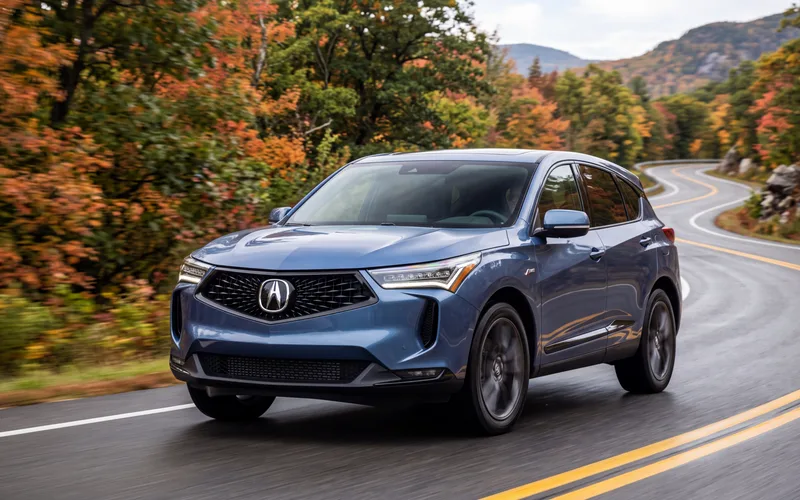 Acura RDXCompact Luxury SUVBetter at: Cargo space
Nearly 7 cu ft more cargo room behind the rear seats, more rear legroom and a quicker turbo powertrain for similar money, if you can live with roughly 22 MPG instead of 39.
Compare 2.69C+
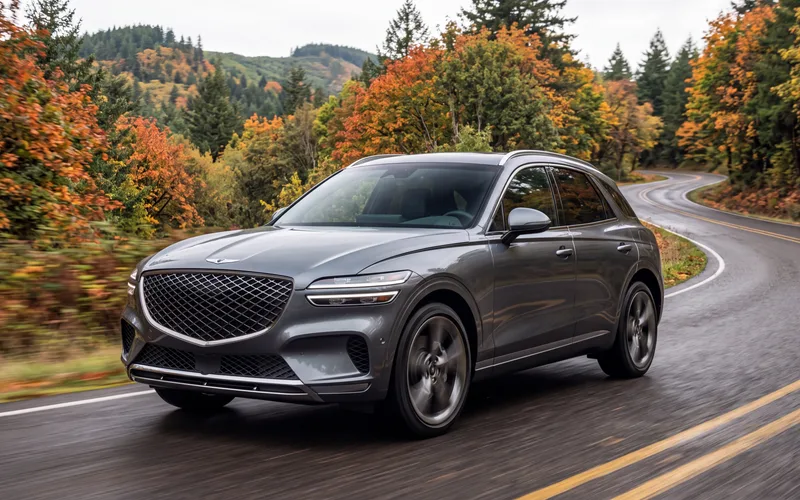 Genesis GV70Compact Luxury SUVBetter at: Warranty & features
More standard equipment, bigger screens and a 10-year/100,000-mile powertrain warranty against the Lexus's 6/70,000, for only a few thousand more.
Compare 2.79B-
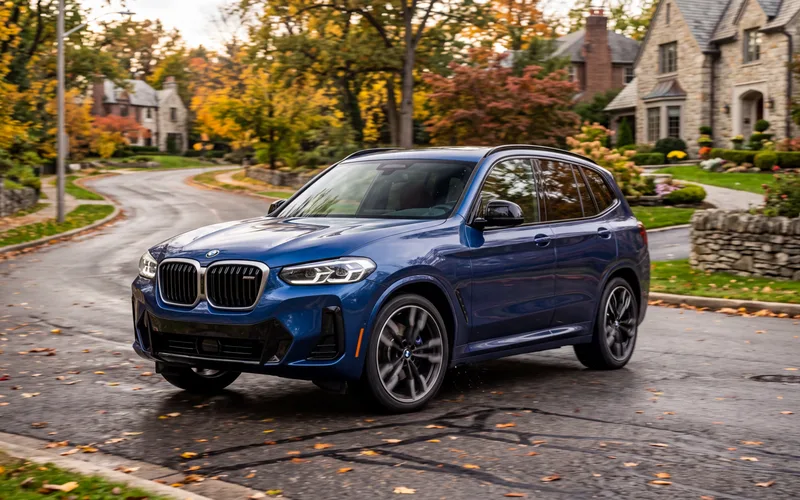 BMW X3Compact Luxury SUVBetter at: Driving dynamics
The one to drive if the NX's 7.2-second 0-60 and comfort-first chassis leave you cold — plus 4,400 lbs of towing and about 8 cu ft more cargo room.
CompareHow it's evolved
10 scored model years · 2017–2026
Subject scores by year
Hover or tap a score to see what moved it versus the year before. A corner mark flags a big swing.
| Year | Performance | Efficiency | Safety | Space | Cost | Reliability | Tech | Use-case | Driving | Value |
|---|---|---|---|---|---|---|---|---|---|---|
| 2026 | 41 | 93 | 83 | 45 | 57 | 86 | 72 | 61 | 68 | 77 |
| 2025 | 42 | 88 | 80 | 45 | 58 | 84 | 71 | 61 | 67 | 77 |
| 2024 | 41 | 88 | 82 | 44 | 59 | 85 | 70 | 61 | 67 | 79 |
| 2023 | 42 | 87 | 82 | 45 | 62 | 85 | 72 | 61 | 65 | 79 |
| 2022 | 41 | 87 | 80 | 45 | 66 | 81 | 72 | 60 | 65 | 74 |
| 2021 | 30 | 75 | 81 | 45 | 66 | 89 | 40 | 59 | 60 | 65 |
| 2020 | 29 | 75 | 76 | 45 | 70 | 88 | 47 | 56 | 60 | 66 |
| 2019 | 30 | 75 | 72 | 44 | 69 | 86 | 41 | 55 | 60 | 66 |
| 2018 | 30 | 75 | 72 | 45 | 71 | 87 | 34 | 56 | 63 | 68 |
| 2017 | 30 | 75 | 57 | 44 | 65 | 87 | 31 | 51 | 58 | 64 |
Compare two years
Best fit & conditions
Higher scores mean a better fit for that use case. Learn more about use-case fit →
Subject profile
Academic Probation · NHTSA safety recalls
No NHTSA safety recall is on record for the 2026 Lexus NX. Other model years of the NX have 14 — listed below.
14 recalls on other model years of the NX (2018–2019, 2022–2025)
Mar 24, 2026Equipment: other: labelsThe load carrying capacity modification label may display inaccurate added weight values. As such, these vehicles fail to comply with the requirements of Federal Motor Vehicle Safety Standard number 110, "Tire Selection and Rims."
Defect
Toyota Motor Engineering & Manufacturing (Toyota) is recalling certain 2024-2025 Toyota Tundra, Tacoma Hybrid, Tacoma, RAV4 Hybrid, Land Cruiser Hybrid, Lexus GX550, 2024-2026 Tundra Hybrid, 2025 Sequoia Hybrid, Crown Signia, Grand Highlander, Lexus TX500 Hybrid, Lexus NX350 Hybrid, 2025-2026 Grand Highlander Hybrid, and Lexus TX350 vehicles. The load carrying capacity modification label may display inaccurate added weight values. As such, these vehicles fail to comply with the requirements of Federal Motor Vehicle Safety Standard number 110, "Tire Selection and Rims."
Risk
A vehicle with an incorrect maximum capacity weight value may be overloaded, which can increase the risk of a crash.
Remedy
Dealers will replace the load carrying capacity modification label, free of charge. Owner letters were mailed May 26, 2026. Owners may contact Toyota's customer service at 1-800-331-4331. Toyota's numbers for this recall are 26LB04, 26LA04, 26TB07, and 26TA07.
NHTSA campaign 26V179000 ↗Manufacturer no. See attached Part5738,230 vehicles potentially affected (all models in the campaign)Owners notified May 22, 2026Filed by Toyota Motor Engineering & ManufacturingFiled as NX HYBRIDMar 18, 2026Back over prevention: softwareThe rearview camera image may not display when the vehicle is placed in reverse. As such, these vehicles fail to comply with the requirements of Federal Motor Vehicle Safety Standard (FMVSS) number 111, "Rear Visibility."
Defect
Toyota Motor Engineering & Manufacturing (Toyota) is recalling certain 2022-2025 Lexus NX350, NX250, 2023-2026 RX350, and 2024-2026 TX350 vehicles. The rearview camera image may not display when the vehicle is placed in reverse. As such, these vehicles fail to comply with the requirements of Federal Motor Vehicle Safety Standard (FMVSS) number 111, "Rear Visibility."
Risk
A rearview image that does not display reduces the driver's view behind the vehicle, increasing the risk of a crash.
Remedy
Dealers will update the rearview camera software or replace the rearview camera, as necessary, free of charge. Owner notification letters were mailed May 15, 2026. Owners may contact Toyota's customer service at 1-800-331-4331. Toyota's numbers for this recall are 26LB02 and 26LA02.
NHTSA campaign 26V162000 ↗Manufacturer no. 26LB02 / 26LA02144,200 vehicles potentially affected (all models in the campaign)Owners notified May 15, 2026Filed by Toyota Motor Engineering & ManufacturingFiled as NXOct 30, 2025Back over prevention: display functionPlease see the recall report for a complete list of models. A software error may cause the rearview camera to freeze or display a blank screen when the vehicle is in reverse. As such, these vehicles fail to comply with the requirements of Federal Motor Vehicle Safety Standard (FMVSS) number 111, "Rear Visibility."
Defect
Toyota Motor Engineering & Manufacturing (Toyota) is recalling certain 2022-2026 Toyota, Lexus, and Subaru Solterra vehicles equipped with a Panoramic View Monitor (PVM) system. Please see the recall report for a complete list of models. A software error may cause the rearview camera to freeze or display a blank screen when the vehicle is in reverse. As such, these vehicles fail to comply with the requirements of Federal Motor Vehicle Safety Standard (FMVSS) number 111, "Rear Visibility."
Risk
A rearview camera that fails to display an image can reduce the driver's view behind the vehicle, increasing the risk of a crash.
Remedy
Dealers will update the parking assist software, free of charge. Owner letters were mailed January 2, 2026. Owners may contact Toyota's customer service at 1-800-331-4331. Toyota's numbers for this recall are 25TB13 and 25LB06. Subaru's number for this recall is WRE25.
NHTSA campaign 25V744000 ↗Manufacturer no. 25TB13/25LB06/WRE251,024,407 vehicles potentially affected (all models in the campaign)Owners notified Dec 5, 2025Filed by Toyota Motor Engineering & ManufacturingFiled as NX, NX HYBRID, NX PLUG-IN HYBRIDFeb 6, 2025Seat belts: rear/other: webbingThe second-row center seat belt webbing may be damaged. As such, these vehicles fail to comply with the requirements of Federal Motor Vehicle Safety Standard (FMVSS) number 209, "Seat Belt Assemblies."
Defect
Toyota Motor Engineering & Manufacturing (Toyota) is recalling certain 2025 Toyota Camry Hybrid, Lexus NX250, NX350, NX350 Hybrid, 2024-2025 Lexus RX350, RX350 Hybrid, and RX500 Hybrid vehicles. The second-row center seat belt webbing may be damaged. As such, these vehicles fail to comply with the requirements of Federal Motor Vehicle Safety Standard (FMVSS) number 209, "Seat Belt Assemblies."
Risk
A damaged seat belt may not adequately restrain an occupant, increasing the risk of injury during a crash.
Remedy
Dealers will inspect the seat belt webbing and replace the seat belt assembly if necessary, free of charge. Owner notification letters were mailed March 20, 2025. Owners may contact Toyota's customer service at 1-800-331-4331. Toyota's numbers for this recall are 25TA03 and 25LA03.
NHTSA campaign 25V059000 ↗Manufacturer no. 25TA03 / 25LA0340,922 vehicles potentially affected (all models in the campaign)Owners notified Mar 20, 2025Filed by Toyota Motor Engineering & ManufacturingFiled as NX, NX HYBRIDJan 29, 2025Air bags: frontal: driver clockspring/spiral cassette · Steering: columnAn electrical connection inside the steering column's spiral cable assembly may be insufficiently welded, causing the connection to separate and deactivate the driver's air bag. As such, these vehicles fail to comply with the requirements of Federal Motor Vehicle Safety Standard number 208, "Occupant Crash Protection."
Defect
Toyota Motor Engineering & Manufacturing (Toyota) is recalling certain 2023 Toyota Corolla, Corolla Cross, Corolla Cross Hybrid, Highlander, Highlander Hybrid, Tacoma, Lexus RX350, 2023-2024 NX250, and NX350 vehicles that may have been incorrectly repaired under previous NHTSA recall number 23V-480. An electrical connection inside the steering column's spiral cable assembly may be insufficiently welded, causing the connection to separate and deactivate the driver's air bag. As such, these vehicles fail to comply with the requirements of Federal Motor Vehicle Safety Standard number 208, "Occupant Crash Protection."
Risk
A deactivated driver's air bag will not deploy as intended, increasing the risk of injury during a crash.
Remedy
Dealers will inspect and replace the spiral cable assembly as necessary, free of charge. Owner notification letters were mailed March 17, 2025. Owners may contact Toyota's customer service at 1-800-331-4331. Toyota's number for this recall is 25TA02. Lexus' number for this recall is 25LA02.
NHTSA campaign 25V040000 ↗Manufacturer no. 25TA02/25LA021,716 vehicles potentially affected (all models in the campaign)Owners notified Mar 17, 2025Filed by Toyota Motor Engineering & ManufacturingFiled as NXJan 22, 2025Fuel system, gasoline: delivery: fuel pumpThe low-pressure fuel pump inside the fuel tank may fail.
Defect
Toyota Motor Engineering & Manufacturing (Toyota) is recalling certain 2018 Camry, 2019 Lexus NX300, and 2019 RX350L vehicles. The low-pressure fuel pump inside the fuel tank may fail.
Risk
Fuel pump failure can cause an engine stall, increasing the risk of a crash.
Remedy
Dealers will replace the fuel pump assembly, free of charge. Owner notification letters were mailed March 12, 2025. Owners may contact Toyota's customer service at 1-800-331-4331. Toyota's numbers for this recall are 25TA01 and 25LA01.
NHTSA campaign 25V028000 ↗Manufacturer no. 25TA01 / 25LA01858 vehicles potentially affected (all models in the campaign)Owners notified Mar 12, 2025Filed by Toyota Motor Engineering & ManufacturingFiled as NXDec 5, 2024Service brakes, hydraulic: foundation components: disc: caliper · Wheels: hubSome of the bolts that secure the front brake caliper and the wheel hub bearing may be loose, which can result in a damaged caliper brake hose or possible wheel detachment.
Defect
Toyota Motor Engineering & Manufacturing (Toyota) is recalling certain 2024 RAV4 and 2025 Lexus NX vehicles. Some of the bolts that secure the front brake caliper and the wheel hub bearing may be loose, which can result in a damaged caliper brake hose or possible wheel detachment.
Risk
A damaged brake line can cause a brake fluid leak, reducing brake performance and increasing the distance required to stop the vehicle. Wheel detachment can result in a loss of vehicle control. Either condition increases the risk of a crash.
Remedy
Dealers will inspect and tighten the front brake caliper mounting bracket and hub bearing bolts, as necessary, free of charge. In addition, any damaged components will be replaced, free of charge. Owner notification letters were mailed January 23, 2025. Owners may contact Toyota customer service at 1-800-331-4331. Toyota's numbers for this recall are 24TA14 and 24LA08.
NHTSA campaign 24V911000 ↗Manufacturer no. 24TA14, 24LA0870 vehicles potentially affected (all models in the campaign)Owners notified Jan 23, 2025Filed by Toyota Motor Engineering & ManufacturingFiled as NXJun 27, 2024Seats: front assembly: head restraintThe head restraints on the driver and front passenger seats may be inadvertently removed without pressing the lock release button. As such, these vehicles fail to comply with the requirements of Federal Motor Vehicle Safety Standard (FMVSS) Number 202, "Head Restraints."
Defect
Toyota Motor Engineering & Manufacturing (Toyota) is recalling certain 2024 Lexus RX 350, RX 350h, 2024-2025 NX 250, NX 350, and NX 350h vehicles. The head restraints on the driver and front passenger seats may be inadvertently removed without pressing the lock release button. As such, these vehicles fail to comply with the requirements of Federal Motor Vehicle Safety Standard (FMVSS) Number 202, "Head Restraints."
Risk
A head restraint that is inadvertently removed and not reinstalled can increase the risk of injury during a rear-end crash.
Remedy
Dealers will replace the driver and front passenger seat head rest assemblies, free of charge. Owner letters were mailed February 14, 2025. Owners may contact Toyota customer service at 1-800-331-4331. Toyota's numbers for this recall are 24LB06 and 24LA06.
NHTSA campaign 24V482000 ↗Manufacturer no. 24LB06, 24LA0611,418 vehicles potentially affected (all models in the campaign)Owners notified Feb 14, 2025Filed by Toyota Motor Engineering & ManufacturingFiled as NX, NX HYBRIDJul 12, 2023Air bags: frontal: driver clockspring/spiral cassette · Steering: columnAn electrical connection inside the steering column's spiral cable assembly may be insufficiently welded, causing the connection to separate and deactivate the driver's air bag. As such, these vehicles fail to comply with the requirements of Federal Motor Vehicle Safety Standard number 208, "Occupant Crash Protection."
Defect
Toyota Motor Engineering & Manufacturing (Toyota) is recalling certain 2023 Corolla, Corolla Cross, Corolla Cross Hybrid, Highlander, Highlander Hybrid, Tacoma, 2023 Lexus RX350, RX350 Hybrid, RX500 Hybrid, 2023-2024 Lexus NX250, NX350, and NX350 Hybrid vehicles. An electrical connection inside the steering column's spiral cable assembly may be insufficiently welded, causing the connection to separate and deactivate the driver's air bag. As such, these vehicles fail to comply with the requirements of Federal Motor Vehicle Safety Standard number 208, "Occupant Crash Protection."
Risk
A deactivated driver's air bag that does not deploy as intended increases the risk of injury during a crash.
Remedy
Dealers will inspect and replace the spiral cable assembly, if necessary, free of charge. Owner notification letters were mailed September 8, 2023. Owners may contact Toyota's customer service at 1-800-331-4331. Toyota's number for this recall is 23TA08. Lexus' number for this recall is 23LA02.
NHTSA campaign 23V480000 ↗Manufacturer no. 23TA08/ 23LA02152,927 vehicles potentially affected (all models in the campaign)Owners notified Sep 8, 2023Filed by Toyota Motor Engineering & ManufacturingFiled as NX HYBRID, NX250, NX350Jul 12, 2023Electrical system: propulsion system: dc/dc converterThe electric current rectifying module contained within the DC-DC converter may have been damaged during production, which can result in an electrical short-circuit.
Defect
Toyota Motor Engineering & Manufacturing (Toyota) is recalling certain 2021-2022 RAV4 Prime and 2022 Lexus NX450h+ plug-in hybrid electric (PHEV) vehicles. The electric current rectifying module contained within the DC-DC converter may have been damaged during production, which can result in an electrical short-circuit.
Risk
A short circuit can cause the DC-DC converter to overheat, increasing the risk of a vehicle fire.
Remedy
Owners are advised not to charge their vehicles when the ambient air temperature is below or expected to drop below 41 degrees Fahrenheit (5 degrees Celsius). Dealers will replace the DC-DC converter, free of charge. Owner notification letters were mailed December 29, 2023. Owners may contact Toyota's customer service at 1-800-331-4331. Toyota's number for this recall is 23TB07/23LB01.
NHTSA campaign 23V478000 ↗Manufacturer no. 23TB07/23LB0143,442 vehicles potentially affected (all models in the campaign)Owners notified Dec 29, 2023Filed by Toyota Motor Engineering & ManufacturingFiled as NX450H+Sep 1, 2022Service brakes, hydraulicThe Skid Control ECU within the Brake Actuator Assembly may falsely detect an overcurrent condition of the Electronic Parking Brake (EPB) Actuator and enter a failsafe mode which prevents the EPB from being engaged. As such, these vehicles fail to comply with the requirements of Federal Motor Vehicle Safety Standard number 135, "Light Vehicle Brake Systems."
Defect
Toyota Motor Engineering & Manufacturing (Toyota) is recalling certain 2022 Lexus NX250, NX350, and Toyota Tundra vehicles. The Skid Control ECU within the Brake Actuator Assembly may falsely detect an overcurrent condition of the Electronic Parking Brake (EPB) Actuator and enter a failsafe mode which prevents the EPB from being engaged. As such, these vehicles fail to comply with the requirements of Federal Motor Vehicle Safety Standard number 135, "Light Vehicle Brake Systems."
Risk
An electronic parking brake that cannot be engaged while in "park," may result in a vehicle rollaway, increasing the risk of a crash.
Remedy
Dealers will reprogram the Skid Control ECU, free of charge. Owner notification letters were mailed November 1, 2022. Owners may contact Toyota's customer service at 1-800-331-4331. Toyota's numbers for this recall are 22TA11 and 22LA04.
NHTSA campaign 22V661000 ↗Manufacturer no. 22TA11 and 22LA0483,725 vehicles potentially affected (all models in the campaign)Owners notified Oct 28, 2022Filed by Toyota Motor Engineering & ManufacturingFiled as NX250, NX350Apr 13, 2022Electronic stability control (esc): control module: softwareThe Skid Control ECU software may not turn on the Vehicle Stability Control (VSC) system when the vehicle is restarted after the driver has disabled the VSC system. As such, these vehicles fail to comply with the requirements of Federal Motor Vehicle Safety Standard number 126, "Electronic Stability Control Systems."
Defect
Toyota Engineering & Manufacturing (Toyota) is recalling certain 2022 Lexus LX 600, Lexus NX 350h, Lexus NX 450h+, Toytoa RAV4 Hybrid, 2021-2022 Lexus LS 500h, Toyota Mirai, RAV4 PRIME, Sienna, Venza, and 2020-2022 Toyota Highlander Hybrid vehicles. The Skid Control ECU software may not turn on the Vehicle Stability Control (VSC) system when the vehicle is restarted after the driver has disabled the VSC system. As such, these vehicles fail to comply with the requirements of Federal Motor Vehicle Safety Standard number 126, "Electronic Stability Control Systems."
Risk
Driving with a deactivated stability control system increases the risk of a crash.
Remedy
Dealers will update the Skid Control ECU software, free of charge. Owner notification letters were mailed May 27, 2022. Owners may contact Toyota customer service at 1-800-331-4331. Toyota's number for this recall is 22TA03. Lexus' number for this recall is 22LA01.
NHTSA campaign 22V239000 ↗Manufacturer no. 22TA03, 22LA01458,110 vehicles potentially affected (all models in the campaign)Owners notified May 27, 2022Filed by Toyota Motor Engineering & ManufacturingFiled as NX350H, NX450H+Apr 13, 2022Structure: body · Suspension: front: shock absorberMissing spot-welds between the body panels and the front shock absorber mounting areas may cause the front shock absorber to separate from the mounting area.
Defect
Toyota Motor Engineering & Manufacturing (Lexus) is recalling certain 2022 NX250, NX350, NX350h, and NX450h+ vehicles. Missing spot-welds between the body panels and the front shock absorber mounting areas may cause the front shock absorber to separate from the mounting area.
Risk
A separated shock absorber can cause a loss of vehicle stability, increasing the risk of a crash.
Remedy
Dealers will add welds to body panels or replace the body panels where welds have failed, free of charge. Owner notification letters were mailed on June 10, 2022. Owners may contact Lexus customer service at 1-800-331-4331. Lexus's number for this recall is 22LA02.
NHTSA campaign 22V238000 ↗Manufacturer no. 22LA024,215 vehicles potentially affected (all models in the campaign)Owners notified Jun 10, 2022Filed by Toyota Motor Engineering & ManufacturingFiled as NX250, NX350, NX350H, NX450H+Nov 4, 2020Fuel system, gasoline: delivery: fuel pumpThe low-pressure fuel pump inside the fuel tank may fail.
Defect
Toyota Motor Engineering & Manufacturing (Toyota) is recalling certain 2018-2019 4Runner, 2019-2020 Avalon, 2019 Corolla Hatchback, 2017-2019 Highlander, 2018-2020 Camry, 2020 Corolla, 2018-2019 Land Cruiser, 2017-2020 Tacoma, 2019-2020 RAV4, 2019-2020 Sequoia, 2017-2020 Sienna, 2019-2020 Tundra, 2018-2020 Lexus ES350, 2017 Lexus GS200t, 2017-2019 Lexus GS350, 2019 Lexus GS300, 2018-2020 Lexus LC500h, 2019-2020 Lexus LS500, 2018-2019 Lexus GX460, 2017 Lexus IS200t, 2019 Lexus IS300, 2019 Lexus IS350, 2018-2020 Lexus LC500, 2018 Lexus LS500, 2019 Lexus LS500h, 2018-2019 Lexus LX570, 2017 Lexus RC200t, 2019 Lexus RC300, RC350, 2017 and 2019-2020 Lexus RX350, 2018-2020 RX350L, 2019 Lexus UX200, 2018-2019 Lexus NX300 vehicles. The low-pressure fuel pump inside the fuel tank may fail.
Risk
If the fuel pump fails, the engine can stall while driving, increasing the risk of a crash.
Remedy
Toyota will notify owners, and dealers will replace the fuel pump assembly with an improved one, free of charge. Owners of specific models were notified that remedy parts were available starting January 21, 2021. Owners of other models will be notified as remedy parts become available. Remedy parts should be available for all affected vehicles by late March 2021. Owners may contact Toyota customer service at 1-888-270-9371 or Lexus customer service at 1-800-255-3987. Note: This recall is an expansion of recall 20V-012. Toyota's number for this recall is 20TA02. Lexus' number for this recall is 20LA01.
NHTSA campaign 20V682000 ↗Manufacturer no. 20TA02, 20LA011,525,742 vehicles potentially affected (all models in the campaign)Owners notified Jan 21, 2021Filed by Toyota Motor Engineering & ManufacturingFiled as NX300
Source: NHTSA Office of Defects Investigation recall database, model years 2017–2026. Recalls are listed by model year as the manufacturer filed them; whether a specific car is affected depends on its VIN — check a VIN at nhtsa.gov ↗. NHTSA model names matched to this page: NX, NX HYBRID, NX PLUG-IN HYBRID, NX250, NX300, NX350, NX350H, NX450H+.
Detailed scoring by subject
1Performance & PowertrainThe NX's lowest-graded category.0.74F
Scored on the NX 350h, the volume powertrain for 2026: Lexus's electrified NX variants outsold the gas-only side in 2025 and the NX 250 base engine was dropped after MY2025, leaving the 240-hp hybrid as the mainstream choice. That output is modest against the compact-luxury field but is the lineup's midpoint, with the 275-hp 2.4T and 304-hp PHEV above it.
Lexus publishes engine torque only for the power-split 350h, as is standard for this hybrid architecture, so the 179 lb-ft engine peak is the scored value and motor contribution is noted — the same convention applied to the UX and CR-V in this dataset. On paper this is well below the ~280–320 lb-ft turbo torque of the X3, Q5, GLC and RDX, though the electric motors mask much of the gap off the line.
Lexus quotes 7.2 seconds for the NX 350h AWD — adequate rather than quick, and roughly a second behind the turbocharged German compacts. The new-for-2026 FWD hybrid is notably slower at 8.2 s, while the PHEV is the only genuinely brisk NX at 6.0 s.
In everyday driving the hybrid is quiet and linear — the system works in the background under mild throttle, and instant motor torque gives the NX more initial scoot than its 240 hp suggests. It loses the top band for the familiar Toyota trait reviewers keep flagging: press hard and the Atkinson four revs high and turns coarse, with thrust tapering as speed builds.
The planetary eCVT never hunts and is genuinely unobtrusive at part throttle — an advantage over the low-speed hesitation of dual-clutch rivals. The rubber-band effect under acceleration keeps it mid-pack: revs flare and hold, though reviewers note the NX avoids the worst of the drone found in other Toyota hybrids. The gas NX 350's conventional 8-speed automatic is the more decisive unit but is not the volume powertrain.
Every 2026 NX powertrain carries the same modest 2,000-lb rating — the GA-K unibody, not the engine, is the limit. That is the entry rung of Lexus's own 2026 SUV towing ladder and well behind the 3,500–4,850 lb ratings of the GLC, Q5 and X3, though it clears the 1,500-lb RDX.
AWD is standard on the NX 350 (mechanical Dynamic Torque Control) and the NX 450h+, and optional across the whole NX 350h ladder, which newly gains FWD for 2026 — so it is available on effectively every trim rather than reserved for the top of the range. It stays below the 80s because operation is basic: the hybrids use a slip-reactive rear electric motor (E-Four) with no low range, locking differentials or terrain-mode selector.
The NX is a pavement crossover on the GA-K unibody shared with the RAV4: roughly 8.1 inches of ground clearance is respectable for the class, but there are no skid plates, no locking differentials, no crawl control and no off-road grade — nothing like the GX or Land Cruiser side of the Toyota house. Its AWD handles snow and gravel and stops there, which places it with the Q5 and GLC rather than the RAV4's Multi-Terrain-equipped trims.
Three genuinely distinct powertrains, two of them electrified: a 275-hp 2.4L turbo with an 8-speed automatic, a 240-hp self-charging hybrid now available in FWD or AWD, and a 304-hp plug-in hybrid with roughly 37 miles of EV range — and for 2026 the F SPORT Handling grade spreads to the hybrid while a Premium grade lowers the entry price of the PHEV. It stops short of the top of the band only because there is no battery-electric NX (that role falls to the RZ) and no performance F variant.
2Efficiency & RangeThe NX's best-graded category.4.00A+
The NX 350h hybrid is the volume configuration and, as of 2026, the entry powertrain — its 39 MPG combined (AWD) is well clear of compact-luxury-SUV rivals like the X3, GLC and RDX. Scored on the AWD hybrid as representative since most US NX buyers take AWD.
Series-parallel hybrid operation gives the NX its strongest numbers in city driving, nearly doubling the turbocharged NX 350's 21 MPG city.
Highway is the hybrid's weakest EPA cycle but 37 MPG still leads the compact luxury SUV field among non-plug-in models.
Computed from the EPA combined rating and the published 14.5-gallon tank; the NX's ~565-mile hybrid range is a genuine strength against battery-electric rivals in the segment.
Derived from the EPA combined rating at the standard 15,000 mi/yr assumption; the hybrid's running cost lands well below the segment norm even paying for premium, and lower still on the regular fuel Lexus permits.
Lexus recommends 91-octane premium for the NX 350h for full output but explicitly permits 87-octane regular with slightly reduced performance — the classic "recommended, not required" case. The turbocharged NX 350 is the stricter premium ask, while the 450h+ adds cheap Level 1/2 home charging as an alternative energy path.
3SafetyOne of the NX's strongest categories.3.65A-
NHTSA has crash-tested the second-generation NX but has never published an overall NCAP score for it — the rollover test is unrated, so the composite is withheld. The published subscores (4 stars frontal, 5 stars side) match the pattern of SUVs that do earn 5 stars overall, so 4.8 is used as the estimate rather than claiming an unpublished 5.
The 2026 NX is a Top Safety Pick+ winner with Good in every crashworthiness test, including the updated moderate overlap front and updated side tests — an improvement over the 2025 car, which was only Acceptable in updated moderate overlap. Just short of the ceiling because the award is new for this model year rather than a long-standing result across the generation.
Lexus Safety System+ 3.0 is standard on every 2026 NX trim — Pre-Collision System with pedestrian/cyclist/motorcyclist detection and intersection support, full-speed-range Dynamic Radar Cruise Control, Lane Departure Alert with Steering Assist, Lane Tracing Assist, Road Sign Assist and automatic high beams — and Blind Spot Monitor with Rear Cross Traffic Alert is standard across the range too, so nothing from the core five is trim-locked.
The standard system earns Good — the top grade — in the IIHS updated pedestrian front crash prevention test, which includes the harder nighttime and higher-speed runs, and it is a TSP+ prerequisite the NX cleared. Legacy vehicle-to-vehicle testing of this generation was Superior.
Blind Spot Monitor with Rear Cross Traffic Alert is standard on every 2026 trim, joined by Safe Exit Assist, and a Panoramic View Monitor plus digital rearview mirror are available from Premium up. Held below the top band because the rear cross-traffic function is alert-oriented rather than a broadly intervening braking system, and the 360-degree camera is not standard on the entry NX 350.
Lane Departure Alert with Steering Assist and Lane Tracing Assist are standard, and LTA holds a lane competently when markings are clear, but owners and reviewers describe centering that can get jerky and that degrades with faded lines or poor weather — mid-pack rather than the confident centering of the best luxury systems.
Full-speed-range Dynamic Radar Cruise Control with stop-and-go and curve-speed management is standard on all trims and is consistently well reviewed for smooth spacing and restarts; the combined highway-assist experience stops short of the best because LTA is the only lane component layered on top and there is no traffic-jam or hands-off mode.
No hands-free highway mode is offered on any 2026 NX. Lexus Teammate Advanced Drive relies on lidar hardware the NX does not carry and remains limited to the LS (and, for Advanced Park, the RX), leaving the NX hands-on only.
IIHS rates the 2026 NX's headlights Good, and because TSP+ requires acceptable-or-better headlights on every trim, the volume NX 350 is not stuck with a downgraded lamp. Automatic high beams are standard, with adaptive high-beam and triple-beam LED lighting on upper grades.
The AZ20 NX's rising beltline, thick rear pillars and shallow rear glass restrict the over-the-shoulder and rearward view, and the ceiling-mounted center top-tether anchor further blocks the mirror when in use. Camera compensation is good but not free — the digital rearview mirror and Panoramic View Monitor are upper-trim items rather than base equipment.
Two sets of lower anchors sit close to the surface of the seat bight with reclining seatbacks for access, and the outboard top tethers are clearly marked — but this is a compact SUV: rear-facing infant seats are a tight fit, three-across is not realistic, and the center top tether is a ceiling anchor.
4Space & ComfortOne of the NX's weakest categories.0.98F
The AZ20 NX is a strictly two-row, five-passenger compact luxury SUV; there is no six- or seven-seat configuration on any 2026 trim (NX 350, 350h, 450h+).
Carry-over AZ20 body for 2026 — no structural or roofline change accompanied the trim/drivetrain updates, so published front headroom is unchanged from 2022–2025.
Front legroom is adequate but on the short side of the compact-luxury class, a consequence of the NX's 105.9-in wheelbase being biased toward front-seat comfort rather than raw stretch-out room.
Rear headroom is a genuine strength — the NX's roofline stays tall over the second row, giving more rear head clearance than the front seats get.
36.1 in is mid-pack for the segment and trails class benchmarks like the RDX (38.0 in) — fine for two adults, tight behind a tall driver.
The NX has no third row at all and never has — buyers wanting one in a Lexus crossover are pushed up to the TX. Scored in the low band per the item's instruction to always score this for SUVs.
Cargo room behind the rear seats is the NX's clearest packaging weakness — it undercuts the Audi Q5 (~25.8), BMW X3 (~31) and Acura RDX (~29.5) despite similar exterior footprint, and falls below the bottom of the SUV normalization band.
Seats-folded maximum of 46.9 cu ft is small even by compact-luxury standards (RDX 58.9, Q5 54.5) and sits below the 55 cu ft floor of the SUV band, so the item bottoms out.
Competent everyday storage without a signature idea: a dual-hinged center armrest bin that opens from either side, a hidden cubby beneath the wireless charging pad, a good glovebox and bottle-friendly front door pockets, but reviewers consistently note total small-item space trails rivals and the rear door pockets are bottle-only.
Front seats are a repeated highlight — plush with real bolstering, 8-way power with power lumbar and heat/ventilation on the volume Premium grade, and the F Sport Handling buckets are better still. Held below 80 because the second row's modest legroom and flatter cushion make it the less accommodating half of the cabin.
Comfort-first tuning that reviewers rate as genuinely good on the standard suspension — plush without floating — but body control is the trade-off, with noted body roll and no segment-leading plushness; F Sport Handling's AVS firms it up rather than improving isolation.
Isolation is a standout: NVH work on the AZ20 platform (Lexus claims ~15% less wind noise ingress than the prior car) plus the hybrid's low-speed EV running keep the cabin near the top of the compact-luxury class at highway speed.
Rich comfort kit from the volume Premium grade up — heated and ventilated front seats, heated wheel on a power column, memory driver's seat, moonroof, dual-zone auto climate with the occupancy-sensing Climate Concierge, and remote pre-conditioning through Remote Connect. Short of the top band only because there is no separate rear climate zone and the base grade still makes ventilation optional.
5Cost of OwnershipOne of the NX's weakest categories.1.86C-
For 2026 Lexus dropped the NX 250, so the hybrid NX 350h — newly offered in cheaper front-wheel-drive form — becomes the entry point and the nameplate's floor price rises into the mid-$45Ks. That is a high base for a compact SUV but ordinary for the compact luxury class.
The volume configuration is the hybrid in Premium trim with AWD — the combination that carries the equipment most NX buyers expect (heated seats, power liftgate, larger screen availability) without the Luxury or F SPORT premium. Roughly $50K as typically equipped.
Estimates diverge sharply: KBB's model-year-specific figure is high because it prices scheduled service at Lexus dealer rates, while CarEdge's long-run brand data has Lexus as the second-cheapest luxury marque to maintain. A figure in the mid-$6Ks reflects genuinely low repair incidence offset by luxury-dealer labor, and sits consistently with the UX and Acura RDX in this dataset.
The NX is one of the strongest value-holders in the luxury compact SUV segment, well clear of the German rivals, and the hybrid-heavy 2026 lineup helps: hybrid and PHEV NX variants show the best retention of all. Sources range from the mid-50s to low-60s, so ~60% is a defensible central estimate.
Lexus's 4-year/50,000-mile basic coverage is the luxury-segment norm — matching BMW, Mercedes-Benz, Audi and Acura — but nothing more than that.
Six years/70,000 miles of powertrain coverage beats the German rivals' 4/50 but falls far short of the 10-year plans that anchor the top of this band. The long hybrid-battery term is a meaningful backstop on a lineup that is now entirely electrified.
Lexus includes only the first two scheduled services (1 year/10,000 miles) — short next to BMW's 3-year/36,000-mile plan — but pairs it with 4 years of unlimited-mileage roadside assistance and multi-year connected-services trials. Solid, not generous; scored to match the Lexus UX, which carries the identical program.
$49,945 volume-trim price minus its estimated resale value after 5 years (60% retained, or about $29,967) leaves about $19,978 in depreciation. Add the projected $6,400 in 5-year maintenance and repairs, and owning this vehicle for 5 years costs about $26,378 in total.
6Reliability & QualityOne of the NX's strongest categories.3.87A+
Both major predictors line up at the top of the compact luxury SUV field: J.D. Power puts the 2026 NX 350 and NX 350h at 85/100 predicted reliability (inside its 81-90 "Great" band) and Consumer Reports predicts better-than-average reliability from 2023-2025 data, rating the NX Hybrid's predicted reliability excellent. The AZ20 is now in its fifth model year with the early software teething sorted, so the prediction rests on real survey data rather than a brand halo.
Lexus remains the dependability benchmark — highest-ranked premium brand in the J.D. Power 2026 Vehicle Dependability Study for a fourth straight year at 151 PP100 against a 204 PP100 industry average, well clear of Cadillac (175) and Porsche (182), and Toyota Motor Corporation took the most model-level awards. A slip of a few places in Consumer Reports' brand reliability ranking is the only blemish and keeps this just under a perfect read.
Typical activity for the generation with nothing systemic, and the 2026 model year is notably clean so far. The largest recent campaign — the March 18, 2026 rearview-camera recall covering roughly 144,200 Lexus NX/RX/TX (owner letters mailed May 15, 2026) — is limited to non-hybrid 2022-2025 NX and does not reach the 2026 build; the electronic door latches and a PHEV DC-DC converter campaign account for most of the earlier AZ20 activity. Deducted for the e-latch and 2022-era infotainment/backup-camera bugs still surfacing in owner reports rather than for anything powertrain- or structure-related.
For 2026 the NX 250 is dropped and the FWD NX 350h becomes the entry and volume configuration, so the representative powertrain is now the 2.5L Atkinson four with dual motor-generators and a planetary eCVT — Toyota's fifth-generation hybrid system shared with the RAV4 Hybrid, one of the most proven high-mileage drivetrains sold in the US, with no meaningful failure mode at the traction battery or transaxle. Held below 90 because the NX 350's T24A-FTS 2.4L turbo is still a young engine (2022 debut) with limited high-mileage data, fuel-quality sensitivity and a hesitation/surging TSB in sibling applications, and the 450h+ adds plug-in charging hardware.
Soft-touch surfaces cover the regularly touched areas, with NuLuxe or leather, available Ultrasuede, open-pore wood accents and well-damped switchgear on Luxury and F Sport Handling grades — comfortably above the Mercedes GLC and Audi Q5 read. Kept out of the top band because reviewers still rate the Volvo XC60 above it for material richness and outright luxury feel, and the cabin reads narrow up front for the price.
Japanese assembly at Toyota Motor Kyushu's Miyata plant delivers the tight, rattle-free build the brand is known for — reviewers report zero squeaks or rattles over broken pavement and consistently secure touch points. Initial-quality data backs it: Lexus placed third among premium brands in the 2026 J.D. Power IQS at 156 PP100 against a 175 PP100 industry average, and the NX has been one of the top-ranked models in the compact premium SUV segment.
Service satisfaction is near the top of the industry — 900 on J.D. Power's 2026 Customer Service Index among premium brands (3rd) against an 868 industry average, with 897 in premium SUV service. The roughly 240-245 US Lexus stores give solid but not dense national coverage for a premium brand, so rural owners travel further than a Toyota or Honda buyer would, and the premium-SUV service score slipped from 902/2nd in 2025.
The NX shares its GA-K platform and most of its powertrain hardware with the RAV4, so wear items and mechanical parts are cheap, universally stocked and serviceable by independent shops — RepairPal puts Lexus at $551 a year against $652 across all vehicles, and rates NX variants near the top of the luxury compact SUV group with low repair severity. Trimmed for the genuinely luxury-priced items that stay dealer-only: electronic door latch assemblies, the 14-inch multimedia unit and PHEV charging hardware.
7Technology & InfotainmentGrades above the middle of the scale.2.89B-
The volume NX 350h carries the 9.8-inch Lexus Interface touchscreen; the 14-inch HD unit is reserved for Luxury grades and the plug-in hybrid, or costs extra on Premium and F SPORT Handling.
Lexus Interface is genuinely quick — reviewers describe menu and CarPlay switching as essentially lag-free — and Lexus kept real volume and climate controls below the screen, but the 9.8-inch panel on volume trims is small for the class and the settings tree is inconsistently organized.
Wireless Apple CarPlay and Android Auto are standard on every 2026 NX grade, including the base NX 350 and NX 350h, with no wired-only tier and no subscription attached.
The 'Hey Lexus' Intelligent Assistant handles natural speech and cabin commands, and Cloud Navigation adds Google POI data and live traffic — but both are tied to a Drive Connect trial and become a paid subscription afterward, which pushes many owners onto phone projection.
A 10-speaker Lexus Premium Audio system is standard even on the base grade, and the optional 17-speaker Mark Levinson PurePlay surround system is among the stronger factory setups in the compact luxury SUV class.
The NX's driver display is a 7-inch multi-information screen — clear and configurable, but small and not offered in a larger size, where compact luxury rivals such as the X3, GLC and Q5 fit 12.3-inch-plus full-digital clusters as standard.
The NX was the launch vehicle for Toyota/Lexus's OTA-capable multimedia platform and receives pushed head-unit and cloud-map updates over Wi-Fi or cellular, but the scope is infotainment and maps — not the whole-vehicle, feature-adding updates Tesla, Rivian and the Korean EV brands ship.
The Lexus app covers remote start and climate, lock/unlock, vehicle locate and PHEV charge scheduling, and Digital Key allows phone-as-key sharing with up to five drivers — but Remote Connect and Digital Key are subscription features once the included trial lapses.
Six USB ports are standard across both rows, and the wireless charging pad is a cheap standalone option rather than a trim gate — but there is no household AC outlet and the port count is the main story rather than high-wattage charging.
Smart Key proximity entry with push-button start and a power liftgate are standard on every grade, remote start comes through the Lexus app, and Digital Key adds phone-as-key — the only caveats are the Remote Connect subscription and the electronic Digital Latch door releases being an upper-trim item.
Backup camera is standard and the NX offers a four-camera Panoramic View Monitor plus 12 ultrasonic sensors and Advanced Park semi-automated parking — a strong kit, though the surround view and Advanced Park sit on option packages rather than the volume grade.
A 10-inch color head-up display projecting turn-by-turn guidance from either Cloud Navigation or CarPlay is offered, but it is an upper-trim/package item rather than something the volume NX 350h buyer gets.
8Use-Case FitMid-pack among this car's ten categories.2.14C
LATCH access is genuinely good — the lower anchors sit near the surface of the seat bight and the seatbacks recline for installation — but this is a 5-seat compact with 22.7 cu ft behind the row, so a stroller plus a week's gear fills the bay, rear-facing infant seats are a tight fit, and the center top tether is a ceiling anchor that blocks the mirror when in use.
The safety case is unusually clean because nothing families need is trim-locked: Lexus Safety System+ 3.0, Blind Spot Monitor, Rear Cross Traffic Alert and Safe Exit Assist are standard on the entry NX, and the car is a 2026 IIHS Top Safety Pick+ with Good LATCH ease-of-use and seat-belt-reminder ratings. The deductions are the $45k floor and upper-trim-only Panoramic View Monitor rather than any gap in the safety content itself.
Four adults travel in a quiet, well-isolated cabin with rear vents and optional heated outboard rear seats, and reviewers rate the rear cushions more comfortable than the fronts. What caps it is packaging: 36.1 in of rear legroom with 38.1 in of headroom under the moonroof has six-footers ducking on exit, and 22.7 cu ft will not swallow luggage for four without folding a seat.
This is the NX's strongest mission. The 350h pulls away on electric power in stop-and-go, the engine stays muted at part throttle, the front seats are among the best at the price, and full-speed-range adaptive cruise with Lane Tracing Assist is standard rather than optional. The only real friction is the CVT-style drone when you ask for full throttle.
39 MPG combined AWD (40 with the new-for-2026 FWD hybrid) is at or near the top of the luxury compact SUV field, and Lexus permits 87 octane despite recommending premium, which drops the annual fuel bill to roughly $1,270. Consumables and reliability are Toyota-cheap; what keeps it out of the top band is luxury-brand insurance and parts pricing.
The 183.5-inch footprint slots into city spaces easily, but the NX works against itself elsewhere: a 38.7-ft turning circle is wide for a compact crossover, and thick rear pillars with shallow glass make the over-the-shoulder view poor. Parking sensors are standard, but the Panoramic View Monitor and Advanced Park that would fix the sightlines are Premium-and-above equipment.
A 2,000-lb tow rating is the floor of the luxury compact SUV class — half the Q5's or X3's 4,400 lb — and it applies to every powertrain including the 275-hp turbo, so there is no way to option up out of it. With 22.7 cu ft of cargo, no bed and roughly 1,170 lb of payload, the NX tops out at a small utility trailer or a couple of dirt bikes' worth of duty.
The hardware underneath is as proven as work-duty machinery gets — the GA-K platform and the THS power-split hybrid are shared with the RAV4 and have a long service record — but everything above it is aimed the other way. There are no wear-friendly interior options, no rubber-floor or vinyl-seat configurations, and no fleet or commercial presence to draw a durability reputation from.
Onboard power stops at 12V and USB — Lexus notably did not carry over the RAV4 Prime's 1,500-watt AC outlet to the 450h+, so there is nothing to run a tool from. A hitch exists only as an accessory that requires the factory tow-prep package ordered up front, roof rails are optional, and the surfaces are carpet and NuLuxe rather than anything washable.
Roughly 565 miles on a tank, a cabin Lexus engineered for about 15% less wind noise than the first generation, and front seats reviewers single out for fatigue resistance make this a genuine mile-eater. It falls short of the top band only on driver assistance: Lane Tracing Assist centers adequately but there is no hands-free highway system of the kind BMW, Genesis and GM rivals now offer.
Gravel roads, trailheads and snow are well within reach — AWD is standard on the NX 350 and 450h+ and now optional rather than mandatory on the 350h, ground clearance is 8.1 in, and Trail mode helps on loose surfaces. Beyond that it stops: 7.7 in on F SPORT Handling, no skid plates or lockers, no US Overtrail grade, and the 2,000-lb limit rules out most trailered toys.
Lexus made the most of a small bay — the cargo area is well shaped, with underfloor storage and a cargo cover reviewers call among the segment's best for usability — but 22.7 cu ft behind the seats and 46.9 cu ft folded is a long way short of the mechanically related RAV4's 37.5/69.8, and the 450h+ battery cuts it further. Roof rails are optional and rated racks carry only about 165 lb.
9Driving ExperienceMid-pack among this car's ten categories.2.57C+
2026 is a carry-over chassis year for the AZ20 NX (grade/drivetrain shuffle only), and the GA-K platform gives it genuinely secure, composed cornering — the F SPORT Handling grade's Adaptive Variable Suspension plus front and rear performance dampers keep body roll well checked. It is tuned comfort-first rather than sharp, and reviewers consistently place it behind an X3 or RDX for outright agility, with one persistent complaint that it feels busy and needs constant small corrections at highway speed.
The variable-ratio rack (fitted to everything except the PHEV) makes the NX quick and easy to place around town and responsive on a back road, but the electric assist filters out road texture — accurate rather than communicative. The highway-stability complaint on 20-inch F SPORT rubber is the one real black mark.
The weakest link in the NX's dynamics and the reason this sits below the segment norm: the volume 350h's regen-to-friction blending is the least resolved part of the car, with a pedal that is touchy at parking speeds and vague under harder braking, and it stops roughly ten feet longer than the gas NX 350. The gas 350's pedal is firm and consistent by comparison, so buyers of that trim should read this a band higher.
The 350h's 240-hp hybrid pulls away on electric torque and hands off to the 2.5L four seamlessly in normal driving — Consumer Reports rates it more refined than the gas car — and the 450h+ is the quickest of the range at an estimated 6.0 sec 0-60. Points come off for eCVT rubberbanding under hard throttle and a reported hesitation as the engine re-engages; the 275-hp turbo NX 350's eight-speed automatic is crisper on tip-in but less smooth overall.
The cabin is well isolated at a cruise — Lexus claims a ~15% reduction in wind noise entering the cabin for this generation — but the hybrid's eCVT pins the four-cylinder at high revs when asked for real acceleration, and multiple reviewers describe the resulting drone as coarse and out of keeping with the badge. No vibration complaints through the controls.
Mid-pack for a compact SUV on a 105.9-in wheelbase — noticeably tighter than the larger RX (38.8 ft) but nowhere near the UX's 34.2 ft. The 20-inch wheels on the Luxury and F SPORT Handling grades widen it by roughly three quarters of a foot over the standard 18s.
The 'tazuna' cockpit does what it promises — gauges, head-up display and the angled touchscreen all fall inside the driver's forward sightline, and the seat and wheel adjustment range is good. It loses ground to bigger luxury SUVs on packaging and sightlines: a large center console eats into driver legroom, the F SPORT sport seats are over-bolstered for daily use, rearward visibility is compromised by small windows and thick pillars, and the shifter and e-latch doors both take learning.
More engaging than the RX or UX and genuinely satisfying on a good road in Sport S+ with the AVS dampers firmed up, but every reviewer lands in the same place: the NX is a polished, comfortable cruiser wearing sporty badges rather than a car an enthusiast seeks out. F SPORT Handling changes the suspension and the trim, not the powertrain.
10Value & Market PositionGrades above the middle of the scale.3.20B+
The cheapest way into a 2026 NX is the new front-drive NX 350h at $45,570 including destination — a 40-mpg hybrid that undercuts every direct rival's gas-only base car by $3,400 to $7,200 while carrying Lexus Safety System+ 3.0, a 9.8-inch touchscreen with wireless Apple CarPlay and Android Auto, and NuLuxe upholstery as standard. It stops short of the top band because the 14-inch screen, Mark Levinson audio, leather and head-up display all live on Premium/Luxury grades, and dropping the NX 250 for 2026 pushed the entry price up roughly $3,900 over 2025.
Buying the least expensive compact luxury SUV in the class and getting a 40-mpg hybrid powertrain plus the segment's best retained value is a strong money argument — the NX won its Kelley Blue Book resale category for 2026 and Lexus took the Best Resale Value luxury brand award for the fifth straight year at a 47% average. What keeps it out of the top band is that the money does not buy dynamics or space: reviewers consistently place its performance and cabin room behind the X3, GV70 and RDX, and the NX 450h+ now asks $59,205 to start with the federal plug-in credit gone since September 30, 2025.
Three powertrains — turbo gas NX 350, hybrid NX 350h, plug-in hybrid NX 450h+ — cross four grades (Standard, Premium, Luxury, F SPORT Handling) for fifteen published configurations spanning $45,570 to $64,225, and 2026 widened the range on both ends: the hybrid gained a front-drive option and the PHEV gained a Premium grade that cuts the cost of entry to the plug-in, while F SPORT Handling spread to the hybrids. The only real gap is at the bottom, where the four-cylinder NX 250 left the lineup.
The NX set a nameplate record of 76,836 US sales in 2025, up 3.2% year over year, making it the second-best-selling Lexus behind the RX and edging the BMW X3 for the top of the compact luxury SUV class. Five model years into the generation the demand curve is still rising rather than fading.
Lexus posted a record 370,260 US sales in 2025 (up 7.1%), passed Mercedes-Benz in the luxury race, and holds the strongest residual reputation of any luxury brand — five consecutive Kelley Blue Book Best Resale Value luxury brand wins — with quality standing to match in J.D. Power's Initial Quality Study. It sits below the aspirational top band because Lexus trades on dependability and comfort rather than the performance halo BMW, Porsche or Genesis design bring to the same segment.
There is real money on the table — 2.99% APR for 48 months with a financing bonus of up to $1,500, and advertised leases in the $489–$559 range — but this is a class sales leader from a brand that rarely discounts, so transaction prices sit close to sticker and the plug-in no longer has a federal credit to sweeten it. Occasional modest incentives, not a buyer's market.
The second-generation AZ20 NX arrived for 2022 on the GA-K platform, which makes 2026 its fifth model year with no mid-cycle facelift yet — the first-generation car was refreshed in its fourth. The 2026 updates are lineup housekeeping (a front-drive hybrid, grades reshuffled, new paint) rather than new hardware, and the first-gen precedent puts a refresh or replacement close enough to matter to a buyer.
Reviewers respect the NX without ever handing it a class win: Edmunds rates it about 7.0/10 and credits it with choosing its compromises wisely, KBB gives it 4.5/5 and ranks it the #2 best luxury hybrid SUV, and it holds an IIHS TOP SAFETY PICK+ for 2026 alongside a KBB Best Resale Value segment award. The counterweight is that U.S. News places it ninth among luxury compact SUVs and the dynamics critique is universal, so it is a solid recommendation rather than a comparison-test winner, with no 10Best or NACTOY recognition.