

The verdict
A mixed-report compact luxury sedan, strong on driving and held back by ownership.
Overall 2.25 (C) across 10 graded subjects. Its strongest is driving experience at 3.22 (B+), its weakest cost of ownership at 1.08 (D). 7 of 10 subjects grade at C− or better.
Jump to scoresStrengths
- Driving Experience
- Technology & Infotainment
- Value & Market Position
What holds it back
- Cost of Ownership
- Performance & Powertrain
- Reliability & Quality
Top alternatives
Cars shoppers cross-shop with the Polestar Polestar 2 3.00B
3.00B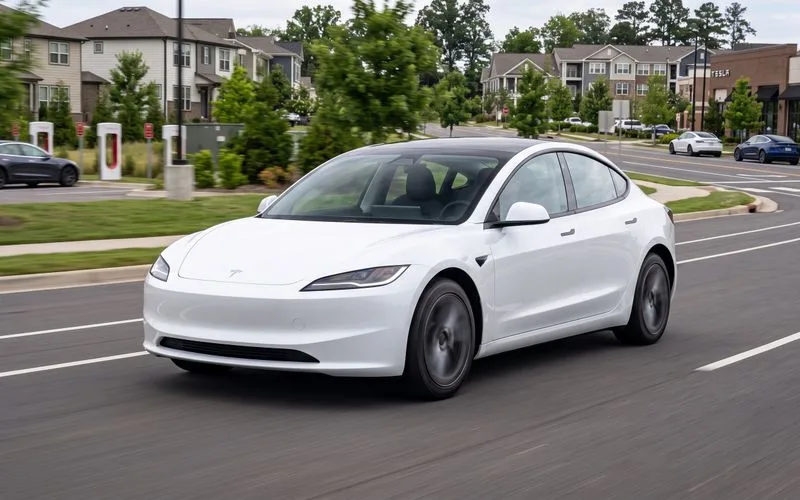 Tesla Model 3Mid-Size Luxury SedanBetter at: Value and resale
More range for roughly $10,000 less, native Supercharger access, and resale that holds 43% at five years instead of 31% — the ownership math simply isn't close.
Compare 2.73B-
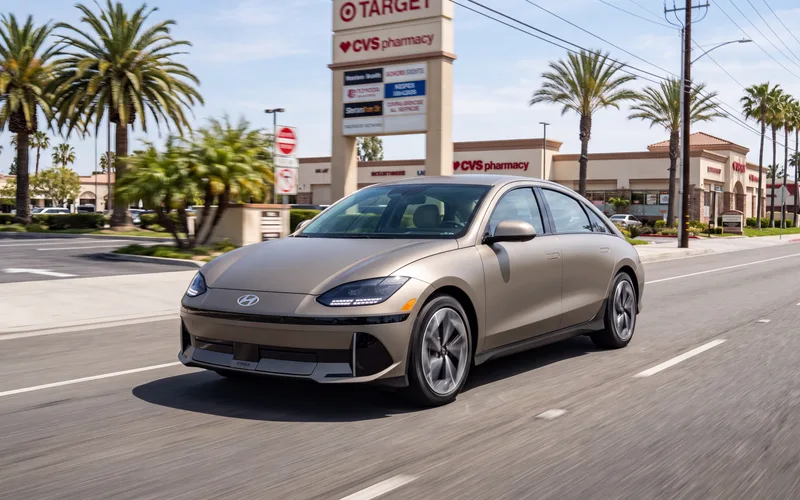 Hyundai Ioniq 6Mid-Size SedanBetter at: Charging speed
342 miles, 800-volt charging at 350 kW and a 10-year battery warranty for about $14,000 less, with a real dealer network behind it.
Compare 3.00B
3.00B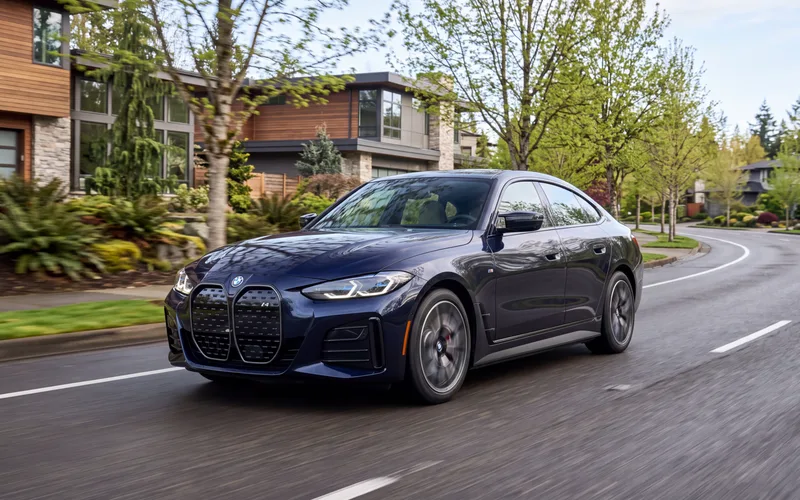 BMW i4Compact Luxury SedanBetter at: Long-term ownership
Costs more up front but pays it back with 340 US dealers, stronger predicted reliability, a real trim ladder and much steadier resale.
CompareHow it's evolved
6 scored model years · 2021–2026
Subject scores by year
Hover or tap a score to see what moved it versus the year before. A corner mark flags a big swing.
| Year | Performance | Efficiency | Safety | Space | Cost | Reliability | Tech | Use-case | Driving | Value |
|---|---|---|---|---|---|---|---|---|---|---|
| 2026 | 63 | 68 | 72 | 60 | 25 | 59 | 78 | 53 | 76 | 59 |
| 2025 | 82 | 68 | 71 | 61 | 21 | 52 | 71 | 54 | 81 | 69 |
| 2024 | 66 | 69 | 64 | 60 | 48 | 53 | 67 | 60 | 76 | 66 |
| 2023 | 53 | 61 | 67 | 63 | 46 | 53 | 71 | 57 | 77 | 68 |
| 2022 | 54 | 62 | 61 | 62 | 42 | 50 | 69 | 59 | 77 | 72 |
| 2021 | 78 | 59 | 76 | 61 | 31 | 50 | 68 | 59 | 80 | 72 |
Compare two years
Best fit & conditions
Higher scores mean a better fit for that use case. Learn more about use-case fit →
Subject profile
Detailed scoring by subject
1Performance & PowertrainOne of the Polestar 2's weakest categories.1.56D
The volume Long range Single motor uses one 170 kW front motor rated at 231 hp. The 2024 model's 299-hp rear-drive specification does not apply to this pre-facelift 2023 car.
The single front motor produces its peak torque immediately and is rated at 243 lb-ft, well below the dual-motor variants but adequate for the volume trim.
Polestar's quoted 7.0 seconds represents the volume single-motor trim; independent tests bracket it closely. It is modest for a luxury EV, though delivery remains immediately responsive at ordinary speeds.
Power arrives quietly, linearly, and without combustion-engine lag or shift interruptions. The single motor lacks the dual motor's force, but reviewers still describe its response as smooth and consistent rather than strained or hesitant.
A single-speed direct drive has no shifts to mistime or gears to hunt, giving uninterrupted acceleration and well-integrated one-pedal operation. Its behavior is essentially seamless, as expected of a well-calibrated EV drivetrain.
The volume Single Motor is front-wheel drive, but dual-motor AWD was a readily available core configuration rather than a token top-trim option. The system provides computer-controlled power delivery, though it lacks terrain modes or the later model's front-axle disconnect.
Buyers could choose the efficiency-oriented 231-hp single motor or materially quicker 408-hp dual motor, with a 476-hp Performance/software configuration above that. All are EVs, so the lineup has meaningful output and drivetrain choice but no alternative energy type.
2Efficiency & RangeMid-pack among this car's ten categories.2.13C
The front-drive single-motor car is the more efficient 2023 configuration and posts a solid, though not class-leading, EV efficiency rating.
Regenerative braking and the single-motor drivetrain produce the expected EV advantage in urban use.
Highway efficiency falls from its city result but remains exactly 100 MPGe on the EPA cycle.
The 78-kWh single-motor 2023 model is EPA-rated for 270 miles. The 320-mile figure belongs to the substantially upgraded 2024 rear-drive model and is excluded.
The 2023 Long range battery accepts up to 155 kW DC, competitive when introduced but well behind the quickest-charging EV sedans. The 2024 model's 205-kW rate does not apply.
Polestar quotes approximately 35 minutes under suitable battery-temperature and charger conditions. That is usable on trips but notably slower than the best 800-volt competitors.
The EPA estimate gives the single-motor Polestar very low annual energy expense relative to combustion luxury sedans.
Routine home charging is inexpensive and the 11-kW onboard charger supports a practical overnight refill. Road-trip charging is less convenient: the 2023 car uses CCS, peaks at only 155 kW, and needs about 35 minutes for 10–80%, so it stops short of the top band.
3SafetyMid-pack among this car's ten categories.2.50C+
The 2023 Polestar 2 earned NHTSA's maximum overall rating, with five stars in the frontal, side, and rollover categories.
IIHS did not test or award the 2023 Polestar 2, so it cannot receive top-band credit under this IIHS-specific item. Independent Euro NCAP testing nevertheless demonstrates a stable structure and excellent occupant protection with no known crashworthiness concern.
The volume 2023 Long range Single motor includes AEB/collision avoidance and lane keeping, but three of the rubric's five headline systems—ACC, blind-spot monitoring, and rear cross-traffic support—require the optional Pilot Pack. This is materially less complete than the standard suites of class leaders.
Standard AEB covers vehicles and vulnerable road users and performed well across nearly all Euro NCAP car-to-car scenarios. There is no IIHS day/night pedestrian result, preventing a higher score under this item's preferred US protocol.
When optioned, coverage is unusually capable: BLIS can steer away from an occupied blind spot and cross-traffic alert can brake. However, both are locked in the optional Pilot Pack on the representative 2023 trim, so they do not merit the standard-equipment top band.
Standard Lane Keeping Aid supplies corrective steering, while true lane centering comes only with optional Pilot Assist. Euro NCAP found the updated system centered the car through its S-bend except at the lowest test speed, but it remains a modest hands-on assistance system rather than a consistently polished class leader.
Optional Pilot Assist combines full-range speed control with lane centering and works well around moving traffic, but Euro NCAP found it failed to respond to stopped cars in some assisted-driving scenarios and cannot adapt for curves or junctions. Optional availability and those rough edges keep it mid-band.
No hands-free highway system was offered on any 2023 Polestar 2 trim. Pilot Assist is explicitly driver-supervised and monitors steering-wheel input rather than enabling hands-off operation.
LED headlights and automatic high beams are standard, but the more advanced Pixel LED lights and cornering fog lamps require the Pilot Pack. IIHS did not test either 2023 setup, leaving the volume trim without verified Good-rated performance.
The low fastback roof, small rear window, and substantial rear pillars create poor rear and rear-quarter sightlines. A rear camera is standard, but the surround-view camera and BLIS that best compensate for those blind zones require the Pilot Pack.
The two outboard lower anchors are clearly covered and usable, and independent crash testing found compatible restraints installed successfully. The low roof opening and limited rear legroom make bulky rear-facing seats awkward and force the corresponding front seat forward, while three-across is impractical.
4Space & ComfortMid-pack among this car's ten categories.2.28C
The 2023 volume configuration has two front and three rear seating positions.
Official body-dimension data provide unusually generous measured front headroom for a sedan.
Front legroom is competitive, though the tall center console reduces perceived knee space.
The sloping liftback roof leaves mid-band rear headroom on paper, with awkward access in practice.
Measured rear legroom is near the bottom of the sedan normalization range.
The liftback opening and underfloor well improve usability, but the seats-up volume is merely average.
A deep cargo-floor well, small frunk, folding rear seat, and ski pass-through add flexibility, but cabin cubbies are not exceptional.
Front seats are supportive and heated, but rear thigh support and space draw criticism.
Body control is strong but the standard car is firm; larger wheels and Performance-pack dampers can become harsh.
The electric drivetrain and solid structure make it quiet overall, though road impacts remain audible on poor pavement.
Heated power front seats, dual-zone climate, and remote climate preconditioning are standard; the Plus Pack adds higher-end cabin amenities.
5Cost of OwnershipThe Polestar 2's lowest-graded category.1.08D
The 2023 Long Range Single Motor was the entry configuration; its $48,400 MSRP plus the model-year destination charge yields $49,800.
The Long Range Dual Motor is used as the representative volume configuration because contemporary reviews describe its modest $3,500 premium as the compelling mainstream choice, while the Performance and limited BST editions were specialist variants.
Edmunds no longer publishes a numeric MY2023 TCO breakdown, so this estimate combines the Polestar 2's sparse two-year/20,000-mile service schedule, included first service, and an EV-appropriate allowance for wear items and post-warranty repairs. It excludes energy, insurance, tax, and financing as required.
The Polestar 2 is projected to lose 58.1% in five years, worse than the compact luxury EV average and materially worse than sedans overall.
Four-year/50,000-mile coverage is the prevailing luxury-brand standard and exceeds the mainstream 3/36 norm.
The battery-and-motor term is competitive for an EV, though shorter than the longest 10-year powertrain warranties in the wider sedan market.
Polestar includes three years/30,000 miles of scheduled maintenance, four-year warranty-period pickup and delivery within 150 miles for MY2021-23, and robust roadside assistance. Because service is only every two years/20,000 miles, the maintenance benefit generally amounts to the first scheduled visit, tempering an otherwise excellent package.
$53,300 volume-trim price minus its estimated resale value after 5 years (41.9% retained, or about $22,333) leaves about $30,967 in depreciation. Add the projected $2,800 in 5-year maintenance and repairs, and owning this vehicle for 5 years costs about $33,767 in total.
6Reliability & QualityOne of the Polestar 2's weakest categories.1.58D
The two major sources point below average: Consumer Reports says the 2023 Polestar 2 is less reliable than other cars from the same model year, while J.D. Power rates its quality and reliability Fair. CR lacked enough samples for detailed trouble-spot data, preventing an even firmer low-band score.
Polestar is too young and too low-volume to have a persuasive multi-year U.S. dependability record, and it has generally lacked sufficient data for major brand reliability rankings. Its Volvo/Geely engineering base helps, but it does not substitute for demonstrated top-tier brand dependability.
Four NHTSA recalls affect the 2023 model, and the rearview-camera defect required repeated campaigns after earlier software remedies proved incomplete. Most remedies are software rather than battery or propulsion hardware, but the repeat safety-system failure and NHTSA follow-up materially weaken the record.
The volume Long Range Single Motor's 78-kWh battery and front-drive EV system were no longer brand-new by 2023, and there is no prominent systemic battery-fire or traction-motor failure campaign. However, this first-generation powertrain still lacks the decade-plus high-mileage history needed for a high durability score.
The cabin's Scandinavian design and textured, sustainable materials look distinctive and generally feel better than a Tesla Model 3's, but scratchy plastics and a few flimsy pieces fall short of compact-luxury leaders at this price. Optional Nappa leather improves richness but is not representative of the volume trim.
Reviewers generally find the Polestar 2 solidly assembled with good panel and cabin consistency, but owner reports identify scattered pillar, seatbelt, and trim rattles plus easily scratched gloss-black surfaces. That supports above-average basic assembly, not class-leading initial quality.
Polestar's U.S. service coverage is sparse and concentrated in major metro areas, leaving many owners far from an authorized point and dependent on transport arrangements. This is a significant disadvantage against established luxury brands with nationwide dealer networks.
Routine EV maintenance is light and Volvo/Geely component sharing offers some support, but Polestar-specific body, electronic, and driveline parts have little aftermarket depth and often require the sparse authorized network. Collision and minor hardware repairs can therefore be costly and slow relative to mainstream or established luxury sedans.
7Technology & InfotainmentOne of the Polestar 2's strongest categories.2.79B-
The same portrait center display is fitted across the 2023 range.
Android Automotive is fast, crisp, and logically grouped for many reviewers, but touch dependence and occasional connectivity faults keep it below the leaders.
Apple CarPlay arrived by software update but uses a wired USB connection; phone-based Android Auto was not offered because Google services are native.
Native Google Assistant and Google Maps offer natural voice control, live routing, charger finding, and EV-aware arrival estimates.
The standard 250-watt system is adequate and a 13-speaker Harman Kardon upgrade is available, though it is not class-leading.
A crisp 12.3-inch digital driver display is standard and can show navigation mapping prominently.
Whole-car OTA updates regularly delivered features and fixes, including CarPlay and powertrain-related improvements.
The app supports lock, climate, charge status, location, and phone-as-key, but reviewers report intermittent disconnections.
Four USB ports serve both rows and wireless charging is provided, but there is no notable household-power output.
Proximity access, keyless start, powered liftgate, and phone-as-key provide unusually complete convenience equipment.
Front/rear parking sensors and a reversing camera are standard, while the useful 360-degree camera is tied to the Pilot Pack.
No head-up display was offered for the 2023 Polestar 2.
8Use-Case FitMid-pack among this car's ten categories.1.84C-
Five seats, ISOFIX/LATCH points, and a flexible hatch help, but tight rear legroom, a sloping roof, and small door openings complicate loading children.
Strong crashworthiness and a broad standard collision-avoidance suite make this a reassuring family car, though some convenience ADAS was pack-dependent.
Supportive front seats, quiet EV travel, and hatch flexibility work for four, but the firm ride, tight rear bench, and 14.3-cu-ft cargo area limit family touring.
Smooth EV response, effective adjustable one-pedal driving, compact dimensions, and available Pilot Assist reduce commuting effort; visibility is the main drawback.
The single-motor EV is efficient and avoids gasoline, although premium tires and luxury-car insurance temper the savings.
Its compact footprint and parking sensors help, but a 37.7-foot circle and thick rear pillars make tight spaces less effortless without the optional surround camera.
The hatch can move supplies and official documentation allows a light trailer, but this luxury liftback has little payload or sustained work-duty headroom.
The powertrain is mechanically simple, but the upscale interior, low-profile tires, and limited fleet history are poorly suited to repeated abuse.
Roof and tow accessories exist, but there is no onboard AC power, bed system, washable cabin, or meaningful upfit ecosystem.
A 270-mile EPA range, quiet drivetrain, and supportive seats are useful, but 155-kW peak charging, firm ride, and pack-dependent Pilot Assist constrain long-haul appeal.
Roof carriers, a towbar, and optional AWD support bikes and maintained gravel, but low clearance and road-focused tires keep it pavement-biased.
The liftback, folding rear seat, ski hatch, deep underfloor well, and frunk are versatile for the class despite modest seats-up volume.
9Driving ExperienceThe Polestar 2's best-graded category.3.22B+
Immediate responses, little body roll, and neutral balance make the heavy car unusually agile, though some tests found understeer on the optional Performance setup.
Steering is quick, precise, and weight-adjustable, but feedback is limited.
Stopping performance is strong and regeneration is adjustable, though low-speed pedal blending can feel grabby.
The single front motor delivers seamless, immediate EV response and well-tuned one-pedal behavior, though it is not especially quick by premium-EV standards.
The electric motor is near-silent and introduces essentially no combustion vibration, even under load.
The official 11.5-m turning circle is on the wide side for a compact sedan.
Supportive power seats and good adjustment help, but the tall console crowds the driver and thick pillars hurt sightlines; many functions live in the touchscreen.
Sharp responses and a planted, neutral chassis give it genuine character even in the slower front-drive volume trim.
10Value & Market PositionOne of the Polestar 2's strongest categories.2.57C+
The base car includes 19-inch wheels, LED lighting, a power liftgate, proximity access, heated power front seats, dual-zone climate control, an 11-inch Google-based interface and Apple CarPlay. Adaptive cruise, Pilot Assist, blind-spot monitoring and a 360-degree camera were withheld in the $3,400 Pilot Pack, preventing a top-band score.
The $53,300 Dual Motor delivered strong AWD performance, an upscale cabin and 260 miles of EPA range, but the cheaper Model 3 offered better range/efficiency and Polestar charged $3,400-$4,200 for highly desirable driver-assistance and comfort packs. The 2023 car therefore offered fair rather than standout value.
Buyers could select efficient front-drive Single Motor or quicker AWD Dual Motor, then add Pilot, Plus and—for Dual Motor—Performance packs. That is meaningful flexibility, though it remains a compact two-powertrain ladder with most choices bundled into expensive packages.
The Polestar 2 established the young brand and had credible four-digit monthly US demand early in 2023, but remained a niche seller beside the Model 3 and softened markedly through the year. Its trajectory supports a below-midpack market-acceptance score.
Polestar's Volvo connection, restrained Scandinavian design and EV-only positioning give it a distinctive premium image. Limited awareness and a thin retail/service footprint keep the young badge below established luxury brands, while weak residuals reduce its halo.
Polestar made unusually large incentives broadly available during 2023: a $7,500 clean-vehicle rebate on purchase inventory and a $7,500 lease credit that later reached $8,500. These were exceptional buyer savings, albeit also evidence of inventory and demand pressure.
The 2023 car was only the third US model year of the first generation and gained 11 miles of Dual Motor range plus updated wheels and colors. However, the substantially revised rear-drive 2024 model was revealed in January 2023, creating immediate refresh risk for a 2023 buyer.
Reviewers consistently praised the Polestar 2's ride/handling balance, interior design and rapid AWD performance, but usually stopped short of declaring it the class benchmark because its range and efficiency trailed the Model 3. Strong reviews without a major 2023 award haul place it in the upper-middle band.