

The verdict
A mixed-report compact luxury sedan, strong on driving and held back by ownership.
Overall 2.16 (C) across 10 graded subjects. Its strongest is driving experience at 3.24 (B+), its weakest cost of ownership at 0.82 (F). 7 of 10 subjects grade at C− or better.
Jump to scoresStrengths
- Driving Experience
- Value & Market Position
- Technology & Infotainment
What holds it back
- Cost of Ownership
- Reliability & Quality
- Performance & Powertrain
Top alternatives
Cars shoppers cross-shop with the Polestar Polestar 2 3.00B
3.00B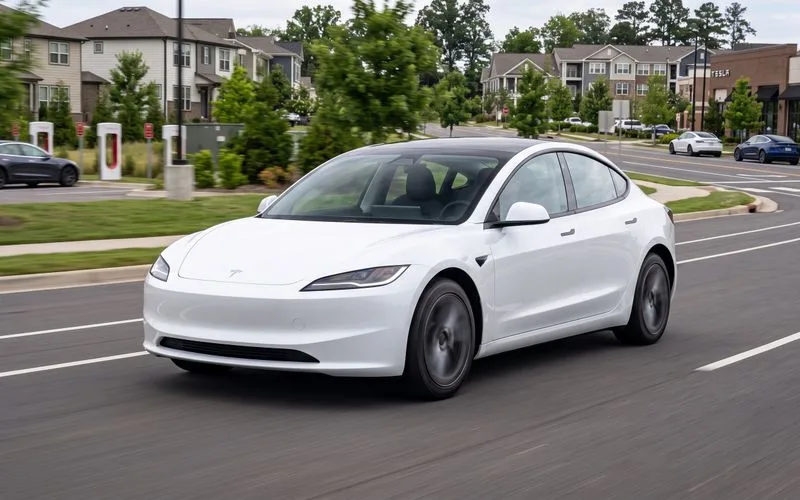 Tesla Model 3Mid-Size Luxury SedanBetter at: Value and resale
More range for roughly $10,000 less, native Supercharger access, and resale that holds 43% at five years instead of 31% — the ownership math simply isn't close.
Compare 2.73B-
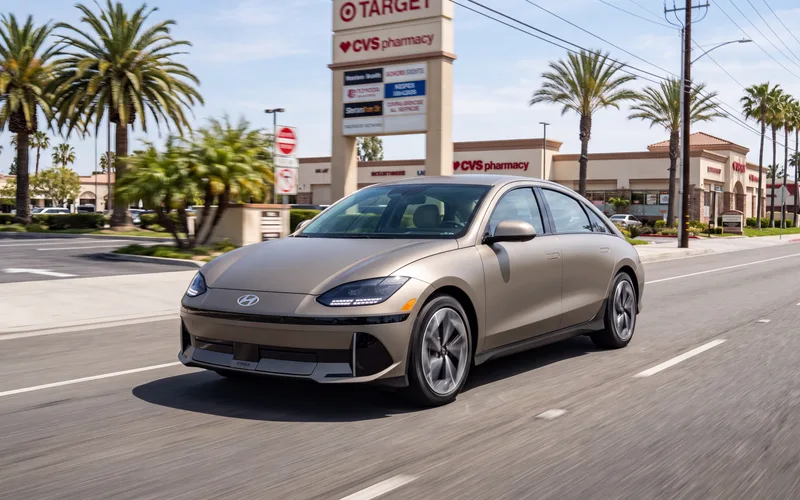 Hyundai Ioniq 6Mid-Size SedanBetter at: Charging speed
342 miles, 800-volt charging at 350 kW and a 10-year battery warranty for about $14,000 less, with a real dealer network behind it.
Compare 3.00B
3.00B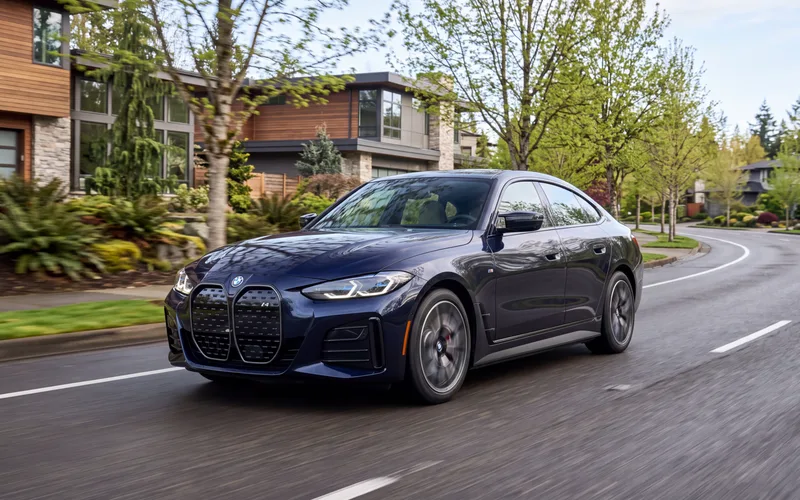 BMW i4Compact Luxury SedanBetter at: Long-term ownership
Costs more up front but pays it back with 340 US dealers, stronger predicted reliability, a real trim ladder and much steadier resale.
CompareHow it's evolved
6 scored model years · 2021–2026
Subject scores by year
Hover or tap a score to see what moved it versus the year before. A corner mark flags a big swing.
| Year | Performance | Efficiency | Safety | Space | Cost | Reliability | Tech | Use-case | Driving | Value |
|---|---|---|---|---|---|---|---|---|---|---|
| 2026 | 63 | 68 | 72 | 60 | 25 | 59 | 78 | 53 | 76 | 59 |
| 2025 | 82 | 68 | 71 | 61 | 21 | 52 | 71 | 54 | 81 | 69 |
| 2024 | 66 | 69 | 64 | 60 | 48 | 53 | 67 | 60 | 76 | 66 |
| 2023 | 53 | 61 | 67 | 63 | 46 | 53 | 71 | 57 | 77 | 68 |
| 2022 | 54 | 62 | 61 | 62 | 42 | 50 | 69 | 59 | 77 | 72 |
| 2021 | 78 | 59 | 76 | 61 | 31 | 50 | 68 | 59 | 80 | 72 |
Compare two years
Best fit & conditions
Higher scores mean a better fit for that use case. Learn more about use-case fit →
Subject profile
Detailed scoring by subject
1Performance & PowertrainOne of the Polestar 2's weakest categories.1.64D
The new-for-2022 Long range Single motor is the lower-priced, longest-range volume configuration and uses one 170 kW front motor rated at 231 hp. The optional dual-motor version raises total output to 408 hp.
The volume single-motor car sends 243 lb-ft through its front axle, exactly half the dual-motor model's 487 lb-ft combined rating.
The single-motor car delivers adequate rather than startling EV acceleration, but Car and Driver's instrumented 6.8-second result beats Polestar's 7.4-second 0–62 mph specification. The dual-motor alternative is dramatically quicker.
Response is immediate and linear, with silent, interruption-free thrust and strong one-pedal calibration. It lacks the dual motor's punch and can exhibit front-drive torque steer, but reviewers consistently found delivery smooth and predictable.
Its direct-drive single-speed reduction gear has no shifts to mistime or ratios to hunt, so acceleration is seamless in all normal driving. The fixed 10.51:1 gearing trades some top speed for useful low-speed response without adding driveline fuss.
AWD is readily available through the Long range Dual motor configuration, but the lower-priced volume Single motor is front-wheel drive and there are no terrain modes or torque-vectoring hardware. That makes AWD a meaningful, straightforward option rather than a lineup-wide standard feature.
Two materially distinct EV choices cover efficiency and performance needs: a 231-hp front-drive single motor and a 408-hp all-wheel-drive dual motor. The choice is useful, but both share the same long-range battery and there is no alternate battery size or non-EV powertrain in the US range.
2Efficiency & RangeMid-pack among this car's ten categories.2.16C
The volume single-motor configuration's final EPA combined rating is 107 MPGe, substantially more efficient than the 2022 dual-motor version while remaining only mid-pack among electric sedans.
Regenerative braking and the front-drive single-motor layout lift city efficiency to 113 MPGe, though lighter EV sedan rivals are more frugal.
The EPA highway result is 100 MPGe; the tall, relatively heavy liftback loses less efficiency than many EVs at speed but does not reach the class leaders.
The final EPA-certified 270-mile range improved on Polestar's initial 265-mile estimate and is the longest 2022 Polestar 2 configuration. It remains below the 300-mile threshold increasingly expected of long-range luxury EV sedans.
The year-specific 2022 manual specifies up to 150 kW under favorable battery and charger conditions. That was respectable at launch but trails the 200–350 kW systems that distinguish the quickest-charging EV sedans.
Polestar quotes 35 minutes from 10 to 80 percent with a properly conditioned battery at roughly 95°F. The time is usable for travel but notably slower than the sub-25-minute class leaders.
The EPA's model-year fuel-economy guide estimates just $600 per year for electricity at its standard 15,000-mile assumptions, giving the Polestar a major operating-cost advantage over combustion luxury sedans.
It needs no gasoline and is inexpensive and simple to replenish for owners with home Level 2 charging; the included CCS capability also supports road trips. The score stops short of the top because an eight-hour full Level 2 session and middling DC speed make dependence on public charging less convenient and potentially costlier.
3SafetyMid-pack among this car's ten categories.2.14C
The 2022 Polestar 2 earned NHTSA's maximum five-star overall rating, with five stars in the frontal, side, and rollover categories.
IIHS did not publish a full crashworthiness evaluation or grant a 2022 award for the Polestar 2. That lack of IIHS evidence limits the score despite the car's strong NHTSA and Euro NCAP performance.
AEB with pedestrian detection, lane-departure warning, lane keeping, oncoming-lane mitigation, and run-off-road mitigation were standard. ACC, Pilot Assist, blind-spot monitoring, and cross-traffic alert were locked in the optional $3,200 Pilot Pack on the volume single-motor car.
Standard AEB performed well in Euro NCAP vehicle scenarios and includes pedestrian detection, but no comparable IIHS vehicle/pedestrian or nighttime result is published for this model year.
The optional Pilot Pack provides blind-spot monitoring with active steer assist plus rear cross-traffic alert with brake support, a capable implementation undermined by being absent from the base/volume configuration.
Lane keeping is standard, while Pilot Assist lane centering is optional. Euro NCAP found the late-2021 steering upgrade stayed centered through its S-bend at nearly all test speeds, though the system has no automated lane-change assist.
Optional Pilot Assist integrates ACC and centering and earned an overall Good assisted-driving judgment, but Euro NCAP found ACC did not react to stopped cars in its scenarios and cannot adjust for curves or junctions.
No hands-free highway-driving system was offered; Pilot Assist is a hands-on Level 2 aid monitored through steering-wheel input rather than a driver-facing camera.
LED headlights and automatic high beams provide solid baseline equipment, with Pixel LED lighting included in the Pilot Pack, but IIHS did not publish a headlight rating for the 2022 Polestar 2.
Thick rear pillars, the pinched glasshouse, and a shallow rear window create substantial rear blind zones. The useful 360-degree camera compensates, but only with the optional Pilot Pack.
Two outboard rear ISOFIX/LATCH positions are provided and most child seats fit, but the tight rear compartment makes rear-facing installations encroach on front-seat travel and limits three-across practicality.
4Space & ComfortMid-pack among this car's ten categories.2.21C
Every 2022 Polestar 2 configuration seats five.
The tall-roofed liftback provides generous measured front headroom.
Measured front legroom is competitive, although the wide center console makes the cockpit feel snugger than the number suggests.
Rear headroom is adequate rather than spacious beneath the sloping liftback roof.
The official figure is tight for a compact luxury sedan, and the raised floor further compromises adult posture.
The raw volume is modest, but the roof-hinged liftgate makes it more useful than a conventional sedan trunk.
A frunk, underfloor compartment, folding grocery holder and ski hatch are useful, but the cabin has only one readily accessible front cupholder and modest console storage.
The supportive front seats work well over distance, but the base single-motor trim lacks the Plus Pack's full-power adjustment and the rear bench is tight and knees-up.
The volume trim's 19-inch wheels and frequency-dependent dampers ride more smoothly than Performance Pack cars, yet the chassis remains firm over broken pavement.
The motor is unobtrusive and exterior noise is very well isolated for the class, even though coarse surfaces can still produce tire noise.
Heated front seats and remote preconditioning are standard, but the heat pump, heated rear seats and heated wheel require the $4,000 Plus Pack; ventilation additionally requires Nappa leather.
5Cost of OwnershipThe Polestar 2's lowest-graded category.0.82F
The new front-drive Long Range Single Motor was the 2022 entry model; its $45,900 advertised price becomes $47,200 with the documented destination charge.
The new single-motor car is the representative volume powertrain, and the $4,000 Plus Pack is the typical equipment step because it adds the heat pump and core luxury amenities. Pilot could be added separately for $3,200.
This model-level industry estimate includes maintenance, repairs, and wear items such as tires. The first scheduled service is complimentary, but no exact trim-specific Edmunds TCO total is available.
The best available model-level projection shows heavier depreciation than both sedans overall and the luxury-electric compact class.
Four years is competitive with premium-brand coverage and exceeds the mainstream three-year norm.
The EV-relevant battery and motor coverage has a long eight-year term, though the 100,000-mile limit is typical for the class.
Three years/30,000 miles of scheduled maintenance, four years of roadside assistance, and pickup/delivery within 150 miles form an unusually strong package. The sparse two-year service interval means the maintenance benefit normally covers only the first scheduled visit.
$51,200 volume-trim price minus its estimated resale value after 5 years (41.9% retained, or about $21,453) leaves about $29,747 in depreciation. Add the projected $6,735 in 5-year maintenance and repairs, and owning this vehicle for 5 years costs about $36,482 in total.
6Reliability & QualityOne of the Polestar 2's weakest categories.1.37D
There is not enough survey volume for Consumer Reports to publish a statistically valid 2022 Polestar 2 reliability score, while the available history shows recurring connectivity/software complaints and four recalls. That uncertainty and the early-production status place it below average rather than at the bottom of the class.
Polestar was a very young, effectively single-volume-model brand in 2022 and still lacks the multi-model, multi-year sample required for major U.S. brand reliability rankings. Volvo/Geely engineering and service support help, but they do not substitute for a demonstrated Polestar dependability record.
Four NHTSA recalls are heavy activity for a low-volume 2022 model, and repeated rear-camera software campaigns plus earlier software-related loss-of-propulsion risk indicate more than isolated cosmetic issues. Software remedies reduce mechanical concern, but the safety relevance and repetition materially lower the score.
The volume single-motor model uses a comparatively simple direct-drive EV powertrain with a liquid-cooled 75-kWh battery, and no broad pattern of battery or traction-motor failure is established. However, this was the powertrain's first U.S. model year and the wider first-generation car has recorded propulsion warnings and software faults, so long-term proof remains limited.
The cabin is thoughtfully designed and generally upscale, with attractive wood, fabric, tactile controls, and good Volvo-derived switchgear. Its rough nylon upholstery and extensive technical plastics are less conventionally rich than compact-luxury rivals at this price, preventing a top-tier score.
Road tests generally describe solid assembly and a substantially more cohesive cabin than many startup EVs, but owner reports include scattered rattles and easily scratched gloss-black trim. The evidence supports above-average assembly, not exceptional consistency.
Polestar's direct-sales 'Space' footprint and authorized U.S. service coverage are sparse compared with every established compact-luxury rival, especially outside major metros. Volvo partnerships add technical capacity, but owners cannot assume that any nearby Volvo retailer will service the car.
Volvo-linked parts infrastructure is a useful backstop, but Polestar-specific body, EV, and electronic parts have little aftermarket support and repairs depend heavily on authorized channels. Documented minor body damage produced high parts expense and one unavailable component, consistent with a young low-volume luxury brand.
7Technology & InfotainmentOne of the Polestar 2's strongest categories.2.69C+
One portrait center display is standard across the 2022 range.
Android Automotive's quick, logical four-tile interface was among the best native systems in 2022, though climate functions depend heavily on touch.
Wired Apple CarPlay arrived during the model year by OTA, but wireless projection and Android Auto phone projection were not offered.
Native Google Assistant and Google Maps provide natural voice requests and excellent EV-aware navigation without needing a phone.
The standard eight-speaker system is adequate, while the desirable Harman Kardon upgrade is locked in the costly Plus Pack.
A crisp 12.3-inch full-digital driver display with integrated Google Maps is standard, albeit with restrained customization.
Polestar delivered regular whole-car updates affecting range, charging and infotainment, including adding CarPlay during 2022.
The app supports climate preconditioning, vehicle status and phone-as-key, though contemporary digital-key reliability was less polished than the class leaders.
Four USB-C ports cover both rows, but wireless charging requires Plus and there is no AC outlet or vehicle-to-load function.
Touch-sensitive proximity access and phone-as-key are unusually advanced, but the hands-free power liftgate is tied to Plus equipment.
The base volume trim has a rear camera and basic assistance, while 360-degree view, all-round sensors and richer parking aids require the $3,200 Pilot Pack.
No head-up display was offered on any 2022 Polestar 2 configuration.
8Use-Case FitMid-pack among this car's ten categories.1.95C-
Four doors, outboard ISOFIX/LATCH points and the liftback handle small-family duty, but 33.9 inches of rear legroom and a raised floor complicate bulky rear-facing seats.
The safety structure and standard collision avoidance are strong, but adaptive cruise, blind-spot monitoring, cross-traffic alert and the surround camera cost $3,200 extra on the volume trim.
Quiet cruising and a useful hatch help, but tight rear space, firm ride and 14.3 cubic feet behind occupied seats limit four-person touring; rear heat also costs extra.
Smooth EV response, excellent one-pedal calibration, compact dimensions and intuitive Google software make daily traffic easy, though adaptive cruise requires Pilot.
At 107 MPGe combined, the single-motor car is inexpensive to energize, though its weight and premium-size tires prevent class-leading running costs.
Its 181.3-inch length is city-friendly and rear sensors/camera help, but the 37.7-foot circle, thick pillars and option-only surround camera keep it from feeling effortless.
The hatch and available 3,300-pound towbar rating can support light hauling, but this luxury passenger car has limited cargo and payload headroom.
Simple electric propulsion and durable base textile trim help, but the young nameplate, heavy chassis and luxury-focused interior were unproven under fleet abuse in 2022.
There is no onboard AC export, work tie-down system, bed or commercial upfit ecosystem beyond ordinary roof and tow accessories.
Supportive seats, a quiet cabin and 270 EPA miles make it a competent tourer, but only 220 miles in the 75-mph test, 155-kW peak charging and option-only Pilot Assist constrain endurance.
Roof-carrier and towbar support plus moderate clearance suit bikes and maintained gravel roads, but the volume trim is front-wheel drive and has no camping power export.
A wide liftgate, split-folding rear seat, ski hatch, 38.7-cu-ft folded capacity, underfloor storage and small frunk give it unusually good sedan-class flexibility.
9Driving ExperienceThe Polestar 2's best-graded category.3.24B+
The lighter FWD single-motor car is planted, athletic and remarkably grippy, but less playful and less balanced than the dual-motor version or the best rear-drive sport sedans.
Steering is accurate with three selectable effort levels, but none supplies meaningful road feedback.
Strong regen enables true one-pedal stops, while the short, firm conventional pedal and competitive stopping distance inspire confidence.
The single motor provides seamless immediate response and polished accelerator/regen calibration, even if its 6.8-second 0-60 run lacks the dual-motor car's drama.
The direct-drive electric powertrain is near-silent and essentially vibration-free under normal and hard acceleration.
The turning diameter is manageable but not especially tight for a compact sedan.
An elevated sightline, supportive seat and good forward visibility work well, but the broad console, thick rear pillars and touch-operated climate controls introduce compromises.
Grip, accurate steering and finely judged one-pedal behavior give the FWD volume trim genuine character, though it lacks the dual-motor car's explosive pace and adjustable attitude.
10Value & Market PositionOne of the Polestar 2's strongest categories.2.85B-
The base car includes a 12.3-inch cluster, 11.2-inch Google-based infotainment, power liftgate and key safety basics, but desirable luxury and driver-assistance content is carved into costly packs. Adaptive cruise, blind-spot monitoring and the surround-view camera require the $3,200 Pilot Pack.
A $47,200 delivered starting price and available $7,500 federal credit made the distinctive premium EV competitive, while the dual-motor offered 408 hp for $51,200 delivered. Value weakens once the $4,000 Plus and $3,200 Pilot packs are added, and the Model 3 offered stronger range and efficiency.
For 2022 buyers gained meaningful choice between long-range single-motor FWD and much quicker dual-motor AWD, plus independently selectable Pilot, Plus and Performance packs and several standalone options. It is flexible for a young one-model EV line, though it lacks a conventional multi-trim ladder.
The Polestar 2 achieved credible early adoption and rapid global growth, but U.S. volume remained niche beside the Tesla Model 3 and established compact luxury sedans. It was a growing challenger rather than a segment leader.
Volvo roots, distinctive Scandinavian design and a performance/technology identity gave Polestar genuine premium appeal. Limited awareness and a small retail/service footprint kept its brand pull below established luxury marques and Tesla.
For much of its model-year sales window, qualified buyers could combine the lowered 2022 price with the full federal EV credit and possible state/utility incentives. That created a substantial buyer benefit without conventional distress discounting, although eligibility varied and the federal purchase credit ended after the North American assembly rule changed.
This was only the second U.S. model year of the first generation, and 2022 brought a major lineup expansion, lower prices, greater range, an optional heat pump and configurable packs. It remained technologically fresh despite retaining the CMA platform and core body introduced for 2021.
Reviewers broadly praised its design, Google infotainment, refined cabin and dual-motor performance, while criticizing efficiency, rear space and the single motor's modest acceleration. It was well regarded and award-recognized internationally, but not the consistent U.S. comparison-test winner over the Model 3.