

The verdict
A mixed-report compact luxury sedan, strong on driving and held back by ownership.
Overall 2.26 (C) across 10 graded subjects. Its strongest is driving experience at 3.13 (B), its weakest cost of ownership at 1.22 (D). 8 of 10 subjects grade at C− or better.
Jump to scoresStrengths
- Driving Experience
- Efficiency & Range
- Technology & Infotainment
What holds it back
- Cost of Ownership
- Reliability & Quality
- Use-Case Fit
Top alternatives
Cars shoppers cross-shop with the Polestar Polestar 2 3.00B
3.00B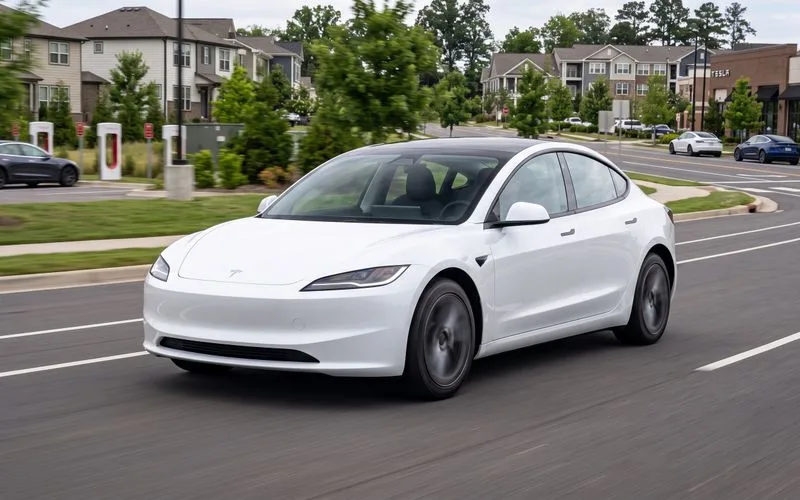 Tesla Model 3Mid-Size Luxury SedanBetter at: Value and resale
More range for roughly $10,000 less, native Supercharger access, and resale that holds 43% at five years instead of 31% — the ownership math simply isn't close.
Compare 2.73B-
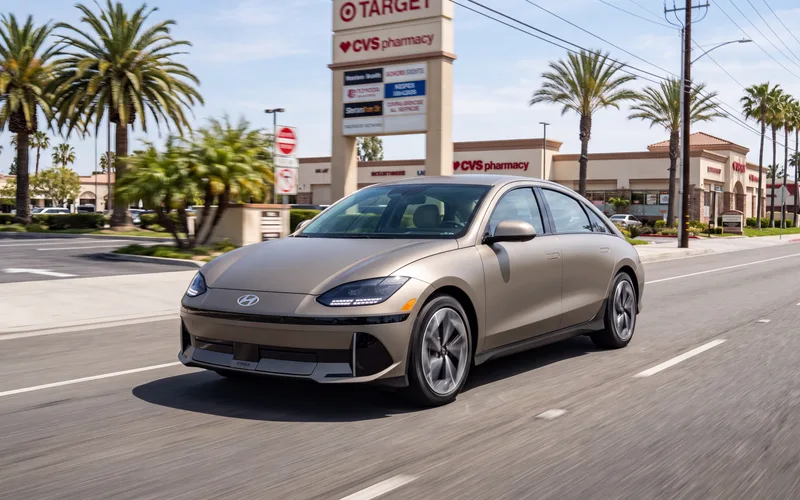 Hyundai Ioniq 6Mid-Size SedanBetter at: Charging speed
342 miles, 800-volt charging at 350 kW and a 10-year battery warranty for about $14,000 less, with a real dealer network behind it.
Compare 3.00B
3.00B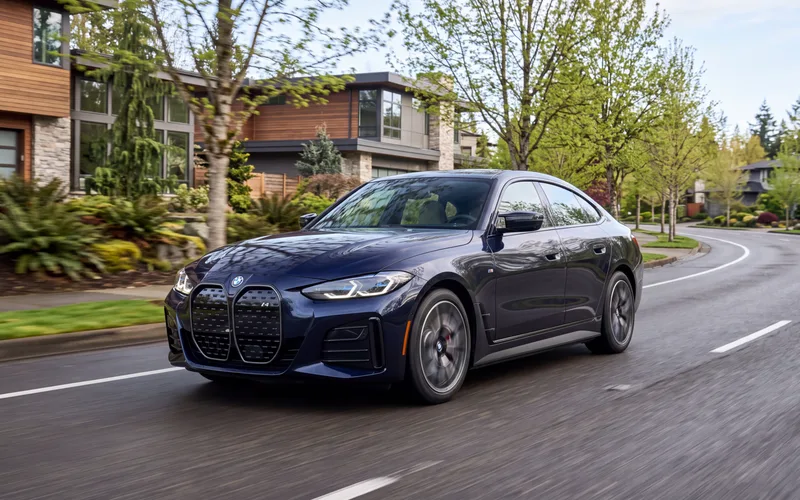 BMW i4Compact Luxury SedanBetter at: Long-term ownership
Costs more up front but pays it back with 340 US dealers, stronger predicted reliability, a real trim ladder and much steadier resale.
CompareHow it's evolved
6 scored model years · 2021–2026
Subject scores by year
Hover or tap a score to see what moved it versus the year before. A corner mark flags a big swing.
| Year | Performance | Efficiency | Safety | Space | Cost | Reliability | Tech | Use-case | Driving | Value |
|---|---|---|---|---|---|---|---|---|---|---|
| 2026 | 63 | 68 | 72 | 60 | 25 | 59 | 78 | 53 | 76 | 59 |
| 2025 | 82 | 68 | 71 | 61 | 21 | 52 | 71 | 54 | 81 | 69 |
| 2024 | 66 | 69 | 64 | 60 | 48 | 53 | 67 | 60 | 76 | 66 |
| 2023 | 53 | 61 | 67 | 63 | 46 | 53 | 71 | 57 | 77 | 68 |
| 2022 | 54 | 62 | 61 | 62 | 42 | 50 | 69 | 59 | 77 | 72 |
| 2021 | 78 | 59 | 76 | 61 | 31 | 50 | 68 | 59 | 80 | 72 |
Compare two years
Best fit & conditions
Higher scores mean a better fit for that use case. Learn more about use-case fit →
Subject profile
Detailed scoring by subject
1Performance & PowertrainMid-pack among this car's ten categories.2.46C+
The volume Long range Single motor gained a substantially stronger 220-kW rear motor for the 2024 refresh. Higher-output dual-motor configurations remain available.
The new rear motor delivers 361 lb-ft immediately, a 118-lb-ft increase over the 2023 front-drive single-motor car.
The rear-drive volume model is 1.1 seconds quicker than its 2023 predecessor and now provides genuinely brisk acceleration, though the dual-motor cars are much quicker.
Power delivery is immediate, quiet, and linear, with no turbo lag or hybrid transitions. The stronger rear motor improves response without introducing harshness, and adjustable one-pedal driving is smoothly integrated.
The single-speed direct drive has no shifts, hunting, or interruption in power. Its seamless behavior and well-calibrated regenerative braking are close to ideal for this criterion.
Rear-wheel drive is standard, while dual-motor AWD is a mainstream configuration rather than a limited flagship. For 2024 the AWD system can disconnect its asynchronous front motor to reduce drag, though it offers no terrain-focused hardware or modes.
The lineup covers an efficiency-focused 299-hp RWD model, a 421-hp AWD model, and a 455-hp Performance Pack version. Those are meaningful drivetrain and output choices, but every version uses the same basic battery-electric formula.
2Efficiency & RangeOne of the Polestar 2's strongest categories.2.68C+
The rear-drive volume trim matches the prior single-motor car's combined efficiency while using a substantially larger battery and much stronger motor.
Regenerative braking and the single-motor rear-drive layout make city operation the Polestar's most efficient EPA cycle.
The EPA highway result is lower than the city figure, as expected for an EV, but remains a solid 100 MPGe.
The 82-kWh battery and rear-drive layout lift the volume trim to 320 EPA miles, a major 50-mile improvement for the 2024 refresh.
The new 82-kWh battery raises peak acceptance from the earlier car's 155 kW to 205 kW. That is competitive for a 400-volt EV, though below leading 800-volt sedans.
Polestar's 28-minute claim is a meaningful improvement over the pre-refresh model and practical for road trips, but several 800-volt rivals need less than 20 minutes.
At 107 MPGe, the volume Polestar's EPA-estimated annual electricity expense is far below the fuel cost of a comparable combustion luxury sedan.
There is no premium-fuel requirement, and the 11-kW onboard charger makes an overnight home refill straightforward and inexpensive. CCS road-trip charging is practical at 205 kW and 28 minutes, but it lacks the native broad-network convenience later NACS-equipped EVs provide.
3SafetyMid-pack among this car's ten categories.2.30C+
The 2024 Polestar 2 earns NHTSA's maximum overall rating, with five-star results in the frontal, side, and rollover categories.
IIHS did not publish a vehicle rating for the 2024 Polestar 2, so it has no 2024 Top Safety Pick award or IIHS crashworthiness grades. The absence of IIHS testing limits credit despite its strong NHTSA result.
The volume Long Range Single Motor includes collision avoidance/AEB, lane keeping, blind-spot steering intervention, rear cross-traffic braking, and a 360-degree camera. Adaptive cruise and Pilot Assist require the Pilot Pack on this trim, while that pack became standard only on the North American Dual Motor for 2024.
Standard collision mitigation covers vehicles, intersection conflicts, cyclists, and pedestrians, and the manual documents warning plus automatic braking. IIHS has not tested its vehicle-to-vehicle or day/night pedestrian performance, preventing a higher performance-based score.
Driver Awareness is standard for 2024 and goes beyond alert-only coverage: Blind Spot Information can add steering support, while Cross Traffic Alert can brake and Rear Collision Warning can mitigate a rear impact. Safe-exit warning and trailer-aware blind-spot extension are not documented.
Lane Keeping Aid is standard, while optional Pilot Assist actively targets the center of marked lanes. Polestar cautions that positioning may sometimes be inappropriate and requires the driver to keep hands on the wheel, supporting a competent rather than class-leading rating.
The optional Pilot Pack provides adaptive cruise with stop-and-go braking and integrated Pilot Assist lane centering, but it is not standard on the volume Single Motor. The manual also warns that braking can occur unexpectedly or not at all in some situations.
No hands-free highway-driving system was offered for 2024. Pilot Assist explicitly requires hands on the steering wheel and disengages steering assistance if the driver does not respond to escalating prompts.
LED headlights and automatic high beams provide useful standard nighttime equipment, with cornering fog lights included in the optional Pilot Pack. IIHS did not rate the 2024 Polestar 2's headlights, so verified beam reach and glare performance are unavailable.
The low roof, small rear glass, and thick rear quarters restrict natural rearward sightlines. Standard Driver Awareness and the newly standard 360-degree camera compensate substantially when maneuvering, but do not fully cure the over-the-shoulder blind zones.
Two outboard rear ISOFIX/LATCH positions accommodate two child seats, but compact rear quarters, a sloping roof, and a narrow middle position make installation and three-across use less convenient. IIHS has not published a Polestar 2 LATCH ease-of-use grade.
4Space & ComfortMid-pack among this car's ten categories.2.07C
The volume Long Range Single Motor has two front seats and a three-place rear bench.
Front headroom is generous for a sedan despite the relatively low roof.
The numerical legroom is competitive, though the high center console reduces perceived space.
Rear headroom is mid-band on paper, but the sloping roof makes access less accommodating.
Rear legroom sits close to the bottom of the sedan normalization band.
The nominal volume is average, but the roof-hinged liftback opening makes the space more useful than a conventional trunk.
The underfloor bin, grocery-bag holder, ski hatch and small frunk help, but the bulky center tunnel yields surprisingly little cabin storage.
Front seats provide useful support and available power lumbar/extension, but rear thigh support and space are weak and the standard seats lack strong lateral bolstering.
The standard 19-inch-wheel car is composed and well controlled, but repeated reviews identify a firm or choppy response over broken pavement.
The EV drivetrain is quiet, but tire and road noise become prominent on coarse pavement and highway wind noise is not class-leading.
Dual-zone climate, app preconditioning and heated front seats are useful, while the Plus Pack is needed for the heat pump, heated rear seats, heated wheel and panoramic roof.
5Cost of OwnershipThe Polestar 2's lowest-graded category.1.22D
The rear-drive Long range Single motor was the 2024 entry model. Its original all-in MSRP was high for a compact sedan and it did not qualify for the federal purchase credit because it was built in China.
The longest-range, lowest-priced Single motor is the representative volume configuration; Plus-equipped cars were $53,500 and the Dual motor began at $56,700. The base car's 320-mile rating makes it the most broadly appealing configuration.
No model-specific five-year Edmunds TCO breakdown was available, so this estimate reflects the sparse EV service schedule, the first three years of scheduled service being free, premium labor, tires, wear items, and post-warranty repair exposure. It excludes energy, insurance, financing, and registration as required.
The model is projected to lose 58.1% in five years, slightly worse than its luxury electric compact-car peer set. Heavy lease support and the fast-changing EV market weaken residuals despite the substantive 2024 refresh.
Polestar's new-vehicle coverage matches the common luxury-car standard. It is competitive with BMW and Mercedes-Benz but shorter than Genesis coverage.
The high-voltage battery warranty meets the EV-segment norm and includes a 70% state-of-health threshold. It does not exceed the usual 8-year/100,000-mile benchmark.
Three years/30,000 miles of scheduled maintenance is unusually generous for an EV, where service intervals are already long; wiper blades, cleaning, and pickup/delivery are included. Four years of 24/7 roadside assistance and connected, over-the-air vehicle services make this a strong ownership package, though no durable charging credit was documented for every buyer.
$51,300 volume-trim price minus its estimated resale value after 5 years (41.9% retained, or about $21,495) leaves about $29,805 in depreciation. Add the projected $3,500 in 5-year maintenance and repairs, and owning this vehicle for 5 years costs about $33,305 in total.
6Reliability & QualityOne of the Polestar 2's weakest categories.1.57D
J.D. Power's 65/100 Quality & Reliability rating is only fair, while Consumer Reports says it lacks enough 2024 Polestar 2 responses for a statistically confident reliability rating. That supports a slightly below-average prediction rather than a definitive poor score.
Polestar is too young and too low-volume to establish a strong multi-year US dependability record. Consumer Reports explicitly excludes the brand from its reliability ranking for insufficient data, so it cannot earn mid-pack credit based on a demonstrated history.
Five NHTSA recalls are elevated for this model year, and repeated rearview-camera campaigns indicate that the original software remedy was not durable. Most remedies were software-based, and the brake-function recall covered only two vehicles, preventing an even lower systemic-failure score.
The first-generation platform had several years in service, but the volume 2024 Long Range Single Motor introduced an all-new rear motor and 82-kWh battery, leaving limited high-mileage evidence for this exact configuration. Available long-term reporting shows no broad battery or drive-unit failure pattern, but the redesign is not yet proven enough for an above-average durability score.
The volume trim's cabin uses an artful mix of fabric, wood-look trim and plastics, and reviewers find even its plastic pieces premium. It is competitive at the price but not class-leading: Edmunds says newer rivals have caught up, while Cars.com judges the BMW i4 materially richer.
Reviews and owner reports generally describe solid, premium-feeling assembly, especially relative to other EV startups. Scattered reports of trim, suspension and door/dash rattles plus software glitches keep it below the tightest-established luxury competitors.
Polestar's metropolitan service-point model is sparse compared with established luxury brands and can leave owners several hours from authorized warranty care. Pickup-and-delivery support softens the burden near a service point but does not replace nationwide physical coverage.
EV routine maintenance is inexpensive and CMA/Volvo ties provide some component commonality, but collision and model-specific parts remain proprietary with little aftermarket depth. Long-term testing has shown that even minor underbody damage can generate large repair bills, and genuine-parts repairs depend heavily on the small authorized network.
7Technology & InfotainmentOne of the Polestar 2's strongest categories.2.51C+
Every 2024 trim uses the same portrait-oriented display.
Android Automotive is logically arranged and Google services work well, but climate functions require screen taps and owners/reviewers report occasional lag or reboots.
Apple CarPlay is standard but wired; Android Auto phone projection is not offered because Google is native to the car.
Google Assistant and Google Maps are deeply integrated, including EV route planning and the driver display, making native services a genuine strength.
The standard eight-speaker 250-watt system is adequate and the Plus Pack offers a substantially stronger Harman Kardon system.
A crisp 12.3-inch digital cluster is standard and can place Google Maps guidance directly ahead of the driver.
Polestar regularly delivers whole-vehicle OTA releases that update the operating system, apps and vehicle systems and have added features over time.
The app supports digital key, locks, climate and charging functions, but reliability and connection delays keep it below polished segment leaders.
Four USB-C ports cover both rows and wireless charging is standard for 2024, though there is no household AC outlet or vehicle-to-load power.
Proximity locking and keyless drive are standard, with a power liftgate and phone-as-key Digital Key available through Plus Pack.
Parking sensors and a rear camera cover basics; the useful 360-degree camera is bundled with the optional Pilot Pack on the single-motor trim.
No head-up display was offered on any 2024 Polestar 2 trim or package.
8Use-Case FitOne of the Polestar 2's weakest categories.2.05C
ISOFIX/LATCH, a broad liftback opening and 40/60 seat help, but small rear door openings and just 33.9 inches of rear legroom complicate bulky rear-facing seats.
Five-star NHTSA results and a strong standard driver-awareness suite make the base car reassuring, though adaptive cruise/Pilot Assist cost extra on the single motor.
Four occupants benefit from good front space and useful liftback luggage access, but the tight, low rear bench, modest cargo volume and limited rear amenities hurt long-trip comfort.
Smooth instant EV response, effective one-pedal driving and compact exterior dimensions make commuting easy; thick rear pillars and touch-based climate controls add friction.
The 320-mile single motor is energy-efficient and needs little routine powertrain service, although premium tires and insurance temper the advantage.
Its compact 181-inch footprint is manageable and sensors are standard, but the 37.7-foot circle and restricted rear sightlines are merely average; surround view costs extra.
The liftback and 2,000-pound tow rating handle occasional light hauling, but this compact luxury EV lacks payload and sustained-load credentials.
The cabin is luxury-oriented and the young EV nameplate lacks a fleet-proven hard-use record, though simple electric propulsion and durable vegan upholstery offer some resilience.
Tie-down eyes, roof-bar and towbar accessories provide basics, but there is no onboard AC/V2L power, washable work cabin or meaningful upfit ecosystem.
A 320-mile EPA range, 205-kW charging and quiet EV powertrain support touring, but firm ride, road noise and optional adaptive cruise reduce fatigue performance.
Roof and tow accessories plus the liftback suit bikes and maintained gravel, but the volume rear-drive car has only about six inches of clearance and no off-road hardware or V2L.
The hatch-style opening, 40/60 folding bench, ski hatch, underfloor bin and frunk make 14.4 cubic feet work hard, though peak volume trails larger liftbacks and SUVs.
9Driving ExperienceThe Polestar 2's best-graded category.3.13B
The 2024 rear-drive layout improves balance and corner-exit behavior, with strong grip and controlled body motions, though its roughly 4,400-pound mass keeps it below the sharpest rivals.
Three selectable weights and accurate responses aid placement, but the rack offers limited genuine feedback and heavier mode adds artificial heft.
Stopping performance is strong and one-pedal operation is effective, but regen-to-friction blending can feel grabby near a stop.
The new 299-hp rear motor delivers immediate, shift-free response and a quick 5.9-second sprint without driveline interruption.
The single electric motor is nearly silent and vibration-free under normal loads; most audible intrusion comes from tires and airflow rather than the drivetrain.
The turning diameter is acceptable but not especially tight for a compact sedan.
Seat and wheel adjustment are sound and the high seating position is distinctive, but the bulky center tunnel, thick pillars and touchscreen climate controls compromise comfort and sightlines.
Rear-wheel drive, immediate torque and balanced handling give the refreshed base model real character, even if numb steering and weight prevent true sports-sedan status.
10Value & Market PositionMid-pack among this car's ten categories.2.47C+
The base 2024 car includes 299 hp, an 82-kWh battery, wireless charging, Google-based infotainment, a digital gauge cluster, and newly standard driver-awareness features. Adaptive cruise, Pilot Assist, 360-degree camera, upgraded audio, heat pump, panoramic roof, and powered seats still required packs on the Single motor, keeping it short of loaded-at-base status.
The refresh delivered excellent 320-mile range, stronger rear-drive performance, 205-kW charging, and a useful hatch for $51,300, but the substantially cheaper Model 3 offered stronger value and purchase-credit eligibility. Edmunds likewise flags the high price as diminishing overall value, so the Polestar is appealing rather than a bargain.
Buyers could choose long-range RWD or quicker AWD, then layer Pilot, Plus, and Performance content, creating meaningful drivetrain and equipment flexibility. The lineup remained one battery-electric body style with a relatively narrow roughly $13,000 base-to-Performance spread and no lower-cost short-range version.
The Polestar 2 remained a niche US seller, with contemporary analysis putting Model 3 volume around twenty times higher. Subsequent US volume fell sharply, reinforcing that this generation never achieved broad market acceptance despite its critical appeal.
Polestar's Scandinavian design, Volvo roots, and performance positioning give the 2 a distinctive enthusiast and design-conscious image. Limited awareness, a small retail/service footprint, and weak resale keep the young brand below established luxury marques in desirability.
Meaningful lease support was widely available during the 2024 model's selling period, delivering exceptional buyer benefit even though the depth also signaled soft demand. The $7,500 noncash lease incentive could be combined with a $2,000 Costco offer, and later lease support reached $10,000.
Although still the first generation introduced for 2021, 2024 was a substantial mid-cycle update rather than a carry-over: RWD replaced FWD, motors and batteries changed, range and charging improved, and the SmartZone nose arrived. The underlying CMA architecture was not new, preventing a redesign-level score.
Reviewers praised the refresh's range, design, hatchback utility, and improved rear-drive dynamics, and Car and Driver named it a 2024 Editors' Choice. It was rarely a class winner: Cars.com criticized usability and technology, while MotorTrend and others still preferred the Model 3 or BMW i4 in key respects.