

The verdict
A mixed-report compact luxury sedan, strong on performance and held back by ownership.
Overall 2.62 (C+) across 10 graded subjects. Its strongest is performance & powertrain at 3.56 (A-), its weakest cost of ownership at 0.00 (F). 7 of 10 subjects grade at C− or better.
Jump to scoresStrengths
- Performance & Powertrain
- Driving Experience
- Safety
What holds it back
- Cost of Ownership
- Reliability & Quality
- Use-Case Fit
Top alternatives
Cars shoppers cross-shop with the Polestar Polestar 2 3.00B
3.00B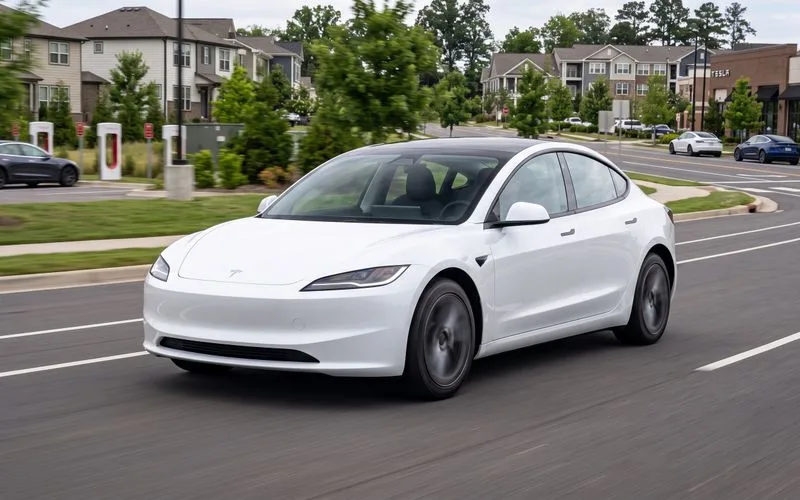 Tesla Model 3Mid-Size Luxury SedanBetter at: Value and resale
More range for roughly $10,000 less, native Supercharger access, and resale that holds 43% at five years instead of 31% — the ownership math simply isn't close.
Compare 2.73B-
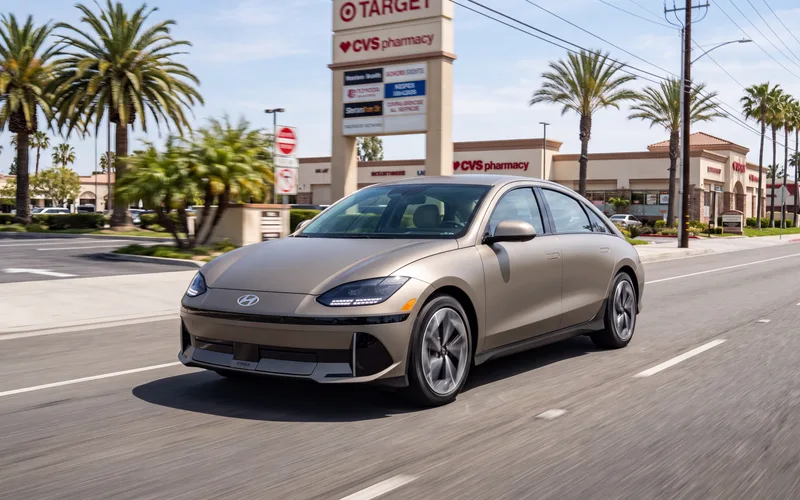 Hyundai Ioniq 6Mid-Size SedanBetter at: Charging speed
342 miles, 800-volt charging at 350 kW and a 10-year battery warranty for about $14,000 less, with a real dealer network behind it.
Compare 3.00B
3.00B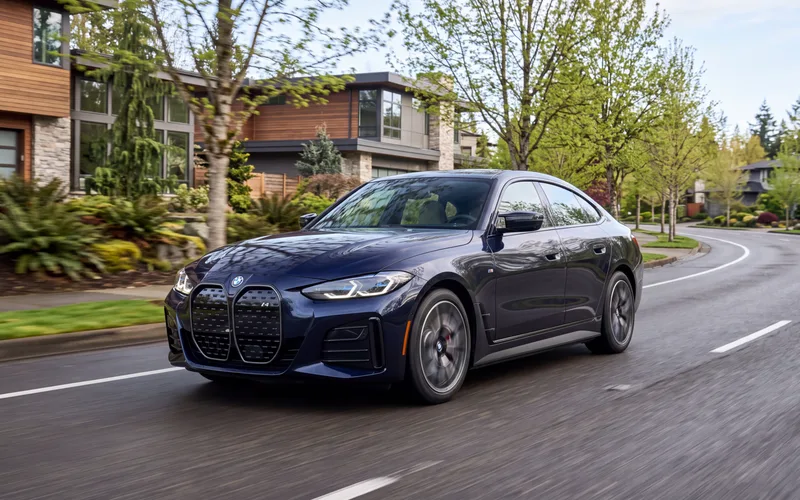 BMW i4Compact Luxury SedanBetter at: Long-term ownership
Costs more up front but pays it back with 340 US dealers, stronger predicted reliability, a real trim ladder and much steadier resale.
CompareHow it's evolved
6 scored model years · 2021–2026
Subject scores by year
Hover or tap a score to see what moved it versus the year before. A corner mark flags a big swing.
| Year | Performance | Efficiency | Safety | Space | Cost | Reliability | Tech | Use-case | Driving | Value |
|---|---|---|---|---|---|---|---|---|---|---|
| 2026 | 63 | 68 | 72 | 60 | 25 | 59 | 78 | 53 | 76 | 59 |
| 2025 | 82 | 68 | 71 | 61 | 21 | 52 | 71 | 54 | 81 | 69 |
| 2024 | 66 | 69 | 64 | 60 | 48 | 53 | 67 | 60 | 76 | 66 |
| 2023 | 53 | 61 | 67 | 63 | 46 | 53 | 71 | 57 | 77 | 68 |
| 2022 | 54 | 62 | 61 | 62 | 42 | 50 | 69 | 59 | 77 | 72 |
| 2021 | 78 | 59 | 76 | 61 | 31 | 50 | 68 | 59 | 80 | 72 |
Compare two years
Best fit & conditions
Higher scores mean a better fit for that use case. Learn more about use-case fit →
Subject profile
Detailed scoring by subject
1Performance & PowertrainThe Polestar 2's best-graded category.3.56A-
The sole U.S. 2025 configuration is the dual-motor Performance Pack model, so its output is the volume-trim and range-maximum figure.
Its two motors deliver 546 lb-ft, exceeding the top of the sedan normalization band.
Polestar's certified acceleration figure places the sole 2025 trim firmly in sport-sedan territory.
The motors deliver immediate, effortless thrust with no combustion vibration or lag; the front motor can disconnect for efficiency and re-engage seamlessly when power is requested.
The direct-drive EV powertrain has no stepped shifts, hunting, or CVT drone and supplies uninterrupted acceleration.
AWD is standard because every U.S. 2025 car is dual-motor. The rear-biased system can disconnect the front motor, though it lacks off-road modes or torque-vectoring hardware.
The U.S. lineup is a take-it-or-leave-it proposition: one EV powertrain, one dual-motor AWD Performance configuration, and no single-motor, gas, hybrid, or PHEV alternative.
2Efficiency & RangeMid-pack among this car's ten categories.2.58C+
The sole 2025 Performance model is relatively energy-intensive for an electric sedan, at 37 kWh per 100 miles.
Regenerative braking helps in town, but the AWD Performance hardware and tires keep efficiency below leading EV sedans.
The front-motor disconnect limits highway losses, but the Performance model remains only moderately efficient among EVs.
The mandatory Performance Pack's 20-inch wheels and tires leave the 2025 car below the 300-mile lower bound of the sedan range band.
The 82-kWh 2025 battery accepts up to 205 kW, a competitive but not class-leading peak for an EV sedan.
A 28-minute manufacturer claim is reasonably quick, though several 800-volt rivals complete the same window in roughly 18 minutes.
Despite middling EV efficiency, electricity still produces a low EPA annual energy-cost estimate.
It uses electricity only, avoids premium gasoline, supports practical 11-kW overnight Level 2 charging, and includes a heat pump; owners without home charging still depend on public infrastructure.
3SafetyOne of the Polestar 2's strongest categories.2.84B-
NHTSA has not published an overall rating for the 2025 Polestar 2, so 5 stars is a low-confidence structural inference from its closely related CMA-platform Volvo XC40 rather than a Polestar-specific result.
IIHS has not evaluated the Polestar 2 and it has no Top Safety Pick award, leaving its US crashworthiness unverified despite a strong five-star Euro NCAP result.
The sole US 2025 AWD Performance model includes the Pilot pack, making AEB, adaptive cruise, Pilot Assist lane centering, lane keeping, active blind-spot assistance, and rear cross-traffic alert with braking standard.
The standard camera/radar system detects vehicles, pedestrians and cyclists, including collision warning at night, and its underlying system performed strongly in Euro NCAP testing; no IIHS day/night pedestrian result is available.
Coverage is unusually complete and standard: BLIS can steer away from a vehicle in the blind spot, while Cross Traffic Alert can automatically brake during reversing.
Pilot Assist provides hands-on lane centering and is standard for 2025, but reviewers find it makes too many steering corrections and does not always hold a smooth center line.
Standard full-range adaptive cruise integrates with Pilot Assist and has natural acceleration and braking, though the less polished steering behavior keeps the combined highway assist below the leaders.
Polestar offers no hands-free highway system on the 2025 Polestar 2; Pilot Assist is a hands-on Level 2 aid that requires continuous driver supervision.
LED headlights with active high beam and fog lamps with cornering function are standard, but IIHS has not rated their illumination and the US-market lamps do not deliver the fully adaptive matrix behavior advertised in other markets.
Thick rear pillars, a high beltline, sloping roof and small rear-door openings impair natural sightlines, although the standard four-camera 360-degree view meaningfully helps at low speeds.
Two outboard lower-anchor sets sit behind clearly marked covers and three rear top tethers are provided, but the tight rear seat, sloping roof and small door openings complicate bulky rear-facing-seat installation and rule out easy three-across use.
4Space & ComfortMid-pack among this car's ten categories.2.08C
The sole U.S. configuration has two front seats and a three-place rear bench.
Published maximum front headroom is generous for the sedan class.
The measurement is competitive, although the tall center console reduces perceived knee room.
Rear headroom is mid-band on paper, but the sloping roof makes access less accommodating.
Rear legroom is near the bottom of the sedan band and the elevated floor worsens the knees-up posture.
Nominal capacity is average, but the roof-hinged liftback opening improves real usefulness.
A small frunk, underfloor bin, ski hatch and grocery-bag holder help, but the bulky center tunnel and modest console leave cabin storage below average.
Standard full-power front seats have four-way lumbar and cushion extensions, but the tight rear bench lacks thigh support.
The mandatory Performance chassis is controlled but distinctly harsh and busy on broken pavement, a major daily-comfort penalty.
The motors are quiet, but the standard performance tires transmit notable road noise at highway speed.
The one U.S. trim includes unusually rich comfort equipment, with ventilation available through the Nappa upgrade.
5Cost of OwnershipThe Polestar 2's lowest-graded category.0.00F
For 2025 the US range was reduced to one loaded dual-motor configuration, so its delivered price is both the entry price and the representative-trim price. This is a major year-specific increase in the price of entry versus the single-motor versions offered for 2024.
Because Polestar offered only the Long Range Dual Motor with Performance Pack in the US for 2025, there is no separate lower-priced volume trim to select. The standard bundle leaves few material factory options beyond paint and accessories.
The EV drivetrain eliminates oil and transmission service, and Polestar pays for scheduled service through 3 years/30,000 miles. Premium labor rates, 20-inch performance tires and brakes keep the realistic five-year total from being exceptionally low.
The Polestar 2 is projected to lose substantially more value than the typical compact luxury sedan, reflecting rapid EV price movement, a small used-buyer pool and the brand's limited reach. The unusually high 2025 one-trim MSRP increases its exposure to dollar depreciation.
Four years is the normal premium-brand term and one year better than the mainstream minimum, although Genesis provides five years.
The relevant EV powertrain protection is the eight-year/100,000-mile battery warranty, including a capacity floor. That is competitive with nearly all direct EV rivals, though not longer than the segment norm.
Polestar provides a meaningful premium ownership bundle: three years of scheduled maintenance, roadside assistance matching the four-year vehicle warranty, and pickup-and-delivery service within the published radius. It earns the upper band even without a large public-charging credit.
$66,200 volume-trim price minus its estimated resale value after 5 years (36.9% retained, or about $24,428) leaves about $41,772 in depreciation. Add the projected $5,200 in 5-year maintenance and repairs, and owning this vehicle for 5 years costs about $46,972 in total.
6Reliability & QualityOne of the Polestar 2's weakest categories.1.52D
Consumer Reports expects the 2025 Polestar 2 to be less reliable than the average new car, based on owner data from 2023 models, while J.D. Power does not publish a 2025 model rating. The direct below-average prediction outweighs the absence of a second current-year score.
Polestar lacks the multi-model, multi-year sample needed for a dependable brand ranking, so it cannot claim a top-tier record; however, the evidence also does not establish a consistently bottom-third brand. Its short history and single mature volume nameplate warrant a neutral-to-below-average score.
Two recalls affected the 2025 car for loss of the federally required rear-camera image, and the later campaign repeated the repair because vehicles fixed under the earlier recall needed another remedy. The software-only repair limits mechanical severity, but repetition of the same safety defect is materially worse than typical recall activity.
The first-generation CMA-based Polestar 2 had several years of field use by 2025, and no retrieved source identifies a systemic high-voltage battery or traction-motor failure pattern. The U.S. 2025 volume configuration is the dual-motor model only, with revised rear-biased hardware introduced for 2024, so truly long-term evidence for this exact setup remains limited.
The cabin's wood, fabric, metal-look details, vegan upholstery, and restrained design feel distinctive and suitably premium, but the standard materials do not consistently match the richness expected at this luxury price. Reviewers specifically disagree: Car and Driver praises the artful mix, while Cars.com says material quality and ambiance trail rivals.
Review evidence generally describes a solid, high-quality cabin without a broad pattern of bad panel gaps or poor assembly. Scattered owner reports of rattles and squeaks keep it below the class-leading band, especially given the lack of a strong 2025 initial-quality study.
Polestar provides trained service through its own points and participating Volvo operators, but U.S. coverage is sparse compared with established luxury brands and many retail Spaces use separate off-site service facilities. This can require long travel and makes support highly location-dependent.
Low routine EV maintenance and shared Volvo/CMA components help, but Polestar's low U.S. volume leaves limited aftermarket depth and many model-specific or high-voltage repairs dependent on authorized channels. Published out-of-warranty cost data are still thin, increasing uncertainty and the risk of delays or premium repair bills.
7Technology & InfotainmentGrades above the middle of the scale.2.79B-
The sole trim uses the same portrait-oriented LCD display.
Updated 2025 hardware makes the clean Google interface responsive, though too many climate and vehicle functions remain screen-dependent.
Apple CarPlay is supported by cable, while Android phone projection is absent because Android Automotive and Google services are native.
Deeply integrated Google Assistant and Google Maps provide excellent natural-language control and EV-aware native routing.
The premium branded system is standard rather than paywalled on the sole 2025 trim.
A crisp full-digital cluster is standard and can show native Google Maps guidance directly ahead.
Regular whole-vehicle OTA releases update the operating system, apps and vehicle systems and have added functions over time.
The app offers digital key, remote lock/start, climate, status and charging controls, though connection reliability has not matched the leaders.
Both rows receive USB-C and wireless charging is standard, but there is no AC household outlet or V2L capability.
Proximity access, phone-as-key and a hands-free power liftgate are all standard on the one trim.
A surround-view system and sensors on every side are standard, although automated parking is not a headline feature.
No head-up display is offered on the 2025 Polestar 2.
8Use-Case FitOne of the Polestar 2's weakest categories.1.64D
ISOFIX/i-Size anchors and the large liftback help, but tight rear legroom, a high floor and sloping openings complicate loading children and bulky seats.
Five-star crash results and a comprehensive camera, sensor and driver-assistance suite are standard on the only trim.
Four occupants get heated seats and good front-seat support, but the cramped rear bench, harsh Performance ride and modest occupied-seat cargo volume undermine long family trips.
Smooth instant power, selectable one-pedal driving, Pilot Assist and surround cameras ease traffic, but harsh damping and a cramped console add fatigue.
Electricity and low routine maintenance keep costs reasonable, but 91 MPGe and mandatory performance tires are costly by EV-sedan standards.
Compact exterior dimensions and standard surround cameras offset a merely average turning circle and poor rearward visibility.
The liftback and 2,000-lb tow rating support light errands, but this luxury performance sedan has little payload or heavy-work headroom.
The established CMA structure and simple EV driveline help, but luxury materials, performance tires and Öhlins hardware are ill-suited to repeated abuse and the model lacks a work-fleet record.
There is no V2L or AC tool power, washable work cabin, or meaningful upfit ecosystem beyond roof bars, a towbar and basic load-securing points.
Quiet electric cruising, supportive front seats and Pilot Assist help, but 254 EPA miles, a firm ride and 28-minute 10–80% charging limit touring endurance.
Standard AWD, roof-carrier compatibility and a towbar suit gravel roads and bike racks, but low clearance, summer tires and no camp-power outlet keep it pavement-oriented.
The liftback, split-fold seat with ski hatch, underfloor bin, frunk and roof/tow accessories make it flexible despite modest raw volume.
9Driving ExperienceOne of the Polestar 2's strongest categories.3.54A-
Rear-biased AWD, strong grip, excellent body control and standard Öhlins hardware make this one of the sharper compact luxury EVs, despite substantial mass.
Three selectable weights and accurate response help placement, but feedback is notably limited.
Standard four-piston Brembos, large drilled ventilated discs and well-judged regenerative braking deliver strong, easily modulated stopping confidence.
The direct-drive dual-motor system supplies immediate, uninterrupted thrust with seamless front-motor engagement and no shifts or combustion vibration.
The EV driveline is near-silent and vibration-free even under load; most audible intrusion comes from the performance tires rather than the motors.
The turning diameter is average for a compact sedan rather than especially tight.
Power seats and a proper driver display help, but the tall console crowds the driver's knee, rear visibility is limited and core controls are touchscreen-heavy.
Huge instant thrust, rear-biased balance, high grip and serious chassis hardware make the sole 2025 trim genuinely entertaining, even if numb steering limits connection.
10Value & Market PositionMid-pack among this car's ten categories.2.69C+
The sole 2025 US model includes what had been three major option packs: Pilot driver assistance, Plus comfort/technology and Performance hardware. Adaptive cruise, Pilot Assist, a heat pump, panoramic roof, Harman Kardon audio, Brembo brakes and Öhlins dampers are therefore standard rather than costly add-ons.
At $66,200 delivered it is expensive beside a Tesla Model 3 Performance, but the price buys a genuinely loaded 455-hp luxury liftback with premium chassis hardware and no need to add packs. Strong content and build quality make the value fair rather than a standout bargain.
This is effectively a take-it-or-leave-it lineup: one battery, one dual-motor drivetrain and one highly equipped Performance specification. Removing the single-motor car for 2025 eliminates the lower-price, longer-range choice that previously broadened the range.
The Polestar 2 remains a niche seller and US demand fell sharply from its earlier peak as newer EV sedans arrived. A one-trim 2025 range priced above $66,000 further limits mass-market acceptance.
Polestar has credible Scandinavian design and Volvo-derived engineering cachet, and the 2 still looks distinctive. The young brand's tiny retail/service footprint, uncertain awareness and weak residuals prevent it from carrying established luxury-brand desirability.
Polestar commonly supported the 2025 model with substantial lease cash and conquest incentives, making transaction cost much more attractive than MSRP suggests. These are unusually strong buyer benefits, although their scale also reflects soft demand and hurts residual confidence.
The first generation dates to 2021, but the substantial 2024 facelift brought rear-biased drivetrains, more power, revised batteries and the sensor-filled SmartZone nose, so it remained reasonably current for 2025. It is still a mature CMA-based design rather than a purpose-built latest-generation EV platform.
Reviewers broadly regard the Polestar 2 as stylish, well built and one of the better-driving EVs, but rarely choose it over newer and more efficient rivals on price, range or cabin space. Earlier major recognition supports its reputation, while the 2025 configuration itself was not a dominant comparison-test winner.