

The verdict
A mixed-report compact luxury sedan, strong on driving and held back by ownership.
Overall 2.58 (C+) across 10 graded subjects. Its strongest is driving experience at 3.43 (B+), its weakest cost of ownership at 0.04 (F). 8 of 10 subjects grade at C− or better.
Jump to scoresStrengths
- Driving Experience
- Performance & Powertrain
- Safety
What holds it back
- Cost of Ownership
- Reliability & Quality
- Use-Case Fit
Top alternatives
Cars shoppers cross-shop with the Polestar Polestar 2 3.00B
3.00B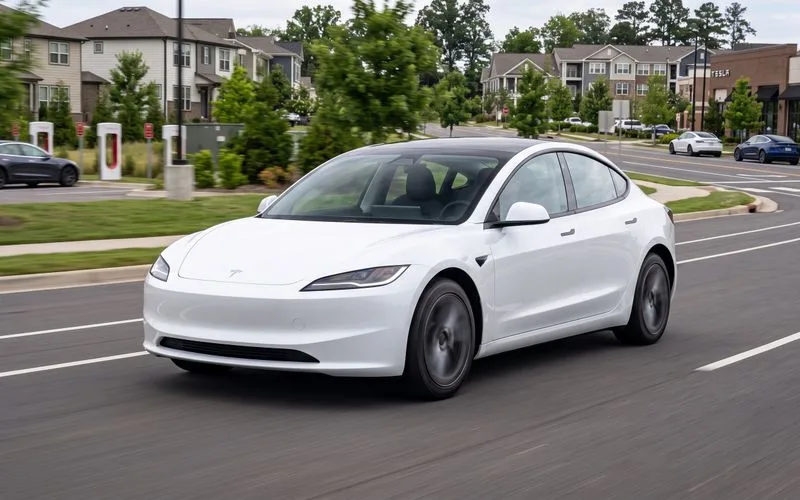 Tesla Model 3Mid-Size Luxury SedanBetter at: Value and resale
More range for roughly $10,000 less, native Supercharger access, and resale that holds 43% at five years instead of 31% — the ownership math simply isn't close.
Compare 2.73B-
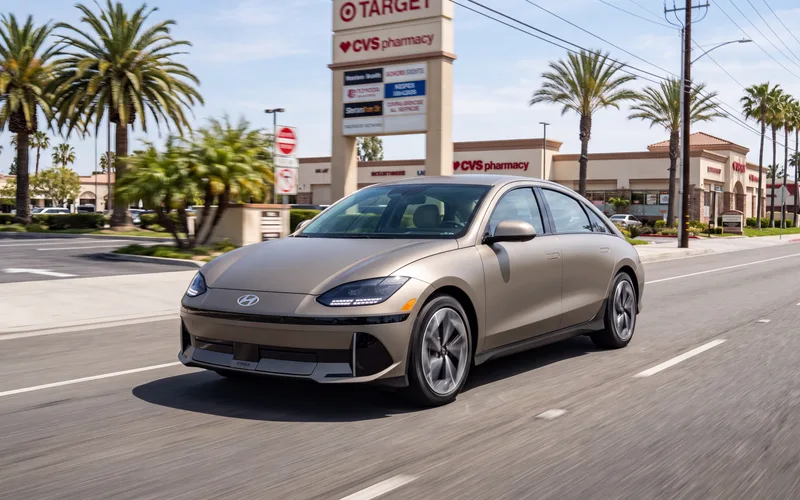 Hyundai Ioniq 6Mid-Size SedanBetter at: Charging speed
342 miles, 800-volt charging at 350 kW and a 10-year battery warranty for about $14,000 less, with a real dealer network behind it.
Compare 3.00B
3.00B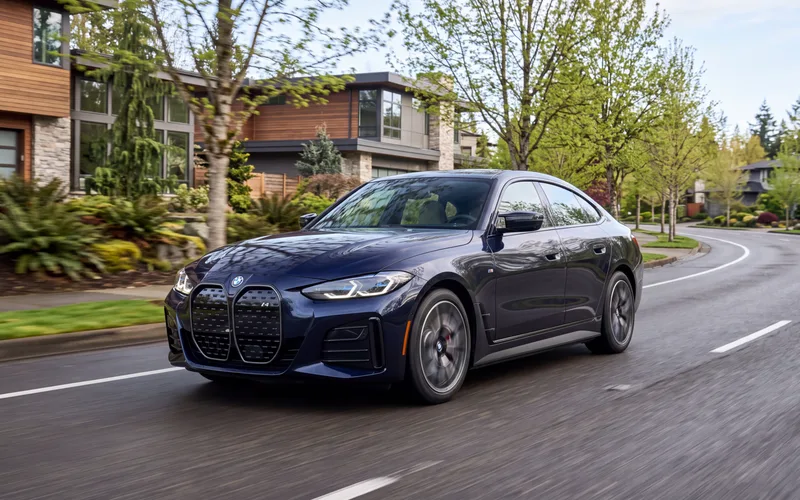 BMW i4Compact Luxury SedanBetter at: Long-term ownership
Costs more up front but pays it back with 340 US dealers, stronger predicted reliability, a real trim ladder and much steadier resale.
CompareHow it's evolved
6 scored model years · 2021–2026
Subject scores by year
Hover or tap a score to see what moved it versus the year before. A corner mark flags a big swing.
| Year | Performance | Efficiency | Safety | Space | Cost | Reliability | Tech | Use-case | Driving | Value |
|---|---|---|---|---|---|---|---|---|---|---|
| 2026 | 63 | 68 | 72 | 60 | 25 | 59 | 78 | 53 | 76 | 59 |
| 2025 | 82 | 68 | 71 | 61 | 21 | 52 | 71 | 54 | 81 | 69 |
| 2024 | 66 | 69 | 64 | 60 | 48 | 53 | 67 | 60 | 76 | 66 |
| 2023 | 53 | 61 | 67 | 63 | 46 | 53 | 71 | 57 | 77 | 68 |
| 2022 | 54 | 62 | 61 | 62 | 42 | 50 | 69 | 59 | 77 | 72 |
| 2021 | 78 | 59 | 76 | 61 | 31 | 50 | 68 | 59 | 80 | 72 |
Compare two years
Best fit & conditions
Higher scores mean a better fit for that use case. Learn more about use-case fit →
Subject profile
Detailed scoring by subject
1Performance & PowertrainOne of the Polestar 2's strongest categories.3.30B+
The sole U.S. launch-year configuration used two electric motors with 408 hp combined, exceptionally strong output for a 2021 compact luxury sedan.
Its two motors deliver 487 lb-ft immediately, exceeding the top of the sedan normalization band.
An instrumented 4.1-second run makes the launch-year Polestar 2 genuinely quick, and materially quicker than Polestar's conservative original claim.
Immediate response and smooth, linear dual-motor thrust are major strengths; reviewers found the accelerator easy to meter and the regenerative braking well integrated.
The single-speed electric reduction gear has no shifts to hunt or fumble, delivering uninterrupted acceleration and strong one-pedal control.
Dual-motor all-wheel drive was standard on every U.S. 2021 Polestar 2, providing strong traction, though without off-road modes or torque-vectoring hardware.
The 2021 U.S. lineup offered only one battery, one dual-motor output, and standard AWD; the lower-output single-motor choices arrived for 2022.
2Efficiency & RangeMid-pack among this car's ten categories.1.96C-
The launch-year dual-motor car is moderately efficient by EV standards, but its weight and performance-oriented AWD hardware keep it well behind the most efficient electric sedans.
Regenerative braking helps in town, but 96 MPGe is only modest within the EV comparison class.
Its 88-MPGe highway result is respectable for an early dual-motor luxury EV, though still short of the class efficiency leaders.
The 233-mile EPA rating was usable in 2021 but is short for an EV sedan and falls below the bottom of the nominal 300-mile sedan range band.
A 150-kW peak was competitive at launch but is modest beside newer 200–350-kW electric sedans.
Forty minutes is adequate for the launch era but slow against the roughly 18–30-minute charging times of stronger EV competitors.
EPA's current standard-assumption estimate is only $800 per year, giving this high-performance luxury EV a substantial operating-cost advantage over gasoline rivals.
It uses electricity only and can recharge overnight on 240V, avoiding premium gasoline entirely. The large battery makes home Level 2 charging highly desirable, while apartment dwellers must rely on a comparatively slow 150-kW public-charging setup.
3SafetyOne of the Polestar 2's strongest categories.3.13B
NHTSA did not select the debut 2021 model for NCAP testing, so this uses the rubric's latest-tested-year provision. The structurally equivalent first-generation 2022 Polestar 2 earned five stars overall.
The first-generation Polestar 2 has no IIHS crashworthiness ratings and received no 2021 award, preventing an IIHS-based high score. Its separate five-star 2021 Euro NCAP result is reassuring but cannot substitute for the missing IIHS evaluations.
Every U.S. 2021 Launch Edition included the Pilot package, making AEB, adaptive cruise, Pilot Assist lane centering, BLIS and cross-traffic alert standard. This is a complete five-feature suite on the only 2021 trim.
Although IIHS did not evaluate it, Euro NCAP's year-specific testing found strong AEB performance across car, pedestrian and cyclist scenarios. The evidence supports a high score, held below the very top because there is no IIHS nighttime-pedestrian result.
The sole 2021 trim includes blind-spot warning with active steering intervention, rear cross-traffic alert with automatic braking, and rear-collision warning and mitigation. Coverage is substantially better than an alert-only system.
Standard Lane Keeping Aid, run-off/oncoming-lane mitigation and Pilot Assist provide active centering rather than simple departure correction. Reviews regarded the integrated system as useful, though it remains hands-on and is limited by lane-marking and camera conditions.
Full-range adaptive cruise with traffic stop-and-go is standard and integrates with Pilot Assist for speed, following-distance and steering support. It is capable and cohesive, but lacks mapped-road hands-free operation and the sophistication of the best modern highway systems.
No hands-free highway-driving system was available for 2021. Pilot Assist is explicitly a supervised, hands-on assistance system.
Pixel LED adaptive headlights, automatic high beams, washers and LED cornering fog lights were standard on the sole Launch Edition. IIHS did not test them, so the rich standard specification merits a high but not maximum score.
Forward visibility and frameless mirrors are good, but the high beltline, thick rear pillars and narrow sloping rear glass create substantial rear blind zones. A standard 360-degree camera and BLIS compensate well when clean, but do not erase the weak natural sightlines.
Clearly marked lower anchors support two outboard child seats, but compact-sedan rear legroom and the low, sloping roof make bulky rear-facing seats and loading less convenient. Two seats are realistic; three-across is not an easy fit.
4Space & ComfortMid-pack among this car's ten categories.2.08C
The sole 2021 US Launch Edition configuration seats five.
The standard panoramic roof leaves below-average front headroom for a compact luxury sedan.
The numerical legroom is competitive, although the prominent center tunnel narrows the footwell.
The sloping liftback roof makes rear headroom merely adequate for adults.
Rear legroom is tight and the battery-raised floor creates a knees-up posture.
Volume is modest, but the large liftgate makes the space more useful than a conventional sedan trunk.
A small frunk, underfloor cable storage, folding grocery divider and 60/40 rear seat add useful flexibility, though cabin bins are not especially large.
Supportive Volvo-derived front seats suit long stints, but the high rear floor and limited rear space reduce comfort for adults.
The standard chassis is controlled but distinctly firm; the optional Performance Pack's 20-inch wheels and manually adjustable Ohlins dampers are harsher still.
The silent motors and solid body isolation make cruising quiet, with tire noise on coarse pavement the main intrusion.
The loaded Launch Edition included heated front and rear seats, a heated wheel, dual-zone climate, panoramic roof and app-based preconditioning; ventilated seats were not offered.
5Cost of OwnershipThe Polestar 2's lowest-graded category.0.04F
The U.S. launch-year lineup consisted of the loaded dual-motor Launch Edition; later $49,900 dual-motor and single-motor variants were model-year 2022 vehicles and are excluded.
Because the 2021 U.S. car was sold as a single comprehensively equipped Launch Edition, the entry and representative volume-trim prices are the same.
The estimate includes maintenance and repairs, including wear items such as tires; the first scheduled service was complimentary, but no exact 2021-specific Edmunds TCO total remains available.
Polestar 2 depreciation is substantially worse than the overall sedan average and slightly worse than its luxury-electric compact peer group.
Four-year coverage is competitive with premium-brand norms and better than mainstream three-year warranties.
The EV-relevant high-voltage battery coverage is long in years, though its 100,000-mile cap is typical rather than exceptional.
The 2021 car included three years/30,000 miles of scheduled maintenance, four years of 24/7 roadside assistance, and pickup/return service within 150 miles during warranty coverage. That is an unusually complete ownership package even though the low-frequency EV schedule meant only one scheduled service was normally due.
$61,200 volume-trim price minus its estimated resale value after 5 years (41.9% retained, or about $25,643) leaves about $35,557 in depreciation. Add the projected $6,735 in 5-year maintenance and repairs, and owning this vehicle for 5 years costs about $42,292 in total.
6Reliability & QualityOne of the Polestar 2's weakest categories.1.31D
Consumer Reports lacks enough 2021 owner-survey responses to publish a model reliability score, but records five NHTSA recalls; later evidence also points to recurring infotainment, connectivity, 12-volt-battery, and other electrical faults. The absence of a statistically valid CR rating prevents a harsher data-driven judgment, but the available signals are below average.
Polestar was a new mass-market brand when this launch-year car arrived and still lacks the model breadth and survey volume required for a Consumer Reports brand ranking. The limited independent evidence is unfavorable: Polestar placed last in J.D. Power's 2022 U.S. Initial Quality Study, so there is no established multi-year dependability record to support an average score.
Five NHTSA recalls are heavy activity for a low-volume launch-year vehicle, including a battery-control software defect that could cause propulsion loss and repeated backup-camera failures. NHTSA subsequently opened a recall query after 193 reports alleged blank, flickering, or frozen camera images following a remedy, indicating a persistent safety-system pattern rather than isolated minor campaigns.
The 2021 dual-motor, 78-kWh launch powertrain had no prior Polestar history, but accumulated real-world mileage is encouraging: one documented car reached 100,000 miles with 88.8% battery health and little substantive mechanical repair. That supports an above-midpoint rating, held back by the first-year BECM propulsion-loss recall and the still-limited fleet history versus mature EV systems.
The launch-edition cabin is distinctive and generally luxury-appropriate, with WeaveTech upholstery, black-ash trim, fine detailing, and a cohesive Scandinavian design. Most reviewers praised its richness, although Cars.com found the vegan upholstery cheap for a vehicle exceeding $60,000, keeping it below class-leading traditional luxury cabins.
Contemporary test cars generally felt solid and carefully assembled, but results were inconsistent: Edmunds observed no vibrations or squeaks while MotorTrend's firmer-road testing excited interior trim rattles. The evidence supports acceptable luxury-car assembly with scattered launch-year rattle and electronics-quality concerns, not top-tier consistency.
Polestar's US support footprint was sparse and depended on selected Volvo-affiliated service points rather than the full Volvo dealer network, leaving many owners far from authorized repairs. Complimentary pickup within 150 miles softened the inconvenience during warranty coverage but did not make coverage comparable with established luxury brands.
CMA-platform and Volvo supply-chain commonality helps routine mechanical and service-part availability, but Polestar-specific EV, body, trim, and electronics components have a thin aftermarket and generally require the authorized channel. Low US volume and limited authorized repair coverage increase the risk of costly parts and long downtime compared with mainstream or established luxury sedans.
7Technology & InfotainmentMid-pack among this car's ten categories.2.57C+
The single Launch Edition configuration used the same portrait center screen.
Android Automotive's clean four-tile layout, speed and excellent native apps were class-leading at launch, despite heavy touchscreen reliance.
Neither wireless nor wired phone projection was available in the 2021 model-year configuration; Apple CarPlay arrived later by OTA, and Android Auto projection was not offered.
Native Google Assistant and Google Maps offered natural voice control, charging-stop routing and EV-specific arrival information years ahead of most rivals.
The Launch Edition included the Plus package's Harman Kardon premium system, a meaningful upgrade over ordinary base audio.
A crisp 12.3-inch full-digital cluster with integrated map views was standard, though customization was intentionally restrained.
Polestar supported whole-car OTA updates that altered propulsion, charging, driver assistance and infotainment and later added features.
Remote climate and charging functions were useful, but the app and beta Digital Key arrived late and were inconsistent during the launch year.
Four USB ports across both rows and standard wireless charging were generous for 2021, though there was no household outlet or vehicle-to-load export.
Proximity access and a hands-free power liftgate were standard; phone-as-key was added in beta during 2021 rather than being fully mature at launch.
The Launch Edition included Pilot-package front/rear sensors, 360-degree camera and semi-automated parking rather than reserving them for another trim.
No head-up display was offered on the 2021 Polestar 2.
8Use-Case FitOne of the Polestar 2's weakest categories.1.96C-
Four doors, LATCH anchors and a hatchback cargo opening handle a small family, but the cramped rear bench and raised floor make loading bulky child seats harder.
The Launch Edition made adaptive cruise, Pilot Assist, blind-spot monitoring and collision mitigation standard, and the structure later earned strong IIHS results.
Quiet cruising, heated rear seats and hatch flexibility help, but tight rear legroom, firm ride and modest occupied-seat cargo space limit four-person touring comfort.
Smooth instant response, excellent one-pedal operation, standard adaptive cruise/Pilot Assist and an intuitive native interface make commuting unusually effortless.
EPA-rated 92 MPGe combined makes energy cost low, though efficiency trails the best compact EVs and its weight raises tire costs.
Compact dimensions and a standard surround camera/parking suite offset thick pillars and only average turning diameter.
The liftback can carry equipment and roof bars were available, but this luxury fastback has no bed, meaningful payload mission or US tow rating for 2021.
Hard-wearing vegan upholstery is helpful, but the new nameplate, complex EV electronics and luxury cabin were unproven for fleet abuse in 2021.
There is no onboard AC power, bed, work tie-down system or meaningful commercial upfit ecosystem.
Supportive seats, a quiet cabin and Pilot Assist reduce fatigue, but 233 EPA miles and only 190 miles in Car and Driver's 75-mph test impose frequent stops.
Standard AWD, useful ground clearance and roof-rack support suit snow, gravel roads and bicycles, but range and the road-focused chassis discourage remote travel.
The powered liftgate, 60/40 folding seats, 38.7-cu-ft folded capacity, underfloor bin and frunk make it far more flexible than its sedan classification suggests.
9Driving ExperienceThe Polestar 2's best-graded category.3.43B+
Low-mounted mass, secure AWD grip and disciplined body control make the Polestar engaging despite its substantial weight.
Steering is accurate and offers selectable weight, but feedback is muted compared with the best sport sedans.
Strong, natural regen blending and true one-pedal stopping inspire confidence; the Performance car also stopped from 70 mph in a short 157 ft.
The dual motors deliver seamless, immediate thrust with polished accelerator and one-pedal calibration.
The electric drivetrain is near-silent and essentially vibration-free even under hard acceleration.
The turning diameter is manageable but not especially tight for a compact sedan.
Supportive seats and good adjustment create a purposeful cockpit, but thick pillars, a high beltline and touchscreen climate controls introduce compromises.
Rapid acceleration, strong grip, excellent one-pedal tuning and genuine chassis engagement give it enthusiast appeal beyond typical EV smoothness.
10Value & Market PositionGrades above the middle of the scale.2.85B-
The sole Launch Edition was comprehensively equipped with dual-motor AWD, Pilot and Plus content, a panoramic roof, Harman Kardon audio, Pixel LED lighting, extensive driver assistance, and Android Automotive. Only the costly Performance Pack and leather meaningfully sat above it.
Its 408-hp AWD performance and unusually complete luxury/technology specification made $61,200 defensible, especially before the then-available federal credit. Tesla's quicker, longer-range Model 3 Performance undercut it, preventing standout-value status.
The U.S. 2021 offering was essentially take-it-or-leave-it: one long-range dual-motor Launch Edition with only individual appearance, leather and Performance Pack choices. The lower-priced single-motor and configurable dual-motor range belonged to model year 2022.
As the first mass-production model from a new brand with a limited retail footprint, the launch-year Polestar 2 was a niche seller rather than a meaningful U.S. segment-volume challenger. Its acceptance was stronger critically than commercially.
Polestar arrived with credible Volvo engineering, distinctive Scandinavian design and a performance/sustainability identity, giving it more cachet than an unknown startup. Its tiny awareness, retail network and ownership base kept it well below established luxury marques.
Launch-year buyers could access concrete factory support rather than paying over sticker, including $2,000 trade-in assistance and later 0% financing offers. These were meaningful but not fire-sale incentives.
This was the launch model year of the first-generation Polestar 2, bringing a new CMA-based EV and the first production-car implementation of Google's Android Automotive system. There was no redesign risk at launch.
Reviewers strongly praised its dynamics, cabin and interface, and it collected major design, propulsion and user-experience recognition. Some criticism of range and early software frustrations kept it short of universal class-winner status.