

The verdict
A mixed-report minivan, strong on efficiency and held back by performance.
The 2025 Sienna is the minivan to buy if fuel bills, resale value and running costs matter most. Every one is a hybrid rated 36 MPG combined, good for about 650 miles a tank, and it is a 5-star, IIHS Top Safety Pick family hauler starting near $41K. The trade-offs are a slow, noisy 245 hp four-cylinder and a second row that never comes out or folds away, which caps cargo space at 101 cu ft. The 2025 refresh brought much better tech, but this model year also picked up more recalls and build-quality complaints than earlier Siennas.
Jump to scoresStrengths
- Best fuel economy and range of any minivan
- Strong crash ratings and standard safety tech
- Room for eight, with a third row adults can use
What holds it back
- Least powerful minivan you can buy
- Second row doesn't come out or fold away
- Loud engine when you need power
Top alternatives
Cars shoppers cross-shop with the Toyota Sienna 2.54C+
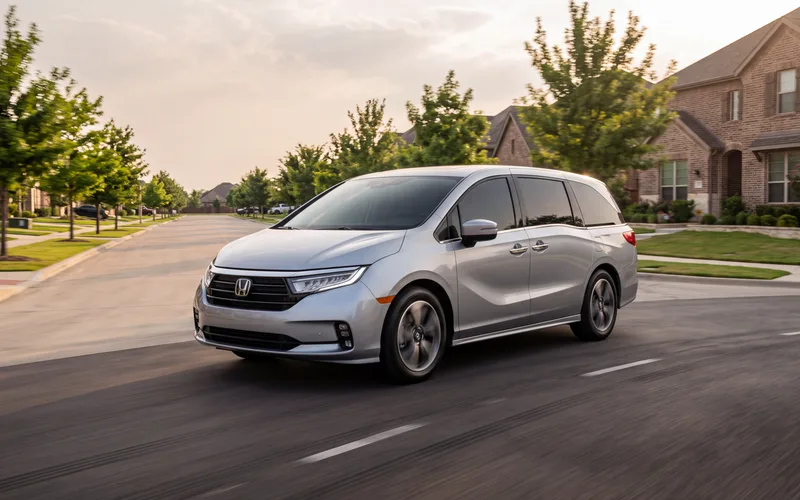 Honda OdysseyMinivanBetter at: Cargo flexibility
If you want a van that drives better and swallows more cargo — 280 hp, a removable second row and 158 cu ft — and you're willing to pay roughly $700-900 a year more in fuel for it.
Compare 2.17C
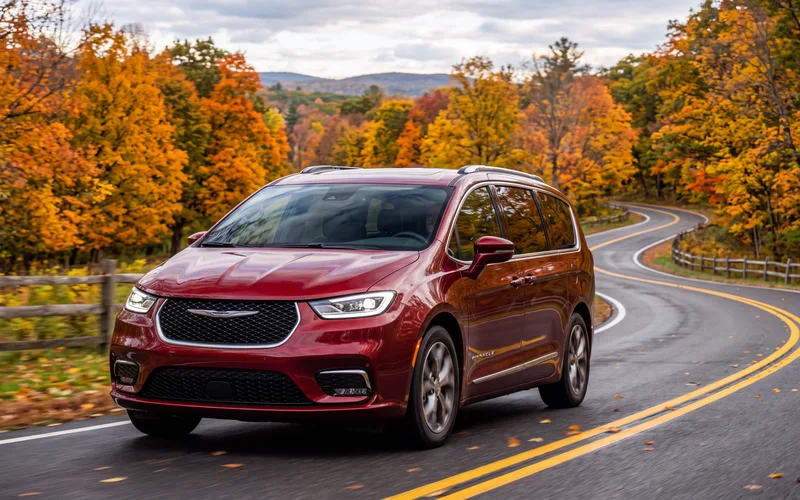 Chrysler PacificaMinivanBetter at: Seat flexibility
If a flat load floor via Stow 'n Go, a nicer cabin, or a plug-in hybrid option matters more than long-term reliability and resale — and the $3,000-5,000 in incentives seals it.
Compare 2.71B-
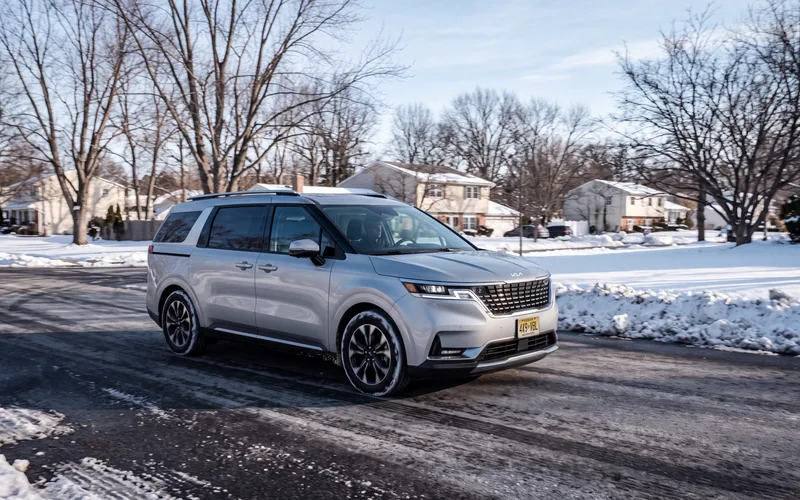 Kia CarnivalMinivanBetter at: Warranty & interior
If you want a more upscale interior and a 10-year/100,000-mile powertrain warranty for several thousand dollars less than a comparable Sienna.
CompareHow it's evolved
10 scored model years · 2017–2026
Subject scores by year
Hover or tap a score to see what moved it versus the year before. A corner mark flags a big swing.
| Year | Performance | Efficiency | Safety | Space | Cost | Reliability | Tech | Use-case | Driving | Value |
|---|---|---|---|---|---|---|---|---|---|---|
| 2026 | 40 | 98 | 76 | 69 | 62 | 83 | 73 | 75 | 65 | 75 |
| 2025 | 40 | 95 | 77 | 68 | 60 | 76 | 70 | 73 | 62 | 75 |
| 2024 | 40 | 95 | 78 | 69 | 64 | 82 | 57 | 74 | 63 | 72 |
| 2023 | 40 | 95 | 82 | 69 | 64 | 82 | 56 | 74 | 62 | 70 |
| 2022 | 40 | 95 | 81 | 68 | 68 | 81 | 52 | 69 | 61 | 73 |
| 2021 | 39 | 95 | 83 | 69 | 71 | 79 | 57 | 73 | 63 | 75 |
| 2020 | 43 | 38 | 62 | 72 | 66 | 82 | 40 | 64 | 61 | 59 |
| 2019 | 42 | 42 | 63 | 72 | 65 | 77 | 41 | 65 | 61 | 63 |
| 2018 | 42 | 42 | 61 | 71 | 61 | 77 | 34 | 62 | 60 | 62 |
| 2017 | 43 | 42 | 47 | 72 | 60 | 80 | 27 | 62 | 60 | 63 |
Compare two years
Best fit & conditions
Higher scores mean a better fit for that use case. Learn more about use-case fit →
Subject profile
Trims & configurations
6 trimsScores above reflect the volume trim. Per-trim specs and scores are rolling out — the full lineup:
Academic Probation · NHTSA safety recalls
Dec 17, 2025Equipment adaptive/mobility: wheelchair restraints/securement: latch/anchorThe retractors may not lock, preventing the wheelchair from being properly secured.
Defect
Vantage Mobility, LLC (VM) is recalling certain 2021-2026 Honda Odyssey, 2021-2025 Chrysler Pacifica, and Toyota Sienna vehicles equipped with QRT-Deluxe and QRT-Max wheelchair restraints. The retractors may not lock, preventing the wheelchair from being properly secured.
Risk
An unsecured wheelchair can move during transit, increasing the risk of injury.
Remedy
Dealers will inspect and replace the retractors, free of charge. Owner notification letters was mailed January 27, 2026. Owners may contact Vantage Mobility customer service at 1-800-488-9082.
NHTSA campaign 25V877000 ↗1,019 vehicles potentially affected (all models in the campaign)Owners notified Jan 27, 2026Filed by Vantage MobilityFiled as SIENNA HYBRIDDec 17, 2025Equipment adaptive/mobility: wheelchair restraints/securement: latch/anchorPlease refer to Rollx's recall report for specific model year information. The retractors may not lock, preventing the wheelchair from being properly secured.
Defect
Rollx Vans (Rollx) is recalling certain GMC Yukon, Sierra, Chevrolet Express 2500, Ford Transit, E-250, Toyota Sienna, Sienna Hybrid, Honda Odyssey, Chrysler Town and Country, Voyager, Pacifica, Dodge Grand Caravan, and Ram Promaster vehicles equipped with QRT-Deluxe and QRT-Max wheelchair restraints. Please refer to Rollx's recall report for specific model year information. The retractors may not lock, preventing the wheelchair from being properly secured.
Risk
An unsecured wheelchair can move during transit, increasing the risk of injury.
Remedy
Rollx will work with Q'Straint to inspect and replace the retractors as necessary, free of charge. Owner notification letters were mailed February 5, 2026. Owners may contact Rollx's customer service at 1-800-956-6668.
NHTSA campaign 25V876000 ↗86 vehicles potentially affected (all models in the campaign)Owners notified Feb 5, 2026Filed by Rollx VansFiled as SIENNA, SIENNA HYBRIDOct 30, 2025Back over prevention: display functionPlease see the recall report for a complete list of models. A software error may cause the rearview camera to freeze or display a blank screen when the vehicle is in reverse. As such, these vehicles fail to comply with the requirements of Federal Motor Vehicle Safety Standard (FMVSS) number 111, "Rear Visibility."
Defect
Toyota Motor Engineering & Manufacturing (Toyota) is recalling certain 2022-2026 Toyota, Lexus, and Subaru Solterra vehicles equipped with a Panoramic View Monitor (PVM) system. Please see the recall report for a complete list of models. A software error may cause the rearview camera to freeze or display a blank screen when the vehicle is in reverse. As such, these vehicles fail to comply with the requirements of Federal Motor Vehicle Safety Standard (FMVSS) number 111, "Rear Visibility."
Risk
A rearview camera that fails to display an image can reduce the driver's view behind the vehicle, increasing the risk of a crash.
Remedy
Dealers will update the parking assist software, free of charge. Owner letters were mailed January 2, 2026. Owners may contact Toyota's customer service at 1-800-331-4331. Toyota's numbers for this recall are 25TB13 and 25LB06. Subaru's number for this recall is WRE25.
NHTSA campaign 25V744000 ↗Manufacturer no. 25TB13/25LB06/WRE251,024,407 vehicles potentially affected (all models in the campaign)Owners notified Dec 5, 2025Filed by Toyota Motor Engineering & ManufacturingFiled as SIENNA HYBRIDOct 7, 2025Seats: mid/rear assemblyThe second-row seat rails may be welded improperly.
Defect
Toyota Motor Engineering & Manufacturing (Toyota) is recalling certain 2025 Sienna Hybrid vehicles. The second-row seat rails may be welded improperly.
Risk
Improperly welded seat rails can prevent the seat from adequately restraining an occupant during a crash, increasing the risk of injury.
Remedy
Dealers will replace the second-row seat rails, free of charge. Owner letters were mailed May 15, 2026. This is a phased recall. Owners may contact Toyota's customer service at 1-800-331-4331. Toyota's numbers for this recall are 25TB12 and 25TA12.
NHTSA campaign 25V668000 ↗Manufacturer no. 25TB12/25TA1254,631 vehicles potentially affected (all models in the campaign)Owners notified May 15, 2026Filed by Toyota Motor Engineering & ManufacturingFiled as SIENNA HYBRIDFeb 13, 2025Seats: critical fasteners · Seats: mid/rear assembly: reclinerThe bolts for the seatbacks on the third-row seat assemblies may not be tightened properly. As such, these vehicles fail to comply with the requirements of Federal Motor Vehicle Safety Standard (FMVSS) numbers 202, "Head Restraints," 207, "Seating Systems," and 225, "Child Restraint Anchorage Systems."
Defect
Toyota Motor Engineering & Manufacturing (Toyota) is recalling certain 2021-2025 Sienna Hybrid vehicles. The bolts for the seatbacks on the third-row seat assemblies may not be tightened properly. As such, these vehicles fail to comply with the requirements of Federal Motor Vehicle Safety Standard (FMVSS) numbers 202, "Head Restraints," 207, "Seating Systems," and 225, "Child Restraint Anchorage Systems."
Risk
An improperly tightened seatback may not adequately restrain the occupant during a crash, increasing their risk of injury.
Remedy
Dealers will tighten the seat assembly bolts, free of charge. Owner notification letters were mailed April 1, 2025. Owners may contact Toyota's customer service at 1-800-331-4331. Toyota's number for this recall is 25TA05.
NHTSA campaign 25V086000 ↗Manufacturer no. 25TA05167,802 vehicles potentially affected (all models in the campaign)Owners notified Apr 1, 2025Filed by Toyota Motor Engineering & ManufacturingFiled as SIENNA HYBRID
15 recalls on other model years of the Sienna (2017–2022)
Dec 20, 2023Air bags: sensor: occupant classificationA short circuit may develop in the Occupant Classification System (OCS) sensor, preventing the front passenger air bag from deploying.
Defect
Toyota Motor Engineering & Manufacturing (Toyota) is recalling certain 2020-2021 Avalon, Avalon Hybrid, Corolla, Highlander, Highlander Hybrid, RAV4, RAV4 Hybrid, Lexus ES350, Lexus RX350, Lexus RX450H, 2021 Sienna Hybrid, Lexus ES250, 2020-2022 Camry, Camry Hybrid, and ES300H vehicles. A short circuit may develop in the Occupant Classification System (OCS) sensor, preventing the front passenger air bag from deploying.
Risk
An air bag that does not deploy during a crash increases the risk of injury.
Remedy
Dealers will inspect and replace the sensor as necessary, free of charge. Interim letters notifying owners of the safety risk were mailed in February 2024. Some final remedy owner letters were mailed October 31, 2024. Letters will continue to be mailed in phases through January 2026. Owners may contact Toyota customer service at 1-800-331-4331. Toyota's number for this recall is 23TB15/23TA15 Lexus 23LB03/23LA03.
NHTSA campaign 23V865000 ↗Manufacturer no. 23TA15, 23LA03999,901 vehicles potentially affected (all models in the campaign)Owners notified Oct 31, 2024Filed by Toyota Motor Engineering & ManufacturingFiled as SIENNA HYBRIDApr 13, 2022Electronic stability control (esc): control module: softwareThe Skid Control ECU software may not turn on the Vehicle Stability Control (VSC) system when the vehicle is restarted after the driver has disabled the VSC system. As such, these vehicles fail to comply with the requirements of Federal Motor Vehicle Safety Standard number 126, "Electronic Stability Control Systems."
Defect
Toyota Engineering & Manufacturing (Toyota) is recalling certain 2022 Lexus LX 600, Lexus NX 350h, Lexus NX 450h+, Toytoa RAV4 Hybrid, 2021-2022 Lexus LS 500h, Toyota Mirai, RAV4 PRIME, Sienna, Venza, and 2020-2022 Toyota Highlander Hybrid vehicles. The Skid Control ECU software may not turn on the Vehicle Stability Control (VSC) system when the vehicle is restarted after the driver has disabled the VSC system. As such, these vehicles fail to comply with the requirements of Federal Motor Vehicle Safety Standard number 126, "Electronic Stability Control Systems."
Risk
Driving with a deactivated stability control system increases the risk of a crash.
Remedy
Dealers will update the Skid Control ECU software, free of charge. Owner notification letters were mailed May 27, 2022. Owners may contact Toyota customer service at 1-800-331-4331. Toyota's number for this recall is 22TA03. Lexus' number for this recall is 22LA01.
NHTSA campaign 22V239000 ↗Manufacturer no. 22TA03, 22LA01458,110 vehicles potentially affected (all models in the campaign)Owners notified May 27, 2022Filed by Toyota Motor Engineering & ManufacturingFiled as REDUNDANT SIENNA, SIENNA HYBRIDNov 17, 2021Seat belts: rear/other: anchorageAn incorrect seat belt webbing guide may have been installed on the outboard second-row seat belt assemblies.
Defect
Toyota Motor Engineering & Manufacturing (Toyota) is recalling certain 2022 Sienna vehicles equipped with seating for eight passengers. An incorrect seat belt webbing guide may have been installed on the outboard second-row seat belt assemblies.
Risk
During seat belt pre-tensioner deployment, the incorrect webbing guide may damage the seat belt webbing, causing it to tear and increasing the risk of injury during a crash.
Remedy
Dealers will replace the outboard second-row seat belt assemblies, free of charge. Owner notification letters were mailed January 10, 2022. Owners may contact Toyota customer service at 1-800-331-4331. Toyota's numbers for this recall are 21TB08 and 21TA08.
NHTSA campaign 21V889000 ↗Manufacturer no. 21TB08 / 21TA082,259 vehicles potentially affected (all models in the campaign)Owners notified Jan 10, 2022Filed by Toyota Motor Engineering & ManufacturingFiled as REDUNDANT SIENNA, SIENNA HYBRIDNov 4, 2020Fuel system, gasoline: delivery: fuel pumpThe low-pressure fuel pump inside the fuel tank may fail.
Defect
Toyota Motor Engineering & Manufacturing (Toyota) is recalling certain 2018-2019 4Runner, 2019-2020 Avalon, 2019 Corolla Hatchback, 2017-2019 Highlander, 2018-2020 Camry, 2020 Corolla, 2018-2019 Land Cruiser, 2017-2020 Tacoma, 2019-2020 RAV4, 2019-2020 Sequoia, 2017-2020 Sienna, 2019-2020 Tundra, 2018-2020 Lexus ES350, 2017 Lexus GS200t, 2017-2019 Lexus GS350, 2019 Lexus GS300, 2018-2020 Lexus LC500h, 2019-2020 Lexus LS500, 2018-2019 Lexus GX460, 2017 Lexus IS200t, 2019 Lexus IS300, 2019 Lexus IS350, 2018-2020 Lexus LC500, 2018 Lexus LS500, 2019 Lexus LS500h, 2018-2019 Lexus LX570, 2017 Lexus RC200t, 2019 Lexus RC300, RC350, 2017 and 2019-2020 Lexus RX350, 2018-2020 RX350L, 2019 Lexus UX200, 2018-2019 Lexus NX300 vehicles. The low-pressure fuel pump inside the fuel tank may fail.
Risk
If the fuel pump fails, the engine can stall while driving, increasing the risk of a crash.
Remedy
Toyota will notify owners, and dealers will replace the fuel pump assembly with an improved one, free of charge. Owners of specific models were notified that remedy parts were available starting January 21, 2021. Owners of other models will be notified as remedy parts become available. Remedy parts should be available for all affected vehicles by late March 2021. Owners may contact Toyota customer service at 1-888-270-9371 or Lexus customer service at 1-800-255-3987. Note: This recall is an expansion of recall 20V-012. Toyota's number for this recall is 20TA02. Lexus' number for this recall is 20LA01.
NHTSA campaign 20V682000 ↗Manufacturer no. 20TA02, 20LA011,525,742 vehicles potentially affected (all models in the campaign)Owners notified Jan 21, 2021Filed by Toyota Motor Engineering & ManufacturingFiled as SIENNAJan 13, 2020Fuel system, gasoline: delivery: fuel pumpToyota Motor Engineering & Manufacturing (Toyota) recalled certain 2018-2019 4Runner, Highlander, Camry, Land Cruiser, Sequoia, Sienna, Tacoma and Tundra, and Lexus RC 300, RC 350, GS 350, GX 460, IS 300, LC 500, LS 500, LX 570, RX 350L, and 2019 Toyota Avalon and Corolla, and certain Lexus NX 300, and ES 350 vehicles on January 13, 2020. On March 4, 2020, Toyota expanded the recall to include certain 2014-2015 Toyota 4Runner and Land Cruiser, 2018 Avalon, Corolla, 2014 FJ Cruiser, 2017 Sienna and Lexus 2018 ES 350, 2018-2019 GS 300, 2013-2014 GS350, 2014-2015 GX 460, IS 350 and LX 570, 2014 IS F, 2018-2019 IS 350, LC 500H and LS 500H, 2013-2015 LS 460, 2015 NX 200T and RC350, 2017 RC 200T and RX 350. Toyota also removed the 2018-2019 Toyota 4Runner and Land Cruiser and 2018-2019 Lexus GX 460 and LX 570 and 2019 NX300 from inclusion in this recall. On March 19, 2020, Toyota expanded the recall to include 2015 Lexus GS350 vehicles. The low-pressure fuel pump inside the fuel tank may fail.
Defect
Toyota Motor Engineering & Manufacturing (Toyota) recalled certain 2018-2019 4Runner, Highlander, Camry, Land Cruiser, Sequoia, Sienna, Tacoma and Tundra, and Lexus RC 300, RC 350, GS 350, GX 460, IS 300, LC 500, LS 500, LX 570, RX 350L, and 2019 Toyota Avalon and Corolla, and certain Lexus NX 300, and ES 350 vehicles on January 13, 2020. On March 4, 2020, Toyota expanded the recall to include certain 2014-2015 Toyota 4Runner and Land Cruiser, 2018 Avalon, Corolla, 2014 FJ Cruiser, 2017 Sienna and Lexus 2018 ES 350, 2018-2019 GS 300, 2013-2014 GS350, 2014-2015 GX 460, IS 350 and LX 570, 2014 IS F, 2018-2019 IS 350, LC 500H and LS 500H, 2013-2015 LS 460, 2015 NX 200T and RC350, 2017 RC 200T and RX 350. Toyota also removed the 2018-2019 Toyota 4Runner and Land Cruiser and 2018-2019 Lexus GX 460 and LX 570 and 2019 NX300 from inclusion in this recall. On March 19, 2020, Toyota expanded the recall to include 2015 Lexus GS350 vehicles. The low-pressure fuel pump inside the fuel tank may fail.
Risk
If the fuel pump fails, the engine can stall while driving, increasing the risk of a crash.
Remedy
Toyota will notify owners, and dealers will replace the fuel pump, free of charge. The recall began May 4, 2020. Owners may contact Toyota customer service at 1-888-270-9371 or Lexus customer service at 1-800-255-3987. Toyota's numbers for this recall are 20TB02 and 20TA02 for Toyota vehicles and 20LB01 and 20LA01 for Lexus vehicles.
NHTSA campaign 20V012000 ↗Manufacturer no. 20TB02/20TA02/20LB011,830,752 vehicles potentially affected (all models in the campaign)Owners notified May 1, 2020Filed by Toyota Motor Engineering & ManufacturingFiled as SIENNAJul 25, 2019Service brakes, hydraulic: foundation components: hoses, lines/piping, and fittingsThe rubber brake hoses that attach to the rear wheel assembly may be too short, causing them to rub against the rear axle trailing arm.
Defect
Vantage Mobility International, LLC (Vantage) is recalling certain 2012-2018 AMS Genesis wheelchair vans, built on a Toyota Sienna vehicles. The rubber brake hoses that attach to the rear wheel assembly may be too short, causing them to rub against the rear axle trailing arm.
Risk
The contact may cause failure of the rear brake hoses, resulting in a loss of vehicle control and reduced braking ability, increasing the risk of a crash.
Remedy
Vantage will notify owners, and dealers will install a set of rear brake hoses that will provide the proper clearance, free of charge. The recall began December 16, 2019. Owners may contact Vantage customer service at 1-800-488-9082.
NHTSA campaign 19V553000 ↗303 vehicles potentially affected (all models in the campaign)Owners notified Dec 16, 2019Filed by Vantage Mobility International, LLCFiled as SIENNAJul 16, 2019SteeringThe steering shaft extensions may have been improperly manufactured, possibly causing the extensions to fracture.
Defect
Braun Corporation (Braun) is recalling certain modified 2017-2020 Toyota Sienna vehicles. The steering shaft extensions may have been improperly manufactured, possibly causing the extensions to fracture.
Risk
If the steering shaft extension completely fractures, it can cause a loss of steering, increasing the risk of a crash.
Remedy
Braun has notified owners, and dealers will replace the steering shaft extensions, free of charge. The recall began July 25, 2019. Owners may contact Braun customer service at 1-800-488-0359.
NHTSA campaign 19V532000 ↗595 vehicles potentially affected (all models in the campaign)Owners notified Jul 25, 2019Filed by Braun CorporationFiled as SIENNAJun 28, 2019Equipment: other: labelsThe load carrying capacity modification label may be incorrect. As such, these vehicles fail to comply with the requirements of Federal Motor Vehicle Safety Standard (FMVSS) number 110, "Tire Selection and Rims."
Defect
Southeast Toyota Distributors, LLC (SET) is recalling certain 2017-2019 Toyota Camry, Corolla, Rav4, Sienna, and Yaris iA vehicles equipped with factory-installed floor mats. The load carrying capacity modification label may be incorrect. As such, these vehicles fail to comply with the requirements of Federal Motor Vehicle Safety Standard (FMVSS) number 110, "Tire Selection and Rims."
Risk
An incorrect label may lead to unintentionally overloading the vehicle, increasing the risk of a crash.
Remedy
SET will notify owners and provide a corrected label for placement over the inaccurate label, free of charge. The recall began August 23, 2019. Owners may contact Toyota customer service at 1-888-270-9371. SET's number for this recall is SET19A.
NHTSA campaign 19V503000 ↗Manufacturer no. SET19A1,325 vehicles potentially affected (all models in the campaign)Owners notified Aug 23, 2019Filed by Southeast Toyota Distributors, LLCFiled as SIENNAJun 4, 2019Service brakes, hydraulic: foundation components: hoses, lines/piping, and fittingsThe brake lines may have incorrect tube nut fittings installed, which may cause a pressure drop within the braking system.
Defect
Braun Corporation (Braun) is recalling certain 2014-2019 Toyota Sienna mobility van conversions. The brake lines may have incorrect tube nut fittings installed, which may cause a pressure drop within the braking system.
Risk
The reduction in the braking system pressure may cause a loss of braking power in the rear braking system, increasing the risk of crash.
Remedy
Braun has notified owners, and dealers will install an adaptor to correct the issue, free of charge. The recall began June 25, 2019. Owners may contact Braun customer service at 1-800-488-0359.
NHTSA campaign 19V410000 ↗705 vehicles potentially affected (all models in the campaign)Owners notified Jun 25, 2019Filed by Braun CorporationFiled as SIENNAApr 23, 2019Air bags: frontal: passenger side: inflator module · Air bags: side/windowThe passenger front door may have incorrect welds inside, possibly affecting the air bag sensor readings for the passenger side front seat and curtain shield air bags.
Defect
Toyota Motor Engineering & Manufacturing (Toyota) is recalling certain 2019 Sienna vehicles. The passenger front door may have incorrect welds inside, possibly affecting the air bag sensor readings for the passenger side front seat and curtain shield air bags.
Risk
The incorrect air bag sensor readings could cause the affected air bags to unintentionally deploy or to not deploy when intended, increasing the risk of a crash and/or injury.
Remedy
Toyota will notify owners, and dealers will replace the passenger side front door sub assembly with a new one, free of charge. The recall began June 21, 2019. Owners may contact Toyota customer service at 1-888-270-9371. Toyota's number for this recall is K1G /K0G.
NHTSA campaign 19V318000 ↗Manufacturer no. K1G / K0G274 vehicles potentially affected (all models in the campaign)Owners notified Jun 21, 2019Filed by Toyota Motor Engineering & ManufacturingFiled as SIENNAMar 27, 2019Equipment: other: labelsThe text on the load capacity label may become illegible. As such, these vehicles fail to comply with the requirements of Federal Motor Vehicle Safety Standard (FMVSS) number 110, "Tire Selection and Rims."
Defect
Gulf States Toyota (GST) is recalling certain 2019 C-HR, 4Runner, Avalon, Avalon Hybrid, Camry, Camry Hybrid, Highlander, Land Cruiser, Prius, RAV4, Sequoia, Tacoma, Sienna, Tundra and Yaris vehicles. The text on the load capacity label may become illegible. As such, these vehicles fail to comply with the requirements of Federal Motor Vehicle Safety Standard (FMVSS) number 110, "Tire Selection and Rims."
Risk
If the driver cannot read the label, they may unknowingly overload the vehicle, increasing the risk of a crash.
Remedy
GST will notify owners, and dealers will provide corrected load carrying capacity modification labels, free of charge. The recall began May 24, 2019. Owners may contact GST customer service at 1-800-444-1074. GST's number for this recall is 19R1.
NHTSA campaign 19V244000 ↗Manufacturer no. 19R13,634 vehicles potentially affected (all models in the campaign)Owners notified May 24, 2019Filed by Gulf States Toyota, Inc.Filed as SIENNAApr 3, 2018Service brakes, hydraulic: power assist: vacuumDuring the manufacturing process, the oil galley in the rotor for the brake booster vacuum pump assembly may have been improperly machined possibly resulting in a sudden loss of brake assist.
Defect
Toyota Motor Engineering & Manufacturing (Toyota) is recalling certain 2018 Toyota Camry and Highlander vehicles, 2017 Toyota Sienna and Tacoma vehicles and 2017 Lexus RX350 vehicles. During the manufacturing process, the oil galley in the rotor for the brake booster vacuum pump assembly may have been improperly machined possibly resulting in a sudden loss of brake assist.
Risk
A sudden loss of braking assist can increase the risk of a crash.
Remedy
Toyota will notify owners, and dealers will replace the brake booster vacuum pump, free of charge. The recall began on May 9, 2018. Owners may contact Toyota customer service at 1-888-270-9371, or Lexus customer service at 1-800-255-3987. Toyota's numbers for this recall are J0K/JLD.
NHTSA campaign 18V211000 ↗Manufacturer no. J0K/JLD6,046 vehicles potentially affected (all models in the campaign)Owners notified May 9, 2018Filed by Toyota Motor Engineering & ManufacturingFiled as SIENNAFeb 22, 2018WheelsThese wheels may not have been properly cooled during manufacturing. As a result, the wheels may crack in the spokes from an impact while driving.
Defect
Toyota Motor Engineering & Manufacturing (Toyota) is recalling certain 2018 Toyota Sienna vehicles built with a specific lot of 10-spoke alloy wheels from one production facility. These wheels may not have been properly cooled during manufacturing. As a result, the wheels may crack in the spokes from an impact while driving.
Risk
If the wheels crack at the spokes, the wheel may separate from the hub assembly causing a loss of vehicle control and increasing the risk of a crash.
Remedy
Toyota began notifying owners initially by phone on February 26, 2018 and will mail letters to any unnotified owner starting on April 20, 2018. Dealers will inspect the wheels and replace them if necessary depending on their production location, free of charge. Owners may contact Toyota customer service at 1-888-270-9371. Toyota's number for this recall is J0J.
NHTSA campaign 18V130000 ↗Manufacturer no. J0J55 vehicles potentially affected (all models in the campaign)Owners notified Apr 20, 2018Filed by Toyota Motor Engineering & ManufacturingFiled as SIENNADec 20, 2017Equipment: other: labelsThese vehicles may have incorrect load carrying capacity modification labels. As such, these vehicles fail to comply with the requirements of Federal Motor Vehicle Safety Standard (FMVSS) number 110, "Tire Selection and Rims."
Defect
Toyota Motor Engineering & Manufacturing (Toyota) is recalling certain 2017-2018 Toyota 4Runner and Tundra, 2018 Toyota Highlander, RAV4 and Lexus GX460 and 2017 Toyota Sienna and Tacoma vehicles. These vehicles may have incorrect load carrying capacity modification labels. As such, these vehicles fail to comply with the requirements of Federal Motor Vehicle Safety Standard (FMVSS) number 110, "Tire Selection and Rims."
Risk
An incorrect load information label can result in the operator overloading the vehicle and increasing the risk of a crash.
Remedy
Toyota will notify owners and provide them with corrected labels, free of charge. The recall began on January 23, 2018. Owners may contact Toyota customer service at 1-800-331-4331. Toyota's numbers for this recall are H0Z for Toyota vehicles, and HLF for Lexus vehicles.
NHTSA campaign 17V831000 ↗Manufacturer no. Toyota H0Z Lexus HLF649 vehicles potentially affected (all models in the campaign)Owners notified Jan 23, 2018Filed by Toyota Motor Engineering & ManufacturingFiled as SIENNAMay 2, 2017Tires: temporary/emergency spare tireThe spare tire air pressure was not adjusted to the proper pressure as stated on the Tire Pressure Label.
Defect
Gulf States Toyota, Inc. (Gulf States) is recalling certain 2017 4Runner , 86, Avalon, Camry, Camry Hybrid, Corolla, Corolla iM, Highlander, Highlander Hybrid, Prius, Prius C, RAV4, RAV4 Hybrid, Sienna and Yaris vehicles. The spare tire air pressure was not adjusted to the proper pressure as stated on the Tire Pressure Label.
Risk
A spare tire that is not inflated to the proper value may not perform as intended, increasing the risk of a crash.
Remedy
Gulf States will notify owners, and dealers will inspect the spare tires, adjusting their pressure as necessary, free of charge. The recall began June 15, 2017. Owners may contact Gulf States customer service at 1-800-444-1074. Toyota's number for this recall is 17R2.
NHTSA campaign 17V295000 ↗Manufacturer no. 17R2409 vehicles potentially affected (all models in the campaign)Owners notified Jun 15, 2017Filed by Gulf States Toyota, Inc.Filed as SIENNA
Source: NHTSA Office of Defects Investigation recall database, model years 2017–2026. Recalls are listed by model year as the manufacturer filed them; whether a specific car is affected depends on its VIN — check a VIN at nhtsa.gov ↗. NHTSA model names matched to this page: REDUNDANT SIENNA, SIENNA, SIENNA HYBRID.
Detailed scoring by subject
1Performance & PowertrainThe Sienna's lowest-graded category.0.67F
2025 is the XL40 generation's (2021–) mid-cycle refresh year, but the changes are cabin and tech (standard 12.3-in touchscreen, interior updates) — the hybrid-only 2.5L Dynamic Force four plus Toyota Hybrid System carries over at 245 hp net. That is the lowest output in the minivan class (Odyssey 280 hp, Pacifica 287 hp).
Toyota publishes no combined system torque for the Sienna, so the engine's 176 lb-ft is the comparable figure. It understates real thrust off the line (electric front motor), but against V6 rivals at ~262 lb-ft it sits near the bottom of the minivan band.
Powertrain and curb weight are essentially unchanged for the 2025 refresh, so instrumented XL40 results apply: about 7.7 s, the slowest of the mainstream minivans (Odyssey ~7.0 s, Pacifica ~7.3 s) though adequate for family duty.
Seamless gas/electric transitions, silent EV creep and instant low-speed response make it the smoothest minivan in town; under hard acceleration and on grades the 2.5L four revs high and gets loud, keeping it behind the Odyssey's V6 for effortlessness.
The planetary eCVT has no gears to hunt and no shift shock, a clear advantage over the Pacifica's sometimes-hesitant 9-speed. The only knock is rubber-band rev flare at full throttle.
3,500 lbs when properly equipped — level with the Odyssey and Carnival, 100 lbs behind the Pacifica. Enough for a small boat or light utility trailer.
Electronic On-Demand AWD (a dedicated 54 hp rear motor) is optional on every trim and standard on the Woodland Edition — the broadest AWD availability in the class — but it is a basic traction aid with no low range, terrain modes or torque vectoring.
The Woodland Edition's standard AWD, small lift (~6.9 in clearance), roof rails and hitch make it the most trail-head-friendly minivan, but there are no skid plates, lockers or off-road modes — light unpaved use only.
One powertrain for every trim — no gas-only, plug-in or EV option; FWD vs AWD is the only choice. Slightly ahead of the also-single-powertrain Odyssey because the one option is electrified, well behind the Pacifica's V6 + PHEV pairing.
2Efficiency & RangeThe Sienna's best-graded category.4.00A+
The volume LE/XLE FWD Sienna hybrid is EPA-rated 36 MPG combined for 2025, unchanged through the mid-cycle refresh — by far the most efficient minivan sold in the US.
Full-hybrid operation with EV creep and regenerative braking keeps city economy level with highway, ideal for stop-and-go family duty.
36 MPG highway on both drivetrains; the hybrid advantage narrows at speed but still leads V6 minivans by 8–10 MPG.
An 18.0-gallon tank at 36 MPG combined yields roughly 650 miles per fill — best in the minivan class.
EPA's current-price estimate is $1,850/yr on regular fuel for the FWD van — hundreds of dollars a year below V6 minivans; EPA lists it as saving $2,750 over five years versus the average new vehicle.
Regular 87-octane unleaded, self-charging hybrid with no plug — the efficiency comes with no added fuel cost or owner effort.
3SafetyOne of the Sienna's strongest categories.3.25B+
The 2025 Sienna carries NHTSA's 5-star overall rating, consistent with the XL40 generation since 2021; frontal (4 stars, driver side 3) and rollover (4 stars) sub-ratings are the weaker spots.
The 2025 Sienna earns an IIHS Top Safety Pick (not TSP+): Good in both small-overlap tests and the updated side test, but only Marginal in the updated moderate-overlap test because of Poor rear-passenger restraint and kinematics — the class-wide minivan weakness that keeps it out of the TSP+ band.
Every 2025 Sienna from the base LE up gets Toyota Safety Sense 2.0 (AEB with pedestrian detection, full-speed adaptive cruise, lane departure with steering assist, Lane Tracing Assist, auto high beams, road sign assist) plus standard Blind Spot Monitor with Rear Cross-Traffic Alert and the new radar-based Advanced Rear Seat Reminder. Points held back only because it is still the older TSS 2.0 rather than TSS 3.0.
TSS 2.0's Pre-Collision System detects vehicles, pedestrians in low light and cyclists, but IIHS rates the 2025 Sienna's pedestrian front crash prevention only Acceptable, and it lacks TSS 3.0's wider-field sensing and intersection support.
Blind Spot Monitor with Rear Cross-Traffic Alert is standard on every trim, but it is alert-only — no active blind-spot steering intervention or rear cross-traffic braking is offered, keeping it below the top band.
Lane Departure Alert with Steering Assist and Lane Tracing Assist are standard and center the van competently on well-marked highways, but reviewers note Toyota's TSS 2.0 lane tracing can wander and disengage on faded markings — functional rather than class-leading.
Full-Speed Range Dynamic Radar Cruise Control with stop-and-go is standard on all trims and pairs with Lane Tracing Assist as a hands-on highway assist; smooth enough, though TSS 2.0 brakes a little late and resumes slowly compared with the newest systems.
No hands-free driving mode is offered on any 2025 Sienna trim; all assistance requires hands on the wheel.
IIHS rates the headlights Good on every trim (LE/XLE/XSE/Limited and Platinum), and automatic high beams are standard via TSS 2.0.
Tall greenhouse and upright seating give a commanding forward view, though the Sienna's higher beltline and thick rear pillars create more rear-quarter blind zone than an Odyssey; upper trims offset this with a Panoramic View Monitor and a digital rearview mirror (Limited/Platinum).
IIHS rates LATCH ease of use Good with extra positions, and wide power sliding doors plus long-slide second-row seats make car-seat installation and access easy; the 8-passenger configuration enables more seats across.
4Space & ComfortMid-pack among this car's ten categories.2.63C+
The volume LE/XLE grades seat eight with a second-row bench, the top of the minivan band; upper grades trade the eighth seat for captain's chairs.
Toyota publishes 40.1 in for the no-moonroof cabin, mid-band for a minivan; grades with the moonroof drop to 38.1 in, which is tight for the class.
40.3 in is the shortest published front legroom among mainstream minivans and sits just above the floor of the 40–44.5 in band, though the upright seating position makes it feel roomier than the number suggests.
Second-row headroom of 39.3 in sits high in the 36–40 in minivan band. The manufacturer sheet figure is used over third-party listings that quote 39.9 in.
39.9 in of published second-row legroom is near the top of the band, and the Super Long Slide chairs on XSE and above stretch it to limousine-like space when the third row is unoccupied.
The third row works for adults, with about 38.7 in of legroom, wide walk-through access past the sliding second row, and a single-handle fold into the floor well. It falls short of the top of the band because headroom (~37.4 in) is the tightest dimension and legroom shrinks when the second-row slides go back.
75.2 cu ft with the third row folded lands mid-band, and the 33.5 cu ft well behind an occupied third row is deep and useful. It trails rivals whose second rows stow or come out.
101 cu ft is low in the 90–170 cu ft minivan band because the second row slides but neither folds into the floor nor lifts out easily. The Pacifica's Stow 'n Go and the Odyssey's removable seats open roughly 40–57 cu ft more.
For 2025 the bridge console with its large under-shelf pass-through gains an available built-in vacuum and FridgeBox cooler/freezer. An onboard 1,500 W inverter and washable all-weather mats also suit family duty. The non-stowing second row still rules out a flat van floor.
Reviewers call the front seats comfortable and supportive. On upper grades the second-row captain's chairs, with ottomans and recline, are a long-haul highlight. The bench on volume grades and the low third-row cushion are less plush.
On the TNGA-K platform the ride is settled and comfortable, helped by the low-mounted hybrid battery. Sharp impacts are felt more firmly than in the Pacifica, especially on 18–20 in wheels.
The cabin is near-silent in EV mode at low speed. On merges and grades, though, the 2.5L four revs high, and 2025 testers again single out engine racket as the main noise complaint.
Tri-zone climate with rear vents is standard and heated front seats arrive on the volume XLE. Ventilated fronts, heated second-row chairs and the new FridgeBox are kept for Limited and Platinum.
5Cost of OwnershipOne of the Sienna's weakest categories.2.07C
The LE FWD is the entry point to the hybrid-only 2025 Sienna lineup, landing about $41K delivered. That undercuts an Odyssey Sport or Pacifica Select while including a hybrid powertrain no rival makes standard.
The XLE 7-passenger is the most popular 2025 trim, adding the new 12.3-inch touchscreen, heated seats and power liftgate over the LE for about $4,800 more.
The Toyota Hybrid System has no starter, alternator, accessory belt or conventional automatic transmission to service, and regenerative braking extends brake life; ToyotaCare covers the first 2 years of scheduled maintenance. Sources disagree on the total, so the figure is a midpoint across them, still below the minivan norm.
The Sienna holds its value better than any other minivan. Hybrid-only efficiency and Toyota's reliability reputation sustain used demand, and every source puts it well above the ~58% retention typical of the minivan segment.
Toyota's standard new-vehicle limited warranty sits at the industry floor, the same as Honda and Chrysler and behind Kia's 5-year coverage on the Carnival.
The headline powertrain term is the standard 5 yr / 60,000 mi. Because every Sienna is a hybrid, each one also carries 8-year hybrid-component coverage and a 10-year traction-battery warranty, which the scored figure doesn't capture.
ToyotaCare covers 2 years / 25,000 miles of factory-scheduled maintenance plus 2 years of unlimited-mileage roadside assistance, and connected-service trials come with the new 2025 multimedia system. That is better than Honda and Chrysler offer but shorter than Hyundai/Kia-style 3-year plans.
$45,745 volume-trim price minus its estimated resale value after 5 years (62% retained, or about $28,362) leaves about $17,383 in depreciation. Add the projected $4,500 in 5-year maintenance and repairs, and owning this vehicle for 5 years costs about $21,883 in total.
6Reliability & QualityOne of the Sienna's strongest categories.3.18B
The 2025 model year's owner data is weaker than the generation's reputation. Consumer Reports rates the 2025 Sienna less reliable than other 2025 models, with body hardware and in-car electronics as the problem areas, and expects only about-average reliability for the van overall. J.D. Power's Quality & Reliability score of 71 (Average) agrees. That puts it mid-band, below the 2022 car's segment-winning dependability result and roughly level with the Carnival.
Over the years this car was built and owned, Toyota sat at or near the top of Consumer Reports' brand reliability rankings and above the industry average in J.D. Power's VDS (4th in 2025). It is scored in step with the other 2025–2026 Toyotas in this dataset.
The 2025 model year has the heaviest recall load of the XL40 generation: five NHTSA campaigns. One is a 2025-only defect, improperly welded second-row seat rails on 54,631 vans, which covers a large share of the year's production. The others are the generation-wide third-row seatback-bolt campaign, a Panoramic View Monitor software recall that can freeze the rearview camera, and two third-party wheelchair-conversion recalls. None of them touches the engine, hybrid system or traction battery, but two seat-structure campaigns in one year is more than typical. That puts the 2025 car below the 2022 car's 74.
Every Sienna is a hybrid: the 2.5L A25A-FXS with Toyota's planetary THS II e-CVT, a family shared with the Camry, RAV4 and Highlander hybrids that has a long high-mileage record. By 2025 it had several years of use in this van, including livery and rideshare duty. Neither Consumer Reports nor NHTSA has flagged a powertrain issue on the 2025 car. The E-Four AWD rear motor is the only hardware it doesn't share with the other hybrids.
The 2025 refresh made the cabin feel more current, with larger screens and a standard digital gauge cluster, but hard plastics still cover the lower dash, the bridge console and the LE/XLE door panels. Reviewers continue to rank the Sienna behind the Pacifica and Carnival on perceived richness. Leather on the Limited and Platinum trims doesn't change that.
The Indiana plant's assembly is generally consistent, but the 2025 car has more build problems than earlier years. Consumer Reports names body hardware as a 2025 trouble spot, and the second-row seat-rail weld recall is a manufacturing defect specific to this model year. It scores below the 2022 car (76) and the 2026 car.
Toyota has one of the two densest mainstream service networks in the US, and every store services hybrids routinely, which matters for a hybrid-only van. Service satisfaction is good but not class-topping.
The engine and hybrid transaxle are shared with Toyota's highest-volume hybrids, so parts are plentiful and independent shops know the system. Minivan-specific hardware is mostly dealer-sourced: power sliding-door mechanisms, liftgate parts and the refreshed 2025 multimedia units. An out-of-warranty traction battery remains a four-figure repair.
7Technology & InfotainmentGrades above the middle of the scale.2.75B-
2025 brings the new Toyota Audio Multimedia system: a 12.3 in touchscreen on the volume XLE and every grade above it, and an 8 in screen on the LE.
The new system is quick, its graphics are clearer than the old 9-inch Entune unit's, and the physical climate and volume controls stay. Reviewers still find menus less intuitive than the best and note there is no proper home screen.
Toyota Audio Multimedia, standard on every 2025 grade, brings wireless Apple CarPlay and Android Auto to the whole lineup, LE included.
The 'Hey Toyota' Intelligent Assistant handles natural speech and Cloud Navigation is current. Both run on a Drive Connect subscription: a one-year trial on XLE and up, nothing on the LE.
The volume XLE has 8 speakers. A 12-speaker JBL system is optional there and standard on Woodland, Limited and Platinum, so branded audio is easy to get, though it is good rather than exceptional.
The 12.3 in digital gauge cluster is new for 2025 but only on XSE, Woodland, Limited and Platinum. The volume LE/XLE keep analog gauges with a multi-information display.
Toyota Audio Multimedia takes over-the-air updates for the head unit and cloud maps. No whole-vehicle, feature-adding OTA is offered.
The Toyota app covers remote start, lock/unlock and vehicle status. These sit behind a Remote Connect plan that is a one-year trial and is not offered on the base LE at all.
USB-C ports run through the cabin, fifth-generation Qi wireless charging is now standard on every grade, and a household-power inverter is available on Limited and Platinum.
Smart Key entry with push-button start comes with dual power sliding doors, and hands-free sliding doors and liftgate are on XLE and up. Remote start through the app is trial-then-subscription, and no phone-as-key is advertised for 2025.
A rear camera is standard. The Panoramic View Monitor and a Digital Rearview Mirror come on upper grades, both useful in a 204 in van, but neither reaches the volume trims as standard.
A 10 in color HUD is offered only as standard on the top Platinum grade, which puts it in the low part of the top-trims-only band.
8Use-Case FitGrades above the middle of the scale.2.96B-
Power sliding doors (hands-free from XLE), IIHS's top LATCH rating and a deep 33.5 cu ft well behind the third row make daily kid logistics easy. Against it: a second row that will not stow and a sliding-door opening one tester found narrow for installing car seats.
TSS 2.0, blind-spot monitoring with rear cross-traffic alert, and a new radar rear-seat reminder are standard from the LE up, and the van is an IIHS 2025 Top Safety Pick with 5 NHTSA stars. Rear-passenger protection in the updated moderate-overlap test is the weak spot.
Standard tri-zone climate, USB-C ports throughout and wireless charging cover everyone, and the third row is adult-usable while the deep well still holds luggage. Upper grades add rear entertainment and the FridgeBox. Engine drone on grades is the main drawback.
The hybrid creeps silently on electric power and has no shift shock, and full-speed radar cruise is standard. The light steering is easy in town. Engine noise when pushed and the van's size are the annoyances.
36 MPG combined on regular fuel puts per-mile cost far below any gas minivan. Low maintenance cost, regen-saved brakes and two years of ToyotaCare add to that.
At 203.7 in long and 78.5 in wide, with a 38.3 ft turning circle, the van needs care in tight lots. Sliding doors help, the surround camera is upper-trim only, and one tester found the rear window small and easily blocked by head restraints.
A ~3,500 lb tow rating and 101 cu ft of space cover light courier duty. The second row will not stow, so there is never a flat load floor, and the 245 hp four strains under load.
Toyota's hybrid system is fleet-proven, the Sienna is a livery and shuttle staple, and the hybrid battery carries a 10 yr / 150,000 mi warranty.
An inverter on upper grades, tie-downs in the cargo well, washable all-weather mats and a deep conversion aftermarket cover the basics. It still lacks a flat floor and work-oriented trim.
About 650 miles per tank beats every rival by 150-plus miles, and standard full-speed radar cruise with lane tracing reduces fatigue. A comfortable ride backs that up. Engine drone on long grades is the blemish.
Electric AWD is available on every grade and the Woodland adds ride height, roof rails and a hitch, so gravel roads and bike racks are fine. With 6.4 in of clearance, no skid plates and no flat-folding second row, it does not go further.
The deep well behind the third row is excellent for luggage and the third row folds flat into it. The fixed second row caps maximum space at 101 cu ft against 140-plus for rivals.
9Driving ExperienceOne of the Sienna's weakest categories.2.17C
The van feels planted thanks to a low center of gravity and understeer is mild, but body roll is pronounced once the pace picks up. Secure but unremarkable.
The steering is overly light and rubbery, with little feedback. It is accurate enough to place the van but the numbest of the mainstream minivans. Only the XSE gets a sport-tuned calibration.
Instrumented stops are good for a 4,600 lb van and smooth, with little ABS pulsing. Edmunds finds the hybrid's regen-to-friction blending uneven, which makes smooth stops harder.
Launches are smooth on electric torque, with no gearchanges and seamless engine start/stop. Under hard throttle the eCVT lets revs run high, ahead of road speed.
It is silent in EV mode, but the 2.5L four is loud and droning whenever it works hard, the most repeated 2025 criticism. There is little vibration, so it stays audible rather than harsh.
Toyota's own product sheet gives 38.3 ft for the volume LE/XLE, mid-band for a minivan and wider than the 36.9 ft figure sometimes quoted for this generation.
The seating is upright and commanding, with easy entry and exit, and physical climate controls remain. Against it: the bridge console crowds the driver's knee, the gear selector feels flimsy and misaligned with its indicators, a camera housing eats into forward view, and the rear window is small.
It is a relaxing, efficient appliance with nothing to enjoy for its own sake: light numb steering, body roll and a droning four. It stays above the bottom band only because it is pleasant at a cruise.
10Value & Market PositionGrades above the middle of the scale.3.12B
For 2025 every Sienna gets the hybrid powertrain, Toyota Safety Sense, the new Toyota Audio Multimedia system with wireless CarPlay/Android Auto, USB-C ports and a radar rear-seat reminder. The LE keeps the smaller 8-inch screen, though: the 12.3-inch display, heated seats and leather all require stepping up to the XLE.
It makes the segment's strongest value case: a ~36 MPG hybrid powertrain standard at a ~$41K entry price, AWD available on every trim, and class-leading resale and maintenance costs. KBB's fair prices also sit several thousand dollars below MSRP.
Six well-spaced trims run from about $41K to $58K, and every trim offers FWD or AWD plus a choice of 7- or 8-passenger seating. The Woodland Edition has no direct rival. The gap is the single hybrid powertrain, against Pacifica's gas/PHEV choice.
Sales jumped about 36% to 101,486 units in 2025. The Sienna led the segment in the first half and finished a close second to the Pacifica for the full year, ahead of the Odyssey and Carnival: a fast riser at the top of the class.
Toyota's reputation for reliability and resale is the strongest of any mainstream brand, and that is exactly what family minivan shoppers prize. The brand directly lifts the Sienna's residuals and shopper confidence.
Hybrid demand keeps Toyota incentives modest, and the Sienna gets far less cash-on-the-hood than the Pacifica. Supply had loosened by 2025, though: KBB's fair-purchase price runs about 8–9% under MSRP, so modest negotiating room exists.
The fourth-generation Sienna launched for MY2021. The 2025 update brought a new multimedia system, a 12.3-inch screen and digital cluster on upper trims, and interior refreshes. It is mid-cycle but newer than the Odyssey and Pacifica platforms, with no imminent replacement.
KBB named the 2025 Sienna its #1 Best Minivan and a Best Buy, with a 4.7/5 expert rating, and reviewers praise its efficiency, AWD and updated tech. Recurring criticisms are eCVT engine drone and non-removable second-row seats.