
The verdict
A mixed-report full-size luxury sedan, strong on space and held back by ownership.
The 2019 740i is a genuine flagship limousine — every US car is the long-wheelbase body, so you get 44.4 inches of rear legroom, a standard air suspension, a 16-speaker Harman Kardon system and one of the quietest cabins of its era for what was $84,645 new. What it costs to own is the whole story: it lost 61.8% of its value in five years, EPA pegs fuel at $3,300 a year on premium at just 23 MPG combined, and the four-year warranty is long gone with air struts and iDrive modules waiting on the other side of it. Neither NHTSA nor IIHS has ever crash-tested any version of this car, so a safety-first buyer gets no independent data at all. Bought used with eyes open and a repair fund, it is enormous car for the money; bought as cheap luxury, it is a trap.
Jump to scoresStrengths
- Back-seat space no other sedan in the class matches
- Rides and hushes like the flagship it is
- The one BMW engine with a good long-term reputation
What holds it back
- Depreciation and repair bills, in that order
- Expensive to fuel and expensive to fix
- No crash-test data exists — at all
Top alternatives
Cars shoppers cross-shop with the BMW 7 Series 3.50A-
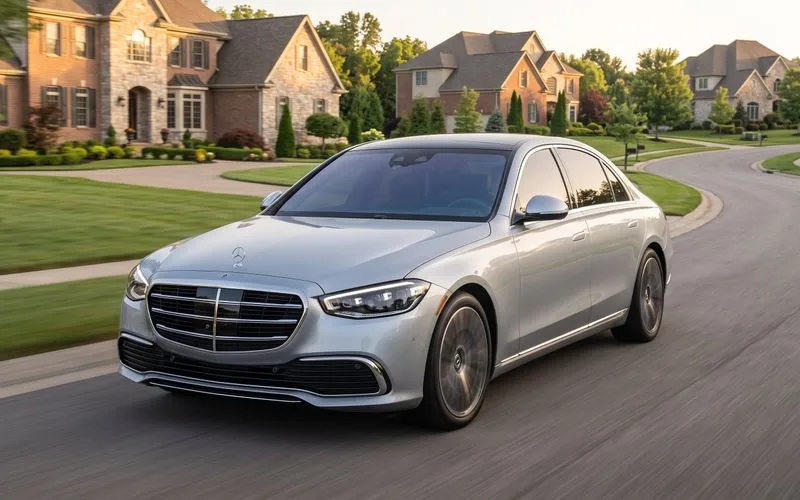 Mercedes-Benz S-ClassFull-Size Luxury SedanBetter at: Ride isolation
The direct rival and the segment benchmark for isolation — quieter and more cosseting, if less agile and no cheaper to own.
Compare 3.19B
3.19B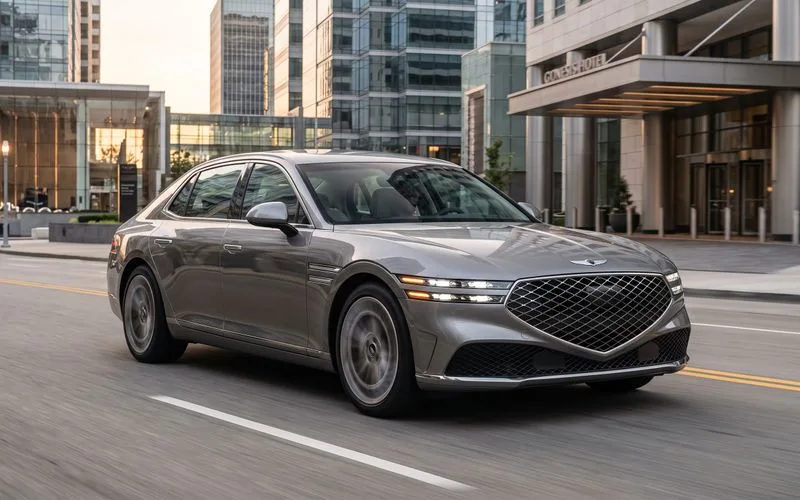 Genesis G90Full-Size Luxury SedanBetter at: Value
Comparable flagship space and equipment for tens of thousands less, with a longer warranty, included maintenance, and stronger resale.
Compare 3.52A-
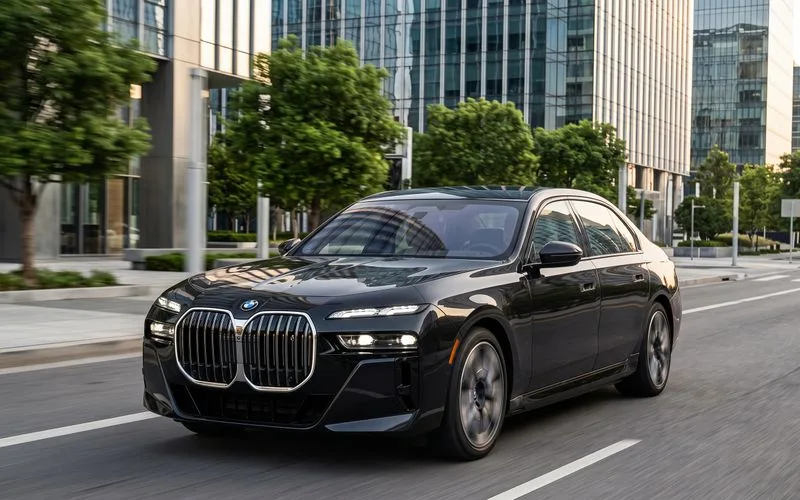 BMW i7Full-Size Luxury SedanBetter at: Running costs
The same cabin and screens with an electric drivetrain, for buyers with home charging who want lower running costs and even less noise.
CompareHow it's evolved
10 scored model years · 2017–2026
Subject scores by year
Hover or tap a score to see what moved it versus the year before. A corner mark flags a big swing.
| Year | Performance | Efficiency | Safety | Space | Cost | Reliability | Tech | Use-case | Driving | Value |
|---|---|---|---|---|---|---|---|---|---|---|
| 2026 | 76 | 32 | 82 | 87 | 10 | 80 | 88 | 62 | 76 | 76 |
| 2025 | 77 | 40 | 77 | 87 | 16 | 69 | 88 | 51 | 72 | 75 |
| 2024 | 78 | 40 | 63 | 87 | 16 | 70 | 88 | 53 | 73 | 72 |
| 2023 | 71 | 43 | 71 | 88 | 16 | 64 | 87 | 47 | 75 | 77 |
| 2022 | 70 | 34 | 70 | 87 | 16 | 71 | 82 | 47 | 73 | 67 |
| 2021 | 70 | 36 | 70 | 87 | 16 | 66 | 79 | 48 | 70 | 68 |
| 2020 | 73 | 28 | 58 | 85 | 16 | 68 | 81 | 46 | 70 | 73 |
| 2019 | 70 | 28 | 54 | 84 | 16 | 70 | 68 | 44 | 69 | 72 |
| 2018 | 70 | 28 | 46 | 84 | 16 | 70 | 68 | 43 | 69 | 72 |
| 2017 | 70 | 24 | 44 | 84 | 16 | 71 | 65 | 43 | 69 | 75 |
Compare two years
Best fit & conditions
Higher scores mean a better fit for that use case. Learn more about use-case fit →
Subject profile
Detailed scoring by subject
1Performance & PowertrainOne of the 7 Series's strongest categories.2.76B-
2019 is the final pre-LCI model year of the G11/G12 in the US, so the volume 740i still carries the 320-hp rating the B58 3.0L turbo inline-six held from 2016 — the 335-hp re-rate arrives with the facelift as a 2020 US model. Adequate rather than commanding for a full-size luxury sedan; the headline outputs in this lineup sit in the V8 and V12 above it.
330 lb-ft from a low-boost turbo six, delivered as a broad plateau from about 1,500 rpm, which is why the car pulls away from rest more strongly than 320 hp suggests. Torque is the better of the two output figures here relative to the sedan field.
5.1 seconds to 60 mph for the all-wheel-drive 740i xDrive, the volume gas configuration, with the rear-drive car three tenths behind at 5.4 — quick for a two-ton-plus luxury sedan and well above the sedan-field midpoint, while sitting far short of the V8 and V12 versions. Independent aggregation of instrumented G11/G12 740 tests averages 5.03 s, so the manufacturer claim holds up in testing.
The B58 is among the smoothest and quietest turbocharged engines on sale in 2019 — reviewers describe linear thrust with no perceptible lag inside a cabin already noted for isolation. It falls short of the top of the band because there is no electrified torque fill on this trim (that is the 740e's job), stop-start restarts remain faintly detectable, and the pre-LCI car lacks the extra acoustic glazing and engine re-tune the 2020 facelift brought.
The ZF-sourced eight-speed Sport Steptronic is the benchmark torque-converter automatic of its era — decisive on kickdown, essentially imperceptible in normal driving, and it does not hunt between ratios. It scores a shade below the 2020 car only because the LCI brought a revised, efficiency-optimized calibration of the same unit; nothing about the 2019 behavior is a shortcoming in itself.
xDrive covers the whole 2019 range — an option on the 740i and 750i and standard on the 740e, M760i and Alpina B7 — so no buyer has to give up a trim to get all-wheel drive. It is a competent rear-biased on-road system with brake-based intervention, but there are no terrain modes, no low range and no torque-vectoring rear differential, which is the practical ceiling for a full-size luxury sedan.
For 2019 the 7 Series offered four genuinely distinct powertrains on one platform — a 320-hp turbo six, a 322-hp plug-in hybrid pairing a 2.0L four with an electric motor, a 443-hp twin-turbo V8 and a 601-hp twin-turbo V12 — plus the Alpina B7's 591-hp V8. Only the absence of a battery-electric option and the modest 9.2-kWh plug-in hybrid keep it off the top of the band.
2Efficiency & RangeOne of the 7 Series's weakest categories.0.00F
EPA rates the 2019 740i xDrive — the volume gas configuration — at 23 MPG combined on premium fuel. A 4,600-lb full-size sedan with a 320-hp turbo six and no electrification of any kind on this trim lands in the lower part of the gas-sedan band, and the 48-volt mild-hybrid help that would soften this is still two generations away.
20 MPG on the EPA city cycle. With no hybrid assist, auto stop-start is the only urban economy measure the car has, and the one-MPG penalty against the rear-drive 740i is the xDrive hardware.
29 MPG highway is where the car is at its best — a slippery body and tall eighth-gear cruising leave the six barely loaded at a steady 65 mph, and the all-wheel-drive penalty disappears entirely at that speed. Respectable for the size, but still short of what the sedan band's efficient mainstream cars return.
EPA publishes 474 miles of total range for the 740i xDrive, from the 20.6-gallon tank at 23 MPG combined. Genuine interstate touring range for a car built to cross states in one sitting, though the middling combined figure keeps it mid-pack rather than exceptional.
EPA puts annual fuel spend at $3,300 for the 740i xDrive at standard assumptions. A mediocre combined figure multiplied by a premium-grade requirement pushes it past the top of the sedan band — running cost is comfortably this car's weakest efficiency dimension.
The B58 takes premium unleaded — EPA classifies it as recommended rather than required, so the engine will run on regular with reduced output and economy, but BMW specifies 91 AKI and owners buy premium in practice. Offsetting that, there is no plug, no charging logistics and a large 20.6-gallon tank, so keeping it fuelled is otherwise about as simple as motoring gets.
3SafetyGrades below the middle of the scale.1.66D
NHTSA lists both 2019 7 Series drivelines in its database but has never crash-tested either: every frontal, side, pole and rollover sub-rating returns "Not Rated". Per the framework's own definition of this item ("0 = never rated by NHTSA", allowZero) the value is the sentinel for absent data, not a zero-star crash result. Low-volume German luxury flagships are routinely skipped — the S-Class and A8 go untested for the same reason.
IIHS has never published a crashworthiness result for any model year of the G11/G12 7 Series — no small overlap, moderate overlap, side, roof strength or head restraint rating exists, and the car appears on no Top Safety Pick list. Secondhand sources circulate a "Top Safety Pick+ for 2019" claim that IIHS's own ratings database does not support and which is disregarded here. There are no adverse findings either, so this is an absence of independent verification rather than evidence of weakness: a buyer gets zero third-party crash data on an $84k sedan. Held just below the untested-peer benchmark because neither US crash-test body has touched the car.
For MY2019 BMW made Active Driving Assistant standard on the 740i, bundling Active Blind Spot Detection, Frontal Collision Warning with Pedestrian Warning and City Collision Mitigation braking, Lane Departure Warning and Rear Cross-Traffic Alert — broader standard coverage than most 2019 luxury rivals, where blind-spot monitoring was still extra-cost. Adaptive cruise control and lane keeping/centering are the two gaps in the five-feature checklist, both locked inside the $1,700 Driving Assistance Plus Package, which pins this at the top of the middle band rather than in the top one.
Frontal Collision Warning with City Collision Mitigation is standard on every 2019 trim — a radar-plus-camera system with daytime pedestrian recognition — but it is calibrated as a city-speed autonomous-braking function with warning and brake assist above that, not a full-speed-range AEB, and pedestrian detection is daytime only. None of it is independently verified: IIHS has never run front crash prevention on the 7 Series, and the nighttime pedestrian evaluation did not exist in 2019. Contemporary BMW systems of the same hardware generation earned Superior vehicle-to-vehicle ratings on models IIHS did test, which supports adequacy but is not a result for this car.
Both halves are standard rather than optional as of MY2019: Active Blind Spot Detection (mirror indicator plus a haptic steering-wheel warning if the driver signals into an occupied lane) and Rear Cross-Traffic Alert. That is better coverage than the alert-only, extra-cost arrangements typical of the segment in 2019. It falls short of the top band because the blind-spot function warns rather than steers, and front cross-traffic alert is reserved for the $1,700 Driving Assistance Plus package.
Only the warning half is standard — Lane Departure Warning — while Active Lane Keeping Assistant with side collision avoidance and the Traffic Jam Assistant that does the actual centering sit in the $1,700 Driving Assistance Plus Package. When fitted, centering was the weakest part of this generation's assistance suite: instrumented press evaluation of the same system generation found persistent ping-ponging, with the wheel making continuous left-right corrections on dead-straight freeway. Optional, plus documented wander, puts it in the lower half of the middle band.
The capability is the right one — Active Cruise Control with Stop & Go, full speed range down to a standstill and back, paired with Traffic Jam Assistant for hands-on lane centering. Two things keep it out of the top band. It is not fitted equipment: a base 740i has plain cruise control until the buyer adds the $1,700 package. And the combined highway assist is less integrated than what the MY2020 update brought, since the 2019 car does not offer the Extended Traffic Jam Assistant tier that ties centering, following and driver monitoring together on mapped highways.
No hands-free driving is available on the 2019 7 Series at any price. BMW launched Extended Traffic Jam Assistant — the driver-facing-camera-policed hands-off system — on the 2019 3 Series, 8 Series, X5 and X7, but the 7 Series did not receive it until the MY2020 update, so this is the last 7 Series model year with nothing above hands-on Traffic Jam Assistant. Scored in the low band as an outright absence, not a limited implementation.
Every 2019 7 Series leaves the factory with Adaptive Full LED headlights — variable light distribution, cornering function, and BMW Selective Beam, a genuine non-dazzling high-beam assistant rather than a simple on-off auto high beam — with BMW Laserlight and its far greater high-beam reach an option. That is strong hardware standard across the range, which is what the top band asks for; what it lacks is verification, since IIHS has never published a headlight rating for the 7 Series and BMW's LED units of this era rated anywhere from Good to Marginal on the models IIHS did measure.
Natural sightlines are ordinary for the class — a tall beltline, thick C-pillars and a shallow backlight pinch the over-shoulder view, and 207 inches of body make placement in tight spaces a guess without help. Unlike the MY2020 car, which made Parking Assistant Plus with the Surround View 3D camera standard, the 2019 volume 740i ships with only a reversing camera and park distance control; the 360-degree view and self-parking are a $700 option, so the as-delivered base car gets materially less electronic compensation than its successor.
Space is the strong suit: 44.4 inches of rear legroom and wide rear door openings make a rear-facing seat easy to load and still leave room for a tall front occupant, and the standard bench seats three abreast. Hardware and configuration hold it out of the top band — LATCH is the usual two outboard sets with lower anchors buried in the leather seat bight rather than on easy-access rails, IIHS has published no LATCH ease-of-use rating for the 7 Series, and the optional Luxury Rear Seating / Executive Lounge configurations replace the center position with a console, cutting the car to two rear seats.
4Space & ComfortThe 7 Series's best-graded category.3.74A
The volume 740i seats five on a standard three-abreast rear bench, the maximum a full-size sedan offers. Only the chauffeur-oriented rear-console packages drop it to four.
Near the top of the sedan band at 39.9 inches, and notable because the dual-pane panoramic moonroof is standard rather than optional on the 7 Series — the published figure already carries the headliner penalty most rivals quote around.
41.4 inches is unremarkable for the class — this generation spends its extra wheelbase on the rear compartment, not the driver's footwell. Retail spec listings publish 41.4 in while BMW's own press material for the same body reads 41.1, so the figure is taken as ~41.4 with the spread noted rather than treated as settled.
38.9 inches sits at the top of the sedan band despite a roofline that tapers hard toward the trunk — the long-wheelbase body pushes the rear seat forward of the taper, so the sloping profile costs less headroom than it looks like it should.
This is the defining number of the car and it is off the top of the sedan band. BMW never sold the short-wheelbase G11 in the United States for this generation, so the 126.4-inch wheelbase and its 44.4 inches of rear legroom are the only configuration a US buyer could order — roughly two inches more than a long-wheelbase A8 L.
18.2 cubic feet is the largest trunk in the full-size luxury sedan class — a contemporary A8 L manages 12.5 — and near the top of the sedan band. Raw volume overstates usable space somewhat, since the wheel houses intrude noticeably into the load area.
The clear weak spot in an otherwise exceptional cabin: for a 207-inch car the small-items storage is genuinely poor — a small console bin, modest door pockets and a shallow glovebox — and the rear seats do not fold on the volume car, so there is no trunk-to-cabin pass-through unless the buyer adds a rear-seat package with a ski hatch. The standard wireless charging tray and the flip-out rear tables on the executive packages are the only clever touches, and neither is storage.
Excellent chairs even in base form — 14-way power front seats with three-stage heating and Dakota leather are standard, and the seat itself is broad, well-bolstered and holds up over long stints. It sits a few points below the segment ceiling because the genuinely special version is charged for: 16-way multi-contour front seats with ventilation and massage require the $4,000 Executive Package, and rear ventilation and massage the $3,900 Luxury Rear Seating Package, so a bare 740i has comfortable but conventional seating.
Two-axle self-levelling air suspension with Dynamic Damper Control is standard on every 2019 7 Series — not an option as on several rivals — and it delivers the pillowed, long-wave isolation that defines the car, with Active Comfort Drive and its road-scanning Road Preview available in the $4,100 Autobahn Package. Short of the ceiling because in Comfort the body control loosens enough to feel slightly tipsy through quick lane changes, and the fix is Sport mode, which trades away the softness.
Among the quietest cars sold in 2019 — a heavily sealed flagship body with an inherently balanced inline-six that is inaudible at a cruise. It is scored a notch below its own successor deliberately: the 2020 LCI added laminated acoustic glazing and further insulation specifically to push the 7 Series past the S-Class on noise, which means the pre-facelift car is measurably the noisier of the two.
Deep equipment, and cheaper to complete than on the facelift car. Four-zone automatic climate control, a dual-pane panoramic moonroof, three-stage heated front seats, soft-close doors and remote climate pre-conditioning through the BMW Connected app are all standard; the Cold Weather Package that adds a heated steering wheel and heated rear seats is only $400 for 2019. Held out of the top band because ventilation, massage and rear sunshades still need the $4,000 Executive Package, and a heated wheel is a separate charge on an $84k car at all.
5Cost of OwnershipThe 7 Series's lowest-graded category.0.00F
The 2019 entry trim is the rear-drive 740i at $83,650 plus a $995 destination charge; the lineup climbs to $157,695 for the M760i xDrive, so this is the floor of a very wide range.
The 740i xDrive is the US volume gas trim at $86,650 + $995 destination, but almost none left the lot at sticker — BMW's a-la-carte option model means Premium, Driver Assistance Plus ($1,700), Luxury Seating and Executive content typically pushed real window stickers into the mid-$90,000s.
Years 1–3 are largely absorbed by BMW Ultimate Care and years 1–4 by the factory warranty, but years 4–5 land hard: run-flat tires, big-rotor brake service and out-of-warranty electronics/air-suspension exposure on a full-size German flagship. Near the top of the sedan cost band, which is the correct place for this car.
The 7 Series is one of the fastest-depreciating vehicles on the US market, shedding value ~7 percentage points faster than an already-brutal segment average — the single largest dollar cost of owning this car and the reason a strong warranty and free maintenance can't rescue the category.
BMW's New Vehicle Limited Warranty ran 4 years/50,000 miles for 2019 — a year longer than the 3/36 mainstream standard and the norm among German luxury rivals, but short of the 4/50-plus outliers.
BMW does not offer a separate longer powertrain warranty; engine, transmission, transfer case and drivetrain coverage simply expires with the bumper-to-bumper term. Against a segment where 5–10 years is the scoring band, 4 years is below the floor — a genuine and consequential weakness on a car whose out-of-warranty repairs are expensive.
BMW Ultimate Care delivered 3 years/36,000 miles of included scheduled maintenance plus 4 years of unlimited-mileage roadside assistance and ConnectedDrive/BMW Assist service trials — genuinely multi-year included maintenance with meaningful perks, which is the top band. Held back from the 90s by BMW's much-criticized decision to make Apple CarPlay a paid subscription after a one-year trial, a nickel-and-dime on a $90,000 car.
$95,000 volume-trim price minus its estimated resale value after 5 years (38.2% retained, or about $36,290) leaves about $58,710 in depreciation. Add the projected $7,800 in 5-year maintenance and repairs, and owning this vehicle for 5 years costs about $66,510 in total.
6Reliability & QualityGrades above the middle of the scale.2.72B-
Sources split: Consumer Reports put 2019 7 Series predicted reliability at 3.5/5 (slightly above average) but rates the G11 generation 3/5 overall with electrical-system and in-car-electronics complaints, while J.D. Power rates the 2019 740i 4/5 and placed the G11 above average in the large premium car segment. Mixed signals with a real electronics/air-suspension tail put it in the middle band.
BMW sits just better than industry average but well outside the top tier in dependability studies covering this car's ownership window — 187 PP100 vs a 192 industry average in the 2022 VDS and 184 vs 186 in 2023, ninth overall in 2024, and below average in the 2025 IQS. Better than Mercedes and Audi, not in Lexus/Genesis territory.
Only two NHTSA recalls touch the 2019 740i — a crankshaft-sensor firmware campaign that could cause a stall and a backup-camera software fix — both remedied by dealer software/sensor work and neither systemic. The offsetting negative is a known service pattern rather than a recall: G11 air-spring leaks and compressor failures were common enough that BMW extended strut coverage to 8 years/80,000 miles.
The volume 740i runs the 3.0L B58 turbo inline-six with the ZF 8HP automatic — the best-regarded modern BMW combination, with a closed-deck block and over-built bottom end that routinely passes 200,000 miles on regular oil changes. Known faults are minor and maintenance-grade (coolant hose and expansion-tank seepage, crankcase-ventilation wear), not the catastrophic failures that dogged the earlier N54/N63 families.
As BMW's flagship the pre-LCI G11 cabin is genuinely rich — quilted leather, real wood inlays, metal-clad switchgear cool to the touch — and reviewers consistently call the material quality exceptional for the price. It stops short of class-leading because the contemporary Mercedes S-Class was widely judged the more special-feeling room, a gap the 2020 LCI was partly aimed at closing.
Assembly is tight and the cabin is notably quiet and solid — the structural refinement expected of a Dingolfing-built flagship, with no pattern of rattle or panel-gap complaints in owner reviews. Held below the top band because BMW's initial-quality standing is only around the industry average, with infotainment the recurring problem area across the lineup in these study years.
Roughly 350 BMW centers give dense metropolitan coverage nationwide and 2019 cars shipped with 3 years/36,000 miles of complimentary scheduled maintenance, so routine service is both accessible and prepaid. Service satisfaction is only mid-pack among luxury brands — Porsche, Lexus, Cadillac, Infiniti and Mercedes-Benz all placed ahead of BMW in the J.D. Power CSI of this era — and rural coverage thins out.
Parts are available and the BMW independent-specialist network is large, but this is one of the most expensive cars in the catalog to keep running: 7 Series owners report roughly $1,500–$2,500 a year against a $968 BMW-wide and $652 industry average, and the failure-prone bits are the costly ones. A leaking air strut or a burned-out suspension compressor is a four-figure job, and the iDrive/electronics modules are effectively dealer-only.
7Technology & InfotainmentMid-pack among this car's ten categories.2.60C+
10.25 inches was competitive when the G11/G12 launched in 2016 and is mid-pack by 2019 — a contemporary S-Class runs 12.3 inches. There is no larger screen available at any price on this car; the facelift kept the same 10.25-inch panel and only the next generation moved to 14.9 inches.
iDrive 6.0 is quick, crisply rendered and — unusually for 2019 — offers four parallel input methods on the standard car: console rotary controller, touchscreen, voice and gesture control, all included rather than optioned. That redundancy plus iDrive's well-drilled menu hierarchy is why the system consistently ranked among the best of its era. It sits below the facelift car because the 2019 software is the outgoing generation: no tile-based personalization, older graphics, and the console controller remains divisive.
Half the ecosystem, and originally metered. Wireless Apple CarPlay became standard equipment on the 7 Series for MY2019 — BMW never fitted a wired option — but it shipped with a one-year trial and an $80/year subscription thereafter, which BMW only cancelled in December 2019 (granting lifetime access retroactively, so a 2019 car today has it free). Android Auto is simply absent: it required BMW Operating System 7.0 and arrived in July 2020, so no iDrive 6.0 car can ever have it. An Android owner gets nothing.
Native navigation is a strength — full-map guidance on both the Control Display and the digital cluster, with real-time traffic and send-to-car destinations from the BMW Connected app. Voice is the gap: iDrive 6.0 uses command-and-control speech recognition with limited natural-language handling, not the 'Hey BMW' Intelligent Personal Assistant that arrived with the facelift, so most owners fall back to the rotary controller or their phone. Solidly functional rather than class-leading.
The base system is not a base system: a 16-speaker, 600-watt Harman Kardon surround setup is standard on every 740i, which is the paid premium upgrade in most rivals. Above it sits the Bowers & Wilkins Diamond Surround Sound system, widely regarded as one of the two or three best factory audio installations available in any car at any price.
A 12.3-inch fully digital cluster is standard on every 2019 7 Series, reconfiguring its layout and colour with the drive mode and able to carry a full navigation map alongside the gauges. Crisp hardware and a legible, conventionally-shaped gauge layout — arguably clearer than the pentagonal redesign the 2020 facelift introduced. Short of the top only because the graphics are the pre-LCI generation's.
Real but narrow. The NBT EVO hardware behind iDrive 6.0 supports over-the-air map and connected-services updates, so navigation data refreshes without a dealer visit or a USB stick — but BMW's Remote Software Upgrade, the whole-vehicle OTA that adds features to a car already in the driveway, requires Operating System 7.0 hardware and cannot be retrofitted. The 2020 facelift got it and demonstrably used it (Android Auto was delivered that way); the 2019 car did not and never will.
The BMW Connected app covers the core set — remote lock/unlock, vehicle locate, remote climate pre-conditioning and destination send-to-car — and the standard BMW Display Key, an LCD touchscreen fob that reports fuel and service status and pre-conditions the cabin without a phone at all, is a genuine differentiator. Held to the middle band because there is no phone-as-key (BMW's Digital Key launched July 2020 and excluded this generation of 7 Series), no remote 3D surround view (an OS 7.0 feature), and remote services lapse to a ConnectedDrive subscription after the included trial.
Wireless phone charging and a 4G LTE WiFi hotspot are standard, and rear passengers get their own dual USB-C ports on the back of the console — early for 2019. The limits are that those rear ports are charge-only with no data, the front data ports are still USB-A, and there is no household AC outlet anywhere in the car. Adequate rather than abundant for a flagship.
Comfort Access proximity entry with push-button start, a hands-free power trunk lid and soft-close power doors are standard, and the car ships with the BMW Display Key — a touchscreen LCD fob that reports vehicle status and pre-conditions the climate — with Remote Control Parking on the 750i and above letting the car creep into a garage space with nobody aboard. The only thing separating it from the top band is phone-as-key, which BMW launched in July 2020 and never extended to this generation.
This is the sharpest technology gap between the 2019 car and its 2020 successor. Standard equipment is a rearview camera plus front and rear park distance control — competent, but for a 207-inch car the electronic view is the difference between parking it and guessing. The Surround View 3D camera and the automated Parking Assistant are the $700 Parking Assistance Package, which the facelift made standard equipment. Cheap enough to be a near-universal option, but not fitted on a base car.
The full-colour head-up display is large and sharp, mirroring speed, navigation and driver-assist status in the sightline, and it is standard from the 750i up — but on the volume 740i it cannot be ordered alone. Reaching it means the $4,000 Executive Package, which bundles it with Nappa leather, ventilated multi-contour seats, power sunshades and ceramic controls. Available and good, gated behind the most expensive comfort package on the trim most buyers take.
8Use-Case FitOne of the 7 Series's weakest categories.0.95F
The raw space is outstanding — 44.4 inches of rear legroom and long, wide rear doors on the long-wheelbase-only US body make a rear-facing seat easy to fit while still leaving a tall front passenger room, and the standard bench takes three abreast with two full LATCH sets outboard. What holds it to the middle band is everything around the seats: lower anchors buried in the leather seat bight rather than on exposed rails, a low sedan floor that means lifting children down into the car, an 18.2 cu ft trunk that cannot be extended because the rear seats do not fold, and console and door storage too small for the bottle-and-snack overhead of daily family duty.
A family buying on published safety evidence gets none: neither NHTSA nor IIHS has ever tested any G11/G12 7 Series, so there are no crash ratings at all on an $84k car. The standard ADAS did improve for 2019 — Active Driving Assistant became standard, bundling AEB with city collision mitigation and daytime pedestrian detection, blind-spot detection, lane departure warning and rear cross-traffic alert. But adaptive cruise and lane centering, the two features that matter most on a family highway trip, sit inside the $1,700 Driving Assistance Plus Package, the surround-view camera is another $700, there is no rear-seat occupant reminder, and no hands-free assistance exists at any price on this model year.
Once everyone is aboard this is close to the ideal four-person tourer: the biggest trunk in the class at 18.2 cu ft swallows a family's luggage with the rear seat still occupied, four-zone climate and a serene air-sprung ride keep everyone comfortable for hours, and a rear-seat entertainment system with dual screens and a Blu-ray player is available. It stops short of the top band because the good rear amenities — heated rear seats, rear ventilation and massage, rear sunshades, the entertainment system — are all separately priced options rather than fitted equipment, and the fifth passenger in the middle seat is the one who suffers.
In moving traffic it is close to effortless — the B58 six pulls 330 lb-ft from about 1,380 rpm so nothing requires a downshift, the ZF eight-speed is imperceptible, and the standard air suspension isolates broken city pavement. Two things keep it below the facelift car and out of the top band: 206.6 inches of car in a lane makes low-speed placement a constant low-grade task, and 2019 is the last 7 Series model year with no hands-free congestion assistance of any kind — even hands-on Traffic Jam Assistant costs $1,700, so a base car crawls through traffic on plain cruise control.
Expensive per mile by any measure, and the worst of the four missions for this car: 23 MPG combined on required premium fuel works out to roughly $3,300 a year at 15,000 miles, and the consumables match the car rather than the commute — big wheels and tires, large brakes and BMW dealer service rates once the complimentary period ends. The 740e PHEV exists precisely to fix this, but the gas 740i being scored here does not benefit from it.
The footprint is the problem and the 2019 car has less electronic help against it than any other model year of this generation: 206.6 inches long on a 126.4-inch wheelbase with a 42-foot curb-to-curb turning circle means three-point turns on ordinary streets and genuinely tight structure spaces. Standard equipment is only a rearview camera and front/rear park distance control — the Surround View 3D camera and automated Parking Assistant are a $700 option that the 2020 facelift made standard, and the rear-axle steering that shrinks the circle is inside the $4,100 Autobahn Package.
Not a work vehicle in any sense this item measures. BMW publishes no US tow rating for the 7 Series and offers no tow package on any 2019 trim, there is no bed or open load area, the cargo space is a sealed 18.2 cu ft trunk that cannot be extended because the rear seats are fixed, and the payload is people. The only credit is a powertrain that would never be strained by a load it is not permitted to carry.
The B58 inline-six and ZF eight-speed underneath are genuinely durable units with a good long-term reputation, and that is the whole of the case here. Everything wrapped around them is the opposite of work-tolerant: standard two-axle self-levelling air suspension with adaptive dampers, dense electronics, soft-close doors, Dakota leather and wood surfaces with no wear-friendly alternative, no fleet presence, and repair costs the car already scores poorly on. Hard use is a financial event rather than a maintenance one.
Effectively nothing here: no bed, no tie-downs beyond a trunk net, no roof rails or published roof load rating, no hitch or upfit ecosystem, no onboard AC power or exportable power, and no washable surfaces — the standard finish is leather beneath a dual-pane panoramic glass roof. The trunk's intrusive wheel houses further limit what bulky rigid objects will even go in.
This is what the car is actually for, and it is close to the best in the field. A 20.6-gallon tank at 23–24 MPG combined gives roughly 474–494 miles of EPA range, the standard air suspension makes the cabin serene at speed, and the seats hold up over long stints. It sits below the facelift car for two specific reasons rather than any comfort shortfall: the 2020 LCI added acoustic glazing the 2019 body does not have, and the driver-assist half of the equation is both optional and weak here — full-range adaptive cruise costs $1,700, and press evaluation of this system generation's lane centering found it wandering on straight freeway.
xDrive all-wheel drive is available across the range and the air suspension can raise the body slightly, which covers a snowy driveway or a well-graded gravel road — that is the entire adventure case. There is no meaningful ground clearance, no terrain modes or low range, no roof rails or published roof load rating for a box or bikes, no US tow rating for a trailer, no onboard AC power for camp, and the rear seats do not fold flat for anything long. Low-profile performance tires on the volume configuration make the point.
Volume is genuinely good — 18.2 cu ft is the largest trunk in the full-size luxury sedan class and takes four large suitcases without argument, loaded through a standard hands-free power trunk lid. Flexibility is where it collapses: the rear seats are fixed on the volume car with only an optional ski pass-through, the wheel houses intrude into the load floor so long or rigid items will not lie flat, there is no underfloor storage, and with no roof rails or hitch there is no way to add capacity outside the car. Fine for luggage, poor for gear.
9Driving ExperienceMid-pack among this car's ten categories.2.68C+
Impressively composed for a 4,195 lb car on a 126.4-inch wheelbase — reviewers repeatedly note it changes direction like something considerably smaller, helped by standard two-axle air suspension with Dynamic Damper Control and, when optioned, the Integral Active Steering rear axle and Active Comfort Drive roll control in the $4,100 Autobahn Package. It sits mid-band rather than high because the composure is engineered rather than innate: in Comfort the body control loosens enough to feel tipsy in quick lane changes, and getting the agility means Sport mode and giving up the ride the car is bought for.
Accurate and beautifully weighted for the job — light and easy at parking speeds, settling to a stable, unfidgety weight on the highway — but essentially devoid of feedback, and reviewers of this generation describe it as numb even in the sportiest drive mode. The optional Integral Active Steering rear-axle system adds agility without adding information. Precise but uncommunicative is the definition of the middle band.
Hardware and tuning are appropriate to a car of this mass and speed: large vented discs on all four corners, a firm and progressive pedal, and no fade complaints in period testing, with stopping distances for this generation measuring in the high 150-foot range from 70 mph. It sits in the upper middle band rather than at the top because no instrumented 70–0 result was published for the 2019 740i specifically, so the assessment rests on other variants of the same platform and on qualitative press impressions.
Among the best-calibrated conventional drivetrains of 2019. The B58 turbo six delivers its full 330 lb-ft from about 1,380 rpm with no perceptible lag on tip-in, and the ZF-sourced eight-speed Sport Steptronic shifts imperceptibly in normal driving and decisively on kickdown without hunting between ratios. Two small deductions: stop-start restarts remain faintly detectable, and the 2020 facelift brought a revised, wider-spread calibration of the same transmission that this car does not have.
The inline-six is inherently balanced and this installation is isolated to the point of near-inaudibility at a cruise; under hard throttle it produces a smooth, cultured note rather than strain, and nothing reaches the controls. It scores just below its own 2020 successor because the LCI added acoustic glazing and further insulation that the pre-facelift body lacks, and short of the ceiling in absolute terms because the character is muted rather than rewarding — there is little to listen to on purpose.
42 feet is outside the sedan band entirely — the direct consequence of the US market getting only the 126.4-inch long-wheelbase G12 body for this generation. The optional Integral Active Steering rear-axle system meaningfully reduces it, but it is a $4,100 Autobahn Package item and not part of the volume configuration.
Adjustability is a strong suit — 14-way power front seats plus a power column accommodate a wide range of body sizes, ingress is easy through long doors onto a seat at natural hip height, and the standard 12.3-inch digital cluster keeps information in the sightline. Three things hold it below the top band: the console iDrive controller and its surrounding switchgear divide opinion on intuitiveness, the head-up display is locked in the $4,000 Executive Package, and the tall beltline and thick pillars mean the over-shoulder view wants the surround-view camera that is a $700 option on this model year rather than standard as it became for 2020.
Satisfying rather than fun. The 740i is quick — 5.1 seconds to 60 in xDrive form — effortless and quietly impressive at speed, and there is real pleasure in how little the car asks of you. But with numb steering, a long-wheelbase-only body and a powertrain tuned toward serenity, it is a car you enjoy arriving in rather than one you take the long way home in. The character that would lift this score lives in the M760i V12 and Alpina B7 above it, not in the volume six.
10Value & Market PositionOne of the 7 Series's strongest categories.2.86B-
A base 740i arrived with adaptive air suspension, adaptive LED headlights, panoramic roof, four-zone climate, heated 10-way power leather seats, power-closing doors and trunk, gesture-control iDrive with navigation, wireless charging, WiFi and a 16-speaker Harman Kardon system — competitive-to-generous content for a flagship. Kept out of the top band because BMW still charged $1,700 for adaptive cruise via Driver Assistance Plus and metered Apple CarPlay by subscription, and the option sheet on an $84,000 car remained long.
On the window sticker the 740i is fair-to-good value — it undercut a comparably specified S-Class while including air suspension and the carbon-core chassis, and it transacted well below MSRP. Over an ownership term the picture inverts: worst-in-class depreciation, no powertrain warranty past 4 years, and top-of-band maintenance and repair costs mean the money you appear to save at purchase is given back and more.
About as wide as this segment gets: seven US variants spanning $83,650 to $156,700, four distinct powertrains (turbo I6, plug-in hybrid four, twin-turbo V8, twin-turbo V12) plus the ALPINA V8, rear- and all-wheel drive, and deep option packaging on top.
8,823 US units in 2019, up 6.7% year over year — genuine growth inside a full-size luxury sedan segment that was contracting, with the S-Class and LS both falling. Strong relative acceptance, though the absolute volume is small and the segment's structural decline caps how high this can go.
BMW is an aspirational global luxury brand with strong owner loyalty, but the halo is concentrated in the 3 Series and M cars rather than the flagship. In this specific class the S-Class owns the statement role, and the G11's restrained styling drew persistent criticism for looking like a larger 5 Series — brand strength is high, model-level desirability is mid-pack.
Excellent for the buyer, and 2019 was the best of it. Full-size luxury sedans carried the heaviest discounting in the market, and this was the run-out year for the pre-facelift car with the LCI already publicly revealed in January 2019 — dealers and BMW Financial Services discounted and lease-supported aggressively, with real transaction prices commonly five figures below sticker plus loyalty cash.
The weakest point of this model year. The G11 launched for 2016, making 2019 its fourth year and a pure carryover with no significant changes — while the facelift was revealed in January 2019 and reached US showrooms as a 2020. A 2019 buyer was knowingly buying a superseded car, which is squarely the 'aging generation with imminent replacement' band.
Well reviewed but rarely the pick of the class — the textbook middle band. Critics consistently praised the ride, refinement and the driver engagement rivals lacked, and Consumer Reports' road test was a real high point, but no major 2019 awards followed and the newer Audi A8 and Lexus LS drew the fresh-metal attention while the S-Class held the class crown.