
The verdict
A strong full-size luxury sedan, strong on space and held back by ownership.
The 2023 BMW 7 Series is the first year of an all-new generation, and it shows up as the most advanced cabin in the full-size luxury class — a 14.9-inch curved display, standard air suspension, roughly 43 inches of rear legroom, and a 19.1 cu ft trunk, all wrapped around a silky 375-hp turbo six. What it asks in return is a lot: $94,295 to start, closer to $103,000 as most people ordered it, and roughly $75,000 gone in depreciation and upkeep over five years. It is also the year the 740i was rear-wheel drive only, with adaptive cruise and lane centering locked behind a $2,100 package. Buy it if the back seat and the technology are the point; look elsewhere if you drive it yourself in snow, or plan to keep it past the warranty.
Jump to scoresStrengths
- A back seat that outclasses almost anything sold in America
- The most complete technology package in the segment
- A drivetrain that feels electric without being one
What holds it back
- Ownership costs are the worst part of this car by a wide margin
- No all-wheel drive on the six-cylinder car in 2023
- It is a long car in a world of short parking spaces
Top alternatives
Cars shoppers cross-shop with the BMW 7 Series 3.50A-
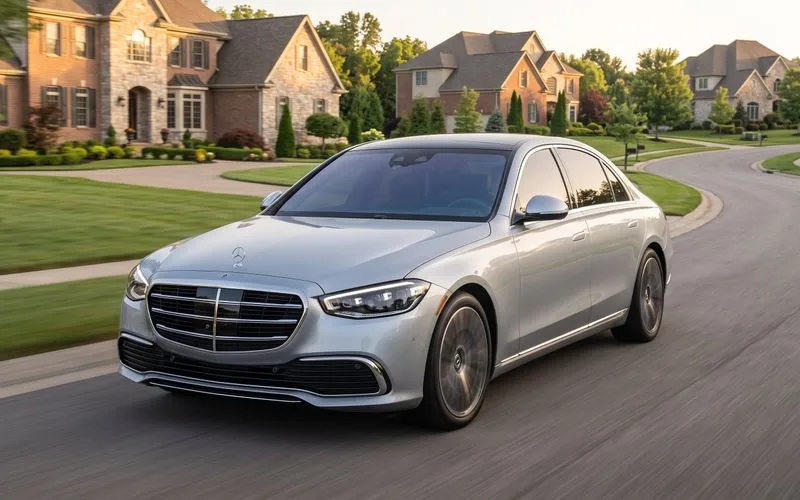 Mercedes-Benz S-ClassFull-Size Luxury SedanBetter at: Ride isolation
The direct rival and the segment benchmark for isolation — quieter and more cosseting, if less agile and no cheaper to own.
Compare 3.19B
3.19B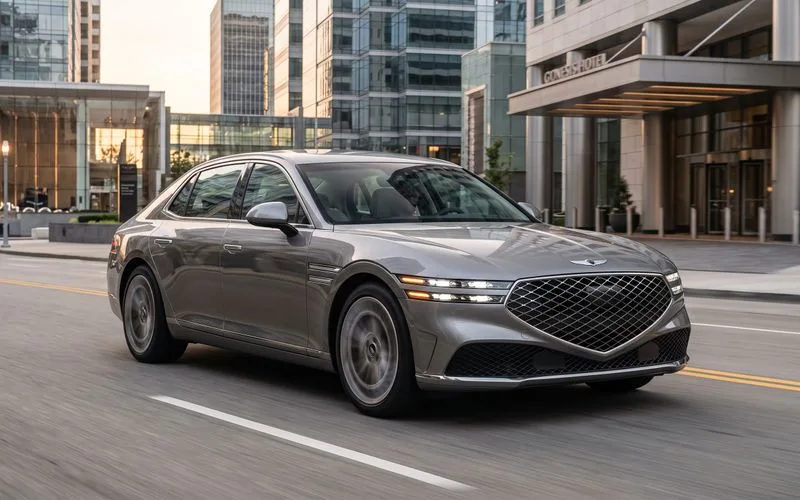 Genesis G90Full-Size Luxury SedanBetter at: Value
Comparable flagship space and equipment for tens of thousands less, with a longer warranty, included maintenance, and stronger resale.
Compare 3.52A-
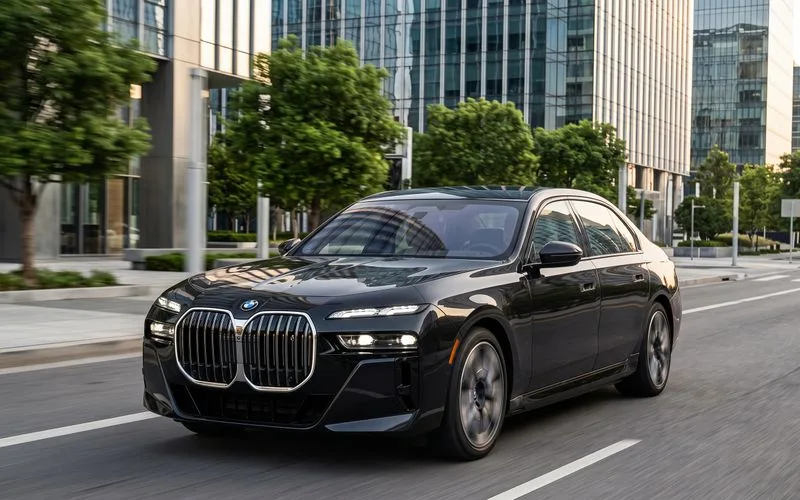 BMW i7Full-Size Luxury SedanBetter at: Running costs
The same cabin and screens with an electric drivetrain, for buyers with home charging who want lower running costs and even less noise.
CompareHow it's evolved
10 scored model years · 2017–2026
Subject scores by year
Hover or tap a score to see what moved it versus the year before. A corner mark flags a big swing.
| Year | Performance | Efficiency | Safety | Space | Cost | Reliability | Tech | Use-case | Driving | Value |
|---|---|---|---|---|---|---|---|---|---|---|
| 2026 | 76 | 32 | 82 | 87 | 10 | 80 | 88 | 62 | 76 | 76 |
| 2025 | 77 | 40 | 77 | 87 | 16 | 69 | 88 | 51 | 72 | 75 |
| 2024 | 78 | 40 | 63 | 87 | 16 | 70 | 88 | 53 | 73 | 72 |
| 2023 | 71 | 43 | 71 | 88 | 16 | 64 | 87 | 47 | 75 | 77 |
| 2022 | 70 | 34 | 70 | 87 | 16 | 71 | 82 | 47 | 73 | 67 |
| 2021 | 70 | 36 | 70 | 87 | 16 | 66 | 79 | 48 | 70 | 68 |
| 2020 | 73 | 28 | 58 | 85 | 16 | 68 | 81 | 46 | 70 | 73 |
| 2019 | 70 | 28 | 54 | 84 | 16 | 70 | 68 | 44 | 69 | 72 |
| 2018 | 70 | 28 | 46 | 84 | 16 | 70 | 68 | 43 | 69 | 72 |
| 2017 | 70 | 24 | 44 | 84 | 16 | 71 | 65 | 43 | 69 | 75 |
Compare two years
Best fit & conditions
Higher scores mean a better fit for that use case. Learn more about use-case fit →
Subject profile
Detailed scoring by subject
1Performance & PowertrainGrades above the middle of the scale.2.81B-
2023 is the launch year of the seventh-generation G70, and the volume 740i's new B58 3.0L twin-scroll turbo inline-six with 48V mild-hybrid assist is rated 375 hp SAE for the US market — 40 hp more than the outgoing G11 740i.
The 740i's B58 makes 383 lb-ft from 1,850 rpm, with the 48-volt starter-generator adding a short-duration overboost to roughly 398 lb-ft.
BMW's own figure for the 2023 740i is 5.2 seconds; instrumented testing beats it comfortably, with MotorTrend recording 4.6 seconds to 60 mph and 13.2 s at 106.5 mph in the quarter.
The B58 six paired with the 48V system is one of the smoothest and most responsive powertrains in any full-size luxury sedan — mild-hybrid torque fill masks any turbo lag off idle and stop-start restarts are near-imperceptible. Reviewers routinely reach for electric-car comparisons to describe its quietness.
The ZF 8HP eight-speed is the segment benchmark: decisive, quick to kick down, and never hunting, and in the G70 the 48-volt motor-generator fills torque between ratios so shifts are effectively seamless in normal driving. It gives up a little to a dual-clutch on outright shift speed in Sport, which is the only reason it isn't scored higher.
For 2023 — the G70's first US model year — the volume 740i was sold in rear-wheel drive only; xDrive was confined to the 760i xDrive V8 and the i7 xDrive60 EV, both far above it in price. A buyer wanting the six-cylinder car with all-wheel drive could not get one until the 740i xDrive arrived for 2024, which is a real gap against an S-Class or A8 that offer AWD throughout.
The 2023 US range spans three genuinely distinct powertrains on one platform: the 375-hp mild-hybrid turbo six (740i), the 536-hp twin-turbo 4.4L V8 (760i xDrive), and a full battery-electric i7 xDrive60 — an unusually broad spread that few rivals matched in 2023. It falls short of a perfect score only because the V12 was dropped and the 750e PHEV had not yet arrived (it joined for 2024).
2Efficiency & RangeOne of the 7 Series's weakest categories.0.87F
EPA rates the 2023 740i Sedan at 27 MPG combined — respectable for a 4,700-lb full-size luxury sedan and the mileage leader of the gas lineup, helped by the 48V mild-hybrid system, but ordinary against the wider gas-sedan field the band normalizes to.
25 MPG in the EPA city cycle, with the 48-volt starter-generator enabling smooth stop-start and light coasting to lift the urban figure above what the car's mass would otherwise allow.
31 MPG highway. The narrow 25/31 city-to-highway spread is typical of a tall, heavy luxury sedan with a large frontal area — the six is barely working in town, so cruising gains little.
The G70 carries a 74-litre (19.5 US gal) tank, which at the EPA combined 27 MPG gives roughly 527 miles between fills — a genuine long-haul cruising range and one of the car's quieter strengths.
EPA estimates $2,800 a year to fuel the 740i at standard assumptions. Decent MPG is offset by the premium-fuel requirement, which is what pushes the annual cost into the upper part of the sedan band.
The B58 runs on premium unleaded — EPA lists it as recommended rather than required, so the car will tolerate regular with reduced output, but BMW specifies 91 AKI and essentially every owner buys premium. No plug, no charging logistics, and a large tank keep the ownership routine simple; the fuel grade is the only penalty.
3SafetyGrades above the middle of the scale.2.81B-
NHTSA has never crash-tested the 7 Series: the SafetyRatings API returns zero results for the 2023 BMW 7 Series sedan in every drivetrain configuration, and the all-new G70 was not on NHTSA's 2023 test schedule (the X1 was the BMW selected that year). A 4.5-star inferred value matches how this catalog treats other untested full-size luxury flagships (Audi A8, Genesis G90).
The G70 has no published crashworthiness results from any program — IIHS has never rated the 2023 7 Series (no ratings page exists for the 7-series 4-door sedan; the 2023 Top Safety Pick list carries the BMW X1, X3 and X5 but no 7 Series), and Euro NCAP has not assessed it either. That is a data void rather than a bad result: the G70's mixed-material body, ten standard airbags including a front-centre bag, and BMW's consistently strong showing across its tested range argue against known concerns, so it sits mid-band rather than in the failing band — but a buyer spending $94,000 gets no independently verified crash performance.
The volume 740i ($94,295) is standard with BMW's Active Driving Assistant — frontal collision warning with city collision mitigation and pedestrian detection, Active Blind Spot Detection with Active Blind Spot Protection, lane departure warning, rear cross-traffic alert, speed limit info and Active Park Distance Control — so AEB, BSM and RCTA are all included, a step ahead of rivals that charge for blind-spot monitoring. But adaptive cruise control, lane centering and the surround-view camera are all paid extras (Driving Assistance Professional $2,100, Parking Assistance $1,250), and ACC being optional on a flagship at this price is exactly the 'core features standard, key items optional' pattern.
Frontal Collision Warning with City Collision Mitigation is standard and fuses the front radar with a camera cluster for vehicle, pedestrian and cyclist detection with autonomous braking; junction/oncoming-traffic mitigation, evasion assistant and front cross-traffic alert require the $2,100 Driving Assistance Professional package. IIHS has published no front-crash-prevention result for the 7 Series — neither vehicle-to-vehicle nor day/night pedestrian — so the hardware is current-generation and shared with BMWs that rate well when tested, but the performance here is unverified, which caps it below tested-Superior peers.
Active Blind Spot Detection is standard on every 2023 7 Series and includes Active Blind Spot Protection — a corrective steering intervention rather than a mirror light alone — with rear cross-traffic alert also standard. Front cross-traffic alert is the one piece held back for the Driving Assistance Professional package. Standard active intervention plus standard rear cross-traffic puts this at the top of the band; the missing front coverage is what keeps it off the ceiling.
Lane departure warning is standard, but Active Lane Keeping Assistant with side collision avoidance — and the lane centering that makes it useful on a highway — arrives only with the $2,100 Driving Assistance Professional package, which also brings automatic lane change on a turn-signal tap. Reviewers rate the equipped system as smooth and confident with no ping-ponging, among the better hands-on assists in the class; as delivered on a base 740i it is a warning chime and nothing more.
Active Cruise Control with Stop & Go is bundled into the Driving Assistance Professional package rather than fitted as standard, which is a genuine miss at this price. When ordered it is one of the better systems in the segment — full-speed-range with stop-and-go resume, route-aware speed adaptation, and tightly integrated with Highway Assistant so the ACC and steering layers behave as one system rather than two, with none of the late-braking or slow-resume complaints that dog cheaper implementations.
The G70 was the US launch vehicle for BMW Highway Assistant: hands-free driving at up to 85 mph on divided, closed-access highways, with hands-free automatic lane changes confirmed by an eye glance at the mirror, ordered as part of the $2,100 Driving Assistance Professional package. That is a higher operating speed than most rivals and the driver-monitoring handover is well judged, but 2023 was the system's first model year and its road coverage was narrower than Super Cruise's established mapped-mile network — capable and genuinely hands-free, not yet mature in coverage.
Adaptive LED headlights with cornering function and automatic high beams are standard on every 2023 7 Series, so no trim is left on a fixed low beam — the split-headlight design puts the main beams in the lower cluster with the slim upper units handling daytime running duty. The Swarovski-element BMW Crystal Headlights are reserved for the $4,500 Executive Package. IIHS has published no headlight rating for the 7 Series, so good standard hardware sits unverified.
The G70's high beltline, heavy C-pillars and 212 inches of length make over-the-shoulder judgement hard, and the compensation is inconsistent: a rear camera and Active Park Distance Control are standard, but the Surround View 3D camera system costs $1,250. Reviewers also flag that the optional 31.3-inch rear Theater Screen blocks the interior mirror when deployed and that BMW offers no digital rear-view mirror as an alternative — an unusual omission for a flagship.
Two complete LATCH sets serve the rear outboard seats with a top-tether anchor for the centre position, and the long-wheelbase-only US body gives well over 40 inches of rear legroom behind unusually tall, wide-opening rear doors — rear-facing installation is easier here than in almost any sedan. Points come off for lower anchors buried behind soft leather trim, and for the optional Executive Lounge reclining rear seat and rear Theater Screen, which complicate a secure install on optioned cars.
4Space & ComfortThe 7 Series's best-graded category.3.99A+
The G70 is a five-seat sedan in standard form; ordering the Rear Executive Lounge Seating package replaces the rear bench with two individual reclining thrones and drops capacity to four.
39.8 inches of front headroom is near the top of the sedan band and is measured with the standard two-panel panoramic moonroof fitted, so there is no hidden penalty for the glass roof.
41.2 inches is merely average for a sedan and unremarkable for a 212-inch car — the G70's extra length between the axles was spent almost entirely on the rear compartment, which is the point of a US-market long-wheelbase-only flagship.
Roughly 39 inches of rear headroom tops the sedan band despite the G70's fastback-ish roofline, helped by a rear bench mounted lower than the front seats and by the tall, upright rear door aperture.
The US market receives only the long-wheelbase G70, so every 2023 7 Series has limousine-grade rear legroom of roughly 43 inches — clear of the sedan band ceiling and among the most generous rear compartments sold in America.
19.1 cubic feet is close to the largest trunk in any sedan on sale and swallows four large suitcases, though the rear seatbacks do not fold in the standard car — only a ski pass-through is offered.
Everyday stowage is competent rather than clever: a covered console bin with wireless charging, deep door pockets, a rear armrest with its own removable 5.5-inch tablet and cupholders, and an optional refrigerated rear compartment on Executive Lounge cars. Against that, the console is largely consumed by the iDrive controller and gear toggle, there is no frunk or underfloor tray, and the fixed rear seatbacks mean the cabin cannot be reconfigured at all.
Front and rear seats are among the best in the class — deeply padded multi-way chairs with heating standard, and ventilation and massage available, while the rear bench is genuinely lounge-like even before the reclining Executive Lounge option. It is held off the top of the band because ventilated and massaging front seats are extras on a $94,000 car (massage arrives with the $4,500 Executive Package) rather than standard as on some rivals.
Two-axle adaptive air suspension with electronically controlled dampers is standard on every 2023 7 Series, and reviewers describe broken pavement being flattened rather than merely absorbed, with none of the secondary float that used to accompany that softness — body control stays tight enough that a 4,800-pound car still changes direction cleanly. Only the standard 20-inch wheels (21s optional) put any edge into sharp impacts.
Laminated acoustic glass all round and heavy body sealing leave only a hint of tyre roar at highway speed, and the B58's isolation is good enough that testers repeatedly reach for electric-car comparisons. It falls just short of the i7's vault-like silence, which is the reference point in this segment.
Four-zone automatic climate control, heated front seats, a heated steering wheel, heated mirrors, power rear window shades, soft-close doors and remote pre-conditioning through the My BMW app are all standard. The gap that keeps it out of the top band is that ventilated front seats, heated rear seats, the Radiant Heating surfaces and massage all sit inside paid packages on a flagship where rivals include them.
5Cost of OwnershipThe 7 Series's lowest-graded category.0.00F
The rear-drive 740i is the entry point to the all-new G70 lineup for 2023 at $93,300 plus $995 destination — far above the sedan normalization band's $55,000 ceiling, so purchase-price economics score at the floor.
The 740i is the volume configuration — the only six-cylinder gas trim and by far the cheapest way into the G70 — and it left dealers with real option content: the $4,500 Executive Package (crystal headlights, automatic doors, massaging front seats, radiant heating), premium paint, extended Merino leather and seat ventilation, which the 740i alone charges for.
Even with the first three years of scheduled service covered by BMW Ultimate Care, a V8-adjacent flagship's consumables — 21-inch tires, big brakes, air-suspension components, 48-volt mild-hybrid ancillaries — put running costs far above the $9,000 sedan band ceiling once the 4-year/50,000-mile warranty lapses.
Full-size German flagships are the worst depreciators in the market, and the 7 Series is at the bottom of even that group — a first-year G70 buyer absorbs roughly $60,000 of loss on a ~$103,000 car over five years, which is what drags this category down far more than any maintenance bill.
BMW's New Vehicle Limited Warranty runs 4 years/50,000 miles on all 2023 models including the 7 Series — a year longer than mainstream 3/36 coverage but short of the 5/60 terms Genesis offers on the rival G90, so mid-band.
BMW provides no separate extended powertrain coverage — the B58 inline-six and 8-speed Steptronic are covered only by the same 4-year/50,000-mile basic term, below the 5-year floor of the sedan band and roughly half what Genesis (10 yr/100,000 mi) gives a G90 buyer.
The 2023 740i includes BMW Ultimate Care — 3 years/36,000 miles of complimentary factory-scheduled maintenance (oil, filters, fluids, spark plugs, wiper blades, brake fluid, inspections) — alongside 4 years of unlimited-mileage 24/7 roadside assistance and BMW ConnectedDrive/Remote Software Upgrade service trials. That is multi-year included maintenance plus real perks, ahead of Lexus (1 yr/10,000 mi) on the LS, though coverage is non-transferable to a second owner and wear items such as brake pads and discs require the paid Ultimate Care+ upgrade.
$103,000 volume-trim price minus its estimated resale value after 5 years (39% retained, or about $40,170) leaves about $62,830 in depreciation. Add the projected $12,400 in 5-year maintenance and repairs, and owning this vehicle for 5 years costs about $75,230 in total.
6Reliability & QualityMid-pack among this car's ten categories.2.31C+
J.D. Power rates the 2023 740i's quality-and-reliability at 3.5/5 — average for the class — and that average sits on top of first-model-year risk: 2023 is the launch year of the all-new G70 generation with an entirely new electrical architecture (curved display on iDrive 8, Interaction Bar, optional power-actuated doors, 31-inch Theater Screen). Owner-reported trouble spots so far cluster in electronics rather than mechanicals, which is the pattern that keeps a redesigned flagship at average instead of above it.
BMW is currently the strongest European brand on dependability rather than a top-5 marque outright: Consumer Reports' recent brand report cards place BMW first among luxury brands and around fifth overall on reliability, with every model at average or better predicted reliability, and BMW took six segment awards in the 2026 J.D. Power Initial Quality Study. It still trails the Toyota/Lexus/Subaru tier in long-run dependability, which puts it solidly in the mid-to-upper band rather than the top one.
The 2023 7 Series carries roughly ten NHTSA campaigns, and the headline one is both safety-critical and repeated: 24V-104 recalled the integrated brake module because welds in its servomotor can break, causing loss of power brake assist and rear brake function with ABS and DSC inoperative — then 24V-739 recalled vehicles that had already received the replacement module. Alongside that sit an inoperative hands-on detection system (23V-700, 12,296 units), a telematics unit that may not transmit location to emergency responders (22V-860), and improperly welded front-seat length adjusters. TSB activity mirrors the owner complaints — automatic-door diagnosis (SIB 51 14 23), door-panel rattles, Touch Command screen faults. Major and repeated safety-system recalls put this squarely in the bottom band.
The volume 740i runs the B58 3.0L turbocharged inline-six with 48V mild-hybrid assist through a ZF 8-speed automatic — arguably the best-proven pairing BMW currently sells. The B58 has a closed-deck block, single twin-scroll turbo and integrated water-to-air intercooler, and is routinely reported past 150,000 and beyond 200,000 miles with regular oil changes; the ZF 8HP is a decade-plus-proven unit across dozens of applications. Marks come off only for direct-injection carbon buildup (walnut blasting every 50-60k miles) and the still-newish 48V starter-generator integration in this application.
Reviewers consistently rate the G70 cabin as class-leading in materials even against an S-Class: open-pore wood, Merino/Nappa leather (cashmere-wool blend optional), stainless-steel speaker grilles, glass-faced Interaction Bar and crystal-effect controls. The only recurring criticism is aesthetic rather than material — the glossy and crystalline trims glare, and the screen-dense layout reads busy.
Structural assembly out of Dingolfing is tight and reviewers find no complaint with panel fit or the feel of the switchgear, but the first year of this generation has a well-documented rattle problem: G70 owners report buzzing from the rear door panels severe enough that the fix circulating on forums is pulling the panel and adding felt tape, with the noise varying by temperature. Add the automatic-door service bulletin and the failure-prone 5.5-inch door Touch Command screens, and this is a solidly built car with a scattered but real cluster of trim and electronic-hardware complaints — mid-band, not top-band.
BMW runs roughly 350 US centers — dense coverage in every metro and along interstates, thinner than a mass-market brand in rural areas but among the best of the German luxury makes. Service satisfaction backs that up: BMW scored 887 in the J.D. Power 2025 U.S. Customer Service Index premium segment, third behind only Porsche (906) and Lexus (891). Complimentary scheduled maintenance for 3 years/36,000 miles under BMW Ultimate Care comes with the car.
Parts move quickly — BMW's distribution and the independent-specialist and aftermarket ecosystem are among the deepest of any luxury brand — but the money is the problem. CarEdge puts ten-year maintenance and repair for a 7 Series at about $14,453, roughly $2,500 above comparable luxury sedans, and the flagship-only hardware (twin-axle air suspension, rear-axle steering, the integrated brake module, power-actuated doors, the Theater Screen) is dealer-sourced and expensive with no meaningful aftermarket alternative. Out of warranty this is a costly car to keep, which is what the bottom band describes.
7Technology & InfotainmentOne of the 7 Series's strongest categories.3.95A+
Every 2023 7 Series carries the Curved Display as standard — a single glass panel combining a 12.3-inch instrument cluster with a 14.9-inch control display — with no smaller screen offered on any trim.
iDrive 8 on Operating System 8 is fast, sharply rendered and — unlike most touch-first systems — still backed by the rotary iDrive controller on the console, which reviewers rate as the best way to work a screen while driving. The reason it does not reach the top band is what BMW took away: climate control migrated into the touchscreen and the Interaction Bar's capacitive strip, and the menu structure grew deeper than the outgoing system's, so common tasks that used to be a button are now two taps.
Wireless Apple CarPlay and wireless Android Auto are both standard across the 2023 range, with no wired-only trim and no subscription attached — projection also renders across the full width of the 14.9-inch display rather than in a letterboxed window.
The BMW Intelligent Personal Assistant handles natural-language requests for navigation, climate and vehicle settings without menu-speak, and BMW Maps is cloud-based with live traffic, learning routes and an augmented-reality video overlay for the final turns — one of the few native systems owners actually keep using rather than defaulting to CarPlay.
The standard system is already a 16-speaker Harman Kardon surround setup — a paid upgrade on most rivals — and the optional Bowers & Wilkins Diamond Surround system adds 4D bass exciters in the seats and is regarded as one of the two or three best car audio systems on sale at any price. Strong floor plus a genuinely exceptional ceiling.
A 12.3-inch fully digital cluster is standard on every trim as the left half of the Curved Display, crisp and legible with driving-mode-linked layouts. It loses a little ground to rivals only because BMW's cluster is less configurable than a Virtual Cockpit — the layout changes with drive mode rather than to the driver's taste, and a full-screen map is not available in it.
BMW Remote Software Upgrade delivers whole-vehicle over-the-air updates — not just maps — installed from the car or the phone app, and BMW has used it on the G70 to add functionality after delivery, including the Highway Assistant rollout in autumn 2023. It sits below the ceiling because updates arrive on BMW's periodic schedule rather than the near-monthly cadence of the best software-defined rivals.
The My BMW app covers remote lock, locate, climate pre-conditioning and vehicle status, and on the G70 it uniquely operates the optional automatic doors from outside the car. BMW Digital Key Plus turns a compatible iPhone or Apple Watch into an ultra-wideband key that unlocks the car in a pocket and can be shared with other drivers, with the app free rather than subscription-gated for its core functions.
USB-C ports serve both rows with wireless charging standard in the front console, and the rear compartment goes further than almost any sedan: a 5.5-inch touchscreen built into each rear door plus a removable armrest tablet, all of which need no phone at all. What it lacks is a household-style AC outlet, which some rivals at this price include.
Comfort Access keyless entry, push-button start, remote engine start, soft-close doors and a power trunk lid are all standard, and Digital Key Plus adds phone-as-key. The G70's signature party trick — doors that open and close themselves from the exterior handle, the door-mounted screen or the app — is optional, which is the only thing separating this from a perfect score.
A rear camera and front-and-rear Active Park Distance Control are standard, and the optional Parking Assistance Package brings a genuinely high-end suite — Surround View with 3D view, Parking Assistant Professional with remote-control parking and a 50-metre reversing assistant that retraces the car's own path. Docking that capability behind a $1,250 option on a $94,000 flagship, when most rivals fit surround view as standard at this price, is what keeps it out of the top band.
A large full-colour head-up display is standard on the 740i rather than bundled into an option pack, projecting speed, navigation, driver-assist status and media onto the windscreen with excellent daylight legibility. It stops short of the augmented-reality projection some rivals now offer.
8Use-Case FitOne of the 7 Series's weakest categories.1.12D
The physical basics are outstanding — long, near-square rear doors (self-opening on optioned cars), roughly 43 inches of rear legroom that makes a rear-facing seat trivial to fit, and two full LATCH sets with a centre top tether. What holds it to the middle of the band is everything around that: the trunk cannot be expanded because the rear seatbacks do not fold, so a stroller plus a week's luggage is a real squeeze, the low sedan roofline means lifting a toddler down into the seat rather than across, and the lower anchors sit buried behind soft leather trim.
Neither NHTSA nor IIHS has ever crash-tested the G70, so a family buying this car gets no independently verified crash performance at all — unusual at any price and disqualifying for the top bands. Standard ADAS is decent (AEB with pedestrian detection, active blind-spot with steering intervention, rear cross-traffic alert), but adaptive cruise, lane centering and the surround-view camera are all paid options, so the safety kit a family actually leans on daily is not standard.
For four people covering long distances this is close to the best car in America: limousine rear legroom, four-zone climate, power rear shades, a near-silent air-sprung ride, rear door touchscreens, and an optional 31.3-inch 8K Theater Screen with Bowers & Wilkins sound that turns the back seat into a cinema. The ceiling is set by luggage rather than comfort — 19.1 cubic feet is generous for a sedan but fixed, and the rear entertainment screen blocks the interior mirror when deployed.
In traffic the 740i is genuinely restful — the B58 with its 48-volt assist pulls away seamlessly and restarts imperceptibly, the eight-speed shuffles without being noticed, and standard air suspension keeps city pavement out of the cabin. Two things stop it scoring higher: adaptive cruise with stop-and-go is an option rather than standard, and 212 inches of car is simply a lot to place on a narrow street however smoothly it drives.
27 MPG combined is respectable engineering for a 4,800-pound flagship, but it is burned on premium fuel to an EPA estimate of about $2,800 a year, and the consumables match the car rather than the mileage — 20- or 21-inch performance tyres, air suspension components and BMW dealer labour. Per commuting mile this is an expensive car to run.
At about 212 inches long on a 126.6-inch wheelbase — the US gets the long-wheelbase body only — the G70 overhangs most urban parking bays, and the high beltline with heavy C-pillars makes over-the-shoulder judgement poor. The tools that fix it are both optional: Integral Active Steering, which turns the rear wheels to shrink the turning circle, and the Surround View camera in the $1,250 Parking Assistance Package. Standard rear camera and park distance control are the floor, not a solution.
BMW publishes no US tow rating for the 7 Series, there is no bed, and the 19.1-cubic-foot trunk cannot be extended because the rear seatbacks are fixed. The only work this car does is carrying people and briefcases; as a tool for hauling or towing it has no capability to assess.
This is a luxury flagship in every material choice — leather, open-pore wood, a crystal Interaction Bar, capacitive door panels — none of it intended to survive dirt, tools or repeated hard use. The B58 six itself is a durable engine, but the two-axle air suspension, active steering and electric doors around it add expensive failure points rather than fleet-grade simplicity.
There are no tie-downs beyond a trunk net, no onboard AC power outlet, no roof rails, no hitch offering and no upfit ecosystem of any kind. Nothing about the car is designed to be loaded, powered from or modified for work.
This is the mission the car was built for: about 527 miles from a 19.5-gallon tank at 27 MPG combined, air-sprung ride quality reviewers describe as steamrolling broken pavement, near-silence at highway speed, heated/ventilated/massaging seats, and the optional Highway Assistant that drives hands-free at up to 85 mph on divided highways. Only the fact that the fatigue-reducing driver assistance costs $2,100 keeps it off the ceiling.
For 2023 the 740i was rear-wheel drive only — xDrive did not reach the six-cylinder car until 2024 — so the volume 7 Series lacks even all-weather traction, and it pairs that with a low air-sprung sedan ride height, 20- or 21-inch performance tyres, no roof rails, no hitch and no published tow rating. A graded gravel road is about the limit.
The 19.1-cubic-foot trunk is one of the largest in any sedan and easily takes four large cases through a power-operated lid, but it is the only space there is: the rear seatbacks are fixed, so a bicycle, skis beyond the pass-through or anything tall simply will not go in, and there are no roof rails or hitch to move gear outside the car.
9Driving ExperienceGrades above the middle of the scale.3.06B
MotorTrend recorded 0.86 g on the skidpad and a 26.0-second figure-eight at 0.71 g average from a 4,863-pound sedan — competent rather than sporting numbers, but the way the car uses them is what reviewers respond to: rear-wheel drive, standard adaptive air suspension and optional rear-axle steering make it change direction far more willingly than its size suggests. It is composed and even playful when pushed, but it is a limousine first and never disguises its mass the way a lighter sports sedan does.
The rack is accurate and pleasantly weighted, and with the optional Integral Active Steering it shrinks the car around the driver at low speed, but feedback is the casualty — testers consistently describe it as fluid and precise while returning little information about the road surface. Precise enough but numb, which is exactly the middle of the band.
107 feet from 60 mph is a genuinely strong instrumented result for a 4,863-pound luxury sedan — better than many lighter cars — and the 48-volt system's regenerative blending is invisible in normal use, with a firm, progressive pedal that does not soften on repeated stops.
The B58 3.0-litre turbo six with 48-volt mild-hybrid assist is close to the reference for combustion drivability: the starter-generator fills torque below boost so tip-in is instant, stop-start restarts are undetectable, and the ZF eight-speed swaps ratios without announcing it. Reviewers reach for electric-car comparisons, which is the highest compliment available in this category.
Inaudible at a cruise and creamy rather than coarse when extended — the inline-six's inherent balance means effectively no vibration reaches the controls, and BMW's acoustic packaging leaves the engine noticeable only under hard acceleration, where it sounds good. Short of the i7's silence, but the best a combustion car in this class offers.
A 126.6-inch wheelbase and 212 inches of overall length produce a large turning circle even with the rear wheels steering up to 3.5 degrees against the fronts, and a US 740i ordered without Integral Active Steering is wider still. BMW does not publish a US curb-to-curb figure.
The seat and wheel adjust through a huge range with excellent support, the standard head-up display keeps eyes forward, and the retained iDrive rotary controller means the main screen can be worked without looking at it. Against that, climate control and several everyday functions moved into the touchscreen and the capacitive Interaction Bar, and the high beltline with thick C-pillars leaves genuinely poor over-the-shoulder visibility for a car this expensive.
There is real character here — rear-wheel drive, a silky six, and enough chassis composure that testers call it playful for its size — but the G70 was deliberately retuned toward isolation and rear-seat luxury, and the numb steering means it rewards long journeys rather than back roads. Pleasant and quietly capable rather than something an enthusiast seeks out; the 760i's V8 and the M760e are where the drama went.
10Value & Market PositionOne of the 7 Series's strongest categories.3.22B+
The entry 740i arrives with content rivals charge for: the 14.9-inch Curved Display plus 12.3-inch cluster on iDrive 8, a 655-watt 18-speaker Bowers & Wilkins system as standard equipment, adaptive air suspension, 20-inch wheels, soft-close doors, power trunk, panoramic roof, four-zone climate, power rear shades and the Driving Assistant suite. What holds it back from the top band is that the flagship features the G70 is famous for — 31-inch Theater Screen, Executive Lounge rear seating, crystal headlights, automatic doors, massaging front seats, and even front seat ventilation (standard on the 760i and i7) — are all extra on the 740i, and xDrive was not offered on this trim at all in 2023.
At $94,295 the 740i is the cheapest entry into the German flagship class and delivers the segment's most advanced cabin technology plus 375 hp for the money, but it is a rear-drive six-cylinder in a class where the Genesis G90 undercuts it with standard AWD and a twin-turbo V6, and the Executive Package and rear-cabin theater hardware push a representative car past $103,000. Fair value for what it is, not a bargain.
For 2023 the US lineup is just three cars — 740i (RWD only), 760i xDrive and i7 xDrive60 — on a single long-wheelbase body, with no PHEV and no all-wheel drive available on the volume trim; the 740i xDrive, 750e xDrive and i7 eDrive50 all arrived for 2024. Option flexibility is genuinely deep (Executive Package, Rear Executive Lounge, Theater Screen, B&W Diamond, M Sport Pro), which keeps this mid-band rather than low.
2023 was the G70's first full year and the 7 Series roughly doubled its volume, finishing at 10,811 US deliveries — effectively tied with the Mercedes S-Class for segment leadership and five times the Audi A8, Lexus LS or Genesis G90. A fast riser in a shrinking segment.
BMW is among the most aspirational global luxury brands and posted a record US year in 2023, and the 7 Series is its technology flagship — but the G70's split headlights and oversized illuminated grille were genuinely polarizing, which shows up in the gap between expert and owner sentiment and keeps this below the very top of the band.
A brand-new flagship in a tight 2023 market is the weakest position a buyer can be in: demand for the G70 nearly doubled volume, the i7 was supply-constrained, and factory cash on the gas 740i was limited to BMW Financial Services lease credits rather than broad rebates. The 740i's poor residuals did make it the most discountable variant, so there was some room to negotiate, but nothing like the run-out-year support an outgoing model carries.
2023 is the launch year of the seventh-generation G70, revealed April 2022 — new platform, new iDrive 8 electronics, the first all-electric 7 Series in the i7, and the segment's newest cabin technology. No redesign risk whatsoever for a 2023 buyer; the facelift was still three model years away.
Reviewers rated the G70 highly for rear-seat comfort, refinement, technology and — uniquely in the class — driving engagement in the rear-drive 740i, and it collected real hardware in electric guise, but styling divided opinion and comparison tests still often handed the pure-luxury verdict to the S-Class, so it is well-reviewed rather than an outright class sweep.