
The verdict
A strong full-size luxury sedan, strong on technology and held back by ownership.
The 2025 BMW 7 Series is a rolling technology showcase with a limousine back seat — 43.3 inches of rear legroom, a 14.9-inch curved display, an optional 31.3-inch 8K rear theater screen, and a 375-hp turbo inline-six that is one of the smoothest engines on sale. What it is not is a sensible purchase: the 740i xDrive opens at $101,475, requires premium fuel, and is projected to retain only about 32% of its value after five years, which works out to roughly $76,000 in depreciation and maintenance over that period. It is also carrying three separate NHTSA recalls for the same integrated-brake defect and has never been crash-tested by NHTSA or IIHS. Buy it if the driving experience and the cabin are the point and the money is not; lease it rather than own it if the depreciation math bothers you at all.
Jump to scoresStrengths
- A back seat that beats most limousines
- Cabin technology nothing else matches
- The inline-six and eight-speed are a benchmark pairing
What holds it back
- Depreciation is brutal, even by luxury-flagship standards
- Every mile costs premium money
- Three recalls for the same brake defect, and short powertrain coverage
Top alternatives
Cars shoppers cross-shop with the BMW 7 Series 3.50A-
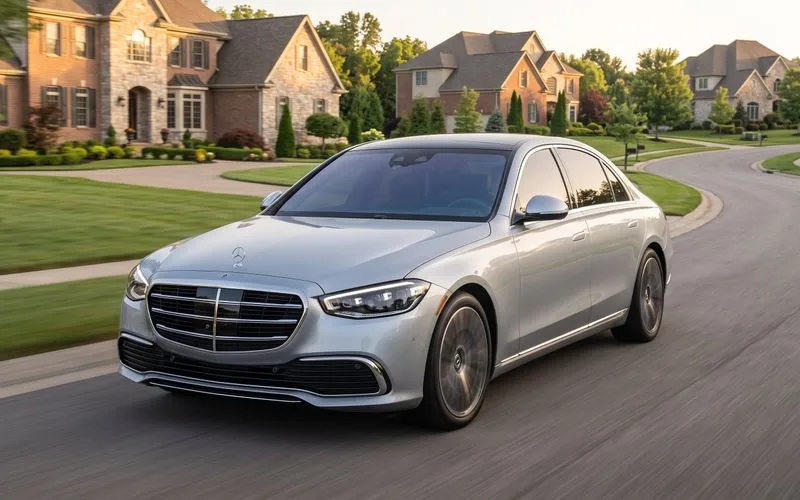 Mercedes-Benz S-ClassFull-Size Luxury SedanBetter at: Ride isolation
The direct rival and the segment benchmark for isolation — quieter and more cosseting, if less agile and no cheaper to own.
Compare 3.19B
3.19B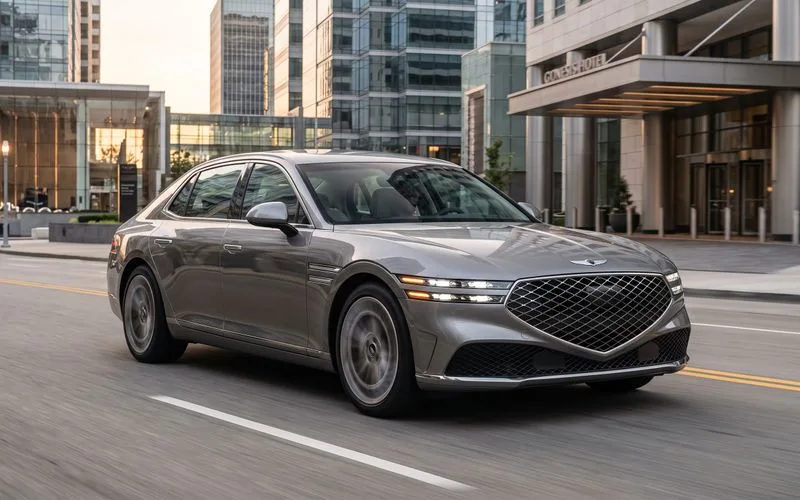 Genesis G90Full-Size Luxury SedanBetter at: Value
Comparable flagship space and equipment for tens of thousands less, with a longer warranty, included maintenance, and stronger resale.
Compare 3.52A-
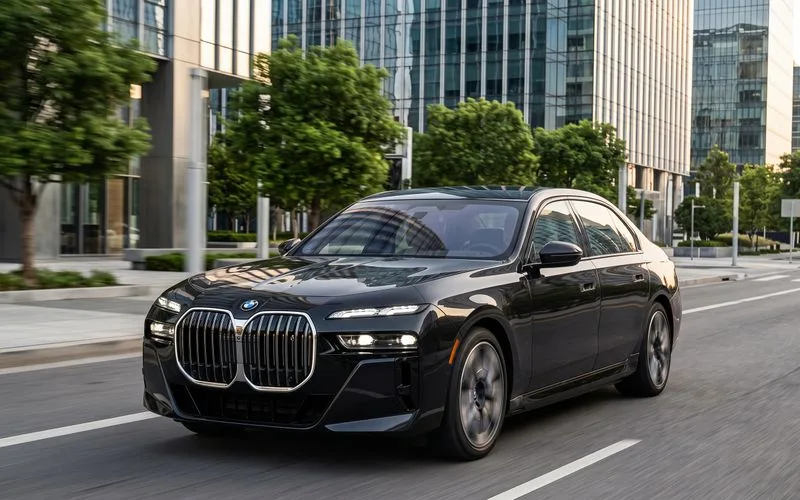 BMW i7Full-Size Luxury SedanBetter at: Running costs
The same cabin and screens with an electric drivetrain, for buyers with home charging who want lower running costs and even less noise.
CompareHow it's evolved
10 scored model years · 2017–2026
Subject scores by year
Hover or tap a score to see what moved it versus the year before. A corner mark flags a big swing.
| Year | Performance | Efficiency | Safety | Space | Cost | Reliability | Tech | Use-case | Driving | Value |
|---|---|---|---|---|---|---|---|---|---|---|
| 2026 | 76 | 32 | 82 | 87 | 10 | 80 | 88 | 62 | 76 | 76 |
| 2025 | 77 | 40 | 77 | 87 | 16 | 69 | 88 | 51 | 72 | 75 |
| 2024 | 78 | 40 | 63 | 87 | 16 | 70 | 88 | 53 | 73 | 72 |
| 2023 | 71 | 43 | 71 | 88 | 16 | 64 | 87 | 47 | 75 | 77 |
| 2022 | 70 | 34 | 70 | 87 | 16 | 71 | 82 | 47 | 73 | 67 |
| 2021 | 70 | 36 | 70 | 87 | 16 | 66 | 79 | 48 | 70 | 68 |
| 2020 | 73 | 28 | 58 | 85 | 16 | 68 | 81 | 46 | 70 | 73 |
| 2019 | 70 | 28 | 54 | 84 | 16 | 70 | 68 | 44 | 69 | 72 |
| 2018 | 70 | 28 | 46 | 84 | 16 | 70 | 68 | 43 | 69 | 72 |
| 2017 | 70 | 24 | 44 | 84 | 16 | 71 | 65 | 43 | 69 | 75 |
Compare two years
Best fit & conditions
Higher scores mean a better fit for that use case. Learn more about use-case fit →
Subject profile
Detailed scoring by subject
1Performance & PowertrainOne of the 7 Series's strongest categories.3.21B+
The volume 740i xDrive runs the B58 3.0L TwinPower turbo inline-six with 48V mild-hybrid assist, rated 375 hp; 2025 is a carry-over year for the G70 so output is unchanged from 2023-24.
B58 peak torque of 383 lb-ft (519 Nm) arrives from roughly 1,850 rpm, which is what makes the 740i feel effortless despite a ~4,900-5,100 lb curb weight.
BMW quotes 4.9 s to 60 mph for the 740i xDrive — AWD traction shaves roughly three tenths off the rear-drive 740i's 5.2 s. Quick for a full-size luxury sedan, though well behind the EV flagships (Model S, Lucid Air) that top this segment.
The B58 inline-six is routinely cited as one of the smoothest production sixes, and the 48V mild-hybrid system masks stop/start restarts and fills low-rpm torque so throttle response is immediate with essentially no turbo lag.
Every 2025 7 Series uses the ZF-sourced 8-speed Steptronic automatic with paddle shifters — the segment benchmark for shift smoothness and gear-selection logic, with no hunting in normal driving and prompt kickdown in Sport.
xDrive all-wheel drive is standard on the 750e xDrive and 760i xDrive and optional on the 740i (rear-drive standard), so AWD is available across the entire range. The rear-biased system is sophisticated for on-road and winter use but, as a luxury sedan, carries no low range, lockers or terrain modes.
Three genuinely distinct powertrains inside the 7 Series nameplate for 2025 — turbo I6 mild hybrid, I6-based plug-in hybrid, and twin-turbo V8 — with a fully electric i7 sold alongside on the same platform. That is broader electrified and non-electrified choice than most full-size luxury rivals offer.
2Efficiency & RangeOne of the 7 Series's weakest categories.0.64F
EPA rates the 2025 740i xDrive — the volume gas configuration — at 27 MPG combined on premium fuel. Respectable for a ~5,000 lb full-size luxury sedan, helped by the 48V mild hybrid and the ZF 8-speed's tall top gears.
EPA city rating for the 740i xDrive. The 48V mild-hybrid system's smooth auto stop/start and coasting function help keep the city figure within one MPG of the rear-drive car despite the added AWD hardware.
EPA highway rating of 31 MPG, identical for the rear-drive and xDrive 740i — the aerodynamic body and long-legged eighth gear matter more than drivetrain losses at a steady cruise.
The G70's 19.5-gallon tank at the EPA's 27 MPG combined gives roughly 526 miles between fills for the 740i xDrive — genuine cross-state touring range and a real advantage over the electric flagships in this segment.
EPA's published annual fuel cost for the 740i xDrive at 15,000 mi/yr is $2,800 — high in absolute terms because every 7 Series burns premium, even though 27 MPG combined is decent for the class.
Premium unleaded (91 AKI) is required, not merely recommended, on every 2025 7 Series including the 740i — a standing cost penalty of roughly 60-80 cents per gallon versus regular, with no E85 or regular-fuel alternative.
3SafetyGrades above the middle of the scale.3.20B+
NHTSA has never published NCAP results for the G70 7 Series; the SafetyRatings API returns zero records for both the 2024 and 2025 model years, as is typical for a sub-10,000-unit-per-year flagship. A 4.5-star estimate is applied consistent with full-size luxury sedan norms.
IIHS has not crash-tested the current-generation (G70) 7 Series at all — there is no ratings page for the nameplate and no small-overlap, moderate-overlap or side results on file, so it is ineligible for any award. No award and no data, but also no known structural concerns: BMW's tested platforms (X3, X5) earned 2025 TSP+ and the G70 shares BMW's current CLAR-derived body engineering.
Standard on the volume 740i/740i xDrive: Frontal Collision Warning with City Collision Mitigation (AEB with pedestrian detection), Active Blind Spot Detection, Lane Departure Warning with lane keeping, Rear Cross-Traffic Alert, Safe Exit, road-sign recognition, automatic high beams and Parking Assistant with rear/top-view cameras. The gap is a real one for a $97,300 flagship: Active Cruise Control with Stop & Go is NOT standard for 2025 — it arrives only with the $1,750 Premium Package or the $2,500 Driving Assistance Professional Package, which is exactly the 'key items optional on lower trims' case in the 50–79 band.
Frontal Collision Warning with City Collision Mitigation is standard and covers pedestrians and cyclists with day and night operation, and reviewers of the G70 describe it as unobtrusive and well-calibrated. There is no IIHS front crash prevention rating for this vehicle, so no Superior/Advanced credit can be claimed and the score stays below the evidence-backed top band.
Active Blind Spot Detection with steering intervention (not alert-only) and Rear Cross-Traffic Alert are standard on every 2025 trim, along with the Safe Exit function that warns before a door is opened into passing traffic or cyclists. Front Cross-Traffic Alert is reserved for the Driving Assistance Professional Package, which is the only meaningful hole.
Lane Departure Warning with Lane Keeping Assistant is standard and reviewers consistently rate BMW's calibration among the smoother luxury implementations, with little ping-ponging. True lane centering — Active Lane Keeping Assistant with side collision avoidance and Steering and Lane Control Assistant — comes bundled with the optional Driving Assistance Professional Package rather than standard, which keeps this out of the top band on the volume car as delivered.
When fitted, Active Cruise Control with Stop & Go is a full-speed-range system with smooth braking and quick resume, integrated with Highway Assistant into one of the better highway packages in the class. It is docked for being an option on a $97,300 car: no 2025 7 Series has adaptive cruise unless the buyer adds the $1,750 Premium Package or the $2,500 Driving Assistance Professional Package.
BMW Highway Assistant is available via the Driving Assistance Professional Package: genuine hands-free lane centering at up to 85 mph on mapped controlled-access highways with a driver-attention camera, plus Active Lane Change confirmed by a glance at the mirror. Top speed beats Super Cruise and BlueCruise, but mapped-road coverage is narrower than GM's and it is a paid option rather than standard, so it lands just below the mature-and-broad top of the band.
Full LED exterior lighting with adaptive function and automatic high beams is standard across the 2025 range, with the split-headlight design and available Swarovski crystal elements on upper configurations; low-beam reach and glare-free high-beam behavior draw no reviewer complaints. IIHS publishes no headlight rating for this vehicle, so the score rests on hardware and review consensus rather than a measured Good.
The G70's high beltline and tall trunklid obstruct over-the-shoulder and rearward vision, and the thick rear pillars typical of the body are not helped by the executive rear-seat packaging. Compensation is strong: rear and top-view cameras plus Parking Assistant are on the car from the base trim, and the Parking Assistant Professional 3D surround view (Premium Package) is one of the sharper camera systems in the segment.
Class-leading rear legroom and wide, tall rear door openings make rear-facing installation genuinely easy, and LATCH lower anchors are fitted to both outboard rear positions with three top-tether points. Points come off for anchors that sit behind covers in the seat bight and require digging, and for the heavily bolstered rear cushions — particularly with the reclining Executive Lounge configuration — which make a comfortable three-across install unrealistic.
4Space & ComfortOne of the 7 Series's strongest categories.3.92A+
The G70 7 Series is a five-seat sedan in every US configuration; the optional Executive Lounge rear package converts the back seat into two individual thrones with a leg rest.
39.8 inches of front headroom is generous for a sedan and holds up even with the Panoramic Sky Lounge LED roof, which became standard across the lineup for 2025.
41.2 inches is only mid-pack by sedan standards — BMW spends the G70's 126.6-inch wheelbase on the rear compartment rather than the driver's footwell, so the front seat is roomy but not exceptional.
38.6 inches near the top of the sedan band despite the fastback-ish roofline, helped by the G70's 60.8-inch overall height — tall for a luxury sedan.
43.3 inches clears the top of the sedan normalization band outright; the G70 is sold only in what was previously the long-wheelbase length, so back-seat space is limousine-grade.
19.1 cubic feet (BMW's 540-litre European figure converts exactly) is one of the largest trunks in the segment and swallows four large cases plus soft bags.
Everyday storage is competent rather than clever: a deep center console with wireless charging tray, wide door bins and a covered rear armrest bin with the Travel & Comfort tablet/hanger system optional — but the rear seatback is fixed (a ski pass-through is an option, not standard), there is no frunk, and the theatrical hardware (Theatre Screen, Interaction Bar, rear-door 5.5-inch touchscreens) is showmanship rather than stowage.
Front seats are broadly adjustable and repeatedly praised for long-haul support, with massaging ($1,000) and ventilation ($500) optional and the rear Executive Lounge package adding a reclining leg-rest throne; the only knock is that Veganza synthetic upholstery — not leather — is the standard material at a six-figure price.
Two-axle self-levelling air suspension with adaptive dampers is standard and the camera-based road-preview system pre-loads the dampers for bumps, so the 740i glides; reviewers still place it a step behind the isolating calm of an S-Class, and Edmunds notes the body tilts back and sways under hard acceleration before it settles.
Acoustic glazing and the near-vibration-free B58 make the 740i one of the quieter combustion cars in the class — owners moving from the previous-generation G12 report a clear step up in isolation, with speed creeping up unnoticed. It falls short of the i7's electric silence.
Four-zone automatic climate control, heated front AND rear seats, a heated steering wheel, ambient lighting and — new for 2025 — the Panoramic Sky Lounge LED roof are all standard on the volume 740i, with ventilation, massage and the rear Executive Lounge package optional and remote pre-conditioning through the My BMW app.
5Cost of OwnershipThe 7 Series's lowest-graded category.0.00F
The entry 740i opens just under $100k with destination, roughly $20k below a Mercedes S 500 but far above the sedan normalization band's $55,000 ceiling — a flagship luxury sedan cannot score on an absolute price scale.
The all-wheel-drive 740i xDrive is the volume gas configuration in the US and carries a $3,000 premium over the rear-drive car; the marquee options (Executive Lounge, Theatre Screen, Bowers & Wilkins, Driving Assistance Professional) are packaged extras that push most delivered cars well past $110k.
KBB's 5-Year Cost to Own model puts scheduled maintenance at $4,632 and repairs at $2,422 for the 2025 7 Series — high-ish for a sedan in absolute terms but blunted early on by BMW's 3-year/36,000-mile Ultimate Care, with the bill arriving after the 4-year warranty lapses.
Depreciation is the 7 Series' defining ownership cost — KBB projects $67,235 lost over five years, and iSeeCars measures 61.8% depreciation against a 54.9% luxury-large-car average, so the car falls below even the sedan band's 35% floor.
BMW's 4-year/50,000-mile new-vehicle limited warranty is a year longer than the 3/36 mainstream standard and matches Mercedes-Benz and Audi in the luxury segment, though the 50,000-mile cap is the binding limit for high-mileage owners.
BMW folds powertrain coverage into the bumper-to-bumper term rather than extending it, so the B58 inline-six is covered only to 4 years/50,000 miles — well short of the 5–10 year band and a real exposure on a car with 7 Series repair costs.
BMW Ultimate Care covers all factory-scheduled maintenance for 3 years/36,000 miles — genuinely multi-year included service — alongside 4 years of unlimited-mileage 24/7 roadside assistance and BMW Teleservice, with connected services and Remote Software Upgrades bundled in. It sits above Mercedes (no complimentary maintenance) and Lexus (1 yr/10,000 mi), but short of Genesis-style service valet, and Ultimate Care+ extensions are a paid add-on.
$101,475 volume-trim price minus its estimated resale value after 5 years (31.7% retained, or about $32,168) leaves about $69,307 in depreciation. Add the projected $7,054 in 5-year maintenance and repairs, and owning this vehicle for 5 years costs about $76,361 in total.
6Reliability & QualityMid-pack among this car's ten categories.2.66C+
The two major predictors disagree: J.D. Power gives the 2025 7 Series an 86/100 Quality & Reliability score ("Great" band), while Consumer Reports publishes no predicted-reliability rating for the 2025 car at all because the G70 generation has too little owner data since its 2023 redesign — CR explicitly flags extensive redesigns as elevated risk. Mixed signals with no long-run data on this generation puts it in the middle of the 50-79 band rather than the top tier.
BMW sits just inside the top 10 for three-year dependability (9th, 189 PP100 vs a 202 industry average in the 2025 J.D. Power VDS) and is Consumer Reports' highest-ranked luxury brand and 5th for reliability overall, but it is still below average on initial quality (196 PP100 vs 192). Consistently strong-for-a-German-luxury-brand, not consistently top-5 across studies.
The 2025 740i carries three NHTSA recalls, and all three are the same safety-critical defect: the integrated brake system's servomotor welds can fail, costing power brake assist, rear braking, ABS and DSC — recalled in 24V104, again in 24V697, and again in 26V422, each time with a full IB-system replacement as the remedy. A separate campaign covering 2023-2025 7 Series adds an A/C wiring-harness short-circuit fire risk (~15,154 vehicles). Repeated recalls of a braking system plus a fire-risk campaign is the 0-49 band by the item's own definition; the score sits at the top of that band because owner complaint volume is genuinely low (zero NHTSA complaints logged against the 2025 740i, 29 across the whole 2023-2025 generation) and the G70 TSB list is otherwise routine (infotainment flicker, CarPlay dropouts, front-axle noise, auto start/stop).
The volume 740i pairs the 3.0-liter B58 turbocharged inline-six (375 hp) with a 48-volt mild-hybrid starter-generator and the ZF 8-speed automatic — a decade-old, closed-deck engine family widely regarded as one of the most durable modern turbocharged sixes, shared with the Toyota GR Supra, and a transmission with an enormous high-mileage record. Known B58 weak points (pressure-control-valve failure, coolant loss) are real but minor against the N54/N63 history it replaced, and the 48V system is the newest and least-proven element here.
As BMW's flagship the G70 cabin is a benchmark for the segment: Merino leather, open-pore wood, cashmere-blend and crystal-effect trim, polished metal switchgear, the Interaction Bar, four-zone climate and a standard Panoramic Sky Lounge LED roof for 2025. Reviewers' only material reservation is that the breadth of trim and color combinations can be configured into a garish result — a specification risk, not a quality deficit.
Structural assembly quality is not in question — reviewers report a rigid, tightly screwed-together body with no notable panel-gap or rattle criticism — but BMW's below-average 2025 initial-quality result and the G70's recurring software-side complaints (iDrive 8.5 flicker and lag, reverse-camera display faults, CarPlay dropouts) are exactly what modern initial-quality surveys count as defects. Solid with scattered complaints.
Roughly 348 BMW centers cover the US, and BMW ranks third among premium brands for service satisfaction in J.D. Power's 2025 CSI study at 887, behind only Porsche and Lexus. Every 7 Series also arrives with 4-year/50,000-mile bumper-to-bumper coverage, 3-year/36,000-mile Ultimate Care scheduled maintenance and 4 years of unlimited-mileage roadside assistance. Dense nationwide coverage with a strong — if not class-leading — service reputation.
Parts are available but expensive and heavily dealer-channeled, and the 7 Series sits at the costly end of an already costly brand: BMW averages about $968/year in repair costs against a $652 industry norm and visits a shop roughly twice as often, with 7 Series-family figures running above $1,000/year. The flagship's specific hardware — the integrated brake module, two-axle air suspension, rear-axle steering, the 48V system and the Curved Display — is dealer-only with essentially no independent aftermarket, so out-of-warranty work is the real exposure.
7Technology & InfotainmentThe 7 Series's best-graded category.4.00A+
The 14.9-inch curved touchscreen is standard across the 2025 range, near the top of the sedan band; the optional $4,800 31.3-inch 8K Theatre Screen that drops from the headliner is separate rear-seat hardware, not the center display.
2025 cars run iDrive 8.5, whose QuickSelect home screen removed a layer of menu digging, and the system is fast with crisp graphics; BMW also kept the physical iDrive rotary controller, which most rivals have dropped. Points come off for climate functions living on the screen and for the sheer feature depth taking time to learn.
Wireless Apple CarPlay and wireless Android Auto are standard on every 2025 7 Series trim, with no wired requirement and no subscription attached.
BMW Intelligent Personal Assistant handles natural-language commands for climate, navigation and vehicle settings, and BMW Maps is a cloud-connected system with augmented-reality video guidance and live traffic — genuinely good enough that owners need not default to phone projection.
A Harman Kardon surround system is the standard fitment on the 7 Series and the optional Bowers & Wilkins Diamond Surround with Dolby Atmos — 4D bass exciters in the front seats and speakers in the rear doors — is among the best factory audio systems sold in any car.
A 12.3-inch fully digital cluster is standard on every trim as the left half of the single curved glass panel, sharp and mode-dependent; the layout is somewhat fixed compared with rivals that let the driver rebuild the display, and BMW's gauge graphics remain a matter of taste.
BMW Remote Software Upgrade delivers whole-vehicle over-the-air updates — not maps alone — and the G70 has received functional additions this way, including the Highway Assistant hands-free rollout in March 2024. It is not on Tesla's release cadence, but it is genuine vehicle-wide OTA.
The My BMW app covers remote lock/unlock, climate pre-conditioning, vehicle finder, remote 3D view of the surroundings and remote parking, and BMW Digital Key Plus turns an iPhone, Apple Watch or compatible Samsung phone into a hands-in-pocket UWB key with sharing. Core functions are included for the first years rather than paywalled from day one.
USB-C outlets are provided front and rear along with standard wireless phone charging and a 12V socket, and rear passengers get their own 5.5-inch door touchscreens with the optional Travel & Comfort tablet mounts — but there is no household AC outlet, which some rivals now include.
Comfort Access proximity entry and push-button start are standard, Digital Key Plus adds UWB phone-as-key with sharing, and the 7 Series offers something no rival does — Automatic Doors, which open and close all four doors from the key, the touchpoint on the pillar, the screen or the app.
Parking Assistant with Reversing Assistant (retraces the last 50 m of steering) and front/rear sensors are standard, and the Parking Assistance Package adds Surround View with 3D imagery, Drive Recorder and Parking Assistant Professional with Maneuver Assist and remote-controlled parking from the phone — a real help given the car's 212-inch length. The best of it is optional, which costs a few points.
A large full-color head-up display is standard equipment on the volume 740i — not a top-trim upsell — and projects speed, navigation, ADAS status and speed-limit data into the driver's sightline.
8Use-Case FitOne of the 7 Series's weakest categories.1.42D
43.3 inches of rear legroom and wide, near-square rear door openings make even rear-facing seats easy to fit, and LATCH lower anchors are fitted to both outboard positions — but the rear bench is fixed (no fold-down for long items), the trunk is a sedan trunk with a lift-over lip for strollers, and a $100k interior full of screens and Alcantara is not where most parents want juice boxes.
The standard ADAS content is strong — AEB with pedestrian detection, blind-spot detection with steering intervention, rear cross-traffic alert, lane keeping, Safe Exit — but neither NHTSA nor IIHS has ever tested the G70, so the crash credentials families normally check simply do not exist, and there is no such thing as an affordable trim here.
For four people this is close to the best-case sedan: four-zone climate and heated rear seats standard, limousine rear legroom, a 19.1 cu ft trunk that still holds the luggage with everyone aboard, and the optional 31.3-inch 8K Theatre Screen with Amazon Fire TV as rear entertainment. Only the five-seat limit and fixed rear bench hold it back from a haul-everything score.
In traffic the 740i is close to effortless — mild-hybrid stop/start you cannot feel, an imperceptible ZF eight-speed, standard air suspension and a quiet cabin — and Highway Assistant makes the commute genuinely hands-free where it is mapped. The car's bulk and the reliance on screen menus for climate keep it from a top score.
27 MPG combined is respectable for a 5,000-pound flagship but it is burned as required premium, and the EPA puts annual fuel at $2,800 — before luxury-sedan tires, brakes and $4,600 of scheduled maintenance. Commuting in this car is expensive no matter how efficiently it does it.
212.2 inches long and 76.8 inches wide with roughly a 40-foot turning circle, this car eats a whole city parking bay and then some. The camera and parking toolkit is excellent — Reversing Assistant standard, Surround View plus remote-controlled parking optional — but assistance mitigates the footprint rather than shrinking it, and rear-wheel steering is an option, not standard.
BMW publishes no US towing rating for the 7 Series and does not offer a factory hitch here; work capacity amounts to a 19.1 cu ft trunk behind a fixed rear seatback. The powertrain has torque to spare, but there is nothing to attach it to.
The B58 six and ZF eight-speed are proven, durable hardware, but everything around them is the opposite of work-tough: standard air suspension with adaptive dampers and road preview, Veganza and Merino surfaces, 20-inch wheels and low-profile tires, and no washable or fleet-spec interior option.
No onboard AC power, no tie-down system beyond trunk hooks, no roof rails or rack provision, no hitch, and no upfitter ecosystem — the 7 Series has essentially no jobsite provisions by design.
This is what the car is for: roughly 526 miles between fills, air-sprung ride, a cabin owners describe as much quieter than the previous generation, massaging seats, and hands-free Highway Assistant to take the strain off mapped interstate miles. Only the S-Class's last increment of isolation is missing.
xDrive all-wheel drive and the air suspension's small ride-height raise make a snowy or gravel road a non-event, but this is a low sedan on wide low-profile tires with no roof rails, no hitch for bike or ski racks, no skid protection and no terrain modes. Fine on the road to the trailhead; not past it.
The 19.1 cu ft trunk is generous in absolute terms and handles a family's suitcases, but it is a fixed-shape sedan trunk: the rear seatback does not fold as standard (a ski pass-through is optional), there is no roof rail or hitch to hang anything on, and bulky items simply do not go in.
9Driving ExperienceGrades above the middle of the scale.2.91B-
Remarkably composed for a 4,900–5,000 lb car — active anti-roll bars, adaptive dampers and optional rear-wheel steering keep it flat and let it change direction like something a size smaller — but Edmunds flags a pitch-and-sway motion under hard acceleration, and the G70's mass and length are never entirely hidden.
Accurate and consistently weighted, never darty or sloppy, but numb — the electric rack filters out the road surface, which is arguably right for the mission and still costs it against the segment's best.
Large brakes with a firm, progressive pedal that reviewers call powerful and a contributor to how sporting the car feels; the 48V system's coasting/regen blending is smooth and there is no reported fade in normal use, though hauling this mass repeatedly is a lot to ask of any road-car brake.
The B58 inline-six with 48V mild-hybrid assist and the ZF eight-speed is one of the best-calibrated combustion drivetrains on sale: torque from 1,850 rpm, no perceptible lag, restarts you cannot feel, and shifts that pass unnoticed.
Inherently balanced and heavily isolated, the six is near-silent cruising and turns pleasant rather than coarse when extended; owners moving from the previous generation describe the car as noticeably quieter overall.
A 126.6-inch wheelbase leaves the G70 with roughly a 40-foot turning circle even with rear-axle steering — the worst figure in the sedan band and a real constraint in parking structures and U-turns.
Huge seat and wheel adjustment range, a commanding but proper sedan seating position, and BMW's retained iDrive rotary controller all help; against that, the high beltline and thick rear pillars hurt over-the-shoulder vision and climate functions now live in the touchscreen and the touch-capacitive Interaction Bar rather than under fingertips.
There is genuine character here — a charismatic inline-six, 4.9 seconds to 60 in the xDrive, and enough rear-drive attitude that reviewers will provoke it — but the G70 is tuned as a serene chauffeur car first, and its size, weight and numb steering mean few owners will take the long way home for the driving alone.
10Value & Market PositionGrades above the middle of the scale.3.11B
The 740i arrives well-stocked — 14.9-inch curved display with OS 8.5, BMW Interaction Bar, four-zone climate, heated front seats, air suspension, and a full standard driver-assist set (blind-spot monitoring, lane keeping, rear cross-traffic, rear and top-view cameras) — and for 2025 the Panoramic Sky Lounge LED roof became standard on the 740i. But the features that define the car in showrooms (Executive Lounge rear seating, the 31-inch Theatre Screen, Bowers & Wilkins Diamond audio, massage seats, Driving Assistance Professional/Highway Assistant) are all packaged options that add five figures.
At $98,475 the 740i undercuts a comparably positioned Mercedes S 500 by roughly $20,000 while delivering a 375-hp mild-hybrid inline-six, air suspension, rear-axle steering availability and the segment's most ambitious cabin tech — strong content-for-price by flagship standards. What pulls it back to merely fair is the after-purchase math: the steepest depreciation in the luxury-large class means the dollars-per-year of ownership are worse than the sticker comparison suggests.
Uniquely broad for a flagship: within one body shell a buyer can pick a mild-hybrid inline-six (740i, RWD or xDrive), a plug-in hybrid (750e xDrive), a twin-turbo V8 (760i xDrive), or three battery-electric i7 variants, spanning roughly $98k to well past $170k — plus M Sport packages and BMW Individual bespoke options. The one gap is body configuration: the US gets a single long-wheelbase sedan, with no short-wheelbase or extended limousine option.
The G70 roughly doubled its predecessor's US volume and has held it — 5,974 units in 2022 (final G12 year) against 10,810 in 2023, 10,715 in 2024 and 11,303 in 2025 — which makes it a strong performer in a segment most rivals are abandoning (Audi killing the A8, Lexus ending the LS, Volvo withdrawing its sedans). Growth in a shrinking niche is real market acceptance, but absolute volume stays tiny: BMW sells roughly twice as many X7s.
BMW is a genuinely aspirational badge and one of the two highest-volume US luxury brands, and the 7 Series has decades of flagship equity behind it. It falls short of a top score on two counts: the S-Class still owns the status-symbol position in this segment, and the G70's split-headlight face and outsized kidney grille remain openly polarizing among reviewers and buyers.
As a low-volume flagship the 7 Series is consistently supported rather than sold at sticker: BMW Financial Services runs subvented 39-month lease programs across the whole range, layers up to $3,000 in loyalty credit for returning customers, and adds college-grad incentives — with aging model-year inventory typically negotiable on top. Good buyer benefit without desperation pricing.
2025 is the third model year of the G70 generation launched for 2023, so the platform, the OS 8.5 electronics and the 48V mild-hybrid B58 are all current rather than dated, and the year brought a small equipment bump (standard Panoramic Sky Lounge roof, expanded Highway Assistant). It sits mid-cycle rather than brand-new, with an LCI facelift due before the end of the decade — modest redesign risk for a 2025 buyer.
Reviewer consensus is strongly favorable — US News scores the 2025 7-Series 9.4/10, praising dramatic styling, genuine luxury, passenger space, tech depth and a chassis that disguises its mass via air suspension, active dampers and rear-wheel steering. The nameplate has collected class silverware (Auto Express Luxury Car of the Year 2024 for the 7 Series, with the i7 taking Auto Express Luxury Car 2023, a What Car? Technology Award and Top Gear's Best Luxury EV). It stops short of a comparison-test sweep: the S-Class is still judged more isolated over broken pavement, and the interface complexity and absence of physical controls draw persistent criticism.