
The verdict
A strong full-size luxury sedan, strong on technology and held back by ownership.
The 2024 BMW 7 Series is a rolling technology showcase with a back seat that rivals need an L-badge to match — 43.3 inches of rear legroom, a standard 14.9-inch curved display, standard air suspension, and an 18-speaker Bowers & Wilkins system on a car that starts at $97,395. Its inline-six is one of the smoothest engines on sale and the cabin is a class benchmark for materials. What it asks in return is money: KBB projects $61,530 of depreciation in five years, the EPA figures $2,800 a year in premium fuel, and neither NHTSA nor IIHS has ever crash-tested this generation. Buy it new for the experience, or wait three years and let someone else pay for the badge.
Jump to scoresStrengths
- A back seat that shames most limousines
- Technology that is standard, not paywalled
- The inline-six is the quiet star of the lineup
What holds it back
- Depreciation is the real sticker price
- No independent crash test data exists
- Fuel and running costs bite
Top alternatives
Cars shoppers cross-shop with the BMW 7 Series 3.50A-
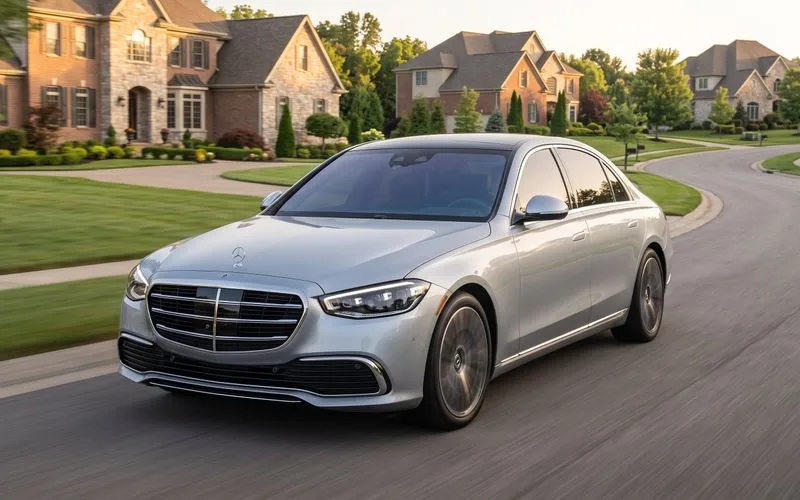 Mercedes-Benz S-ClassFull-Size Luxury SedanBetter at: Ride isolation
The direct rival and the segment benchmark for isolation — quieter and more cosseting, if less agile and no cheaper to own.
Compare 3.19B
3.19B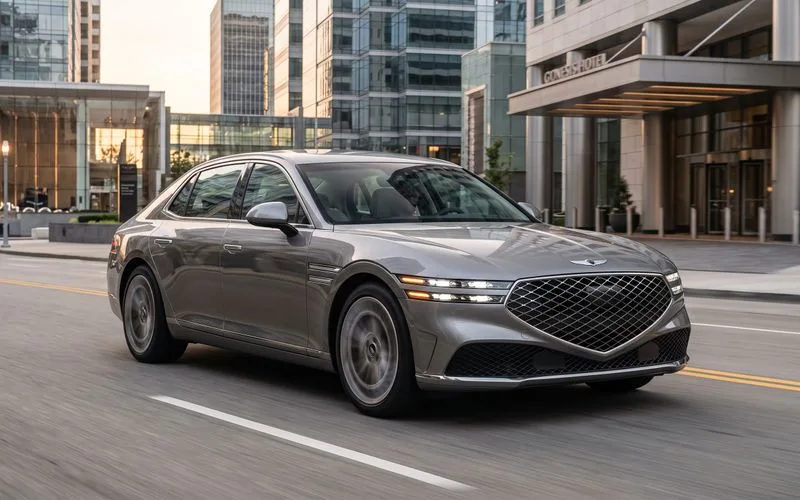 Genesis G90Full-Size Luxury SedanBetter at: Value
Comparable flagship space and equipment for tens of thousands less, with a longer warranty, included maintenance, and stronger resale.
Compare 3.52A-
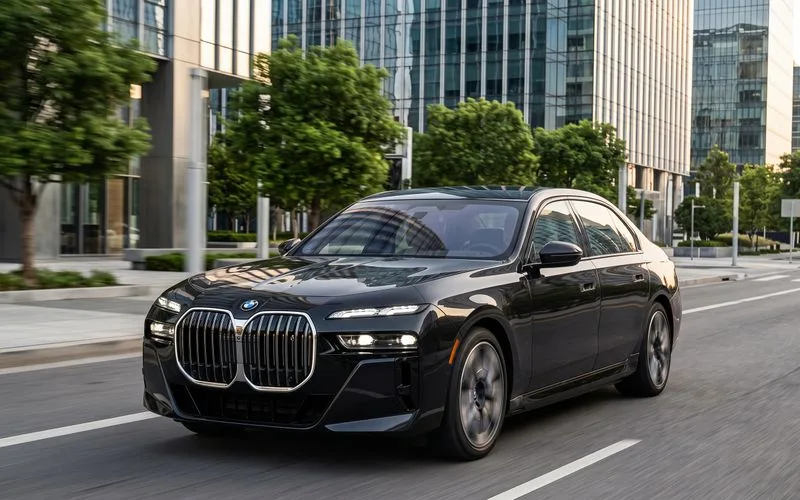 BMW i7Full-Size Luxury SedanBetter at: Running costs
The same cabin and screens with an electric drivetrain, for buyers with home charging who want lower running costs and even less noise.
CompareHow it's evolved
10 scored model years · 2017–2026
Subject scores by year
Hover or tap a score to see what moved it versus the year before. A corner mark flags a big swing.
| Year | Performance | Efficiency | Safety | Space | Cost | Reliability | Tech | Use-case | Driving | Value |
|---|---|---|---|---|---|---|---|---|---|---|
| 2026 | 76 | 32 | 82 | 87 | 10 | 80 | 88 | 62 | 76 | 76 |
| 2025 | 77 | 40 | 77 | 87 | 16 | 69 | 88 | 51 | 72 | 75 |
| 2024 | 78 | 40 | 63 | 87 | 16 | 70 | 88 | 53 | 73 | 72 |
| 2023 | 71 | 43 | 71 | 88 | 16 | 64 | 87 | 47 | 75 | 77 |
| 2022 | 70 | 34 | 70 | 87 | 16 | 71 | 82 | 47 | 73 | 67 |
| 2021 | 70 | 36 | 70 | 87 | 16 | 66 | 79 | 48 | 70 | 68 |
| 2020 | 73 | 28 | 58 | 85 | 16 | 68 | 81 | 46 | 70 | 73 |
| 2019 | 70 | 28 | 54 | 84 | 16 | 70 | 68 | 44 | 69 | 72 |
| 2018 | 70 | 28 | 46 | 84 | 16 | 70 | 68 | 43 | 69 | 72 |
| 2017 | 70 | 24 | 44 | 84 | 16 | 71 | 65 | 43 | 69 | 75 |
Compare two years
Best fit & conditions
Higher scores mean a better fit for that use case. Learn more about use-case fit →
Subject profile
Detailed scoring by subject
1Performance & PowertrainOne of the 7 Series's strongest categories.3.29B+
The volume gas trim for 2024 is the 740i xDrive, carrying the B58TU2 3.0-liter TwinPower Turbo inline-six with a 48-volt mild-hybrid starter-generator, unchanged from the G70's 2023 launch.
BMW rates the 740i's B58TU2 at 383 lb-ft peak, with the 48-volt starter-generator adding a momentary overboost to roughly 398 lb-ft — the higher figure is the transient, so the sustained peak is the value used.
BMW's own figure for the all-wheel-drive 740i xDrive is 4.9 seconds; the rear-drive 740i gives up three tenths off the line despite identical output.
The B58 inline-six is one of the smoothest six-cylinders sold, and the 48-volt system fills in low-rpm response so effectively that reviewers describe the 740i as feeling near-V8 in delivery with no perceptible turbo lag or restart shudder.
The ZF-sourced 8-speed Sport Automatic in the G70 is the segment benchmark — imperceptible part-throttle upshifts, prompt kickdown, and no hunting — and in the 7 Series it is calibrated for smoothness over aggression, which suits the car.
xDrive all-wheel drive is optional on the 740i and standard on every other 2024 7 Series (750e xDrive, 760i xDrive), so it is effectively fleet-wide, but it is a road-biased rear-drive-default system with no low range or terrain modes.
For 2024 the 7 Series line covers a turbo inline-six, a twin-turbo V8, a 483-hp plug-in hybrid and — as the i7 badge on the same G70 platform — three fully electric variants, which is about as wide a spread as any sedan on sale.
2Efficiency & RangeOne of the 7 Series's weakest categories.0.62F
EPA combined rating for the volume gas trim, the 740i xDrive with the 3.0L turbo I6 and 48-volt mild hybrid; the mild-hybrid system helps but this is still a 5,000-lb full-size luxury sedan.
EPA city rating for the 740i xDrive; the 48-volt starter-generator supports stop-start and light coasting but there is no meaningful electric-only city operation.
EPA highway rating; the tall gearing of the 8-speed automatic and slippery bodywork give the 7 Series a respectable cruising figure for its mass, though it trails smaller sedans by a wide margin.
EPA does not publish a range figure for gasoline vehicles, so this is the published 19.5-gallon tank capacity multiplied by the EPA combined rating — a large tank paired with a decent combined figure gives the 740i genuinely long legs between fills.
EPA's annual fuel cost estimate at standard assumptions; the premium-fuel requirement is what pushes the figure toward the high end of the sedan band despite a mid-20s combined MPG.
The B58 requires premium unleaded — not merely recommended — and the 19.5-gallon tank means a fill is expensive even though it buys a long range; there is no regular-fuel or flex option anywhere in the gas lineup.
3SafetyMid-pack among this car's ten categories.2.24C
NHTSA carries the 2024 7 Series Sedan in both drivetrain configurations but has never crash-tested either: every frontal, side, pole and rollover sub-rating returns "Not Rated". Per this framework's convention, 0 is the sentinel for a vehicle NHTSA never rated — it is the absence of a result, not a zero-star crash outcome. Six-figure German flagships routinely go untested, exactly as the Audi A8 and Mercedes S-Class do.
IIHS has published no crashworthiness result of any kind for the G70 7 Series — no small overlap, moderate overlap, updated side, roof strength or head restraint rating exists, and the car appears on no Top Safety Pick list in any year of the generation. There are no adverse findings either, so this is unverified rather than weak, but a buyer of a $96,400 flagship gets zero independent crash data while BMW's own 5 Series and X3 from the same model year carry TSP and TSP+ awards.
The standard Active Driving Assistant on every 2024 7 Series configuration is unusually broad for a base suite: AEB with forward collision warning and pedestrian/cyclist detection, active blind-spot detection, rear AND front cross-traffic warning, lane departure warning, evasion assistant, speed limit info, Safe Exit warning, parking sensors and adaptive LED headlights with auto high beam. The gap is adaptive cruise control, which is not standard at any price on the 740i — it arrives only with the $1,750 Premium Package or the Driving Assistance Professional Package, and true lane keeping/centering comes only with the latter. Standard BSM and dual cross-traffic coverage put this well above the A8's paywalled suite, but a flagship where ACC and lane centering are both extra-cost cannot reach the top band.
BMW's radar-and-camera AEB with city collision mitigation and pedestrian/cyclist detection is standard, and the same generation of the system earned strong IIHS front crash prevention results on the BMW models that were tested — the 2024 5 Series earned Top Safety Pick, which requires acceptable-or-better pedestrian front crash prevention. But IIHS has never run front crash prevention on the 7 Series itself, so neither the vehicle-to-vehicle nor the day/night pedestrian evaluation exists for this car. Scored as capable-but-unverified hardware rather than a documented Superior result.
This is the strongest part of the standard suite. Active Blind Spot Detection is standard on every configuration and is genuinely active — steering-wheel vibration plus corrective steering input, not a mirror LED alone — and it is backed by standard rear cross-traffic alert, front cross-traffic alert, and a Safe Exit function that uses the ultrasonic sensors to warn of an approaching cyclist before a door opens. Nothing here sits behind a package. Held just under the top band only because the surround-view camera that would round out the coverage is a $1,750 Premium Package item.
Lane departure warning is standard, but Active Lane Keeping Assistant with side collision avoidance and true lane centering arrive only inside the Driving Assistance Professional Package. When fitted, BMW's centering is among the best in the class — an instrumented road test reported it tracking dead-center for many miles without ping-ponging. The capability is top-band; the fact that a base 740i has warnings only is what holds the score down.
Adaptive cruise with Stop & Go is a refined full-speed-range system here, integrated with Highway Assistant, automatic lane change, emergency stop assist and route-based speed adaptation, and reviewers who tested the fully-equipped car found no rough edges. The 7 Series was BMW's US launch vehicle for this generation of the system. It is docked from the top band purely because no version of adaptive cruise is standard: the buyer must add the $1,750 Premium Package for basic ACC or the Driving Assistance Professional Package for the stop-and-go and highway-assist version.
BMW Highway Assistant offers true hands-off driving on divided, controlled-access highways with an infrared camera monitoring driver attention, plus Active Lane Change that the 2024 update lets the driver confirm by glancing at the corresponding mirror. It is a mature, well-reviewed system and the 7 Series is one of the models that carries it. It stops short of the top of the band on road coverage: BMW's mapped network in 2024 was narrower than GM Super Cruise's, and the feature is a $2,000–2,500 option rather than standard equipment.
Adaptive LED headlights with cornering light and automatic high-beam assist are standard on every trim, which is the structural requirement for a high score — there is no trim on which a buyer gets a worse beam. BMW's optional Crystal Headlights with Iconic Glow are a styling upgrade, not a brighter beam. The ceiling here is verification rather than hardware: IIHS has published no headlight rating for the 7 Series in any year of this generation, so "Good across the range" is inferred from BMW's results on tested models rather than measured on this one.
Large side glass gives good sightlines in most directions, but the rear window is short for the body and this is a 212-inch car with a high beltline, so the rear three-quarter view is average at best. The standard compensation is a backup camera, front and rear parking sensors and a head-up display; the surround-view 3D camera that would actually solve placing this car is a Premium Package extra. The optional 31-inch rear theater screen blocks the rear view outright when it is lowered.
Two complete LATCH sets at the rear outboard positions plus a top tether for the center seat is the full expected provision, and the practical side is unusually good: 44.4 inches of rear legroom and very wide rear door openings — power-operated as standard on this generation — make loading a seat far easier than in most sedans. Working against it are a high sill and deeply padded seat backs that bury the lower anchors, and a center position compromised by the console and hump, so genuine 3-across is a stretch on a car this wide.
4Space & ComfortOne of the 7 Series's strongest categories.3.96A+
The 2024 US 7 Series is a five-seat sedan in every configuration — BMW does not sell the four-seat Executive Lounge rear-bucket layout in the US market on the 740i.
Near the top of the sedan band despite the panoramic moonroof being standard equipment — the G70's tall greenhouse and upright seating position preserve head clearance. BMW's own European-convention figure for the same shell runs higher (41.6 in), so the US-published measurement is used here.
The one genuinely unremarkable interior dimension: 41.2 inches is mid-pack by sedan norms, because the G70's 126.6-inch wheelbase funnels its length advantage into the second row rather than the front footwell. Tall drivers are still well served by the standard 18-way power seats.
Near the top of the sedan band — the G70's squared-off roofline and high rear seat H-point give genuine limousine headroom, and the standard panoramic roof does not eat into it the way a sunroof does in a lower-roofed rival.
At the top of the sedan band and the single defining number of this car — the US-market G70 is sold only in what other markets call the long wheelbase, so the standard 7 Series has back-seat space that rivals need an L-badge to match.
Near the top of the sedan band and the largest trunk in the 7 Series family — the gas car gives up nothing to a battery pack, and a standard power trunk lid plus a folding rear seat back make the space usable.
The weakest part of an otherwise exceptional interior. The Interaction Bar's touch-opening glovebox and the wireless charging tray are neat, but reviewers who lived with the car found the glovebox, center console and door bins all small for a 212-inch flagship — the storage is ordinary compact-sedan volume behind a spectacular dashboard.
Standard 18-way power front seats with heating, and heated rear seats standard as well — a level of baseline adjustment few rivals match without options. Massaging and ventilated front seats arrive with the $4,600 Executive Package, and the $3,000 Luxury Rear Seating Package adds power, ventilated and massaging rear seats. Held out of the very top band only because the best rear-seat comfort is a five-figure option stack.
Adaptive, self-levelling air suspension with adaptive dampers is standard on every 2024 7 Series — not an option as on some rivals — and reviewers describe the ride as glassy and composed even over worn pavement. It stops just short of the S-Class benchmark on the standard 20-inch wheels, where sharp expansion joints still register.
Acoustic glazing, extensive sound deadening and the inherently smooth B58 inline-six make this one of the quietest cabins on sale; road testers report little wind or road noise at highway speed. A notch below the electric i7 built on the same shell, which has no engine to isolate in the first place.
Quad-zone automatic climate control, heated front AND rear seats, a heated M Sport steering wheel, power rear sunshades and remote pre-conditioning through the My BMW app are all standard on the base 740i — the comfort content a rival reserves for its options sheet is included here, with ventilation, massage and heated armrests as the paid upgrades.
5Cost of OwnershipThe 7 Series's lowest-graded category.0.00F
The entry gas trim of the 2024 G70 7 Series is the rear-drive 740i at $96,400 before BMW's $995 destination charge, putting it far above the sedan normalization band's $55,000 ceiling.
The all-wheel-drive 740i xDrive is the volume gas configuration in the US market at $99,400 + $995 destination, and typical dealer stock carries a few thousand dollars of packaged content on top.
KBB's 5-Year Cost to Own breakdown for the 2024 7 Series projects $3,932 of maintenance and $2,659 of repairs; the first three years of scheduled service are covered by BMW Ultimate Care, so most of that lands in years four and five.
KBB projects $61,530 of depreciation against a $35,865 five-year residual — steep even by flagship-luxury standards, which is the segment's defining ownership penalty and the reason a used 7 Series is a bargain and a new one is not.
BMW's New Vehicle Limited Warranty runs 4 years or 50,000 miles, whichever comes first — a year longer than the mainstream 3/36 standard and matched to its German luxury rivals.
Unusually among automakers, BMW does not extend powertrain coverage past the basic term — engine, transmission and drive axle expire at the same 4 years/50,000 miles, well short of the 5–10 year band the framework grades against.
BMW Ultimate Care covers all scheduled maintenance for 3 years/36,000 miles and is transferable on MY2022-and-newer cars, layered over 4 years of unlimited-mileage roadside assistance and the 7 Series' connected-services, Digital Key and remote-software-upgrade entitlements — multi-year included maintenance plus genuinely meaningful perks, at a time when Mercedes-Benz no longer includes scheduled service on the S-Class.
$104,000 volume-trim price minus its estimated resale value after 5 years (36.8% retained, or about $38,272) leaves about $65,728 in depreciation. Add the projected $6,591 in 5-year maintenance and repairs, and owning this vehicle for 5 years costs about $72,319 in total.
6Reliability & QualityGrades above the middle of the scale.2.77B-
J.D. Power rates the 2024 7 Series 80/100 for Quality & Reliability ('Great'), and the brand behind it now tests at the industry average rather than below it. Against that, 2024 is only the second year of the G70 generation and the car's weak points are electronic rather than mechanical — iDrive 8.5 bugs (freezes, black screens, CarPlay dropouts), Theatre Screen/Interaction Bar complaints, and a brake-control-module defect that NHTSA has now seen recalled four separate times. Average-to-slightly-above for a full-size luxury sedan, not top-tier.
BMW's dependability standing has improved markedly and is now the best of the German luxury makes. The 2024 J.D. Power VDS put BMW 9th of all brands and 3rd among premium marques at 190 PP100 — exactly the industry average — and Consumer Reports placed BMW inside its reliability top five while naming it the #1 overall brand for a second straight year. Still short of the Lexus/Toyota tier, which is what keeps this out of the 80+ band.
The 2024 740i carries five NHTSA campaigns, and the pattern is the problem rather than the count: four of the five (24V104, 24V697, 24V739 and again 26V422 in July 2026) all address the same integrated brake system defect that can cost power brake assist and disable ABS and DSC — a safety-critical fault BMW has had to re-recall three times after the initial remedy. The fifth (23V700) covers a steering-wheel ground connection that leaves hands-on detection inoperative, disabling the emergency stopping assistant. Nothing powertrain-related or fire-related, but repeated campaigns on braking and driver-monitoring systems land this in the rubric's bottom band.
The volume gas 740i runs the B58TU2 3.0L turbocharged inline-six (375 hp) with a 48V mild-hybrid starter-generator, driving a ZF 8HP eight-speed automatic. The B58 is the strongest-reputation modern BMW engine — closed-deck block, no systemic failure trend, routinely reported past 200,000 miles — and the ZF 8HP is the segment's durability benchmark. The 48V system and its belt-driven generator are the newest and least proven element, which is what holds this below the 90s.
The G70 cabin is a class benchmark: Merino leather with an available cashmere/wool-blend upholstery, open-pore wood and stainless trim, and CraftedClarity crystal applications on the shifter, iDrive controller and Interaction Bar. Reviewers consistently rank its materials at or near the top of the full-size luxury field alongside the S-Class, with the crystal switchgear and the Interaction Bar reading as genuinely novel rather than decorative.
Dingolfing assembly is consistently tight — reviewers describe fit and finish as flawless, with no pattern of panel-gap or rattle complaints across G70 test cars. The drag on initial quality is electronic, not structural: iDrive 8.5 glitches and the odd Theatre Screen/rear-entertainment fault dominate early-ownership reports, and BMW's J.D. Power IQS results sit near the industry average rather than above it. One physical outlier worth noting is scattered reports of spontaneous panoramic-roof glass cracking.
BMW ran roughly 350 US passenger-car and SAV centers in 2024 — dense metro and suburban coverage in all 50 states, marginally thinner than Mercedes-Benz's ~380 and thinner still in rural areas. Service satisfaction is respectable but not a strength: BMW did not place in the top three of any premium segment in J.D. Power's 2024 Customer Service Index, which Lexus led overall at 897 and Porsche led among premium cars at 902. Ownership is cushioned by 4-year/50,000-mile coverage plus 3-year/36,000-mile BMW Ultimate Care scheduled maintenance.
Availability is genuinely good — 350 dealers plus the deepest independent European parts channel in the US (FCP Euro, ECS Tuning, Turner Motorsport) — but cost is punishing once the 4-year warranty lapses. RepairPal puts BMW brand upkeep at about $968/year against a ~$652 industry average with 0.9 unscheduled shop visits per year versus 0.4 industry-wide, and the 7 Series runs well above the brand average. The G70's expensive-to-replace hardware compounds it: integrated brake module, two-axle air suspension, rear-axle steering, 48V components, the 31.3-inch Theatre Screen and power-operated doors.
7Technology & InfotainmentThe 7 Series's best-graded category.3.99A+
The 14.9-inch half of BMW's Curved Display is standard equipment on the base 740i — there is no smaller screen on any 2024 7 Series — and it sits near the top of the sedan band.
iDrive 8 on the Curved Display is fast, beautifully rendered and still keeps a rotary controller and a volume knob — but BMW deleted the physical HVAC controls, moved climate into the glass Interaction Bar and the touchscreen, and buried common functions several swipes deep. Reviewers who lived with the car called it digital overkill; the hardware is class-leading and the information architecture is not.
Both wireless Apple CarPlay and wireless Android Auto are standard on the base 740i, with no wired-only trim and no subscription gate — the top of the band. BMW's earlier CarPlay subscription experiment is long gone.
BMW Maps is genuinely good native navigation — cloud-based routing with live traffic, standard on every trim — and the Intelligent Personal Assistant takes natural-language commands for climate, media and vehicle settings. The deduction is reliability rather than capability: road testers found the assistant answered inconsistently, which is what pushes owners back to phone projection.
The base system is not a base system — an 18-speaker Bowers & Wilkins setup is standard on the $96,400 740i, and the optional 40-speaker Bowers & Wilkins Diamond Surround Sound with 4D bass exciters is among the best audio installations sold in any car. Nothing in the segment beats it, and few match the standard system.
A 12.3-inch fully digital cluster is standard on every trim as the left half of the Curved Display, sharing the same glass and graphics engine as the center screen. It loses a little to the very best only because BMW's iDrive 8 cluster layout is less configurable than the screen real estate suggests.
BMW Remote Software Upgrade delivers whole-vehicle over-the-air updates to the G70 — not maps only — and BMW has used it to ship functional additions to this generation, including the enhanced Highway Assistant rollout in spring 2024. It sits below Tesla/Rivian-style cadence rather than below the capability line.
The My BMW app covers remote lock/unlock, remote climate pre-conditioning, vehicle status, send-to-car navigation and remote parking, and BMW Digital Key Plus turns an iPhone or Apple Watch into a hands-free key with ultra-wideband — you can leave the fob in a bag and the car unlocks as you approach. Core functions are included rather than subscription-gated on a car at this price.
USB-C outlets front and rear plus a standard wireless charging pad and a standard Wi-Fi hotspot cover everything a passenger needs, and the optional Theatre Screen brings its own HDMI/streaming provision for the back seat. Short of the top band only because there is no household AC outlet or onboard-power feature.
Comfort Access keyless entry and push-button start are standard, a power trunk lid is standard, Digital Key Plus supplies phone-as-key, and the G70 adds something no rival offers — power-operated automatic doors, opened from the key, the app, the door handle or the Interaction Bar, that also close themselves at a touch of the brake.
A backup camera, front and rear parking sensors and Park Assist are standard, and the optional Parking Assistant Professional — with surround view, Reversing Assistant and remote-controlled parking — was singled out by testers as one of the best systems of its kind. Kept out of the top band because the 3D surround-view camera is a $1,750 Premium Package item on a $96,400 car.
A full-color head-up display is standard equipment on the base 740i rather than a top-trim extra — the structural requirement for a high score here. It is a conventional windshield HUD, not the augmented-reality panoramic unit BMW would later introduce, which is what keeps it below the ceiling.
8Use-Case FitOne of the 7 Series's weakest categories.1.57D
The raw dimensions are outstanding for family duty — 43.3 inches of rear legroom, wide rear door openings, two full LATCH sets outboard plus a center top tether — and the optional power doors mean a child can be sealed in without a slam. Working against it: a five-seat cabin only, a center position compromised by the console, deeply padded seat backs that bury the lower anchors, and a $96,400 price that makes juice boxes a leap of faith.
The standard Active Driving Assistant suite is broad — AEB with pedestrian/cyclist detection, active blind-spot detection, front and rear cross-traffic warning, Safe Exit — but two things hold this down for family buyers: neither NHTSA nor IIHS has ever crash-tested the G70, so there is no independent crash data at all, and adaptive cruise is a paid option even at six figures.
This is where the 7 Series earns family points: quad-zone climate, heated rear seats and power rear sunshades standard, near-limousine rear legroom, a 19.1 cu ft trunk that swallows a family's bags, and the optional 31.3-inch Theatre Screen with streaming — the closest thing to a rear-seat cinema on sale. Only the five-seat limit and the small door bins keep it out of the very top band.
Standard adaptive air suspension, an unusually smooth mild-hybrid inline-six and a ZF eight-speed that shifts imperceptibly make this a genuinely low-fatigue car to sit in traffic in. What it is not is small: threading a 212-inch sedan through a commute takes attention no matter how well it rides.
27 MPG combined is respectable engineering for a 4,855-lb flagship, but it is not cheap commuting: the EPA puts annual fuel at about $2,800 on required premium, and the consumables — 20-inch staggered tires, big brakes, BMW service labor — are flagship-priced. A commuter looking at cost per mile is in the wrong showroom.
212.2 inches long, 76.8 inches wide and turning in about 42 feet without the optional rear-wheel steering — this is a hard car to park, and no amount of software changes the footprint. It is rescued from the bottom of the band by genuinely excellent aids: standard sensors and Park Assist, and an optional surround-view and Parking Assistant Professional that testers rated among the best self-parking systems available.
A luxury sedan with no US tow rating, no bed, no payload provision beyond passengers and luggage, and a trunk opening shaped for suitcases. The 19.1 cu ft trunk and folding rear seat back cover a trip to the hardware store and nothing beyond it.
Everything about this car is the opposite of wear-tolerant: cashmere-wool or Merino leather trim, an all-glass Interaction Bar dashboard, 5.8 inches of ground clearance, air suspension and power doors — each a repair bill under abuse. The B58 inline-six itself is a proven, durable engine, which is the only reason this is not lower.
No onboard AC power, no roof rails, no factory hitch, no tie-down provisions beyond a trunk net, no washable surfaces, and no upfit ecosystem of any kind. There is nothing here for a jobsite.
As a mile-eater this is near the top of anything on sale: about 527 miles between fills from the 19.5-gallon tank, a cabin with little wind or road noise, 18-way power seats with available massage, standard air suspension, and — with the Driving Assistance Professional Package — hands-free Highway Assistant that reviewers found tracked dead-center for many miles. Only the option-gating of the best ADAS keeps it off 100.
xDrive all-wheel drive and self-levelling air suspension make it genuinely competent on a snowy or gravel road, which is more than a rear-drive rival manages. Everything else says pavement: 5.8 inches of ground clearance, low-profile 20-inch tires, no roof rails, no US tow rating and no accessory ecosystem for carrying toys.
The 19.1 cu ft trunk is the largest in the segment and a folding rear seat back extends it for skis or flat-packed items, so normal luggage for four is easy. But a sedan trunk aperture, no roof rails, no hitch and notably small in-cabin bins mean anything bulky simply does not go.
9Driving ExperienceGrades above the middle of the scale.2.95B-
Standard adaptive air springs, adaptive dampers and active anti-roll bars keep a 4,855-lb, 212-inch sedan remarkably flat, and with the optional Integral Active Steering it shrinks around the driver on a back road. But this generation is tuned unambiguously for comfort — grip and composure are high, involvement is not, and the outgoing G12 felt sharper to enthusiasts.
Accurate and consistently weighted, and it communicates enough to place the car precisely — but it is light by intent and short on genuine road feedback, which is the correct calibration for a limousine and a disappointment from the brand that used to set the benchmark.
The gas 740i's conventional hydraulic brakes are strong and easy to modulate — reviewers describe powerful braking for a car of this mass, and optional M Sport Brakes are a $650 standalone. This is one item where the gas car beats its own siblings: the 750e PHEV's regen blending was criticized as uneven, and the 740i has no blending to get wrong.
The B58TU2 inline-six with its 48-volt starter-generator is about as good as internal combustion gets: no perceptible turbo lag, torque filled in from just off idle, and a stop-start restart smoothed to near-invisibility, all handled by a ZF eight-speed whose part-throttle shifts are undetectable. Notably smoother than the 750e PHEV, whose gas-electric handoff below 35 mph testers found uneven.
An inherently balanced inline-six behind flagship-grade isolation: nearly inaudible at cruise, and pleasantly smooth rather than sporting when pushed. It gives up ground only to the silent i7 on the same platform, and BMW's piped IconicSounds engine note divides opinion.
The unavoidable cost of a 126.6-inch wheelbase: the standard car needs about 42 feet to turn around, outside the sedan band entirely. Integral Active Steering, which turns the rear wheels up to 3.5 degrees, cuts roughly two feet off that, but it is an option on the 740i rather than standard equipment, so the volume trim is scored without it.
The physical driving position is excellent — 18-way power front seats, a heated M Sport wheel, a commanding sightline over a long hood and a standard head-up display keeping eyes up. What costs it points is control placement rather than posture: climate and seat functions moved into the touchscreen and the glass Interaction Bar, so routine adjustments take swipes instead of a reach.
The 740i is fast enough to be satisfying — 4.9 seconds to 60 with a creamy inline-six soundtrack — and more agile than its dimensions suggest. But this generation chose serenity over sport: it is a car you enjoy arriving in rather than one you take the long way home in, and enthusiasts who want the drive buy an M5 or a 760i.
10Value & Market PositionGrades above the middle of the scale.2.85B-
The 740i arrives standard with the curved display running iDrive 8.5, panoramic glass roof, four-zone climate, 20-inch wheels, Travel & Comfort System, wireless CarPlay/Android Auto and Digital Key — solid but not lavish, because everything that actually distinguishes a 7 Series (31-inch Theatre Screen, Executive Lounge rear seating, automatic doors, Panoramic Sky Lounge roof, Bowers & Wilkins, ventilated/massaging seats) is a four- or five-figure option.
At $97,395 delivered the 740i undercuts a comparably positioned Mercedes S 500 by roughly $20,000 while delivering a 375-hp mild-hybrid inline-six, air suspension and the segment's most advanced cabin tech, so the content-per-dollar case at sticker is strong; a projected 37% five-year retention and heavily priced option packages pull the real-world figure back toward fair rather than exceptional.
For 2024 the one body style spans three powertrains and roughly $96k to $168k — 740i, 740i xDrive and V8 760i xDrive on gas, the 750e xDrive plug-in hybrid, and i7 eDrive50, xDrive60 and M70 EVs — which is unusually wide choice for a flagship; the deduction is that the US gets a single wheelbase and that configuration is driven by expensive packages rather than distinct trim walks.
BMW moved 5,575 gas 7 Series in the US in 2024 against 8,810 S-Classes, but the G70 generation is on a rising trajectory where the Mercedes is falling sharply, and adding i7 volume puts the nameplate in genuine contention for the segment lead — steady, healthy performance in a small niche rather than a runaway seller.
BMW remains one of the strongest and most aspirational premium badges in the US with a loyal owner base, but the G70's slab-sided, split-headlight, oversized-kidney-grille styling is openly divisive in a segment where presence is much of the purchase, which costs this particular car some of the halo the roundel would otherwise carry.
Flagship sedans are the most negotiable cars BMW sells, and 2024 was no exception: five-figure lease support on the 740i stacked with loyalty cash and subvented financing, which is a large buyer benefit without the smell of desperation clearance.
2024 is the second year of the seventh-generation G70, launched for 2023 on a clean-sheet platform with iDrive 8.5, the curved display and the 31-inch Theatre Screen — about as far from redesign risk as a buyer can get, with the lineup still expanding rather than winding down.
Reviewers consistently praise the ride, cabin materials, rear-seat experience and powertrain refinement, and the car has collected real hardware, but the divisive exterior and a much-criticized reliance on screens and touch controls keep it from being the default comparison-test pick against the S-Class.