
The verdict
A capable full-size luxury sedan, strong on space and held back by ownership.
The 2021 BMW 7 Series is a superb rear-seat limousine that costs a fortune to own. Every US car is the long-wheelbase body, so you get 44.4 inches of rear legroom, standard air suspension, four-zone climate and a near-silent cabin behind extra-thick acoustic glass — comfort scores 87.4, the best number on its whole report card. The problem is money: an $87,795 sticker fell to roughly $32,500 by 2026, and air-strut repairs alone run $5,500 a pop, which is why cost of ownership scores 15.8. Buy it used, with eyes open and a repair fund, and it is one of the great luxury bargains; buy it new, or without a budget for the suspension and electronics, and it will punish you.
Jump to scoresStrengths
- Limousine-grade rear seat, standard
- Air suspension and acoustic glass make it uncannily quiet
- The B58 inline-six is the smoothest engine in the price bracket
What holds it back
- Depreciation is brutal — and that's the whole story on cost
- Air suspension repairs are the four-figure kind
- Seven recalls, including two for fire risk
Top alternatives
Cars shoppers cross-shop with the BMW 7 Series 3.50A-
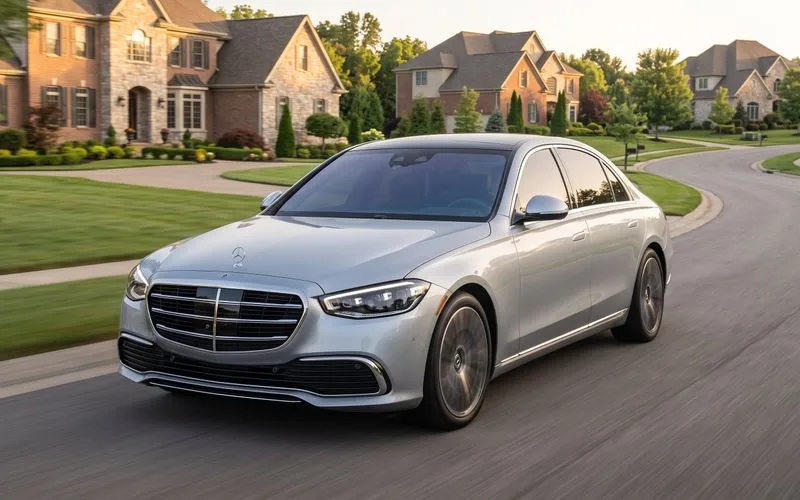 Mercedes-Benz S-ClassFull-Size Luxury SedanBetter at: Ride isolation
The direct rival and the segment benchmark for isolation — quieter and more cosseting, if less agile and no cheaper to own.
Compare 3.19B
3.19B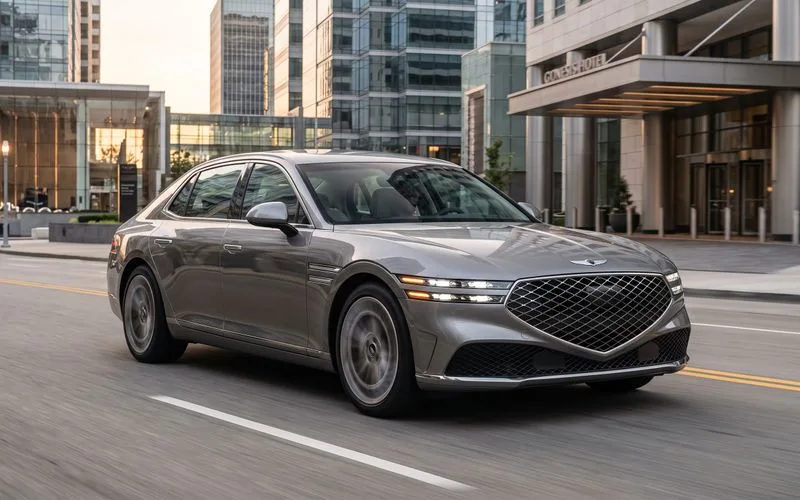 Genesis G90Full-Size Luxury SedanBetter at: Value
Comparable flagship space and equipment for tens of thousands less, with a longer warranty, included maintenance, and stronger resale.
Compare 3.52A-
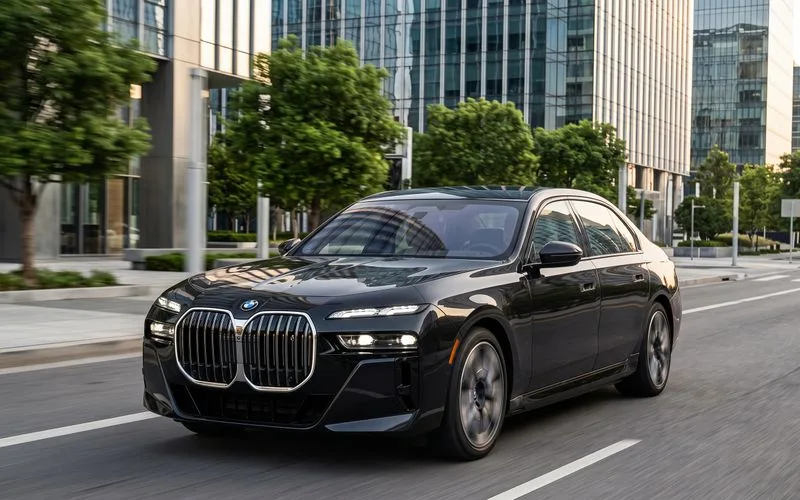 BMW i7Full-Size Luxury SedanBetter at: Running costs
The same cabin and screens with an electric drivetrain, for buyers with home charging who want lower running costs and even less noise.
CompareHow it's evolved
10 scored model years · 2017–2026
Subject scores by year
Hover or tap a score to see what moved it versus the year before. A corner mark flags a big swing.
| Year | Performance | Efficiency | Safety | Space | Cost | Reliability | Tech | Use-case | Driving | Value |
|---|---|---|---|---|---|---|---|---|---|---|
| 2026 | 76 | 32 | 82 | 87 | 10 | 80 | 88 | 62 | 76 | 76 |
| 2025 | 77 | 40 | 77 | 87 | 16 | 69 | 88 | 51 | 72 | 75 |
| 2024 | 78 | 40 | 63 | 87 | 16 | 70 | 88 | 53 | 73 | 72 |
| 2023 | 71 | 43 | 71 | 88 | 16 | 64 | 87 | 47 | 75 | 77 |
| 2022 | 70 | 34 | 70 | 87 | 16 | 71 | 82 | 47 | 73 | 67 |
| 2021 | 70 | 36 | 70 | 87 | 16 | 66 | 79 | 48 | 70 | 68 |
| 2020 | 73 | 28 | 58 | 85 | 16 | 68 | 81 | 46 | 70 | 73 |
| 2019 | 70 | 28 | 54 | 84 | 16 | 70 | 68 | 44 | 69 | 72 |
| 2018 | 70 | 28 | 46 | 84 | 16 | 70 | 68 | 43 | 69 | 72 |
| 2017 | 70 | 24 | 44 | 84 | 16 | 71 | 65 | 43 | 69 | 75 |
Compare two years
Best fit & conditions
Higher scores mean a better fit for that use case. Learn more about use-case fit →
Subject profile
Detailed scoring by subject
1Performance & PowertrainOne of the 7 Series's strongest categories.2.75B-
2021 is a carry-over year in the sixth-generation G11/G12 that was facelifted (LCI) for 2020, so the volume 740i keeps the 335-hp B58 3.0L twin-scroll turbo inline-six — no 48-volt mild hybrid, which is what lifted the following G70 740i to 375 hp.
The B58 puts 330 lb-ft on a plateau starting at 1,500 rpm, which is what gives a ~4,600-lb sedan its unhurried, chauffeur-grade gait around town without needing revs.
BMW quotes 5.3 seconds to 60 mph for the 2021 740i, quick enough to never feel strained but well behind the V8 and V12 cars above it and behind the electric full-size sedans that were arriving in this segment by 2021.
The B58 is one of the smoothest sixes on sale in 2021 — peak torque at 1,500 rpm means turbo lag is effectively absent, and the engine is close to inaudible at cruise in a body this heavily insulated. It sits just below the later mild-hybrid car because the G12 has no 48-volt starter-generator to mask stop-start restarts or fill the very bottom of the torque curve.
Every 2021 7 Series uses the ZF eight-speed Steptronic, the reference torque-converter automatic of its era: imperceptible in Comfort, decisive on kickdown, and never hunting between ratios. It gives up only outright shift speed in Sport to a dual-clutch, which is the only reason it is not scored higher.
xDrive is a factory option on the volume 740i and standard on every trim above it — 745e xDrive, 750i xDrive, M760i xDrive and the Alpina B7 — so a buyer can have all-wheel drive anywhere in the 2021 range. It is a competent rear-biased on-demand system with variable torque split, but strictly pavement hardware: no low range, no locking differentials, no terrain modes.
2021 offered four genuinely distinct powertrains across five trims — the 335-hp turbo inline-six, the 389-hp 745e plug-in hybrid, the 523-hp twin-turbo 4.4L V8 (600 hp in Alpina B7 tune) and the 601-hp twin-turbo 6.6L V12 — an unusually deep bench even by flagship standards, with a genuine electrified option in the middle of it. Only the absence of a full battery-electric variant, which arrived with the i7 on the next-generation G70, keeps it out of the top band.
2Efficiency & RangeOne of the 7 Series's weakest categories.0.34F
EPA rates the 2021 740i at 25 MPG combined — the best of the gas 7 Series lineup and creditable for a 4,600-lb full-size luxury sedan, but two MPG behind the mild-hybrid G70 that replaced it and mid-pack against the wider gas-sedan field the band normalizes to.
22 MPG in the EPA city cycle. The G12 has only conventional stop-start to work with — no 48-volt starter-generator or coasting function — so urban economy is set almost entirely by mass, and this is where the later mild-hybrid car pulls furthest ahead.
29 MPG highway, where the long gearing and a lightly loaded six work in the car's favor. It is the strongest of the 740i's three EPA figures but still short of the 30s that lighter premium sedans post.
A 20.6-gallon tank against 25 MPG combined gives 515 miles between fills — a real long-haul strength and arguably the car's best efficiency-category result, since a 7 Series is bought to cover distance.
EPA estimates $3,050 a year to fuel the 740i at standard assumptions. Mid-20s combined economy is undone by the premium-grade requirement, which pushes the annual bill to the very top of the sedan band — this is the item that anchors the category score low.
The B58 takes premium unleaded — EPA lists it as recommended rather than required, so the engine will tolerate regular with reduced output, but BMW specifies 91 AKI and effectively every owner buys premium. There is no plug and no charging logistics to manage, and the large tank keeps the routine simple; fuel grade is the only penalty.
3SafetyGrades above the middle of the scale.2.75B-
NHTSA has never crash-tested the 2021 7 Series, or any other model year of the G11/G12 generation, so there is no star rating to report; the 4.5 figure is the segment-norm estimate this framework applies to untested large-luxury flagships, consistent with the Audi A8 and BMW i7 scorecards.
The 2021 7 Series carries no IIHS award because IIHS has never tested it — not because it performed badly. That leaves a genuinely unverified structure rather than a documented weakness, so it sits in the middle band: no award to credit, but no Marginal or Poor result to penalize either, and the Carbon Core body shell shared across the generation gives no cause for concern.
Standard Active Driving Assistant on the volume 740i covers frontal collision warning with city collision mitigation and AEB, Active Blind Spot Detection, lane departure warning, speed limit info and automatic high beams, and every 2021 7 Series adds Parking Assistant Plus with a surround-view camera and front/rear parking sensors — but adaptive cruise control and any form of lane keeping sit behind the $1,700 Driving Assistance Professional Package. Charging extra for ACC on a car opening near $87,000 is what keeps this out of the top band, which requires the full suite standard.
There is no IIHS front crash prevention result for the 2021 7 Series in either the vehicle-to-vehicle or pedestrian test, so the score rests on system specification and the generation's shared hardware rather than measured performance. Standard AEB includes city collision mitigation with daytime pedestrian detection, and BMW Night Vision with pedestrian detection is available, but nighttime pedestrian capability is unverified and optional rather than demonstrated.
Active Blind Spot Detection is standard on every 2021 trim and the standard Parking Assistant Plus brings rear cross-traffic warning with it, which clears the availability bar comfortably — but the standard system is warning-only, signalling through steering-wheel vibration and mirror icons. Active intervention (side collision avoidance) and front cross-traffic alert both require the optional Professional package, which holds this below the band that expects intervention as standard.
Only lane departure warning is standard on the 2021 car; Active Lane Keeping Assistant with side collision avoidance and the Steering and Lane Control Assistant that actually centres the car are both inside the optional package. When fitted the centering is competent on well-marked highway, but it is the pre-G70 calibration that reviewers found less settled than the system introduced with the following generation.
Active Cruise Control with Stop & Go is a genuinely refined full-speed-range system — smooth closing rates, clean stop-and-restart in traffic, and well integrated with the Traffic Jam Assistant layered on top of it. The score is capped by the fact that it is not standard equipment: a 2021 740i buyer who skips the $1,700 package gets conventional cruise control only.
Hands-free driving exists on the 2021 car but only as Extended Traffic Jam Assistant, which disengages above 40 mph and works solely on mapped divided highways with an infrared camera watching the driver's eyes. That is a real hands-off capability and more than rivals such as the Audi A8 offer, but it is a congestion aid rather than a highway system — the 85-mph Highway Assistant belongs to the G70 that replaced this car for 2023, not to the 2021 model year.
IIHS has published no headlight rating for the 2021 7 Series, so the hardware has to speak for itself: adaptive full-LED headlights with cornering function and automatic high beams are standard across the range, and BMW Laserlight extends high-beam throw well beyond that as an option. Good equipment on every trim, but unverified by the one organization that measures it.
Natural sightlines are ordinary for a full-size luxury sedan — a high beltline, substantial rear pillars and a long deck make judging the back corners hard, and 207 inches of overall length works against it in tight spaces. Camera compensation is the saving grace and it is thorough: the surround-view system plus front and rear parking sensors and hands-free park assist are standard on every 2021 trim rather than optional.
Two complete sets of lower anchors in the outboard positions plus a top tether for the centre seat, combined with roughly 44 inches of rear legroom and unusually wide-opening rear doors, make a seat easy to get into position and easy to work around once it is there. It falls short of the top band because BMW hides the lower anchors behind leather cushion flaps that take some digging, and the centre position is narrow over the transmission tunnel — while the optional Luxury Rear Seating and Executive Lounge configurations delete the middle seat altogether.
4Space & ComfortThe 7 Series's best-graded category.3.96A+
The 2021 740i is a conventional five-seat sedan — three across a bench in the second row — and the only way to lose a seat is by ordering one of the two rear-lounge packages that replace the bench with two individual thrones.
Nearly 40 inches of front headroom is at the top of what a sedan offers, a benefit of the G12's tall greenhouse and 58.2-inch overall height; the optional Panoramic Sky Lounge LED roof in the Executive Package costs a little of it but BMW publishes the single figure.
Front legroom is merely average for the segment — the G12's 126.4-inch wheelbase is spent on the rear compartment, which is the point of a long-wheelbase flagship, and the front measurement lands close to the Audi A8's 41.3 in.
38.9 inches in the second row is essentially the top of the sedan band and comfortably clears the Audi A8's 37.9 in, so even tall rear passengers sit without their heads near the roofliner.
The US never got the short-wheelbase G11, so every 2021 740i sold here is the 126.4-inch-wheelbase car with 44.4 inches of rear legroom — limousine territory, at the top of the sedan band and ahead of the long-wheelbase Audi A8's 42.9 in.
18.2 cubic feet is a genuinely big trunk for a sedan — large enough for four full-size suitcases — and one of the clearest advantages the gas 740i holds over both the 745e PHEV and the smaller-booted Audi A8 (12.5 cu ft).
Everyday storage is competent rather than clever: a deep centre console, a dedicated Qi wireless-charging tray moulded in ahead of the cupholders, large door bins and a rear centre armrest with its own bins and (with the rear-lounge packages) a removable tablet controller. What keeps it out of the top band is that the rear seats do not fold — only a ski pass-through behind the centre armrest opens into the trunk — so there is no fold-flat trick and no onboard household power.
Multi-contour front seats are standard, with 20-way adjustment, active massage and ventilation available, and the Luxury Rear Seating Package ($3,900) brings power adjustment, heating, ventilation and massage to the outboard rear seats. Reviewers consistently describe long-haul comfort front and rear; it sits just below the Audi A8 because the very best rear seats are a four-figure option rather than standard equipment.
Two-axle air suspension with automatic self-levelling is standard on every 2021 7 Series — not an option as on many rivals — and adaptive dampers are part of the package, with Active Comfort Drive adding electrically actuated roll stabilisation. Reviewers describe the car as floating down the road in Comfort and tightening usefully in Sport, which is exactly the plush-yet-controlled brief.
The 2020 LCI that this year carries over specified thicker 0.2-inch laminated acoustic glass for the windscreen, side windows and rear window, and the turbo inline-six is close to inaudible at cruise in a body this heavily insulated. Reviewers describe the cabin as supremely quiet and near-silent — among the quietest gas sedans on sale in 2021.
Four-zone automatic climate control, heated front seats, heated front armrests and a heated steering wheel are all standard on the volume 740i, with remote pre-conditioning through the My BMW app — an unusually rich standard set. Ventilated front seats and heated/ventilated/massaging rear seats sit in the Executive ($2,500) and Luxury Rear Seating ($3,900) packages, which is the only thing keeping it off the ceiling.
5Cost of OwnershipThe 7 Series's lowest-graded category.0.00F
The rear-drive 740i is the entry point to the 2021 (G12 LCI) lineup at $86,800 plus BMW's $995 destination charge — far above the sedan normalization band's $55,000 ceiling, so purchase-price economics score at the floor.
The 740i xDrive is the volume gas configuration in the US — all-wheel drive dominates full-size luxury sedan sales — and starts at $89,800 plus $995 destination; BMW's a-la-carte packaging then adds the $3,200 Executive Package and the $1,700 Driving Assistance Professional Package (adaptive cruise is not standard), plus metallic paint and wheels, landing near $96,000.
Even with the first three years of scheduled service covered by BMW Ultimate Care, a full-size flagship's consumables — 19–21-inch tires, large brakes, two-axle air-suspension components, B58 turbo-six ancillaries — put running costs far above the $9,000 sedan band ceiling once the 4-year/50,000-mile warranty lapses in years four and five.
This is observed rather than projected — a 2021 740i xDrive is five model years old in 2026 and KBB values it at about $32,500, roughly 34% of a ~$96,000 as-equipped sticker and 36% of the $90,795 base. Full-size German flagships are the market's worst depreciators and the 7 Series sits at the bottom of even that group, which is what drags this category down far more than any maintenance bill.
BMW's New Vehicle Limited Warranty runs 4 years/50,000 miles on all 2021 models including the 7 Series — a year longer than mainstream 3/36 coverage but short of the 5/60 terms Genesis offered on the rival G90, so mid-band.
BMW provides no separate extended powertrain coverage — the B58 turbocharged inline-six and 8-speed Steptronic automatic are covered only by the same 4-year/50,000-mile basic term, below the 5-year floor of the sedan band and well short of what Genesis (10 yr/100,000 mi) gave a G90 buyer.
The 2021 740i includes BMW Ultimate Care — 3 years/36,000 miles of complimentary factory-scheduled maintenance (oil, fluids and filters, spark plugs, wiper blades, brake fluid, multi-point inspections) — plus 4 years of unlimited-mileage 24/7 roadside assistance, BMW TeleService for the length of the warranty, and ConnectedDrive/Wi-Fi hotspot trials. That is multi-year included maintenance with real perks, ahead of Lexus (1 yr/10,000 mi) on the rival LS, though coverage is non-transferable to a second owner and wear items such as brake pads and discs require the paid Ultimate Care+ upgrade.
$96,000 volume-trim price minus its estimated resale value after 5 years (35% retained, or about $33,600) leaves about $62,400 in depreciation. Add the projected $12,000 in 5-year maintenance and repairs, and owning this vehicle for 5 years costs about $74,400 in total.
6Reliability & QualityMid-pack among this car's ten categories.2.47C+
2021 is the sixth year of the G11/G12 generation and the second year of the LCI facelift, so the body, chassis and iDrive hardware are mature — J.D. Power rates the 2021 7 Series 83/100 on predicted reliability, inside its 'Great' 81-90 band and five points ahead of the 2022 car. It stays only in the upper-middle band because Consumer Reports has no statistically valid sample for this model year, 2021 newly introduced the 48-volt mild-hybrid starter-generator on the volume six (hardware that drew its own fire-risk recall), and the generation's documented failure clusters are the expensive ones: air-suspension compressor and air-strut leaks, and iDrive head-unit blackouts and reboots.
The directly relevant study is J.D. Power's 2024 Vehicle Dependability Study, which surveys original owners of 2021 model-year vehicles at three years — this exact cohort. BMW scored 190 PP100, third among premium brands and ninth overall, landing precisely on the industry average. Consumer Reports separately ranks BMW its most reliable European marque and top luxury brand, and BMW remains the best of the German three on dependability. It stays mid-band rather than higher because it does not reach the Lexus/Toyota tier and RepairPal's cost-weighted brand index is a genuine dissent.
This is the weak point of the 2021 model year and the main reason it grades below the 2022 car. NHTSA lists seven distinct campaigns reaching a 2021 7 Series against two for 2022, and the severity is the problem rather than the count: a rear output shaft that can fracture from a supplier heat-treatment error, causing loss of drive or a rollaway; an integrated brake system whose rotor and shaft may separate under hard braking, losing ABS and braking assistance; an improperly assembled 48-volt battery-to-starter-generator connection posing a fire risk; and a starter-motor fire recall issued twice, so cars remedied under 24V576000 in 2024 had to return for a starter replacement under 25V644000 in 2026. Two further campaigns are FMVSS non-compliances (rearview camera image, rear-centre child tether anchor). That is squarely the 'repeated recalls touching powertrain, fire and safety systems' band, and it sits on top of unrecalled generation-wide air-strut failures serious enough that BMW extended strut coverage.
The volume 740i runs the B58 3.0L turbocharged inline-six through the ZF 8-speed automatic — the best-proven pairing BMW sells. The B58's closed-deck block and single twin-scroll turbo give it a real high-mileage record, with owners routinely reporting 150,000-200,000 miles on schedule servicing, and the ZF 8HP is a decade-proven unit used across BMW, Audi and Jeep. It sits a little below the 2022 car because 2021 is the year the 48-volt mild-hybrid starter-generator was added to this engine and that new hardware was recalled for a fire-risk assembly fault, and because the pre-2022 B58 builds use the plastic oil-pump drive ring. The remaining known items are wear rather than design failure.
The materials are genuinely luxury-grade from the base 740i up — Nappa leather, real wood trim, aluminium and soft-touch surfaces throughout, with Edmunds calling the materials exceptional and equal to any rival's. What keeps it out of the class-leading band is the ensemble rather than the substances: by 2021 this cabin architecture was six years old, and Car and Driver's verdict is that the build quality, materials and design read as merely average for this rich class once you are paying flagship money.
Assembly is solid in the way a mature Dingolfing product should be — reviewers single out stitching and panel fitment as befitting the brand, and there is no rattle or misalignment pattern in owner reports, which cluster instead on electronics failing over time. It grades below the 2022 car because three of 2021's campaigns are manufacturing-quality failures rather than design ones: an output-shaft heat-treatment error at the supplier, an improperly welded rotor-and-shaft joint in the integrated brake system, and an improperly assembled 48V battery connection. Nothing there is visible in a showroom, but it is the same category of defect the item measures.
Coverage is a strength: roughly 350 BMW centers nationwide, dense in every metro and along the interstates and among the best of the German luxury marques, so a 2021 740i is never far from a franchised shop with the diagnostic tooling this car needs. Service satisfaction is the softer half. In the 2021 J.D. Power Customer Service Index — the study contemporary with this car's sale — BMW placed outside the premium top five, behind Porsche, Lexus, Infiniti, Cadillac and Lincoln; BMW has since climbed to third among premium brands, which is the experience a used buyer meets today. The 3-year/36,000-mile Ultimate Care scheduled maintenance that came with the car expired in 2024, so all servicing is now paid.
Availability is not the issue — after seven years of G11/G12 production there is deep OE distribution, a real independent-specialist trade and aftermarket alternatives for the common failures. Cost is, and this generation's signature failures are the four-figure kind on a car now entirely out of its 4-year/50,000-mile warranty. RepairPal puts 740i annual maintenance near $850 against roughly $650 for the average luxury sedan, and the air-suspension repairs that define this chassis run from $2,489 for a compressor to $5,487-$5,818 for air springs — enough that owners convert to coils to escape the cycle. That is what the bottom band describes.
7Technology & InfotainmentOne of the 7 Series's strongest categories.3.40B+
BMW's own launch material for this generation is explicit that Live Cockpit Professional pairs a 12.3-inch instrument cluster with a 10.25-inch Control Display — the 12.3-inch figure often quoted for the centre screen belongs to the cluster. A 10.25-inch centre display was already small for a flagship in 2021 and is the single weakest number in this category.
iDrive 7.0 gives the driver four ways into the same system — touchscreen, the rotary controller on the console, gesture control and voice — and the rotary means the physical-control balance is far better than in touch-only rivals. It is quick and richly configurable with widget tiles; the mark against it is that reviewers found OS7's tile layout busier and less immediately legible than the older iDrive 6 it replaced.
A 2021-model-year car is built after the July 2020 production cutoff, so it leaves the factory with both wireless Apple CarPlay and wireless Android Auto — BMW was one of very few brands offering wireless Android Auto at all in 2021, and by this point CarPlay was free rather than subscription-gated. It falls short of a perfect score only because BMW offers no wired fallback, which strands a phone that will not pair.
The BMW Intelligent Personal Assistant answers to 'Hey BMW', takes natural-language commands rather than fixed phrases, learns preferences and can adjust vehicle settings — one of the better in-car assistants of 2021 — and the connected native navigation with cloud-based route calculation is genuinely worth using rather than being bypassed for phone projection.
The 740i's standard system is already a 16-speaker Harman Kardon surround setup — a premium branded system as base equipment, which very few cars manage — and the optional Bowers & Wilkins Diamond Surround system is among the best factory audio available at any price. Both ends of the range are strong, which is what the top band asks for.
A 12.3-inch fully digital, high-resolution cluster is standard on every 2021 trim as part of Live Cockpit Professional, with map display and multiple layouts. It sits below the ceiling because BMW's OS7 cluster is the widely criticised design with a reversed, counter-clockwise tachometer and comparatively few genuinely different views for its size.
BMW's Remote Software Upgrade on Operating System 7 is real whole-vehicle over-the-air updating, not maps-only — the proof is that BMW delivered Android Auto itself to already-built OS7 cars as an OTA campaign in autumn 2020, a genuine new feature added after sale. It stays out of the top band because BMW's update cadence in this era was occasional rather than the regular feature drops the benchmark implies.
The My BMW app covers the core set well — remote lock/unlock, climate pre-conditioning, vehicle finder, status and Remote 3D View — but the 2021 7 Series is conspicuously absent from BMW's Digital Key compatibility list, so the flagship could not do phone-as-key in a year when the 5 Series, X5 and X7 could. That gap, plus the subscription trials attached to the connected services, holds it to the middle band.
Qi wireless charging is standard rather than optional, and there are USB-C ports front and rear plus two ports in the rear centre console, so passengers in both rows are covered. It stops short of the top band because there is no household AC outlet and no onboard-power provision of the kind the guidance rewards.
Comfort Access proximity entry and push-button start are standard, BMW's touchscreen Display Key was available, and remote start/climate runs through the app — everything a flagship should have except the one thing the top band names. Phone-as-key was not offered: the G12 is missing from BMW's 2021 Digital Key compatibility list even though cheaper BMWs built the same month had it.
Every 2021 7 Series — including the base 740i — leaves the factory with a surround-view camera system, front and rear parking sensors and hands-free Park Assist, so the parking automation the top band asks for is standard rather than a top-trim upgrade. Remote 3D View through the app lets an owner see around the parked car from a phone.
BMW's full-colour head-up display is one of the largest and clearest in the business, projecting speed, navigation and assistance alerts, but on the 2021 car it is bundled inside the $3,000 Premium Package rather than fitted as standard — so a base 740i buyer who skips that box does without on an $87,000 flagship.
8Use-Case FitOne of the 7 Series's weakest categories.1.20D
The long-wheelbase body genuinely helps here — wide-opening rear doors, low sills and 44.4 inches of rear legroom make a rear-facing seat easy to fit and easy to reach around, and there are two full LATCH sets outboard plus a centre tether. What holds it to the middle band is that the lower anchors hide behind leather cushion flaps, the centre position is narrow over the tunnel, the rear seats do not fold for stroller loading, and the rear-lounge packages delete the middle seat entirely.
Neither NHTSA nor IIHS has ever tested any model year of this generation, so a family gets no independent crash credential at all — and adaptive cruise control and lane keeping sit behind a $1,700 package on a car opening near $87,000. Standard AEB with pedestrian detection, blind-spot monitoring and the surround-view suite are real, but there is no rear-occupant alert and the safety proposition is unverified rather than proven.
For a family of four this is close to ideal: four-zone climate and heated rear seats standard, near-silent air-sprung ride, optional rear massage/ventilation and twin 10-inch entertainment screens with a Blu-ray player, and an 18.2 cu ft trunk that still swallows the luggage with every seat occupied. It is not in the top band only because five is the hard ceiling and a third occupant across the back straddles the transmission tunnel.
In traffic it is close to effortless — the B58 puts 330 lb-ft on a plateau from 1,500 rpm so nothing is ever asked of it, the ZF eight-speed is imperceptible, and standard two-axle air suspension plus a quiet cabin keep fatigue low. The reservations are size rather than manners: 207.4 inches of car and a stop-start system with no 48-volt assist to smooth the restarts.
25 MPG combined is respectable for 4,244 lb and 335 hp, but it is premium-only fuel at roughly $3,050 a year, and the consumables are flagship-priced — staggered run-flat tyres, large brakes and BMW dealer labour. This is an expensive car to put commuting miles on, and the 745e PHEV exists precisely because of it.
207.4 inches long on a 126.4-inch wheelbase with a 42-foot curb-to-curb turning circle is genuinely awkward in a garage or a city block, and the high beltline and long deck make the rear corners hard to place. Standard surround-view cameras, front and rear sensors and hands-free Park Assist are exactly the camera help the middle band describes, and optional Integral Active Steering shortens the circle — but the footprint is the footprint.
There is no bed, no US tow rating published for the 2021 7 Series, and the rear seats do not even fold — the only load path beyond the 18.2 cu ft trunk is a ski pass-through behind the centre armrest. Whatever the B58 could theoretically pull is irrelevant when BMW does not certify a hitch for the North American car.
The B58 six and ZF eight-speed are durable units, but everything around them is the opposite of work-proof: two-axle air suspension with self-levelling bellows, run-flat tyres, adaptive dampers and a cabin trimmed in Nappa leather and open-pore wood with no wear-friendly interior option. There is no fleet history to lean on and parts pricing is punishing.
Nothing here is aimed at work: no onboard AC power, no bed or tie-down system beyond trunk bag hooks, no roof rails and no rack or upfit ecosystem, and every surface a tool would touch is leather or wood. A luxury flagship is simply not provisioned for a jobsite.
This is what the car is for: roughly 515 miles between fills, one of the quietest cabins on sale thanks to 0.2-inch laminated acoustic glass all round, air suspension, multi-contour seats with optional massage, and Active Cruise Control with Stop & Go plus Extended Traffic Jam Assistant to take the strain out of an interstate. The only deduction is that the driver-assist suite that makes the biggest difference over eight hours is a $1,700 option rather than standard.
xDrive all-wheel drive is available and the air suspension can lift the body slightly, which is enough for a snowy road or a well-graded gravel drive. Beyond that it is pavement-bound: sedan ground clearance, staggered run-flat tyres, no roof rails, no hitch for bike or toy racks, no fold-flat load floor for camping, and no onboard power.
The 18.2 cu ft trunk is genuinely large — four big suitcases with room to spare, better than most of its rivals — but that trunk is the entire answer. The rear seats do not fold, the only extension is a ski pass-through behind the centre armrest, and with no roof rails and no hitch there is nowhere to put a bike, a rooftop box or anything tall.
9Driving ExperienceGrades above the middle of the scale.2.74B-
For a 4,244-lb, 207-inch sedan the 740i disguises its mass well — standard two-axle air suspension and adaptive dampers keep it flat, optional Integral Active Steering shrinks it around a corner and Active Comfort Drive's electrically actuated anti-roll bars kill the lean. It is secure and more composed than its size suggests, but it is a comfort-biased flagship and never a sports sedan on the volume trim's standard tyres.
The rack is accurate and weights up sensibly between Comfort and Sport, and the variable ratio makes the car easy to place, but reviewers consistently describe it as remote — precise without telling the driver much. That is the classic middle-band 'precise enough but numb' verdict, and it is the clearest gap between this car and a 5 Series.
Large vented four-wheel discs sized for a car that will run 130 mph give strong, fade-resistant stops with a firm, progressive pedal and no regen blending to muddy the feel on the pure-gas 740i. It sits mid-band rather than higher because no outlet published an instrumented 70-0 mph figure for the 2021 740i, so the assessment rests on hardware and reviewer impressions rather than a measured distance.
The B58 3.0-litre turbo six and ZF eight-speed are a benchmark pairing: 330 lb-ft from 1,500 rpm means there is effectively no turbo lag or tip-in hesitation, and the torque-converter automatic is imperceptible in Comfort and decisive on kickdown. The one blemish is the auto stop-start, which has no 48-volt starter-generator to mask the restart — the mild-hybrid system that arrived with the following G70.
An inline-six is inherently balanced, and behind 0.2-inch laminated acoustic glass the B58 is close to inaudible at cruise and turns pleasantly smooth rather than coarse when extended. Nothing comes through the wheel or pedals; reviewers describe the cabin as near-silent.
A 42-foot curb-to-curb circle is the direct cost of a 126.4-inch wheelbase — the US market gets only the long-wheelbase body — and it sits outside the sedan band entirely, meaning three-point turns and tight garages are a genuine daily annoyance.
Standard multi-contour seats with a wide power adjustment range, 39.9 inches of front headroom and low sills make this an easy car to get into and to sit right in whatever your size, and the iDrive rotary controller keeps the most-used functions off the touchscreen. It is not top-band because the high beltline, thick pillars and long deck make the rear corners hard to judge without the cameras.
The 740i is deeply satisfying in the way a good flagship should be — quiet, effortless, always with more torque than you asked for — but it is not entertaining. The steering is remote, the mass is always present and the six sounds refined rather than characterful; enthusiasts point to the V8 750i or the Alpina B7 when they want the 7 Series to be fun.
10Value & Market PositionMid-pack among this car's ten categories.2.57C+
For 2021 the $87,795 740i included a two-axle adaptive air suspension, panoramic roof, four-zone climate, 16-speaker Harman Kardon audio, navigation with the 12.3-inch cluster and 10.25-inch touchscreen, gesture control, wireless Apple CarPlay plus Android Auto, surround-view camera with hands-free park assist, adaptive LED headlights and soft-close doors — and BMW made heated front seats, heated armrests, a heated steering wheel and remote start standard this model year. It loses points because adaptive cruise control was still a $1,700 option on an $88,000 flagship and the seat massage/ventilation and rear luxury seating that define the class sat behind the Executive and Luxury Rear Seating packages.
The 740i was the cheapest way into the German flagship class — roughly $20,000 under a comparably positioned W223 S-Class — and carried air suspension, the full parking suite and a Harman Kardon system as standard, so the content-per-dollar case is real. But 335 hp from a six in an $88,000 car is modest, iDrive 7 was a generation behind the S-Class's new MBUX, and the buyer absorbs about $62,000 of depreciation over five years, which is the single largest cost of the car and the reason this lands only mid-band rather than high.
The 2021 US lineup was the broadest in the segment: 740i and 740i xDrive (335 hp six), 745e xDrive plug-in hybrid, 750i xDrive (523 hp twin-turbo V8), the 601 hp M760i xDrive V12 and the ALPINA B7, spanning $86,800 to $157,800 with rear- or all-wheel drive and an extensive a-la-carte option catalog. The only real gap is that the US got a single long-wheelbase body with no short-wheelbase or standard-length choice.
US deliveries recovered to 7,706 in calendar 2021, up about 20% on 2020's pandemic-depressed 6,443 but still short of 2019's 8,823 — and the newly launched W223 S-Class nearly doubled that at 14,282. A steady but clearly second-place seller in a shrinking segment, with the outgoing generation's age visible in the gap.
BMW is among the most aspirational mainstream-luxury brands and was the largest German premium seller in the US in 2021, which supports the 7 Series' desirability. The model itself carries less flagship status than an S-Class, and the LCI's 40%-larger kidney grille drew persistent criticism that blunted the car's image in its final years.
An outgoing-generation flagship with a known replacement is the strongest position a buyer can be in: the 7 Series has long been among the most heavily lease-supported and discounted luxury cars, with stackable loyalty credits on top of dealer discounts. The score is held back from the top band because the second half of 2021 was the peak of the semiconductor shortage, when luxury inventory thinned and transaction prices firmed across the market.
2021 is the sixth model year of the G11/G12 generation and only the second of its LCI facelift, and it is one year from replacement — the seventh-generation G70 was revealed in April 2022 as a 2023 model with a new platform and iDrive 8. It also faced an all-new rival: the W223 S-Class arrived for 2021 with hardware the refreshed BMW could not match, making the 7 Series the oldest design in the class.
Reviewers consistently rated the 2021 car highly for refinement, rear-seat space and engine smoothness — Edmunds called the sixth-generation 7 Series 'just about the best around' — but it collected no major 2021 hardware and was routinely placed behind the new S-Class in the class rankings, with the grille styling a recurring complaint. Well-reviewed, rarely the pick of the class.