
The verdict
A capable full-size luxury sedan, strong on space and held back by ownership.
The 2020 BMW 7 Series is a magnificent way to travel and a punishing way to own. Every US car that year was the long-wheelbase body, so you get 44.4 inches of rear legroom and an 18.2 cu ft trunk — both best in the full-size luxury class — wrapped in a casket-quiet cabin on standard air suspension. The catch is the money: it opened at $87,445, retains roughly 36% of that after five years, and drinks premium fuel at 23 MPG for about $3,300 a year. Buy it used, where someone else has already absorbed the $60,000 hit, and it becomes one of the best deals in luxury motoring; buy it new and it is one of the worst.
Jump to scoresStrengths
- Limousine rear seat, no long-wheelbase upcharge
- Serenity that most $200,000 cars cannot match
- The base engine is the one you want
What holds it back
- Depreciation on a scale that should carry a warning label
- Expensive to feed, expensive to fix
- Zero independent crash data on a $90,000 car
Top alternatives
Cars shoppers cross-shop with the BMW 7 Series 3.50A-
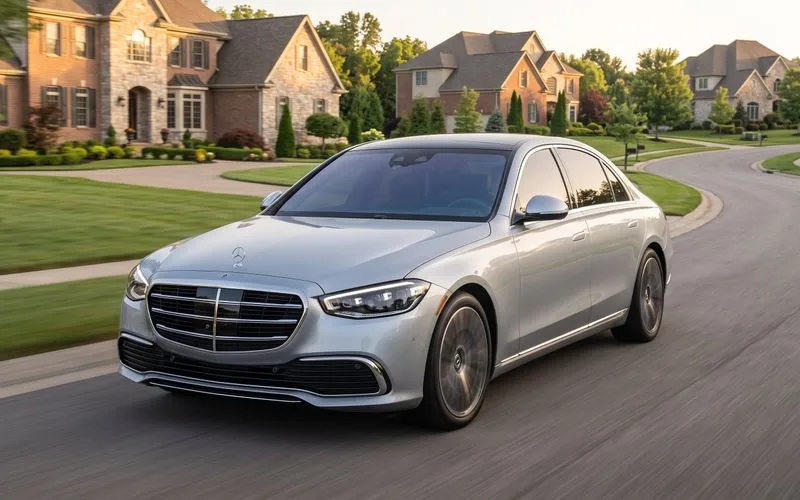 Mercedes-Benz S-ClassFull-Size Luxury SedanBetter at: Ride isolation
The direct rival and the segment benchmark for isolation — quieter and more cosseting, if less agile and no cheaper to own.
Compare 3.19B
3.19B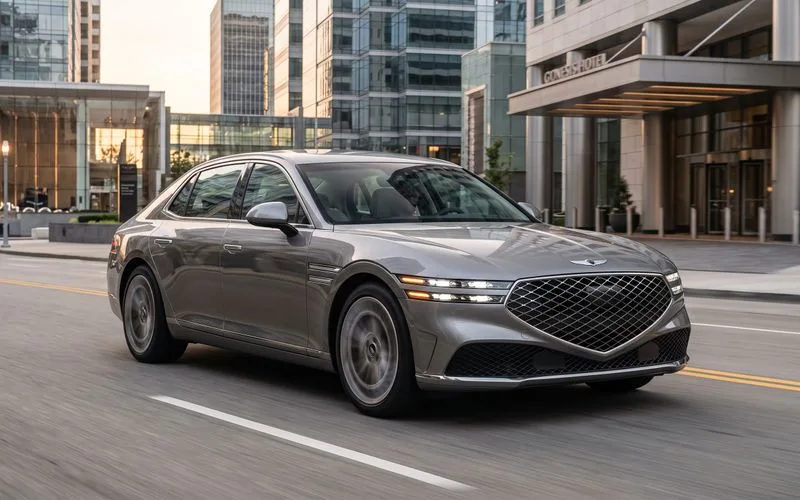 Genesis G90Full-Size Luxury SedanBetter at: Value
Comparable flagship space and equipment for tens of thousands less, with a longer warranty, included maintenance, and stronger resale.
Compare 3.52A-
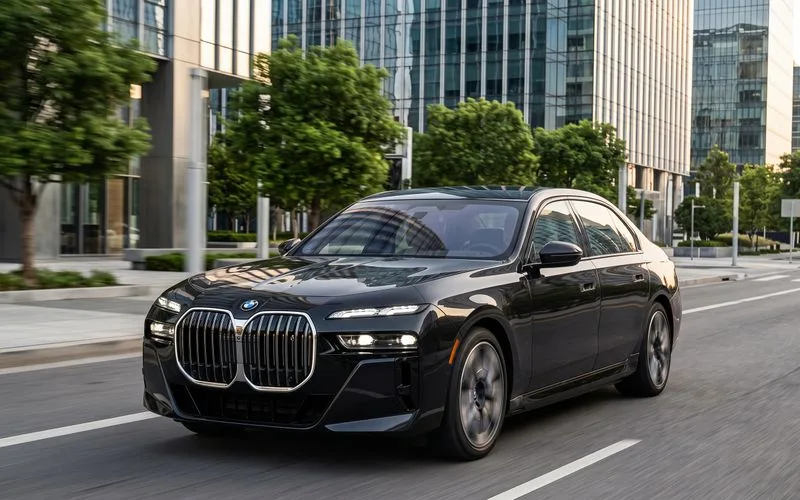 BMW i7Full-Size Luxury SedanBetter at: Running costs
The same cabin and screens with an electric drivetrain, for buyers with home charging who want lower running costs and even less noise.
CompareHow it's evolved
10 scored model years · 2017–2026
Subject scores by year
Hover or tap a score to see what moved it versus the year before. A corner mark flags a big swing.
| Year | Performance | Efficiency | Safety | Space | Cost | Reliability | Tech | Use-case | Driving | Value |
|---|---|---|---|---|---|---|---|---|---|---|
| 2026 | 76 | 32 | 82 | 87 | 10 | 80 | 88 | 62 | 76 | 76 |
| 2025 | 77 | 40 | 77 | 87 | 16 | 69 | 88 | 51 | 72 | 75 |
| 2024 | 78 | 40 | 63 | 87 | 16 | 70 | 88 | 53 | 73 | 72 |
| 2023 | 71 | 43 | 71 | 88 | 16 | 64 | 87 | 47 | 75 | 77 |
| 2022 | 70 | 34 | 70 | 87 | 16 | 71 | 82 | 47 | 73 | 67 |
| 2021 | 70 | 36 | 70 | 87 | 16 | 66 | 79 | 48 | 70 | 68 |
| 2020 | 73 | 28 | 58 | 85 | 16 | 68 | 81 | 46 | 70 | 73 |
| 2019 | 70 | 28 | 54 | 84 | 16 | 70 | 68 | 44 | 69 | 72 |
| 2018 | 70 | 28 | 46 | 84 | 16 | 70 | 68 | 43 | 69 | 72 |
| 2017 | 70 | 24 | 44 | 84 | 16 | 71 | 65 | 43 | 69 | 75 |
Compare two years
Best fit & conditions
Higher scores mean a better fit for that use case. Learn more about use-case fit →
Subject profile
Academic Probation · NHTSA safety recalls
Sep 25, 2025Electrical system: starter assemblyAfter repeated attempts, the starter motor may overheat from an electrical overload.
Defect
BMW of North America, LLC (BMW) is recalling certain 2020 340I, X6, 2020-2025 840I, 2020-2022 740LI, 2019-2020 X7, and X5 vehicles. After repeated attempts, the starter motor may overheat from an electrical overload.
Risk
An overheated starter motor can ignite nearby combustible material in the engine compartment, increasing the risk of a fire.
Remedy
Dealers will replace the engine starter, free of charge. This recall includes vehicles repaired under recall 24V576 and those owners will need to have their vehicle repaired again. Owner notification letters were mailed February 9, 2026. Owners may contact BMW customer service at 1-800-525-7417. Vehicle Identification Numbers (VINs) involved in this recall became searchable on NHTSA.gov November 17, 2025.
NHTSA campaign 25V644000 ↗145,102 vehicles potentially affected (all models in the campaign)Owners notified Feb 9, 2026Filed by BMW of North America, LLCFiled as 740LIAug 1, 2024Electrical system: starter assembly · Engine and engine cooling: engine: engine control module (ecu/ecm): softwarePlease see the recall report for the complete list of models. In the event the starter motor fails, repeated attempts to start the vehicle can cause the starter motor to overheat from an electrical overload.
Defect
BMW of North America, LLC is recalling certain 2019-2020 X5, X7, 2020 3 Series Sedan, X6, 2020-2021 7 Series Sedan, 2020 8 Series Convertible, 8 Series Coupe, and 2020 8 Series Gran Coupe vehicles. Please see the recall report for the complete list of models. In the event the starter motor fails, repeated attempts to start the vehicle can cause the starter motor to overheat from an electrical overload.
Risk
A starter motor that overheats can ignite nearby combustible material in the engine compartment, increasing the risk of a fire.
Remedy
Dealers will update the vehicle software, free of charge. Owner notification letters were mailed September 27, 2024. Owners may contact BMW customer service at 1-800-525-7417.
NHTSA campaign 24V576000 ↗105,588 vehicles potentially affected (all models in the campaign)Owners notified Sep 27, 2024Filed by BMW of North America, LLCFiled as 740I, 740XIAug 2, 2021EngineDuring engine start, the engine management software may cause loss of braking assist. Full mechanical braking (without assist) remains available.
Defect
BMW of North America, LLC (BMW) is recalling certain 2020 M340i, M340i xDrive, 540i, 540i xDrive, X3 M40i, 2020-2021 X4 M40i, 745Le xDrive, 2019-2021 Z4 M40i, and 2020-2021 Toyota Supra vehicles. During engine start, the engine management software may cause loss of braking assist. Full mechanical braking (without assist) remains available.
Risk
Loss of braking assist can increase the risk of a crash.
Remedy
Dealers will update the engine management software, free of charge. Owner notification letters were mailed on September 17, 2021. Owners may contact BMW customer service at 1-800-525-7417.
NHTSA campaign 21V598000 ↗50,024 vehicles potentially affected (all models in the campaign)Owners notified Sep 17, 2021Filed by BMW of North America, LLCFiled as 745LEFeb 19, 2021Back over prevention: sensing system: camera · Back over prevention: softwareWhen shifting into Reverse, a small portion of the rearview image may be obscured, or the screen may not illuminate. As such, these vehicles fail to comply with the requirements of Federal Motor Vehicle Safety Standard (FMVSS) number 111, "Rear Visibility."
Defect
BMW of North America, LLC (BMW) is recalling certain 2019-2021 X3 sDrive30i, X3 xDrive30i, X3 M40i, X3M, X4 xDrive30i, X4 M40i, M550i, X4M, X5 sDrive40i, X5 xDrive40i, X5 xDrive50i, X5M, X5 M50i, X7 xDrive40i, X7 xDrive50i, X7 M50i, Alpina XB7, 330i, 330i xDrive, M340i, M340i xDrive, and 8 Series Coupe, Convertible and Grand Coupe, 840i, 840i xDrive, M850i xDrive, M8, 2020-2021 530e, 530e xDrive, 330e, 330e xDrive, 745Le, 745Le xDrive, X5 xDrive45e, X3 xDrive30e, X6 sDrive40i, X6 xDrive40i, X6 xDrive50i, X6 M50i, X6M, 530i, 530i xDrive, 540i, 540i xDrive, M550i xDrive, M5, 740i, 740Li, 740Li xDrive, M760i Drive, M760Li xDrive, 750Li xDrive Alpina, Alpina B7 xDrive, and 2021 4 Series Coupe 430i, 430i xDrive, M440i xDrive vehicles. When shifting into Reverse, a small portion of the rearview image may be obscured, or the screen may not illuminate. As such, these vehicles fail to comply with the requirements of Federal Motor Vehicle Safety Standard (FMVSS) number 111, "Rear Visibility."
Risk
If the driver relies on only the rearview camera image, the missing or reduced rearview image view can increase the risk of a crash or injury.
Remedy
BMW will notify owners, and dealers will inspect the rearview camera software and update it if necessary, free of charge. The recall began April 16, 2021. Owners may contact BMW customer service at 1-800-525-7417.
NHTSA campaign 21V096000 ↗13,858 vehicles potentially affected (all models in the campaign)Owners notified Apr 16, 2021Filed by BMW of North America, LLCFiled as 740I, 745LE, 750LI, M760IFeb 10, 2021Service brakes, hydraulic · Service brakes, hydraulic: power assist: hydraulicThe rotor and shaft within the integrated brake system may not have been welded properly and could separate during a hard braking event, possibly resulting in a loss of the Antilock Brake System (ABS) and braking assistance.
Defect
BMW of North America, LLC (BMW) is recalling certain 2020-2021 8 Series Coupe, Grand Coupe and convertible 840i, 840i xDrive, M850i xDrive, M8 and 740 Li, 740 Li xDrive, 750 Li xDrive, M760 Li xDrive, X6 sDrive40i, X6 xDrive40i, X6 xdrive50i, X6 M50i, X6M, and 2019-2021 X5 sDrive40i, X5 xDrive40i, X5 xDrive50i, X5 M50i, X5M, X7 xDrive40i, X7 xDrive50i, X7 M50i, and 2021 M3, M3 Competition, M4 Coupe, M4 Competition Coupe, X5 xDrive45e, 745 Le xDrive. The rotor and shaft within the integrated brake system may not have been welded properly and could separate during a hard braking event, possibly resulting in a loss of the Antilock Brake System (ABS) and braking assistance.
Risk
A loss of ABS and a reduction in braking assistance can increase the risk of a crash.
Remedy
BMW will notify owners, and dealers will replace the integrated brake system, free of charge. Owner notification letters were mailed on May 25, 2021. Owners may contact BMW customer service at 1-800-525-7417.
NHTSA campaign 21V062000 ↗893 vehicles potentially affected (all models in the campaign)Owners notified May 25, 2021Filed by BMW of North America, LLCFiled as 740LI, 745LE, 750LI, M760LIJun 30, 2020Child seat: tether: connector/clipThe top child seat tether anchor on the rear middle seat may not be readily accessible. As such, these vehicles fail to comply with the requirements of Federal Motor Vehicle Safety Standard number 225, Section 6.1(b) "Child Restraint Anchorage Systems."
Defect
BMW of North America, LLC (BMW) is recalling certain 2020-2021 740Li, 740 Li xDrive, 750Li xDrive, M760Li xDrive, and Alpina B7 vehicles. The top child seat tether anchor on the rear middle seat may not be readily accessible. As such, these vehicles fail to comply with the requirements of Federal Motor Vehicle Safety Standard number 225, Section 6.1(b) "Child Restraint Anchorage Systems."
Risk
A child restraint system placed on the vehicle's rear middle seat without utilizing the three-point safety belt, could increase the risk of injury in the event of a crash.
Remedy
BMW will notify owners, and dealers will install a top tether anchor cover at the rear middle seating position. Until vehicles are remedied, owners will be instructed to utilize the outboard rear seating positions which are equipped with an accessible top tether anchor, or, the middle rear seating position and the vehicle's three-point safety belt. The recall began August 20, 2020. Owners may contact BMW customer service at 1-800-525-7417.
NHTSA campaign 20V379000 ↗16 vehicles potentially affected (all models in the campaign)Owners notified Aug 20, 2020Filed by BMW of North America, LLCFiled as 740LI, 750LI, M760ISep 27, 2019Back over prevention: sensing system: cameraThe back-up camera and display settings can be adjusted such that the rear view image is no longer visible and the system will retain that setting the next time the vehicle is placed in reverse. As such, these vehicles fail to comply with the requirements of Federal Motor Vehicle Safety Standard (FMVSS) number 111, "Rearview Mirrors."
Defect
BMW of North America, LLC (BMW) is recalling certain 2018 540d, 2018-2020 530i, 530i xDrive, 540i, 540i xDrive, M550i xDrive, M5, 530e, 530e xDrive, X3 sDrive, X3 xDrive, X3 M40i, X3 M, and 2019-2020 X4 xDrive, X4 M40i, X4 M, X7 xDrive, X7 M50i, 740Li, 740Li xDrive, 750Li, 750Li xDrive, 8 Series Convertible and Coupe 840i, 840i xDrive, M850i xDrive, X5 sDrive, X5 xDrive, X5 M50i, X6 xDrive, X6 M50i, 330i, 330i xDrive, M340i, M340i xDrive, Z4 sDrive, Z4 M40i, 740Le xDrive and 745Le xDrive, 2018-2019 640i xDrive Gran Turismo and Rolls-Royce Phantom, 2019 M850i xDrive Gran Coupe and Rolls-Royce Cullinan and 2020 Toyota Supra vehicles. The back-up camera and display settings can be adjusted such that the rear view image is no longer visible and the system will retain that setting the next time the vehicle is placed in reverse. As such, these vehicles fail to comply with the requirements of Federal Motor Vehicle Safety Standard (FMVSS) number 111, "Rearview Mirrors."
Risk
The lack of an image in the back-up camera display increases the risk of a crash.
Remedy
BMW will notify owners, and dealers will update the back-up camera software, free of charge. The recall began November 8, 2019. Owners may contact BMW customer service at 1-800-525-7417 or Rolls-Royce at 1-877-877-3735. Toyota owners may contact Toyota customer service at 1-888-270-9371.
NHTSA campaign 19V684000 ↗257,473 vehicles potentially affected (all models in the campaign)Owners notified Nov 8, 2019Filed by BMW of North America, LLCFiled as 740LE, 740LI, 745LE, 750LIAug 12, 2019Electrical system: software · Seat beltsA software error in the electronic control unit (ECU) may disable the audible warning signal for an unbelted driver to fasten their seat belt. As such, these vehicles fail to comply with the requirements of Federal Motor Vehicle Safety Standard (FMVSS) number 208, "Occupant Crash Protection."
Defect
BMW of North America, LLC (BMW) is recalling certain 2020 BMW 745e xDrive vehicles. A software error in the electronic control unit (ECU) may disable the audible warning signal for an unbelted driver to fasten their seat belt. As such, these vehicles fail to comply with the requirements of Federal Motor Vehicle Safety Standard (FMVSS) number 208, "Occupant Crash Protection."
Risk
Without an audible warning, the driver may forget to buckle the seat belt, increasing their risk of injury in the event of a crash.
Remedy
BMW will notify owners, and dealers will update the ECU software, free of charge. The recall began October 11, 2019. Owners may contact BMW customer service at 1-800-525-7417.
NHTSA campaign 19V589000 ↗173 vehicles potentially affected (all models in the campaign)Owners notified Oct 11, 2019Filed by BMW of North America, LLCFiled as 745EJul 3, 2019Engine · Fuel system, other: delivery: fuel pumpThe high pressure fuel pump may not have been properly attached to the engine, which may cause the fuel pump flange to crack, resulting in a fuel leak.
Defect
BMW of North America, LLC (BMW) is recalling certain 2020 750i xDrive, 2019 M850i xDrive Coupe, M850i xDrive Convertible, X5 xDrive50i, X7 xDrive50i, and M5 vehicles. The high pressure fuel pump may not have been properly attached to the engine, which may cause the fuel pump flange to crack, resulting in a fuel leak.
Risk
A fuel leak in the presence of an ignition source can increase the risk of a fire.
Remedy
BMW will notify owners, and dealers will replace the high pressure fuel pumps, free of charge. The recall began August 27, 2019. Owners may contact BMW customer service at 1-800-525-7417.
NHTSA campaign 19V513000 ↗115 vehicles potentially affected (all models in the campaign)Owners notified Aug 27, 2019Filed by BMW of North America, LLCFiled as 750I
21 recalls on other model years of the 7 Series (2017–2019, 2021–2025)
Jul 8, 2026Electrical system: starter assembly: relayThe engine starter relay may corrode, causing the relay to overheat and short circuit.
Defect
BMW of North America, LLC (BMW) is recalling certain 2018-2020 530e xDrive, 2017-2019 740Le xDrive, 2018-2020 530e iPerformance, 2016-2018 330e iPerformance vehicles. The engine starter relay may corrode, causing the relay to overheat and short circuit.
Risk
A short circuit in the starter relay may increase the risk of a fire.
Remedy
Owners are advised to park outside and away from structures until the remedy is complete. Dealers will replace the engine starter, free of charge. Owner notification letters were mailed September 30, 2026. Owners may contact BMW customer service at 1-800-525-7417. Vehicle Identification Numbers (VINs) involved in this recall will become searchable on NHTSA.gov beginning August 28, 2026.
NHTSA campaign 26V441000 ↗29,119 vehicles potentially affected (all models in the campaign)Owners notified Sep 30, 2026Filed by BMW of North America, LLCFiled as 740LE XDRIVE IPERFORMANCEJul 1, 2026Electronic stability control (esc) · Service brakes, hydraulic: power assist: electric: control moduleThe integrated brake (IB) system may malfunction and result in a loss of power brake assist or cause the Antilock Brake (ABS) and Dynamic Stability Control (DSC) systems to not function properly.
Defect
BMW of North America, LLC (BMW) is recalling certain 2025 Mini Cooper S, Mini Countryman S All4, X2, 2024 Rolls-Royce Spectre, 2023-2025 i7, 7 Series, X7, 2024-2025 i5, 5 Series, 2023-2024 XM, X1, 2024-2025 X6, and X5 vehicles. The integrated brake (IB) system may malfunction and result in a loss of power brake assist or cause the Antilock Brake (ABS) and Dynamic Stability Control (DSC) systems to not function properly.
Risk
A loss of power brake assist can extend the distance required to stop the vehicle. Additionally, malfunctioning ABS and/or DSC systems can cause a loss of vehicle control. Either of these scenarios can increase the risk of a crash.
Remedy
The Integrated brake system will be inspected and, if necessary, replaced, free of charge. Owner notification letters are expected to be mailed August 21, 2026. Owners may contact BMW customer service at 1-800-525-7417 or Rolls-Royce customer service at 1-877-877-3735. Vehicle Identification Numbers (VINs) involved in this recall will become searchable on NHTSA.gov beginning August 21, 2026. Vehicles previously repaired under recall 24V739 or 24V104 will need to have the new remedy completed.
NHTSA campaign 26V422000 ↗428 vehicles potentially affected (all models in the campaign)Owners notified Aug 25, 2026Filed by BMW of North America, LLCFiled as 740I, 740I XDRIVE, 750E XDRIVE, 760I XDRIVEFeb 19, 2026Electrical system: wiringThe electrical wiring harness for the air conditioning system may become damaged during replacement of the cabin air filter.
Defect
BMW of North America, LLC (BMW) is recalling certain 2025 M5 Sportswagon, 2025-2026 M5, 2024-2025 750e xDrive, 2025-2026 550e xDrive, 2023-2025 I7, 2023-2025 7 Series, 2024-2026 i5, and 5 Series vehicles. The electrical wiring harness for the air conditioning system may become damaged during replacement of the cabin air filter.
Risk
A damaged wiring harness can short-circuit, increasing the risk of a fire.
Remedy
Dealers will inspect and replace the air conditioning systemâs electrical wiring harness and add a retaining strap/bracket to the harness, as necessary, free of charge. Owner notification letters were mailed April 16, 2026. Owners may contact BMW customer service at 1-800-525-7417. Vehicle Identification Numbers (VINs) involved in this recall will be searchable on NHTSA.gov beginning April 13, 2026.
NHTSA campaign 26V096000 ↗58,713 vehicles potentially affected (all models in the campaign)Owners notified Apr 16, 2026Filed by BMW of North America, LLCFiled as 750E XDRIVEOct 2, 2024Electronic stability control (esc) · Service brakes, hydraulic: power assist: electric: control modulePlease see the recall report for a complete list of models and model years. The integrated brake (IB) system may malfunction and result in a loss of power brake assist or cause the Antilock Brake (ABS) and Dynamic Stability Control (DSC) systems to not function properly.
Defect
BMW of North America, LLC. (BMW) is recalling certain 2023-2024 X1, X5, X6, X7, XM, 530i, i5, 740i, 760i, i7, and 750e vehicles. Please see the recall report for a complete list of models and model years. The integrated brake (IB) system may malfunction and result in a loss of power brake assist or cause the Antilock Brake (ABS) and Dynamic Stability Control (DSC) systems to not function properly.
Risk
A loss of power brake assist can extend the distance required to stop the vehicle. Additionally, malfunctioning ABS and/or DSC systems can cause a loss of vehicle control. Either of these scenarios can increase the risk of a crash.
Remedy
Dealers will replace the integrated brake module, free of charge. Interim owner notification letters notifying owners of the safety risk are expected to be mailed November 22, 2024. Second letters will be mailed once the parts are available. Owners may contact BMW customer service at 1-800-525-7417. Vehicles in this recall were previously repaired under recall number 24V-104 and will need to have the new remedy completed.
NHTSA campaign 24V739000 ↗11,579 vehicles potentially affected (all models in the campaign)Owners notified Nov 27, 2024Filed by BMW of North America, LLCFiled as 740I, 750E XDRIVE, 760I XDRIVESep 25, 2024Steering: linkages: knuckle: spindle: armThe steering spindle may break requiring a greater steering effort to control the vehicle.
Defect
BMW of North America (BMW) is recalling certain 2024-2025 530i xDrive, 540i xDrive, 2024-2025 i5 eDrive40, i5 M60 xDrive, 2025 i5 xDrive40, 2024 740i xDrive, 760i xDrive, 750e xDrive, i7 eDrive50, i7 xDrive60, and i7 M70 xDrive vehicles. The steering spindle may break requiring a greater steering effort to control the vehicle.
Risk
A sudden increase in required steering effort increases the risk of a crash.
Remedy
Dealers will replace the steering spindle's double universal joint, free of charge. Owner notification letters were mailed November 22, 2024. Owners may contact BMW Customer Service at 1-800-525-7417.
NHTSA campaign 24V714000 ↗982 vehicles potentially affected (all models in the campaign)Owners notified Nov 22, 2024Filed by BMW of North America, LLCFiled as 740I XDRIVE, 750E XDRIVE, 760I XDRIVESep 18, 2024Electronic stability control (esc): control module · Service brakes, hydraulic: antilock/traction control/electronic limited slip: control unit/modulePlease refer to the recall report for the complete list of models. The welds in the servomotor of the integrated brake control module may break, causing a loss of power brake assist and rear brake function. In addition, the Antilock Brake System (ABS) and Dynamic Stability Control (DSC) system may not function.
Defect
BMW of North America (BMW) is recalling certain 2023-2024 X1, 2024-2025 X5, 2025 X6, 2023-2025 X7, 740i, 760i, 2024 XM, 530i, 540i, i7, 750e, X2, 2024-2025 i5, 2024 Rolls Royce Spectre, 2025 MINI Countryman S ALL4, JCW Countryman ALL4, and 2025 MINI Hardtop 2 Door (Cooper, Cooper S) vehicles. Please refer to the recall report for the complete list of models. The welds in the servomotor of the integrated brake control module may break, causing a loss of power brake assist and rear brake function. In addition, the Antilock Brake System (ABS) and Dynamic Stability Control (DSC) system may not function.
Risk
A loss of brake power assist or rear brake function can result in extended stopping distance. A loss of ABS or DSC can cause a loss of vehicle handling and control. Either of these scenarios can increase the risk of a crash.
Remedy
Dealers will replace the integrated brake system, free of charge. Owner notification letters were mailed November 13, 2024. Owners can contact BMW Customer Service at 1-800-525-7417.
NHTSA campaign 24V697000 ↗309 vehicles potentially affected (all models in the campaign)Owners notified Nov 13, 2024Filed by BMW of North America, LLCFiled as 740I, 750EFeb 12, 2024Electronic stability control (esc) · Service brakes, hydraulic: power assist: electric: control modulePlease see the recall report for a complete list of models and model years. The integrated brake (IB) system may malfunction and result in a loss of power brake assist or cause the Antilock Brake (ABS) and Dynamic Stability Control (DSC) systems to not function properly.
Defect
BMW of North America, LLC. (BMW) is recalling certain 2023-2025 BMW, MINI, and Rolls-Royce vehicles. Please see the recall report for a complete list of models and model years. The integrated brake (IB) system may malfunction and result in a loss of power brake assist or cause the Antilock Brake (ABS) and Dynamic Stability Control (DSC) systems to not function properly.
Risk
A loss of power brake assist can extend the distance required to stop the vehicle. Additionally, malfunctioning ABS and/or DSC systems can cause a loss of vehicle control. Either of these scenarios can increase the risk of a crash.
Remedy
Dealers will replace the integrated brake system, free of charge. Owner notification letters were mailed between June and December 2024. Owners may contact BMW customer service at 1-800-525-7417 or Rolls Royce customer service at 1-877-877-3735.
NHTSA campaign 24V104000 ↗266,716 vehicles potentially affected (all models in the campaign)Owners notified Jun 28, 2024Filed by BMW of North America, LLCFiled as 740I, 750E, 750E XDRIVE, 760IOct 18, 2023Electrical system: adas: driver monitoring: camera/sensorThe ground connection to the steering wheel may not have been attached correctly, resulting in an inoperative hands-on detection system.
Defect
BMW of North America, LLC (BMW) is recalling certain 2023-2024 740i, 740i xDrive, 760i xDrive, i7 eDrive50, i7 xDrive60, i7 M70, 2024 750e xDrive, 530i, 530i xDrive, i5 eDrive40, and i5 M60 vehicles. The ground connection to the steering wheel may not have been attached correctly, resulting in an inoperative hands-on detection system.
Risk
An inoperative hands-on detection system may fail to detect when the driver's hands are not on the steering wheel and therefore not engage the emergency stopping assistant system, increasing the risk of a crash.
Remedy
Dealers will inspect and reattach the ground connection as necessary, free of charge. Owner notification letters were mailed December 8, 2023. Owners may contact BMW customer service at 1-800-525-7417.
NHTSA campaign 23V700000 ↗12,296 vehicles potentially affected (all models in the campaign)Owners notified Dec 8, 2023Filed by BMW of North America, LLCFiled as 740I, 750E, 760ISep 20, 2023Visibility/wiperThe windshield wipers may fail during certain weather conditions.
Defect
BMW of North America, LLC (BMW) is recalling certain 2023 740i, 760i xDrive and i7 xDrive60 vehicles. The windshield wipers may fail during certain weather conditions.
Risk
Windshield wiper failure can reduce visibility, increasing the risk of a crash.
Remedy
Dealers will inspect and replace the windshield wiper system, as necessary, free of charge. Owner notification letters were mailed November 15, 2023. Owners may contact BMW customer service at 1-800-525-7417.
NHTSA campaign 23V644000 ↗3,820 vehicles potentially affected (all models in the campaign)Owners notified Nov 15, 2023Filed by BMW of North America, LLCFiled as 740I, 760IJul 12, 2023Electrical systemThe Interaction Bar, located on the dashboard, may not activate the windshield defrosting/defogging system and/or the hazard warning lights. In addition, those control buttons may not illuminate when pressed. As such, these vehicles fail to comply with the requirements of Federal Motor Vehicle Safety Standard number 103, "Windshield Defrosting and Defogging Systems", and 108, "Lamps, Reflective Devices, and Associated Equipment."
Defect
BMW of North America, LLC (BMW) is recalling certain 2023 740i, 760i xDrive and i7 xDrive60 vehicles equipped with an Interaction Bar. The Interaction Bar, located on the dashboard, may not activate the windshield defrosting/defogging system and/or the hazard warning lights. In addition, those control buttons may not illuminate when pressed. As such, these vehicles fail to comply with the requirements of Federal Motor Vehicle Safety Standard number 103, "Windshield Defrosting and Defogging Systems", and 108, "Lamps, Reflective Devices, and Associated Equipment."
Risk
The inability to operate the defrost or hazard warning lights can increase the risk of a crash or injury.
Remedy
Dealers will replace the Interaction Bar, free of charge. Owner notification letters were mailed September 6, 2023. Owners may contact BMW customer service at 1-800-525-7417.
NHTSA campaign 23V479000 ↗384 vehicles potentially affected (all models in the campaign)Owners notified Sep 6, 2023Filed by BMW of North America, LLCFiled as 740I, 760IJun 28, 2023Electrical system: propulsion system: hybrid managementThe high voltage battery combined charging unit (CCU) may not have been manufactured correctly, resulting in improperly connected and/or assembled components inside the CCU.
Defect
BMW of North America, LLC (BMW) is recalling certain 2022-2023 iX xDrive50, iX M60, i4 eDrive40, i4 M50, and 2023 i760 xDrive hybrid electric vehicles. The high voltage battery combined charging unit (CCU) may not have been manufactured correctly, resulting in improperly connected and/or assembled components inside the CCU.
Risk
An improperly connected or assembled CCU can interrupt electrical power while driving and result in an engine stall, increasing the risk of a crash.
Remedy
Dealers will replace the high voltage battery combined charging unit (CCU), free of charge. Owner notification letters were mailed August 23, 2023. Owners may contact BMW customer service at 1-800-525-7417.
NHTSA campaign 23V449000 ↗69 vehicles potentially affected (all models in the campaign)Owners notified Aug 23, 2023Filed by BMW of North America, LLCFiled as 760IJun 8, 2023SeatsThe front seat length adjustment system may not have been welded properly.
Defect
BMW of North America, LLC (BMW) is recalling certain 2023 740i, 760i xDrive, and i7 xDrive60 vehicles. The front seat length adjustment system may not have been welded properly.
Risk
An improperly welded front seat may not properly restrain an occupant, increasing the risk of injury in a crash.
Remedy
Dealers will inspect the front seats and if necessary, replace the seat front structure including the seat length adjustment system, free of charge. Owner notification letters were mailed August 3, 2023. Owners may contact BMW customer service at 1-800-525-7417.
NHTSA campaign 23V414000 ↗318 vehicles potentially affected (all models in the campaign)Owners notified Aug 3, 2023Filed by BMW of North America, LLCFiled as 740I, 760IFeb 3, 2023Air bags · SeatsIn certain seat monitoring conditions, the front passenger seat electronic control unit (ECU) software may not recognize the seat position, and disable the front passenger air bag, knee air bag, and active headrest.
Defect
BMW of North America, LLC (BMW) is recalling certain 2023 760i xDrive and i7 xDrive60 vehicles equipped with the Executive Lounge Seating Package. In certain seat monitoring conditions, the front passenger seat electronic control unit (ECU) software may not recognize the seat position, and disable the front passenger air bag, knee air bag, and active headrest.
Risk
A disabled front passenger air bag, knee air bag, or active headrest will not deploy as intended in a crash, increasing the risk of injury.
Remedy
Dealers will reprogram the front passenger seat electronic control unit software, free of charge. Owner notification letters were mailed March 10, 2023. Owners may contact BMW customer service at 1-800-525-7417.
NHTSA campaign 23V050000 ↗397 vehicles potentially affected (all models in the campaign)Owners notified Mar 10, 2023Filed by BMW of North America, LLCFiled as 760INov 21, 2022Electrical systemThe telematics control unit may not transmit the vehicle location information to emergency responders.
Defect
BMW of North America, LLC (BMW) is recalling certain 2023 BMW 740i, 760i xDrive, and i7 xDrive60 vehicles. The telematics control unit may not transmit the vehicle location information to emergency responders.
Risk
Emergency response may be delayed without the vehicle location information, increasing the risk of injury.
Remedy
Dealers will update the telematics control unit software, free of charge. Owner notification letters were mailed January 17, 2023. Owners may contact BMW customer service at 1-800-525-7417.
NHTSA campaign 22V860000 ↗169 vehicles potentially affected (all models in the campaign)Owners notified Jan 17, 2023Filed by BMW of North America, LLCFiled as 740I, 760ISep 13, 2022Electrical system: 12v/24v/48v batteryBMW of North America, LLC (BMW) is recalling one 2022 745e hybrid electric vehicle. The high voltage battery may have been produced with a battery cell electrode that was improperly sized during the laser cutting process, which may result in an electrical short-circuit.
Defect
BMW of North America, LLC (BMW) is recalling one 2022 745e hybrid electric vehicle. The high voltage battery may have been produced with a battery cell electrode that was improperly sized during the laser cutting process, which may result in an electrical short-circuit.
Risk
A short-circuit in the battery cell can increase the risk of fire.
Remedy
Dealers will replace the affected battery cell module, free of charge. Interim owner notification letters informing owners of the safety risk were mailed on November 30, 2022. Owners were contacted by phone and by First Class mail on October 28, 2022. Owners may contact BMW customer service at 1-800-525-7417.
NHTSA campaign 22V683000 ↗16 vehicles potentially affected (all models in the campaign)Owners notified Oct 28, 2022Filed by BMW of North America, LLCFiled as 745EFeb 3, 2021Power train: driveline: driveshaftThe output shafts (left/right) which transfer power from the driveshaft to the rear wheels may break due to a heat treatment error during supplier production.
Defect
BMW of North America, LLC (BMW) is recalling certain 2020-2021 530i xDrive, 540i xDrive and 2021 740Li xDrive vehicles. The output shafts (left/right) which transfer power from the driveshaft to the rear wheels may break due to a heat treatment error during supplier production.
Risk
A broken output shaft can lead to a loss of drive power or a rollaway condition in a parked vehicle (if the parking brake is not engaged), increasing the risk of a crash.
Remedy
BMW will notify owners, and dealers will replace the output shaft(s), free of charge. The recall began March 24, 2021. Owners may contact BMW customer service at 1-800-525-7417.
NHTSA campaign 21V046000 ↗28 vehicles potentially affected (all models in the campaign)Owners notified Mar 24, 2021Filed by BMW of North America, LLCFiled as 740LIDec 9, 2020Electrical system: 12v/24v/48v batteryThe connection between the 48-Volt battery and the starter-generator may not have been assembled properly, which can cause increased electrical resistance at the connections.
Defect
BMW of North America, LLC (BMW) is recalling certain 2021 M340i xDrive, M440i xDrive Coupe, 530i, 530i xDrive, 540i, 540i xDrive, 740Li, 740Li xDrive, 840i Gran Coupe, 840i xDrive Gran Coupe, X5 sDrive40i, X5 xDrive40i, X6 sDrive40i, X6 xDrive40i, and X7 xDrive40i vehicles. The connection between the 48-Volt battery and the starter-generator may not have been assembled properly, which can cause increased electrical resistance at the connections.
Risk
Increased electrical resistance can increase the risk of a fire.
Remedy
BMW will notify owners, and dealers will inspect the connection between the 48-Volt battery and the starter-generator assembly, replacing it if necessary, free of charge. The recall is expected to begin April 12, 2021. Owners may contact BMW customer service at 1-800-525-7417.
NHTSA campaign 20V761000 ↗812 vehicles potentially affected (all models in the campaign)Owners notified Mar 30, 2021Filed by BMW of North America, LLCFiled as 740LISep 30, 2020Electrical system: propulsion system: traction batteryDebris may have entered one or more of the hybrid battery cells during their production.
Defect
BMW of North America, LLC (BMW) is recalling certain 2020-2021 530e, 530e xDrive, 530e iPerformance and X3 xDrive30e and MINI Cooper Countryman All4 SE, 2020 BMW i8, and 2021 330e, 330e xDrive, 745Le xDrive and X5 xDrive45e vehicles. Debris may have entered one or more of the hybrid battery cells during their production.
Risk
The debris could result in a short-circuit, increasing the risk of fire or injury.
Remedy
BMW will inspect and, if necessary, replace the battery module free of charge. The remedy is currently being developed. Until the remedy is completed, drivers are instructed to not charge their vehicles. Drivers are instructed to not drive in manual mode, sport mode, and to not use the shift paddles. Owners were notified of the safety risk October 23, 2020. The recall began November 24, 2020. Owners may contact BMW customer service at 1-800-525-7417.
NHTSA campaign 20V601000 ↗4,509 vehicles potentially affected (all models in the campaign)Owners notified Nov 24, 2020Filed by BMW of North America, LLCFiled as 745LESep 20, 2018Equipment: electricalCapacitors within the TurboCord Portable Chargers may fail, possibly resulting in a shock hazard or a fire.
Defect
BMW of North America, LLC (BMW) is recalling certain 2018 BMW 330e iPerformance, i3 Rex, i3 Sport Rex, X5 xDrive40e, i3 BEV, i3 Sport BEV and 2019 i8 and i8 Roadster vehicles and 2018-2019 530e iPerformance, 530e xDrive iPerformance and 740Le xDrive iPerformance vehicles. Capacitors within the TurboCord Portable Chargers may fail, possibly resulting in a shock hazard or a fire.
Risk
An electrical shock or a fire can increase the risk of injury or death.
Remedy
BMW will notify owners, and dealers will inspect the charging cable, and replace it if necessary, free of charge. The recall began February 22, 2019. Owners may contact BMW customer service at 1-800-525-7417.
NHTSA campaign 18V652000 ↗3,501 vehicles potentially affected (all models in the campaign)Owners notified Feb 22, 2019Filed by BMW of North America, LLCFiled as 740LEJul 11, 2018Engine and engine cooling: engineThe crankshaft sensor may be equipped with incorrect firmware, preventing the sensor from properly processing input from the crankshaft reluctor ring, possibly resulting in a vehicle stall. On September 12, 2018, BMW expanded the recall to a total of 5,309 vehicles including certain 2018-2019 BMW 540d xDrive, 230i M240i, M240i xDrive, X2 sDrive28i, X2 xDrive28i, X1 sDrive28i, X1 xDrive28i, 330i, 330i xDrive, 340i, 340i xDrive, 330i xDrive Gran Turismo, 530i, 530i xDrive, 540i, 540i xDrive, 530e, 530e xDrive, 640i xDrive Gran Turismo, 330e, 2019 430i Gran Coupe, 430i xDrive Gran Coupe, 440i Gran Coupe, 440i xDrive Gran Coupe, 430i, 430i xDrive, 440i, 440i xDrive, 740i, 740i xDrive, MINI Cooper, Cooper S, JCW, MINI Countryman (Cooper, Cooper All4, Cooper S, Cooper S All4, JCW All4), and MINI Clubman (Cooper, Cooper S, Cooper All4, Cooper S All4, JCW All4) vehicles.
Defect
BMW of North America, LLC (BMW) is recalling certain 2018 BMW 540d xDrive vehicles. The crankshaft sensor may be equipped with incorrect firmware, preventing the sensor from properly processing input from the crankshaft reluctor ring, possibly resulting in a vehicle stall. On September 12, 2018, BMW expanded the recall to a total of 5,309 vehicles including certain 2018-2019 BMW 540d xDrive, 230i M240i, M240i xDrive, X2 sDrive28i, X2 xDrive28i, X1 sDrive28i, X1 xDrive28i, 330i, 330i xDrive, 340i, 340i xDrive, 330i xDrive Gran Turismo, 530i, 530i xDrive, 540i, 540i xDrive, 530e, 530e xDrive, 640i xDrive Gran Turismo, 330e, 2019 430i Gran Coupe, 430i xDrive Gran Coupe, 440i Gran Coupe, 440i xDrive Gran Coupe, 430i, 430i xDrive, 440i, 440i xDrive, 740i, 740i xDrive, MINI Cooper, Cooper S, JCW, MINI Countryman (Cooper, Cooper All4, Cooper S, Cooper S All4, JCW All4), and MINI Clubman (Cooper, Cooper S, Cooper All4, Cooper S All4, JCW All4) vehicles.
Risk
A vehicle stall can increase the risk of a crash.
Remedy
BMW will notify owners, and dealers will replace the crankshaft sensor, free of charge. The recall began September 6, 2018. Owners may contact BMW customer service at 1-800-525-7417.
NHTSA campaign 18V465000 ↗5,309 vehicles potentially affected (all models in the campaign)Owners notified Sep 6, 2018Filed by BMW of North America, LLCFiled as 740IJun 14, 2017Engine and engine coolingThe affected vehicles may have had incorrect engine oil cooler line installed, causing an oil leak in the engine compartment.
Defect
BMW of North America, LLC (BMW) is recalling certain 2017-2018 M760Li xDrive vehicles. The affected vehicles may have had incorrect engine oil cooler line installed, causing an oil leak in the engine compartment.
Risk
If oil leaks onto the front brake discs, a greater distance may be needed to stop the vehicle, increasing the risk of a crash.
Remedy
BMW will notify owners, and dealers will replace the engine oil cooler line, free of charge. The recall began August 11, 2017. Owners may contact BMW customer service at 1-800-525-7417. Note: This recall supersedes recall 17V-240.
NHTSA campaign 17V377000 ↗206 vehicles potentially affected (all models in the campaign)Owners notified Aug 11, 2017Filed by BMW of North America, LLCFiled as M760LI
Source: NHTSA Office of Defects Investigation recall database, model years 2017–2026. Recalls are listed by model year as the manufacturer filed them; whether a specific car is affected depends on its VIN — check a VIN at nhtsa.gov ↗. NHTSA model names matched to this page: 740I, 740I XDRIVE, 740LE, 740LE XDRIVE IPERFORMANCE, 740LI, 740XI, 745E, 745LE, 750E, 750E XDRIVE, 750I, 750LI, 760I, 760I XDRIVE, M760I, M760LI.
Detailed scoring by subject
1Performance & PowertrainGrades above the middle of the scale.2.93B-
2020 is the G11/G12 LCI facelift year, and the volume 740i's B58 3.0L turbo inline-six was re-rated to 335 hp — a 15-hp gain over the 320 hp it carried from 2016 through 2019. Ample for the segment without being a headline figure, since the big numbers in this lineup live in the V8 and V12 above it.
330 lb-ft available from just 1,500 rpm and held to 5,200 rpm, which is why the car feels stronger than its horsepower suggests in everyday driving — the plateau covers essentially the whole usable rev range.
BMW quotes 4.8 seconds to 60 mph for the all-wheel-drive 740i xDrive, the volume gas configuration, with the rear-drive car half a second behind at 5.3 seconds — quick for a two-and-a-half-ton luxury sedan, and comfortably above the sedan-field midpoint without approaching the V8 and V12 versions.
The B58 six is one of the quietest and most linear turbo engines sold in 2020 — reviewers describe seamless thrust with no perceptible lag, and the LCI added laminated glass and extra insulation that push engine noise further into the background. It sits below a perfect score only because there is no electrified torque fill on this trim (the 745e has it) and stop-start restarts are still faintly detectable.
The ZF-sourced eight-speed Sport Steptronic — revised for 2020 with wider ratio spread and optimized efficiency — is the benchmark automatic in this class: decisive on kickdown, imperceptible in normal driving, and it does not hunt. Only a dual-clutch beats it on outright shift speed in Sport mode.
xDrive spans the entire 2020 range — a no-cost-tier option on the volume 740i and standard on the 745e, 750i, M760i and Alpina B7 — so no buyer is forced into rear drive to get the trim they want. It is a competent on-road rear-biased system with brake-based stability intervention, but there are no terrain modes, low range or torque-vectoring rear differential, which is the ceiling for a full-size luxury sedan.
For 2020 the 7 Series offered four genuinely distinct powertrains on one platform — the 335-hp turbo six, a 389-hp plug-in hybrid six (745e xDrive, new for this year with a larger battery), a 523-hp twin-turbo V8 up 80 hp on 2019, and a 600-hp V12 — plus the Alpina B7. Only the absence of a battery-electric option keeps it from the top of the band.
2Efficiency & RangeOne of the 7 Series's weakest categories.0.00F
EPA rates the 2020 740i xDrive — the volume gas configuration — at 23 MPG combined on premium fuel. The 2020 car predates the 48-volt mild-hybrid system BMW added to the following generation, so a 4,700-lb sedan with a 335-hp turbo six lands in the lower part of the gas-sedan band.
20 MPG in the EPA city cycle. With no hybrid assist and a heavy all-wheel-drive body, stop-start is the only urban economy measure the car has, and the two-MPG penalty against the rear-drive 740i is entirely the xDrive hardware.
28 MPG highway is where the car is at its best — tall eighth-gear cruising and a slippery body mean the six is barely loaded at a steady 65 mph, and the AWD penalty shrinks to a single MPG. It is still well short of what the sedan band's efficient mainstream cars deliver.
EPA publishes a 474-mile total range for the 740i xDrive, from the 20.6-gallon tank at 23 MPG combined. Real touring range for a car built to cross states, though the mediocre combined figure keeps it mid-pack rather than exceptional.
EPA puts annual fuel spend at $3,300 for the 740i xDrive at standard assumptions. A middling combined figure multiplied by a premium-fuel requirement lands it above the top of the sedan band — running cost is this car's weakest efficiency dimension by a wide margin.
The B58 takes premium unleaded — EPA classifies it as recommended rather than required, so the engine will run on regular with reduced output and economy, but BMW specifies 91 AKI and owners buy premium in practice. Offsetting that, there is no plug, no charging logistics and a large 20.6-gallon tank, so keeping it fuelled is otherwise as simple as it gets.
3SafetyMid-pack among this car's ten categories.1.89C-
NHTSA carries both 2020 7 Series body styles in its database but has never crash-tested either: every frontal, side, pole and rollover sub-rating returns "Not Rated". Per the framework's own definition of this item ("0 = never rated by NHTSA", allowZero) the value is the sentinel for absent data, not a zero-star crash result. Low-volume German luxury flagships are routinely skipped — the S-Class and A8 are untested for the same reason.
IIHS has never published a crashworthiness result for the 7 Series in any model year of the G11/G12 generation — no small overlap, moderate overlap, side, roof strength or head restraint rating exists, and the car appears on no Top Safety Pick list. There are no adverse findings either, so this is an absence of independent verification rather than evidence of weakness; a buyer simply gets zero third-party crash data on an $87k sedan. Held just below the untested peer benchmark because neither of the two US crash-test bodies has touched the car.
Standard equipment on the volume 740i covers more of the suite than most 2020 luxury rivals: Active Driving Assistant bundles Active Blind Spot Detection, Frontal Collision Warning with City Collision Mitigation (AEB), Lane Departure Warning, Speed Limit Information and Rear Cross-Traffic Alert with collision preparation, and Parking Assistant Plus adds a Surround View 3D camera, Active Park Distance Control and Back-up Assistant at no cost. Adaptive cruise control and lane keeping/centering are the two gaps — both sit inside the $1,700 Driving Assistance Professional Package — which pins this at the top of the middle band rather than in it. That BSM and RCTA are standard is what separates it from the A8, where both are extra-cost.
Frontal Collision Warning with City Collision Mitigation is standard on every trim and is a radar-plus-camera system with daytime pedestrian recognition, but it is calibrated as a city-speed autonomous-braking function with warning-and-brake-assist above that, not a full-speed-range AEB. Nothing about it is independently verified: IIHS has never run front crash prevention on the 7 Series, and the nighttime pedestrian evaluation did not exist in 2020 at all. Contemporary BMW systems of the same hardware generation earned Superior vehicle-to-vehicle ratings on models IIHS did test, which supports adequacy but is not a result for this car.
Both halves are standard rather than optional: Active Blind Spot Detection (mirror indicator plus a haptic steering-wheel warning if the driver signals into an occupied lane) and Rear Cross-Traffic Alert with collision preparation, which pre-charges the brakes rather than only chiming. That is better coverage than the alert-only, extra-cost arrangements typical of the segment in 2020. It falls short of the top band because the blind-spot function warns rather than steers, and front cross-traffic alert is reserved for the $1,700 Professional package.
Only the warning half is standard — Lane Departure Warning — while Active Lane Keeping Assistant with side collision avoidance and the Steering and Traffic Jam Assistant that does the actual centering are locked in the $1,700 package. When fitted, the centering was the weakest part of this generation's assistance suite: instrumented press evaluation of the system found persistent ping-ponging, with the wheel making continuous left-right corrections on dead-straight freeway. Optional plus documented wander puts it in the lower half of the middle band.
The capability is the right one — Active Cruise Control with Stop & Go, full speed range down to a standstill and back, integrated with Traffic Jam Assistant and Automatic Lane Change into a coherent highway assist. Two things keep it out of the top band. It is not fitted equipment: a base 740i has plain cruise control until the buyer adds the $1,700 package. And the integrated behavior had rough edges in period testing, including the assist disengaging itself in exactly the congested conditions it was built for.
The 2020 7 Series is one of only a handful of 2020-model-year cars offering genuine hands-off driving: Extended Traffic Jam Assistant lets the driver release the wheel entirely, policed by a driver-facing attention camera. But the envelope is narrow — up to 37 mph on mapped divided/limited-access highways, so it is a congestion feature rather than a highway system in the Super Cruise sense, and press testing recorded hands-free intervals of only 30–50 seconds before handback. Available but sharply limited in coverage, and an extra-cost option, places it in the lower half of the middle band.
Every 2020 7 Series leaves the factory with Adaptive Full LED headlights — variable light distribution, cornering function, and BMW Selective Beam, a genuine non-dazzling high-beam assistant rather than a simple on-off auto high beam — with Laserlight and its 560-metre high-beam reach a $1,000 upgrade. That is strong hardware standard across the range, which is what the top band asks for; what it lacks is the verification, since IIHS has never published a headlight rating for the 7 Series and BMW's LED units of this era rated anywhere from Good to Marginal on the models IIHS did measure.
Natural sightlines are ordinary for the class — a tall beltline, thick C-pillars and a shallow backlight pinch the over-shoulder view, and 207 inches of body make placement in tight spaces a guess without help. The compensation is what lifts the score: the Surround View 3D camera, Active Park Distance Control front and rear, and Back-up Assistant are standard on every trim rather than bundled into a parking package, so the base car gets the full electronic view instead of just a reversing camera.
Space is the strong suit: 44.4 inches of rear legroom and wide rear door openings make a rear-facing seat easy to load and still leave room for a tall front occupant, and the standard bench seats three abreast. Hardware and configuration hold it out of the top band — LATCH is the usual two outboard sets with lower anchors buried in the leather seat bight rather than on easy-access rails, IIHS has published no LATCH ease-of-use rating for the 7 Series, and the optional Executive Lounge rear-seat configurations replace the center position with a console, cutting the car to two rear seats.
4Space & ComfortThe 7 Series's best-graded category.3.82A
The volume 740i seats five on a standard three-abreast rear bench, which is the maximum a full-size sedan offers. Only the chauffeur-oriented rear-console packages on the V8 and V12 trims drop it to four.
Near the top of the sedan band at 39.9 inches, and notable because the panoramic moonroof is standard rather than optional on the 7 Series — the published figure already carries the headliner penalty most rivals quote around.
41.4 inches is unremarkable for the class — this generation spends its extra wheelbase on the rear compartment, not the driver's footwell. Sources disagree slightly: BMW's own press material reads 41.1 in while KBB and Edmunds both publish 41.4 in, so the figure is taken as ~41.4 with the half-inch spread noted rather than treated as settled.
38.9 inches is at the top of the sedan band despite a roofline that tapers hard toward the trunk — the long-wheelbase body pushes the rear seat forward of the taper, so the sloping profile costs less headroom than it looks like it should.
This is the defining number of the car and it is off the top of the sedan band. For 2020 BMW withdrew the short-wheelbase car from the US entirely and dropped the 'Li' suffix, so the 126.4-inch wheelbase and its 44.4 inches of rear legroom are the only configuration a US buyer can get — roughly two inches more than a long-wheelbase A8 L.
18.2 cubic feet is the largest trunk in the full-size luxury sedan class — an A8 L manages 12.5 — and near the top of the sedan band. Raw volume overstates the usable space somewhat, since the wheel houses intrude noticeably into the load area.
The one clear weak spot in the cabin: for a 207-inch car the small-items storage is genuinely poor — a tiny console bin, modest door pockets and a small glovebox — and the rear seats do not fold, so there is no trunk-to-cabin pass-through on the volume car (a ski hatch is a rear-seat-package extra). The standard wireless charging tray and the flip-out rear tables on the executive packages are the only clever touches, and neither is storage.
Front seats are excellent and adjust further than almost anything else on sale — the multi-contour chairs run to 20-way power adjustment with heating standard, and ventilation and massage are available through the Executive and $3,900 Luxury Rear Seating packages, which extends massage to the rear as well. It sits just below the ceiling because the best of it is optional: a bare 740i has comfortable but conventional seats, and the reviewer's 6-ft-6 and 350-lb comfort checks came back B+ and B- rather than straight A's.
Two-axle self-levelling air suspension with Dynamic Damper Control is standard on every 2020 7 Series — not an option as on several rivals — and reviewers describe a pillow-like ride that flattens broken pavement and measurably reduces fatigue on long drives. The optional Active Comfort Drive with Road Preview scans the surface ahead and pre-loads the dampers. Short of the ceiling because in Comfort the body control loosens enough that the car feels slightly tipsy through quick lane changes, and the fix is Sport mode, which trades away the softness.
Among the quietest cars sold in 2020. The LCI added laminated acoustic glass and additional insulation on top of a body that was already sealed for the flagship role, and the inline-six is inaudible at a cruise; reviewers reach for 'casket-quiet' rather than merely 'hushed'.
Deep equipment, but a lot of it is charged for. Heated front seats, four-zone automatic climate control, a panoramic moonroof and remote pre-conditioning through the BMW Connected app are standard; a heated steering wheel, heated rear seats and heated front armrests are the $750 Cold Weather Package, ventilation and massage come with the Executive or $3,900 Luxury Rear Seating packages, and rear power sunshades sit in the $3,000 Premium Package. Rich enough for the upper band, held out of the top of it because a $90k car asks separately for a heated wheel.
5Cost of OwnershipThe 7 Series's lowest-graded category.0.00F
The 2020 G11/G12 LCI opened at $87,445 for the rear-drive 740i with destination, roughly four times the sedan-field floor the normalization band is drawn against — a full-size luxury flagship simply sits off the top of that scale.
The 740i xDrive is the volume gas configuration at $90,445 delivered, but essentially nobody bought one bare — adding the two most-taken boxes (Premium Package $3,000, Driving Assistance Pro $1,700) plus paint and wheels lands a typical car near $96,500, and Consumer Guide's press car reached $102,895.
CarEdge projects $985/yr through the first five years for the 740, marginally BELOW the luxury-sedan average because BMW's 3-year complimentary maintenance and 4-year warranty absorb most scheduled work — but that average conceals a 41.7% chance of a major repair, and this is a car with air suspension, active roll stabilization and a dense electronics stack once coverage lapses.
The 7 Series is one of the market's textbook depreciation cases: iSeeCars measures 61.8% lost over five years against 54.9% for the luxury large car class, and the actual 2020 740i xDrive bears that out, trading hands around $28,500 six years on from a $90,445 sticker. Retention lands at the very bottom of the sedan band.
BMW's New Vehicle Limited Warranty runs 4 years/50,000 miles, a year longer than the mainstream 3/36 standard and level with Mercedes and Audi — midpoint of the segment band rather than a differentiator.
BMW publishes no extended powertrain term: engine, transmission and drivetrain expire with the bumper-to-bumper coverage at 4 years/50,000 miles, well under the 5-year floor of the normalization band and far behind the 10-year powertrain terms mainstream brands use.
BMW Ultimate Care covers all factory-scheduled maintenance for 3 years/36,000 miles at no cost, backed by 4 years of unlimited-mileage roadside assistance and, new for 2020, Connected Package Professional as standard equipment — a materially better ownership package than the S-Class, which shipped with no complimentary maintenance at all, or Audi's single-year arrangement. It falls short of the top band only because three years is the shortest of the multi-year plans and BMW still metered Apple CarPlay on a trial at the start of the model year.
$96,500 volume-trim price minus its estimated resale value after 5 years (36% retained, or about $34,740) leaves about $61,760 in depreciation. Add the projected $4,925 in 5-year maintenance and repairs, and owning this vehicle for 5 years costs about $66,685 in total.
6Reliability & QualityMid-pack among this car's ten categories.2.60C+
The two major predictors disagree in a way that lands this above average but short of top-tier: J.D. Power rates the 2020 7 Series 82/100 for Quality & Reliability (their 'Great' band), while Consumer Reports gave the car only an average predicted-reliability mark. Owner-satisfaction and reliability data for the G11/G12 improve from the 2020 LCI onward, but the generation carries two documented weak points — air-spring leaks and NBT head-unit failures — that keep it out of the 80s.
BMW is the best of the German luxury three on dependability without being a top-5 brand overall — 8th in the J.D. Power 2020 Vehicle Dependability Study, comfortably ahead of Audi (16th) and Mercedes-Benz (23rd), but behind Genesis, Lexus, Buick, Porsche and Toyota. Long-run cost-of-repair data pulls the other way: RepairPal rates the brand 2.5/5.0, 30th of 32.
Recall activity across the 2020 7 Series range runs to roughly six campaigns, two of them fire-risk: the starter motor that can overheat and ignite engine-bay material (740i/740Li), and an improperly attached high-pressure fuel pump on the 750i. Add hydraulic-brake and twice-repeated rearview-camera campaigns. More telling than the recall count is the service pattern — BMW extended the front and rear air-strut warranty to 8 years/80,000 miles for G11/G12 leak failures, and NBT head units in this generation are known for eMMC storage degradation causing blackouts and reboots. That is a systemic-issue admission, not routine TSB noise.
The volume gas configuration is the 740i's B58 3.0L turbocharged inline-six — in its B58TU1 form for the 2020 LCI, up 15 hp to 335 — paired with the ZF 8HP eight-speed. That is arguably BMW's strongest modern durability story: the same engine family Toyota bought for the Supra, with owner and long-term-test records routinely past 150k–200k miles without internal work, and a transmission shared across BMW, Chrysler/Ram and Jaguar with an excellent long-run record. Held below the top band only because the same car's V8 alternative (750i, N63) has the opposite reputation and the 48V mild-hybrid B58TU arrived after this model year, so 2020 is a transitional spec.
Essentially no hard plastic anywhere in the cabin — Nappa leather, glossy wood inlays in gray poplar or eucalyptus, real metal, Alcantara and soft-touch synthetics, with genuinely unusual touches like ceramic-finish controls and a built-in fragrance system. Reviewers consistently rate materials as outstanding rather than merely competitive. Sits just below the S-Class, still the segment's material benchmark in 2020, and the cabin itself is a carry-over from the 2016 G11 rather than new for the LCI.
Dingolfing assembly is tight and the car is praised for structural solidity and cabin silence; Consumer Reports calls the cabin 'impeccable' and no meaningful pattern of rattles, panel-gap or paint complaints surfaces in owner reviews. Marked down because BMW as a brand finished below the industry average in the 2020 J.D. Power Initial Quality Study, and the problems premium buyers report at this level are overwhelmingly the electronics — the same iDrive/NBT complaints that show up in this generation's service record.
348 BMW centers nationwide in 2020 — the densest German-luxury footprint in the US, ahead of Mercedes and Audi, and comfortably reachable in any metro even if rural coverage thins. Service satisfaction is the limiting factor: BMW sits mid-pack among luxury brands in J.D. Power's Customer Service Index, well behind Lexus (889) and Cadillac (882), and dealer labor rates at flagship level are among the highest in the market.
This is the 7 Series' weakest reliability dimension by a wide margin. RepairPal rates the 750Li 2.0/5.0 and 26th of 30 luxury full-size cars at $1,027/yr, with the 740i at $847/yr against a $652 all-model average — and those figures understate the tail risk, because the expensive failures on this generation are flagship-only hardware: air struts and the self-leveling compressor, active roll stabilization, laser headlights, and NBT head units that are dealer-replace rather than repair items. FCP Euro and ECS Tuning cover the routine wear parts, but the systems that actually fail here have no meaningful aftermarket and no independent-shop workaround.
7Technology & InfotainmentOne of the 7 Series's strongest categories.3.50A-
10.25 inches was competitive when the G11/G12 launched in 2016 and is only mid-pack by 2020 — a contemporary S-Class runs 12.3 inches and BMW itself moved the 7 Series to 14.9 inches with the next generation. There is no larger screen available at any price on this car.
iDrive 7.0 is fast, crisply rendered and — unusually for 2020 — offers four parallel input methods: the console rotary controller, touchscreen, natural-language voice and gesture control, all standard. That redundancy is why it consistently ranks among the best systems of the era. It falls short of the top of the band because 7.0 traded some of iDrive's famous menu discipline for tile density, and the console controller remains divisive rather than universally liked.
Both projection systems are present and both are wireless — BMW never fitted a wired option on iDrive 7. Wireless Apple CarPlay is standard, and BMW dropped its annual CarPlay subscription in December 2019 so 2020 cars carry it outright; wireless Android Auto arrived for all OS 7.0 vehicles from July 2020, delivered over the air. The small deductions are that a 2020 car built before that July cutover needed the update to gain Android Auto, and that wireless-only excludes phones without wireless projection support.
The BMW Intelligent Personal Assistant is standard and is a genuine natural-language assistant woken by 'Hey BMW' — it handles conversational climate, navigation and vehicle-function requests rather than fixed command strings, which put BMW ahead of most 2020 rivals. Native navigation with real-time traffic and cloud-based route calculation is standard, and destinations can be pushed from the phone app. Short of the ceiling only because the assistant still misfires on complex compound requests.
The base system is not a base system: a 16-speaker Harman Kardon surround setup is standard on every trim, which is the premium upgrade in most rivals. Above it sits the Bowers & Wilkins Diamond Surround Sound system, widely regarded as one of the two or three best factory audio installations available in any car at any price, at $3,400.
A 12.3-inch fully digital BMW Live Cockpit Professional cluster is standard on every 2020 7 Series, with map display and drive-mode-linked skins. The deduction is for the layout rather than the hardware: the reworked pentagonal gauge shapes and the counter-rotating tachometer this generation introduced were a common complaint about legibility.
Remote Software Upgrade on iDrive 7 is real whole-vehicle over-the-air updating, not maps-only, and 2020 proved it: BMW delivered Android Auto as a feature-adding OTA to cars already in customers' driveways rather than requiring a dealer visit. For a 2020 model year that puts it in a small group with Tesla; the reservation is that the cadence is a few large releases a year rather than continuous, and the scope skews to infotainment and connected services rather than chassis or powertrain calibration.
The BMW Connected app covers the core set well — remote lock/unlock, vehicle locate, remote climate pre-conditioning, remote engine start, destination send-to-car and a remote 3D camera view of the car's surroundings. Two things keep it in the middle band: the 7 Series was specifically excluded from BMW's Digital Key rollout (the phone-as-key launched in July 2020 on the 1/2/3/4/5/6/8 Series, X5, X6, X7 and Z4, not the G11/G12), and remote services run on ConnectedDrive subscriptions once the included trial lapses. The compensation is the standard BMW Display Key, an LCD touchscreen fob that handles climate pre-conditioning without a phone at all.
Wireless phone charging and a 4G Wi-Fi hotspot are standard, and rear passengers get their own dual USB-C ports on the back of the console. The limits are that the rear USB-C ports are charge-only with no data, the front data ports are still USB-A of the pre-USB-C era, and there is no household AC outlet — the ports are adequate rather than abundant for a flagship.
Comfort Access proximity entry with push-button start is standard, and the 7 Series ships with the BMW Display Key — an LCD touchscreen fob that reports fuel and service status and pre-conditions the climate, with Remote Control Parking on the 750i and above letting the car creep into a garage space with nobody aboard. What it does not have is phone-as-key: BMW's Digital Key launched in July 2020 and left this generation of 7 Series off the compatibility list, which is the one thing separating it from the top band.
Parking Assistant Plus is standard on the base 740i rather than packaged: Surround View 3D camera, Active Park Distance Control front and rear, and Back-up Assistant, which retraces the last 50 metres of steering automatically to reverse the car out of a space it just entered. Automated parallel and perpendicular parking is included, and the 750i adds Remote Control Parking from the Display Key. Making all of that standard on a 207-inch car — where the electronic view is the difference between parking it and guessing — is best-in-segment for 2020.
The full-color head-up display is large, sharp and mirrors navigation, speed and driver-assist status, and it is standard from the 750i up — but on the volume 740i it is not available on its own. Reaching it means the $3,000 Premium Package, which bundles it with power rear sunshades and upgraded leather. Available and good, gated behind a package on the trim most buyers take.
8Use-Case FitOne of the 7 Series's weakest categories.1.08D
The raw space is outstanding — 44.4 inches of rear legroom and long, wide rear doors on the long-wheelbase body make a rear-facing seat easy to fit and still leave a tall front passenger room, and the standard bench takes three abreast with two full LATCH sets outboard. What holds it to the middle band is everything around the seats: lower anchors buried in the leather seat bight rather than on exposed rails, a low sedan floor that means lifting children down into the car, an 18.2 cu ft trunk that cannot be extended because the rear seats do not fold, and console and door storage too small for the bottle-and-snack overhead of daily family duty.
A family buying on published safety evidence gets none: neither NHTSA nor IIHS has ever tested any G11/G12 7 Series, so there are no crash ratings at all on a $90k car. The standard ADAS is better than the segment norm — AEB with city collision mitigation, blind-spot detection, rear cross-traffic alert with brake pre-charge and a surround-view camera all included — but adaptive cruise and lane centering, the two features that matter most on a family highway trip, sit inside the $1,700 Driving Assistance Professional Package, and there is no rear-seat occupant reminder.
Once everyone is in, this is close to the ideal four-person tourer: the biggest trunk in the class at 18.2 cu ft swallows a family's luggage with the rear seat still occupied, four-zone climate and a serene air-sprung ride keep everyone comfortable for hours, and rear-seat entertainment with dual 10-inch screens and a Blu-ray player is available. It stops short of the top band because the good rear amenities — heated rear seats, rear ventilation and massage, rear sunshades, the entertainment system — are all separately priced options rather than fitted equipment, and the fifth passenger in the middle seat is the one who suffers.
In moving traffic it is close to effortless — the B58 six pulls 330 lb-ft from 1,500 rpm so nothing requires a downshift, the ZF eight-speed is imperceptible, the air suspension isolates city pavement, and the optional Extended Traffic Jam Assistant will drive hands-free in congestion up to 37 mph. The reason it is not in the top band is purely dimensional: 207.4 inches of car in a lane makes low-speed placement a constant, low-grade task no matter how good the drivetrain is.
Expensive per mile by any measure and the worst of the four missions for this car: 23 MPG combined on required premium fuel works out to roughly $3,300 a year at 15,000 miles, and the consumables match the car rather than the commute — 20-inch tires, big brakes and BMW dealer service rates once the complimentary period ends. The 745e PHEV exists precisely to fix this, but the gas 740i being scored here does not benefit from it.
The footprint is the problem and no amount of electronics fully solves it: 207.4 inches long on a 126.4-inch wheelbase with a 42-foot curb-to-curb turning circle means three-point turns on ordinary streets and structure spaces that are genuinely tight. The standard Surround View 3D camera, front and rear park distance control, automated parking and the Back-up Assistant that retraces its own path out of a space are exactly the right countermeasures and lift it well clear of the bottom band, and the optional Integral Active Steering rear-axle steering shrinks the circle further — but the car is still a limousine in a city.
Not a work vehicle in any sense the item measures. BMW publishes no US tow rating for the 7 Series, there is no bed or open load area, the cargo space is a sealed 18.2 cu ft trunk that cannot be extended because the rear seats are fixed, and the payload is people. The only thing on the credit side is a powertrain that would never be strained by a load it is not permitted to carry.
The B58 inline-six and ZF eight-speed underneath are genuinely durable units with a good long-term reputation, which is the whole of the case here. Everything wrapped around them is the opposite of work-tolerant: standard two-axle air suspension with self-levelling and adaptive dampers, extensive electronics, leather and open-pore wood surfaces with no wear-friendly alternative, no fleet presence, and parts and repair costs that this vehicle already scores poorly on. Hard use is a financial event rather than a maintenance one.
Effectively nothing here: no bed, no tie-downs beyond a trunk net, no roof rails or roof load rating, no hitch or upfit ecosystem, no onboard AC power or exportable power, and no washable surfaces — the standard finish is leather with a panoramic glass roof above it. The trunk's intrusive wheel houses further limit what bulky rigid objects will even go in.
This is what the car is actually for, and it is close to the best in the field. A 20.6-gallon tank at 23–24 MPG combined gives roughly 474–494 miles of EPA range, the air suspension and acoustic glazing make the cabin serene at speed, the 20-way multi-contour seats hold up over long stints, and the Driving Assistance Professional package adds full-range adaptive cruise with traffic-jam and hands-free assistance. It is not perfect: the ADAS is optional rather than fitted, and press testing of this generation's lane centering found it wandering on straight freeway.
xDrive all-wheel drive is available and the air suspension can raise the body slightly, which covers a snowy driveway or a well-graded gravel road — that is the entire adventure case. There is no meaningful ground clearance, no terrain modes or low range, no roof rails or roof load rating for a box or bikes, no US tow rating for a trailer, no onboard AC power for camp, and the rear seats do not fold flat for anything long. Low-profile 20-inch summer-biased tires on the volume configuration make the point.
Volume is genuinely good — 18.2 cu ft is the largest trunk in the full-size luxury sedan class and takes four large suitcases without argument. Flexibility is where it collapses: the rear seats are fixed on the volume car with only an optional ski pass-through, the wheel houses intrude into the load floor so long or rigid items will not lie flat, there is no underfloor storage, and with no roof rails or hitch there is no way to add capacity outside the car. Fine for luggage, poor for gear.
9Driving ExperienceGrades above the middle of the scale.2.74B-
Impressively composed for a 4,244–4,500 lb car on a 126.4-inch wheelbase — reviewers repeatedly note it changes direction like something considerably smaller, helped by standard adaptive dampers, air suspension and the optional Integral Active Steering rear axle and Executive Drive Pro active roll control. It sits mid-band rather than high because the composure is engineered rather than innate: in the Comfort setting the body control loosens enough to feel tipsy in quick lane changes, and getting the agility means Sport mode and giving up the ride the car is bought for.
Accurate and beautifully weighted for the job — light and easy at parking speeds, settling to a stable, unfidgety weight on the highway — but essentially devoid of feedback. Reviewers describe it as numb even in the sportiest drive mode, and the optional rear-axle steering adds agility without adding information. Precise but uncommunicative is the definition of the middle band.
Hardware and tuning are appropriate to a car of this mass and speed: large vented discs, a firm and progressive pedal, and no fade complaints in period testing, with stopping distances for this generation measuring in the high 150-foot range from 70 mph. It sits comfortably in the upper middle band rather than at the top because no instrumented 70–0 result was published for the 2020 740i specifically, so the assessment rests on the same platform's other variants and on qualitative press impressions.
Among the best-calibrated conventional drivetrains of 2020. The B58 turbo six delivers its full 330 lb-ft from 1,500 rpm with no perceptible lag on tip-in, and the ZF-sourced eight-speed Sport Steptronic — revised for 2020 with a wider ratio spread — shifts imperceptibly in normal driving and decisively on kickdown without hunting. Only faintly detectable stop-start restarts and the absence of electrified torque fill on this trim keep it out of the top few points.
The inline-six is inherently balanced and this installation is isolated to the point of near-inaudibility at a cruise; under hard throttle it produces a smooth, cultured note rather than strain, and the LCI's added acoustic glazing pushes it further into the background. Nothing reaches the controls. Short of the ceiling only because the character is muted rather than genuinely rewarding — there is little to listen to on purpose.
42 feet is outside the sedan band entirely — the direct consequence of the US market getting only the 126.4-inch long-wheelbase body for 2020. The optional Integral Active Steering rear-axle system meaningfully reduces it, but it is an extra-cost Autobahn Package item and not part of the volume configuration.
Adjustability is a strong suit — multi-contour front seats with up to 20-way power adjustment plus a power column accommodate a very wide range of body sizes, ingress is easy through long doors onto a seat at natural hip height, and the standard 12.3-inch cluster and head-up display keep information in the sightline. Two things hold it below the top band: the console iDrive controller and its surrounding switchgear divide opinion on intuitiveness even among reviewers who like the system, and the tall beltline and thick pillars mean the over-shoulder view depends on the (standard) surround-view camera.
Satisfying rather than fun. The 740i is quick, effortless and quietly impressive at speed, and there is real pleasure in how little the car asks of you — but with numb steering, a long-wheelbase-only body and a powertrain tuned toward serenity, it is a car you enjoy arriving in rather than one you take the long way home in. The character that would lift this score lives in the M760i and Alpina B7 above it, not in the volume six.
10Value & Market PositionOne of the 7 Series's strongest categories.2.97B-
The 740i arrives with what rivals bill for: 20-way heated multi-contour front seats, soft-close doors, four-zone climate, panoramic roof, wireless charging, gesture control, Wi-Fi hotspot, adaptive LED headlights and — new for 2020 — Live Cockpit Professional with a 12.3-inch cluster and 10.25-inch iDrive 7 display plus Connected Package Professional as standard. It stops short of the top band because massaging and ventilated seats, Driving Assistance Pro, laser headlights and the Bowers & Wilkins audio all remain four-figure options.
At $90,445 the 740i xDrive undercuts a comparably positioned S 450 4MATIC by several thousand dollars while matching it on standard air suspension, cabin materials and screen count, and the 335-hp B58 six is quicker to 60 mph than its output suggests — fair-to-strong content per dollar in the class. It is held out of the top band because the money buys a car reviewers judged less special than the Mercedes to ride in and less advanced than the A8 to sit in, and because the same content is available for a fraction of the price a few years later.
Six distinct configurations spanning a $71,000 price spread and four engine architectures — turbo inline-six, plug-in hybrid, twin-turbo V8 and V12 — with rear- or all-wheel drive at the entry point and an Alpina variant above the standard range. Almost nothing else in the segment offered this many ways in.
6,443 US sales in calendar 2020, down 32.7% from 9,569 — the segment's clear number two behind the S-Class but at only three-quarters of its volume. The drop is partly COVID and partly structural (the S-Class fell a near-identical 31.4%, and SUVs took 60% of BMW's US mix), so this reads as a small model in a shrinking class rather than a rejected one.
BMW is one of the strongest aspirational badges in the market and the roundel carries genuine pull, but in the flagship class specifically the 7 Series has always been the enthusiast's alternative rather than the status object the S-Class is — and the LCI's 40%-larger kidney grille split opinion sharply enough to become the car's defining talking point in 2020.
A slow-selling flagship that loses roughly 62% of its value in five years is heavily subvented at both ends: BMW leans on lease support and low-APR financing to move 7 Series inventory, dealers negotiate freely on a car selling 6,400 units a year, and 2020's pandemic incentive push widened that further. Scored on buyer benefit, this is among the best-discounted cars in the catalog.
2020 is the LCI facelift of the G11/G12 generation launched for 2016 — the single freshest point in that generation's life, with a redesigned front end, reworked interior materials, iDrive 7 with Live Cockpit Professional, a re-rated 335-hp six and an all-new 745e powertrain. The underlying platform was still four years old and the G70 replacement was three years out, which keeps it out of the top band.
Reviewers rated it highly in absolute terms — a top-tier super-luxury car with an outstanding cabin and class-leading rear legroom — but consistently handed the class win elsewhere, to the S-Class on luxury and the A8 on technology, while criticizing numb steering that undercuts the sporting brief and a grille that dominated every write-up. Well reviewed, rarely the pick, and no major award of the 10Best/NACTOY class.