

The verdict
A mixed-report sports car, strong on performance and held back by efficiency.
The 2025 Corvette Stingray is the cheapest way to buy genuine supercar performance in America: $70,195 gets you a mid-engine, 495-hp V8 that hits 60 mph in 2.9 seconds, pulls 1.09 g on the skidpad and stops from 60 in 101 feet — numbers a $120,100 Porsche 911 Carrera cannot match. It is also far more livable than the shape suggests, with comfortable seats, a supple Magnetic Ride chassis and a Chevrolet dealer network behind it. The costs are exactly what you would expect and then some: 19 MPG on required premium, an EPA-estimated $4,000 a year in fuel, two seats, 12.6 cu ft of luggage space split between two small trunks, and no adaptive cruise control at any price. 2025 is also the last year of the old 8-inch-screen, button-wall cabin — the 2026 refresh replaces it, which is worth knowing before you sign.
Jump to scoresStrengths
- Supercar acceleration for family-sedan money
- Chassis and brakes that flatter every driver
- The best performance-per-dollar argument on the market
What holds it back
- Fuel economy is the worst kind of bad — thirsty and picky
- Five-year ownership costs land near $40,000
- No adaptive cruise control at any price
Top alternatives
Cars shoppers cross-shop with the Chevrolet Corvette 2.72B-
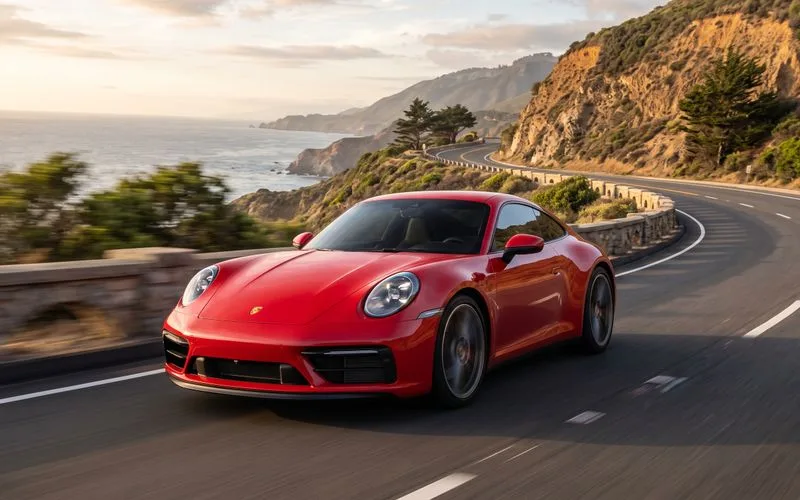 Porsche 911Sports CarBetter at: All-round polish
The default cross-shop for anyone with the budget — a more polished, better-equipped car with real back seats and modern safety tech, if you accept a $50,000-plus premium.
Compare2.01C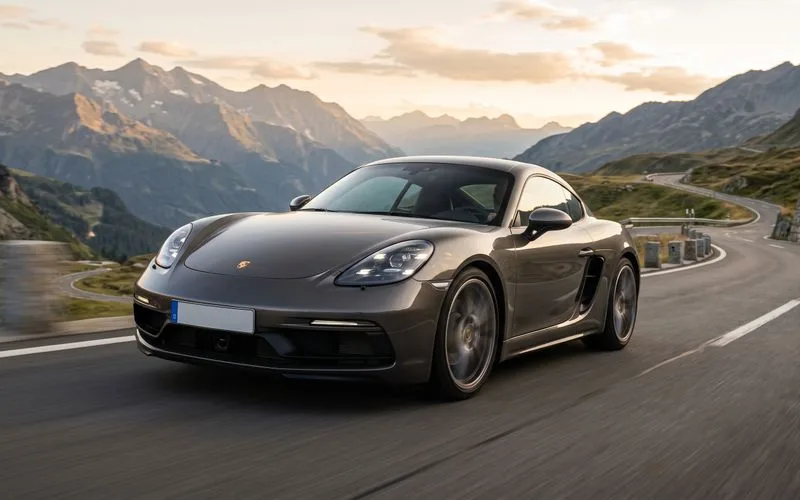 Porsche 718 CaymanSports CarBetter at: Handling finesse
The other mid-engine two-seater in reach, sharper and easier to place in tight spaces even though it gives away serious power.
Compare 2.47C+
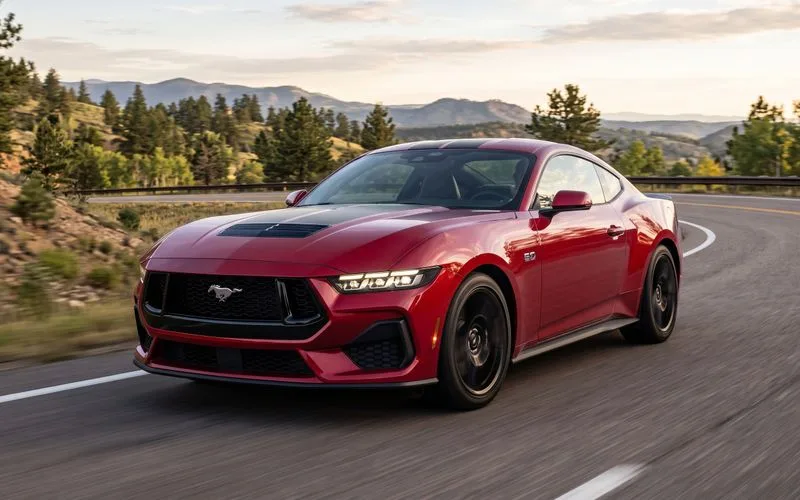 Ford MustangSports CarBetter at: Value and safety
Roughly half the money, with a usable rear seat, a bigger trunk and the standard AEB and lane keeping the Corvette does not offer at any price.
CompareSubject scores by year
Hover or tap a score to see what moved it versus the year before. A corner mark flags a big swing.
| Year | Performance | Efficiency | Safety | Space | Cost | Reliability | Tech | Use-case | Driving | Value |
|---|---|---|---|---|---|---|---|---|---|---|
| 2026 | 88 | 7 | 32 | 56 | 23 | 70 | 78 | 30 | 81 | 85 |
| 2025 | 88 | 8 | 50 | 55 | 21 | 73 | 72 | 31 | 80 | 79 |
Compare two years
Best fit & conditions
Higher scores mean a better fit for that use case. Learn more about use-case fit →
Subject profile
Trims & configurations
4 trimsScores above reflect the volume trim. Per-trim specs and scores are rolling out — the full lineup:
Detailed scoring by subject
1Performance & PowertrainThe Corvette's best-graded category.4.00A+
The volume 2025 Stingray runs the naturally aspirated 6.2L LT2 pushrod V8 at 490 hp @ 6,450 rpm, rising to 495 hp with the available NPP performance exhaust — carried over unchanged from 2024. 2025 is a change year at the top of the range rather than the bottom: it debuted the C8 ZR1 and its 1,064-hp twin-turbo LT7.
The LT2 makes 465 lb-ft, or 470 lb-ft with the performance exhaust — well past the top of the coupe normalization band, so the item clamps. The broad, flat pushrod-V8 curve is the Stingray's defining trait; the Z06's high-revving flat-plane LT6 actually makes less twist (460 lb-ft) and makes it far higher in the rev range.
Chevrolet claims 2.9 seconds to 60 mph for the Z51-equipped Stingray, and Car and Driver's instrumented figure of 2.8 s beats it — quicker than the entire mainstream coupe field and past the fast end of the segment band, so the item clamps at 100. Mid-engine weight distribution plus the dual-clutch transaxle makes the launch repeatable rather than a one-shot best.
A naturally aspirated V8 mounted directly behind the cabin gives instant, perfectly linear throttle response with no turbo lag anywhere in the range, and reviewers consistently rate the LT2 among the most immediate powertrains at any price. It falls short of the top of the band only on refinement in the narrow sense — the pushrod V8 is coarser and boomier at part-throttle cruise than a turbocharged six, and Active Fuel Management can be felt on light throttle.
Every 2025 Corvette uses the Tremec TR-9080 8-speed dual-clutch transaxle, which fires off quick, crisp shifts and holds gears sensibly in Sport and Track modes, with decisive paddle control that does not override the driver mid-corner. Marked down for low-speed manners — the dual-clutch can be hesitant or slightly jerky in stop-and-go traffic and when reversing — and because no manual gearbox is offered anywhere in the range.
The 2025 Corvette is rear-wheel drive across the volume lineup — Stingray, Z06 and the new ZR1 are all RWD — and all-wheel drive exists only on the electrified E-Ray, which drives the front axle with an electric motor. That is the framework's textbook "AWD restricted to top trims" case and lands in the low band, even though the eAWD system itself is sophisticated: instant electric torque to the front wheels with no mechanical link to the V8.
For 2025 the Corvette offers four genuinely distinct powertrains — the 6.2L LT2 pushrod V8, the 5.5L flat-plane LT6, the newly introduced twin-turbo 5.5L LT7, and the E-Ray's hybrid eAWD combination — exceptional breadth for a single nameplate and clearly above the framework's bar of multiple distinct powertrains including an electrified option. Held below the top of the band because the electrification is aimed purely at performance: there is no plug-in, no EV variant, and no efficiency-oriented choice anywhere in the range.
2Efficiency & RangeThe Corvette's lowest-graded category.0.00F
The volume trim is the Stingray coupe with the naturally aspirated 6.2L LT2 V8 and 8-speed dual-clutch, mechanically unchanged for 2025. EPA rates it at 19 MPG combined, near the bottom of the gas coupe band — a large-displacement V8 with no downsizing, turbocharging or electrification working in its favor.
16 MPG city sits at or below the floor of the gas coupe city band. A 495-hp naturally aspirated V8 has little to gain from Active Fuel Management in stop-and-go use, and there is no electric assist on the Stingray to cover low-speed running.
25 MPG highway is the Corvette's best EPA figure and its only nearly-ordinary one, but it still falls below the gas coupe highway band. Tall top gearing and cylinder deactivation help on steady cruise; frontal area and wide, sticky rubber cap the gain.
EPA lists a total range of 352 miles from the C8's 18.5-gallon tank, low within the coupe band. Real-world range falls sharply with spirited use, and the E-Ray gains nothing here since its 1.9 kWh battery is a performance device rather than a range extender.
EPA's own estimate is $4,000 a year at the standard 15,000 mi assumption — roughly 790 gallons of required premium — which sits well past the expensive end of the coupe cost band and scores at the floor. Cost to drive 25 miles is $6.67.
EPA lists the Corvette as premium gasoline required, not merely recommended — Chevrolet specifies 93 octane for the LT2 to make rated output, and the LT6 and LT7 engines are stricter still. There is no E85, diesel or home-charging escape hatch: the E-Ray's battery is replenished by the engine and regen only, so every mile is paid for at the premium pump.
3SafetyGrades below the middle of the scale.1.34D
NHTSA has published no NCAP overall star rating for the C8 Corvette in any model year, and 2025 is no exception — a two-seat sports car at this volume falls outside routine NCAP vehicle selection. Estimated at 4 stars from the C8's aluminum spaceframe and the long front crush zone a mid-engine layout affords, but there is no tested figure behind it. GM did submit a 2025 Stingray to an NHTSA FMVSS compliance audit (side-pole test, passed in January 2025), which is a pass/fail certification exercise and not a star rating.
IIHS has not crash-tested the C8 Corvette in any model year, so there is no Top Safety Pick or TSP+ award and not one individual crashworthiness result on record for the generation. Scored mid-band as untested-without-published-concerns rather than in the 0-49 band, which the guidance reserves for Marginal/Poor results or untested with known structural doubts. Held at the bottom of that treatment rather than above it because 2025 cars were covered by an open restraint-system recall (seat belt retractors able to lock in the stowed position and become inaccessible) — remedied free of charge, but a defect in the occupant-restraint path on this exact model year.
The C8's long-standing ADAS gap largely closed for the 2024 model year and 2025 carries that forward: Forward Collision Alert, Automatic Emergency Braking with Intelligent Brake Assist, Front Pedestrian and Bicyclist Braking, Lane Keep Assist with Lane Departure Warning and IntelliBeam auto high beams are standard on every trim including the 1LT, and Side Blind Zone Alert with Rear Cross Traffic Alert is standard on the volume 2LT and the 3LT. That is four of this item's five named features standard on the trim most buyers take. What keeps it out of the top band is that adaptive cruise control is not merely optional but unavailable at any price — GM engineers have said the C8's sensor architecture cannot support it without a redesign — and that blind-spot/cross-traffic coverage disappears entirely on the 1LT rather than being a package away.
Standard AEB with Intelligent Brake Assist operates 5-84 mph and detects vehicles to roughly 197 ft, and standard Front Pedestrian Braking covers pedestrians and bicyclists to about 131 ft. The daytime envelope is genuinely competitive. The night case is not, and the disclosure is GM's own: the manual states outright that FPB nighttime performance 'is very limited' and lists nighttime conditions among the circumstances in which pedestrians may go undetected. That is precisely the 50-79 profile the guidance describes — adequate daytime performance, weaker night and pedestrian results — and with no IIHS front crash prevention rating on the car there is no Superior or Advanced result to argue past it.
Side Blind Zone Alert with Rear Cross Traffic Alert is standard on the volume 2LT and on the 3LT, and on a car with the C8's rearward sightlines it is the single most valuable assist feature fitted — GM Authority has called it an absolute necessity on this vehicle. It is alert-only, though: mirror icons with no active steering or braking intervention, no safe-exit alert, and by the manual's own account it may miss vehicles approaching quickly from outside the zone and can be defeated by mud, snow or heavy rain on the rear-bumper sensors. Available on most trims, alert-only, is the middle of the 50-79 band, and the 1LT going without it entirely keeps it there rather than higher.
Lane Keep Assist with Lane Departure Warning is standard on all 2025 trims — a forward camera reads lane markings, the system arms above about 31 mph, gently turns the wheel toward a detected marking and flashes an amber cluster warning plus three-beep alert on an unintentional crossing. It is a keeping system and nothing more: the manual states plainly that LKA does not continuously steer the vehicle, so there is no lane centering and no highway-assist behavior to judge. Functional lane keeping without centering sits at the lower half of the 50-79 band, level with the Mustang's equivalent provision and well clear of the C8's pre-2024 state, which had no lane assistance at all.
Conventional fixed-speed cruise control only. The 2025 manual's Cruise Control section describes a plain set-and-hold system with no adaptive function, and the Advanced Driver Assistance Systems chapter contains no adaptive cruise entry at all — the sole reference to a 'gap setting for Adaptive Cruise Control' is boilerplate in a shared GM display chapter for features this car does not carry. There is no optional path to it either: GM engineers have said the C8's sensor architecture would need a redesign to support ACC, and it did not arrive with the 2024 safety additions or the 2025 model year. The one thing above plain cruise is the Following Distance Indicator, which reads out following time in seconds off the FCA sensor but does not control speed. The guidance puts basic cruise only in the 0-49 band; this sits near its floor with a couple of points for that readout.
No hands-free highway driving is available on the 2025 Corvette in any trim or package. Super Cruise is GM's strongest card in this item — a mature, heavily mapped North American system spread across most of the Chevrolet, GMC and Cadillac ranges — but it has never been offered on the C8, which carries neither the forward camera/radar suite it needs nor a driver-attention camera. The Corvette's own manual mentions Super Cruise only in shared GM boilerplate about features 'if equipped'. A couple of points above zero because the capability exists in the corporate portfolio; it buys a Corvette owner nothing.
All-LED headlamps with LED daytime running lamps are standard across the 2025 range, so there is no cheap-trim halogen penalty, and IntelliBeam automatic high beams — which switch the high beams on and off above 25 mph according to surrounding traffic — are standard equipment rather than bundled into an option package, as is headlamp leveling. Solid, complete hardware for the segment. It stops short of the top band on two counts: IIHS has never rated Corvette headlights, so there is no Good result to point to, and there is no curve-adaptive or matrix-segment beam of the kind the German coupes in this segment now fit as standard.
Sharply split, and it has been the C8's signature ergonomic trade since 2020. Forward and quartering vision is a real strength of the mid-engine layout — the short front deck, low cowl and forward-set windshield give a view over the nose no front-engine GT in this segment matches, and the curb view camera covers what the splitter hides. Rearward it is among the worst in the class: the engine deck, thick flying buttresses and a shallow letterbox rear window produce a blind zone owners routinely describe as the worst they have encountered, severe enough that aftermarket blind-spot mirrors are a common first purchase. Camera compensation is better than most rivals here — the Rear Camera Mirror replaces the mirror view outright with a wide-angle feed, alongside the HD rear vision camera and front and rear park assist — which lifts it above the Mustang and LC without approaching a naturally airy cabin. The Rear Camera Mirror is also unavailable on a convertible with the top down, though that does not bear on the coupe scored here.
4Space & ComfortMid-pack among this car's ten categories.1.71C-
The mid-engine C8 has no rear seat in any 2025 trim or body style — the LT2 sits directly behind the cabin bulkhead. Against the coupe band (4–5 seats) a strict two-seater clamps to the floor.
37.9 in of front headroom is mid-pack against the coupe band (36–40) — more than a Mustang fastback or BRZ, less than a BMW 2 Series. The C8 roofline is unchanged for 2025, so the published figure carries across the generation.
42.8 in is genuinely generous for a mid-engine two-seater and sits in the upper half of the coupe band (40–44) — the cabin is pushed well forward of the engine bay, which buys footwell length a front-engine coupe spends on its transmission tunnel.
The dual-trunk layout gives the Corvette far more usable luggage room than most mid-engine cars — two golf bags aft plus a carry-on up front — but 12.6 cu ft still lands in the lower third of the coupe band (4–26). Usable capacity drops sharply once the roof panel is stowed in the rear hold.
Clever packaging at the margins — a hidden bin behind the tilting center display, a parcel shelf behind the seats, and the frunk/rear-trunk pairing that makes the car genuinely weekend-usable — offsets sparse cabin cubbies: shallow door pockets, a small console bin and no meaningful glovebox. In 2025 the vertical climate-button spine still walls off the passenger and consumes the console real estate that the 2026 redesign later frees up.
The GT2 buckets fitted to volume 2LT/3LT Stingrays are among the better sports-car seats sold — supportive enough for track use yet repeatedly described as comfortable over multi-hour stints, with heating, ventilation and power bolster adjustment from 2LT up. The optional Competition Sport bucket is markedly narrower and harsher, which is what keeps this off the top band.
With Magnetic Ride Control the C8 rides with a compliance that is unusual for the performance on offer — Tour mode is genuinely GT-like over broken pavement while body control stays tight — and the optional GPS-memory front lift removes the usual low-car annoyance. Base Stingrays without MR on the larger wheels are noticeably firmer, and Z06/ZR1 on Cup 2 rubber firmer still.
The mid-engine layout puts the LT2 immediately behind the occupants' heads, so intake and exhaust noise is ever-present and there is audible drone at highway cruise; the wide staggered performance tires add coarse-surface road roar that owners on Z51/MagRide cars describe as loud enough to interfere with conversation. Acoustic laminated glass and active noise cancellation keep wind noise well controlled, so it is quieter than a Mustang GT or Supra but is no GT car.
The volume 2LT carries heated and ventilated front seats, a heated steering wheel, dual-zone automatic climate, memory package, head-up display, wireless charging and remote start — a rich set for a two-seat sports car, and in 2025 every one of those climate functions still has its own physical switch. Entry 1LT is meaningfully thinner, and there is no rear cabin to earn credit for.
5Cost of OwnershipOne of the Corvette's weakest categories.0.00F
The 2025 Corvette Stingray 1LT coupe opens at $68,300 plus a $1,895 destination charge, a $70,195 delivered base price that sits far above the top of the coupe normalization band and clamps the item at 0. It is nonetheless the cheapest way into the range by a wide margin — the next rung up, the E-Ray, is more than $36,000 dearer.
The Stingray is the volume model of the range and 2LT the volume trim within it — $75,400 plus $1,895 destination before options, but Corvettes are rarely ordered stripped and the Z51 package, Magnetic Ride and wheel/paint choices routinely push a real 2LT into the low $80,000s. CarEdge's average transaction figure for a Corvette Stingray, $82,220, brackets the same point and is used as the anchor.
The published estimates diverge more than usual — CarEdge puts 5-year maintenance and repairs at $2,799 (essentially scheduled service only), while KBB's 2025 Corvette cost-to-own carries $11,363 maintenance plus $2,527 repairs, $13,890 combined, because it prices in the consumables. The figure used splits them, which is what the Corvette's real running costs look like: an eight-quart dexos oil service, Michelin Pilot Sport 4S sets at roughly $1,600 fitted, and large brakes that wear fast if the car is driven the way it invites.
Kelley Blue Book projects the 2025 Corvette to hold 61% of sticker after five years and gave it a 2025 Best Resale Value award, second only to the Toyota Tacoma's 64.1% and far clear of the roughly 45% industry average. Every C8 model year has taken a KBB residual award, so this is a generation-long pattern rather than a one-year projection.
Chevrolet's Bumper-to-Bumper Limited Warranty runs 3 years or 36,000 miles on every 2025 vehicle including the Corvette, with no performance-model extension. That sits at the bottom of the segment band — the same term Ford and Toyota offer, a year short of Porsche's 4 yr / 50,000 mi.
The powertrain limited warranty is 5 years or 60,000 miles, the industry floor and the bottom of the band. Notably the mileage cap, not the term, is the binding constraint for most Corvette owners only in reverse — these cars are typically driven few enough miles that the five-year clock expires first.
Chevrolet covers one scheduled maintenance visit within the first 12 months and bundles 5-year/60,000-mile roadside assistance, and every 2025-and-newer GM vehicle now carries OnStar Basics — automatic crash response, remote commands, in-vehicle apps — for eight years at no charge, which is a genuinely long connected-services term rather than a trial. It lands mid-band rather than higher because a single free oil change is thin next to ToyotaCare's 2 years / 25,000 miles; the Corvette-specific sweetener is the Ron Fellows Corvette Owners School at Spring Mountain, subsidized to $1,000 against a $2,500 rate for Stingray buyers and free to ZR1 buyers.
$82,000 volume-trim price minus its estimated resale value after 5 years (61% retained, or about $50,020) leaves about $31,980 in depreciation. Add the projected $8,300 in 5-year maintenance and repairs, and owning this vehicle for 5 years costs about $40,280 in total.
6Reliability & QualityGrades above the middle of the scale.2.94B-
2025 is a settled, mechanically carry-over year of the C8 generation — the LT2 V8 and eight-speed DCT are unchanged and the only revisions are colors, a Habanero 3LT interior, a steering-wheel airbag cover and a revised Z51 spoiler — and the reliability data reflects a sorted-out car. Consumer Reports gives the 2025 Corvette a predicted-reliability score of 68, one of the two best figures in the entire Chevrolet lineup and ahead of the Porsche 718 Boxster and Nissan Z, and the Corvette took a J.D. Power model-level segment award in the 2025 Vehicle Dependability Study. It stops short of the top band because CR still rates it below the average 2025 model overall and owners themselves name reliability the car's weakest attribute. Scored on the volume Stingray; Z06/ZR1 carry materially higher complexity risk.
Chevrolet's multi-year dependability record is genuinely split. J.D. Power is favorable — 169 PP100 in the 2025 Vehicle Dependability Study against an industry average of 202, and 178 PP100 in the 2025 Initial Quality Study, third among mass-market brands and better than the 187 PP100 mass-market average. Consumer Reports is not: Chevrolet ranks 17th with a brand score of 42, dragged down by the Blazer EV (19) and the redesigned Equinox (17) even as the Corvette and Trax score well. Averaged, that is mid-pack. This item is deliberately brand-level, not model-level — the Corvette's own strong showing is credited in 6.1.1 — so it is held in line with the rest of the scored Chevrolet fleet.
Three NHTSA campaigns reach the 2025 model year: a seat-belt retractor recall (retractors can lock in the stowed position and be unusable in a crash), a fuel-system recall covering 2023–2026 cars where refueling spillage can reach an ignition source, and an exterior-lighting software recall for undetected rear turn-signal failures. Two of the three are real safety defects, which keeps this out of the upper band, but the count is modest for a sixth-year car and none of them are systemic or powertrain-structural. The Corvette also sits entirely outside GM's serious 6.2L L87 connecting-rod campaign that hammered the Silverado and Tahoe — the LT2 is a different, dry-sump engine built on a different line. TSB traffic clusters on the DCT park-position sensor, infotainment glitches and cabin squeaks and rattles rather than anything load-bearing.
The volume Stingray's 6.2L LT2 is the latest iteration of GM's Gen V small-block — a conventional pushrod V8 architecture with a decade-plus of high-mileage service across GM trucks and performance cars, given a dry-sump oiling system in the Corvette specifically to survive sustained cornering loads. That is one of the most proven performance powertrains sold in America and is why this scores far above the Chevrolet fleet average. The limiter is the other half of the driveline: the Tremec TR-9080 eight-speed dual-clutch is C8-exclusive with no pre-2020 history, and shudder, fluid leaks and park-position-sensor faults are the most-reported C8 owner complaint. 2025 benefits from being a late build — owner-complaint volume drops noticeably on post-2023 cars — but the unit has still not earned a long-mileage record.
Measured against price — the point of this item — the Corvette's cabin is one of the strongest in the dataset. The C8 brought extensive leather, genuine metal, carbon-fiber trim, a stitched headliner and heavily bolstered GT2/Competition seats, and 2025 adds the Habanero colorway plus the 3LT leather steering-wheel airbag cover pushed down to 1LT and 2LT. Reviewers consistently say the Stingray's interior reads like a car costing considerably more. It does not reach the top band because that verdict is relative to price rather than absolute: reviewers still put the material quality a step behind German rivals and the Jaguar F-Type, and the gap widens sharply at Z06/ZR1 money.
2025 is a late, well-shaken-out build year for Bowling Green — owner-complaint aggregations show noticeably fewer assembly reports on post-2023 cars, and Chevrolet's 178 PP100 in the 2025 Initial Quality Study is third among mass-market brands and better than the mass-market average. What keeps it out of the upper band is a persistent generational tail rather than a 2025-specific problem: dash and rear-hatch rattles on rough roads or cold mornings, scattered panel-gap and paint-blemish reports, targa-roof-panel sealing, and infotainment freezes and wireless CarPlay dropouts. That is the gap between it and a hand-built AMG GT or a Supra assembled to Toyota's initial-quality standard.
The Corvette's structural advantage over every exotic rival is that it is sold and serviced by Chevrolet: roughly 2,900–3,000 US franchised stores, so an owner is rarely far from factory service and warranty work — coverage a Porsche or AMG buyer cannot match, and the reason a mid-engine sports car here is a normal ownership proposition. The deduction is Corvette-specific rather than brand-specific: not every Chevrolet store is tooled or trained for the car, GM funnels the work to Corvette-certified dealers, and Z06/ZR1-level service concentrates in a smaller subset still. Combined with service satisfaction around the industry average, that lands it just under the mainstream Chevrolet models.
For a car of this performance the Corvette is remarkably cheap to keep: RepairPal puts average annual repair cost at about $737, within roughly $30 of a Mustang and a fraction of any exotic rival, because the LT2 shares its service logic and much of its parts channel with the most common V8 family in American independent shops and the enthusiast aftermarket is enormous and decades deep. It falls short of Mustang territory because genuine supercar consumables intervene — Cup 2-class tires, Magnetic Ride dampers, optional carbon-ceramic brakes and composite body panels are all expensive, and mid-engine packaging makes several jobs labor-intensive in a way a front-engine pony car is not.
7Technology & InfotainmentGrades above the middle of the scale.2.86B-
2025 is the last model year of the original C8 cabin: an 8.0-inch center touchscreen angled toward the driver, with no larger option anywhere in the range. That is near the floor of the coupe band (7–15.5) and the single biggest technology deficit on the car — the 14-inch screen and three-display layout arrived only with the 2026 interior redesign.
The underlying software is good — Android Automotive runs quickly, the graphics are clean and the physical climate switches mean the most-used functions never touch the screen at all. What holds it to the middle band is the hardware and the packaging: an 8-inch display is small for a car in this price class, and the vertical button spine that carries those switches is the C8's most criticized ergonomic feature, a wall between driver and passenger that is visually busy and hard to work by feel.
Wireless Apple CarPlay and wireless Android Auto are standard on every 2025 trim from 1LT up — a meaningful differentiator given that GM removed phone projection from its EV lineup, and one of the few features that works without an active connected-services subscription.
From the 2024 model year the C8 runs Android Automotive with Google built-in, so the 2025 car has native Google Maps, Google Assistant natural-language voice and Google Play on board rather than a GM-authored nav — genuinely one of the better factory stacks. It falls short of the top band because the Google apps sit behind a connected-services subscription once the trial lapses, and built-in navigation is only standard from 2LT up.
A 10-speaker Bose system is standard on 1LT and the 14-speaker Bose Performance Series is standard on the volume 2LT and on 3LT — strong, well-tuned audio for a two-seat cabin, though Bose sits a tier below the Burmester and Bowers & Wilkins systems the German rivals offer.
A 12-inch fully digital reconfigurable cluster is standard on every 2025 trim, with layouts that change by drive mode including a track-focused view — among the better clusters in the sports-car class and one of the few areas where the 2025 cabin was never criticized.
The Corvette runs GM's VIP electrical architecture and takes large over-the-air software updates spanning more than infotainment — Chevrolet delivered a 2025-model-year recall remedy for a turn-signal notification fault entirely over the air, which is real whole-vehicle capability rather than maps-only. It sits below the top band because GM ships feature-adding drops far less often than Tesla or Rivian, and some C8 updates have still required a dealer visit.
The myChevrolet app with OnStar covers the core set — remote start, lock/unlock, vehicle locate, status and diagnostics, plus recall and update checks — but the remote commands become subscription-gated once the included term ends, and the Corvette offers no phone-as-key.
A two-seat cabin means there is only one row to serve: USB-A and USB-C ports for both occupants, with a wireless phone charging pad standard from 2LT up. Adequate for who is aboard, but there is no household AC outlet, and this item's top band assumes multi-row port coverage the car has no place for.
Passive proximity entry, push-button start and remote start are standard equipment, and the optional front-axle lift with GPS memory is a genuine access convenience on a car this low. Held out of the top band by the absence of phone-as-key, and there is no liftgate to automate.
An HD Rear Vision Camera, a camera-based rear-view mirror and rear park assist are standard on every trim, and 2LT/3LT add HD front and rear cameras with a front curb view that genuinely helps place the low nose — plus the Performance Data Recorder, camera capability no rival matches. There is no true 360-degree surround-view system and no automated parking, which caps it at the top of the middle band.
A 12-inch-diagonal color head-up display with drive-mode-specific layouts — speed, rpm, g-force and navigation, including a track view — is standard on the 2LT and 3LT trims that make up the bulk of Corvette volume. Available on the trims most buyers actually order, though not on the base 1LT.
8Use-Case FitOne of the Corvette's weakest categories.0.04F
The 2025 Corvette is a strict two-seater with no rear bench and therefore no rear LATCH positions; a child seat can only ride in the front passenger seat with the airbag suppressed, which is not a daily family solution. The deep bucket seats and low sill make loading a child awkward even in that one position.
Better than the C8's reputation: the 2025 Corvette carries Forward Collision Alert, Automatic Emergency Braking with Intelligent Brake Assist, Front Pedestrian and Bicyclist Braking and Lane Keep Assist with Lane Departure Warning as standard on every trim, with Side Blind Zone Alert and Rear Cross Traffic Alert standard from the volume 2LT. What holds it well below the family band is everything else — no adaptive cruise at any price, no NHTSA or IIHS ratings anywhere in the C8 generation, no rear-occupant alert because there is no rear seat, and a $70,000 floor that is not a family price point.
With two seats there is no all-row comfort to assess, and total luggage volume is 12.6 cu ft split across a frunk and a rear compartment that is largely consumed once the removable targa panel is stowed. It is a competent two-person tourer, not a family road-trip vehicle.
The C8 is the most daily-livable car in the mid-engine class: the Tremec eight-speed dual-clutch is smooth in stop-and-go, Magnetic Ride Control keeps the ride supple, forward visibility over the short nose is genuinely good, and the optional GPS-memory front lift defuses driveways and speed bumps. It loses ground for the absence of adaptive cruise, restricted over-the-shoulder visibility, a cabin noisier than a normal commuter, and a console button spine that in 2025 still crowds the driver's right elbow.
19 MPG combined on required 93-octane premium works out to EPA's own $4,000 a year at 15,000 miles, and the consumables are worse than the fuel bill — staggered summer performance tires and sports-car insurance premiums make every commuting mile expensive. The E-Ray, Z06 and ZR1 are all worse still.
The overall footprint is manageable at 182.3 in long, but the car is 76.1 in wide, the 38.9 ft turning circle is poor for that length, and the low front splitter makes driveway aprons and parking blocks a constant calculation unless the optional front lift is fitted. Standard HD rear camera and rear park assist plus the 2LT's front curb-view camera are the mitigations.
Chevrolet publishes no towing capacity for the Corvette in the US market and offers no factory hitch, and there is no bed, no cargo floor and no folding seat — the entire load space is 12.6 cu ft across two sealed compartments. It is not meaningfully work-capable.
The composite body panels resist dings and rust and the pushrod LT-series V8 architecture is genuinely fleet-proven in GM trucks, which counts for something. Everything around it does not: leather and microsuede trim, magnetorheological dampers, a dual-clutch transaxle, roughly 5 in of ground clearance and low-profile summer tires all punish hard-use abuse, and the Corvette has no fleet-duty track record.
There is no 120V household outlet, no roof rails or rack ecosystem, no factory hitch, no bed-access hardware and no tie-down provisions; both cargo compartments are carpeted and sealed rather than washable. The accessory catalog is cosmetic and track-oriented.
This is the Corvette's strongest ownership mission and it is not close: the GT1/GT2 seats draw consistent long-haul praise, Magnetic Ride keeps the highway ride settled, the head-up display is standard from 2LT, the roof panel comes out for open-air touring, and 352 miles of range covers a real driving day. The ceiling is set by a 63-rated noise level and by having no adaptive cruise at all — exactly the fatigue reducer this item asks about.
The volume Stingray is rear-wheel drive on summer rubber with roughly 5 in of ground clearance, no roof rails, no tow rating and no camping provisions — a gravel forest road is the practical limit even with the front lift raised. The E-Ray's front electric drive unit makes a genuinely all-weather Corvette, but that is a far higher price of entry, not the volume configuration.
12.6 cu ft is respectable for a mid-engine two-seater and the rear compartment was deliberately shaped to swallow two golf bags, but it is split across two small sealed holds, there are no seats to fold, no roof rails and no hitch, and stowing the removable roof panel consumes most of the rear space — the exact trade-off that bites on a weekend trip.
9Driving ExperienceOne of the Corvette's strongest categories.3.46B+
The mid-engine C8 layout puts roughly 40/60 weight distribution and a very low polar moment under the driver, and the aluminum spaceframe with double wishbones at both ends keeps the body flat and predictable well past the point where front-engine rivals start leaning on their outside tires. A Z51-equipped Stingray pulls comfortably past 1.0 g on the skidpad, and Magnetic Ride Control lets it do that without the brittle low-speed ride that usually pays for it — top-of-class handling by any measure, not just for the money.
With no driveshaft and no engine mass loading the front axle, the C8's electric rack is unusually clean — quick off-center, accurately weighted and consistent in its build-up mid-corner, and it is routinely singled out as one of the better electrically assisted setups on sale. It still filters more surface texture than the best hydraulic-era systems and than a 911's rack, so it reads precise and trustworthy rather than genuinely talkative.
Brembo hardware at all four corners plus the mid-engine rear weight bias give the C8 unusually short, repeatable stops — a Z51 Stingray records 60–0 mph in 101 ft, and fade resistance holds up over repeated hard use. The electronic brake-by-wire pedal is firm and easy to modulate at speed; reviewers note it feels slightly synthetic in the first few millimeters at parking-lot speeds, which is the only thing keeping this out of the top few points.
A naturally aspirated 6.2L V8 paired to the Tremec eight-speed dual-clutch transaxle means throttle response is immediate and linear with no turbo lag to calibrate around, and the DCT's full-throttle shifts are quick and clean. The deductions are all at low speed: dual-clutch creep can be marginally abrupt in stop-and-go traffic, Active Fuel Management is detectable on light throttle, and the auto stop/start restart is more felt than in a torque-converter car.
Under load the LT2 is one of the best-sounding engines at any price, and with the performance exhaust open it is the single biggest reason to drive this car — 'pleasant under load' undersells it. The offset is that the engine sits directly behind the occupants' heads with only a bulkhead between, so highway cruising carries induction and exhaust drone a front-engine GT does not.
38.9 ft curb-to-curb sits near the wide end of the coupe band — wide front tires on a short wheelbase limit steering lock, and the car's 76.1 in width turns tight garages and three-point turns into a genuine chore. This is the clearest everyday-usability penalty in the category.
The seating position itself is excellent — low, well centered on the pedals, with a squared-off wheel that telescopes generously, seats that hold without punishing, and a low cowl and short hood that make the front end easy to place. What costs it points is everything around that: 2025 is still the button-spine cabin, a wall of climate switches running down the console that reviewers panned as visually busy and hard to work by feel, plus wide sills that make ingress a deliberate act, poor over-the-shoulder visibility and tight headroom with the roof panel in.
This is as close to a consensus enthusiast pick as the segment produces: supercar-adjacent mid-engine responses, a naturally aspirated V8 soundtrack that never gets old, and enough breadth that the same car is credible on a back road, at a track day and on a commute. 2025 stretches that character further than any previous year by adding the twin-turbo ZR1 above the range. The absence of any manual transmission is the only meaningful complaint enthusiasts still level at it.
10Value & Market PositionOne of the Corvette's strongest categories.3.39B+
The $70,195 Stingray 1LT is respectably kitted for a mid-engine two-seater — Mulan-leather GT1 buckets, a 12-inch digital cluster, an 8-inch touchscreen with wireless CarPlay and Android Auto, a 10-speaker Bose system, staggered 19/20-inch wheels on Michelin all-seasons, and forward collision alert, automatic emergency braking, lane keep assist and blind-zone alert as standard. It is held to the middle of the band because the driver-assist suite stops there — adaptive cruise control is not offered anywhere in the C8 range — and because heated and ventilated seats, the head-up display and the performance data recorder all require stepping up to 2LT.
Performance per dollar is the Corvette's defining commercial argument and it is not close: a $70,195 Stingray reaches 60 mph in 2.9 seconds where a base Porsche 911 Carrera costs about $120,100 and takes roughly 4.0 seconds, and the mid-engine chassis delivers exotic-car cornering behavior at half the price of anything shaped like it. The near-top score reflects a reviewer consensus that has been consistent across the whole C8 generation rather than a single flattering comparison.
For 2025 one nameplate spans four distinct powertrains and roughly $105,000 of price ladder — Stingray in 1LT, 2LT and 3LT with the Z51 package, the hybrid eAWD E-Ray, the flat-plane Z06, and the newly launched 1,064-hp ZR1 — with a removable-roof coupe and a retractable hardtop convertible available across most of it. Short of the top only because there is no low-cost entry point and no manual gearbox anywhere in the range, so the breadth is all upward.
The Corvette remains the best-selling premium sports car in the United States — 24,533 deliveries in calendar 2025 against 13,574 for the Porsche 911 — but that is a 26.4% fall from 2024's 33,331, and market share within the segment slid from 56% in Q1 to 39.1% by Q3. The decline is largely explainable by supply rather than demand (Bowling Green retooling downtime, a carbon-fiber shortage throttling ZR1 output, and a Z06/ZR1 stop-sale recall), but buyers holding out for the refreshed 2026 interior were part of it too, so the trajectory is marked down.
Corvette is one of the most recognizable nameplates in the American market, with a multi-generational owner base, an active club and event culture, and the residual strength to prove the desirability is real rather than sentimental. It stops short of the top of the band because the halo belongs to the nameplate rather than the badge on it — Chevrolet's broader mainstream image is neutral at best in a segment where Porsche's brand equity is itself part of the product.
Scored on buyer benefit, 2025 was an unusually good year to buy a Corvette: the C8 spent most of its life carrying dealer markups, but slowing sales and heavy inventory turned that around, with reported discounts of $7,000–$10,000 on remaining 2025 stock, a $4,000 loyalty allowance for existing Corvette and Camaro owners that did not carry over to 2026 cars, and a stackable Costco Executive member incentive. Held below the top of the band because availability was uneven by trim and region — Stingrays and Z06s discounted freely while the ZR1 transacted over sticker.
2025 is the sixth model year of the C8 generation that launched for 2020, and the volume Stingray was a straight carry-over — the year's news, the 1,064-hp ZR1, sits at the very top of the range and changes nothing for the buyer of a $70,000 coupe. Worse for a 2025 shopper, Chevrolet's mid-cycle refresh landed immediately afterward for 2026 with a redesigned dashboard, a 12.7-inch center screen, a 14-inch cluster and the deletion of the much-criticized button wall, so this is the last year of the outgoing interior rather than a fresh one.
The Corvette took Car and Driver's 10Best for 2025 — its 26th appearance, and the C8 has been named in every model year of the generation — with both the Stingray and E-Ray cited, and it is a habitual comparison-test winner against far more expensive machinery. The one consistent counterweight in reviews and owner surveys is quality and reliability rather than the driving product, which keeps it just short of the top of the band.