

The verdict
A struggling subcompact hatchback, strong on driving and held back by performance.
Overall 1.16 (D) across 10 graded subjects. Its strongest is driving experience at 3.26 (B+), its weakest performance & powertrain at 0.00 (F). 5 of 10 subjects grade at C− or better.
Jump to scoresStrengths
- Driving Experience
- Value & Market Position
- Technology & Infotainment
What holds it back
- Performance & Powertrain
- Space & Comfort
- Use-Case Fit
Top alternatives
Cars shoppers cross-shop with the Fiat 500e 1.78C-
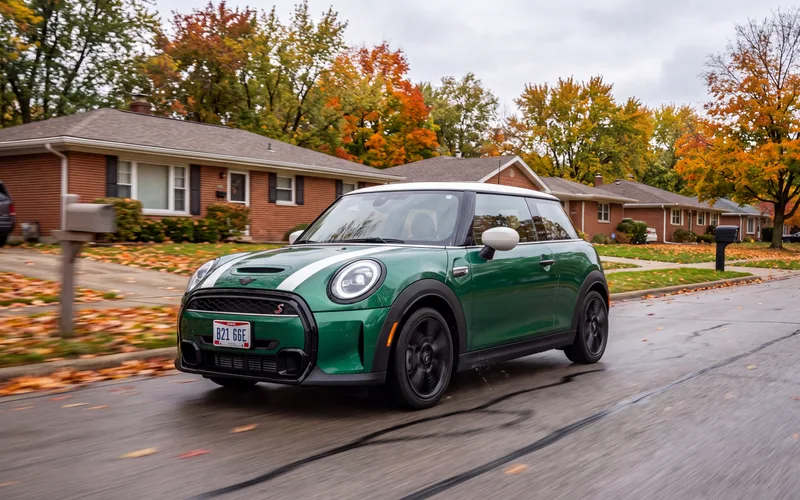 Mini Cooper HardtopSubcompact HatchbackBetter at: Driving fun
The same small-car charm with more power, better dynamics, a stronger dealer network and far better resale — the cross-shop nearly every 500e shopper actually makes.
Compare 2.09C
2.09C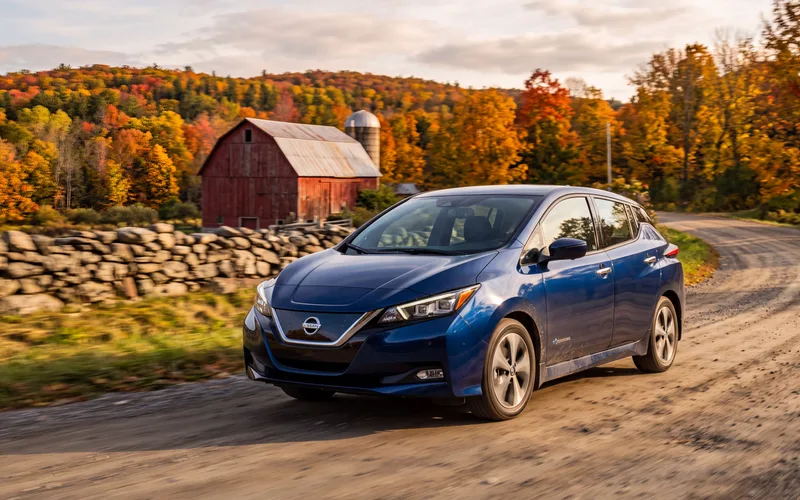 Nissan LeafCompact HatchbackBetter at: Range
If you want an affordable EV rather than this specific piece of design, the Leaf offers substantially more range and four usable doors for the money.
Compare 1.80C-
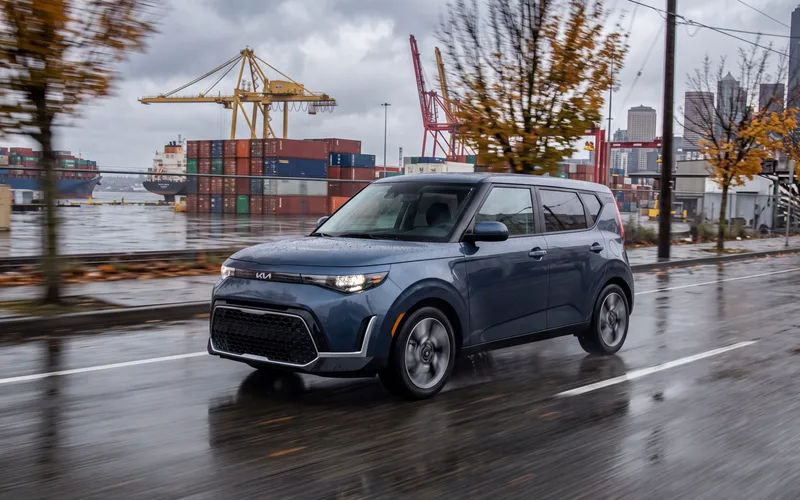 Kia SoulSubcompact HatchbackBetter at: Space for money
Cheaper, far roomier inside for the same tiny parking footprint, with a long warranty and dealers everywhere.
CompareHow it's evolved
6 scored model years · 2017–2026
Subject scores by year
Hover or tap a score to see what moved it versus the year before. A corner mark flags a big swing.
| Year | Performance | Efficiency | Safety | Space | Cost | Reliability | Tech | Use-case | Driving | Value |
|---|---|---|---|---|---|---|---|---|---|---|
| 2026 | 27 | 57 | 52 | 32 | 54 | 44 | 65 | 39 | 73 | 52 |
| 2025 | 26 | 57 | 43 | 28 | 57 | 52 | 62 | 37 | 77 | 63 |
| 2024 | 29 | 57 | 44 | 31 | 69 | 57 | 65 | 41 | 78 | 62 |
| 2019 | 27 | 59 | 21 | 28 | 55 | 53 | 29 | 35 | 78 | 43 |
| 2018 | 27 | 59 | 20 | 29 | 55 | 58 | 33 | 35 | 79 | 53 |
| 2017 | 27 | 59 | 24 | 28 | 59 | 55 | 33 | 36 | 81 | 57 |
Compare two years
Best fit & conditions
Higher scores mean a better fit for that use case. Learn more about use-case fit →
Subject profile
Academic Probation · NHTSA safety recalls
Oct 21, 2025Exterior lighting: headlightsThe headlight horizontal aim adjustment is not covered as intended, which can result in improperly adjusted headlights. As such, these vehicles fail to comply with the requirements of Federal Motor Vehicle Safety Standard number 108, "Lamps, Reflective Devices, and Associated Equipment."
Defect
Chrysler (FCA US, LLC) is recalling certain 2024-2025 Fiat 500e Battery Electric (BEV) vehicles. The headlight horizontal aim adjustment is not covered as intended, which can result in improperly adjusted headlights. As such, these vehicles fail to comply with the requirements of Federal Motor Vehicle Safety Standard number 108, "Lamps, Reflective Devices, and Associated Equipment."
Risk
Improperly adjusted headlights can reduce driver visibility or create a glare for oncoming traffic, increasing the risk of a crash.
Remedy
Dealers will install headlight adjustment plugs. Owner notification letters were mailed December 10, 2025. Owners may contact Chrysler customer service at 800-853-1403. Chrysler's number for this recall is A4C. Vehicle Identification Numbers (VINs) involved in this recall will be searchable on NHTSA.gov beginning October 28, 2025.
NHTSA campaign 25V715000 ↗Manufacturer no. A4C2,195 vehicles potentially affected (all models in the campaign)Owners notified Dec 10, 2025Filed by Chrysler (FCA US, LLC)Filed as 500E
1 recall on other model years of the 500e (2024)
Jul 3, 2024Air bags: frontal · Seat belts: frontA seat belt buckle switch sensor may be improperly connected, preventing the front seat air bag from deploying as intended.
Defect
Chrysler (FCA US, LLC) is recalling certain 2017-2024 Alfa Romeo Giulia, 2018-2025 Alfa Romeo Stelvio, 2019-2023 Fiat 500X, Jeep Renegade, and 2024 Fiat 500E vehicles. A seat belt buckle switch sensor may be improperly connected, preventing the front seat air bag from deploying as intended.
Risk
A front seat air bag that does not deploy as intended can increase the risk of injury in a crash.
Remedy
Dealers will repair the connection, free of charge. Owner notification letters were mailed beginning August 27, 2024. Owners may contact FCA US, LLC customer service at 1-800-853-1403. FCA US, LLC's number for this recall is 82B.
NHTSA campaign 24V510000 ↗Manufacturer no. 82B337,128 vehicles potentially affected (all models in the campaign)Owners notified Aug 27, 2024Filed by Chrysler (FCA US, LLC)Filed as 500E
Source: NHTSA Office of Defects Investigation recall database, model years 2017–2026. Recalls are listed by model year as the manufacturer filed them; whether a specific car is affected depends on its VIN — check a VIN at nhtsa.gov ↗. NHTSA model names matched to this page: 500E.
Detailed scoring by subject
1Performance & PowertrainThe 500e's lowest-graded category.0.00F
The volume 500e uses the same modest-output front motor as the rest of the 2025 U.S. lineup.
Instant motor torque makes the car eager at urban speeds, although the raw output is low by EV-hatchback standards.
Fiat's estimate is leisurely for an EV, though independent tests of this unchanged powertrain have been several tenths quicker.
The single motor responds immediately and smoothly, with well-judged Normal, Range and Sherpa modes; reviewers consistently describe it as eager and zippy in town despite modest output.
Its single-speed EV reduction gear has no shifts to hunt or interrupt power, so delivery is seamless in normal use.
Every 2025 U.S. 500e is front-wheel drive, with no AWD option on any trim or special edition.
The 2025 U.S. lineup has one 42-kWh battery, one 87-kW motor and front-wheel drive across all appearance-led trims.
2Efficiency & RangeMid-pack among this car's ten categories.1.85C-
The standard all-season-tire configuration is the representative volume specification; the optional summer tires improve the EPA result.
Regenerative braking makes city driving the 500e's most efficient use case, though the score uses the standard all-season configuration.
Highway efficiency trails its city result, as expected for this small urban EV.
The standard-tire car's short EPA range confines it mainly to urban and regional duty; the summer-tire configuration adds eight miles.
The small battery limits the time spent charging, but the 85-kW peak is low beside modern EV hatchbacks.
Fiat quotes approximately 35 minutes to reach 80%; its consumer material does not state the starting state of charge, so this is the closest manufacturer-defined fast-charge interval to the rubric's 10–80% measure.
The standard configuration's efficient electric drivetrain keeps annual energy spending very low in absolute terms.
Electricity is inexpensive and the included Level 1 cable can cover modest commuting, while 11.5-kW Level 2 support enables an overnight full charge. The short range and modest 85-kW CCS fast charging make apartment ownership and road trips less convenient.
3SafetyGrades near the bottom of the scale.0.88F
NHTSA did not select or rate the 2025 500e, so 4 stars is an estimate anchored by the current generation's official four-star Euro NCAP result rather than a claimed U.S. rating.
IIHS has not evaluated this generation and it earned no award, leaving no U.S. crashworthiness result. The generation's four-star Euro NCAP test provides useful but not directly equivalent evidence of generally sound, not class-leading protection.
The volume INSPI(RED) has forward-collision warning/AEB with pedestrian and cyclist detection plus active lane-departure correction, but ACC, blind-spot monitoring and rear cross-traffic detection are reserved for better-equipped editions.
Standard full-speed forward-collision mitigation detects vehicles, pedestrians and cyclists, and the generation performed respectably in Euro NCAP active-safety testing. There is no IIHS day/night pedestrian or vehicle-to-vehicle test to establish top-tier performance.
The volume INSPI(RED) lacks blind-spot monitoring, rear cross-traffic alert/braking and safe-exit assistance. Alert-only blind-spot and rear cross-path systems appear on the costlier Inspired By configurations.
Standard Lane Departure Warning Plus makes small steering corrections, giving the base car useful departure prevention but not continuous lane centering. True combined lane-centering/Level 2 assistance belongs to the Inspired By models.
The volume INSPI(RED) has conventional/intelligent speed control but no adaptive cruise or combined highway assist. Stop-and-go ACC and the hands-on Co-Driver function are equipment-dependent and fitted to higher editions.
No 2025 500e offers hands-free driving; even the available Level 2 system is explicitly hands-on.
Full-LED automatic headlights are standard, but IIHS has not tested their beam performance and automatic high beams are not established as standard on the volume trim. A 2025 recall for an accessible horizontal aim adjuster further tempers the score, though it does not show poor illumination.
The tiny footprint is easy to place, but thick roof pillars create notable blind zones and the base trim lacks blind-spot monitoring or a surround-view camera to compensate. A standard backup camera helps only when reversing.
Two outboard LATCH positions have identifiable anchors, but the two-door body and extremely tight rear compartment make loading and fitting rear-facing seats awkward; three-across is unrealistic in this four-seat minicar.
4Space & ComfortOne of the 500e's weakest categories.0.00F
The two-door 500e has a 2+2 layout across the 2025 U.S. range.
The tall city-car roof provides generous clearance for front occupants.
Front legroom is adequate for the hatchback class despite the car's tiny footprint.
Rear headroom sits near the bottom of the hatchback normalization range.
Only 29.5 inches and two-door access make the rear seat unsuitable for most adults.
The hatch is useful, but its capacity falls below the framework's already-small hatchback band.
The open console, folding cupholder and split rear seat add modest flexibility, but bins and door pockets are notably small and the rear seats do not fold flat.
Front padding and adjustment are decent, but lateral support is limited; the cramped rear bench is effectively children-only.
Review results vary from firm-but-not-harsh to stiff and choppy, with the short wheelbase consistently exposing broken pavement.
The motor is quiet, but weak sound insulation admits conspicuous wind, tire and road noise, particularly at highway speed.
Automatic climate control and remote preconditioning are useful, but the volume (RED) trim lacks standard heated seats and there are no rear climate amenities.
5Cost of OwnershipMid-pack among this car's ten categories.1.81C-
For 2025, INSPI(RED) is the entry trim; its delivered sticker is materially lower than the 2024 launch car's.
Icona is the representative volume trim: it is the regular midrange 2025 model between the base INSPI(RED) and limited 500-unit Armani collector edition.
The model-year- and trim-specific projection reflects the low routine service needs of an EV but includes tires, wear items, and out-of-warranty repairs over 75,000 miles.
The projection implies exceptionally steep depreciation, consistent with weak U.S. demand and deep incentives; it is a forecast rather than an observed five-year result for this generation.
Fiat provides one year and 14,000 miles more basic coverage than the mainstream three-year/36,000-mile norm.
The relevant EV powertrain and battery term matches the mainstream electric-car norm but is not class-leading.
There is no complimentary scheduled maintenance, but every 500e included a Level 2 wall unit or public-charging credits, plus four years of unlimited-mile roadside assistance. That is a meaningful EV ownership package despite the lack of free service.
$34,495 volume-trim price minus its estimated resale value after 5 years (30% retained, or about $10,349) leaves about $24,147 in depreciation. Add the projected $3,626 in 5-year maintenance and repairs, and owning this vehicle for 5 years costs about $27,773 in total.
6Reliability & QualityGrades below the middle of the scale.1.48D
Consumer Reports explicitly predicts that the 2025 500e will be less reliable than the average new car. J.D. Power publishes a model page but no substantive quality or dependability score, and the tiny U.S. owner sample provides little contrary evidence.
Fiat has insufficient U.S. survey volume to earn a current Consumer Reports brand-reliability rank and is not ranked in J.D. Power's 2025 VDS. That absence, combined with the brand's weak historical U.S. quality reputation, places it below the segment mainstream rather than mid-pack.
The 2025 model is covered by one NHTSA campaign, a headlamp-adjustment access noncompliance remedied by installing a plug. It presents a visibility/glare risk but is neither a failed component nor a systemic battery, propulsion, or fire defect; the earlier seat-buckle recall was limited to 2024 production.
The 42-kWh battery and 117-hp front-motor system had several years of European use before the 2025 U.S. model, with no NHTSA propulsion or battery-fire recall pattern. It is still too new and too rare in North America to count as a proven high-mileage powertrain family.
The cabin is stylish but materially economy-grade at the volume Icona's premium price. Edmunds found extensive hard plastic across the dashboard, doors, and console and specifically described the interior as cheap-feeling.
Assembly quality is notably better than the material selection. Edmunds' tested 2025 car had good fit and finish with no rattles, squeaks, or ill-fitting panels, though the limited sample prevents a top-tier score.
Fiat service coverage exists nationally through many multi-brand Stellantis stores, but roughly 318 listed locations is thin relative to mainstream brands and geographic gaps remain. Low U.S. 500e volume also means many shops have limited hands-on experience with this EV.
Routine EV maintenance should be inexpensive and the factory warranty is competitive, but this Turin-built, extremely low-volume U.S. model has little domestic aftermarket support. Collision, trim, and EV-specific components are therefore likely to depend on Fiat/Mopar channels and can involve slower sourcing than mainstream hatchbacks.
7Technology & InfotainmentOne of the 500e's strongest categories.2.19C
Every 2025 U.S. trim uses the same wide Uconnect 5 NAV display.
Uconnect's menus are generally understandable, but testers found lag, low-resolution graphics and small or cluttered controls.
Both wireless ecosystems are standard on the volume trim and worked reliably in testing.
Native NAV and Dynamic Range Mapping are standard and charging-aware, though map detail trails newer systems and most owners can use phone projection.
The volume model's unbranded six-speaker setup is adequate; a branded JBL system is confined to better-equipped variants.
A crisp full-digital 7-inch cluster is standard, with EV and navigation information directly ahead of the driver.
Uconnect 5 supports built-in over-the-air firmware and map updates, but there is little evidence of Tesla-style feature-adding whole-vehicle updates.
FIAT Connect covers the important EV functions—locks, preconditioning, charge/battery status and vehicle location—but lacks a documented phone key.
A USB-C, USB-A and wireless charging pad are standard, which is solid for two front occupants, but there is no abundant rear-row or AC-outlet provision.
Proximity locking/unlocking and push-button operation are standard, although phone-as-key and a hands-free hatch are absent.
The volume trim supplies a rear camera and rear parking sensors; broader front/side sensors are upper-trim equipment and no U.S. surround-view camera is documented.
No head-up display is offered on the 2025 U.S. 500e lineup.
8Use-Case FitOne of the 500e's weakest categories.0.47F
Two-door access, a 29.5-inch rear legroom figure and a 7.5-cu-ft hatch make installing a rear-facing seat and carrying a stroller regularly frustrating.
Standard pedestrian/cyclist AEB, lane-departure intervention and speed assistance are welcome, but the base trim omits blind-spot monitoring and the 2025 car has no published U.S. NCAP result.
Adults do not fit comfortably in back, luggage capacity is tiny, highway noise is elevated and 141-149 miles of EPA range forces frequent charging.
Smooth EV response, excellent front visibility, one-pedal Range mode and the tiny footprint make city traffic exceptionally easy, despite a firm ride.
Its small EV battery and excellent measured efficiency make home-charged commuting exceptionally inexpensive, with few routine powertrain consumables.
At only 143 inches long with a 31.5-foot turning circle, light quick steering and parking aids, this is one of the easiest U.S.-market cars to place in a city.
The 500e has no published U.S. tow rating and only 7.5 cu ft behind the rear seat, so it is not meaningfully suited to work loads.
The EV driveline is mechanically simple, but the fashion-focused interior, 17-inch tires, very low 4.5-inch clearance and limited fleet history are poor foundations for repeated abuse.
There is no onboard AC power, cargo tie-down system, tow package or meaningful upfit ecosystem.
Short EPA range, 85-kW peak charging, road noise and marginal seat/ride comfort make it a poor highway mile-eater even though some driver assistance is available.
Front-wheel drive, 4.5 inches of clearance and no tow rating leave it pavement-bound, with little capacity for outdoor toys.
A 50/50 folding rear seat and hatch permit occasional long items, but just 7.5 cu ft with seats up and a non-flat folded surface sharply restrict bulky gear.
9Driving ExperienceThe 500e's best-graded category.3.26B+
The low battery, short wheelbase and quick responses keep body roll low and make the car nimble, though grip and high-speed composure are not hot-hatch caliber.
Steering is quick and accurate enough for city placement but overly light and largely devoid of road feedback.
Instrumented tests found short emergency stops and effective one-pedal operation, tempered by a grabby initial pedal response in Consumer Reports testing.
The single-motor EV powertrain is smooth, immediately responsive and well calibrated around town; its modest acceleration only becomes limiting at higher speeds.
The motor is nearly silent and vibration-free in ordinary driving, although testers detected more high-pitched motor whine under load than expected from an EV.
The turning diameter beats the lower edge of the hatchback normalization band and is exceptional for tight streets.
The upright seat offers substantial adjustment and real climate buttons help, but thick pillars create blind spots and some touchscreen controls are fussy.
Its immediate response, tiny footprint, playful styling and agile chassis give it genuine urban character, though it is not an electric hot hatch.
10Value & Market PositionOne of the 500e's strongest categories.2.25C
Even the base INSPI(RED) includes LED headlights, automatic climate control, a 10.25-inch touchscreen with navigation and wireless smartphone integration, wireless charging, adaptive cruise, lane centering, and automatic emergency braking. The equipment is generous, though the tiny cabin and cloth/manual-seat specification limit the premium feel.
The 2025 price cut and strong standard equipment improve the equation, but 149 miles of range, four-seat packaging, and minimal cargo utility remain poor capability per dollar beside similarly priced EVs with roughly twice the range and far more room.
Three price points and distinct themes offer reasonable cosmetic choice, but all use the same 117-hp front-drive motor, 42-kWh battery, two-door body, and essentially identical range. There is no AWD, long-range, convertible, or performance configuration in the U.S. lineup.
The reintroduced 500e remained an exceptionally small U.S. seller, and production pauses caused by weak demand reinforce that it had not achieved meaningful market acceptance by the 2025 model year.
The iconic 500 shape, Italian identity, and Armani collaboration give this car more style appeal than most economy EVs. Fiat's tiny U.S. footprint, weak acceptance, and poor residual outlook offset that charm and keep the brand from true premium desirability.
Buyer-side savings are exceptional: Fiat advertises $7,500 bonus cash on remaining 2025 cars, and observed transaction prices are thousands below sticker. The discounts are highly beneficial even though their scale reflects weak demand and hurts resale.
The authoritative production record places 2025 in the generation that began for the U.S. in 2024, so it is only the second local model year. For 2025, Fiat consolidated the prior themed editions into Icona and added the Armani collector model, but retained the existing EV powertrain and core technology.
The 2025 Urban Green Car of the Year award recognizes its efficiency and city focus, but major reviews settle near 6/10 and repeatedly criticize range, space, ride, and value. It is charming and distinctive, not a consistent comparison winner.