

The verdict
A struggling subcompact hatchback, strong on driving and held back by safety.
Overall 0.71 (F) across 10 graded subjects. Its strongest is driving experience at 3.50 (A-), its weakest safety at 0.00 (F). 4 of 10 subjects grade at C− or better.
Jump to scoresStrengths
- Driving Experience
- Cost of Ownership
- Efficiency & Range
What holds it back
- Safety
- Performance & Powertrain
- Space & Comfort
Top alternatives
Cars shoppers cross-shop with the Fiat 500e 1.78C-
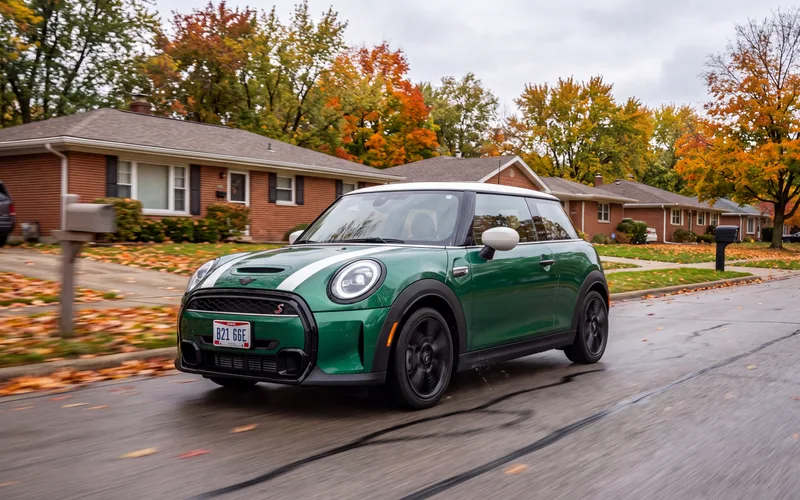 Mini Cooper HardtopSubcompact HatchbackBetter at: Driving fun
The same small-car charm with more power, better dynamics, a stronger dealer network and far better resale — the cross-shop nearly every 500e shopper actually makes.
Compare 2.09C
2.09C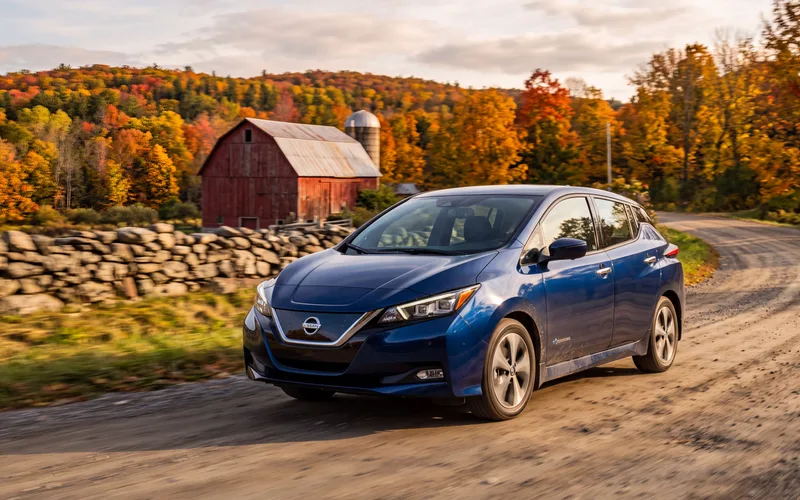 Nissan LeafCompact HatchbackBetter at: Range
If you want an affordable EV rather than this specific piece of design, the Leaf offers substantially more range and four usable doors for the money.
Compare 1.80C-
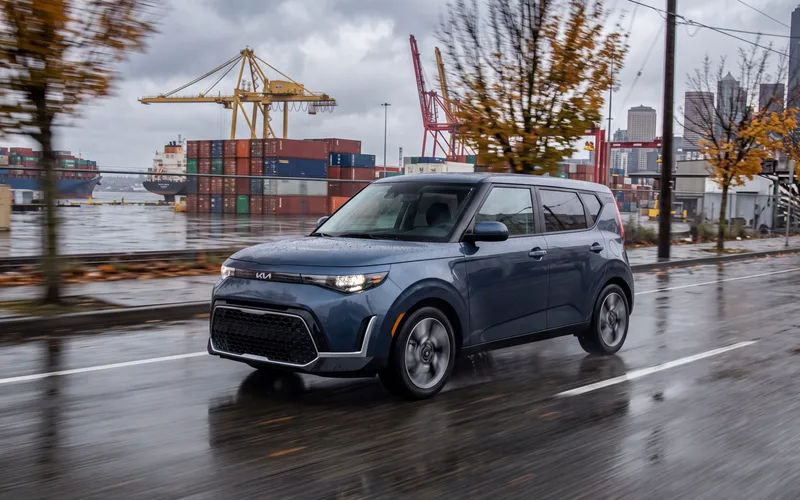 Kia SoulSubcompact HatchbackBetter at: Space for money
Cheaper, far roomier inside for the same tiny parking footprint, with a long warranty and dealers everywhere.
CompareHow it's evolved
6 scored model years · 2017–2026
Subject scores by year
Hover or tap a score to see what moved it versus the year before. A corner mark flags a big swing.
| Year | Performance | Efficiency | Safety | Space | Cost | Reliability | Tech | Use-case | Driving | Value |
|---|---|---|---|---|---|---|---|---|---|---|
| 2026 | 27 | 57 | 52 | 32 | 54 | 44 | 65 | 39 | 73 | 52 |
| 2025 | 26 | 57 | 43 | 28 | 57 | 52 | 62 | 37 | 77 | 63 |
| 2024 | 29 | 57 | 44 | 31 | 69 | 57 | 65 | 41 | 78 | 62 |
| 2019 | 27 | 59 | 21 | 28 | 55 | 53 | 29 | 35 | 78 | 43 |
| 2018 | 27 | 59 | 20 | 29 | 55 | 58 | 33 | 35 | 79 | 53 |
| 2017 | 27 | 59 | 24 | 28 | 59 | 55 | 33 | 36 | 81 | 57 |
Compare two years
Best fit & conditions
Higher scores mean a better fit for that use case. Learn more about use-case fit →
Subject profile
Academic Probation · NHTSA safety recalls
No NHTSA safety recall is on record for the 2017 Fiat 500e. Other model years of the 500e have 2 — listed below.
2 recalls on other model years of the 500e (2024–2025)
Oct 21, 2025Exterior lighting: headlightsThe headlight horizontal aim adjustment is not covered as intended, which can result in improperly adjusted headlights. As such, these vehicles fail to comply with the requirements of Federal Motor Vehicle Safety Standard number 108, "Lamps, Reflective Devices, and Associated Equipment."
Defect
Chrysler (FCA US, LLC) is recalling certain 2024-2025 Fiat 500e Battery Electric (BEV) vehicles. The headlight horizontal aim adjustment is not covered as intended, which can result in improperly adjusted headlights. As such, these vehicles fail to comply with the requirements of Federal Motor Vehicle Safety Standard number 108, "Lamps, Reflective Devices, and Associated Equipment."
Risk
Improperly adjusted headlights can reduce driver visibility or create a glare for oncoming traffic, increasing the risk of a crash.
Remedy
Dealers will install headlight adjustment plugs. Owner notification letters were mailed December 10, 2025. Owners may contact Chrysler customer service at 800-853-1403. Chrysler's number for this recall is A4C. Vehicle Identification Numbers (VINs) involved in this recall will be searchable on NHTSA.gov beginning October 28, 2025.
NHTSA campaign 25V715000 ↗Manufacturer no. A4C2,195 vehicles potentially affected (all models in the campaign)Owners notified Dec 10, 2025Filed by Chrysler (FCA US, LLC)Filed as 500EJul 3, 2024Air bags: frontal · Seat belts: frontA seat belt buckle switch sensor may be improperly connected, preventing the front seat air bag from deploying as intended.
Defect
Chrysler (FCA US, LLC) is recalling certain 2017-2024 Alfa Romeo Giulia, 2018-2025 Alfa Romeo Stelvio, 2019-2023 Fiat 500X, Jeep Renegade, and 2024 Fiat 500E vehicles. A seat belt buckle switch sensor may be improperly connected, preventing the front seat air bag from deploying as intended.
Risk
A front seat air bag that does not deploy as intended can increase the risk of injury in a crash.
Remedy
Dealers will repair the connection, free of charge. Owner notification letters were mailed beginning August 27, 2024. Owners may contact FCA US, LLC customer service at 1-800-853-1403. FCA US, LLC's number for this recall is 82B.
NHTSA campaign 24V510000 ↗Manufacturer no. 82B337,128 vehicles potentially affected (all models in the campaign)Owners notified Aug 27, 2024Filed by Chrysler (FCA US, LLC)Filed as 500E
Source: NHTSA Office of Defects Investigation recall database, model years 2017–2026. Recalls are listed by model year as the manufacturer filed them; whether a specific car is affected depends on its VIN — check a VIN at nhtsa.gov ↗. NHTSA model names matched to this page: 500E.
Detailed scoring by subject
1Performance & PowertrainOne of the 500e's weakest categories.0.00F
The sole 2017 powertrain uses an 83 kW permanent-magnet electric motor rated at 111 hp. The 2017 model was unchanged from 2016 and belongs to the original U.S. 500e generation, not the unrelated 2024 redesign.
Its 147 lb-ft arrives immediately, giving the city-focused car stronger initial response than the horsepower figure suggests.
The instant motor torque makes it lively at urban speeds, but its 8.4-second result is slow by modern hatchback and EV standards.
Immediate torque, silent operation, and linear delivery make the motor unusually smooth and responsive, even though outright acceleration is modest.
The single-speed transaxle has no shifts to interrupt power, hunt, or produce shift shock, delivering seamless response.
Every 2017 500e is front-wheel drive; no AWD version or enhanced traction modes were offered.
The 500e was offered with one battery, one motor, one single-speed transmission, and front-wheel drive only; the cosmetic eSport package did not add a powertrain choice.
2Efficiency & RangeOne of the 500e's strongest categories.1.94C-
The sole 2017 configuration is highly efficient in raw terms and is normalized against EV peers.
Regenerative braking and low-speed EV operation make city use the 500e's efficiency strength.
Highway efficiency is lower than city efficiency but remains strong in absolute energy use.
The small 24 kWh battery makes the 500e an urban commuter; its range is extremely short relative to other EV hatchbacks.
The 2017 car has only J1772 AC Level 1/Level 2 charging and cannot accept DC fast charging.
Its efficient, small-battery drivetrain yields a low annual electricity bill under EPA's standard driving assumptions.
Electricity is inexpensive and a small battery can refill overnight, but charging is practical mainly where routine home/work AC access exists because there is no DC fast charging; a 240V connection cuts a full charge from roughly 24 hours to four.
3SafetyThe 500e's lowest-graded category.0.00F
NHTSA's applicable U.S.-market Fiat 500 hatchback assessment is 4 stars overall; the 2017 500e is the electric derivative of that 2012-19 body generation, though NHTSA does not present a separate 500e propulsion-specific overall result.
The applicable 2012-19 Fiat 500 structure earned Good ratings in four legacy tests but Poor in the driver-side small-overlap test, with Poor structure and restraints/kinematics. It earned no IIHS safety award.
The sole 500e trim had none of the five scored ADAS functions: no AEB, lane keeping, adaptive cruise, blind-spot monitoring, or rear cross-traffic alert. Its standard aids were conventional ESC, brake assist, ABS, tire-pressure monitoring, and rear parking sensors.
Automatic emergency braking was not offered, so there is no vehicle-to-vehicle or pedestrian braking performance to credit.
Blind-spot monitoring, rear cross-traffic alert/braking, and safe-exit warning were all unavailable. Rear parking sensors do not monitor cross traffic or adjacent lanes.
The 2017 500e offered no lane-departure warning, lane-keep assist, or lane-centering function.
Only basic fixed-speed cruise control was provided; adaptive cruise, stop-and-go operation, and integrated highway assist were unavailable.
No hands-free driving system was available, and the car lacks the adaptive-cruise and lane-centering prerequisites for one.
The volume trim used basic bifunctional halogen projector headlamps and daytime running lamps, without adaptive lighting or automatic high beams. IIHS published no headlight rating for this model, leaving no evidence of Good performance.
The tiny footprint, upright seating position, tall glass, and short overhangs provide good natural forward and side sightlines. Rear three-quarter vision and parking compensation are less complete than modern cars, though standard rear parking sensors help.
Two rear seating positions have lower anchors and top tethers, but the two-door body requires folding and reaching past a front seat to install a restraint. The very tight two-place rear compartment rules out three-across and compromises rear-facing-seat fit.
4Space & ComfortOne of the 500e's weakest categories.0.00F
The sole volume configuration has two front and two rear seating positions.
The standard-roof measurement is used for the volume car.
Front legroom is adequate but near the bottom of the hatchback normalization range.
Rear headroom is at the low end for hatchbacks.
Battery packaging leaves exceptionally little second-row legroom.
The battery reduces an already small hatch to below the category's normalization floor.
It supplies basic door pockets, cupholders and split-folding rear seats, but the tiny cabin and cargo area leave little useful storage.
Heated front seats and adequate support help, but adjustments are basic and the back seat is extremely cramped.
The short wheelbase produces a busy, unsettled ride on broken pavement.
The electric drivetrain is very quiet, although tire noise remains noticeable.
Automatic climate control and heated front seats are standard, unusually generous for a small 2017 hatch, but there are no rear-zone or ventilated-seat luxuries.
5Cost of OwnershipOne of the 500e's strongest categories.2.00C
The single-trim 2017 500e started at $33,990 delivered before tax credits. That was premium money for a subcompact hatchback, even though incentives greatly reduced buyers' effective cost.
The 500e was effectively one well-equipped trim, making the base car the representative volume configuration. The optional eSport package was cosmetic and did not create a materially different powertrain or equipment grade.
The simple battery-electric drivetrain eliminates oil changes and most conventional powertrain service, producing an unusually low five-year projection. This estimate includes maintenance and repairs but excludes energy, insurance, financing, and taxes.
The original compliance EV suffered exceptionally steep depreciation from its $33,990 sticker because heavily subsidized leases and limited 84-mile range depressed used values. The estimate is reconstructed from age-specific valuation evidence because no contemporaneous five-year residual forecast for this exact model year remains published.
Four years of basic coverage exceeded the mainstream three-year norm, though wear-related adjustments such as brakes and wipers were limited to 12 months/12,000 miles.
The high-voltage battery received the longer eight-year term used for this EV-oriented item. The motor, inverter, gearbox and onboard charger were covered for only four years/50,000 miles, and gradual battery capacity loss was excluded.
There was no included scheduled-maintenance plan, but four years of unlimited-mile roadside assistance was stronger than basic three-year programs and explicitly included towing after running out of charge. That is a meaningful EV-specific perk, though it falls short of the top band without complimentary service or charging credits.
$33,990 volume-trim price minus its estimated resale value after 5 years (27% retained, or about $9,177) leaves about $24,813 in depreciation. Add the projected $1,178 in 5-year maintenance and repairs, and owning this vehicle for 5 years costs about $25,991 in total.
6Reliability & QualityGrades below the middle of the scale.1.66D
Model-specific survey data are thin, but owner feedback is substantially better than Fiat's reputation: KBB reports 90% of 15 owners recommend the 2017 500e, while the mechanically related 2017 500 earned an average 76/100 J.D. Power Quality & Reliability score. The small samples and Fiat's poor period survey standing keep this near average rather than above it.
Fiat was a clear bottom-tier reliability brand when this model was new. Consumer Reports ranked Fiat 28th of 28 brands, and the 2017 J.D. Power VDS recorded 298 problems per 100 vehicles, placing it among the industry's worst performers.
The exact 2017 model year has no recorded NHTSA safety recalls, a strong result for an older low-volume EV. It is not a pristine record, however: databases list dozens of service communications, and earlier 2013-2016 cars had propulsion-shutdown/PIM campaigns within the same generation.
The simple Bosch-developed drive system and liquid-cooled 24-kWh Samsung-sourced pack have developed a generally favorable long-term owner reputation, with numerous surviving cars retaining useful range. The tiny fleet, lack of DC fast charging, occasional 12-volt/charging-system issues, and costly pack-level failures prevent a top-tier score.
The colorful, distinctive cabin has charm, but its materials and controls are fundamentally economy-car grade and do not fully meet this car's premium price positioning. Reviewers also flagged form-over-function design and some owner concerns about material durability.
Assembly quality is serviceable but inconsistent, with the 500 family criticized for inferior build quality and scattered trim/rattle complaints. Fiat's last-place 2017 initial-quality result is strong evidence against an average-or-better fit-and-finish score.
The 500e was sold only in California and Oregon, and even many Fiat dealers elsewhere were not certified to service it, making specialist support sparse outside its launch region. Fiat also ranked last among mass-market brands in J.D. Power's period service-satisfaction study.
Ordinary body and cabin parts benefit from sharing the 500 platform, but 500e-specific battery, inverter, charger, and control parts serve a very small US fleet and often require a certified dealer. Limited aftermarket support and the potential cost or delay of EV-specific repairs outweigh the car's low routine-maintenance needs.
7Technology & InfotainmentGrades near the bottom of the scale.0.13F
The sole trim uses Fiat's small Uconnect 5.0 display.
Physical controls and the refreshed Uconnect interface make it usable, though the screen is tiny and the system is period-basic.
Neither wired nor wireless Apple CarPlay or Android Auto was offered on the U.S. 2017 500e.
Integrated GPS navigation and voice commands are standard, but the dated 5-inch implementation is limited by modern standards.
The standard six-speaker, 276-watt premium system is strong equipment for such a tiny hatch, without a higher-end branded option.
A full-color 7-inch TFT instrument display is standard and presents EV charge and trip information clearly.
This generation has no meaningful over-the-air infotainment or whole-vehicle update capability.
For the model year, Uconnect Access could remotely monitor charge and initiate charging, useful but narrow compared with modern apps.
One USB media port, an auxiliary input and a 12-volt outlet cover basics; there is no USB-C, wireless charging or AC outlet.
Remote keyless entry and power locks are standard, but proximity entry, phone-as-key and push-button start are absent.
Standard rear parking sensors help in tight spaces, but the 2017 car lacks a factory rear camera, surround view and automation.
No head-up display was offered.
8Use-Case FitGrades near the bottom of the scale.0.34F
LATCH is standard, but two long doors, 27.6 inches of rear legroom and 7 cu ft of cargo make loading seats, children and strollers frustrating.
It has seven airbags, stability control and rear sensors but lacks modern collision-warning, automatic-braking, lane and blind-spot assists; no strong 500e-specific NCAP result offsets those gaps.
The near-token rear seat, 7-cu-ft luggage bay, choppy ride and short EV range make four-person road trips a poor fit.
Smooth instant EV response, quiet operation and tiny dimensions are excellent in traffic, though it lacks selectable stronger one-pedal regeneration.
Its 116 MPGe manufacturer rating and simple EV drivetrain make energy use exceptionally cheap for commuting.
A 142.4-inch body, exceptional 31.3-foot turning circle and standard rear sensors make it unusually easy to place in the city.
The tiny passenger-focused hatch has no published tow rating, bed or useful payload/cargo headroom.
Its thermally managed battery is robust commuter engineering, but the low-clearance subcompact cabin and trim were not designed for repeated jobsite abuse.
There are no tie-down systems, onboard AC power, racks, work surfaces or factory upfit ecosystem.
An 87-mile label range, no DC fast charging, unsettled ride and no driver-assistance suite make highway travel highly inconvenient.
Front-wheel drive, 4.5 inches of clearance, no tow rating and short range confine it largely to pavement.
The 50/50 fold-flat rear seat adds some flexibility, but the 7-cu-ft occupied-seat cargo bay and lack of factory hitch utility severely restrict bulky gear.
9Driving ExperienceThe 500e's best-graded category.3.50A-
The low-mounted battery, compact footprint and eager balance make this one of the more entertaining early EVs, despite modest tires.
It is oddly heavy on-center but becomes responsive and communicative in corners.
The firm, reassuring pedal blends routine stops well, but the measured 129-foot stop is merely adequate and regen strength is not adjustable.
Instant 147-lb-ft motor torque gives lively response while the single-speed drive remains seamless.
The electric motor is essentially silent and vibration-free, leaving tire noise as the main audible source.
The turning diameter is substantially better than the hatchback normalization floor.
The upright view and simple physical controls help, but the wheel is tilt-only, seat adjustment is basic and some controls are awkwardly placed.
Punchy low-speed torque, agile balance and distinctive character make it genuinely enjoyable rather than appliance-like.
10Value & Market PositionMid-pack among this car's ten categories.1.82C-
The sole core trim came unusually complete, with premium leatherette heated seats, automatic climate control, rear parking sensors, a 7-inch cluster, Alpine audio, touchscreen infotainment, Bluetooth, cruise control and alloy wheels standard. Its lack of modern active-safety technology limits an otherwise generous specification.
At its $33,990 sticker the 500e offered only 84 miles of EPA range just as similarly priced, far longer-range EVs were arriving, making list-price value poor despite good cabin equipment and lively urban performance. Tax credits and extreme lease support could transform the transaction-price equation, but those benefits are scored separately under incentives.
This was a take-it-or-leave-it lineup: one front-drive electric powertrain and one well-equipped trim, with only a sunroof and cosmetic eSport treatment providing meaningful choice. It was also sold only in California and Oregon.
Acceptance was respectable inside the small 2017 EV market, but the two-state compliance-car distribution kept it far from broad mainstream success. Estimated California volume placed it behind the Bolt and Teslas but ahead of the Leaf and e-Golf that year.
Italian styling, character and the revived 500's recognizable design gave the little EV real charm, but Fiat remained a niche US brand with weak resale and a thin dealer footprint. The image helped emotional appeal more than ownership confidence.
Buyer benefit was extraordinary: federal and California incentives combined with manufacturer lease support to make the 500e dramatically cheaper than its sticker. The fire-sale character signaled weak organic demand, but this item intentionally scores the benefit available to the shopper.
The 2017 model was the fifth model year of the original 2013 US 500e and remained on the older second-generation 500 platform without a major powertrain or range update. It gained contemporary Uconnect-era cabin content, but its 24-kWh battery and 84-mile range were aging rapidly as new long-range EVs arrived.
Reviews consistently liked its quick urban response, handling and personality, but range, packaging compromises and price prevented it from becoming a class recommendation. It earned no major 2017 award or comparison-test win identified in the researched record.