

The verdict
A struggling subcompact hatchback, strong on driving and held back by safety.
Overall 0.67 (F) across 10 graded subjects. Its strongest is driving experience at 3.37 (B+), its weakest safety at 0.00 (F). 3 of 10 subjects grade at C− or better.
Jump to scoresStrengths
- Driving Experience
- Efficiency & Range
- Reliability & Quality
What holds it back
- Safety
- Performance & Powertrain
- Space & Comfort
Top alternatives
Cars shoppers cross-shop with the Fiat 500e 1.78C-
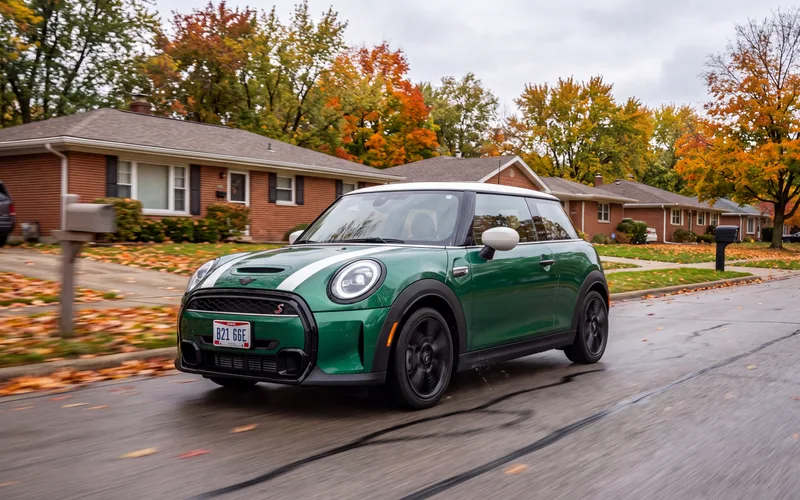 Mini Cooper HardtopSubcompact HatchbackBetter at: Driving fun
The same small-car charm with more power, better dynamics, a stronger dealer network and far better resale — the cross-shop nearly every 500e shopper actually makes.
Compare 2.09C
2.09C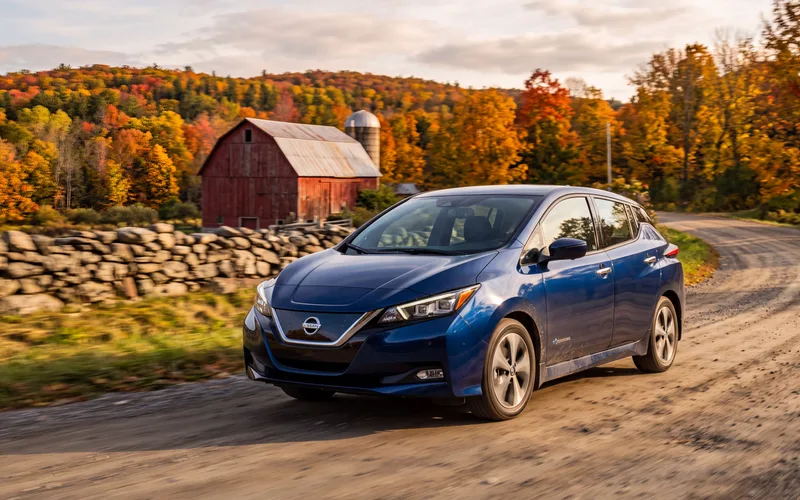 Nissan LeafCompact HatchbackBetter at: Range
If you want an affordable EV rather than this specific piece of design, the Leaf offers substantially more range and four usable doors for the money.
Compare 1.80C-
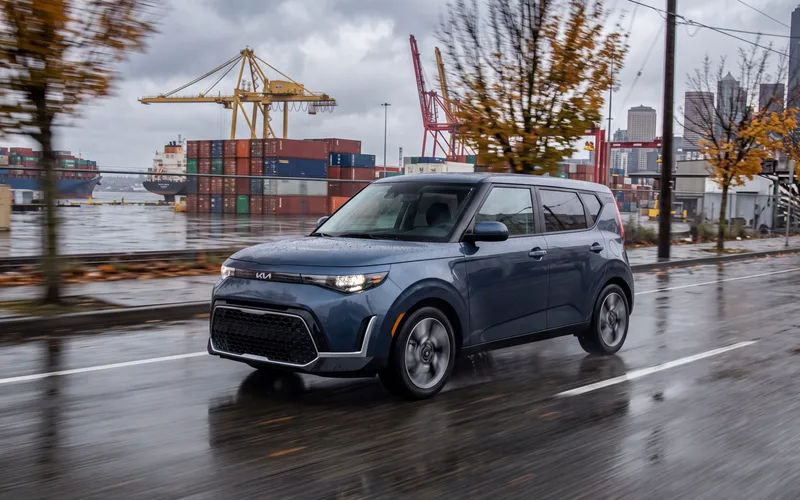 Kia SoulSubcompact HatchbackBetter at: Space for money
Cheaper, far roomier inside for the same tiny parking footprint, with a long warranty and dealers everywhere.
CompareHow it's evolved
6 scored model years · 2017–2026
Subject scores by year
Hover or tap a score to see what moved it versus the year before. A corner mark flags a big swing.
| Year | Performance | Efficiency | Safety | Space | Cost | Reliability | Tech | Use-case | Driving | Value |
|---|---|---|---|---|---|---|---|---|---|---|
| 2026 | 27 | 57 | 52 | 32 | 54 | 44 | 65 | 39 | 73 | 52 |
| 2025 | 26 | 57 | 43 | 28 | 57 | 52 | 62 | 37 | 77 | 63 |
| 2024 | 29 | 57 | 44 | 31 | 69 | 57 | 65 | 41 | 78 | 62 |
| 2019 | 27 | 59 | 21 | 28 | 55 | 53 | 29 | 35 | 78 | 43 |
| 2018 | 27 | 59 | 20 | 29 | 55 | 58 | 33 | 35 | 79 | 53 |
| 2017 | 27 | 59 | 24 | 28 | 59 | 55 | 33 | 36 | 81 | 57 |
Compare two years
Best fit & conditions
Higher scores mean a better fit for that use case. Learn more about use-case fit →
Subject profile
Academic Probation · NHTSA safety recalls
No NHTSA safety recall is on record for the 2018 Fiat 500e. Other model years of the 500e have 2 — listed below.
2 recalls on other model years of the 500e (2024–2025)
Oct 21, 2025Exterior lighting: headlightsThe headlight horizontal aim adjustment is not covered as intended, which can result in improperly adjusted headlights. As such, these vehicles fail to comply with the requirements of Federal Motor Vehicle Safety Standard number 108, "Lamps, Reflective Devices, and Associated Equipment."
Defect
Chrysler (FCA US, LLC) is recalling certain 2024-2025 Fiat 500e Battery Electric (BEV) vehicles. The headlight horizontal aim adjustment is not covered as intended, which can result in improperly adjusted headlights. As such, these vehicles fail to comply with the requirements of Federal Motor Vehicle Safety Standard number 108, "Lamps, Reflective Devices, and Associated Equipment."
Risk
Improperly adjusted headlights can reduce driver visibility or create a glare for oncoming traffic, increasing the risk of a crash.
Remedy
Dealers will install headlight adjustment plugs. Owner notification letters were mailed December 10, 2025. Owners may contact Chrysler customer service at 800-853-1403. Chrysler's number for this recall is A4C. Vehicle Identification Numbers (VINs) involved in this recall will be searchable on NHTSA.gov beginning October 28, 2025.
NHTSA campaign 25V715000 ↗Manufacturer no. A4C2,195 vehicles potentially affected (all models in the campaign)Owners notified Dec 10, 2025Filed by Chrysler (FCA US, LLC)Filed as 500EJul 3, 2024Air bags: frontal · Seat belts: frontA seat belt buckle switch sensor may be improperly connected, preventing the front seat air bag from deploying as intended.
Defect
Chrysler (FCA US, LLC) is recalling certain 2017-2024 Alfa Romeo Giulia, 2018-2025 Alfa Romeo Stelvio, 2019-2023 Fiat 500X, Jeep Renegade, and 2024 Fiat 500E vehicles. A seat belt buckle switch sensor may be improperly connected, preventing the front seat air bag from deploying as intended.
Risk
A front seat air bag that does not deploy as intended can increase the risk of injury in a crash.
Remedy
Dealers will repair the connection, free of charge. Owner notification letters were mailed beginning August 27, 2024. Owners may contact FCA US, LLC customer service at 1-800-853-1403. FCA US, LLC's number for this recall is 82B.
NHTSA campaign 24V510000 ↗Manufacturer no. 82B337,128 vehicles potentially affected (all models in the campaign)Owners notified Aug 27, 2024Filed by Chrysler (FCA US, LLC)Filed as 500E
Source: NHTSA Office of Defects Investigation recall database, model years 2017–2026. Recalls are listed by model year as the manufacturer filed them; whether a specific car is affected depends on its VIN — check a VIN at nhtsa.gov ↗. NHTSA model names matched to this page: 500E.
Detailed scoring by subject
1Performance & PowertrainOne of the 500e's weakest categories.0.00F
The sole 2018 powertrain uses an 83 kW electric motor rated at 111 hp. This is the original 2013-generation U.S. 500e, not the unrelated 2024 return.
Its 147 lb-ft is available immediately, giving the city-focused car stronger initial response than the horsepower figure suggests.
Instant motor torque makes it lively at urban speeds, but the instrumented 8.4-second result is slow by hatchback and EV standards.
Immediate torque, quiet operation, and linear delivery make the motor unusually smooth and responsive, though outright acceleration is modest.
The single-speed transaxle has no shifts to interrupt power, hunt, or produce shift shock, so response is seamless.
Every 2018 500e is front-wheel drive; no AWD version or enhanced traction modes were offered.
The 2018 500e offered one battery, one motor, one single-speed transmission, and front-wheel drive only; appearance packages did not create another powertrain choice.
2Efficiency & RangeOne of the 500e's strongest categories.1.94C-
The sole 2018 configuration is highly efficient in raw terms and is normalized against EV peers.
Regenerative braking and low-speed EV operation make city use the 500e's efficiency strength.
Highway efficiency is lower than city efficiency but remains strong in absolute energy use.
The small 24 kWh battery makes the 500e an urban commuter; its range is extremely short relative to other EV hatchbacks.
The 2018 car has only J1772 AC Level 1/Level 2 charging and cannot accept DC fast charging.
Its efficient, small-battery drivetrain yields a low annual electricity bill under EPA's standard driving assumptions.
Electricity is inexpensive and the small battery refills overnight, but charging is practical mainly with routine home or workplace AC access because there is no DC fast charging; a 240V connection provides a full charge in about four hours.
3SafetyThe 500e's lowest-graded category.0.00F
NHTSA did not publish an overall star rating for the 2018 500e, so 4 stars is a conservative placeholder estimate rather than a test result. The related gasoline 500 cannot substitute directly because the 500e carries more than 500 pounds of battery mass.
The 500e has no IIHS award or dedicated crash-test record. The structurally related 2018 gasoline 500 earned Good ratings in four legacy tests but Poor in the driver-side small-overlap test, which raises concern without being directly transferable to the heavier EV.
The lone 2018 trim has none of the five core systems measured here: AEB, lane keeping, adaptive cruise, blind-spot monitoring, or rear cross-traffic alert. Its standard camera and rear parking sensors help maneuvering but are not active driver assistance.
Automatic emergency braking was unavailable, so there is no vehicle or pedestrian detection performance to credit.
No blind-spot monitor, rear cross-traffic alert or active intervention was available on the single 500e trim.
The 2018 500e offered no lane-departure warning, lane-keep assist, or lane centering.
Only conventional fixed-speed cruise control was standard; adaptive cruise and an integrated highway-assist mode were unavailable.
No hands-free driving system was offered.
Every 500e used basic bifunctional halogen projector headlights, with no IIHS headlight evaluation and no adaptive lighting or automatic high beams documented. Standard fog lights and daytime running lamps provide limited additional credit.
The upright seating position and small footprint make forward visibility easy, and the standard rear camera helps while reversing. The center B-pillar obstructs blind-spot checks, rear visibility is merely average, and there is no surround-view camera or blind-spot monitor to compensate.
LATCH is standard, but this two-door four-seater has extremely tight rear quarters and difficult rear-seat access, making rear-facing-seat installation and routine child loading awkward. Its two-position rear bench cannot accommodate three seats across.
4Space & ComfortOne of the 500e's weakest categories.0.00F
The sole 2018 configuration is a four-seat, two-door hatchback.
The standard solid-roof volume configuration provides good front headroom for such a small hatchback; an optional power sunroof was available.
Front legroom is just above the bottom of the hatchback normalization band.
Rear headroom sits near the bottom of the hatchback band and compounds the difficult two-door access.
Battery packaging leaves exceptionally little second-row legroom, well below the hatchback scoring band.
The battery-reduced cargo hold falls below even the low end of the hatchback normalization band.
Front seatback pockets, a 50/50-folding rear seat, and underfloor charging-cable storage add some utility, but the cabin and cargo area have little spare room and no center-console innovation.
The heated leatherette front seats provide adequate support and driver height adjustment, but adjustment is basic and the rear seats are extremely cramped.
The low-mounted battery improves body control, but the very short wheelbase produces a busy, pitching ride over uneven pavement.
The electric motor is nearly silent and the 500e is the quietest 500 variant, although tire noise becomes noticeable without engine noise masking it.
Automatic climate control, heated front seats, and app-based remote preconditioning are standard, unusually useful equipment for a 2018 city EV; there are no rear vents, ventilated seats, or heated wheel.
5Cost of OwnershipGrades below the middle of the scale.1.68D
The 500e was effectively a single-trim car; its 2018 entry price was $32,995 before destination and $34,240 delivered.
With one substantive trim and only minor appearance and convenience options, the base 500e is also the representative volume configuration.
The simple EV drivetrain avoids oil, spark-plug and exhaust service, but tires, brake fluid, coolant, filters, a 12-volt battery and age-related repairs remain. No archived model-year Edmunds TCO breakdown was retrievable, so this is a secondary-source estimate.
KBB's historical 2023 value of $10,714 equals roughly 31.3% of the car's $34,240 delivered MSRP, reflecting the severe depreciation typical of this short-range compliance EV.
Fiat provided longer basic coverage than the common mainstream 3-year/36,000-mile term.
The high-voltage battery received the standard long EV term, although the motor, inverter, gearbox and charger were covered for only 4 years/50,000 miles.
There was no complimentary scheduled-maintenance program, charging credit or substantial connected-service bundle. The useful offset was four years of unlimited-mile roadside assistance, including towing after depletion up to 12 times.
$34,240 volume-trim price minus its estimated resale value after 5 years (31.3% retained, or about $10,717) leaves about $23,523 in depreciation. Add the projected $3,840 in 5-year maintenance and repairs, and owning this vehicle for 5 years costs about $27,363 in total.
6Reliability & QualityOne of the 500e's strongest categories.1.87C-
Model-specific survey data are limited, but the 2018 500e was a mature sixth-year carry-over with a simple EV drivetrain and little evidence of widespread 2018-specific failures. That offsets, but does not erase, the conventional 500 family's weak reliability record and scattered electrical and body-hardware complaints.
Fiat was firmly in the bottom tier of period dependability studies. Its improvement in 2018 was substantial, but it still finished near the bottom and FCA brands continued to occupy Consumer Reports' bottom third.
The official model-year query returns no recalls for the 2018 500e, and the notable inverter shutdown campaign was confined to earlier 2013-2016 cars. This is an unusually clean safety-recall record for the scored year.
By 2018 the liquid-cooled EV system had five years of field use, and its simple single-speed layout avoids an engine and conventional transmission. Owner reports generally describe good battery retention and durable high-voltage hardware, though low production volume and costly component replacement keep it below the top tier.
The colorful, retro cabin has visual charm, but its plastics and controls do not feel premium relative to the car's price positioning. Period reviewers explicitly criticized the material quality and awkward minor controls.
Assembly is acceptable for an inexpensive city car, but the aging 500 structure and Fiat's poor period initial-quality reputation prevent an above-average score. The evidence is more about ordinary execution and cheap-feeling components than severe, consistent panel-fit defects.
The 2018 500e was sold primarily in California and Oregon, and only specially certified Fiat dealers could fully service its EV system. Cars that migrated elsewhere therefore faced much thinner expert coverage than mainstream nationwide competitors.
Routine Fiat 500 wear items remain obtainable, but unique 500e high-voltage and cooling parts have little aftermarket depth and often require EV-qualified service. U.S. production ended in 2019, and owner reports now document discontinued components, delays, and high markups after even modest damage.
7Technology & InfotainmentGrades near the bottom of the scale.0.17F
The sole Uconnect 3 display is considerably smaller than the scoring band's 7-inch floor.
Physical knobs and a simple menu reduce distraction, but the tiny, dated Uconnect 3 screen and several unconventional cabin controls make daily use less intuitive.
Neither Apple CarPlay nor Android Auto was offered, wired or wireless.
Integrated GPS navigation and Bluetooth voice command are standard, but the small legacy interface and command-based voice system are dated.
A six-speaker Alpine premium system is standard rather than an added-cost upgrade, a strong provision for a tiny subcompact cabin.
A full 7-inch color TFT cluster is standard and presents EV charge, range, and trip information, unusually advanced for a 2018 subcompact.
No meaningful whole-vehicle or feature-adding over-the-air update capability is documented; firmware servicing was dealer-oriented.
For its era the app has a rich EV feature set—charge status and scheduling, preconditioning, locks, locate, charging stations, and send-to-nav—though Uconnect Access included only a three-year trial.
There is one legacy USB media port, an auxiliary jack, and a 12-volt outlet, with no USB-C, rear-row ports, wireless charging, or AC outlet.
Remote keyless entry and app-based lock/unlock are standard, but the car uses a conventional key rather than proximity entry, push-button start, or phone-as-key.
A rearview camera and rear parking sensors are standard for 2018, but no front sensors, surround-view camera, or automated parking was available.
No head-up display was offered on the only trim or its eSport appearance package.
8Use-Case FitGrades near the bottom of the scale.0.32F
LATCH and split-folding rear seats are standard, but two-door access, 27.6 inches of rear legroom, and a 7-cu-ft cargo hold make car-seat loading and stroller duty regularly frustrating.
The 500e lacks dedicated crash ratings and all modern active-safety aids; the standard camera and rear sensors help parking but do not offset those family-safety gaps.
Four-seat capacity, token rear space, minimal luggage room, no rear amenities, and 84 miles of EPA range make multi-hour family travel a poor fit.
Silent, smooth, immediate EV response, automatic climate control, and simple city dimensions make commuting easy, though there is no strong one-pedal mode and the ride can be busy.
Its 112 MPGe combined efficiency and electric drivetrain make energy and routine-consumable costs exceptionally low for local commuting.
A 142.4-inch body, exceptional 31.3-foot turning circle, standard camera and rear sensors, and good forward visibility make it exceptionally easy to place in a city.
It has no published towing rating or work payload mission and only 7 cu ft behind the rear seats; folding the rear seats permits light errands, not meaningful work duty.
The simple EV drivetrain and leatherette upholstery should tolerate ordinary use, but this low-clearance city car has no fleet-work reputation or protective work-grade cabin.
There are no tie-down systems, onboard AC power, rack/upfit packages, washable surfaces, or jobsite-focused accessories.
An 84-mile EPA range, no DC fast charging, unsettled highway ride, and no driver assistance beyond fixed-speed cruise make it a poor long-distance companion.
Front-wheel drive, 4.5 inches of clearance, no tow rating, and extremely short range confine it mainly to pavement; even carrying outdoor toys requires aftermarket solutions.
The 50/50-folding rear seat provides flexibility for one or two occupants, but 7 cu ft behind it, no factory roof rails, and the tiny two-door shell severely restrict bulky gear.
9Driving ExperienceThe 500e's best-graded category.3.37B+
The low-mounted battery counters the tall body's tendency to roll, producing eager turn-in, good balance, and unusually entertaining handling for an early compliance EV.
Steering is responsive and supplies useful cornering feedback, but its weight feels oddly heavy around straight ahead.
The firm, reassuring pedal blends regeneration naturally in routine stops, though the measured 129-foot stop from 60 mph is merely adequate and there is no stronger selectable regen mode.
Instant 147-lb-ft motor torque and a single-speed transaxle deliver seamless, responsive urban acceleration with no shifts or combustion transitions.
The electric motor is essentially silent and introduces no shift or engine vibration; tire noise is more apparent only because the drivetrain contributes so little.
Its turning diameter beats the lower end of the hatchback normalization band and is outstanding in tight streets and parking structures.
The upright position and good forward sightline suit city driving, but the steering wheel tilts without telescoping and several controls and seat adjusters are awkward.
Immediate response, playful balance, responsive steering, and tiny dimensions give it genuine character despite modest acceleration and limited range.
10Value & Market PositionGrades below the middle of the scale.1.57D
The sole core trim included heated seats and mirrors, automatic climate control, navigation, Bluetooth, Alpine audio, rear parking sensors, alloy wheels, cruise control and a newly standard backup camera. That was unusually complete subcompact equipment, though modern active-safety aids were absent.
Generous equipment, a $7,500 federal credit and very aggressive leases softened the price, but $34,240 was steep for 84 miles of range, four seats and only 7 cubic feet of cargo space. It was compelling chiefly as a subsidized city commuter, not at sticker price.
This was essentially a take-it-or-leave-it front-drive EV: one core trim, five colors, a sunroof and small accessory choices. E-Sport added only cosmetic details and no capability or equipment tier.
The compliance car was sold only in California and Oregon, and estimated U.S. volume fell sharply to 2,250 units in 2018. Its narrow reach and declining trajectory indicate weak acceptance despite a small loyal urban-EV audience.
Italian styling and the 500's recognizable character gave the car charm, but Fiat's shrinking U.S. footprint, weak sales and compliance-car positioning hurt confidence and resale. The image helped emotionally more than it helped market strength.
Few new cars offered more buyer assistance: the 500e qualified for the $7,500 federal credit, state incentives and manufacturer lease support, with period offers eventually reaching extraordinarily low monthly payments. The generosity reflected compliance economics, but the buyer benefit was exceptional.
2018 was year six of the 2013-generation 500e and brought only a standard backup camera, not a refresh. Its 24-kWh battery, 84-mile range and 5-inch infotainment system were visibly dated as longer-range rivals arrived.
Reviewers liked the nimble handling, instant torque, city-friendly size and rich standard kit, but criticized the tiny rear seat and cargo bay, short range and lack of current safety technology. It was a likable niche commuter rather than a comparison winner, with no major 2018 award recognition found.