

The verdict
A struggling subcompact hatchback, strong on driving and held back by safety.
Overall 0.52 (F) across 10 graded subjects. Its strongest is driving experience at 3.32 (B+), its weakest safety at 0.00 (F). 3 of 10 subjects grade at C− or better.
Jump to scoresStrengths
- Driving Experience
- Efficiency & Range
- Cost of Ownership
What holds it back
- Safety
- Performance & Powertrain
- Space & Comfort
Top alternatives
Cars shoppers cross-shop with the Fiat 500e 1.78C-
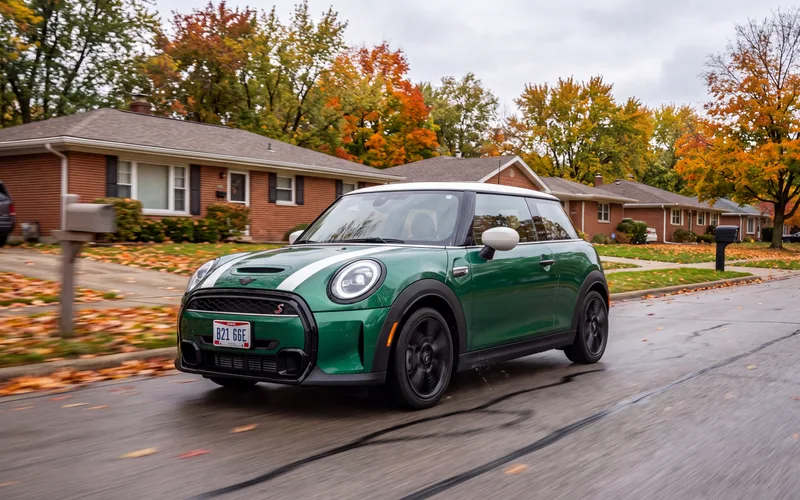 Mini Cooper HardtopSubcompact HatchbackBetter at: Driving fun
The same small-car charm with more power, better dynamics, a stronger dealer network and far better resale — the cross-shop nearly every 500e shopper actually makes.
Compare 2.09C
2.09C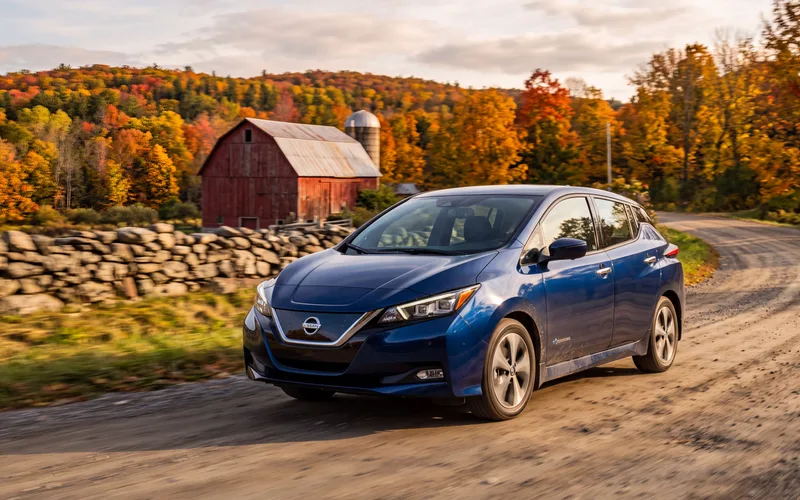 Nissan LeafCompact HatchbackBetter at: Range
If you want an affordable EV rather than this specific piece of design, the Leaf offers substantially more range and four usable doors for the money.
Compare 1.80C-
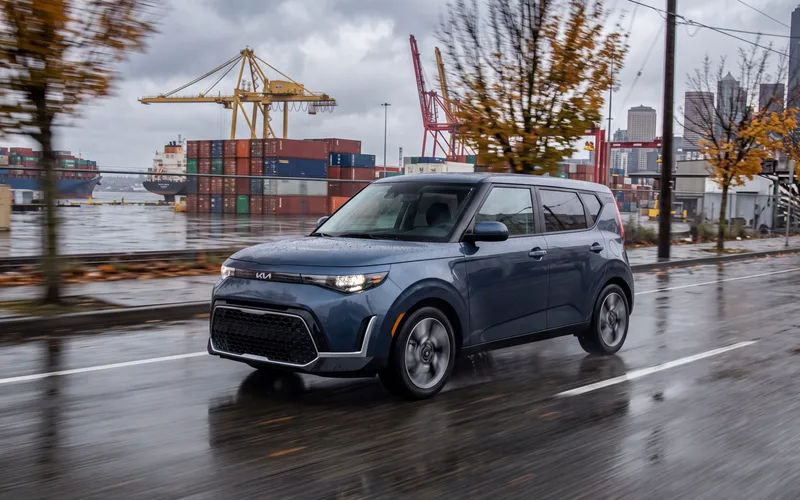 Kia SoulSubcompact HatchbackBetter at: Space for money
Cheaper, far roomier inside for the same tiny parking footprint, with a long warranty and dealers everywhere.
CompareHow it's evolved
6 scored model years · 2017–2026
Subject scores by year
Hover or tap a score to see what moved it versus the year before. A corner mark flags a big swing.
| Year | Performance | Efficiency | Safety | Space | Cost | Reliability | Tech | Use-case | Driving | Value |
|---|---|---|---|---|---|---|---|---|---|---|
| 2026 | 27 | 57 | 52 | 32 | 54 | 44 | 65 | 39 | 73 | 52 |
| 2025 | 26 | 57 | 43 | 28 | 57 | 52 | 62 | 37 | 77 | 63 |
| 2024 | 29 | 57 | 44 | 31 | 69 | 57 | 65 | 41 | 78 | 62 |
| 2019 | 27 | 59 | 21 | 28 | 55 | 53 | 29 | 35 | 78 | 43 |
| 2018 | 27 | 59 | 20 | 29 | 55 | 58 | 33 | 35 | 79 | 53 |
| 2017 | 27 | 59 | 24 | 28 | 59 | 55 | 33 | 36 | 81 | 57 |
Compare two years
Best fit & conditions
Higher scores mean a better fit for that use case. Learn more about use-case fit →
Subject profile
Academic Probation · NHTSA safety recalls
No NHTSA safety recall is on record for the 2019 Fiat 500e. Other model years of the 500e have 2 — listed below.
2 recalls on other model years of the 500e (2024–2025)
Oct 21, 2025Exterior lighting: headlightsThe headlight horizontal aim adjustment is not covered as intended, which can result in improperly adjusted headlights. As such, these vehicles fail to comply with the requirements of Federal Motor Vehicle Safety Standard number 108, "Lamps, Reflective Devices, and Associated Equipment."
Defect
Chrysler (FCA US, LLC) is recalling certain 2024-2025 Fiat 500e Battery Electric (BEV) vehicles. The headlight horizontal aim adjustment is not covered as intended, which can result in improperly adjusted headlights. As such, these vehicles fail to comply with the requirements of Federal Motor Vehicle Safety Standard number 108, "Lamps, Reflective Devices, and Associated Equipment."
Risk
Improperly adjusted headlights can reduce driver visibility or create a glare for oncoming traffic, increasing the risk of a crash.
Remedy
Dealers will install headlight adjustment plugs. Owner notification letters were mailed December 10, 2025. Owners may contact Chrysler customer service at 800-853-1403. Chrysler's number for this recall is A4C. Vehicle Identification Numbers (VINs) involved in this recall will be searchable on NHTSA.gov beginning October 28, 2025.
NHTSA campaign 25V715000 ↗Manufacturer no. A4C2,195 vehicles potentially affected (all models in the campaign)Owners notified Dec 10, 2025Filed by Chrysler (FCA US, LLC)Filed as 500EJul 3, 2024Air bags: frontal · Seat belts: frontA seat belt buckle switch sensor may be improperly connected, preventing the front seat air bag from deploying as intended.
Defect
Chrysler (FCA US, LLC) is recalling certain 2017-2024 Alfa Romeo Giulia, 2018-2025 Alfa Romeo Stelvio, 2019-2023 Fiat 500X, Jeep Renegade, and 2024 Fiat 500E vehicles. A seat belt buckle switch sensor may be improperly connected, preventing the front seat air bag from deploying as intended.
Risk
A front seat air bag that does not deploy as intended can increase the risk of injury in a crash.
Remedy
Dealers will repair the connection, free of charge. Owner notification letters were mailed beginning August 27, 2024. Owners may contact FCA US, LLC customer service at 1-800-853-1403. FCA US, LLC's number for this recall is 82B.
NHTSA campaign 24V510000 ↗Manufacturer no. 82B337,128 vehicles potentially affected (all models in the campaign)Owners notified Aug 27, 2024Filed by Chrysler (FCA US, LLC)Filed as 500E
Source: NHTSA Office of Defects Investigation recall database, model years 2017–2026. Recalls are listed by model year as the manufacturer filed them; whether a specific car is affected depends on its VIN — check a VIN at nhtsa.gov ↗. NHTSA model names matched to this page: 500E.
Detailed scoring by subject
1Performance & PowertrainOne of the 500e's weakest categories.0.00F
The sole 2019 500e trim uses an 83-kW permanent-magnet traction motor rated at 111 SAE horsepower.
The single electric powertrain produces 147 lb-ft, delivered immediately through the front wheels.
Edmunds measured 8.2 seconds to 60 mph, respectably responsive for an early city EV but slow by the broader hatchback field.
Immediate motor torque makes it lively from rest, while power delivery is quiet, linear and seamless. Reviewers consistently praised its smoothness, with mild regenerative braking rather than abrupt one-pedal behavior.
The single-speed reduction gearbox has no shifts to hunt or interrupt acceleration, producing consistently seamless operation. It earns a high score despite lacking driver-selectable regenerative modes.
The 2019 500e was front-wheel drive only, with no AWD configuration or traction-focused drivetrain option.
The 500e nameplate offered one 24-kWh battery, one 83-kW motor and one single-speed front-drive configuration in 2019, leaving buyers no powertrain choice.
2Efficiency & RangeOne of the 500e's strongest categories.1.95C-
The EPA-label combined efficiency for the sole 2019 configuration is 112 MPGe.
Its EPA city rating is 121 MPGe, reflecting the advantage of regenerative braking and low-speed EV operation.
The EPA highway rating is 103 MPGe, materially lower than its city figure but still efficient in raw energy use.
The 24-kWh battery provides only 84 miles of EPA combined range, restricting the car primarily to urban and short-distance use.
The 2019 car has no DC fast-charge inlet and therefore accepts zero DC charging power. Its 6.6-kW onboard module supports only Level 1 and Level 2 AC charging.
At the EPA label's standard 15,000-mile annual-use assumptions, the 2019 500e's estimated electricity cost is $600 per year.
Electricity is inexpensive and there is no gasoline-grade requirement, while a 6.6-kW Level 2 setup can refill the small pack in under four hours. Practicality is sharply limited away from home because the car cannot use any DC fast charger.
3SafetyThe 500e's lowest-graded category.0.00F
NHTSA did not publish a complete overall score for the 2019 500e, so this uses the latest 4-star overall result reported for the same 2012-19 North American Fiat 500 generation. The 2019 listing itself shows a 4-star frontal result but lacks the side tests needed for an overall score.
The applicable Fiat 500 structure earned Good results in the original moderate-overlap, side, roof-strength, and head-restraint tests, but Poor in the driver-side small-overlap test. That key weakness and the absence of a Top Safety Pick award keep it in the low band.
The sole 2019 500e trim had none of the five scored ADAS features: AEB, lane keeping, adaptive cruise, blind-spot monitoring, or rear cross-traffic alert. Its standard rear camera and parking sensors aid maneuvering but do not constitute the scored active-safety suite.
Automatic emergency braking and forward-collision warning were unavailable, leaving no vehicle or pedestrian detection performance to credit.
Blind-spot monitoring, rear cross-traffic alert or braking, and safe-exit alert were not offered.
The 2019 500e offered no lane-departure warning, lane-keep assist, or lane centering.
Only conventional fixed-speed cruise control was provided; there was no adaptive following, stop-and-go function, or combined highway assist.
No hands-free driving system was available.
The 500e used conventional bifunctional projector halogen headlamps without adaptive lighting or automatic high beams. IIHS did not publish a headlight rating for this model, so equipment quality and the lack of modern assistance support a low-band score rather than a claimed test grade.
The short, upright city-car body provides good forward awareness, but thick rear pillars and a small rear window constrain rear-quarter views. Standard rear parking sensors and a backup camera partially compensate, though there is no surround-view system.
Both rear positions have lower anchors and top tethers, but the two-door body and extremely tight rear quarters make installing and loading child seats difficult. Only two rear seating positions exist, so three-across is impossible.
4Space & ComfortOne of the 500e's weakest categories.0.00F
The single-trim 500e is a four-seat, two-door hatchback.
The standard-roof measurement is used; the optional sunroof reduces clearance by 1.3 inches.
Front legroom is adequate for this tiny city car but near the low end of the hatchback normalization band.
Second-row headroom is at the bottom of the hatchback range.
Rear legroom falls below the hatchback normalization floor and makes the back seat unsuitable for most adults.
Cargo capacity with all seats occupied is exceptionally small even for a subcompact hatchback.
The fold-down rear seat creates useful two-person hauling space, but everyday small-item and occupied-seat cargo storage are sparse with no innovative EV storage.
Front cushions provide adequate support, but adjustments are basic and the extremely cramped rear bench is suitable only for short occupants and trips.
The very short wheelbase produces a busy, unsettled ride that pitches and bucks on uneven pavement.
Motor noise and vibration are minimal, though noticeable tire noise prevents the cabin from feeling genuinely premium at speed.
Automatic climate control, heated front seats, and app-based plugged-in preconditioning are unusually useful standard amenities for a tiny 2019 EV, though ventilation and rear climate are absent.
5Cost of OwnershipOne of the 500e's strongest categories.1.70C-
The 500e was effectively a one-trim model, so its entry and representative volume prices are the same. The destination-inclusive sticker was high for a tiny hatchback before incentives.
With one core trim and only minor appearance/convenience options, the base 500e is also the appropriate volume configuration.
The EV drivetrain eliminates oil, exhaust, and conventional transmission service, but tires, fluids, cabin filters, wear items, and repairs remain. No retrievable model-year Edmunds TCO table was available, so this is a conservative EV-class estimate rather than a directly published 2019 total.
KBB's historical 2024 resale estimate provides a direct five-year checkpoint for a 2019 car. The result reflects exceptionally heavy depreciation from the original sticker, typical of this heavily incentivized, short-range compliance EV.
Fiat provided longer basic coverage than the mainstream 3-year/36,000-mile norm.
The traction battery receives the standard long EV term, although the motor, inverter, gearbox, and onboard charger only receive 4-year/50,000-mile coverage. The scored value follows the prompt's EV battery/drivetrain convention and clearly discloses the shorter component term.
There was no complimentary scheduled-maintenance plan or charging credit, but four years of unlimited-mile roadside assistance—including limited out-of-charge help—was a useful basic perk.
$34,705 volume-trim price minus its estimated resale value after 5 years (31% retained, or about $10,759) leaves about $23,946 in depreciation. Add the projected $3,000 in 5-year maintenance and repairs, and owning this vehicle for 5 years costs about $26,946 in total.
6Reliability & QualityGrades below the middle of the scale.1.54D
Model-specific signals are mixed: Consumer Reports flags reliability as a weakness, while Kelley Blue Book owners rate first-generation 500e reliability 4.7/5. J.D. Power provides no model dependability score for this low-volume 2019 EV, so the evidence supports an average-to-middling result rather than either extreme.
Fiat had a firmly bottom-tier US dependability record around this model year. It ranked last of 31 rated brands in J.D. Power's 2019 Vehicle Dependability Study, with nearly twice the industry-average problem rate.
The late-production 2019 avoided the generation's serious early propulsion-loss campaigns, which applied to 2013-2016 cars. Its later recall exposure is limited chiefly to a 2014-2019 500 TPMS warning-lamp software noncompliance, so the record is better than typical despite numerous broad manufacturer communications.
By 2019 this Bosch-engineered motor/inverter and actively temperature-managed Samsung-derived battery system had six model years of field use, and long-term owners commonly report strong battery retention and few propulsion repairs. The score stops short of top-tier because the fleet is small and replacement high-voltage components can be difficult to source.
Standard faux-leather upholstery, heated seats, and the digital cluster add visual appeal, but the underlying cabin uses economy-car plastics and basic switchgear that do not feel premium relative to its roughly $34,000 new-car positioning. Reviewers praise style more than material richness.
The mature final-year assembly generally presents well and reviews do not identify a pervasive panel-gap or rattle defect, but Fiat's weak period initial/dependability quality and scattered owner complaints prevent an above-average rating. This is acceptable economy-car execution, not premium-grade assembly.
The 500e was originally sold only in a limited number of US states, and authorized EV-trained service coverage was correspondingly sparse. Production ended in 2019 and the replacement 500e did not return until 2024, further weakening convenient nationwide support for this distinct first-generation drivetrain.
Routine 500 body and chassis parts benefit from shared hardware, but 500e-specific battery, inverter, charger, and control parts serve a small discontinued fleet and often require specialized dealer handling. Low routine EV maintenance helps, yet a major high-voltage repair can be uneconomic because parts and qualified support are scarce.
7Technology & InfotainmentGrades near the bottom of the scale.0.00F
The single trim uses a small 5-inch Uconnect touchscreen.
Physical controls help, but the tiny, dated Uconnect interface and awkward secondary controls lag contemporary rivals.
Neither wireless nor wired Apple CarPlay or Android Auto was offered in the US-market 2019 500e.
Native navigation and basic Bluetooth voice commands are standard, but the period system lacks modern natural-language capability or phone-projected maps.
The standard Alpine premium-branded system is a welcome upgrade in a small car, although it is not a high-end audiophile setup.
A full 7-inch TFT digital gauge cluster is standard and presents EV energy and charge information clearly, though customization is limited by modern standards.
The legacy platform has no meaningful infotainment or whole-vehicle over-the-air feature-update capability.
FIAT Access offered charge status/scheduling and remote climate preconditioning, useful core EV functions, but no digital key and a dated service experience.
Connectivity is limited to period USB, auxiliary, and 12-volt provisions, with no USB-C, wireless charging, rear-row ports, or AC outlet.
Remote keyless entry is standard, but the volume trim retains a conventional ignition key with no proximity entry, push-button start, or phone-as-key.
A backup camera and rear parking assist cover basic urban needs, but there is no surround-view camera or automated parking.
No head-up display was offered.
8Use-Case FitGrades near the bottom of the scale.0.27F
Two doors, a 27.6-inch rear legroom measurement, and a 7-cu-ft cargo hold make loading children and a stroller frustrating despite two rear LATCH positions.
Seven airbags, stability control, a backup camera, and rear park assist are useful, but there is no automatic emergency braking, blind-spot monitoring, lane support, or adaptive cruise control.
The cramped two-place rear bench, tiny occupied-seat cargo area, busy ride, and 84-mile EPA range make four-person long trips impractical.
Smooth instant electric torque, simple single-speed operation, excellent visibility forward, and tiny dimensions make city commuting easy; the lack of selectable strong regen is the main EV-specific omission.
Its official 112-MPGe combined efficiency and small tires support exceptionally low energy and consumables costs for commuting.
At 142.4 inches long with a 31.3-foot turning diameter, rear camera and parking assist, it is exceptionally easy to place in tight city spaces.
The 500e has no tow rating or bed and only 7 cu ft behind occupied rear seats, so it is not a meaningful work vehicle beyond light errands.
The city-car chassis, low ground clearance, light-duty interior, and compliance-car mission are poorly suited to repeated jobsite abuse.
There is no onboard AC power, tow/bed hardware, factory rack ecosystem, or work-focused upfit provision.
An 84-mile EPA range, no DC fast charging or adaptive cruise, and a busy short-wheelbase ride make it a very poor long-distance companion.
Front-wheel drive, 4.5 inches of clearance, no tow rating, and short range keep it pavement-bound with little equipment-hauling ability.
Folding the two rear seatbacks makes the tiny car surprisingly useful for two people, but the 7-cu-ft occupied-seat hold and lack of a frunk severely constrain luggage flexibility.
9Driving ExperienceThe 500e's best-graded category.3.32B+
Low-mounted battery mass gives the 500e excellent balance and eager turn-in; it is more responsive than the gasoline 500 and unusually entertaining among early EVs.
Steering is oddly heavy on center but becomes responsive and provides good feedback in corners.
The firm, reassuring pedal blends routine stops well, but the tested 129-foot 60-0 stop is merely adequate and there is no strong-regeneration mode.
Instant 147-lb-ft electric torque gives lively response from rest, while the single-speed motor delivers smooth, shift-free acceleration.
The electric motor is effectively silent and vibration-free in ordinary use; remaining audible noise is primarily from the tires rather than the drivetrain.
The turning diameter is substantially better than the hatchback normalization floor, ideal for U-turns and tight streets.
Front space and sightlines are decent, but limited seat adjustment, an awkward upright driving position, intrusive B-pillar, and unusual window/shifter controls compromise ergonomics.
Quick initial response, compact dimensions, balanced chassis, and eager turn-in give this compliance EV genuine city-car character and enthusiast appeal.
10Value & Market PositionGrades near the bottom of the scale.0.84F
The sole trim included heated faux-leather seats, navigation, automatic climate control, a 7-inch digital cluster, rear camera and parking sensors. That is generous comfort content, though the tiny 5-inch screen and near-total absence of active safety technology date it.
Useful standard amenities and low running costs could not offset a $34,705 sticker for only 84 miles of range, four seats, 7 cubic feet of cargo space, no DC fast charging, and limited driver assistance. Incentives improved transaction value but did not make the underlying package competitive with newer EVs.
This was a take-it-or-leave-it, front-drive, one-powertrain compliance car with only cosmetic packages, a sunroof, colors, and small accessories to personalize it.
Availability was restricted to California and Oregon, limiting national acceptance, and Fiat ended U.S. production and announced discontinuation during 2019. Earlier California compliance-market volume does not overcome that terminal trajectory.
Italian styling and the 500's cheerful city-car character created real niche affection, but Fiat's weak U.S. footprint, compliance-car positioning, and looming withdrawal undermined confidence and resale.
As a compliance EV, the 500e was routinely supported by unusually cheap leases and could also qualify for large federal and state EV incentives. Buyer benefit was exceptional, even though the discounting signaled weak organic demand.
The 2019 car was the seventh and final model year of an EV derived from the 2007-generation 500, with no meaningful 2019 refresh and discontinuation already announced. Its 24-kWh battery, 84-mile range and lack of DC charging were obsolete by then.
Reviewers liked its maneuverability, styling and zippy urban behavior, but consistently treated it as an extremely limited city car rather than a class leader. It earned no major model-year award and ranked poorly because of range, space, driving position and missing safety technology.