
The verdict
A struggling mid-size truck, strong on ownership and held back by technology.
Overall 1.21 (D) across 10 graded subjects. Its strongest is cost of ownership at 2.68 (C+), its weakest technology & infotainment at 0.41 (F). 5 of 10 subjects grade at C− or better.
Jump to scoresStrengths
- Cost of Ownership
- Use-Case Fit
- Driving Experience
What holds it back
- Technology & Infotainment
- Performance & Powertrain
- Space & Comfort
Top alternatives
Cars shoppers cross-shop with the Ford Ranger 2.12C
2.12C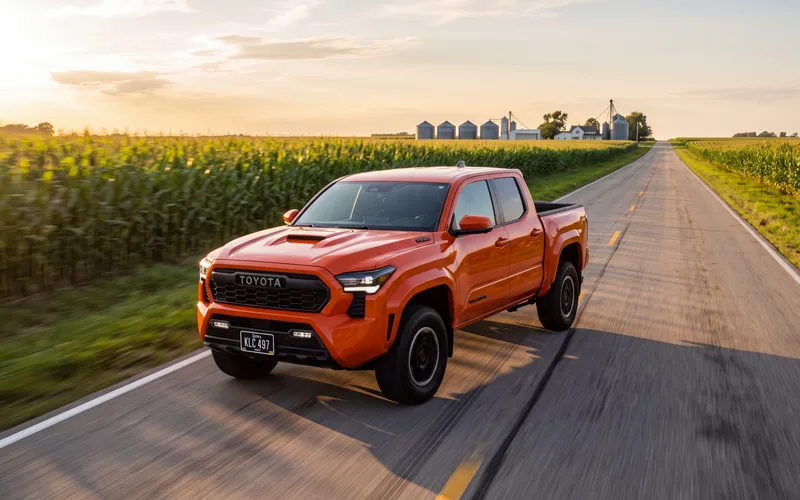 Toyota TacomaMid-Size TruckBetter at: Resale value
The default cross-shop in this class: more cab and bed choices, a hybrid option, roomier back seat, and the segment's best resale — worth the look if you're not sold on the Ranger's single 5-ft box.
Compare 1.99C-
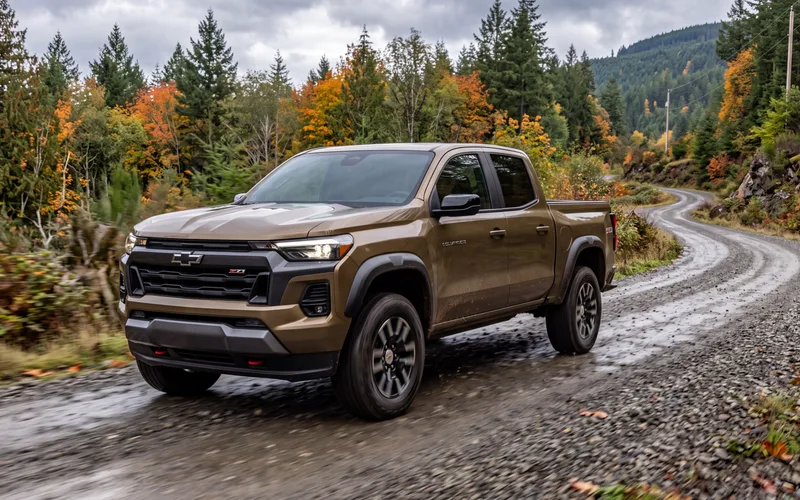 Chevrolet ColoradoMid-Size TruckBetter at: Standard power
Its standard turbo engine makes meaningfully more torque than the Ranger's 2.3L, so you get the stronger truck without paying for an optional V6.
Compare 1.74C-
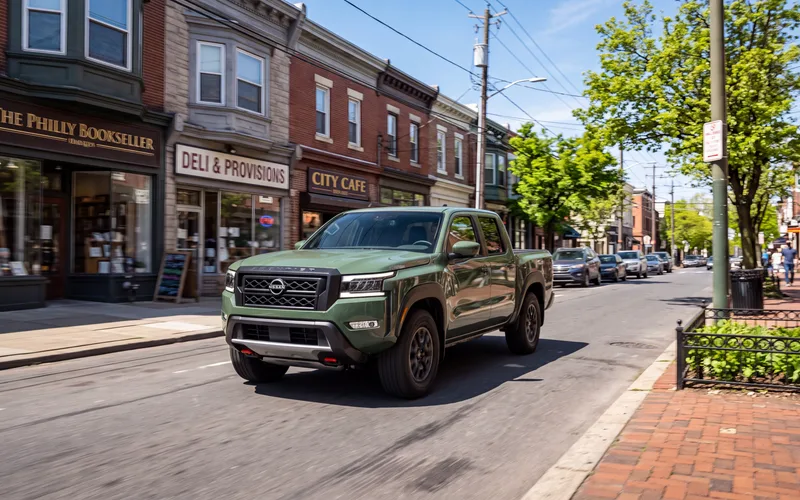 Nissan FrontierMid-Size TruckBetter at: Warranty coverage
Standard V6, more rear legroom, a longer-bed option, and warranty coverage that goes well beyond Ford's 3-yr/36,000-mi floor — the value pick for buyers who want capability over cabin polish.
CompareHow it's evolved
8 scored model years · 2019–2026
Subject scores by year
Hover or tap a score to see what moved it versus the year before. A corner mark flags a big swing.
| Year | Performance | Efficiency | Safety | Space | Cost | Reliability | Tech | Use-case | Driving | Value |
|---|---|---|---|---|---|---|---|---|---|---|
| 2026 | 44 | 48 | 61 | 52 | 71 | 59 | 61 | 57 | 65 | 65 |
| 2025 | 44 | 61 | 56 | 48 | 66 | 62 | 64 | 57 | 62 | 63 |
| 2024 | 43 | 56 | 59 | 52 | 72 | 53 | 57 | 57 | 62 | 61 |
| 2023 | 39 | 49 | 50 | 40 | 69 | 59 | 36 | 55 | 57 | 44 |
| 2022 | 39 | 58 | 49 | 41 | 65 | 62 | 41 | 54 | 58 | 44 |
| 2021 | 39 | 59 | 51 | 40 | 65 | 61 | 41 | 55 | 58 | 47 |
| 2020 | 38 | 59 | 68 | 40 | 66 | 59 | 41 | 55 | 58 | 57 |
| 2019 | 40 | 59 | 53 | 40 | 69 | 51 | 37 | 63 | 61 | 55 |
Compare two years
Best fit & conditions
Higher scores mean a better fit for that use case. Learn more about use-case fit →
Subject profile
Trims & configurations
4 trimsScores above reflect the volume trim. Per-trim specs and scores are rolling out — the full lineup:
Detailed scoring by subject
1Performance & PowertrainOne of the Ranger's weakest categories.0.62F
Standard and only available powertrain across all 2019 Ranger trims; mid-pack for a mid-size truck reborn into a segment with the Colorado/Canyon V6 above it and the Tacoma V6 slightly below.
Strong low-rpm torque for a four-cylinder, a highlight Ford marketed heavily at the Ranger's 2019 US relaunch versus segment rivals' torque figures.
Competitive mid-pack acceleration for the segment, aided by the 10-speed automatic's tall spread of ratios and the turbo-four's early torque peak.
Reviewers praised the EcoBoost four's broad torque curve and minimal perceptible turbo lag in everyday driving, though it can feel coarse and vocal at higher rpm compared with the smoother V6 rivals it competes against.
The 10-speed automatic (shared architecture with F-150) shifts smoothly and keeps the engine in its torque band most of the time, though reviewers noted occasional hunting between closely-spaced upper gears on rolling terrain.
7,500 lbs was a segment-topping figure at the Ranger's 2019 US launch, beating the contemporary Colorado/Canyon and Tacoma when properly equipped.
Also a segment-leading payload figure at launch for the 4x2 configuration, though 4x4 models give up roughly 200 lbs to the added drivetrain weight.
The Trailer Tow Package adds a Class III/IV hitch and 4/7-pin wiring, but 2019 Ranger lacked a factory-integrated trailer brake controller (aftermarket/dealer-installed only) and had no trailer backup assist or hitch camera — bare-minimum towing tech versus segment rivals.
Part-time 4WD with low range is optional (not standard) across XL, XLT, and Lariat trims and both cab styles; the FX4 package adds a Terrain Management System with selectable drive modes, but there is no full-time/automatic 4WD mode for on-road use.
The optional FX4 Off-Road Package brings a locking rear differential, off-road-tuned Fox-tuned shocks, front bash plate and skid plates, all-terrain tires, and a Terrain Management System with Trail Control — solid light-duty off-road credibility just short of a dedicated Raptor-class trim.
A single 2.3L EcoBoost turbo-four paired exclusively with a 10-speed automatic was the only powertrain offered in the US for 2019 — no diesel, hybrid, V6, or manual-transmission option as some rivals offered.
2Efficiency & RangeMid-pack among this car's ten categories.1.95C-
EPA-rated combined fuel economy for the volume 2019 Ranger configuration (2.3L EcoBoost I4, 4WD, 10-speed auto) in the model's first year back in the US market. 2WD is slightly better at 23 combined.
EPA city rating for the 2.3L EcoBoost 4WD Ranger, the volume powertrain/drivetrain combination for the 2019 relaunch model year.
EPA highway rating for the 2.3L EcoBoost 4WD Ranger; 2WD does modestly better at 26 highway. Ford marketed the 2019 Ranger as the best-in-class fuel economy midsize truck at launch.
Estimated from the 18-gallon fuel tank on the 2019 Ranger (the T6-platform relaunch model, unchanged fuel tank through the 2023 model year) and the EPA combined rating for the volume 4WD 2.3L config. Smaller tank than the redesigned 2024+ Ranger's 21-gallon tank.
Derived from EPA's standard 15,000 mi/yr methodology applied to the volume 4WD 2.3L configuration's 22 combined MPG rating at the DOE fuel price assumption used for 2019-model-year window stickers (~$2.73/gal regular); 2WD is modestly cheaper to run at 23 combined MPG.
The sole 2019 Ranger powertrain, the 2.3L EcoBoost I4, runs on regular 87-octane unleaded across every trim — no premium recommendation or requirement on any 2019 configuration.
3SafetyGrades below the middle of the scale.1.53D
NHTSA tested the redesigned 2019 Ranger SuperCrew and awarded 4 stars overall, with a weaker 3-star rollover result typical of body-on-frame pickups.
The redesigned 2019 Ranger crew cab earned Good ratings in 5 of 6 IIHS crashworthiness tests (Acceptable on passenger-side small overlap front) and a Superior front crash prevention rating, but a Marginal headlight rating on all three available headlight units kept it from a Top Safety Pick award.
Pre-Collision Assist with AEB is standard across the lineup, but Ford Co-Pilot360 items — blind-spot monitoring and lane keep assist — are standard only on XLT and Lariat, leaving the base XL without them, and adaptive cruise is a Lariat-only option.
IIHS rated the standard front crash prevention system Superior, avoiding the collision entirely in the 12 mph test and cutting speed by an average of 24 mph in the 25 mph test.
Blind-spot monitoring with cross-traffic alert is available and standard on XLT/Lariat trims (a class-exclusive feature at launch) but is alert-only with no active steering/braking intervention, and is absent on the base XL.
Lane Departure Warning and Lane Keeping Assist are standard on XLT/Lariat but this is a first-generation warn-and-nudge system rather than true lane centering, and unavailable on the base trim.
Adaptive cruise control is offered only as an option on the top Lariat trim, is not available lower in the lineup, and is a standalone speed-following system with no combined highway/lane-centering assist.
Ford's hands-free BlueCruise system did not exist yet in 2019 (it launched on the F-150/Mustang Mach-E starting 2021), so the Ranger offers no hands-free driving capability at any trim.
IIHS rated all three headlight configurations offered on the 2019 Ranger — including the Lariat's LED units — Marginal, the single factor that kept the truck from a Top Safety Pick award.
Reviewers describe a commanding, supportive forward view typical of a mid-size pickup's high seating position, with a standard rearview camera compensating for typical truck-cab blind spots; no major complaints or standout praise found for this generation.
The SuperCrew's four full-size doors and two complete rear LATCH sets make installation feasible, but testers found the lower anchors pressed tight against the seat cushion (harder with hook-style connectors) and the tether anchors required folding the seat to locate since they weren't clearly marked; the rear bench is also tight for fitting more than two car seats.
4Space & ComfortOne of the Ranger's weakest categories.0.64F
The 2019 Ranger's US relaunch offers the 4-door SuperCrew, seating five in a 2-3 layout, as the volume configuration; the 2-door SuperCab seats four.
Front headroom is identical across SuperCab and SuperCrew and sits toward the low end of the mid-size-truck band for this global-platform relaunch generation.
Front legroom is mid-pack for the segment, shared across both cab configurations.
SuperCrew rear headroom sits at the bottom of the mid-size-truck band, tighter than segment leaders like the Tacoma crew cab; the 2-door SuperCab's jump seats are worse still.
Rear legroom is a known weak point of this launch generation versus rivals like the Tacoma and Frontier crew cabs, which run several inches longer; the SuperCab's rear jump seats are cramped by comparison.
The volume SuperCrew configuration is paired exclusively with the shorter 5-ft box; only the less-popular 2-door SuperCab offers the longer 6-ft bed, so the fleet-weighted bed length is short for the segment.
Below-average box volume on the volume SuperCrew configuration, consistent with the short 5-ft bed.
The launch-year cabin has a usable console bin and under-seat storage, but early reviews describe fit-and-finish as rudimentary with no standout innovation like an in-bed trunk or onboard power outlet.
Front seats were praised at launch as well-shaped and supportive for a variety of body types, but overall comfort was pegged as about average for the segment, with a narrow, cramped rear bench.
Launch reviews describe a stiff, bouncy unladen ride where mild road undulations produce springy motions that amplify bumps — a known weak point of this generation before later Tremor-suspension revisions.
Launch reviews were mixed: some outlets flagged the narrow cabin as noisy over rough pavement, while others found wind/tire/road noise reasonably controlled at highway speed — netting to roughly average for the segment.
Heated front seats and dual-zone automatic climate control were available on the range-topping Lariat trim at launch, but these features were unavailable on lower XL/XLT trims, and this generation offered no heated steering wheel or ventilated seats on any 2019 U.S.-spec trim.
5Cost of OwnershipThe Ranger's best-graded category.2.68C+
Ford announced the returning Ranger's reintroduction pricing in January 2019 at $25,395 for a base XL 4x2 SuperCab with a 6-ft box, one of the lowest entry points among mid-size trucks and the lowest of any model year in this generation.
XLT SuperCrew 4x4 was the volume configuration for launch-year Ranger buyers wanting a crew cab and 4WD; Cars.com's pricing guide places it just under the following model years' figures, consistent with the generation's gradual price creep.
The 2019 Ranger launched the current-generation platform and powertrain (2.3L EcoBoost I4, 10-speed automatic) that ran unchanged through 2023; class-projection data for this generation (CarEdge: $689/yr avg maintenance, RepairPal: $615/yr avg repair cost) points to below-segment-average upkeep, consistent across every model year of the generation.
iSeeCars/KBB depreciation data specific to the 2019 Ranger shows 21.6% depreciation at 3 years and 34.9% at 5 years (65.1% value retained), slightly better than the mid-size truck category average of 65.7% retention — the launch-year model benefited from strong initial demand versus limited early supply.
Standard Ford bumper-to-bumper coverage, the segment floor for mid-size trucks, unchanged across the entire 2019-2023 generation.
Standard Ford powertrain coverage, the segment floor, unchanged across the entire 2019-2023 generation.
Launch-year Ranger buyers received FordPass Rewards points on purchase (applicable toward early service visits) plus 5-year/60,000-mile complimentary roadside assistance (fuel delivery, lockout, jump-start, towing) via the FordPass app — a points-based perk rather than fully prepaid maintenance, unchanged through later model years of the generation.
$35,210 volume-trim price minus its estimated resale value after 5 years (65% retained, or about $22,887) leaves about $12,324 in depreciation. Add the projected $3,443 in 5-year maintenance and repairs, and owning this vehicle for 5 years costs about $15,767 in total.
6Reliability & QualityGrades below the middle of the scale.1.45D
The 2019 Ranger was the debut model year of Ford's North American comeback after an 8-year hiatus, and Consumer Reports gave it a bottom-tier 1/5 predicted reliability rating — a clear below-average signal consistent with a new-nameplate first-year launch, though the following 2020 model year recovered to 4/5 once early issues were addressed.
Ford placed 4th of all brands (83 PP100) in J.D. Power's 2019 Initial Quality Study, a strong new-vehicle showing, but the brand has not historically ranked among the top tier in J.D. Power's Vehicle Dependability Study (3-year-old vehicles), landing it in solid mid-pack territory overall for the period.
The 2019 Ranger carries 11 NHTSA recalls, an unusually high count for a single model year — including a rearview camera that can display a distorted, inverted, or blank image, an engine block heater that can crack and short-circuit as a fire risk, and early-production compliance recalls for the brake-transmission shift interlock override and shift-cable bracket fasteners — enough volume and a fire-risk item to fall outside the 'typical, nothing systemic' band.
The 2.3L EcoBoost turbo-four, new to the Ranger for 2019 but already proven in the Mustang and F-150, is generally considered a sound engine, though the debut-year 10-speed automatic drew frequent owner complaints of harsh or jerky shifts, delayed engagement, and a handful of reported early slipping/failure cases in the 35,000-60,000 mile range — a mixed record rather than a clean one for this specific model year.
Reviewers repeatedly criticized the cabin as dated and cost-cut, built around switchgear and surfaces recycled from the mid-2010s Ford Fusion, with hard, unpadded plastic on high-touch areas like the upper door sills; higher trims like Lariat added soft synthetic leather to the dash that helped mask the base-level cheapness.
Reviewers found no structural fit-and-finish complaints and described consistent, solid assembly, though at least one long-term test truck reported a fraying fabric pull-loop on the rear center armrest with well under 6,000 miles on the odometer — a minor but notable early-build quality lapse consistent with a first-model-year launch.
Ford operates one of the largest and most geographically dense dealer networks in the United States, giving Ranger owners easy access to service and warranty support nationwide regardless of how new the nameplate's return was in 2019.
The 2019 Ranger shares its 2.3L EcoBoost engine and 10-speed transmission with high-volume Ford products (Mustang, F-150, Explorer ST), which keeps mechanical parts reasonably available and priced, and the mid-size truck's popularity has already spawned a healthy aftermarket for accessories and off-road parts despite being a new-to-market nameplate.
7Technology & InfotainmentThe Ranger's lowest-graded category.0.41F
Ford's SYNC 3 8-inch touchscreen was the volume-trim configuration for 2019, sitting at the very bottom of the truck normalization band versus larger screens on rivals.
SYNC 3 was widely praised in 2019 as fast and easy to use, with retained physical volume/tune knobs balancing the touchscreen.
SYNC 3 in the 2019 Ranger only supported wired Apple CarPlay and Android Auto; wireless projection was not offered on any trim this model year.
SYNC 3 voice commands were functional for calls/audio, and native SD-card navigation was optional on XLT/Lariat, but most owners defaulted to CarPlay/Android Auto maps.
Standard 6-speaker system was adequate; an optional B&O premium system with external amplifier on Lariat was a modest step up rather than a standout.
The cluster used analog gauges flanking a small 4.2-inch color productivity screen; no full configurable digital cluster was offered on any 2019 trim.
The 2019 Ranger's SYNC 3 system had no over-the-air software update capability; map and software updates required a USB/SD card, and FordPass Connect's modem provided connectivity but not OTA feature updates.
FordPass Connect's built-in 4G modem enabled remote start/lock/unlock, vehicle locate, and status checks through the FordPass app, free for the first year before requiring a subscription.
Standard USB-A ports up front and available rear console USB ports plus an optional 110V household outlet covered the basics, but there was no USB-C and no wireless charging pad offered.
True proximity entry and push-button start were exclusive to the top Lariat trim; the volume XLT trim retained a traditional key/fob with only an optional SecuriCode keypad accessory.
A standard backup camera and available front/rear parking sensors covered most trims, with a factory 360-degree camera available only on 4x4 SuperCrew Lariat via the Technology Package.
No head-up display was offered on any 2019 Ranger trim or option package.
8Use-Case FitOne of the Ranger's strongest categories.2.23C
SuperCrew's 4-door cab gives real LATCH access and 35.5 in of rear legroom, but the flat, low rear bench and fixed (non-lowering) rear door glass are recurring family-use gripes for the debut 2019 model.
Forward collision warning with automatic emergency braking and a rearview camera are standard across the 2019 lineup including base XL, but blind-spot monitoring and lane-keep (Co-Pilot360) are limited to XLT/Lariat, so the cheapest family trim lacks them.
Decent rear-seat dimensions for the segment but thin rear amenities in year one — a single 110V/150W outlet and two USB ports, no rear climate vents, and no factory cargo-management system yet to organize gear alongside passengers.
The 2.3L EcoBoost/10-speed automatic combo is responsive and low-fatigue around town, but reviewers consistently flag a firmer, more truck-like ride than rivals like the Honda Ridgeline or even the Colorado/Canyon twins.
EPA-rated 23 mpg combined (4x2) / 22 mpg combined (4x4) was best-in-class for a gas mid-size pickup at launch, keeping fuel cost per commuting mile low for the segment.
A standard rearview camera and a footprint smaller than full-size trucks help in tight lots, but SuperCrew's roughly 211 in overall length and wide turning circle still make it a handful compared to sedans/SUVs.
Up to 7,500 lbs tow rating with the optional Tow Package and up to 1,860 lbs payload were class-leading figures at the 2019 relaunch, backed by a torquey turbo-four that pulls well under load.
Built on the globally proven T6 Ranger platform sold internationally since 2011 with a strong fleet reputation abroad, but 2019 marks the first US model year of the reboot, so North American long-term durability data doesn't yet exist.
Standard bed tie-down points and a lockable tailgate cover the basics, but the 2019 truck lacks a factory cargo-management/cleat system and its bed power outlet is capped at a modest 150W, limiting onboard tool support versus later model years and some rivals.
A quiet cabin for the segment and a roughly 400+ mile highway range on its 18-gallon tank support long hauls, but adaptive cruise control isn't offered in 2019 and lane-keep assist is XLT/Lariat-only, so driver-assist fatigue reduction lags newer trucks.
The optional FX4 Off-Road Package brings a locking rear differential, off-road-tuned Fox-like shocks, skid plates, and 8.9 in of ground clearance with a genuine part-time 4x4 system, making it a credible adventure/overlanding platform out of the gate.
A 5-ft (SuperCrew) or 6-ft (SuperCab) composite bed with a lockable tailgate and standard tie-downs swallows normal gear fine, but the absence of a factory rail/cleat cargo-management system in 2019 makes securing bulky or irregular loads more improvised than on later Rangers.
9Driving ExperienceOne of the Ranger's strongest categories.2.14C
Reviewers were split: some found the 2019 Ranger's electrically-assisted steering and body control gave it a relatively poised, balanced feel for a mid-size truck, while others (notably Edmunds) described it as feeling like a typical pickup with mushy steering and clumsy cornering manners. Net result is secure but unremarkable dynamics, roughly on par with the Colorado/Gladiator rather than the segment leaders.
The electric power steering tracks well on-center with consistent weighting and no dead spot, but multiple reviewers described it as slow to respond and numb/disconnected from the driver, offering little genuine feedback.
No instrumented stopping-distance data was found for the 2019 model; period reviews characterized the brake pedal as adequate but unremarkable, with 'unengaging blandness' rather than any notable fade or confidence issues.
The 2.3L EcoBoost turbo-four paired with the 10-speed automatic delivers turbo lag that is nearly imperceptible and torque on demand, with the transmission usually finding the right gear and kicking down smoothly. Edmunds noted the same 10-speed felt less responsive in this application than in other Ford products, keeping it out of the top tier.
The 2.3L turbo-four is a reasonably refined unit with no reported coarseness or excessive vibration under load in period reviews, but a turbocharged four-cylinder in a mid-size truck is inherently more vocal under load than the segment's smoothest powertrains, keeping it in the inoffensive-but-audible band.
Ford's published technical specifications list a 41.99 ft curb-to-curb turning circle for the 2019 Ranger, near the tight end of the mid-size truck band.
The 8-way power driver's seat and telescoping wheel offer real adjustment range, and the elevated seating position with a short hood and big mirrors gives excellent all-round visibility; a few reviewers, however, found the seating position cramped for taller drivers when raised for sightlines.
In town the Ranger feels compact-SUV-like with tight turning and good visibility, and Sport mode adds a genuine kick for passing, but a pitchy, bouncy ride over bumps and off-road terrain undercuts the 'take the long way home' quality expected of a genuinely engaging truck.
10Value & Market PositionMid-pack among this car's ten categories.1.72C-
Base 2019 XL SuperCab (~$24,300 MSRP) rode on 16-inch wheels with power windows and automatic headlights but Ford Co-Pilot360 (automatic emergency braking, lane-keep, blind-spot with rear cross-traffic) was only an XL option, not standard as it became on later model years — a notable 2019-specific gap versus the segment's better safety-kit offerings.
The all-new-to-the-US 2.3L EcoBoost turbo-4 (270 hp/310 lb-ft) paired with a 10-speed automatic across the entire launch-year range delivered a class-competitive 7,500 lb max tow rating (FX4/tow package equipped) and quick 0-60 times, giving solid capability-per-dollar but, with only one engine choice and a starting price a few thousand above the segment's cheapest entries, it registered as fair rather than standout value.
Launch-year 2019 offered XL/XLT/Lariat trims, SuperCab or SuperCrew cabs, and 4x2/4x4 drivetrains with FX2/FX4 off-road packages, but no manual transmission or diesel like some global markets, and — unlike the 2021 model year — no Tremor variant yet, leaving a narrower spread than segment leaders' multi-trim lineups.
Returning to the US after a 7-year hiatus, the Ranger sold 89,571 units in its truncated first year on sale, closing 2019 in second place for Q4 (33,059 units, ahead of the Colorado and just behind the Tacoma) — a strong launch-year debut with demand outstripping supply at some dealers, even though full-year volume trailed the segment-leading Tacoma and the more established Colorado.
Ford's decades-long F-Series sales leadership and rugged truck-brand halo lifted perception of the returning Ranger nameplate, and the model's high-profile US relaunch generated significant enthusiast and media buzz beyond what its sales volume alone would suggest.
With demand exceeding supply in the launch year, Ford kept incentives minimal — a $750 order-bank offer on XLT/Lariat and later a modest $1,500-off/0% APR deal by August 2019 — far thinner than the deep discounts the Ranger would see in later, slower-selling model years, so 2019 buyers had little negotiating room.
2019 marked the Ranger's full relaunch in the US market on the global T6 platform with an all-new-to-America EcoBoost/10-speed powertrain and modern Ford infotainment/safety tech — the freshest possible model year for this nameplate stateside, years ahead of any redesign concerns.
Reviewers praised the punchy EcoBoost powertrain and standard safety tech but consistently criticized a stiff, jumpy ride and clumsy handling; the Ranger won at least one scored head-to-head comparison against the Tacoma (Pickup Trucks News, 166-149) and rated competitively with The Car Connection, but collected no major industry "Truck of the Year"-caliber awards for the model year.