
The verdict
A struggling mid-size truck, strong on ownership and held back by performance.
Overall 1.78 (C-) across 10 graded subjects. Its strongest is cost of ownership at 2.49 (C+), its weakest performance & powertrain at 0.92 (F). 8 of 10 subjects grade at C− or better.
Jump to scoresStrengths
- Cost of Ownership
- Technology & Infotainment
- Value & Market Position
What holds it back
- Performance & Powertrain
- Space & Comfort
- Safety
Top alternatives
Cars shoppers cross-shop with the Ford Ranger 2.12C
2.12C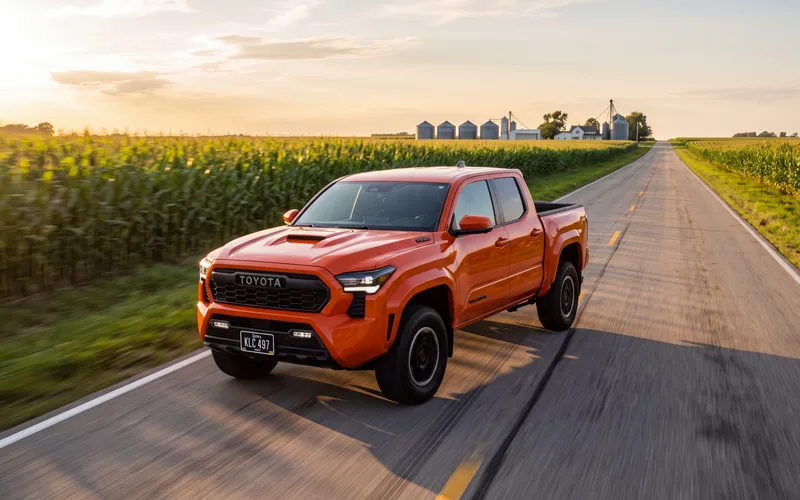 Toyota TacomaMid-Size TruckBetter at: Resale value
The default cross-shop in this class: more cab and bed choices, a hybrid option, roomier back seat, and the segment's best resale — worth the look if you're not sold on the Ranger's single 5-ft box.
Compare 1.99C-
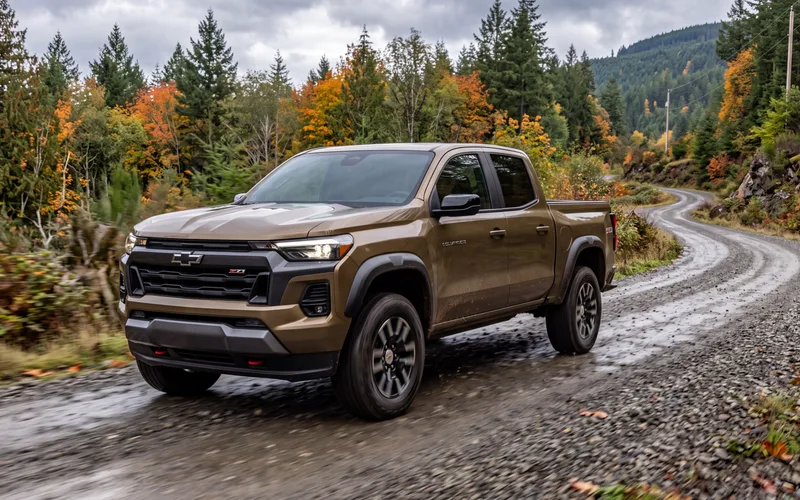 Chevrolet ColoradoMid-Size TruckBetter at: Standard power
Its standard turbo engine makes meaningfully more torque than the Ranger's 2.3L, so you get the stronger truck without paying for an optional V6.
Compare 1.74C-
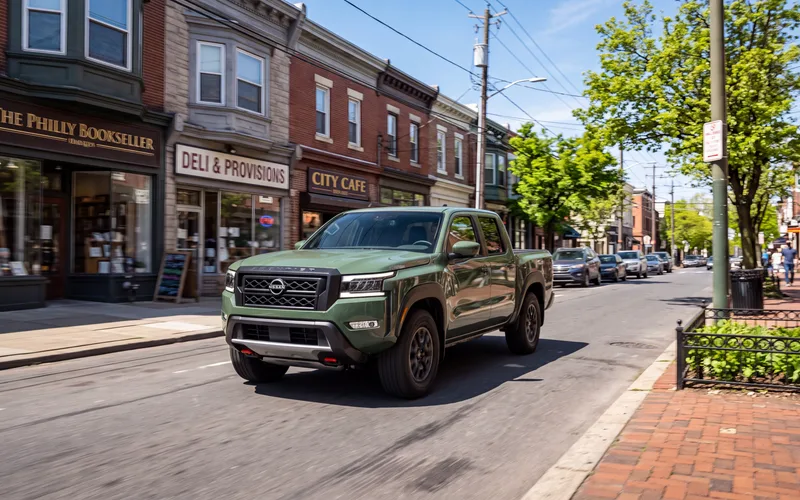 Nissan FrontierMid-Size TruckBetter at: Warranty coverage
Standard V6, more rear legroom, a longer-bed option, and warranty coverage that goes well beyond Ford's 3-yr/36,000-mi floor — the value pick for buyers who want capability over cabin polish.
CompareHow it's evolved
8 scored model years · 2019–2026
Subject scores by year
Hover or tap a score to see what moved it versus the year before. A corner mark flags a big swing.
| Year | Performance | Efficiency | Safety | Space | Cost | Reliability | Tech | Use-case | Driving | Value |
|---|---|---|---|---|---|---|---|---|---|---|
| 2026 | 44 | 48 | 61 | 52 | 71 | 59 | 61 | 57 | 65 | 65 |
| 2025 | 44 | 61 | 56 | 48 | 66 | 62 | 64 | 57 | 62 | 63 |
| 2024 | 43 | 56 | 59 | 52 | 72 | 53 | 57 | 57 | 62 | 61 |
| 2023 | 39 | 49 | 50 | 40 | 69 | 59 | 36 | 55 | 57 | 44 |
| 2022 | 39 | 58 | 49 | 41 | 65 | 62 | 41 | 54 | 58 | 44 |
| 2021 | 39 | 59 | 51 | 40 | 65 | 61 | 41 | 55 | 58 | 47 |
| 2020 | 38 | 59 | 68 | 40 | 66 | 59 | 41 | 55 | 58 | 57 |
| 2019 | 40 | 59 | 53 | 40 | 69 | 51 | 37 | 63 | 61 | 55 |
Compare two years
Best fit & conditions
Higher scores mean a better fit for that use case. Learn more about use-case fit →
Subject profile
Trims & configurations
4 trimsScores above reflect the volume trim. Per-trim specs and scores are rolling out — the full lineup:
Detailed scoring by subject
1Performance & PowertrainThe Ranger's lowest-graded category.0.92F
Volume-trim (XLT) standard engine is the 2.3L EcoBoost turbo-four at 270 hp; the 2.7L V6 and Raptor's 3.0L V6 are optional/trim-restricted upgrades.
Standard 2.3L EcoBoost four-cylinder produces 310 lb-ft; the optional V6 and Raptor's V6 offer substantially more.
The standard 2.3L four-cylinder volume trim runs roughly mid-6-second 0-60 times depending on drivetrain (4x2 vs 4x4); the optional V6 and Raptor are meaningfully quicker.
The optional 2.7L twin-turbo V6 delivers smooth, low-lag power, but the standard 2.3L I4 volume-trim powertrain is less refined, with some roughness tied to auto stop-start at low speed.
The 10-speed automatic (10R80/10R60) generally shifts smoothly and at the right times once underway, but owner forums and testers report occasional klunk/hesitation on upshifts and low-speed gear changes.
Peak conventional tow rating of 7,500 lbs is available on both the 2.3L I4 and 2.7L V6 with the Trailer Tow Package; the performance-oriented Raptor is rated lower.
Maximum payload is achieved on lighter 4x2 configurations; payload drops with 4x4 and heavier engine options due to added curb weight.
Tow/Haul mode is standard fleet-wide and the Trailer Tow Package adds a Class IV hitch and Trailer Sway Control, but the integrated trailer brake controller and Pro Trailer Backup Assist are optional on XLT/Lariat (standard only on Raptor) rather than standard across the lineup, and there's no trailer-scale feature.
Part-time electronic-shift 4WD is available across XL/XLT/Lariat (with 4x2 standard), and 4WD is standard on Raptor with a more capable 2-speed transfer case and terrain modes — solid availability but basic operation on the mainstream trims.
The Ranger Raptor brings genuine off-road credibility (Fox Live Valve shocks, front/rear locking differentials, 33-inch tires, steel bumpers, aggressive approach/departure angles), and an FX4 Off-Road Package (locking diff, off-road shocks, steel bash plates, Trail Control, Mud/Ruts and Sand modes) extends light off-road capability to XLT/Lariat; the North American Tremor package had not yet launched for the 2025 model year.
Three distinct gas engines are offered (2.3L I4, 2.7L V6, and Raptor's 3.0L V6) but there is no hybrid, PHEV, or EV variant, unlike some mid-size rivals.
2Efficiency & RangeMid-pack among this car's ten categories.2.12C
EPA-rated combined fuel economy for the volume 2025 Ranger configuration (2.3L EcoBoost I4, 4WD, 10-speed auto). RWD is slightly better at 23 combined.
EPA city rating for the 2.3L EcoBoost 4WD Ranger, the volume powertrain/drivetrain combination.
EPA highway rating for the 2.3L EcoBoost 4WD Ranger; unchanged between 2WD and 4WD.
Estimated from the 21-gallon fuel tank on the 2025 Ranger (6th-gen, unchanged from 2024) and the EPA combined rating for the volume 4WD 2.3L config.
EPA's published annual fuel cost estimate (15,000 mi/yr) for the volume 4WD 2.3L configuration; 2WD is modestly cheaper to run at 23 combined MPG.
The volume XL/XLT/Lariat trims (2.3L I4 and 2.7L V6) run on regular unleaded. Only the Raptor's 3.0L twin-turbo V6 recommends premium for peak output, but it isn't required and Raptor is a low-volume halo trim, not the representative config.
3SafetyOne of the Ranger's weakest categories.1.77C-
NHTSA's official overall rating for the 2025 Ford Ranger SuperCrew is 4 stars, built from 5-star frontal and 5-star side crash results offset by a weaker 3-star rollover rating (22.8% rollover probability), typical for a body-on-frame midsize truck.
The 2025 Ranger earns Good ratings in five of six crashworthiness tests (driver-side small overlap front, moderate overlap front, side, roof strength, head restraint) plus Acceptable on the passenger-side small overlap front — a strong crashworthiness picture. It misses IIHS Top Safety Pick solely because every available headlight option (standard and optional) falls short of a Good rating.
Ford Co-Pilot360 — Pre-Collision Assist with AEB, BLIS blind-spot monitoring with cross-traffic alert, Lane-Keeping System, auto high-beams, and rear camera — is standard fleet-wide including the base XL. Adaptive cruise control with lane centering, however, remains gated to an optional Technology Package rather than standard even on the volume XLT.
IIHS front crash prevention testing on this generation (shared structure across 2023-2025 model years) rates the standard system Superior for vehicle-to-vehicle avoidance and Advanced for daytime pedestrian detection, but only Basic for nighttime pedestrian detection — strong daytime results held back by weaker low-light pedestrian performance.
BLIS blind-spot monitoring with cross-traffic alert is standard from the base XL up, giving broad coverage across the range, though trailer-aware coverage and cross-traffic braking intervention are tied to the same standard Co-Pilot360 suite rather than being a further upgrade — solid but alert-oriented rather than fully active.
Standard Lane-Keeping System (warning + assist) is a safety-net feature rather than continuous centering; true Lane Centering only arrives bundled with the optional adaptive-cruise Technology Package. Owner feedback on the centering behavior is mixed — usable but described as less refined than some rivals, short of a standout system.
Adaptive cruise control with stop-and-go and lane centering is exclusive to a $1,100 optional Technology Package rather than standard on the volume XLT — a real gap versus rivals bundling ACC more broadly, though the system itself performs adequately where fitted.
Ford BlueCruise is not offered on the Ranger for the 2025 model year in the US — it remains limited to F-150, F-150 Lightning, Explorer, and Expedition. Hands-free highway driving became available on the Ranger only starting with the 2026 model year, so 2025 buyers have no hands-free option at all.
IIHS rates the 2025 Ranger's standard headlights Marginal and its optional headlights Acceptable — no available headlight configuration reaches Good, keeping overall headlight performance in the middle of the pack and costing the Ranger a shot at Top Safety Pick.
Reviewers note reasonable forward sightlines aided by the large dashboard-mounted touchscreen, but call out that blind-spot monitoring augmentation, the 360-degree camera, and rear parking sensors are all optional rather than standard, leaving visibility compensation inconsistent depending on trim and options fitted.
IIHS gives the 2025 Ranger's LATCH system its lowest rating, Poor, for ease of use — anchors are hard to find, mounted too deep within the seat cushions, and require excessive force to attach.
4Space & ComfortOne of the Ranger's weakest categories.1.22D
2025 Ranger is sold only as a 4-door SuperCrew, seating five in a 2-3 layout across XL, XLT, Lariat, and Raptor.
Mid-pack front headroom for the segment, unchanged from the T6.2-generation SuperCrew cab introduced for 2024.
Roomy front seat with a long-legged driving position typical of the current-gen Ranger.
Rear headroom sits at the bottom of the mid-size-truck band, tighter than segment leaders like the Tacoma crew cab.
Rear legroom is a known weak point versus rivals like the Tacoma and Frontier crew cabs, which run several inches longer.
Ranger is offered only with the 5-ft SuperCrew box for 2025 (no longer 6-ft SuperCab option available), short versus the segment's longer-bed configs.
Below-average box volume, consistent with the short 5-ft bed, though the box is usefully wide between the wheel wells.
Flow-through center console with a deep, wide bin and fold-flat rear seats with under-seat storage are competitive; the 120V/400W in-bed outlet is optional (Convenience Package on XLT) rather than standard across the lineup as it became for 2026.
Reviewers describe comfortable, power-operated cloth front seats with two-way lumbar support and enough bolstering to hold occupants in corners; Raptor adds extra side bolstering.
Reviews are split — Consumer Reports calls the unladen ride stiff and choppy, while other outlets praise the rear coil springs for a smooth, compliant ride without leaf-spring harshness; net is competent but not class-leading.
Cabin stays quiet at highway cruising speed with little wind or road intrusion, though the turbo four's engine noise is pronounced at low speed and under load.
Single-zone A/C is standard on XL with dual-zone automatic climate control (including rear vents) available from XLT up, and heated leather power-adjustable seats plus a heated wheel arrive on Lariat/Raptor, but no ventilated seats are offered on any trim.
5Cost of OwnershipThe Ranger's best-graded category.2.49C+
2025 Ranger XL 4x2 starts at $33,350 plus a $1,695 destination charge, mid-pack for a mid-size truck.
XLT 4x4 SuperCrew is the volume configuration for Ranger buyers, listed at $39,375 before destination.
CarEdge projects combined 5-year maintenance and repair costs of $3,443, and RepairPal's $615/yr average repair cost corroborates a below-segment-average ownership burden.
iSeeCars/CarEdge depreciation studies put the 2025 Ranger's 5-year depreciation around 34.9%, better than the average pickup (38.8%) but trailing segment leaders like the Tacoma and Tundra.
Standard Ford bumper-to-bumper coverage, the segment floor for mid-size trucks.
Standard Ford powertrain coverage, the segment floor — some rivals offer longer terms.
Ford includes 5-year/60,000-mile complimentary roadside assistance (fuel delivery, lockout, jumpstart, towing), but no complimentary scheduled maintenance visits, unlike some rivals.
$41,070 volume-trim price minus its estimated resale value after 5 years (65.1% retained, or about $26,737) leaves about $14,333 in depreciation. Add the projected $3,443 in 5-year maintenance and repairs, and owning this vehicle for 5 years costs about $17,776 in total.
6Reliability & QualityMid-pack among this car's ten categories.2.15C
Consumer Reports predicts the 2025 Ranger to be more reliable than the average new vehicle and currently the most reliable midsize truck in its lineup, a big swing from the outgoing generation's below-average showing, though brakes and in-car electronics are flagged as relative weak points.
Ford sits mid-pack on recent multi-year dependability studies — 11th among major brands in Consumer Reports' 2025 reliability survey (an improving score) and up 10 spots to 13th in J.D. Power's 2025 Vehicle Dependability Study — a trending-upward but still average brand position.
The 2024–2026 Ranger generation, which covers the 2025 model year, has drawn multiple safety-critical NHTSA recalls — a sun-visor wiring fire hazard, an electronic brake booster defect that can extend stopping distance, a side-curtain airbag tear defect, and a front upper control arm fastener issue — a rough record that outweighs the otherwise-positive predicted-reliability signal.
The standard 2.3L EcoBoost I4 is a proven Ford powertrain family, but the 2025 Ranger pairs it with the newer, lighter-duty 10R60 10-speed (replacing the 10R80 used through 2023) which lacks a comparable long-mileage track record, and the separate EGR valve recall adds some caution.
Reviewers describe the redesigned cabin as a clear step up from the previous generation and competitive to class-leading on upper trims, which add soft-touch padded and stitched surfaces, but base XL trims still carry a lot of hard, lower-grade plastic.
No recurring pattern of rattles, squeaks, or panel-gap complaints turns up in 2025 Ranger reviews or owner forums — most gripes center on interior storage and infotainment usability rather than assembly quality.
Ford runs one of the largest dealer networks in the US with deep truck service experience, though satisfaction scores trail the top reliability-leader brands.
RepairPal puts average annual repair cost at roughly $615, the highest of the direct midsize-truck set (Tacoma ~$478, Ridgeline ~$502, Colorado ~$599), though still average-severity and low-frequency repairs backed by Ford's large parts network.
7Technology & InfotainmentOne of the Ranger's strongest categories.2.30C+
The volume-trim XL/XLT gets a 10.1-inch SYNC 4A touchscreen, a modest size for a mid-size truck; the larger 12-inch vertical display is reserved for the Lariat and Raptor (or as an XLT option).
SYNC 4A is a fast, well-organized system with generally favorable reviewer sentiment across Ford's lineup, and the vertical 12-inch display on upper trims adds portrait-orientation navigation/media views without sacrificing physical climate controls.
Wireless Apple CarPlay and Android Auto come standard across the 2025 Ranger lineup via SYNC 4A, including the base XL — best-in-class availability for a mid-size truck.
SYNC 4A's Enhanced Voice Recognition and connected navigation are functional and standard, but most owners still lean on CarPlay/Android Auto for maps and voice assistants rather than Ford's native system.
Base audio on XL/XLT is adequate but unremarkable, while the 10-speaker Bang & Olufsen system with subwoofer is standard on Lariat and Raptor — a genuine premium option, though not universal across the lineup.
XL and XLT retain physical analog gauges flanking small (2.3-in/4.2-in, or dual 4.2-in on XLT) color information screens rather than a full digital cluster; a fully configurable 12-inch digital cluster is optional on XLT and standard on Lariat/Raptor — partial digital on the volume trim, full digital only on upper grades.
SYNC 4A supports over-the-air updates for infotainment and, per Ford's broader OTA infrastructure used across the lineup (including whole-vehicle module updates on comparable Ford models), goes beyond maps-only — though it isn't as expansive as leading EV-native OTA programs.
FordPass covers core remote functions (start/stop, lock/unlock, locate, vehicle status) via FordPass Connect, with remote engine start included on the volume XLT trim rather than gated to top trims only.
A Qi wireless charging pad is standard on all trims except the base XL, paired with multiple USB ports, giving solid device-power provisioning without being universal across the lineup.
Remote engine start is available from the XLT up, but full Intelligent Access proximity keyless entry with push-button start is reserved for Lariat and above, keeping complete keyless convenience from the volume trim.
A standard rear camera is joined by an available Technology Package on XLT adding front parking sensors and a 360-degree camera, while the 360-degree camera (front/rear/mirror-mounted) comes standard on Lariat and Raptor — solid mid-tier coverage without surround-view being universal.
No head-up display is offered on any 2025 Ranger trim in official Ford or dealer materials reviewed — an absent feature across the lineup, consistent with the segment's typical omission of HUD below full-size trucks' top trims.
8Use-Case FitMid-pack among this car's ten categories.1.81C-
SuperCrew's four full-size doors make loading kids straightforward, but IIHS rates the 2025 Ranger's LATCH ease-of-use Poor — anchors are hard to find, mounted too deep in the seat cushions, and require excessive force — and rear legroom (34.6 in) is tight for car-seat installs and stroller-adjacent gear.
NHTSA's 4-star overall rating is solid but not class-leading, and the 2025 Ranger did not earn an IIHS Top Safety Pick. Ford Co-Pilot360 (BLIS, lane-keeping, rear parking sensors) is standard on the family-relevant XLT trim, but adaptive cruise control — a key family highway-safety feature — is gated to an optional Technology Package even there.
Front-seat comfort (41.0 in headroom, 43.7 in legroom) and a quiet cabin support long drives, but rear legroom of just 34.6 in and no rear climate vents or ventilated seats on any 2025 trim make multi-hour trips with kids or adults in back a real compromise.
Outward visibility is strong and the 10-speed automatic settles into smooth shifts at cruising speed, but the same T6-platform chassis carries over reviewer-flagged jerky, shuddery low-speed 1-2-3 shifts and a stiff, bouncy unladen ride that add fatigue in stop-and-go traffic.
19/26/22 MPG city/hwy/combined for the volume 2.3L 4WD (23 combined on 2WD) is middling for the mid-size class with no hybrid option to close the gap to efficiency-focused rivals, though below-average RepairPal repair costs ($615/yr) and regular-fuel compatibility help offset running costs.
A rear camera is standard fleet-wide and the 360-degree surround-view camera is standard on Lariat/Raptor and available on XLT via the optional Technology Package, giving most buyers a path to easier parking — but the base XL and non-package XLT are left managing a full-size crew-cab footprint with only a standard rearview camera.
Up to 7,500 lbs tow (XL/XLT/Lariat) and 1,805 lbs payload (RWD) / 1,711 lbs (4WD) are strong figures for the mid-size class, but the single 5-ft box (59.6 in, ~43.3-43.5 cu ft) caps bulky-cargo capacity versus rivals offering multiple bed lengths, and the Raptor's performance-tuned powertrain drops tow rating to 5,510 lbs.
RepairPal rates Ranger reliability 4.0/5.0 (3rd of 7 midsize trucks) with low repair frequency and average severity, giving it a solid fleet/commercial-use reputation, though it lacks the decades-deep bulletproof reputation of the segment's longest-tenured rivals.
A 120V/400W in-bed power outlet (via the Convenience Package), standard box tie-downs, and an FX4 Off-Road Package (optional on XLT/Lariat, requires 4WD) give real work-site utility, but the short 5-ft box — the only length offered — limits what can be hauled or upfitted compared with rivals offering multiple bed lengths.
A quiet cabin and comfortable front seats support long hauls, but the 2025 Ranger does not offer BlueCruise hands-free driving (that arrives on Ranger starting with later model years), leaving it without the highway driver-assist tech that helps rivals' mile-eating case; combined-cycle range is roughly 395-490 miles on the 18.8-gal tank depending on driving mix.
4WD is available across XL/XLT/Lariat and standard on Raptor, and the Raptor halo brings genuine off-road credibility — 3.0L twin-turbo V6 (405 hp/430 lb-ft), Fox Racing Live Valve shocks, locking front/rear diffs, and 10.7 in of ground clearance — with an FX4 Off-Road Package extending light off-road ability to XLT/Lariat.
The 2025 lineup offers only the 5-ft SuperCrew box (no SuperCab or 6-ft bed option), which restricts bulky-gear hauling versus rivals selling multiple cab/bed combinations, though the flow-through console and fold-flat rear seats help with smaller items.
9Driving ExperienceMid-pack among this car's ten categories.2.19C
Body control is fairly well managed with limited lean through corners, but the volume XLT/Lariat Ranger feels ponderous and reluctant to change direction versus class leaders like the Tacoma and Colorado.
Electric power-assisted rack-and-pinion steering is accurate enough for daily driving but reviewers found it slow to turn in with almost no feedback to the driver.
Instrumented testing found notably long stopping distances from 60 mph on both dry and wet surfaces, a clear weak point versus mid-size truck rivals.
Standard 2.3L EcoBoost turbo-four (270 hp/310 lb-ft) and optional 2.7L twin-turbo V6 (315 hp/400 lb-ft) both pair with a 10-speed automatic that shifts smoothly with well-calibrated tip-in; no significant drivability complaints for the 2025 model year.
The turbo-four can sound coarse under hard acceleration, a known trait of this EcoBoost family in other Ford trucks; the optional V6 is quieter and smoother. No 2025-specific instrumented noise data found.
Ford's 2025 Ranger technical specifications list a curb-to-curb turning diameter of 42.5 ft.
Power seats and a tilt/telescoping wheel give a wide adjustment range, and the low hood line gives clear forward visibility; reviewers flag the steering-wheel toggle controls as an ergonomic miss requiring awkward hand repositioning.
The mainstream Ranger has decent powertrain response but the vague steering and ponderous handling noted by testers blunt everyday driver engagement on the volume XLT/Lariat trims; the Raptor variant carries the real enthusiast halo and is not the configuration scored here.
10Value & Market PositionOne of the Ranger's strongest categories.2.23C
Base XL ($33,350 MSRP) includes a 10.1-inch touchscreen with wireless CarPlay/Android Auto, automatic emergency braking, and lane-keeping — solid for a base work truck, but AC and cruise are the extent of comfort kit; competitive rather than a standout.
Range spans a 270-hp turbo-4 base to a 315-hp V6 mid-range and a 405-hp Raptor with Fox live-valve shocks — strong capability-per-dollar at the top, fair value through the middle, roughly in line with Tacoma/Colorado.
Four trims (XL, XLT, Lariat, Raptor) spanning $33,350–$56,070 with 4x2/4x4 options cover work-to-performance needs, but cab/bed configuration choice is narrower than Tacoma's lineup — essentially one SuperCrew body style.
Ranger posted a record 70,960 US sales in 2025, up 53.6% year over year, but still finished behind Tacoma and Colorado in most quarters (3rd-4th among six mid-size entries) — a fast-rising mid-pack seller rather than the class leader.
Ford's truck brand carries strong halo effect from the F-150 and the Raptor sub-brand's off-road cachet, giving the Ranger above-average desirability within the mid-size segment even though it isn't the sales leader.
Modest incentives such as $2,000 regional cash back plus military, first-responder, and financing programs are available, but strong 2025 sales momentum has kept discounting light compared to slower-selling rivals.
The Ranger was fully redesigned for the 2024 model year (fifth generation, new T6 platform, first US-market Raptor) — 2025 is only the second model year of this generation, so it remains current with no near-term redesign risk.
Reviewers praise the modern interior, tall infotainment screen, and Raptor's capability, but Consumer Reports flagged a stiff, bouncy ride and clumsy handling with long stopping distances, and the Ranger has not been a consistent comparison-test winner against Tacoma or Colorado.