

The verdict
A struggling mid-size truck, strong on ownership and held back by technology.
Overall 1.16 (D) across 10 graded subjects. Its strongest is cost of ownership at 2.69 (C+), its weakest technology & infotainment at 0.38 (F). 3 of 10 subjects grade at C− or better.
Jump to scoresStrengths
- Cost of Ownership
- Reliability & Quality
- Driving Experience
What holds it back
- Technology & Infotainment
- Performance & Powertrain
- Space & Comfort
Top alternatives
Cars shoppers cross-shop with the Ford Ranger 2.12C
2.12C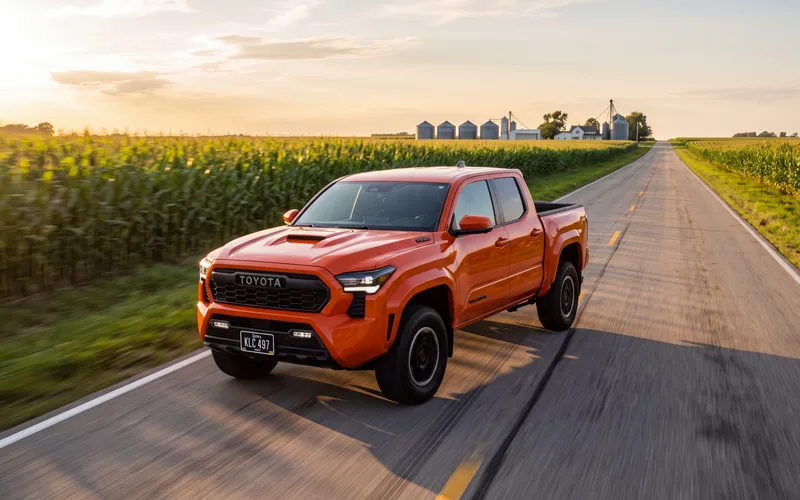 Toyota TacomaMid-Size TruckBetter at: Resale value
The default cross-shop in this class: more cab and bed choices, a hybrid option, roomier back seat, and the segment's best resale — worth the look if you're not sold on the Ranger's single 5-ft box.
Compare 1.99C-
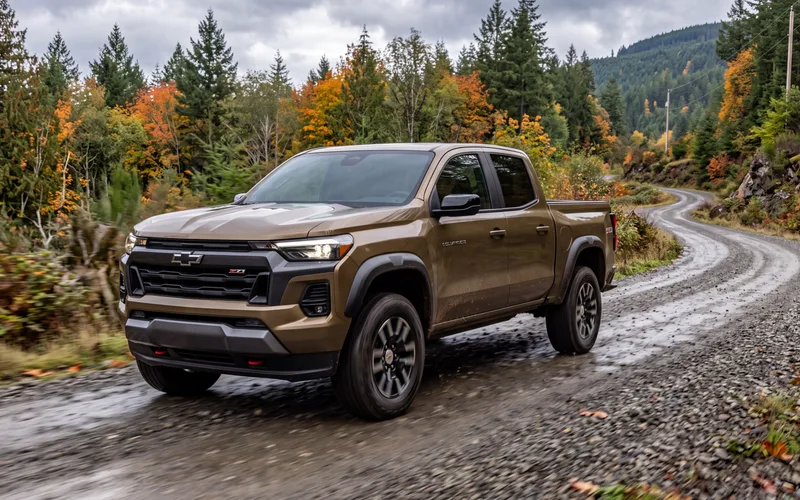 Chevrolet ColoradoMid-Size TruckBetter at: Standard power
Its standard turbo engine makes meaningfully more torque than the Ranger's 2.3L, so you get the stronger truck without paying for an optional V6.
Compare 1.74C-
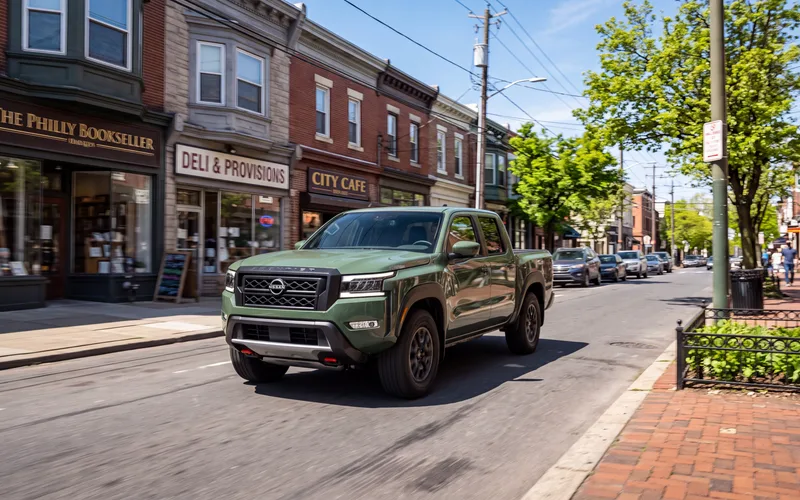 Nissan FrontierMid-Size TruckBetter at: Warranty coverage
Standard V6, more rear legroom, a longer-bed option, and warranty coverage that goes well beyond Ford's 3-yr/36,000-mi floor — the value pick for buyers who want capability over cabin polish.
CompareHow it's evolved
8 scored model years · 2019–2026
Subject scores by year
Hover or tap a score to see what moved it versus the year before. A corner mark flags a big swing.
| Year | Performance | Efficiency | Safety | Space | Cost | Reliability | Tech | Use-case | Driving | Value |
|---|---|---|---|---|---|---|---|---|---|---|
| 2026 | 44 | 48 | 61 | 52 | 71 | 59 | 61 | 57 | 65 | 65 |
| 2025 | 44 | 61 | 56 | 48 | 66 | 62 | 64 | 57 | 62 | 63 |
| 2024 | 43 | 56 | 59 | 52 | 72 | 53 | 57 | 57 | 62 | 61 |
| 2023 | 39 | 49 | 50 | 40 | 69 | 59 | 36 | 55 | 57 | 44 |
| 2022 | 39 | 58 | 49 | 41 | 65 | 62 | 41 | 54 | 58 | 44 |
| 2021 | 39 | 59 | 51 | 40 | 65 | 61 | 41 | 55 | 58 | 47 |
| 2020 | 38 | 59 | 68 | 40 | 66 | 59 | 41 | 55 | 58 | 57 |
| 2019 | 40 | 59 | 53 | 40 | 69 | 51 | 37 | 63 | 61 | 55 |
Compare two years
Best fit & conditions
Higher scores mean a better fit for that use case. Learn more about use-case fit →
Subject profile
Trims & configurations
4 trimsScores above reflect the volume trim. Per-trim specs and scores are rolling out — the full lineup:
Detailed scoring by subject
1Performance & PowertrainOne of the Ranger's weakest categories.0.59F
The 5th-generation Ranger (2019-2023) offers only one U.S.-market engine, the 2.3L EcoBoost turbo-four, standard on every trim including Tremor; no V6 or diesel was sold stateside this generation.
Peak torque of the single available 2.3L EcoBoost engine, unchanged across trims for the 2023 model year.
Independent test results vary by configuration — quicker for lighter 2WD SuperCab models, slower for the more common 4x4 SuperCrew volume trim carrying extra driveline weight.
The 2.3L EcoBoost is adequately smooth in normal driving but feels strained under heavier loads or at highway passing speeds, and lacks the broader refinement of rivals offering a V6 alternative.
The 10-speed automatic shared with the F-150 shifts smoothly in most conditions, though owners and reviewers note occasional low-speed hunting and slightly delayed downshifts.
Peak conventional tow rating of 7,500 lbs applies to properly equipped 2WD configurations, matching the tow rating this generation has carried since its 2019 launch.
Maximum payload is achieved on the lightest 2WD SuperCab configuration; the more common 4x4 SuperCrew volume trim carries meaningfully less due to added driveline weight.
Tow/Haul mode and a class-exclusive Pro Trailer Backup Assist are available, and the optional Trailer Tow Package adds the hitch and wiring, but a trailer hitch and integrated brake controller are options rather than standard fitment on XL/XLT/Lariat, and there's no trailer-scale feature.
Part-time, electronic shift-on-the-fly 4WD with a 2-speed transfer case is available across XL/XLT/Lariat trims (2WD standard), giving solid availability but conventional part-time operation rather than a full-time AWD system.
The 2023 Tremor package (its final year before the package was dropped for the 2024 redesign) adds a 2-inch suspension lift, Fox 2.0 monotube shocks, a locking rear differential, skid plates, a 4-mode Terrain Management System and Trail Control, giving genuine light-to-moderate off-road credibility even without a Raptor-class flagship in the U.S. lineup.
The U.S.-market 2023 Ranger is offered with a single engine, the 2.3L EcoBoost I4 — no V6, diesel, hybrid, or EV variant is available, unlike the diesel/V6 options Ford sells on the Ranger overseas.
2Efficiency & RangeGrades below the middle of the scale.1.31D
EPA-rated combined fuel economy for the volume 2023 Ranger configuration (2.3L EcoBoost I4, 4WD, 10-speed auto) on the outgoing 5th-generation Ranger, the last US model year before the 2024 redesign.
EPA city rating for the 2.3L EcoBoost 4WD Ranger, the volume powertrain/drivetrain combination for 2023.
EPA highway rating for the 2.3L EcoBoost 4WD Ranger for the 2023 model year.
Estimated from the outgoing 5th-generation Ranger's 18-gallon fuel tank (unchanged across XL/XLT/Lariat/Tremor for 2023) and the EPA combined rating for the volume 4WD 2.3L config.
EPA's published annual fuel cost estimate (15,000 mi/yr) for the volume 4WD 2.3L configuration on the outgoing 5th-generation Ranger.
Every 2023 Ranger trim (XL, XLT, Lariat, Tremor) uses the single 2.3L EcoBoost I4 and runs on regular unleaded; there was no premium-fuel Raptor variant in the US on this pre-redesign generation.
3SafetyGrades below the middle of the scale.1.32D
The 2023 Ranger (SuperCrew) carries the outgoing generation's NHTSA testing: 4-star overall rating built from 5-star frontal, 5-star side, and a weaker 3-star rollover result (roughly 25% rollover probability), typical for a body-on-frame midsize pickup.
The 2023 Ranger crew cab is Good in small-overlap front (driver) and roof strength, Acceptable in small-overlap front (passenger) and the updated side test, but Marginal in the updated moderate-overlap front test specifically due to rear-occupant chest/restraint performance — a real structural concern that, combined with Marginal headlights, kept it out of Top Safety Pick for 2023.
Ford Co-Pilot360 — Pre-Collision Assist with AEB, Lane-Keeping System, rear camera, and auto high-beams — is standard fleet-wide including base XL, but BLIS blind-spot monitoring is standard only from XLT up (optional on XL) and adaptive cruise control remains an optional Technology Package item on every trim.
IIHS front crash prevention testing for this generation rates the standard system Superior for vehicle-to-vehicle avoidance and Advanced for daytime pedestrian detection, but only Basic for nighttime pedestrian detection — strong daytime results held back by weaker low-light pedestrian performance.
BLIS blind-spot monitoring with cross-traffic alert and trailer coverage is standard from XLT up but only optional on the base XL, and the system is alert-only rather than offering active braking intervention.
This generation offers only a Lane-Keeping System (departure warning plus corrective steering torque or alert vibration), not continuous lane centering — a functional safety net rather than a refined highway-assist feature, standard across the range.
Adaptive cruise control is available only as part of an optional Technology Package on XLT and Lariat, never standard, and is offered as a standalone feature without an integrated highway-assist/lane-centering companion on this generation.
Ford BlueCruise hands-free highway driving was not offered on the Ranger at all for 2023 — it remained limited to F-150, F-150 Lightning, Explorer, and Mustang Mach-E — and did not reach the Ranger until the 2025 model year on the redesigned generation.
IIHS rates the 2023 Ranger's headlights Marginal, keeping it below the Good/Acceptable threshold needed for Top Safety Pick consideration.
The Ranger's midsize-truck proportions and moderate pillar thickness give reasonably average sightlines, but a rearview camera is the only standard visibility aid — blind-spot monitoring and any 360-degree camera compensation are gated to higher trims or unavailable on this generation.
IIHS rates the 2023 Ranger's LATCH ease of use Marginal — anchors are workable but require some digging, consistent with the tight rear quarters typical of a crew-cab midsize truck.
4Space & ComfortOne of the Ranger's weakest categories.0.67F
2023 Ranger's best-selling configuration is the 4-door SuperCrew, seating five in a 2-3 layout; the 2-door SuperCab seats four.
Front headroom is identical across SuperCab and SuperCrew and sits toward the low end of the mid-size-truck band for this outgoing (pre-2024-redesign) generation.
Front legroom is mid-pack for the segment, shared across both cab configurations.
SuperCrew rear headroom sits at the bottom of the mid-size-truck band, tighter than segment leaders like the Tacoma crew cab; the 2-door SuperCab is worse still.
Rear legroom is a known weak point of this generation versus rivals like the Tacoma and Frontier crew cabs, which run several inches longer; the SuperCab's rear seat is a tight jump-seat setup by comparison.
The volume SuperCrew configuration gets the shorter 5-ft box; only the less-popular 2-door SuperCab offers the longer 6-ft bed, so the effective fleet-weighted bed length is short for the segment.
Below-average box volume on the volume SuperCrew configuration, consistent with the short 5-ft bed.
The redesigned-for-2019 cabin added a dedicated console storage bin and under-seat storage, but reviewers still describe the fit-and-finish as rudimentary with no standout innovation like an in-bed trunk or onboard power outlet on this outgoing generation.
Front seats are consistently described as comfortable, well-shaped and supportive for a variety of body types, but reviewers peg overall comfort as about average for the segment, and the narrow rear bench is cramped.
Reviews are split but net negative for this outgoing generation — Edmunds describes a soft, underdamped, bouncy ride that amplifies bumps, while Consumer Reports calls the unladen ride stiff and choppy; neither view is flattering.
Consumer Reports specifically flags the narrow cabin as noisy inside, a known weak point of this aging platform versus newer mid-size-truck rivals.
Heated front seats, a heated steering wheel, and dual-zone automatic climate control are standard on the range-topping Lariat, but these features are unavailable on lower trims and no ventilated seats are offered on any trim.
5Cost of OwnershipThe Ranger's best-graded category.2.69C+
The 2023 Ranger is the final year of the first North American generation (2019–2023) before the 2024 global redesign; the base XL 2WD SuperCab starts around $28,895 including the $1,495 destination fee, competitive for a mid-size truck.
XLT SuperCrew 4x4 is the volume configuration for Ranger buyers; XLT starts at $32,955 with 4x4 adding $3,485, plus the SuperCrew body-style premium over SuperCab, landing around $38,000 including destination.
RepairPal rates Ranger reliability 4.0/5.0 (3rd of 7 mid-size trucks) with a $615/yr average annual repair cost, and CarEdge/industry estimates put combined 5-year maintenance and repair in the $3,000-5,000 range for the well-established 2.3L EcoBoost powertrain carried through 2019-2023.
The 2023 Ranger had depreciated 27% after 3 years per KBB/CarEdge tracking; iSeeCars' broader Ranger nameplate data shows 30.2-34.9% five-year depreciation (65-70% retained), better than the 34.3% mid-size truck category average but trailing the segment-leading Tacoma.
Standard Ford bumper-to-bumper coverage, the segment floor for mid-size trucks, unchanged across the 2019-2023 Ranger generation.
Standard Ford powertrain coverage, the segment floor — some rivals offer longer terms.
Ford includes 5-year/60,000-mile complimentary roadside assistance (fuel delivery, lockout, jumpstart, towing) plus 5-year unlimited-mile corrosion coverage with the 2023 Ranger, but no complimentary scheduled maintenance visits, unlike some rivals.
$38,000 volume-trim price minus its estimated resale value after 5 years (66% retained, or about $25,080) leaves about $12,920 in depreciation. Add the projected $3,450 in 5-year maintenance and repairs, and owning this vehicle for 5 years costs about $16,370 in total.
6Reliability & QualityOne of the Ranger's strongest categories.1.99C-
The 2023 Ranger is the fifth and final model year of the pre-redesign (2019-2023) generation, carrying a largely unchanged 2.3L EcoBoost/10R80 drivetrain with several years of owner-survey data behind it, so Consumer Reports and J.D. Power predicted roughly average reliability for the model — a more settled outlook than either the outgoing model's early years or the all-new 2024 redesign that followed.
Ford's overall brand dependability standing was mid-to-below-average through the 2022-2023 Consumer Reports reliability surveys, dragged down by problem-prone nameplates like Bronco, Explorer, and Escape Hybrid, even though the Ranger itself was not among the flagged models.
The 2019-2023 Ranger generation saw moderate recall activity shared across the broader Ford lineup of the era — including a rearview-camera image-distortion recall and door-latch and fuel-system-related campaigns that touched Ranger alongside other Ford/Lincoln models — but nothing systemic or safety-critical specific to the Ranger's own powertrain or structure.
The 2023 Ranger's 2.3L EcoBoost turbo-four paired with the 10R80 10-speed automatic is a well-proven Ford powertrain family shared with the Mustang, F-150, Bronco, and Explorer ST, with a solid high-mileage track record by this point in the generation and no major red flags specific to the truck application.
By its final model year, the 2023 Ranger's cabin was unchanged since the 2019 US relaunch and was widely criticized by reviewers as basic and heavy on hard plastics, trailing newer/redesigned rivals like the Toyota Tacoma and especially the Honda Ridgeline on perceived interior quality.
As a mature, unchanged production run in its fifth model year, the 2023 Ranger did not draw the assembly-quality complaints (panel gaps, rattles) seen in launch-year vehicles, reflecting a well-sorted manufacturing process by this point.
Ford runs one of the largest dealer networks in the US with deep truck service experience, though satisfaction scores trail the top reliability-leader brands — unchanged from other model years of this nameplate.
RepairPal has historically put the Ranger's average annual repair cost at roughly $600-615, in line with the midsize-truck average, backed by Ford's large dealer parts network and mature aftermarket support by the end of this generation's run.
7Technology & InfotainmentThe Ranger's lowest-graded category.0.38F
The 2023 Ranger is the final model year of the outgoing (T6, pre-refresh) generation and carries the same 8-inch SYNC 3 unit across the whole lineup, the smallest screen in the mid-size truck field and well below the 10-12 in units competitors were already offering.
SYNC 3 is a mature, reliable, and simple system with quick menu response and physical volume/tune knobs, but by 2023 it feels dated next to newer SYNC 4/4A and rival systems with larger, sharper displays and more modern graphics.
The 2023 Ranger's SYNC 3 supports Apple CarPlay and Android Auto only via USB cable on every trim; Ford did not offer wireless projection on this outgoing generation, a real shortfall versus rivals that had already made it standard or widely available.
SYNC 3's voice recognition handles basic commands adequately, and built-in navigation is available only as an add-on package rather than standard, so most owners default to phone-projected maps instead of the native system.
Base audio across XL/XLT is unremarkable but sufficient, while the Lariat's 10-speaker B&O (Bang & Olufsen) system with subwoofer and HD Radio is a genuine step up, giving the range a solid top-end option even though the outgoing generation's screen and UX lag behind.
The 2023 Ranger (outgoing T6 generation sold in North America) retains a mostly analog gauge cluster with a small color productivity screen between the dials rather than a configurable full-digital display — that upgrade did not arrive until the redesigned 2024 Ranger.
SYNC 3 on the 2023 Ranger updates via Wi-Fi or a USB drive rather than Ford's newer whole-vehicle wireless OTA pipeline, which Ford reserves for SYNC 4/4A-equipped vehicles — a meaningfully more limited update path than the following generation.
FordPass Connect is offered on the 2023 Ranger and, when equipped, gives the free FordPass app remote start, lock/unlock, vehicle status, and locate functions plus an in-vehicle Wi-Fi hotspot — solid core functionality, but it is an optional add-on rather than standard equipment across the lineup, and there is no digital-key feature.
The 2023 Ranger's cabin power is limited to two USB-A smart-charging ports with no factory wireless charging pad and no cabin AC outlet — aftermarket wireless charging pads exist specifically because Ford never offered one on this generation.
Push-button start and keyless entry are standard on Lariat but not on the volume XL/XLT trims, and remote start requires the optional FordPass Connect modem — convenient at the top of the range but not a lineup-wide standard.
A rearview camera is standard on XLT and Lariat (optional on base XL), and Lariat adds standard rear parking sensors with front sensors available via the Technology Package — reasonably complete for the segment, but there is no 360-degree surround-view camera offered on this generation.
No factory head-up display is offered on any 2023 Ranger trim — only aftermarket OBD-II HUD units exist for this generation, confirming Ford did not bring the feature to the outgoing mid-size Ranger.
8Use-Case FitGrades below the middle of the scale.1.66D
The SuperCrew's four full-size doors make loading kids straightforward and IIHS rates the 2023 Ranger crew cab's LATCH ease-of-use only Marginal (better than the redesigned model's later Poor score, but still below-average), while rear legroom of roughly 34.5 in in the SuperCrew is tight for bulky child seats and stroller-adjacent gear; the SuperCab's rear seat is a tight, occasional-use bench unsuited to child seats at all.
NHTSA's 5-star overall rating is a strong headline number for families, and Ford Co-Pilot360 (standard forward collision warning/AEB, lane-keeping, BLIS) is included on the family-relevant XLT trim, but IIHS gave the 2023 crew cab only a Marginal rating in its updated moderate-overlap front test with no Top Safety Pick award, and adaptive cruise control/lane-centering require stepping up to higher Co-Pilot360 packages.
Front-row space is generous (39.8 in headroom, 43.1 in legroom) but SuperCrew rear legroom of roughly 34.5 in is tight for multi-hour trips with kids or adults in back, there are no rear climate vents or ventilated seats on any 2023 trim, and the leaf-spring rear suspension's occasionally jostling ride adds fatigue on longer drives.
The 10-speed automatic shifts smoothly once at cruising speed and outward visibility is good, but reviews flag vague/clumsy steering, an occasionally bumpy ride from the leaf-spring rear suspension, and low-speed transmission behavior — revving to around 3,000 rpm from a cold start with hunting/hesitant shifts and noticeable vibration between roughly 10-30 mph — that add fatigue in stop-and-go traffic.
21/26/23 MPG city/hwy/combined for 2.3L EcoBoost 2WD (roughly 20/24/22 4WD) is middling for the mid-size class with no hybrid option, though below-average RepairPal repair costs ($615/yr) and regular-fuel compatibility help offset per-mile running costs.
A rearview camera is standard fleet-wide and an available 360-degree camera package (front/rear/side cameras active under 6 mph) helps on higher trims with Co-Pilot360 options, but the base XL and non-package XLT are left managing a full-size SuperCab/SuperCrew footprint with only the standard rearview camera and no factory front/rear parking sensors.
Up to 7,500 lbs tow (with the Trailer Tow Package's Class IV hitch and brake controller prep) and up to 1,905 lbs payload are strong figures for the mid-size class, and buyers get a choice of the SuperCab's 6-ft box or the SuperCrew's 5-ft box for bulkier cargo — an advantage over rivals offered in only one bed length — though the 2.3L EcoBoost-only lineup (no V6 or diesel) caps sustained load-hauling power versus some competitors.
RepairPal rates Ranger reliability 4.0/5.0 (3rd of 7 midsize trucks) with low repair frequency and average severity, giving it a solid fleet/commercial-use reputation, though owner reports of occasional low-speed transmission hesitation and shift hunting temper confidence versus segment stalwarts with decades-deep reputations.
Factory threaded bed inserts accept 6mm/8mm tie-down eyebolts and an FX4 Off-Road Package adds work-adjacent durability options, but the 2023 Ranger's bed comes pre-wired for a 12V power point rather than a factory-installed outlet on lower trims, a step behind rivals offering standard higher-wattage in-bed power.
Front-seat comfort and a reasonably quiet cabin support highway stints, but the 2023 Ranger lacks any hands-free driver-assist system (no BlueCruise on this generation) and reviewers note vague steering and a leaf-spring ride that add fatigue on long hauls; the 18-gallon tank yields roughly 380-430 miles of combined-cycle range depending on drivetrain.
4WD is available on XLT/Lariat with the Tremor and FX4 Off-Road packages bringing real trail credibility — FOX 2.0 monotube dampers with piggyback reservoirs, a 1.3 in wider track, 1.2 in more ground clearance, 32-in all-terrain tires, Trail Control, and skid/bash plates — but the 2023 model year tops out with the 270 hp 2.3L EcoBoost and predates the higher-performance Raptor variant, which only arrived with the redesigned Ranger.
Buyers can choose the SuperCab's longer 6-ft bed for bulkier gear or the SuperCrew's 5-ft bed for easier maneuvering, and factory threaded tie-down inserts help secure loads, but rear seats in both cabs are tight for stowing gear indoors and there is no factory-integrated roof rack or under-seat storage system to match dedicated adventure-oriented rivals.
9Driving ExperienceOne of the Ranger's strongest categories.1.82C-
The outgoing (pre-redesign) 2023 Ranger, unchanged since its 2019 US relaunch, is repeatedly described as clumsy through corners with a suspension that gets unsettled over mid-corner bumps — behind mid-size rivals like the Tacoma and Frontier.
Reviewers consistently call the last-generation Ranger's steering too light and numb, with mushy, imprecise response on-center and through corners.
No instrumented 60-0 mph figure specific to the 2023 model year was found, but multiple reviews of this generation note noticeable nose-dive under hard braking and a soft, not-especially-confident pedal.
The sole 2023 powertrain, a 2.3L EcoBoost turbo-four (270 hp/310 lb-ft) paired with a 10-speed automatic, shifts smoothly and responsively with no major tip-in or calibration complaints, though it lacks the optional V6 the redesigned truck later added.
The 2.3L EcoBoost is widely reported by owners and reviewers as buzzy, with pronounced engine noise at idle and low speeds from its high-pressure direct-injection fuel pump — a well-documented trait of this generation's powertrain.
The pre-redesign Ranger (2019-2023, unchanged for the 2023 model year) carries a curb-to-curb turning diameter of about 42.0 ft (21.0 ft radius) on the volume SuperCrew 4x4 configuration.
The high seating position and relatively narrow windshield pillars give good forward visibility, and the front seats are roomy with easy ingress/egress, though the small rear window, long bed, and fiddly switchgear are recurring complaints.
Opinion is split: owners and some off-road-oriented trims (Tremor) are described as genuinely enjoyable, but mainstream professional reviews cite clumsy handling, numb steering, and an unsettled ride as limiting everyday engagement on the volume XLT/Lariat configuration scored here.
10Value & Market PositionGrades near the bottom of the scale.0.94F
Base XL is sparse — 16-inch steel wheels, manual single-zone A/C, a 3.5-inch cluster screen, manually adjustable cloth seats, and an AM/FM/Bluetooth stereo with no infotainment touchscreen standard. Rivals like the Tacoma and Frontier pack more standard active-safety and infotainment content at comparable base prices.
Competent turbo four-cylinder and a 7,500-lb max tow rating are decent for the money, but the last-of-generation cabin tech, rough leaf-spring ride, and dated interior materials versus the Tacoma/Frontier/Colorado leave it below fair value for the segment.
Three trims (XL, XLT, Lariat) across SuperCab/SuperCrew and RWD/4WD, plus a new-for-2023 Tremor off-road package on XLT/Lariat 4x4 SuperCrew, cover work-to-loaded needs reasonably well but with fewer distinct trims than segment leaders.
Full-year 2023 US sales fell roughly 43% to about 32,300 units, with Q4 collapsing ~92% year-over-year as production wound down ahead of the all-new 2024 Ranger — near the bottom of the mid-size truck segment for the year.
Ford's truck brand equity remains strong nationally on the strength of F-150 and the Ranger nameplate's off-road/adventure image, even as the Ranger itself was a slow seller in 2023.
Modest factory incentives and finance offers (low-APR tiers, small order bonuses) were available through much of the model year, typical of a slow-selling nameplate nearing generation changeover, though not deeply discounted.
2023 was the final model year of the 2019-vintage T6 Ranger generation with no significant changes, sold alongside knowledge that an all-new, redesigned 2024 Ranger was imminent — about as aged and soon-to-be-replaced as a model year gets.
Reviewers liked the punchy turbo-four powertrain and competitive towing but consistently dinged the rough ride, unsophisticated handling, and dated cabin versus the Tacoma, Colorado/Canyon, and Frontier; not a comparison-test winner or awards recipient in 2023.