
The verdict
A struggling mid-size truck, strong on ownership and held back by performance.
Overall 1.26 (D) across 10 graded subjects. Its strongest is cost of ownership at 2.39 (C+), its weakest performance & powertrain at 0.57 (F). 5 of 10 subjects grade at C− or better.
Jump to scoresStrengths
- Cost of Ownership
- Reliability & Quality
- Efficiency & Range
What holds it back
- Performance & Powertrain
- Space & Comfort
- Technology & Infotainment
Top alternatives
Cars shoppers cross-shop with the Ford Ranger 2.12C
2.12C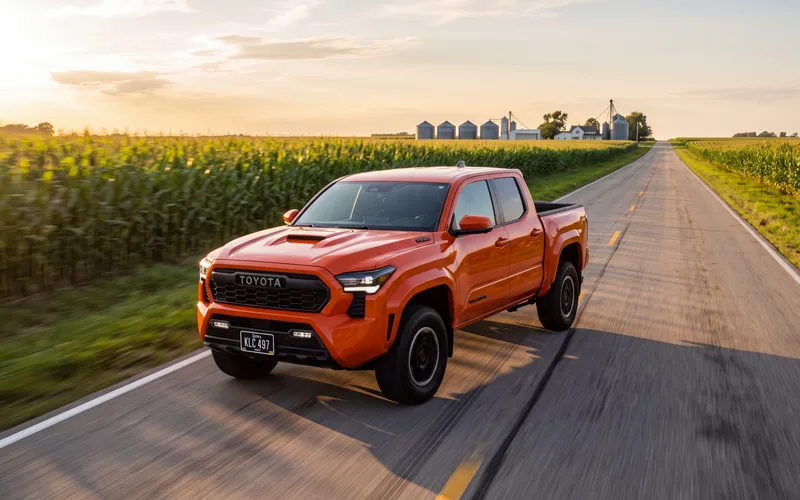 Toyota TacomaMid-Size TruckBetter at: Resale value
The default cross-shop in this class: more cab and bed choices, a hybrid option, roomier back seat, and the segment's best resale — worth the look if you're not sold on the Ranger's single 5-ft box.
Compare 1.99C-
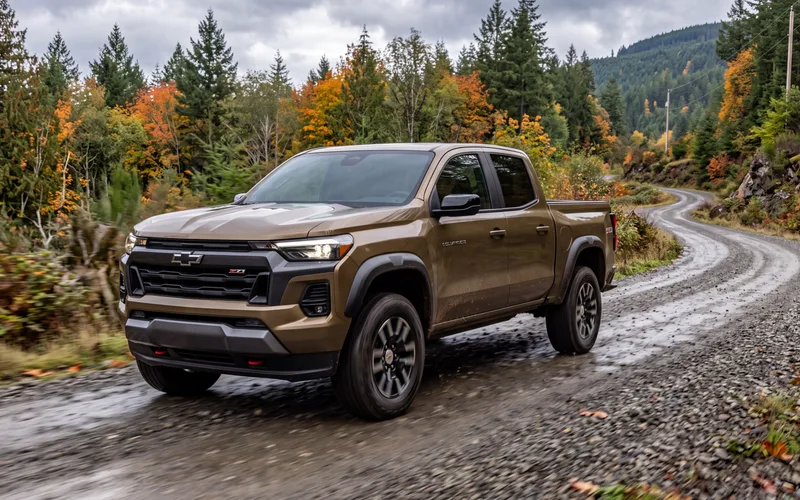 Chevrolet ColoradoMid-Size TruckBetter at: Standard power
Its standard turbo engine makes meaningfully more torque than the Ranger's 2.3L, so you get the stronger truck without paying for an optional V6.
Compare 1.74C-
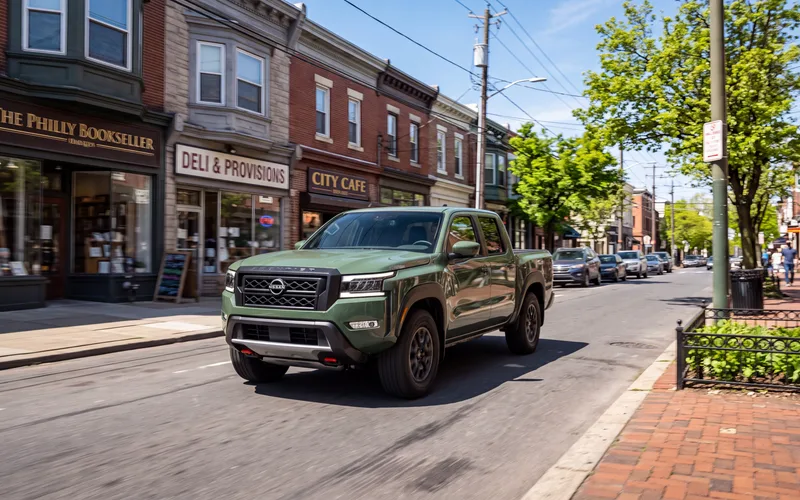 Nissan FrontierMid-Size TruckBetter at: Warranty coverage
Standard V6, more rear legroom, a longer-bed option, and warranty coverage that goes well beyond Ford's 3-yr/36,000-mi floor — the value pick for buyers who want capability over cabin polish.
CompareHow it's evolved
8 scored model years · 2019–2026
Subject scores by year
Hover or tap a score to see what moved it versus the year before. A corner mark flags a big swing.
| Year | Performance | Efficiency | Safety | Space | Cost | Reliability | Tech | Use-case | Driving | Value |
|---|---|---|---|---|---|---|---|---|---|---|
| 2026 | 44 | 48 | 61 | 52 | 71 | 59 | 61 | 57 | 65 | 65 |
| 2025 | 44 | 61 | 56 | 48 | 66 | 62 | 64 | 57 | 62 | 63 |
| 2024 | 43 | 56 | 59 | 52 | 72 | 53 | 57 | 57 | 62 | 61 |
| 2023 | 39 | 49 | 50 | 40 | 69 | 59 | 36 | 55 | 57 | 44 |
| 2022 | 39 | 58 | 49 | 41 | 65 | 62 | 41 | 54 | 58 | 44 |
| 2021 | 39 | 59 | 51 | 40 | 65 | 61 | 41 | 55 | 58 | 47 |
| 2020 | 38 | 59 | 68 | 40 | 66 | 59 | 41 | 55 | 58 | 57 |
| 2019 | 40 | 59 | 53 | 40 | 69 | 51 | 37 | 63 | 61 | 55 |
Compare two years
Best fit & conditions
Higher scores mean a better fit for that use case. Learn more about use-case fit →
Subject profile
Trims & configurations
4 trimsScores above reflect the volume trim. Per-trim specs and scores are rolling out — the full lineup:
Detailed scoring by subject
1Performance & PowertrainThe Ranger's lowest-graded category.0.57F
The 5th-generation Ranger (2019-2023) offers only one U.S.-market engine, the 2.3L EcoBoost turbo-four, standard on every trim; 2021 adds the Tremor off-road package but the powertrain itself is unchanged from launch.
Peak torque of the single available 2.3L EcoBoost engine, unchanged for the 2021 model year.
Independent test results vary by configuration — quicker for lighter 2WD/SuperCab models, slower for the more common 4x4 SuperCrew volume trim carrying extra driveline weight.
The 2.3L EcoBoost is adequately smooth in normal driving but feels strained under heavier loads or at highway passing speeds, and lacks the broader refinement of rivals offering a V6 alternative.
The 10-speed automatic shared with the F-150 shifts smoothly in most conditions, though owners and reviewers note occasional low-speed hunting and slightly delayed downshifts.
Peak conventional tow rating of 7,500 lbs applies to properly equipped 2WD configurations, matching the tow rating this generation has carried since its 2019 launch; the new-for-2021 Tremor is also rated at 7,500 lbs.
Maximum payload for the 2021 model year tops out at 1,860 lbs on the lightest 2WD configuration — a class-leading figure at the time — while the heavier, off-road-focused Tremor 4x4 carries meaningfully less due to its suspension and driveline hardware.
Tow/Haul mode and a class-exclusive Pro Trailer Backup Assist are available, and the optional Trailer Tow Package adds the hitch and wiring, but a trailer hitch and integrated brake controller are options rather than standard fitment on XL/XLT/Lariat, and there's no trailer-scale feature.
Part-time, electronic shift-on-the-fly 4WD with a 2-speed transfer case is available across XL/XLT/Lariat trims (2WD standard), giving solid availability but conventional part-time operation rather than a full-time AWD system.
2021 is the debut model year of the Ranger Tremor, adding a 0.8-inch suspension lift over the stock 4x4, Fox 2.0 monotube shocks, redesigned front knuckles, 32-inch all-terrain tires, and a locking rear differential for 9.7 in of ground clearance, giving genuine light-to-moderate off-road credibility even without a Raptor-class flagship in the U.S. lineup; the lighter-duty FX4 package continues alongside it.
The U.S.-market 2021 Ranger is offered with a single engine, the 2.3L EcoBoost I4 — no V6, diesel, hybrid, or EV variant is available, unlike the diesel/V6 options Ford sells on the Ranger overseas.
2Efficiency & RangeOne of the Ranger's strongest categories.1.98C-
EPA-rated combined fuel economy for the volume 2021 Ranger configuration (2.3L EcoBoost I4, 4WD, 10-speed auto, SuperCrew). 2WD is slightly better at 23 combined.
EPA city rating for the 2.3L EcoBoost 4WD Ranger, the volume powertrain/drivetrain combination for 2021.
EPA highway rating for the 2.3L EcoBoost 4WD Ranger; 2WD does modestly better at 26 highway.
Estimated from the 18-gallon fuel tank on the 2021 Ranger (1st-gen T6 US reintroduction, unchanged through the 2023 model year) and the EPA combined rating for the volume 4WD 2.3L config. Smaller tank than the redesigned 2024+ Ranger's 21-gallon tank.
Derived from EPA's standard 15,000 mi/yr methodology applied to the volume 4WD 2.3L configuration's 22 combined MPG rating at the fuel price assumption used for 2021-model-year window stickers; 2WD is modestly cheaper to run at 23 combined MPG.
The sole 2021 Ranger powertrain, the 2.3L EcoBoost I4, runs on regular 87-octane unleaded across every trim including Tremor — no premium recommendation or requirement on any 2021 configuration.
3SafetyGrades below the middle of the scale.1.43D
NHTSA's overall 4-star rating for the 2021 Ranger SuperCrew, from the original test conducted at the 2019 launch of this generation and carried forward unchanged through 2021, is dragged down by a weak 3-star rollover result typical of a body-on-frame midsize truck's higher center of gravity.
The 2021 Ranger predates IIHS's 2022 update to the moderate overlap front and side tests, so it carries Good ratings in the original small-overlap front (driver), moderate overlap front, side, roof strength, and head restraint evaluations from this generation's 2019 launch tests — a stronger crashworthiness picture than the 2022-2023 model years, which fell to Marginal/Acceptable once the tougher protocols applied. Marginal-rated headlights still kept it short of a Top Safety Pick award.
Ford Co-Pilot360 — Pre-Collision Assist with AEB, Lane-Keeping System, auto high-beams, and a rear camera — is standard fleet-wide on the 2021 Ranger including the base XL, but BLIS blind-spot monitoring with cross-traffic alert is bundled into an optional package on XL and only standard from XLT up, and adaptive cruise control remains optional on every trim.
IIHS front crash prevention testing for this generation, established at its 2019 launch and unchanged through 2021, rates the standard system Superior for vehicle-to-vehicle avoidance and Advanced for daytime pedestrian detection, offset by only a Basic nighttime pedestrian result.
BLIS blind-spot monitoring with rear cross-traffic alert is standard on XLT and Lariat (the volume trims) and optional on the base XL for the 2021 Ranger, offering alert-only coverage with no active steering or braking intervention.
The 2021 Ranger's Lane-Keeping System is a warning-and-nudge setup rather than continuous lane centering; this generation never offered a dedicated centering feature, and owner feedback describes the system as functional but occasionally imprecise.
Adaptive cruise control is optional on the 2021 Ranger, most commonly bundled into XLT/Lariat technology packages and unavailable on the base XL, with no dedicated highway-assist or lane-centering companion feature offered on this generation.
No hands-free highway driving system was offered on the 2021 Ranger. Ford BlueCruise at this time was limited to the F-150 and Mustang Mach-E, and did not reach any Ranger variant until the redesigned generation years later — the 2019-2023 Ranger never offered a hands-free option.
IIHS rated this generation's standard headlights Marginal from its 2019 launch onward, a weak point that persisted unchanged through the 2021 model year and kept the Ranger out of Top Safety Pick contention.
The SuperCrew's midsize-truck proportions give reasonably average sightlines, with a rearview camera standard but blind-spot monitoring optional on the base trim and no 360-degree camera system offered on this generation — visibility compensation is inconsistent depending on trim.
IIHS rates this generation's LATCH ease of use Marginal — tether anchors are hard to locate and can be confused with other hardware, and lower anchors sit too deep in the seat cushions — a result unchanged from the 2019 launch through the 2021 model year.
4Space & ComfortOne of the Ranger's weakest categories.0.66F
2021 Ranger's best-selling configuration is the 4-door SuperCrew, seating five in a 2-3 layout; the 2-door SuperCab seats four.
Front headroom is identical across SuperCab and SuperCrew and sits toward the low end of the mid-size-truck band; unchanged since the 2019 model year of this generation.
Front legroom is mid-pack for the segment, shared across both cab configurations.
SuperCrew rear headroom sits at the bottom of the mid-size-truck band, tighter than segment leaders like the Tacoma crew cab; the 2-door SuperCab is worse still.
Rear legroom is a known weak point of this generation versus rivals like the Tacoma and Frontier crew cabs, which run several inches longer; the SuperCab's rear seat is a tight jump-seat setup by comparison.
The volume SuperCrew configuration gets the shorter 5-ft box; only the less-popular 2-door SuperCab offers the longer 6-ft bed, so the effective fleet-weighted bed length is short for the segment.
Below-average box volume on the volume SuperCrew configuration, consistent with the short 5-ft bed.
The cabin design introduced for the 2019 relaunch added a dedicated console storage bin and under-seat storage, but reviewers describe the fit-and-finish as rudimentary with no standout innovation like an in-bed trunk or onboard power outlet on this generation.
Front seats are consistently described as comfortable, well-shaped and supportive for a variety of body types, but reviewers peg overall comfort as about average for the segment, and the narrow rear bench is cramped.
Reviews are split but net negative — Edmunds and Car and Driver describe a soft, underdamped, bouncy unladen ride that amplifies bumps on this pre-Tremor-suspension generation, while some outlets call the ride stiff and choppy; neither view is flattering.
Reviews specifically flag the narrow cabin as noisy inside at highway speed, a known weak point of this platform versus newer mid-size-truck rivals.
Heated front seats, a heated steering wheel, and dual-zone automatic climate control are standard on the range-topping Lariat, but these features are unavailable on lower trims and no ventilated seats are offered on any trim; the off-road-focused Tremor package new for 2021 doesn't add comfort equipment.
5Cost of OwnershipThe Ranger's best-graded category.2.39C+
2021 Ranger XL 4x2 SuperCab (2.3L EcoBoost, 6-ft box) carried a $1,195 destination charge on top of its base price, one of the lowest entry points in the mid-size truck class; the following model year's pricing notes a $530 increase over this 2021 figure.
XLT SuperCrew 4x4 with the 301A equipment group was the volume configuration for 2021 Ranger buyers wanting a crew cab and 4WD; pricing sits between the unchanged 2020 figure and the following model year's $36,720.
The 2021 Ranger shares its powertrain and platform with the unchanged 2019-2023 generation; class-projection data for this generation (CarEdge: $689/yr, RepairPal: $615/yr average repair cost) points to below-segment-average upkeep, consistent across every model year of this generation.
No 2021-specific 5-year retention study was consulted directly; using the same-generation Ranger's demonstrated retention band (60% for 2022, 66% for 2023 per prior in-house scoring) and discounting slightly for the 2021 model's position as the oldest year still on the pre-redesign platform.
Standard Ford bumper-to-bumper coverage, the segment floor for mid-size trucks, unchanged across the entire 2019-2023 generation.
Standard Ford powertrain coverage, the segment floor — some rivals offer longer terms — unchanged across the entire 2019-2023 generation.
New 2021 Ranger buyers received FordPass Rewards points on purchase (applicable toward the first couple of service visits) plus 5-year/60,000-mile complimentary roadside assistance (fuel delivery, lockout, jump-start, towing) via the FordPass app — a points-based perk rather than fully prepaid maintenance, unchanged from the following model year.
$35,520 volume-trim price minus its estimated resale value after 5 years (58% retained, or about $20,602) leaves about $14,918 in depreciation. Add the projected $3,443 in 5-year maintenance and repairs, and owning this vehicle for 5 years costs about $18,361 in total.
6Reliability & QualityOne of the Ranger's strongest categories.2.10C
Sources diverged sharply for the 2021 Ranger: Consumer Reports gave it a below-average 2/5 predicted reliability rating, while J.D. Power's own predicted-reliability score was 85/100 ("Great"), and a later iSeeCars-based analysis flagged the 2021 model year specifically as one of the more reliable three-year-old vehicles on the road — a genuinely mixed read rather than a clean verdict.
Ford improved to 18th of 28 brands in Consumer Reports' 2021 reliability survey — better than its 22nd-of-26 finish in 2020, but still below the industry average — placing the brand squarely in mid-pack territory for the 2021 model year.
The 2021 Ranger carries four NHTSA recalls on record — a child-seat LATCH anchor alignment/head-restraint fix, a forward-collision radar module misaligned in production, an incorrect tire-loading label, and the generation-wide rearview-camera software defect that can blank the display — a moderate but non-systemic pattern with no powertrain or fire-risk campaigns tied specifically to this model year.
The 2.3L EcoBoost turbo-four paired with the 10R80 10-speed automatic was carried over unchanged from 2019-2020, a Ford powertrain family shared with the Mustang, F-150, and Explorer ST with a growing track record by 2021, though the 10R80 has documented harsh-shift TSB activity and the EcoBoost's coolant-intrusion failure mode remains a known (if uncommon) risk under sustained load.
In its third model year on an unchanged design, the Ranger's cabin continued to draw criticism for extensive hard, painted plastic and a narrow, tinny-feeling cabin, trailing newer segment rivals on perceived material quality even as its off-road-focused Tremor package (new for 2021) added visual flair without changing the base interior.
J.D. Power's 2021 U.S. Initial Quality Study ranked the Ranger 2nd-best in the mid-size pickup segment (behind the Jeep Gladiator, ahead of the Chevrolet Colorado) — a slight step down from finishing 1st in 2020, but still reflecting a tight, well-sorted assembly line three years into production.
Ford runs one of the largest dealer networks in the US with deep truck-service experience, giving the Ranger broad nationwide service access, though satisfaction scores trail the top reliability-leader brands — unchanged across model years of this nameplate.
RepairPal rates the Ranger 4.0/5.0 for reliability (3rd of 7 midsize trucks) with an average annual repair cost around $615 and low repair frequency, backed by Ford's large dealer parts network and mature aftermarket support this deep into the generation's run.
7Technology & InfotainmentOne of the Ranger's weakest categories.0.70F
The pre-redesign Ranger tops out at an 8-inch SYNC 3 display standard on XLT/Lariat and optional on XL, small for the mid-size truck class and far below the 10.1-12-inch SYNC 4A screens Ford introduced in the 2024 redesign.
SYNC 3 is dated by 2021 but remains one of the more consistently praised infotainment interfaces for simplicity, quick boot times, and menu logic, even if graphics and screen size feel small next to newer rivals.
Apple CarPlay and Android Auto are standard on XLT and Lariat via SYNC 3, but only in wired form — wireless projection wasn't offered on the Ranger until the redesigned 2024+ generation with SYNC 4A.
SYNC 3 voice commands handle basic phone/audio/climate requests but aren't natural-language, and factory navigation is a paid option limited to Lariat rather than standard equipment — most owners default to phone-projected maps.
The Ranger's standard 6-speaker system is unremarkable and no branded premium audio (e.g. B&O, Bose) was offered on this generation — a clear gap versus rivals with available premium sound.
The Ranger uses analog gauges with a small monochrome/color productivity screen between them rather than a configurable full-digital cluster, which wasn't introduced until the redesigned later generation.
FordPass Connect's embedded modem supports limited software/map updates but not the comprehensive whole-vehicle OTA capability Ford later rolled out on newer platforms.
FordPass is standard via the embedded FordPass Connect modem and provides remote start, lock/unlock, vehicle locate, and vehicle health alerts (oil life, tire pressure) at no extra subscription cost for core functions.
The Ranger offers a couple of USB-A ports plus a 12V outlet, but no USB-C, no wireless charging pad, and no household AC outlet for this generation — modest by class standards.
Proximity keyless entry with push-button start and remote start are available on XLT/Lariat, plus Ford's SecuriCode keypad, but base XL retains a traditional key — no phone-as-key capability on this generation.
A standard backup camera plus optional rear parking sensors cover the basics, but no 360-degree surround-view system was offered on this generation of Ranger (the factory 360 camera arrived only with the later redesign).
No head-up display was offered on any 2021 Ranger trim, a feature gap versus some rivals in the segment.
8Use-Case FitMid-pack among this car's ten categories.1.73C-
SuperCrew's four full-size doors ease loading kids, but IIHS rates this generation's LATCH ease-of-use Poor — lower anchors are hard to find and mounted too deep in the seat cushions — and SuperCrew rear legroom of just 34.5 in makes rear-facing car-seat installs and stroller-adjacent gear a tight fit.
NHTSA's 4-star overall rating (5-star side, 4-star frontal, 3-star rollover) is unremarkable, and Ford Co-Pilot360 — lane-keeping, blind-spot monitor, rear cross-traffic alert — is an optional package rather than standard equipment on any 2021 trim, with adaptive cruise control gated further to XLT/Lariat option packages only.
Front-seat space (39.8 in headroom, 41.7 in legroom) is comfortable for long drives, but 34.5 in of rear legroom in the SuperCrew and no rear climate vents or ventilated seats on any 2021 trim make multi-hour trips with kids or adults in back a compromise.
The 2.3L EcoBoost/10-speed automatic pairing feels responsive and settles smoothly at cruising speed per contemporary reviews, but the same T6-platform chassis carries reviewer-flagged jerky, shuddery low-speed shift behavior and a stiff, bouncy unladen ride that add fatigue in stop-and-go traffic.
21/26/23 MPG city/highway/combined for 2WD (20/24/22 4WD) is middling for the mid-size class with no hybrid option available, though RepairPal's 4.0/5.0 reliability rating and regular-fuel compatibility keep running costs reasonable.
A rearview camera is standard fleet-wide, but the 360-degree camera and front parking sensors are optional extras rather than standard, leaving base XL buyers managing a full-size crew-cab footprint with only the standard rear camera for reference.
Up to 7,500 lbs tow (with the Trailer Tow Package) and 1,860 lbs payload are strong figures for the mid-size class, and unlike later Ranger model years, 2021 still offers a 6-ft SuperCab box (51.8 cu ft) alongside the 5-ft SuperCrew box (43.4 cu ft), giving buyers a genuine long-bed option for bulky cargo.
RepairPal rates Ranger reliability 4.0/5.0 (4th of 8 midsize trucks, Above Average), and the 2021 model year has since been cited among the most reliable three-year-old vehicles — a solid fleet/commercial-use reputation, though owner reports of premature brake wear and shock noise temper it slightly.
Standard box tie-downs and an FX4 Off-Road Package cover basic work needs, and the new-for-2021 Tremor Package adds a six-position auxiliary switch pack in the overhead console for wiring winches or compressors — but there's still no factory in-bed power outlet, limiting true jobsite upfit compared with full-size rivals.
A reasonably quiet cabin and supportive front seats aid highway stints, but the 2021 Ranger offers no BlueCruise or other hands-free highway driver-assist, and combined-cycle range runs roughly 380-435 miles on the 18-gal tank depending on drivetrain and driving mix.
4WD is available across XL/XLT/Lariat, and the new-for-2021 Tremor Package is a genuine off-road step up — Fox 2.0 remote-reservoir dampers, wider 32-in all-terrain tires, a rear locking differential, and increased suspension travel (6.5 in front / 8.1 in rear) — though it stops short of the later Raptor's dedicated desert-running hardware.
The 6-ft SuperCab box (51.8 cu ft) swallows bulkier gear than most mid-size rivals' single bed option, and the XL trim can delete the rear seats entirely for added interior cargo space, though roof rails and a factory hitch are options rather than standard fitment.
9Driving ExperienceMid-pack among this car's ten categories.1.90C-
The 2019-2023-generation Ranger's road manners were a consistent weak point across testers for the 2021 model year: secure but clumsy through corners with notable body lean, a step behind class rivals like the Tacoma and Colorado.
Most contemporary reviews of the unchanged-for-2021 Ranger found the electric power steering numb and imprecise, though Car and Driver was an outlier praising its quickness; the majority view of mushy, light steering carries more weight.
No instrumented 60-0 mph distance was found specifically for the 2021 model year; U.S. News characterized braking as 'solid' for this generation, and no source flagged it as a particular weakness, so it is rated adequate pending firmer data.
The sole 2021 powertrain — a 2.3L turbocharged EcoBoost I4 (270 hp/310 lb-ft) paired with a 10-speed automatic — draws consistent praise for smooth, well-timed shifts that keep the engine in its power band, with no notable drivability complaints. 2021 also added the Tremor Off-Road Package (unique tuning for off-road use, same engine/transmission) without altering on-road drivability of the volume trim.
The 2.3L EcoBoost is regarded as refined for a turbo-four with good NVH control, though it can turn buzzy under hard acceleration; Consumer Reports separately noted the cabin is 'relatively quiet' overall for this generation.
Ford's pre-redesign (2019-2023) Ranger specifications list a 42 ft curb-to-curb turning diameter, unchanged for 2021 and corroborated across multiple spec aggregators.
The tall, truck-like seating position gives a commanding forward view and easy sightlines, but Consumer Reports flagged 'a few ill-designed controls' and the short cab/small rear glass hurt rearward visibility versus rivals.
Reviewers generally found the pre-redesign Ranger competent but joyless to drive, with the punishing ride and vague steering undercutting the willing EcoBoost/10-speed powertrain and keeping it out of enthusiast conversation; the new-for-2021 Tremor package added off-road capability but not on-road driving enjoyment on the volume trim.
10Value & Market PositionGrades below the middle of the scale.1.10D
Base XL SuperCab (~$24,470 MSRP) carried Ford Co-Pilot360 (automatic emergency braking, lane-keeping, blind-spot info) and an 8-inch SYNC 3 touchscreen as standard for 2021, matching the segment's better safety-kit offerings, but rode on steel wheels with a basic cloth interior and few comfort extras at that price point.
The sole 2.3L EcoBoost turbo-4 (270 hp/310 lb-ft) and 10-speed automatic covered the entire 2021 range with a class-competitive 7,500 lb max tow rating, giving fair capability-per-dollar but no powertrain choice (no V6/diesel option some rivals offered), keeping it from standing out as a bargain.
2021 kept the three-trim XL/XLT/Lariat structure across SuperCab/SuperCrew bodies and 4x2/4x4 drivetrains, and newly added the off-road Tremor package (XLT/Lariat SuperCrew 4x4 only) for the first time, modestly widening the range versus prior years but still narrower than Tacoma's or Colorado's multi-trim spreads.
Full-year 2021 U.S. Ranger sales landed in the high-40,000s, far behind the Toyota Tacoma (~240,000) and Jeep Gladiator, and only narrowly ahead of the aging outgoing Nissan Frontier and the low-volume GMC Canyon — a persistently weak mid-size seller for Ford despite the new Tremor variant.
Ford's broader truck reputation, anchored by the F-150's long-running sales leadership and rugged image, gives the Ranger above-average brand pull even though the model itself was a slow-selling niche entry in 2021.
Early-to-mid 2021 still saw closer-to-normal incentive levels before the semiconductor shortage tightened new-vehicle inventory industry-wide in the back half of the year, giving Ranger buyers modest but real deals for part of the model year rather than the near-MSRP conditions that followed in 2022.
This T6-platform Ranger dates to 2011 globally and 2019 in the US; by 2021 it had received only the addition of the Tremor off-road package as a notable update, with the next-generation Ranger not due in the US until 2024 — an aging generation, though slightly fresher in buyers' eyes than the following two carryover years.
Reviewers found the 2021 Ranger competent but unremarkable on-road, with the new Tremor package earning positive attention as a credible off-road answer to the Gladiator Mojave and Tacoma TRD Pro; overall it collected no major comparison-test wins or industry awards for the model year.