
The verdict
A struggling mid-size truck, strong on safety and held back by performance.
Overall 1.52 (D) across 10 graded subjects. Its strongest is safety at 2.59 (C+), its weakest performance & powertrain at 0.51 (F). 6 of 10 subjects grade at C− or better.
Jump to scoresStrengths
- Safety
- Cost of Ownership
- Efficiency & Range
What holds it back
- Performance & Powertrain
- Space & Comfort
- Technology & Infotainment
Top alternatives
Cars shoppers cross-shop with the Ford Ranger 2.12C
2.12C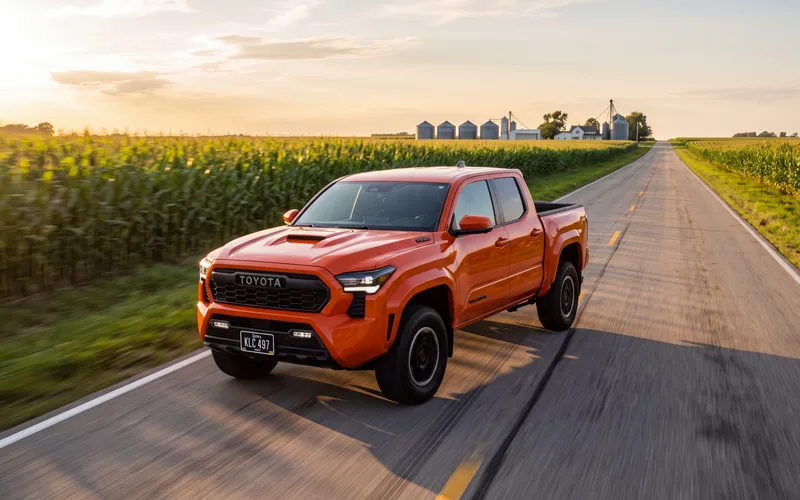 Toyota TacomaMid-Size TruckBetter at: Resale value
The default cross-shop in this class: more cab and bed choices, a hybrid option, roomier back seat, and the segment's best resale — worth the look if you're not sold on the Ranger's single 5-ft box.
Compare 1.99C-
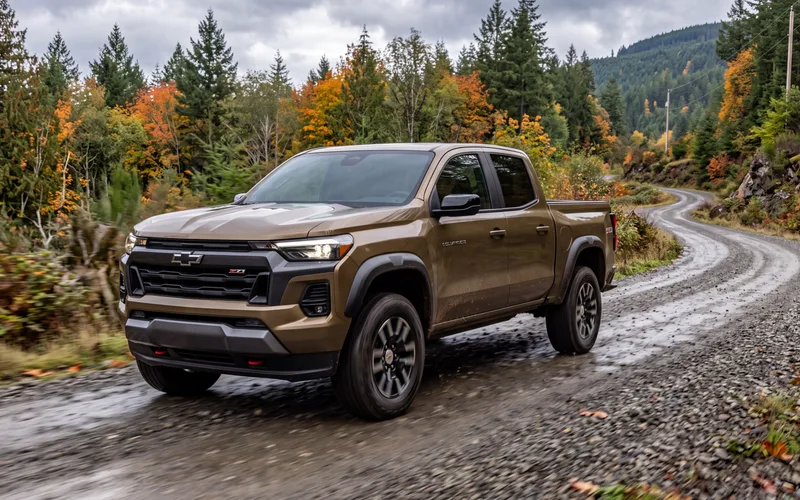 Chevrolet ColoradoMid-Size TruckBetter at: Standard power
Its standard turbo engine makes meaningfully more torque than the Ranger's 2.3L, so you get the stronger truck without paying for an optional V6.
Compare 1.74C-
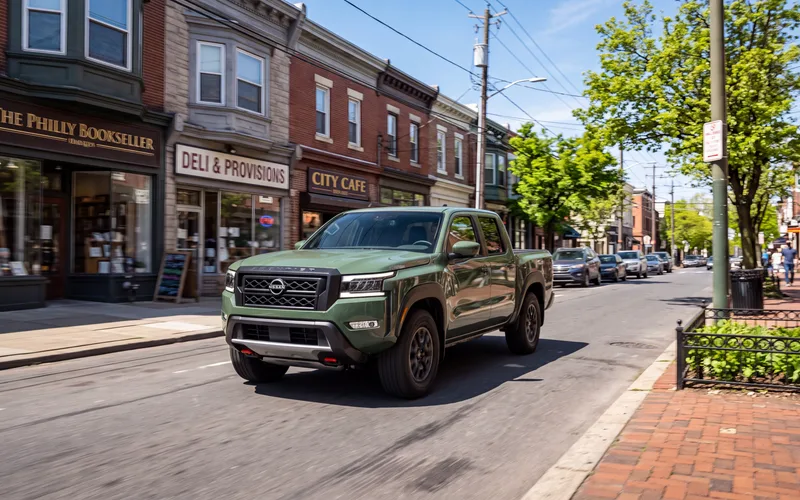 Nissan FrontierMid-Size TruckBetter at: Warranty coverage
Standard V6, more rear legroom, a longer-bed option, and warranty coverage that goes well beyond Ford's 3-yr/36,000-mi floor — the value pick for buyers who want capability over cabin polish.
CompareHow it's evolved
8 scored model years · 2019–2026
Subject scores by year
Hover or tap a score to see what moved it versus the year before. A corner mark flags a big swing.
| Year | Performance | Efficiency | Safety | Space | Cost | Reliability | Tech | Use-case | Driving | Value |
|---|---|---|---|---|---|---|---|---|---|---|
| 2026 | 44 | 48 | 61 | 52 | 71 | 59 | 61 | 57 | 65 | 65 |
| 2025 | 44 | 61 | 56 | 48 | 66 | 62 | 64 | 57 | 62 | 63 |
| 2024 | 43 | 56 | 59 | 52 | 72 | 53 | 57 | 57 | 62 | 61 |
| 2023 | 39 | 49 | 50 | 40 | 69 | 59 | 36 | 55 | 57 | 44 |
| 2022 | 39 | 58 | 49 | 41 | 65 | 62 | 41 | 54 | 58 | 44 |
| 2021 | 39 | 59 | 51 | 40 | 65 | 61 | 41 | 55 | 58 | 47 |
| 2020 | 38 | 59 | 68 | 40 | 66 | 59 | 41 | 55 | 58 | 57 |
| 2019 | 40 | 59 | 53 | 40 | 69 | 51 | 37 | 63 | 61 | 55 |
Compare two years
Best fit & conditions
Higher scores mean a better fit for that use case. Learn more about use-case fit →
Subject profile
Trims & configurations
4 trimsScores above reflect the volume trim. Per-trim specs and scores are rolling out — the full lineup:
Academic Probation · NHTSA safety recalls
Oct 10, 2025Equipment: electrical: engine block heaterThe engine block heater may crack and develop a coolant leak, causing it to short circuit when the block heater is plugged in.
Defect
Ford Motor Company (Ford) is recalling certain 2016-2019 Lincoln MKC, 2016-2023 Explorer, 2019-2020 Fusion, 2019-2024 Ranger, 2020-2022 Lincoln Corsair, Escape, 2021-2024 Bronco, Bronco Sport, and 2022-2024 Maverick vehicles. The engine block heater may crack and develop a coolant leak, causing it to short circuit when the block heater is plugged in.
Risk
An electrical short circuit can increase the risk of a fire.
Remedy
Owners are advised not to plug in their block heater until the vehicle is remedied. Dealers will replace the block heater, free of charge. Owners will also have a alternative option to replace engine block heater element with a threaded blanking plug, and remove the block heater electrical cord. Interim letters, notifying owners of the safety risk, were mailed December 3, 2025. Additional letters will be sent once the final remedy is available, anticipated September 2026. Owners may contact Ford customer service at 1-866-436-7332. Ford's number for this recall is 25SA4. Vehicle Identification Numbers (VINs) involved in this recall became searchable on NHTSA.gov on October 15, 2025.
NHTSA campaign 25V685000 ↗Manufacturer no. 25SA459,006 vehicles potentially affected (all models in the campaign)Filed by Ford Motor CompanyFiled as RANGERJun 27, 2025Back over prevention: softwareA software error may cause the rearview camera to display a blank image, or the image may remain on the display after the backing event has ended.
Defect
Ford Motor Company (Ford) is recalling certain 2018-2022 Transit Connect, 2019-2020 MKZ, MKX, Edge, Continental, F-150, Nautilus, Fusion, 2019-2023 Ranger, Mustang, 2020-2021 EcoSport, Expedition, Navigator, 2020-2022 Escape, F-250 SD, Corsair, 2020-2023 Aviator, Transit, 2020-2024 Explorer, 2021-2024 Bronco Sport, and 2022-2024 Maverick vehicles. A software error may cause the rearview camera to display a blank image, or the image may remain on the display after the backing event has ended.
Risk
A rearview camera that displays a blank image can reduce the driver's view behind the vehicle. A rearview image that continues to be displayed after the vehicle is shifted out of reverse may distract the driver. Both of these situations can increase the risk of a crash.
Remedy
Dealers will update the rearview camera software, free of charge. Owner notification letters were mailed September 4, 2025. Owners may contact Ford customer service at 1-866-436-7332. Ford's number for this recall is 25S72.
NHTSA campaign 25V442000 ↗Manufacturer no. 25S72200,237 vehicles potentially affected (all models in the campaign)Owners notified Sep 4, 2025Filed by Ford Motor CompanyFiled as RANGERMay 26, 2023Equipment: other: labelsThe Tire and Loading Information (TREAD) label states the incorrect load carrying capacity, which can result in an overloaded vehicle. As such, these vehicles fail to comply with the requirements of Federal Motor Vehicle Safety Standard number 110, "Tire Selection and Rims."
Defect
Ford Motor Company (Ford) is recalling certain 2022-2023 Bronco, 2023 Super Duty F-250, and 2019-2023 Ranger vehicles. The Tire and Loading Information (TREAD) label states the incorrect load carrying capacity, which can result in an overloaded vehicle. As such, these vehicles fail to comply with the requirements of Federal Motor Vehicle Safety Standard number 110, "Tire Selection and Rims."
Risk
An overloaded vehicle increases the risk of a crash.
Remedy
Ford will mail a new TREAD label to install over the existing label, free of charge. Owners will also have the option to take their vehicle to a Ford or Lincoln dealer to have the new label installed, free of charge. Owner notification letters were mailed July 21, 2023. Owners may contact Ford customer service at 1-866-436-7332. Ford's number for this recall is 23C18.
NHTSA campaign 23V379000 ↗Manufacturer no. 23C1829,607 vehicles potentially affected (all models in the campaign)Owners notified Jul 21, 2023Filed by Ford Motor CompanyFiled as RANGEROct 15, 2021Seat belts: front: webbingThe front passenger outboard seat belt may not have been assembled properly, allowing the seat belt to be misrouted. As such, these vehicles fail to comply with the requirements of Federal Motor Vehicle Safety Standard numbers 208, "Occupant Crash Protection" and 209, "Seat Belt Assemblies."
Defect
Ford Motor Company (Ford) is recalling certain 2019-2021 Ford Ranger Super Cab vehicles. The front passenger outboard seat belt may not have been assembled properly, allowing the seat belt to be misrouted. As such, these vehicles fail to comply with the requirements of Federal Motor Vehicle Safety Standard numbers 208, "Occupant Crash Protection" and 209, "Seat Belt Assemblies."
Risk
A misrouted seat belt may not adequately restrain an occupant in a crash, increasing the risk of injury.
Remedy
Ford will provide owners with instructions to perform a preliminary inspection of their front seat belts. Owners that detect an issue with the driver's seat belt, are unsure of the results, or do not want to perform an inspection, should not drive their vehicles and contact a Ford dealership. Dealers will inspect the front row outboard seat belts and replace them, if necessary, free of charge. Interim owner notification letters were mailed on November 5, 2021. Owner notification letters were mailed December 22, 2021. Owners may contact Ford customer service at 1-866-436-7332. Ford's number for this recall is 21C25.
NHTSA campaign 21V811000 ↗Manufacturer no. 21C2547,683 vehicles potentially affected (all models in the campaign)Owners notified Dec 22, 2021Filed by Ford Motor CompanyFiled as RANGERSep 30, 2021Child seat: vehicle latch anchor · Seats: mid/rear assemblyThe fixed head restraints may interfere with proper installation of certain types of child seats. Additionally, the child seat may not attach properly to the lower-rear anchors. As such, these vehicles fail to comply with the requirements of Federal Motor Vehicle Safety Standard number 225, "Child Restraint Anchorage System."
Defect
Ford Motor Company (Ford) is recalling certain 2020-2021 Ranger Super Cab vehicles equipped with rear seats containing fixed head restraints. The fixed head restraints may interfere with proper installation of certain types of child seats. Additionally, the child seat may not attach properly to the lower-rear anchors. As such, these vehicles fail to comply with the requirements of Federal Motor Vehicle Safety Standard number 225, "Child Restraint Anchorage System."
Risk
An improperly attached child seat can increase the risk of injury in a crash.
Remedy
Dealers will inspect the rear-lower child restraint anchorages for correct alignment and adjust as necessary. Separately, dealers will replace the non-removable head restraints with removable head restraints, free of charge. Interim owner notification letters were mailed on November 5, 2021. Owner notification letters were mailed on March 17, 2022. Owners may contact Ford customer service at 1-866-436-7332. Ford's number for this recall is 21C24.
NHTSA campaign 21V765000 ↗Manufacturer no. 21C2437,625 vehicles potentially affected (all models in the campaign)Owners notified Mar 17, 2022Filed by Ford Motor CompanyFiled as RANGERSep 23, 2020Back over prevention: sensing system: cameraDue to a poor electrical connection, the rearview camera may intermittently display a blank or distorted image. As such, these vehicles fail to comply with the requirements of Federal Motor Vehicle Safety Standard (FMVSS) number 111, "Rear Visibility."
Defect
Ford Motor Company (Ford) is recalling certain 2020 Ford F-150, F-250, F-350, F-450, F-550, Explorer, Mustang, Transit, Expedition, Escape, Ranger and Edge, and Lincoln Nautilus and Corsair vehicles. Due to a poor electrical connection, the rearview camera may intermittently display a blank or distorted image. As such, these vehicles fail to comply with the requirements of Federal Motor Vehicle Safety Standard (FMVSS) number 111, "Rear Visibility."
Risk
Reduced rearward visibility can increase the risk of a crash.
Remedy
Ford will notify owners, and dealers will replace the rearview camera, free of charge. The recall began November 17, 2020. Remedy became available on February 1, 2021. Owner notification letters were mailed on February 1, 2021. Owners may contact Ford customer service at 1-866-436-7332. Ford's number for this recall is 20C19.
NHTSA campaign 20V575000 ↗Manufacturer no. 20C19620,246 vehicles potentially affected (all models in the campaign)Owners notified Feb 1, 2021Filed by Ford Motor CompanyFiled as RANGERApr 3, 2020Power train: automatic transmission: gear position indication (prndl)The transmission shift cable lock clip may not be fully seated, allowing the transmission to actually be in a different gear than the gear shift position selected by the driver.
Defect
Ford Motor Company (Ford) is recalling certain 2020 Ranger and F-150 vehicles equipped with 10-speed automatic transmissions and certain 2020 Expedition vehicles equipped with a "police" package. The transmission shift cable lock clip may not be fully seated, allowing the transmission to actually be in a different gear than the gear shift position selected by the driver.
Risk
If the transmission selection does not match the indicated gear selection, and the parking brake is not applied, unintended vehicle movement can occur, increasing the risk of injury or crash.
Remedy
Ford will notify owners, and dealers will inspect and correct the shift cable locking clip installation, as necessary, free of charge. The recall began April 27, 2020. Owners may contact Ford customer service at 1-866-436-7332. Ford's number for this recall is 20S18.
NHTSA campaign 20V197000 ↗Manufacturer no. 20S1855,158 vehicles potentially affected (all models in the campaign)Owners notified Apr 27, 2020Filed by Ford Motor CompanyFiled as RANGER
34 recalls on other model years of the Ranger (2019, 2021–2026)
Sep 22, 2026Back over prevention: display function · Equipment: electrical: infotainmentThe screen may lose power and fail to display the rearview camera image. As such, these vehicles fail to comply with the requirements of Federal Motor Vehicle Safety Standard number 111, "Rear Visibility."
Defect
Ford Motor Company (Ford) is recalling certain 2026 Ranger vehicles equipped with a 10.1-inch center stack screen. The screen may lose power and fail to display the rearview camera image. As such, these vehicles fail to comply with the requirements of Federal Motor Vehicle Safety Standard number 111, "Rear Visibility."
Risk
A rearview camera image that does not display reduces the driver's view behind the vehicle, increasing the risk of a crash.
Remedy
The remedy is currently under development. Interim letters notifying owners of the safety risk were mailed October 7, 2026. Additional letters will be sent when the remedy is available. Owners may contact Ford customer service at 1-866-436-7332. Ford's number for this recall is 26C42. Vehicle Identification Numbers (VINs) involved in this recall became searchable on NHTSA.gov on September 25, 2026.
NHTSA campaign 26V605000 ↗Manufacturer no. 26C4211,405 vehicles potentially affected (all models in the campaign)Filed by Ford Motor CompanyFiled as RANGERAug 25, 2026Engine and engine cooling: engine: hard parts internal/mechanicalThe engine piston domes may have been manufactured incorrectly, which can result in piston dome failure and lead to a loss of drive power.
Defect
Ford Motor Company (Ford) is recalling certain 2026 Explorer, Bronco, Bronco Sport, Mustang, and Ranger vehicles. The engine piston domes may have been manufactured incorrectly, which can result in piston dome failure and lead to a loss of drive power.
Risk
An unexpected loss of drive power increases the risk of a crash.
Remedy
Dealers will inspect the engine pistons and replace the engine long block, if necessary, free of charge. Interim letters, notifying owners of the safety risk, were mailed September 3, 2026. Additional letters will be sent once the remedy is available, anticipated in December 2026. Owners may contact Ford customer service at 1-866-436-7332. Ford's number for this recall is 26S61. Vehicle Identification Numbers (VINs) involved in this recall became searchable on NHTSA.gov on August 28, 2026.
NHTSA campaign 26V548000 ↗Manufacturer no. 26S6110,001 vehicles potentially affected (all models in the campaign)Filed by Ford Motor CompanyFiled as RANGERMay 27, 2026Engine and engine cooling: engine: hard parts internal/mechanicalThe engine may fail, which can result in a loss of drive power.
Defect
Ford Motor Company (Ford) is recalling certain 2025-2026 Explorer, Ranger, and Bronco vehicles. The engine may fail, which can result in a loss of drive power.
Risk
A sudden loss of drive power can increase the risk of a crash.
Remedy
Dealers will replace the engine long block, free of charge. Interim letters, notifying owners of the safety risk, were mailed June 5, 2026. Additional letters will be sent once the remedy is available, anticipated in November 2026. Owners may contact Ford customer service at 1-866-436-7332. Ford's number for this recall is 26S35. Vehicle Identification Numbers (VINs) involved in this recall became searchable on NHTSA.gov on May 28, 2026.
NHTSA campaign 26V343000 ↗Manufacturer no. 26S351,536 vehicles potentially affected (all models in the campaign)Filed by Ford Motor CompanyFiled as RANGERMay 26, 2026Equipment: other: labelsThe vehicle specifications listed on the tire placard and safety certification labels may be incorrect, including the VIN, capacity weight, seating capacity, front and rear gross axle weight rating (GAWR), tire and rim dimensions, and recommended cold tire pressure. As such, these vehicles fail to comply with the requirements of Federal Motor Vehicle Safety Standard number 110, "Tire Selection and Rims" and 49 CFR Part 567, "Certification."
Defect
Ford Motor Company (Ford) is recalling certain 2026 Ranger and Bronco vehicles. The vehicle specifications listed on the tire placard and safety certification labels may be incorrect, including the VIN, capacity weight, seating capacity, front and rear gross axle weight rating (GAWR), tire and rim dimensions, and recommended cold tire pressure. As such, these vehicles fail to comply with the requirements of Federal Motor Vehicle Safety Standard number 110, "Tire Selection and Rims" and 49 CFR Part 567, "Certification."
Risk
The incorrect tire size, tire pressures, and GAWR listed on the labels can allow the vehicle to be overloaded or have improperly inflated tires, increasing the risk of a crash.
Remedy
Dealers will inspect and if necessary, replace the certification and TREAD labels, free of charge. Owner notification letters were mailed June 3, 2026. Owners may contact Ford customer service at 1-866-436-7332. Ford's number for this recall is 26C24. Vehicle Identification Numbers (VINs) involved in this recall became searchable on NHTSA.gov on May 28, 2026.
NHTSA campaign 26V335000 ↗Manufacturer no. 26C24268 vehicles potentially affected (all models in the campaign)Owners notified Jun 3, 2026Filed by Ford Motor CompanyFiled as RANGERApr 28, 2026Seats: critical fastenersThe front seats may have a loose or dislodged seat frame height-adjust pivot bolt.
Defect
Ford Motor Company (Ford) is recalling certain 2024-2026 Ranger and Bronco vehicles. The front seats may have a loose or dislodged seat frame height-adjust pivot bolt.
Risk
A seat with a dislodged bolt may not properly restrain an occupant in a crash, increasing the risk of injury.
Remedy
Dealers will inspect and replace the pivot links and bolts as necessary, free of charge. Owner notification letters were mailed May 22, 2026. Owners may contact Ford customer service at 1-866-436-7332. Fordâs number for this recall is 26S30. Vehicle Identification Numbers (VINs) involved in this recall became searchable on NHTSA.gov beginning April 30, 2026.
NHTSA campaign 26V268000 ↗Manufacturer no. 26S30179,698 vehicles potentially affected (all models in the campaign)Owners notified May 22, 2026Filed by Ford Motor CompanyFiled as RANGERApr 14, 2026Electrical system · Structure: interior panels: sun visorThe sun visor or headliner wiring harnesses may be improperly positioned or have excessive tape thickness, which can result in damaged wires.
Defect
Ford Motor Company (Ford) is recalling certain 2024-2026 Ranger vehicles. The sun visor or headliner wiring harnesses may be improperly positioned or have excessive tape thickness, which can result in damaged wires.
Risk
Damaged wires can create an electrical short and cause a fire in the A-pillar area, increasing the risk of injury or a crash.
Remedy
Dealers will inspect the wiring for damage and update the body control module software. Damaged wiring harnesses will be replaced as necessary. All repairs will be performed free of charge. This will be a Phased campaign. Phase 1 will include 2025 model year vehicles. Owners will be notified by mail the week of 5/31/2026. Phase 2 will include 2026 model year vehicles and Phase 3 will include 2024 model year vehicles. Owners will be notified by mail the week of 6/29/2026 for Phase 2 and the week of 7/27/2026 for Phase 3. Interim letters, notifying owners of the safety risk, were mailed May 5, 2026. Additional letters will be sent once the remedy is available, anticipated in October 2026. Owners may contact Ford customer service at 1-866-436-7332. Ford's number for this recall is 26S29. Vehicle Identification Numbers (VINs) involved in this recall became searchable on NHTSA.gov on April 17, 2026.
NHTSA campaign 26V238000 ↗Manufacturer no. 26S29140,201 vehicles potentially affected (all models in the campaign)Owners notified Sep 16, 2026Filed by Ford Motor CompanyFiled as RANGERMar 3, 2026Engine and engine cooling: exhaust system: emission control: gas recirculation valve (egr valve)The exhaust gas recirculation (EGR) valve may fail, resulting in an unexpected loss of drive power.
Defect
Ford Motor Company (Ford) is recalling certain 2025 Ranger, Lincoln Nautilus, Mustang, Maverick, Explorer, Escape, Lincoln Corsair, Bronco Sport, and Bronco vehicles. The exhaust gas recirculation (EGR) valve may fail, resulting in an unexpected loss of drive power.
Risk
An unexpected loss of drive power increases the risk of a crash.
Remedy
Dealers will replace the EGR valves, free of charge. Owner notification letters were mailed July 31, 2026. Owners may contact Ford customer service at 1-866-436-7332. Ford's number for this recall is 26S10. Vehicle Identification Numbers (VINs) involved in this recall became searchable on NHTSA.gov on March 4, 2026.
NHTSA campaign 26V122000 ↗Manufacturer no. 26S1047,804 vehicles potentially affected (all models in the campaign)Owners notified Jul 31, 2026Filed by Ford Motor CompanyFiled as RANGERFeb 20, 2026Electrical system: integrated trailer brake control · Exterior lighting: tail lightsWhen towing a trailer, the integrated trailer module (ITRM) may lose communication with the vehicle, possibly causing a loss of brake and turn signal lights, or a loss of brake function. As such, these vehicles fail to comply with the requirements of Federal Motor Vehicle Safety Standard number 108, " Lamps, Reflective Devices, and Associated Equipment."
Defect
Ford Motor Company (Ford) is recalling certain 2021-2026 F-150, 2022-2026 F-250 SD, F-350 SD, F-450 SD, F-550 SD, Maverick, 2024-2026 Ranger, 2023-2026 F-600 SD, 2022-2027 Lincoln Navigator, Expedition, and 2026 E-Transit vehicles. When towing a trailer, the integrated trailer module (ITRM) may lose communication with the vehicle, possibly causing a loss of brake and turn signal lights, or a loss of brake function. As such, these vehicles fail to comply with the requirements of Federal Motor Vehicle Safety Standard number 108, " Lamps, Reflective Devices, and Associated Equipment."
Risk
Trailer lights or brakes that do not function can reduce the driverâs ability to control the trailer and decrease the trailers visibility to other road users, increasing the risk of a crash.
Remedy
The integrated trailer module software will be updated by a dealer, or through an over-the-air (OTA) update, free of charge. Owner notification letters were mailed March 25, 2026. Owners may contact Ford customer service at 1-866-436-7332. Ford's number for this recall is 26C10. Vehicle Identification Numbers (VINs) involved in this recall will be searchable on NHTSA.gov beginning March 17, 2026.
NHTSA campaign 26V104000 ↗Manufacturer no. 26C104,381,878 vehicles potentially affected (all models in the campaign)Owners notified Mar 25, 2026Filed by Ford Motor CompanyFiled as RANGERDec 1, 2025Service brakes, hydraulic: power assist: electric: control moduleThe Electronic Brake Booster (EBB) module may malfunction while driving or when the driver is utilizing an Advanced Driver Assistance System (ADAS) feature, resulting in a loss of power brake assist.
Defect
Ford Motor Company (Ford) is recalling certain 2025 Lincoln Navigator, F-150, Expedition, Bronco, and Ranger vehicles. The Electronic Brake Booster (EBB) module may malfunction while driving or when the driver is utilizing an Advanced Driver Assistance System (ADAS) feature, resulting in a loss of power brake assist.
Risk
An unexpected loss of power brake assist while driving can extend stopping distance and increase the risk of a crash. Additionally, a loss of power brake assist while ADAS features are engaged can result in the vehicle not braking as expected, increasing the risk of a crash.
Remedy
Dealers will replace the electronic brake booster, free of charge. Owner notification letters were mailed February 26, 2026. Owners may contact Ford customer service at 1-866-436-7332. Ford's number for this recall is 25SD4. Vehicle Identification Numbers (VINs) involved in this recall became searchable on NHTSA.gov on December 3, 2025.
NHTSA campaign 25V823000 ↗Manufacturer no. 25SD4679 vehicles potentially affected (all models in the campaign)Owners notified Feb 26, 2026Filed by Ford Motor CompanyFiled as RANGEROct 10, 2025Visibility: windshieldDuring manufacturing, the windshield may not have been properly bonded to the vehicle, allowing it to detach in a crash. As such, these vehicles fail to comply with the requirements of Federal Motor Vehicle Safety Standard (FMVSS) number 212, "Windshield Mounting."
Defect
Ford Motor Company (Ford) is recalling certain 2025 Bronco and Ranger vehicles. During manufacturing, the windshield may not have been properly bonded to the vehicle, allowing it to detach in a crash. As such, these vehicles fail to comply with the requirements of Federal Motor Vehicle Safety Standard (FMVSS) number 212, "Windshield Mounting."
Risk
In the event of a crash, windshield detachment can increase the risk of injury.
Remedy
Dealers will remove and replace the windshield, free charge. Owner notification letters were mailed October 20, 2025. Owners may contact Ford customer service at 1-866-436-7332. Ford's number for this recall is 25C52. Vehicle Identification Numbers (VINs) involved in this recall became searchable on NHTSA.gov on October 14, 2025.
NHTSA campaign 25V683000 ↗Manufacturer no. 25C529 vehicles potentially affected (all models in the campaign)Owners notified Oct 30, 2025Filed by Ford Motor CompanyFiled as RANGEROct 9, 2025Air bags: frontal · Structure: interior panels: dashboardThe instrument panel top cover may prevent the passenger air bag from deploying as intended. As such, these vehicles fail to comply with the requirements of Federal Motor Vehicle Safety Standard number 208, "Occupant Crash Protection."
Defect
Ford Motor Company (Ford) is recalling certain 2025 Ranger vehicles. The instrument panel top cover may prevent the passenger air bag from deploying as intended. As such, these vehicles fail to comply with the requirements of Federal Motor Vehicle Safety Standard number 208, "Occupant Crash Protection."
Risk
An air bag that does not deploy as intended increases the risk of injury in a crash.
Remedy
Dealers will replace the instrument panel assembly, free of charge. Owner notification letters were mailed November 26, 2025. Owners may contact Ford customer service at 1-866-436-7332. Ford's number for this recall is 25C54. Vehicle Identification Numbers (VINs) involved in this recall became searchable on NHTSA.gov on October 14, 2025.
NHTSA campaign 25V678000 ↗Manufacturer no. 25C54405 vehicles potentially affected (all models in the campaign)Owners notified Nov 26, 2025Filed by Ford Motor CompanyFiled as RANGERSep 11, 2025Fuel system, gasoline: delivery: fuel pumpThe bolts securing the high pressure fuel pump may not be tightened properly, which can result in a fuel leak.
Defect
Ford Motor Company (Ford) is recalling certain 2024 Bronco and Ranger vehicles. The bolts securing the high pressure fuel pump may not be tightened properly, which can result in a fuel leak.
Risk
A fuel leak in the presence of an ignition source increases the risk of a fire.
Remedy
Dealers will replace the high pressure fuel pump mounting bolts, free of charge. Owner notification letters were mailed September 25, 2025. Owners may contact Ford customer service at 1-866-436-7332. Ford's number for this recall is 25S90.
NHTSA campaign 25V597000 ↗Manufacturer no. 25S909 vehicles potentially affected (all models in the campaign)Owners notified Sep 25, 2025Filed by Ford Motor CompanyFiled as RANGERSep 3, 2025Back over prevention: sensing system: cameraThe rearview camera may display a distorted, inverted, or blank image when the vehicle is in reverse.
Defect
Ford Motor Company (Ford) is recalling certain 2015-2019 Lincoln MKC, Mustang, F-350 SD, F-250 SD, F-450 SD, 2015-2017 Lincoln Navigator, Expedition, 2015-2018 Edge, Transit Connect, 2016-2019 F-550 SD, Transit, 2017-2019 Econoline, and 2019 Ranger vehicles. The rearview camera may display a distorted, inverted, or blank image when the vehicle is in reverse.
Risk
A rearview camera that displays an inverted, distorted, or blank image can reduce the driverâs view behind the vehicle, increasing the risk of a crash.
Remedy
Dealers will inspect and replace the rearview camera as necessary, free of charge. Owner notification letters were mailed January 13, 2026. Ford owners will receive letters in phases, beginning January 2026 and June 2026. Owners may contact Ford customer service at 1-866-436-7332. Ford's number for this recall is 25S89. This recall expands previous NHTSA recall number 25V270. Vehicle Identification Numbers (VINs) involved in this recall will be searchable on NHTSA.gov beginning September 8, 2025.
NHTSA campaign 25V572000 ↗Manufacturer no. 25S891,456,417 vehicles potentially affected (all models in the campaign)Owners notified Jan 13, 2026Filed by Ford Motor CompanyFiled as RANGERAug 22, 2025Air bags: side/window: curtainThe side curtain air bags may contact the B-Pillar inner reinforcements and tear during deployment. As such, these vehicles fail to comply with the requirements of Federal Motor Vehicle Safety Standard number 226, "Ejection Mitigation."
Defect
Ford Motor Company (Ford) is recalling certain 2024-2026 Ranger vehicles. The side curtain air bags may contact the B-Pillar inner reinforcements and tear during deployment. As such, these vehicles fail to comply with the requirements of Federal Motor Vehicle Safety Standard number 226, "Ejection Mitigation."
Risk
Air bags that deploy improperly during a crash increase the risk of injury.
Remedy
Dealers will install protective shields, free of charge. Owner notification letters were mailed September 26, 2025. Owners may contact Ford customer service at 1-866-436-7332. Ford's number for this recall is 25C41.
NHTSA campaign 25V541000 ↗Manufacturer no. 25C41100,900 vehicles potentially affected (all models in the campaign)Owners notified Sep 26, 2025Filed by Ford Motor CompanyFiled as RANGERJul 25, 2025Service brakes, hydraulic: power assist: electric: control module: softwareThe Electronic Brake Booster (EBB) module may malfunction while driving or when the driver is utilizing an Advanced Driver Assistance System (ADAS) feature, resulting in a loss of power brake assist.
Defect
Ford Motor Company (Ford) is recalling certain 2025 Lincoln Navigator, F-150, Expedition, Bronco, and Ranger vehicles. The Electronic Brake Booster (EBB) module may malfunction while driving or when the driver is utilizing an Advanced Driver Assistance System (ADAS) feature, resulting in a loss of power brake assist.
Risk
An unexpected loss of power brake assist while driving can extend stopping distance and increase the risk of a crash. Additionally, a loss of power brake assist while ADAS features are engaged can result in the vehicle not braking as expected, increasing the risk of a crash.
Remedy
The EBB module software will be updated over-the-air (OTA) or by a dealer, free of charge. Owner notification letters were mailed on August 22, 2025. Owners may contact Ford customer service at 1-866-436-7332. Ford's number for this recall is 25S77.
NHTSA campaign 25V488000 ↗Manufacturer no. 25S77312,120 vehicles potentially affected (all models in the campaign)Owners notified Aug 22, 2025Filed by Ford Motor CompanyFiled as RANGERJun 13, 2025Electrical system: instrument cluster/panel · Electrical system: instrument panel: fuel gauge · Electrical system: softwareThe instrument panel was not properly configured, preventing many of the the warning lights or gauges from properly displaying. This includes forward collision warnings, auto emergency braking, traction control, roll stability, and other gauges. The fuel gauge, distance to empty, and fuel economy may also not show accurately. As such, these vehicles fail to comply with the requirements of Federal Motor Vehicle Safety Standard numbers 101, "Control and Displays" and 126, "Electronic Stability Control Systems."
Defect
Ford Motor Company (Ford) is recalling certain 2025 Ranger trucks. The instrument panel was not properly configured, preventing many of the the warning lights or gauges from properly displaying. This includes forward collision warnings, auto emergency braking, traction control, roll stability, and other gauges. The fuel gauge, distance to empty, and fuel economy may also not show accurately. As such, these vehicles fail to comply with the requirements of Federal Motor Vehicle Safety Standard numbers 101, "Control and Displays" and 126, "Electronic Stability Control Systems."
Risk
An instrument panel that does not clearly display critical safety information increases the risk of a crash.
Remedy
Dealers will update the instrument panel software, free of charge. Owner notification letters were mailed August 29, 2025. Owners may contact Ford customer service at 1-866-436-7332. Fords number for this recall is 25C23.
NHTSA campaign 25V399000 ↗Manufacturer no. 25C2345 vehicles potentially affected (all models in the campaign)Owners notified Aug 29, 2025Filed by Ford Motor CompanyFiled as RANGERMay 9, 2025Back over prevention: softwareA software error may cause the rearview camera image to delay, freeze, or not display when the vehicle is in reverse.
Defect
Ford Motor Company (Ford) is recalling certain 2021-2024 Bronco, F-150, 2021-2024 Edge, 2022-2025 Escape, F-250, F-350, F-450, F-550, F-600, 2022-2024 Expedition, 2022-2025 Transit, 2021-2023 Mach-E, 2024 Ranger, Mustang, 2021-2023 Lincoln Nautilus, 2022-2024 Navigator, and 2023-2024 Corsair vehicles. A software error may cause the rearview camera image to delay, freeze, or not display when the vehicle is in reverse.
Risk
A frozen or missing rearview camera image can reduce the driver's view behind the vehicle, increasing the risk of a crash.
Remedy
The accessory protocol interface module (APIM) software will be updated by a dealer or through an over-the-air update, free of charge. This will be a phased campaign, with the remedy becoming available in different phases based on model and model years. Interim letters notifying owners of the safety risk were mailed on June 26, 2025. Additional letters will be mailed once the final remedy is available on each phase. Owner notification letters were sent on October 8, 2025. Owners may contact Ford customer service at 1-866-436-7332. Ford's number for this recall is 25S49.
NHTSA campaign 25V315000 ↗Manufacturer no. 25S491,076,138 vehicles potentially affected (all models in the campaign)Owners notified Oct 8, 2025Filed by Ford Motor CompanyFiled as RANGERMay 9, 2025Seats: critical fastenersThe bolts that secure the driver's seat frame to the body may be loose or missing. As such, these vehicles fail to comply with the requirements of Federal Motor Vehicle Safety Standard number 207, "Seating Systems."
Defect
Ford Motor Company (Ford) is recalling certain 2025 Ranger and Bronco vehicles. The bolts that secure the driver's seat frame to the body may be loose or missing. As such, these vehicles fail to comply with the requirements of Federal Motor Vehicle Safety Standard number 207, "Seating Systems."
Risk
A seat with loose or missing fasteners may not properly restrain an occupant during a crash, increasing the risk of injury.
Remedy
Dealers will inspect the seat fasteners and tighten or install new fasteners as necessary, free of charge. Owner notification letters were mailed May 23, 2025. Owners may contact Ford customer service at 1-866-436-7332. Ford's number for this recall is 25C16.
NHTSA campaign 25V311000 ↗Manufacturer no. 25C1646 vehicles potentially affected (all models in the campaign)Owners notified May 23, 2025Filed by Ford Motor CompanyFiled as RANGERMay 9, 2025Suspension: front: control arm: upper ball jointThe front upper control arm ball joint fastener may be missing or tightened improperly, allowing the front upper control arm to detach from the knuckle assembly.
Defect
Ford Motor Company (Ford) is recalling certain 2024-2025 Bronco and Ranger vehicles. The front upper control arm ball joint fastener may be missing or tightened improperly, allowing the front upper control arm to detach from the knuckle assembly.
Risk
A detached control arm can cause a loss of vehicle steering and control, increasing the risk of a crash.
Remedy
Dealers will inspect and tighten, or replace the ball joint fastener as necessary, free of charge. Owner notification letters were mailed May 23, 2025. Owners may contact Ford customer service at 1-866-436-7332. Ford's number for this recall is 25S45.
NHTSA campaign 25V310000 ↗Manufacturer no. 25S454,497 vehicles potentially affected (all models in the campaign)Owners notified May 23, 2025Filed by Ford Motor CompanyFiled as RANGERApr 11, 2025Visibility: power window devices and controlsWhen closing the windows with the global closing feature, the windows may not automatically reverse after detecting an object. As such, these vehicles fail to comply with the requirements of Federal Motor Vehicle Safety Standard number 118, "Power-Operated Window Systems."
Defect
Ford Motor Company (Ford) is recalling certain 2024 Ranger and 2024 Lincoln Nautilus vehicles previously repaired incorrectly under recall number 24V-597. When closing the windows with the global closing feature, the windows may not automatically reverse after detecting an object. As such, these vehicles fail to comply with the requirements of Federal Motor Vehicle Safety Standard number 118, "Power-Operated Window Systems."
Risk
A closing window may exert excessive force and pinch a driver or passenger before retracting, increasing the risk of injury.
Remedy
Dealers will update the driver door module (DDM) and the passenger door module (PDM) software, free of charge. Owner notification letters were mailed May 15, 2025. Owners may contact Ford customer service at 1-866-436-7332. Ford's number for this recall is 25C10.
NHTSA campaign 25V237000 ↗Manufacturer no. 25C101,177 vehicles potentially affected (all models in the campaign)Owners notified May 15, 2025Filed by Ford Motor CompanyFiled as RANGERMar 14, 2025Power train: automatic transmission: fluid/lubricant: valves/valve bodyThe transmission valve body may have been machined incorrectly, which can cause reverse gear failure, or unexpected forward movement in reverse or neutral gear.
Defect
Ford Motor Company (Ford) is recalling certain 2024-2025 F-150, Bronco, 2024 Ranger, 2025 Mustang, Explorer, and Aviator vehicles. The transmission valve body may have been machined incorrectly, which can cause reverse gear failure, or unexpected forward movement in reverse or neutral gear.
Risk
Unexpected vehicle movement increases the risk of a crash.
Remedy
Dealers will replace the transmission main control valve body, free of charge. Owner notification letters were mailed April 11, 2025. Owners may contact Ford customer service at 1-866-436-7332. Ford's number for this recall is 25S19.
NHTSA campaign 25V164000 ↗Manufacturer no. 25S19269 vehicles potentially affected (all models in the campaign)Owners notified Apr 11, 2025Filed by Ford Motor CompanyFiled as RANGERNov 8, 2024Fuel system, gasoline: delivery: hoses, lines/piping, and fittingsThe fuel vapor line bracket may have insufficient clearance to the fuel vapor line, which can result in fuel vapor line damage that can lead to a fuel vapor leak.
Defect
Ford Motor Company (Ford) is recalling certain 2024 Ranger vehicles. The fuel vapor line bracket may have insufficient clearance to the fuel vapor line, which can result in fuel vapor line damage that can lead to a fuel vapor leak.
Risk
A fuel vapor leak in the presence of an ignition source can increase the risk of a fire.
Remedy
Dealers will inspect for a fuel vapor line bracket and install a tie strap to secure the fuel vapor line to the bracket, free of charge. Owner notification letters were mailed November 20, 2024. Owners may contact Ford customer service at 1-866-436-7332. Ford's number for this recall is 24S71.
NHTSA campaign 24V848000 ↗Manufacturer no. 24S7165 vehicles potentially affected (all models in the campaign)Owners notified Nov 20, 2024Filed by Ford Motor CompanyFiled as RANGEROct 16, 2024Suspension: front: control arm: upper ball jointThe front upper control arm ball joint nut may not have been installed or tightened properly, allowing the front upper control arm to detach from the knuckle assembly.
Defect
Ford Motor Company (Ford) is recalling certain 2024 Ranger, and 2024-2025 Bronco vehicles. The front upper control arm ball joint nut may not have been installed or tightened properly, allowing the front upper control arm to detach from the knuckle assembly.
Risk
A detached control arm can cause a loss of vehicle steering and control, increasing the risk of a crash.
Remedy
Dealers will inspect and verify that the ball joint fastener is tightened properly. If a fastener is loose or missing, the dealer will replace the ball joint and knuckle assembly as necessary, free of charge. Owner notification letters were mailed on November 20, 2024. Owners may contact Ford Customer Service at 1-866-436-7332. Ford's number for this recall is 24S64.
NHTSA campaign 24V770000 ↗Manufacturer no. 24S642,416 vehicles potentially affected (all models in the campaign)Owners notified Nov 20, 2024Filed by Ford Motor CompanyFiled as RANGERAug 9, 2024Visibility: power window devices and controlsWhen closing the windows with the global closing feature, the windows may not automatically reverse after detecting an object. As such, these vehicles fail to comply with the requirements of Federal Motor Vehicle Safety Standard number 118, "Power-Operated Window Systems."
Defect
Ford Motor Company (Ford) is recalling certain 2024 Ranger and 2024 Lincoln Nautilus vehicles. When closing the windows with the global closing feature, the windows may not automatically reverse after detecting an object. As such, these vehicles fail to comply with the requirements of Federal Motor Vehicle Safety Standard number 118, "Power-Operated Window Systems."
Risk
A closing window may exert excessive force by pinching a driver or passenger before retracting, increasing the risk of injury.
Remedy
Dealers will update the driver door module (DDM) and the passenger door module (PDM) software, free of charge. Owner notification letters were mailed September 13, 2024. Owners may contact Ford customer service at 1-866-436-7332. Ford's number for this recall is 24C24.
NHTSA campaign 24V597000 ↗Manufacturer no. 24C2470,483 vehicles potentially affected (all models in the campaign)Owners notified Sep 13, 2024Filed by Ford Motor CompanyFiled as RANGERApr 20, 2023Wheels: lugs/nuts/bolts/studsThe lug nuts on the driver's side wheels may have been improperly tightened.
Defect
Ford Motor Company (Ford) is recalling certain 2023 Bronco and Ranger vehicles. The lug nuts on the driver's side wheels may have been improperly tightened.
Risk
Loose lug nuts may result in wheel detachment while driving, increasing the risk of a crash.
Remedy
Owners are advised not to drive their vehicles until the remedy is completed. Dealers will inspect, and if necessary, retighten the lug nuts, free of charge. Owner notification letters were mailed May 2, 2023. Owners may contact Ford customer service at 1-866-436-7332. Ford's number for this recall is 23S17.
NHTSA campaign 23V283000 ↗Manufacturer no. 23S171,434 vehicles potentially affected (all models in the campaign)Owners notified May 2, 2023Filed by Ford Motor CompanyFiled as RANGERSep 14, 2022Fuel system, gasoline: delivery: hoses, lines/piping, and fittingsThe fuel line may be loose due to improper tightening of the fuel line connection.
Defect
Ford Motor Company (Ford) is recalling certain 2022 Explorer and Ranger vehicles equipped with 2.3L engines. The fuel line may be loose due to improper tightening of the fuel line connection.
Risk
An improperly tightened fuel line connection may result in a fuel leak, increasing the risk of fire.
Remedy
Ford will inspect and replace the fuel line assembly, if needed, free of charge. Owner notification letters were mailed September 29, 2022. Owners may contact Ford customer service at 1-866-436-7332. Ford's number for this recall is 22S60.
NHTSA campaign 22V685000 ↗Manufacturer no. 22S6069 vehicles potentially affected (all models in the campaign)Owners notified Sep 29, 2022Filed by Ford Motor CompanyFiled as RANGERJun 24, 2022Visibility: windshieldThe windshield may not have been properly bonded to the vehicle, which could allow it to detach during a crash. As such, these vehicles fail to comply with the requirements of Federal Motor Vehicle Safety Standard number 212, "Windshield Mounting."
Defect
Ford Motor Company (Ford) is recalling certain 2022 Bronco and Ranger vehicles. The windshield may not have been properly bonded to the vehicle, which could allow it to detach during a crash. As such, these vehicles fail to comply with the requirements of Federal Motor Vehicle Safety Standard number 212, "Windshield Mounting."
Risk
A windshield that separates from a vehicle during a crash can increase the risk of injury.
Remedy
Dealers will remove and reinstall the windshield, free of charge. Owner notification letters were mailed July 18, 2022. Owners may contact Ford customer service at 1-866-436-7332. Ford's number for this recall is 22C12.
NHTSA campaign 22V451000 ↗Manufacturer no. 22C1263,294 vehicles potentially affected (all models in the campaign)Owners notified Jul 18, 2022Filed by Ford Motor CompanyFiled as RANGERDec 16, 2021Forward collision avoidance: automatic emergency braking · Forward collision avoidance: sensing system: radarThe cruise control radar module was misaligned during production.
Defect
Ford Motor Company (Ford) is recalling certain 2021 Ranger and Bronco vehicles. The cruise control radar module was misaligned during production.
Risk
A misaligned radar module may prevent the vehicle from maintaining a safe distance from other vehicles when adaptive cruise control is active. In addition, the automatic emergency braking (AEB) system may react slowly, or not react at all, during a pre-collision assist braking event. Any of these scenarios can increase the risk of a crash.
Remedy
Dealers will adjust the angle of the cruise control radar module, free of charge. Owner notification letters were mailed January 21, 2022. Owners may contact Ford customer service at 1-866-436-7332. Ford's number for this recall is 21S52.
NHTSA campaign 21V982000 ↗Manufacturer no. 21S52839 vehicles potentially affected (all models in the campaign)Owners notified Jan 21, 2022Filed by Ford Motor CompanyFiled as RANGERMar 9, 2020Visibility: defroster/defogger/hvac system: fan/motorThe service replacement Heating, Ventilating and Air Conditioning (HVAC) blower motor that was installed may have an improper clearance between an electrical terminal and the conductive base plate that may result in an resistive electrical short.
Defect
Ford Motor Company (Ford) is recalling certain 2019 Ranger vehicles previously repaired under recall 19V-726. The service replacement Heating, Ventilating and Air Conditioning (HVAC) blower motor that was installed may have an improper clearance between an electrical terminal and the conductive base plate that may result in an resistive electrical short.
Risk
A resistive electrical short increases the risk of a fire.
Remedy
Ford will notify owners, and dealers will inspect and replace the HVAC blower motor, as necessary, free of charge. The recall began April 6, 2020. Owners may contact Ford customer service at 1-866-436-7332. Ford's number for this recall is 20S12.
NHTSA campaign 20V137000 ↗Manufacturer no. 20S125,384 vehicles potentially affected (all models in the campaign)Owners notified Apr 6, 2020Filed by Ford Motor CompanyFiled as RANGERNov 21, 2019Exterior lighting: tail lightsThe inline electrical connector terminals for the rear lights may be misaligned or not properly seated, potentially causing the rear lights to function intermittently or not at all.
Defect
Ford Motor Company (Ford) is recalling certain 2019 Ranger trucks. The inline electrical connector terminals for the rear lights may be misaligned or not properly seated, potentially causing the rear lights to function intermittently or not at all.
Risk
Intermittent or inoperative tail lamps can result in loss of stop, turn, rear position, and reverse lamp functions, which reduces the vehicle's visibility and may not fully alert other drivers that the vehicle is braking, turning, or reversing, increasing the risk of crash.
Remedy
Ford will notify owners, and dealers will inspect the inline connector for loose terminals and replace the connectors, if necessary, free of charge. The recall began March 5, 2020. A renotification was sent on July 10, 2020. Owners may contact Ford customer service at 1-866-436-7332. Ford's number for this recall is 19S43.
NHTSA campaign 19V839000 ↗Manufacturer no. 19S4372,718 vehicles potentially affected (all models in the campaign)Owners notified Mar 5, 2020Filed by Ford Motor CompanyFiled as RANGEROct 10, 2019Visibility: defroster/defogger/hvac system: fan/motorThe Heating, Ventilating and Air Conditioning (HVAC) blower motor may electrically short.
Defect
Ford Motor Company (Ford) is recalling certain 2019 Ranger vehicles. The Heating, Ventilating and Air Conditioning (HVAC) blower motor may electrically short.
Risk
An electrical short can increase the risk of a fire.
Remedy
Ford will notify owners, and dealers will inspect the HVAC blower motor production date, replacing it as necessary, free of charge. The recall began December 4, 2019. Owners may contact Ford customer service at 1-866-436-7332. Ford's number for this recall is 19S34.
NHTSA campaign 19V726000 ↗Manufacturer no. 19S3417,965 vehicles potentially affected (all models in the campaign)Owners notified Dec 4, 2019Filed by Ford Motor CompanyFiled as RANGERJul 10, 2019Seat beltsThe front passenger seat belt may have been improperly assembled.
Defect
Ford Motor Company (Ford) is recalling certain 2019 Ford Ranger vehicles with a SuperCab body style. The front passenger seat belt may have been improperly assembled.
Risk
Improperly assembled seat belts may not adequately restrain occupants in a crash, increasing their risk of injury.
Remedy
Ford will notify owners, and dealers will inspect and, if necessary, replace the right front seat belt assembly, free of charge. The recall began July 29, 2019. Owners may contact Ford customer service at 1-866-436-7332. Ford's number for this recall is 19S23.
NHTSA campaign 19V518000 ↗Manufacturer no. 19S237,579 vehicles potentially affected (all models in the campaign)Owners notified Jul 29, 2019Filed by Ford Motor CompanyFiled as RANGERMay 13, 2019Power train: automatic transmission: lever and linkage: floor shiftThe fasteners that attach the transmission shifter cable bracket to the transmission may loosen allowing the transmission to be in a different gear than indicated by the gear shift lever position.
Defect
Ford Motor Company (Ford) is recalling certain 2019 Ranger vehicles. The fasteners that attach the transmission shifter cable bracket to the transmission may loosen allowing the transmission to be in a different gear than indicated by the gear shift lever position.
Risk
If the gear shift lever position does not match the actual transmission gear, the vehicle may move in an unexpected direction. Additionally, despite selecting 'Park', if the parking brake is not applied before the vehicle is exited, the vehicle may roll. Either scenario increases the risk of crash or injury.
Remedy
Ford will notify owners, and dealers will inspect and tighten the transmission shift cable bracket fasteners as necessary, and verify the proper transmission shift operation, free of charge. The recall began July 1, 2019. Owners may contact Ford customer service at 1-866-436-7332. Ford's number for this recall is 19S15.
NHTSA campaign 19V366000 ↗Manufacturer no. 19S152,534 vehicles potentially affected (all models in the campaign)Owners notified Jul 1, 2019Filed by Ford Motor CompanyFiled as RANGERFeb 1, 2019Power train: automatic transmissionIn some of these vehicles, the transmission shift lever can be moved from the "Park" position without the key in the starting system and without depressing the brake pedal. As a result, these vehicles fail to comply with Federal Motor Vehicle Safety Standard (FMVSS) number 114, "Theft Protection."
Defect
Ford Motor Company (Ford) is recalling certain 2019 Ranger vehicles equipped with 10-speed automatic transmissions. In some of these vehicles, the transmission shift lever can be moved from the "Park" position without the key in the starting system and without depressing the brake pedal. As a result, these vehicles fail to comply with Federal Motor Vehicle Safety Standard (FMVSS) number 114, "Theft Protection."
Risk
If the vehicle can be shifted out of Park without the brake applied, the vehicle may unexpectedly move. Unintentional vehicle movement can increase the risk of injury or crash.
Remedy
Ford has notified owners, and dealers will inspect and repair the transmission floor shift selector interlock assembly, as necessary, free of charge. The recall began February 22, 2019. Owners may contact Ford customer service at 1-866-436-7332. Ford's number for this recall is 19C02.
NHTSA campaign 19V071000 ↗Manufacturer no. 19C022,992 vehicles potentially affected (all models in the campaign)Owners notified Feb 22, 2019Filed by Ford Motor CompanyFiled as RANGER
Source: NHTSA Office of Defects Investigation recall database, model years 2019–2026. Recalls are listed by model year as the manufacturer filed them; whether a specific car is affected depends on its VIN — check a VIN at nhtsa.gov ↗. NHTSA model names matched to this page: RANGER.
Detailed scoring by subject
1Performance & PowertrainThe Ranger's lowest-graded category.0.51F
The 5th-generation Ranger (2019-2023) launched with a single U.S.-market engine, the 2.3L EcoBoost turbo-four, standard on every 2020 trim; the Tremor off-road package and any other powertrain did not arrive until 2021.
Peak torque of the single available 2.3L EcoBoost engine for the 2020 model year, unchanged from the 2019 launch.
Independent test results vary by configuration — dealer-cited figures claim as low as 6.1 s for lighter setups, while Edmunds' instrumented test of the more common 4x4 SuperCrew configuration recorded 6.8 s.
The 2.3L EcoBoost is adequately smooth in normal driving but feels strained under heavier loads or at highway passing speeds, and lacks the broader refinement of rivals offering a V6 alternative.
The 10-speed automatic shared with the F-150 shifts smoothly in most conditions, though owners and reviewers note occasional low-speed hunting and slightly delayed downshifts.
Peak conventional tow rating of 7,500 lbs for properly equipped 2020 Rangers, unchanged from the 2019 launch year.
Maximum payload for the 2020 model year tops out at 1,860 lbs on the lightest 4x2 configuration — a class-leading figure at the time, carried over unchanged from the 2019 launch.
Tow/Haul mode and Pro Trailer Backup Assist are available fleet-wide, but a trailer hitch and integrated brake controller require the optional Trailer Tow Package on XL/XLT/Lariat, and there's no trailer-scale feature — identical provision to the following model year.
Part-time, electronic shift-on-the-fly 4WD with a 2-speed transfer case is available across XL/XLT/Lariat trims (2WD standard), giving solid availability but conventional part-time operation rather than a full-time AWD system or the added terrain modes the Tremor would bring the following year.
2020 predates the Tremor package (introduced for 2021); the top off-road option is the FX4 package with all-terrain tires, tuned off-road monotube shocks, an electronic-locking rear differential, and standard skid plates on 4x4s — capable for light-to-moderate trails but without the lifted suspension and dedicated hardware of a segment-leading off-road trim.
The U.S.-market 2020 Ranger is offered with a single engine, the 2.3L EcoBoost I4 — no V6, diesel, hybrid, or EV variant is available, unlike the diesel/V6 options Ford sells on the Ranger overseas.
2Efficiency & RangeOne of the Ranger's strongest categories.2.00C
EPA-rated combined fuel economy for the volume 2020 Ranger configuration (2.3L EcoBoost I4, 4WD, 10-speed auto, SuperCrew) — the Ranger's second model year back in the US market, unchanged from the 2019 launch rating.
EPA city rating for the 2.3L EcoBoost 4WD Ranger, the volume powertrain/drivetrain combination for 2020.
EPA highway rating for the 2.3L EcoBoost 4WD Ranger; 2WD does modestly better at 26 highway.
Estimated from the 18-gallon fuel tank on the 2020 Ranger (1st-gen T6 US reintroduction, unchanged through the 2023 model year) and the EPA combined rating for the volume 4WD 2.3L config.
Derived from EPA's standard 15,000 mi/yr methodology applied to the volume 4WD 2.3L configuration's 22 combined MPG rating at the fuel price assumption used for 2020-model-year window stickers; 2WD is modestly cheaper to run at 23 combined MPG.
The sole 2020 Ranger powertrain, the 2.3L EcoBoost I4, runs on regular 87-octane unleaded across every trim — no premium recommendation or requirement on any 2020 configuration.
3SafetyThe Ranger's best-graded category.2.59C+
NHTSA tested the second-generation Ranger (introduced for MY2019, unchanged for 2020) and awarded a 5-star overall rating across cab styles/drivetrains.
The 2019-2020 Ranger earned IIHS Top Safety Pick (not Plus) — Good ratings across crashworthiness tests and a Superior-rated standard front crash prevention system, but headlights only reached Good/Acceptable on upper trims with LED units while base halogen units tested lower, keeping it out of TSP+.
Ford Co-Pilot360 was standard on every 2020 Ranger trim, bundling AEB with pedestrian detection, lane-keeping system, auto high-beams, and rear-view camera, plus standard BLIS blind-spot monitoring with cross-traffic alert — unusually broad standard coverage for the segment at the time — but adaptive cruise control remained trim-gated (301A package/Lariat).
IIHS rated the standard Pre-Collision Assist w/ AEB system Superior for vehicle-to-vehicle front crash prevention at test speeds; pedestrian detection performance was solid but slightly behind the vehicle-to-vehicle result.
BLIS blind-spot monitoring with trailer-tow coverage and rear cross-traffic alert was standard on every trim, a notable differentiator versus mid-size rivals that gated it to upper trims in 2020.
The standard lane-keeping system offers warning and corrective steering nudges but no true lane-centering assist; reviewers described it as functional but occasionally intrusive rather than smooth.
Adaptive cruise control was optional (bundled in the 301A package or standard on Lariat) and not integrated with any highway/lane-centering assist feature, leaving it as basic distance-keeping cruise rather than a cohesive highway-assist system.
No hands-free highway driving system was offered on the Ranger in 2020 — Ford's BlueCruise did not launch until the 2021 Mustang Mach-E and later expanded to F-150; the Ranger has never offered it.
IIHS headlight ratings varied sharply by trim — the standard halogen reflector headlights on volume trims (XL/XLT) tested Marginal to Acceptable, while optional LED units on Lariat scored Good, keeping the volume-trim experience below segment leaders.
The SuperCrew cab's tall greenhouse and standard rear-view camera give reasonable sightlines for a mid-size truck, though thicker D-pillars and a high beltline create moderate rear-quarter blind spots typical of the class.
SuperCrew four-door models (the volume configuration) provide workable LATCH anchor access and rear doors wide enough for a single car seat, though the shorter rear bench and tighter door aperture versus a full-size crew cab make fitting multiple seats or larger convertible seats more of a squeeze.
4Space & ComfortOne of the Ranger's weakest categories.0.64F
The 2020 Ranger's best-selling configuration is the 4-door SuperCrew, seating five in a 2-3 layout; the 2-door SuperCab seats four.
Front headroom is identical across SuperCab and SuperCrew and sits toward the low end of the mid-size-truck band, carried over unchanged for 2020.
Front legroom is mid-pack for the segment, shared across both cab configurations.
SuperCrew rear headroom sits at the bottom of the mid-size-truck band, tighter than segment leaders like the Tacoma crew cab; the 2-door SuperCab is worse still.
Rear legroom is a known weak point of this generation versus rivals like the Tacoma and Frontier crew cabs, which run several inches longer; the SuperCab's rear seat is a tight jump-seat setup by comparison.
The volume SuperCrew configuration gets the shorter 5-ft box; only the less-popular 2-door SuperCab offers the longer 6-ft bed, so the effective fleet-weighted bed length is short for the segment.
Below-average box volume on the volume SuperCrew configuration, consistent with the short 5-ft bed.
The cabin design carried over from the 2019 relaunch has a usable console bin and under-seat storage, but reviewers describe fit-and-finish as rudimentary with no standout innovation like an in-bed trunk or onboard power outlet.
Front seats are consistently described as comfortable, well-shaped and supportive for a variety of body types, but overall comfort is pegged as about average for the segment, and the narrow rear bench is cramped.
Edmunds describes a stiff yet bouncy unladen ride where even mild road undulations produce springy motions that amplify bumps, a known weak point of this pre-Tremor-suspension generation.
Reports are mixed: Consumer Reports flags the narrow cabin as noisy, while Edmunds finds wind/tire/road noise nicely controlled at highway speed — netting to roughly average for the segment.
Heated front seats and dual-zone automatic climate control are standard on the range-topping Lariat trim, but these features are unavailable on lower trims, and this generation offers no heated steering wheel or ventilated seats on any 2020 U.S.-spec trim.
5Cost of OwnershipOne of the Ranger's strongest categories.2.49C+
2020 Ranger XL 4x2 SuperCab (2.3L EcoBoost, 6-ft box) carried a $1,195 destination charge on top of its $24,410 base price, one of the lowest entry points in the mid-size truck class, up modestly from the 2019 launch-year price of $25,395.
XLT SuperCrew 4x4 was the volume configuration for 2020 Ranger buyers wanting a crew cab and 4WD; this base price sits just below the following model year's $35,520 for the same configuration with the 301A equipment group.
The 2020 Ranger shares its powertrain and platform with the unchanged 2019-2023 generation; class-projection data for this generation (RepairPal: $615/yr average repair cost, CarEdge: rising annual costs from ~$453 in year 1) points to below-segment-average upkeep over the first five years, consistent across every model year of this generation.
KBB's depreciation model projects the 2020 Ranger to hold about 59% of its value after five years, and CarEdge separately estimates 33% five-year depreciation (67% retention) for the model generally; splitting the difference lands near 60%, consistent with the unchanged-generation Ranger's demonstrated retention band in adjacent model years.
Standard Ford bumper-to-bumper coverage, the segment floor for mid-size trucks, unchanged across the entire 2019-2023 generation.
Standard Ford powertrain coverage, the segment floor — some rivals offer longer terms — unchanged across the entire 2019-2023 generation.
New 2020 Ranger buyers received FordPass Rewards points on purchase (applicable toward early service visits) plus 5-year/60,000-mile complimentary roadside assistance (fuel delivery, lockout, jump-start, towing) via the FordPass app — a points-based perk rather than fully prepaid maintenance, unchanged across the generation.
$34,635 volume-trim price minus its estimated resale value after 5 years (60% retained, or about $20,781) leaves about $13,854 in depreciation. Add the projected $3,400 in 5-year maintenance and repairs, and owning this vehicle for 5 years costs about $17,254 in total.
6Reliability & QualityMid-pack among this car's ten categories.1.94C-
CR called the 2020 Ranger's reliability well above average for the generation, but it placed last among midsize trucks scored that year since four of six rivals hit a perfect predicted-reliability mark.
Ford improved in JD Power's 2020 long-term Vehicle Dependability Study but still finished mid-pack, and placed a weak #16 in the 2020 Initial Quality Study behind Jeep, Dodge, Ram, Chevrolet, and Toyota.
The 2020 Ranger carries a meaningful recall count including a safety-significant transmission shift-cable lock clip issue that can let the truck move in a gear other than selected, plus a rearview-camera software recall and a later engine block heater short-circuit/coolant leak recall.
The sole 2.3L EcoBoost turbo-four/10R80 10-speed combo is capable but has an established pattern of carbon buildup on direct-injection valves and head-gasket/coolant-intrusion failures on a subset of units, with transmission complaints climbing once trucks age past warranty.
Materials are a step above budget midsize-truck norms with solid build quality, but reviewers flagged plain, dated switchgear and displays that felt carried over from an older Ford sedan.
Assembly quality was a genuine strength for the 2020 model year, with reviewers noting tight, rattle-free construction and the Ranger earning a class-leading JD Power Initial Quality Study segment award.
Ford runs one of the largest and most widely distributed dealer networks in the US, giving Ranger owners strong nationwide access to sales and service.
Parts are widely stocked given Ford's scale and the Ranger's shared EcoBoost/10-speed componentry with other Ford products, but turbocharged engine and 10-speed transmission repairs run pricier than the segment's naturally aspirated norm once out of warranty.
7Technology & InfotainmentOne of the Ranger's weakest categories.0.69F
The second-year post-relaunch Ranger carries over the same 8-inch SYNC 3 display used since the 2019 reintroduction, small for the mid-size truck class and far below the 10.1-12-inch SYNC 4A screens Ford introduced in the 2024 redesign.
SYNC 3 is unchanged from the 2019 launch and remains one of the more consistently praised infotainment interfaces for simplicity, quick boot times, and menu logic, even if graphics and screen size feel small next to newer rivals.
Apple CarPlay and Android Auto are standard on XLT and Lariat via SYNC 3, but only in wired form — wireless projection wasn't offered on the Ranger until the redesigned 2024+ generation with SYNC 4A.
SYNC 3 voice commands handle basic phone/audio/climate requests but aren't natural-language, and factory navigation is a paid option limited to Lariat rather than standard equipment — most owners default to phone-projected maps.
The Ranger's standard 6-speaker system is unremarkable and no branded premium audio (e.g. B&O, Bose) was offered on this generation — a clear gap versus rivals with available premium sound.
The Ranger uses analog gauges with a small monochrome/color productivity screen between them rather than a configurable full-digital cluster, which wasn't introduced until the redesigned later generation.
FordPass Connect's embedded modem supports limited software/map updates but not the comprehensive whole-vehicle OTA capability Ford later rolled out on newer platforms.
FordPass is standard via the embedded FordPass Connect modem and provides remote start, lock/unlock, vehicle locate, and vehicle health alerts (oil life, tire pressure) at no extra subscription cost for core functions.
The Ranger offers a couple of USB-A ports plus a 12V outlet, but no USB-C, no wireless charging pad, and no household AC outlet for this generation — modest by class standards.
Proximity keyless entry with push-button start and remote start are available on XLT/Lariat, plus Ford's SecuriCode keypad, but base XL retains a traditional key — no phone-as-key capability on this generation.
A standard backup camera plus optional rear parking sensors cover the basics, but no 360-degree surround-view system was offered on this generation of Ranger (the factory 360 camera arrived only with the later redesign).
No head-up display was offered on any 2020 Ranger trim, a feature gap versus some rivals in the segment.
8Use-Case FitGrades below the middle of the scale.1.68D
SuperCrew's four full-size doors ease loading kids, but IIHS rates this generation's LATCH ease-of-use only Marginal — tether anchors are hard to find and could be confused for other hardware, and lower anchors sit deep at the seat-cushion/backrest junction — while SuperCrew rear legroom of just 34.5 in makes rear-facing car-seat installs and stroller-adjacent gear a tight fit.
NHTSA's 4-star overall rating (5-star side, 4-star frontal, 3-star rollover) is unremarkable, and Ford Co-Pilot360 — lane-keeping, blind-spot monitor, rear cross-traffic alert — is an optional package rather than standard equipment on any 2020 trim, with adaptive cruise control gated further to XLT/Lariat option packages only.
Front-seat space (39.8 in headroom, 41.7 in legroom) is comfortable for long drives, but 34.5 in of rear legroom in the SuperCrew and no rear climate vents or ventilated seats on any 2020 trim make multi-hour trips with kids or adults in back a compromise.
The sole 2.3L EcoBoost/10-speed automatic pairing feels responsive and settles smoothly at cruising speed per contemporary reviews, but the T6-platform chassis carries reviewer-flagged jerky low-speed shift behavior and a stiff, bouncy unladen ride that add fatigue in stop-and-go traffic.
21/26/23 MPG city/highway/combined for 2WD (20/24/22 4WD) is middling for the mid-size class with no hybrid option available, though RepairPal's 4.0/5.0 reliability rating and regular-fuel compatibility keep running costs reasonable.
A rearview camera is standard fleet-wide, but the 360-degree camera and front parking sensors are optional extras rather than standard, leaving base XL buyers managing a full-size crew-cab footprint with only the standard rear camera for reference.
Up to 7,500 lbs tow (with the Trailer Tow Package) and 1,860 lbs payload are strong figures for the mid-size class, and 2020 still offers a 6-ft SuperCab box (51.8 cu ft) alongside the 5-ft SuperCrew box (43.4 cu ft), giving buyers a genuine long-bed option for bulky cargo.
RepairPal rates Ranger reliability 4.0/5.0 (4th of 8 midsize trucks, Above Average) with mid-$600s average annual maintenance cost, and the reintroduced 2019-2020 Ranger has built a solid fleet/commercial-use reputation early in this generation, though owner reports of turbo lag and shock/brake wear during break-in temper it slightly.
Standard box tie-downs and an FX4 Off-Road Package (skid plates, electronic locking rear differential, all-terrain tires, off-road-tuned suspension) cover basic work and light off-road needs, but 2020 predates the Tremor Package's auxiliary switch pack and there's still no factory in-bed power outlet, limiting true jobsite upfit compared with full-size rivals.
A reasonably quiet cabin and supportive front seats aid highway stints, but the 2020 Ranger offers no BlueCruise or other hands-free highway driver-assist, and combined-cycle range runs roughly 380-435 miles on the 18-gal tank depending on drivetrain and driving mix.
4WD is available across XL/XLT/Lariat, and the FX4 Off-Road Package (skid plates, all-terrain tires, off-road-tuned suspension, electronic locking rear differential) gives real light off-pavement ability, though 2020 predates the 2021 Tremor Package's dedicated Fox 2.0 remote-reservoir dampers, 32-in tires, and added suspension travel that push the later model further into serious off-road territory.
The 6-ft SuperCab box (51.8 cu ft) swallows bulkier gear than most mid-size rivals' single bed option, and the XL trim can delete the rear seats entirely for added interior cargo space, though roof rails and a factory hitch are options rather than standard fitment.
9Driving ExperienceMid-pack among this car's ten categories.1.90C-
The reintroduced Ranger's road manners were a consistent weak point across testers from its 2019 launch through the unchanged 2020 model year: secure but clumsy through corners with notable body lean, a step behind class rivals like the Tacoma and Colorado.
Most contemporary reviews of the 2020 Ranger, unchanged from its 2019 launch, found the electric power steering numb and imprecise, though Car and Driver was an outlier praising its quickness; the majority view of mushy, light steering carries more weight.
No instrumented 60-0 mph distance was found specifically for the 2020 model year; U.S. News characterized braking as 'solid' for this generation, and no source flagged it as a particular weakness, so it is rated adequate pending firmer data.
The sole 2020 powertrain — a 2.3L turbocharged EcoBoost I4 (270 hp/310 lb-ft) paired with a 10-speed automatic, unchanged from the 2019 launch — draws consistent praise for smooth, well-timed shifts that keep the engine in its power band, with no notable drivability complaints.
The 2.3L EcoBoost is regarded as refined for a turbo-four with good NVH control, though it can turn buzzy under hard acceleration; Consumer Reports separately noted the cabin is 'relatively quiet' overall for this generation.
Ford's pre-redesign (2019-2023) Ranger specifications list a 42 ft curb-to-curb turning diameter, unchanged for 2020 and corroborated across multiple spec aggregators.
The tall, truck-like seating position gives a commanding forward view and easy sightlines, but Consumer Reports flagged 'a few ill-designed controls' and the short cab/small rear glass hurt rearward visibility versus rivals.
Reviewers generally found the reintroduced Ranger competent but joyless to drive in its second model year, with the punishing ride and vague steering undercutting the willing EcoBoost/10-speed powertrain and keeping it out of enthusiast conversation.
10Value & Market PositionMid-pack among this car's ten categories.1.87C-
Base XL (~$24,410 MSRP) included a base Co-Pilot360 suite (automatic emergency braking, trailer sway control, rearview camera) standard, but rode on 16-inch steel wheels with manual-folding mirrors and cloth seating, with blind-spot monitoring and lane-keeping still optional even on XLT/Lariat rather than standard.
The sole 2.3L EcoBoost turbo-4 (270 hp/310 lb-ft) with 10-speed automatic delivered a class-leading 1,860 lb payload rating and a competitive 7,500 lb max tow rating across the whole lineup, giving strong capability-per-dollar even without an engine choice.
2020 offered just three trims (XL, XLT, Lariat) across SuperCab/SuperCrew bodies and 4x2/4x4 drivetrains, plus an FX4 off-road package on 4x4 models — a workable but narrower spread than Tacoma's or Colorado's multi-trim lineups, with no manual transmission or diesel/V6 option.
Ranger sold 101,486 units in full-year 2020, up 13.3% over 2019 and good for a solid second place behind the segment-leading Tacoma (238,806) and ahead of the standalone Colorado (96,238) — a strong showing for a nameplate only in its second year back in the US market.
Ford's truck reputation, led by the long-running F-150 sales leadership and rugged image, lends the Ranger above-average brand pull, though the reintroduced nameplate itself was still building its own identity in the US after a near-decade absence.
As a still-in-demand, recently reintroduced nameplate with limited trim breadth, Ranger typically carried modest factory incentives and financing offers rather than steep discounts, giving buyers some but not dramatic negotiating room.
The Ranger returned to the US for MY2019 on Ford's global T6 platform with a modern 10-speed automatic and SYNC 3 infotainment; 2020 was only its second US model year with no major changes, keeping it current well ahead of its next redesign (global update didn't reach the US until MY2024).
Reviewers praised the Ranger's strong powertrain, class-leading tow/payload figures, and roomy cabin, but consistently dinged its stiff, jumpy ride and imprecise steering versus the Tacoma and Colorado, keeping it a well-regarded also-ran rather than a frequent comparison-test winner.