
The verdict
A struggling mid-size truck, strong on ownership and held back by performance.
Overall 1.24 (D) across 10 graded subjects. Its strongest is cost of ownership at 2.39 (C+), its weakest performance & powertrain at 0.59 (F). 4 of 10 subjects grade at C− or better.
Jump to scoresStrengths
- Cost of Ownership
- Reliability & Quality
- Efficiency & Range
What holds it back
- Performance & Powertrain
- Technology & Infotainment
- Space & Comfort
Top alternatives
Cars shoppers cross-shop with the Ford Ranger 2.12C
2.12C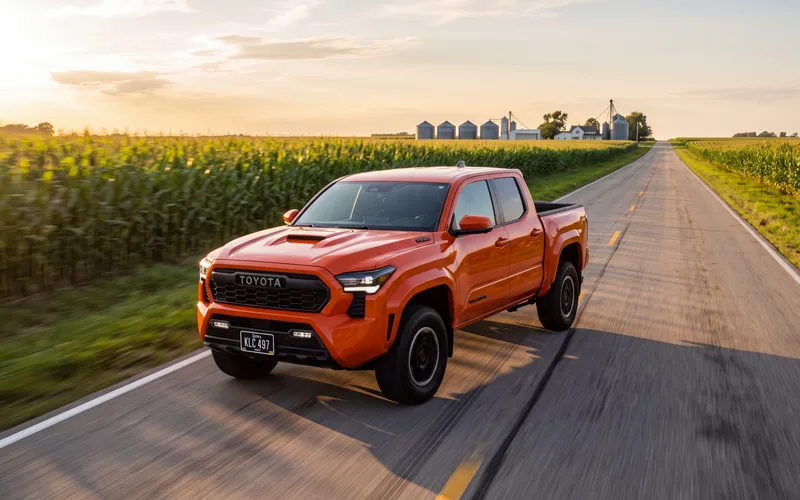 Toyota TacomaMid-Size TruckBetter at: Resale value
The default cross-shop in this class: more cab and bed choices, a hybrid option, roomier back seat, and the segment's best resale — worth the look if you're not sold on the Ranger's single 5-ft box.
Compare 1.99C-
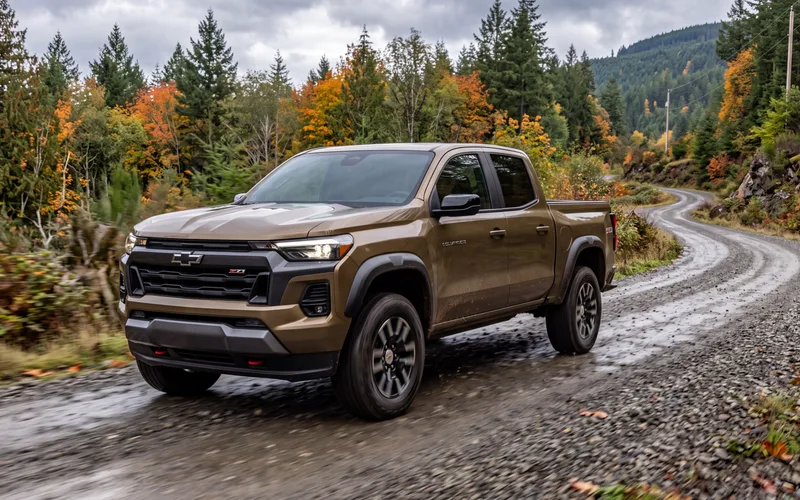 Chevrolet ColoradoMid-Size TruckBetter at: Standard power
Its standard turbo engine makes meaningfully more torque than the Ranger's 2.3L, so you get the stronger truck without paying for an optional V6.
Compare 1.74C-
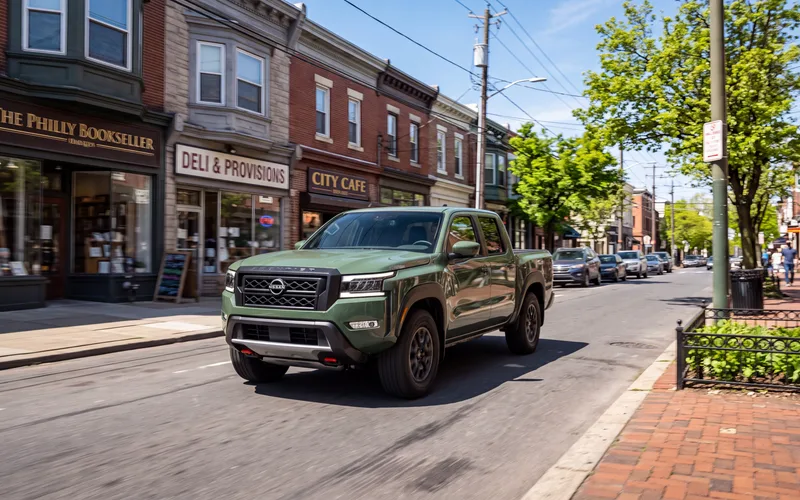 Nissan FrontierMid-Size TruckBetter at: Warranty coverage
Standard V6, more rear legroom, a longer-bed option, and warranty coverage that goes well beyond Ford's 3-yr/36,000-mi floor — the value pick for buyers who want capability over cabin polish.
CompareHow it's evolved
8 scored model years · 2019–2026
Subject scores by year
Hover or tap a score to see what moved it versus the year before. A corner mark flags a big swing.
| Year | Performance | Efficiency | Safety | Space | Cost | Reliability | Tech | Use-case | Driving | Value |
|---|---|---|---|---|---|---|---|---|---|---|
| 2026 | 44 | 48 | 61 | 52 | 71 | 59 | 61 | 57 | 65 | 65 |
| 2025 | 44 | 61 | 56 | 48 | 66 | 62 | 64 | 57 | 62 | 63 |
| 2024 | 43 | 56 | 59 | 52 | 72 | 53 | 57 | 57 | 62 | 61 |
| 2023 | 39 | 49 | 50 | 40 | 69 | 59 | 36 | 55 | 57 | 44 |
| 2022 | 39 | 58 | 49 | 41 | 65 | 62 | 41 | 54 | 58 | 44 |
| 2021 | 39 | 59 | 51 | 40 | 65 | 61 | 41 | 55 | 58 | 47 |
| 2020 | 38 | 59 | 68 | 40 | 66 | 59 | 41 | 55 | 58 | 57 |
| 2019 | 40 | 59 | 53 | 40 | 69 | 51 | 37 | 63 | 61 | 55 |
Compare two years
Best fit & conditions
Higher scores mean a better fit for that use case. Learn more about use-case fit →
Subject profile
Trims & configurations
4 trimsScores above reflect the volume trim. Per-trim specs and scores are rolling out — the full lineup:
Detailed scoring by subject
1Performance & PowertrainThe Ranger's lowest-graded category.0.59F
The 5th-generation Ranger (2019-2023) offers only one U.S.-market engine, the 2.3L EcoBoost turbo-four, standard on every trim including Tremor, unchanged for 2022.
Peak torque of the single available 2.3L EcoBoost engine, unchanged across trims for the 2022 model year.
Independent test results vary by configuration — quicker for lighter 2WD SuperCab models, slower for the more common 4x4 SuperCrew volume trim carrying extra driveline weight; unchanged powertrain from the prior and following model years.
The 2.3L EcoBoost is adequately smooth in normal driving but feels strained under heavier loads or at highway passing speeds, and lacks the broader refinement of rivals offering a V6 alternative.
The 10-speed automatic shared with the F-150 shifts smoothly in most conditions, though owners and reviewers note occasional low-speed hunting and slightly delayed downshifts.
Peak conventional tow rating of 7,500 lbs applies to properly equipped 2WD configurations, matching the tow rating this generation has carried since its 2019 launch.
Maximum payload is achieved on the lightest 2WD SuperCab configuration; the more common 4x4 SuperCrew volume trim carries meaningfully less due to added driveline weight.
Tow/Haul mode and a class-exclusive Pro Trailer Backup Assist are available, and the optional Trailer Tow Package adds the hitch and wiring, but a trailer hitch and integrated brake controller are options rather than standard fitment on XL/XLT/Lariat, and there's no trailer-scale feature.
Part-time, electronic shift-on-the-fly 4WD with a 2-speed transfer case is available across XL/XLT/Lariat trims (2WD standard), giving solid availability but conventional part-time operation rather than a full-time AWD system.
The Tremor off-road package, in its second model year for 2022, adds a 2-inch suspension lift, Fox 2.0 monotube shocks, a locking rear differential, skid plates, a 4-mode Terrain Management System and Trail Control, giving genuine light-to-moderate off-road credibility even without a Raptor-class flagship in the U.S. lineup.
The U.S.-market 2022 Ranger is offered with a single engine, the 2.3L EcoBoost I4 — no V6, diesel, hybrid, or EV variant is available, unlike the diesel/V6 options Ford sells on the Ranger overseas.
2Efficiency & RangeOne of the Ranger's strongest categories.1.91C-
EPA-rated combined fuel economy for the volume 2022 Ranger configuration (2.3L EcoBoost I4, 4x4, 10-speed auto); 4x2 configurations rate marginally higher.
EPA city rating for the 2.3L EcoBoost 4x4 Ranger, the volume powertrain/drivetrain combination for the 2022 model year.
EPA highway rating for the 2.3L EcoBoost 4x4 Ranger; 4x2 configurations rate two mpg higher on the highway cycle.
Estimated from the 18-gallon fuel tank carried by the 5th-generation (2019-2022) Ranger and the EPA combined rating for the volume 4x4 2.3L config.
Computed from the EPA's standard 15,000 mi/yr assumption and the 2022 Fuel Economy Guide's initial regular-gasoline price assumption of $2.94/gal against the 22 MPG combined 4x4 rating; the guide's assumption was later revised upward mid-year as pump prices spiked, so the actual sticker figure on a given truck could run somewhat higher.
The sole 2.3L EcoBoost engine runs on regular unleaded across every 2022 trim including Tremor — the US market did not get a Ranger Raptor (or any premium-fuel variant) until the following generation, so there's no premium-fuel exception to note.
3SafetyGrades below the middle of the scale.1.28D
NHTSA's overall 4-star rating for the 2022 Ranger is dragged down by only a 3-star rollover result, typical for a body-on-frame mid-size truck's higher center of gravity.
The 2022 Ranger crew cab is not an IIHS Top Safety Pick. It earned Acceptable in the updated side-impact test, but Marginal in IIHS's newer, tougher moderate overlap front test, which specifically flagged rear-passenger injury risk (elevated head/neck/chest measures, poor rear restraints and kinematics) even though the driver-side structure and injury measures were rated Good.
Ford Co-Pilot360 with Pre-Collision Assist/AEB and auto high-beams is standard across the 2022 Ranger lineup, but blind-spot monitoring with cross-traffic alert and lane-keeping are optional on the base XL (bundled for $625) while standard on XLT and Lariat, and adaptive cruise remains an option even on upper trims — core coverage with key items gated on the base trim.
IIHS rated the Ranger's standard front crash prevention Superior for vehicle-to-vehicle (avoided the 12 mph test, cut 24 mph off the 25 mph test) and Advanced for daytime pedestrian detection, but only Basic for nighttime pedestrian detection — strong daytime performance offset by a weak dark-condition result.
BLIS blind-spot monitoring with rear cross-traffic alert is standard on XLT and Lariat (the volume trims) and optional on base XL, but it's alert-only — no active steering or braking intervention on blind-spot or cross-traffic events for the 2022 model.
The 2022 Ranger's Lane-Keeping System is a warning-and-nudge setup rather than a refined continuous centering system; owner-forum feedback on the 5th-generation truck describes it as functional but occasionally imprecise, consistent with a mid-tier ADAS suite carried over largely unchanged since 2019.
Adaptive cruise control is optional (not standard on any trim) on the 2022 Ranger, most commonly bundled on XLT/Lariat tech packages; it is not paired with a dedicated highway-assist mode, and forum/ownership reports on this generation describe capable but unpolished stop-and-go behavior.
No hands-free highway driving system was offered on the 2022 Ranger. Ford's BlueCruise was limited to the F-150 and Mustang Mach-E at the time; BlueCruise didn't reach the Ranger lineup (PHEV only) until the redesigned generation's 2026 model year.
IIHS rated the 2022 Ranger's standard headlights Marginal, the second-lowest rating, with no Good-rated headlight option identified across trims for this generation.
IIHS's supplemental visibility evaluation found only Fair sightlines on the straightaway and on right curves, and Inadequate visibility on left curves; reviewers also note the SuperCrew's thicker roof pillars and small rear window limit over-the-shoulder views, only partly offset by the standard rearview camera.
IIHS rated LATCH ease of use on the Crew Cab Marginal — tether anchors are hard to locate and can be confused with other hardware, and the lower anchors sit too deep in the seat cushions, despite the SuperCrew offering two complete rear LATCH positions.
4Space & ComfortOne of the Ranger's weakest categories.0.71F
2022 Ranger is offered as a 2-door SuperCab or 4-door SuperCrew, both seating five (2-3 layout); the SuperCab's rear seats are tighter jump seats.
Below-average front headroom for the mid-size truck segment on this first-generation-back (2019-2023) Ranger platform.
Mid-pack front legroom, a comfortable driving position typical of the segment.
Rear headroom sits at the bottom of the mid-size-truck band, tight versus segment leaders.
Rear legroom is a known weak point of this generation Ranger versus rivals like the Tacoma and Frontier crew cabs.
SuperCrew's 5-ft box is short for the segment; the SuperCab's 6-ft box is longer but far less popular in the volume configuration.
Below-average box volume for the SuperCrew's short bed, consistent with its 5-ft box length.
Storage is basic for the class — a modest center console and door pockets with no standout features; owners commonly complain about the small, awkwardly placed cupholders, and there is no factory in-bed power outlet or trunk on this generation.
Front seats are well-shaped and comfortably padded for a range of body types; rear seatbacks are a bit upright but tolerable, keeping this in the 'comfortable for most' band rather than class-leading.
Both major test outlets criticize the unladen ride as underdamped and harsh — springy/bouncy over undulations per Edmunds, stiff and jumpy per Consumer Reports — a genuine weak point of this generation.
Reviews conflict — Edmunds finds wind/tire/road noise nicely controlled, while Consumer Reports calls the narrow cabin noisy with an engine that's unduly loud at low speed — netting an average result for the segment.
Dual-zone automatic climate control is available from XLT up, but heated front seats are reserved for the top Lariat trim only, and no ventilated seats or heated steering wheel are offered on any trim this generation.
5Cost of OwnershipThe Ranger's best-graded category.2.39C+
2022 Ranger XL 4x2 SuperCab starts at $26,795 including the $1,195 destination charge, a modest $530 increase over 2021 pricing — one of the lowest entry points in the mid-size truck segment.
XLT SuperCrew 4x4 is the volume configuration for Ranger buyers wanting a crew cab and 4WD, listed at $36,720 including destination.
The 2022 Ranger shares its powertrain and platform with the unchanged 2019-2023 generation; CarEdge's class projection of $689/yr ($3,443 over 5 years) and RepairPal's $615/yr average repair cost both point to below-segment-average upkeep.
No 2022-specific 5-year retention study exists yet (the vehicle reaches its 5-year mark in 2027); using the same-generation Ranger's demonstrated retention (iSeeCars: 65.1% for a recent model year; KBB Best Resale Value study: 56.7%) as a same-platform proxy, discounted slightly for age.
Standard Ford bumper-to-bumper coverage, the segment floor for mid-size trucks.
Standard Ford powertrain coverage, the segment floor — some rivals offer longer terms.
New 2022 Ranger buyers get 22,000 FordPass Rewards points (enough toward roughly the first two service visits) plus 5-year/60,000-mile complimentary roadside assistance (fuel delivery, lockout, jump-start, towing) via the FordPass app — a points-based perk rather than fully prepaid maintenance.
$36,720 volume-trim price minus its estimated resale value after 5 years (60% retained, or about $22,032) leaves about $14,688 in depreciation. Add the projected $3,443 in 5-year maintenance and repairs, and owning this vehicle for 5 years costs about $18,131 in total.
6Reliability & QualityOne of the Ranger's strongest categories.2.21C
Consumer Reports rated the 2022 Ranger's predicted reliability above average, and J.D. Power's 2022 Initial Quality Study found it had the fewest reported problems of any vehicle in its class, a strong signal for a nameplate in its fourth year of an unchanged platform.
Ford's brand-level dependability signal was mixed in this era: Consumer Reports ranked Ford 18th of 24 brands in its 2022 reliability survey (below average), while J.D. Power's 2022 U.S. Vehicle Dependability Study still placed Ford above the industry average, the year before a sharp 2023 decline.
The 2022 Ranger carries a moderate recall count, including an engine block heater that can crack and short-circuit into a fire risk (2019-2024MY) and a rearview-camera software defect that can blank or freeze the display (2019-2023MY) — notable but not a systemic powertrain or structural pattern.
The 2.3L EcoBoost turbo-four and 10R80 10-speed automatic are a well-proven Ford powertrain family shared with the Mustang, F-150, Bronco, and Explorer ST with several years of fleet mileage behind them by 2022, though the 10R80 has a documented pattern of harsh-shifting complaints and the EcoBoost's coolant-intrusion failure mode is a known (if uncommon) risk under sustained high load.
By its fourth model year on an unchanged design, the Ranger's cabin drew consistent criticism for heavy use of hard, painted plastic and a narrow, noisy cabin that felt carried over from years earlier, trailing newer or redesigned rivals like the Tacoma and Ridgeline on perceived quality.
Despite criticism of its interior materials, the 2022 Ranger's actual assembly quality was strong: J.D. Power's 2022 Initial Quality Study recorded the fewest owner-reported problems of any vehicle in the segment, reflecting a mature, well-sorted production line four years into the run.
Ford runs one of the largest dealer networks in the US with deep truck service experience, though satisfaction scores trail the top reliability-leader brands — unchanged across model years of this nameplate.
RepairPal has consistently put the Ranger's average annual repair cost around $600-615, in line with the midsize-truck average, backed by Ford's large dealer parts network and mature aftermarket support by this point in the generation's run.
7Technology & InfotainmentOne of the Ranger's weakest categories.0.70F
The pre-redesign Ranger tops out at an 8-inch SYNC 3 display on XLT/Lariat, small for the mid-size truck class and far below the 10.1–12-inch SYNC 4A screens Ford introduced in the 2024 redesign.
SYNC 3 is dated by 2022 but remains one of the more consistently praised infotainment interfaces for simplicity, quick boot times, and menu logic, even if graphics and screen size feel small next to newer rivals.
Apple CarPlay and Android Auto are standard on XLT and Lariat via SYNC 3, but only in wired form — wireless projection wasn't offered on the Ranger until the redesigned 2024+ generation with SYNC 4A.
SYNC 3 voice commands handle basic phone/audio/climate requests but aren't natural-language, and factory navigation is a paid option limited to Lariat rather than standard equipment — most owners default to phone-projected maps.
The Ranger's standard 6-speaker system is unremarkable and no branded premium audio (e.g. B&O, Bose) was offered on this generation — a clear gap versus rivals with available premium sound.
The Ranger uses analog gauges with a small monochrome/color productivity screen between them rather than a configurable full-digital cluster, which wasn't introduced until the redesigned later generation.
FordPass Connect's embedded modem supports limited software/map updates but not the comprehensive whole-vehicle OTA capability Ford later rolled out on newer platforms.
FordPass is standard via the embedded FordPass Connect modem and provides remote start, lock/unlock, vehicle locate, and vehicle health alerts (oil life, tire pressure) at no extra subscription cost for core functions.
The Ranger offers a couple of USB-A ports plus a 12V outlet, but no USB-C, no wireless charging pad, and no household AC outlet for this generation — modest by class standards.
Proximity keyless entry with push-button start and remote start are available on XLT/Lariat, plus Ford's SecuriCode keypad, but base XL retains a traditional key — no phone-as-key capability on this generation.
A standard backup camera plus optional rear parking sensors cover the basics, but no 360-degree surround-view system was offered on this generation of Ranger.
No head-up display was offered on any 2022 Ranger trim, a feature gap versus some rivals in the segment.
8Use-Case FitGrades below the middle of the scale.1.61D
The SuperCrew's four full-size doors make loading kids straightforward, but rear legroom of just 34.5 in is tight for bulky child seats and stroller-adjacent gear, and the SuperCab's rear seat is a small, occasional-use bench with narrow-opening rear-hinged doors that is poorly suited to child-seat installs at all.
NHTSA's 4-star overall rating (5-star side, 4-star frontal, 3-star rollover) trails the 5-star result the redesigned generation would later earn, and Ford Co-Pilot360 (forward collision warning/AEB, lane-keeping assist, blind-spot monitor) is standard from XLT up, but adaptive cruise control is not offered on this generation at any trim, a real gap for highway-driving families.
Front-row space is generous (41.0 in headroom, 43.1 in legroom) but SuperCrew rear legroom of 34.5 in is tight for multi-hour trips with kids or adults in back, there are no rear climate vents or ventilated seats on any 2022 trim, and the leaf-spring rear suspension's occasionally jostling ride adds fatigue on longer drives.
The 10-speed automatic shifts smoothly once at cruising speed and outward visibility is good, but reviews flag vague/clumsy steering, an occasionally bumpy ride from the leaf-spring rear suspension, and low-speed transmission behavior — revving to around 3,000 rpm from a cold start with hunting/hesitant shifts and noticeable vibration between roughly 10-30 mph — that add fatigue in stop-and-go traffic.
21/26/23 MPG city/hwy/combined for the 2.3L EcoBoost RWD (20/24/22 4WD, 19/19 combined for the Tremor 4WD) is middling for the mid-size class with no hybrid option, though below-average RepairPal repair costs ($615/yr) and regular-fuel compatibility help offset per-mile running costs.
A rearview camera is standard fleet-wide and an available 360-degree camera package helps on higher trims with Co-Pilot360 options, but the base XL and non-package XLT are left managing a full-size SuperCab/SuperCrew footprint with only the standard rearview camera and no factory front/rear parking sensors.
Up to 7,500 lbs tow (with the Trailer Tow Package) and up to 1,860 lbs payload (SuperCab RWD) are strong figures for the mid-size class, and buyers get a choice of the SuperCab's 6-ft box or the SuperCrew's 5-ft box for bulkier cargo — an advantage over rivals offered in only one bed length — though the 2.3L EcoBoost-only lineup (no V6 or diesel) caps sustained load-hauling power versus some competitors.
RepairPal rates Ranger reliability 4.0/5.0 (3rd of 7 midsize trucks) with low repair frequency and average severity, giving it a solid fleet/commercial-use reputation, though owner reports of occasional low-speed transmission hesitation and shift hunting temper confidence versus segment stalwarts with decades-deep reputations.
Factory threaded bed inserts accept 6mm/8mm tie-down eyebolts and an FX4 Off-Road Package adds work-adjacent durability options, but the 2022 Ranger's bed comes pre-wired for a 12V power point rather than a factory-installed outlet on lower trims, a step behind rivals offering standard higher-wattage in-bed power.
Front-seat comfort and a reasonably quiet cabin support highway stints, but the 2022 Ranger lacks any hands-free driver-assist system (no BlueCruise on this generation) and reviewers note vague steering and a leaf-spring ride that add fatigue on long hauls; the 18-gallon tank yields roughly 370-430 miles of combined-cycle range depending on drivetrain.
4WD is available on XLT/Lariat with the Tremor and FX4 Off-Road packages bringing real trail credibility — FOX 2.0 monotube dampers with piggyback reservoirs, a 1.3 in wider track, 1.2 in more ground clearance, 32-in all-terrain tires, Trail Control, and skid/bash plates — but the 2022 model year tops out with the 270 hp 2.3L EcoBoost and predates the higher-performance Raptor variant, which only arrived with the redesigned Ranger.
Buyers can choose the SuperCab's longer 6-ft bed for bulkier gear or the SuperCrew's 5-ft bed for easier maneuvering, and factory threaded tie-down inserts help secure loads, but rear seats in both cabs are tight for stowing gear indoors and there is no factory-integrated roof rack or under-seat storage system to match dedicated adventure-oriented rivals.
9Driving ExperienceMid-pack among this car's ten categories.1.90C-
The previous-generation (2019-2023) Ranger's road manners were a consistent weak point across testers: secure but clumsy through corners with notable body lean, a step behind class rivals like the Tacoma and Colorado.
Most contemporary reviews found the electric power steering numb and imprecise, though Car and Driver was an outlier praising its quickness; the majority view of mushy, light steering carries more weight.
No instrumented 60-0 mph distance was found specifically for the 2022 model year; U.S. News characterized braking as 'solid,' while no source flagged it as a particular weakness, so it is rated adequate pending firmer data.
The sole 2022 powertrain — a 2.3L turbocharged EcoBoost I4 (270 hp/310 lb-ft) paired with a 10-speed automatic — draws consistent praise for smooth, well-timed shifts that keep the engine in its power band, with no notable drivability complaints.
The 2.3L EcoBoost is regarded as refined for a turbo-four with good NVH control, though it can turn buzzy under hard acceleration; Consumer Reports separately noted the cabin is 'relatively quiet' overall.
Ford's pre-redesign (2019-2023) Ranger specifications list a 42 ft curb-to-curb turning diameter, corroborated across multiple spec aggregators.
The tall, truck-like seating position gives a commanding forward view and easy sightlines, but Consumer Reports flagged 'a few ill-designed controls' and the short cab/small rear glass hurt rearward visibility versus rivals.
Reviewers generally found the pre-redesign Ranger competent but joyless to drive, with the punishing ride and vague steering undercutting the willing EcoBoost/10-speed powertrain and keeping it out of enthusiast conversation.
10Value & Market PositionGrades near the bottom of the scale.0.95F
Base XL SuperCab ($25,980 MSRP) includes Ford Co-Pilot360 (automatic emergency braking, lane-keeping, blind-spot info) and an 8-inch SYNC 3 touchscreen standard, but rides on steel wheels with cloth/vinyl trim and few comfort extras — decent safety kit for the price but a sparse base cabin versus segment norms.
A single 2.3L EcoBoost turbo-4 (270 hp/310 lb-ft, 7,500 lb max tow) covers the whole range with no V6 or diesel alternative that some rivals offered that year, so capability-per-dollar is fair but unremarkable against a segment with more powertrain choice.
Just three trims (XL, XLT, Lariat) across SuperCab/SuperCrew bodies and 4x2/4x4 drivetrains, with the off-road Tremor package limited to XLT/Lariat SuperCrew 4x4 — usable spread from work truck to loaded, but narrower than Tacoma's or Colorado's multi-trim lineups.
Ranger placed near the bottom of the mid-size segment all year — trailing Tacoma, Nissan Frontier, Chevy Colorado and Jeep Gladiator in Q1, and again in Q3 ahead of only the GMC Canyon — a weak, declining seller rather than a mid-pack truck.
Ford's truck reputation, anchored by the F-150's decades-long sales leadership, lends the Ranger above-average brand pull even though the model itself was an aging, slow seller in 2022.
2022 was deep in the chip-shortage inventory crunch, and with dealer lots thin across the industry, Ranger buyers found little to no meaningful discounting — most units moved at or near MSRP.
This T6-platform Ranger dates to 2011 globally and 2019 in the US, and by 2022 had received only minor updates (the 2021 Tremor package addition); Ford had already begun previewing the all-new next-generation Ranger for other markets ahead of its 2024 US relaunch, underscoring how dated the 2022 truck was.
Reviewers found the 2022 Ranger competitive on paper but dated in execution — Edmunds called the ride and interior "carryovers from several years back" rather than purpose-built for the market — and it collected no major comparison-test wins or industry awards that year.