

The verdict
A struggling subcompact hatchback, strong on ownership and held back by performance.
The 2023 Kia Soul is a cheap, boxy, wildly practical little car that asks almost nothing of you and gives back an enormous amount of space for the money — 24.2 cu ft of cargo behind the back seat, 39.5 in of rear headroom, and a starting price of $21,215 with destination backed by a 10-year/100,000-mile powertrain warranty. What 2023 took away matters: Kia deleted the 201-hp turbo and the X-Line trim, leaving one 147-hp engine, one CVT, front-wheel drive and an 8.8-second 0-60 mph across the entire lineup. It is also the Soul model year with the worst recall record — four NHTSA campaigns, including a piston-oil-ring defect with fire and engine-replacement outcomes. Buy it as a used-car bargain for city and commuting duty with the warranty paperwork checked; skip it if you need pace, all-wheel drive, or adaptive cruise.
Jump to scoresStrengths
- Cargo and headroom that embarrass cars a size up
- One of the last genuinely cheap new cars, with the best warranty in the class
- Cheap to feed and cheap to fix
What holds it back
- 2023 is the year the fun engine disappeared
- The driver-assist gaps are where the price shows
- No all-wheel drive, no towing, no outdoor pretensions
Top alternatives
Cars shoppers cross-shop with the Kia Soul 2.25C
2.25C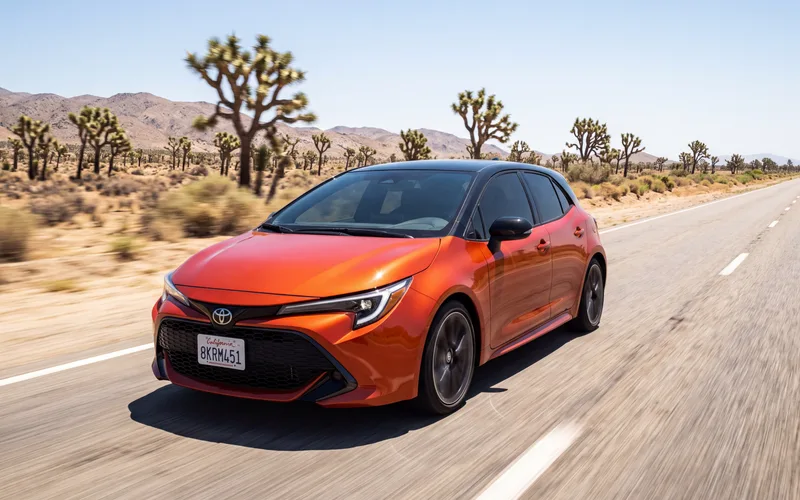 Toyota Corolla HatchbackCompact HatchbackBetter at: Efficiency
The closest like-for-like cross-shop — similar money, but quicker, quieter, more efficient and with Toyota's resale behind it, if you can live with far less cargo room.
Compare 2.46C+
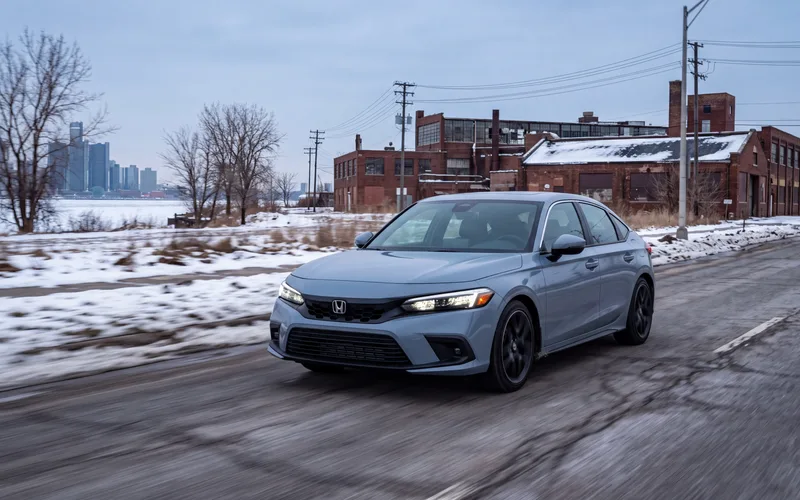 Honda Civic HatchbackCompact HatchbackBetter at: Refinement
Costs more but delivers a genuinely refined, quiet and quick hatchback with stronger safety standing — worth the stretch if the budget allows.
Compare2.56C+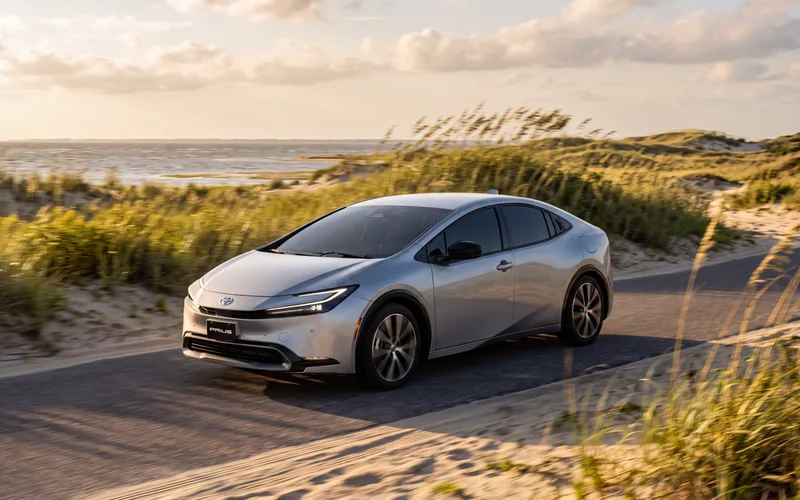 Toyota PriusCompact HatchbackBetter at: Fuel economy
If your mileage is high, the Prius's hybrid economy and available all-wheel drive pay back the price premium the Soul can't answer.
CompareHow it's evolved
9 scored model years · 2017–2025
Subject scores by year
Hover or tap a score to see what moved it versus the year before. A corner mark flags a big swing.
| Year | Performance | Efficiency | Safety | Space | Cost | Reliability | Tech | Use-case | Driving | Value |
|---|---|---|---|---|---|---|---|---|---|---|
| 2025 | 19 | 49 | 54 | 70 | 85 | 71 | 52 | 53 | 61 | 66 |
| 2024 | 19 | 49 | 55 | 70 | 86 | 72 | 54 | 53 | 62 | 67 |
| 2023 | 18 | 50 | 56 | 70 | 86 | 67 | 53 | 54 | 63 | 68 |
| 2022 | 25 | 51 | 57 | 70 | 93 | 70 | 52 | 55 | 68 | 59 |
| 2021 | 25 | 51 | 56 | 70 | 93 | 69 | 45 | 54 | 67 | 63 |
| 2020 | 24 | 50 | 55 | 70 | 92 | 56 | 45 | 52 | 68 | 66 |
| 2019 | 27 | 39 | 51 | 70 | 93 | 58 | 35 | 50 | 64 | 62 |
| 2018 | 27 | 39 | 51 | 70 | 91 | 65 | 30 | 49 | 64 | 65 |
| 2017 | 26 | 39 | 43 | 69 | 90 | 63 | 24 | 47 | 64 | 75 |
Compare two years
Best fit & conditions
Higher scores mean a better fit for that use case. Learn more about use-case fit →
Subject profile
Detailed scoring by subject
1Performance & PowertrainThe Soul's lowest-graded category.0.00F
2023 is the facelift year in which Kia discontinued the 201-hp 1.6T, so every trim (LX, S, GT-Line, GT-Line Tech, EX) shares the naturally aspirated 2.0-liter Nu MPi four and there is no model-range maximum above this figure — a drop from the 201 hp a 2022 buyer could order.
Peak torque of the sole 2.0L Nu MPi engine, identical across every 2023 trim. The 4,500 rpm peak leaves little low-end pull in ordinary driving, and the 195 lb-ft of the departed 1.6T is no longer an option.
Edmunds track-tested the facelifted 2023 Soul at 8.8 seconds to 60 mph. Published runs of the mechanically identical naturally aspirated 2.0L + IVT car span roughly 8.0–8.8 seconds depending on trim weight and conditions; Edmunds' own test of the unchanged 2024 car returned 8.5. Quicker figures from 2022 and earlier belong to the 1.6T, which 2023 no longer offers.
The port-injected 2.0L is smooth and predictable around town with no turbo lag to manage, but with the 1.6T gone for 2023 there is no reserve of torque anywhere in the range, and reviewers report the engine getting loud and strained on merges and grades. Adequate rather than refined — mid-pack among subcompact economy hatchbacks and clearly behind the turbocharged and hybrid powertrains elsewhere in this segment.
Kia's IVT is a better-executed CVT than most: simulated stepped ratios and a torque converter largely suppress the full-throttle drone that defines the type, and around town it is unobtrusive. It still flares and holds revs under sustained load and offers no genuine manual mode, so it sits above the CVT average without matching a good conventional automatic — and for 2023 there is no dual-clutch or manual alternative left in the lineup.
The Soul has never offered all-wheel drive in any model year or trim, and 2023 is no exception — front-wheel drive only despite the crossover-adjacent styling. The rugged-look X-Line trim, which at least suggested capability, was itself discontinued for 2023, leaving nothing beyond traction control to offset the low band.
2023 is the year the Soul became a single-powertrain car: one 2.0L naturally aspirated four with one transmission across all trims. The 1.6T and its seven-speed dual-clutch were discontinued with this facelift, the six-speed manual left after 2021, and the Soul EV was never revived for the US — so a 2023 buyer has no engine, transmission or electrification choice at all.
2Efficiency & RangeOne of the Soul's weakest categories.1.36D
With the 1.6T dropped for the 2023 facelift, every Soul runs the 147-hp 2.0L Nu MPi with the IVT, and the volume LX/S/GT-Line trims are rated 30 MPG combined. Only the EX, which EPA lists separately as an 'Eco dynamics' variant, reaches 31. Respectable for a boxy, upright subcompact but well short of a Corolla Hatchback, and there is no hybrid version to lift it.
28 MPG in town for the volume trims. The IVT and light 2.0L keep the Soul competitive in the stop-and-start driving it is mostly bought for, though with no hybrid assist or engine stop-start on the volume trims it cannot approach the electrified subcompacts.
33 MPG on the highway is the weakest of the Soul's three EPA figures relative to its class — the tall, upright body and near-vertical windshield that create the interior space cost aerodynamic efficiency at speed, and reviewers note the wind noise that comes with it.
EPA puts total range at 429 miles on the 14.3-gallon tank. That is a workable but unremarkable figure — the small tank that suits the car's subcompact packaging offsets the decent combined economy, and the Soul EV that once gave this nameplate an electric range figure was never sold in the US in this generation.
EPA's annual estimate of $2,050 reflects 30 MPG combined on the cheapest grade of fuel — mid-pack in absolute terms and a genuine strength relative to the Soul's price class, since nothing about running it demands a premium. About $3.42 per 25 miles.
Kia specifies regular 87-octane unleaded for the naturally aspirated 2.0L on every 2023 trim — no premium recommendation anywhere in the lineup, which is one of the simplest ownership propositions in the segment. It scores just short of the top of the band only because there is no cheaper alternative available on the other side: the turbo is gone, there is no hybrid, and the Soul EV was never brought to the US in this generation, so home charging is not an option for any 2023 buyer.
3SafetyMid-pack among this car's ten categories.1.79C-
NHTSA rates the 2023 Soul 4 stars overall — 5 stars side (5/5 driver and passenger) and 4 stars frontal (5 driver / 4 passenger), with a 3-star side pole result and 4-star rollover at 14.7% risk.
Every IIHS crashworthiness test the third-gen Soul has taken comes back Good, but the 2023 facelift wiped the crash-avoidance and side ratings that earned the 2022 car a Top Safety Pick, and IIHS has published neither the updated side nor the updated moderate-overlap result for it — so 2023 carries no award.
The volume S trim gets forward collision-avoidance with pedestrian detection, lane keeping + lane following, lane departure warning, driver attention warning, high beam assist, blind-spot and rear cross-traffic avoidance as standard — but adaptive cruise is not offered on it at any price, which is the one gap that separates it from Corolla and Civic hatchbacks that bundle full-speed ACC on every trim.
The camera-based FCA-Ped system earned Superior in both IIHS vehicle-to-vehicle and daytime-pedestrian evaluations on the pre-facelift car, but there is no nighttime-pedestrian result and IIHS has not re-rated the revised 2023 front end; the cyclist-detection and junction-turning radar-plus-camera upgrade is locked to the GT-Line Technology Package.
Blind-Spot Collision-Avoidance Assist and Rear Cross-Traffic Collision-Avoidance Assist both intervene with braking rather than just warning, and both are standard from the volume S trim up; only the base LX has to option them, and there is no safe-exit warning or blind-view camera anywhere in the range.
Lane Keeping Assist plus Lane Following Assist — actual lane centering, not just a departure nudge — is standard on every trim including the $20k LX, which is generous for a subcompact; the system itself is Kia's basic tune, competent on marked highway lanes but prone to hunting on faded lines and unable to work in concert with cruise on trims that lack SCC.
The volume S trim gets plain fixed-speed cruise control and nothing more — navigation-based Smart Cruise Control and Highway Drive Assist exist on exactly one configuration, the GT-Line with the Technology Package, so the great majority of 2023 Souls cannot be optioned into adaptive cruise at all.
No hands-free highway driving system is offered on the 2023 Soul at any trim or package; the most capable configuration tops out at hands-on Highway Drive Assist on the GT-Line Technology Package.
Every 2023 Soul except a GT-Line with the Technology Package uses multi-focus reflector halogen headlights — the variant IIHS rated Poor on the pre-facelift car, where only the LED version earned Good; High Beam Assist is standard, which helps, but the volume trim's low beams are the weak point.
The boxy one-box shape is the Soul's safety trump card — a tall upright greenhouse, deep side glass, a low beltline and a near-vertical tailgate give sightlines almost nothing else in the class matches, and the high seating position clears the view forward; there is no 360-degree camera, but with these natural sightlines it is barely missed.
IIHS rates LATCH ease of use Acceptable: two outboard positions with full hardware plus a tether-only center, anchors buried 2-4 cm in the seat bight but needing only 15-25 lbs to attach and easy to maneuver around — and the Soul's tall roof and wide-opening rear doors make actually wrestling a seat in easier than the exterior footprint suggests.
4Space & ComfortOne of the Soul's strongest categories.2.75B-
Every 2023 Soul trim is a five-passenger front-wheel-drive hatchback; no 4-seat or extended-seating configuration exists, which puts it at the top of the 4–5 seat hatchback band.
Kia publishes 39.9 in of front headroom without the sunroof, the figure that applies to the volume S trim. The tall, boxy roofline is the Soul's defining packaging advantage and sits at the very top of the subcompact-hatchback band.
41.1 in is the same on every 2023 trim and sits only modestly above the 40 in floor of the hatchback band — the Soul buys its space in height and rear room rather than front stretch-out room, making this its weakest interior dimension.
At 39.5 in the Soul clears the top of the hatchback band outright and out-measures most compact SUVs; the near-vertical rear glass lets passengers sit upright instead of under a sloping roof.
38.8 in of second-row legroom is generous for a subcompact — Consumer Reports calls the rear space 'quite generous' for the footprint — though it stops short of the 40 in-plus figures larger hatchbacks post.
24.2 cu ft behind the second row is far past the top of the hatchback band and beats most compact crossovers — the vertical tailgate and square load bay are the entire point of the Soul's shape.
Solid everyday storage with no headline trick: center console armrest with storage, overhead console with sunglass holder, illuminated glove box, front console cupholders, cargo net hooks and a cargo lamp on every trim, plus wireless charging from the S up and a dual-level cargo board that gives a flat load floor. Against that, the cargo board is only optional on the volume S, the cargo cover and the cargo-area 12V outlet are EX-only, and the rear center armrest and front-passenger seatback pocket do not appear below EX — competitive rather than class-defining.
Front seats draw consistent praise for multi-hour stints and the volume S trim adds a 10-way power driver's seat with 2-way power lumbar, unusual at $22,290. The upright rear bench is roomy with a fixed but well-judged backrest angle, though it is flat and lightly padded, cloth is the only upholstery below EX, and Consumer Reports notes seat comfort varies by trim line.
Sources split hard on this one: Consumer Reports found the 2023 car stiff and jittery even on smooth pavement and jolting over potholes, while Edmunds and Motor1 call the ride firm but controlled and never harsh. The short 102.4-in wheelbase, torsion-beam rear axle and tall body explain both readings — it is composed and never crashes through impacts, but it does not isolate you from a bad road, landing it low-mid band.
Noise is the clearest cost of the Soul's shape. The 2023 facelift added sound deadening, but the near-vertical windshield still generates obvious wind roar at highway speed, tire noise carries into the big open cargo bay, and the 147-hp 2.0-liter Nu MPi gets loud under load — the one saving grace is that the IVT's simulated ratios stop it droning at full throttle the way a conventional CVT does. No acoustic laminated glass or active noise cancellation is offered on any 2023 trim.
Dual automatic temperature control is standard from the volume S up (the LX gets plain air conditioning), which is respectable at this price. But heated front seats do not arrive until the EX and are only optional on the GT-Line — the S cannot be had with them at all — and a heated steering wheel, ventilated seats and rear climate controls are offered on no 2023 trim. Sunroof with power sunshade is EX/GT-Line only. That is comfort kit at mid-trim-and-up at best, the lower edge of the 50-79 band.
5Cost of OwnershipThe Soul's best-graded category.3.88A+
2023 was the SK3 Soul's facelift year, and it left the Soul as Kia's least expensive vehicle and one of the cheapest new cars on sale in America — an entry price below the floor of the hatchback band, so it maxes this item outright. It also undercuts its own 2024 and 2025 successors, which climbed to $21,565 and $21,985 with destination.
The S is the retail volume configuration — for $2,500 over the LX it adds the 10.25-inch touchscreen, dual automatic climate control, power driver's seat and the fuller driver-assist set, which is the equipment level most shoppers actually take. The 2023 facelift dropped the Turbo and X-Line, so the ladder is short and even the top EX lands just over $25,500, keeping the entire range at or below the bottom of the hatchback band.
Running costs are low for the class: after the 2023 facelift every Soul uses the naturally aspirated 2.0L Nu MPI four with the i-VT, a simple non-turbo front-drive drivetrain shared with the Forte, on 16- or 18-inch wheels with cheap parts and a dense dealer network — and dropping the 1.6T removes the higher-strung engine that would have carried the costliest repairs. The figure sits above the raw scheduled-maintenance projections because it budgets tires, brakes and unscheduled repairs, and because Kia includes no complimentary maintenance in the US, so the owner pays from the first oil change; it is set marginally below the 2024 and 2025 cars for its slightly lower parts and labor basis.
The Soul has always been a strong value-holder — cheap to buy, cult following, and a boxy package with no direct replacement in Kia's lineup — and it depreciates from a low base, so the absolute dollar loss is small. The figure is set several points below the published estimate because Kia has since ended Soul production with no successor, and orphaned badges typically shed some residual over a five-year horizon as parts and dealer familiarity thin out; the same discount is applied on the 2024 and 2025 Soul scorecards.
Kia's 5-year/60,000-mile basic coverage tops the band outright and is two full years longer than the 3/36 offered by Honda, Toyota, Mazda, Nissan and VW. It is brand-wide and applies across the whole 2023 Soul range.
The 10-year/100,000-mile powertrain warranty is the ceiling of the segment band and double what Honda and Toyota provide. It covers the original purchaser only — subsequent owners drop to 5 yr/60,000 mi — but for a first buyer it is best-in-class, and it matters more than usual on a nameplate that has since been discontinued.
This is where Kia hands back part of its warranty lead: unlike Hyundai's 3 yr/36,000 mi plan or ToyotaCare's 2 yr/25,000 mi, Kia includes no complimentary scheduled maintenance in the US, so the 2023 Soul owner pays for the first oil change. What is included is solid but conventional — 5 years/60,000 miles of 24/7 roadside assistance plus the standard 12-month Kia Connect trial (the extension to a 3-year trial did not arrive until the 2025 model year), which keeps this in the 'basic roadside only' band. No fuel or charging credits apply to the gas-only Soul.
$23,715 volume-trim price minus its estimated resale value after 5 years (57% retained, or about $13,518) leaves about $10,197 in depreciation. Add the projected $4,100 in 5-year maintenance and repairs, and owning this vehicle for 5 years costs about $14,297 in total.
6Reliability & QualityMid-pack among this car's ten categories.2.51C+
The forward-looking ratings are good: J.D. Power scored the 2023 Soul 82/100 for Quality & Reliability, inside its 81-90 'Great' band, Consumer Reports rated it 4/5 for predicted reliability (better than the average new car), and RepairPal gives the nameplate 4.5/5.0 with repair severity and frequency both well below average. It scores a notch under the 2024 and 2025 cars because the prediction has since been partly overtaken by the 2023 build's own record — four NHTSA campaigns landed on this model year, including two with fire or engine-damage failure modes — which is a harder starting point than the clean sheet the later years carry.
2023 was the high-water mark of Kia's dependability standing: the brand ranked highest among mass-market makes in the J.D. Power Vehicle Dependability Study for a third consecutive year at 152 PP100, and it took more segment awards than any other brand in the 2023 Initial Quality Study while placing 9th overall. That is genuine top-tier evidence, but it is held short of the 80+ band by the Hyundai/Kia engine history sitting underneath it — Theta II and the successive oil-consumption campaigns — and by the fact that Kia has since slipped to 11th in the 2025 VDS rather than holding a top-5 seat.
This is the 2023 Soul's clear weak point and the main reason it grades below its own 2024 and 2025 successors, which carry no year-level recalls at all. NHTSA lists four campaigns naming the 2023 Soul, and they are not trivial paperwork actions: an Idle Stop & Go electric oil-pump controller that can short and overheat with a stated fire risk (20,453 Souls), a piston-oil-ring defect that can scar the cylinder wall and end in stalling, fire or a full engine replacement, side curtain airbags that can deploy without a command, and an instrument cluster that can boot blank. Repeated campaigns spanning powertrain, fire and safety systems is exactly the low-band description, and only the modest severity of the cluster fix and the very small airbag population keep it at the top of that band rather than deeper into it.
The 2023 facelift dropped the 1.6T and the six-speed manual, leaving the naturally aspirated 2.0L Nu MPi four with the Intelligent Variable Transmission as the only drivetrain — a high-volume, unstressed, port-injected combination shared with the Forte and Seltos that sidesteps the GDI carbon-buildup pattern and has no turbo, AWD hardware or high-voltage system to fail. What pulls it below the 2024 and 2025 cars is that the 2023 model year sits inside the recall population for the Nu engine's signature durability failure rather than outside it: the piston-oil-ring defect that produces oil consumption, piston slap and cylinder scoring reached a fire-risk recall on 2021-2023 units, and 2023 also collected the transmission-related ISG oil-pump campaign. Kia's 10-year/100,000-mile powertrain warranty covers an original owner through the exposure, which is what keeps this mid-band rather than lower.
Appropriate for a car whose LX opens at $21,215 with destination, and no better than that. Hard plastics dominate, but the grain quality, the varied textures breaking up the all-black cabin, synthetic leather on the door armrests and a leather-wrapped wheel on volume trims mean reviewers land on 'doesn't feel cheap' rather than criticising it. The 2023 facelift was exterior-led — revised lights, bumper and fascia, new wheels and two-tone colours — so the cabin materials carry over unchanged, and this stays competitive-for-price rather than class-leading against a Mazda3 or Civic.
Kia's initial-quality standing in 2023 was a genuine strength — 9th overall in the IQS and the most segment awards of any brand, in a year when the industry average hit a record-worst 192 PP100 — and the Gwangju-built Soul draws no notable panel-gap or misalignment complaints. Against that, this specific model year needed a software recall because the digital instrument cluster could boot blank, which is an initial-quality defect by definition, and Consumer Reports lists squeaks and rattles, wind noise and weather-strip sealing among the Soul's trouble spots, aggravated by the tall boxy body and large unlined cargo bay. Generally solid with scattered complaints — mid-band, and below the 2024 car whose IQS placing was better and whose year had no cluster campaign.
Access is not the problem — roughly 775 franchised Kia dealers across all 50 states put a service bay within reach of nearly any US buyer, and a naturally aspirated front-drive hatchback with no AWD or hybrid hardware is something independent shops handle as readily as the dealer. Service satisfaction is the softer half: Kia placed 12th with 835 points in the 2023 J.D. Power Customer Service Index, mid-pack and well behind the Lexus/Buick-tier leaders, and the 2023 Soul's four campaigns put its owners through the service lane more often than most — the piston-ring remedy in particular later drew complaints about availability and diagnosis. Dense network, average experience.
The Soul's most durable strength, and unaffected by the 2023 car's recall record. It sold over 100,000 US units a year from 2011 to 2018 as the best-selling subcompact and passed a million units built worldwide, so wear parts are cheap and everywhere; the 2.0L Nu MPi and IVT come straight from the Forte and Seltos parts bin, and with no turbo, no AWD hardware, no air suspension and no high-voltage system there is nothing expensive in the car to price a repair upward. RepairPal puts average annual repair and maintenance cost at $437 against $466 for the class and $652 across all vehicles, with unscheduled shop visits at half the industry norm. Kia's 10-year/100,000-mile powertrain warranty caps the one genuinely costly failure mode for original owners.
7Technology & InfotainmentOne of the Soul's weakest categories.1.58D
The 2023 facelift made Kia's 10.25-inch touchscreen with built-in navigation standard on the volume S trim and everything above it, leaving only the $19,790 LX on the 8-inch unit. 10.25 in is also the maximum available — no 2023 Soul trim offered a larger panel.
The best part of the Soul's tech story: the 10.25-inch system is quick, its home screen splits cleanly into media/nav/phone tiles, and Kia kept real volume and tune knobs plus a row of hard shortcut keys under the screen alongside separate physical climate controls. Reviewers consistently find it easier to live with than the touch-heavy systems in the Civic and Golf, which puts it at the upper end of the hatchback band despite the car's economy pricing.
Apple CarPlay and Android Auto are standard on all four 2023 trims, but availability is inverted in the way Kia/Hyundai head units of this era were: the base LX's 8-inch unit runs both wirelessly while the 10.25-inch navigation unit fitted to the volume S and above requires a cable. The scored configuration therefore gets wired-only projection despite being the more expensive one.
Native navigation is standard from the S trim up — unusual generosity in a $22k subcompact — and Kia's map graphics and routing are competent, with SiriusXM traffic on the connected trims. Voice control is the older embedded command-word system rather than the natural-language assistant in Kia's later ccNC cars, so most owners still fall back to Siri or Google Assistant through phone projection.
Six speakers on every trim — adequate and no more — with the only upgrade being the Harman Kardon system with center speaker, subwoofer and external amp, confined to the GT-Line's option package. Most 2023 Souls on the road, including the volume S and the top-price EX, cannot get premium audio at all.
2023 is the year the facelift replaced the Soul's analog needles with a reconfigurable full-digital meter cluster, standard on every trim including the $19,790 LX — ahead of most subcompact rivals still running analog dials with a mono trip display. It is held down by modest size and resolution, few display themes next to the 12.3-inch panels in pricier Kias, and by a launch-year defect: NHTSA recall 23V-298 covered 2023 Souls whose 4.2-inch LCD cluster could boot blank because of voltage fluctuation at startup.
Kia Connect on the navigation-equipped trims delivers over-the-air map and infotainment-software updates roughly twice a year, so the Soul is not stuck on dealer-only USB updates — but nothing beyond the head unit updates remotely. There is no whole-vehicle OTA of the kind Kia's ccNC-based models (EV9, Carnival) later received, and the base LX, with neither navigation nor the connected head unit, gets nothing at all.
The Kia Access app covers the core set — remote start with climate, lock/unlock, vehicle locate, alerts and diagnostics — and every 2023 Soul with Kia Connect shipped with a complimentary one-year trial. Two things hold it mid-band: the remote functions move to a paid plan once the trial lapses, and the Soul offers no Kia Digital Key, so phone-as-key is off the table.
The volume S adds a wireless phone charger and a pair of center-console USB chargers on top of the standard front USB input — decent provision for a $22k subcompact — but the ports are the older USB-A architecture, there are no dedicated second-row charging ports, and no household AC outlet is offered on any trim. The base LX gets neither wireless charging nor the console chargers, just a single USB input and two 12V outlets.
Smart Key with proximity entry, push-button start and key-fob remote start is standard on the S and every trim above it. The base LX still gets a plain remote-keyless-entry folding key, there is no phone-as-key, and the liftgate is manual with no hands-free function — mid-band conveniences and nothing beyond them. Kia's smart-key anti-theft "sleep mode" did not arrive until the 2024 model year.
A rearview monitor with dynamic parking guidance is standard across the range and Rear Cross-Traffic Collision-Avoidance Assist covers the reversing blind spot from the S up (a package option on the LX), but that is the whole toolkit — Kia's official 2023 features list carries no ultrasonic parking-distance sensors, no surround-view monitor and no automated parking on any trim. The boxy body's good outward visibility offsets some of it, but the hardware simply isn't offered.
No head-up display is offered on any 2023 Soul trim. The SK3 Soul did have a combiner HUD, but it was tied to the 1.6T GT-Line, and 2023 is precisely the year that powertrain was dropped in the US — the facelift left the 2.0L Nu MPi with IVT as the only engine and took the HUD with it.
8Use-Case FitGrades below the middle of the scale.1.63D
The boxy one-box shape pays off hardest here: near-vertical rear doors that open wide onto a 39.5-in-headroom second row let you stand a car seat in rather than thread it under a sloping roof, the high hip point saves the back on every buckle-in, and 24.2 cu ft behind the bench swallows a stroller without folding anything. IIHS rates LATCH ease of use Acceptable — two full outboard positions plus a tether-only center, anchors buried in the seat bight but needing only 15-25 lbs to attach. It falls short of the top band because 70.9 in of width makes three seats across a genuine squeeze, the rear center armrest and front-seatback pocket do not appear below EX, and the volume S cannot be had with the dual-level cargo board that flattens the load floor.
The standard-equipment side of the proposition is strong for a car opening at $21,215: forward collision-avoidance with pedestrian detection, lane keeping plus lane following, driver attention warning and Rear Occupant Alert are standard on every trim, and blind-spot and rear cross-traffic avoidance are standard from the volume S up. The credentials behind them are the problem. NHTSA gives the 2023 Soul 4 stars overall rather than 5, the facelift cost it the Top Safety Pick the 2022 car held and IIHS has published neither an updated side nor front-crash-prevention rating for 2023, the volume trims wear the multi-focus reflector halogens IIHS rated Poor on the pre-facelift car, and adaptive cruise — the assist that most reduces risk on a family highway drive — cannot be ordered on the S at any price.
Four adults genuinely fit for hours — 38.8 in of rear legroom is nearly five inches past a Nissan Kicks, the fixed rear backrest is set at a comfortable angle, the front seats draw praise for multi-hour stints, and 24.2 cu ft means the luggage still goes in with all four seats occupied, which is the specific thing most subcompacts fail. What it lacks is everything that makes those hours pleasant for the back seat: no rear air vents, no rear USB ports, no rear climate controls and no sunshades on any trim, a center armrest only from EX up, and the cabin noise that is the structural cost of the upright windshield and big unlined cargo bay. Consumer Reports also found the ride jittery over poor pavement.
Commuting is the mission the Soul was built around and it handles it with very little asked of the driver: light steering, a tall command seating position, the best outward visibility in the class, and an IVT whose torque converter and simulated ratios make it genuinely smooth in stop-and-go. The 10.25-in touchscreen standard from the S up keeps real volume and tune knobs and separate physical climate controls, so the daily fiddling stays off the screen. Two things keep it out of the top band: 147 hp and 132 lb-ft peaking at 4,500 rpm make merges and on-ramps a strained, noisy event, and with no adaptive cruise available on the volume trim the driver works every mile of a congested commute themselves.
Cheap to run in the ways that compound: 30 MPG combined on 87 octane, EPA's $2,050 a year, RepairPal's $437 average annual repair-and-maintenance bill against a $466 class average, 16-inch tires on the LX and S, and a naturally aspirated port-injected 2.0L with no turbo or high-voltage hardware to price a repair upward. Two drags hold it mid-band rather than high. 30 MPG combined is only average now — a Corolla Hatchback returns 35 and a Prius 57, and the 2023 facelift left no hybrid or turbo alternative anywhere in the range — and Kia's theft-claim history still carries a brand insurance surcharge that gives back part of the savings, at roughly $2,400/yr full coverage.
Close to a best case for urban usability. 165.2 in long on a 102.4-in wheelbase with a 34.8-ft curb-to-curb turning circle makes U-turns and parallel spots trivial, and the tall upright glasshouse — deep side windows, low beltline, near-vertical tailgate — gives sightlines to all four corners that almost nothing else on sale matches, so the driver actually knows where the body ends. A rearview monitor with dynamic guidelines is standard. It stops short of the very top only because Kia offers no ultrasonic parking sensors, no surround-view monitor and no parking assist on any 2023 trim, so in a genuinely tight space you are working off mirrors, glass and one camera.
Not a work vehicle in any conventional sense. Kia publishes no towing rating for the US Soul and the owner's manual does not sanction towing a trailer, so the working figure is 0 lbs; there is no bed, no AWD, and 147 hp through the front wheels via a CVT is the last drivetrain you would ask to pull a load. Payload is thin too — 4,023 lb GVWR against a 2,888-2,998 lb curb weight leaves roughly 1,100 lbs for people and cargo combined. What earns it anything above the floor is real, if light: 24.2 cu ft behind the seats and 62.1 with them folded, in a square box with a low flat floor and a vertical tailgate, is legitimately useful for courier, rideshare and trade-sample duty in a way a conventional sedan trunk is not.
The mechanical basis is about as hard to break as a modern small car gets — the naturally aspirated port-injected 2.0L Nu MPi and IVT come from the Forte and Seltos parts bin, there is no turbo, no AWD hardware and no high-voltage system, RepairPal rates the nameplate 4.5/5.0 with unscheduled shop visits at half the industry norm, and the 10-yr/100,000-mi powertrain warranty backs an original owner. But this specific model year sits inside the recall population for the Nu engine's own durability failure: incorrectly manufactured 2.0L piston oil rings on 2021-2023 cars, with cylinder scoring, stalling and fire among the stated outcomes, plus an ISG oil-pump controller fire campaign. There is also nothing wear-friendly to specify — cloth only, no rubber floor or vinyl seat option — and the Soul has no fleet-service record under hard use.
Barely provisioned for work. Kia's 2023 features list gets as far as cargo net hooks and a cargo lamp on every trim and a dual-level cargo board that makes the load floor flat — and the board is only optional on the volume S, while the cargo cover and the single cargo-area 12V outlet are EX-only. There is no AC inverter or household outlet on any trim, no factory tie-down rail system, no factory tow hitch or wiring, and the 2023 facelift deleted the X-Line, which was the only Soul that came with roof rails. Roof carriage is still possible — the roof has fixed mounting points that take genuine Kia crossbars — but it is an accessory purchase, not equipment, and there are no washable surfaces anywhere in the cabin.
A workable tourer rather than a good one. The wide, generously padded front seats are the highlight and reviewers single them out for long stints, 429 miles between fills is enough to make the tank a non-issue, and there is real space for four adults and their luggage at once. Everything else about a long day works against it: the near-vertical windshield generates persistent wind roar with no acoustic glass or active cancellation offered, Consumer Reports found the short-wheelbase torsion-beam chassis stiff and jittery on poor pavement, 147 hp means every grade is taken at high revs and high volume, and the volume S has plain fixed-speed cruise — no adaptive cruise or highway assist exists outside the single GT-Line Technology Package, so the fatigue-reduction tech that defines this item is absent from the car most people bought.
Pavement-bound by design, and 2023 is the year Kia stopped pretending otherwise. The Soul has never offered all-wheel drive in any model year, and the facelift deleted the X-Line — the raised-look trim with roof rails that at least suggested outdoor intent — leaving 6.7 in of ground clearance, front-wheel drive and 205/60R16 all-seasons. There is no tow rating for bikes or a small trailer, no factory hitch, no roof rails as equipment, and no AC outlet for camp power. The credit it does earn is genuine: fold the 60/40 bench and the square 62.1 cu ft box with a near-flat floor is one of the few subcompacts you can actually sleep or load a full camping kit in, and genuine Kia crossbars bolt to the roof's fixed points for a bike or a board.
The single best thing about owning a Soul. 24.2 cu ft behind the second row beats most compact crossovers and 62.1 cu ft folded is close to double what a Corolla Hatchback offers, but the shape matters more than the number: a near-vertical tailgate, a tall square opening, a low load floor and flat sides mean bulky, awkward objects go in upright instead of being wedged past a sloping hatch. The dual-level cargo board sets a flat floor over the folded seatbacks. It misses the top band on flexibility rather than volume — the bench is a plain 60/40 with no 40/20/40 pass-through, no slide or recline, no underfloor bin beyond the board, and roof rails and a hitch are accessory purchases rather than available equipment.
9Driving ExperienceMid-pack among this car's ten categories.2.28C
The Soul corners better than its shape suggests — reviewers consistently report secure, predictable body control and grip beyond expectations for a 63-in-tall box — but the fundamentals cap it well short of the class front-runners: a coupled torsion-beam rear axle, front-drive only with no AWD offered in any model year, 205/60R16 all-seasons on the volume trims, and a short 102.4-in wheelbase under a tall body that makes it skittish and jittery over broken pavement rather than settled. It sits below the Impreza (65) and Corolla Hatchback (65.5) in this dataset because those cars trade some of the Soul's packaging for a lower center of gravity and, in the Subaru's case, all-wheel drive; it is nowhere near the Mazda3 (74) or Mini (75.5).
Kia's motor-driven power steering is well-calibrated for the job — reviewers describe it as natural, responsive and carrying a little genuine weight rather than the over-boosted vagueness common at this price — and it is accurate enough to place the car confidently in a lane or a parking slot. It stays in the middle band because the rack is column-assisted, geared for effort reduction rather than communication, and returns essentially no surface feedback once loaded up; it informs you where the wheels are pointed and nothing about what they are doing.
Hardware is adequate and honest for a 2,888-lb car — 11.0-in vented front and 10.3-in solid rear discs, four-wheel discs standard on every trim rather than the rear drums several subcompact rivals still use — and the Soul is reported to stop well in a genuine panic stop. The deduction is calibration, not capacity: the pedal is touchy and grabby in the first inch of travel at parking-lot and stop-and-go speeds, which is exactly where a commuter hatchback spends its life, and no instrumented 60–0 figure for the facelifted 2023 car is publicly available to corroborate the fade and distance side.
For 2023 Kia deleted the 1.6T/7-DCT entirely, leaving the 147-hp 2.0-liter Nu MPi and the IVT continuously variable transmission as the only powertrain in the US lineup — so this score describes every 2023 Soul sold, not a base configuration. The IVT is a good one: a torque-converter launch device and programmed step-shifts make it behave like a conventional automatic off the line and under part throttle, with clean tip-in and no rubber-band surge. It lands mid-band because 147 hp and 132 lb-ft hauling a tall body produces an 8.5–8.8-second 0–60, and any real demand — a merge, a grade, a pass — has the transmission hunting up to high revs and holding there before much happens.
The IVT's simulated ratios spare the Soul the sustained mono-tone drone that sinks the worst CVTs, but everything else about the package works against refinement: a naturally aspirated 2.0 that has to be revved hard to make progress and turns coarse and buzzy near its 6,200-rpm power peak, an upright windshield that generates noticeable wind noise at highway speed, audible tire roar, and a large unlined cargo bay behind an economy-grade sound package. Inoffensive at a steady 40 mph, intrusive whenever the car is asked to work.
34.8 ft curb-to-curb sits essentially at the floor of the hatchback normalization band and is one of the Soul's genuine everyday strengths — a 102.4-in wheelbase, front-drive-only packaging and short overhangs make it a U-turn-in-one-go city car. Kia publishes the same figure for LX through GT-Line despite the 16-to-18-inch wheel spread.
This is the category the boxy one-box shape was designed to win. The tall roof and near-vertical door apertures make ingress and egress genuinely easy, the hip point is high enough to give a crossover sightline without a crossover's step-up, and the upright glasshouse with a low beltline and slim pillars yields outward visibility that almost nothing else in the class matches. Controls are simple and physical — real climate knobs and volume/tuning knobs survive on every trim — with a height-adjustable driver's seat and tilt-and-telescoping wheel standard. It stops short of the top band because the volume S gets a manual seat with no lumbar adjustment (10-way power with 2-way power lumbar is confined to the upper trims) and the thick rear roof pillars intrude on the over-shoulder check.
2023 is the model year the Soul stopped being interesting to drive. Deleting the 201-hp 1.6T and the 7-speed dual-clutch — the combination that had made the previous car one of the quicker things in its class — leaves a 147-hp naturally aspirated four and a CVT as the only choice, and the GT-Line badge now buys 18-inch wheels, a body kit and revised damper valving rather than any additional pace. The car retains real character in its styling, its visibility and its cheerful ease around town, but there is no reward for driving it hard: acceleration is leisurely, the soundtrack is coarse, the chassis is set up for security rather than play, and no enthusiast recommends it on dynamics.
10Value & Market PositionOne of the Soul's strongest categories.2.61C+
The 2023 facelift moved content down the range rather than up the price: every trim, starting with a $19,790 LX, carries six Drive Wise collision-avoidance systems as standard — forward collision-avoidance assist with pedestrian detection, lane keeping assist, lane following assist, driver attention warning, lane departure warning and high beam assist — plus an 8-inch touchscreen with wireless-capable Apple CarPlay and Android Auto, 16-inch alloys and rear privacy glass, and the 10.25-inch navigation screen becomes standard from the $22,290 S upward. That is a materially better base spec than a Corolla Hatchback or Impreza asks similar money for. It stops short of the 80+ band because two of the items shoppers actually notice are still gated: blind-spot and rear cross-traffic collision-avoidance are inside the LX Technology Package rather than standard, and heated front seats do not appear until the $24,090 EX.
On content-for-money the Soul is a genuine standout: at $19,790 plus $1,295 destination it was one of the last new vehicles in the US selling for roughly $21,000 out the door, and for that it delivers a 24.2 cu-ft/62.1 cu-ft cargo hold, a five-seat cabin with adult-usable rear space, the full standard ADAS suite above, and Kia's 10-year/100,000-mile powertrain and 5-year/60,000-mile basic warranty — coverage rivals at this price do not match. What holds it out of the top of the band is that the value is all packaging and equipment, not capability: 147 hp through a CVT, front-drive only with no AWD at any price, and an 8.8-second 0-60 mph mean the performance-per-dollar half of this item earns nothing, and the 2023 deletion of the 201-hp turbo removed the one version that did.
Four trims spanning $19,790 to $24,090 is a tidy, well-spaced ladder for a subcompact, and the GT-Line/EX split gives a real choice between sporty trim and comfort content. But 2023 is the year the lineup narrowed on every other axis: Kia deleted the X-Line, deleted the 1.6T/DCT, and the manual had already gone for 2022, leaving one engine, one transmission and one drivetrain across the whole range. A buyer picks a trim level and nothing else — no AWD, no powertrain choice, no body configuration — which is the mid-band definition of reasonable choice with obvious gaps.
61,263 US sales in 2023 is still a respectable mid-pack volume for a subcompact and keeps the Soul among the better-selling small cars in the country, but the trajectory is unmistakably downward: the nameplate cleared 100,000 units every year from 2011 to 2018 and peaked at 154,768 in 2016, so 2023 is roughly 40% of its best year. Sales fell again to 52,397 in 2024, and Kia ended production after the 2025 model year — the decline visible in the 2023 figure was the leading edge of the model's discontinuation, not a soft patch.
Kia in 2023 was a brand on the way up on the measures that matter to a shopper — it took the highest number of segment awards of any brand in the J.D. Power 2023 US Initial Quality Study, and the Soul itself carries a genuine cult following built on 15 years of the hamster campaign and a shape nothing else in the class offers. Two things keep it neutral rather than aspirational: the Hyundai/Kia immobilizer theft wave was at its loudest through 2023, dragging brand perception and insurance availability even though 2023-built Souls ship with an immobilizer and are not the affected cars, and Kia resale still trails Toyota and Honda, which is what a value-brand image costs at trade-in.
The Soul was one of the easier cars to buy well during a period when much of the market was still transacting at or above sticker: it was widely stocked, never allocation-constrained, and pricing services tracked routine below-invoice transactions once dealer discounts and Kia's financing support were applied. It sits in the upper half of the middle band rather than the top because the incentives were ordinary volume support on an already-cheap car — modest cash and APR programs rather than the large targeted rebates that make a deal genuinely exceptional, and the lowest-priced LX had the least room to move.
2023 is a facelift year, which is the good news: revised headlights, taillights, front bumper and rear fascia, new two-tone paint combinations and new wheel designs, plus expanded standard driver-assist content. The bad news is what it is a facelift of — the SK3 generation launched for model year 2019, so 2023 is year five on a platform shared with the first-generation Kona, and the mid-cycle update was styling and equipment only, with no chassis, powertrain or electrical-architecture renewal. For a 2023 buyer the redesign risk was real and the outcome worse than a redesign: the nameplate was cancelled outright after 2025 rather than replaced.
Reviewers like the 2023 Soul without ever picking it to win: U.S. News scored it 8.4/10 and ranked it #2 among 2023 affordable subcompact SUVs, and Edmunds and KBB both frame it as a value and packaging standout with a cabin that punches above its price. The recurring deductions are the same across outlets — 147 hp and an 8.8-second 0-60 mph, a droning CVT, coarse cruising refinement and no AWD option in a class that increasingly offers one. It carries no major 2023 hardware: IIHS rates the 2023 Soul Good on all five crashworthiness tests but did not name it a Top Safety Pick (the 2022 car was one), and it took no 10Best, NACTOY or comparison-test win.