

The verdict
A struggling subcompact hatchback, strong on ownership and held back by technology.
The 2017 Kia Soul is a budget-friendly, boxy hatchback that trades cutting-edge tech and outright power for class-leading interior space — 24.2 cu ft of cargo room behind the rear seats (61.3 cu ft folded) — a 5-star NHTSA crash rating, and Kia's excellent 10-year/100,000-mile powertrain warranty. Its 2.0L 161-hp engine, 27-MPG combined rating, and driver-assistance tech (available only as a bundled option on the Plus trim) are unremarkable for the segment, and this generation's Nu engine carries documented oil-consumption and knock complaints worth having inspected before buying. It's best suited to shoppers who want maximum interior room and low running costs from an easy-to-park economy hatchback rather than a tech showcase or a quick daily driver.
Jump to scoresStrengths
- Cargo space and headroom that beat cars twice its price
- Low sticker price backed by an industry-leading warranty
- Cheap to keep on the road
What holds it back
- Driver-assistance tech is thin, and locked behind an option package
- Dated, screen-optional infotainment
- Modest engine output and acceleration
Top alternatives
Cars shoppers cross-shop with the Kia Soul 2.25C
2.25C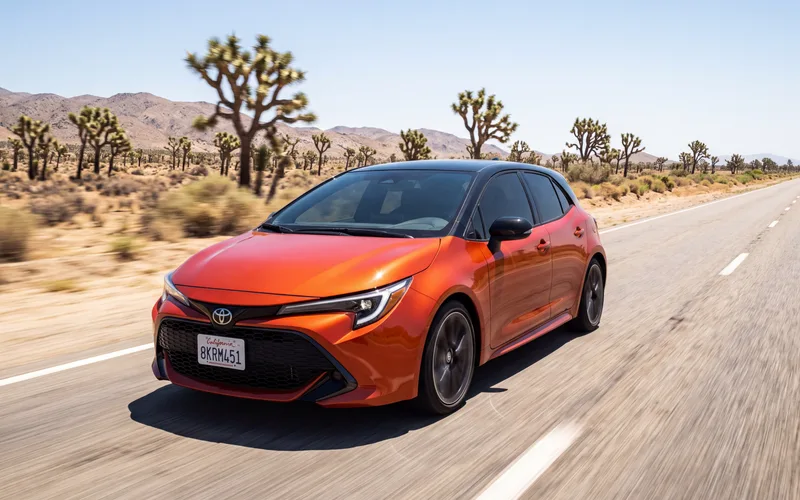 Toyota Corolla HatchbackCompact HatchbackBetter at: Efficiency
The closest like-for-like cross-shop — similar money, but quicker, quieter, more efficient and with Toyota's resale behind it, if you can live with far less cargo room.
Compare 2.46C+
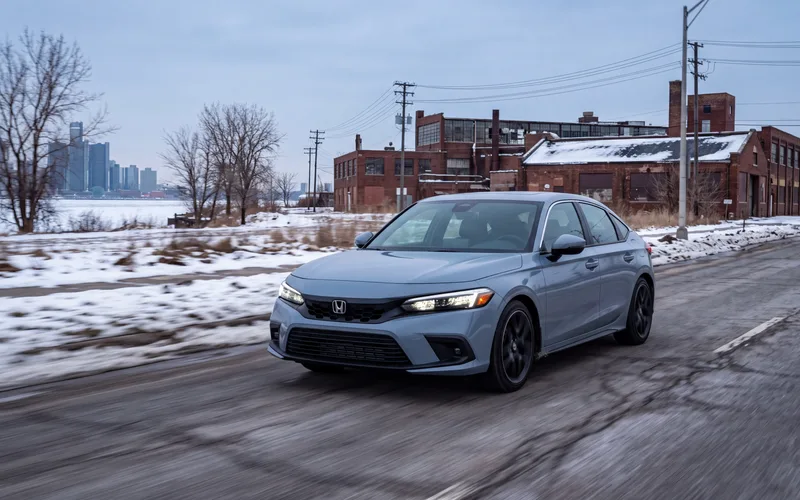 Honda Civic HatchbackCompact HatchbackBetter at: Refinement
Costs more but delivers a genuinely refined, quiet and quick hatchback with stronger safety standing — worth the stretch if the budget allows.
Compare2.56C+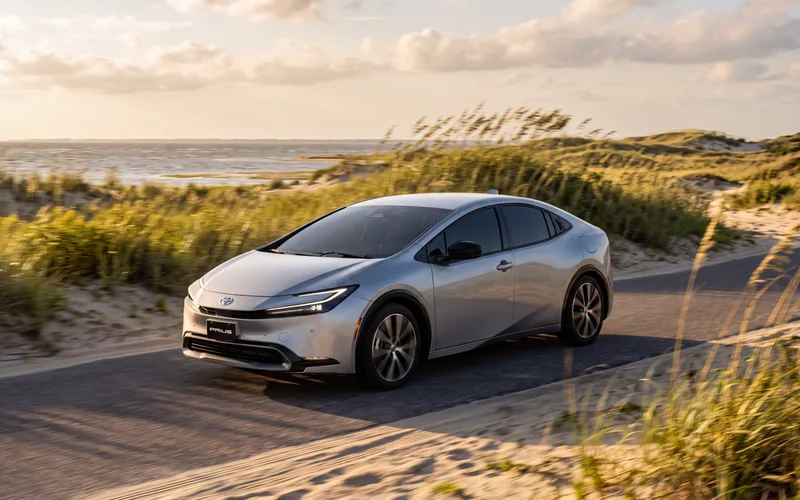 Toyota PriusCompact HatchbackBetter at: Fuel economy
If your mileage is high, the Prius's hybrid economy and available all-wheel drive pay back the price premium the Soul can't answer.
CompareHow it's evolved
9 scored model years · 2017–2025
Subject scores by year
Hover or tap a score to see what moved it versus the year before. A corner mark flags a big swing.
| Year | Performance | Efficiency | Safety | Space | Cost | Reliability | Tech | Use-case | Driving | Value |
|---|---|---|---|---|---|---|---|---|---|---|
| 2025 | 19 | 49 | 54 | 70 | 85 | 71 | 52 | 53 | 61 | 66 |
| 2024 | 19 | 49 | 55 | 70 | 86 | 72 | 54 | 53 | 62 | 67 |
| 2023 | 18 | 50 | 56 | 70 | 86 | 67 | 53 | 54 | 63 | 68 |
| 2022 | 25 | 51 | 57 | 70 | 93 | 70 | 52 | 55 | 68 | 59 |
| 2021 | 25 | 51 | 56 | 70 | 93 | 69 | 45 | 54 | 67 | 63 |
| 2020 | 24 | 50 | 55 | 70 | 92 | 56 | 45 | 52 | 68 | 66 |
| 2019 | 27 | 39 | 51 | 70 | 93 | 58 | 35 | 50 | 64 | 62 |
| 2018 | 27 | 39 | 51 | 70 | 91 | 65 | 30 | 49 | 64 | 65 |
| 2017 | 26 | 39 | 43 | 69 | 90 | 63 | 24 | 47 | 64 | 75 |
Compare two years
Best fit & conditions
Higher scores mean a better fit for that use case. Learn more about use-case fit →
Subject profile
Academic Probation · NHTSA safety recalls
Oct 26, 2023Electrical system: software · Power train: automatic transmission: gear position indication (prndl)The parking mechanism may be damaged, which can result in unintended vehicle movement when the gear shift lever is in the Park 'P' position and the parking brake is not applied while the vehicle is powered on.
Defect
Kia America, Inc. (KIA) is recalling certain 2015-2019 Soul EV vehicles. The parking mechanism may be damaged, which can result in unintended vehicle movement when the gear shift lever is in the Park 'P' position and the parking brake is not applied while the vehicle is powered on.
Risk
Unintended vehicle movement can increase the risk of a crash.
Remedy
Dealers will update the electronic control unit software, free of charge. Owner notification letters were mailed December 21, 2023. Owners may contact Kia customer service at 1-800-333-4542. Kia's number for this recall is SC287. This recall expands and replaces recall number 20V-389. Vehicles previously repaired under 20V-389 will need to have the new remedy completed.
NHTSA campaign 23V724000 ↗Manufacturer no. SC2876,262 vehicles potentially affected (all models in the campaign)Owners notified Dec 21, 2023Filed by Kia America, Inc.Filed as SOUL EVMar 29, 2023Electrical system: propulsion system: traction batteryThe high-voltage battery pack may experience an electrical short-circuit while driving.
Defect
Kia America, Inc. (Kia) is recalling certain 2015-2019 Soul EV vehicles equipped with an E400 battery. The high-voltage battery pack may experience an electrical short-circuit while driving.
Risk
A battery electrical short-circuit increases the risk of a fire.
Remedy
Dealers will update and/or replace the battery management system and software, as necessary, free of charge. The new software will illuminate the EV warning light, limit charging capacity, and reduce vehicle power if abnormal voltage is detected. If this occurs, the battery will be replaced, free of charge. Owner notification letters were mailed August 18, 2023. Owners may contact Kia customer service at 1-800-333-4542. Kia's number for this recall is SC267.
NHTSA campaign 23V218000 ↗Manufacturer no. SC2672,689 vehicles potentially affected (all models in the campaign)Owners notified Aug 18, 2023Filed by Kia America, Inc.Filed as SOUL EVJan 25, 2022Air bagsThe Air Bag Control Unit (ACU) cover may contact a memory chip on the printed circuit board and damage the electrical circuit. Circuit damage may result in deactivated air bags that will not deploy in a crash.
Defect
Kia Motors America (Kia) is recalling certain 2017-2019 Sedona, Soul, Soul EV, 2017-2018 Forte, and 2017 Forte Koup vehicles. The Air Bag Control Unit (ACU) cover may contact a memory chip on the printed circuit board and damage the electrical circuit. Circuit damage may result in deactivated air bags that will not deploy in a crash.
Risk
Air bags that do not deploy as intended can increase the risk of injury in a crash.
Remedy
Dealers will inspect the ACU, and either update the software or replace the unit, as necessary. Repairs will be performed free of charge. Owner notification letters were mailed March 21, 2022. Owners may contact Kia customer service at 1-800-333-4542. Kia's number for this recall is SC226.
NHTSA campaign 22V031000 ↗Manufacturer no. SC226410,619 vehicles potentially affected (all models in the campaign)Owners notified Mar 21, 2022Filed by Kia Motors AmericaFiled as SOUL, SOUL EV
5 recalls on other model years of the Soul (2020–2023)
Feb 17, 2025Engine and engine cooling: engine: hard parts internal/mechanicalThe piston oil rings may have been manufactured incorrectly, which can result in engine damage.
Defect
Kia America, Inc. (Kia) is recalling certain 2021-2023 Seltos and Soul vehicles. The piston oil rings may have been manufactured incorrectly, which can result in engine damage.
Risk
Engine damage can cause a vehicle stall or fire, increasing the risk of a crash or injury.
Remedy
Dealers will inspect and replace the engine as necessary, free of charge. Dealers will also install piston-ring noise sensing system (PNSS) software, free of charge. Owner notification letters were mailed April 4, 2025. Owners may contact Kia customer service at 800-333-4542. Kia's number for this recall is SC336.
NHTSA campaign 25V099000 ↗Manufacturer no. SC336137,256 vehicles potentially affected (all models in the campaign)Owners notified Apr 4, 2025Filed by Kia America, Inc.Filed as SOULDec 22, 2023Air bagsDue to a manufacturing error, the side curtain air bags may deploy unexpectedly.
Defect
Kia America, Inc. (Kia) is recalling certain 2023 Soul and 2024 Seltos vehicles. Due to a manufacturing error, the side curtain air bags may deploy unexpectedly.
Risk
An air bag that deploys unexpectedly can increase the risk of injury or crash.
Remedy
Dealers will inspect and replace both side curtain air bag modules as necessary, free of charge. Owner notification letters were mailed January 31, 2024. Owners may contact Kia customer service at 1-800-333-4542. Kia's number for this recall is SC289.
NHTSA campaign 23V830000 ↗Manufacturer no. SC2892,967 vehicles potentially affected (all models in the campaign)Owners notified Jan 31, 2024Filed by Kia America, Inc.Filed as SOULJul 31, 2023Power train: automatic transmission: fluid/lubricant: pumpThe electronic controller for the Idle Stop & Go oil pump assembly may contain damaged electrical components that can cause the pump to overheat.
Defect
Kia America, Inc. (Kia) is recalling certain 2023 Soul, Sportage, and 2023-2024 Seltos vehicles. The electronic controller for the Idle Stop & Go oil pump assembly may contain damaged electrical components that can cause the pump to overheat.
Risk
An electric oil pump assembly that overheats increases the risk of a vehicle fire.
Remedy
Owners are advised to park outside and away from structures until the recall repair is complete. Dealers will inspect and replace the electric oil pump controller, as necessary, free of charge. Owner notification letters are expected to be mailed September 28, 2023. Owners may contact Kia customer service at 1-800-333-4542. Kia's number for this recall is SC275.
NHTSA campaign 23V531000 ↗Manufacturer no. SC27539,765 vehicles potentially affected (all models in the campaign)Owners notified Sep 28, 2023Filed by Kia America, Inc.Filed as SOULApr 26, 2023Electrical system: instrument cluster/panelKia America, Inc. (Kia) is recalling certain 2023 Sportage, Sportage Hybrid, Sportage Plug-in Hybrid, Niro Hybrid, Niro Plug-in Hybrid, Soul, and Telluride vehicles equipped with a digital instrument cluster containing a 4.2" LCD screen.  The instrument cluster may fail to display any information when the vehicle is started.  As such, these vehicles fail to comply with the requirements of Federal Motor Vehicle Safety Standard numbers 101, "Control and Displays," and 138, "Tire Pressure Monitoring Systems."
Defect
Kia America, Inc. (Kia) is recalling certain 2023 Sportage, Sportage Hybrid, Sportage Plug-in Hybrid, Niro Hybrid, Niro Plug-in Hybrid, Soul, and Telluride vehicles equipped with a digital instrument cluster containing a 4.2" LCD screen.  The instrument cluster may fail to display any information when the vehicle is started.  As such, these vehicles fail to comply with the requirements of Federal Motor Vehicle Safety Standard numbers 101, "Control and Displays," and 138, "Tire Pressure Monitoring Systems."
Risk
A blank instrument cluster display will not show critical information, such as tire pressure, warning messages, and warning lights, increasing the risk of a crash.
Remedy
Dealers will update the instrument cluster software, free of charge. Owner notification letters were mailed May 26, 2023. Owners may contact Kia customer service at 1-800-333-4542. Kia's number for this recall is SC270.
NHTSA campaign 23V298000 ↗Manufacturer no. SC270108,936 vehicles potentially affected (all models in the campaign)Owners notified May 26, 2023Filed by Kia America, Inc.Filed as SOULApr 13, 2021EngineThe piston oil rings may not have been properly heat-treated, which may result in engine damage.
Defect
Kia Motors America (Kia) is recalling certain 2020-2021 Soul, and 2021 Seltos vehicles equipped with 2.0L Nu MPI engines. The piston oil rings may not have been properly heat-treated, which may result in engine damage.
Risk
A damaged engine may stall, increasing the risk of a crash. In addition, oil may leak onto hot exhaust components, increasing the risk of a fire.
Remedy
Kia will notify owners, and dealers will inspect and, if necessary, replace the engine, free of charge. In addition, Kia will deploy Piston Ring Noise Sensing System (PNSS) software. The recall began June 11, 2021. Owners may contact Kia customer service at 1-800-333-4542. Kia's number for this recall is SC209.
NHTSA campaign 21V259000 ↗Manufacturer no. SC209147,249 vehicles potentially affected (all models in the campaign)Owners notified Jun 11, 2021Filed by Kia Motors AmericaFiled as SOUL
Source: NHTSA Office of Defects Investigation recall database, model years 2017–2025. Recalls are listed by model year as the manufacturer filed them; whether a specific car is affected depends on its VIN — check a VIN at nhtsa.gov ↗. NHTSA model names matched to this page: SOUL, SOUL EV.
Detailed scoring by subject
1Performance & PowertrainOne of the Soul's weakest categories.0.00F
2017 is the facelift year for the second-generation (PS) Soul, and the headline powertrain change is at the top trim: the old 2.0L Nu engine on Exclaim is replaced by a 1.6L turbo (+40 hp, +45 lb-ft) paired with a new 7-speed DCT. The mid-range Plus trim keeps the carried-over 2.0L Nu GDI engine, which remains the volume configuration across the range.
Torque figure for the 2.0L Nu GDI engine on the Plus trim, unchanged from the pre-facelift Plus powertrain; only the Exclaim's engine and transmission changed for 2017.
No single manufacturer-stated 0-60 figure for the Plus trim; third-party estimates and instrumented tests of the unchanged PS-generation 2.0L/6AT powertrain (2014-2019) cluster in the 8.0-9.2s range, so 8.4s is used as a representative figure for the volume Plus trim.
The volume Plus trim's 2.0L NA engine is smooth but only adequately powerful, with reviewers wanting more urgency; the new-for-2017 Exclaim Turbo engine itself was praised as a genuine refinement step up in power delivery, though the pairing with the unproven 7-speed DCT undercut the overall powertrain impression at launch.
The 6-speed automatic on the volume Plus trim shifts smoothly, but the new-for-2017 7-speed dual-clutch transmission on the flagship Exclaim launched with notable low-speed hesitation and jerky engagement from a stop, which reviewers flagged as a first-year rough edge.
AWD is not offered on any 2017 Soul trim (Base, Plus, Exclaim) — the second-generation Soul is front-wheel drive only across the entire range, including the new turbo Exclaim.
Three distinct gas engines are offered across the range for 2017 — 1.6L NA (base), 2.0L NA (Plus), and the newly introduced 1.6L turbo (Exclaim) — broader than most segment rivals, though the battery-electric Soul EV sold only in limited CARB-compliant states in low volume and is not a mainstream, widely available electrified option.
2Efficiency & RangeOne of the Soul's weakest categories.0.57F
EPA-rated 27 MPG combined for the 2.0L Nu MPI GDI engine with 6-speed automatic, standard on the volume Soul + (Plus) trim. 2017 is the second-generation (PS) Soul's facelift year: the 2.0L Plus carries over from 2016, while the top Exclaim (!) trim swaps its old 2.0L for a new 1.6L turbo (201 hp) with 7-speed DCT, rated slightly higher at 28 combined but not the volume configuration.
EPA city figure for the volume 2.0L automatic powertrain.
EPA highway figure for the volume 2.0L automatic powertrain.
Calculated from the 2.0L automatic's 14.2-gallon fuel tank and 27 MPG EPA combined rating; Kia and EPA do not publish a separate combined-range figure for gas trims.
EPA annual fuel cost estimate for the volume 2.0L automatic at standard 15,000 mi/yr assumptions.
Every 2017 Soul gas configuration — 1.6L manual, 1.6L automatic, 2.0L automatic, and the new 1.6L turbo — runs on regular unleaded; no premium recommendation or requirement on any trim.
3SafetyGrades near the bottom of the scale.0.87F
NHTSA's full test of the second-generation Soul (carried into the 2017 facelift year, same structure) returned a 5-star overall rating with 5 stars front, 5 stars side and 4 stars rollover.
Good ratings in moderate overlap front, side, roof strength and head restraints, plus a Good small-overlap-front result on the driver side, but the passenger-side small overlap came back only Acceptable and most trims wear Poor-rated halogen headlights — together these kept the 2017 Soul off the Top Safety Pick list despite otherwise strong structural results.
The base and volume Plus trims ship with no forward collision warning, no AEB, no blind-spot monitoring and no rear cross-traffic alert; the entire suite is bundled only into the $4,000 optional Primo package on the Plus trim, and is not even offered on the range-topping Exclaim.
IIHS rated the optional front crash prevention system 'Basic' — the Primo package adds forward collision warning only, with no autonomous braking intervention offered on the 2017 Soul at all.
Blind-spot monitoring and rear cross-traffic alert exist only as alert-only functions bundled in the optional Primo package on the Plus trim — unavailable on base and Exclaim trims.
The 2017 Soul offers only a lane departure warning chime through the optional Primo package — there is no active lane-keep assist or centering function at all this generation.
Every 2017 Soul trim gets conventional cruise control only; adaptive cruise control did not reach the Soul lineup until the third generation (2020+).
No hands-free highway driving system of any kind was offered on the 2017 Soul or its era of Kia lineup.
IIHS rated the HID projector headlights Good only on the top ! trim with the Technology Package; the volume base and Plus trims run halogen units rated Poor.
The Soul's tall, upright greenhouse and high seating position give strong forward and side sightlines, but reviewers consistently flag a thick rear pillar that creates a blind spot for lane changes and rear three-quarter views.
Two full sets of exposed lower LATCH anchors plus a third top-tether point make the anchors easy to locate, though IIHS's ease-of-use evaluation found the lower anchors set deep in the seat cushion requiring some maneuvering; two car seats fit comfortably across the rear bench.
4Space & ComfortOne of the Soul's strongest categories.2.70B-
The second-generation Soul (facelifted for 2017) is a standard 5-passenger hatchback across Base, Plus (+) and Exclaim (!) trims, including the new-for-2017 turbo Exclaim; no 4-seat or 6-seat configuration is offered.
The tall, boxy second-generation body — unchanged by the 2017 facelift's cosmetic and powertrain updates — gives the Soul class-leading front headroom for the hatchback segment.
Front legroom sits at the low end of the hatchback normalization band despite the tall cabin — the Soul prioritizes headroom and cargo-box shape over front-seat legroom, unchanged by the 2017 facelift.
The boxy roofline gives the Soul segment-leading second-row headroom, exceeding the top of the hatchback normalization band.
Rear legroom is generous for a subcompact hatchback thanks to the long wheelbase relative to overall footprint, unchanged from the pre-facelift car.
The boxy cargo area gives the Soul cargo volume far above typical subcompact hatchback rivals, well past the top of the segment's normalization band.
Door pockets sized for water bottles in all four doors and console cupholders are present, plus an optional cargo tray/net accessory, but reviewers describe the bins, pockets and cupholders as adequate rather than generous or especially clever versus segment rivals.
Front seats are comfortable after several hours on the road, and Exclaim's standard cloth/leather combination seats with available heating add to the front-seat experience, but rear seats remain noticeably firmer and flatter than the front.
Ride is stiffer than compact-SUV rivals and can feel jiggly/fatiguing on longer trips, though it stays composed and never turns objectionable even on rough pavement; the new-for-2017 turbo Exclaim's stiffer suspension tune doesn't meaningfully change this.
Wind and road noise are ever-present with some engine boom under acceleration, typical for the segment but not a quiet standout; the new 1.6L turbo/7-speed DCT in the Exclaim doesn't change the overall noise character.
Automatic climate control and heated front seats are standard from the Plus trim up, but the Base trim gets manual A/C only, and a heated steering wheel plus heated rear seats and power-adjustable front seats require the optional $3,000 Technology Package on the top Exclaim trim only.
5Cost of OwnershipThe Soul's best-graded category.4.00A+
2017 is the facelift year of the second-generation (PS) Soul, adding minor trim/paint/headlight updates and a new turbo Exclaim top trim, but the Base entry price is unchanged from the prior lineup and sits well under the hatchback normalization floor.
Soul + (2.0L, 6-speed automatic) is the volume mid-trim for the 2017 lineup, between the base 1.6L and the new turbocharged Exclaim, and still prices well under segment norms.
Kia's 5-year/60,000-mile basic warranty covers most repairs for the entire window this item measures, and RepairPal's 2017-specific data (avg. $437/yr in repairs) corroborates a low out-of-pocket cost for the model year.
The 2017 Soul retains roughly half its MSRP after five years, mid-pack within the hatchback normalization band and somewhat behind the following 2018–2019 model years' retention.
Kia's basic limited warranty (5yr/60k) is at the top of the mainstream-brand range and applies unchanged to the 2017 model year.
Kia's 10-year/100,000-mile powertrain warranty for the original owner is best-in-class and applies unchanged to the 2017 model year; it steps down to 5yr/60k for subsequent owners.
Kia bundles 5-year/60,000-mile roadside assistance with the basic warranty, but the 2017 Soul predates Kia's complimentary-scheduled-maintenance program, which only began with the 2020 model year — Kia Care in 2017 is a pre-paid plan the buyer purchases separately, not an included perk.
$20,695 volume-trim price minus its estimated resale value after 5 years (51.3% retained, or about $10,617) leaves about $10,078 in depreciation. Add the projected $2,300 in 5-year maintenance and repairs, and owning this vehicle for 5 years costs about $12,378 in total.
6Reliability & QualityMid-pack among this car's ten categories.2.26C
Sources disagree, which is typical for this generation: the Soul itself won a segment award in J.D. Power's 2017 Initial Quality Study (strong early-ownership signal), while Consumer Reports' subscriber survey placed the Soul below the average 2017-model-year vehicle, driven by engine complaints (oil consumption, knocking).
Kia ranked #1 overall brand in J.D. Power's 2017 Initial Quality Study for the second consecutive year (72 problems per 100 vehicles, the industry's best), and Consumer Reports placed Kia among its top-five most reliable brands the same year.
NHTSA lists the 2017 Soul under an Air Bag Control Unit defect campaign (2017-2019 Souls) in which the ACU cover could contact and damage a circuit board memory chip, deactivating airbags in a crash — a genuine safety-system recall, though remedied by software/ACU replacement rather than fire or structural failure. The widely reported Kia fire-recall controversy from this era targeted the first-generation (2010-2015) Soul; Kia's January 2019 voluntary fire recall explicitly excluded later Souls including 2017.
The volume 2017 Soul (base/Plus trims) carries the Nu 2.0L naturally aspirated four mated to a 6-speed automatic — a powertrain with a well-documented pattern of piston/oil-ring wear leading to excessive oil consumption and, in a share of cases, knocking or outright failure around 80,000 miles, covered under Kia's SC176/SC200 engine inspection and extended-warranty programs. 2017 also introduces the 1.6L turbo/7-speed dual-clutch on the top '!' trim, an unproven-at-launch pairing later reported for DCT shudder and hesitation, but that combination is not the scored volume trim.
Reviews of the 2017 facelift praised the cabin as upscale-feeling for an economy hatchback — soft-touch surfaces on the dash top and door armrests, well-grained plastics with minimal gaps — but the lower door panels and console remain hard plastic, and Consumer Reports called the fit and finish merely 'basic'.
The 2017 Soul itself earned a segment award in J.D. Power's 2017 Initial Quality Study, and contemporary reviews describe tight, consistent assembly with no flimsy components — consistent with Kia's brand-wide #1 IQS ranking that year.
Kia's US network stood at roughly 800 dealers in 2017 — solid nationwide coverage, but noticeably thinner than Toyota, Honda or Ford, which each field over 1,000-1,500 stores, so rural/small-market buyers may drive further for service.
The Soul is a high-volume, mechanically simple economy hatchback with cheap, widely stocked parts and a sizable aftermarket; RepairPal rates the model's ownership costs as excellent with low average annual repair spend and infrequent shop visits.
7Technology & InfotainmentThe Soul's lowest-graded category.0.00F
For 2017 the volume + (plus) trim's standard head unit is the non-smartphone "Audio 4.0B" system with a 5.0-inch color touch screen; stepping up to UVO3 eServices with Apple CarPlay/Android Auto (new-for-2017 and optional on Plus) brings a 7-inch screen, with 8 inches available via the navigation package on Plus/Exclaim. The base Soul has no screen at all unless the 4.0B audio option is added.
The volume Plus trim's standard head unit is a basic 5-inch touchscreen radio display with no smartphone integration; the genuinely usable UVO3 system — praised in period reviews for a quick, Android-based interface with retained physical shortcut buttons — is a new-for-2017 option on Plus rather than standard equipment, so most Plus buyers experience the plainer default unit.
2017 is the first model year Apple CarPlay/Android Auto appear on the Soul at all, and on the volume Plus trim they arrive only as a new optional UVO3 upgrade over a wired USB connection — not standard, and not wireless (no automaker offered wireless CarPlay/Android Auto in this era). Only the range-topping Exclaim gets UVO3 with CarPlay/Android Auto as standard equipment.
Native navigation is never standard for 2017 — it's an 8-inch-screen option layered on top of the already-optional UVO3 system on Plus, or on Exclaim — so the volume-trim buyer defaults to no built-in maps. Voice control on the base 4.0B audio unit is limited to phone-pairing prompts, well short of a natural-language assistant.
Six speakers is standard across all three 2017 trims — adequate but unremarkable — while Plus and Exclaim can add an optional 315-watt Harman Kardon system (8 speakers, center channel, subwoofer) that reviewers rate as a genuine step up; it remains an option box rather than standard equipment on the volume trim.
The new-for-2017 "Supervision meter cluster with 4.3-inch TFT display" debuts as standard only on the range-topping Exclaim Turbo; it isn't offered as a package add-on for the volume Plus trim this model year (that cross-shopping only arrives in 2018), so most 2017 Souls — including every Plus — have plain analog gauges with no configurable digital display.
The 2017 Soul's UVO/UVO3 telematics hardware predates Kia's over-the-air update infrastructure; UVO eServices covers location, diagnostics and safety-connect features over the owner's cellular-linked account, but there is no mechanism to push software or map updates to the vehicle wirelessly.
The UVO eServices smartphone app (Parking Minder, Vehicle Diagnostics, 911 Connect, Enhanced Roadside Assist) is a real convenience feature for the era, but it only comes attached to the new-for-2017 optional UVO3 upgrade on the volume Plus trim rather than standard equipment, and it offers no remote start, remote climate or lock/unlock control — those functions aren't part of this generation's app.
Kia's 2017 Soul Turbo press materials tout "two dedicated USB charge ports" as new equipment, but that upgrade is tied to the Exclaim Turbo's UVO3 hardware rather than confirmed standard on the volume Plus trim, which otherwise carries over the prior generation's single console USB port plus aux jack. No wireless charging pad or AC household outlet is offered on any 2017 trim.
Remote keyless entry is standard from the base trim up, but push-button start with Smart Key is an available option on Plus/Exclaim rather than standard equipment on the volume trim, and there is no phone-as-key on this generation.
A rearview camera is standard from the volume Plus trim up (optional on Base), and 2017 newly adds Blind Spot Detection with Rear Cross-Traffic Alert as an available option on Plus/Exclaim — but there are no front or rear parking-distance sensors and no surround-view camera on any 2017 trim.
No head-up display was offered on any 2017 Soul trim or package — HUD didn't reach the Soul lineup until a later, redesigned generation's GT-Line Turbo — and none of the 2017 What's New, features, or Exclaim Turbo debut materials mention one.
8Use-Case FitGrades below the middle of the scale.1.14D
The 2017 Soul is the facelifted second-generation (PS) box, unchanged in cabin dimensions from the pre-facelift car: a tall, near-vertical greenhouse and high hip point let a car seat go in standing up rather than threaded under a sloping roofline, and 39.5 in of rear headroom with 39.1 in of rear legroom are generous for a subcompact. 24.2 cu ft behind the standard 60/40 split rear bench (61.3 cu ft folded) swallows a stroller without folding anything. IIHS rates LATCH ease of use Acceptable for the 2015-2019 Soul, covering this model year — two outboard rear positions with complete hardware, plus a center tether-only position. It falls short of the top band because 70.9 in of width makes three-across a squeeze, and the rear center armrest is unavailable on Base, standard only from Plus up.
Passive safety is strong — NHTSA rates the 2017 Soul 5 stars overall (5 front, 5 side, 4 rollover) and IIHS scores Good on four of five crashworthiness tests (Acceptable on the small-overlap passenger side) — but the active-safety story is thinner than it looks. IIHS's own 2017 ratings page shows front crash prevention only at the Basic tier and does not credit the 2017 Soul with a Top Safety Pick or Top Safety Pick+ award (that badge arrives with the 2018 model year once the front-crash-prevention system is upgraded). More concretely, autonomous emergency braking was not offered on the 2017 Soul at all — only a stand-alone Forward Collision Warning system, bundled into the Plus trim's optional Audio & Primo package, gave any advance notice of an impending crash, with no automatic braking intervention behind it. Base and Exclaim buyers get no forward-collision tech of any kind. That leaves the family-volume trim's safety proposition resting almost entirely on structure and airbags rather than crash avoidance.
Four adults fit for hours — 39.1 in of rear legroom is generous for a subcompact, rear air-conditioning vents are standard fleet-wide, and 24.2 cu ft of cargo means luggage still fits with all four seats occupied. Working against it is the ride itself: this generation is consistently described by contemporary reviewers as stiff-riding over broken pavement, which becomes fatiguing on a long trip. Rear amenities stop at the vents — no rear USB charging is documented for this generation, and the rear center armrest is Plus/Exclaim only, absent on Base.
The tall, boxy cabin gives a commanding seating position and strong outward visibility that make traffic and lane changes easy to judge, and the volume Plus trim's 161-hp 2.0L/6-speed automatic is smooth-shifting and easygoing at low speed. Working against effortless daily use: reviewers describe the steering as vague rather than involving, the naturally aspirated 2.0L delivers power only adequately with some wanting more gusto merging or climbing grades, and unlike later model years the 2017 Soul offers no adaptive/smart cruise control on any trim — traffic is worked with plain cruise control at best, with none of the stop-and-go assistance that eases fatigue in stop-start commuting.
Reasonably cheap to run day to day: the volume 2.0L/6-speed-automatic Plus trim returns 27 MPG combined (25 city/30 highway) on regular 87 octane, and the Soul nameplate carries a mid-pack reliability reputation with maintenance costs near the subcompact-class average. Two things keep this out of the upper band. First, 27 MPG combined is only middling for a 2017 subcompact, trailing hybrid and some gas rivals. Second, this specific model year has a documented, above-average rate of Nu-engine knock/failure complaints (CarComplaints logs 211 engine-related complaints for MY2017, including reports of engine failure and excessive oil consumption around 76,700 miles), and the 2017 Soul's Nu-engine falls inside Kia's 2014-2019 knock-sensor/engine class-action settlement population — both of which push real-world running costs and insurance/repair risk above the segment norm for this vintage.
Close to a best case for urban usability. At 163.0 in long on a 101.2-in wheelbase with a 34.8-ft curb-to-curb turning circle, U-turns and tight spots are trivial, and the tall, upright glasshouse — deep windows, low beltline, near-vertical tailgate — gives sightlines to all four corners that few rivals match. A rearview camera is standard across the range. It stops short of the very top only because no 2017 trim offers ultrasonic parking sensors or a surround-view monitor, so tight spaces are worked off mirrors, glass and a single camera.
Not a work vehicle in any conventional sense. Kia nominally rates the 2017 Soul for roughly 1,200 lbs of towing across engine options, but the owner's manual itself advises against towing with the vehicle — a rating that exists on paper more than in practice — and there is no bed, no AWD option on any trim including the new-for-2017 turbo Exclaim, and 130-201 hp through the front wheels is not a load-hauling drivetrain. What earns it anything above the floor is real: 24.2 cu ft behind the seats and 61.3 cu ft folded, in a square box with a low, flat load floor, is legitimately useful for courier, rideshare or trade-sample duty in a way a conventional sedan trunk is not.
This specific model year carries a real, documented weak point that overrides the otherwise-solid parts-bin case (2.0L Nu and 1.6L Gamma engines shared with the high-volume Forte/Rio). CarComplaints logs 211 engine-related complaints for MY2017 — more than the following model year's 121 — including reported engine failure tied to loud knocking, loss of power and stalling around 76,700 miles at an average repair cost near $10,000, plus separate reports of excessive oil consumption. Kia and Hyundai's resolved engine-failure class-action settlement explicitly names 2014-2019 Nu-engine Souls (the volume Plus trim's engine) as a covered population requiring a knock-sensor-detection-system software campaign — an admission of a systemic, not anecdotal, issue for exactly this vintage. There is also nothing wear-friendly to specify (cloth-only on volume trims) and no fleet-service track record under hard use.
Thin work provisioning. A cargo net hook and roof-rack mounting points are standard across the range, but the roof rack crossbars themselves are an optional accessory rather than standard equipment on any trim. There is no factory AC inverter or household outlet, no factory tie-down rail system, and no factory tow hitch or wiring package documented for 2017 — aftermarket hitch kits exist, but nothing ships from Kia.
A workable tourer rather than a good one. The front seats are comfortable over long stints, 27 MPG combined and a similarly sized fuel tank give a real-world range in the mid-300-mile range between fuel stops, and there is genuine space for four adults and their luggage at once. Working against it: the stiff, jiggly ride that dogs the whole generation applies directly to highway-mile fatigue, cabin noise runs to modest engine boom and road hiss, and unlike later model years the 2017 Soul offers no adaptive cruise control on any trim — the fatigue-reduction tech this item specifically rewards is simply absent from the lineup, not just optional.
Pavement-bound. The Soul has never offered all-wheel drive in any model year including 2017, even on the newly turbocharged Exclaim, ground clearance sits around 5.9 in — modest even for a subcompact hatchback — and there is no rugged-look trim; the X-Line trim comparable to later generations does not arrive until the following, third-generation Soul. The nominal towing rating is undercut by Kia's own manual advising against towing at all. What little adventure capability exists comes from the optional roof rack for bikes or small gear, and the square, low-floor cargo box that swallows camping equipment more easily than a sloped-hatch rival.
The single best thing about owning this generation of Soul: 24.2 cu ft behind the second row beats most compact crossovers and 61.3 cu ft folded is nearly double a same-era Corolla hatchback's figure, in a shape — near-vertical tailgate, tall square opening, low load floor — that swallows bulky objects upright instead of wedging them past a sloping hatch. The standard 60/40 split-fold rear seat adds real flexibility, and the optional roof rack extends capacity further for oversized items. It misses the very top only because roof rack crossbars are an added-cost option rather than standard, and the rear bench has no pass-through, slide or recline.
9Driving ExperienceMid-pack among this car's ten categories.2.35C+
Reviewers split between secure-but-flat and genuinely game: Consumer Reports' 2017 road test calls handling secure when pushed but not inspiring during everyday driving, largely because of vague steering feedback, while Edmunds' 2017 impressions describe the Soul as surprisingly agile and even fun on a winding road, easy to drive with confidence in traffic or at speed. Splitting the difference lands this in the upper half of the secure-but-unremarkable band.
Effort builds naturally with speed and is well judged for a small hatch, but Consumer Reports names the steering as vague and the specific reason the driving experience doesn't inspire — the defining trait for this item rather than a minor demerit, and one the 2017 facelift did not address on the volume 2.0L trim.
Brake hardware on the scored Plus trim is modest for the class — 11.0 in. vented front / 10.3 in. solid rear discs, one step down from the 12.0 in. front rotors reserved for the new-for-2017 turbocharged Exclaim. No instrumented MY2017 stopping-distance test was located and neither Consumer Reports nor Edmunds singles out the non-turbo Soul's pedal feel as notably strong or weak, so this sits in the adequate-but-unremarkable band pending harder data.
The volume Plus trim keeps the carryover 2.0L Nu GDI four (161 hp/150 lb-ft) paired with a conventional 6-speed torque-converter automatic — unaffected by the 2017 facelift, which added the new 1.6L turbo/7-speed DCT combo only to the range-topping Exclaim. Consumer Reports found the 6-speed shifts smoothly with no rough stop/start or driveline shudder, but power delivery was 'just adequate,' with testers wanting more gusto merging or on grades — a response shortfall rather than a calibration flaw.
Consumer Reports characterizes cabin noise on the 2017 Soul as typical for the class, with modest engine boom and road hiss audible but not intrusive, and no reports of vibration through the wheel, pedals or seat on the non-turbo Plus trim. That places it in the inoffensive-but-unremarkable middle band rather than the near-silent top tier.
A tight, city-friendly figure at the favorable end of the hatchback normalization band, unchanged from prior years and identical across every 2017 trim including the newly turbocharged Exclaim.
One of the Soul's clearest strengths: both Consumer Reports and Edmunds credit the tall, boxy body and generous glass area for an elevated, chairlike seating position with strong outward visibility and easy entry/egress, while the mostly physical-button dash keeps controls easy to reach without hunting.
More characterful than a typical economy hatch without being a genuine enthusiast pick in this non-turbo configuration. Edmunds' 2017 driving impressions call the Soul 'agile, and dare we say, even fun on a winding road,' but Consumer Reports' harder line on vague steering and secure-but-uninspiring handling tempers that verdict for the volume 2.0L trim — the genuinely spirited, more emphatically fun character introduced this model year attaches to the new turbocharged Exclaim, which isn't the configuration scored here.
10Value & Market PositionOne of the Soul's strongest categories.3.09B
The volume Plus trim (scored here) adds a 7-in touchscreen with UVO infotainment, Bluetooth, backup camera, alloy wheels, and heated mirrors over a base car that already includes air conditioning, power windows/locks/mirrors and a 6-speaker stereo — content that costs extra on several rivals at the same price point. It sits just under the loaded-at-base top band because keyless entry, automatic climate control and heated seats still require stepping up to Exclaim.
At a base price of $16,100 and roughly $19,800 for the well-equipped Plus scored here, the Soul undercuts most subcompact-crossover rivals while matching or beating their content, and Car and Driver's 10Best Trucks and SUVs citation for 2017 explicitly credits 'an extensive list of features and excellent value.' It falls short of the very top band only because the volume 2.0L powertrain itself (161 hp, 24/30 mpg) is unremarkable next to the segment's more efficient or quicker entries.
Three trims (Base, Plus, Exclaim) span $16,100-$22,800, each available with manual or automatic on lower trims, and the Exclaim gains the new-for-2017 1.6T/7-speed DCT alongside the carryover 2.0L — a reasonable ladder from work-a-day to enthusiast-lite, but there's no all-wheel-drive, no hybrid, and only one body style, so the breadth is narrower than segment entries offering more powertrain or drivetrain variety.
The Soul remained the best-selling subcompact crossover/hatchback in the US in 2017 at 115,712 units, extending a streak of six-figure annual sales dating to 2011 even as the figure retreated from 2016's 154,768-unit peak. Segment-leading volume with a real (not marginal) decline keeps this just below the top band rather than in it.
Kia entered 2017 fresh off topping J.D. Power's Initial Quality Study for a second consecutive year (72 problems per 100 vehicles) — the first time a mass-market brand had displaced Lexus/Porsche at the top — and the long-running hamster ad campaign gave the Soul specifically a well-known, likeable identity. It's a value/quality halo rather than an aspirational-luxury one, which caps this short of the top band.
No 2017-specific incentive figures were located; period-appropriate industry reporting on Kia in this era describes routine manufacturer rebates and dealer cash on mainstream models like the Soul rather than at-MSRP or desperation pricing, consistent with a high-volume, non-scarce nameplate. Scored in the middle band pending harder period data.
2017 is the fifth model year of the second-generation (PS) Soul, which launched for 2014, but Kia gave it a genuine mid-cycle facelift for 2017 — revised exterior trim, new paint and headlight options, and, on Exclaim, the new 1.6T/7-speed DCT replacing the old 2.0L/6-speed-automatic pairing. That refresh work keeps it out of the aging/imminent-replacement band even though the third generation was already confirmed for MY2019.
The 2017 Soul was named to Car and Driver's 10Best Trucks and SUVs list (announced Dec. 6, 2016, for the 2017 model year), with the magazine praising its fresh-yet-familiar design and value. Consumer Reports' and Edmunds' contemporary reviews were positive but not without reservations (vague steering, adequate-not-strong powertrain on the non-turbo trim), which keeps this a strong-but-not-flawless showing rather than a clean comparison-test sweep.