

The verdict
A struggling subcompact hatchback, strong on ownership and held back by performance.
The 2021 Kia Soul is a budget-friendly box on wheels that trades speed and polish for space, warranty coverage and low running costs — 24.2 cu ft of cargo room, a 10-year/100,000-mile powertrain warranty, and a $17,590 starting price are hard to beat in the subcompact class. The tradeoffs are real: a 147-hp 2.0L that needs 8.6 seconds to reach 60 mph, no all-wheel drive at any price, and a piston-ring engine defect that triggered two separate NHTSA recalls covering this exact model year. It's the right car for a shopper who wants maximum interior utility per dollar and doesn't mind a slow-but-cheap-to-own daily driver.
Jump to scoresStrengths
- Cavernous cargo space for the class
- Class-leading warranty and rock-bottom running costs
- Strong brand reliability track record and cheap parts
What holds it back
- Slow, unremarkable powertrain
- No all-wheel drive, ever
- Piston-ring engine recall covers this exact model year
Top alternatives
Cars shoppers cross-shop with the Kia Soul 2.25C
2.25C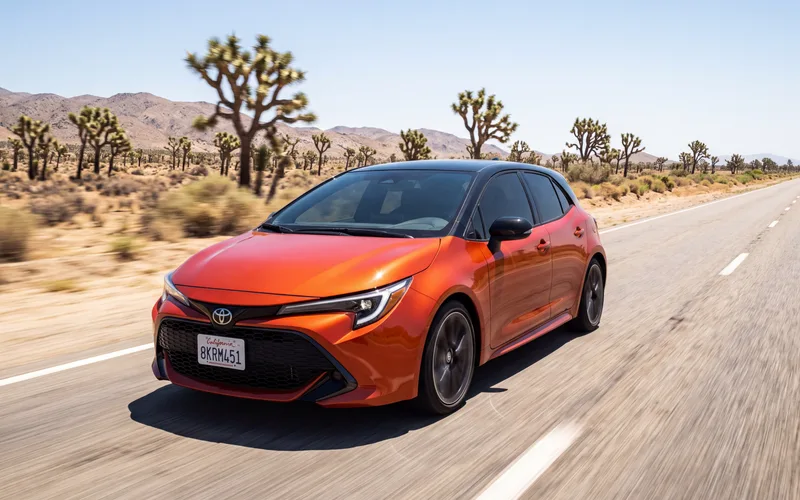 Toyota Corolla HatchbackCompact HatchbackBetter at: Efficiency
The closest like-for-like cross-shop — similar money, but quicker, quieter, more efficient and with Toyota's resale behind it, if you can live with far less cargo room.
Compare 2.46C+
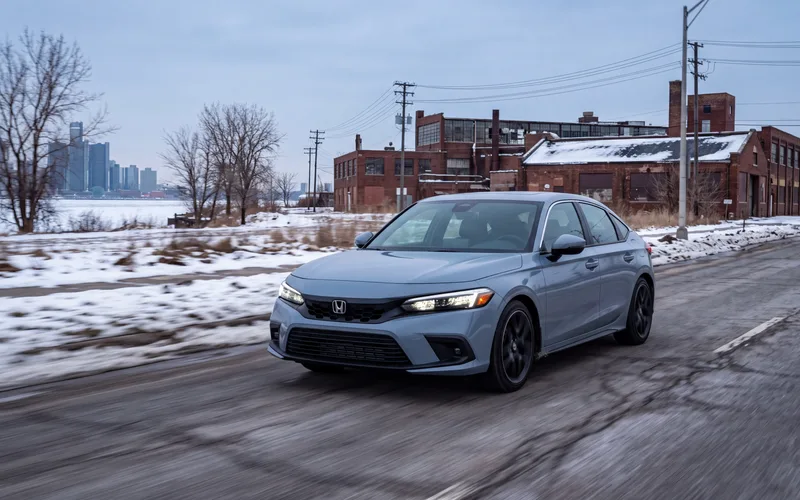 Honda Civic HatchbackCompact HatchbackBetter at: Refinement
Costs more but delivers a genuinely refined, quiet and quick hatchback with stronger safety standing — worth the stretch if the budget allows.
Compare2.56C+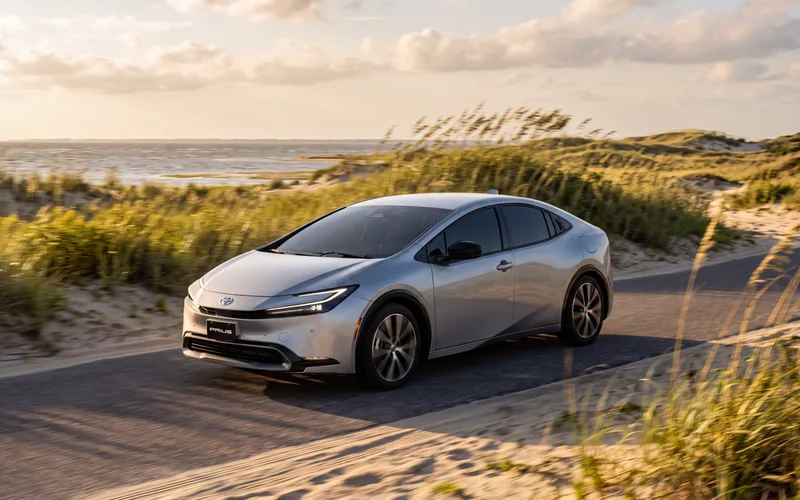 Toyota PriusCompact HatchbackBetter at: Fuel economy
If your mileage is high, the Prius's hybrid economy and available all-wheel drive pay back the price premium the Soul can't answer.
CompareHow it's evolved
9 scored model years · 2017–2025
Subject scores by year
Hover or tap a score to see what moved it versus the year before. A corner mark flags a big swing.
| Year | Performance | Efficiency | Safety | Space | Cost | Reliability | Tech | Use-case | Driving | Value |
|---|---|---|---|---|---|---|---|---|---|---|
| 2025 | 19 | 49 | 54 | 70 | 85 | 71 | 52 | 53 | 61 | 66 |
| 2024 | 19 | 49 | 55 | 70 | 86 | 72 | 54 | 53 | 62 | 67 |
| 2023 | 18 | 50 | 56 | 70 | 86 | 67 | 53 | 54 | 63 | 68 |
| 2022 | 25 | 51 | 57 | 70 | 93 | 70 | 52 | 55 | 68 | 59 |
| 2021 | 25 | 51 | 56 | 70 | 93 | 69 | 45 | 54 | 67 | 63 |
| 2020 | 24 | 50 | 55 | 70 | 92 | 56 | 45 | 52 | 68 | 66 |
| 2019 | 27 | 39 | 51 | 70 | 93 | 58 | 35 | 50 | 64 | 62 |
| 2018 | 27 | 39 | 51 | 70 | 91 | 65 | 30 | 49 | 64 | 65 |
| 2017 | 26 | 39 | 43 | 69 | 90 | 63 | 24 | 47 | 64 | 75 |
Compare two years
Best fit & conditions
Higher scores mean a better fit for that use case. Learn more about use-case fit →
Subject profile
Detailed scoring by subject
1Performance & PowertrainThe Soul's lowest-graded category.0.00F
2021 Soul carries the third-generation (SK3) powertrain lineup unchanged; the base 2.0L Nu MPI I4 is the volume trim's engine, offered with a 6-speed manual on base LX or the IVT (CVT) elsewhere — the manual is dropped starting model year 2022.
Naturally-aspirated 2.0L Nu engine is unchanged for 2021; figure matches manufacturer spec for the LX/S/X-Line/EX volume trims.
No single manufacturer-stated 0-60 figure for the volume 2.0L NA trim; independent instrumented tests cluster between 8.0s and 8.8s (Edmunds track test: 8.8s), so 8.6s is used as a representative midpoint for the volume configuration.
The 2.0L NA engine delivers adequate but unexciting power for city driving; reviewers describe acceleration as "a little lacking" though the car feels spry around town, with no coarse or laggy behavior since there is no turbo to manage on the volume powertrain.
The IVT (CVT) on volume trims is tuned to mimic a conventional automatic and keeps the engine in its power band effectively without the drone common to lesser CVTs; a 6-speed manual remains available on the base LX for 2021 (its last year in the US lineup) but is not the representative volume configuration.
AWD is not offered on any 2021 Soul trim (LX, S, X-Line, EX, GT-Line, GT-Line Turbo) — the Soul is front-wheel drive only across the entire range, consistent with its third-generation architecture.
Two distinct gas powertrains are offered — a 2.0L NA engine on volume trims and a 1.6L turbo with 7-speed DCT on GT-Line Turbo — but there is no hybrid, PHEV, or EV option; Kia's planned US launch of the second-generation Soul EV was delayed and ultimately cancelled, so 2021 US buyers get gas-only choices.
2Efficiency & RangeOne of the Soul's weakest categories.1.38D
Third-generation Soul (SK3, 2019–2022 pre-facelift), 2021 is a carry-over year for the naturally aspirated 2.0L Nu MPi engine paired with the IVT (CVT) automatic — the volume configuration across LX/S/X-Line/GT-Line. The 6-speed manual (LX only) trails at 27 combined and the 1.6L turbo (GT-Line Turbo, 7-speed DCT) sits at 29 combined.
EPA city figure for the 2.0L IVT automatic, the volume powertrain across the LX/S/X-Line/GT-Line trims.
EPA highway figure for the 2.0L IVT automatic, the volume powertrain across the LX/S/X-Line/GT-Line trims.
EPA-derived total range using the 14.3-gallon fuel tank and the 30 MPG combined rating for the 2.0L IVT automatic configuration.
EPA annual fuel cost estimate at standard assumptions (15,000 mi/yr, 55/45 city/highway split) for the 2.0L IVT automatic configuration.
Both the 2.0L and 1.6L turbo engines run on regular 87-octane unleaded across every 2021 trim, with no premium recommendation and no plug-in charging complexity to manage.
3SafetyMid-pack among this car's ten categories.1.80C-
NHTSA rates the 2021 Soul 4 stars overall — 5 stars side (5/5 driver and passenger, 5/5 combined side barrier and pole front/rear) and 4 stars frontal (5 driver / 4 passenger), with a 3-star side pole result and 4-star rollover at 14.7% tip risk. Same unchanged third-generation body structure as the following model years.
Every 2021 Soul crashworthiness test comes back Good — small overlap front (both sides), moderate overlap front, side, roof strength, and head restraints/seats — and IIHS names the 2021 Soul a Top Safety Pick, though the award is conditional on the optional front crash prevention system with pedestrian detection and the LED projector headlights that only the range-topping Turbo trim (renamed this year from GT-Line Turbo) carries.
The volume S trim gets Forward Collision-Avoidance Assist, Lane Keeping Assist, Lane Following Assist, Driver Attention Warning, Blind-Spot Collision Warning, Lane Change Assist and Rear Cross-Traffic Collision-Avoidance Assist as standard, with a rear-seat alert newly added for 2021 — a broad suite for a subcompact — but pedestrian detection on the FCA and any form of adaptive cruise remain withheld from S/X-Line/GT-Line/EX and reserved for the sole Turbo trim, and the base LX still needs the optional Technology Package for all of the above.
IIHS rates the front crash prevention system Superior in both the vehicle-to-vehicle and daytime-pedestrian evaluations, but that rating covers the optional pedestrian-detection FCA-Ped hardware exclusive to the Turbo trim; the volume S trim's plain Forward Collision-Avoidance Assist lacks pedestrian detection and has no separate published rating, and no nighttime-pedestrian result exists for either configuration.
Blind Spot Collision Warning, Lane Change Assist and Rear Cross-Traffic Collision-Avoidance Assist are all standard from the volume S trim up, with only the base LX needing the optional Technology Package; there's no safe-exit warning or blind-view monitor camera anywhere in the 2021 lineup.
Lane Keeping Assist plus Lane Following Assist — genuine lane centering rather than a departure nudge — is standard from the S trim up; on the 2021 car it's still gated behind the base LX's optional Technology Package, and the underlying tune is Kia's basic system, competent on clear highway lines but prone to hunting on faded ones.
Smart Cruise Control (Kia's adaptive cruise) is exclusive to the top-trim Turbo (renamed from GT-Line Turbo for 2021) — even the X-Line, GT-Line and EX trims that get the rest of the ADAS suite are stuck with plain fixed-speed cruise control, so the overwhelming majority of 2021 Souls sold cannot be equipped with adaptive cruise at any price.
No hands-free highway driving system is offered on the 2021 Soul at any trim; the most capable configuration (Turbo) tops out at hands-on Smart Cruise Control with no lane-centering-plus-cruise combination marketed as Highway Drive Assist.
Every 2021 Soul trim except the range-topping Turbo uses reflector or projector halogen headlights that IIHS rates Poor; only the Turbo's LED projector units rate Good. Since the representative S trim carries the halogen reflector units, the volume car's low-beam performance is a genuine weak point despite standard High Beam Assist.
The boxy one-box body — a tall upright greenhouse, deep side glass and a low beltline — gives strong front and side sightlines that reviewers consistently praise, but the thick rear roof pillars create real rear-quarter blind zones that several period reviews flag; a standard rearview camera helps but no 360-degree camera is offered on any 2021 trim.
IIHS rates LATCH ease of use Acceptable: two outboard rear positions with complete hardware, anchors seated a bit deep in the seat bight but requiring modest force to attach — and the Soul's tall roof and wide rear door openings make maneuvering a car seat into place easier than the exterior footprint suggests.
4Space & ComfortOne of the Soul's strongest categories.2.73B-
Third-generation Soul (2019–2022, pre-facelift) is a 5-passenger subcompact hatchback across all 2021 trims (LX, S, X-Line, EX, GT-Line, GT-Line Turbo); no 4-seat or 6-seat configuration offered.
Consistent across all 2021 trims per Kia's own spec table; the Soul's tall, boxy roofline maximizes front headroom relative to typical hatchbacks. Unchanged from the prior model year — 2021 is a carry-over year within the third generation.
Front legroom is unremarkable for the segment — the Soul's compact overall length limits front-seat travel despite its tall cabin. Unchanged from the prior and following model years.
Rear headroom exceeds the top of the hatchback normalization band — the Soul's boxy, upright greenhouse is a class-leading trait unchanged for 2021.
Above-average rear legroom for a subcompact hatchback, reflecting the Soul's tall-wagon packaging that prioritizes upright seating over a low, cab-forward stance.
24.2 cu ft behind the rear seat is well above the hatchback normalization band's top — the Soul's deep, boxy cargo well is a signature practicality advantage for 2021, though reviewers note a pronounced load-floor hump when the seats are folded.
Solid, competitive everyday storage — a deep cargo well and a reasonable number of front-cabin bins/cubbies — but no standout innovation like a giga-console or onboard power, and a rear-seat-folded hump limits flat-load utility.
Front seats are reasonably comfortable over long stints with a generous range of seat and steering-wheel adjustment, and the fixed rear seatback is set at a comfortable angle; some interior materials feel cheap and seat comfort/upholstery varies by trim, keeping this short of segment-leading.
Reviewers split: Consumer Reports calls the ride stiff and jittery even on smooth pavement with jolts over bumps and potholes, while Edmunds describes it as firm and controlled but never harsh. Unchanged suspension tune for 2021, so composed-most-of-the-time with some firmness is the fair middle read.
The Soul's upright, boxy windshield generates noticeable wind noise at highway speed, tire noise is evident, and Consumer Reports flags a noisy interior with pronounced engine noise under load — average for the segment with clear intrusion rather than class-leading quiet.
Dual-zone automatic climate control and heated front seats are reserved for the EX trim and up (standard EX/GT-Line Turbo) for 2021, not yet pushed down to S/X-Line as Kia would do for 2022 — the volume LX/S trims get single-zone manual climate and no seat heating, so comfort equipment is present but only from mid-trim up rather than broadly standard.
5Cost of OwnershipThe Soul's best-graded category.4.00A+
Entry LX trim with 6-speed manual starts at $17,590 MSRP plus Kia's ~$1,120 destination charge for MY2021; well below the hatchback normalization floor, reflecting the Soul's position as one of the cheapest vehicles in its segment.
The S trim (CVT automatic, cloth seats, 8-in touchscreen, blind-spot monitoring) is the volume/best-value pick for 2021 — MSRP $20,690 plus ~$1,120 destination.
Both CarEdge's 5-year ownership breakdown and RepairPal's annual repair-cost figure (~$437/yr, extrapolated to ~$2,185 over 5 years) put the Soul well below the hatchback normalization floor — Kia's compact 4-cylinder platform and long warranty coverage keep out-of-pocket costs low industry-wide.
iSeeCars puts 5-year depreciation at 37.5% (62.5% retained), slightly worse than the subcompact-car segment average of 63.6% retained — solidly in the upper half of the hatchback normalization band regardless.
Kia's industry-leading 5-year/60,000-mile basic bumper-to-bumper warranty applies unchanged to the 2021 Soul, at the top of the hatchback normalization band.
Kia's 10-year/100,000-mile powertrain warranty (original owner) applies to the 2021 Soul, at the top of the normalization band and a class-leading figure versus most competitors' 5-year/60,000-mile powertrain coverage.
No complimentary scheduled-maintenance plan was standard on the 2021 Soul; ownership perks are limited to Kia's 5-year/60,000-mile roadside assistance and a limited-duration UVO connected-services trial — basic roadside coverage without meaningful included maintenance.
$21,810 volume-trim price minus its estimated resale value after 5 years (62.5% retained, or about $13,631) leaves about $8,179 in depreciation. Add the projected $2,300 in 5-year maintenance and repairs, and owning this vehicle for 5 years costs about $10,479 in total.
6Reliability & QualityOne of the Soul's strongest categories.2.68C+
2021 is a carry-over year of the third generation (facelift not until 2023, 6-speed manual still offered alongside the IVT before being dropped for 2022) and multiple sources put its predicted quality/reliability in the 'Great' band: J.D. Power/U.S. News list 87-88/100, and the model 'carried over pretty much unchanged for 2021 and 2022, as did its Great Quality & Reliability results.' Consumer Reports rates it only 'about average' against the full new-car field, and CR separately flags major Engine and Transmission problem areas for the 2021 model specifically, which is why the score sits at the low end of the top band rather than above it.
The 2021 J.D. Power U.S. Vehicle Dependability Study (reflecting 2018 model-year vehicles after three years) ranked Kia the highest mass-market brand for the first time in the study's history, and 3rd overall industry-wide at 97 PP100 behind only Lexus (81) and Porsche (86) — a 35 PP100 improvement over 2020. That is a genuinely strong, milestone standing, comfortably inside the 'consistently top-5' band, though held just below the 2022 car's near-identical score because 2021 was 3rd overall rather than the outright #1-overall result Kia would post the following year, and VDS remains a lagging three-year indicator that predates the piston-ring recall exposure this same model year would later accumulate.
The 2021 Soul is the origin point of the Nu-engine piston-ring defect, not just a later inheritor of it: Kia issued NHTSA 21V259000 / Kia SC209 in April 2021 covering 2020-2021 Soul and Seltos units built through October 2020 (147,249 vehicles) for improperly heat-treated piston oil rings risking engine damage, stall or fire, remedied with an inspection and PNSS software update. That remedy later proved insufficient — NHTSA 25V-099 / Kia SC336 (2025) re-recalled 2021-2023 Soul/Seltos (137,256 units) for the same underlying defect, up to full engine replacement, and NHTSA subsequently opened an audit into whether the original fix actually worked. A model year recalled twice for the same engine defect, with a federal audit into the adequacy of the first repair, is worse than a single clean campaign and keeps this below the 2022 car's score.
The volume 2021 Soul pairs the naturally aspirated 2.0-liter Nu MPI four with an IVT (CVT-type), with a 6-speed manual still available on the base LX before its 2022 discontinuation and a 7-speed dry DCT reserved for the 1.6L Turbo. The Nu MPI is a high-volume, port-injected, unstressed engine shared with the Forte and Seltos with no turbo or high-voltage system adding failure modes, which argues for a mid score — but 2021-built units are literally the population where the piston-ring defect originated and where the first attempted fix (SC209) later proved inadequate, which is a materially worse durability signal than a car merely swept up in someone else's recall. Kia's 10-year/100,000-mile powertrain warranty covers an original owner through the exposure.
Consistent with a subcompact hatchback starting in the low $20,000s: Edmunds notes little soft-touch plastic but says the cabin 'doesn't feel cheap,' citing faux leather on the door armrests, a leather-wrapped steering wheel, and silver trim breaking up an all-black cabin; U.S. News/Edmunds add that quality is in line with class rivals though some competitors use more soft-touch material and brighter cabins. Consumer Reports is more critical, noting fit and finish are 'basic' and some materials 'look good but feel cheap.' That combination reads as on-par-for-price rather than class-leading.
The 2021 Soul posted a genuine, verifiable initial-quality win: it delivered the segment-best performance in the Small SUV category of J.D. Power's 2021 U.S. Initial Quality Study, one of five Kia models to do so as the brand ranked the highest mass-market nameplate for a 6th consecutive year. That is stronger, model-specific evidence than the brand-level IQS placement used for the 2022 car, and it lands ahead of that year's score. It is held short of the very top band because Consumer Reports and owner reviews still describe 'basic' fit and finish and the boxy body/large unlined cargo area draw recurring wind- and road-noise criticism across model years.
Kia's US dealer network was well-established by 2021 (roughly 750 franchised dealers), and a naturally aspirated FWD hatchback with no AWD or hybrid hardware is straightforward for independent shops to service as well. Service satisfaction reads better than in later years: J.D. Power's 2021 U.S. Customer Service Index (covering 2018-2020 model-year ownership) placed Kia 5th among mass-market brands at 855, just behind MINI (864), Buick (859), Mitsubishi (857) and GMC (856) — a stronger relative standing than the brand's mid-pack CSI placement in following years.
The Soul's most durable strength, and largely independent of any single model year's recall history. Over a million Souls have been built worldwide and it was the best-selling US subcompact from 2011-2018, so wear parts are cheap and widely stocked; the 2.0L Nu MPI/IVT and 1.6T/7-DCT powertrains come straight from the shared Forte/Seltos/Elantra parts bin, and with no AWD hardware, no air suspension and no high-voltage system there is nothing exotic to price a repair upward. RepairPal puts average annual repair and maintenance cost at $437 against a $466 subcompact-class average and $652 across all vehicles. Kia's 10-year/100,000-mile powertrain warranty caps the one genuinely costly failure mode (the piston-ring engine defect) for original owners.
7Technology & InfotainmentOne of the Soul's weakest categories.1.01D
The volume LX/S trims of the 2021 Soul carry a 7-inch color touchscreen with AM/FM/MP3 and smartphone integration; the larger 10.25-inch AVN unit with built-in navigation is confined to the EX and Turbo trims, two of the six offered for 2021.
The 7-inch UVO system on volume trims is simple and quick to respond even without navigation, and Kia retains physical volume/tune knobs and dedicated climate controls alongside it, but the small screen, dated graphics and lack of a proprietary nav map on most trims keep it from the upper tier of the segment.
Apple CarPlay and Android Auto are standard across all six 2021 trims, but the connection is wired only — Kia had not yet rolled out wireless projection to the Soul's infotainment hardware of this era, on any trim including the nav-equipped EX and Turbo.
Built-in navigation is limited to the EX and Turbo trims for 2021 — narrower than later Soul model years — leaving the volume LX/S/X-Line/GT-Line trims to rely entirely on phone-projected maps. Voice control is Kia's older fixed-command system rather than a natural-language assistant, so most owners default to Siri/Google Assistant via CarPlay/Android Auto regardless of trim.
Six speakers is the standard fitment across LX through EX, adequate but unremarkable; the range-topping Turbo adds a genuine step up with a Harman Kardon system (center speaker, subwoofer, external amplifier) as standard equipment, though that trim alone represents a small share of Soul sales.
Every 2021 trim below Turbo uses Kia's analog "segment" meter cluster with a small monochrome trip computer rather than a reconfigurable digital display; only the Turbo gets the full-color Supervision digital cluster, making a proper digital gauge display a single-trim exception rather than a broadly available feature.
The 2021 Soul runs on Kia's pre-Kia Connect UVO eServices telematics generation, which supported periodic map and system updates on the nav-equipped EX/Turbo trims but nothing approaching whole-vehicle feature OTA; the non-nav volume trims have no connected head unit to update at all.
The UVO eServices app covers vehicle locate, alerts and diagnostics on a complimentary basis for an unusually long stretch (multi-year Lite-tier trial) for this generation, but the fuller remote-start/climate functions sit behind the paid Ultimate-tier package, and the base LX without the connected head unit gets little of it — solid core functionality gated by a subscription tier rather than a single free year.
Standard USB input is present fleet-wide, but the wireless charging pad and the second USB console charger are reserved for the EX and Turbo trims only — narrower availability than later Soul model years — with older USB-A architecture, no rear-seat charging point, and no household AC outlet on any trim.
Smart Key with proximity entry and push-button start is confined to the EX and Turbo trims for 2021; the volume LX/S/X-Line/GT-Line trims make do with a folding remote key and no push-button start. There is no phone-as-key and no hands-free liftgate on this generation, and smart-key coverage is narrower than the following model year, when it spread to X-Line and GT-Line as well.
A rearview camera is standard across the 2021 lineup, and Rear Cross-Traffic Collision-Avoidance Assist is available on upper trims, but that is the extent of it — no ultrasonic parking-distance sensors, no surround-view monitor and no automated parking assist on any 2021 trim, Turbo included.
A combiner-style head-up display is offered for 2021, but strictly as standard equipment on the single range-topping Turbo trim, leaving five of the six 2021 trims without any HUD option at all.
8Use-Case FitGrades below the middle of the scale.1.61D
The third-generation box shape carries the same practicality edge into 2021: near-vertical rear doors opening onto a 39.5-in-headroom second row let a car seat go in standing up rather than threaded under a sloping roofline, a high hip point saves the back on every buckle-in, and 24.2 cu ft behind the 60/40 bench takes a stroller without folding anything. IIHS rates LATCH ease of use Acceptable for the 2021 Soul — two full outboard positions with complete hardware that requires modest force to attach. It falls short of the top band because 70.9 in of width makes three abreast a genuine squeeze, and rear amenities (center armrest, rear vents) are absent below the EX trim most families skip.
2021 is actually a modest step up for family-trim safety — Kia newly added a rear occupant alert to the standard equipment list this year — but the core gating is unchanged: Forward Collision-Avoidance Assist, Lane Keeping Assist, Lane Following Assist, Driver Attention Warning, Blind-Spot Collision Warning, Lane Change Assist and Rear Cross-Traffic Collision-Avoidance Assist are standard from the volume S trim up, while the base LX only gets them via the optional Technology Package. Pedestrian detection and Smart Cruise Control remain reserved for the sole Turbo trim, so the family-volume S/EX cars stop at vehicle-to-vehicle forward collision avoidance with no adaptive cruise. IIHS named the 2021 Soul a Top Safety Pick, but that designation is conditional on the Turbo's optional pedestrian-detecting FCA and LED headlights — every other trim wears halogen units IIHS rates Poor, and NHTSA's 4-star overall (4 front, 5 side, 3 side-pole) is mid-pack.
Four adults fit comfortably for hours — 38.8 in of rear legroom is generous for a subcompact and 24.2 cu ft of cargo means luggage still fits with all four seats occupied, the specific case most subcompacts fail. Ride quality is contested between outlets: Edmunds calls it firm and controlled, Consumer Reports calls it stiff and jittery even on smooth pavement, and cabin noise is an acknowledged weak point (upright windshield wind noise, evident tire roar). What really caps this item is equipment gating: no rear climate vents or rear USB ports on any 2021 trim, and dual-zone automatic climate control plus heated front seats are EX/Turbo-only — the volume LX/S cars a family actually buys get single-zone manual climate and no seat heating.
The Soul is built around exactly this mission: light steering, a tall command seating position, and class-leading outward visibility from the boxy glasshouse. The volume S trim's i-VT (CVT) is tuned to feel like a conventional automatic and stays smooth in stop-and-go traffic — 2021 is the last year a 6-speed manual is offered at all (base LX only), so every S-and-up car a typical buyer chooses is already the easy-to-drive automatic. It's held out of the top band by the 147-hp 2.0L's strained, noisy merges and on-ramps, a 7-in touchscreen on the volume trim (the larger 10.25-in unit is EX/Turbo-only) that keeps some functions buried in menus, and the fact that Smart Cruise Control is Turbo-exclusive, so the driver works every mile of a congested commute in the volume trims.
Cheap to run in the ways that compound: an EPA-estimated 28/33 city/highway on the volume S trim's 2.0L i-VT running on regular 87 octane, a RepairPal-rated $437/yr average repair-and-maintenance bill (4.5/5.0 reliability, third among subcompact SUVs), and 16-inch tires on the LX and S trims. Two things keep it mid-band rather than higher: 28/33 MPG is only average for the segment — a Corolla Hatchback and Prius both beat it by a wide margin — and full-coverage insurance runs roughly $2,445/yr, giving back part of the fuel savings.
Close to a best case for urban usability. 165.2 in long on a 102.4-in wheelbase makes U-turns and tight spots trivial, and the tall upright glasshouse — deep windows, low beltline, near-vertical tailgate — gives sightlines to all four corners that few rivals match, so the driver actually knows where the body ends. A rearview camera is standard across the range. It stops short of the very top only because no 2021 trim offers ultrasonic parking sensors or a surround-view monitor, so tight spaces are worked off mirrors, glass and a single camera.
Not a work vehicle in any conventional sense. Kia publishes no towing rating for the US Soul, and the owner's manual explicitly does not recommend towing with the vehicle; there is no bed, no AWD option, and 147 hp (201 on Turbo) through the front wheels is not a load-hauling drivetrain. Payload is thin too — a 4,023-lb GVWR against a 2,844-lb i-VT curb weight leaves about 1,179 lbs for people and cargo combined (the heavier Turbo nets even less). What earns it anything above the floor is real: 24.2 cu ft behind the seats and 62.1 folded, in a square box with a low, flat load floor, is legitimately useful for courier, rideshare or trade-sample duty in a way a conventional sedan trunk is not.
The mechanical basis is ordinarily hard to fault — the naturally aspirated port-injected 2.0L and i-VT come from the same parts bin as the Forte and Seltos, RepairPal rates the nameplate 4.5/5.0 with a $437/yr average repair bill well under the class norm, and a 10-yr/100,000-mi powertrain warranty backs an original owner. But this exact model year sits at the center of the recall population for the Nu engine's piston-oil-ring defect: NHTSA's SC336 campaign covers 2021-2023 Souls (2.0L MPI) built July 2, 2020 through April 19, 2022 — a window that captures essentially the entire 2021 production run — for cylinder-wall scoring, oil consumption, stalling and, per Kia's own filing, fire risk. There is also nothing wear-friendly to specify (cloth only on the volume trims, no rubber-floor or vinyl option), and the Soul has no fleet-service track record under hard use.
Thin, work-adjacent equipment at best: cargo net hooks and LED cargo lighting appear on mid-to-upper trims, a dual-level cargo board that flattens the load floor is standard on mid/upper trims (Kia's own spec sheet lists board-lowered and board-raised cargo figures of 23.4 and 18.7 cu ft alongside the no-board 24.2 cu ft), and the X-Line trim carries genuine flush roof rails as factory equipment, giving buyers an actual OEM mounting point rather than an aftermarket crossbar purchase — third-party roof-rack systems for the X-Line's flush rails cite driving loads up to 165 lb. There is still no AC inverter or household outlet on any trim, no factory tie-down rail system, and no factory tow hitch or wiring, so the work case remains light-duty at best.
A workable tourer rather than a good one. The front seats hold up on a long day with generous seat and wheel adjustment, roughly 30 MPG combined on the volume i-VT gives a comfortable range between fuel stops, and there's real space for four adults and their luggage at once. Working against it: the near-vertical windshield generates persistent wind noise with no acoustic glass offered, Consumer Reports flags a stiff, jittery ride even on smooth pavement, 147 hp means grades are taken at high revs and high volume, and adaptive cruise (Smart Cruise Control) exists only on the range-topping Turbo — the S and EX cars most buyers choose make do with plain cruise control, so the fatigue-reduction tech that defines this item is absent from the volume car.
Pavement-bound — the Soul has never offered all-wheel drive in any model year, ground clearance is 6.7 in, and the volume trims ride on 205/60R16 all-seasons with no towing rating for bikes or a small trailer, and the owner's manual explicitly advises against towing. The X-Line trim brings genuine flush roof rails and rugged-look cladding that at least signal (and support, to 165 lb driving load) light gear-hauling intent, on top of the square 62.1-cu-ft folded cargo box that's genuinely useful for a camping load.
The single best thing about owning a Soul: 24.2 cu ft behind the second row beats most compact crossovers and 62.1 cu ft folded is close to double a Corolla Hatchback's figure, in a shape — near-vertical tailgate, tall square opening, low load floor — that swallows bulky objects upright instead of wedging them past a sloping hatch. The dual-level cargo board (standard mid/upper trims) sets a flat floor over the folded seatbacks, and the X-Line's genuine factory roof rails add real roof-carriage capability without an aftermarket purchase. It misses the very top only because the rear bench is a plain 60/40 with no pass-through and no slide or recline.
9Driving ExperienceMid-pack among this car's ten categories.2.51C+
The tall, boxy body doesn't stop the chassis from being genuinely composed: Consumer Reports' 2021 road test found the Soul nimble and stable when driven enthusiastically into turns, with outstanding tire grip on their track. Edmunds' 2021 review rates its cornering as better than expected, on par with sportier rivals like the Mazda CX-3 and Mini Countryman. It stays out of the top band because that composure comes with little drama or communication (see steering feel) and the comfort-leaning suspension tune still shows more body roll than a Mini or GTI-style hatch.
Reviewers land on the same middle ground from opposite directions: Consumer Reports calls the steering vague and says it doesn't inspire sporty driving, while Edmunds describes a light off-center effort that builds naturally as you turn in. Read together, it's an accurate, easy-to-place electric rack with essentially no road feedback — fine for daily use, numb for spirited driving.
Edmunds' 2021 review flags a touchy initial bite that builds too quickly off the top of the pedal, so smooth stops require a deliberate light touch to avoid a lurch — the one clearly cited downside of the brakes. Hardware (4-wheel disc, roughly 11 in. front / 10 in. rear rotors per aggregated spec listings) is unremarkable for the class. No period-correct instrumented stopping-distance figure specific to MY2021 was found from a major outlet, which keeps confidence at MEDIUM rather than HIGH.
The volume trim pairs the 2.0L Nu MPI four with Kia's Intelligent Variable Transmission (a torque-converter automatic with simulated stepped ratios, not a belt CVT). Consumer Reports credits it with predictable and appropriate acceleration and power, and outlet commentary calls the IVT well tuned and more responsive than typical CVTs, if 'not exactly fun to use.' Held out of the top band because outright response is unhurried from the 147-hp four and the powertrain works audibly hard under sustained load. A 6-speed manual remained available on the base LX for 2021 (dropped for MY2022 per Wikipedia), but it is not the scored configuration since the IVT is the higher-volume pairing.
Quiet enough at a cruise, but the naturally aspirated 2.0L makes itself heard exactly when a driver needs power most: Consumer Reports' 2021 road test singles out noticeable engine noise under heavy demand — merging onto the highway or climbing a steep grade. No driveline vibration through the wheel or pedals is reported at a steady cruise, keeping it out of the bottom band, but the coarse note under load is a real, repeatedly-cited demerit.
A tight, city-friendly figure at the favorable end of the hatchback band, consistent across independent secondary sources (Edmunds/KBB spec aggregation and Cars.com) and matching the figure carried across this generation. Kia's own kiamedia.com press specifications page could not be fetched directly (403), so this is corroborated rather than a direct manufacturer-document confirmation.
One of the Soul's clearest strengths behind the wheel. Consumer Reports' 2021 road test notes big windows give the cabin an airy feeling and help front visibility, and the elevated seating position with large doors makes for easy access. The simple, largely physical-button interior of this generation leaves little to fumble for. It falls just short of the very top band because rear visibility and some control placement are ordinary rather than exceptional.
More characterful than a typical economy hatch, without being a genuine enthusiast pick in the volume (non-Turbo) powertrain. The Soul line was named a Car and Driver 2021 Editors' Choice winner, cited for its distinct appearance, generous interior accommodations, and personality at an affordable price, though the primary C&D article could not be directly verified and trim scope wasn't specified. Aggregated outlet commentary describes the mainstream Soul as fun to toss around corners with a pleasant ride — genuine but modest praise leaning on the composed chassis and practical design rather than outright thrills; the sportier verdict belongs to the turbocharged Turbo trim, which isn't the configuration scored here.
10Value & Market PositionMid-pack among this car's ten categories.2.22C
Base LX ($17,590) undercuts most subcompact rivals while still including a 7-inch touchscreen with Apple CarPlay/Android Auto, a 6-speaker stereo, USB, A/C and a 6-speed manual; the gap is driver-assist tech, which stays optional/upper-trim rather than standard even in this facelift-free carry-over year.
Class-leading cargo volume and rear-seat room, a segment-best 10-year/100,000-mile powertrain warranty, and a wide price spread give the Soul strong content-per-dollar even though the top Turbo trim pushes past $27,600.
Six well-spaced trims (LX, S, X-Line, GT-Line, EX, Turbo) run from a manual-transmission base car to a 201-hp turbocharged GT-Line, covering budget to enthusiast buyers; the shortfall is no AWD option, since the Soul stays FWD-only across the range.
The Soul's US volume has been sliding for several years (roughly 90,000 units in 2019 to 71,772 in 2020) as buyers shift to crossovers and Kia's own Seltos cannibalizes shoppers; 2021 continues that downward trajectory rather than reversing it, making the nameplate a fading mid-pack seller.
Kia's US brand perception was climbing through this period (rising J.D. Power/reliability standing, strong warranty backing) but it remains a mainstream value brand rather than an aspirational one, and the Soul itself carries a quirky, budget-hatchback image rather than a premium halo.
With demand softening, dealers commonly advertised lease cash of roughly $1,900-$2,200 and lease specials near $209/month, giving buyers real negotiating room without the vehicle selling at or over sticker.
The third-generation Soul (SK3) launched for MY2019; 2021 is a carry-over year whose only notable change was the new Kia badge, with the next real facelift not arriving until MY2023 — solidly mid-cycle, current but not new.
The 2021 Soul earned an IIHS Top Safety Pick (with the optional front crash prevention/headlight combo) and a U.S. News "Best Subcompact SUV for the Money" nod, with reviewers praising interior space, ride comfort and predicted reliability, but it was rarely cited as an outright comparison-test winner and was dinged for a stiff ride and sparse base safety tech.