

The verdict
A struggling subcompact hatchback, strong on ownership and held back by performance.
The 2019 Kia Soul is a budget hatchback that wins on the numbers that hit your wallet: a $17,485 starting price, a 10-year/100,000-mile powertrain warranty, and 24.2 cu ft of cargo room behind the back seat that shames most small SUVs. It backs that up with a 5-star NHTSA rating and an IIHS Top Safety Pick. What it doesn't give you is speed, tech, or driver-assist features — 161 hp is leisurely, the touchscreen tops out at 7 inches with no wireless CarPlay, and features like adaptive cruise and blind-spot monitoring are pricey options rather than standard equipment. It's a smart pick for a shopper who wants cheap, boxy, practical transportation and doesn't mind a basic dash.
Jump to scoresStrengths
- Rock-bottom cost of ownership
- Cargo and headroom that punch above the price
- Strong crash-test results
What holds it back
- Thin tech across the board
- Slow and underpowered
- Driver-assist safety tech is optional-only, or missing entirely
Top alternatives
Cars shoppers cross-shop with the Kia Soul 2.25C
2.25C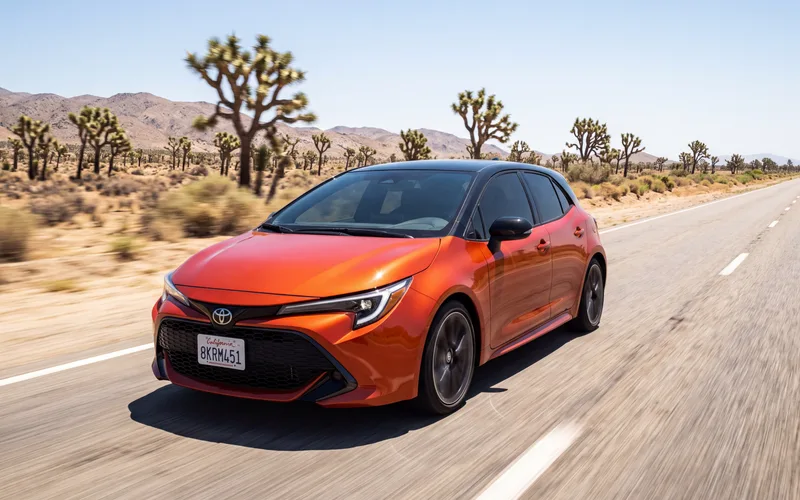 Toyota Corolla HatchbackCompact HatchbackBetter at: Efficiency
The closest like-for-like cross-shop — similar money, but quicker, quieter, more efficient and with Toyota's resale behind it, if you can live with far less cargo room.
Compare 2.46C+
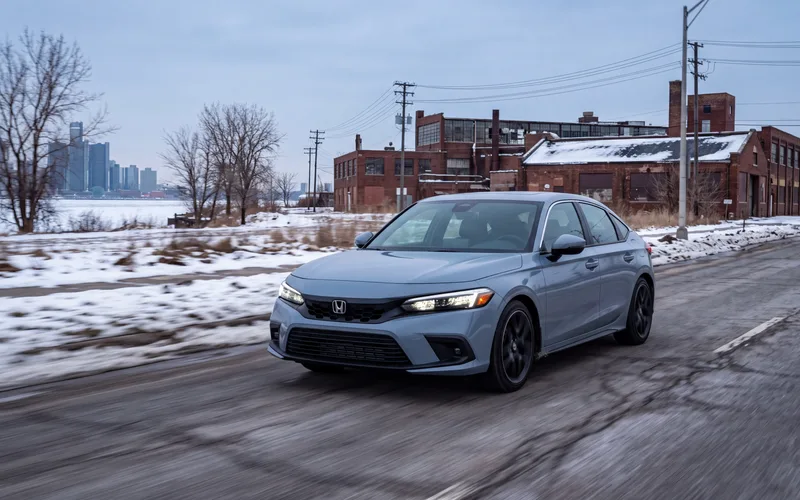 Honda Civic HatchbackCompact HatchbackBetter at: Refinement
Costs more but delivers a genuinely refined, quiet and quick hatchback with stronger safety standing — worth the stretch if the budget allows.
Compare2.56C+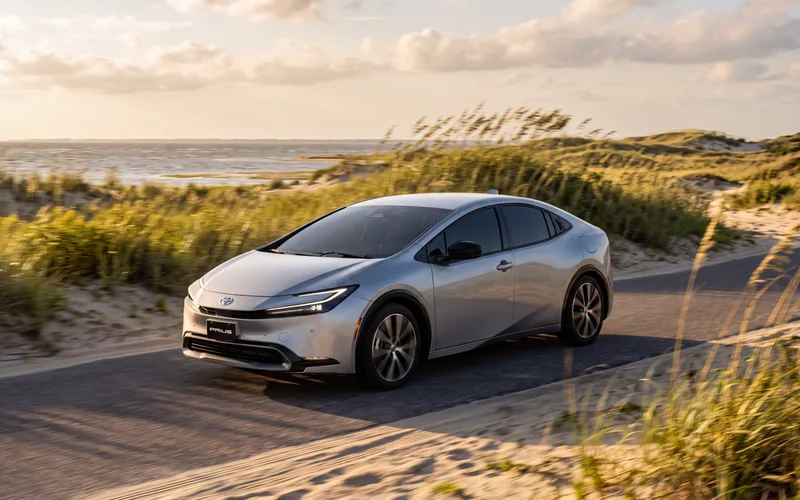 Toyota PriusCompact HatchbackBetter at: Fuel economy
If your mileage is high, the Prius's hybrid economy and available all-wheel drive pay back the price premium the Soul can't answer.
CompareHow it's evolved
9 scored model years · 2017–2025
Subject scores by year
Hover or tap a score to see what moved it versus the year before. A corner mark flags a big swing.
| Year | Performance | Efficiency | Safety | Space | Cost | Reliability | Tech | Use-case | Driving | Value |
|---|---|---|---|---|---|---|---|---|---|---|
| 2025 | 19 | 49 | 54 | 70 | 85 | 71 | 52 | 53 | 61 | 66 |
| 2024 | 19 | 49 | 55 | 70 | 86 | 72 | 54 | 53 | 62 | 67 |
| 2023 | 18 | 50 | 56 | 70 | 86 | 67 | 53 | 54 | 63 | 68 |
| 2022 | 25 | 51 | 57 | 70 | 93 | 70 | 52 | 55 | 68 | 59 |
| 2021 | 25 | 51 | 56 | 70 | 93 | 69 | 45 | 54 | 67 | 63 |
| 2020 | 24 | 50 | 55 | 70 | 92 | 56 | 45 | 52 | 68 | 66 |
| 2019 | 27 | 39 | 51 | 70 | 93 | 58 | 35 | 50 | 64 | 62 |
| 2018 | 27 | 39 | 51 | 70 | 91 | 65 | 30 | 49 | 64 | 65 |
| 2017 | 26 | 39 | 43 | 69 | 90 | 63 | 24 | 47 | 64 | 75 |
Compare two years
Best fit & conditions
Higher scores mean a better fit for that use case. Learn more about use-case fit →
Subject profile
Detailed scoring by subject
1Performance & PowertrainThe Soul's lowest-graded category.0.00F
2019 is the final model year of the second-generation (PS, facelifted 2017) Soul sold in the US before the third-generation SK3 arrives for MY2020; the 2.0L Nu GDI engine on the Plus trim is the volume configuration.
Torque figure for the 2.0L Nu GDI engine on the Plus trim, unchanged for the final year of the second-generation platform.
No single manufacturer-stated 0-60 figure; instrumented tests of the 2.0L/6AT Soul (same PS-generation powertrain across 2017-2019) cluster between 8.0s and 8.5s, so 8.4s is used as a representative figure for the volume Plus trim.
The 2.0L NA engine on the volume Plus trim delivers power smoothly but only adequately, with reviewers wanting more gusto when merging or climbing grades; the base 1.6L is described as languid, while the turbo Exclaim's power delivery is stronger but paired with a hesitant transmission that undercuts refinement.
The 6-speed automatic on the volume Plus trim is smooth-shifting and well regarded, but the Exclaim's 7-speed dual-clutch transmission is notably hesitant in traffic and slow to shift, which weighs down the overall drivetrain rating since it's the flagship gearbox.
AWD is not offered on any 2019 Soul trim (base, +, !, X-Line) — the second-generation Soul is front-wheel drive only across the entire range, consistent with every other model year of this platform.
Three distinct gas engines are offered across the range — 1.6L NA (base), 2.0L NA (Plus), and 1.6L turbo (Exclaim) — broader than most segment rivals, though a battery-electric Soul EV existed only in limited CARB-compliant states in low volume and is not a mainstream, widely available electrified option for 2019.
2Efficiency & RangeOne of the Soul's weakest categories.0.57F
EPA-rated 27 MPG combined for the base 2.0L Nu MPI engine with 6-speed automatic, the powertrain standard on the volume LX/S/X-Line/EX trims of the redesigned third-generation (SK3) 2019 Soul; the optional 1.6L turbo (GT-Line/Exclaim) does slightly better at 28 combined but is not the volume trim.
EPA city figure for the base 2.0L automatic powertrain.
EPA highway figure for the base 2.0L automatic powertrain.
Calculated from the 2.0L automatic's 14.2-gallon fuel tank and 27 MPG EPA combined rating; Kia and EPA do not publish a separate combined-range figure for gas trims.
EPA annual fuel cost estimate for the base 2.0L automatic at standard 15,000 mi/yr assumptions.
Both the base 2.0L and optional 1.6L turbo run on regular unleaded across every 2019 Soul gas trim; no premium recommendation or requirement.
3SafetyGrades below the middle of the scale.1.43D
NHTSA rates the 2019 Soul — the final model year of the second-generation (PS) platform, sold in the US through spring 2019 before the redesigned third-generation SK3 arrived as an MY2020 vehicle — 5 stars overall, with a 5-star frontal result (5 driver / 4 passenger), 5-star side result including the side pole test, and a 4-star rollover rating.
IIHS rates the 2019 Soul Good in five of six crashworthiness tests — driver-side small overlap front, moderate overlap front, side, roof strength, and head restraints/seats — with an Acceptable result in the passenger-side small overlap front test, one notch below the all-Good performance the redesigned 2020 Soul would post. The optional front crash prevention system earns Superior for vehicle-to-vehicle, with no pedestrian rating published. IIHS names the 2019 Soul a Top Safety Pick, but not TSP+, and the award is conditional on the optional forward collision system and the optional HID headlight upgrade — the standard halogen reflector headlights on the base and volume Plus trims rate Poor.
None of forward collision warning, AEB, lane departure warning, blind-spot monitoring, rear cross-traffic alert or adaptive cruise control are standard on any 2019 Soul trim. On the volume Plus trim the entire suite is bundled into the optional Primo package; the base trim cannot be equipped with any of it at all, and even the range-topping Exclaim only gets the suite via its own optional Technology package.
IIHS rates the optional front crash prevention system Superior for vehicle-to-vehicle performance, but the system is only available as part of the Plus's optional Primo package (or Exclaim's Technology package) — never standard — and no pedestrian-detection rating is published for this generation, so nighttime and pedestrian performance are unverified.
Blind-spot monitoring and rear cross-traffic alert are alert-only (no active braking intervention) and optional on just two of the three 2019 trims — bundled into the Plus's Primo package or the Exclaim's Technology package — with no coverage at all on the base trim, so the volume-trim buyer has to pay extra to get it.
The 2019 Soul offers lane departure warning only — no lane keep assist or centering feature is documented for this generation — and even that warning-only system is optional, bundled into the Plus's Primo package, with no lane-related driver assistance available on the base trim at all.
Smart Cruise Control (adaptive cruise) is optional only on the Plus trim via the Primo package; sources conflict on whether it extends to the Exclaim's Technology package, but it is not standard anywhere and not available at all on the base trim. No combined highway-assist feature (lane centering plus ACC) exists for this generation.
No hands-free highway driving system is offered on the 2019 Soul at any trim or option package; the most equipped configuration tops out at hands-on adaptive cruise control.
The standard multi-focus reflector halogen headlights fitted to base, Plus and Exclaim all rate Poor with IIHS; only the optional HID projector headlights — the Primo Lit package on Plus, or the Technology package on Exclaim — rate Good. Since the volume Plus trim's standard headlights are the Poor-rated halogen units, the representative configuration's low-beam performance is a real weak point.
The second-generation Soul's boxy one-box body — tall upright greenhouse, deep side glass, low beltline — gives strong front and side sightlines; thick rear roof pillars create some rear-quarter blind zones, but a standard rearview camera helps compensate. No 360-degree camera is offered on any 2019 trim.
IIHS rates LATCH ease of use Acceptable for the 2019 Soul — two outboard rear positions with complete hardware, anchors requiring modest force to locate and attach — and the tall roof and wide rear door openings of the boxy body make maneuvering a car seat into place easier than the compact footprint suggests.
4Space & ComfortOne of the Soul's strongest categories.2.75B-
Third-generation Soul (2019 redesign) is a standard 5-passenger hatchback across Base, Plus and Exclaim trims; no 4-seat or 6-seat configuration offered.
Tall, boxy third-generation body gives the Soul class-leading front headroom for the hatchback segment.
Front legroom sits at the low end of the hatchback segment despite the tall cabin — the Soul prioritizes headroom and cargo box shape over front-seat legroom.
The boxy roofline gives the Soul segment-leading second-row headroom, exceeding the hatchback normalization band.
Rear legroom is generous for a subcompact hatchback thanks to the long wheelbase relative to overall footprint.
Boxy cargo area gives the Soul cargo volume far above typical subcompact hatchback rivals, well past the top of the segment's normalization band.
Console, door pockets and dash-top bins are present along with a hidden underfloor storage tray, but reviewers note the bins/cupholders are adequate rather than generous or especially clever compared to segment rivals.
Front seats are supportive and comfortable over long stints, especially with optional power adjustment and leather, but rear seats are noticeably firmer and flatter.
Ride is stiff and jiggly enough to fatigue on longer trips, though composed and never objectionable even over rough pavement — firmer than subcompact SUV rivals.
Wind and road noise are ever-present with some engine boom under acceleration, typical for the segment but not a quiet standout.
Automatic climate control is available via the Base Convenience package, and heated/ventilated front seats, heated rear seats and a heated steering wheel are available on the Plus trim's Primo package — but none are standard on lower trims.
5Cost of OwnershipThe Soul's best-graded category.4.00A+
2019 is the launch year of the third-generation (SK3) Soul; the base trim's MSRP plus destination sits well under the hatchback normalization floor, keeping the Soul among the cheapest vehicles on sale.
Soul + is the volume mid-trim for the 2019 lineup (adds the 2.0L engine, 6-speed automatic, and comfort/tech upgrades over base) and still prices well under segment norms.
Kia's 5-year/60,000-mile basic warranty covers most repairs for the entire window this item measures, and the Soul has an above-average reliability record for the segment, keeping projected out-of-pocket costs low.
The 2019 Soul retains a strong majority of its MSRP after five years, well above the middle of the hatchback normalization band, though it depreciates a bit faster than the newer 2020 model year.
Kia's basic limited warranty (5yr/60k) is at the top of the mainstream-brand range and applies unchanged to the 2019 model year.
Kia's 10-year/100,000-mile powertrain warranty for the original owner is best-in-class and applies unchanged to the 2019 model year; it steps down to 5yr/60k for subsequent owners.
Kia bundles 5-year/60,000-mile roadside assistance with the basic warranty, but the 2019 Soul has no complimentary scheduled-maintenance plan — Kia Care is a pre-paid plan the buyer purchases separately, not an included perk.
$21,485 volume-trim price minus its estimated resale value after 5 years (61.3% retained, or about $13,170) leaves about $8,315 in depreciation. Add the projected $2,300 in 5-year maintenance and repairs, and owning this vehicle for 5 years costs about $10,615 in total.
6Reliability & QualityMid-pack among this car's ten categories.1.93C-
The 2019 Soul is the launch year of the all-new third generation (SK3), unveiled at the 2018 LA Auto Show and sharing its platform with the Hyundai Kona. At-launch predictions from J.D. Power/U.S. News were optimistic (roughly 4/5, 'above average'), but that did not hold up against what owners actually experienced: Consumer Reports rates the 2019 Soul as less reliable than other cars from the same model year, and CarComplaints logs 85 engine-related complaints for this model year alone, including reports of connecting rods punching through the block from oil-starvation/oil-consumption failures, catalytic converter damage following engine replacement, and repeat starter-motor failures. Scored with the benefit of hindsight, the realized owner-reported outcome outweighs the optimistic pre-launch prediction, placing this in the below-average band.
Kia's brand-level standing at the time this model year launched was genuinely strong: in J.D. Power's 2019 U.S. Initial Quality Study, Kia was the #1 non-luxury/mass-market brand for the fifth consecutive year at 70 problems per 100 vehicles (a two-point improvement over 2018), and the Soul itself was named among the top 10 vehicles industry-wide for initial quality. That standing was later validated by hindsight as well — J.D. Power's 2022 U.S. Vehicle Dependability Study, which specifically surveyed original owners of this exact MY2019 vehicle fleet after three years of ownership, ranked Kia #1 among all 31 automotive brands industry-wide (145 PP100), ahead of Buick. Held just short of the very top band because the 2019 U.S. Vehicle Dependability Study (covering MY2016 vehicles) still had Lexus, Porsche and Toyota ahead of Kia in the outright rankings at the moment this car launched.
The gas 2019 Soul carries one safety-critical NHTSA recall directly naming it: SC226, covering 2017-2019 Souls built July 2016-December 2018, where the airbag control unit cover can contact a circuit-board memory chip and deactivate the airbags so they will not deploy in a crash — a serious defect, though the remedy (software update or ACU replacement) is straightforward. Unlike the 2020-2021 model years, NHTSA's official piston-oil-ring campaign (21V-259) does not name MY2019 in its scope. However, CarComplaints logs a substantial volume of 2019-specific engine complaints (85, including oil-starvation and oil-consumption failure patterns closely resembling the defect that was later formally recalled on adjacent model years) that never rose to a second official campaign for this year — a real elevated risk the recall count alone doesn't capture. That combination of one serious safety recall plus meaningful unrecalled complaint volume sits below 'typical, nothing systemic.'
The volume 2019 Soul (LX/S/Plus trims) pairs the naturally aspirated 2.0-liter Nu MPI four with an IVT (belt-CVT-type transmission) — brand-new hardware for the redesigned third generation, so it carried no accumulated high-mileage track record at launch. That new-generation uncertainty is compounded by the fact this is the same Nu MPI engine family that NHTSA would go on to recall for 2020-2021 model years over incorrectly heat-treated piston oil rings (21V-259), and CarComplaints shows 2019-built engines exhibiting the same oil-consumption/oil-starvation failure pattern (85 complaints, including a connecting rod through the block at 51,000 miles) without ever receiving a matching formal campaign. The optional 1.6-liter turbo GDI paired with a 7-speed dry dual-clutch (Exclaim/GT-Line/Turbo trims) adds a second concern on the higher end of the lineup: owner forums document premature clutch wear from stop-and-go and hilly driving, with at least one reported full transmission failure at 17,000 miles and repairs running $2,200-$6,000. Kia's 10-year/100,000-mile powertrain warranty covers an original owner through most of this exposure.
The redesigned third-generation cabin reads as a step up for the price point: Edmunds calls the interior 'better than most,' noting that despite an abundance of black plastic, the panels are nicely grained and feel substantial, and touch points such as elbow rests are padded. Primary and secondary controls are well-labeled and easy to operate, and the single-zone automatic climate control is praised as simple to set and rarely needing adjustment. That is competitive-to-above-average for a sub-$25,000 subcompact hatchback rather than outright class-leading.
This is a genuinely strong data point for the exact model year: J.D. Power's 2019 Initial Quality Study surveys owners of MY2019 vehicles directly, and Kia was the #1 mass-market brand for the fifth straight year (70 PP100) with the Soul itself named a top-10 industry vehicle for initial quality. TrueCar's review of the redesigned car echoes this, describing fit and finish as 'impressive, with no flimsy components.' Held short of the very top band because Consumer Reports takes a more measured view, calling interior fit and finish 'basic,' and The Car Connection's first drive of the turbo model noted engine droning distracting from an otherwise pleasant fit and finish.
Access was solid — Kia Motors America's network stood at nearly 800 US dealers around this period (roughly 750-800 through 2018-2020), and a naturally aspirated FWD hatchback with no AWD or hybrid hardware is straightforward for independent shops to service as well. Service-experience satisfaction is the weaker half: Kia did not place among the leaders in J.D. Power's 2019 U.S. Customer Service Index, where Buick led mass-market brands at 857 followed by MINI (853), Mitsubishi (846), Chevrolet (845), GMC (840) and Toyota (840) — putting Kia in mid-pack territory, consistent with 'adequate coverage, mixed service reputation.'
The Soul's most consistent strength across generations and largely independent of any single model year's recall history. RepairPal rates the Soul 4.5/5.0 for reliability (3rd of 7 subcompact SUVs) with an average annual repair and maintenance cost of $437 against a $466 subcompact-class average and $652 across all vehicles, with both the frequency and severity of unscheduled repairs well below the industry norm. The 2.0L Nu MPI/IVT and 1.6L turbo/7-DCT powertrains share their parts bin with the high-volume Forte, Seltos and Elantra, keeping wear-item pricing and availability strong, and Kia's 10-year/100,000-mile powertrain warranty caps the one genuinely costly failure mode (engine work) for an original owner.
7Technology & InfotainmentOne of the Soul's weakest categories.0.32F
2019 is the final model year of the second-generation (PS) Soul, carried over largely unchanged before the redesigned third-generation SK3 arrives for MY2020; the volume Plus (+) trim standardizes the 7-inch UVO eServices touchscreen, one step up from the 5-inch unit on Base and one step below the optional 8-inch navigation display shared by Plus and Exclaim.
The 7-inch UVO touchscreen on the volume Plus trim is described by owner and dealer sources as intuitive and quick to respond, and Kia retains physical audio/climate controls alongside it, but the graphics and menu structure are unchanged carryover from the PS-generation's original 2013-2014 debut and the screen is small next to the segment's newer systems.
Apple CarPlay and Android Auto are supported only through the UVO touchscreen, which is standard on the volume Plus and range-topping Exclaim but merely optional on Base, and the connection is wired-only across the board — no wireless projection hardware exists on this generation.
Built-in navigation is an optional 8-inch upgrade on Plus and Exclaim only, never standard, so the volume-trim buyer defaults to phone-projected maps; onboard voice recognition is Kia's older fixed-phrase Bluetooth VR system rather than a natural-language assistant, and the owner materials devote a page of tips to working around its limited command recognition.
Six speakers is the standard fitment across all three 2019 trims, adequate but unremarkable; Plus and Exclaim can add an optional Harman Kardon system (center speaker, subwoofer, amplifier, corroborated elsewhere as an 8-speaker 315-watt setup) that reviewers say sounds good and is easy to operate — a genuine step up, but confined to an option box rather than standard equipment on any trim.
There is no reconfigurable full-digital gauge cluster on any 2019 trim — the most the Soul offers is a small 4.3-inch color TFT trip-computer readout inset inside an otherwise analog meter cluster, and even that is an option confined to Plus and Exclaim, with Base making do with a purely analog cluster and basic trip computer.
The 2019 Soul runs the pre-Kia Connect UVO eServices telematics stack, which at most supported periodic map/system updates on nav-equipped Plus/Exclaim units — nothing resembling whole-vehicle feature OTA — and the head unit capable of any connected update at all is merely optional on the Base trim.
The UVO Link app supports genuine remote start (with a cabin pre-conditioning option) plus lock/locate functions, and Kia includes a one-year complimentary trial before it converts to a paid subscription — solid core functionality, but it requires the UVO-equipped Plus/Exclaim head unit (merely optional on Base) and the free window is short relative to segment leaders.
USB/auxiliary input is standard fleet-wide but a second pair of center-console USB chargers is optional on Plus/Exclaim only, all ports are legacy USB-A, and there is no wireless charging pad offered on this generation at any trim or price point — a real gap next to segment rivals already offering it by 2019.
Smart Key proximity entry with push-button start is standard only on the range-topping Exclaim and merely optional on the volume Plus trim, which comes standard with just a folding remote key; Base offers only optional remote keyless entry. No phone-as-key and no hands-free liftgate exist on this generation — the liftgate remote button only unlocks it, per Kia's own owner materials.
A rearview camera is standard across all three 2019 trims, but that is the full extent of parking assistance on this generation — no parking sensors, no surround-view camera and no automated park assist appear anywhere in Kia's own trim feature table, on any trim including the range-topping Exclaim.
No head-up display of any kind — combiner or projected — is offered on the 2019 Soul at any trim or option package; Kia's complete features table lists no HUD line item at all, unlike the following year's redesigned third-generation model which introduces one as a top-trim option.
8Use-Case FitGrades below the middle of the scale.1.35D
The second-generation (PS) box shape carries most of the same family-friendly geometry the nameplate is known for: a tall, near-vertical greenhouse and high hip point let a car seat go in standing up rather than threaded under a sloping roofline, 39.5 in of rear headroom and 39.1 in of rear legroom are generous for a subcompact, and 24.2 cu ft behind the 60/40 split rear bench (61.3 cu ft folded) swallows a stroller without folding anything. IIHS rates LATCH ease of use Acceptable for the 2019 Soul — two outboard rear positions with complete hardware, anchors requiring only modest force to locate and attach. It falls short of the top band because 70.9 in of width makes three-across a squeeze, and the rear center armrest with cup holders is unavailable on the Base trim, standard only from Plus up.
Passive safety is genuinely strong — NHTSA rates the 2019 Soul 5 stars overall and IIHS names it a Top Safety Pick — but every piece of active driver-assist tech is optional-only across the entire lineup. Forward Collision Warning and AEB are optional solely on the mid-tier Plus trim (the volume configuration), Smart Cruise Control, Blind Spot Detection and Rear Cross-Traffic Alert are unavailable on Base and only optional on Plus/Exclaim, and the Base trim cannot be equipped with any of it at all. The Top Safety Pick award itself is conditional on the optional HID headlight upgrade and forward collision system — the standard halogen reflector headlights on Base and volume Plus both rate Poor with IIHS, meaning the family-volume car as most buyers configure it wears failing headlights and has no standard collision-avoidance tech.
Four adults fit for hours — 39.1 in of rear legroom is generous for a subcompact, rear air-conditioning vents are standard fleet-wide, and 24.2 cu ft of cargo means luggage still fits with all four seats occupied. Working against it is the ride itself: Consumer Reports calls it 'stiff and jiggly, which can become fatiguing on a long ride,' a real liability for the specific mission this item measures. Rear amenities stop at the vents — no rear USB charging is documented for this generation, and the rear center armrest is Plus/Exclaim only, absent on Base.
The tall, boxy cabin gives a commanding seating position and strong outward visibility that make traffic and lane changes easy to judge, and the volume Plus trim's 6-speed automatic is smooth-shifting and well regarded. Working against effortless daily use: reviewers describe the steering as vague rather than inspiring, the 2.0L naturally aspirated four delivers power only 'adequately' with some reviewers wanting more gusto merging or climbing grades, and Smart Cruise Control is optional-only (unavailable on Base, an added-cost option on Plus/Exclaim), so most daily commutes are worked with plain cruise control at best.
Reasonably cheap to run: the volume 2.0L/6-speed-automatic Plus trim returns 27 MPG combined on regular 87 octane, RepairPal rates the nameplate 4.5/5.0 for reliability with a $437/yr average repair-and-maintenance bill well under the $466 subcompact-class average, and full-coverage insurance runs roughly $2,064/yr for a typical driver — toward the cheaper end of the hatchback segment. 27 MPG combined is only middling for a 2019 subcompact, though — well behind hybrid and even some gas rivals in the segment — which keeps this out of the top band despite the low repair and insurance costs.
Close to a best case for urban usability. At 163.0 in long on a 101.2-in wheelbase with a 34.8-ft curb-to-curb turning circle, U-turns and tight spots are trivial, and the tall, upright glasshouse — deep windows, low beltline, near-vertical tailgate — gives sightlines to all four corners that few rivals match. A rearview camera is standard across the range. It stops short of the very top only because no 2019 trim offers ultrasonic parking sensors or a surround-view monitor, so tight spaces are worked off mirrors, glass and a single camera.
Not a work vehicle in any conventional sense. Kia nominally rates the 2019 Soul for 1,200 lbs of towing across all engine options, but the owner's manual itself states 'we do not recommend towing with this vehicle' — a rating that exists on paper more than in practice — and there is no bed, no AWD option, and 130-161 hp through the front wheels is not a load-hauling drivetrain. What earns it anything above the floor is real: 24.2 cu ft behind the seats and 61.3 cu ft folded, in a square box with a low, flat load floor, is legitimately useful for courier, rideshare or trade-sample duty in a way a conventional sedan trunk is not.
The mechanical basis looks solid on paper — the naturally aspirated 2.0L and 1.6L engines share their parts bin with the high-volume Forte and Rio, RepairPal rates the nameplate 4.5/5.0 with a $437/yr average repair bill under the class norm, and a 10-yr/100,000-mi powertrain warranty backs an original owner — but this specific model year carries a real, documented weak point: CarComplaints logs 85 engine-related complaints for MY2019 specifically, including reports of connecting rods punching through the block from oil-starvation/oil-consumption failures and repeat starter-motor failures, without a matching formal recall campaign for this year. There is also nothing wear-friendly to specify (cloth-only on volume trims, no rubber-floor or vinyl option) and no fleet-service track record under hard use.
Thin work provisioning. A cargo net hook is standard across the range and roof-rack mounting points are standard, but the roof rack crossbars themselves (rated 165 lbs) are an optional accessory rather than standard equipment on any trim, and the optional Cargo Under Tray accessory trades cargo volume (24.2 down to 18.8 cu ft) for a flatter, more washable load floor. There is no factory AC inverter or household outlet, no factory tie-down rail system, and no factory tow hitch or wiring package documented — aftermarket hitch kits exist, but nothing ships from Kia.
A workable tourer rather than a good one. The front seats are comfortable over long stints with available power adjustment, roughly 27 MPG combined and a 14.2-gal tank give about 383 miles of range between fuel stops, and there is real space for four adults and their luggage at once. Working against it: Consumer Reports' 'stiff and jiggly' ride description applies directly to highway-mile fatigue, cabin noise runs to 'modest levels of engine boom and road hiss,' and Smart Cruise Control — the fatigue-reduction tech this item specifically rewards — is unavailable on Base and only an added-cost option on Plus and Exclaim, so the volume car most buyers choose lacks it standard.
Pavement-bound. The Soul has never offered all-wheel drive in any model year including 2019, ground clearance sits around 5.9 in — modest even for a subcompact hatchback — and there is no rugged-look trim comparable to the later X-Line (that trim arrives with the following generation, not for 2019). The nominal 1,200-lb tow rating is undercut by Kia's own manual advising against towing at all. What little adventure capability exists comes from the optional roof rack (165 lbs rated) for bikes or small gear, and the square, low-floor cargo box that swallows camping equipment more easily than a sloped-hatch rival.
The single best thing about owning this generation of Soul: 24.2 cu ft behind the second row beats most compact crossovers and 61.3 cu ft folded is nearly double a same-era Corolla hatchback's figure, in a shape — near-vertical tailgate, tall square opening, low load floor — that swallows bulky objects upright instead of wedging them past a sloping hatch. The standard 60/40 split-fold rear seat and optional Cargo Under Tray (flat floor, or hidden underfloor storage when removed) add real flexibility, and the optional roof rack extends capacity further for oversized items. It misses the very top only because roof rack crossbars are an added-cost option rather than standard, and the rear bench has no pass-through, slide or recline.
9Driving ExperienceOne of the Soul's strongest categories.2.31C+
The third-gen (SK3) Soul launched for 2019 on the Kona-derived platform is secure and composed enough to be surprising on a twisty road for its boxy shape, but the volume 2.0L trim is not tuned for engagement — body roll is present and grip is modest on the standard tire package.
Effort is well-judged — light at parking speeds, heavier on the highway — and Plus/Exclaim trims add selectable Normal/Comfort/Sport effort modes, but actual road feedback is numb compared to segment benchmarks.
No major complaints surface in period reviews of the gas Soul's brake feel or fade; the related Soul EV posted a 60-0 mph panic stop of about 125 ft, described as average for the class, which is used here as the closest corroborated data point since no gas-Soul instrumented figure was found.
The redesigned 2.0L Nu MPI paired with Kia's new IVT (chain-belt CVT with adaptive shift logic) is praised for smooth, linear power delivery without the rubber-band drone of older CVTs, giving the base powertrain a refined, easygoing character even if outright response is modest.
The base 2.0L four-cylinder is described as adequate rather than refined, and becomes audible under hard acceleration as is typical for a naturally aspirated economy four — inoffensive at a cruise but no standout for quietness.
Tight turning circle typical of a short-wheelbase subcompact hatchback, aiding low-speed maneuverability and parking.
The Soul's tall, boxy greenhouse gives an upright, chair-high seating position with excellent outward visibility and easy step-in/step-out access; front seats are comfortable on long drives even on cloth trims, though adjustment range is basic below EX.
The volume 2.0L trim is a pleasant, easygoing daily driver with a bit more character than a typical economy hatchback thanks to its light, chuckable feel, but it lacks the power and sharper chassis tune of the turbocharged Exclaim/GT-Line to be genuinely engaging — that enthusiast appeal is specific to the turbo model, not the base car scored here.
10Value & Market PositionMid-pack among this car's ten categories.2.21C
Base Soul ($16,490 6MT / $18,190 6AT) comes with only a 5-inch touchscreen, Bluetooth, a 6-speaker system, a rearview camera and voice recognition — Apple CarPlay/Android Auto and the larger 7-inch Uvo touchscreen require the automatic-only Convenience package rather than arriving standard, and none of Kia's Drive Wise driver-assist tech is included at base.
Edmunds named the all-new third-generation Soul among its Best Small SUVs and Cheapest New Cars for 2019, citing a more upscale-feeling cabin, segment-leading cargo room (24.2 cu ft behind the rear seats), and Kia's 10-year/100,000-mile powertrain warranty — the longest in the industry — layered on top of pricing that starts under $17,000.
Launch-year lineup is just three trims — Base (manual or automatic), Plus (+) and Exclaim (!) spanning $16,490 to $22,990 — each tied to a distinct engine (1.6L, 2.0L, turbo 1.6L), a reasonable spread from stripped commuter to sporty turbo but notably narrower than the six-trim X-Line/GT-Line lineup Kia expanded to the following model year.
US sales slipped 6.6% to 97,814 units in 2019 from 104,709 in 2018 — still Kia's best-selling passenger car and a steady mid-pack subcompact-crossover result, but the decline (amid a mid-2019 changeover to the redesigned generation and the broader market's shift toward conventional SUVs) keeps this shy of a sales-leader score.
Kia scored 70 PP100 in J.D. Power's 2019 U.S. Initial Quality Study, the highest-ranked mass-market brand for the fifth consecutive year (Forte, Rio, Sedona and Sportage each led their segments), reinforcing a reliable, value-driven image — still mainstream and not aspirational, but a real quality halo.
As a freshly redesigned, all-new generation arriving mid-2019, the Soul carried less need for aggressive markdowns than an aging model — Kia's typical loyalty/military rebates and finance offers were available, but launch-year demand and limited early inventory meant less negotiating room than in later years of the generation.
2019 is the launch year of the all-new third-generation Soul (SK3), unveiled at the 2018 LA Auto Show on a new platform shared with the Hyundai Kona — as fresh as a nameplate gets, with no redesign or facelift due until MY2023.
The redesigned 2019 Soul collected KBB's 10 Coolest New Cars Under $20,000 (No. 1) and 10 Best Back-to-School Cars, plus a Consumer Guide Automotive Best Buy nod and an Edmunds Best Small SUVs pick, alongside an IIHS Top Safety Pick (not the higher Plus tier); reviewers praised the roomy, upscale-feeling cabin but flagged vague steering and a stiff, jiggly ride, keeping it well-regarded rather than a comparison-test dominator.