

The verdict
A mixed-report compact sedan, strong on reliability and held back by performance.
The 2026 Mazda3 sedan is the compact car you buy because you actually like driving — best-in-class steering, a near-luxury cabin, and a real 6-speed automatic instead of a CVT, all starting around $26,000. The trade-offs are just as clear: 35.1 inches of rear legroom and a 13.2 cu ft trunk are the smallest in the class, and 31 MPG combined looks poor next to hybrid Civics and Corollas returning close to 50. If you mostly drive alone or with one passenger and value how a car feels over how much it holds, nothing else at this price comes close; if the back seat gets used every day, the Mazda3 will frustrate you.
Jump to scoresStrengths
- Best-driving compact sedan on sale
- A cabin that feels a class above its price
- Full safety kit standard on the cheapest trim
What holds it back
- No hybrid, and the fuel economy shows it
- The tightest back seat and trunk in the class
- Bottom-of-the-industry warranty and a thin dealer network
Top alternatives
Cars shoppers cross-shop with the Mazda Mazda3 2.44C+
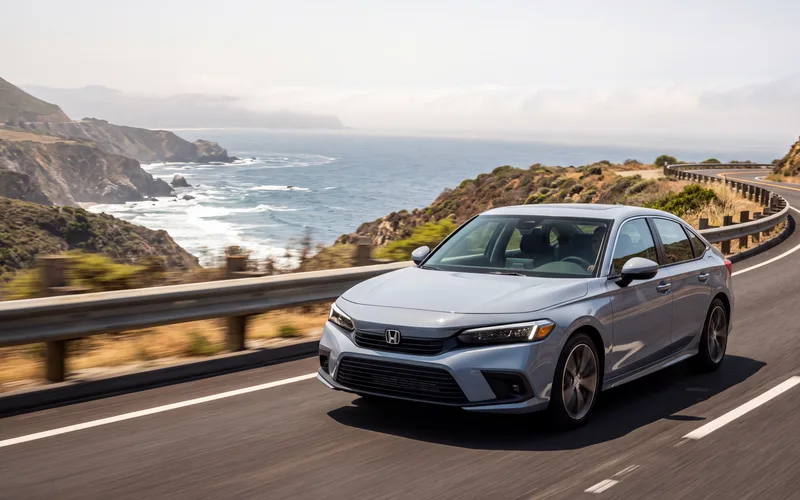 Honda CivicCompact SedanBetter at: Practicality
It delivers most of what makes the Mazda3 appealing while adding a usable back seat, a bigger trunk, a high-40s-MPG hybrid and the segment's best resale value.
Compare 2.40C+
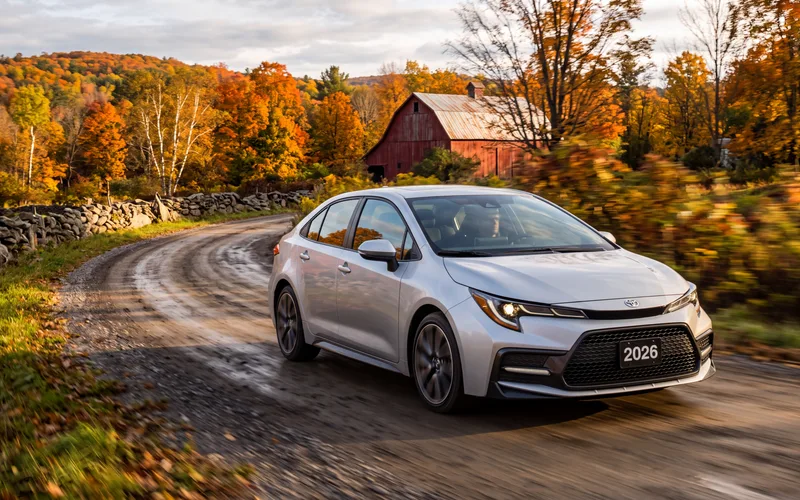 Toyota CorollaCompact SedanBetter at: Ownership cost
Lower running costs across the board — a hybrid near 50 MPG, top-of-class predicted reliability and more than twice as many dealers for service.
Compare 2.13C
2.13C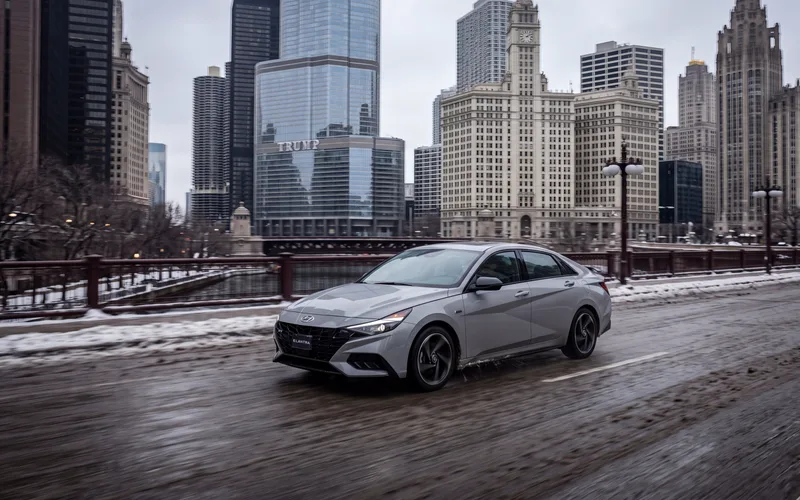 Hyundai ElantraCompact SedanBetter at: Space and warranty
Nearly three more inches of rear legroom, more standard tech, and a 10-year/100,000-mile powertrain warranty for similar money.
CompareHow it's evolved
10 scored model years · 2017–2026
Subject scores by year
Hover or tap a score to see what moved it versus the year before. A corner mark flags a big swing.
| Year | Performance | Efficiency | Safety | Space | Cost | Reliability | Tech | Use-case | Driving | Value |
|---|---|---|---|---|---|---|---|---|---|---|
| 2026 | 44 | 55 | 75 | 59 | 71 | 80 | 63 | 47 | 76 | 72 |
| 2025 | 43 | 51 | 77 | 58 | 69 | 80 | 51 | 46 | 77 | 70 |
| 2024 | 41 | 51 | 77 | 58 | 69 | 78 | 52 | 49 | 77 | 71 |
| 2023 | 43 | 52 | 73 | 59 | 70 | 80 | 52 | 46 | 76 | 71 |
| 2022 | 43 | 48 | 75 | 59 | 71 | 80 | 51 | 46 | 78 | 69 |
| 2021 | 44 | 48 | 75 | 59 | 73 | 73 | 51 | 47 | 78 | 73 |
| 2020 | 39 | 48 | 74 | 58 | 71 | 73 | 47 | 46 | 77 | 72 |
| 2019 | 39 | 48 | 70 | 59 | 70 | 66 | 49 | 49 | 77 | 67 |
| 2018 | 36 | 48 | 59 | 59 | 76 | 75 | 34 | 45 | 77 | 65 |
| 2017 | 29 | 55 | 61 | 59 | 77 | 82 | 37 | 46 | 79 | 71 |
Compare two years
Best fit & conditions
Higher scores mean a better fit for that use case. Learn more about use-case fit →
Subject profile
Trims & configurations
5 trimsScores above reflect the volume trim. Per-trim specs and scores are rolling out — the full lineup:
Academic Probation · NHTSA safety recalls
No NHTSA safety recall is on record for the 2026 Mazda Mazda3. Other model years of the Mazda3 have 15 — listed below.
15 recalls on other model years of the Mazda3 (2017–2021, 2024–2025)
May 29, 2025Air bags: air bag/restraint control module: softwareThe Sophisticated Air Bag Sensor (SAS) units may set an error code and deactivate the air bags, due to a low battery condition.
Defect
Mazda North American Operations is recalling certain 2024-2025 Mazda3 and CX30 vehicles. The Sophisticated Air Bag Sensor (SAS) units may set an error code and deactivate the air bags, due to a low battery condition.
Risk
Air bags that do not deploy in the event of a crash increase the risk of injury.
Remedy
Dealers will reprogram the SAS unit with improved software or replace the unit, free of charge. Owner notification letters were mailed July 24, 2025. Mazda's number for this recall is 7525E.
NHTSA campaign 25V357000 ↗Manufacturer no. 7525E171,412 vehicles potentially affected (all models in the campaign)Owners notified Jul 22, 2025Filed by Mazda North American OperationsFiled as MAZDA3Sep 3, 2024Exterior lighting: headlights · Forward collision avoidance: automatic emergency braking · Lane departure: sensing system: cameraA malfunction in the forward sensing camera (FSC) may prevent the automatic emergency braking system and the lane-keep assist system from functioning. In addition, the headlights will not automatically adjust from high beams to low beams as intended.
Defect
Mazda North American Operations (Mazda) is recalling certain 2024 Mazda 3, CX-30, and 2025 CX-50 vehicles. A malfunction in the forward sensing camera (FSC) may prevent the automatic emergency braking system and the lane-keep assist system from functioning. In addition, the headlights will not automatically adjust from high beams to low beams as intended.
Risk
Automatic braking, steering assist, and headlight control systems that do not function as intended can increase the risk of a crash.
Remedy
Dealers will inspect and replace the forward sensing camera as necessary, free of charge. Owner notification letters were mailed September 24, 2024. Owners may contact Mazda customer service at 1-800-222-5500, Option 6. Mazda's number for this recall is 6824H.
NHTSA campaign 24V649000 ↗Manufacturer no. 6824H672 vehicles potentially affected (all models in the campaign)Owners notified Sep 24, 2024Filed by Mazda North American OperationsFiled as MAZDA3Oct 26, 2023Back over prevention: sensing system: camera · Forward collision avoidance: sensing system: camera · Lane departure: sensing system: cameraDue to a software error, the rearview, front, and/or side camera images may not appear on the display. As such, these vehicles fail to comply with the requirements of Federal Motor Vehicle Safety Standard number 111, "Rear Visibility."
Defect
Mazda North American Operations (Mazda) is recalling certain 2024 CX-90 and MAZDA3 vehicles. Due to a software error, the rearview, front, and/or side camera images may not appear on the display. As such, these vehicles fail to comply with the requirements of Federal Motor Vehicle Safety Standard number 111, "Rear Visibility."
Risk
A camera that does not display an image can reduce the driver's view, increasing the risk of a crash or injury.
Remedy
Dealers will update the view monitor control module software, free of charge. Owner notification letters were mailed December 20, 2023. Owners may contact Mazda customer service at 1-800-222-5500 Option 6. Mazda's number for this recall is 6223J.
NHTSA campaign 23V718000 ↗Manufacturer no. 6223J11,903 vehicles potentially affected (all models in the campaign)Owners notified Dec 20, 2023Filed by Mazda North American OperationsFiled as MAZDA3Jul 14, 2023Back over prevention: sensing system: cameraThe rearview camera image may not display properly by showing a flickering or distorted image.
Defect
Mazda North American Operations (Mazda) is recalling certain 2014-2018 Mazda3 and 2016-2021 CX-3 vehicles. The rearview camera image may not display properly by showing a flickering or distorted image.
Risk
A rearview camera that does not display properly can reduce the driver's rear view, increasing the risk of a crash or injury.
Remedy
Dealers will inspect and replace the rearview camera, as necessary. In addition, dealers will install a wiring harness fastening seal. All repairs will be performed free of charge. Interim notification letters, notifying owners of the safety risk, were mailed September 13, 2023. Final owner letters for affected models and model years in the states of CT, MA, MD, NJ, NY, PA and VA were mailed August 14, 2024. The remaining owner notification letters will be mailed at a future date, anticipated on or before May 1, 2025. Owners may contact Mazda customer service at 1-800-222-5500, Option 6. Mazda's number for this recall is 6023G.
NHTSA campaign 23V487000 ↗Manufacturer no. 6023G236,100 vehicles potentially affected (all models in the campaign)Owners notified Aug 14, 2024Filed by Mazda North American OperationsFiled as MAZDA3Nov 12, 2021Fuel system, gasoline: delivery: fuel pumpThe impeller inside the low-pressure fuel pump may crack and deform, potentially causing the fuel pump to fail.
Defect
Mazda North American Operations (Mazda) is recalling certain 2018 Mazda3, Mazda6, 2019 CX-3, 2018-2019 MX-5, CX-5, CX-9, and 2019-2020 Mazda2 vehicles. The impeller inside the low-pressure fuel pump may crack and deform, potentially causing the fuel pump to fail.
Risk
Fuel pump failure may cause an engine stall, increasing the risk of a crash.
Remedy
Dealers will replace the fuel pumps, free of charge. Owner notification letters were mailed July 18, 2022. Owners may contact Mazda customer service at 1-800-222-5500 Option 4. Mazda's number for this recall is 5321K.
NHTSA campaign 21V875000 ↗Manufacturer no. 5321K121,038 vehicles potentially affected (all models in the campaign)Owners notified Jul 18, 2022Filed by Mazda North American OperationsFiled as MAZDA3Feb 22, 2021Tires: valveAir may suddenly leak from the tire air valve.
Defect
Mazda North American Operations (Mazda) is recalling certain 2021 Mazda3 and CX-30 vehicles. Air may suddenly leak from the tire air valve.
Risk
A sudden air leak from the tire air valve may cause a loss of vehicle control while driving, increasing the risk of a crash.
Remedy
Mazda will notify owners, and dealers will replace all four tire air valves with new parts, free of charge. The recall began April 6, 2021. Owners may contact Mazda customer service at 1-800-222-5500 Option 4. Mazda's number for this recall is 4721B.
NHTSA campaign 21V101000 ↗Manufacturer no. 4721B599 vehicles potentially affected (all models in the campaign)Owners notified Apr 6, 2021Filed by Mazda North American OperationsFiled as MAZDA3Jun 12, 2020Service brakes, hydraulic: foundation components: disc: caliperThe front brake caliper mounting bolts may not have been tightened properly during assembly, possibly allowing the calipers to loosen.
Defect
Mazda North American Operations (Mazda) is recalling certain 2020 CX-30 and Mazda3 vehicles. The front brake caliper mounting bolts may not have been tightened properly during assembly, possibly allowing the calipers to loosen.
Risk
Loose brake calipers can reduce braking performance or interfere with wheel rotation, affecting vehicle handling. Either of these scenarios can increase the risk of a crash.
Remedy
Mazda will notify owners, and dealers will inspect the front brake caliper bolts, tightening them as necessary. If bolts are missing, the affected brake caliper will be replaced. Repairs will be performed free of charge. The recall began July 24, 2020. Owners may contact Mazda customer service at 1-800-222-5500, Option 4. Mazda's number for this recall is 4420F.
NHTSA campaign 20V346000 ↗Manufacturer no. 4420F24,037 vehicles potentially affected (all models in the campaign)Owners notified Jul 24, 2020Filed by Mazda North American OperationsFiled as MAZDA3Dec 19, 2019Forward collision avoidance: automatic emergency brakingThe Smart Brake System (SBS) can falsely detect an obstacle while driving, activating the automatic emergency braking system and suddenly stopping the vehicle.
Defect
Mazda North American Operations (Mazda) is recalling certain 2019-2020 Mazda3 vehicles. The Smart Brake System (SBS) can falsely detect an obstacle while driving, activating the automatic emergency braking system and suddenly stopping the vehicle.
Risk
Stopping the vehicle unexpectedly increases the risk of a crash.
Remedy
Mazda will notify owners, and dealers will update the SBS software. In addition, vehicles with certain production dates will receive an instrument cluster software update or replacement and a replacement owner's manual. These repairs will be performed free of charge. The recall began February 14, 2020. Owners may contact Mazda customer service at 1-800-222-5500, Option 4. Mazda's number for this recall is 4219L.
NHTSA campaign 19V907000 ↗Manufacturer no. 4219L35,390 vehicles potentially affected (all models in the campaign)Owners notified Feb 14, 2020Filed by Mazda North American OperationsFiled as MAZDA3Jul 29, 2019Visibility: glass, side/rearThe adhesive between the interior rearview mirror and the housing may not be properly bonded, allowing the mirror to detach from the housing. Note: Vehicles equipped with auto dimming mirrors are not affected by this recall.
Defect
Mazda North American Operations (Mazda) is recalling certain 2019 Mazda3 vehicles equipped with manual dimming mirrors. The adhesive between the interior rearview mirror and the housing may not be properly bonded, allowing the mirror to detach from the housing. Note: Vehicles equipped with auto dimming mirrors are not affected by this recall.
Risk
Rearward visibility will be reduced without the rearview mirror, increasing the risk of a crash.
Remedy
Mazda will notify owners, and dealers will replace the interior rearview mirror assembly, free of charge. The recall began September 19, 2019. Owners may contact Mazda customer service at 1-800-222-5500, option 4. Mazda's number for this recall is 3919G.
NHTSA campaign 19V558000 ↗Manufacturer no. 3919G22,571 vehicles potentially affected (all models in the campaign)Owners notified Sep 19, 2019Filed by Mazda North American OperationsFiled as MAZDA3Jul 5, 2019Seats: front assembly: head restraintThe seat cover material on both front seats may interfere with the head restraint lock release button, causing it to stick in the release position and not allow the head restraint to lock into place.
Defect
Mazda North American Operations (Mazda) is recalling certain 2019 Mazda3 vehicles. The seat cover material on both front seats may interfere with the head restraint lock release button, causing it to stick in the release position and not allow the head restraint to lock into place.
Risk
Loose head restraints may increase the risk of injury in the event of a crash.
Remedy
Mazda will notify owners, and dealers will install spacers at the bottom of the lock release buttons on both front seat head restraints, free of charge. The recall began August 20, 2019. Owners may contact Mazda customer service at 1-800-222-5500, option 4. Mazda's number for this recall is 3819F.
NHTSA campaign 19V514000 ↗Manufacturer no. 3819F9,430 vehicles potentially affected (all models in the campaign)Owners notified Aug 20, 2019Filed by Mazda North American OperationsFiled as MAZDA3Jun 27, 2019Engine · Power train: automatic transmission: control module (tcm/pcm/tecm)A software error in the powertrain control module (PCM) may cause the engine to stall.
Defect
Mazda North American Operations (Mazda) is recalling certain 2018-2019 CX-5, Mazda6, and 2019 Mazda3 vehicles. A software error in the powertrain control module (PCM) may cause the engine to stall.
Risk
An unexpected stall increases the risk of a crash.
Remedy
Mazda will notify owners, and dealers will reprogram the PCM software, free of charge. The recall began August 20, 2019. Owners may contact Mazda customer service at 1-800-222-5500, option 4. Mazda's number for this recall is 3719F.
NHTSA campaign 19V497000 ↗Manufacturer no. 3719F262,220 vehicles potentially affected (all models in the campaign)Owners notified Aug 20, 2019Filed by Mazda North American OperationsFiled as MAZDA3Jun 7, 2019Wheels: lugs/nuts/bolts/studsThe lug nuts on all four wheels may loosen, potentially resulting in a wheel detaching from the vehicle.
Defect
Mazda North American Operations (Mazda) is recalling certain 2019 Mazda3 vehicles. The lug nuts on all four wheels may loosen, potentially resulting in a wheel detaching from the vehicle.
Risk
A wheel separating from the vehicle increases the risk of a crash.
Remedy
Mazda will notify owners, and dealers will tighten the front and rear wheel lug nuts to the correct specification, free of charge. The recall began July 9, 2019. Owners may contact Mazda customer service at 1-800-222-5500, Option 4. Mazda's number for this recall is 3519F.
NHTSA campaign 19V425000 ↗Manufacturer no. 3519F25,003 vehicles potentially affected (all models in the campaign)Owners notified Jul 9, 2019Filed by Mazda North American OperationsFiled as MAZDA3May 14, 2019Electrical system: instrument cluster/panel · Seat belts: front: warning light/devicesDue to incorrect programing, the passenger air bag deactivation indicator light may erroneously turn off although the passenger air bag is deactivated. In addition, the seat belt status indicators for both the front passenger seat and/or rear seats may erroneously turn off although the front passenger and/or rear seat belts are unfastened.
Defect
Mazda North American Operations (Mazda) is recalling certain 2019 Mazda3 vehicles. Due to incorrect programing, the passenger air bag deactivation indicator light may erroneously turn off although the passenger air bag is deactivated. In addition, the seat belt status indicators for both the front passenger seat and/or rear seats may erroneously turn off although the front passenger and/or rear seat belts are unfastened.
Risk
Incorrect indicator warning lights may lead the driver and/or passengers to be unaware of deactivated air bags or unfastened seat belts, increasing the risk of injury.
Remedy
Mazda will notify owners, and dealers will replace the passenger air bag/seat belt status indicator assembly, free of charge. The recall began July 9, 2019. Owners may contact Mazda customer service at 1-800-222-5500, Option 4. Mazda's number for this recall is 3319E.
NHTSA campaign 19V363000 ↗Manufacturer no. 3319E17,016 vehicles potentially affected (all models in the campaign)Owners notified Jul 9, 2019Filed by Mazda North American OperationsFiled as MAZDA3Apr 4, 2019Visibility: windshield wiper/washerA defective windshield wiper relay may cause the windshield wipers to become inoperative, reducing the driver's visibility.
Defect
Mazda North American Operations (Mazda) is recalling certain 2016-2018 Mazda3 vehicles. A defective windshield wiper relay may cause the windshield wipers to become inoperative, reducing the driver's visibility.
Risk
Reduced visibility while driving can increase the risk of crash.
Remedy
Mazda will notify owners, and dealers will replace the front body control module with a new module which uses an improved wiper relay design, free of charge. The recall began May 7, 2019. Owners may contact Mazda customer service at 1-800-222-5500, option 4. Mazda's number for this recall is 3219D.
NHTSA campaign 19V272000 ↗Manufacturer no. 3219D187,880 vehicles potentially affected (all models in the campaign)Owners notified May 7, 2019Filed by Mazda North American OperationsFiled as MAZDA3Nov 21, 2017Engine and engine cooling: exhaust systemThe incorrect exhaust valve spring may fail while driving, potentially causing an engine stall.
Defect
Mazda North American Operations (Mazda) is recalling certain 2018 Mazda3 vehicles, equipped with an incorrect exhaust valve spring. The incorrect exhaust valve spring may fail while driving, potentially causing an engine stall.
Risk
An engine stall can increase the risk of a crash.
Remedy
Mazda will notify owners, and dealers will inspect the engines and replace any incorrect exhaust valve springs, free of charge. The recall is expected to begin January 20, 2018. Owners may contact Mazda customer service at 1-800-222-5500. Mazda's number for this recall is 1717K.
NHTSA campaign 17V745000 ↗Manufacturer no. 1717K144 vehicles potentially affected (all models in the campaign)Owners notified Jan 22, 2018Filed by Mazda North American OperationsFiled as MAZDA3
Source: NHTSA Office of Defects Investigation recall database, model years 2017–2026. Recalls are listed by model year as the manufacturer filed them; whether a specific car is affected depends on its VIN — check a VIN at nhtsa.gov ↗. NHTSA model names matched to this page: MAZDA3.
Detailed scoring by subject
1Performance & PowertrainThe Mazda3's lowest-graded category.0.95F
The volume Mazda3 sedan trims (2.5 S / S Select Sport / S Preferred) run the naturally aspirated 2.5L Skyactiv-G at 191 hp, well clear of the Civic's 150 hp and Corolla's 169 hp base engines; the optional 2.5 Turbo lifts the range top to 250 hp on premium fuel.
The NA 2.5 delivers 186 lb-ft at a high-ish 4,000 rpm — adequate and notably stronger than the Civic's 133 lb-ft, but ordinary against the segment's turbo entries. The 2.5 Turbo's 320 lb-ft at 2,500 rpm is the real standout figure in the compact class.
Instrumented tests of the naturally aspirated front-drive sedan cluster around 7.0 seconds — comfortably quicker than a Civic Sport (~8.2 s) or a Corolla, and among the better naturally aspirated compact sedans. The 2.5 Turbo AWD is a different car entirely at roughly 5.6 seconds.
The Skyactiv-G 2.5 is linear and lag-free with genuinely progressive throttle calibration — reviewers routinely call it one of the more satisfying naturally aspirated fours left in the class — but it needs revs to deliver and turns vocal near redline, and there is no hybrid variant to lift the lineup's refinement ceiling the way the Civic's two-motor system does.
Mazda's 6-speed Skyactiv-Drive torque-converter automatic is a class standout: quick, decisive, well-timed shifts that hold gears sensibly and never hunt, and a manual mode that actually obeys. It gives up ratios to rivals' 8-speeds and CVTs — which costs some highway efficiency — and the sedan is automatic-only, the 6-speed manual having been a hatchback-only offering.
i-Activ AWD is optional across the mid and upper 2.5 S trims and standard on the 2.5 Turbo — a genuine rarity in the compact sedan class, where the Civic, Corolla, Elantra, K4 and Sentra are all front-drive only. Operation is basic road-biased AWD with predictive traction management and G-Vectoring Control Plus, with no low range, locker or terrain modes, and it is not offered on the cheapest trim, which keeps this out of the top band.
Two distinct gas engines — the 191 hp NA 2.5 and the 250 hp turbocharged 2.5 — cover economy and performance buyers reasonably well, but there is no hybrid, plug-in or electric option anywhere in the Mazda3 range. That is an increasingly conspicuous gap for 2026, when Civic, Corolla and Elantra all sell hybrid variants of their compact sedans.
2Efficiency & RangeOne of the Mazda3's weakest categories.1.68D
The naturally aspirated 2.5L FWD volume trim returns 31 MPG combined, near the bottom of the compact-sedan field because Mazda pairs a conventional 6-speed automatic with a comparatively heavy chassis and offers no hybrid. Figure carried forward from the unchanged 4th-generation (BP) powertrain.
City economy is the Mazda3's weakest efficiency figure — without hybrid assist it gives up 7-14 MPG in town to the hybrid-equipped Civic, Corolla and Elantra.
Highway is the Mazda3's best showing — tall gearing and cylinder deactivation on the 2.5L lift it to 37 MPG, mid-pack for a non-hybrid compact sedan though short of the Jetta's 40+.
A 13.2-gallon tank on the FWD sedan and 31 MPG combined yield roughly 409 miles — usable but unremarkable, since the small tank cancels much of the highway-economy advantage. AWD models drop to a 12.7-gallon tank.
Roughly 477 gallons a year at EPA's 15,000-mile 55/45 city-highway split, and the volume trim's tolerance for regular unleaded keeps the bill moderate despite mediocre MPG. The turbo run on premium costs meaningfully more.
The volume 2.5L naturally aspirated engine runs on regular 87 octane with no premium recommendation, and there are no charging, diesel, or DEF complications. Only the 2.5 Turbo carries a caveat, and even it runs on regular — premium simply unlocks full output rather than being required.
3SafetyOne of the Mazda3's strongest categories.3.12B
The fourth-generation (BP) Mazda3 sedan has carried a 5-star NHTSA overall vehicle score since its 2019 launch, and the 2026 car is a structurally unchanged continuation of that generation. Scored on the volume 2.5 S Select Sport FWD sedan.
The Mazda3 sedan has been one of the most decorated compact cars at IIHS, taking Top Safety Pick+ under successively tougher criteria with Good results in small overlap front, roof strength and head restraints, and holding up in the updated side and updated moderate overlap (rear-passenger) tests that knocked several rivals off the award list.
Mazda i-Activsense is standard across the entire Mazda3 line, including the base 2.5 S: Smart Brake Support (AEB with pedestrian detection), Mazda Radar Cruise Control with Stop & Go, Lane Departure Warning, Lane-keep Assist, Blind Spot Monitoring, Rear Cross Traffic Alert, Driver Attention Alert and High Beam Control. Making BSM and RCTA standard on the cheapest trim is the differentiator — Civic and several rivals still gate those behind mid-trims.
Smart Brake Support with pedestrian detection has rated Superior in IIHS vehicle-to-vehicle front crash prevention, and daytime pedestrian performance is solid. The reservation is the harder current-era front crash prevention evaluation, which tests at higher closing speeds and at night — where Mazda's radar-and-camera system is not a known class leader.
Blind Spot Monitoring and Rear Cross Traffic Alert are standard on every trim including the base car, which is above par for a compact sedan. It stays out of the top band because coverage on the volume trim is alert-only — rear Smart Brake Support (active cross-traffic braking), Front Cross Traffic Alert and the 360-degree View Monitor are reserved for upper trims.
Lane Departure Warning and Lane-keep Assist are standard, but Mazda's LKA is a corrective nudge system rather than a true centering assist, and reviewers commonly describe it as reactive at the lane edge. Genuine lane centering arrives only as low-speed Traffic Jam Assist on upper trims, so the volume trim lacks the sustained highway centering rivals now offer.
Mazda Radar Cruise Control with Stop & Go is standard on all trims and is a full-speed-range system that reviewers rate as smooth and natural in its braking and gap management — a genuine strength. It falls short of the top band because there is no integrated highway-assist mode pairing it with sustained lane centering outside low-speed traffic.
Mazda offers no hands-free highway driving system anywhere in its US lineup — there is no equivalent of BlueCruise, Super Cruise or Highway Driving Assist on the Mazda3 at any trim or option level. Hands must remain on the wheel at all times.
LED headlights with automatic High Beam Control are standard line-wide, and headlight performance good enough to clear the IIHS award threshold on every trim is implied by the model's Top Safety Pick+ history, which requires acceptable-or-better headlights across the range. The best-rated adaptive front-lighting setup is still an upper-trim item, so the volume trim gets the lesser of the two.
Outward visibility is the Mazda3's best-known everyday-safety weakness. The style-led fourth-generation body pairs a high beltline, thick rear pillars and a shallow rear window, and reviewers consistently flag over-the-shoulder blind zones — the sedan is better than the hatchback but still below class average. Camera compensation is partial: a reversing camera is standard, but the 360-degree View Monitor that would offset it is an upper-trim item.
The Mazda3 has two sets of rear LATCH positions, but the car is packaged tight for the class — rear legroom trails the Civic, Corolla and Elantra, and the sloping roofline narrows the door aperture, which makes maneuvering a rear-facing seat awkward and squeezes the front passenger once one is installed. Anchors are workable but tend to sit recessed in the seat bight, and three-across is not realistic.
4Space & ComfortMid-pack among this car's ten categories.2.00C
The Mazda3 sedan is a conventional five-passenger compact with a three-place rear bench across every 2026 trim; no 4-seat or 6-seat configuration is offered.
Mid-pack front headroom for a compact sedan — the low, coupe-like roofline of the BP-generation car costs it against the Elantra (40.6 in) though it matches the Corolla.
Front legroom is squarely competitive and identical to the Civic and Elantra at 42.3 in, so tall drivers are well accommodated even though the rear is not.
Rear headroom lands mid-band and is roughly level with the Civic (37.1 in) and Corolla (37.1 in); the fastback-ish roofline is more of a sightline than a headroom problem in the sedan.
The Mazda3's defining packaging weakness: 35.1 in of rear legroom is several inches short of the Elantra (38.0 in) and Civic (37.4 in), leaving adults in back noticeably cramped on longer trips.
At 13.2 cu ft the trunk trails nearly every compact-sedan rival — the Civic (14.8), Elantra (14.2) and Jetta (15.8) all carry more, and only the Corolla is close.
Mazda prioritized a clean, driver-focused console over practicality: a small glovebox, a shallow covered console bin, modest door pockets and no fold-flat or underfloor tricks. A 60/40 folding rear seat and rear armrest pass-through are the only real flexibility features.
Front seats are a genuine strength — Mazda's spine-alignment seat design draws repeated praise for long-haul support and bolstering, with leather and 8-way power on upper trims. The score is held back by the cramped rear bench, where the short legroom limits adult comfort regardless of cushioning.
Body control and damping are well judged, but the torsion-beam rear axle and firm tuning make the Mazda3 busier over broken pavement and sharp impacts than the Civic or Corolla — composed and sporting rather than plush.
Isolation is the Mazda3's clearest comfort advantage in the segment — extensive sound deadening and a well-sealed body keep wind and road noise below the Civic, Elantra and Corolla, contributing to the car's near-premium impression at highway speed.
Dual-zone automatic climate control is standard on most of the range and heated front seats plus a heated steering wheel arrive from Preferred/Carbon Edition upward, but the Mazda3 sedan offers no ventilated seats, no rear climate vents and no remote pre-conditioning — a thinner feature set than the Elantra's.
5Cost of OwnershipGrades above the middle of the scale.2.79B-
Estimated 2026 base 2.5 S price carried forward from published 2025 MY pricing (2.5 S $24,150 + $1,185 destination = $25,335) with a normal single-digit MY increase; the Mazda3 sedan enters 2026 in its existing BP generation with no redesign that would reset pricing. Replaces a placeholder value.
The 2.5 S Select Sport is the volume seller — it adds blind-spot monitoring, rear cross-traffic alert and keyless entry over the base 2.5 S for roughly $1,500, and is the trim most Mazda3 sedans leave the lot in. Estimated from the 2025 trim walk plus a normal MY increase.
The naturally aspirated Skyactiv-G 2.5 is a simple, long-serving four paired with a conventional six-speed automatic — no turbo, belt-in-oil or dual-clutch complexity — so upkeep is cheap. Scored slightly above Civic and Corolla because Mazda's smaller US dealer network and parts pricing run a touch dearer than Honda/Toyota.
Mazda residuals have strengthened materially over the last decade on the back of premium-leaning interiors and a strong reliability reputation, putting the Mazda3 clearly ahead of the Elantra, K4 and Sentra but still short of the Civic and Corolla, the segment's residual benchmarks.
Mazda's New Vehicle Limited Warranty is the industry-baseline 3 years/36,000 miles — the floor of the segment band and half the term of the Hyundai/Kia coverage, a genuine ownership-cost disadvantage rather than a scoring artifact.
Mazda covers the powertrain for 5 years/60,000 miles — again the bottom of the band, matching Honda, Toyota and Nissan but half the term of the Korean 10-year/100,000-mile original-owner coverage.
Mazda does include a complimentary scheduled-maintenance plan — a real perk that partly offsets the short warranty — plus roadside assistance and a Mazda Connected Services trial. It sits just below ToyotaCare on covered mileage and well below Hyundai's 3-year/36,000-mile plan.
$27,500 volume-trim price minus its estimated resale value after 5 years (57% retained, or about $15,675) leaves about $11,825 in depreciation. Add the projected $4,200 in 5-year maintenance and repairs, and owning this vehicle for 5 years costs about $16,025 in total.
6Reliability & QualityThe Mazda3's best-graded category.3.43B+
The Mazda3 is a consistently above-average predicted-reliability pick in the compact class: Consumer Reports has rated the fourth-generation car above average, J.D. Power's model-level Quality & Reliability score sits in the low-to-mid 80s ("Great"), and RepairPal places it near the top of the compact segment. It lands just below Civic (80.2) and well below Corolla (92) because it does not win the segment outright in either major study, but clearly above Elantra (71) and K4 (71.5).
The two major studies disagree on Mazda, which caps this just under the top-5 band. Consumer Reports has repeatedly placed Mazda in the top tier of its brand predicted-reliability rankings (including a #1 finish and several top-three showings), but J.D. Power's Vehicle Dependability Study has consistently had Mazda only around mid-pack. Strong on the CR side, unremarkable on the JDP side.
The BP-generation Mazda3 has a light recall record for its age — the largest campaign touching it was the industry-wide Denso low-pressure fuel-pump impeller recall on 2019-2020 cars, which is long resolved and not a design flaw specific to this model. By 2026 the platform is in its eighth model year with no systemic powertrain, fire, or safety-system campaign, and TSB traffic skews toward infotainment and i-Activsense software rather than hardware.
Both 2026 powertrains are long-proven and, unusually for the class, neither uses a CVT or a dual-clutch. The 2.5L Skyactiv-G naturally aspirated four has been in production since 2012 with a 200,000-mile-plus reputation, and the 2.5L Skyactiv-G Turbo dates to the 2016 CX-9 with no systemic failure pattern. The Skyactiv-Drive six-speed torque-converter automatic is a genuine durability advantage over the CVTs in the Civic, Corolla, Sentra and Elantra, which is what lifts this above those rivals' powertrain marks.
This is the Mazda3's signature strength and the clearest gap over the segment: reviewers routinely describe the cabin as the best in the compact class and closer to entry-luxury than to mainstream, with broad soft-touch coverage, well-damped switchgear, and restrained trim detailing. Scored far above Corolla (66) on this item. Held short of the 90s by hard plastics in the lower door and console areas and a dark, visually plain layout on base trims.
Physical assembly is a strong point — tight, consistent panel gaps and a solid, rattle-free cabin are recurring notes across the generation from both the Hofu, Japan and Salamanca, Mexico plants. What keeps this from the high 80s is Mazda's soft showing in initial-quality surveys, where its scores are dragged down by infotainment complaints (the console-dial interface with touch disabled at speed registers as a "problem" for many owners) rather than by build defects.
Network density is the Mazda3's real ownership weakness. Mazda operates roughly 560 US dealers against about 1,200+ for Toyota and roughly 1,000 for Honda, leaving thin coverage across rural and smaller-metro markets — a buyer outside a major metro may face a materially longer drive for warranty work. Service satisfaction itself is around the mainstream average and the Retail Evolution program has improved facility quality, but coverage is what sets the score.
Running costs are genuinely low — RepairPal's average annual repair-and-maintenance estimate for the Mazda3 is around $430, below both the compact-car and all-vehicle averages, and routine wear items are normally priced. The score stays in the normal band rather than the 80+ band because Mazda's US volume is a fraction of Toyota's or Honda's, so the aftermarket catalogue is thinner and some model-specific components remain effectively dealer-only with longer lead times than a Civic or Corolla equivalent.
7Technology & InfotainmentMid-pack among this car's ten categories.2.24C
Since the 2024 refresh the fourth-generation Mazda3 carries a 10.25-inch widescreen center display standard on every trim, including the base 2.5 S, and that remains the only size offered for 2026. Replaces a placeholder value of 12.8 in, a size no Mazda3 has ever offered.
Mazda Connect is clean, quick and refreshingly physical — a rotary Commander dial, real volume knob and separate climate controls — and reviewers consistently praise it as low-distraction. The deliberate lack of touch input while driving is the recurring complaint, since it makes CarPlay and Android Auto menus slower to work through than in any rival.
Wireless Apple CarPlay and wireless Android Auto are standard on every 2026 Mazda3 trim including the base 2.5 S — better coverage than Civic (wireless only on the top hybrid) or Corolla, and a clear class strength. Held below the top band only because knob-based control of a projected phone interface blunts the benefit.
Built-in navigation is reserved for 2.5 S Preferred and above, and Mazda's voice assistant is a rigid command-list system rather than natural language, so most owners default to CarPlay or Android Auto for both search and guidance. Functional but firmly mid-pack.
The eight-speaker base system is respectable for a compact sedan, and the optional 12-speaker Bose Centerpoint system on Preferred and above is one of the better premium setups in the class. Ceiling and floor both sit above the Civic/Corolla baseline.
The Mazda3 uses a 7-inch TFT display inside an otherwise conventional gauge binnacle — fully digital rendering on upper trims, but small and only lightly configurable. There is no wide 10–12 inch cluster of the sort Elantra and K4 offer, so this is a weak spot in an otherwise strong tech suite.
Mazda has not extended meaningful over-the-air updating to the Mazda3 — infotainment and map updates are handled by dealer service or USB, and there is no whole-vehicle OTA of the kind Hyundai, Kia and Tesla now ship. This is the single weakest technology attribute on the car.
MyMazda with Mazda Connected Services covers the core set — remote start, lock/unlock, vehicle status, vehicle finder and scheduled service — on a multi-year trial that then moves to a paid subscription. There is no phone-as-key, and the app draws routine criticism for sluggish command response.
Two front USB-C ports and a wireless charging pad from the Preferred trim upward serve the driver well enough, but rear-seat passengers get no charging port at all and there is no household outlet. That rear-row gap is the main deduction.
Push-button start is standard and proximity keyless entry covers all but the entry trim, with remote start available both from the key fob on upper trims and through the MyMazda app. No phone-as-key and, as a sedan, no hands-free liftgate, so it lands solidly mid-band.
The rear camera is standard and front/rear parking sensors arrive on mid trims, with the 360-degree View Monitor confined to the Turbo trims. Camera resolution is average for the class and there is no automated parking, so this is competent rather than notable.
Mazda's windshield-projected Active Driving Display, with speed, navigation prompts and traffic-sign recognition, is fitted from the volume Select Sport trim upward — a genuine rarity in the compact class, where Civic, Corolla, Elantra, Sentra and K4 offer no head-up display at all.
8Use-Case FitOne of the Mazda3's weakest categories.1.17D
The Mazda3 sedan's 35.1 in of rear legroom is the smallest among mainstream compact sedans, so a rear-facing seat forces the front passenger well forward, and the 13.2 cu ft trunk is tight for a full-size stroller plus a grocery run. Mid-pack LATCH hardware and a low, sloping roofline make daily buckling harder than in a Civic or Corolla.
Families get the full safety proposition on the cheapest trim: NHTSA 5-star overall, IIHS Top Safety Pick+ credentials, and the complete i-Activsense bundle (AEB with pedestrian detection, blind-spot monitor, rear cross-traffic alert, radar cruise with stop & go) standard on the base 2.5 S rather than locked behind option packages.
Best-in-class cabin quietness and excellent front seats make the first row a fine place to spend a day, but the second row is the class's tightest and is unusually poorly equipped — no rear air vents and no rear USB ports — while the 13.2 cu ft trunk struggles to carry four people's luggage.
One of the more relaxing compact sedans to commute in: a conventional 6-speed automatic repeatedly praised for smooth, decisive low-speed shifts, an excellent driving position, quiet cabin and standard radar cruise with stop & go. Marked down for a firm ride over broken city pavement, poor rear three-quarter visibility, and a center display that cannot be touched while moving outside CarPlay.
Cheap to maintain and undemanding on fuel grade, but the 31 MPG combined of the volume 2.5 S FWD trails the Civic, Corolla and Elantra by roughly 4-5 MPG, which is real money over a commuting year. No hybrid option exists to close the gap.
A compact footprint keeps the Mazda3 easy to place in city traffic, but the 36.1 ft turning circle is unremarkable for the class and the thick C-pillars with a small rear window make reversing into tight spots reliant on the camera. Parking sensors and the 360-degree View Monitor are upper-trim-only, so volume buyers get the backup camera alone.
The Mazda3 sedan carries no US tow rating, has no bed or open cargo area, and offers a 13.2 cu ft sealed trunk behind a 191 hp naturally aspirated four. It is not a meaningfully work-capable vehicle by any measure this item evaluates.
The mechanical package is genuinely proven — the Skyactiv-G 2.5 has been in continuous production since 2012 and Mazda rates above average for predicted reliability — but nothing about the car is built for work abuse: no fleet or trades presence, no wear-friendly interior specification, carpeted trunk, and low ground clearance.
There is essentially no work-oriented provision: no onboard AC power or inverter, no bed or tie-down system beyond trunk bag hooks, no factory roof rails or hitch, and no upfit ecosystem for a compact sedan.
A better mile-eater than most compact sedans thanks to class-leading noise isolation, strongly praised front seats, a standard head-up display from Select Sport upward, and roughly 400 miles of range. Held back by a firm ride on coarse interstate surfaces, no true lane centering above low speeds, and a rear seat and trunk that limit four-up touring.
Available i-Activ AWD is a real class differentiator that makes gravel roads and snowy trailheads a non-event, but everything else is pavement-bound: roughly 5.5 in of ground clearance, no tow rating for a small trailer, no factory roof rails for a box or bike carrier, and no cargo-area power.
The sedan's 13.2 cu ft trunk is small even by compact-sedan standards, and while the 60/40 rear seatbacks fold for long items, a sealed trunk aperture, no roof rails, no hitch and no underfloor storage leave bulky gear with nowhere to go. Buyers who need this should look at the Mazda3 hatchback's 20.1 cu ft.
9Driving ExperienceOne of the Mazda3's strongest categories.3.17B
The fourth-generation (BP) Mazda3 is the dynamic benchmark of the mainstream compact sedan class — tightly controlled body motions, a planted, premium-feeling chassis, and G-Vectoring Control Plus smoothing weight transfer mid-corner. It lands above the Civic on composure and polish but stops short of the 80+ band because the torsion-beam rear axle and modest all-season grip on the volume 2.5 S limit ultimate cornering bite versus multi-link sport sedans.
Steering is the Mazda3's signature strength and the clearest reason it out-drives its class: quick, linear off-center, naturally weighted, and more communicative than any mainstream compact rival — closer to entry-luxury calibration than to Civic, Corolla, Elantra, or Jetta.
Pedal feel is firm, progressive and easy to modulate — a consistent Mazda trait and better than the soft, long-travel pedals common in the segment. Instrumented 70-0 mph stops on the volume trim's all-season tires are competitive rather than class-leading, so it sits in the upper half of the adequate band rather than the 80+ band.
The Mazda3 is one of the last compact sedans with a conventional six-speed torque-converter automatic instead of a CVT, and it is a real drivability advantage — crisp, well-timed shifts, honest tip-in, no rubber-band effect under load. The 2.5L Skyactiv-G on the volume trim is linear and vibration-free but unremarkable in output, and i-stop restarts are occasionally noticeable, keeping it just below the impeccable band.
The geared automatic eliminates the CVT drone that penalizes most of the segment, and the fourth generation added substantial sound insulation as part of Mazda's premium NVH push, so the four-cylinder stays smooth and unobtrusive at cruise. It gets audibly buzzy near redline because the naturally aspirated 2.5 has to be revved to make progress, so it is inoffensive rather than pleasant.
Mazda publishes a curb-to-curb turning diameter of roughly 36.1 ft for the Mazda3 sedan on 18-inch wheels — the fitment on Preferred and higher trims that make up most sales — and about 34.8 ft on the base 16-inch wheel. Mid-pack for a compact sedan and slightly tighter than the Civic's volume-trim 37.4 ft.
A genuinely driver-centric cockpit: low cowl, supportive well-shaped seat, generous tilt-and-telescope range, retained physical climate controls, and a rotary commander that keeps eyes up. It is marked down from the previous placeholder because the high beltline and thick rear pillars compromise over-the-shoulder visibility, and the console dial is the only way to work infotainment while moving, which frustrates some drivers.
The Mazda3 is the enthusiast's default recommendation in a segment of appliances — the steering and chassis reward deliberate driving and it is the compact sedan people take the long way home in. The volume naturally aspirated 2.5 is satisfying rather than thrilling, though; the 250-hp AWD Turbo is where the genuine speed lives, so the volume-trim score sits at the top of the pleasant band rather than in the 80s.
10Value & Market PositionGrades above the middle of the scale.2.90B-
The base 2.5 S is unusually well equipped for roughly $26,000: the 10.25-inch center display and wireless Apple CarPlay/Android Auto are standard on every trim (Civic LX still ships a 7-inch screen with wired mirroring), and the full i-Activsense suite — Smart Brake Support, radar cruise with stop-and-go, lane departure warning and lane-keep assist, blind-spot monitoring with rear cross-traffic alert, driver attention alert and high-beam control — is standard line-wide, plus LED headlights and push-button start. Held out of the top band because heated seats, keyless entry, the head-up display, wireless charging and built-in navigation all still require Select Sport or Preferred.
The Mazda3's value case is qualitative and genuinely strong: a cabin reviewers routinely call the best in the compact class (scored 88 on interior materials in cat6), 191 hp standard against the Civic's 150 and Corolla's 169, a torque-converter automatic instead of a CVT, and i-Activ AWD availability no direct rival offers — all at mainstream compact pricing. It is not a bargain leader, though, because the things buyers measure on a spec sheet go the other way: no hybrid variant when Civic, Corolla and Elantra hybrids return high-40s MPG for similar money, the smallest trunk and tightest rear seat in the class, and an industry-floor 3-year/36,000-mile warranty.
Five sedan trims spanning roughly $26,000 to $36,000, two distinct engines (191 hp naturally aspirated 2.5 and 250 hp 2.5 Turbo), and optional i-Activ AWD across the mid and upper 2.5 S trims with AWD standard on the Turbo — a wider spread and more drivetrain choice than any front-drive-only compact rival. The gaps are electrification and transmission: no hybrid, plug-in or EV anywhere in the range, and no manual on the sedan (it was a hatchback-only offering before being dropped).
The Mazda3 is a steady but distinctly second-tier seller: US volume across sedan and hatchback has run in the low-to-mid 60,000s annually in recent years, roughly a quarter of the Corolla's and Civic's totals and below the Elantra, Sentra and K4. It is not collapsing — Mazda's overall US business has been setting records on CX-crossover volume, which keeps brand showroom traffic healthy — but the Mazda3 itself is a niche choice in a shrinking segment rather than a market force.
Mazda punches far above its volume on image — a decade of premium-leaning design and interiors has given it the strongest aspirational pull of any mainstream Japanese brand short of Toyota's durability halo, it has repeatedly finished at or near the top of Consumer Reports' brand rankings, and it retains real enthusiast affection as the driver's-choice alternative in an appliance segment. It falls short of the top band because the brand is small, awareness is thinner outside major metros, and residuals still trail Toyota and Honda.
Because the Mazda3 sells in modest numbers against the segment giants there is real negotiating room, and Mazda regularly runs subvented APR and advertised lease programs on it — buyers do not face the at-or-above-MSRP wall that greets Civic shoppers. It stops short of the top band because Mazda is not a heavy-cash-on-the-hood brand: incentives are regional and moderate rather than the broad discounting Hyundai, Kia and Nissan use, and Mazda's recent US sales strength has kept inventory reasonably disciplined.
2026 is the eighth model year of the fourth-generation (BP) Mazda3, which arrived as a 2019 US model — an old car by compact-class standards, on a platform whose naturally aspirated and turbo Skyactiv-G engines predate every rival's newest powertrain and which offers no electrified variant. A 2024 content update (10.25-inch display standardized, trim and equipment reshuffle) keeps the cabin tech from feeling stale, and 2026 brings no redesign, so buyers are shopping the back half of a generation with a replacement expected on Mazda's next compact architecture rather than a fresh car.
The Mazda3 is one of the best-reviewed compact cars on sale and the standing enthusiast recommendation in the class — reviewers consistently rate its steering, chassis and interior as the segment's best, it took Car and Driver 10Best honors early in this generation, and it has held IIHS Top Safety Pick+ status. It sits at the top of the middle band rather than in the 80+ band because it is frequently the critics' favorite without being the comparison-test winner: the class-trailing rear seat and 13-cubic-foot trunk, the absent hybrid option, and the touch-disabled rotary infotainment repeatedly cost it head-to-head verdicts against the Civic.