

The verdict
A mixed-report compact sedan, strong on reliability and held back by performance.
The 2017 Mazda3 sedan is the compact car you buy because you actually like driving. Its 2017 refresh added G-Vectoring Control and real sound-deadening work, and the steering, chassis and 6-speed automatic are still better than anything else at the price — which is why Car and Driver named it a 10Best winner for the fourth straight year. The trade-offs are concrete and permanent: 155 hp in the volume trim, 35.8 inches of rear legroom, a 12.4 cu ft trunk, front-wheel drive only, and an infotainment system with no Apple CarPlay or Android Auto from the factory. As a used buy today it's a strong bet on reliability and low running costs, provided you don't need to carry much or anyone tall in the back.
Jump to scoresStrengths
- Genuinely the best-driving compact of its era
- Reliability that holds up nine years later
- An interior a class above the sticker price
What holds it back
- 155 hp in the trim most people bought
- No CarPlay, no Android Auto, no way around it from the factory
- The back seat and trunk are the smallest concerns in the class
Top alternatives
Cars shoppers cross-shop with the Mazda Mazda3 2.44C+
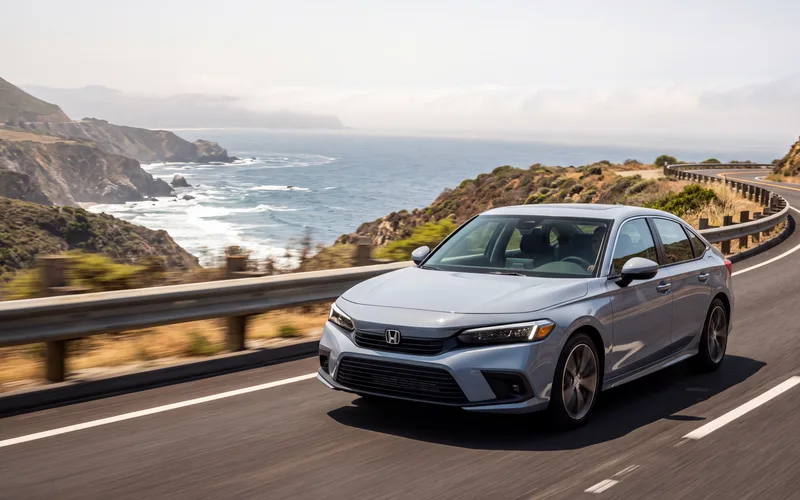 Honda CivicCompact SedanBetter at: Practicality
It delivers most of what makes the Mazda3 appealing while adding a usable back seat, a bigger trunk, a high-40s-MPG hybrid and the segment's best resale value.
Compare 2.40C+
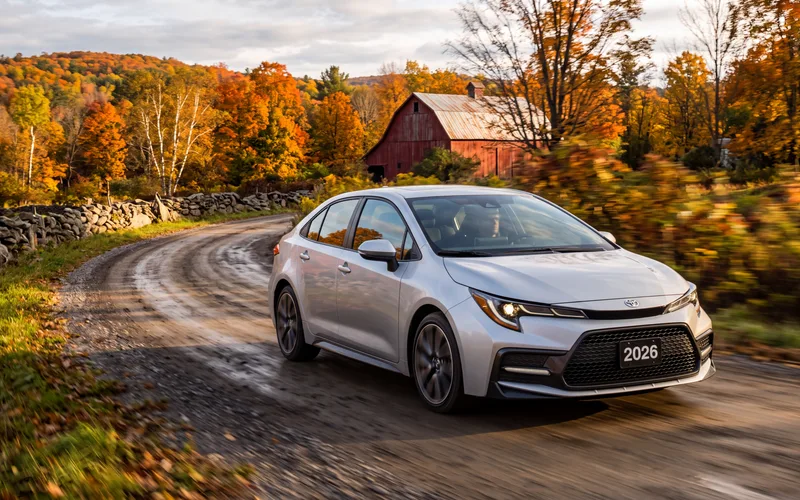 Toyota CorollaCompact SedanBetter at: Ownership cost
Lower running costs across the board — a hybrid near 50 MPG, top-of-class predicted reliability and more than twice as many dealers for service.
Compare 2.13C
2.13C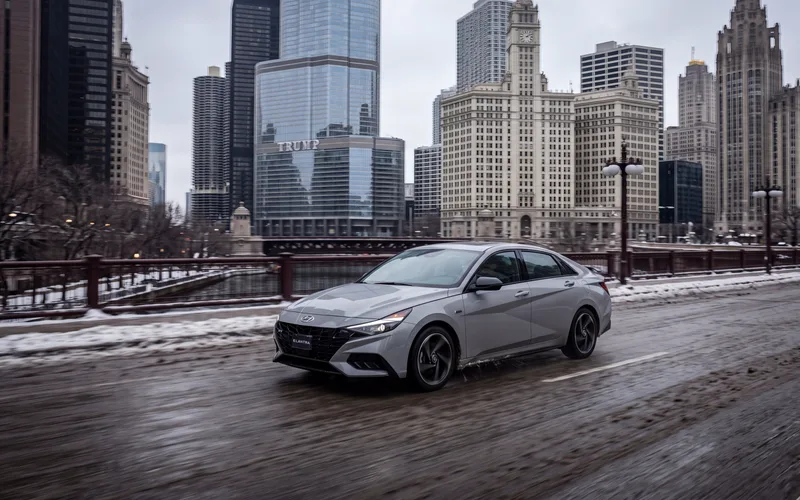 Hyundai ElantraCompact SedanBetter at: Space and warranty
Nearly three more inches of rear legroom, more standard tech, and a 10-year/100,000-mile powertrain warranty for similar money.
CompareHow it's evolved
10 scored model years · 2017–2026
Subject scores by year
Hover or tap a score to see what moved it versus the year before. A corner mark flags a big swing.
| Year | Performance | Efficiency | Safety | Space | Cost | Reliability | Tech | Use-case | Driving | Value |
|---|---|---|---|---|---|---|---|---|---|---|
| 2026 | 44 | 55 | 75 | 59 | 71 | 80 | 63 | 47 | 76 | 72 |
| 2025 | 43 | 51 | 77 | 58 | 69 | 80 | 51 | 46 | 77 | 70 |
| 2024 | 41 | 51 | 77 | 58 | 69 | 78 | 52 | 49 | 77 | 71 |
| 2023 | 43 | 52 | 73 | 59 | 70 | 80 | 52 | 46 | 76 | 71 |
| 2022 | 43 | 48 | 75 | 59 | 71 | 80 | 51 | 46 | 78 | 69 |
| 2021 | 44 | 48 | 75 | 59 | 73 | 73 | 51 | 47 | 78 | 73 |
| 2020 | 39 | 48 | 74 | 58 | 71 | 73 | 47 | 46 | 77 | 72 |
| 2019 | 39 | 48 | 70 | 59 | 70 | 66 | 49 | 49 | 77 | 67 |
| 2018 | 36 | 48 | 59 | 59 | 76 | 75 | 34 | 45 | 77 | 65 |
| 2017 | 29 | 55 | 61 | 59 | 77 | 82 | 37 | 46 | 79 | 71 |
Compare two years
Best fit & conditions
Higher scores mean a better fit for that use case. Learn more about use-case fit →
Subject profile
Trims & configurations
5 trimsScores above reflect the volume trim. Per-trim specs and scores are rolling out — the full lineup:
Academic Probation · NHTSA safety recalls
Jul 14, 2023Back over prevention: sensing system: cameraThe rearview camera image may not display properly by showing a flickering or distorted image.
Defect
Mazda North American Operations (Mazda) is recalling certain 2014-2018 Mazda3 and 2016-2021 CX-3 vehicles. The rearview camera image may not display properly by showing a flickering or distorted image.
Risk
A rearview camera that does not display properly can reduce the driver's rear view, increasing the risk of a crash or injury.
Remedy
Dealers will inspect and replace the rearview camera, as necessary. In addition, dealers will install a wiring harness fastening seal. All repairs will be performed free of charge. Interim notification letters, notifying owners of the safety risk, were mailed September 13, 2023. Final owner letters for affected models and model years in the states of CT, MA, MD, NJ, NY, PA and VA were mailed August 14, 2024. The remaining owner notification letters will be mailed at a future date, anticipated on or before May 1, 2025. Owners may contact Mazda customer service at 1-800-222-5500, Option 6. Mazda's number for this recall is 6023G.
NHTSA campaign 23V487000 ↗Manufacturer no. 6023G236,100 vehicles potentially affected (all models in the campaign)Owners notified Aug 14, 2024Filed by Mazda North American OperationsFiled as MAZDA3Apr 4, 2019Visibility: windshield wiper/washerA defective windshield wiper relay may cause the windshield wipers to become inoperative, reducing the driver's visibility.
Defect
Mazda North American Operations (Mazda) is recalling certain 2016-2018 Mazda3 vehicles. A defective windshield wiper relay may cause the windshield wipers to become inoperative, reducing the driver's visibility.
Risk
Reduced visibility while driving can increase the risk of crash.
Remedy
Mazda will notify owners, and dealers will replace the front body control module with a new module which uses an improved wiper relay design, free of charge. The recall began May 7, 2019. Owners may contact Mazda customer service at 1-800-222-5500, option 4. Mazda's number for this recall is 3219D.
NHTSA campaign 19V272000 ↗Manufacturer no. 3219D187,880 vehicles potentially affected (all models in the campaign)Owners notified May 7, 2019Filed by Mazda North American OperationsFiled as MAZDA3
13 recalls on other model years of the Mazda3 (2018–2021, 2024–2025)
May 29, 2025Air bags: air bag/restraint control module: softwareThe Sophisticated Air Bag Sensor (SAS) units may set an error code and deactivate the air bags, due to a low battery condition.
Defect
Mazda North American Operations is recalling certain 2024-2025 Mazda3 and CX30 vehicles. The Sophisticated Air Bag Sensor (SAS) units may set an error code and deactivate the air bags, due to a low battery condition.
Risk
Air bags that do not deploy in the event of a crash increase the risk of injury.
Remedy
Dealers will reprogram the SAS unit with improved software or replace the unit, free of charge. Owner notification letters were mailed July 24, 2025. Mazda's number for this recall is 7525E.
NHTSA campaign 25V357000 ↗Manufacturer no. 7525E171,412 vehicles potentially affected (all models in the campaign)Owners notified Jul 22, 2025Filed by Mazda North American OperationsFiled as MAZDA3Sep 3, 2024Exterior lighting: headlights · Forward collision avoidance: automatic emergency braking · Lane departure: sensing system: cameraA malfunction in the forward sensing camera (FSC) may prevent the automatic emergency braking system and the lane-keep assist system from functioning. In addition, the headlights will not automatically adjust from high beams to low beams as intended.
Defect
Mazda North American Operations (Mazda) is recalling certain 2024 Mazda 3, CX-30, and 2025 CX-50 vehicles. A malfunction in the forward sensing camera (FSC) may prevent the automatic emergency braking system and the lane-keep assist system from functioning. In addition, the headlights will not automatically adjust from high beams to low beams as intended.
Risk
Automatic braking, steering assist, and headlight control systems that do not function as intended can increase the risk of a crash.
Remedy
Dealers will inspect and replace the forward sensing camera as necessary, free of charge. Owner notification letters were mailed September 24, 2024. Owners may contact Mazda customer service at 1-800-222-5500, Option 6. Mazda's number for this recall is 6824H.
NHTSA campaign 24V649000 ↗Manufacturer no. 6824H672 vehicles potentially affected (all models in the campaign)Owners notified Sep 24, 2024Filed by Mazda North American OperationsFiled as MAZDA3Oct 26, 2023Back over prevention: sensing system: camera · Forward collision avoidance: sensing system: camera · Lane departure: sensing system: cameraDue to a software error, the rearview, front, and/or side camera images may not appear on the display. As such, these vehicles fail to comply with the requirements of Federal Motor Vehicle Safety Standard number 111, "Rear Visibility."
Defect
Mazda North American Operations (Mazda) is recalling certain 2024 CX-90 and MAZDA3 vehicles. Due to a software error, the rearview, front, and/or side camera images may not appear on the display. As such, these vehicles fail to comply with the requirements of Federal Motor Vehicle Safety Standard number 111, "Rear Visibility."
Risk
A camera that does not display an image can reduce the driver's view, increasing the risk of a crash or injury.
Remedy
Dealers will update the view monitor control module software, free of charge. Owner notification letters were mailed December 20, 2023. Owners may contact Mazda customer service at 1-800-222-5500 Option 6. Mazda's number for this recall is 6223J.
NHTSA campaign 23V718000 ↗Manufacturer no. 6223J11,903 vehicles potentially affected (all models in the campaign)Owners notified Dec 20, 2023Filed by Mazda North American OperationsFiled as MAZDA3Nov 12, 2021Fuel system, gasoline: delivery: fuel pumpThe impeller inside the low-pressure fuel pump may crack and deform, potentially causing the fuel pump to fail.
Defect
Mazda North American Operations (Mazda) is recalling certain 2018 Mazda3, Mazda6, 2019 CX-3, 2018-2019 MX-5, CX-5, CX-9, and 2019-2020 Mazda2 vehicles. The impeller inside the low-pressure fuel pump may crack and deform, potentially causing the fuel pump to fail.
Risk
Fuel pump failure may cause an engine stall, increasing the risk of a crash.
Remedy
Dealers will replace the fuel pumps, free of charge. Owner notification letters were mailed July 18, 2022. Owners may contact Mazda customer service at 1-800-222-5500 Option 4. Mazda's number for this recall is 5321K.
NHTSA campaign 21V875000 ↗Manufacturer no. 5321K121,038 vehicles potentially affected (all models in the campaign)Owners notified Jul 18, 2022Filed by Mazda North American OperationsFiled as MAZDA3Feb 22, 2021Tires: valveAir may suddenly leak from the tire air valve.
Defect
Mazda North American Operations (Mazda) is recalling certain 2021 Mazda3 and CX-30 vehicles. Air may suddenly leak from the tire air valve.
Risk
A sudden air leak from the tire air valve may cause a loss of vehicle control while driving, increasing the risk of a crash.
Remedy
Mazda will notify owners, and dealers will replace all four tire air valves with new parts, free of charge. The recall began April 6, 2021. Owners may contact Mazda customer service at 1-800-222-5500 Option 4. Mazda's number for this recall is 4721B.
NHTSA campaign 21V101000 ↗Manufacturer no. 4721B599 vehicles potentially affected (all models in the campaign)Owners notified Apr 6, 2021Filed by Mazda North American OperationsFiled as MAZDA3Jun 12, 2020Service brakes, hydraulic: foundation components: disc: caliperThe front brake caliper mounting bolts may not have been tightened properly during assembly, possibly allowing the calipers to loosen.
Defect
Mazda North American Operations (Mazda) is recalling certain 2020 CX-30 and Mazda3 vehicles. The front brake caliper mounting bolts may not have been tightened properly during assembly, possibly allowing the calipers to loosen.
Risk
Loose brake calipers can reduce braking performance or interfere with wheel rotation, affecting vehicle handling. Either of these scenarios can increase the risk of a crash.
Remedy
Mazda will notify owners, and dealers will inspect the front brake caliper bolts, tightening them as necessary. If bolts are missing, the affected brake caliper will be replaced. Repairs will be performed free of charge. The recall began July 24, 2020. Owners may contact Mazda customer service at 1-800-222-5500, Option 4. Mazda's number for this recall is 4420F.
NHTSA campaign 20V346000 ↗Manufacturer no. 4420F24,037 vehicles potentially affected (all models in the campaign)Owners notified Jul 24, 2020Filed by Mazda North American OperationsFiled as MAZDA3Dec 19, 2019Forward collision avoidance: automatic emergency brakingThe Smart Brake System (SBS) can falsely detect an obstacle while driving, activating the automatic emergency braking system and suddenly stopping the vehicle.
Defect
Mazda North American Operations (Mazda) is recalling certain 2019-2020 Mazda3 vehicles. The Smart Brake System (SBS) can falsely detect an obstacle while driving, activating the automatic emergency braking system and suddenly stopping the vehicle.
Risk
Stopping the vehicle unexpectedly increases the risk of a crash.
Remedy
Mazda will notify owners, and dealers will update the SBS software. In addition, vehicles with certain production dates will receive an instrument cluster software update or replacement and a replacement owner's manual. These repairs will be performed free of charge. The recall began February 14, 2020. Owners may contact Mazda customer service at 1-800-222-5500, Option 4. Mazda's number for this recall is 4219L.
NHTSA campaign 19V907000 ↗Manufacturer no. 4219L35,390 vehicles potentially affected (all models in the campaign)Owners notified Feb 14, 2020Filed by Mazda North American OperationsFiled as MAZDA3Jul 29, 2019Visibility: glass, side/rearThe adhesive between the interior rearview mirror and the housing may not be properly bonded, allowing the mirror to detach from the housing. Note: Vehicles equipped with auto dimming mirrors are not affected by this recall.
Defect
Mazda North American Operations (Mazda) is recalling certain 2019 Mazda3 vehicles equipped with manual dimming mirrors. The adhesive between the interior rearview mirror and the housing may not be properly bonded, allowing the mirror to detach from the housing. Note: Vehicles equipped with auto dimming mirrors are not affected by this recall.
Risk
Rearward visibility will be reduced without the rearview mirror, increasing the risk of a crash.
Remedy
Mazda will notify owners, and dealers will replace the interior rearview mirror assembly, free of charge. The recall began September 19, 2019. Owners may contact Mazda customer service at 1-800-222-5500, option 4. Mazda's number for this recall is 3919G.
NHTSA campaign 19V558000 ↗Manufacturer no. 3919G22,571 vehicles potentially affected (all models in the campaign)Owners notified Sep 19, 2019Filed by Mazda North American OperationsFiled as MAZDA3Jul 5, 2019Seats: front assembly: head restraintThe seat cover material on both front seats may interfere with the head restraint lock release button, causing it to stick in the release position and not allow the head restraint to lock into place.
Defect
Mazda North American Operations (Mazda) is recalling certain 2019 Mazda3 vehicles. The seat cover material on both front seats may interfere with the head restraint lock release button, causing it to stick in the release position and not allow the head restraint to lock into place.
Risk
Loose head restraints may increase the risk of injury in the event of a crash.
Remedy
Mazda will notify owners, and dealers will install spacers at the bottom of the lock release buttons on both front seat head restraints, free of charge. The recall began August 20, 2019. Owners may contact Mazda customer service at 1-800-222-5500, option 4. Mazda's number for this recall is 3819F.
NHTSA campaign 19V514000 ↗Manufacturer no. 3819F9,430 vehicles potentially affected (all models in the campaign)Owners notified Aug 20, 2019Filed by Mazda North American OperationsFiled as MAZDA3Jun 27, 2019Engine · Power train: automatic transmission: control module (tcm/pcm/tecm)A software error in the powertrain control module (PCM) may cause the engine to stall.
Defect
Mazda North American Operations (Mazda) is recalling certain 2018-2019 CX-5, Mazda6, and 2019 Mazda3 vehicles. A software error in the powertrain control module (PCM) may cause the engine to stall.
Risk
An unexpected stall increases the risk of a crash.
Remedy
Mazda will notify owners, and dealers will reprogram the PCM software, free of charge. The recall began August 20, 2019. Owners may contact Mazda customer service at 1-800-222-5500, option 4. Mazda's number for this recall is 3719F.
NHTSA campaign 19V497000 ↗Manufacturer no. 3719F262,220 vehicles potentially affected (all models in the campaign)Owners notified Aug 20, 2019Filed by Mazda North American OperationsFiled as MAZDA3Jun 7, 2019Wheels: lugs/nuts/bolts/studsThe lug nuts on all four wheels may loosen, potentially resulting in a wheel detaching from the vehicle.
Defect
Mazda North American Operations (Mazda) is recalling certain 2019 Mazda3 vehicles. The lug nuts on all four wheels may loosen, potentially resulting in a wheel detaching from the vehicle.
Risk
A wheel separating from the vehicle increases the risk of a crash.
Remedy
Mazda will notify owners, and dealers will tighten the front and rear wheel lug nuts to the correct specification, free of charge. The recall began July 9, 2019. Owners may contact Mazda customer service at 1-800-222-5500, Option 4. Mazda's number for this recall is 3519F.
NHTSA campaign 19V425000 ↗Manufacturer no. 3519F25,003 vehicles potentially affected (all models in the campaign)Owners notified Jul 9, 2019Filed by Mazda North American OperationsFiled as MAZDA3May 14, 2019Electrical system: instrument cluster/panel · Seat belts: front: warning light/devicesDue to incorrect programing, the passenger air bag deactivation indicator light may erroneously turn off although the passenger air bag is deactivated. In addition, the seat belt status indicators for both the front passenger seat and/or rear seats may erroneously turn off although the front passenger and/or rear seat belts are unfastened.
Defect
Mazda North American Operations (Mazda) is recalling certain 2019 Mazda3 vehicles. Due to incorrect programing, the passenger air bag deactivation indicator light may erroneously turn off although the passenger air bag is deactivated. In addition, the seat belt status indicators for both the front passenger seat and/or rear seats may erroneously turn off although the front passenger and/or rear seat belts are unfastened.
Risk
Incorrect indicator warning lights may lead the driver and/or passengers to be unaware of deactivated air bags or unfastened seat belts, increasing the risk of injury.
Remedy
Mazda will notify owners, and dealers will replace the passenger air bag/seat belt status indicator assembly, free of charge. The recall began July 9, 2019. Owners may contact Mazda customer service at 1-800-222-5500, Option 4. Mazda's number for this recall is 3319E.
NHTSA campaign 19V363000 ↗Manufacturer no. 3319E17,016 vehicles potentially affected (all models in the campaign)Owners notified Jul 9, 2019Filed by Mazda North American OperationsFiled as MAZDA3Nov 21, 2017Engine and engine cooling: exhaust systemThe incorrect exhaust valve spring may fail while driving, potentially causing an engine stall.
Defect
Mazda North American Operations (Mazda) is recalling certain 2018 Mazda3 vehicles, equipped with an incorrect exhaust valve spring. The incorrect exhaust valve spring may fail while driving, potentially causing an engine stall.
Risk
An engine stall can increase the risk of a crash.
Remedy
Mazda will notify owners, and dealers will inspect the engines and replace any incorrect exhaust valve springs, free of charge. The recall is expected to begin January 20, 2018. Owners may contact Mazda customer service at 1-800-222-5500. Mazda's number for this recall is 1717K.
NHTSA campaign 17V745000 ↗Manufacturer no. 1717K144 vehicles potentially affected (all models in the campaign)Owners notified Jan 22, 2018Filed by Mazda North American OperationsFiled as MAZDA3
Source: NHTSA Office of Defects Investigation recall database, model years 2017–2026. Recalls are listed by model year as the manufacturer filed them; whether a specific car is affected depends on its VIN — check a VIN at nhtsa.gov ↗. NHTSA model names matched to this page: MAZDA3.
Detailed scoring by subject
1Performance & PowertrainThe Mazda3's lowest-graded category.0.00F
2017 is the BN facelift of the third-generation Mazda3, and in the sedan both volume trims — Sport and Touring — carry the 155-hp 2.0L; the 184-hp 2.5L is reserved for Grand Touring (the 2.5 only became standard on Touring for 2018). 155 hp is modest even by naturally aspirated compact standards and well below the turbocharged output the class was moving toward.
150 lb-ft arriving at 4,000 rpm is the defining trait of the 13.0:1 naturally aspirated Skyactiv-G — the car has to be revved to feel quick, where turbocharged rivals were making peak twist near 2,000 rpm.
Edmunds' instrumented run of a 2.0L automatic Mazda3 sedan returned 8.3 s, which they note is quicker than average for a compact on its base engine — a light 2,967-lb curb weight doing the work that 155 hp cannot. Slow in absolute terms against the segment, and roughly a second behind the 2.5L Grand Touring.
No turbocharger means nothing to lag or surge — throttle response is linear and reviewers describe the 2.0L as accelerating "quickly and smoothly" — and 2017 specifically added acoustic work that made the car about 3 dB quieter at 25 mph over rough roads. It is held out of the top band because the 155-hp 2.0L must be worked hard to keep up and turns buzzy in the upper third of a 6,800-rpm tach.
The Skyactiv-Drive six-speed torque-converter automatic remains a genuine class advantage — quick, smooth, decisive on kickdown, and free of the drone that afflicts the CVT-equipped Civic, Corolla and Sentra — and the Skyactiv-MT six-speed manual is offered with either engine. It loses points only for carrying six ratios where rivals were fielding eight.
The 2017 Mazda3 is front-wheel drive only — no AWD at any trim, on either body style, with either engine. i-Activ AWD did not reach the Mazda3 until the fourth generation arrived for 2019, so a 2017 buyer wanting all-wheel drive had to leave the nameplate.
Two real engine choices (155-hp 2.0L, 184-hp 2.5L), each pairable with a six-speed manual or a six-speed automatic, is broad by 2017 compact standards — but every option is a naturally aspirated gasoline four differing only in displacement. No turbo, no hybrid, no plug-in, and the facelift explicitly deleted the diesel option that other markets had (the US never received it).
2Efficiency & RangeGrades below the middle of the scale.1.69D
The volume 2017 sedan is the 155-hp 2.0L with the six-speed automatic, EPA-rated 32 MPG combined — the best figure this generation posted, helped by a tall 0.599:1 sixth and 13.0:1 compression. Strong for a naturally aspirated engine with no stop-start and no electrification, though the CVT-equipped Civic and Corolla were reaching into the mid-30s.
28 MPG city for the volume 2.0L automatic. The torque-converter six-speed and high-compression direct injection do well in stop-and-go for a non-hybrid, but US-market cars get no engine stop-start and no cylinder deactivation, both of which rivals were using to push higher.
37 MPG highway is the car's strongest EPA number and the one that comes closest to the class leaders — a 0.599:1 top gear, the sedan's low drag and a 2,967-lb curb weight all working in the same direction.
EPA puts total range at 422 miles — respectable, but achieved on economy rather than tank size: 13.2 gallons is small, and compact rivals with 14-gallon-plus tanks cleared 450 miles on similar MPG. This is the weakest part of an otherwise good efficiency case.
EPA's estimate at standard assumptions for the volume 2.0L automatic sedan — cheap to run in absolute terms and better than the segment-wide average, though a hybrid compact of the same year undercuts it by roughly a third.
Regular 87-octane unleaded delivers the full rated 155 hp despite a 13.0:1 compression ratio — no premium recommendation, no plug, no special infrastructure, the cheapest and simplest arrangement a buyer can have. Held just short of the top because the 13.2-gallon tank means noticeably more frequent stops than rivals.
3SafetyMid-pack among this car's ten categories.2.09C
The 2017 Mazda3 sedan earned NHTSA's top 5-star overall rating, with 5 stars in both frontal and side crash and 4 stars for rollover resistance.
Straight Good ratings in every crashworthiness test IIHS ran on this generation, and a 2017 Top Safety Pick+ award — but the award is conditional on optional front crash prevention and specific headlights, and the passenger-side small overlap test had not yet been run on this car.
On the volume Touring trim, standard active safety is low-speed-only Smart City Brake Support plus alert-only blind-spot monitoring and rear cross-traffic alert; adaptive cruise, lane-departure warning and lane-keep assist all sit behind the $1,100 i-ACTIVSENSE package, and the base Sport trim gets no AEB at all.
As equipped on the volume trim, IIHS rated front crash prevention only Advanced — the car avoided the 12 mph collision but failed to slow at 25 mph; Superior requires the optional i-ACTIVSENSE package. Mazda's 2016 facelift added pedestrian detection but IIHS had no pedestrian or nighttime AEB program in 2017, so that capability is unverified.
Blind-spot monitoring with rear cross-traffic alert is standard on Touring and Grand Touring and optional on Sport, but it is warning-only — there is no active steering or braking intervention and no safe-exit alert.
Lane Keep Assist was new for 2017 with the facelift but is bundled into the optional i-ACTIVSENSE package on Touring and Grand Touring only; it is a corrective nudge off the lane line rather than true centering, and is entirely absent from the base trim.
Mazda Radar Cruise Control is optional rather than standard and is not a full-speed-range system — it operates only above roughly 30 mph with no stop-and-go capability in the US market, and there is no combined highway-assist mode.
No hands-free highway driving system was offered on the 2017 Mazda3 at any trim level; Mazda had no such product in 2017.
IIHS rated the standard halogen projector headlights Marginal across Sport, Touring and Grand Touring — that is the volume-trim outcome. Only a Grand Touring with the $1,600 Premium package's curve-adaptive bi-LED units earned an Acceptable rating, and that combination is what made the TSP+ award possible.
Forward and right-side sightlines are decent but the raked roofline, thick A-pillars and high rear deck of the sedan restrict the rear three-quarter view; a rearview camera is standard but there is no 360-degree camera option to compensate.
IIHS rates the LATCH hardware Acceptable and testers found the anchors easy to locate and connect with no head-restraint or seat-contour interference, but the Mazda3's tight rear legroom is the limiting factor — two seats fit, three-across does not, and bulky rear-facing seats squeeze the front passenger.
4Space & ComfortMid-pack among this car's ten categories.1.98C-
Every 2017 Mazda3 sedan trim seats five, with a 60/40 split fold-down rear seatback; the center rear position is usable but narrow.
Front headroom is a solid figure for a compact sedan on the volume Touring trim, which has no moonroof as standard; ordering the moonroof costs a full inch.
Front legroom is mid-pack for the class and reviewers found the long seat track and telescoping column accommodating for tall drivers.
Rear headroom is respectable for a compact sedan — the notchback roofline treats back-seat heads far better than the Mazda3 hatchback's fastback tail does.
The weakest dimension in the car and a well-documented one: 35.8 in trails the 2017 Civic by 1.6 in and the Corolla by 5.6 in, and a high rear hip point compounds it for taller passengers.
A 12.4 cu ft trunk is small for a compact sedan and was a consistent reviewer complaint, undercutting the Civic by 2.7 cu ft.
The 2017 refresh added a covered-cupholder console and a rear armrest with dual cupholders, but small-item storage is thin overall — shallow door pockets that are essentially just bottle holders, a modest glovebox, and no innovation of any kind (no underfloor bins, no onboard power beyond a single 12-volt outlet).
Front seats are genuinely a class highlight — repeatedly called top-of-class for long-haul comfort while still bolstered enough for hard driving, and the Touring adds a 6-way power driver's seat with manual lumbar. The rear bench drags the score down: comfortable enough for two adults but too narrow for three and short on legroom.
Mazda deliberately traded compliance for body control, and reviewers said so plainly — the 2017 revised dampers smooth rough pavement better than the pre-facelift car and stay composed, but the tune remains firm and busy over broken surfaces, especially on the Touring's 18-inch wheels with 45-series tires.
The BN facelift's headline change was NVH work — tighter body gaps and added insulation for a claimed 3 dB reduction at 25 mph on rough roads — and owners upgrading from a 2015 confirmed a real improvement. But the verdict stayed split: one reviewer found the gain negligible and Consumer Reports still called the cabin noisy, so this lands mid-pack rather than good.
The volume Touring trim covers the essentials as standard — dual-zone automatic climate control with pollen filter and variable heated front seats — but the heated steering wheel is locked inside the Grand Touring's Premium Equipment Package, there are no rear climate vents, no ventilated seats at any price, and remote start is a dealer accessory rather than factory equipment.
5Cost of OwnershipOne of the Mazda3's strongest categories.3.22B+
The 2017 refresh held the entry price at compact-segment norms: the Sport sedan with the six-speed manual opened at $17,845 before a $835 destination charge, well under the sedan band floor.
Touring with the six-speed automatic is the volume configuration — it is the trim where blind-spot monitoring, rear cross-traffic alert and Smart City Brake Support become standard, at $21,495 plus $835 destination.
CarEdge puts Mazda3 scheduled maintenance at $354/yr across the first five years (~$1,770) and maintenance-plus-repairs at $5,409 over ten years, so the first-five-year share lands near $2,300 — repairs are back-loaded and the 3yr/36k basic warranty covers most of the early window.
Mazda3 sedan residuals run about 38% depreciation at five years — better than the ~47% industry average and near the top of the sedan band, though still behind the Civic (~28%) and Corolla (~32%) benchmarks in the same class.
Mazda's 2017 New Vehicle Limited Warranty is the mainstream-industry minimum at three years or 36,000 miles — level with Honda and Toyota, but far behind the Korean brands' five-year basic coverage.
Five years or 60,000 miles of powertrain coverage sits at the bottom of the band — half the 10yr/100k Hyundai and Kia offered on comparable 2017 compacts.
Mazda included no complimentary scheduled maintenance on the 2017 Mazda3 — the only ownership perk is 3-year/36,000-mile roadside assistance (towing, flat tire, fuel delivery, lockout), which puts it at the floor of the 'basic roadside only' band. There is no connected-services trial either, since MAZDA CONNECT in this generation was phone-tethered rather than embedded telematics.
$22,330 volume-trim price minus its estimated resale value after 5 years (62% retained, or about $13,845) leaves about $8,485 in depreciation. Add the projected $2,300 in 5-year maintenance and repairs, and owning this vehicle for 5 years costs about $10,785 in total.
6Reliability & QualityThe Mazda3's best-graded category.3.55A-
Consumer Reports rates the 2017 Mazda3 5/5 for reliability and it is repeatedly named among the best Mazda3 years, while J.D. Power's Quality & Reliability score for the 2017 car is only middling — strong owner-survey data with one mixed signal, so high but not top of the band.
Mazda has sat at or above the industry average in J.D. Power's Vehicle Dependability Study every year of the recent run and now ranks 3rd overall / 2nd mass-market, with Consumer Reports placing it 6th most reliable new brand and 3rd most reliable used brand — consistently top-tier rather than merely mid-pack.
Only two NHTSA recall campaigns touch the 2017 model year and neither is powertrain or fire related — a windshield-wiper relay that can leave the wipers inoperative and a rearview camera that can show a flickering or distorted image. Against that, the BM/BN generation carries a well-documented Mazda Connect infotainment/backup-camera TSB pattern plus paint-peeling and corrosion complaints, and 2017 logged ~104 NHTSA complaints concentrated in electrical, backup camera and service brakes.
The volume Sport sedan's 2.0L SKYACTIV-G is naturally aspirated with a timing chain and no turbocharger, paired to a conventional torque-converter SKYACTIV-Drive 6-speed automatic rather than a CVT or dual-clutch — a mechanically simple combination with a long high-mileage record. Known caveats are direct-injection carbon buildup on the intake valves at high mileage and clutch-failure complaints that affect only the manual-transmission cars, not the volume automatic.
The 2016 facelift that reached the US as the 2017 model year brought a redesigned dashboard layout, and reviewers consistently place the cabin a class above its compact-sedan price — high-quality panels and switchgear, imitation-leather or leather upholstery on nearly all trims, and available head-up display.
Assembly is generally tight and owners single out build quality as a strength, but the generation collects scattered complaints about loose interior and exterior trim or moldings and paint fading, chalking or peeling, which keeps it below the top band.
Service satisfaction is genuinely excellent — Mazda ranks highest in the mass-market car segment of J.D. Power's Customer Service Index and has been top-three for several years running. Network density is the limiter: roughly 550-600 US franchised Mazda dealers is well under half of Toyota's or Honda's footprint, so rural coverage is noticeably thinner.
The Mazda3 is a high-volume global nameplate, so OEM and aftermarket parts are abundant and inexpensive, and measured running costs are among the lowest in the compact class with repair severity rated low.
7Technology & InfotainmentOne of the Mazda3's weakest categories.0.41F
A single 7-inch tablet-style display is standard across the whole 2017 Mazda3 range with no larger screen available at any price, which sits at the very bottom of the modern sedan band.
MAZDA CONNECT's rotary Commander knob on the console is the right idea and keeps eyes up, but the system itself was already behind the class in 2017 — dated graphics, sluggish menu transitions, and a touchscreen that Mazda locks out above walking pace, so all on-the-move input funnels through the knob.
Neither Apple CarPlay nor Android Auto was available from the factory on any 2017 Mazda3 trim, wired or wireless — the omission was the single most-cited tech complaint. Mazda later sold a dealer-installed retrofit kit covering 2017–2018 cars, which is why this is not a floor score, but it was a paid aftermarket fix rather than shipped equipment.
Voice command is a rigid command-word system, not natural language, and native navigation is not even installed on the volume Touring — it arrives only as an SD-card purchase or inside the Grand Touring's Premium Equipment Package. Most owners of this generation navigated with a phone instead.
The 6-speaker base system is unremarkable but the optional Bose 9-speaker surround setup with Centerpoint 2 and AudioPilot 2 was well regarded for the price class, and it is reachable on the volume Touring through the Popular Equipment Package rather than being locked to the top trim.
No configurable digital cluster exists on this car. Sport and Touring run an analog speedometer with a digital tachometer readout; the Grand Touring inverts that to a central analog tach with a digital speedometer. Legible and attractive, but a fixed hybrid gauge pack rather than a reconfigurable screen.
The 2017 Mazda3 has no over-the-air update capability of any kind. MAZDA CONNECT firmware and map data are updated by physically loading files from a USB stick or a purchased SD card, or by a dealer visit — which is exactly how the later CarPlay retrofit had to be applied.
Mazda Mobile Start gave phone-based remote start, lock/unlock and climate pre-conditioning, but it was a dealer-installed accessory with an ongoing subscription, restricted to automatic-transmission cars, and not offered as factory equipment on any trim. The MyMazda app itself handled little beyond service scheduling — no digital key, no vehicle status of substance.
Two USB-A ports in the front console and a single 12-volt outlet, with nothing at all for rear passengers and no wireless charging pad available at any trim level. The ports were also low-amperage — upgrading them to 2.1 A was one of the selling points of the later retrofit kit.
The volume Touring gets proper proximity entry via Mazda Advanced Keyless Entry plus push-button start, and push-button start is standard even on the base Sport. What is missing is factory remote start (dealer accessory only) and any form of phone-as-key, which did not exist on Mazda in 2017.
A rearview camera is standard on every trim, and Touring and above add Advanced Blind Spot Monitoring with Rear Cross Traffic Alert. But there is no surround-view camera at any price, no front sensors, and even rear parking sensors are a dealer-installed accessory rather than factory equipment — thin provision given the sedan's limited over-the-shoulder visibility.
The Active Driving Display went full-color for 2017, but it is standard only on the top Grand Touring and unavailable on the volume Touring, and this generation still projects onto a small pop-up plastic combiner that motors out of the dash rather than onto the windshield — the windshield-projected unit arrived with the 2019 redesign.
8Use-Case FitOne of the Mazda3's weakest categories.1.05D
Full LATCH provision and a 60/40 folding rear seat cover the basics, but the everyday logistics are cramped: 35.8 in of rear legroom means a rear-facing seat forces the front passenger forward, the bench is too narrow for three across, and a 12.4 cu ft trunk with a sedan aperture is a squeeze for a stroller plus groceries.
The crash credentials are genuinely strong — NHTSA 5-star overall and IIHS Top Safety Pick+ — but the plus rating required the optional front crash prevention and adaptive LED headlights, both locked behind Grand Touring packages. The volume Touring gets blind-spot monitoring, cross-traffic alert and Smart City Brake Support (which only operates at low speed), while radar cruise, lane-keep and the good headlights all cost extra, and there is no rear-occupant alert.
Excellent front seats and a usefully quieter 2017 cabin help the adults, but there is almost nothing back there for the kids — no rear air vents, no rear USB or power outlet, no sunshades, no entertainment — and with four aboard the 12.4 cu ft trunk cannot swallow a family's worth of luggage.
This is the mission the Mazda3 is best suited to: light low-speed steering, an unusually well-calibrated 6-speed automatic, a compact footprint and a driving position reviewers rate highly make it a relaxed commuter. The firm suspension tune and residual road noise over coarse pavement are the standing annoyances that keep it out of the top band.
Cheap to run on every axis a commuter cares about: 32 MPG combined from the volume 2.0L automatic on regular unleaded, roughly $1,900 a year in fuel at 15,000 miles, low scheduled-maintenance costs and inexpensive 18-inch all-season tires. Only a hybrid rival beats it meaningfully.
A 34.8 ft curb-to-curb turning circle is genuinely tight — at the good end of the compact-sedan band — and at 180.3 in long and 70.7 in wide the car threads city streets easily with a standard rearview camera. Thick rear pillars and a small back window are the limitation, and parking sensors are only a dealer accessory.
A front-drive compact sedan with no factory tow rating, a 155 hp naturally aspirated four and a 12.4 cu ft carpeted trunk is not a work vehicle in any sense the item measures.
The SKYACTIV-G 2.0L and 6-speed automatic are a simple, proven, naturally aspirated combination with a good reliability record, so the mechanicals should tolerate high mileage. But it is a light unibody passenger car with cloth or leatherette trim and no fleet or trade reputation, and nothing about it is built for abuse.
Effectively no work-oriented provisions: a single 12-volt outlet, no inverter or onboard power, no tie-downs, no bed or load floor, no hitch offered and no upfit ecosystem beyond consumer roof-rack and cargo-box accessories.
The front seats are a real asset over long stints and roughly 420 miles between fills from the 13.2-gallon tank is competitive, with the 2017 NVH work making highway stretches materially better than the pre-facelift car. Held back by the firm ride, residual coarse-pavement noise, and the absence of radar cruise control on anything but a package-equipped Grand Touring — so the volume trim has no fatigue-reducing driver assist at all.
Front-wheel drive only with no AWD offered in this generation, 6.1 in of laden ground clearance and no tow rating make it pavement-bound. Thule roof-rack, bike and kayak mounts are catalogued, which is the entire extent of its outdoor credentials.
The 60/40 split fold-down rear seatback lets long items through, and roof racks are available, but the sedan format is the constraint: 12.4 cu ft is small for the class and everything bulky has to pass through a narrow trunk opening rather than a hatch. Buyers needing gear space were pushed to the 20.2 cu ft hatchback.
9Driving ExperienceOne of the Mazda3's strongest categories.3.34B+
The Mazda3 was the enthusiast's pick of the compact class and 2017 sharpened it further: G-Vectoring Control debuted on this facelift, shifting weight onto the front tires on turn-in so the car needs fewer mid-corner steering corrections. Four-wheel independent suspension, a wide track and 215/45R18 rubber on the volume Touring give it composure and balance rivals could not match.
One of the best electric racks in any mainstream car of the era — quick at 14:1 with 2.57 turns lock-to-lock, naturally weighted off-center, and communicative in a way most EPAS systems of 2017 were not.
Four-wheel discs with a firm, progressive, easily modulated pedal that reviewers singled out, and a light 2,967 lb curb weight keeps stopping distances short. Rear solid discs and modestly sized rotors mean it is a strong street setup rather than a fade-proof one.
The SKYACTIV-DRIVE 6-speed automatic is the standout — quick, decisive, with a torque-converter feel that shames the CVTs its rivals used — and throttle tip-in is cleanly calibrated. The 2.0L is merely adequate in outright thrust, needing revs to move the car, which is the limit on this score rather than any roughness.
The high-compression SKYACTIV four is smooth at cruise but turns buzzy and coarse in the upper half of its rev range — and because the 2.0L needs those revs to keep up, you hear it often. Inoffensive rather than pleasant, with no vibration of note through the controls.
A 34.8 ft curb-to-curb diameter is at the tight end of the compact-sedan range and pairs with quick 2.57-turn steering to make U-turns and parking-garage work easy.
A low, sporty, well-judged driving position with a tilt-and-telescoping column and a 6-way power driver's seat with lumbar adjustment on the volume Touring, and the console Commander knob keeps infotainment reachable without leaning. Marked down for thick A-pillars, a low roofline that complicates ingress, and restricted over-the-shoulder vision.
The reason people bought this car. A genuine 6-speed manual was available on every trim including the top Grand Touring, the chassis rewards a driver on a back road, and reviewers consistently named it the most entertaining compact of its era even while criticising its trunk and infotainment.
10Value & Market PositionGrades above the middle of the scale.2.82B-
The base Sport is decently kitted for the money — 7-inch MAZDA CONNECT display, push-button start, keyless entry, electronic parking brake, cruise control and a rearview camera two years before the federal mandate — but every active-safety feature is paywalled: blind-spot monitoring and Smart City Brake Support start at Touring, and the full i-ACTIVSENSE suite needs the Grand Touring Premium package. That is a real competitive gap in 2017, the year Toyota made Safety Sense-P standard across the Corolla range.
What the Mazda3 delivers per dollar is chassis and cabin quality rather than a features checklist: the 2017 refresh added G-Vectoring Control, a redesigned dashboard and materially better sound insulation at unchanged prices, and a $25,030 Grand Touring 6AT brings leather, navigation, LED headlights and Bose audio for compact-sedan money. Against a Corolla or Elantra it charges more for equivalent equipment, but a class-benchmark driving experience and near-premium interior at $22,330 is standout bang-for-buck.
Three well-spaced trims (Sport / Touring / Grand Touring) across two body styles, two engines (2.0L and 2.5L), and — new for 2017 — the six-speed manual available on every trim including Grand Touring, plus Preferred and Premium equipment packages. The gaps are drivetrain ones: no AWD (that arrived with the 2019 redesign) and no performance variant since the Mazdaspeed3 ended.
75,018 US sales in 2017, down 21.5% from 95,567 in 2016 and down 44% from the nameplate's 2012 peak of 134,636 — a steeper drop than the compact segment's overall slide, and a fraction of the Civic's and Corolla's volumes. The trajectory kept falling to 64,638 in 2018, so 2017 is squarely a sharply-declining seller despite a well-received refresh.
Mazda in 2017 carried genuine enthusiast affection and a credible move upmarket — KODO styling, SKYACTIV engineering, an unusually consistent critical record — but it is a ~2%-share brand with a thin dealer network and no luxury halo, and its resale sits mid-pack rather than at the Honda/Toyota top. The image helps the Mazda3 more with reviewers than with mass-market shoppers.
Scored for buyer benefit: with compact-sedan demand collapsing and Mazda3 volume off 21.5%, the car was readily negotiable in 2017 and drew subvented APR plus customer cash, in an industry running roughly $3,000 per vehicle in incentives. Mazda spends below the industry average, so the discounts stayed short of desperation pricing — good for buyers without signalling a fire sale. Confidence is LOW because period-specific Mazda3 incentive figures were not retrievable.
2017 is the refresh year, not a carry-over: the BN facelift debuted in North America for 2017 with new front and rear styling, a redesigned dashboard, added sound insulation, first-of-its-kind G-Vectoring Control, and expanded driver assistance (traffic sign recognition, pedestrian detection). The third generation still dates to 2014 and the fourth-generation redesign landed for 2019, so a 2017 buyer got current tech but was two years from replacement.
About as decorated as a compact sedan gets: a Car and Driver 10Best winner for 2017 — its fourth consecutive and seventh overall — plus IIHS Top Safety Pick+ with top ratings in every crash test and a five-star NHTSA overall rating. Reviewers routinely made it the driver's pick of the class; the recurring criticisms are rear-seat space, road noise and the modest 2.0L, not the car's fundamentals.