

The verdict
A mixed-report compact sedan, strong on driving and held back by performance.
The 2019 Mazda3 is the compact sedan that drives and feels like something more expensive — a genuinely lovely interior, the best steering in the class, and a real 6-speed automatic instead of a droning CVT. But 2019 is the first year of an all-new design, and it shows: six NHTSA recalls in one model year (including a software fault that could stall the engine and lug nuts that could loosen), a $21,000 base sedan with no automatic emergency braking at all, and 30 MPG combined that trails a Corolla or Civic by 5-6 MPG. Buy the Select trim or higher, get a service history that shows the recalls were done, and you have a used compact that's far more satisfying than its rivals. Skip it if you regularly carry adults in back — 35.1 inches of rear legroom and a 13.2 cu ft trunk are both below class average.
Jump to scoresStrengths
- Drives better than anything else in the class
- An interior that embarrasses the price tag
- A real automatic, not a CVT — and AWD nobody else offered
What holds it back
- Six recalls in one model year — this is the launch-year car
- The back seat and trunk are the worst in the class
- Loses the MPG argument to every mainstream rival
Top alternatives
Cars shoppers cross-shop with the Mazda Mazda3 2.44C+
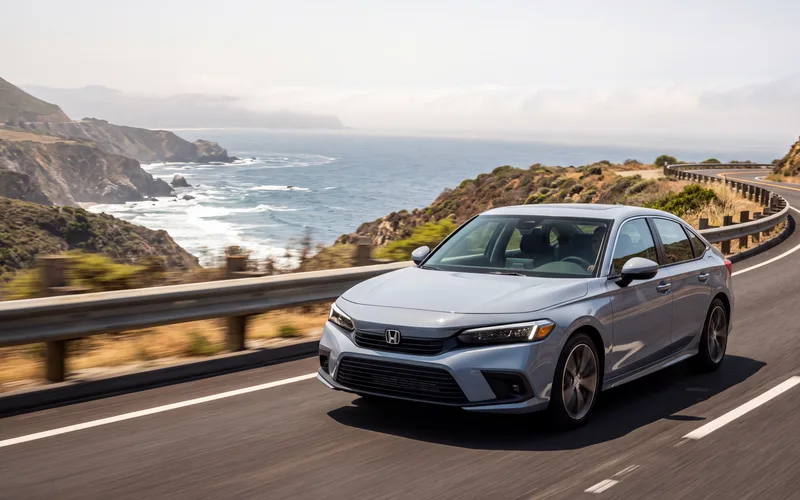 Honda CivicCompact SedanBetter at: Practicality
It delivers most of what makes the Mazda3 appealing while adding a usable back seat, a bigger trunk, a high-40s-MPG hybrid and the segment's best resale value.
Compare 2.40C+
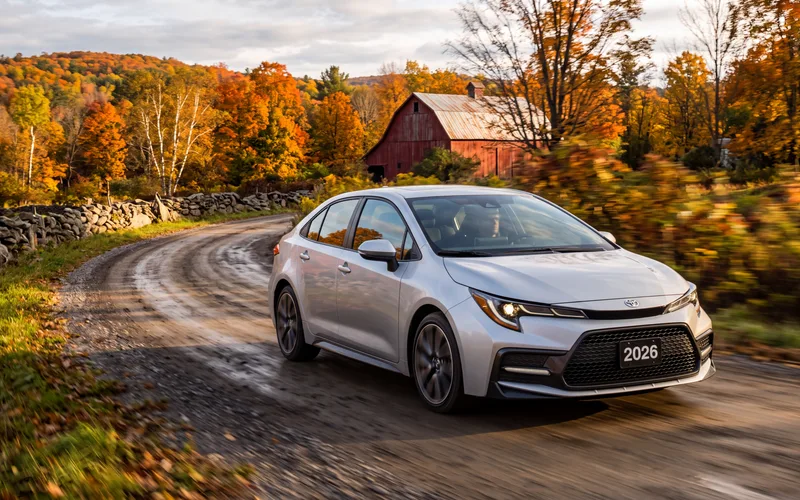 Toyota CorollaCompact SedanBetter at: Ownership cost
Lower running costs across the board — a hybrid near 50 MPG, top-of-class predicted reliability and more than twice as many dealers for service.
Compare 2.13C
2.13C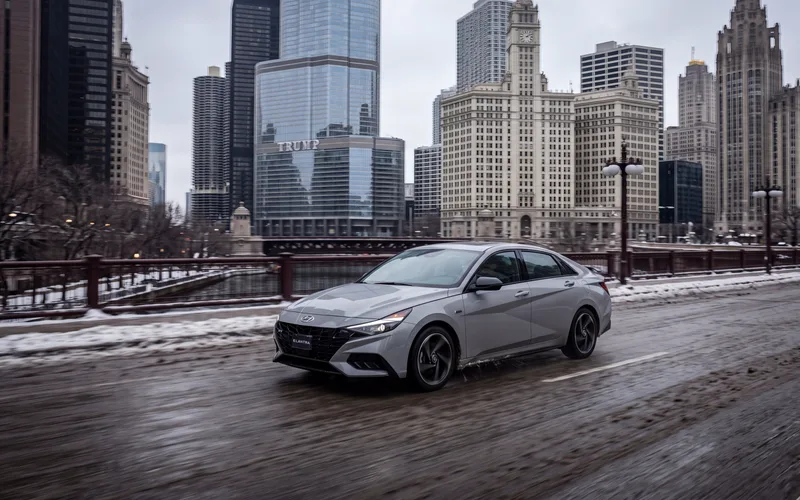 Hyundai ElantraCompact SedanBetter at: Space and warranty
Nearly three more inches of rear legroom, more standard tech, and a 10-year/100,000-mile powertrain warranty for similar money.
CompareHow it's evolved
10 scored model years · 2017–2026
Subject scores by year
Hover or tap a score to see what moved it versus the year before. A corner mark flags a big swing.
| Year | Performance | Efficiency | Safety | Space | Cost | Reliability | Tech | Use-case | Driving | Value |
|---|---|---|---|---|---|---|---|---|---|---|
| 2026 | 44 | 55 | 75 | 59 | 71 | 80 | 63 | 47 | 76 | 72 |
| 2025 | 43 | 51 | 77 | 58 | 69 | 80 | 51 | 46 | 77 | 70 |
| 2024 | 41 | 51 | 77 | 58 | 69 | 78 | 52 | 49 | 77 | 71 |
| 2023 | 43 | 52 | 73 | 59 | 70 | 80 | 52 | 46 | 76 | 71 |
| 2022 | 43 | 48 | 75 | 59 | 71 | 80 | 51 | 46 | 78 | 69 |
| 2021 | 44 | 48 | 75 | 59 | 73 | 73 | 51 | 47 | 78 | 73 |
| 2020 | 39 | 48 | 74 | 58 | 71 | 73 | 47 | 46 | 77 | 72 |
| 2019 | 39 | 48 | 70 | 59 | 70 | 66 | 49 | 49 | 77 | 67 |
| 2018 | 36 | 48 | 59 | 59 | 76 | 75 | 34 | 45 | 77 | 65 |
| 2017 | 29 | 55 | 61 | 59 | 77 | 82 | 37 | 46 | 79 | 71 |
Compare two years
Best fit & conditions
Higher scores mean a better fit for that use case. Learn more about use-case fit →
Subject profile
Trims & configurations
5 trimsScores above reflect the volume trim. Per-trim specs and scores are rolling out — the full lineup:
Academic Probation · NHTSA safety recalls
Dec 19, 2019Forward collision avoidance: automatic emergency brakingThe Smart Brake System (SBS) can falsely detect an obstacle while driving, activating the automatic emergency braking system and suddenly stopping the vehicle.
Defect
Mazda North American Operations (Mazda) is recalling certain 2019-2020 Mazda3 vehicles. The Smart Brake System (SBS) can falsely detect an obstacle while driving, activating the automatic emergency braking system and suddenly stopping the vehicle.
Risk
Stopping the vehicle unexpectedly increases the risk of a crash.
Remedy
Mazda will notify owners, and dealers will update the SBS software. In addition, vehicles with certain production dates will receive an instrument cluster software update or replacement and a replacement owner's manual. These repairs will be performed free of charge. The recall began February 14, 2020. Owners may contact Mazda customer service at 1-800-222-5500, Option 4. Mazda's number for this recall is 4219L.
NHTSA campaign 19V907000 ↗Manufacturer no. 4219L35,390 vehicles potentially affected (all models in the campaign)Owners notified Feb 14, 2020Filed by Mazda North American OperationsFiled as MAZDA3Jul 29, 2019Visibility: glass, side/rearThe adhesive between the interior rearview mirror and the housing may not be properly bonded, allowing the mirror to detach from the housing. Note: Vehicles equipped with auto dimming mirrors are not affected by this recall.
Defect
Mazda North American Operations (Mazda) is recalling certain 2019 Mazda3 vehicles equipped with manual dimming mirrors. The adhesive between the interior rearview mirror and the housing may not be properly bonded, allowing the mirror to detach from the housing. Note: Vehicles equipped with auto dimming mirrors are not affected by this recall.
Risk
Rearward visibility will be reduced without the rearview mirror, increasing the risk of a crash.
Remedy
Mazda will notify owners, and dealers will replace the interior rearview mirror assembly, free of charge. The recall began September 19, 2019. Owners may contact Mazda customer service at 1-800-222-5500, option 4. Mazda's number for this recall is 3919G.
NHTSA campaign 19V558000 ↗Manufacturer no. 3919G22,571 vehicles potentially affected (all models in the campaign)Owners notified Sep 19, 2019Filed by Mazda North American OperationsFiled as MAZDA3Jul 5, 2019Seats: front assembly: head restraintThe seat cover material on both front seats may interfere with the head restraint lock release button, causing it to stick in the release position and not allow the head restraint to lock into place.
Defect
Mazda North American Operations (Mazda) is recalling certain 2019 Mazda3 vehicles. The seat cover material on both front seats may interfere with the head restraint lock release button, causing it to stick in the release position and not allow the head restraint to lock into place.
Risk
Loose head restraints may increase the risk of injury in the event of a crash.
Remedy
Mazda will notify owners, and dealers will install spacers at the bottom of the lock release buttons on both front seat head restraints, free of charge. The recall began August 20, 2019. Owners may contact Mazda customer service at 1-800-222-5500, option 4. Mazda's number for this recall is 3819F.
NHTSA campaign 19V514000 ↗Manufacturer no. 3819F9,430 vehicles potentially affected (all models in the campaign)Owners notified Aug 20, 2019Filed by Mazda North American OperationsFiled as MAZDA3Jun 27, 2019Engine · Power train: automatic transmission: control module (tcm/pcm/tecm)A software error in the powertrain control module (PCM) may cause the engine to stall.
Defect
Mazda North American Operations (Mazda) is recalling certain 2018-2019 CX-5, Mazda6, and 2019 Mazda3 vehicles. A software error in the powertrain control module (PCM) may cause the engine to stall.
Risk
An unexpected stall increases the risk of a crash.
Remedy
Mazda will notify owners, and dealers will reprogram the PCM software, free of charge. The recall began August 20, 2019. Owners may contact Mazda customer service at 1-800-222-5500, option 4. Mazda's number for this recall is 3719F.
NHTSA campaign 19V497000 ↗Manufacturer no. 3719F262,220 vehicles potentially affected (all models in the campaign)Owners notified Aug 20, 2019Filed by Mazda North American OperationsFiled as MAZDA3Jun 7, 2019Wheels: lugs/nuts/bolts/studsThe lug nuts on all four wheels may loosen, potentially resulting in a wheel detaching from the vehicle.
Defect
Mazda North American Operations (Mazda) is recalling certain 2019 Mazda3 vehicles. The lug nuts on all four wheels may loosen, potentially resulting in a wheel detaching from the vehicle.
Risk
A wheel separating from the vehicle increases the risk of a crash.
Remedy
Mazda will notify owners, and dealers will tighten the front and rear wheel lug nuts to the correct specification, free of charge. The recall began July 9, 2019. Owners may contact Mazda customer service at 1-800-222-5500, Option 4. Mazda's number for this recall is 3519F.
NHTSA campaign 19V425000 ↗Manufacturer no. 3519F25,003 vehicles potentially affected (all models in the campaign)Owners notified Jul 9, 2019Filed by Mazda North American OperationsFiled as MAZDA3May 14, 2019Electrical system: instrument cluster/panel · Seat belts: front: warning light/devicesDue to incorrect programing, the passenger air bag deactivation indicator light may erroneously turn off although the passenger air bag is deactivated. In addition, the seat belt status indicators for both the front passenger seat and/or rear seats may erroneously turn off although the front passenger and/or rear seat belts are unfastened.
Defect
Mazda North American Operations (Mazda) is recalling certain 2019 Mazda3 vehicles. Due to incorrect programing, the passenger air bag deactivation indicator light may erroneously turn off although the passenger air bag is deactivated. In addition, the seat belt status indicators for both the front passenger seat and/or rear seats may erroneously turn off although the front passenger and/or rear seat belts are unfastened.
Risk
Incorrect indicator warning lights may lead the driver and/or passengers to be unaware of deactivated air bags or unfastened seat belts, increasing the risk of injury.
Remedy
Mazda will notify owners, and dealers will replace the passenger air bag/seat belt status indicator assembly, free of charge. The recall began July 9, 2019. Owners may contact Mazda customer service at 1-800-222-5500, Option 4. Mazda's number for this recall is 3319E.
NHTSA campaign 19V363000 ↗Manufacturer no. 3319E17,016 vehicles potentially affected (all models in the campaign)Owners notified Jul 9, 2019Filed by Mazda North American OperationsFiled as MAZDA3
9 recalls on other model years of the Mazda3 (2017–2018, 2020–2021, 2024–2025)
May 29, 2025Air bags: air bag/restraint control module: softwareThe Sophisticated Air Bag Sensor (SAS) units may set an error code and deactivate the air bags, due to a low battery condition.
Defect
Mazda North American Operations is recalling certain 2024-2025 Mazda3 and CX30 vehicles. The Sophisticated Air Bag Sensor (SAS) units may set an error code and deactivate the air bags, due to a low battery condition.
Risk
Air bags that do not deploy in the event of a crash increase the risk of injury.
Remedy
Dealers will reprogram the SAS unit with improved software or replace the unit, free of charge. Owner notification letters were mailed July 24, 2025. Mazda's number for this recall is 7525E.
NHTSA campaign 25V357000 ↗Manufacturer no. 7525E171,412 vehicles potentially affected (all models in the campaign)Owners notified Jul 22, 2025Filed by Mazda North American OperationsFiled as MAZDA3Sep 3, 2024Exterior lighting: headlights · Forward collision avoidance: automatic emergency braking · Lane departure: sensing system: cameraA malfunction in the forward sensing camera (FSC) may prevent the automatic emergency braking system and the lane-keep assist system from functioning. In addition, the headlights will not automatically adjust from high beams to low beams as intended.
Defect
Mazda North American Operations (Mazda) is recalling certain 2024 Mazda 3, CX-30, and 2025 CX-50 vehicles. A malfunction in the forward sensing camera (FSC) may prevent the automatic emergency braking system and the lane-keep assist system from functioning. In addition, the headlights will not automatically adjust from high beams to low beams as intended.
Risk
Automatic braking, steering assist, and headlight control systems that do not function as intended can increase the risk of a crash.
Remedy
Dealers will inspect and replace the forward sensing camera as necessary, free of charge. Owner notification letters were mailed September 24, 2024. Owners may contact Mazda customer service at 1-800-222-5500, Option 6. Mazda's number for this recall is 6824H.
NHTSA campaign 24V649000 ↗Manufacturer no. 6824H672 vehicles potentially affected (all models in the campaign)Owners notified Sep 24, 2024Filed by Mazda North American OperationsFiled as MAZDA3Oct 26, 2023Back over prevention: sensing system: camera · Forward collision avoidance: sensing system: camera · Lane departure: sensing system: cameraDue to a software error, the rearview, front, and/or side camera images may not appear on the display. As such, these vehicles fail to comply with the requirements of Federal Motor Vehicle Safety Standard number 111, "Rear Visibility."
Defect
Mazda North American Operations (Mazda) is recalling certain 2024 CX-90 and MAZDA3 vehicles. Due to a software error, the rearview, front, and/or side camera images may not appear on the display. As such, these vehicles fail to comply with the requirements of Federal Motor Vehicle Safety Standard number 111, "Rear Visibility."
Risk
A camera that does not display an image can reduce the driver's view, increasing the risk of a crash or injury.
Remedy
Dealers will update the view monitor control module software, free of charge. Owner notification letters were mailed December 20, 2023. Owners may contact Mazda customer service at 1-800-222-5500 Option 6. Mazda's number for this recall is 6223J.
NHTSA campaign 23V718000 ↗Manufacturer no. 6223J11,903 vehicles potentially affected (all models in the campaign)Owners notified Dec 20, 2023Filed by Mazda North American OperationsFiled as MAZDA3Jul 14, 2023Back over prevention: sensing system: cameraThe rearview camera image may not display properly by showing a flickering or distorted image.
Defect
Mazda North American Operations (Mazda) is recalling certain 2014-2018 Mazda3 and 2016-2021 CX-3 vehicles. The rearview camera image may not display properly by showing a flickering or distorted image.
Risk
A rearview camera that does not display properly can reduce the driver's rear view, increasing the risk of a crash or injury.
Remedy
Dealers will inspect and replace the rearview camera, as necessary. In addition, dealers will install a wiring harness fastening seal. All repairs will be performed free of charge. Interim notification letters, notifying owners of the safety risk, were mailed September 13, 2023. Final owner letters for affected models and model years in the states of CT, MA, MD, NJ, NY, PA and VA were mailed August 14, 2024. The remaining owner notification letters will be mailed at a future date, anticipated on or before May 1, 2025. Owners may contact Mazda customer service at 1-800-222-5500, Option 6. Mazda's number for this recall is 6023G.
NHTSA campaign 23V487000 ↗Manufacturer no. 6023G236,100 vehicles potentially affected (all models in the campaign)Owners notified Aug 14, 2024Filed by Mazda North American OperationsFiled as MAZDA3Nov 12, 2021Fuel system, gasoline: delivery: fuel pumpThe impeller inside the low-pressure fuel pump may crack and deform, potentially causing the fuel pump to fail.
Defect
Mazda North American Operations (Mazda) is recalling certain 2018 Mazda3, Mazda6, 2019 CX-3, 2018-2019 MX-5, CX-5, CX-9, and 2019-2020 Mazda2 vehicles. The impeller inside the low-pressure fuel pump may crack and deform, potentially causing the fuel pump to fail.
Risk
Fuel pump failure may cause an engine stall, increasing the risk of a crash.
Remedy
Dealers will replace the fuel pumps, free of charge. Owner notification letters were mailed July 18, 2022. Owners may contact Mazda customer service at 1-800-222-5500 Option 4. Mazda's number for this recall is 5321K.
NHTSA campaign 21V875000 ↗Manufacturer no. 5321K121,038 vehicles potentially affected (all models in the campaign)Owners notified Jul 18, 2022Filed by Mazda North American OperationsFiled as MAZDA3Feb 22, 2021Tires: valveAir may suddenly leak from the tire air valve.
Defect
Mazda North American Operations (Mazda) is recalling certain 2021 Mazda3 and CX-30 vehicles. Air may suddenly leak from the tire air valve.
Risk
A sudden air leak from the tire air valve may cause a loss of vehicle control while driving, increasing the risk of a crash.
Remedy
Mazda will notify owners, and dealers will replace all four tire air valves with new parts, free of charge. The recall began April 6, 2021. Owners may contact Mazda customer service at 1-800-222-5500 Option 4. Mazda's number for this recall is 4721B.
NHTSA campaign 21V101000 ↗Manufacturer no. 4721B599 vehicles potentially affected (all models in the campaign)Owners notified Apr 6, 2021Filed by Mazda North American OperationsFiled as MAZDA3Jun 12, 2020Service brakes, hydraulic: foundation components: disc: caliperThe front brake caliper mounting bolts may not have been tightened properly during assembly, possibly allowing the calipers to loosen.
Defect
Mazda North American Operations (Mazda) is recalling certain 2020 CX-30 and Mazda3 vehicles. The front brake caliper mounting bolts may not have been tightened properly during assembly, possibly allowing the calipers to loosen.
Risk
Loose brake calipers can reduce braking performance or interfere with wheel rotation, affecting vehicle handling. Either of these scenarios can increase the risk of a crash.
Remedy
Mazda will notify owners, and dealers will inspect the front brake caliper bolts, tightening them as necessary. If bolts are missing, the affected brake caliper will be replaced. Repairs will be performed free of charge. The recall began July 24, 2020. Owners may contact Mazda customer service at 1-800-222-5500, Option 4. Mazda's number for this recall is 4420F.
NHTSA campaign 20V346000 ↗Manufacturer no. 4420F24,037 vehicles potentially affected (all models in the campaign)Owners notified Jul 24, 2020Filed by Mazda North American OperationsFiled as MAZDA3Apr 4, 2019Visibility: windshield wiper/washerA defective windshield wiper relay may cause the windshield wipers to become inoperative, reducing the driver's visibility.
Defect
Mazda North American Operations (Mazda) is recalling certain 2016-2018 Mazda3 vehicles. A defective windshield wiper relay may cause the windshield wipers to become inoperative, reducing the driver's visibility.
Risk
Reduced visibility while driving can increase the risk of crash.
Remedy
Mazda will notify owners, and dealers will replace the front body control module with a new module which uses an improved wiper relay design, free of charge. The recall began May 7, 2019. Owners may contact Mazda customer service at 1-800-222-5500, option 4. Mazda's number for this recall is 3219D.
NHTSA campaign 19V272000 ↗Manufacturer no. 3219D187,880 vehicles potentially affected (all models in the campaign)Owners notified May 7, 2019Filed by Mazda North American OperationsFiled as MAZDA3Nov 21, 2017Engine and engine cooling: exhaust systemThe incorrect exhaust valve spring may fail while driving, potentially causing an engine stall.
Defect
Mazda North American Operations (Mazda) is recalling certain 2018 Mazda3 vehicles, equipped with an incorrect exhaust valve spring. The incorrect exhaust valve spring may fail while driving, potentially causing an engine stall.
Risk
An engine stall can increase the risk of a crash.
Remedy
Mazda will notify owners, and dealers will inspect the engines and replace any incorrect exhaust valve springs, free of charge. The recall is expected to begin January 20, 2018. Owners may contact Mazda customer service at 1-800-222-5500. Mazda's number for this recall is 1717K.
NHTSA campaign 17V745000 ↗Manufacturer no. 1717K144 vehicles potentially affected (all models in the campaign)Owners notified Jan 22, 2018Filed by Mazda North American OperationsFiled as MAZDA3
Source: NHTSA Office of Defects Investigation recall database, model years 2017–2026. Recalls are listed by model year as the manufacturer filed them; whether a specific car is affected depends on its VIN — check a VIN at nhtsa.gov ↗. NHTSA model names matched to this page: MAZDA3.
Detailed scoring by subject
1Performance & PowertrainThe Mazda3's lowest-graded category.0.60F
2019 is the launch year of the fourth-generation (BP) Mazda3, and every US-market car — sedan and hatchback, Base through Premium — uses the single naturally aspirated 2.5L Skyactiv-G. The 2.5 Turbo did not reach the US Mazda3 until 2021 and Skyactiv-X was never sold here, so there is no higher-output figure for 2019.
Peak torque does not arrive until 4,000 rpm, the signature of the high-compression (13.0:1) naturally aspirated Skyactiv-G — usable but thin in the midrange next to turbocharged compacts that make peak torque near 2,000 rpm.
Three instrumented tests of the 2019 sedan FWD returned 7.0, 7.0 and 7.3 s, so 7.1 s represents the volume FWD automatic; the ~175 lb heavier AWD sedan runs closer to 8 s. Mid-pack for a compact sedan, and slower than the turbo rivals it is priced against.
With no turbo in the system there is no lag and no surge — throttle response is linear and honest, and cylinder deactivation (where fitted) is imperceptible — but the 2.5 has to be revved to deliver and grows coarse and buzzy in the top third of the tach, which is exactly where the class's turbo engines are quiet.
The Skyactiv-Drive six-speed torque-converter automatic is a genuine class advantage: crisp, decisive, quick to kick down and completely free of the drone that afflicts the CVT-equipped Civic, Corolla and Sentra. It loses points only for carrying six ratios where rivals field eight, and for the sedan having no manual option at all.
2019 is the year i-Activ AWD first appeared on a Mazda3, and offering all-wheel drive at all was near-unique among 2019 compact sedans — it covers the Select, Preferred and Premium packages, i.e. most of the range. It is capped below the top band because the base sedan cannot be had with it and the system is a predictive on-demand setup paired with G-Vectoring Control Plus, with no low range, locker or terrain modes.
One engine, no alternatives: the 2.5L Skyactiv-G is the only powertrain in the 2019 US Mazda3 range — no hybrid, no plug-in, no turbo, and not even the 2.0L Skyactiv-G that other markets received. The only configuration choices are FWD versus AWD and, on a single hatchback trim, a manual gearbox.
2Efficiency & RangeOne of the Mazda3's weakest categories.1.17D
Every 2019 Mazda3 sedan FWD automatic is EPA-rated 30 MPG combined whether or not it has cylinder deactivation; AWD drops to 28. Respectable for a naturally aspirated engine with no electrification, but well short of the CVT-equipped Civic and Corolla that clear 33–36 combined.
The volume Select/Preferred sedan FWD does not get cylinder deactivation — for 2019 that hardware is confined to the Premium package on FWD sedans, all hatchbacks and every AWD car — so it is rated 26 MPG city rather than 27.
A tall sixth gear, the fourth generation's lower drag and a 13.0:1 compression ratio give the FWD sedan a solid 35 MPG highway rating; the cylinder-deactivation Premium gains 1 MPG and i-Activ AWD costs 2.
A small 13.2-gallon tank keeps total range just under 400 miles despite decent economy — the weakest part of the car's efficiency case, since larger-tank compact rivals clear 450 miles on similar or better MPG.
EPA's estimate at standard assumptions for the FWD automatic sedan, identical for both the cylinder-deactivation and non-deactivation engines; the agency puts the car $750 ahead of the average new vehicle over five years, and rates it 7/10 on both fuel economy and greenhouse gas.
Regular 87-octane unleaded delivers the full rated 186 hp — no premium recommendation, no plug, no special infrastructure, which is the cheapest and simplest arrangement a buyer can have. Held just short of the top because the 13.2-gallon tank means noticeably more frequent stops than rivals.
3SafetyOne of the Mazda3's strongest categories.2.77B-
NHTSA never ran NCAP on the 2019 Mazda3 — every field returns "Not Rated" — but it tested the structurally identical 2020 car (same fourth-generation BP body, launched as a 2019 model) and gave it 5 stars overall plus 5 stars in frontal, side and rollover, across all four sedan and hatchback drivetrain variants. Per the item's "latest tested year of this generation" rule that 5-star result is the figure for 2019.
A clean sweep of Good in all six crashworthiness tests, including the passenger-side small overlap that tripped up much of the class in 2019, plus a Superior front crash prevention result — the redesign was engineered for these tests and shows it. Held out of the 90s because it earned Top Safety Pick rather than TSP+: headlights rated only Acceptable on every trim, and the sedan qualified for the award only when optionally equipped with front crash prevention (the hatchback got it standard).
On the volume Select sedan the suite is genuinely comprehensive — Smart City Brake Support, Smart Brake Support with pedestrian detection, blind spot monitoring with rear cross-traffic alert, lane departure warning with lane-keep assist, radar cruise control with stop-and-go, high beam control and the new-for-2019 Driver Attention Alert all standard. The problem is the trim below it: the $21,000 base sedan gets none of i-Activsense, not even automatic emergency braking, at a time when Honda made Sensing standard across the 2019 Civic line and Toyota did the same with TSS-P on the Corolla. Standard-on-the-volume-trim, absent on the base trim, is squarely the middle band.
Smart Brake Support earned Superior in IIHS vehicle-to-vehicle front crash prevention, avoiding the collision outright in both the 12 mph and 25 mph track runs, and Superior again in the daytime vehicle-to-pedestrian test that IIHS had only just introduced — about as good as the 2019 state of the art got. Capped below 80 because nighttime pedestrian testing did not exist for this model year, so there is no evidence of after-dark performance, and because the system is unavailable on the base sedan.
Blind Spot Monitoring with Rear Cross-Traffic Alert is standard from Select up, which covers the trims most buyers take, and it earns its keep given how much the fourth-generation body blocks over-the-shoulder views. It is alert-only, though — no steering or braking intervention, no safe-exit warning, and the 360 View Monitor that would fill the gaps is not offered on any 2019 Mazda3 trim.
Lane Departure Warning with Lane-Keep Assist is standard on Select and up, and it behaves the way Mazda's chassis engineers evidently wanted — a light corrective nudge at the lane edge rather than a system that fights the driver. But it is edge-correction only: there is no lane-centering function holding the car in the middle of the lane, which is what the top band describes, so a driver gets a warning-and-nudge rather than the sustained assist rivals were beginning to offer.
Mazda Radar Cruise Control with Stop & Go is standard from Select up and works across the full speed range down to a standstill — a real advance over the 2018 car's 19 mph floor, and unusual to have as standard equipment on a $22,600 compact sedan. It stops short of the top band because there is no integrated highway assist tying it to steering: the adaptive cruise and the lane-keep assist operate as separate aids rather than one coordinated system.
No hands-free highway driving system of any kind — Mazda offered nothing comparable to Super Cruise or BlueCruise on any 2019 vehicle, let alone a compact sedan, and the Mazda3's own driver monitoring runs the other direction, using Driver Attention Alert to detect fatigue rather than to permit hands-off operation.
IIHS rated every 2019 Mazda3 sedan headlight variant Acceptable — the base projectors, the Select/Preferred units with high-beam assist, and the Premium's curve-adaptive setup all landed in the same middling grade. LED low beams and automatic high beam control from Select up are worth having, but no trim reaches Good, and that single Acceptable is what cost the car a Top Safety Pick+.
The fourth-generation design traded sightlines for style: a high rising beltline, heavy C-pillars and a shallow rear window. The sedan is the better of the two body styles — the notchback keeps a usable rear glass where the hatchback was widely panned as cave-like — but rear-quarter views are still poor by compact-sedan standards, and 2019 offers no 360-degree camera on any trim to compensate, only the standard backup camera plus blind-spot alerts from Select up. Mazda did thin the A-pillars, so forward and three-quarter-front visibility is genuinely good.
Better than the compact-sedan norm on hardware: two full LATCH positions under removable covers with three top tethers on the rear shelf, all easy to reach, and Cars.com fit an infant carrier, a rear- and forward-facing convertible and a booster without running the front seats out of legroom. Marked down for the things the class can't escape — only two complete positions so no genuine three-across, head restraints must come out for a flush convertible fit, and the tiny recessed seat belt buckles defeat kids in boosters.
4Space & ComfortMid-pack among this car's ten categories.1.98C-
Standard five-passenger compact sedan layout across every 2019 Mazda3 sedan trim, with a 60/40 split-folding rear bench.
Mid-pack for a compact sedan; unusually, Mazda publishes the same 38.0 in figure with and without the Premium trim's moonroof.
Generous front legroom that reviewers consistently found accommodating for tall drivers, aided by a wide seat-track and telescoping range.
Rear headroom is respectable for the class — the sedan's roofline is far kinder to back-seat heads than the fastback hatchback's.
The weak point of the fourth-generation Mazda3's packaging: 35.1 in trails most compact-sedan rivals and reviewers repeatedly flagged tight knee room behind adults.
13.2 cu ft is below average for a compact sedan, where 14–15 cu ft is the competitive norm; the 60/40 folding seatback recovers some length for long items.
Conventional, adequate storage with no clever tricks: glovebox, covered console armrest bin, front door pockets with bottle holders, rear door bottle holders, overhead sunglasses holder, and (Select and up) a front seatback pocket and rear armrest with cupholders. Only one 12-volt outlet and two USB ports serve the whole cabin, and the console cubbies are small.
Mazda redesigned the seats for this generation around pelvis support and spinal alignment, and reviewers singled out the front chairs as supportive and long-haul friendly; the Preferred trim adds an 8-way power driver's seat with lumbar and memory. The rear bench itself is well shaped but the space around it is snug.
Firm but notably well damped — reviewers described a European-luxury flavor to the body control, which is the more impressive given Mazda swapped the previous multi-link rear for a cheaper torsion-beam axle for 2019. Buyers wanting a soft ride will find it taut.
Substantially quieter than the loud third-generation car thanks to added sound deadening, but still only average in absolute terms — testers described it as rock-solid yet loud inside at highway speed.
Thin for a car with upscale pretensions: dual-zone automatic climate control from Select up and heated front seats from Preferred up, but there are no rear air vents at all, no ventilated seats and no heated steering wheel on any 2019 Mazda3, and reviewers found the A/C struggled on warm sunny days.
5Cost of OwnershipOne of the Mazda3's strongest categories.2.71B-
The entry 2019 Mazda3 sedan was the unnamed "base" grade at $21,000 plus $920 destination, the opening price of the all-new fourth-generation (BP) car that reached US dealers in March 2019. Every 2019 US Mazda3 used the 186-hp 2.5L, so the cheapest car in the range is unusually well-engined for the money — but it is also roughly $1,500 dearer than a Civic LX or Corolla L.
Select is the volume grade and the practical entry point for 2019: for $1,600 over base it adds the entire i-Activsense driver-assist suite, Apple CarPlay/Android Auto, blind-spot monitoring with rear cross-traffic alert, dual-zone automatic climate, Advanced Keyless Entry, 18-inch alloys, leatherette and the option of i-ACTIV AWD. The base car omits all of it, so few buyers stopped there.
The Mazda3 is one of the cheaper compacts to keep running: RepairPal puts the 2019 car's average annual repair cost at $433 against a $526 compact-car average, with low repair severity and a 4.0/5.0 reliability rating. CarEdge's $1,891 five-year figure counts only a light scheduled-service interpretation, so this figure adds realistic dealer-rate scheduled maintenance, a brake and tire replacement across five years of a car that spent two of them outside the 3-yr/36,000-mile warranty.
This is close to a realized figure rather than a forecast: the 2019 model year passed its five-year mark in 2024, in a used market still running above pre-2020 norms, and the base sedan held about 60% of its original delivered price. That is solid for a compact sedan without being class-leading, and it matches what the following model year actually did.
Mazda's New-Vehicle Limited Warranty is the mainstream floor and sits at the bottom of the 3-to-5-year normalization band — no better than Honda or Toyota, and half the term Hyundai and Kia offered 2019 buyers.
Powertrain coverage also sits at the minimum of its five-to-ten-year band. It is transferable, but 60,000 miles is short against the 100,000-mile terms Hyundai and Kia were advertising to the same shopper in 2019.
A 2019 Mazda3 buyer got no complimentary scheduled maintenance at all — every oil change and rotation was out of pocket from mile one — and no connected-services trial either, since Mazda Connected Services did not reach the Mazda3 until 2021. What is included is a 24/7 Roadside Assistance program, and for 2019 Mazda still published it as a 3-year/36,000-mile program tied to the basic warranty rather than the longer framing of later years, plus a 3-month SiriusXM trial on satellite-equipped Preferred and Premium trims. That is roadside-only coverage, and less than ToyotaCare or Honda offered the same shopper.
$23,520 volume-trim price minus its estimated resale value after 5 years (60% retained, or about $14,112) leaves about $9,408 in depreciation. Add the projected $4,050 in 5-year maintenance and repairs, and owning this vehicle for 5 years costs about $13,458 in total.
6Reliability & QualityMid-pack among this car's ten categories.2.47C+
This is the shakedown year of an all-new generation and the sources split accordingly, but they split lower than they do for the same car a year later. Consumer Reports concludes outright that the 2019 3 is less reliable than other cars from its model year, listing trouble spots across in-car electronics, electrical accessories, engine major, climate and suspension/steering. Long-run cost data disagrees — RepairPal rates the model 4.0/5.0 at $433/yr, 9th of 36 compact cars, with low repair severity — and the raw field record is still the best in the class, 74 NHTSA complaints against 146 for the Forte, 201 for the Corolla, 348 for the Civic and 545 for the Jetta. It sits at the bottom of the mid band rather than in it because that 74 is more than double the 32 the 2020 car drew, and because six recalls in a single model year is what a first-year build looks like.
The brand behind this car was near the top of the industry while it was on sale and has stayed there since. Consumer Reports' November 2019 survey — published mid-way through the 2019 Mazda3's first sales year — ranked Mazda 2nd of all brands, behind only Lexus and ahead of Toyota, and Mazda took 1st outright in the following year's survey. That has held up rather than proving a one-off: Mazda placed 3rd overall and 2nd among mass-market brands in the 2025 J.D. Power VDS and 3rd in CR's used-car reliability ranking for 5-to-10-year-old vehicles, which is the cohort a 2019 car now sits in. Held a point below the following model year's mark only because the contemporaneous CR standing was 2nd rather than 1st.
This is the weakest part of the car's case and the clearest thing separating it from every later BP year. Six NHTSA campaigns landed on the 2019 Mazda3 — against two for 2020, one for 2021 and none for 2022 — and they are not cosmetic: a powertrain-control-module software error that could stall the engine while driving, lug nuts on all four wheels that could loosen to the point of a wheel detaching, an automatic emergency braking system that phantom-braked the car to a stop, front head restraints that would not lock, a rearview mirror that could fall off its housing, and airbag/seat-belt indicator lights that could go dark while the systems were actually off. Five of the six were opened inside a seven-month window in the car's first year on sale. Live TSBs on top of that cover low-speed driveline surging, engine front-cover oil leaks, side-airbag harness routing and torque-converter clutch wear. Scored in the low band per the item's own guidance — repeated recalls touching powertrain and safety systems — rather than lower only because all six were remedied free of charge and none involved fire or structural failure.
The hardware is sound and conventional: every 2019 US Mazda3 sedan uses the 2.5L Skyactiv-G (186 hp / 186 lb-ft), a PY-series engine in continuous production since the 2012 CX-5, driving a six-speed Skyactiv-Drive torque-converter automatic. Having no CVT and no dual-clutch anywhere in the range is a genuine durability advantage over the Civic, Corolla, Sentra and Elantra, and is most of why this still scores above the middle. Two things pull it below the level the same powertrain earns in later years. First, the PCM stall recall (19V497000) hit every 2019 Mazda3 regardless of trim — an engine that can shut off while driving is the one powertrain defect that cannot be discounted. Second, the cylinder-deactivation version of this engine has a documented cluster of problems on this generation: front-cover oil seepage, cracked cylinder heads reported by owners, low-speed torque-converter surging and lock-up-clutch wear, with CarComplaints logging transmission failure on the 2019 car at an average 28,000 miles for about $4,000. The mitigating detail is that cylinder deactivation is not on the volume car — Mazda's own 2019 sedan spec sheet shows the base grade without it and lists it as the second engine entry on Select and Preferred (the AWD configuration), standard only on Premium — so a front-drive Select sedan falls outside all three of those bulletins.
2019 is the model year this cabin arrived, and it is the fourth-generation Mazda3's signature advantage — the widest gap it opens over anything else in the compact class. Broad low-sheen soft-touch coverage, knurled metal knobs, well-damped switchgear and a restraint reviewers repeatedly measured against cars costing far more rather than against compacts. Edmunds pitched it directly against price: a quality comparable to cars costing tens of thousands more than the $21,895 base sticker. Kept out of the low 90s by hard plastics low in the cabin and by the base sedan going without the faux-leather door accents the rest of the range gets.
Reviewers who measured the car by hand found the assembly good — Edmunds records tight panel gaps and solid controls, and rattle or squeak complaints are rare on this model year. What holds this well below the later BP years is that the first year's build produced four separately documented assembly or design-execution defects, three of them serious enough to force a recall: lug nuts on all four wheels not torqued to specification, front-seat cover material fouling the head-restraint lock buttons, rearview mirror adhesive not properly bonded, and a side-airbag harness routing flaw that displaces connector terminals. Those are process failures rather than wear items, and three of the four are exactly the class of defect an initial-quality study captures. Mazda's own 2019 IQS placing was not retrievable, so the score rests on the defect record itself rather than on a survey figure.
Two findings pull against each other and the score splits them, landing a shade below the following model year. Coverage is the Mazda3's real ownership weakness: Mazda has deliberately run a small US store count — 635 dealerships in 2014, roughly 548 now, against 1,246 Toyota and 1,074 Honda — so an owner outside a major metro faces a materially longer drive for warranty work. That matters more for this model year than any other, because six recall campaigns mean up to six trips to whichever store that is. Against it, the service experience once reached is measurably good: Mazda ranked 3rd among mass-market brands in J.D. Power's 2022 CSI, a study built specifically on 2019-to-2021 model-year owners and therefore the right wave for this car.
Routine running costs are genuinely low and independently measured — RepairPal puts average annual repair and maintenance at $433 against $526 for compact cars, with low repair severity and major issues uncommon, and quoted jobs stay ordinary (a valve cover gasket at $171-$239, brake pads at $314-$371). It sits in the normal band rather than the 80+ band because Mazda's US volume is a fraction of Toyota's or Honda's, leaving a thinner independent parts catalogue and a smaller aftermarket than the Civic or Corolla owner enjoys. The one documented shortage on this generation — Mazda's torque-converter bulletin recording replacement units available only by factory push order — is scoped to cylinder-deactivation cars and so misses the volume front-drive sedan.
7Technology & InfotainmentOne of the Mazda3's weakest categories.1.24D
Every 2019 Mazda3 trim carries the same new 8.8-inch widescreen center display, but Mazda deliberately removed touch capability for this generation — the screen is driven exclusively by the console-mounted Commander rotary controller.
A genuinely divisive system: the hardware is crisp, the graphics are handsome and the physical Commander knob plus real climate buttons reduce distraction, but removing touch entirely means simple tasks — and CarPlay in particular, which was designed around touch — take more knob-twirling than rivals need. Menu depth also draws complaints.
Wired Apple CarPlay and Android Auto are standard from the Select trim up, but neither is available on the base sedan, and no 2019 Mazda3 offers wireless projection of either.
Built-in navigation is not standard on any 2019 Mazda3 — it requires a dealer-purchased SD map card — and the native 'Infotainment system voice command' is a rigid command-word system rather than a natural-language assistant, so most owners default to CarPlay/Android Auto for both jobs.
The standard 8-speaker system is adequate, and the optional Bose 12-speaker setup with Centerpoint 2 and AudioPilot 2 — standard from Preferred up — is a well-regarded premium system for the compact class, helped by Mazda relocating the woofers into the front cowl.
Partial digital: a 7-inch LCD multi-information display forms the center of the gauge binnacle on every trim, rendering a convincing tachometer, but it is flanked by conventional analog dials rather than being a full-width configurable cluster.
No meaningful over-the-air update capability: Mazda Connect firmware for this generation is updated at the dealer or via USB, and map data comes on a physical SD card that must be replaced to update.
The MyMazda app with Mazda Connected Services covers the core functions — remote engine start/stop, remote lock/unlock, vehicle finder, and vehicle health/status — but 2019 Mazda3s needed a dealer visit to have the service enabled, there is no digital key, and the app itself drew persistent criticism for slow response.
Sparse and already dated for 2019: just two front USB-A ports and a single 12-volt outlet for the whole car, with no rear-seat USB, no USB-C anywhere, and no wireless phone charging offered on any trim.
Mazda Advanced Keyless Entry with proximity unlock is standard from Select up and push-button start is standard on every trim including base; app-based remote start is available through Connected Services. No phone-as-key.
A rearview camera is standard on all trims and Rear Cross Traffic Alert comes with Blind Spot Monitoring from Select up, but no 2019 Mazda3 offers a 360-degree camera, front/rear parking sensors are only a dealer-installed accessory rather than factory equipment, and there is no automated parking.
The windshield-projected full-color Active Driving Display is a genuinely good HUD — a real projection onto the glass rather than the pop-up plastic combiner Mazda used previously — but it is restricted to the top Premium trim.
8Use-Case FitGrades below the middle of the scale.1.31D
Full LATCH anchors and a 60/40 folding bench are there, but the fundamentals fight family duty: 35.1 in of rear legroom means a rear-facing seat forces the front passenger forward, the sedan's rear door opening is tight for leaning in with a child, and 13.2 cu ft of trunk swallows a stroller and little else.
Strong crashworthiness plus a complete i-Activsense suite — automatic emergency braking with pedestrian detection, blind-spot monitoring with rear cross-traffic alert, lane-keep assist and radar cruise with stop & go — standard from the ~$23K Select trim families actually buy. The catch is that the base sedan gets none of it, which is why the sedan needed optional front crash prevention to earn its IIHS award while the hatchback earned it as standard.
Weak once the back seat is occupied for hours: no rear air vents at all, no rear USB ports, tight knee room, a noisy cabin at highway speed, and a small trunk that struggles with four people's luggage. Front-seat occupants travel well; everyone else compromises.
A genuinely relaxing commuter: the 2.5L paired with a conventional 6-speed automatic is smooth and predictable in stop-and-go (no CVT drone, no dual-clutch shunt), radar cruise with stop & go is standard from Select up, and the upscale, well-damped cabin lowers fatigue. Minor demerits for the knob-only infotainment while moving.
Cheap to run in absolute terms — 30 MPG combined on regular unleaded, with ordinary compact-car consumables and tire sizes — but it trails the class benchmarks, since a Corolla or Civic of the same year clears the mid-30s combined. Mazda dropped the frugal 2.0L from the US sedan lineup, so 2.5L economy is all that is on offer.
Compact footprint and a tight 34.8 ft curb-to-curb circle make it easy to thread and park, and the sedan's upright rear glass gives better over-shoulder visibility than the hatchback. Held back by a rearview camera that is the only parking aid — no factory sensors and no surround-view on any trim.
Not a work vehicle in any meaningful sense: Mazda publishes no US towing rating for the Mazda3, there is no bed or van-like load bay, and payload is limited to five occupants plus a 13.2 cu ft sealed trunk. The 186 hp 2.5L is fine unladen and untested under load because there is no load to carry.
The naturally aspirated Skyactiv-G 2.5 and conventional 6-speed automatic are a proven, low-stress combination that should endure high mileage, but nothing about the car is built for abuse — cloth or leatherette trim, carpeted trunk, low 5.5 in ground clearance and no fleet/work heritage.
Essentially nothing for work: a single 12-volt outlet is the entire onboard power provision, there are no roof rails, no factory hitch, no bed access or tie-down system beyond the trunk, and no washable surfaces or upfit ecosystem.
A capable mile-eater from the front seats — supportive chairs, a firm but well-damped ride, and radar cruise with stop & go plus lane-keep assist standard from Select up. Limited by a small 13.2-gallon tank (roughly 460 highway miles between fills) and a cabin that stays audibly loud at 80 mph.
2019 brought i-Activ AWD to the Mazda3 for the first time — a real advantage over most compact-sedan rivals for snow and gravel — but the car remains pavement-bound: 5.5 in of ground clearance, no tow rating for toys, no roof rails, and a sealed trunk rather than a flat load floor for camping.
Restrictive: a below-average 13.2 cu ft trunk accessed through a sedan aperture, with only a 60/40 folding seatback for pass-through. No roof rails, no factory hitch and no underfloor storage, so bulky gear either does not fit or does not get carried — the hatchback body style is the answer here, not this one.
9Driving ExperienceThe Mazda3's best-graded category.3.22B+
Best-in-class for a compact sedan: composed, flat and confident, with G-Vectoring Control Plus subtly shuffling load to sharpen turn-in. Mazda's switch from the previous multi-link rear to a torsion-beam axle for this generation drew skepticism but did not blunt the car — reviewers still rate it the segment's driver's choice, though absolute grip on 205/60R16 all-seasons is modest.
The standout element of the car — accurately weighted, linear off-center and unusually communicative for an electrically assisted compact. The only knock is a slightly slower ratio than the Civic's, which makes it feel measured rather than darty.
Firm, progressive pedal with good fade resistance in repeated stops — reviewers called the brakes stout — though stopping distances are class-typical rather than exceptional given the modest all-season tires.
The naturally aspirated 2.5L and conventional 6-speed automatic are beautifully calibrated for drivability — crisp tip-in, decisive downshifts and none of the rubber-band feel of a CVT or the low-speed shunt of a dual-clutch. What holds it back is capability rather than polish: 186 hp and only six ratios leave the engine feeling less eager than the chassis deserves.
Inoffensive and noticeably better isolated than the previous generation, with a pleasant hum in normal use, but the 2.5L four turns coarse and boomy when worked hard toward its 6500 rpm redline — it is a competent engine note, not a rewarding one.
A tight circle near the best end of the sedan range, making U-turns and tight parking structures easy. Mazda publishes the wall-to-wall figure of 37.33 ft; the curb-to-curb measurement this item calls for is 34.8 ft.
Mazda re-engineered the seat and pedal placement around a natural spinal posture for this generation, and it shows: a wide seat-track and telescoping range, 42.3 in of front legroom, logically placed physical climate controls and a low, well-judged cowl. The sedan's upright rear glass also avoids the hatchback's thick-pillar blind spots. Reaching the Commander knob rather than the screen is the main ergonomic quirk.
The enthusiast's pick of the compact class and routinely recommended as such — steering and chassis reward a good road well beyond what the price suggests, and a 6-speed manual was offered. It falls short of genuinely quick: 186 naturally aspirated horsepower means the car's appetite for corners outruns its thrust, and 2019 offered no Turbo variant (that arrived for 2021).
10Value & Market PositionMid-pack among this car's ten categories.2.51C+
The 2019 base sedan is the weak point of the generation's launch year: it carried no i-Activsense at all — no automatic emergency braking, no radar cruise, no lane-departure warning or lane-keep assist, no blind-spot monitoring — plus no Apple CarPlay or Android Auto, single-zone manual air conditioning and a non-touch display worked by a console knob. All of it lived behind the $1,600 Select step. That was a conspicuous gap in 2019, when Honda Sensing was standard on every Civic sedan but the Si and Toyota Safety Sense-P on every Corolla, both at lower prices. What the base car does bring is real: the 186-hp 2.5L, LED headlights, 16-inch alloys, an 8.8-inch center display, eight speakers, push-button start and a rearview camera.
At $21,920 delivered the base Mazda3 asked roughly $1,300–$2,300 more than a Corolla L or Civic LX and handed back less safety content, and the all-new generation itself came in about $1,900 above the car it replaced. What the money buys is genuine: a cabin reviewers repeatedly called near-premium, 186 hp standard where rivals offered 139–158, and i-ACTIV AWD for $1,400 — an option no Civic, Corolla, Elantra or Sentra buyer had. Against that the sedan gives up practicality (13.2 cu ft trunk, 35.1 in of rear legroom) and its 26/35/30 mpg trailed the class leaders. Strong on quality-per-dollar, weak on content-per-dollar in this particular model year.
Four well-spaced sedan grades — base, Select, Preferred and Premium — spanned $21,920 to $28,820 delivered, and i-ACTIV AWD was available from Select up, a choice none of the mainstream rivals offered. Choice stopped at the driveline, though: the 2019 sedan had exactly one engine and one transmission (2.5L, six-speed automatic), with no manual at any price, no hybrid, and none of the 2.0L base or 2.5 Turbo variants that widened the lineup from 2021 onward. The manual was hatchback-only, and only on Premium FWD.
The redesign did not arrest the nameplate's slide. US Mazda 3 volume fell to 50,741 in 2019 from 64,638 in 2018 and 75,018 in 2017 — a 21.5% drop in the year the all-new car arrived, though the gen-4 only reached dealers in March so the figure mixes leftover gen-3 stock with the new car. Against 325,650 Civics and 304,850 Corollas, the Mazda3 moved roughly one car for every six Civics. The compact segment as a whole was shrinking, but this is a critically admired model the market was declining to buy at anything like class-leading scale.
Mazda in 2019 carried an unusually favourable image for a small-volume mainstream brand: a reputation for driving enjoyment, above-average reliability, and an explicit upmarket design-and-interior push that this very car headlined — capped by the Mazda3 taking World Car Design of the Year and finishing runner-up for World Car of the Year. It remains a niche badge with modest US share and no luxury halo, and the nameplate's own falling volume shows the admiration was not converting into demand at scale, so strong but not aspirational.
A launch-year redesign is the worst time to negotiate, and for most of 2019 the new Mazda3 sold close to sticker with little factory support. That changed at model-year closeout: with volume falling and 2020 cars arriving, Mazda put 0.9% APR on both the 2019 sedan and hatchback and $2,000 customer cash on the 2019 hatchback into early 2020. Decent buyer leverage by the end, none of it at the start — middle of the band.
2019 is the first model year of the all-new fourth-generation (BP) Mazda3 — new platform, new body, new interior, a new 8.8-inch Mazda Connect system and the nameplate's first-ever i-ACTIV AWD — so redesign risk for the buyer was nil; this generation was still on sale for 2026. It is held just short of the top because a launch year carries first-year teething risk and because the powertrain range was the narrowest the generation would ever have, with the 2.5 Turbo, the 2.0L base engine and the sedan's Carbon Edition trims all still years away.
One of the most decorated compacts of its era: World Car Design of the Year, runner-up for World Car of the Year by 13 points, and an IIHS Top Safety Pick, with reviewers near-unanimous about the cabin quality and the newfound refinement. It falls short of the top band on specifics rather than sentiment — the sedan needed optional front crash prevention to earn its IIHS award and its headlights rated only Acceptable, so no Top Safety Pick+; it was a 2020 NACTOY semifinalist but not a finalist; it was not a Car and Driver 10Best winner as earlier Mazda3s had been; and it kept losing head-to-head comparisons on the practical criteria that decide compact-sedan tests — rear-seat room, trunk volume, rear visibility and fuel economy — while the switch to a torsion-beam rear axle drew persistent criticism.